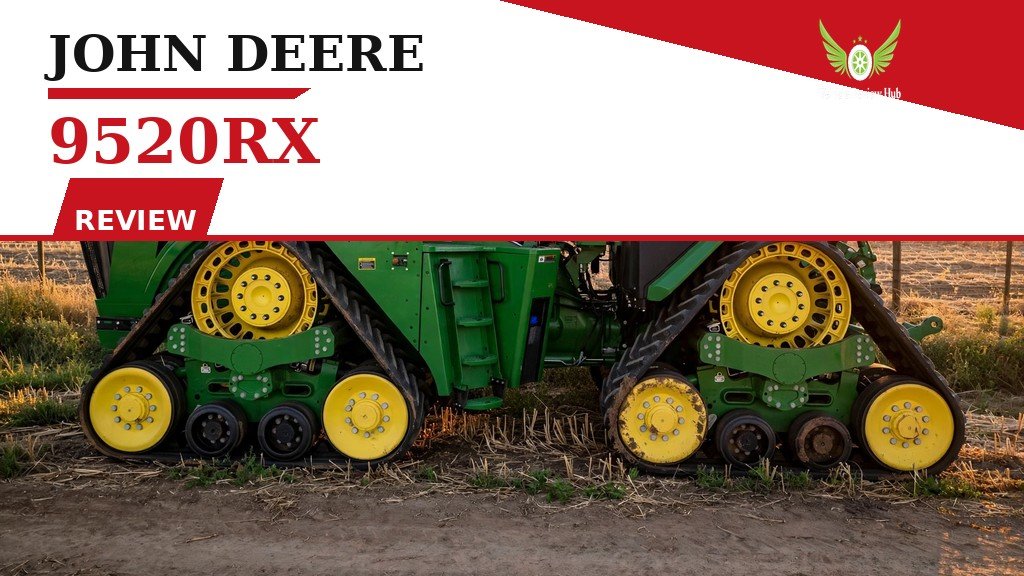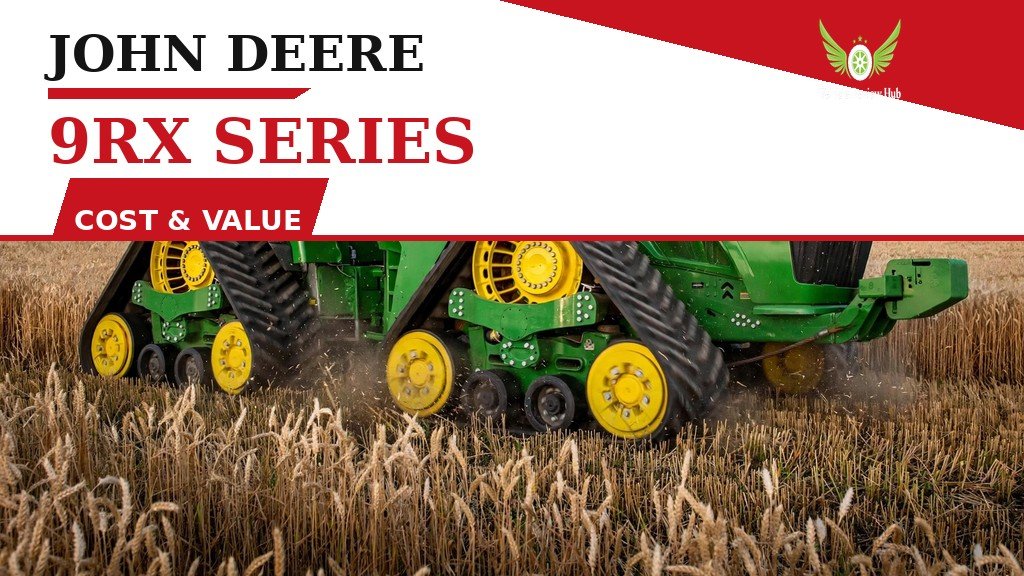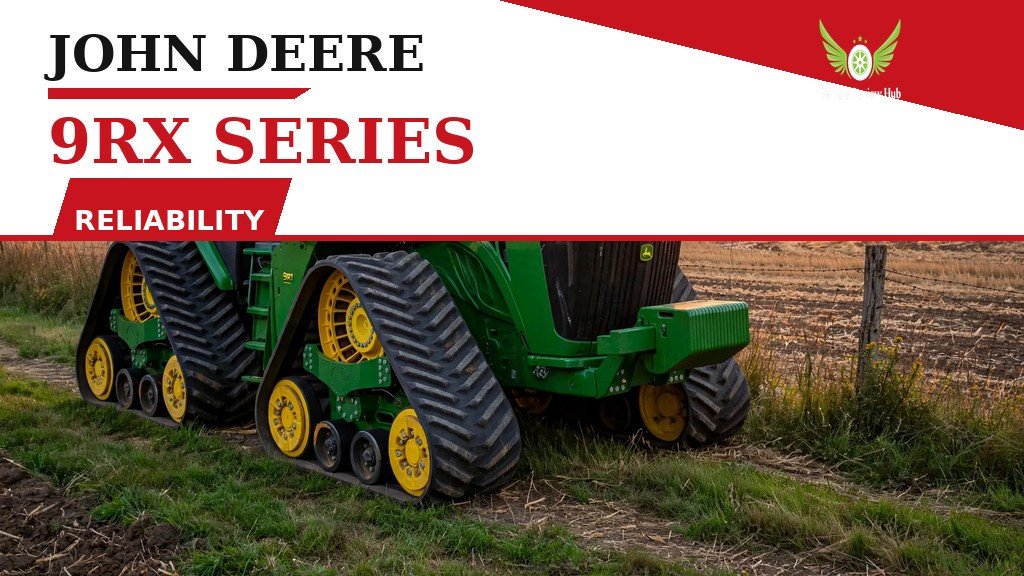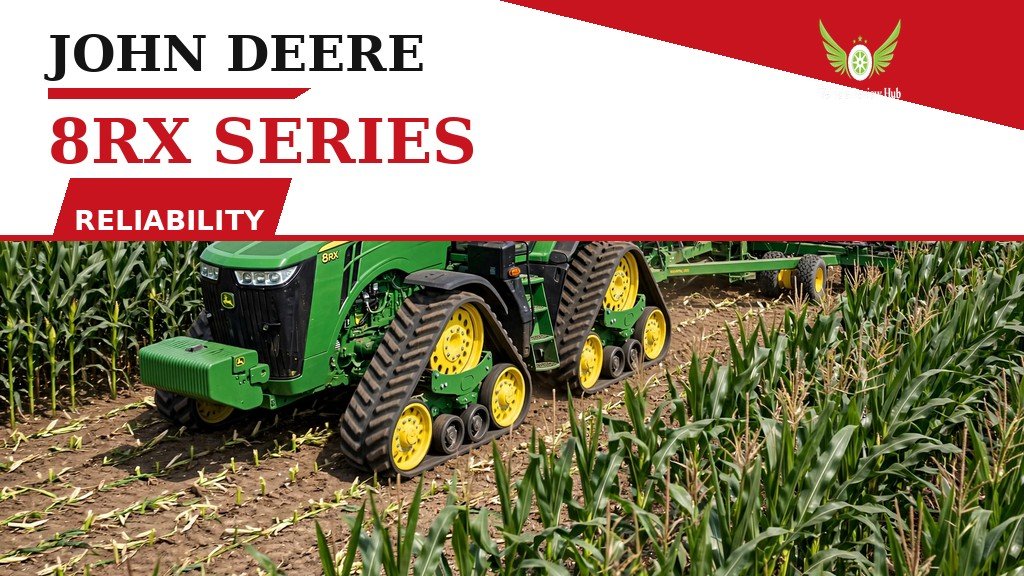
Good John Deere 8RX Series maintenance follows the same 500-hour engine oil, 1,500-hour hydraulic and transmission oil, and 6,000-hour coolant intervals as the wheeled 8R, but adds a critical fourth discipline: track care. Four rubber belt tracks are the single most expensive wear item on the machine, and their life is set almost entirely by how the tractor is operated and inspected — roading wears tread up to 15 times faster than field work, per Deere’s own operator guidance.
This guide covers the complete John Deere 8RX Series maintenance schedule, real-world service costs, long-term reliability of the 9.0L PowerTech engine and track undercarriage, the problems owners actually report, and a used-tractor inspection checklist that pays special attention to track condition. Every interval and figure in this John Deere 8RX Series maintenance guide is sourced from Deere operator manuals, dealer spec sheets, and owner reports — never guessed.
John Deere 8RX Series Maintenance Schedule and Service Costs
The 8RX 310, 340, 370, and 410 share the PowerTech PSS 9.0L six-cylinder, and John Deere 8RX Series maintenance starts from knowing that one powertrain covers the whole line (549 cu in) and the e23 PowerShift or AutoPowr IVT transmissions, so one schedule covers the whole line. (Note: the 8RX range starts at 310 hp — there are no 8RX 230/250/280 models; those numbers belong to the wheeled 8R.) Service intervals below come from Deere dealer spec sheets for the 8RX 370, cross-checked against the 8R line.
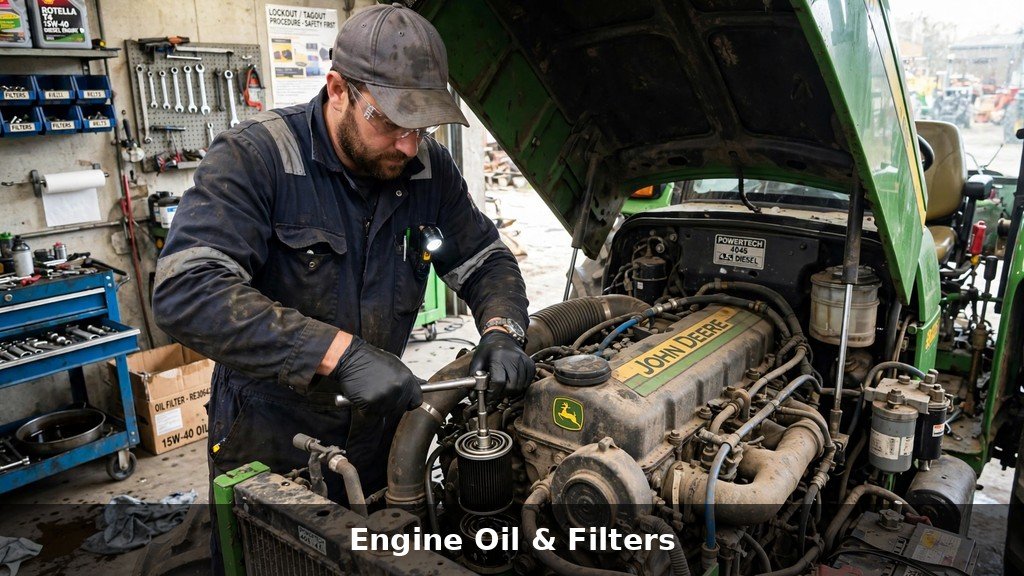
Engine Oil, Fuel Filters, Air Filters and Cooling System
Engine oil and filter change every 500 hours (Plus-50 II oil; 250 hours with lesser oils), or annually — whichever comes first. Crankcase capacity is 7 gallons on the 8RX 370. Fuel filters run on the same 500-hour cadence: a 10-micron primary with water separator and service indicator, plus a 2-micron spin-on secondary. Drain the water separator daily in humid seasons. Air filtration is a dual-stage dry system with exhaust aspiration; the primary element gets replaced as the restriction indicator demands, the secondary safety element at 4,500 hours.
Cooling-system care matters more than most owners expect. The 8RX carries 11.2 gallons of coolant, changed at 6,000 hours or 6 years. Clean the grille, side screens, and radiator fins on the daily or 10-hour walkaround — blocked screens are the single most common cause of overheating complaints on owner forums, and Deere’s interval guidance singles out cooling-system checks for emphasis. The video below gives a full overview of the 8RX platform, useful context for the service points in this guide:
US Final Tier 4 aftertreatment is DOC + DPF + SCR with DEF (9.8-gallon tank; engine family MJDXL09.0333 on the 8RX 370), with automatic regeneration and a parked-cleaning option. Keep DEF fresh — stale DEF is the leading cause of SCR derates — and let parked regens finish, both non-negotiable in John Deere 8RX Series maintenance. DPF ash service is a dealer-level job due well past 4,000 hours. Our 8R Series maintenance guide covers the same 9.0L aftertreatment system, and John Deere 8RX Series maintenance shares nearly every fluid interval with its wheeled sibling on the wheeled models in more detail.
Transmission, Hydraulic Oil, Tracks and Lubrication
Transmission and hydraulic oil changes land at 1,500 hours or 2 years. The 8RX 370 holds 66.1 gallons in the trans-hydraulic system at 76–80-inch tread spacing (68.8 at 88–120 inches) — a big oil bill, so use Hy-Gard. Filters change at 750 hours. The closed-center PFC hydraulics deliver 60 gpm standard or 84 gpm with the dual-pump option.
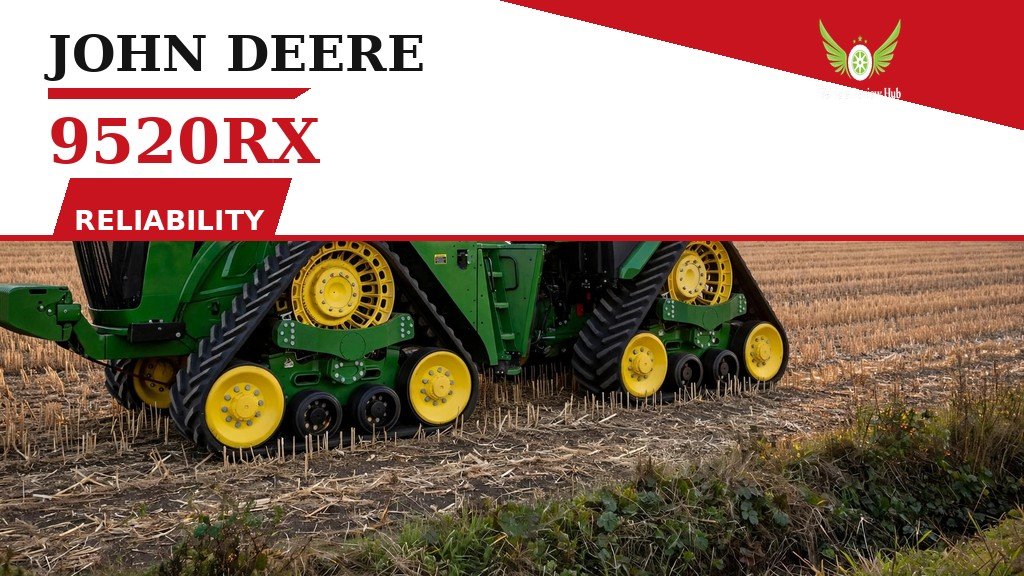
Track care is the 8RX-specific discipline in John Deere 8RX Series maintenance. Deere’s operator manual prescribes track and track-alignment inspection on the daily or 10-hour interval: check tread lugs and guide lugs for cuts, chunking, and abnormal wear, per the Deere track-inspection procedure. Maintain correct track tension — too low accelerates wear on wheels and the belt’s inner surface through slippage and lets material pack in; too high overloads undercarriage bearings, internal track cables, and the track frame. After installing new or thoroughly cleaned track belts (or friction components like drive wheels, mid-rollers, and front idlers), break them in before any high-speed roading: work the tractor in loose soil for at least 15 minutes, or apply a dry lubricant such as talc or oil-dry absorbent to the belt/drive-wheel contact area — clean, dry components generate damaging heat. Avoid roading at high speed on new tracks during the first 50–100 hours, since guide-lug damage is most likely then.
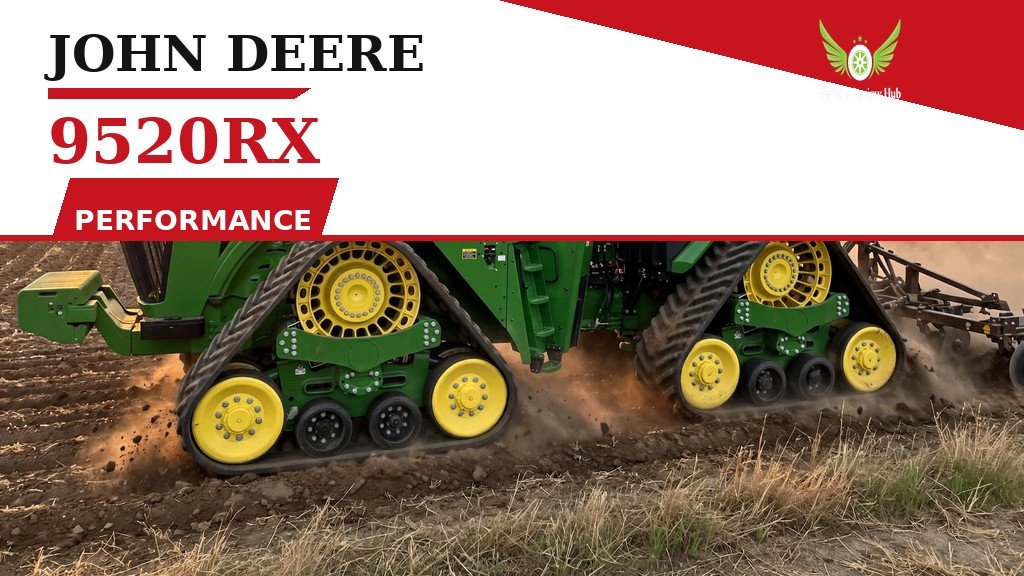
Grease the undercarriage per the manual’s lubrication chart — standard John Deere 8RX Series maintenance that too many owners skip, keep rocks and sharp debris out of the track frame (the primary cause of localized track tears and moisture entry into the steel carcass), and minimize spot turns and counter-rotation on hard surfaces. Track life is directly tied to operating technique: excessive roading can push tread wear to 15 times the field rate, and Deere notes the least wear occurs on a properly balanced machine — both front-heavy and rear-heavy setups increase treadbar compression.
John Deere 8RX Series Reliability and Long-Term Durability
The 8RX is mechanically an 8R with a four-track undercarriage, so John Deere 8RX Series maintenance and reliability both follow the wheeled 8R’s record closely. The PowerTech PSS 9.0L is a wet-sleeve, dual-turbo six-cylinder with air-to-air aftercooling and cooled EGR — a proven 8R-family architecture. The track system (Camso 4500 positive-drive belts, polyurethane mid-rollers) is a mature supplier design, and John Deere 8RX Series maintenance keeps it that way through inspection, not parts replacement.
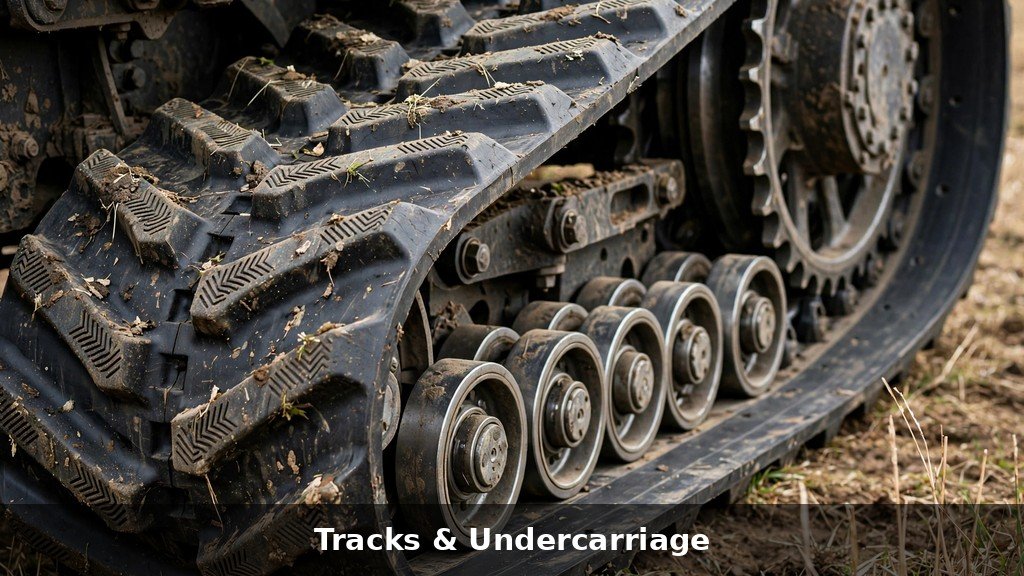
Engine, Transmission, Hydraulic System and Track Components
The 9.0L engine’s reliability record is strong: wet-sleeve liners make in-frame overhauls practical, and the dual-turbo arrangement spreads boost duty. The e23 PowerShift is a long-serving Deere design; the AutoPowr IVT option has a solid field record. Age-related hydraulic items are SCV coupler leaks and weeping hoses at high hours — normal wear, not systemic failure, and routine John Deere 8RX Series maintenance catches them early.
Track components are the durability variable unique to the 8RX ownership picture. The steel-cord belt carcass is designed to outlast the tread lugs, provided moisture never reaches the cables — which is why cuts and chunking need prompt attention. Mid-rollers, front idlers, and drive wheels are wear items with replacement costs far below a full belt. Polyurethane mid-rollers run quieter and kinder on belts than steel alternatives. Properly maintained, the undercarriage is a multi-thousand-hour system; neglected, it becomes the most expensive repair on the tractor.
Factors Affecting Service Life, Downtime and Repair Costs
Three factors dominate 8RX service life, and getting all three right is the essence of John Deere 8RX Series maintenance. First, operating technique: field work versus roading is the difference between 3,000-plus-hour track life and premature belt replacement. Second, maintenance discipline — the 500/1,500/6,000-hour fluid schedule plus daily track inspections. Third, software: Deere tractors receive regular software updates that fix shift calibration, emissions, and display issues; machines that skip updates accumulate the fault-code cascades owners complain about. Five-year JDLink telematics with Connected Support comes standard, so remote diagnostics are available.
Warranty context, stated precisely: Deere’s agricultural warranty statement covers tractors for 24 months or 2,000 hours, whichever comes first. (The 60-month/2,000-hour powertrain extension is listed specifically for 5E Series tractors — do not assume it on an 8RX.) Paid PowerGard plans are available. Downtime is usually driven by track-component parts availability rather than the engine or transmission. For the ownership math around these costs — a core part of planning John Deere 8RX Series maintenance budgets — see our John Deere 8RX Series ownership cost guide.
John Deere 8RX Series Common Problems and Warning Signs
No pattern of catastrophic failures defines the 8RX line, which makes John Deere 8RX Series maintenance mostly a matter of disciplined routine care. The problems owners actually report cluster around emissions aftertreatment, electrical/software, hydraulics, and — uniquely — the track undercarriage. All are owner-attributed from forums and dealer service notes, not Deere engineering statements.
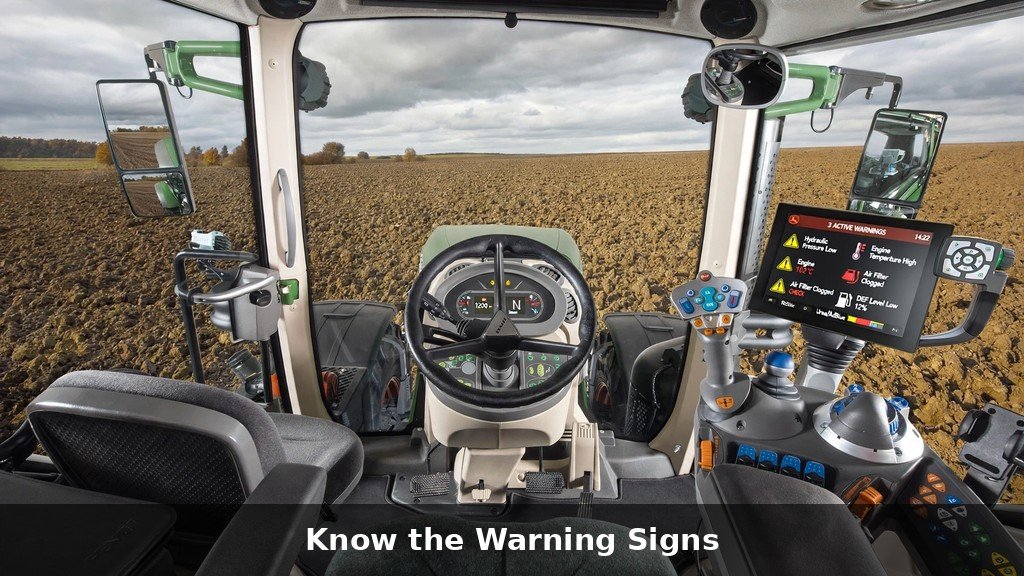
Engine, Electrical, Hydraulic and Transmission Symptoms
DEF and SCR faults top the list: stale DEF, NOx sensor codes, and derates after interrupted regenerations. If the cornerpost display shows an SCR emission fault, check DEF quality and age first — the cheapest fix and the most common cause. DOC inlet temperature sensor faults appear in owner reports too. Electrical complaints are usually software-level: code cascades, display glitches, and e23 harsh shifting that dealer recalibration resolves. Hydraulic symptoms center on SCV coupler leaks and weeping hoses at high hours.
Overheating follows the classic pattern: blocked grille and side screens, low or degraded coolant, and debris-packed radiator fins. On a 370–410 hp machine pulling heavy draft, cooling margins are real but not generous — keep the screens clean and watch the temperature gauge in high-ambient conditions. The 7R Series maintenance guide documents the same aftertreatment and software symptom set, showing that John Deere 8RX Series maintenance issues are rarely unique to the four-track models on the smaller row-crop line.
Track Wear, Alignment and Undercarriage Inspection
Track-specific warning signs: uneven tread wear left versus right (alignment issue), new undercarriage vibration or noise (worn belt, roller/idler wear, packed debris), visible cuts or chunking with exposed cords (stop and replace — moisture corrodes the steel carcass), and track tension that won’t hold after adjustment (stretched carcass or leaking adjuster). Frequent de-tracking, even after correct tensioning, points to bent idlers, worn rollers, guide-bar damage, or packed debris.
Track belt replacement is the big-ticket item in John Deere 8RX Series maintenance: budget roughly $8,000–$12,000+ per belt installed (labeled estimate — varies by width and region), times four on a full set. That is why John Deere 8RX Series maintenance planning — and the used-tractor inspection below — spends most of its time on the undercarriage. A machine with 70%-worn belts priced like one with fresh tracks is a $30,000–$40,000 mistake waiting to happen. The 8RX repair guide at TractorsBy documents the same diagnostic approach for vibration and track noise.
John Deere 8RX Series Safety Checks and Used-Tractor Inspection
An 8RX inspection is a standard large-tractor check plus a forensic look at the tracks, and it is the most valuable single step in John Deere 8RX Series maintenance for used buyers. Budget an hour, bring a flashlight and a tread-depth gauge, and insist on a cold start — this is John Deere 8RX Series maintenance at its most valuable. Service history matters enormously: dated Deere maintenance records are the best predictor of remaining life on both the powertrain and the undercarriage.
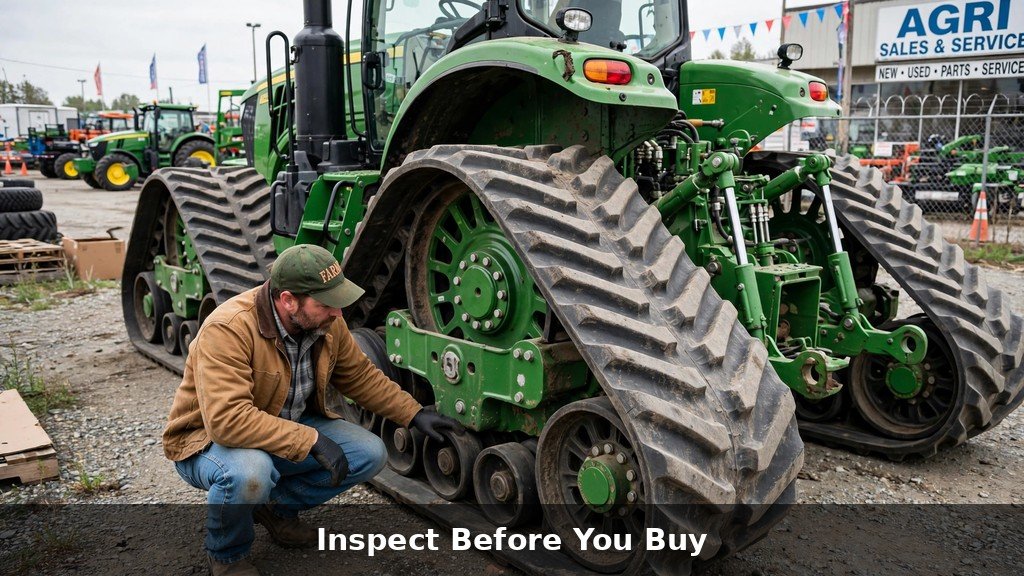
Checking Service History, Updates and Applicable Recalls
Ask for dated service records covering the 500-hour engine services — proof of real John Deere 8RX Series maintenance, 1,500-hour trans-hydraulic services, and any track work. Check that software is current — ask the dealer to confirm the latest updates are loaded. Pull the hour meter against the service dates; gaps suggest skipped intervals. Run the serial number through Deere’s lookup or call 800-537-8233 for open campaigns — a two-minute step in John Deere 8RX Series maintenance that used buyers should never skip.
On recalls, be precise: we could not verify any CPSC release covering the 8RX line. The September 2024 brake recall (about 147,900 units) covered 2017–2024 1023E, 1025R, and 2025R compact utility tractors only — not the 8RX. Treat any claimed “8RX recall” as reported rather than confirmed unless you see the original CPSC release or a Deere service bulletin. Our 8RX Series performance guide covers the operating side — what proper John Deere 8RX Series maintenance protects, and what to verify on a test drive.
Inspecting Tracks, Brakes, Hydraulics and Transmission Operation
Tracks first: measure tread-lug depth on all four belts and compare — uneven wear side-to-side flags alignment problems. Look for cuts, chunking, exposed steel cords, and missing or sheared inner guide lugs. Check track tension and look for packed debris around rollers and idlers. Rock the machine gently and listen for clunks that suggest worn mid-rollers or loose hardware. Ask when the belts were installed and whether the break-in procedure was followed.
Then the standard checks: cold-start the 9.0L and watch for abnormal smoke; cycle every SCV and watch for leaks; engage the PTO and listen; shift the e23 through its ranges feeling for harsh shifts that need recalibration; check brake pedal feel and parking brake hold; inspect track frames for cracks and drive wheels for wear. Verify the DEF system: fresh DEF, no active SCR codes, and completed regen history on the display. A pre-purchase inspection by a Deere technician, including fluid analysis, is money well spent at this price point and closes out the John Deere 8RX Series maintenance checklist for buyers — see the buying walkthrough in our 8RX ownership and buying guide.
| Service Item | Interval | Notes |
|---|---|---|
| Engine oil + filter (Plus-50 II) | 500 hours / annually | 7-gal crankcase; 250h with lesser oils |
| Fuel filters (10-micron + 2-micron) | 500 hours | Drain water separator daily in season |
| Trans-hydraulic filters | 750 hours | 66.1–68.8 gal system capacity |
| Trans-hydraulic oil | 1,500 hours / 2 years | Hy-Gard; big oil bill — plan ahead |
| Air filter secondary element | 4,500 hours | Primary per restriction indicator |
| Coolant (COOL-GARD II) | 6,000 hours / 6 years | 11.2-gal system; clean screens daily |
| Track + alignment inspection | Daily / 10 hours | Tension, lugs, debris, uneven wear |
| All intervals from Deere dealer spec sheets (8RX 370) and operator-manual track procedures. Service costs (estimates): DIY 500h service ~$400–$600 in parts; dealer 500h service ~$1,200–$2,000; 1,500h service ~$2,000–$3,500; track belt replacement ~$8,000–$12,000+ per belt installed. | ||
Frequently Asked Questions About John Deere 8RX Series Maintenance
Quick answers to the maintenance questions 8RX owners and shoppers ask most often, drawn from the John Deere 8RX Series maintenance schedule and owner experience above.
How often does an 8RX need an oil change?
Every 500 hours or annually with Plus-50 II oil (250 hours with lesser oils). The 8RX 370 crankcase holds 7 gallons, so buy oil accordingly. Fuel filters run on the same 500-hour cadence.
Does the 8RX need DPF regeneration?
Yes. The US Final Tier 4 8RX uses DOC + DPF + SCR with DEF, and regeneration is automatic during normal work. If the cornerpost display requests a parked cleaning, let it finish — interrupted regens are a leading cause of the derate faults owners report. DPF ash service is a dealer-level job due well past 4,000 hours.
How long do 8RX track belts last?
It depends almost entirely on use: field work yields multi-thousand-hour belt life, while excessive roading can push tread wear to 15 times the field rate. Balanced ballast, correct track tension, daily inspections, and avoiding spot turns on hard surfaces all extend life. There is no fixed replacement interval — inspect tread depth and carcass condition.
What does it cost to replace 8RX track belts?
Budget roughly $8,000–$12,000+ per belt installed (labeled estimate — varies by belt width and region). A full set of four is a $30,000–$45,000+ job, which is why track condition dominates used-8RX pricing. Factor remaining belt life into every used purchase.
What warranty does the 8RX carry?
Deere’s agricultural warranty statement covers tractors for 24 months or 2,000 hours, whichever comes first. The 60-month/2,000-hour powertrain extension is listed specifically for 5E Series tractors in the statement — do not assume it on an 8RX. Paid PowerGard extended plans are available through your dealer.
Are there any recalls on the 8RX?
We could not verify any CPSC release covering the 8RX line. The September 2024 brake recall covered 1023E, 1025R, and 2025R compact utility tractors only. Run the serial number through Deere’s lookup or call 800-537-8233 to confirm open campaigns on any used machine.