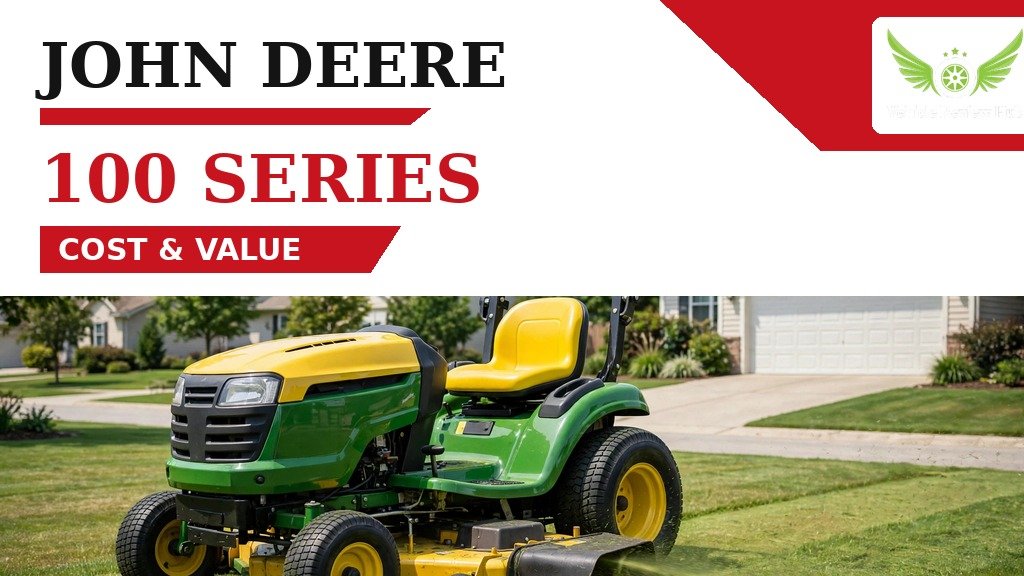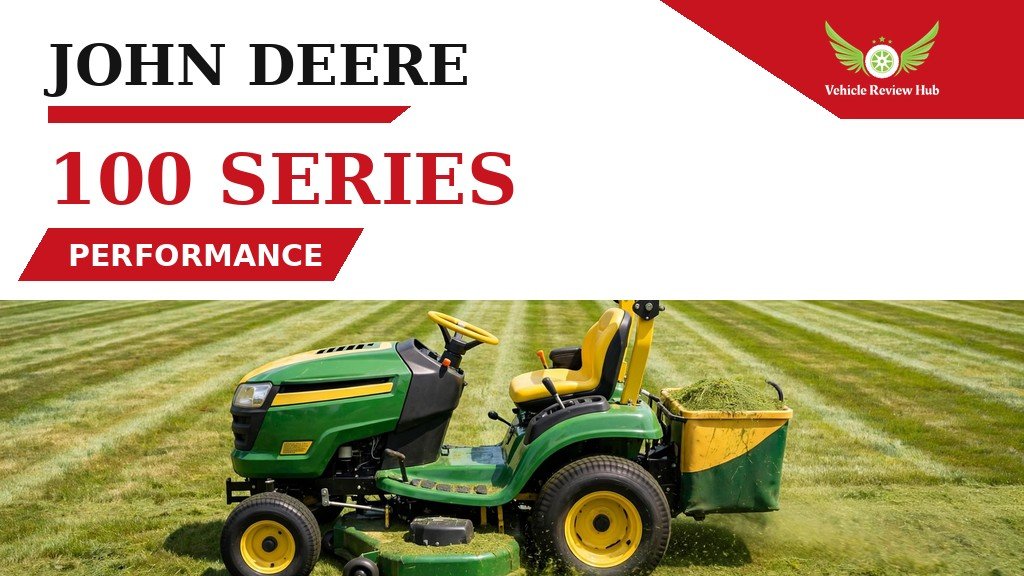
John Deere 100 Series performance comes down to a simple question: can a homeowner mower cut a 1- to 2-acre lawn cleanly, week after week, without turning Saturday morning into a wrestling match? For most flat to gently rolling lawns, the answer is yes. The Edge decks cut evenly at normal speeds, the hydrostatic pedals make speed control easy for beginners, and the 2.4-gallon tank covers a typical weekly mow. John Deere 100 Series performance runs out of room on steep slopes, very wet grass, and properties much bigger than about 3 acres, where a heavier garden tractor or zero-turn makes more sense.
John Deere 100 Series Mowing Performance and Cutting Quality
The deck does most of the talking on a lawn tractor, and the 100 Series uses the same basic Edge deck idea across the range: a stamped-steel shell with a deep dome that lifts grass before cutting. This section breaks down John Deere 100 Series performance by cut quality, mowing time, and handling around trees and beds.
Grass Height, Cutting Width and Lawn Finish
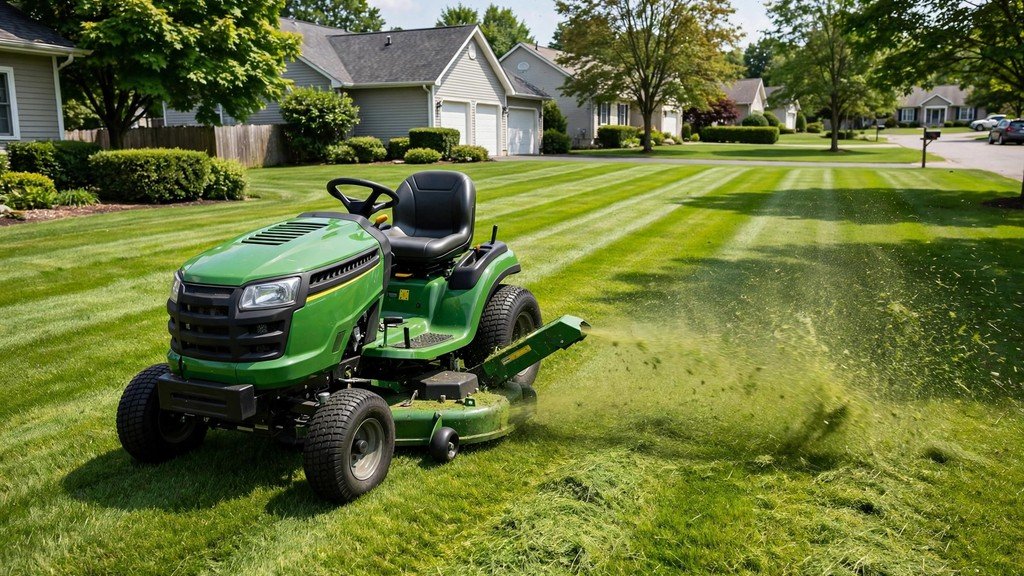
Cut quality on the 100 Series is generally good when two things are right: sharp blades and the right cutting height. The decks offer 13 cutting positions from 1 to 4 inches in quarter-inch steps, and the practical rule most lawn-care guides repeat is to never cut more than a third of the grass blade at once. On a lawn kept around 3 to 3.5 inches, that means mowing weekly in spring growth and stretching to every 10 days when growth slows. Scalping — pale, scraped patches — usually means the deck is set too low or out of level, not that the mower lacks power. A useful check from repair guides: on level ground, the front blade tips should sit about 1/8 to 1/4 inch lower than the rear tips. Too high hurts discharge; too low scalps every small rise.
Deck width changes the finish less than most buyers expect, but it changes mowing time a lot. The 42-inch deck uses two blades; the 48- and 54-inch decks use three, spreading clippings more evenly on wide passes. In thick spring grass, the 17.5 hp single-cylinder S100 can bog down where the 22 hp V-twin models hold blade speed better — the twin cylinders are the real difference, not just the horsepower number. That is why John Deere 100 Series performance differs between the S100 and the S120 or S130 despite the same deck width: the V-twin holds its revs in heavy grass, so the cut stays even instead of going stringy.
Mowing Time, Turning and Handling Around Obstacles
Mowing time is mostly deck width times ground speed, minus time lost turning and trimming. At the 5.5 mph top speed, a 42-inch deck covers roughly 2 acres per hour in straight-line theory — but real lawns are not straight lines. With overlap, end-of-row turns, and time around trees and beds, a realistic planning figure for John Deere 100 Series performance is about 1 to 1.3 acres per hour for a 42-inch deck, 1.4 to 1.6 for a 48-inch deck, and 1.6 to 1.9 for the 54-inch deck on open ground. Those are worked estimates, not factory ratings — Deere publishes ground speed, not acres per hour.
Turning is where John Deere 100 Series performance earns its reputation for easy handling. The S100 and S130 both list an 18-inch turning radius with a 25-inch uncut circle, tight enough to circle most yard trees in one or two passes and work around raised beds without constant three-point turns.
The video below is a comparison that puts the S130’s 42-inch deck to work in thick grass against a wider 50-inch competitor deck, showing how the Deere deck handles clippings and airflow — a useful look at John Deere 100 Series performance where it counts, in the grass:
John Deere 100 Series Fuel Consumption and Runtime
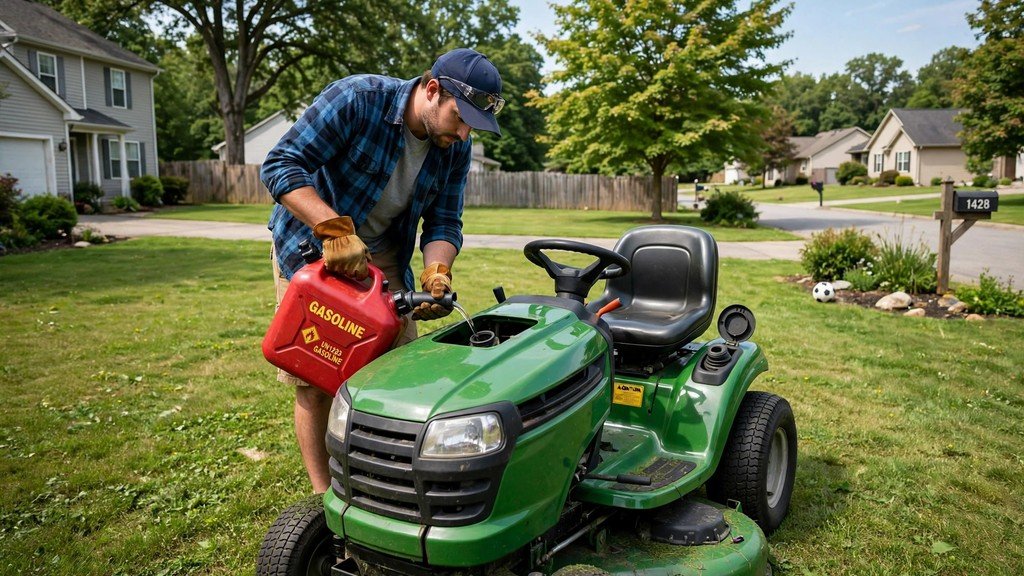
Fuel is the running cost every owner notices first, and the figure Deere does not publish: no factory gallons-per-hour rating exists for the 100 Series. What Deere does publish is the tank — 2.4 gallons on the S100 and S130, per dealer spec sheets such as James River Equipment’s S130 listing — so John Deere 100 Series performance on fuel has to be worked out from that tank and how owners mow.
Fuel Use During Regular Mowing and Bagging
As a planning estimate for John Deere 100 Series performance — not a Deere rating — a 100 Series tractor burns roughly 1 gallon per hour under normal mowing load on flat ground. At that rate, a full 2.4-gallon tank covers about 2 to 2.5 hours of mowing, enough for roughly 2 to 3 acres of open lawn with a 42-inch deck. The single-cylinder S100 sips slightly less on light cuts, while the V-twins drink a little more under heavy load.
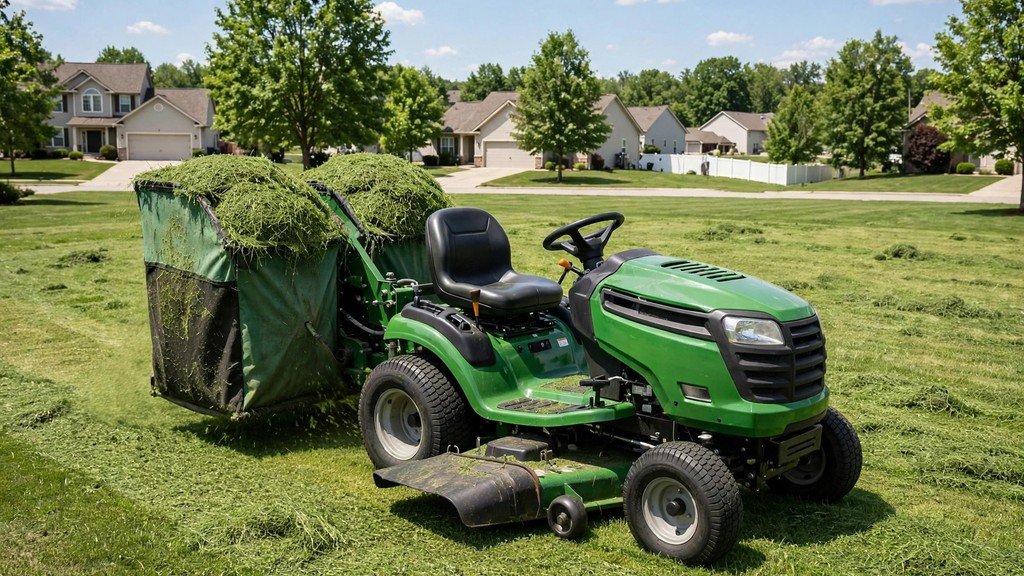
Bagging changes the math in two ways. First, the bagger adds weight and drag, so the engine works harder, especially in thick or damp grass. Second, and usually bigger, bagging adds stops: fill, drive to the dump spot, empty, drive back. On a 1-acre lawn in heavy spring growth, those stops can add 15 to 25 minutes and push fuel use toward the top of the planning range. Side discharge is the lightest load of the three, which is one reason John Deere 100 Series performance feels easiest on dry grass.
How Lawn Size, Grass Conditions and Engine Load Affect Fuel Use
Three things shape John Deere 100 Series performance on fuel more than the model badge does. Lawn size sets the baseline: a half-acre flat lawn might take 30 minutes and well under half a tank, while a 2-acre lawn with trees and beds can take 90 minutes and most of a tank. Grass conditions come next: tall, wet, or weedy grass loads the blades, and mowing it in one low pass instead of two higher passes can double fuel burn for the same lawn. Engine load is the third: a V-twin holding blade speed in thick grass burns more per minute, but finishes faster.
The practical takeaway for John Deere 100 Series performance is to mow on a schedule, not on a crisis. Weekly mowing at 3 to 3.5 inches keeps load light and fuel use near the planning estimate. Letting the lawn grow to 6 inches and cutting it to 3 in one pass breaks the one-third rule, loads the engine, leaves clumps, and burns the most fuel.
| Lawn size (flat, weekly cut) | 42-in. deck time (estimate) | Fuel per mow (estimate) |
|---|---|---|
| 0.5 acre | 25–35 minutes | 0.4–0.6 gal |
| 1 acre | 45–60 minutes | 0.8–1.0 gal |
| 2 acres | 90–120 minutes | 1.5–2.0 gal |
| One 2.4-gal tank covers | About 2–2.5 hours of mowing | Roughly 2–3 acres, conditions permitting |
All figures are planning estimates for John Deere 100 Series performance — not Deere ratings.
John Deere 100 Series Handling, Comfort and Terrain
A lawn tractor is only as good as its controls on a long Saturday mow, and the 100 Series is built around one idea: everything works with your feet and one hand. This section covers how John Deere 100 Series performance holds up on pedals, steering, seating, slopes, and the wet, uneven ground behind most homeowner complaints.
Hydrostatic Pedals, Steering and Operator Comfort
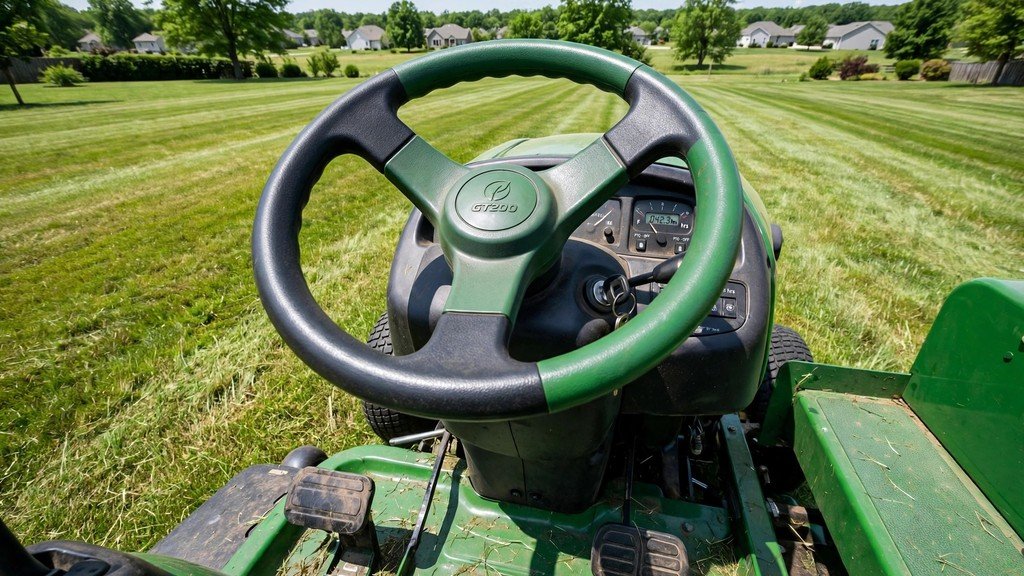
Every 100 Series model uses a hydrostatic transmission with side-by-side pedals: right pedal forward, left pedal reverse, ease off to slow down. No gears to shift, no clutch to ride — first-time riders usually feel confident within minutes. The TLT200 transaxle on the S100 through S140 gives smooth control from a crawl to the 5.5 mph top speed, with reverse at 3.2 mph — fast enough to back out of tight spots without feeling twitchy.
Steering is sector-and-pinion with a 12-inch wheel — simple, proven, and a little heavy at very low speed compared with the power steering on bigger garden tractors. It is precise enough for trimming around beds, but not a zero-turn: the 18-inch turning radius and 25-inch uncut circle still leave a small ring around trees and posts for the trimmer. The seat helps on longer mows: a 15-inch backrest, 5.5 inches of fore-aft adjustment while seated, and a tilt suspension on coil springs. For John Deere 100 Series performance over a full season, the comfort story is simple: easy controls, a decent seat, no surprises.
Slopes, Uneven Ground, Wet Grass and Traction Limits
Slopes are the firmest limit on John Deere 100 Series performance, and the manuals are blunt about them. Deere’s lawn-tractor guidance puts rollover risk low on slopes of 10 degrees or less and advises against steeper slopes — mow up and down, never across, and never on wet grass, where tires can lose grip even though the brakes work. Some Deere manuals for larger machines allow steeper angles, but the lawn-tractor guidance is conservative, and your own manual governs; see the Deere lawn-tractor operator’s manual on slope safety.
On uneven ground, John Deere 100 Series performance is shaped by the line’s light weight — roughly 415 to 530 pounds — which is both a help and a limit. It maneuvers easily and is kind to soft turf, but traction runs out sooner than on a heavier garden tractor. Wet grass is the classic trap: deck clogs, clippings clump, tires spin on turns, cut goes ragged. The right move is to wait for the grass to dry, raise the deck a notch, and slow down rather than forcing a low, fast cut. Two-wheel drive with no differential lock means one spinning wheel can stop you on a slick patch, so even tire pressures and clean tread matter more on this class than owners expect. The 100 Series maintenance guide covers what to check when traction or steering starts to feel off.
John Deere 100 Series Real-World Owner Experience
Brochure specs describe a mower; owners describe a Saturday routine. The consistent owner story is that it starts easily, cuts evenly on flat lawns, and is simple enough for a teenager or grandparent to run — and its limits show up where the specs say they will: bigger lawns, steeper ground, heavier attachments. This section sums up John Deere 100 Series performance the way owners live with it.
Cutting Performance, Ease of Use and Everyday Limitations
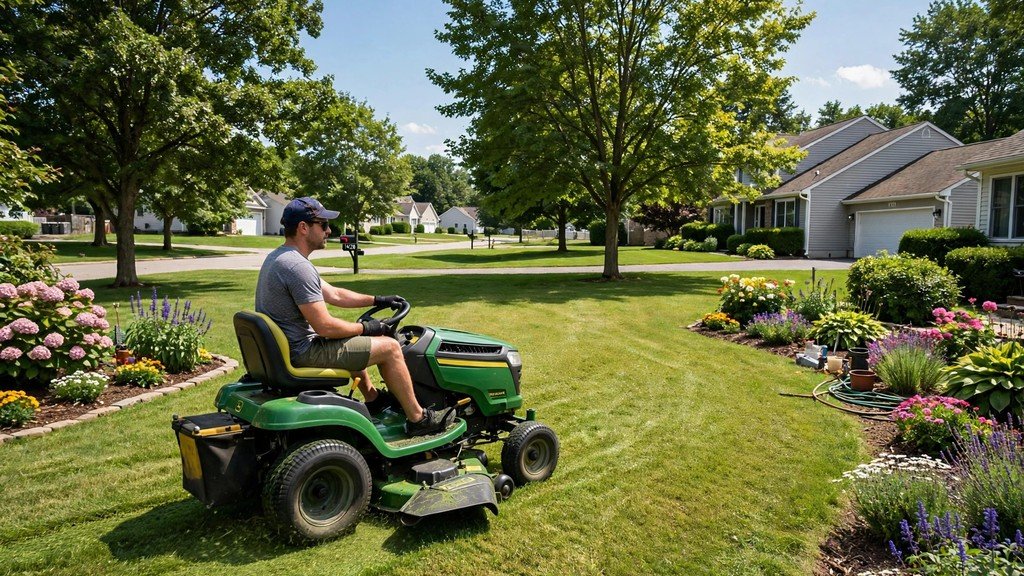
Owners consistently praise three things: the even cut, the easy hydrostatic pedals, and the simple controls. The S120 draws high marks for fuel efficiency and ease of use; the S130 draws a more mixed response — praise for power and maneuverability, plus some complaints about fuel use and plastic body parts. That split deserves care: the S120 and S130 share the same 22 hp V-twin and 42-inch deck, so a reported fuel gap says more about conditions and habits than the engine. The honest owner verdict on John Deere 100 Series performance is a strong homeowner mower, not a light commercial machine: daily mowing or heavy weekend towing will wear it faster than the warranty implies.
The everyday limitations are predictable. The 2-year, 120-hour bumper-to-bumper warranty sounds generous until you realize 120 hours arrives fast on a 2-acre lawn — roughly two seasons of weekly mowing — so the clock is the hour meter, not the calendar. The stamped-steel deck is fine for lawns but dents more easily than a fabricated deck if you hit stumps or rocks. And the 500-pound towing limit covers a garden cart, spreader, or small sprayer — not a loaded utility trailer or heavy roller. Everglades Farm Equipment’s S130 page lists the full spec sheet behind these figures, and Half-Way Motors’ 2026 S100 listing confirms the entry model’s hydrostatic pedals and 500-pound towing rating.
| Model | Engine | Deck | Best-fit lawn |
|---|---|---|---|
| S100 | 17.5 hp single-cylinder | 42 in. | Up to 1 acre, flat |
| S120 / S130 | 22 hp V-twin | 42 in. | 1–2 acres |
| S140 / S160 | 22–24 hp V-twin | 48 in. | 2–3 acres |
| S170 / S180 | 24 hp V-twin ELS | 48 / 54 in. | 3+ acres, open ground |
| All models | Gasoline, hydrostatic pedals | 2.4-gal tank, 5.5 mph top speed | 2-yr / 120-hr warranty |
Choosing a Deck Size for Your Lawn and Property Layout
For John Deere 100 Series performance, deck size is really a question about your lawn’s shape, not just its size. A 42-inch deck is the right call for lawns under about 1.5 acres with trees, beds, gates, and tight corners: it turns tighter, fits a 48-inch gate with room to spare, and leaves less trimming. A 48-inch deck suits 1.5- to 3-acre lawns with longer straight runs. The 54-inch deck on the S180 is for big, open lawns of 3 acres and up; on a tree-filled acre it mostly adds trimming and gate problems. The 100 Series review compares all seven models and prices in detail, the 100 Series ownership cost guide works through what each size costs to run yearly, and ProToolReviews’ model comparison puts the S100-to-S180 price ladder in one place.
Two practical checks settle the choice. First, measure your narrowest gate and tightest tree gap: if a wider deck cannot pass comfortably, it is a liability. Second, be honest about slopes and wet spots: if much of the lawn is steep or soggy, a wider deck will not fix traction — it makes the tractor work harder. And if the property is really 5 acres of rough, hilly ground, no 100 Series model is the right tool; that is where a sub-compact tractor like the 1023E enters the conversation. For the suburban lawns this line is built for, though, John Deere 100 Series performance is exactly what it promises: an easy, even cut at a homeowner price.
John Deere 100 Series Performance FAQs
The questions homeowners ask most about John Deere 100 Series performance — fuel, mowing time, hills, decks, everyday limits — answered from the specs and owner experience above.
How much fuel does a John Deere 100 Series use per hour?
Deere publishes no gallons-per-hour rating, but as a planning estimate for John Deere 100 Series performance, figure roughly 1 gallon per hour on flat ground. Light weekly cuts use less; tall, wet, or hilly mowing uses more.
How long does a full tank last?
The 2.4-gallon tank covers about 2 to 2.5 hours of mowing at the planning rate, or roughly 2 to 3 acres of open lawn with a 42-inch deck. For John Deere 100 Series performance planning, treat that as a typical range — bagging and hills shorten it.
How many acres per hour can a 42-inch deck mow?
About 1 to 1.3 acres per hour in real conditions, once overlap, turns, and obstacles are counted. Straight-line theory says closer to 2 acres per hour at 5.5 mph, but no real lawn mows in straight lines — judge John Deere 100 Series performance on time by the lower figure.
Is the S120 or S130 better on fuel?
On paper, neither: both use the same 22 hp V-twin and 42-inch deck. Some owners report the S130 feeling thirstier, but that gap likely comes from conditions and habits, not the engine. For John Deere 100 Series performance comparisons, treat single-owner fuel stories as hints, not measurements.
Can a John Deere 100 Series mow hills?
Gentle slopes of 10 degrees or less, mowed up and down rather than across, are within its guidance. Steeper slopes and wet grass are beyond it — if the machine creeps downhill, stop, disengage the blades, and back straight down slowly.
Does the 100 Series bag, mulch, or side discharge?
All three, depending on setup. Side discharge is standard and the lightest engine load. Bagger and mulch-kit options are available; bagging adds dump trips that cost time and fuel, while mulching recuts clippings and costs power in tall grass. For John Deere 100 Series performance, discharge is easiest on dry grass.
What is the turning radius?
18 inches, with a 25-inch uncut circle, on the S100 and S130 — tight enough to circle most yard trees in one or two passes, though a small ring around trees and posts still needs a trimmer. John Deere 100 Series performance around obstacles benefits most from the hydrostatic pedals, not the radius alone.
How fast does a 100 Series go?
Forward speed tops out at 5.5 mph and reverse at 3.2 mph, with smooth hydrostatic control in between. Top speed matters less than control: most mowing happens well below 5.5 mph, and John Deere 100 Series performance on a small lawn is won in turns and trimming, not straight runs.
Does a single-cylinder or V-twin engine matter for cutting?
Yes, mainly in thick grass. The V-twin holds blade speed better under load, so the cut stays even where a single-cylinder can bog down and leave stringy patches. On light weekly cuts the difference is small — which is why John Deere 100 Series performance on the S100 still satisfies owners with smaller, well-kept lawns.
What size lawn is too big for a 100 Series?
Past about 3 acres of open ground, even the 54-inch S180 starts to feel slow, and rough or hilly 5-acre properties are beyond the line entirely. For John Deere 100 Series performance, the sweet spot is 0.5 to 3 acres matched to deck size; bigger or rougher ground calls for a garden tractor or sub-compact.
Does wet grass hurt performance?
Yes, in three ways: the deck clogs, clippings clump instead of dispersing, and the tires lose grip on turns. John Deere 100 Series performance drops noticeably on wet grass, so wait for it to dry, raise the deck a notch, and slow down rather than forcing a low, fast cut.
Is cruise control worth it on a 100 Series?
On long straight runs, yes. Standard on the S130 and up, it saves fatigue on 1- to 2-acre lawns with open stretches; on small, obstacle-filled lawns you will rarely use it, since speed changes constantly around trees and beds.