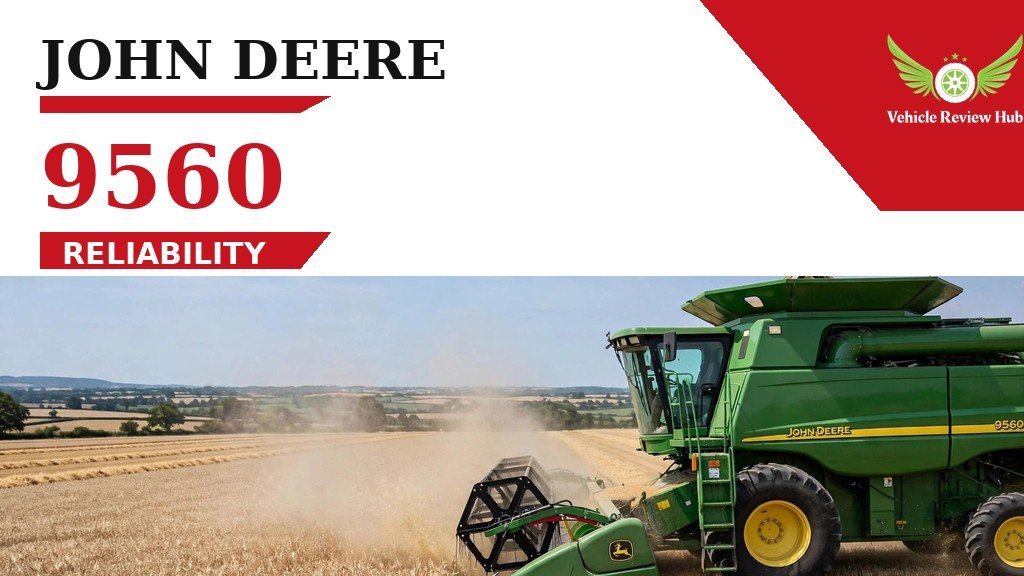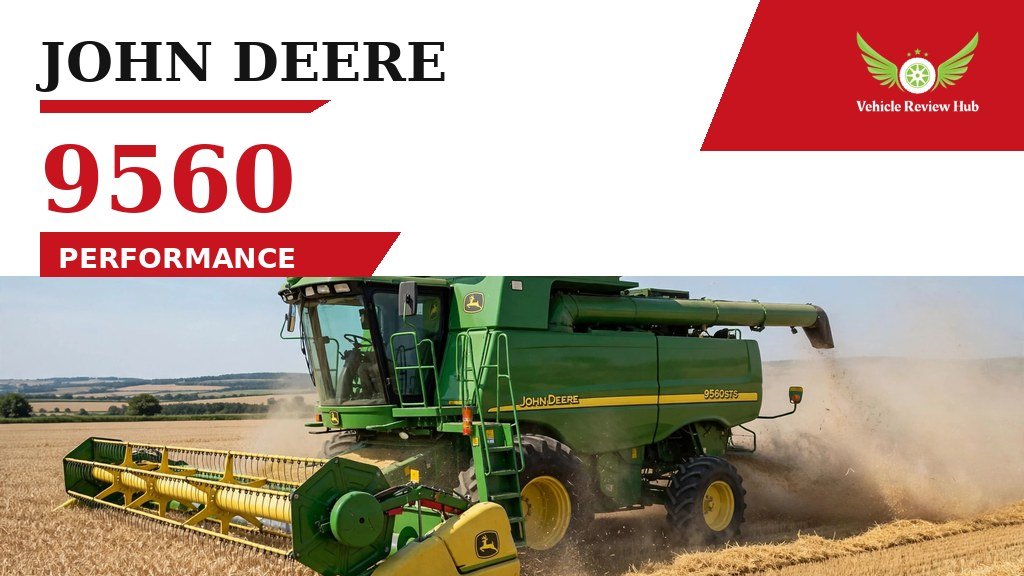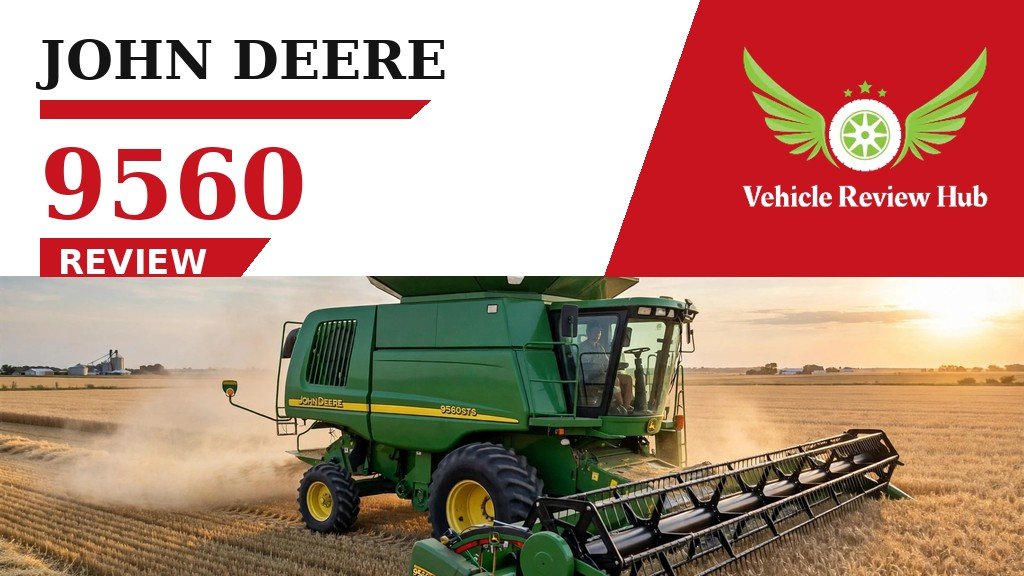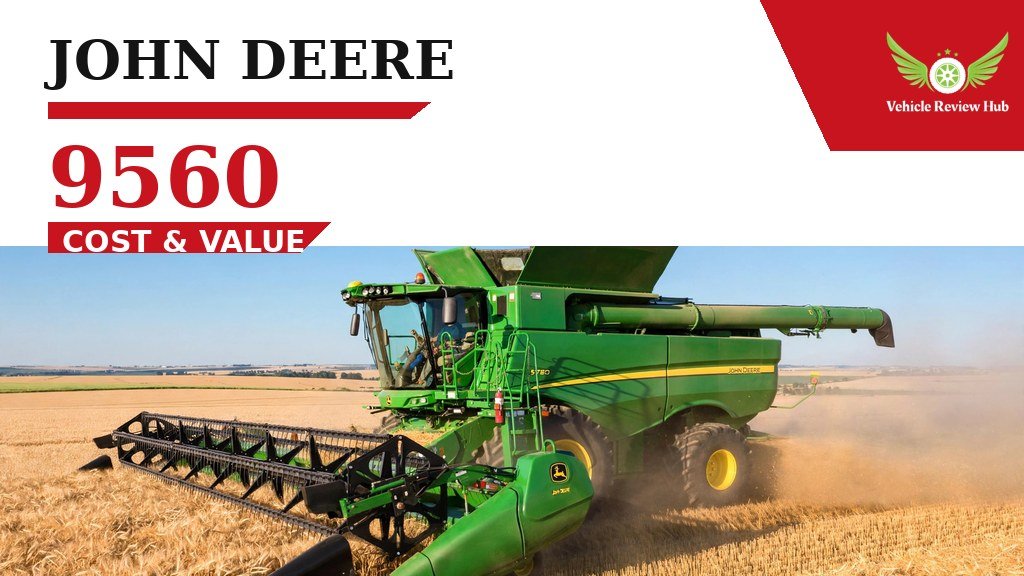
John Deere 9560 combine ownership cost is the number most buyers get wrong, because they shop the sticker price and forget the harvest. A 9560 is a 20-year-old machine now, and the real question is what it costs to keep running without a breakdown in the best harvest week of the year. The short answer on John Deere 9560 combine ownership cost: roughly $25,000 to $55,000 to buy a used 9560 STS in ordinary working condition, $5,000 to $15,000 a year in fuel, routine service, and wear parts for a moderate-acre farm, and a separate reserve for the one big job every high-hour combine eventually needs. Get those numbers right and John Deere 9560 combine ownership cost stops being a surprise.
The first thing to understand about John Deere 9560 combine ownership cost is that the badge covers two different combines, and anyone still deciding between them should start with the John Deere 9560 combine review, which lays out the walker and STS specifications side by side. The 9560 Walker is a conventional straw-walker machine with a 6.8L engine rated at 220 or 240 horsepower and a 204-bushel grain tank. The 9560 STS is a single-rotor machine with an 8.1L engine rated at 265 horsepower, a power bulge to 284 horsepower, and a 220-bushel grain tank. Both came out of John Deere’s 60 Series line, introduced for the 2004 model year. Their prices and repair bills are not interchangeable.
A combine is not a tractor, and its costs do not behave like one. The wear items are the feederhouse, the threshing and separating system, belts, bearings, elevators, augers, and the header. The hours that matter are two numbers, not one: engine hours and separator hours. And the most expensive line in John Deere 9560 combine ownership cost is often not a part at all — it is a lost harvest day when the machine is down and the crop is ready. That lost day is the hidden half of John Deere 9560 combine ownership cost.
John Deere 9560 Combine Total Cost of Ownership
Total John Deere 9560 combine ownership cost has four layers: purchase price, seasonal fuel and routine service, wear parts, and the occasional major repair. A realistic John Deere 9560 combine ownership cost budget plans for all four, plus a reserve for the shock.
Fuel, Routine Maintenance and Seasonal Operating Expenses
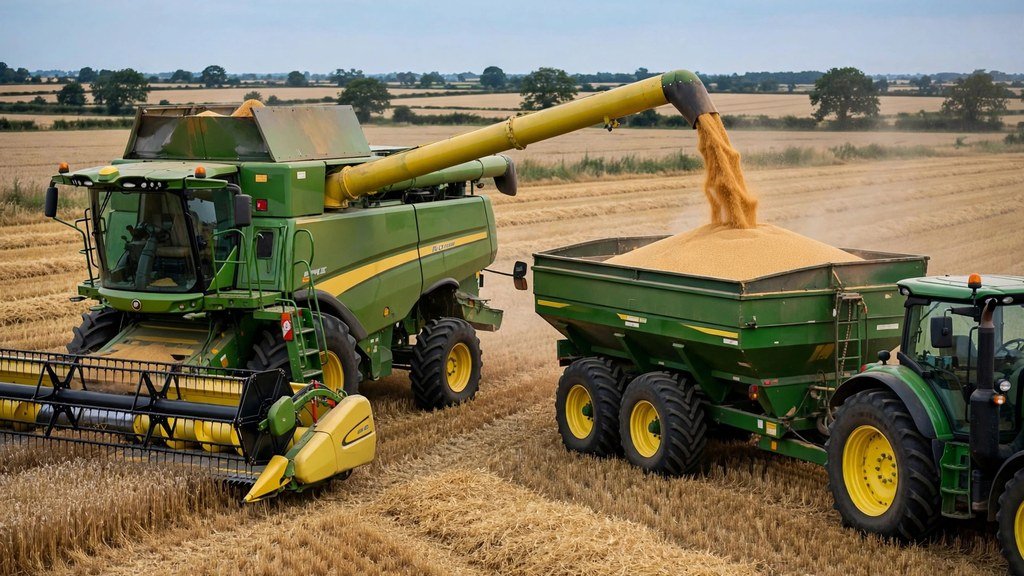
Fuel is the biggest seasonal line in John Deere 9560 combine ownership cost on big-acre farms. The 9560 STS carries a 200-gallon fuel tank, so a full tank at harvest diesel prices is a four-figure fill before the machine cuts a single acre. How fast it empties depends on crop, yield, moisture, header width, and ground speed, and no tested fuel-consumption figure for the 9560 specifically could be retrieved for this guide. One real-world anchor does exist: a corn grower running a 20-year-old John Deere 9560 with a six-row corn head put his 2025 combining cost at $45 per acre including fuel and wear and tear. At that rate, a 9560 cutting 500 acres of corn carries roughly $22,500 of combining cost before trucking, drying, and storage.
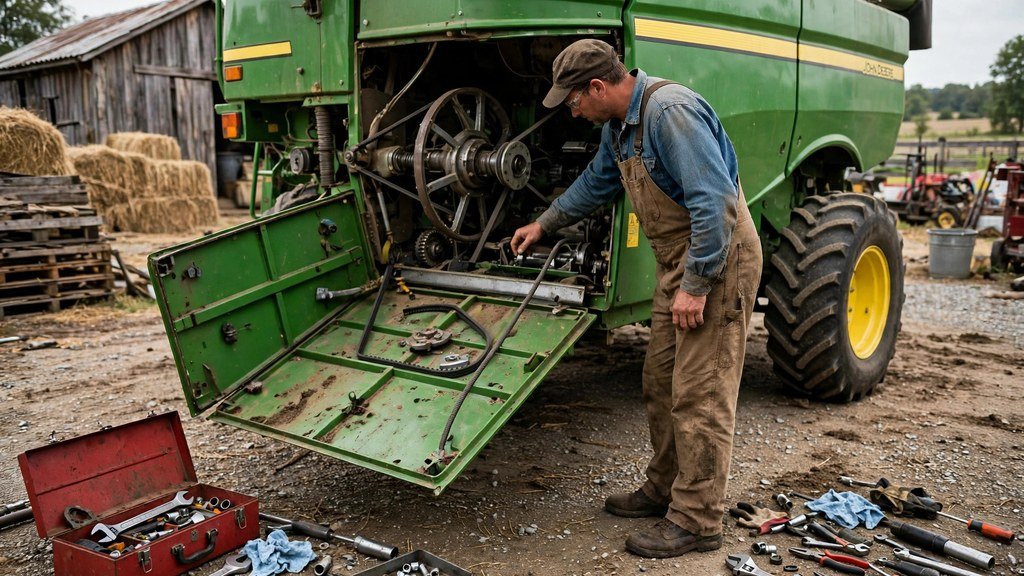
Routine seasonal service is the cheapest insurance in John Deere 9560 combine ownership cost. Budget, as planning estimates, $2,000 to $4,000 per season for engine oil and filters, fuel filters, air filters, coolant checks, grease, belts, and the pre-harvest inspection, with dealer labor pushing the top of that range. That inspection finds the $300 bearing that would otherwise become a $3,000 separator failure in October. On the STS, check the 15 threshing elements and 18 separator tines; on the walker machine, the crankshafts and bearings.
Storage and insurance belong in the same seasonal budget for John Deere 9560 combine ownership cost. A 9560 lives outdoors on many farms, and weather, rodents, and belt deterioration during ten idle months are real costs. For John Deere 9560 combine ownership cost, a shed, a post-harvest cleanout, and a charged fire extinguisher are cheap compared with a chaff fire or a seized bearing on day one of harvest.
Major Repairs, Wear Parts and Harvest Downtime Budget
Wear parts are where John Deere 9560 combine ownership cost splits by machine type. On the 9560 STS, the rotor system is the big-ticket area: threshing elements, separator tines, concaves, and the rotor itself wear with acres and abrasive crops, and a full rotor refresh is a multi-thousand-dollar job in parts alone. On the 9560 Walker, the equivalent big job is walker and crankshaft work, plus the shoe, sieves, and drive belts that absorb constant vibration. Both share feederhouse, elevator, auger, and chopper wear as steady consumables. As a planning estimate for John Deere 9560 combine ownership cost, hold $3,000 to $8,000 per season in a wear-part reserve, and expect one season in five to blow straight past it.
For scale, a 2011 dealer invoice for a John Deere 9510 walker combine — a different, earlier model, quoted only to show the scale of walker-machine shop bills — ran past $15,000 for inspection plus rasp bars, walker crankshafts and bearings, feederhouse belts, chopper drives, chains, sprockets, and auger work, with the full job over $20,000. The lesson for John Deere 9560 combine ownership cost: get the list priced before you buy. The same applies to an STS with a tired rotor — price the rotor job, not the promise.
Downtime is the cost buyers most often leave out of John Deere 9560 combine ownership cost, and it hurts most. A combine stopped in a dry harvest window costs the custom rate for every acre it does not cut. Spend before harvest: a full inspection, a shelf of likely-failure belts and bearings, and a next-day parts dealer.
| Cost area | 9560 Walker (planning estimate) | 9560 STS (planning estimate) |
|---|---|---|
| Routine seasonal service | $2,000–$4,000 | $2,000–$4,000 |
| Wear-part reserve per season | $3,000–$8,000 | $3,000–$8,000 |
| Major separating-system job | Walker/crankshaft work — several thousand dollars | Rotor refresh — several thousand dollars |
| Total annual planning range | $5,000–$15,000 plus fuel | $5,000–$15,000 plus fuel |
Fuel alone can exceed the maintenance budget, so quote John Deere 9560 combine ownership cost per acre for your own acres.
John Deere 9560 Combine Used Prices and Resale Value
Used 9560 prices in late 2026 cluster in a fairly tight band. The anchors below are real listings. A dealer listing in Kewanee, Illinois, offered a 2005 John Deere 9560 STS at $44,900 with 4,049 engine hours and 2,576 separator hours, a 2WD machine with ContourMaster, a chopper, and a grain tank extension. An online auction in North Carolina closed bidding on a 2006 9560 STS at $25,000 with 4,480 engine hours and 3,234 thresher hours, plus a 10 percent buyer’s premium.
How Model Year, Engine Hours, Separator Hours and Condition Affect Price
Model year matters less than hours in John Deere 9560 combine ownership cost, because the whole run is 2004–2006 era machines and condition has had twenty years to diverge. The Kewanee STS shows the pattern: 4,049 engine hours but only 2,576 separator hours. A machine with 3,800 separator hours has worked much harder than one with 2,500, and should be priced lower.
Condition factors that move John Deere 9560 combine ownership cost at purchase include tire condition, rotor or walker state, concave and sieve life, feederhouse wear, and whether the electronics work — yield monitor, moisture sensor, and any guidance display. A recent rotor refresh or walker rebuild is worth a premium. A machine with cracked walkers, a worn rotor, or a feederhouse needing chains and slats is not a bargain until those jobs are priced in.
Comparing Dealer Listings, Auction Results and Included Headers
Dealer listings and auctions are different markets. In John Deere 9560 combine ownership cost terms, dealer machines like the $44,900 Kewanee STS usually come inspected. Auction machines like the $25,000 North Carolina STS are sold as-is, with premium, transport, and repairs on top.
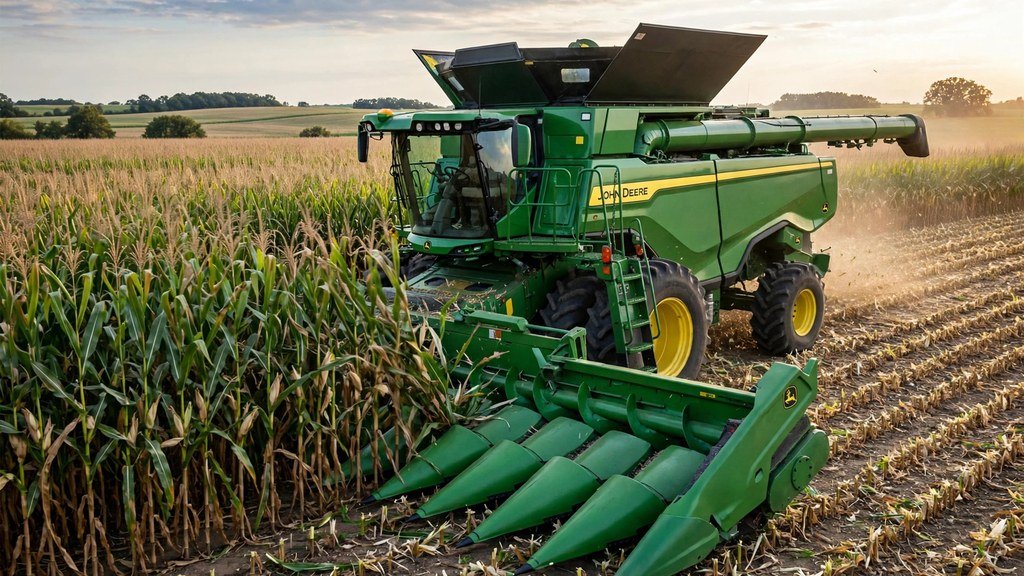
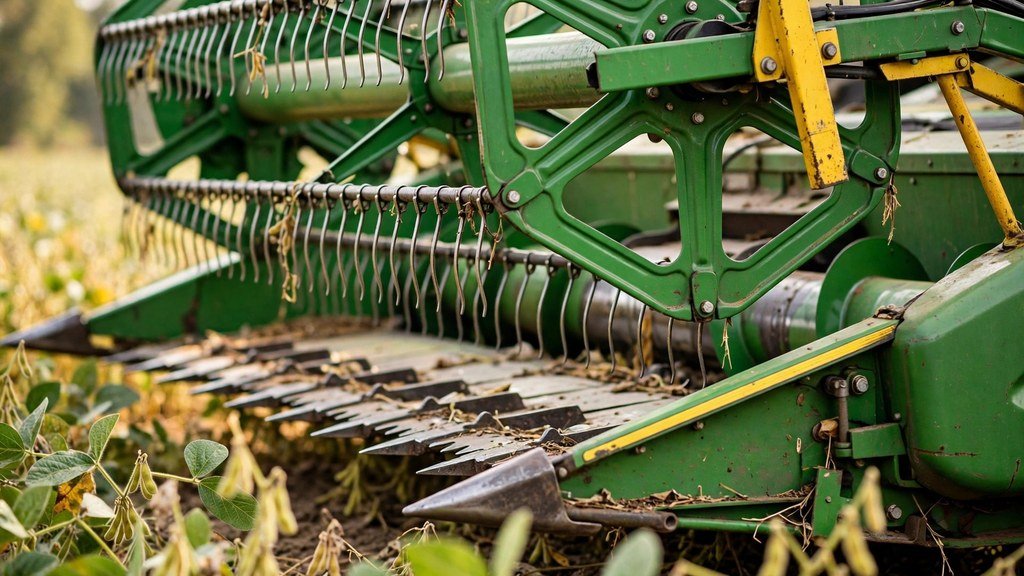
Headers change the deal more than almost any other line item in John Deere 9560 combine ownership cost. A 9560 STS is commonly paired with a 25- to 30-foot flex platform for soybeans and small grains and a 6- to 8-row corn head for corn, and a good used header can be worth $5,000 to $15,000 on its own. Some listings include a header, some do not — the Kewanee listing does not state one as included, so confirm before comparing.
| 9560 STS condition | Planning price band (late 2026) | What it usually means |
|---|---|---|
| Rough / auction grade | $20,000–$30,000 | High hours, visible wear |
| Average working machine | $35,000–$55,000 | Mid hours, field-ready |
| Clean, low separator hours | $55,000–$75,000+ | Low hours, recent work, good records |
| 9560 Walker (planning band) | Generally below comparable STS | Estimate, not a quote |
Walker machines generally trade below a comparable STS; verify walker pricing against live listings before offering. For John Deere 9560 combine ownership cost, resale value is driven more by separator hours and condition than by age.
John Deere 9560 Combine Parts Availability and Ownership Risks
Parts availability is one of the better arguments for a 9560, and it directly lowers John Deere 9560 combine ownership cost over time. The 60 Series sold in large numbers and the wear-parts market is deep. Engine, hydraulic, rotor, walker, feederhouse, elevator, and auger parts are well supported.
Sourcing Engine, Rotor, Walker, Hydraulic and Electronic Parts
A John Deere dealer is the default engine-parts source, and the 8.1L STS engine shares lineage with other Deere applications. That availability helps John Deere 9560 combine ownership cost on the engine side. Rotor parts — threshing elements, separator tines, concaves — and walker parts — crankshafts, bearings, walker frames — are available from Deere and aftermarket suppliers, and prices vary enough that two quotes are worth the phone call. Match part numbers to your serial number: a part fitting a 2004 STS may not fit a 2006 one.
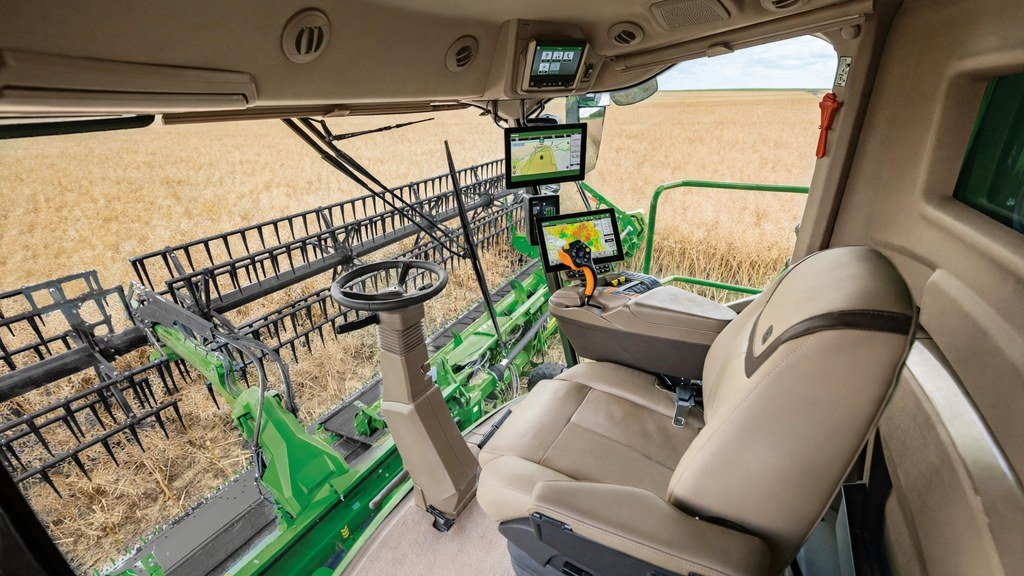
Electronics deserve a separate budget line in John Deere 9560 combine ownership cost. Many 9560s carry early-generation GreenStar and AutoTrac displays and sensors. Check every display, sensor, and harness before purchase.
Evaluating Repair History, Wear Parts and Future Service Needs
Repair history is the single best predictor of future John Deere 9560 combine ownership cost. A machine with invoices showing regular service and a rotor or walker rebuild is a known quantity. A machine with no records is a gamble, and the price should reflect it. Ask when the rotor or walkers, feederhouse chains and slats, and unloading auger and elevators were last done, and whether the machine has had fire or structural repair.
Estimate future service needs from separator hours. That estimate belongs in John Deere 9560 combine ownership cost planning. A machine approaching 3,000 separator hours without a documented rotor or walker refresh should be budgeted as if that job is coming, because it probably is. The real scare is a cracked separator housing, a damaged rotor, or a fire-damaged machine, each of which can exceed the combine’s value.
Buying a Used John Deere 9560 Combine
Inspect in person, run it under load, and price the next repair before you offer — the simplest way to control John Deere 9560 combine ownership cost. If a seller will not allow them, assume John Deere 9560 combine ownership cost for that machine includes a surprise.
Pre-Purchase Inspection, Harvest Test and Service Records
Start cold if allowed: it shows battery, starter, and engine health. Check oil, coolant, and hydraulic fluid condition, leaks at hoses, pumps, and final drives, and tires for cracking and tread. Then engage the separator and header and listen for grinding, knocking, or vibration. Check cab gauges, lights, air conditioning, and displays. Cab and electronic repairs after purchase are part of John Deere 9560 combine ownership cost.
A harvest test is worth more than any inspection report. If the season allows, run the machine in the crop with its header, and watch grain sample, loss, and engine load. On an STS, poor sample or high loss points at worn elements, tines, or concaves; on a walker machine, at walker, sieve, and chaffer condition. That repair belongs in your offer price — and in your John Deere 9560 combine ownership cost budget. Match service records against the machine, confirm both hour numbers from the display, and confirm the serial number.
The video above is not a sale listing — it is a corn grower’s 2025 cost breakdown, with a 20-year-old John Deere 9560 on a six-row corn head costed at $45 per acre including fuel and wear and tear. That real per-acre number is why it belongs in this guide to John Deere 9560 combine ownership cost.
Choosing Between Walker and STS Models for Your Crops
The walker-versus-STS choice should follow your crops, not fashion. The STS single-rotor system generally handles high-volume corn and soybean work with more capacity and a simpler separating path, and the market pays a premium for it — one reason STS machines anchor the higher price bands here. The walker machine suits small grains and gentler handling, and can be better value with documented walker care. Buy condition and records first, separation type second — that order keeps John Deere 9560 combine ownership cost lowest.
Match the header to the choice as well. A walker machine paired with a worn flex platform will lose more grain than a well-kept STS with a good header. Check header width against your acres and transport limits: a 30-foot platform needs wide roads and a header trailer, while a 25-foot platform is easier to move. Finally, a local dealer or shop that knows the 60 Series is worth real money in John Deere 9560 combine ownership cost.
Frequently Asked Questions About John Deere 9560 Combine Ownership Cost
These are the questions buyers actually ask about John Deere 9560 combine ownership cost, answered directly.
How much does a used John Deere 9560 combine cost in 2026?
For John Deere 9560 combine ownership cost, rough auction-grade 9560 STS machines run $20,000 to $30,000, average working machines $35,000 to $55,000, and clean low-separator-hour machines $55,000 to $75,000 or more. Anchors: a 2005 STS dealer-listed at $44,900 (4,049 engine / 2,576 separator hours) and a 2006 STS auction machine closed at $25,000 (4,480 / 3,234 hours) plus buyer’s premium. Walker machines generally trade below a comparable STS.
What is the annual John Deere 9560 combine ownership cost?
For annual John Deere 9560 combine ownership cost, excluding the purchase payment and fuel, plan $5,000 to $15,000 per year for routine service and wear parts on a moderate-acre farm, as a planning estimate. Fuel is additional — one owner-operator running a 20-year-old 9560 on corn costed combining at $45 per acre including fuel and wear and tear. Add a reserve for the next major separating-system job.
Should I buy a 9560 Walker or a 9560 STS?
Buy the machine whose condition and records are best, then let crops break the tie. That choice shapes John Deere 9560 combine ownership cost for years. The STS, with its 265-horsepower 8.1L engine and single rotor, suits high-volume corn and soybean work and commands higher prices. The walker machine, with its 220- or 240-horsepower 6.8L engine, suits small grains and gentler handling and can be better value.
What are engine hours versus separator hours on a 9560?
Engine hours count all running time, including travel, unloading, and idling. Separator hours count only time the threshing and separating system is engaged — the hours that wear the rotor or walkers, concaves, and cleaning shoe. Separator hours are the better measure of harvest wear. That gap is central to John Deere 9560 combine ownership cost. Always get both numbers before offering.
What are the most expensive repairs on a John Deere 9560 combine?
On the STS, rotor work — threshing elements, separator tines, concaves, and rotor repair — is the big-ticket area. On the walker machine, walker crankshafts, bearings, and walker-frame work play the same role. Feederhouse, elevator, auger, and chopper work are significant but smaller jobs. Price each of those jobs into John Deere 9560 combine ownership cost before offering.
Are parts still available for the John Deere 9560 combine?
Yes, broadly. The 60 Series sold in large numbers, dealers still support the platform, and aftermarket and salvage sources cover most wear parts. That electronics risk is easy to miss in John Deere 9560 combine ownership cost. Check every electronic function before purchase.
Does a 9560 header come with the combine?
Sometimes — never assume it does. Some listings include a flex platform or corn head, some sell the combine bare. That header question changes John Deere 9560 combine ownership cost by thousands. A good used header is worth $5,000 to $15,000 on its own, so price combine and header separately.
How many acres can a John Deere 9560 combine handle?
No single tested throughput figure for the 9560 could be verified for this guide, so any acres-per-day claim should name its crop, yield, and header. Matching capacity to acres keeps John Deere 9560 combine ownership cost per acre down. A 9560 suits small to mid-size grain farms, paired with a 25- to 30-foot platform or a 6- to 8-row corn head.
What should I check first when inspecting a used 9560?
Check both hour meters, then the separating system, feederhouse, elevators, augers, sieves, chaffer, tires, fluids, electronics, and header. Each check protects John Deere 9560 combine ownership cost after purchase.
Is a high-hour John Deere 9560 combine still worth buying?
It can be, if the price reflects the next repair. A high-separator-hour machine with a fresh rebuild and full records can beat a lower-hour machine with unknown history. What makes a high-hour 9560 a bad buy is an unpriced major job. That discipline is the whole of John Deere 9560 combine ownership cost in one sentence: buy the repair history, not just the machine.