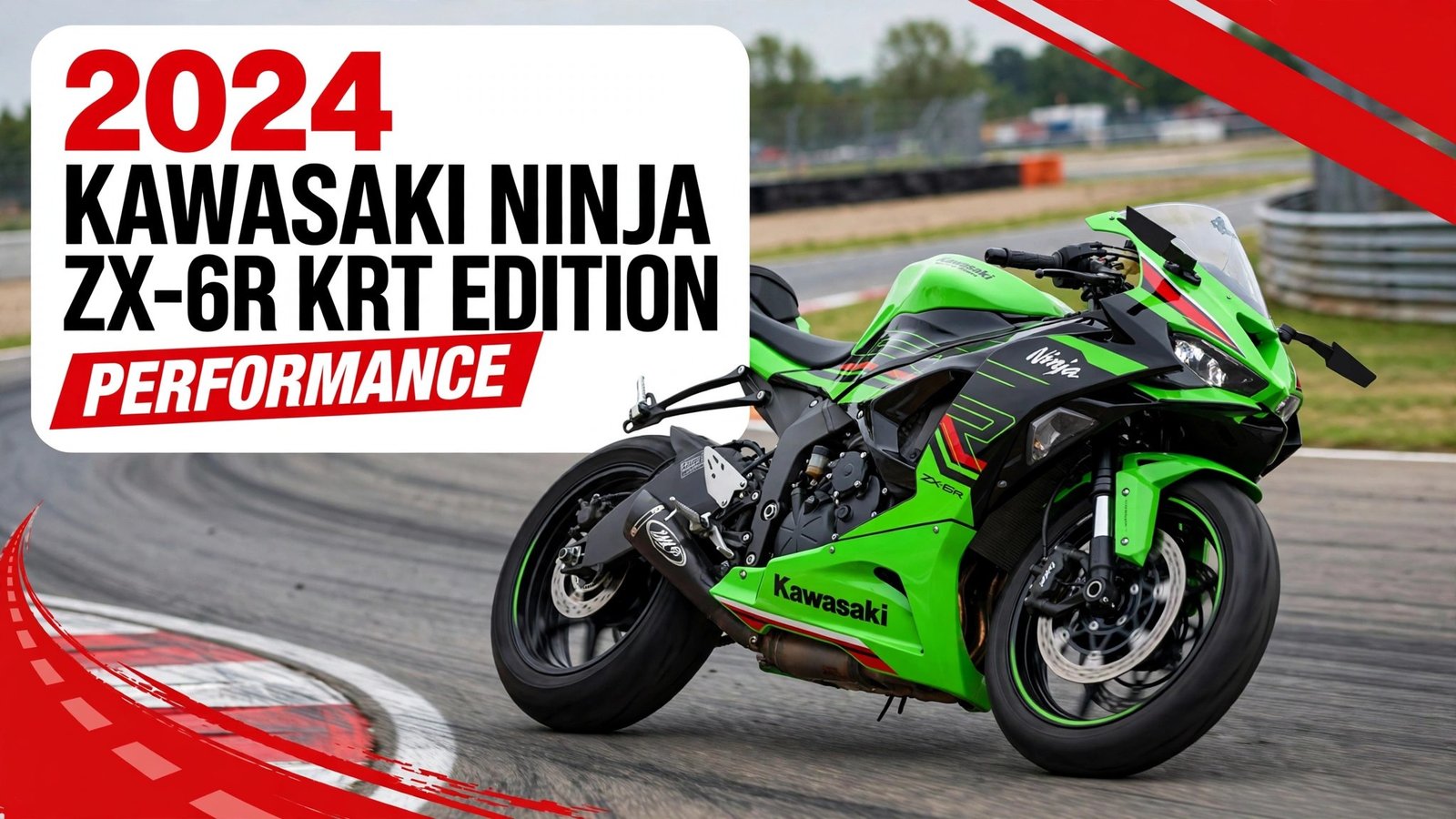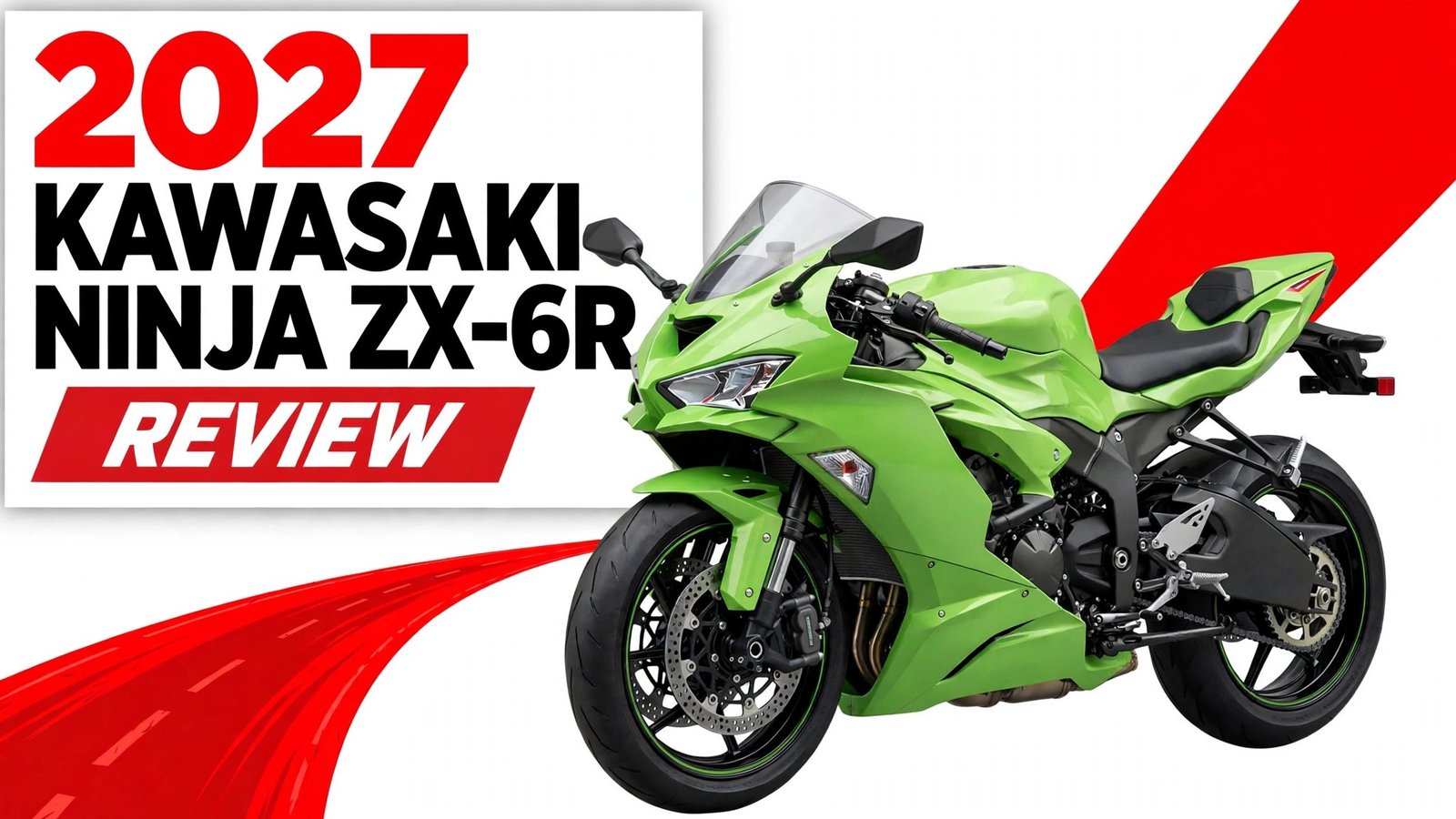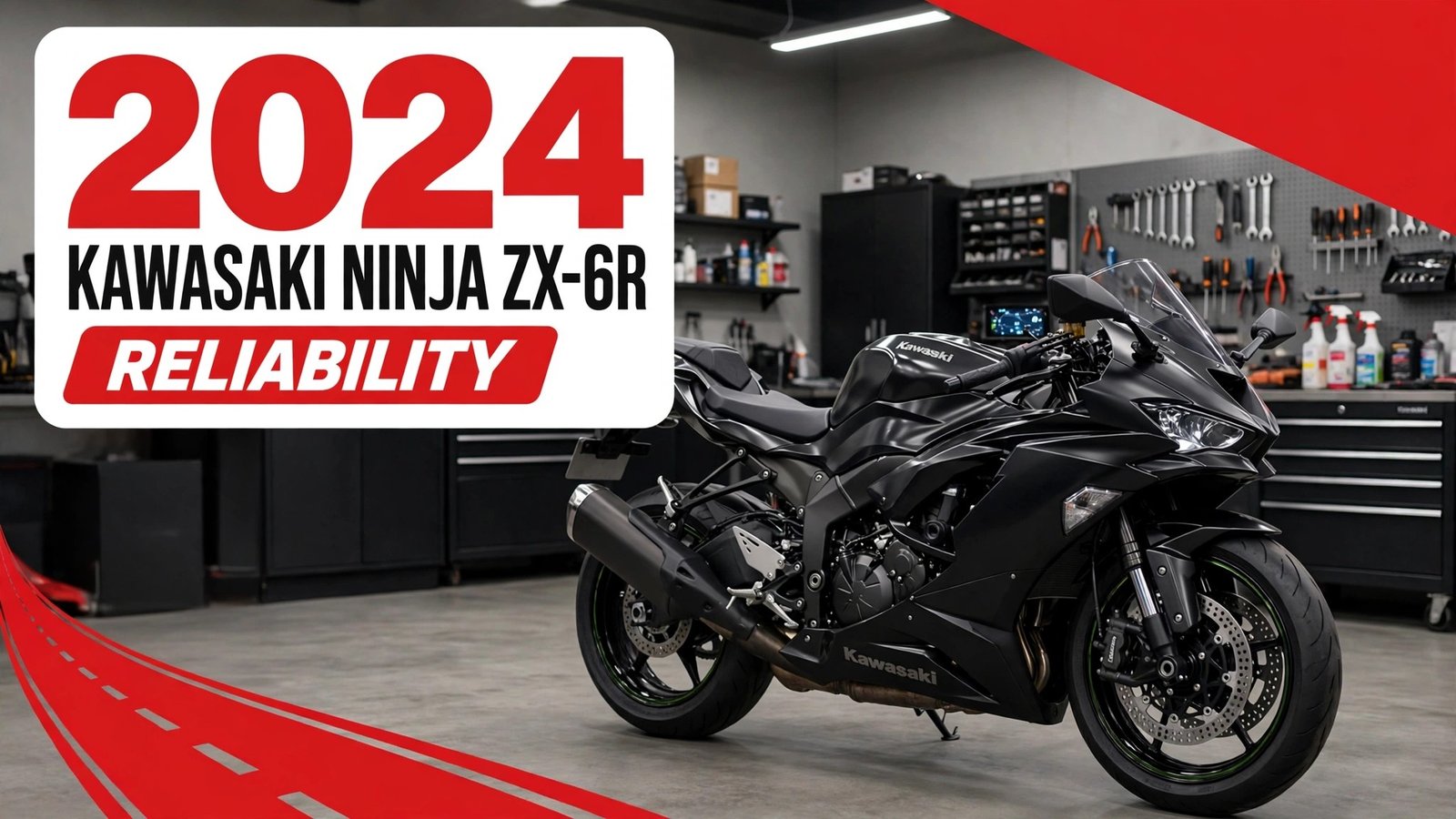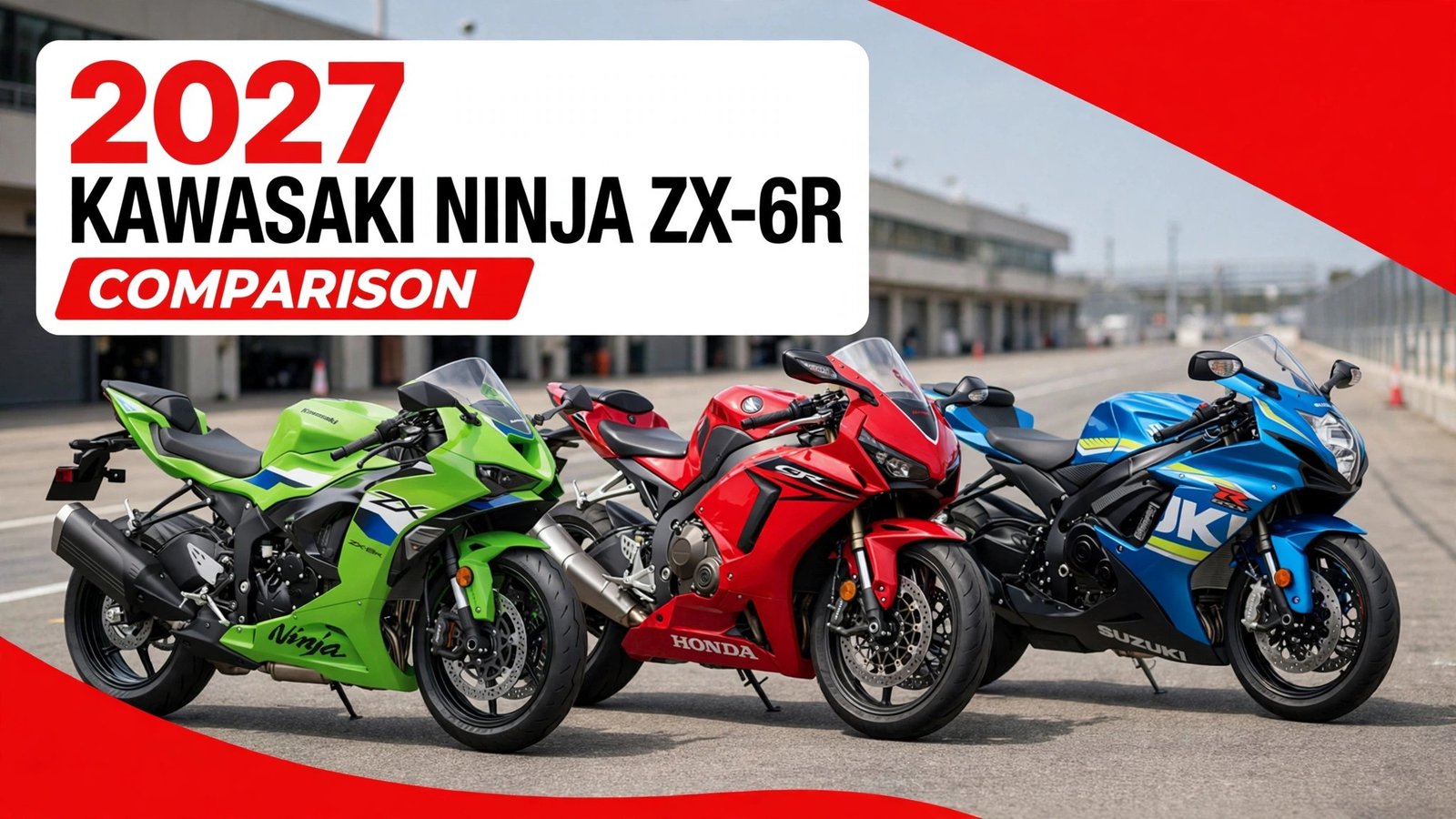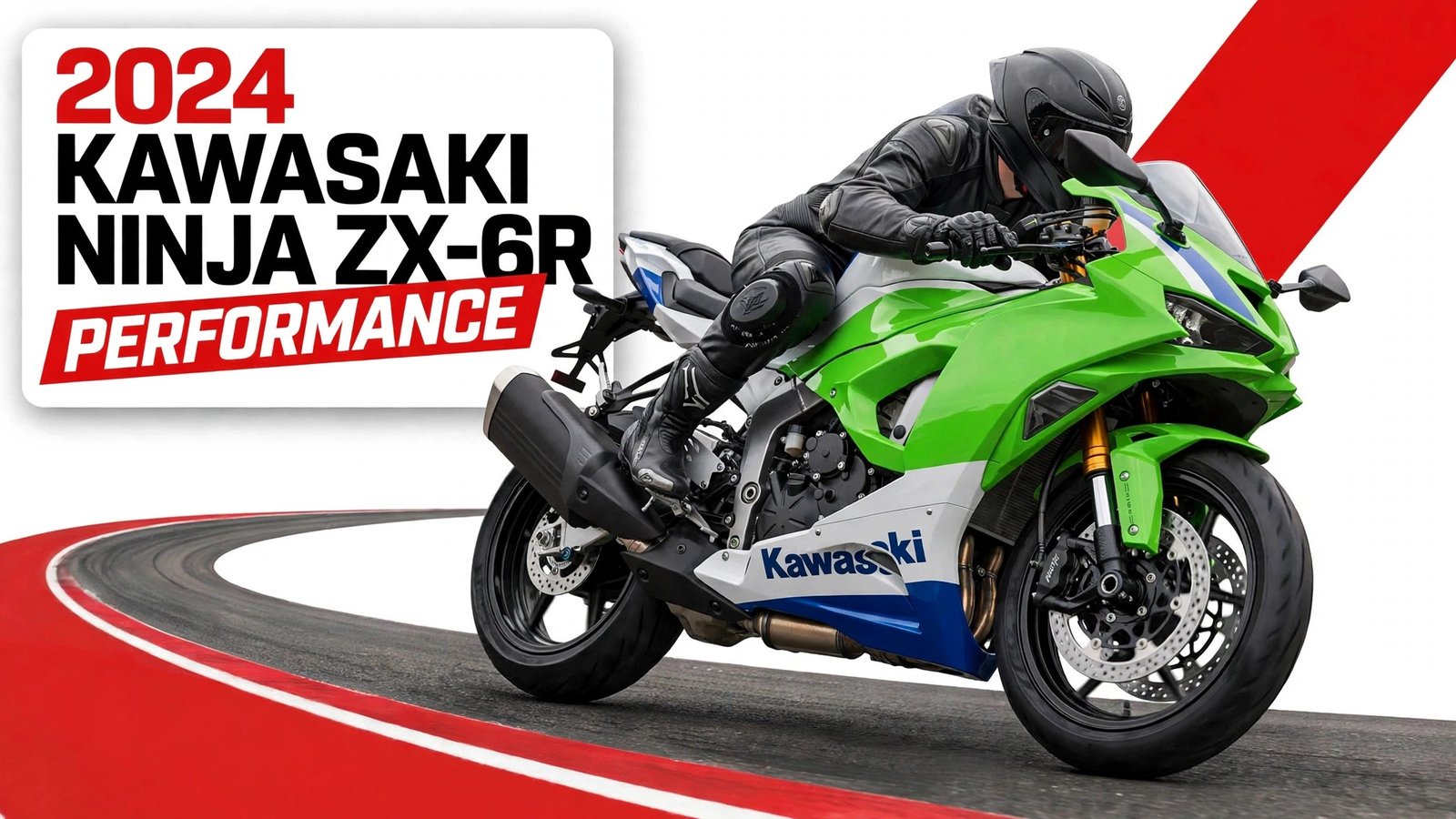
The 2024 Kawasaki Ninja ZX-6R makes 108.4 horsepower on Cycle World’s dyno and 115 bhp on MCN’s dyno, tops out at 144 mph by MCN’s datalogger, and returns an EPA-estimated 40.6 mpg from its 636cc four. This Kawasaki Ninja ZX-6R performance guide puts every one of those numbers next to its source and its label, because the numbers buyers quote about this bike are often wrong in the telling: the 164 mph top speed was never measured, the 10.58-second quarter mile is a 2013-era figure, and the 127 hp headline is an ISO ram-air number.
What this Kawasaki Ninja ZX-6R performance guide keeps coming back to is that the 636 is the only current Japanese 600 with more engine than its rivals: 52.1 lb-ft of torque, peaking at 10,800 rpm on the 2024-and-later bikes, where the 599cc rivals make roughly 44 to 47 lb-ft.
Kawasaki Ninja ZX-6R Engine Performance and Power Delivery
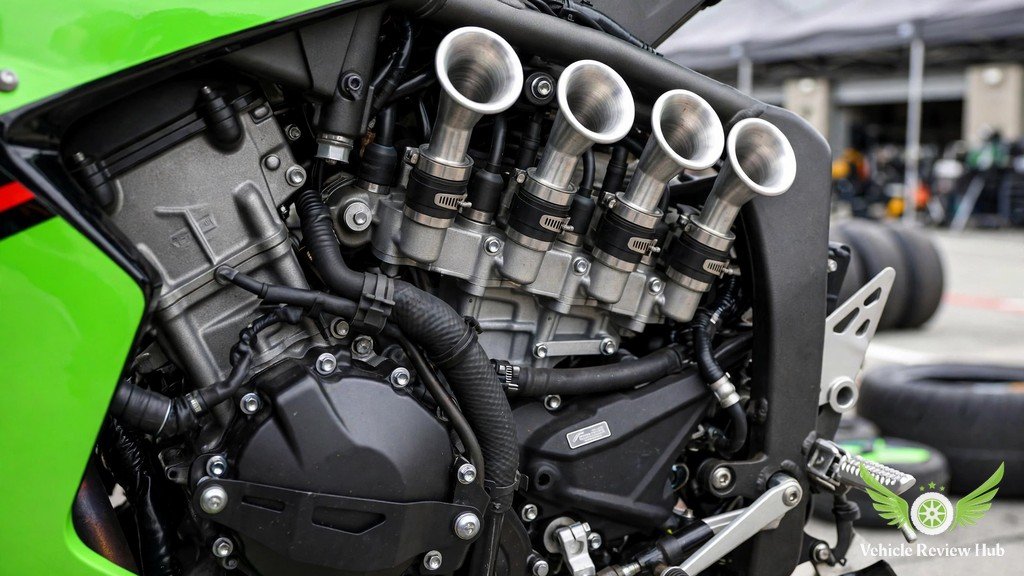
The engine is a 636cc liquid-cooled DOHC 16-valve inline-four — 67.0 by 45.1 mm bore and stroke, 12.9:1 compression, 38 mm Keihin throttle bodies, a six-speed gearbox and an assist-and-slipper clutch. Kawasaki Ninja ZX-6R performance starts with that 636cc figure: the only engine in the class over 599cc, and the extra capacity shows up as torque, 52.1 lb-ft against roughly 44 to 47 lb-ft from the 599cc rivals.
108.4 HP on CW’s Dyno
Cycle World strapped a stock 2023 bike to its Dynojet 250i and measured 108.4 horsepower at 13,200 rpm and 45.8 lb-ft of torque at 10,900 rpm. That is the pre-2024-update bike, and it is the number this Kawasaki Ninja ZX-6R performance guide uses as the rear-wheel baseline for the 2019–2023 generation. Against the same dyno’s 102.9 hp for the GSX-R600 in 2023, the ZX-6R held a 5.5 hp advantage on the same day.
The gap between the brochure and the dyno is driveline loss, the ram-air effect the dyno cannot reproduce, and the ISO standard behind the brochure figure. Compare dyno to dyno, never brochure to dyno — that is how this Kawasaki Ninja ZX-6R performance guide ranks the 636 as the strongest 600 of its generation.
115 HP on MCN’s 2024 Dyno
MCN dyno’d the 2024 bike and recorded 115 bhp at the rear wheel, with 50.5 ft-lb of maximum torque. That is the post-update engine — revised cams, intake funnels, header, exhaust and collector, all built to meet Euro 5+ — and it makes more power at the wheel than the pre-2024 bike despite Kawasaki’s own headline dropping from 127 to 122 hp without ram air. The doc heading for this section was wrong: it claimed no 2024 dyno exists, but MCN ran one, and the 115 bhp figure is the corrected record this Kawasaki Ninja ZX-6R performance guide prints.
The 2024 engine gives up 5 horsepower on paper and gains it back where it counts, and this Kawasaki Ninja ZX-6R performance guide measures the gain at the rear wheel. The torque peak moved down the rev range with the new cams — 52.1 lb-ft at 10,800 rpm on the 2024-and-later bikes, against 11,500 rpm on the 2019–2023 bikes — so the same pull arrives earlier, which is exactly what a street rider feels. The dyno table below keeps the two generations apart, because a 2023 dyno figure and a 2024 dyno figure are not the same bike.
| Bike and test | Rear-wheel power | Rear-wheel torque |
|---|---|---|
| 2023 ZX-6R, Cycle World Dynojet 250i | 108.4 hp @ 13,200 rpm | 45.8 lb-ft @ 10,900 rpm |
| 2024 ZX-6R, MCN dyno | 115 bhp | 50.5 ft-lb max |
| 2023 GSX-R600, Cycle World Dynojet 250i | 102.9 hp @ 13,520 rpm | — |
| 2011 ZX-6R, Cycle World dyno | 112 hp @ 13,770 rpm | — |
Note: Dyno figures are rear-wheel measurements from the named tests, not Kawasaki’s claimed crankshaft figures, and the 2023 and 2024 ZX-6R figures are different generations of the engine. This Kawasaki Ninja ZX-6R performance guide uses the Cycle World 2023 pair for the GSX-R600 comparison because both bikes ran on the same dyno.
Kawasaki Ninja ZX-6R Top Speed and Acceleration
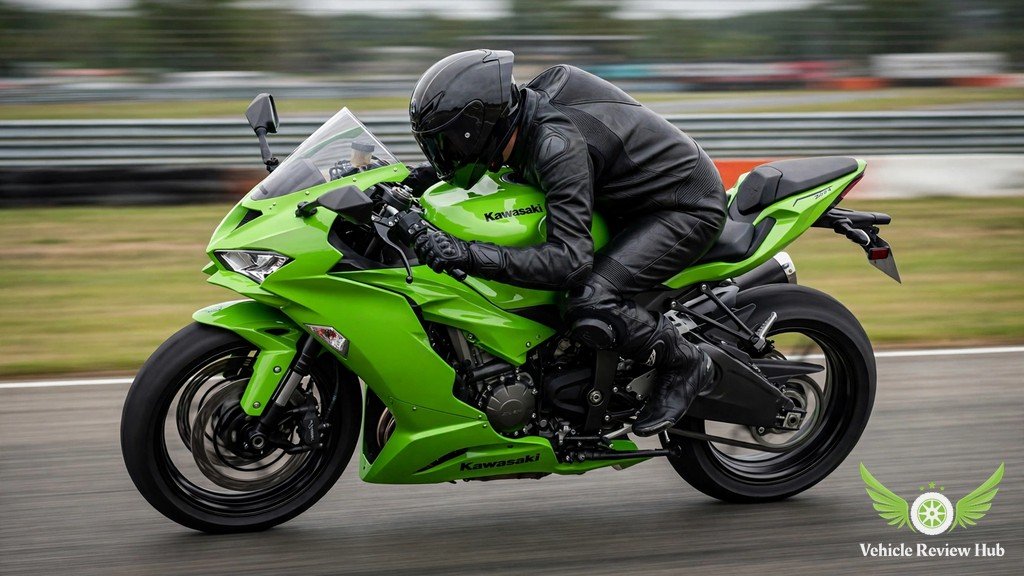
Top speed is where this Kawasaki Ninja ZX-6R performance guide has to correct the internet: two numbers circulate for this bike, 144 mph and 164 mph, 20 mph apart because only one of them was ever measured — 144 mph, on MCN’s datalogger, on the 2024 bike. The other is a listicle claim no reputable publication has ever verified on a stock bike.
144 vs 164 mph Claims
MCN’s 2024 review says the bike “hits a top speed of ‘only’ 144mph (measured on a datalogger) but does so with ease, and more or less hits a brickwall” — and adds that testers would expect a 600 to clear 150 mph, based on the class’s best figures from its prime about 15 years ago. The 144 mph figure is the measured top speed of the current bike, and it is the only top-speed figure this Kawasaki Ninja ZX-6R performance guide prints as measured. GPS-verified owner reports put the real-world range at 145–155 mph, which is the range this Kawasaki Ninja ZX-6R performance guide quotes alongside the datalogger figure.
TopSpeed’s own 2023 page labels it “The unofficial Ninja ZX-6R top speed is 164 mph” — unofficial, repeated by SlashGear and other listicles, and never measured by a reputable publication on a stock bike. The class’s top-speed prime was about 15 years ago: the 2003 first 636 made 118 hp and reached 163 mph. The current bike is geared and tuned differently, with a Euro 5 engine and longer overall ratios, and its measured top speed is 144 mph.
Motorcycle.com rode the 2024 bike at Ridge Motorsports Park in this video — a track test, not a dyno run. Motorcycle.com’s first-ride review is the article behind the video, and the riding impressions match the numbers this Kawasaki Ninja ZX-6R performance guide prints: quick rather than outright fast, with its strength in the midrange.
10.58-Second Quarter Mile
The quarter-mile figure for this bike is 10.58 seconds at 132.36 mph, recorded by Cycle World testers and compiled in motofomo’s ZX-6R history — but it is a 2013-era figure, not a test of the current bike. This Kawasaki Ninja ZX-6R performance guide prints the 10.58 with that year caveat every time it appears, because presenting it as a current-bike result would be wrong. A second Cycle World pass from around 2014 ran 10.71 seconds at 131 mph — a second data point from the same testers, not to be blended with the 10.58.
The 0–60 mph times quoted for the bike are 3.0 seconds (TopSpeed), 3.17 seconds (MotoStatz) and 3.49 seconds (Cycle World, 2013 Chuckwalla test), with 0–100 mph at 6.02 seconds (MotoStatz). The spread is the point, and this Kawasaki Ninja ZX-6R performance guide reads it that way: different surfaces, different days, different testers. The 10.58-second quarter is the fastest documented pass, from Cycle World’s testers, and it belongs to the 2013-era bike.
| Claim | Figure | Status |
|---|---|---|
| Top speed, MCN datalogger, 2024 bike | 144 mph | Measured |
| Top speed, listicle claim | 164 mph | Unofficial, never measured on a stock bike |
| Top speed, GPS owner reports | 145–155 mph | Owner reports, labelled as such |
| Quarter mile, Cycle World testers | 10.58 sec @ 132.36 mph | 2013-era figure, not a 2024-bike test |
| Quarter mile, Cycle World second pass | 10.71 sec @ 131 mph | Second data point, ~2014, not blended |
| 0–60 mph | 3.0–3.49 sec | Range across sources and surfaces |
Note: Only the 144 mph figure was measured on the current bike. The 164 mph figure is an unofficial claim that TopSpeed itself labels unofficial, and the quarter-mile figures are Cycle World testers’ passes from the 2013 era. This Kawasaki Ninja ZX-6R performance guide never prints a top-speed or quarter-mile figure without its source and its year.
Kawasaki Ninja ZX-6R Mileage and Fuel Economy
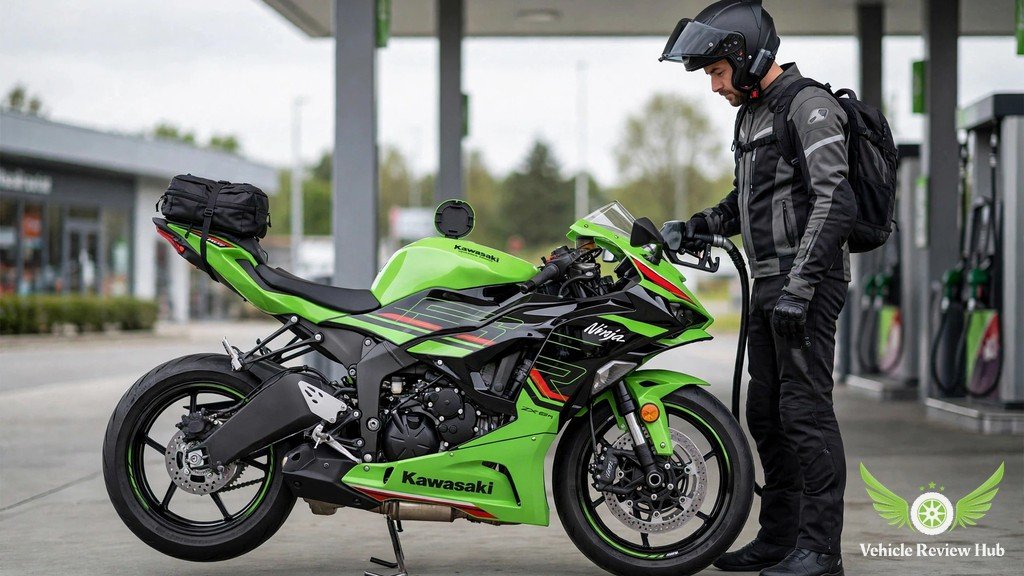
Fuel economy is the quiet cost of the 636’s performance, and this Kawasaki Ninja ZX-6R performance guide states it as an EPA estimate, not a road test: 40.6 mpg for the 2024 bike, about 183 miles from the 4.5-gallon tank. No tester-measured MPG average has been published for the current bike, so there is no road-test figure to print.
EPA Estimate Is 40.6 MPG
The EPA estimate for the 2024 bike is 40.6 mpg (5.79 L/100 km, per MotorcycleDB citing the EPA certificate), against 44.9 mpg for 2019 and 45.7 mpg for 2018. The 2024 engine’s Euro 5 tuning and revised gearing cost a few miles per gallon against the older bikes, and the 4.5-gallon tank turns the 40.6 mpg estimate into about 183 miles. TopSpeed’s 2024 comparison quotes 37 mpg as “claimed efficiency” — a different basis from the EPA estimate, and this Kawasaki Ninja ZX-6R performance guide does not mix the two figures.
On the road that means fuel roughly every 180 miles if ridden gently, sooner if ridden the way a 636 invites. The tank is small at 4.5 gallons and the seat is committed — nobody buys this bike for the range — but the honest figure for comparing running costs is the EPA estimate with its label, not a forum average dressed up as a test result.
| Model year | EPA estimate | Range from 4.5-gal tank |
|---|---|---|
| 2018 | 45.7 mpg | ~206 miles |
| 2019 | 44.9 mpg | ~202 miles |
| 2024 | 40.6 mpg | ~183 miles |
Note: All figures are EPA estimates, not tester-measured averages — no tester-measured MPG average has been published for the current bike. TopSpeed’s 37 mpg “claimed efficiency” is a different basis. This Kawasaki Ninja ZX-6R performance guide uses the 40.6 mpg EPA estimate for the 2024 bike throughout.
No Big Shootout Since 2011
The doc heading for this section was wrong: it claimed there had been no big shootout since 2019, which implies a 2019 shootout happened. It did not. No 2019 multi-bike 600 shootout was found in repeated searches — the last full shootout in the class is Motorcycle.com’s 2011 Supersport Street Shootout, which the GSX-R600 won. The corrected heading is “No Big Shootout Since 2011”, and this Kawasaki Ninja ZX-6R performance guide prints the correction with its source rather than repeating the doc’s error.
By 2019 the 600 field had thinned to the point where there was barely a field left to test: Yamaha’s R6 was on its way out, Honda’s CBR600RR had already left Europe and would not return there until 2024, Suzuki’s GSX-R600 was an eight-year-old design, and the ZX-6R was the only bike in the class still being developed. The 2011 shootout is the last time the ZX-6R, GSX-R600, CBR600RR and R6 were tested together, and the ZX-6R lost it on points while winning the lap — Cycle World had it at 1:54.65 around Chuckwalla against the GSX-R600’s 1:55.72.
Kawasaki Ninja ZX-6R Real-World Riding Experience
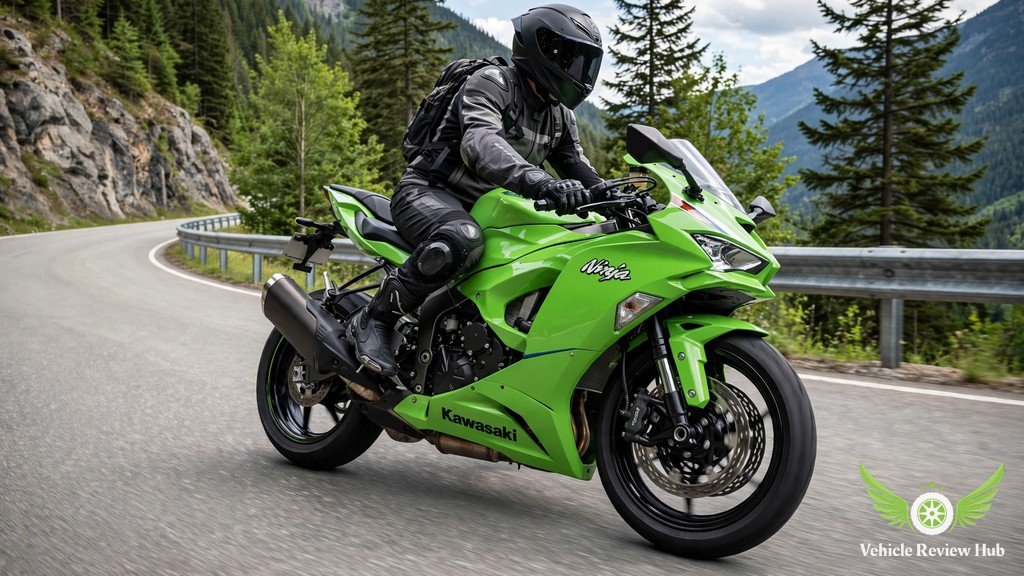
The numbers only make sense once you know how the bike feels at road speed, and this Kawasaki Ninja ZX-6R performance guide treats the riding experience as the test the dyno cannot run. The 636’s midrange is the whole character: torque from low revs, a quickshifter that only shifts up, a cable throttle, and a chassis fully adjustable at both ends.
The Riding Experience Buyers Actually Talk About
What buyers actually talk about is the midrange. The 636 makes 52.1 lb-ft of torque, peaking at 10,800 rpm on the 2024-and-later bikes, and that is the figure that shapes every ride: rolling on out of a corner, pulling away from a light, overtaking without dropping two gears. RevZilla’s first ride at Ridge Motorsports Park found the same character on track — quick rather than peaky, with its strength in the usable rev range rather than the top end.
The riding position is committed, as a supersport should be: high pegs, a short windscreen, a 32.7-inch seat, and a 4.5-gallon tank between the rider’s knees. The TFT dash, standard from 2024, puts the riding modes — Sport, Road, Rain and Manual — in front of the rider, with traction control and two power modes behind them. It is not a comfortable bike, and this Kawasaki Ninja ZX-6R performance guide does not pretend otherwise.
Rides Like a Streetbike First
The ZX-6R rides like a streetbike first and a track bike second — the 636’s whole character since the first 636 in 2003. The torque is the reason: 52.1 lb-ft from a 636 against roughly 44 to 47 lb-ft from the 599cc rivals, with a torque peak that moved down the rev range with the 2024 cam change, from 11,500 rpm to 10,800 rpm. This Kawasaki Ninja ZX-6R performance guide rates the street character as the bike’s second strength after the engine itself, ahead of the top speed and the quarter mile.
The compromises are honest ones: a short windscreen, high pegs, a small tank and a 12-month warranty. None of that matters on a Sunday ride, and all of it matters on a 300-mile day.
Kawasaki Ninja ZX-6R Handling, Braking and Stability
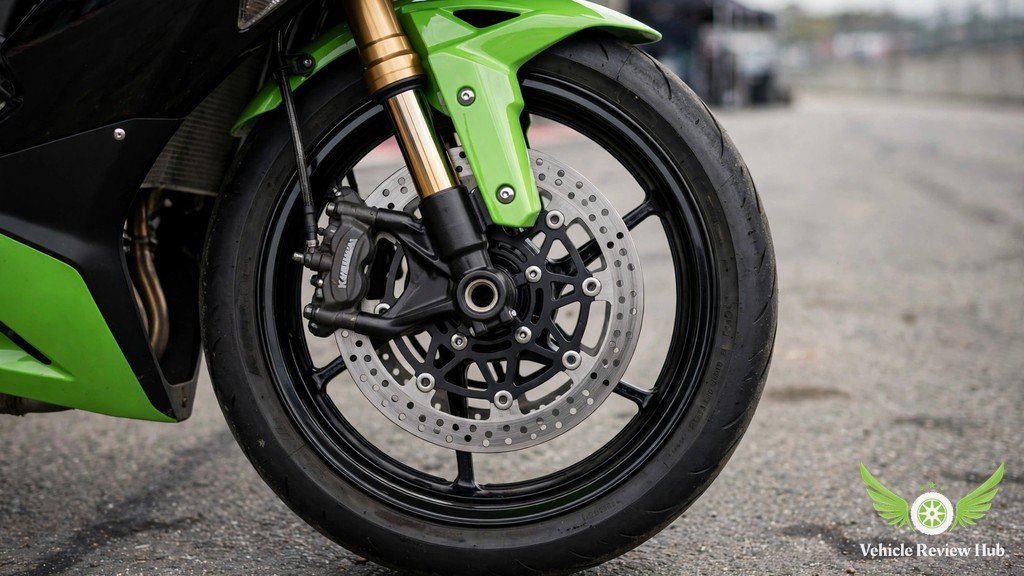
Handling is where the ZX-6R’s age shows least, and this Kawasaki Ninja ZX-6R performance guide rates the chassis as the bike’s third strength after the engine and the price. The 41 mm inverted Showa SFF-BP fork and the Bottom-link Uni-Trak rear shock are fully adjustable at both ends, the brakes are dual 310 mm front discs with radial monobloc calipers, and the whole package weighs 430.0 lb at the curb.
Handling, Braking and Stability on Real Roads
On real roads the bike is stable, planted and predictable — the 55.1-inch wheelbase, the 23.5-degree rake and the 4.0-inch trail give it steering that is quick without being nervous, and the fully adjustable suspension lets a rider set it up for their weight. The brakes are the same dual 310 mm discs with radial monobloc calipers the bike has carried since 2019. There is no IMU and no cornering ABS, so there is no lean-sensitive intervention to lean on — the rider is the stability system, and this Kawasaki Ninja ZX-6R performance guide says so plainly.
The 2024 update changed the details without changing the character: round front rotors instead of petal-shaped, integrated winglets on the front cowl, and riding modes integrated with the TFT dash. The frame, the wheelbase and the seat are unchanged.
Fully Adjustable Both Ends
Fully adjustable at both ends is not marketing language here: the 41 mm inverted Showa SFF-BP fork adjusts for rebound, compression and preload, and the Bottom-link Uni-Trak rear shock adjusts for preload, rebound and high/low-speed compression. Front travel is 4.7 inches and rear travel is 5.9 inches — more adjustment than the GSX-R600 offers, whose Showa BPF fork is non-adjustable, and it is why a ZX-6R can be set up for a 140 lb rider or a 220 lb rider without buying parts. This Kawasaki Ninja ZX-6R performance guide treats the suspension as a performance feature in its own right, not a specification-sheet footnote.
The adjustment matters because the bike is ridden hard. A supersport that cannot be set up for its rider will always feel wrong to someone, and the ZX-6R’s answer is to give the rider the adjusters and let them use them. The rear shock’s high/low-speed compression adjustment is the detail that separates it from the class: most 600s offer preload and rebound at the rear and nothing more.
Kawasaki Ninja ZX-6R Performance Compared With Other Sport Bikes
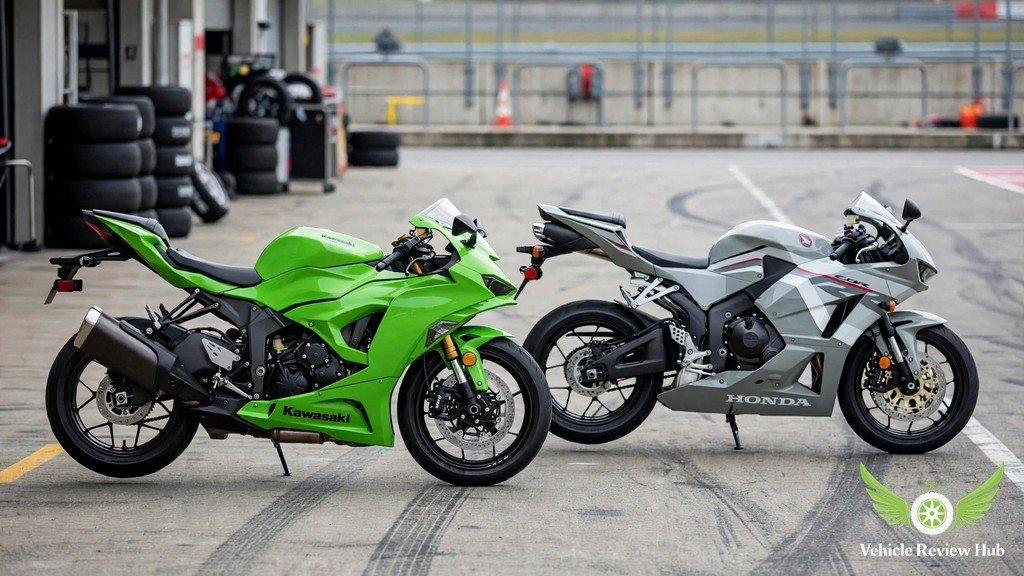
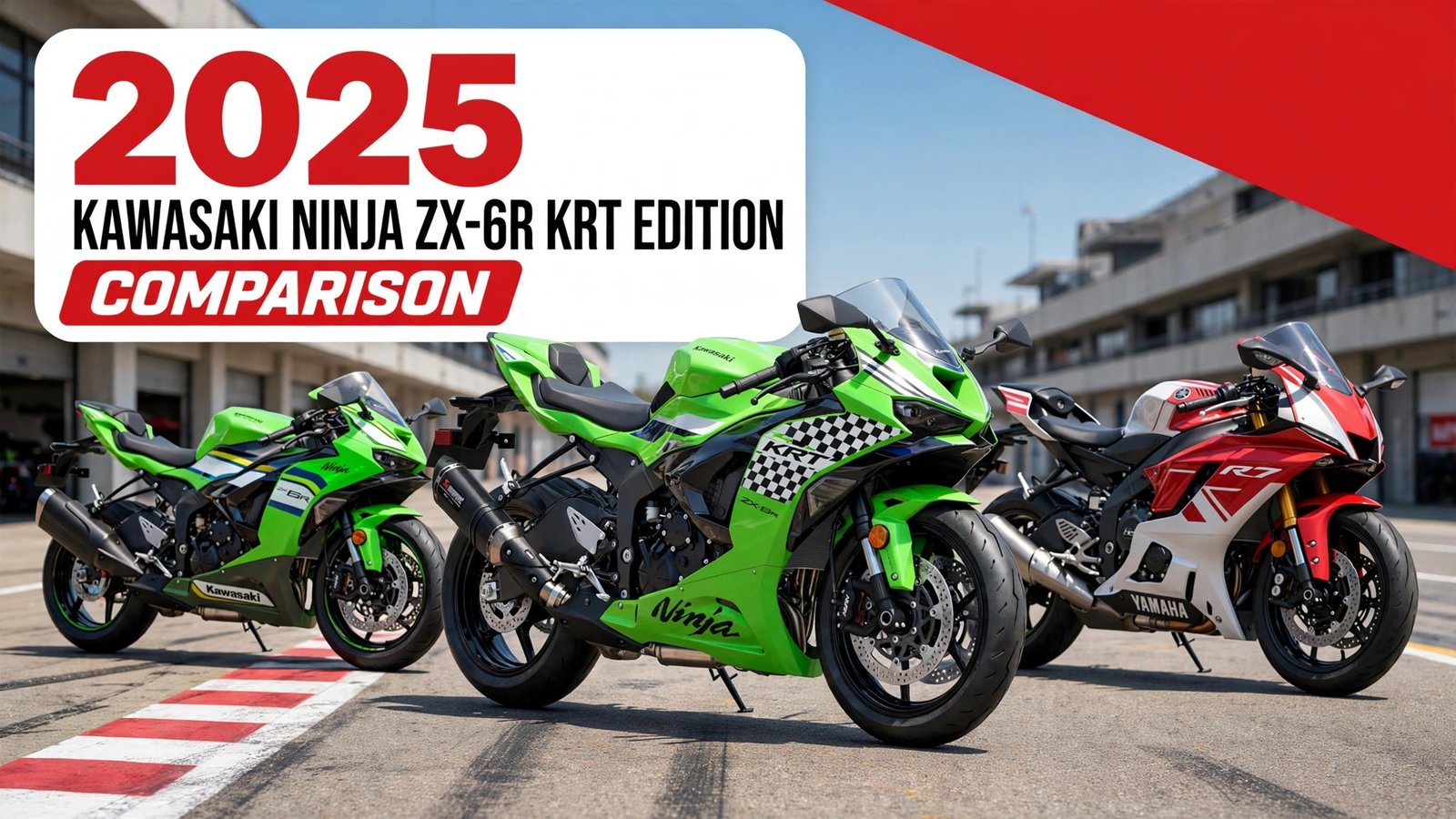
Compared with the other sport bikes a US buyer can actually buy new, the ZX-6R is the quickest and the best equipped of the Japanese 600s — and this Kawasaki Ninja ZX-6R performance guide puts the comparison in one table. The CBR600RR is cheaper and simpler, the GSX-R600 is older and more expensive, and the R7 is cheaper still but gives up 54.6 hp and two cylinders to get there.
Kawasaki Ninja ZX-6R vs Honda CBR600RR
Against the Honda CBR600RR the ZX-6R wins on power and equipment and loses on price — by $185. The CBR is $12,099 delivered in non-ABS form against the ZX-6R’s $12,284, and the Honda is the simpler bike: no traction control, no riding modes, no quickshifter, no TFT, a cable throttle and a needle tachometer. The ZX-6R answers with 127 hp against the CBR’s 113–118 hp range — Honda publishes no US power figure, so this Kawasaki Ninja ZX-6R performance guide prints the range, never a single settled number — plus a TFT dash, a quickshifter and riding modes the Honda does not offer. The ZX-4RR comparison shows the same pattern on the smaller bike.
On the dyno the gap is clearer than on paper. The ZX-6R made 108.4 hp on Cycle World’s dyno in 2023, and the CBR has no equivalent modern US dyno figure — the Honda’s power is quoted as a range because Honda does not publish a US figure and the test figures disagree. The CBR is 419–434 lb against the ZX-6R’s 430.0 lb base curb weight, and its seat is 32.4 inches against the ZX-6R’s 32.7 inches. The $185 price gap is small enough that the choice is about the bike, not the money.
| Bike | Delivered price | Power | Curb weight | Seat height |
|---|---|---|---|---|
| Kawasaki Ninja ZX-6R (2027) | $12,284 | 127 hp ISO (122 hp no ram air); 108.4 hp CW dyno | 430.0 lb base | 32.7 in |
| Honda CBR600RR (2026) | $12,099 | 113–118 hp range (no Honda US figure) | 419–434 lb | 32.4 in |
| Suzuki GSX-R600 (2027) | $13,149 | 102.9 hp CW dyno 2023 | 448 lb | 32.5 in |
| Yamaha YZF-R7 (2026) | $10,074 | 72.4 hp @ 8,750 rpm | 417 lb wet | 32.7 in |
Note: Delivered prices are MSRP plus destination for the non-ABS model where offered. The CBR600RR power figure is a range because Honda publishes no US figure, and the GSX-R600 figures are the C24 figures (curb 448 lb, seat 32.5 in) — not TopSpeed’s 2027 first-look figures. This Kawasaki Ninja ZX-6R performance guide uses the Cycle World 2023 same-dyno pair for the direct power comparison.
Is the Kawasaki Ninja ZX-6R Suitable for Beginner Riders?
No. It does 0–60 mph in about 3.0–3.2 seconds and makes 127 hp, with a 32.7-inch seat and full supersport ergonomics — too much bike for a new rider. A beginner is better served by the Ninja 500 review‘s bike or the Ninja 650, which cost less and forgive more — the 500 makes 51 hp and the 650 makes 67 hp, against the ZX-6R’s 127. The ZX-6R is a second or third bike, not a first, and this Kawasaki Ninja ZX-6R performance guide says so plainly.
The performance itself is the argument against it as a beginner bike: a 0–60 time of about 3 seconds, a top speed of 144 mph measured, and a quickshifter that only shifts up are not beginner features — they are the features of a bike built for riders who already know what they are doing. The GSX-R600 performance post makes the same point about its bike, and it applies here with more force.
Kawasaki Ninja ZX-6R Performance: Frequently Asked Questions
The answers below give the direct version of each question about this Kawasaki Ninja ZX-6R performance guide.
What is the top speed of the Kawasaki Ninja ZX-6R?
144 mph, measured by MCN on a datalogger on the 2024 bike. The 164 mph figure repeated by listicles is an unofficial claim that no reputable publication has ever measured on a stock bike. A Kawasaki Ninja ZX-6R performance guide that printed 164 mph as measured would be repeating a listicle, not a test result.
How fast is the ZX-6R in the quarter mile?
10.58 seconds at 132.36 mph, recorded by Cycle World testers — but that is a 2013-era figure, not a test of the current bike. No quarter-mile test of the 2024 bike has been published. A Kawasaki Ninja ZX-6R performance guide has to carry that year caveat with the figure, every time.
What did the ZX-6R make on the dyno?
Cycle World measured 108.4 hp at 13,200 rpm and 45.8 lb-ft at 10,900 rpm from a stock 2023 bike. MCN dyno’d the 2024 bike at 115 bhp at the rear wheel. This Kawasaki Ninja ZX-6R performance guide keeps the two generations apart.
What MPG does the Kawasaki Ninja ZX-6R get?
The EPA estimate for the 2024 bike is 40.6 mpg, which gives about 183 miles from the 4.5-gallon tank. No tester-measured MPG average has been published for the current bike — a Kawasaki Ninja ZX-6R performance guide that quoted one would be inventing it.
Is the ZX-6R faster than the Suzuki GSX-R600?
On the same Cycle World dyno in 2023, the ZX-6R made 108.4 hp against the GSX-R600’s 102.9 hp, and in 2011 the ZX-6R lapped Chuckwalla quicker (1:54.65 vs 1:55.72) — though the GSX-R600 won Motorcycle.com’s 2011 shootout overall. This Kawasaki Ninja ZX-6R performance guide prints both results, because the lap and the shootout measured different things.
Is the Kawasaki Ninja ZX-6R suitable for beginner riders?
No. It does 0–60 mph in about 3.0–3.2 seconds and makes 127 hp, so a beginner is better served by the Ninja 500 or Ninja 650, which cost less and forgive more. A Kawasaki Ninja ZX-6R performance guide that recommended this bike to a new rider would be doing the rider no favours.