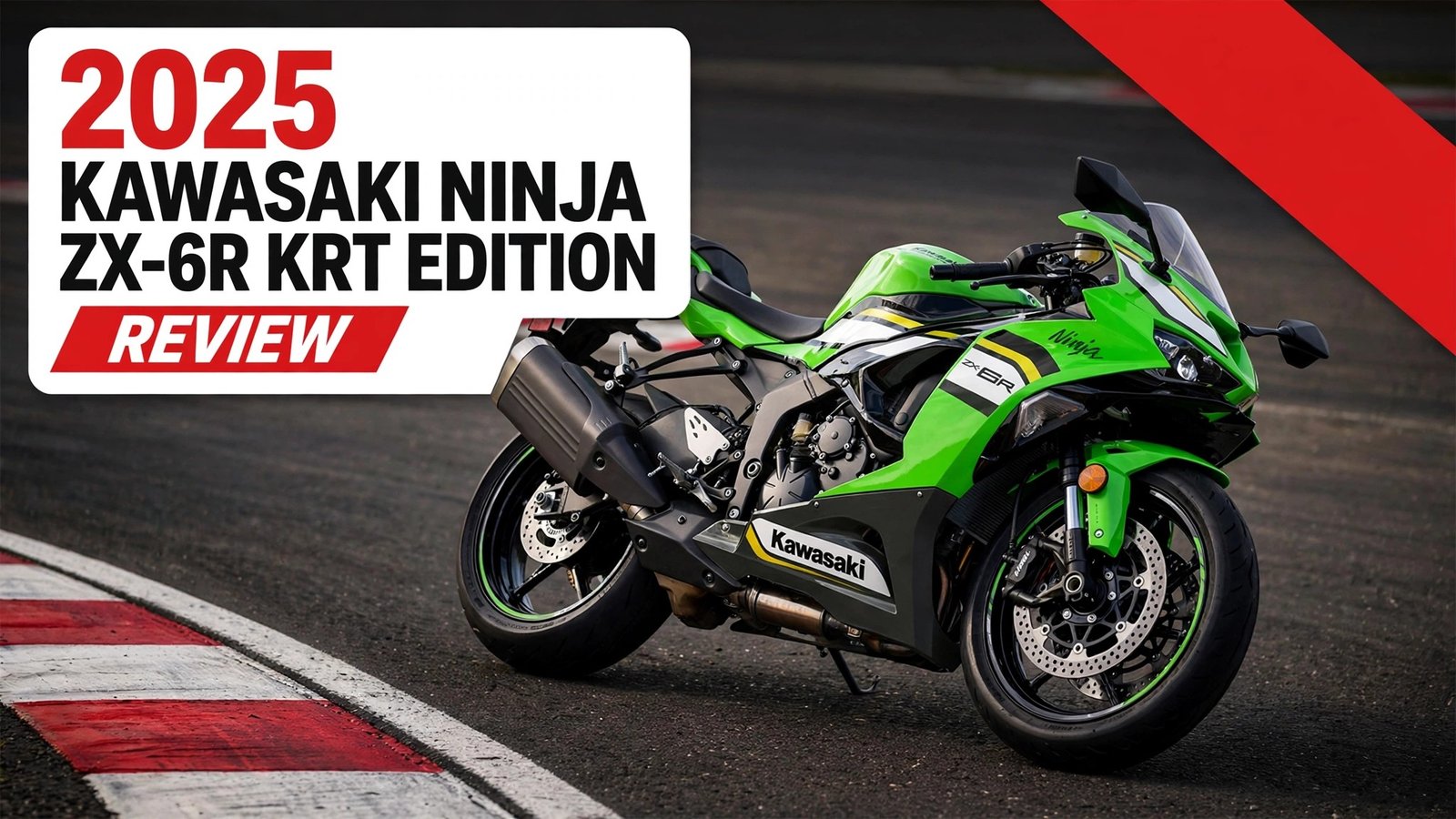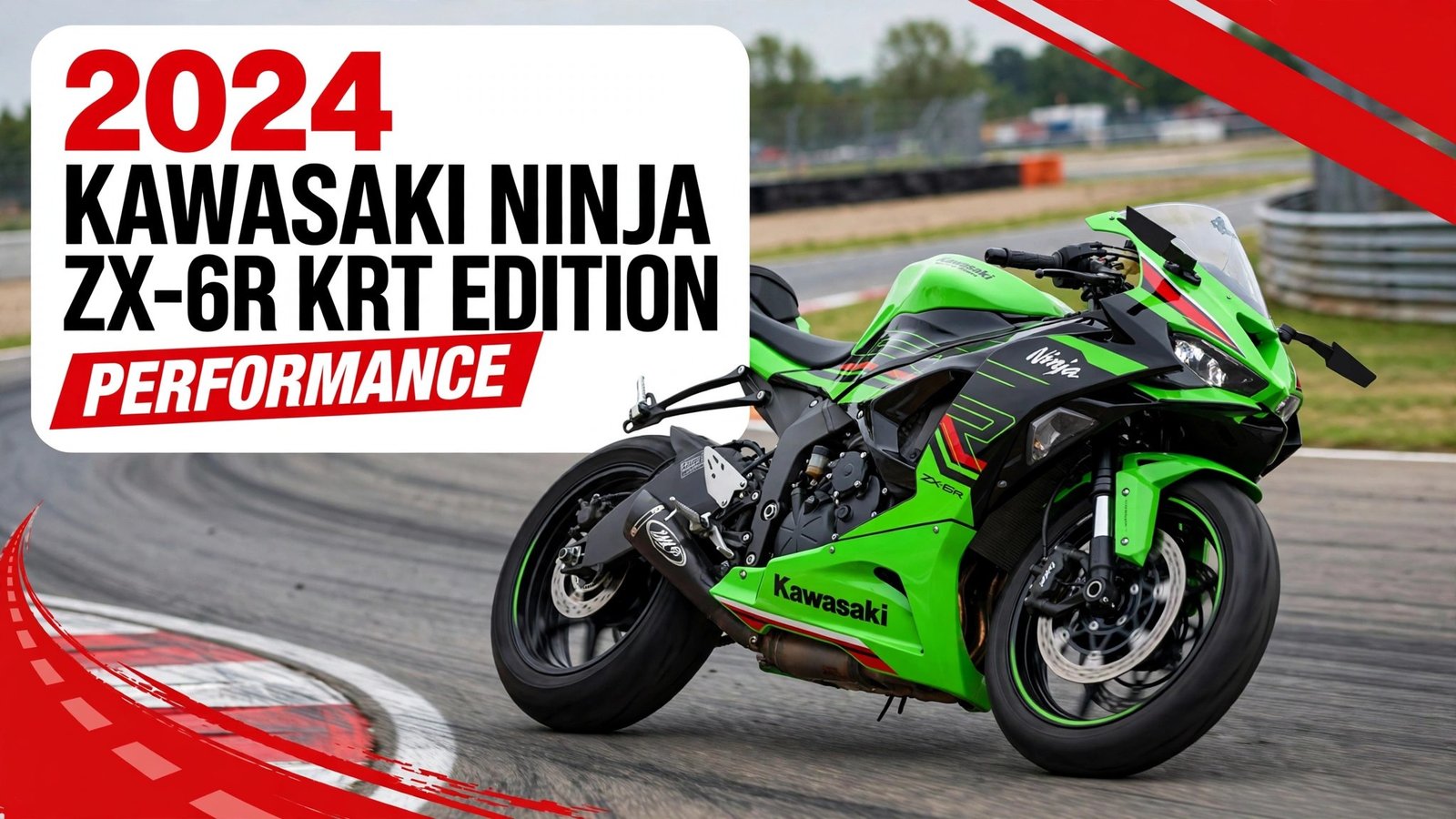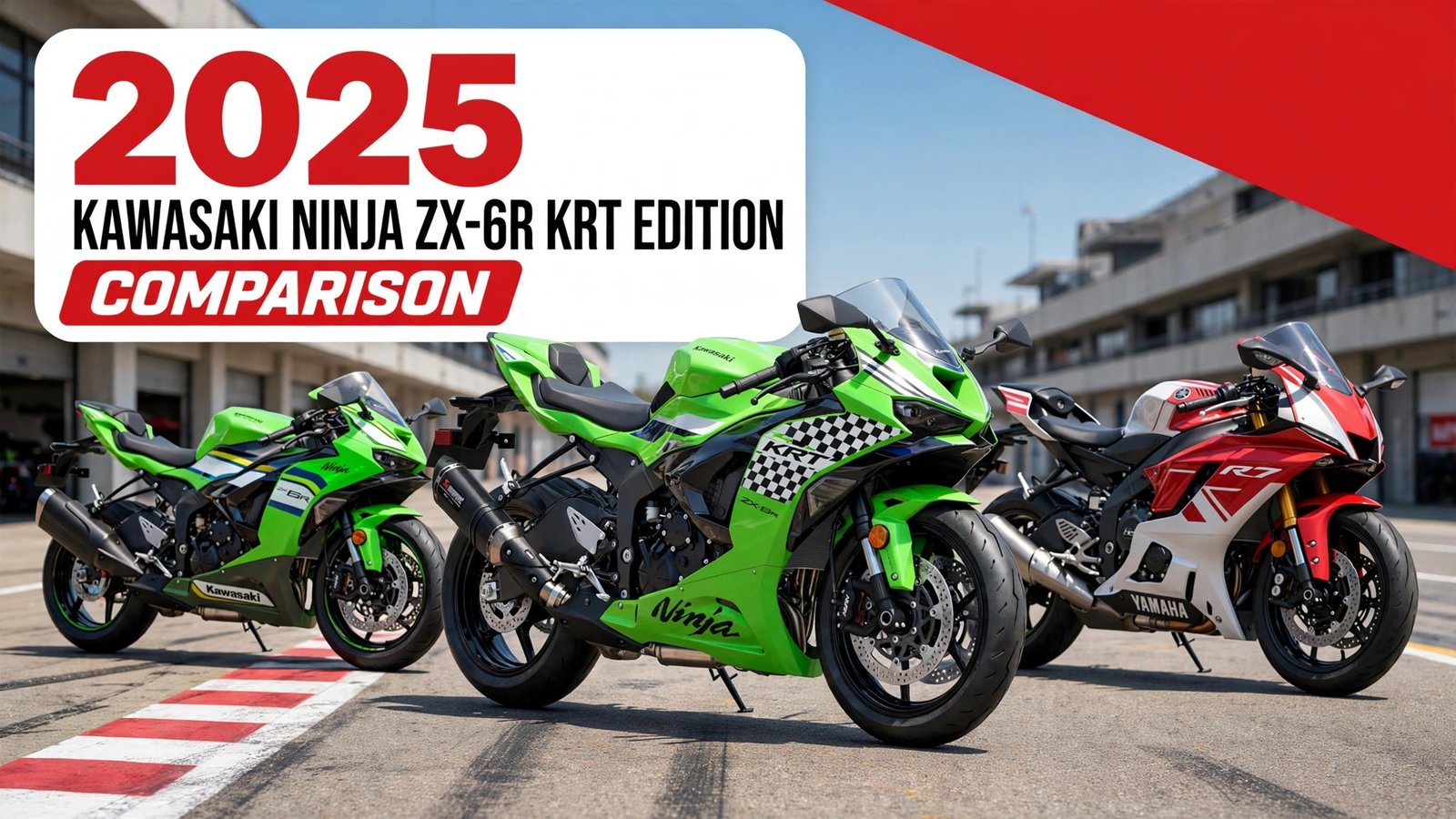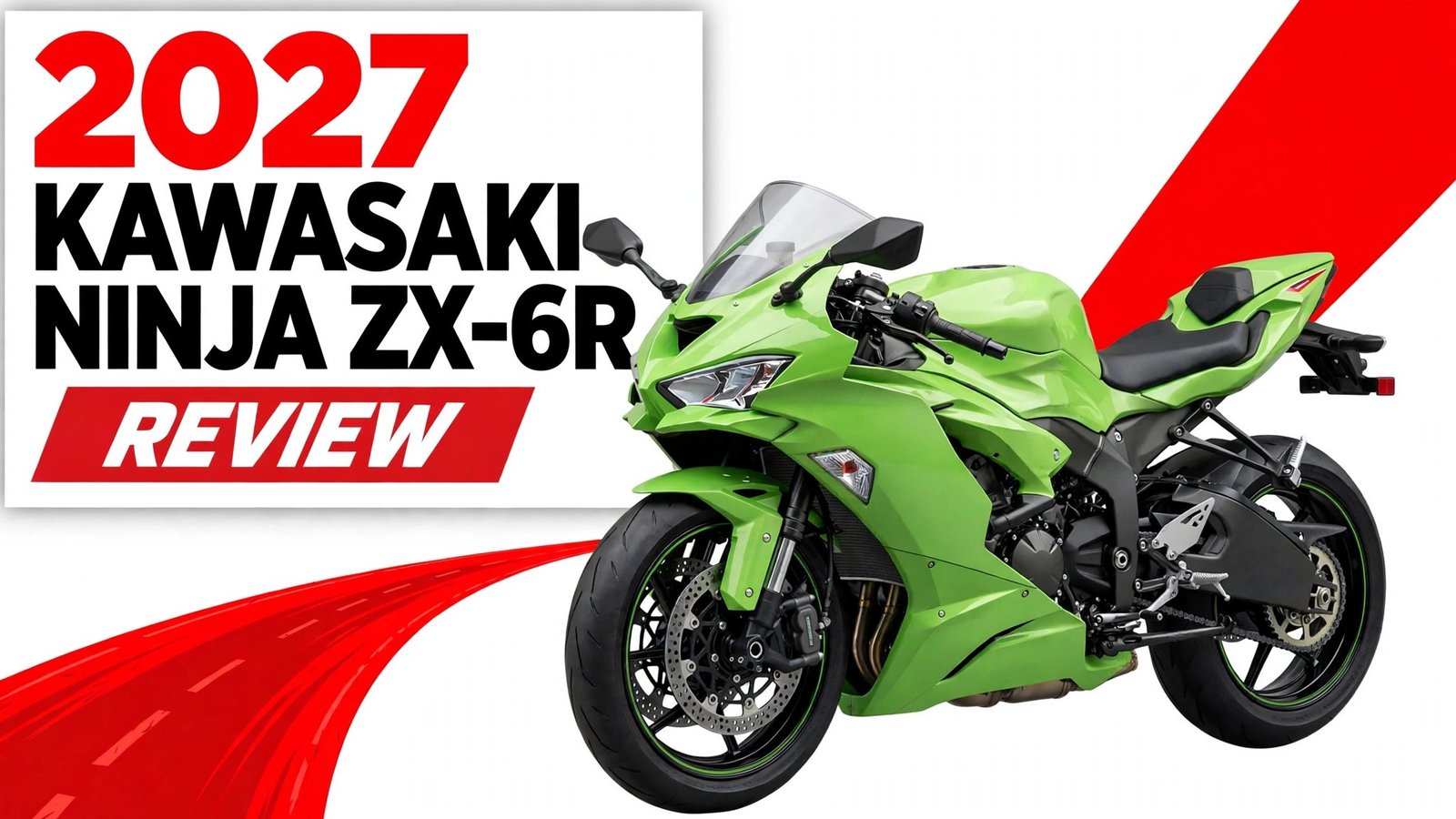
The 2027 Kawasaki Ninja ZX-6R costs $11,599 base and $12,599 ABS, plus a $685 destination charge — $12,284 and $13,284 delivered. It is the last Japanese 600-class inline-four still on sale new in America, and the KRT Edition name is gone for 2027. This Kawasaki Ninja ZX-6R review covers the price history, the engine, the 2024 update and the riding experience — and the one thing every buyer of a 2024–2026 bike must check before paying: two do-not-ride crankshaft recalls, the second issued because the first repair had to be redone.
What makes this Kawasaki Ninja ZX-6R review worth reading is that the bike is not the fastest 600 ever built. It is the only current 600 that is faster, better equipped and cheaper than its oldest rival, and the only one with 37cc more engine than the rest of the class. That extra capacity is the whole story: 52.1 lb-ft of torque where the 599cc rivals make roughly 44 to 47, a midrange you can use on the street, and a quickshifter, traction control, riding modes and a TFT dash the Suzuki GSX-R600 does not offer.
Kawasaki Ninja ZX-6R Overview and Model-Year Updates
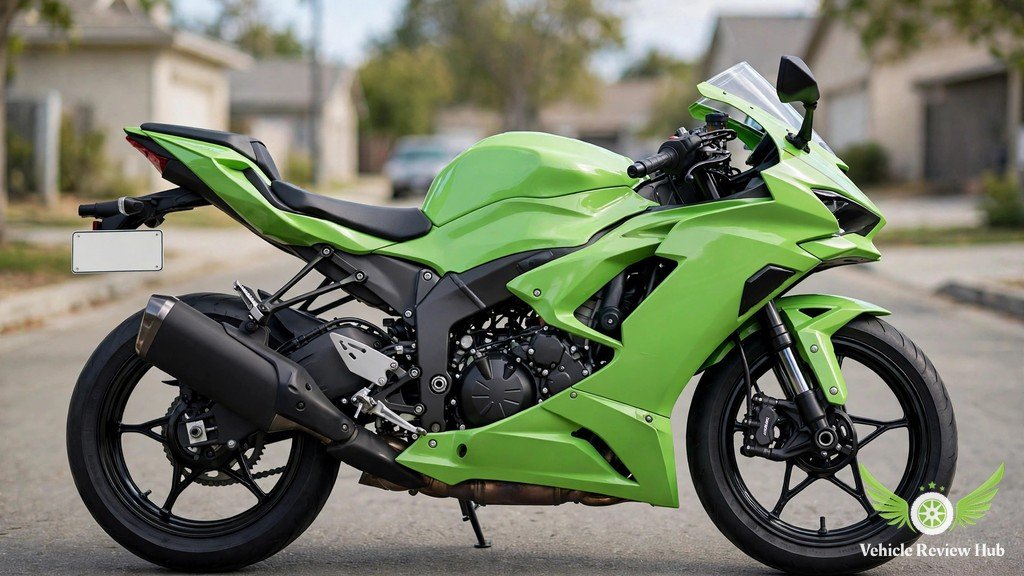
The ZX-6R has been on sale in the United States since 1995, and the current bike traces its roots to the first 636cc model of 2003, with a brief return to 599cc from 2009 to 2012 before the 636 came back in 2013. That history is the starting point for this Kawasaki Ninja ZX-6R review.
Price Was Cut for 2019
In 2019 Kawasaki slashed the base price by $1,700, from $11,699 to $9,999. Rider’s first look, quoted in this Kawasaki Ninja ZX-6R review, records the cut plainly: the base price fell by $1,700, to $9,999. The 2019 line was priced at $9,999 for the base model, $10,999 for the ABS model and $11,299 for the ABS KRT Edition, which undercut every rival in the class at a stroke.
The cut worked because the bike behind it was genuinely new for 2019. It brought new ZX-10R-like bodywork, twin LED headlights, a standard quickshifter, a one-tooth smaller countershaft sprocket, Euro 4 mapping, a new instrument panel with a fuel gauge and range readout, and Bridgestone S22 tyres. Seven years later the price has crept back to $11,599, almost exactly where it started, but the 2024 update brought the TFT dash, revised cams and a Euro 5 engine. Any Kawasaki Ninja ZX-6R review that only quotes the 2027 price misses the point — the value story is the arc from $11,699 down to $9,999 and back again, traced in the table below.
No KRT Name for 2027
There is no KRT Edition for 2027 — Kawasaki dropped the KRT name from the ZX-6R line entirely, and the last KRT Edition was the 2026 model. The 2027 colours are Lime Green, Galaxy Silver, Metallic Matte Twilight Blue, and Metallic Spark Black or Metallic Flat Spark Black — Lime Green is a standard colour, not a KRT Edition. Buyers reading this Kawasaki Ninja ZX-6R review should not pay a premium for a “KRT” that does not exist, and sellers advertising one should be asked to show the model code.
Before money changes hands on a used 2024–2026 bike, one check matters more than colour or mileage. In June 2025 Kawasaki recalled 17,792 ZX-6Rs under campaign 25V376 because over-torqued crankcase bolts could damage the number five crankshaft bushing and seize the engine — owners were told not to ride. In November 2025 Kawasaki recalled them again under 25V798, covering 2024–2026 bikes, because the first repair process itself could over-tighten the bolts. A bike repaired under the first recall must be repaired again — the white mark tells the story: left side means the first repair, right side the second. This Kawasaki Ninja ZX-6R review repeats that warning: a cheap 2024 bike without the second repair is not a bargain.
Kawasaki Ninja ZX-6R Engine and Specifications
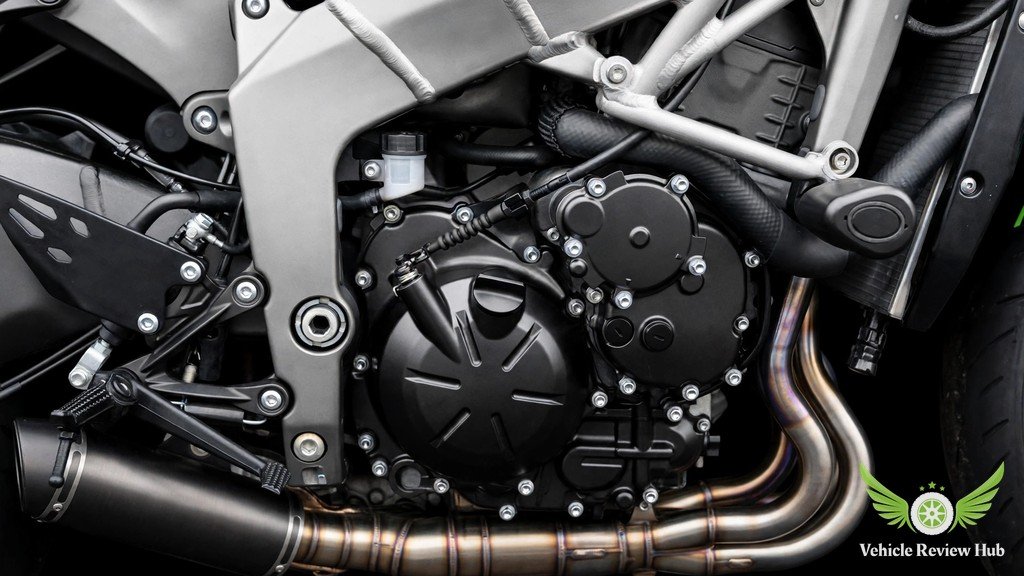
The engine is a 636cc liquid-cooled DOHC 16-valve inline-four — 67.0 by 45.1 mm bore and stroke, 12.9:1 compression, fuel injection with 38 mm Keihin throttle bodies, a six-speed gearbox and an assist-and-slipper clutch — in a pressed-aluminum perimeter frame. It is the only engine in the class with 636cc — the reason this Kawasaki Ninja ZX-6R review keeps coming back to torque, and the step up from the Ninja ZX-4R review‘s 399cc four.
127 HP Is an ISO Figure
From 2013 to 2018 the bike made 129.3 horsepower at 13,500 rpm. From 2019 to 2023 it made 127 horsepower at 13,500 rpm (95.4 kW without ram air). The 2024 update changed the cams, intake funnels and exhaust, and the engine gave up 5 horsepower: the 2024–2025 bikes make 122 horsepower at 13,000 rpm without ram air, or 127.7 with ram air. For 2026–2027 Kawasaki lists 127.0 horsepower at 13,000 rpm with an ISO 4106 footnote — the headline now uses the ram-air figure, not a new engine. The doc heading is right: 127 horsepower is an ISO figure, and any Kawasaki Ninja ZX-6R review that prints it without the ram-air explanation is quoting the brochure.
Torque tells the same story more honestly, and it is the figure this Kawasaki Ninja ZX-6R review leans on. The 2019–2023 bikes made 52.1 lb-ft at 11,500 rpm, and the 2024-and-later bikes make the same 52.1 lb-ft at 10,800 rpm. The peak moved down the rev range with the new cams — the same pull, earlier, which is exactly what a street rider wants. On the dyno, Cycle World’s 2023 test measured 108.4 horsepower at 13,200 rpm and 45.8 lb-ft at 10,900 rpm from a stock pre-2024 bike, and MCN’s dyno of the 2024 bike recorded 115 bhp at the rear wheel.
No IMU, No Cornering ABS
The ZX-6R has no inertial measurement unit, so there is no cornering ABS and no lean-sensitive traction control. What it does have is KTRC traction control, two power modes (Full and Low), and KIBS ABS on ABS models only, with Bosch 9.3MP hardware on the 2024-and-later bikes. The throttle is cable operated, not ride-by-wire, which is why the quickshifter shifts up only and why there is no auto-blip downshift. This Kawasaki Ninja ZX-6R review is blunt about that gap: it is the bike’s one real electronics shortfall against the Yamaha YZF-R7 and the Aprilia RS 660, which both have the full IMU suite. What the Kawasaki offers instead is a simpler package that costs less.
Kawasaki Ninja ZX-6R Price and Market Availability
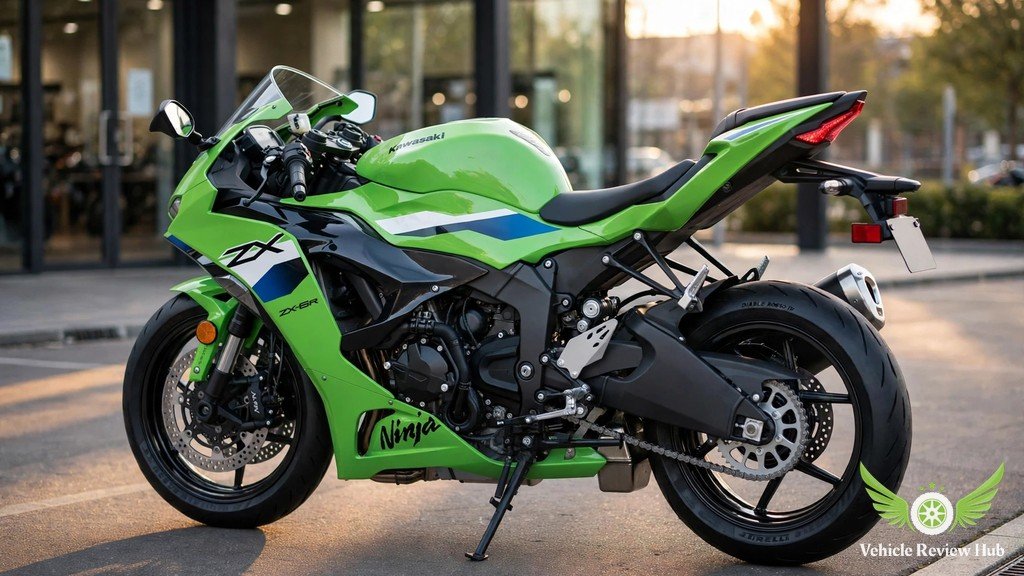
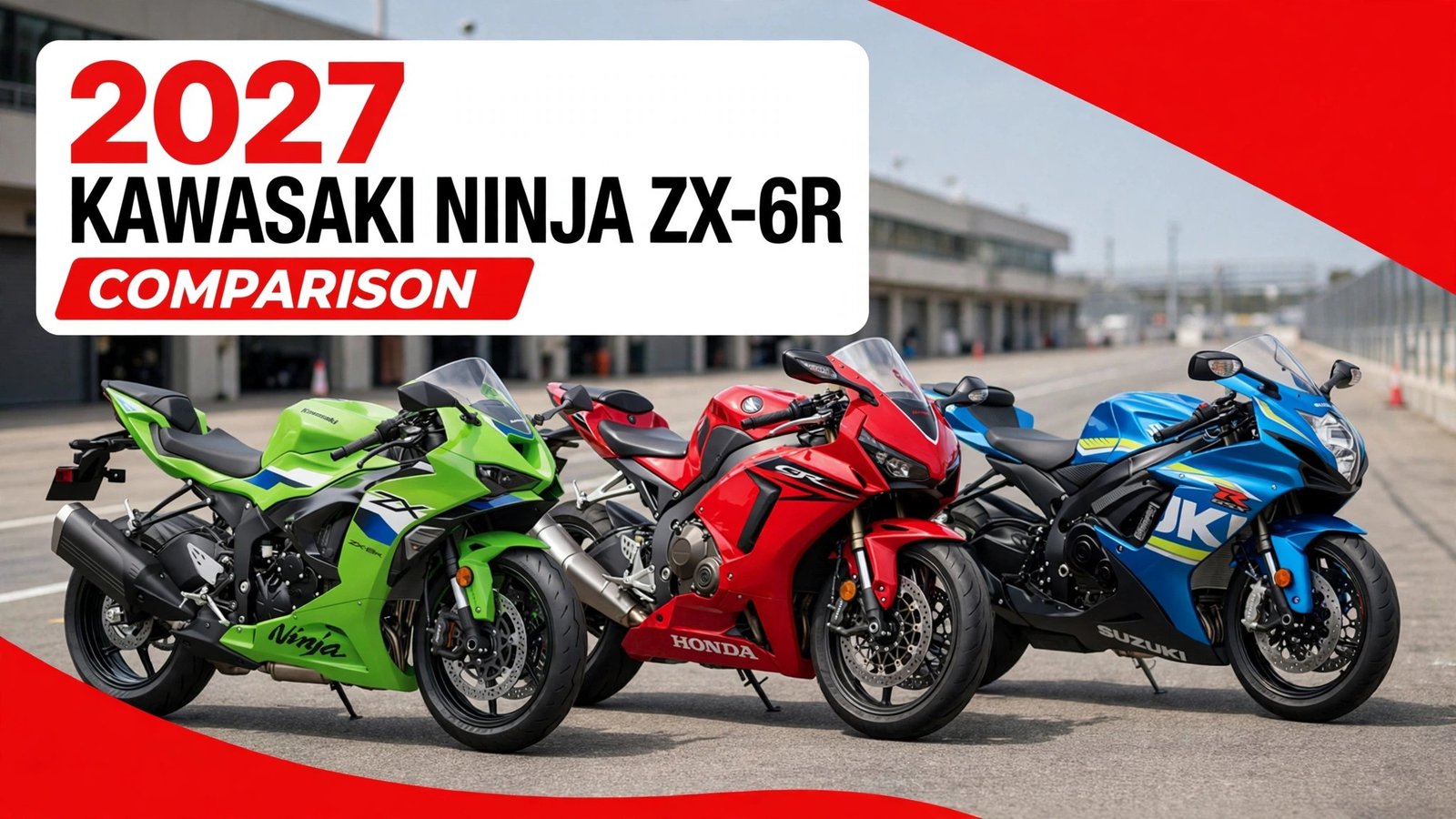
The 2027 bike costs $11,599 base and $12,599 ABS, plus a $685 destination charge — $12,284 and $13,284 delivered. That is $185 more than the 2026 Honda CBR600RR delivered and $865 less than the 2027 Suzuki GSX-R600 delivered — the comparison this Kawasaki Ninja ZX-6R review returns to in the verdict. The bike is built in Japan, every US VIN starts with JKB, and the 2027 model was announced on August 4, 2026 as a carryover from 2026.
Kawasaki Ninja ZX-6R Price in the USA: $11,599 (2027)
Kawasaki’s own 2027 model page lists the $11,599 base price and the $12,599 ABS price, with the $685 destination charge — the figures this Kawasaki Ninja ZX-6R review uses. The ABS premium is $1,000, and it has been $1,000 every year from 2019 through 2027: the ABS model buys KIBS anti-lock braking and nothing else.
The price history below shows how the bike got here. The 2024 destination charge was not verified from Kawasaki’s 2024 spec sheet, so this Kawasaki Ninja ZX-6R review prints no 2024 destination figure, and the 2026 KRT price was likewise not verified, so the table marks it as assumed. The 2025 destination is $665, not $685, and the 2024 MSRP is $11,399 from Kawasaki’s own 2024 spec sheet — not the $11,299 from the June 2023 pre-launch announcements.
| Model year | Base MSRP | ABS MSRP | KRT | Destination | Delivered base |
|---|---|---|---|---|---|
| 2018 | $11,699 | — | — | — | — |
| 2019 | $9,999 | $10,999 | $11,299 (ABS KRT) | — | — |
| 2020 | $9,999 | — | $11,299 (ABS KRT) | $410 | $10,409 |
| 2021 | $10,199 | — | $11,499 (ABS KRT) | $430 | $10,629 |
| 2022 | $10,499 | — | $10,799 | $430 | $10,929 |
| 2023 | $10,699 / $10,999 | $11,999 | $10,999; KRT ABS $11,999 | $430 | $11,129 / $11,429 |
| 2024 | $11,399 | $12,399 | 40th Anniversary | Not verified | — |
| 2025 | $11,399 | $12,399 | $11,399; KRT ABS $12,399 | $665 | $12,064 |
| 2026 | $11,599 | $12,599 | Existed; price assumed | $685 | $12,284 |
| 2027 | $11,599 | $12,599 | No KRT name | $685 | $12,284 |
Note: Prices are Kawasaki USA MSRP figures from the spec sheets and model pages. The 2024 destination charge was not verified at writing. The 2026 KRT price is assumed at $11,599 with no premium. The 2024 MSRP is $11,399 from Kawasaki’s own 2024 spec sheet. This Kawasaki Ninja ZX-6R review never mixes MSRP and delivered prices in the same comparison.
KRT Premium Fell to Zero
The KRT Edition was always paint and graphics, never hardware, and its premium fell to zero in 2023 — the arc this Kawasaki Ninja ZX-6R review traces in the table above. In 2019 the KRT cost $300 over the ABS model, and in 2022 it cost $300 over the base model. In 2023 the KRT ABS cost $11,999, the same as the standard ABS model, and in 2024 and 2025 the KRT cost the same as the base bike. The 2024 40th Anniversary Edition, in Lime Green, Pearl Crystal White and Blue, cost $12,649 ABS-only — $250 over the $12,399 ABS price. Used listings show the same pattern: a used 2024 ABS KRT asks around $10,995 and a used 2023 KRT around $11,181, with no premium over a standard bike. Pay the standard-bike price for a KRT, never a premium, and never pay extra for a 2027 “KRT” that Kawasaki never built.
Kawasaki Ninja ZX-6R Design, Features and Technology
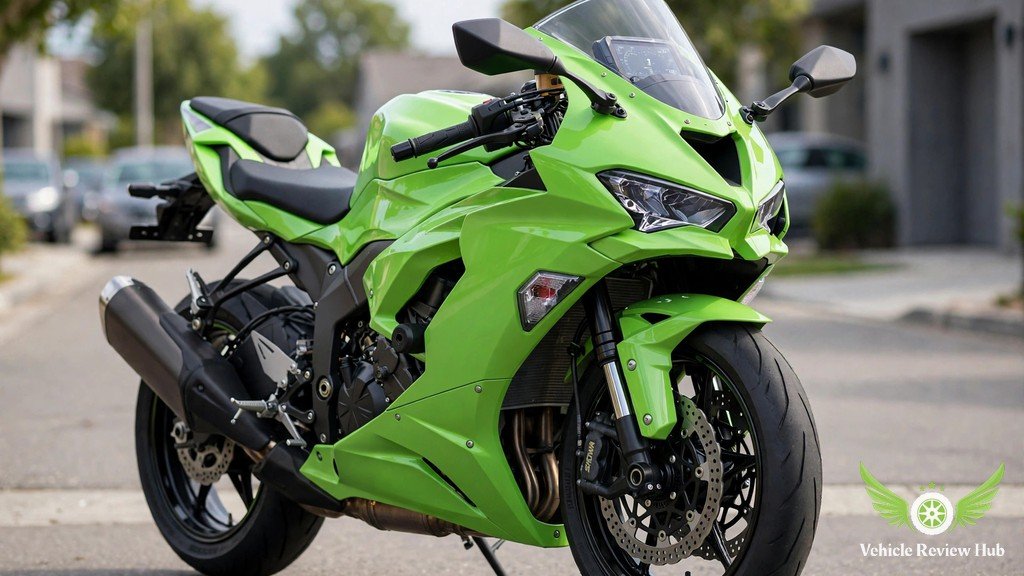
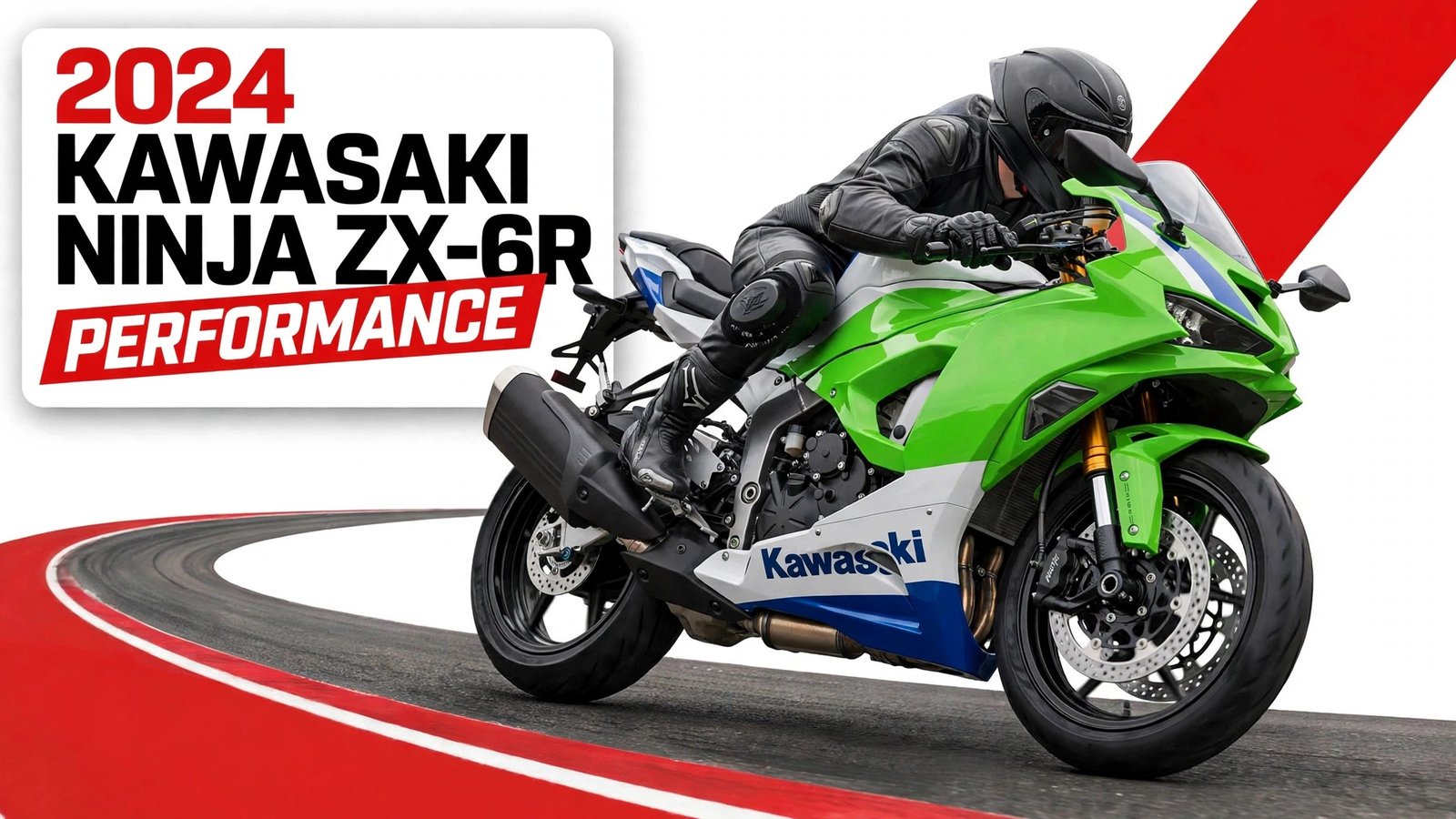
The 2024 update gave the ZX-6R the modern face the class expects: a new front cowl with integrated winglets, LED headlights and turn signals, a shorter windscreen, and a 4.3-inch TFT dash with RIDEOLOGY in place of the old LCD panel. The chassis is familiar and fully adjustable at both ends, more than the GSX-R600 offers, and this Kawasaki Ninja ZX-6R review treats the design as the bike’s quiet strength.
2024 Brought TFT and Cams
The 2024 update was the first real revision since 2019, touching the engine, the electronics and the bodywork at once. The cam profiles were revised with lower lift and shorter duration, the intake funnels were revised, and the header, exhaust and collector were new, all to meet Euro 5+ — which is why the engine gives up 5 horsepower without ram air. The TFT dash replaced the LCD panel, the riding modes became integrated, the front rotors changed from petal-shaped to round, and the front cowl gained integrated winglets. Dropped from European markets in 2021, it returned in 2024 as the only Japanese Euro 5-compliant 600 supersport — the return this Kawasaki Ninja ZX-6R review keeps in mind.
What did not change in 2024 matters as much as what did, and this Kawasaki Ninja ZX-6R review weighs both sides. The suspension is the same 41 mm inverted Showa SFF-BP fork and Bottom-link Uni-Trak rear shock, both fully adjustable, and the brakes are the same dual 310 mm front discs with radial monobloc calipers. The frame, wheelbase and seat are unchanged at 55.1 inches and 32.7 inches.
Non-ABS Never Dropped
The base non-ABS trim was offered every year from 2019 through 2027 — unusual in a class where rivals went ABS-only and then disappeared. It keeps the entry price at $11,599 instead of $12,599 — the cheapest way into a current 600-class four. A used buyer can find a non-ABS bike in any model year — it is the standard bike, and it was always available. The ABS model adds KIBS anti-lock braking only, for $1,000 — the same pattern the Ninja ZX-4RR review shows on the smaller bike. For a track-day buyer who plans to remove the ABS anyway, the non-ABS bike is the honest pick in this Kawasaki Ninja ZX-6R review; for a street rider, the ABS model is worth the thousand dollars.
| Item | 2027 Ninja ZX-6R |
|---|---|
| Engine | 636cc liquid-cooled DOHC 16-valve inline-four |
| Bore x stroke | 67.0 x 45.1 mm |
| Compression ratio | 12.9:1 |
| Claimed power | 127.0 hp @ 13,000 rpm (ISO 4106, ram-air figure) |
| Claimed torque | 52.1 lb-ft @ 10,800 rpm |
| Fuel system | DFI, 38 mm Keihin throttle bodies x4 |
| Transmission | 6-speed, assist-and-slipper clutch |
| Final drive | Chain 520, 15T/43T |
| Frame | Pressed-aluminum perimeter |
| Front suspension | 41 mm inverted Showa SFF-BP, fully adjustable |
| Rear suspension | Bottom-link Uni-Trak, fully adjustable |
| Front / rear travel | 4.7 in (119 mm) / 5.9 in (150 mm) |
| Front brakes | Dual semi-floating 310 mm discs, radial monobloc 4-piston calipers |
| Rear brake | Single 220 mm petal disc, single-piston caliper |
| Tyres | 120/70ZR17 / 180/55ZR17 Pirelli Diablo Rosso IV |
| Length / width / height | 79.7 in / 28.0 in / 43.3 in |
| Wheelbase | 55.1 in |
| Rake / trail | 23.5 degrees / 4.0 in |
| Seat height | 32.7 in (830 mm) |
| Fuel capacity | 4.5 gal |
| Curb weight, base | 430.0 lb (49-state) / 432.2 lb (50-state) |
| Curb weight, ABS | 434.4 lb (49-state) / 436.6 lb (50-state) |
| Electronics | KTRC, 2 power modes, KQS upshift-only quickshifter, 4.3-in TFT + RIDEOLOGY |
| Warranty | 12-month limited |
| 2027 MSRP | $11,599 base / $12,599 ABS + $685 destination |
Note: All figures are from Kawasaki USA’s 2027 spec sheet. The 127.0 hp headline is the ISO 4106 ram-air figure; the same engine makes 122 hp without ram air. This Kawasaki Ninja ZX-6R review uses the 49-state curb weights in the text.
Kawasaki Ninja ZX-6R Riding Experience and Comfort
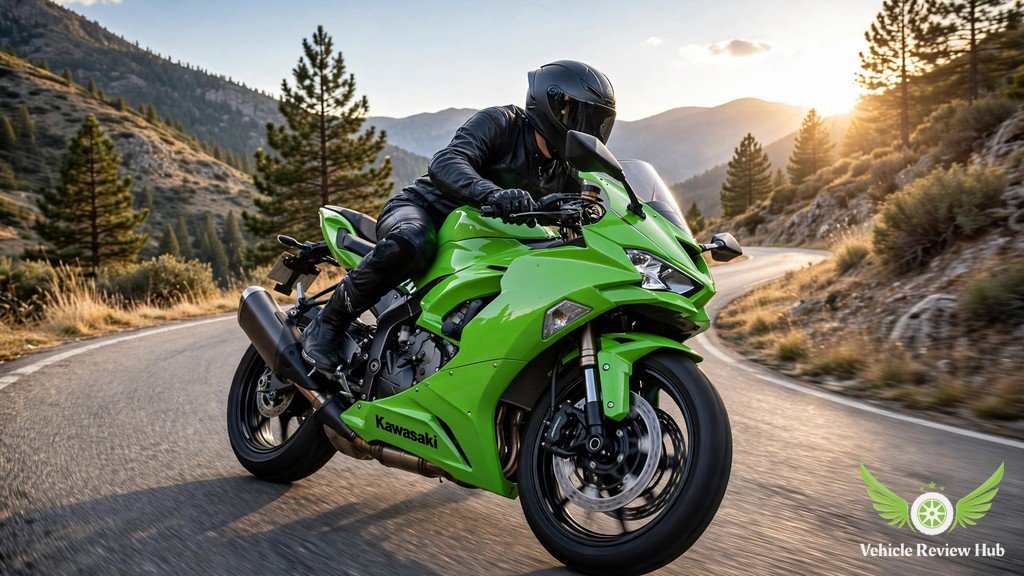
The ZX-6R rides like a streetbike first and a track bike second — that is the 636’s whole character. The numbers only make sense once you know how the bike feels at road speed, and this Kawasaki Ninja ZX-6R review says it feels like a 600 with a bigger engine.
Rider Magazine rode the 2024 bike in this video — the same updated bike this Kawasaki Ninja ZX-6R review covers, TFT dash and all.
636 Torque Is the Story
The 636’s midrange is the reason the bike works on the street, and every tester quoted in this Kawasaki Ninja ZX-6R review says the same thing. The engine makes 52.1 lb-ft of torque, peaking at 10,800 rpm on the 2024-and-later bikes, where the 599cc rivals make roughly 44 to 47 lb-ft — a gap felt every time the rider rolls on out of a corner or pulls away from a light. MCN’s 2024 review measured 115 bhp at the rear wheel and a 144 mph top speed, with the bike hitting what MCN called a brick wall at that speed.
The suspension and brakes match the engine’s character, and this Kawasaki Ninja ZX-6R review rates them as the bike’s second strength after the torque. The 41 mm Showa SFF-BP fork and the Uni-Trak rear shock are fully adjustable at both ends, and the dual 310 mm front discs with radial monobloc calipers stop the bike with the feel the class expects. The RevZilla first ride at Ridge Motorsports Park tested the same bike on track, and the Ninja 650 review shows the sane alternative for riders who want the Kawasaki street character without the supersport commitment. The windscreen is short, the pegs are high, and the tank is small at 4.5 gallons, but it is the most usable bike in its class.
12 Month Limited Warranty
Kawasaki covers the ZX-6R with a 12-month limited warranty, the standard term for the company’s supersport range. The warranty matters less than the recall paperwork, and this Kawasaki Ninja ZX-6R review says so plainly: a 2024–2026 bike is only a good buy if the VIN check against both crankshaft recalls is clean and the white mark on the right side of the crankcase proves the second repair was done. A leftover 2024 or 2025 bike with both recall repairs done carries the same warranty from its sale date — the value pick of the range if the paperwork is in order. Service is every 7,600 miles or annually, with valve clearances checked at every service on 2024-and-later bikes — halved from 15,200 miles.
Kawasaki Ninja ZX-6R Review: Pros, Cons and Verdict
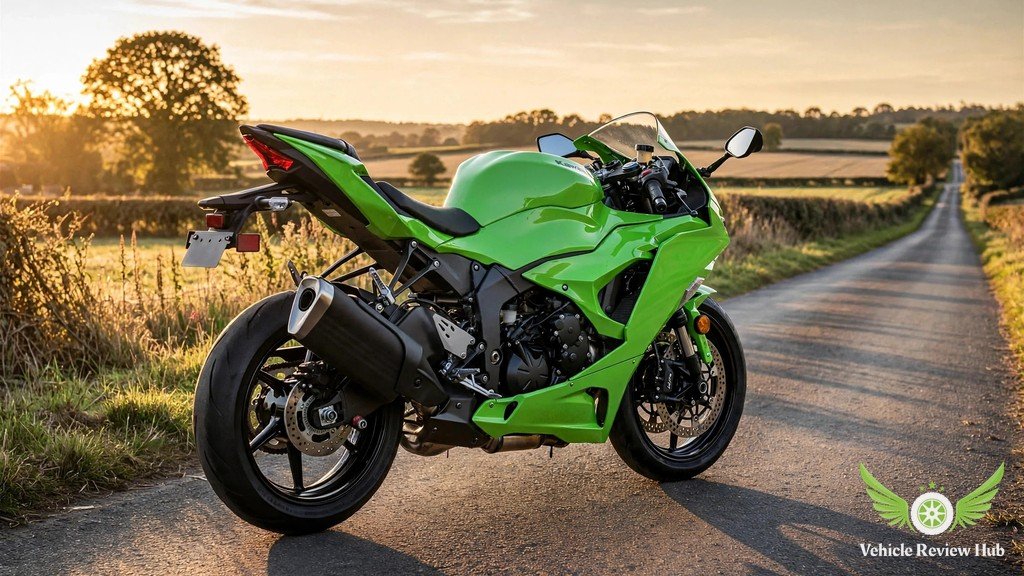
The verdict is the one this Kawasaki Ninja ZX-6R review has been building toward: buy the bike for the engine and the price, not for the electronics, and buy a 2024–2026 bike only after the recall paperwork is proven. At $12,284 delivered it undercuts the GSX-R600 by $865, it makes more power on the dyno than any rival in the class, and it is the only current 600-class four with a TFT dash and a quickshifter.
Main Advantages and Limitations of the Kawasaki Ninja ZX-6R
| Advantages | Limitations |
|---|---|
| 636cc engine with class-leading 52.1 lb-ft of torque and usable midrange | No IMU, no cornering ABS, no ride-by-wire — throttle is cable operated |
| $11,599 base price undercuts the GSX-R600 by $865 delivered | Two do-not-ride crankshaft recalls on 2024–2026 bikes (25V376 + 25V798) |
| Standard quickshifter, traction control, riding modes and TFT dash | Quickshifter shifts up only — no auto-blip downshift |
| Fully adjustable suspension at both ends, no parts needed | Valve clearances checked every 7,600 miles on 2024+ bikes — twice as often as before |
| Non-ABS trim offered every year, keeping the entry price low | 12-month limited warranty only; 4.5-gallon tank gives about 183 miles of EPA range |
Note: The torque and price figures are the 2027 spec-sheet values. The recall figures are from the NHTSA Part 573 reports: 25V376 covers 17,792 model-year 2024–2025 bikes, and 25V798 covers 2024–2026 bikes at 19,823 units per the Part 573 report, with 20,301 per the acknowledgement letter. This Kawasaki Ninja ZX-6R review lists the limitations honestly because buyers deserve the full picture before they pay.
Quickshifter Shifts Up Only
The Kawasaki Quick Shifter has been standard since 2019 and shifts up only — no auto-blip downshift, and the cable throttle is why. The contactless system works cleanly at full throttle, and it is one of the things that makes the ZX-6R feel modern against the GSX-R600, which has no quickshifter. Against the Yamaha YZF-R7, though, it is a limitation: the R7’s third-generation quickshifter works in both directions with auto-blip, and the Ninja 1000SX review shows what a full quickshifter feels like on a bigger Kawasaki. That split is the honest way to judge the system, and it is the last word of this Kawasaki Ninja ZX-6R review on the bike’s equipment: good where it counts, missing where the rivals have moved on, and priced accordingly.
Kawasaki Ninja ZX-6R Review: Frequently Asked Questions
The answers below give the direct version of each question about this Kawasaki Ninja ZX-6R review.
How much does a 2027 Kawasaki Ninja ZX-6R cost?
$11,599 for the base model and $12,599 for the ABS model, plus a $685 destination charge — $12,284 and $13,284 delivered. There is no KRT Edition for 2027. A Kawasaki Ninja ZX-6R review of the price has to start with those two delivered figures, because the destination charge is part of what the buyer actually pays.
How much horsepower does the Kawasaki Ninja ZX-6R have?
Kawasaki lists 127.0 hp at 13,000 rpm for 2026–2027 models — an ISO figure measured with ram air. The same engine made 122 hp without ram air on 2024–2025 bikes. On Cycle World’s dyno, a stock 2023 bike made 108.4 hp at the rear wheel. A Kawasaki Ninja ZX-6R review should quote all three figures with their labels, because the brochure number and the dyno number measure different things.
Does the Ninja ZX-6R have a quickshifter?
Yes. The Kawasaki Quick Shifter (KQS) has been standard since 2019, but it shifts up only — there is no auto-blip downshift. A Kawasaki Ninja ZX-6R review that calls it a full quickshifter would be wrong, and the cable throttle is the reason the downshift function does not exist.
Is there a 2027 Ninja ZX-6R KRT Edition?
No. Kawasaki dropped the KRT name for 2027. The last KRT Edition was the 2026 model, and by then the KRT paint cost nothing extra over the standard bike. A Kawasaki Ninja ZX-6R review of the 2027 line has no KRT trim to cover, and Lime Green for 2027 is a standard colour, not a KRT Edition.
Does the ZX-6R have cornering ABS or an IMU?
No. The ZX-6R has no IMU, so there is no cornering ABS and no lean-sensitive traction control. It has KTRC traction control, two power modes, and KIBS ABS on ABS models only. A Kawasaki Ninja ZX-6R review must say this plainly, because the R7 and the RS 660 both offer the electronics the Kawasaki lacks.
Is the Kawasaki Ninja ZX-6R good for beginners?
No. With 127 hp, a 32.7-inch seat and full supersport ergonomics, it is too much bike for a new rider. The Ninja 500 review and the Ninja 650 are the honest beginner alternatives in Kawasaki’s own line. A Kawasaki Ninja ZX-6R review that recommended this bike to a new rider would be doing the rider no favours.