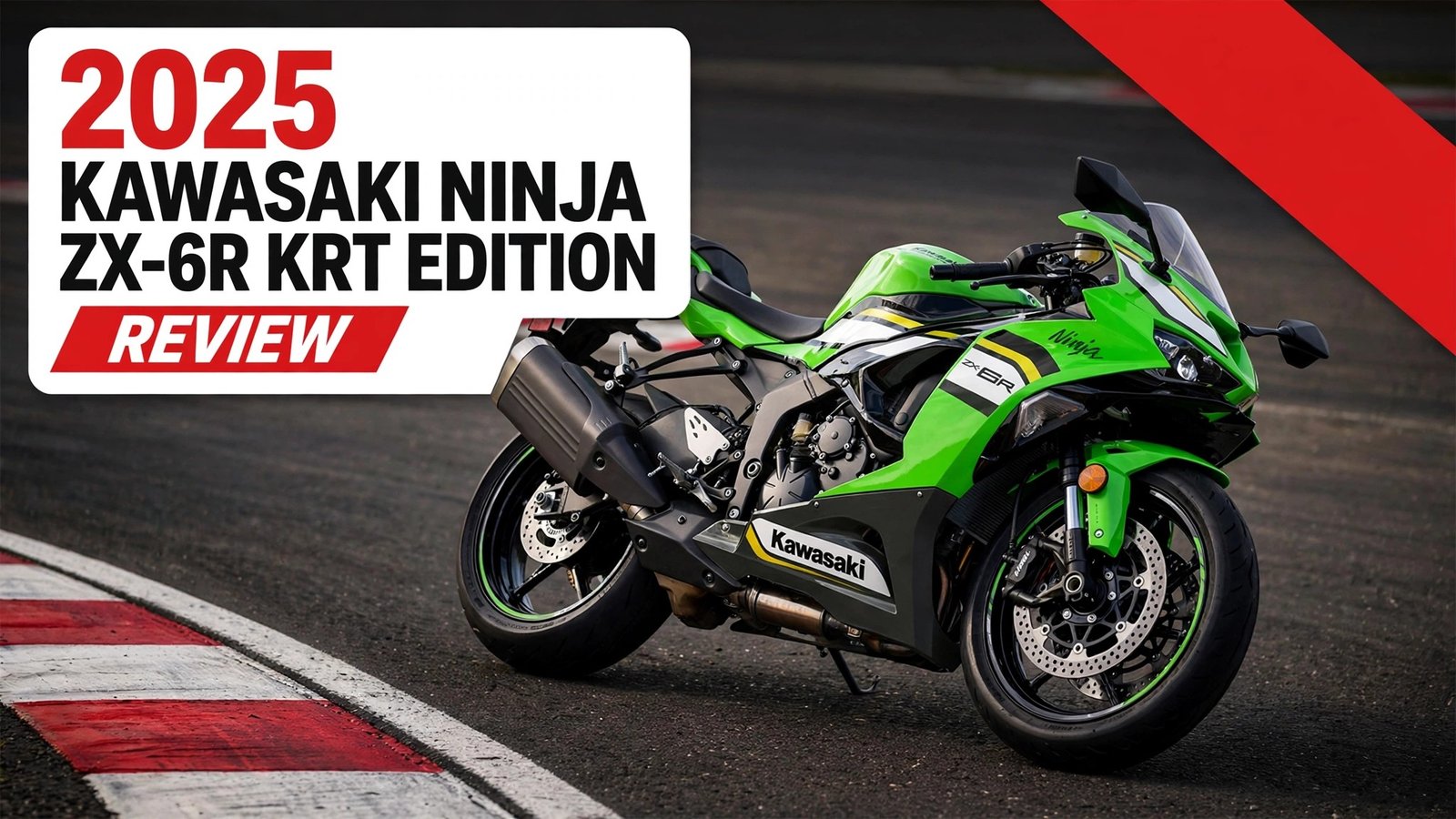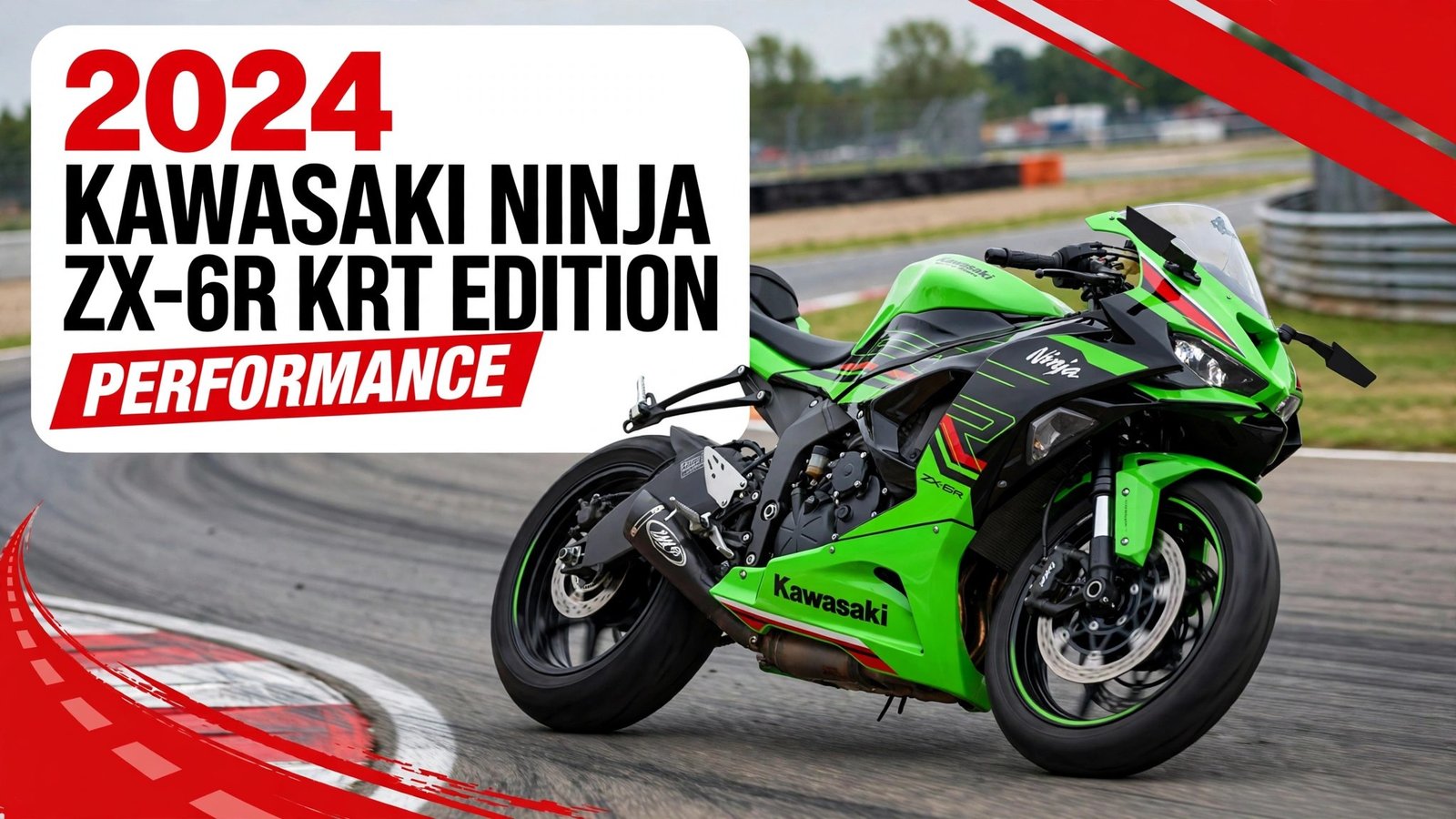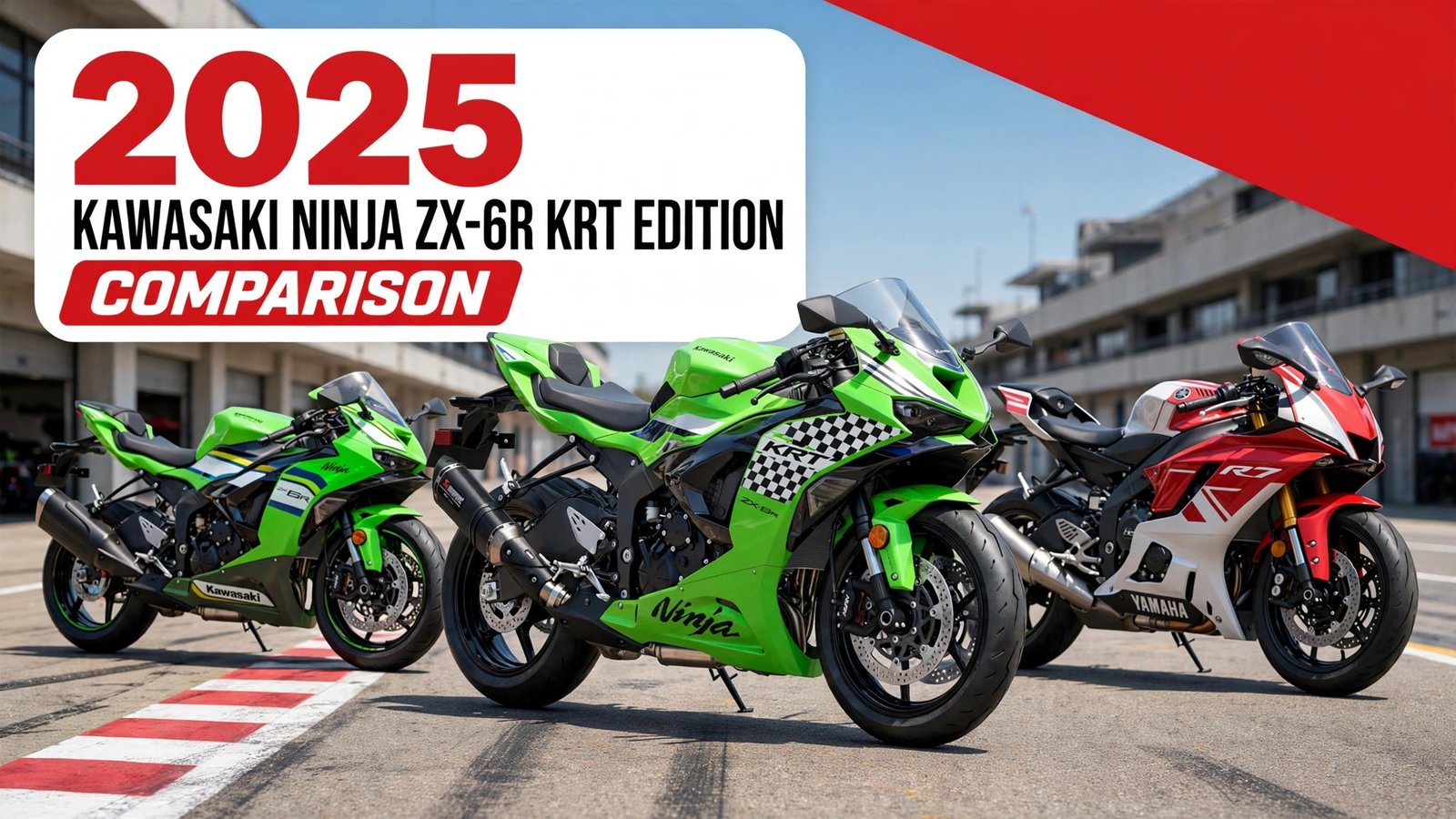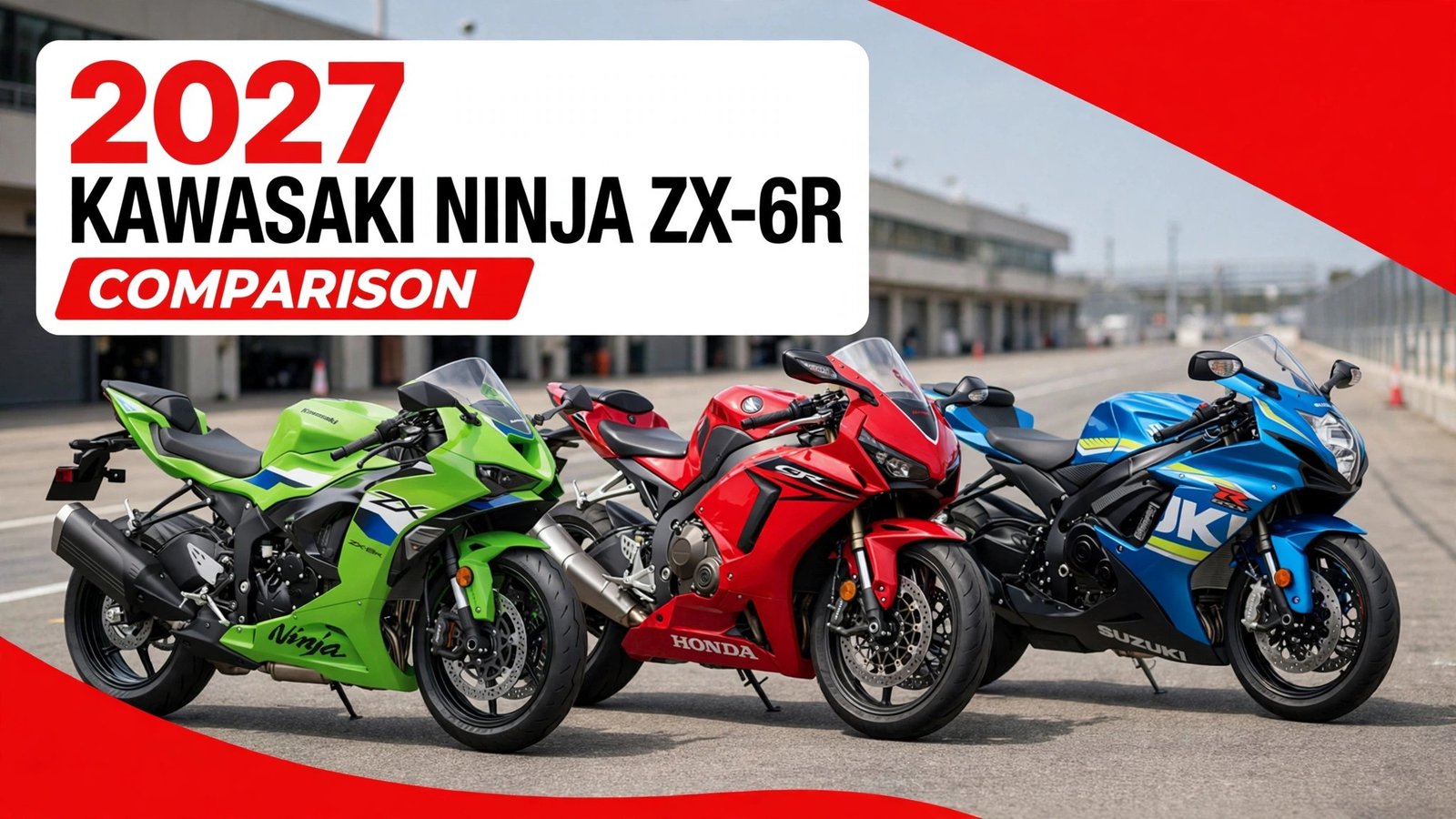
The short answer is that the ZX-6R wins this Kawasaki Ninja ZX-6R comparison on the engine and the price, and loses it on electronics. No other current middleweight gives you 127 claimed horsepower, a quickshifter and a TFT dash for $12,284 delivered — but no other bike in this group is as old-fashioned underneath: a cable throttle, no IMU, no cornering ABS. The three rivals each beat it somewhere real.
What follows is the whole field, measured the same way. This Kawasaki Ninja ZX-6R comparison uses the 2027 ZX-6R as its base bike, the 2026 CBR600RR because no 2027 US Honda has been announced, the 2027 GSX-R600, and the 2026 R7. Every figure carries its source and its year, and where a figure could not be verified, this Kawasaki Ninja ZX-6R comparison says so.
Kawasaki Ninja ZX-6R Overview and Its Closest Rivals
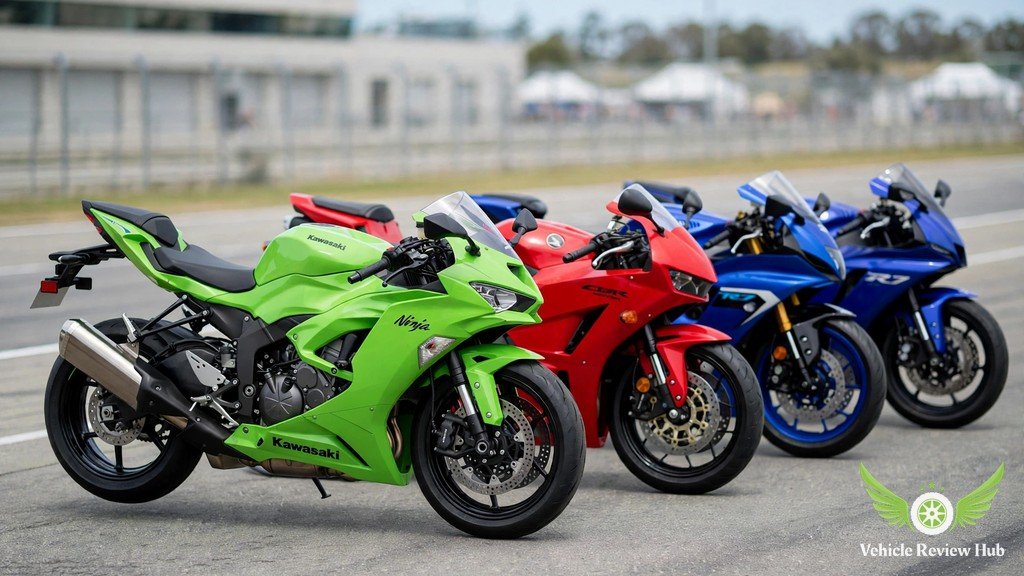
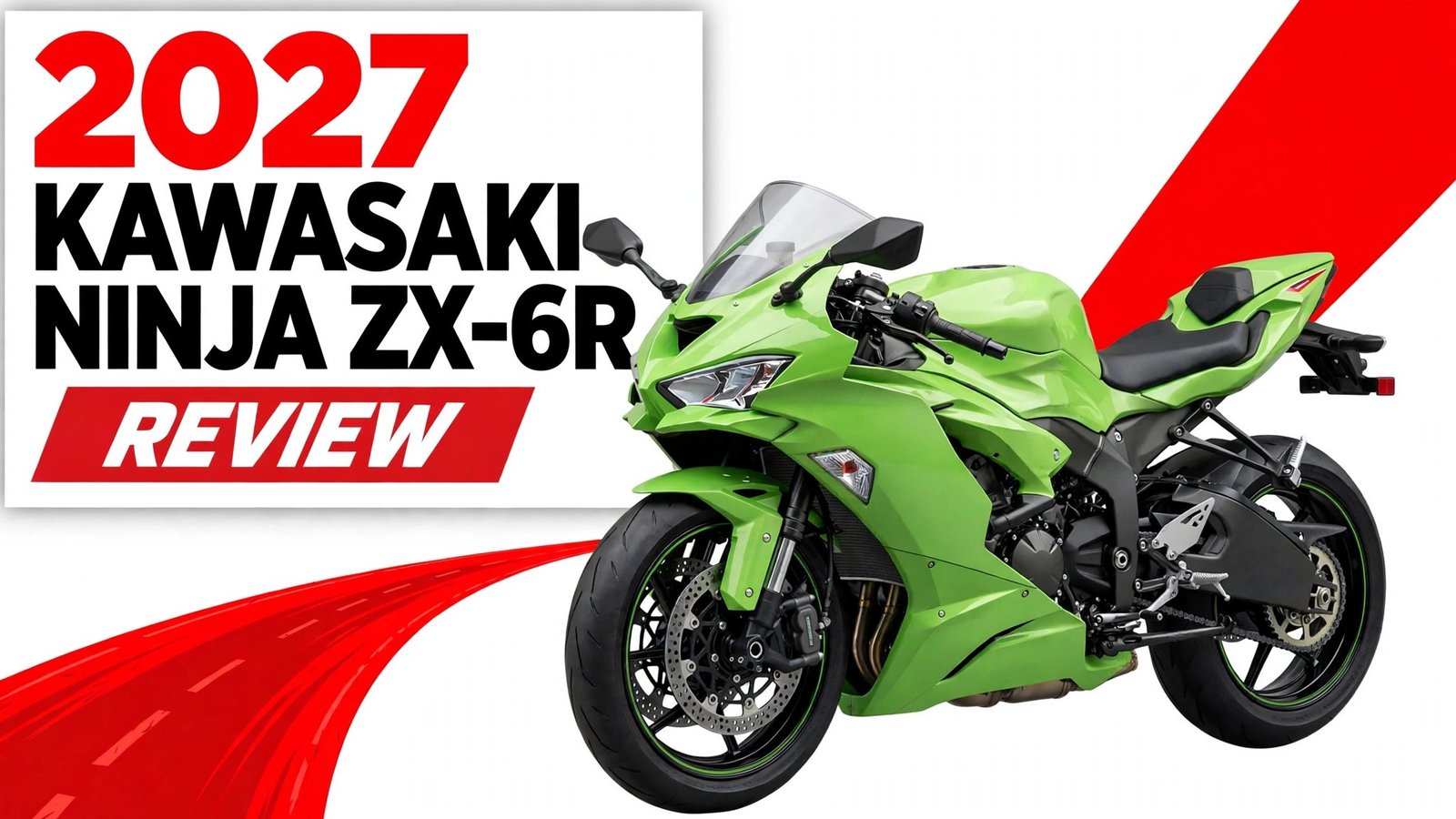
The middleweight supersport class is nearly gone — which is what makes this Kawasaki Ninja ZX-6R comparison worth doing. Yamaha killed the R6, Honda’s CBR600RR is a 2026-only survivor in America, and Suzuki’s GSX-R600 is a 2011 motorcycle still on sale. The ZX-6R is the only Japanese 600-class inline-four Kawasaki updated for Euro 5 and kept selling into 2027 — and the only one of the four with a 636cc engine. That extra 37cc is the whole story: 52.1 lb-ft where its rivals make 44 to 47, and an $11,599 price that undercuts the GSX-R600 by $865 delivered.
Last Current Four Standing
Four bikes are left, and each one survives for a different reason in this Kawasaki Ninja ZX-6R comparison. The ZX-6R survives because Kawasaki updated it in 2024 with a TFT dash, revised cams and Euro 5 compliance. The CBR600RR survives in America on the old PC40 platform, unchanged since 2013. The GSX-R600 survives because Suzuki never stopped building it. The R7 survives because it is not really a supersport — a 689cc twin with modern electronics. This Kawasaki Ninja ZX-6R comparison weighs the engine against the electronics.
How the Four Bikes Differ at a Glance
The table below puts the four bikes on the same footing: delivered prices, claimed power, dyno power where it exists, seat height and weight.
| Bike | Delivered price | Claimed power | Dyno power | Seat / weight |
|---|---|---|---|---|
| Kawasaki Ninja ZX-6R (2027) | $12,284 | 127 hp | 108.4 hp (CW 2023) | 32.7 in / 430.0 lb |
| Honda CBR600RR (2026) | $12,099 | 113–118 hp (range) | No US dyno published | 32.4 in / 419–434 lb |
| Suzuki GSX-R600 (2027) | $13,149 | 123 hp (Motorcycle.com database) | 102.9 hp (CW 2023) | 32.5 in / 448 lb |
| Yamaha YZF-R7 (2026) | $10,074 | 72.4 hp | No US dyno published | 32.7 in / 417 lb wet |
Note: Delivered prices include each bike’s destination charge: ZX-6R $685, CBR600RR $600, GSX-R600 $650 (dealer-verified; Suzuki publishes MSRP only), R7 $675. This Kawasaki Ninja ZX-6R comparison uses delivered prices throughout, because MSRP alone hides up to $685 of real cost.
Kawasaki Ninja ZX-6R vs Honda CBR600RR
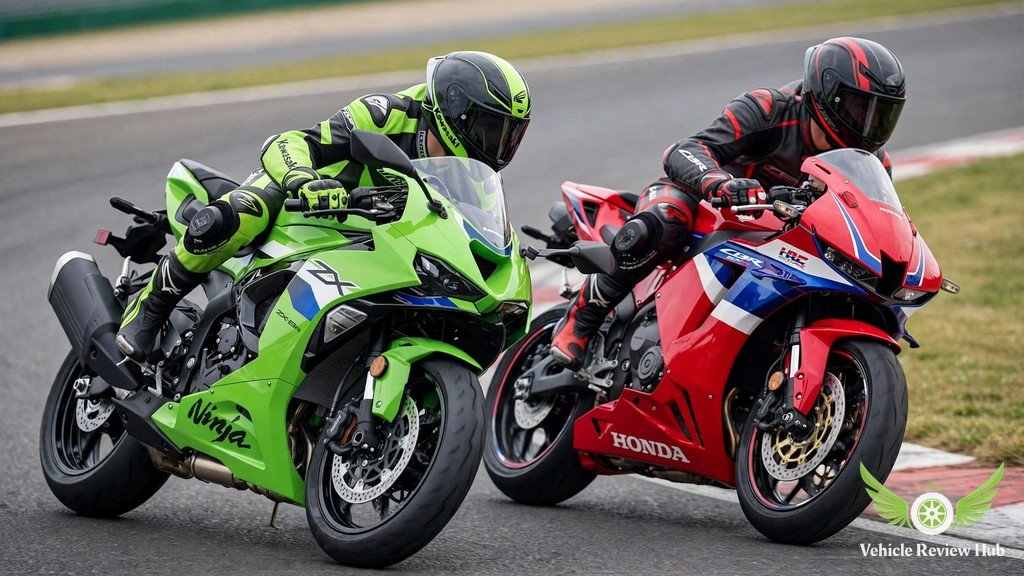
This is the closest fight in this Kawasaki Ninja ZX-6R comparison, and the strangest. The two bikes are separated by $185 delivered and by a generation gap Honda has never closed. The ZX-6R is the updated bike with the TFT dash, the quickshifter and the riding modes; the CBR600RR is the simpler bike on the old PC40 platform, and the only rival that undercuts the Kawasaki on price.
Engine, Specs and Performance Side by Side
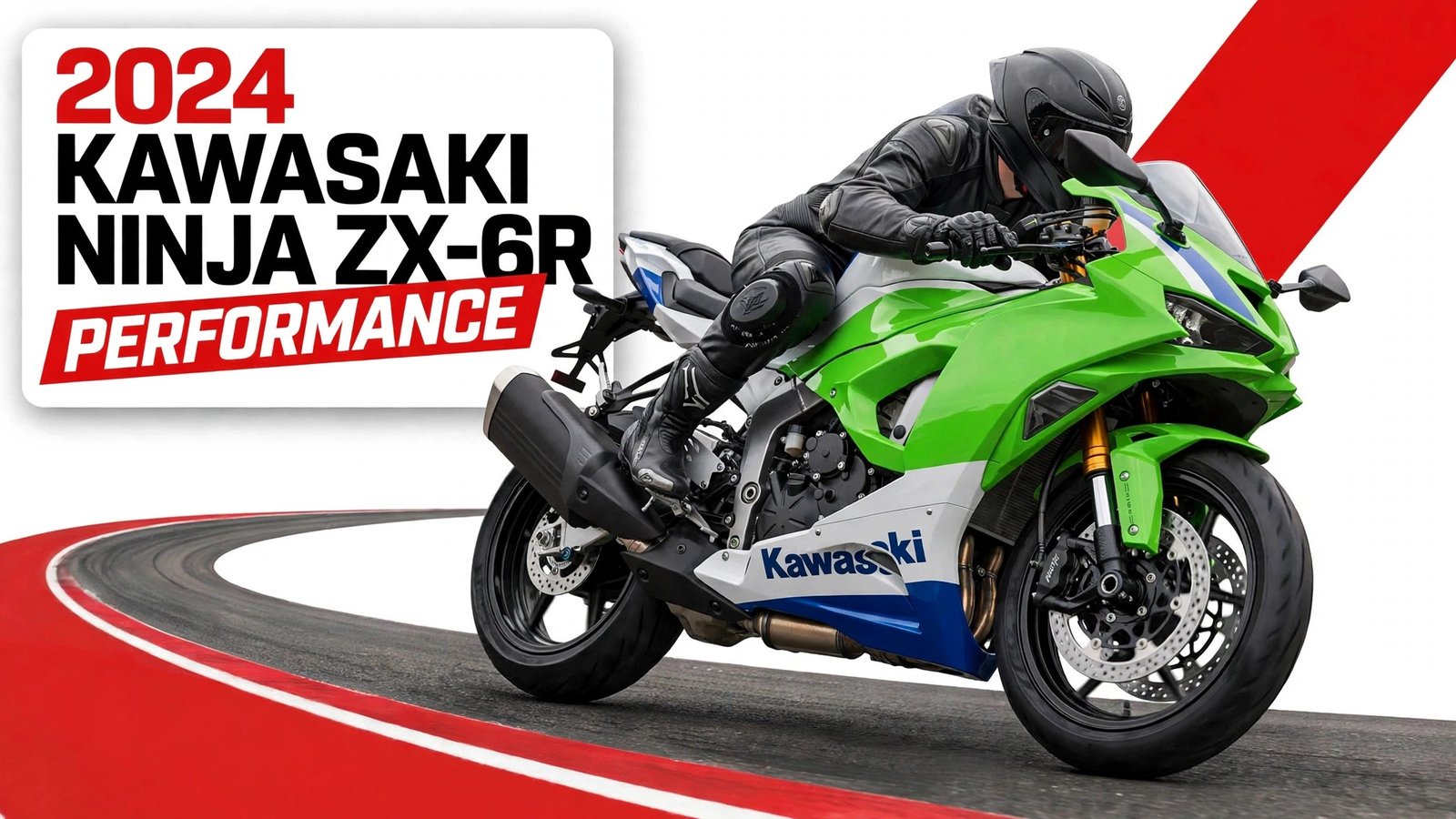
On paper the ZX-6R wins the engine: Kawasaki claims 127.0 hp at 13,000 rpm (ISO, ram air) and 52.1 lb-ft at 10,800 rpm on 2024 and later bikes. Cycle World’s dyno test measured 108.4 hp at 13,200 rpm and 45.8 lb-ft at 10,900 rpm from a stock 2023 bike, and MCN dyno’d the 2024 bike at 115 bhp at the rear wheel. The CBR600RR’s power is a 113 to 118 hp range — Honda publishes no US power figure for the bike.
The honest performance gap is smaller than the claimed gap. MCN’s datalogger test measured the 2024 ZX-6R at 144 mph; the 164 mph figure repeated by listicles is an unofficial claim no reputable publication has ever measured on a stock bike. The ZX-6R’s quarter mile is 10.58 seconds at 132.36 mph from Cycle World testers — a 2013-era figure, not a test of the current bike.
Price, Equipment and Which Suits Which Rider
The Honda is $185 cheaper delivered in this Kawasaki Ninja ZX-6R comparison: $11,499 for the 2026 CBR600RR and $12,499 ABS, plus $600 destination, against the 2027 ZX-6R at $11,599 and $12,599 plus $685. But the equipment gap runs the other way. The ZX-6R carries a 4.3-inch TFT dash, a KQS quickshifter that shifts up only, KTRC traction control, two power modes and KIBS ABS on ABS models. The CBR600RR has none of those — no TFT, no quickshifter, no riding modes — and its throttle is a cable, the same as the ZX-6R’s.
Buy the ZX-6R if you want the faster, better-equipped bike for $185 more — the 2027 CBR600RR has been announced for Europe and the UK only, though filings suggest the new generation may come to the US for 2027. Buy the CBR600RR if you want the cheapest four-cylinder 600 and do not care about a TFT or a quickshifter. One warning belongs to the ZX-6R side of this Kawasaki Ninja ZX-6R comparison: a 2024 to 2026 bike needs a VIN check against 25V376 and 25V798 before you pay.
| Spec | Kawasaki Ninja ZX-6R (2027) | Honda CBR600RR (2026) |
|---|---|---|
| Engine | 636cc inline-four | 599cc inline-four |
| Claimed power | 127.0 hp @ 13,000 rpm (ISO, ram air) | 113–118 hp (range; no US figure) |
| Claimed torque | 52.1 lb-ft @ 10,800 rpm | 48.7 lb-ft @ 11,225 rpm |
| Dyno power | 108.4 hp (CW 2023); 115 bhp (MCN 2024) | No US dyno published |
| Top speed, measured | 144 mph (MCN datalogger, 2024) | No recent instrumented test |
| Seat height | 32.7 in | 32.4 in |
| Curb weight | 430.0 lb base | 419–434 lb |
| Dash | 4.3-in TFT + RIDEOLOGY | LCD |
| Quickshifter | KQS, up only, standard | None |
| Delivered price | $12,284 base / $13,284 ABS | $12,099 base / $13,099 ABS |
Note: The CBR600RR’s 48.7 lb-ft figure is quoted across the press for the PC40 bike. The ZX-6R’s 122 hp figure applies to 2024–2025 bikes without ram air; the 127 hp headline applies to 2026–2027. This Kawasaki Ninja ZX-6R comparison uses the 2026 Honda because no 2027 US CBR600RR has been announced.
Kawasaki Ninja ZX-6R vs Suzuki GSX-R600
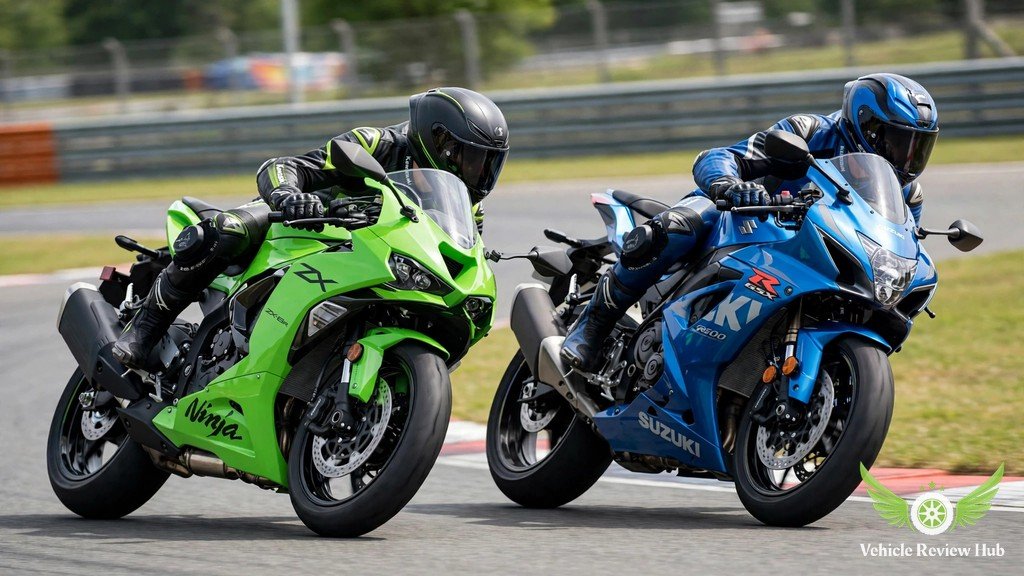
This is the oldest rivalry in this Kawasaki Ninja ZX-6R comparison, and the one where the Kawasaki wins most clearly on the numbers. The GSX-R600 is a 2011 motorcycle still on sale at a 2027 price. The ZX-6R is faster, better equipped and cheaper — and the Suzuki’s only real answer is feel.
Engine, Specs and Performance Side by Side
The dyno settles the engine argument in this Kawasaki Ninja ZX-6R comparison: Cycle World tested both bikes on the same Dynojet in 2023. The stock 2023 ZX-6R made 108.4 hp at 13,200 rpm and 45.8 lb-ft at 10,900 rpm; the GSX-R600 made 102.9 hp at 13,520 rpm. The gap is 5.5 hp at the rear wheel; the torque gap is wider — the ZX-6R’s 52.1 lb-ft claimed against the Suzuki’s mid-40s. The older dyno figures agree: Motorcycle.com measured 102.2 hp in 2011, Cycle World 103.3 hp the same year, against the 123 hp crank figure in Motorcycle.com’s specs database — Suzuki publishes no claimed power figure.
The lap times agree with the dyno: in Cycle World’s 2011 head-to-head at Chuckwalla, the ZX-6R lapped at 1:54.65 against the GSX-R600’s 1:55.72. The GSX-R600 did win Motorcycle.com’s 2011 Supersport Street Shootout overall: on the road, its chassis matters more than its power deficit.
Price, Equipment and Which Suits Which Rider
The Kawasaki undercuts the Suzuki by $865 delivered and $900 on MSRP in this Kawasaki Ninja ZX-6R comparison: the 2027 ZX-6R is $11,599 plus $685, or $12,284 delivered, against the 2027 GSX-R600 at $12,499 plus $650, or $13,149 delivered. The Suzuki’s destination figure is dealer-verified, because Suzuki publishes MSRP only. The ABS ZX-6R at $13,284 costs $135 more than the Suzuki, which has no ABS option. The electronics gap is the real difference: the ZX-6R carries traction control, an up-only quickshifter, ABS on ABS models, two power modes and a TFT; the Suzuki has two engine maps and a slipper clutch.
The rider who wants the fastest, best-equipped and cheapest bike buys the ZX-6R; the rider who wants the lightest-feeling bike and the analogue experience buys the Suzuki. A 2024 to 2026 ZX-6R needs its VIN checked against 25V376 and 25V798; the Suzuki’s record is quieter. But the Suzuki is a sixteen-year-old design at a 2027 price, and the Kawasaki is a 2024-updated bike at a lower one.
| Spec | Kawasaki Ninja ZX-6R (2027) | Suzuki GSX-R600 (2027) |
|---|---|---|
| Engine | 636cc inline-four | 599cc inline-four |
| Claimed power | 127.0 hp @ 13,000 rpm (ISO, ram air) | 123 hp (Motorcycle.com database) |
| Claimed torque | 52.1 lb-ft @ 10,800 rpm | 44.2 lb-ft (CW 2011 dyno) |
| Dyno power, same test | 108.4 hp @ 13,200 rpm (CW 2023) | 102.9 hp @ 13,520 rpm (CW 2023) |
| Lap time, Chuckwalla 2011 | 1:54.65 | 1:55.72 |
| Seat height | 32.7 in | 32.5 in |
| Curb weight | 430.0 lb base | 448 lb |
| ABS | KIBS, ABS models only | None |
| Quickshifter | KQS, up only, standard | None |
| Delivered price | $12,284 base / $13,284 ABS | $13,149 |
Note: The GSX-R600’s $650 destination charge is dealer-verified, not Suzuki-printed. The 44.2 lb-ft figure is Cycle World’s 2011 dyno torque, not a Suzuki claim. This Kawasaki Ninja ZX-6R comparison uses our own C24 figures for the Suzuki (448 lb, 32.5-in seat) throughout.
Kawasaki Ninja ZX-6R vs Yamaha YZF-R7
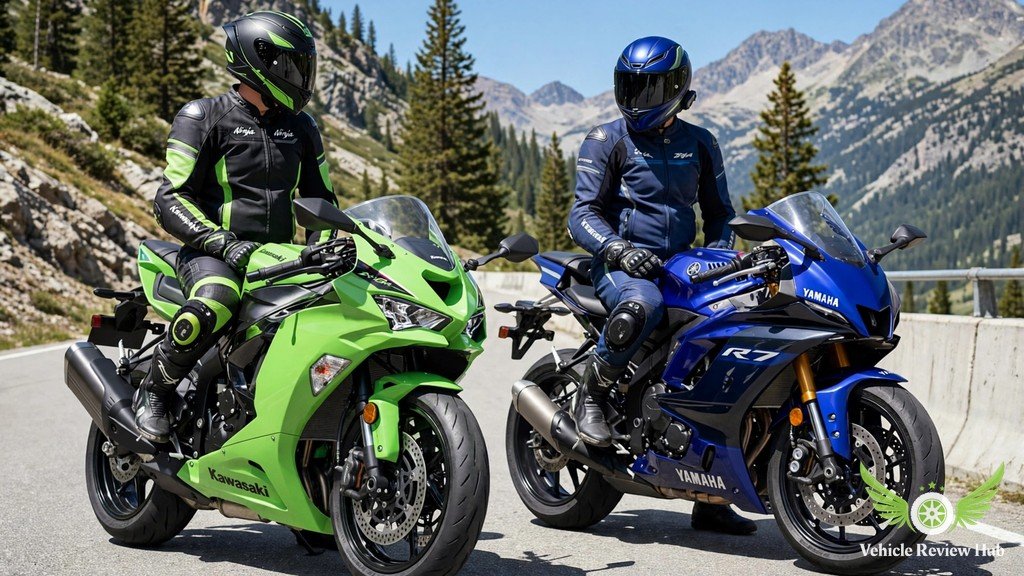
This is the comparison that splits buyers down the middle: the two bikes answer different questions. The R7 is $2,210 cheaper delivered and has the more modern electronics; the ZX-6R has 54.6 more horsepower and a four-cylinder engine. One is the sensible middleweight, the other is the last real supersport — and this Kawasaki Ninja ZX-6R comparison does not pretend otherwise.
Engine, Specs and Performance Side by Side
The engine gap is the largest in this Kawasaki Ninja ZX-6R comparison. The ZX-6R’s 636cc inline-four claims 127.0 hp and 52.1 lb-ft, and makes 108.4 hp at the wheel on Cycle World’s dyno. The R7’s 689cc parallel twin makes 72.4 hp at 8,750 rpm and 50.2 lb-ft at 6,500 rpm — nearly the same torque, delivered 4,300 rpm lower. The 0–60 sprint is closer than the power gap suggests: about 3.0 to 3.2 seconds for the ZX-6R, about 3.3 to 3.6 for the R7. The quarter mile is 10.58 seconds at 132.36 mph for the Kawasaki, a 2013-era Cycle World figure, against 11.64 at 116 mph for the R7.
The electronics gap runs the other way in this Kawasaki Ninja ZX-6R comparison. The 2026 R7 carries a six-axis IMU, ride-by-wire, a gen-3 bidirectional quickshifter, cruise control, a 5-inch TFT and an inverted KYB 41 mm fork. The ZX-6R has a cable throttle, no IMU, no cornering ABS, a quickshifter that shifts up only, and a 4.3-inch TFT. The R7 will save a rider who grabs too much brake mid-corner; the ZX-6R will not. The R7’s 3.7-gallon tank is smaller than the ZX-6R’s 4.5 gallons, so the Kawasaki goes about 183 miles on the EPA’s 40.6 mpg estimate.
Price, Equipment and Which Suits Which Rider
The R7 is $2,210 cheaper delivered in this Kawasaki Ninja ZX-6R comparison: $9,399 plus $675, or $10,074, against the ZX-6R at $11,599 plus $685, or $12,284. The 70th Anniversary R7 is $9,699. Both share a 32.7-inch seat height; the R7 is lighter at 417 lb wet against the ZX-6R’s 430.0 lb base curb. The R7’s equipment list is longer for the money — IMU, cruise control, bidirectional quickshifter, TFT — while the ZX-6R’s is shorter.
Buy the R7 for value and electronics: $2,210 cheaper, with the safety net the Kawasaki lacks. Buy the ZX-6R for the engine: 127 hp against 72.4. A rider who has never owned a supersport should buy the R7; a rider who wants the fastest bike should buy the ZX-6R. A 2024 to 2026 ZX-6R buyer should check the VIN against the two crankshaft recalls first — the R7 carries no such baggage.
| Spec | Kawasaki Ninja ZX-6R (2027) | Yamaha YZF-R7 (2026) |
|---|---|---|
| Engine | 636cc inline-four | 689cc parallel twin |
| Claimed power | 127.0 hp @ 13,000 rpm | 72.4 hp @ 8,750 rpm |
| Claimed torque | 52.1 lb-ft @ 10,800 rpm | 50.2 lb-ft @ 6,500 rpm |
| 0–60 mph | About 3.0–3.2 seconds | About 3.3–3.6 seconds |
| Seat height | 32.7 in | 32.7 in |
| Weight | 430.0 lb curb (base) | 417 lb wet |
| Fuel tank | 4.5 gal | 3.7 gal |
| IMU / cornering ABS | None | Six-axis IMU, cornering ABS |
| Quickshifter | KQS, up only | Gen-3, bidirectional |
| Delivered price | $12,284 base / $13,284 ABS | $10,074 |
Note: The R7’s 0–60 figure is the range quoted across tests (3.27 to 3.60 seconds), not a Yamaha-published number. The two weights are measured differently (curb against wet), so the 13 lb gap is approximate. This Kawasaki Ninja ZX-6R comparison uses the corrected 2026 R7 figures throughout (72.4 hp, 417 lb wet, $10,074 delivered).
Kawasaki Ninja ZX-6R Price and Value Compared
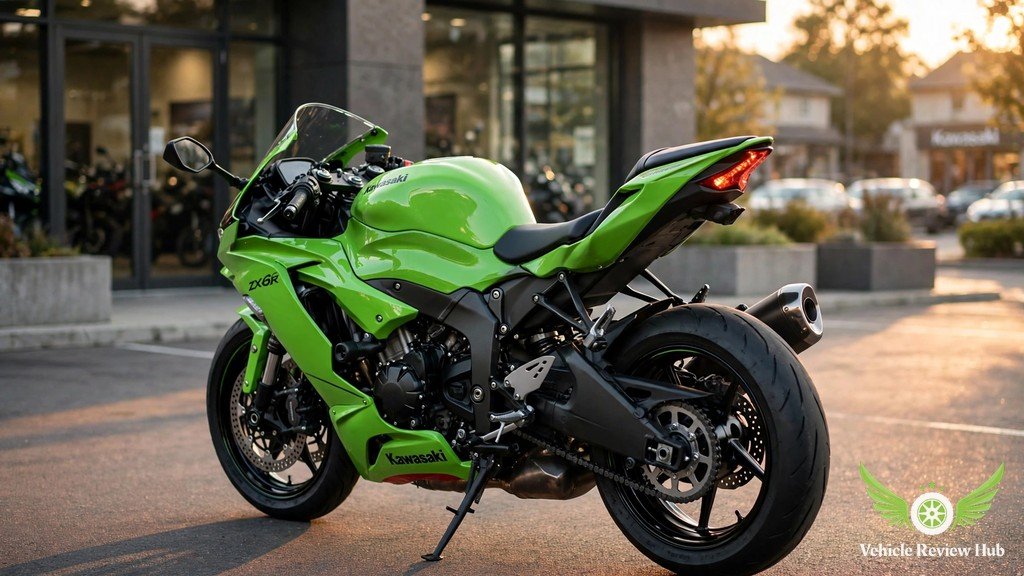
Price is where this Kawasaki Ninja ZX-6R comparison turns into a verdict. The ZX-6R is not the cheapest bike in the class — the R7 undercuts it by $2,210 — but at $11,599 from Kawasaki’s 2027 spec sheet it is the cheapest four-cylinder bike with modern equipment. The table below lines up every delivered price — MSRP alone hides $600 to $685 of destination charge.
No KRT Premium Used
The KRT Edition is the first thing to get out of the way in this Kawasaki Ninja ZX-6R comparison, because sellers still try to charge for it. The KRT Edition was paint and graphics only, with zero hardware or weight difference from the standard bike. Its premium was $300 in 2019 and 2022, then zero from 2023, and the KRT name is gone for 2027. Used listings show no KRT premium at all: pay the standard-bike price for a KRT, never a premium.
Kawasaki cut the base price by $1,700 for 2019, from $11,699 to $9,999. Seven years later it has crept back to $11,599, but the bike is a different machine: the 2024 update brought the TFT, revised cams and a Euro 5 engine. The reliability guide covers what that costs in full.
Running Costs and Resale Value Compared
Running costs separate the four bikes more than the purchase price does in this Kawasaki Ninja ZX-6R comparison. The ZX-6R’s EPA estimate is 40.6 mpg for the 2024 bike, about 183 miles from its 4.5-gallon tank, and its service cycle is every 7,600 miles with oil, filter and all four plugs at every service on 2024 and later bikes. The R7’s twin is cheaper to service — two plugs instead of four.
Resale is where the ZX-6R’s recalls bite. A 2024 to 2026 bike with both fixes proven — the right-side white mark plus the completion letter — holds its value; a bike with only the left-side mark, or neither, must not be ridden until the fix is done. That is the honest cost of the ZX-6R’s engine advantage.
| Bike | MSRP | Destination | Delivered | Per claimed hp |
|---|---|---|---|---|
| Kawasaki Ninja ZX-6R (2027) | $11,599 | $685 | $12,284 | $91.3 |
| Honda CBR600RR (2026) | $11,499 | $600 | $12,099 | $97.4–$101.8 |
| Suzuki GSX-R600 (2027) | $12,499 | $650 | $13,149 | $101.6 |
| Yamaha YZF-R7 (2026) | $9,399 | $675 | $10,074 | $129.8 |
| Aprilia RS 660 (base) | $11,849 | Not stated | $11,849+ dest. | $112.8 |
Note: Per-horsepower figures divide MSRP by claimed power: ZX-6R $91.3, the lowest; CBR600RR $97.4–$101.8; GSX-R600 $101.6; R7 $129.8; RS 660 $112.8. The RS 660’s destination charge was not verified, so its delivered total is not stated. This Kawasaki Ninja ZX-6R comparison uses MSRP for the per-horsepower math and delivered prices everywhere else.
Kawasaki Ninja ZX-6R Comparison Verdict and US Alternatives
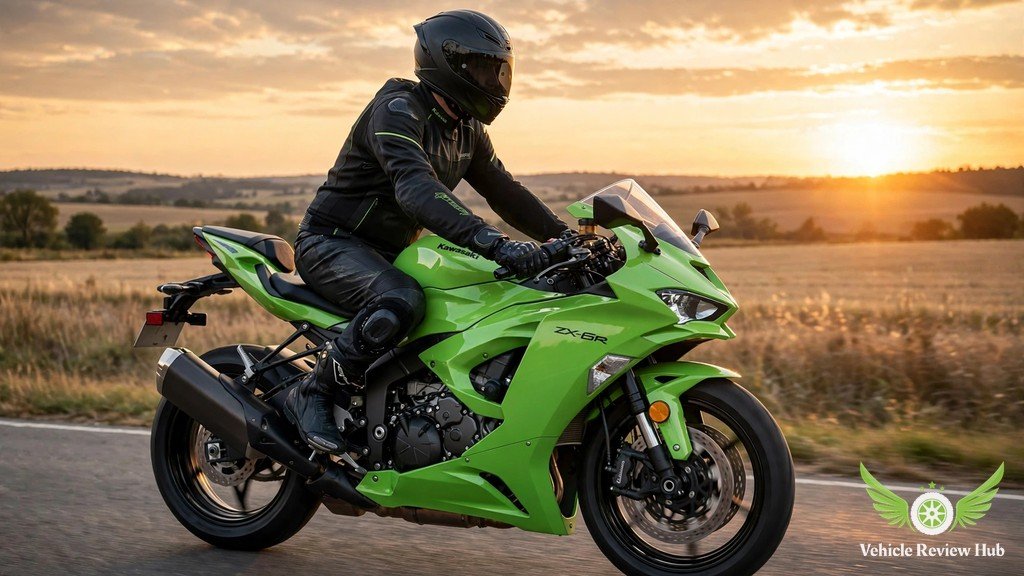
The verdict of this Kawasaki Ninja ZX-6R comparison is that the ZX-6R is the best buy in the class for the rider who wants the fastest bike, and the R7 is the best buy for the rider who wants the smartest one. None of the four is a bad bike.
Verdict: Engine Over Gadgets
Buy the ZX-6R because it is the only current 600-class four that is faster, better equipped and cheaper than its oldest rival — the headline of this Kawasaki Ninja ZX-6R comparison. It undercuts the GSX-R600 by $865 delivered, makes 5.5 more horsepower on the same dyno, and carries equipment the Suzuki lacks. It beats the CBR600RR on power and equipment for $185 more, and the R7 on outright speed. At $91.3 per claimed horsepower it is the best value in the class.
But buy a 2024 to 2026 bike only after the recall paperwork is proven — the right-side white mark and the completion letter — and buy the 2027 bike knowing the 122-hp Euro 5 engine is the price of the class still existing. Its weaknesses are real: a cable throttle, no IMU, no cornering ABS, and a 12-month warranty. The performance guide covers what the engine does on the road and on the dyno. This Kawasaki Ninja ZX-6R comparison closes on the engine, because the engine is what the class is for.
RS 660 Wins on Electronics
The Aprilia RS 660 is the electronics answer to the ZX-6R, and the alternative this Kawasaki Ninja ZX-6R comparison cannot leave out. It makes 105 hp with a full IMU, cornering ABS and riding modes, from $11,849 — $435 less than the ZX-6R base delivered, and $1,435 less than the ABS ZX-6R. The Factory version is $14,149 for 2026, $13,999 for 2025. The RS 660 is the bike for the rider who wants the ZX-6R’s speed with the R7’s safety net.
The RS 660’s weakness is a smaller dealer network, higher parts prices and a thinner resale market. The ZX-6R’s fifteen years of 636 production mean cheap parts. Buy the RS 660 if electronics matter more than power and you have a good Aprilia dealer nearby; buy the ZX-6R for the faster bike and the bigger used market. The middleweight class in 2027 is a choice between an engine and a computer — and the ZX-6R is the engine.
Kawasaki Ninja ZX-6R Comparison: Frequently Asked Questions
The answers below give the direct version of each question in this Kawasaki Ninja ZX-6R comparison, with the figures and the sources behind them.
Which is better, the Ninja ZX-6R or the Honda CBR600RR?
The ZX-6R has more power (127 hp vs the CBR’s 113–118 hp range), a TFT dash, a quickshifter and riding modes, which the CBR lacks. The CBR is $185 cheaper delivered ($12,099 vs $12,284) and is the simpler, lighter-feeling bike. This Kawasaki Ninja ZX-6R comparison calls the Kawasaki the better buy for most riders.
Is the ZX-6R cheaper than the Suzuki GSX-R600?
Yes. The 2027 ZX-6R is $12,284 delivered against the 2027 GSX-R600’s $13,149 — the Kawasaki undercuts the Suzuki by $865, and makes more power on the dyno (108.4 hp vs 102.9 hp, Cycle World 2023). This Kawasaki Ninja ZX-6R comparison uses the Suzuki’s own C24 figures throughout.
Should I buy the ZX-6R or the Yamaha YZF-R7?
The R7 is $2,210 cheaper delivered ($10,074) and has more modern electronics — a six-axis IMU, cruise control and a bidirectional quickshifter. The ZX-6R answers with 127 hp against the R7’s 72.4 hp and a four-cylinder engine. Buy the R7 for value and electronics; buy the ZX-6R for the engine. This Kawasaki Ninja ZX-6R comparison says the R7 is the smarter buy and the ZX-6R is the faster one.
Is a used ZX-6R KRT Edition worth extra money?
No. The KRT Edition was paint and graphics only, its premium fell to zero in 2023, and used listings show no KRT premium at all. Pay the standard-bike price for a KRT, never a premium. This Kawasaki Ninja ZX-6R comparison treats the 2027 Lime Green bike as a standard colour, not a KRT Edition.
What about the Aprilia RS 660?
The RS 660 is the electronics answer to the ZX-6R: 105 hp with a full IMU, cornering ABS and riding modes, from $11,849 — $435 less than the ZX-6R base delivered. The Factory version is $14,149. This Kawasaki Ninja ZX-6R comparison calls the RS 660 the bike for the rider who wants the ZX-6R’s speed with the R7’s safety net.
What is the best-value middleweight supersport?
On engine per dollar, the ZX-6R: $91.3 per claimed horsepower at MSRP, the lowest in the class. But a 2024–2026 bike needs a VIN check against two crankshaft recalls before you pay, and the R7 undercuts it by $2,210 if outright speed is not the priority. This Kawasaki Ninja ZX-6R comparison puts the ZX-6R first on value, the R7 first on sense, and the RS 660 first on electronics.