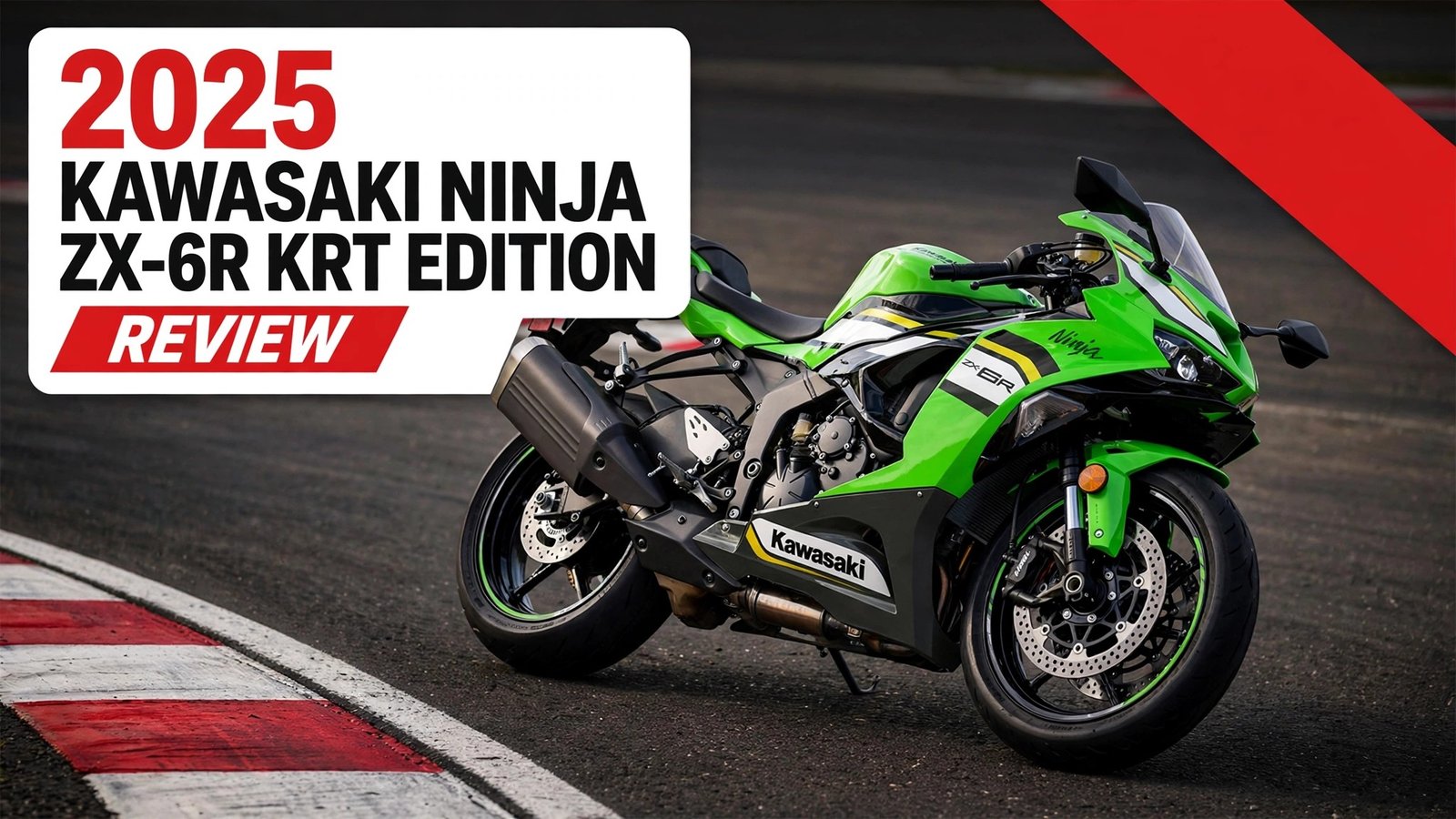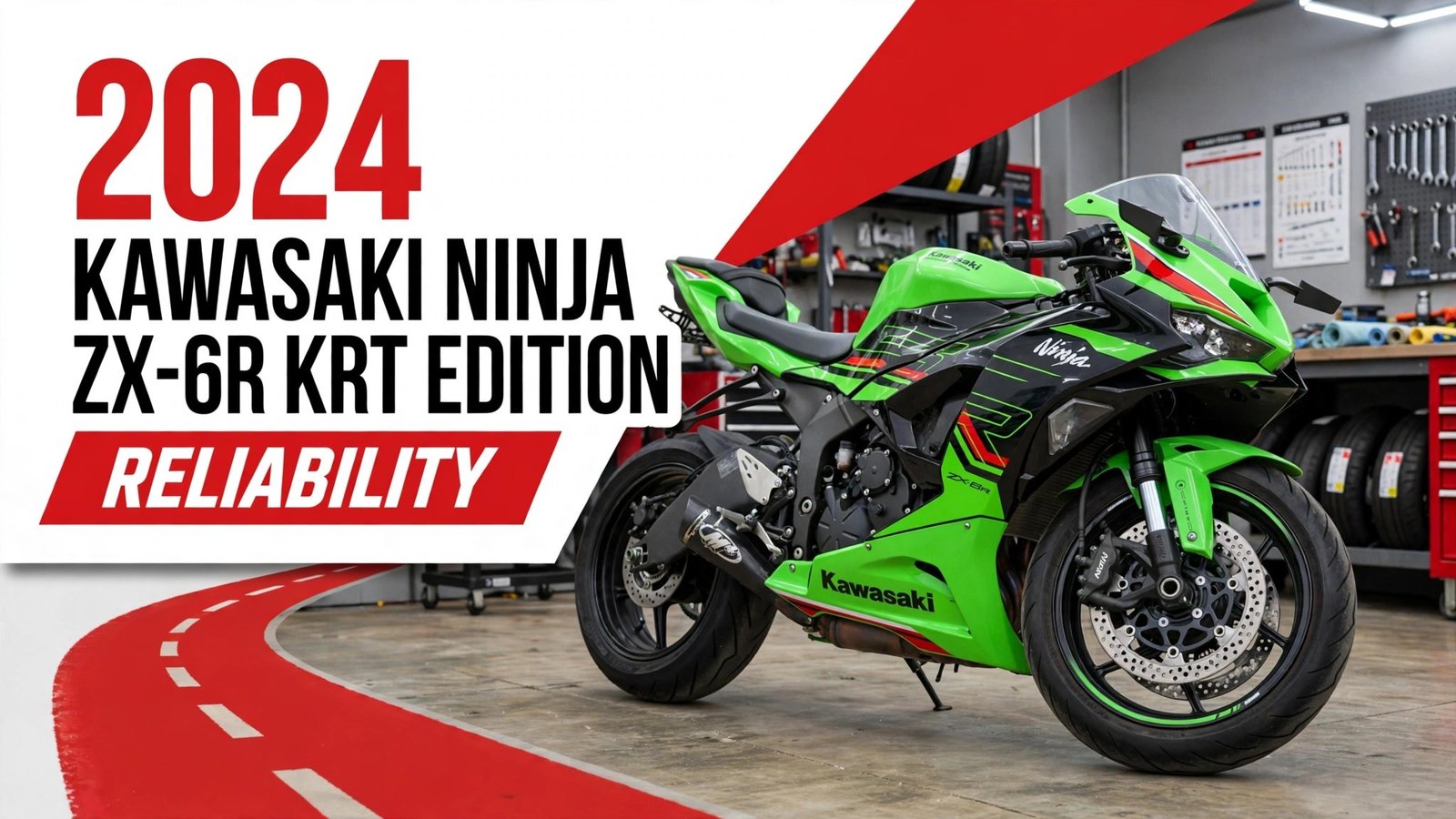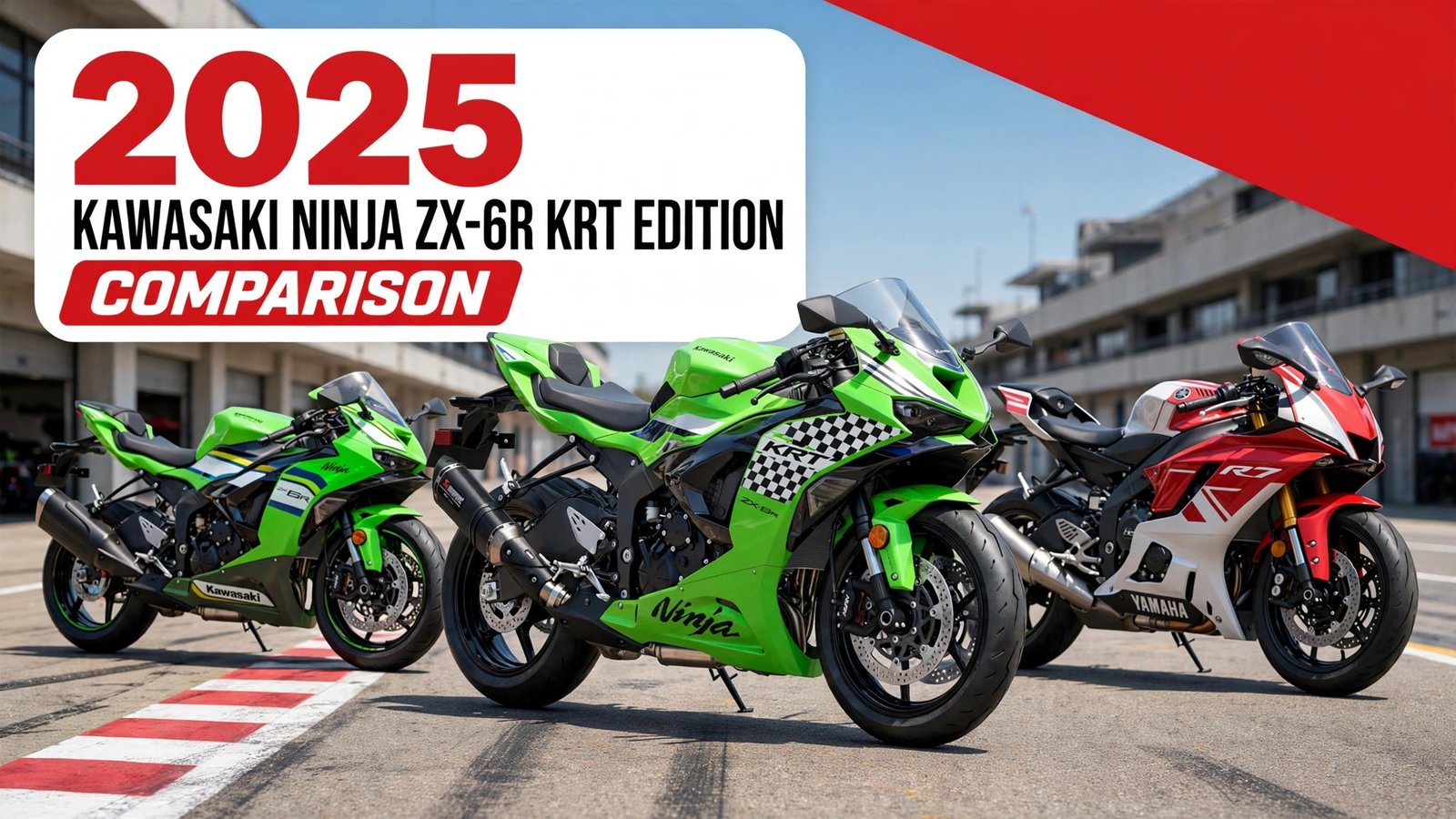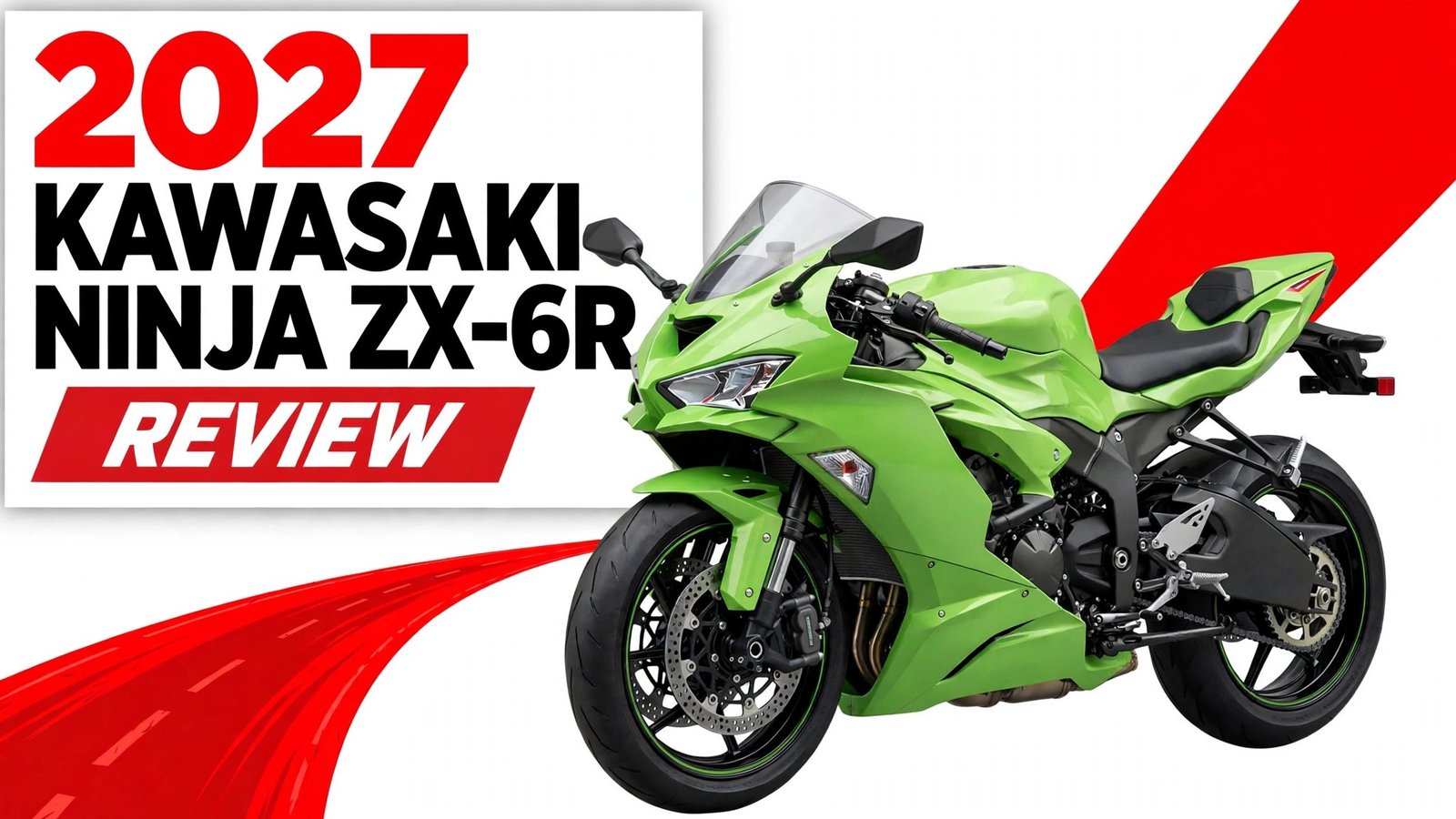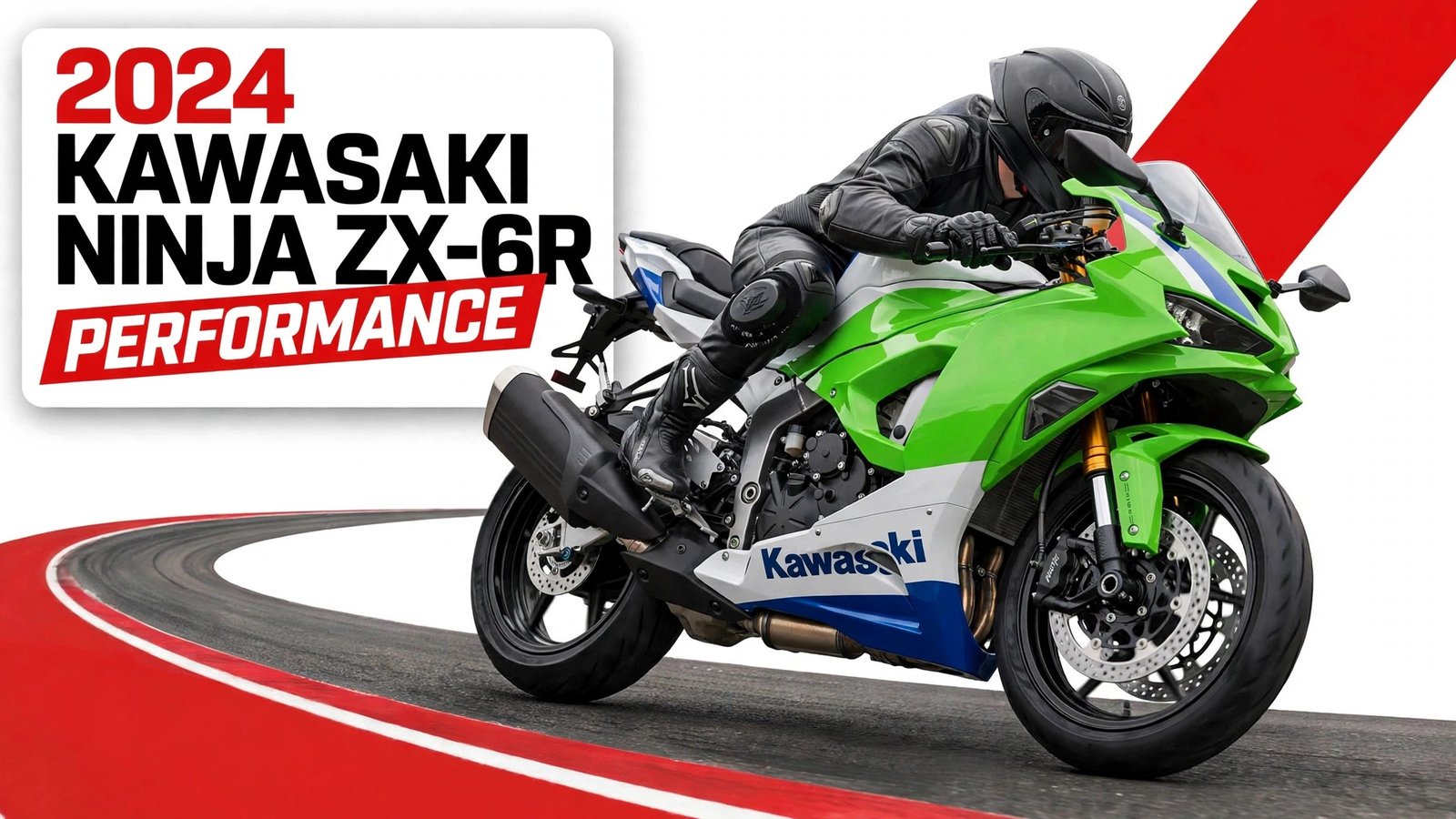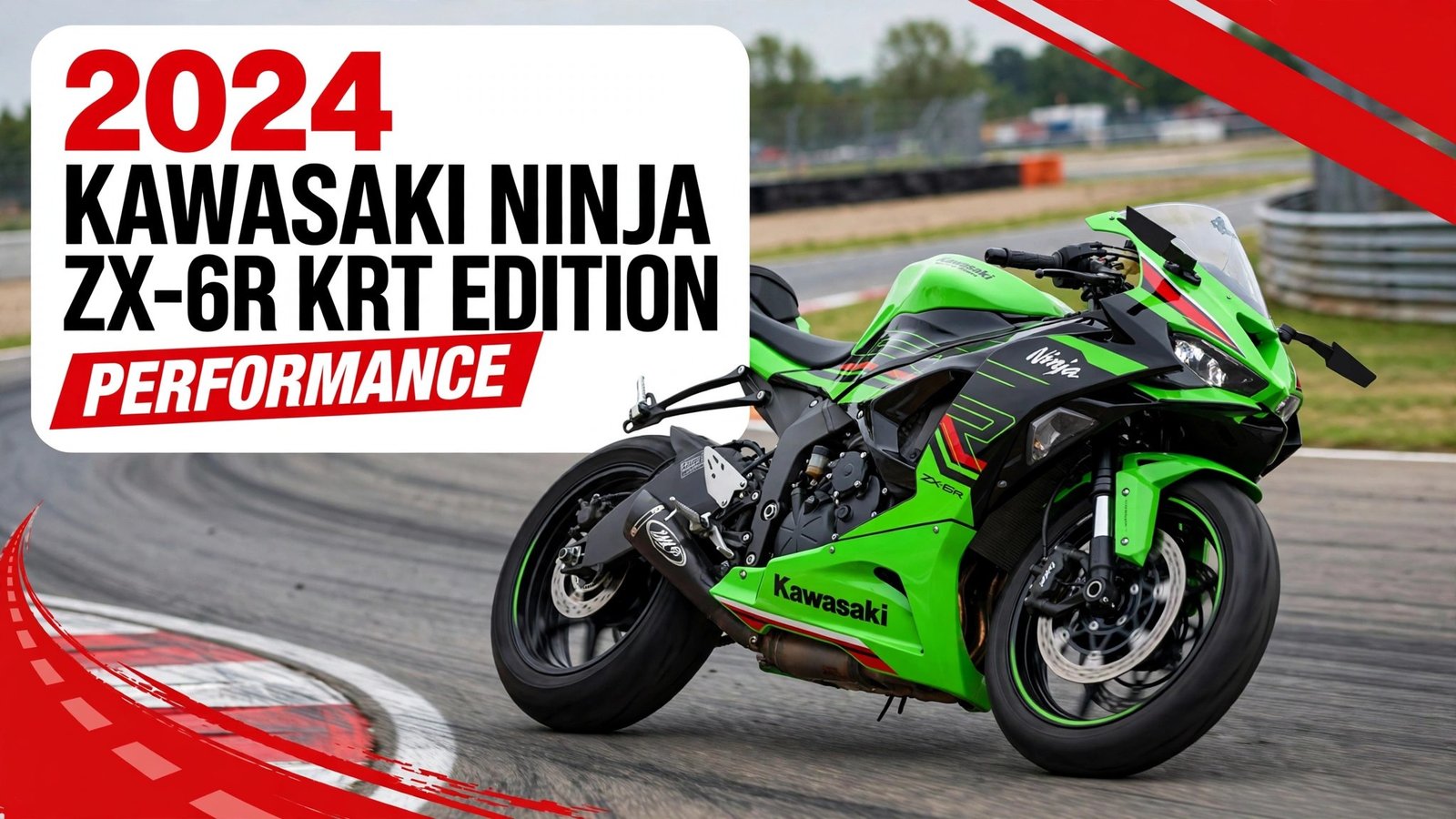
The short answer is that Kawasaki Ninja ZX-6R KRT Edition performance is standard ZX-6R performance, because the KRT Edition is the standard bike in Kawasaki Racing Team paint. The KRT adds no horsepower, no revised gearing and no different parts, so every measured figure here comes from the standard bike and applies to the KRT by identity. Kawasaki claims 127.0 hp with ram air, and Cycle World’s dyno of a stock 2023 standard ABS read 108.4 hp at the rear wheel.
This Kawasaki Ninja ZX-6R KRT Edition performance guide keeps the labels honest throughout: where a figure comes from a standard bike, it says so, and where a figure was never measured, it says that too. The 164 mph top speed in listicles is unofficial and was never measured on a stock bike, no KRT has ever been dyno’d, and the only tester-observed fuel figure for a KRT itself is SlashGear’s ~35 mpg over three tanks in a 2025 KRT.
What follows is the full picture: dyno numbers, top speed, fuel economy, how the bike rides on road and track, and how it stacks up against the standard ZX-6R, the GSX-R600 and the R7. The KRT’s story is simple — race paint on the strongest 600 in the class, free since 2023 — and the numbers behind Kawasaki Ninja ZX-6R KRT Edition performance back it up.
Kawasaki Ninja ZX-6R KRT Edition Engine Performance and Power Delivery
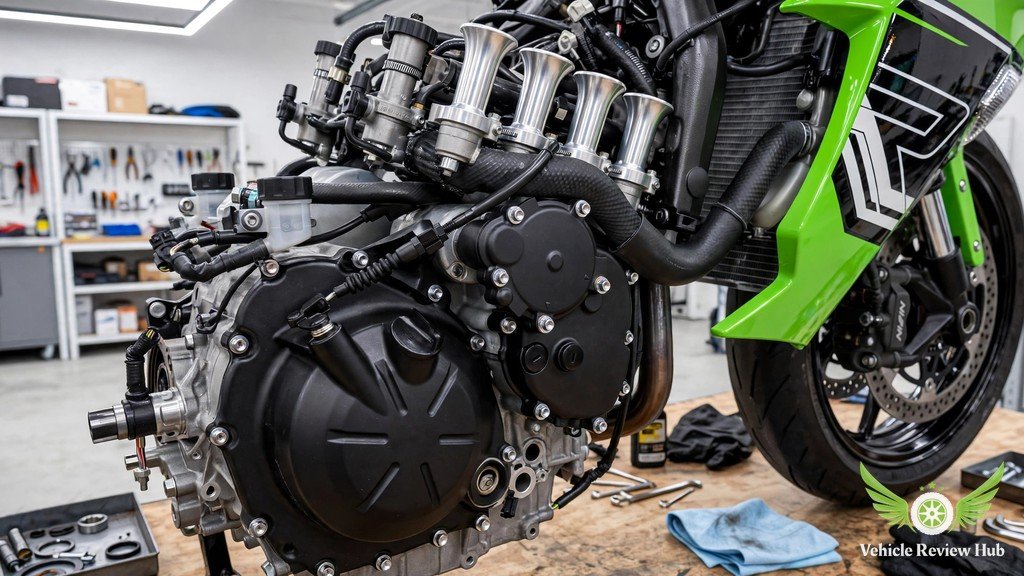
The engine is the 636cc liquid-cooled inline-four that has defined the ZX-6R since the 2013 relaunch, and Kawasaki Ninja ZX-6R KRT Edition performance starts with the same numbers as the standard bike: 127.0 hp claimed at 13,000 rpm with ram air, 52.1 lb-ft at 10,800 rpm, and a 12.9:1 compression ratio. The KRT carries the identical engine, tune and gearing, so there is no KRT-specific power curve to describe — the standard bike’s curve is the KRT’s curve.
Dyno Bike Was a Standard ABS
Cycle World’s dyno test of a stock 2023 standard ABS read 108.4 hp at 13,200 rpm and 45.8 lb-ft at 10,900 rpm, and that is the figure to quote for the KRT — with the bike named. Cycle World’s own first-ride text names the test bike a standard ABS, and this Kawasaki Ninja ZX-6R KRT Edition performance guide repeats that because the distinction matters: the KRT was never on the rollers, so writing “the KRT made 108.4 hp on the dyno” would imply a test that never happened. The figure applies because the engine is identical, not because a KRT was tested.
MCN’s dyno of the 2024 bike read 115 bhp at the rear wheel, and the same caveat applies — the MCN test bike was a standard 2024, not a KRT. The claimed figure sits above both: 127.0 hp at 13,000 rpm with ram air on the 2026 sheet, 122 hp without ram air on the 2024–2025 sheets. Kawasaki’s own 2024 KRT spec sheet lists “Exclusive Kawasaki Racing Team (KRT) color & graphics” under “Includes” with the identical mechanical specification as the standard bike. The gap between the 127 hp claim and the 108.4 hp rear-wheel reading is the normal difference between a crankshaft claim with ram air and a rear-wheel dyno run.
SlashGear Tested a KRT
SlashGear is the one tester in this brief who actually rode a KRT. Travis Langness wrote in SlashGear’s 2025 review that “the KRT Edition I was riding had the attractive Lime Green paint”, and his figures are the KRT-specific ones in this guide: $12,064 including $665 destination for the non-ABS KRT ($11,399 + $665), about 35 mpg over three tanks, 127 hp and 52.1 lb-ft quoted from Kawasaki, and a 32.7-inch seat. The 35 mpg is the only tester-observed KRT fuel figure anywhere in this brief, and Kawasaki Ninja ZX-6R KRT Edition performance on fuel is covered in full in the mileage section below.
Chase on Two Wheels also rode a 2025 KRT, and his 2025 KRT review quotes roughly 121–122 hp and 51 lb-ft — but the article never says “dyno”, so those numbers are not dyno figures and this guide never prints them as such. Chase’s method is unstated; the honest label is “Chase quotes ~121–122 hp / 51 lb-ft”, nothing more. His review also gives the KRT a Chase Score of 69/100 and a 40–80 mph roll-on of 2.48 seconds in first gear on wet roads.
| Source | Bike tested | Power | Torque |
|---|---|---|---|
| Kawasaki (claimed) | 2025–2026 ZX-6R / KRT | 127.0 hp @ 13,000 rpm (ram air) | 52.1 lb-ft @ 10,800 rpm |
| Cycle World dyno | Stock 2023 standard ABS | 108.4 hp @ 13,200 rpm | 45.8 lb-ft @ 10,900 rpm |
| MCN dyno | 2024 standard bike | 115 bhp (rear wheel) | — |
Note: No KRT Edition has ever been dyno’d, so every measured figure above comes from a standard bike and applies to the KRT because the engine is identical. This Kawasaki Ninja ZX-6R KRT Edition performance table keeps the bike tested in its own column.
Kawasaki Ninja ZX-6R KRT Edition Top Speed and Acceleration
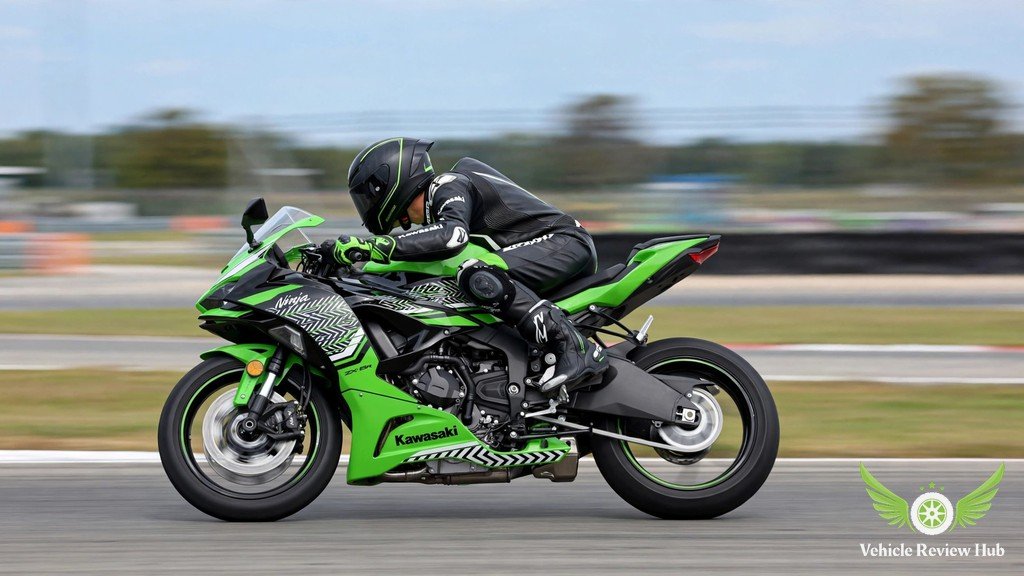
Top speed is where this guide draws its firmest line, because the number most often quoted for the ZX-6R was never measured. Kawasaki Ninja ZX-6R KRT Edition performance at the top end has exactly one instrument-measured figure — 144 mph, recorded by MCN’s datalogger on the 2024 bike. The KRT’s gearing, power and weight are the standard bike’s, so the measured figure is the KRT’s figure too.
144 vs 164 mph, Labelled
MCN’s datalogger recorded 144 mph on the 2024 bike, and that is the top speed this guide prints as measured — the only measured figure in Kawasaki Ninja ZX-6R KRT Edition performance at the top end. The 164 mph figure in listicles has no datalogger, GPS or test behind it — it is an unofficial claim, and it appears in this guide only with that label, never as a figure and never in a table without the label.
The quarter-mile figure follows the same rule. Cycle World testers recorded 10.58 seconds at 132.36 mph, but that is a 2013-era figure from the 636 relaunch, not a test of a current bike, and Kawasaki Ninja ZX-6R KRT Edition performance writing that prints it without the year caveat is misleading the reader. There is no published quarter-mile test of a KRT itself, and no verified 0–60 figure for a KRT either. The only KRT-specific acceleration datum is Chase’s 40–80 mph roll-on: 2.48 seconds in first gear on wet roads, a single roll-on, not a standard acceleration figure.
No Verdict on the $300
The $300 premium the KRT charged from 2016 to 2022 bought paint only, so there is no performance verdict to give on it — the premium bought zero horsepower, zero handling and zero braking. The honest line is that the $300 changed nothing about how the bike performed and everything about how it looked. From 2023 the premium was $0, so for the final four years of the run the KRT cost exactly what the standard bike cost, and the buyer got the race livery free.
That is why this section ends without a “worth it” call on the premium. Kawasaki Ninja ZX-6R KRT Edition performance is the standard bike’s performance at the standard bike’s price from 2023 on, and the only question left is whether the buyer likes Lime Green.
| Figure | Value | Status |
|---|---|---|
| Top speed (measured) | 144 mph | MCN datalogger, 2024 bike |
| Top speed (listicle claim) | 164 mph | Unofficial — never measured on a stock bike |
| Quarter mile | 10.58 s @ 132.36 mph | Cycle World, 2013-era figure |
| 40–80 mph roll-on | 2.48 s, 1st gear | Chase, wet roads, single roll-on |
Note: Only the 144 mph figure was measured on a current bike. This Kawasaki Ninja ZX-6R KRT Edition performance table labels every other number with its source and its limits.
Kawasaki Ninja ZX-6R KRT Edition Mileage and Fuel Economy
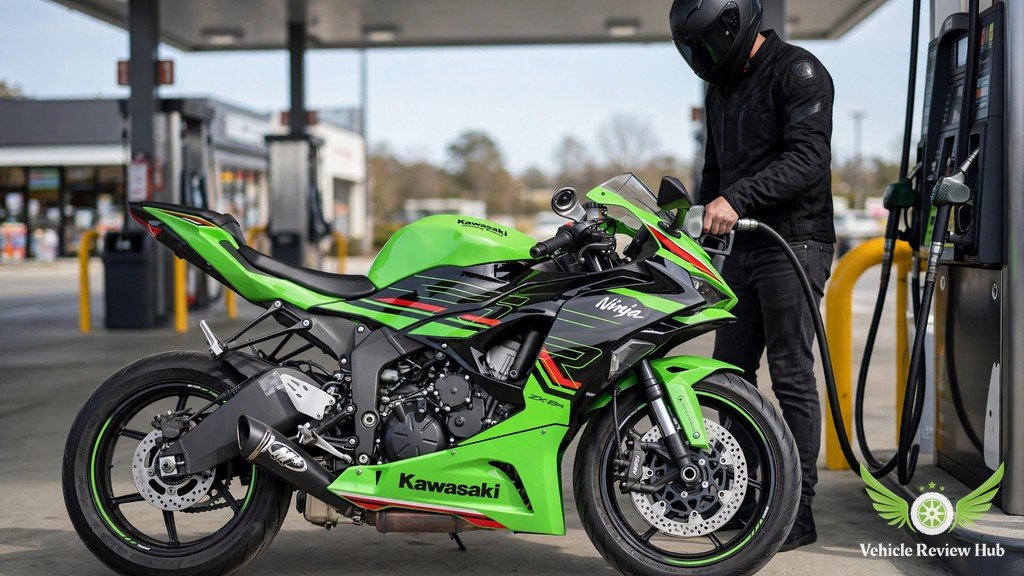
Fuel economy is the one area where the KRT has its own tester-observed figure, because SlashGear’s tester rode a 2025 KRT for three tanks. Kawasaki Ninja ZX-6R KRT Edition performance at the pump is honest but unremarkable: the EPA estimate says 40.6 mpg, testers see the low-to-mid 30s, and the 4.5-gallon tank gives a realistic range in the 150s rather than the 183 miles the lab figure implies.
Fuel Consumption in City, Highway and Mixed Riding
SlashGear’s tester saw about 35 mpg over three tanks of gas in the 2025 KRT — the only KRT-specific fuel figure in this brief, and the one this guide leans on. MCN’s 2024 test of the standard bike saw 32–35 mpg, in the same band. City riding is the worst case: short trips, cold starts and traffic keep the 636 in its thirsty rev range, and a commuting rider should expect the low end of the band.
The EPA estimate of 40.6 mpg for 2024 is a lab figure, not a test, and no tester in this brief has matched it. Kawasaki Ninja ZX-6R KRT Edition performance figures from the lab and from the road disagree by about 5 mpg, and the road figure is the one a buyer should budget on. There is no tester-measured average MPG published for a KRT beyond SlashGear’s ~35 mpg.
Fuel Tank Range and Real-World Efficiency
The 4.5-gallon tank turns the EPA’s 40.6 mpg into about 183 miles, but the arithmetic only holds if the lab figure holds. At SlashGear’s ~35 mpg the same tank gives about 158 miles, and at MCN’s 32 mpg low end it gives about 144 miles. A rider planning a day out on a KRT should plan fuel stops at 140–150 miles, not at 183. That 140–150 mile planning figure is the realistic Kawasaki Ninja ZX-6R KRT Edition performance range, not the 183 miles the lab figure implies.
| Source | Figure | Basis |
|---|---|---|
| EPA estimate (2024) | 40.6 mpg | Lab estimate; ~183 miles from 4.5 gal |
| SlashGear (2025 KRT) | ~35 mpg | Observed over three tanks |
| MCN (2024 standard) | 32–35 mpg | Test observed |
Note: The EPA figure is a lab estimate and no tester in this brief matched it. This Kawasaki Ninja ZX-6R KRT Edition performance table prints the tester’s numbers alongside the lab number.
Kawasaki Ninja ZX-6R KRT Edition Real-World Riding Experience
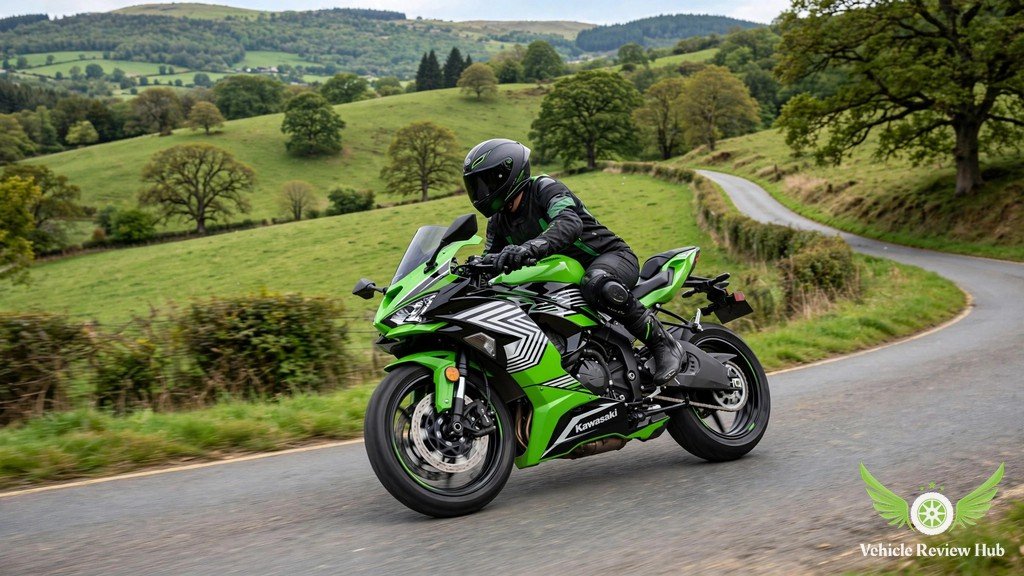
On the road the KRT is the standard ZX-6R, and that is the whole riding story: the same 32.7-inch seat, the same committed supersport riding position, the same 636cc midrange that pulls from low revs where a 599cc four feels flat, and the same fully adjustable suspension at both ends. Kawasaki Ninja ZX-6R KRT Edition performance in the real world is not a different motorcycle — it is the same motorcycle in the livery most buyers picture when they think of a ZX-6R. That familiarity is part of the appeal of Kawasaki Ninja ZX-6R KRT Edition performance — the bike everyone recognises, doing what a ZX-6R does.
The Riding Experience Buyers Actually Talk About
Chase on Two Wheels rode the 2025 KRT on street and highway and gave it a Chase Score of 69/100 — Good Tier. His complaints are the ones buyers actually talk about: the switchgear and mode-change interface, and the lack of cruise control. His praise is for the engine and the chassis: the 636 pulls cleanly from low revs, the quickshifter (up-only, no auto-blip) works well, and the brakes — Nissins, not Brembos — stop hard.
Motorcycle.com’s 2024 first ride called the chassis the star, and that matches what the spec sheet promises: a 41 mm inverted Showa SFF-BP fork, fully adjustable, and a Bottom-link Uni-Trak rear shock, fully adjustable, on a 55.1-inch wheelbase. The KRT is, in Chase’s phrase, “a scalpel on a track, a scalpel on the street” in feel — and Kawasaki Ninja ZX-6R KRT Edition performance on the road is exactly that: a bike that rewards a rider who leans it over and punishes a rider who expected a comfortable commuter.
The video below is BikeReview’s 2021 KRT review from Australia — a full road test plus a track day at Sydney Motorsports Park, where the bike lapped 1:43s on stock Bridgestone S22s. It is an Australian-market bike at Australian prices (AU $15,199 plus on-road costs), so its prices and its claimed 95.4 kW (130 PS) figure are Australian, not American — but the riding is the same KRT, and Kawasaki Ninja ZX-6R KRT Edition performance on track is the same on either continent.
2024 KRT Cost Nothing Extra
The 2024 KRT cost $11,399 — exactly the 2024 base MSRP — and that fact is the performance-per-dollar argument in one line. From 2023 the KRT livery was free, so the KRT was the base bike in race paint: the same 127 hp claimed, the same 108.4 hp on the dyno, the same 144 mph measured top speed, and the same chassis, for the same money.
The same logic holds for 2025 and 2026, when the KRT again cost exactly what the standard bike cost — $11,399 in 2025, $11,599 in 2026, with the $0 premium holding since 2023. Kawasaki Ninja ZX-6R KRT Edition performance per dollar never had a premium to justify after 2022, because there was no premium. The same paint-only story runs on the Ninja 650 KRT Edition too — a KRT by name on a different bike, with its paint free in its final year as well.
Kawasaki Ninja ZX-6R KRT Edition Handling, Braking and Stability
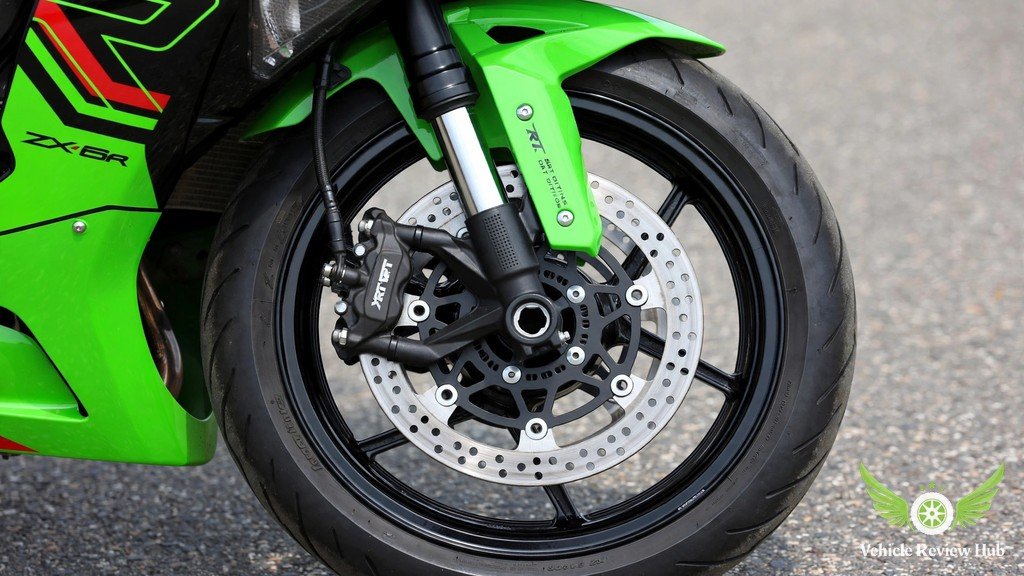
The chassis is the part of the bike testers praise most, and it is the part the KRT shares most completely with the standard bike. Kawasaki Ninja ZX-6R KRT Edition performance in corners comes from the same aluminium perimeter frame, the same 41 mm inverted Showa SFF-BP fork and the same Bottom-link Uni-Trak rear shock as every other ZX-6R — fully adjustable at both ends, 4.7 inches of front travel and 5.9 inches at the rear. Nothing about the handling is KRT-specific, and that is the point: the KRT handles like a ZX-6R because it is one.
Handling, Braking and Stability on Real Roads
On real roads the ZX-6R is stable, precise and quick to turn — the fully adjustable suspension lets the bike be set up for a rider’s weight and roads. The KQS quickshifter shifts up only, with no auto-blip on downshifts, so the rider still blips the throttle by hand — a cable-throttle bike with no IMU and no cornering ABS, which means the rider is the stability control.
The brakes are dual 310 mm front discs with radial-mounted monobloc four-piston calipers — Nissins, as Chase’s KRT review confirms, not Brembos — and a single 220 mm petal rear disc. The 2024 update brought round front rotors, and the braking feel testers describe is strong and progressive. Kawasaki Ninja ZX-6R KRT Edition performance under braking is the standard bike’s braking: the same discs, the same calipers, the same pads, the same feel.
Round Discs Are Model-Wide
The round front discs that arrived for 2024 are model-wide: every 2024 and later ZX-6R — base, ABS, KRT and 40th Anniversary — got the round front rotors, with the rear disc staying petal. The KRT has the same round discs as the standard bike, so the round disc is not a KRT feature and never was one.
The same logic covers the rest of the 2024 update, and Kawasaki Ninja ZX-6R KRT Edition performance did not gain a single KRT-only feature from it — the 4.3-inch TFT dash with RIDEOLOGY, the revised cam profiles, the revised intake funnels, the integrated riding modes and the Bosch 9.3MP ABS all came to the whole ZX-6R range at once. The KRT got them because it is a ZX-6R, not because it is a KRT.
Kawasaki Ninja ZX-6R KRT Edition Performance Compared With Other Sport Bikes
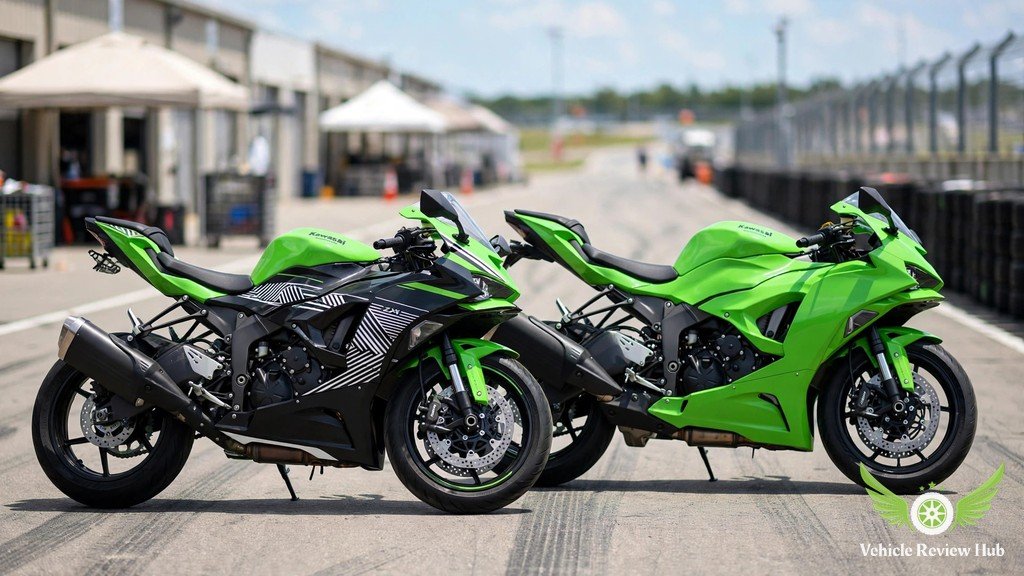
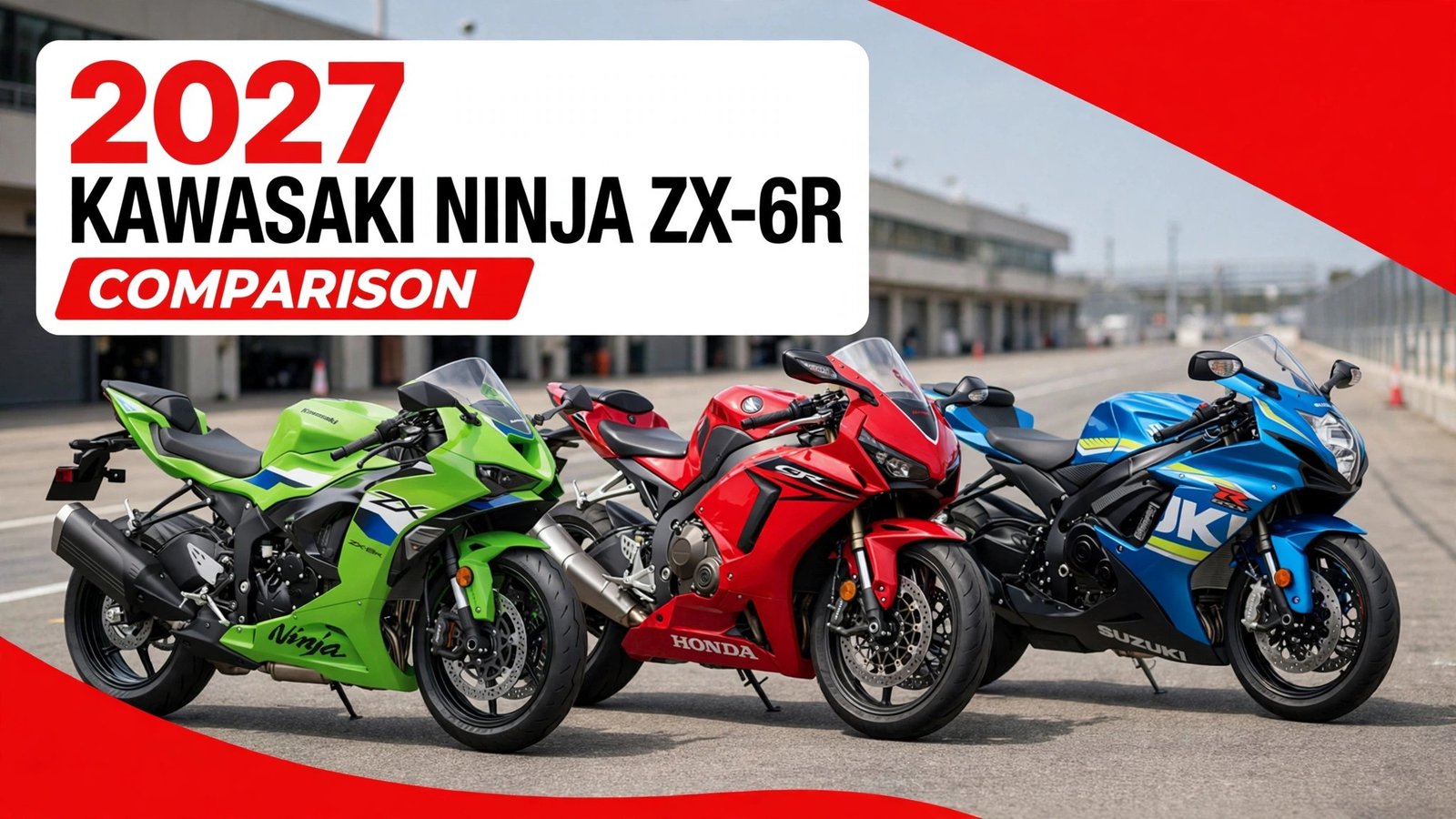
Set against its rivals, the KRT’s case is power per dollar. Kawasaki Ninja ZX-6R KRT Edition performance is the 636’s performance, and the 636 is the most powerful bike in this group on the same dyno — 108.4 hp against the Suzuki GSX-R600‘s 102.9 hp on Cycle World’s 2023 runs — while the R7 gives up more than 50 hp and the CBR600RR claims 113 hp in 2024+ US form.
| Bike | Claimed power | Cycle World dyno | Curb weight | Delivered price |
|---|---|---|---|---|
| KRT Edition (2025) | 127.0 hp @ 13,000 rpm | 108.4 hp (standard bike) | 430.0 lb base | $12,064 |
| Standard ZX-6R (2027) | 127.0 hp @ 13,000 rpm | 108.4 hp | 430.0 lb base | $12,284 |
| Suzuki GSX-R600 (2027) | 123 hp (Motorcycle.com database) | 102.9 hp | 448 lb | $13,149 |
| Yamaha YZF-R7 70th Anniversary | 72.4 hp @ 8,750 rpm | ~68 hp (estimate, unverified) | 417 lb wet | $10,374 |
Note: The GSX-R600’s 123 hp is Motorcycle.com’s specs database crank figure — Suzuki publishes no claimed power figure for the bike. This Kawasaki Ninja ZX-6R KRT Edition performance table uses delivered prices, so the comparison is on the money the buyer actually pays.
Kawasaki Ninja ZX-6R KRT Edition vs Kawasaki Ninja ZX-6R
There is no performance difference to describe, because there is none. The KRT and the standard ZX-6R of the same year share the engine, the tune, the gearing, the weight, the brakes, the tyres and the chassis — any test figure for the standard bike applies to the KRT by identity. The ZX-6R performance guide covers the platform in full, and this guide adds only the KRT-specific context: the paint, the premium history and the launch-bike story.
The price history makes the choice easy in the final years: from 2023 the KRT cost exactly what the standard bike cost, so the buyer who liked Lime Green paid nothing extra, and the buyer who preferred another colour lost nothing. Kawasaki Ninja ZX-6R KRT Edition performance is standard ZX-6R performance at standard ZX-6R money — the comparison ends there, and the KRT review covers the ownership side of the same decision.
Is the Kawasaki Ninja ZX-6R KRT Edition Suitable for Beginner Riders?
No — Kawasaki Ninja ZX-6R KRT Edition performance is no place to learn the basics. The KRT makes 127 hp claimed and 108.4 hp at the rear wheel, weighs 430 lb, and wears supersport ergonomics that put the rider low over the tank. The honest recommendation is the same as the standard bike’s: start on the Ninja 500 or the Ninja 650, learn the road, and come back to the 636 when the skills match the power.
Kawasaki Ninja ZX-6R KRT Edition Performance: Frequently Asked Questions
The answers below give the direct version of each question about Kawasaki Ninja ZX-6R KRT Edition performance, with the figures and the sources behind them.
What is the top speed of the Kawasaki Ninja ZX-6R KRT Edition?
144 mph, measured by MCN’s datalogger on the 2024 bike — the only instrument-measured top speed in this Kawasaki Ninja ZX-6R KRT Edition performance guide. The 164 mph figure that circulates in listicles is unofficial and was never measured on a stock bike.
How fast is the KRT Edition in the quarter mile?
10.58 seconds at 132.36 mph, from Cycle World testers — a 2013-era figure, not a test of a current bike. No quarter-mile test of a KRT Edition itself has been published, and this Kawasaki Ninja ZX-6R KRT Edition performance guide prints the 2013 figure only with its year attached.
What did the ZX-6R make on the dyno?
Cycle World’s dyno of a stock 2023 standard ABS read 108.4 hp at 13,200 rpm and 45.8 lb-ft at 10,900 rpm; MCN’s dyno of the 2024 bike read 115 bhp at the rear wheel. No KRT Edition has ever been dyno’d — the figures apply to the KRT because the engine is identical, not because a KRT was on the rollers. That is the honest answer to the most-asked Kawasaki Ninja ZX-6R KRT Edition performance question.
What MPG does the Kawasaki Ninja ZX-6R KRT Edition get?
The EPA estimate is 40.6 mpg for 2024, about 183 miles from the 4.5-gallon tank. SlashGear’s tester, riding a 2025 KRT, saw about 35 mpg over three tanks; MCN’s 2024 test saw 32–35 mpg. For Kawasaki Ninja ZX-6R KRT Edition performance at the pump, budget on the testers’ low-to-mid 30s, not the lab figure.
Is the KRT Edition faster than the Suzuki GSX-R600?
Yes, on the same dyno: Cycle World’s 2023 figures are 108.4 hp for the ZX-6R against 102.9 hp for the GSX-R600. The GSX-R600 won Motorcycle.com’s 2011 Supersport Street Shootout, and the ZX-6R was quicker at Chuckwalla in 2011 (1:54.65 vs 1:55.72). On the same dyno, Kawasaki Ninja ZX-6R KRT Edition performance is 5.5 hp ahead of the GSX-R600.
Is the Kawasaki Ninja ZX-6R KRT Edition suitable for beginner riders?
No — Kawasaki Ninja ZX-6R KRT Edition performance starts at 127 hp claimed and 108.4 hp at the rear wheel, with supersport ergonomics and a 430 lb curb weight. The Ninja 500 or Ninja 650 is the honest first-bike recommendation.