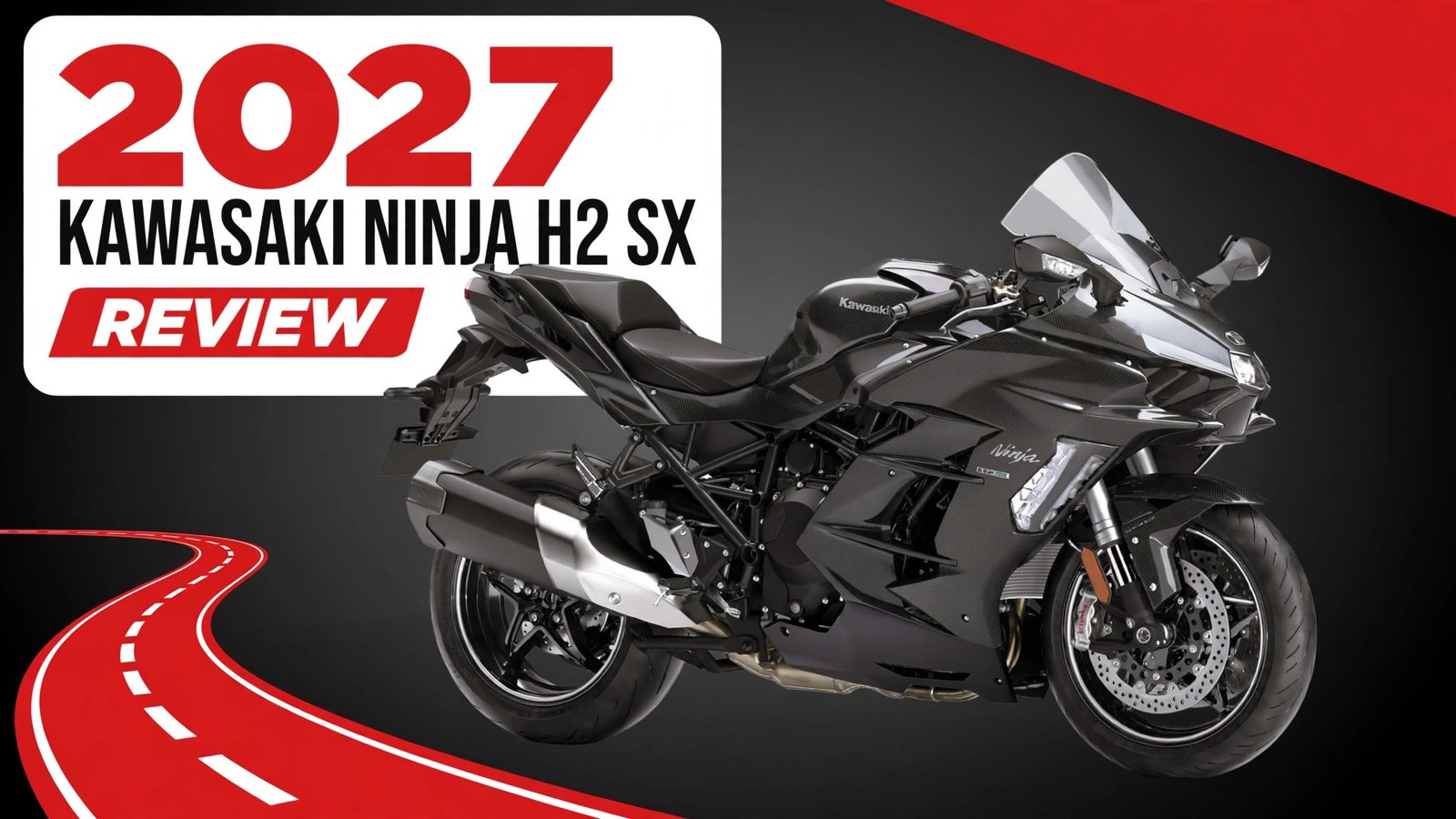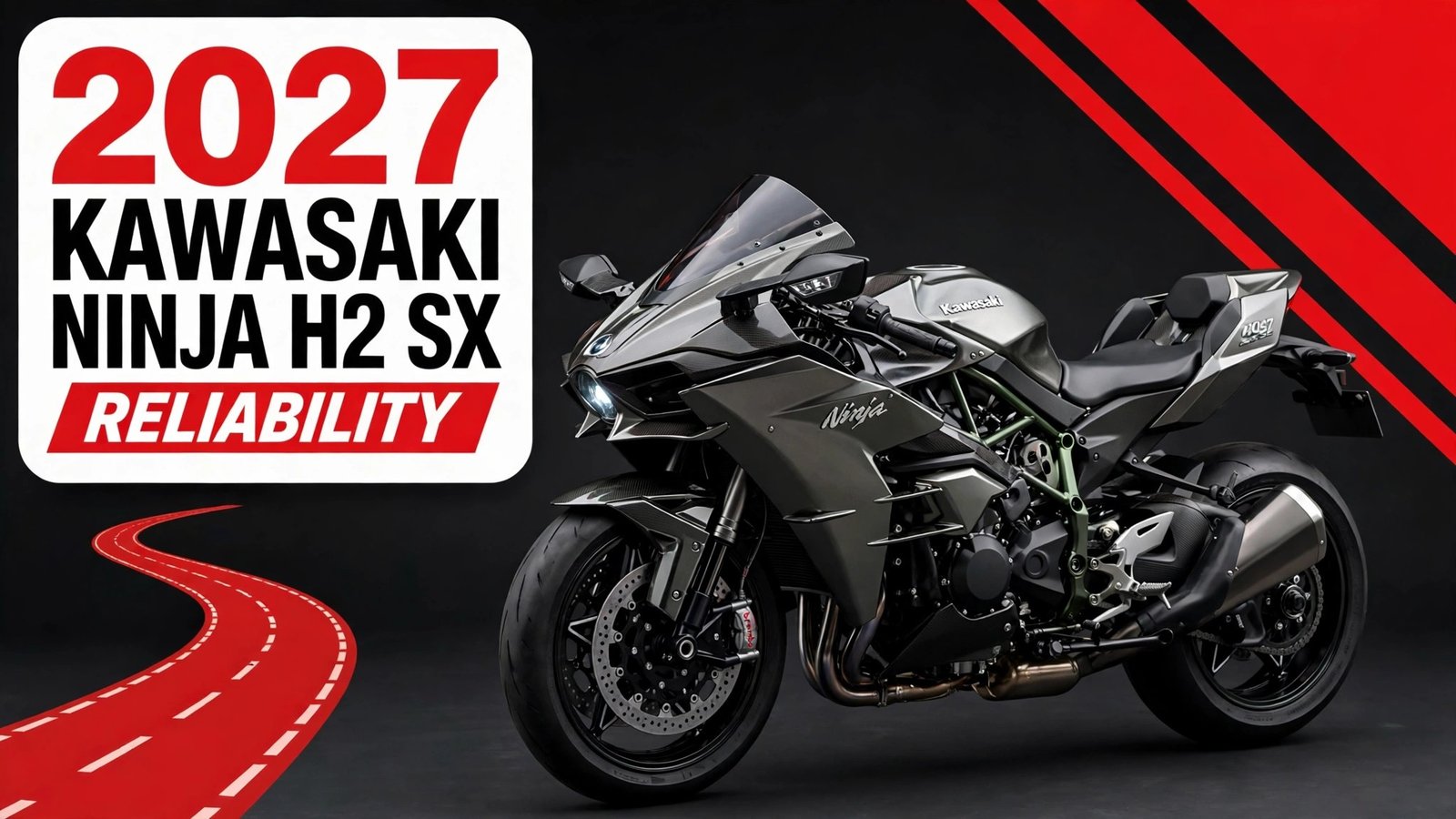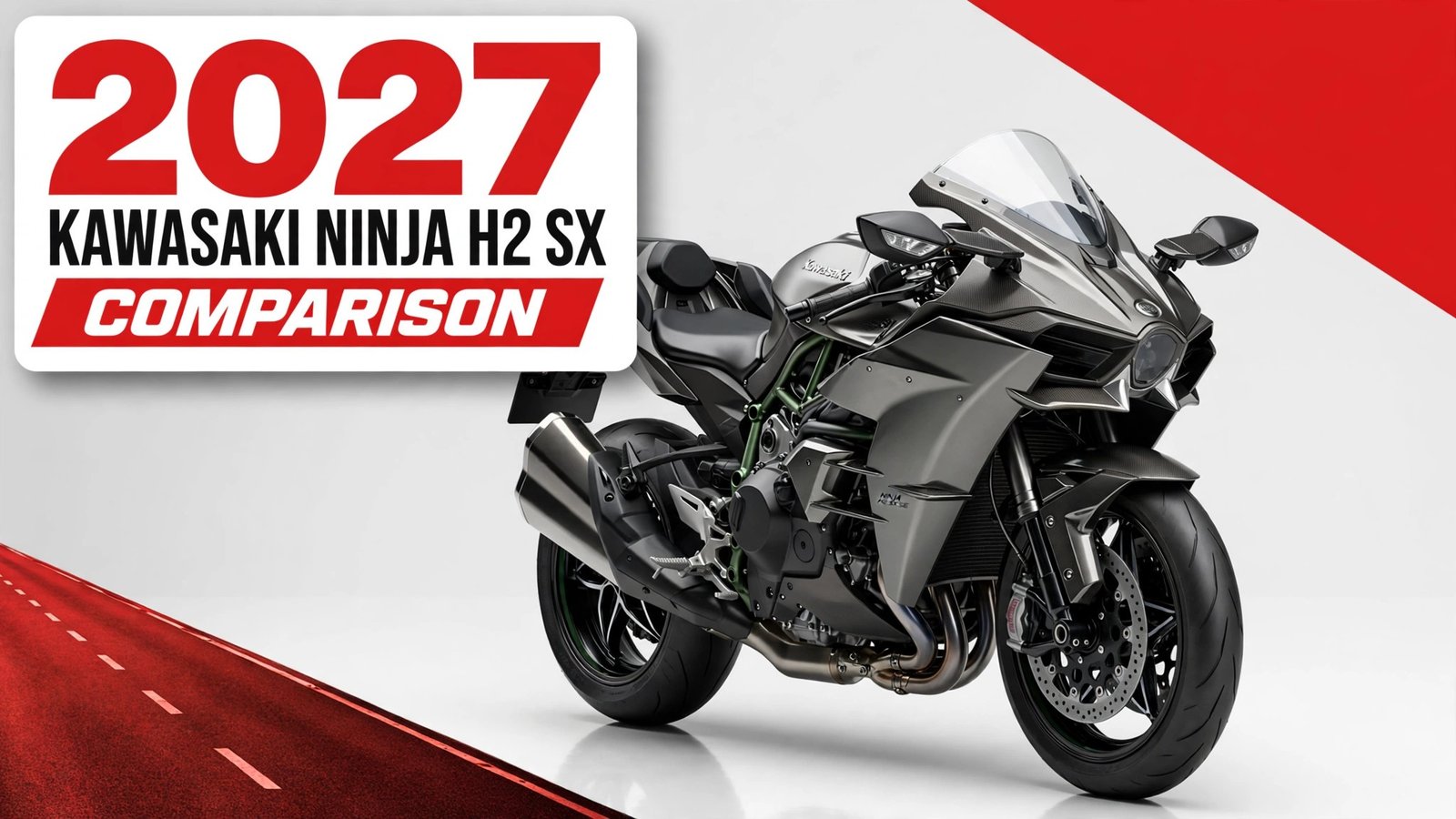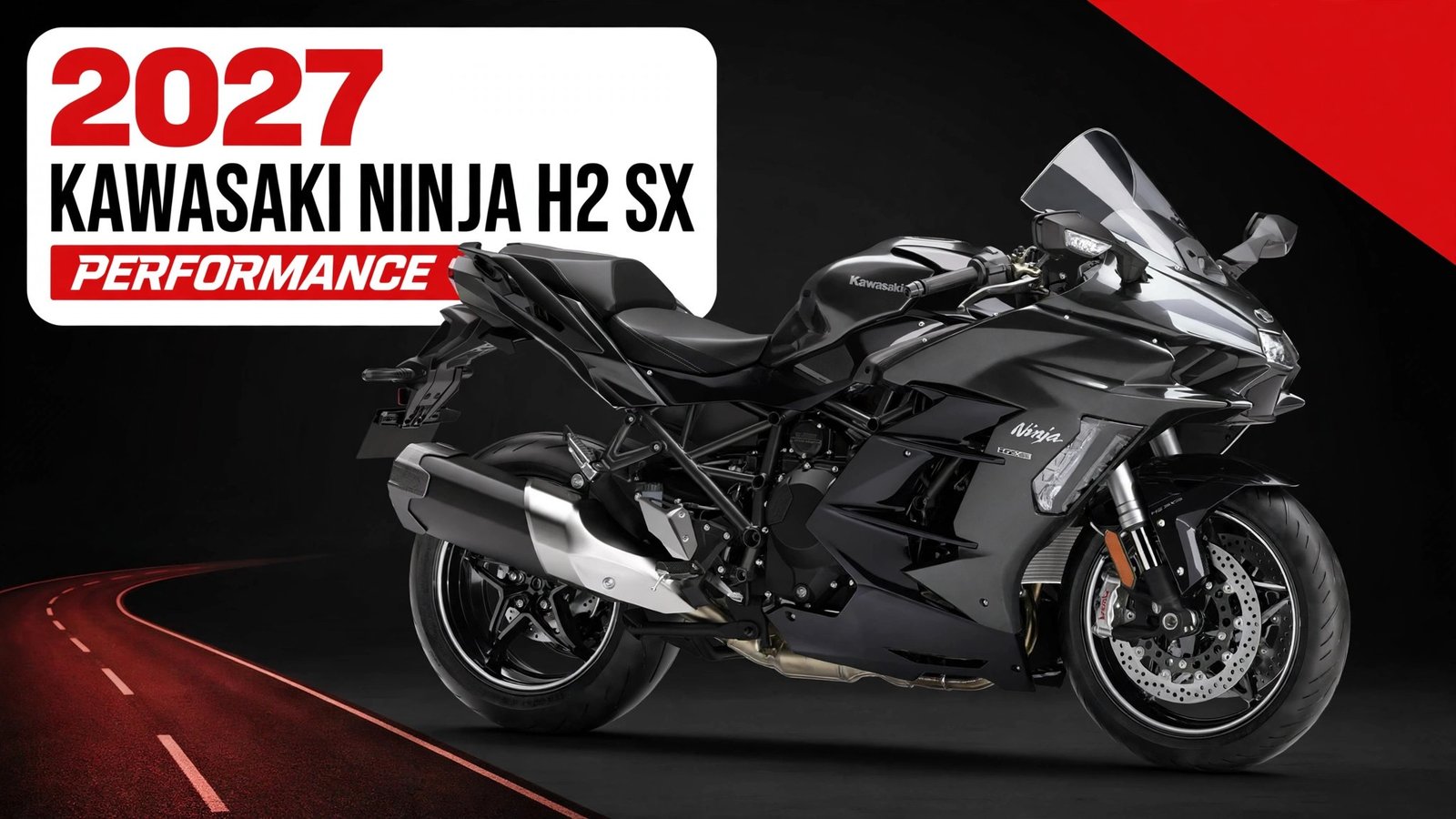
The Kawasaki Ninja H2 SX performance story is really two stories. The 2018 bike has the hard numbers — 166 hp at the rear wheel on Cycle World’s dyno, a 10.04-second quarter mile at 144 mph, 0–60 mph in 2.98 seconds. The radar bike has none of them: no named US publication has put it on a dyno or a drag strip. This Kawasaki Ninja H2 SX performance guide names the bike and tester behind every number.
The headline claim is 207.0 hp at 10,000 rpm on Kawasaki USA’s 2027 page, measured under ISO 4106, not SAE. The global claim is 200 PS (197 hp) at 11,000 rpm, or 210 PS with ram air. Same engine, two standards — and this Kawasaki Ninja H2 SX performance guide keeps claimed, dyno, acceleration and fuel figures separate.
Kawasaki Ninja H2 SX Engine Performance and Power Delivery
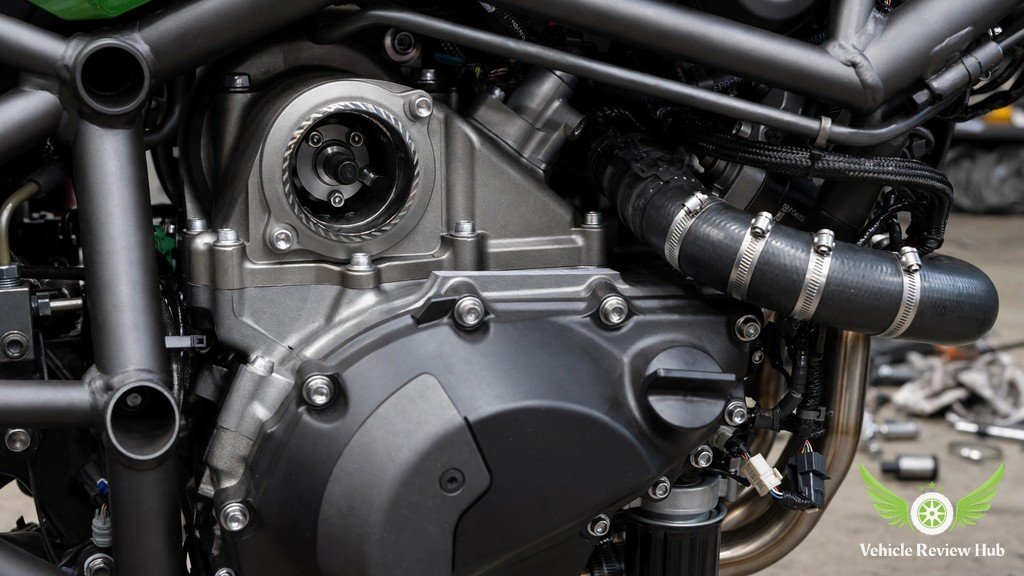
The engine is a 998cc balanced supercharged inline-four, the only supercharged engine in a touring motorcycle on sale in the US. It revs to about 12,000 rpm, and the supercharger impeller spins at up to 9.2 times crank speed, nearly 130,000 rpm at maximum. This Kawasaki Ninja H2 SX performance guide starts with what the engine put down on a dyno.
166.1 HP on CW’s Dyno
Cycle World’s dyno of the 2018 H2 SX SE read 166 hp and 89 lb-ft at the rear wheel: “the 998cc inline-four’s 166 hp and massive plateau of torque that culminates in an 89-pound-foot peak, with butter smooth curves recorded on the CW dyno.” The heading keeps the “166.1” the doc carries, but the measured figure this Kawasaki Ninja H2 SX performance guide prints is 166 hp — the “.1” could not be verified, and the original dyno article URL is dead.
Rider Magazine’s Jett Tuning dyno read a touch lower from the same 2018 SE: 165 rwhp and 87 lb-ft. Two independent dynos within 1 hp and 2 lb-ft is the only instrumented power evidence the H2 SX has. Cycle News’ first look at the 2022 bike mentioned “about 170 hp at the tire”, but that was a remark, not a dyno sheet, and this Kawasaki Ninja H2 SX performance guide does not present it as one.
| Test | Bike | Rear-wheel hp | Rear-wheel torque |
|---|---|---|---|
| Cycle World, Best Open-Class Streetbike 2018 | 2018 H2 SX SE | 166 hp | 89 lb-ft |
| Rider Magazine, Jett Tuning dyno | 2018 H2 SX SE | 165 rwhp | 87 lb-ft |
| Cycle News 2022 first look (remark, not a dyno sheet) | 2022 H2 SX SE | “about 170 hp at the tire” | Not measured |
Note: Every figure in this table names its bike and its tester. The two dyno rows are the 2018 SE; the 2022 row is a first-look remark, not a dyno result. No dyno figure exists for the radar bike, and this Kawasaki Ninja H2 SX performance guide does not invent one.
Best Open-Class Streetbike 2018
Cycle World named the 2018 H2 SX SE its Best Open-Class Streetbike in the 2018 Ten Best Bikes awards — “Cycle World’s Best Open-Class Streetbike for 2018”, in the magazine’s own words. The award rested on the same test that produced the dyno and quarter-mile figures in this Kawasaki Ninja H2 SX performance guide: the supercharged tourer beat the open-class field with an engine no rival could match, in a chassis that let a 573-pound bike (Ultimate Motorcycling’s 2018 SE figure) handle like something much lighter.
The award explains why the 2018 figures still matter: every hard number the H2 SX has — 166 hp at the wheel, 10.04 seconds, 2.98 seconds to sixty — comes from that 2018 test programme. Kawasaki has sold the same basic engine ever since, so the 2018 numbers remain the best instrumented evidence for the line. What changed after 2022 is the electronics and the radar, not the power unit — a distinction this Kawasaki Ninja H2 SX performance guide keeps wherever the year matters.
The video below is Ultimate Motorcycling’s 2018 launch-test video of the SE, presented by reviewer Arthur Coldwells. It is the 2018 bike whose Cycle World numbers this Kawasaki Ninja H2 SX performance guide prints: the 998cc supercharged inline-four, 101 ft-lbs of torque at 9,500 rpm, the $3,000 premium over the base bike, and SE extras including the quickshifter, launch control, TFT dash and centre stand.
Kawasaki Ninja H2 SX Top Speed and Acceleration
The acceleration figures are the strongest part of the H2 SX record, measured on a drag strip and a test track rather than claimed in a brochure. This Kawasaki Ninja H2 SX performance guide prints them with the bike and tester attached, and keeps the top speed separate, because it was never measured the same way.
10.04 Seconds at 144 mph
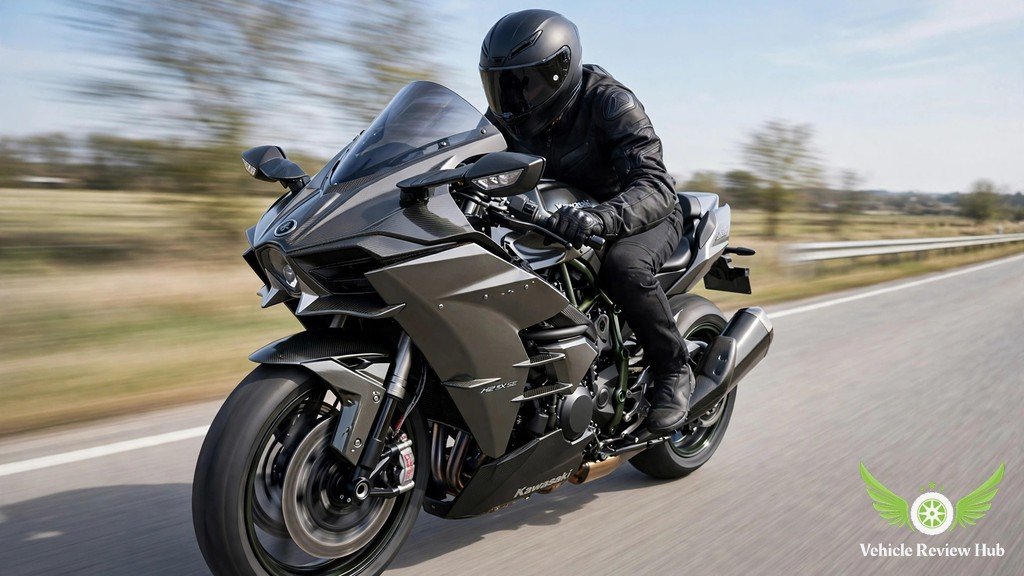
Cycle World covered the quarter mile in 10.04 seconds at 144 mph in the 2018 H2 SX SE: “The H2 SX SE covered the quarter-mile in just 10.04 seconds, crossing the line at an absurd 144 mph.” A 10-second quarter from a touring motorcycle with a 5.0-gallon tank and a centre stand made the bike’s reputation, and it is still the only instrumented quarter-mile figure the H2 SX has — which is why this Kawasaki Ninja H2 SX performance guide prints it as a 2018 figure.
The trap speed matters as much as the time: crossing at 144 mph means the bike was still pulling hard at the end of the strip, which is what a supercharger does that a naturally aspirated engine cannot. Ultimate Motorcycling’s launch review described the same character — “deceptively smooth” throttle response, linear delivery, triple digits arriving “effortlessly” — and that agreement is why the 2018 figures in this Kawasaki Ninja H2 SX performance guide have held up for eight years.
2.98 Seconds to Sixty
Zero to 60 mph took 2.98 seconds in Cycle World’s 2018 test, and the bike reached 100 mph 2.39 seconds later, about 5.37 seconds from a standstill. The launch needs launch control and wheelie control, and the pull from 60 to 100 mph is where the supercharger earns its keep. Cycle News’ first test described the same thing from the saddle — power “readily available from around 4,500 rpm” and “a smooth transition from gentle delivery to arm-pulling acceleration as the tachometer needle climbs above 7000 rpm”.
Top speed is a different kind of figure, and this Kawasaki Ninja H2 SX performance guide keeps it separate from the measured numbers. The bike is listed at about 186 mph (300 km/h) in MCN’s spec table, but no GPS-verified US top-speed test was found. The only instrumented figure is BikeReview’s dyno run in Australia: 293 km/h at the rev limiter in top gear on the 2018 bike — a dyno reading, not a road speed.
| Measure | Figure | Bike and tester |
|---|---|---|
| 0–60 mph | 2.98 seconds | 2018 H2 SX SE, Cycle World |
| 0–100 mph | About 5.37 seconds (2.39 s after 60 mph) | 2018 H2 SX SE, Cycle World |
| Quarter mile | 10.04 seconds at 144 mph | 2018 H2 SX SE, Cycle World |
| Top speed | Listed at about 186 mph (300 km/h); no GPS-verified US test | Listed (MCN and others); BikeReview dyno 293 km/h at the rev limiter |
Note: The acceleration figures are all from the 2018 SE on Cycle World’s test. The top-speed row is a listed figure, not a measured US result, and this Kawasaki Ninja H2 SX performance guide labels it as such. No instrumented acceleration figures exist for the 2022-and-later radar bike.
Kawasaki Ninja H2 SX Mileage and Fuel Economy
Fuel economy is where the H2 SX’s numbers spread the widest, from just over 51 mpg on one dash readout to 38 mpg averaged over a long RevZilla test. The spread is real: a supercharged 998cc four sips fuel on a steady open road and drinks it when the boost is working. This Kawasaki Ninja H2 SX performance guide prints every figure with its source and riding conditions.
40 MPG Observed at Launch
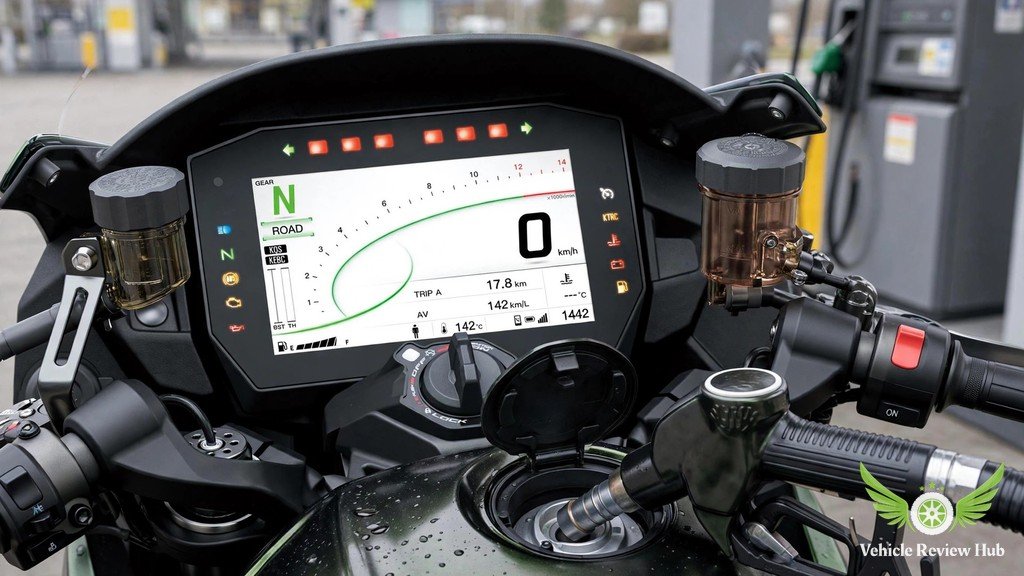
No source prints that round figure as a launch measurement, so this Kawasaki Ninja H2 SX performance guide does not present it as one. The figure behind the heading is Rider Magazine’s 41.1 mpg test average, the only proper test average in the record, and the number to use. Ultimate Motorcycling recorded “just over 51 mpg according to the dash readout” in spirited riding, and Cycle News saw “upwards of 50 mpg while on the open road” — dash snapshots on steady stretches, not tank averages.
Read the launch figures as a range with a centre. Gentle open-road riding returns 50 mpg or better on the dash; mixed riding with real throttle use lands in the low forties; and the 5.0-gallon tank turns those figures into roughly 180 to 250 miles between stops. Cycle News’ own practical figure was about 180 miles from a tank on a laid-back ride, well below the 250 miles that 50 mpg times 5.0 gallons would suggest. The gap is the point, and this Kawasaki Ninja H2 SX performance guide does not pretend the dash readout is the tank average.
38 MPG in 2025 Comparison
The 38 mpg figure is real: it was found in the RevZilla 2025 comparison article itself. Over more than 1,000 miles of touring, commuting and testing around Los Angeles and San Diego, the 2025 H2 SX SE averaged 38 mpg, with a low of 35 and a high of 43. RevZilla’s conclusion was that 200 miles between stops is a reasonable goal on the 5.0-gallon tank. That is the radar bike’s figure, not the 2018 launch bike’s.
Put the four sources together and the spread tells the story: just over 51 mpg (Ultimate Motorcycling dash), upwards of 50 mpg (Cycle News), 41.1 mpg (Rider test average), and 38 mpg (RevZilla 2025 radar bike). A buyer planning a tour should budget on the RevZilla and Rider figures: about 200 miles between stops is the practical number. There is no EPA figure for the H2 SX, so this Kawasaki Ninja H2 SX performance guide prints no EPA number.
| Source | Figure | Conditions |
|---|---|---|
| Ultimate Motorcycling, 2018 | Just over 51 mpg | Dash readout, test included spirited riding |
| Cycle News, 2018 first test | Upwards of 50 mpg | Open-road stretches; about 180 miles per tank in practice |
| Rider Magazine | 41.1 mpg average | Test average |
| RevZilla, 2025 comparison | 38 mpg average (low 35, high 43) | 1,000+ miles, touring and commuting, 2025 radar bike |
Note: The four mileage figures are not four answers to the same question. The 51 and 50 mpg figures are dash readouts on steady stretches; the 41.1 and 38 mpg figures are test averages over mixed riding. Budget on the averages. There is no EPA figure for the H2 SX.
Kawasaki Ninja H2 SX Real-World Riding Experience
On the road, the H2 SX’s performance is less about the headline numbers and more about how little effort the speed takes. Every tester who rode it for more than a day said the same thing: fast without feeling frantic, heavy without feeling clumsy, comfortable without feeling soft. This Kawasaki Ninja H2 SX performance guide sticks to what the testers actually wrote.
The Riding Experience Buyers Actually Talk About
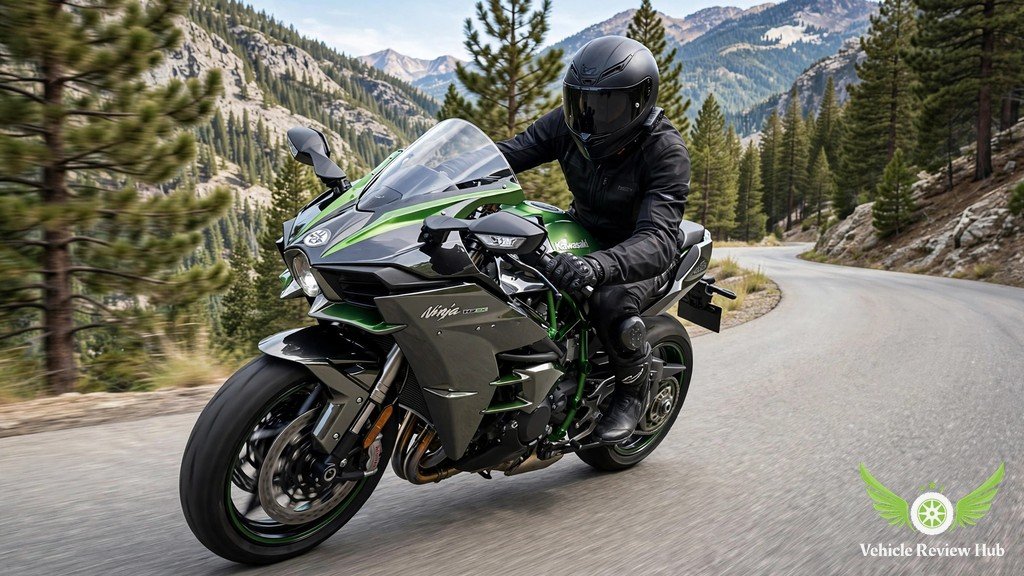
RevZilla’s 2025 test covered more than 1,000 miles, two full days of touring and weeks of commuting, and the verdict was that the bike “does everything right, in other words, just not quickly” through the turns. It is powerful but stately and calm, and it dances “nicely from side to side, feeling competent and undeniably stable” on a gentle twisty road.
Carole Nash’s Insidebikes road test of the 2022 bike ran two weeks and hundreds of miles and landed in the same place: “a surprisingly low machine to straddle and well balanced at a standstill”, “by no means a slug”, “incredibly stable” in fast flowing corners, though “not the most comfortable machine out there” for big miles. The radar earned real praise too: the tester “absolutely love[d] the blind spot detection feature” and found the adaptive cruise “very sensitive”.
No US Instrumented Test of the Radar Bike
RevZilla published a full US comparison road test of the 2025 radar SE, so the radar bike has been tested in the US — but no named US publication has published dyno or quarter-mile figures for the 2022-and-later bike. Every hard number in this Kawasaki Ninja H2 SX performance guide — 166 hp at the wheel, 10.04 seconds, 2.98 seconds — comes from the 2018 bike.
That gap matters for a buyer comparing model years. The radar bike gained adaptive cruise, blind-spot detection, forward collision warning, a 6.5-inch TFT dash, a new 6-axis IMU and Showa Skyhook semi-active suspension, and lost nothing on power. But the only measured figures belong to the 2018 bike, and the honest way for this Kawasaki Ninja H2 SX performance guide to write about the radar bike is to say the engine is unchanged and the electronics are new.
Kawasaki Ninja H2 SX Handling, Braking and Stability
The H2 SX carries 590.9 lb at the curb on the 2022-and-later bikes, and the handling story is how little that weight gets in the way. A trellis high-tensile steel frame, a single-sided swingarm, a 58.3-inch wheelbase 30 mm longer than the H2 siblings, and semi-active suspension. This Kawasaki Ninja H2 SX performance guide covers the chassis and brakes as a system, because the electronics make the weight manageable.
Handling, Braking and Stability on Real Roads
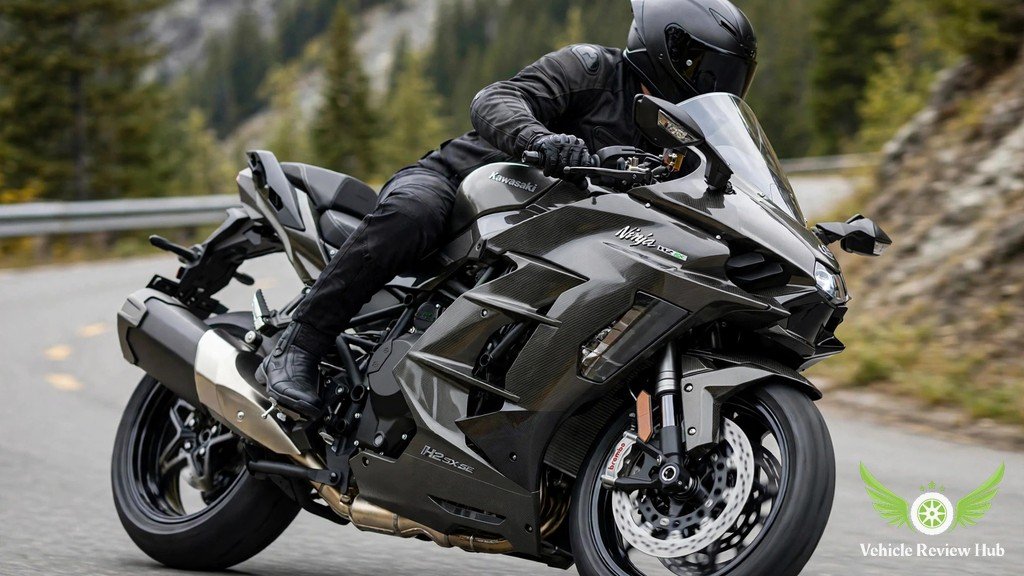
Ultimate Motorcycling found the handling “subtle, requiring little effort to get it tipped into a corner”, and the longer wheelbase gives road-going stability without making the bike unwilling to turn. The suspension is semi-active on every SE and SE+ since 2019 — Kawasaki Electronic Control Suspension on the SE+, Showa Skyhook EERA on the 2022-and-later radar bike, with a Showa BFRC monoshock at the rear. RevZilla’s 2025 test found the fork “doesn’t dive as dramatically on the brakes” and the chassis “more stable and composed over mid-corner bumps”.
Braking is Brembo Stylema calipers on dual front discs — 320 mm on the 2022-and-later bikes, 330 mm on the 2018–2021 bikes — with a single 250 mm rear disc and KIBS cornering ABS, backed by a Bosch 6-axis IMU on the radar bike. RevZilla’s tester lobbied for the 330 mm rotors to match the calipers and steel-braided lines, but still called braking performance good. Tyres are 120/70 ZR17 front and 190/55 ZR17 rear at 36 psi front and 42 psi rear cold. The electronics package this Kawasaki Ninja H2 SX performance guide treats as one system with the brakes adds cornering management, traction control, launch control, engine brake control and a dual-direction quickshifter.
Cruise Caps at 85 mph
RevZilla’s 2025 comparison states it plainly: “cruise control has a max speed of 85 mph.” That is the adaptive cruise control’s set-speed ceiling, not a speed limiter on the bike. The H2 SX will go far faster than 85 mph; it simply will not hold a cruise-control set speed above 85 mph. This Kawasaki Ninja H2 SX performance guide prints it as a cruise-system limit, which is what RevZilla measured.
Adaptive cruise is the radar’s most-used feature. It follows the vehicle ahead and can be set to one of three following distances — Near, Medium and Far — adjusted on the fly by holding the “Fn” button and tapping a “Mode” switch. RevZilla’s tester initially reported that it could not be adjusted while riding, published that claim, and was then corrected by viewers and by Kawasaki USA with the button combination. The correction is worth printing in this Kawasaki Ninja H2 SX performance guide: a detail a new owner will actually need.
Kawasaki Ninja H2 SX Performance Compared With Other Sport Bikes
The H2 SX has no direct rival, because no other manufacturer sells a supercharged touring motorcycle in the US. The comparisons that matter are about money and equipment, not like-for-like performance. This Kawasaki Ninja H2 SX performance guide compares the H2 SX with the Suzuki Hayabusa on price and equipment, and answers the beginner question honestly.
Kawasaki Ninja H2 SX vs Suzuki Hayabusa
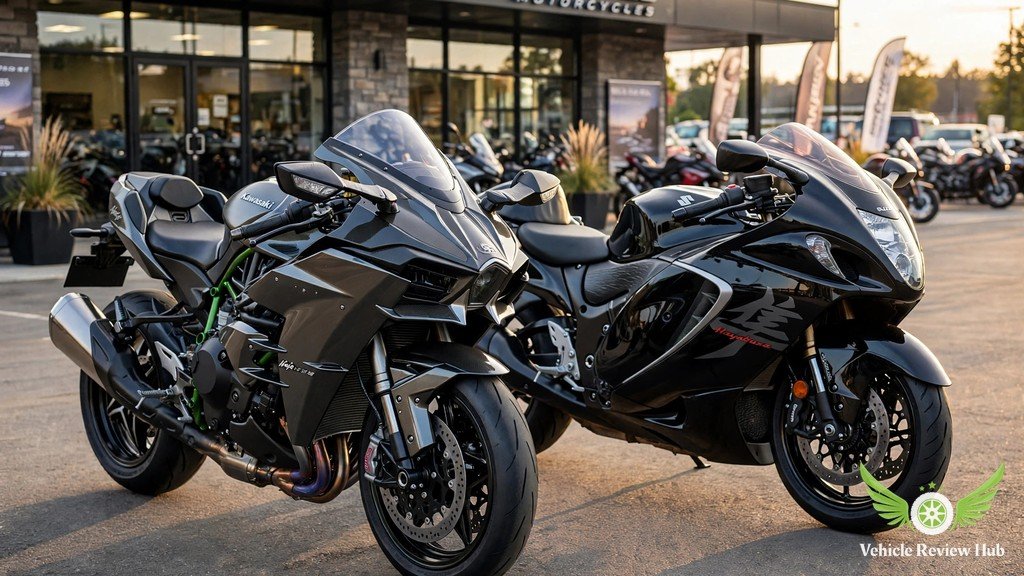
The Hayabusa is the only rival with comparable straight-line stature, and it costs $10,600 less than the 2027 H2 SX SE on MSRP: $19,399 for a 2025 Hayabusa against $29,999 for the H2 SX SE. It is a 1,340cc naturally aspirated inline-four with no supercharger, no radar, no adaptive cruise, no blind-spot detection, no semi-active suspension and no factory panniers. The H2 SX SE’s case is technology and exclusivity; the Hayabusa’s case is $10,600 less for comparable straight-line presence. This Kawasaki Ninja H2 SX performance guide compares the two on price and equipment only: no comparable instrumented Hayabusa figures were verified for this blog, and the Hayabusa’s claimed power was not verified against Suzuki USA.
Which suits which rider comes down to what the buyer is paying for. The Hayabusa suits the buyer who wants the iconic big-bore sportbike at the lowest price in this comparison and does not need radar, semi-active suspension or a touring kit. The H2 SX SE suits the buyer who wants the supercharger, the radar suite, the Skyhook suspension and the only supercharged tourer on sale, and who will pay nearly double the rational alternative for it. The H2 SX SE is unique, not rational: the Hayabusa does the straight-line job for $10,600 less. The Ninja ZX-10R performance story is the other Kawasaki comparison worth reading, for the buyer who wants litre-bike power without the touring weight or price.
Is the Kawasaki Ninja H2 SX Suitable for Beginner Riders?
No — and this Kawasaki Ninja H2 SX performance guide is blunt about it. A 207 hp claimed output (US, ISO 4106), 166 hp at the rear wheel on Cycle World’s dyno, a 590.9 lb curb weight, a 32.9-inch seat, supercharged delivery and a $29,999 price make the H2 SX the wrong first bike. The honest first-bike recommendations are the Ninja 500 review or the Ninja 650 review, and the Ninja ZX-4R review is the right starting point for a lighter, cheaper supersport.
For the experienced rider, the H2 SX’s performance is the point of the bike. The supercharger gives a delivery no naturally aspirated tourer can match, the radar and Skyhook electronics make the weight disappear on a long ride, and the measured figures — 166 hp at the wheel, 10.04 seconds, 2.98 seconds — are real, instrumented evidence rather than brochure numbers. The Kawasaki Ninja H2 SX review covers the price ladder, and the Kawasaki Ninja H2 SX reliability guide covers the six recalls and the maintenance schedule a used buyer must check.
Kawasaki Ninja H2 SX Performance: Frequently Asked Questions
These are the questions buyers actually ask about the H2 SX’s speed, mileage and real-world performance, answered with the verified figures from this Kawasaki Ninja H2 SX performance guide.
How much power does the H2 SX make?
Kawasaki USA claims 207.0 hp at 10,000 rpm and 101.0 lb-ft at 8,500 rpm (ISO 4106) for the current bike, and this Kawasaki Ninja H2 SX performance guide prints the global claim alongside it: 200 PS (197 hp) at 11,000 rpm, 210 PS with ram air — same engine, different standards.
What did the H2 SX make on the dyno?
Cycle World’s dyno of the 2018 SE read 166 hp and 89 lb-ft at the rear wheel. Rider Magazine’s Jett Tuning dyno read 165 rwhp and 87 lb-ft. No named US publication has dyno’d the 2022-and-later radar bike, and this Kawasaki Ninja H2 SX performance guide prints no dyno figure for it.
How fast is the H2 SX in the quarter mile?
Cycle World recorded 10.04 seconds at 144 mph for the 2018 SE, with 0–60 mph in 2.98 seconds and 0–100 mph 2.39 seconds later. All three figures are from the 2018 bike, and this Kawasaki Ninja H2 SX performance guide does not present them as radar-bike figures.
What is the H2 SX’s top speed?
Listed at about 186 mph (300 km/h); no GPS-verified US top-speed test was found. BikeReview recorded 293 km/h at the rev limiter in top gear on a dyno, and this Kawasaki Ninja H2 SX performance guide prints the listed figure as listed, never as a measured US result.
What MPG does the H2 SX get?
Between about 38 and 51 mpg depending on riding: just over 51 mpg on Ultimate Motorcycling’s dash readout, upwards of 50 mpg on Cycle News’ open-road stretches, and a 41.1 mpg test average from Rider Magazine — and this Kawasaki Ninja H2 SX performance guide notes RevZilla’s 2025 comparison of the radar bike averaged 38 mpg over 1,000+ miles (35 low, 43 high), so 200 miles between stops is a reasonable goal.
Is the Kawasaki Ninja H2 SX suitable for beginner riders?
No. 207 hp claimed, 166 hp at the rear wheel on Cycle World’s dyno, a 590.9 lb curb weight, and a $29,999 price. The Ninja 500 or Ninja 650 is the honest first-bike recommendation, and this Kawasaki Ninja H2 SX performance guide says so plainly.