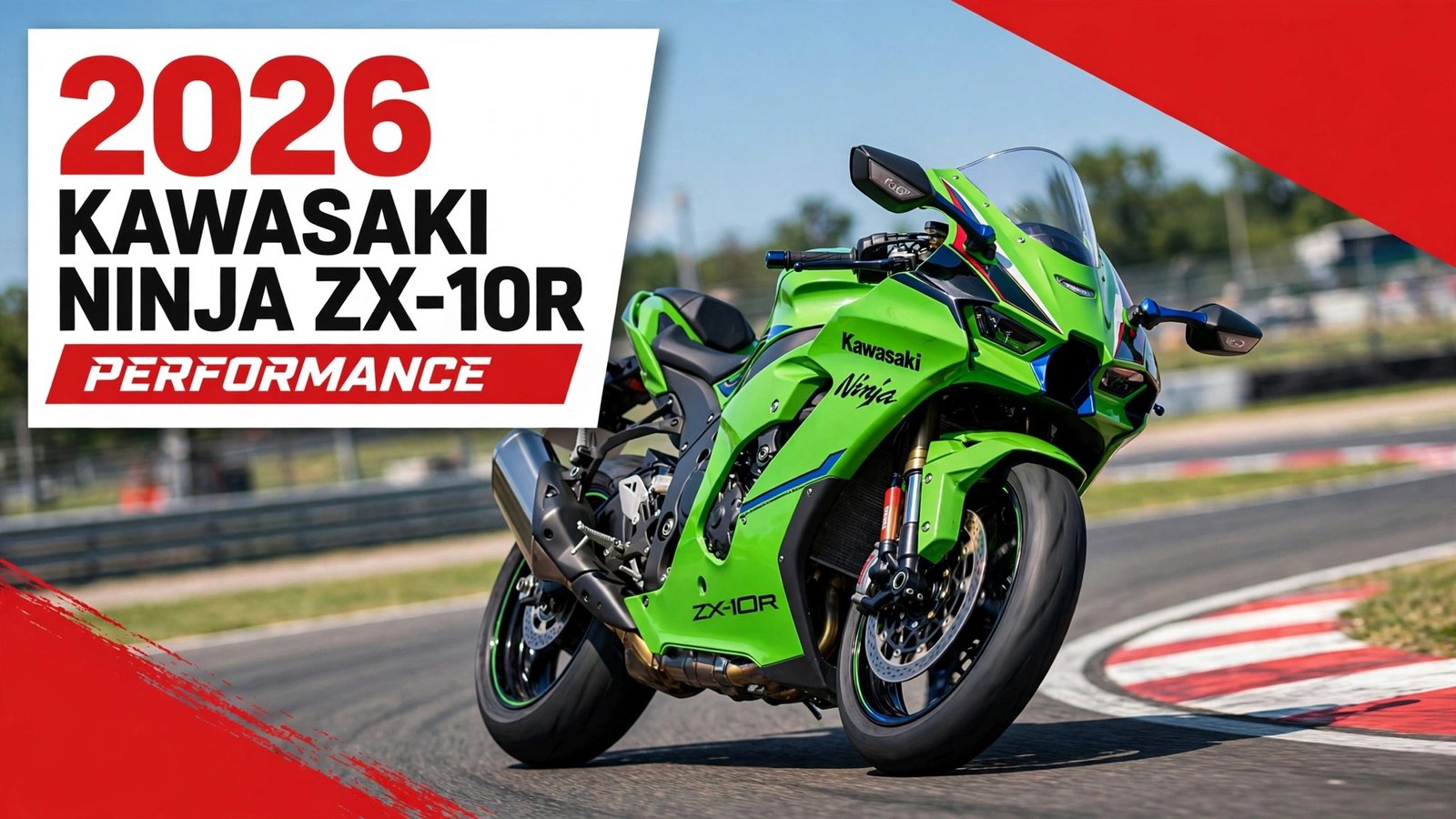
The 2026 Kawasaki Ninja ZX-10R makes a claimed 190.0 horsepower, and this Kawasaki Ninja ZX-10R performance guide starts with the number that matters most on a dyno: 170.0 horsepower at the rear wheel, measured by Motorcycle.com in its 2016 $17,000 Superbike Faceoff. That figure is ten years old, and it is still the best rear-wheel number for the platform, because no named US publication has dyno-tested the 2026 bike yet. The 2026 bike is a new generation with broad new winglets, revised chassis geometry and a 5-inch TFT, but its engine mostly carries over, retuned from 196 hp to 190 hp.
This Kawasaki Ninja ZX-10R performance guide covers the verified numbers only: the dyno figures with the tester named, the instrumented top speed and quarter mile, and the fuel economy with the model year attached to every figure. Where a famous number cannot be verified, this Kawasaki Ninja ZX-10R performance guide says so instead of printing it.
Kawasaki Ninja ZX-10R Engine Performance and Power Delivery
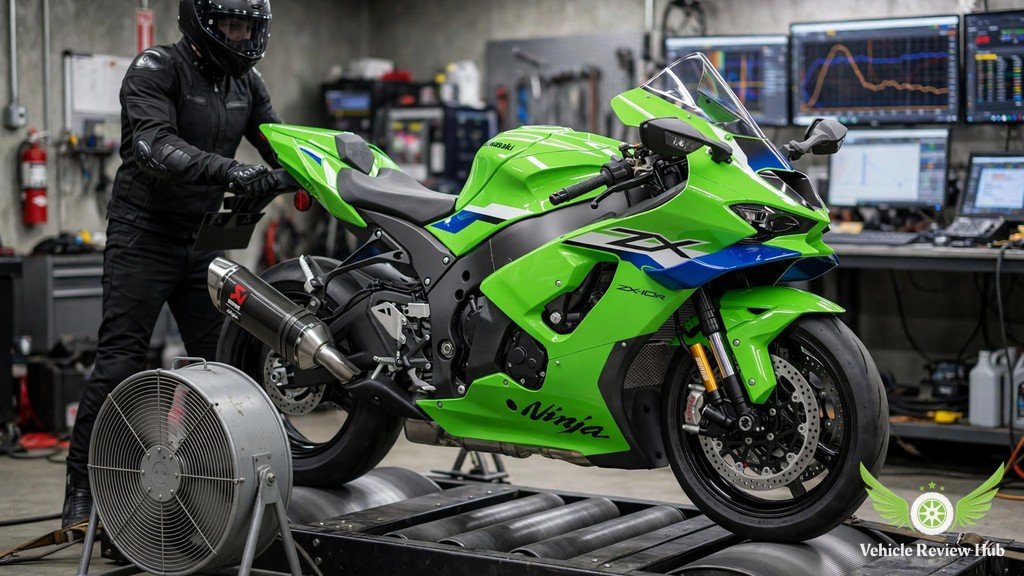
The engine is a 998cc inline-four, and Kawasaki Ninja ZX-10R performance starts with what it makes at the rear wheel, not what the brochure claims. The 2026 sheet claims 190.0 hp at 11,500 rpm and 82.5 lb-ft at 11,300 rpm, measured to the ISO 4106 standard, with no separate ram-air figure. Claimed power is not rear-wheel power, and the gap between the two is where the honest numbers live.
170 HP in the 2016 Faceoff
In Motorcycle.com’s 2016 $17,000 Superbike Faceoff, the 2016 ZX-10R ABS KRT made 170.0 hp at 11,900 rpm and 76.3 lb-ft at 11,500 rpm at the rear wheel on a Hypercycle Dynojet. The same test measured the outgoing 2015 bike at 160.6 hp and the Aprilia RSV4 RR at 179.5 hp, so the 170.0 hp figure sits in a named comparison, not on its own. This Kawasaki Ninja ZX-10R performance figure is the headline because it is the strongest rear-wheel result from a US tester for the platform.
Other testers of the same 2016 bike read lower, and the spread is the lesson. Cycle World’s Dynojet 250i read 166.98 hp at 11,700 rpm with 75.96 lb-ft, and Motorcycle.com’s standalone test on a Farrell Performance Dynojet 250i with SAE correction read 163.2 hp. The US bike’s throttle is electronically cut to 80 percent of maximum once the engine passes 10,000 rpm, which is part of why the US figures sit below the global claim. ProCycle Australia measured 194.7 hp at 13,300 rpm with STD correction, about 190 hp on the SAE scale, and Bennetts’ BSD dyno in the UK read 193.43 bhp. That spread is why this Kawasaki Ninja ZX-10R performance guide never prints a bare horsepower number.
| Test | Bike | Dyno / correction | Rear-wheel hp | Rear-wheel torque |
|---|---|---|---|---|
| Motorcycle.com 2016 faceoff | 2016 ZX-10R ABS KRT | Hypercycle Dynojet | 170.0 hp @ 11,900 rpm | 76.3 lb-ft @ 11,500 rpm |
| Motorcycle.com 2016 faceoff | Outgoing 2015 ZX-10R | Hypercycle Dynojet | 160.6 hp @ 11,700 rpm | 73.6 lb-ft @ 11,200 rpm |
| Motorcycle.com 2016 faceoff | Aprilia RSV4 RR | Hypercycle Dynojet | 179.5 hp @ 13,700 rpm | 77.5 lb-ft @ 10,500 rpm |
| Cycle World 2016 | 2016 ZX-10R | Dynojet 250i | 166.98 hp @ 11,700 rpm | 75.96 lb-ft @ 11,200 rpm |
| Cycle World 2017 | 2017 ZX-10R | Dynojet 250i | 164.6 hp @ 11,700 rpm | 75.2 lb-ft @ 11,000 rpm |
| Motorcycle.com standalone 2016 | 2016 ZX-10R | Farrell Dynojet 250i, SAE | 163.2 hp | — |
| ProCycle Australia | 2016 ZX-10R | STD correction | 194.7 hp @ 13,300 rpm | — |
| Bennetts BSD (UK) | 2016 ZX-10R | BSD dyno | 193.43 bhp | — |
| Motorcycle.com 2011 shootout | 2011 ZX-10R (US) | Tuned Industries | 163 hp @ 11,500 rpm | 73.6 lb-ft |
Note: All figures above are rear-wheel measurements from the named tester, not Kawasaki’s claimed figures. This Kawasaki Ninja ZX-10R performance guide prints the tester with every number because the dyno and the correction decide the result.
No Gen 6 Dyno Exists Yet
No named US publication has dyno-tested the 2026 bike yet. An unverified content-farm claim of roughly 176 to 185 rear-wheel horsepower on a stock 2026 bike is not a dyno test, and this Kawasaki Ninja ZX-10R performance guide does not print it as one. Until a named tester straps a 2026 bike to a dyno, the 2016 faceoff figure is the closest honest rear-wheel number for the platform.
The claimed figures moved while the dyno figures stayed put. The 2016 US claim was 200 hp at 13,000 rpm with 83.7 to 83.8 lb-ft at 11,500 rpm, while the global claim was 200 PS (197 hp) without ram air and 210 PS (207 hp) with ram air. Cycle World’s “210 HORSEPOWER” line repeats those 210 PS as horsepower, and this Kawasaki Ninja ZX-10R performance guide labels it as such rather than as a separate US claim. For 2021 Kawasaki USA quoted no horsepower or torque at all, and the global claim was 203 PS (200 hp) at 13,200 rpm with 213 PS with ram air. Kawasaki’s 2026 specification sheet lists the 2026 claim at 190.0 hp and 82.5 lb-ft, both to the ISO 4106 standard.
| Year | Claimed power | Claimed torque | Note |
|---|---|---|---|
| 2016 US | 200 hp @ 13,000 rpm | 83.7–83.8 lb-ft @ 11,500 rpm | US claim |
| 2016 global | 200 PS (197 hp) / 210 PS (207 hp) with ram air @ 13,000 rpm | — | Global claim |
| 2021 global | 203 PS (200 hp) @ 13,200 rpm / 213 PS with ram air | — | Global claim; Kawasaki USA quoted none |
| 2025 | 196.0 hp @ 11,500 rpm (ISO 4106) | 83.9 lb-ft @ 11,300 rpm | Kawasaki spec sheet |
| 2026 | 190.0 hp @ 11,500 rpm (ISO 4106) | 82.5 lb-ft @ 11,300 rpm | Kawasaki spec sheet |
Note: The 2025 and 2026 sheets print no separate ram-air figure, so this Kawasaki Ninja ZX-10R performance guide prints none for either year. The 2024 claimed power is not in the 2024 sheet’s text layer and is not printed here.
Kawasaki Ninja ZX-10R Top Speed and Acceleration
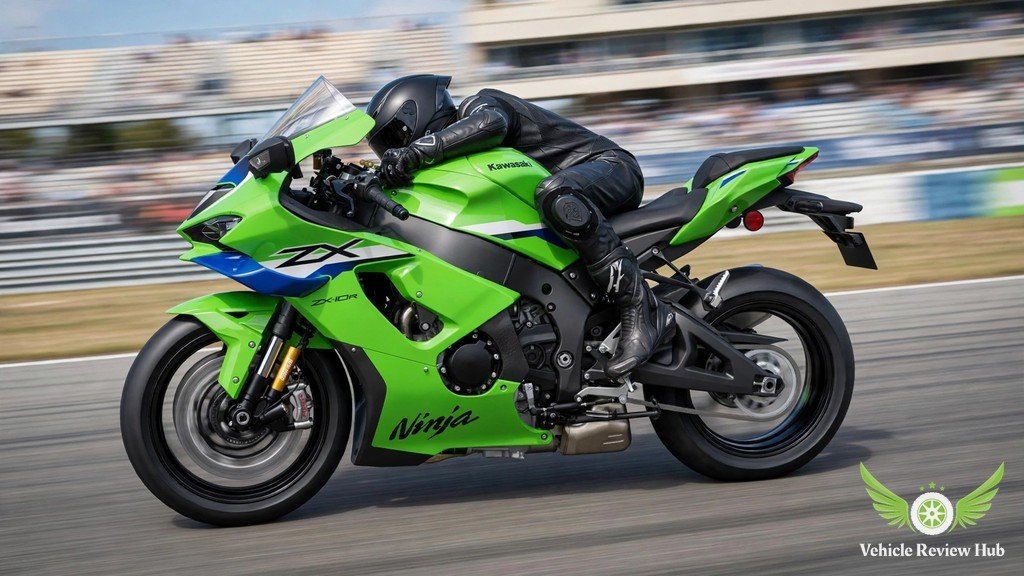
Top speed and acceleration are where instrumented tests earn their keep, and Kawasaki Ninja ZX-10R performance here rests on one test above all: MCN’s 2016 datalogger comparison of the new bike against the old one. Every figure below comes from a datalogger or a GPS, never from a listicle.
10.15 Seconds at 149.43 mph, Verified
MCN’s datalogger recorded 10.15 seconds at 149.43 mph for the 2016 bike over the standing quarter mile, against 10.31 seconds at 149.04 mph for the outgoing 2015 bike. The new bike was 0.16 seconds quicker over the quarter, reached 180 mph about a second sooner, and was about a second and a half quicker from 30 to 100 mph. This Kawasaki Ninja ZX-10R performance result is the verified instrumented quarter mile, and it is the figure this guide prints as the quarter-mile number.
The same MCN test measured a top speed of 184.45 mph for the 2016 bike on GPS, against 185.49 mph for the old bike, and a 0-to-180 mph run of 17.47 seconds over 928.34 metres. Both bikes were near the 186 mph self-imposed limit, so the top-speed comparison was close, but the datalogger showed the new bike pulling away: it was already 10 metres ahead by 100 mph, and 65 metres ahead by 180 mph.
| Figure | 2016 bike | 2015 bike |
|---|---|---|
| Top speed (GPS) | 184.45 mph | 185.49 mph |
| Standing quarter mile | 10.15 s @ 149.43 mph | 10.31 s @ 149.04 mph |
| 0–180 mph | 17.47 s / 928.34 m | 18.41 s / 993.08 m |
| Roll-on, 3rd gear, 30–100 mph | 5.93 s | 7.49 s |
| Roll-on, top gear, 40–120 mph | 11.04 s | 11.18 s |
| Braking, 70–0 mph | 50.24 m | 50.20 m |
Note: All figures above are MCN’s 2016 datalogger and GPS measurements from its UK test of the new bike against the outgoing bike. This Kawasaki Ninja ZX-10R performance guide prints them as a UK test, not as a US test.
No US Top-Speed Run Found
No instrumented US top-speed test of the ZX-10R has been found. The 158 mph the ZX-10R recorded on the Auto Club Speedway front straight in Motorcycle.com’s faceoff, against the Aprilia’s 152.3 mph, is a track straight speed, not a top speed, and this Kawasaki Ninja ZX-10R performance guide never presents it as one. The 186 mph figure that appears in listings is a compiled number with a limiter attached, not a GPS measurement.
The “10.0 seconds at 147 mph” figure is also not verified as a single instrumented result. The closest verified numbers are MCN’s 10.15 seconds at 149.43 mph and the aggregated 10.1 seconds at 147.1 mph. Cycle World’s May 2011 “Kryptonite Express” test ran a stock 2011 bike to a 9.73-second quarter mile, the quickest ever on a stock motorcycle at the time. This Kawasaki Ninja ZX-10R performance guide prints the MCN figure as the verified quarter mile and treats the 10.0-second figure as unverified.
Kawasaki Ninja ZX-10R Mileage and Fuel Economy
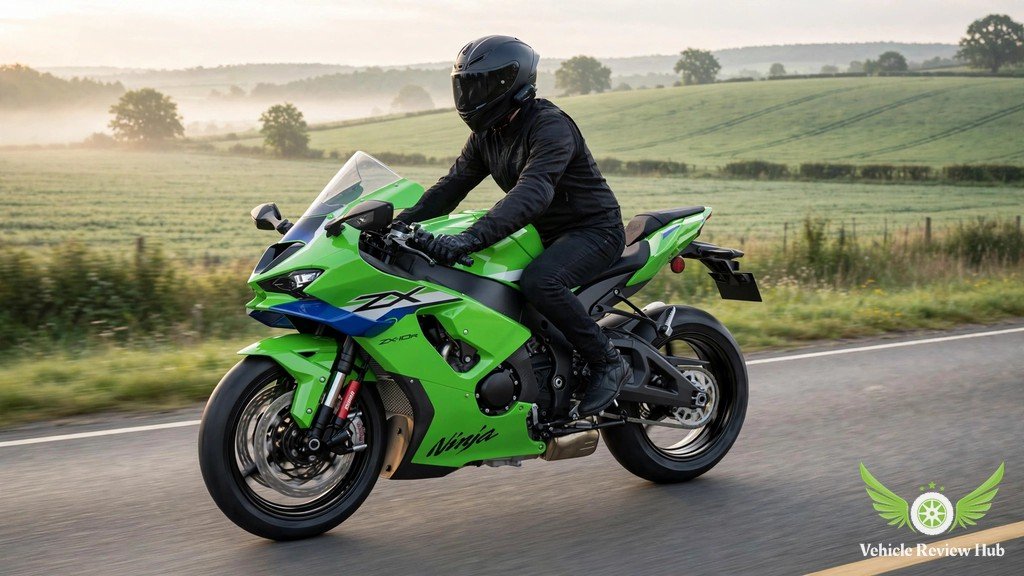
Fuel economy is where the ZX-10R’s numbers get mixed up most often, because the famous 32.4 mpg figure belongs to the wrong year. Kawasaki Ninja ZX-10R performance on fuel is modest for a litre bike, and this section puts every figure back on its correct model year.
32.4 MPG Was Gen 3, Not 2016
The 32.4 mpg-US figure comes from 7.3 litres per 100 km, and it belongs to the 2008–2010 Gen 3 bike, not the 2016 bike. The 2016 bike’s tested fuel economy was not found in any source, and this Kawasaki Ninja ZX-10R performance guide does not print a tested 2016 figure. What exists for 2016 is the maker’s figure: 6.98 litres per 100 km, about 33.7 mpg-US, labelled as the maker’s figure rather than a test result.
The later generations did better on paper. The Gen 4 bike is listed at 6.4 litres per 100 km, about 37 mpg-US, and the 2021 bike at 47.1 mpg in one listing. No EPA figure for the ZX-10R was found, so this Kawasaki Ninja ZX-10R performance guide prints no EPA number. On the 2016 maker’s figure, the 4.5-gallon tank gives about 152 miles of range by simple arithmetic, and that range is labelled as arithmetic, not as a tested result.
No 153 HP Dyno Exists
No 153 hp ZX-10R dyno exists. Four targeted searches found no such test, and the nearest numbers sit on either side of it: Cycle World’s 2004 dyno read 155.5 hp at 9,250 rpm, and a 2009 comparison dyno read 155.85 hp at 12,200 rpm. The 153.2 hp figure that sometimes appears next to the ZX-10R’s name is the CBR1000RR’s figure in Motorcycle.com’s 2017 shootout, a different bike entirely. This Kawasaki Ninja ZX-10R performance guide writes the section around the verified dyno figures in the table above instead of the phantom number.
Kawasaki Ninja ZX-10R Real-World Riding Experience
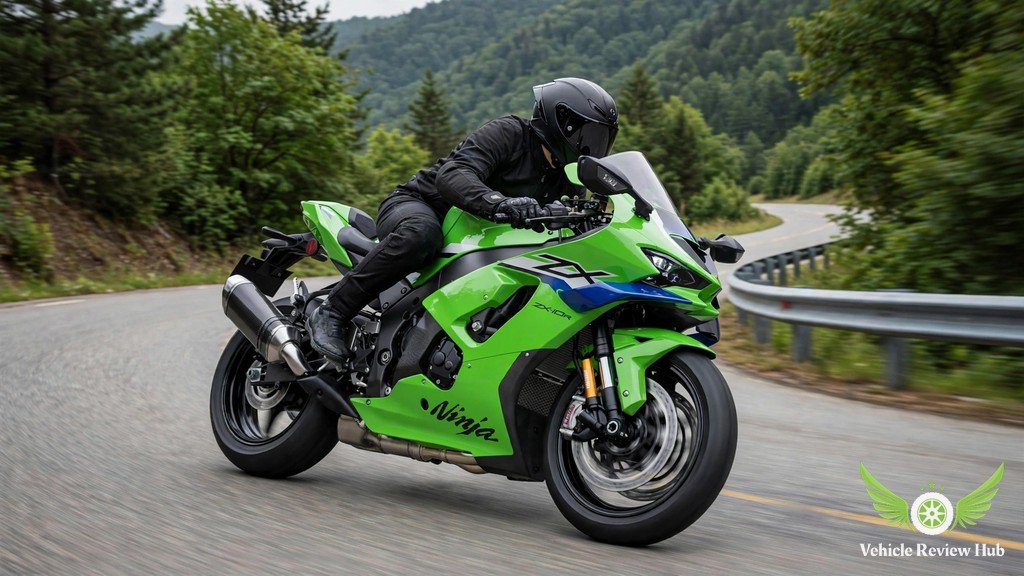
The numbers say what the bike does; the road tests say what it feels like. Kawasaki Ninja ZX-10R performance in the real world is a story about balance rather than peak power, and the testers who rode it back to back with its rivals said so in plain terms.
The Riding Experience Buyers Actually Talk About
Motorcycle.com’s faceoff verdict is the account buyers quote most. The Aprilia RSV4 RR won the scorecard, 93.7 percent against 91.0 percent, on peak power: 179.5 hp against 170.0 hp at the rear wheel. But the ZX-10R was the lighter bike in the test at 454 lb against 462 lb, quicker down the Auto Club Speedway front straight on GPS at 158 mph against 152.3 mph, and $200 cheaper at $16,299 for the ABS KRT against $16,499 for the Aprilia. This Kawasaki Ninja ZX-10R performance record is a balance case, not a peak-power case.
Balance Over Peak Power
The 2026 bike makes the balance case sharper by giving up power on paper. Claimed power falls from 196 hp to 190 hp, and curb weight rises 6.7 lb on the ABS bike, yet the 2026 bike gains broad new winglets, revised chassis geometry, a 5-inch TFT dash, and a seat 0.4 inches lower. SlashGear’s 2026 first ride, titled “Less Power, More Appeal”, makes the same point: the engine mostly carries over, the chassis geometry changed for downforce, and the bike offers three rider modes, Rain, Road and Sport. Ultimate Motorcycling’s 2026 first look covers the same 2026 changes. This Kawasaki Ninja ZX-10R performance trade is deliberate, and buyers who chase the biggest dyno number will look elsewhere.
The honest summary is that the ZX-10R has never been the most powerful litre bike in its class, and it does not need to be. Its case is the package: a 170 hp rear-wheel figure that a rider can actually use, electronics that keep the bike honest at full lean, and a price that undercuts the most powerful rival by thousands. That is the shape of Kawasaki Ninja ZX-10R performance, and it has held since the 2016 redesign.
Kawasaki Ninja ZX-10R Handling, Braking and Stability
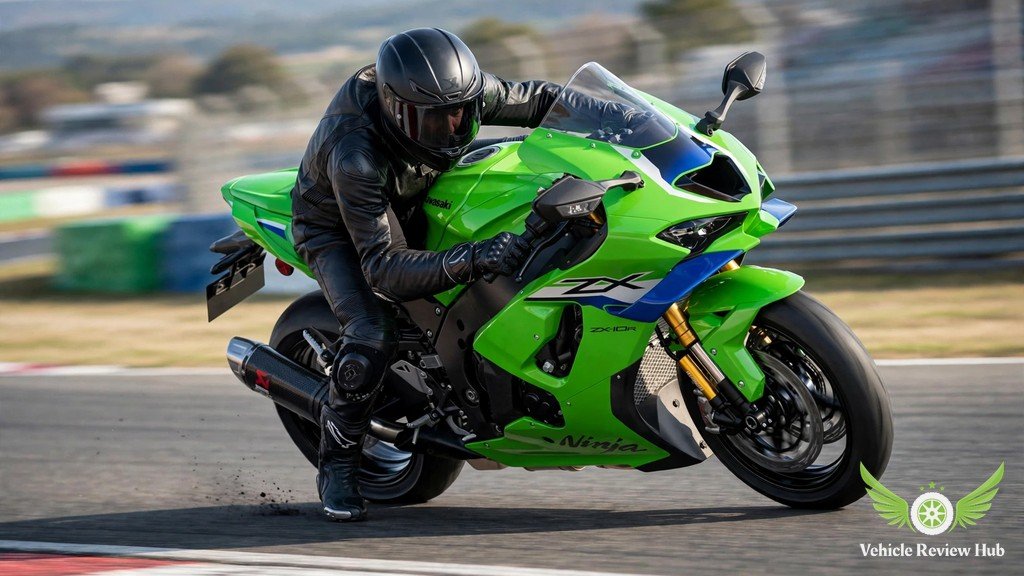
Handling is where the ZX-10R earns its keep, and Kawasaki Ninja ZX-10R performance here is built on the chassis and the brakes rather than the engine. The 2016 redesign brought the hardware that still defines the bike, and the 2026 bike carries it over with revised geometry.
Handling, Braking and Stability on Real Roads
The chassis is a twin-spar cast aluminium frame with a 25.0-degree rake and 4.1 inches of trail, a 57.1-inch wheelbase, and a 32.5-inch seat for 2026. The electronics tie the package together: a Bosch 5-axis IMU on the 2016 bike, IMU-enhanced chassis orientation awareness on the 2026 sheet, Sport Kawasaki Traction Control, cornering management, launch control, engine brake control, power modes, and cornering ABS on ABS models.
Ride-by-wire throttle has been standard since 2016, and the 2026 sheet lists the Kawasaki Quick Shifter without stating a direction, so this guide claims no direction for the 2026 quick shifter. The 2025 sheet listed the quick shifter as upshift and downshift, and the 2021 bike was the first with a bidirectional unit. The steering damper is an Ohlins unit on the 2026 sheet, listed without the word “Electronic” that the 2025 sheet carried, so this Kawasaki Ninja ZX-10R performance guide claims no electronic status for the 2026 damper either.
Brembo M50s, Showa BFF Fork
The brakes are dual 330 mm semi-floating Brembo discs with radial-mount 4-piston Brembo M50 monobloc calipers up front and a single 220 mm disc at the rear. The front fork is a 43 mm inverted Showa Balance Free Fork with an external compression chamber, rebound and compression damping plus spring preload, and 4.7 inches of travel. The rear is a horizontal back-link Showa BFRC lite gas-charged shock with a piggyback reservoir and 4.2 inches of travel for 2026, down from 4.5 inches.
The tyres are 120/70 ZR17 front and 190/55 ZR17 rear, and the 2016 bike wore Bridgestone RS10 R rubber. The package is standard equipment, not an options list, and that is part of the value case: the Brembo M50s and the Showa BFF fork that the 2016 redesign brought are still on the 2026 bike, unchanged because they did not need changing. This Kawasaki Ninja ZX-10R performance hardware is the reason the bike keeps its place in the class a decade after the redesign.
Kawasaki Ninja ZX-10R Performance Compared With Other Sport Bikes
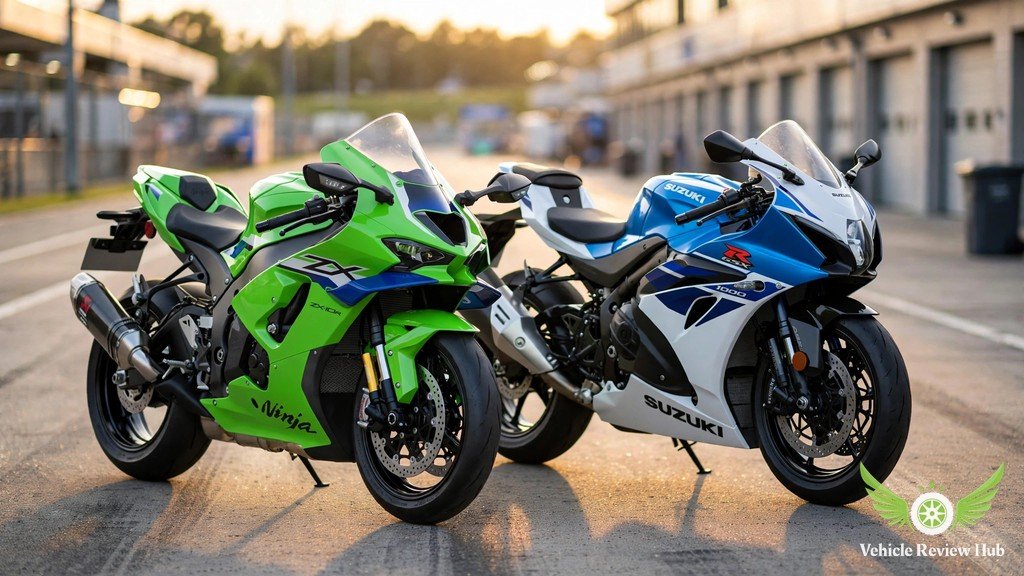
The ZX-10R does not race alone, and Kawasaki Ninja ZX-10R performance looks different next to its closest rival. The Suzuki GSX-R1000 is the comparison that matters most, because it undercuts the Kawasaki on price and weight while Suzuki publishes no claimed power figure at all.
Kawasaki Ninja ZX-10R vs Suzuki GSX-R1000
The 2027 GSX-R1000 base costs $16,399 plus a $750 destination charge, $17,149 delivered, against the ZX-10R base at $16,999 plus $840, $17,839 delivered. The Suzuki undercuts the Kawasaki by $690 delivered, and it is lighter at 448.0 lb curb against 463.1 lb for the ZX-10R ABS, with the same 32.5-inch seat height, a shorter 55.9-inch wheelbase, and a smaller 4.2-gallon tank. The ZX-10R’s answer is its claimed figure: 190 hp to the ISO 4106 standard, while Suzuki publishes no claimed power for the 2027 bike. This Kawasaki Ninja ZX-10R performance claim stands alone in the pair, and it is the number a buyer can quote.
On dynos the picture flips, with the attribution attached. Cycle World’s 2017 GSX-R1000R made 177.2 hp at the rear wheel, against the 2016 ZX-10R’s 170.0 hp in the Motorcycle.com faceoff, and Brock’s stock 2027 base GSX-R1000 made 158.22 hp at 11,150 rpm. Those are different years and different testers, so this Kawasaki Ninja ZX-10R performance guide prints both with attribution and never as a head-to-head. The Suzuki suits the buyer who wants the cheapest litre superbike and the lightest chassis; the ZX-10R suits the buyer who wants the claimed-power figure, the WSBK pedigree, and the fuller electronics suite for $690 more.
| Specification | 2026 ZX-10R | 2027 GSX-R1000 |
|---|---|---|
| Claimed power | 190.0 hp @ 11,500 rpm (ISO 4106) | No claimed figure published (global 195 PS / 192.3 hp) |
| Rear-wheel dyno | 170.0 hp @ 11,900 rpm (2016 faceoff) | 177.2 hp (CW 2017 R) / 158.22 hp @ 11,150 rpm (Brock’s 2027 base) |
| Curb weight | 463.1 lb (ABS) | 448.0 lb |
| Seat height | 32.5 in | 32.5 in |
| Wheelbase | 57.1 in | 55.9 in |
| Fuel capacity | 4.5 gal | 4.2 gal |
| Delivered base price | $17,839 | $17,149 |
Note: Dyno figures above come from different years and different testers and are not a head-to-head. This Kawasaki Ninja ZX-10R performance comparison prints both with attribution, and the $690 delivered gap is the 2027 base price plus destination for each bike.
Is the Kawasaki Ninja ZX-10R Suitable for Beginner Riders?
No. A claimed 190 hp, 170 hp at the rear wheel in the 2016 faceoff, litre-superbike ergonomics, and a 463.1 lb curb weight make the ZX-10R the wrong first bike, and this Kawasaki Ninja ZX-10R performance guide says so plainly. The honest first-bike recommendations are the Ninja 500 or the Ninja 650, and the ZX-4RR is the lightweight supersport step for a rider who wants the Ninja look without litre power. The ZX-6R is the cheaper Ninja alternative for a rider who does not need litre power, and the ZX-10R review covers the price, the KRT story and the full model-year history for the same bike.
Kawasaki Ninja ZX-10R Performance: Frequently Asked Questions
The answers below give the direct version of each question about Kawasaki Ninja ZX-10R performance, with the figures and the testers behind them.
How much power does the 2026 ZX-10R make?
Kawasaki claims 190.0 hp at 11,500 rpm and 82.5 lb-ft at 11,300 rpm for the 2026 bike, measured to the ISO 4106 standard. The 2025 bike claimed 196.0 hp and 83.9 lb-ft. No named US publication has dyno-tested the 2026 bike yet, so there is no rear-wheel figure for the new bike. That claimed figure is the starting point for any Kawasaki Ninja ZX-10R performance discussion, and the rear-wheel figures above are the check on it.
What did the ZX-10R make on the dyno?
In Motorcycle.com’s 2016 faceoff the 2016 bike made 170.0 hp at 11,900 rpm and 76.3 lb-ft at 11,500 rpm at the rear wheel. Cycle World’s dyno of the 2016 bike read 166.98 hp at 11,700 rpm, and the 2017 bike read 164.6 hp. The spread across testers is normal, and this Kawasaki Ninja ZX-10R performance answer names the tester with every figure.
What is the ZX-10R’s top speed?
MCN measured 184.45 mph on the 2016 bike with a datalogger and GPS in its UK test. No instrumented US top-speed test has been found, so the MCN figure should not be presented as a US test. The 186 mph figure in listings is a compiled number with a limiter, not a GPS measurement.
How fast is the ZX-10R in the quarter mile?
MCN’s datalogger recorded 10.15 seconds at 149.43 mph for the 2016 bike. The “10.0 seconds at 147 mph” figure is not verified as a single instrumented result, and this Kawasaki Ninja ZX-10R performance guide prints the MCN figure as the verified quarter mile.
What MPG does the ZX-10R get?
The 2016 maker’s figure is 6.98 litres per 100 km, about 33.7 mpg-US. The 32.4 mpg figure belongs to the 2008–2010 bike, not the 2016 bike. No tested 2016 MPG was found, and no EPA figure was found either.
Is the Kawasaki Ninja ZX-10R Suitable for Beginner Riders?
No. A claimed 190 hp, 170 hp at the rear wheel in the 2016 faceoff, litre-superbike ergonomics, and a 463.1 lb curb weight make it the wrong first bike. The Ninja 500 or the Ninja 650 is the honest first-bike recommendation.