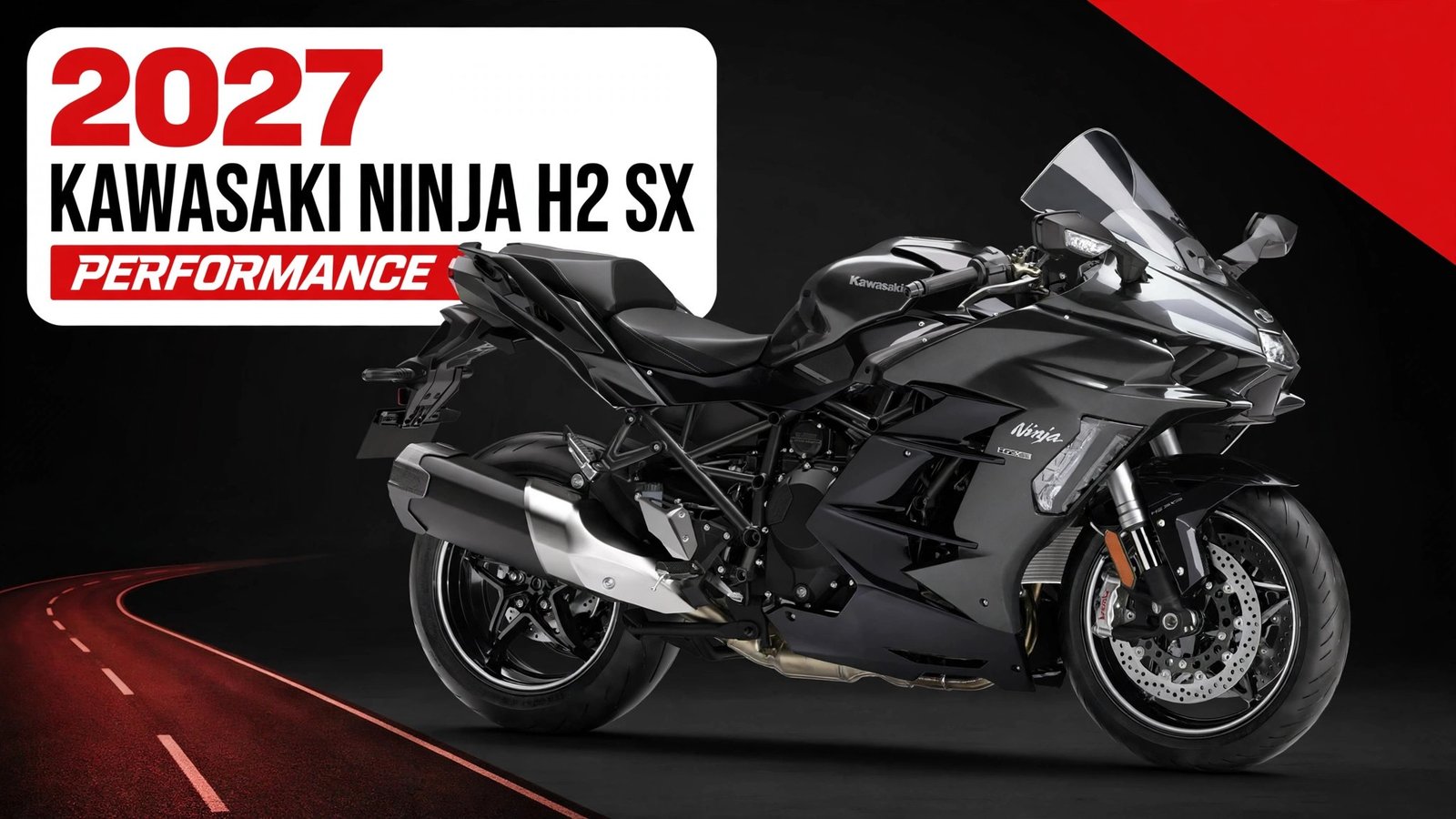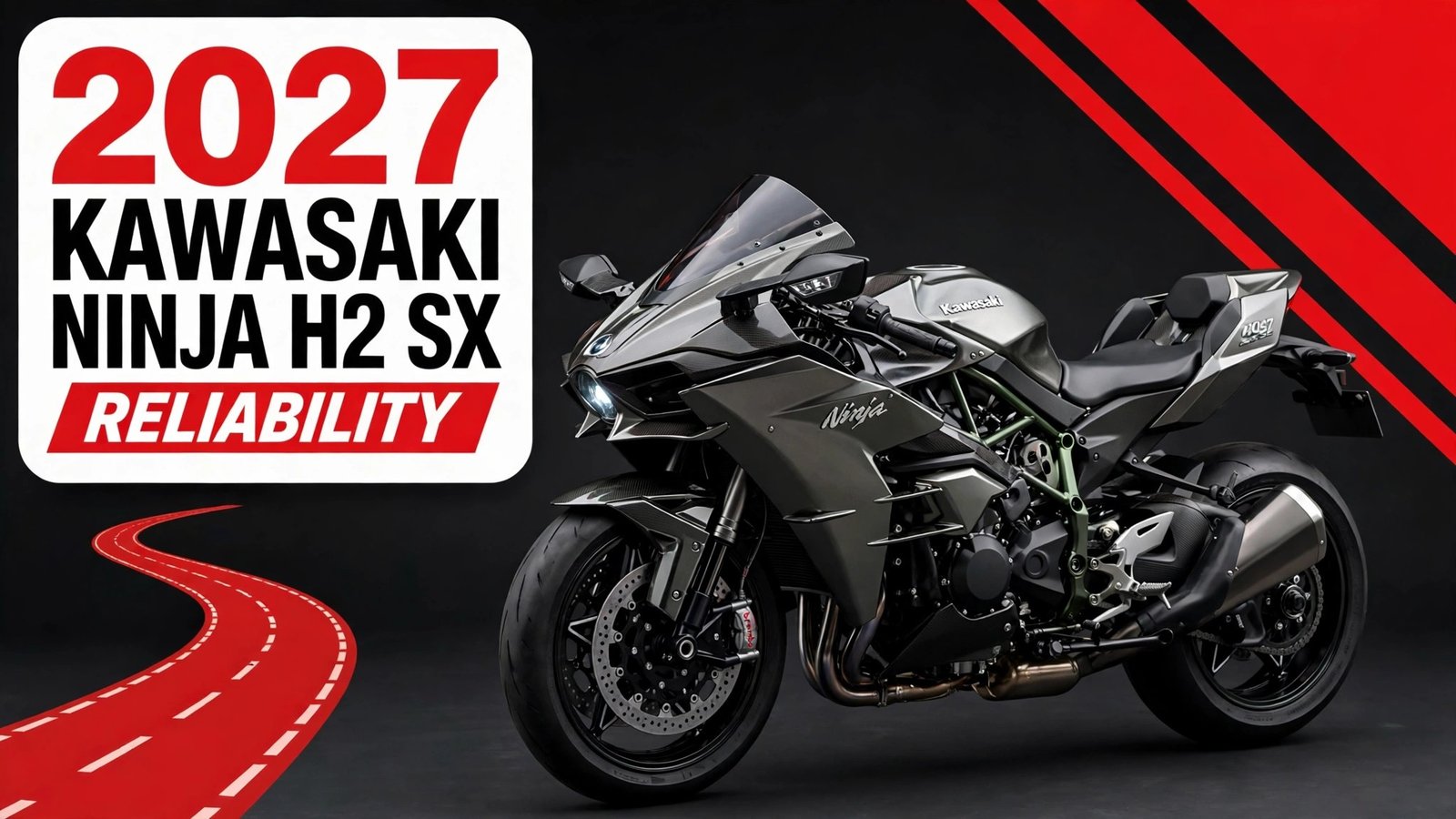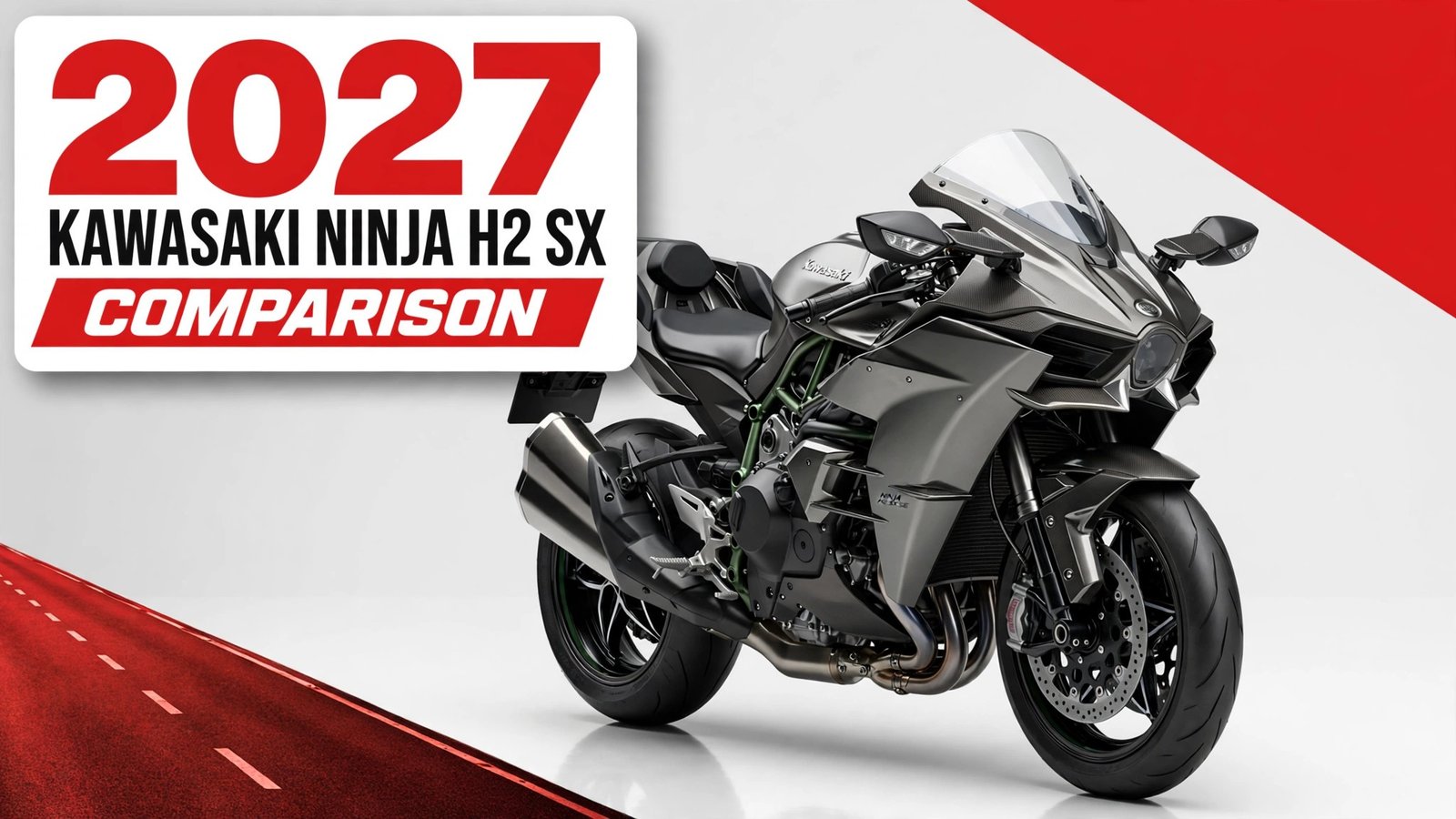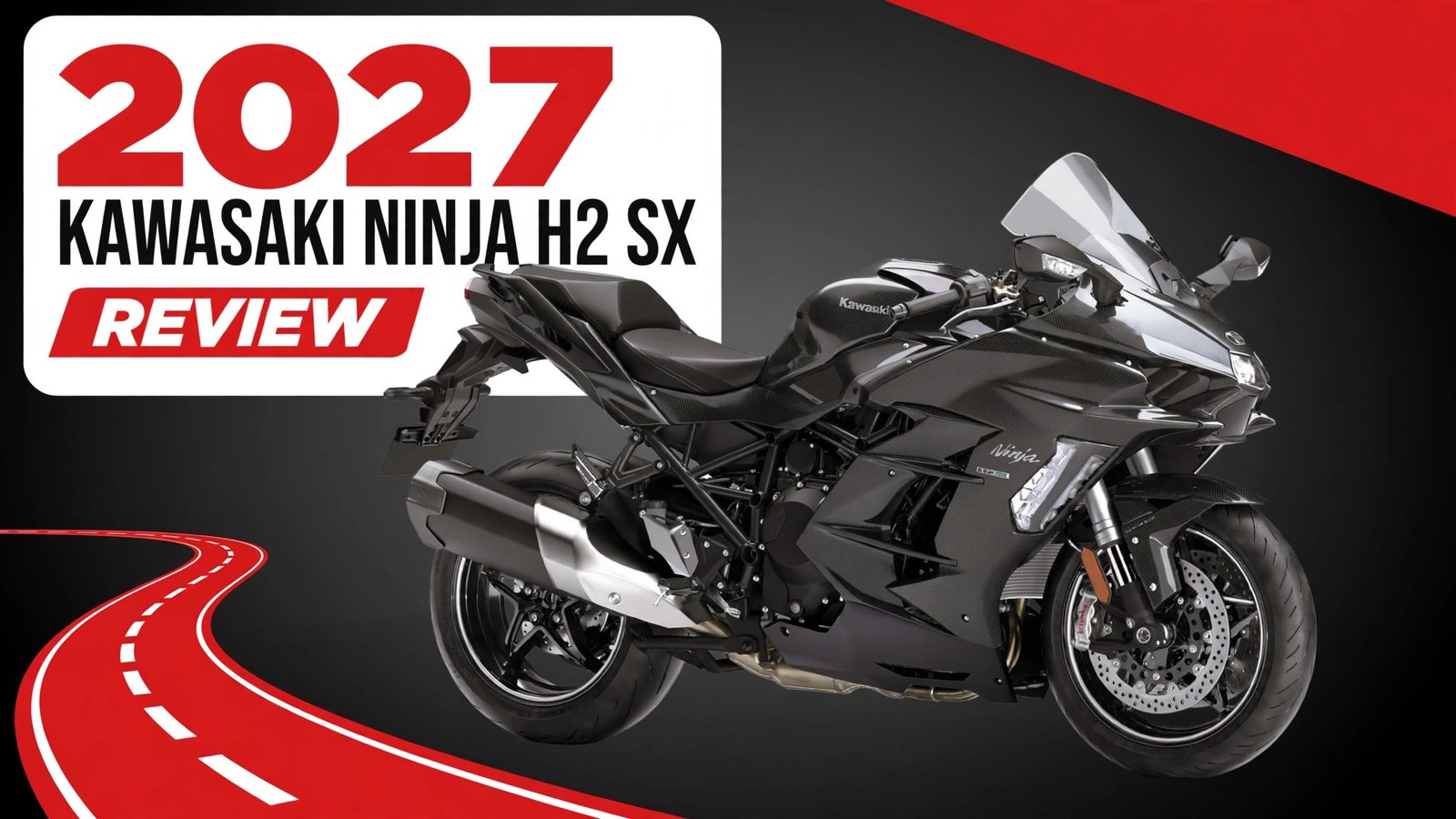
The Kawasaki Ninja H2 SX review starts with a simple fact: this is the only supercharged touring motorcycle on sale in the United States. Its 998cc balanced supercharged inline-four claims 207.0 hp, and the 2027 Ninja H2 SX SE ABS costs $29,999 plus $840 destination, or $30,839 delivered before dealer fees and tax. Since 2022 the single SE trim has carried Bosch radar assistance and semi-active Showa Skyhook suspension.
This Kawasaki Ninja H2 SX review covers the ten-year US run, the 207 hp claim and the catch behind it, the price ladder, the radar electronics, the riding experience and the verdict.
Kawasaki Ninja H2 SX Overview and Model-Year Updates
The Kawasaki Ninja H2 SX review has to start with the line’s history, because the model-year story explains the price and the trim names. The H2 SX arrived in the US for 2018 as a supercharged sport-tourer.
Never Dropped in the US
The Ninja H2 SX has been on sale in the US every model year from 2018 through 2027 — ten consecutive model years, with the 2027 bike on sale now at $29,999. That continuity kills the rumour that Kawasaki quietly dropped it. What changed was the trim structure: the base bike lasted one year, the SE+ ran for three, and the radar-equipped SE has carried the line alone since 2022. This Kawasaki Ninja H2 SX review treats the generations separately, so the prices and the equipment line up with the right year.
The 2027 bike is the current model in a single trim: Metallic Carbon Gray with Metallic Diablo Black, model code ZX1002RVFNL, at $29,999. There is no cheaper H2 SX in the 2027 line-up and no KRT paint edition — this bike never had one.
Base Bike Lasted One Year
The base, non-SE Ninja H2 SX was sold in the US only for 2018, at $19,000, with the same 998cc supercharged engine, 5.0-gallon tank and 58.3-inch wheelbase as the SE. The SE cost $22,000 — a $3,000 premium — and Ultimate Motorcycling’s launch review lists among what it added: the quickshifter, launch control, a TFT colour dash, LED cornering lights, a centre stand and grip heaters. This Kawasaki Ninja H2 SX review prices the 2018 base at $19,000 as a historical figure, not a current market price.
Kawasaki Ninja H2 SX Engine and Specifications
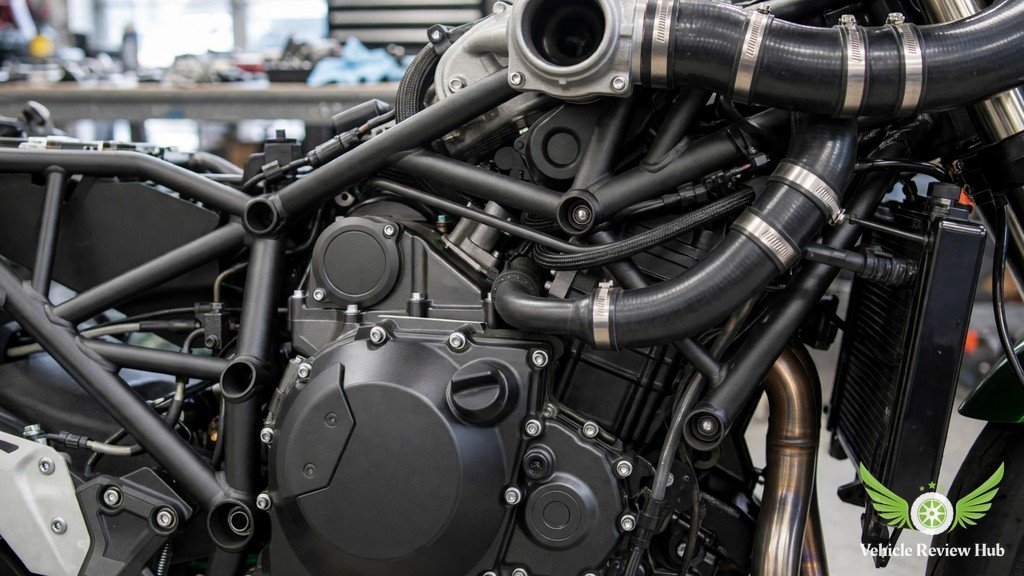
The engine is the whole reason this bike exists. A 998cc balanced supercharged inline-four sits in a trellis, high-tensile steel frame with a single-sided swingarm, the only supercharged tourer on sale in the US. The supercharger impeller spins at up to 9.2 times crank speed — nearly 130,000 rpm at maximum. This Kawasaki Ninja H2 SX review treats the power claim carefully, because three different horsepower figures circulate for the same engine.
207 HP Claim, With a Catch
Kawasaki USA lists the 2027 Ninja H2 SX SE at 207.0 hp at 10,000 rpm and 101.0 lb-ft at 8,500 rpm, measured under ISO 4106. That standard matters: ISO 4106 measures horsepower differently from the SAE standard American buyers usually assume, so 207 hp here is not an SAE figure. The global claim is 200 PS (197 hp) at 11,000 rpm, and 210 PS with ram air. The US 207.0 hp is numerically the ram-air PS figure (210 PS is about 207 hp) expressed as horsepower under ISO 4106. This Kawasaki Ninja H2 SX review prints all three figures with their units, because a reader who sees 197 hp in one place and 207 hp in another is looking at the same engine under two standards.
Torque has the same trap, and this Kawasaki Ninja H2 SX review prints the figure for the year being discussed with its source. The torque itself is consistent everywhere — 101.0 lb-ft — but the peak rpm differs by source: 9,500 rpm in Ultimate Motorcycling’s 2018 review and Cycle World’s 2020 buyers guide, 11,500 rpm on Kawasaki’s 2021 spec sheet, and 8,500 rpm on Kawasaki USA’s 2027 page. The current bike is 101.0 lb-ft at 8,500 rpm. One figure in the record is simply wrong: Kawasaki’s own 2019 spec sheet prints “84.6 lb-ft at 11,500 rpm”, a misprint that has since propagated into spec databases.
Cycle News’ first test called the H2 SX “something different, something great”, with power readily available from around 4,500 rpm and “a smooth transition from gentle delivery to arm-pulling acceleration as the tachometer needle climbs above 7000 rpm” into a 12,000 rpm limiter. The measured reality is in Cycle World’s 2018 test, which this Kawasaki Ninja H2 SX review cites for the dyno figures: its dyno of the 2018 SE read 166 hp and 89 lb-ft at the rear wheel.
Bags Were Never Standard
The saddlebags were never standard equipment on any US H2 SX, and this Kawasaki Ninja H2 SX review says so plainly because the photos mislead people. The bike is almost always photographed with panniers fitted, and the touring look suggests they come with the bike. They do not. The panniers are an optional Kawasaki accessory kit, and the 56 litres of luggage space RevZilla’s tester measured came from the symmetrical 28-litre Givi bags strapped on for that test.
| Specification | 2027 Ninja H2 SX SE ABS |
|---|---|
| Engine | 998cc balanced supercharged inline-four, DOHC, 16-valve, liquid-cooled |
| Maximum power | 207.0 hp @ 10,000 rpm (ISO 4106, not SAE) |
| Maximum torque | 101.0 lb-ft @ 8,500 rpm |
| Global claim | 200 PS (197 hp) @ 11,000 rpm; 210 PS with ram air |
| Bore x stroke / compression | 76.0 x 55.0 mm / 11.2:1 |
| Curb weight / dry weight | 590.9 lb / 546.8 lb |
| Seat height / wheelbase | 32.9 in / 58.3 in |
| Fuel capacity | 5.0 gal |
| Front brakes | Dual 320 mm discs, Brembo Stylema calipers, KIBS ABS |
| Tyres | 120/70 ZR17 front, 190/55 ZR17 rear |
| Instrumentation | 6.5-in full-colour TFT with SPIN infotainment |
| Warranty | 12 Month Limited Warranty; Kawasaki Protection Plus optional 12/24/36/48 months |
Note: Figures are from Kawasaki USA’s 2027 Ninja H2 SX SE ABS page, as used in this Kawasaki Ninja H2 SX review. The 207.0 hp figure is ISO 4106, not SAE, and the global claim is 200 PS (197 hp) at 11,000 rpm with 210 PS with ram air — same engine, different standards.
Kawasaki Ninja H2 SX Price and Market Availability
The price story of the H2 SX is a ten-year ladder with one hole in it. The bike started at $19,000 for the base and $22,000 for the SE in 2018, climbed through the SE+ years, and has sat at $29,999 since 2026. The hole is 2024: no Kawasaki price for that year could be verified, because the 2024 spec-sheet PDF returns Kawasaki’s soft-404 error page. This Kawasaki Ninja H2 SX review prints the verified ladder and never fills the gap with a guess.
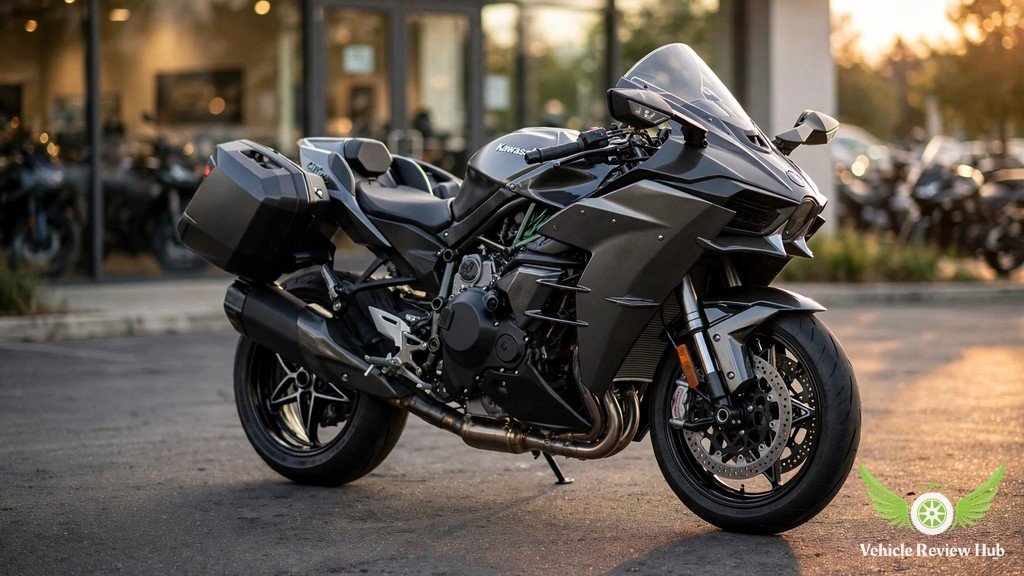
Kawasaki Ninja H2 SX Price in the USA: $29,999 (2027)
The 2027 Ninja H2 SX SE ABS costs $29,999 plus $840 destination, or $30,839 delivered before dealer fees and tax, according to Kawasaki USA’s own product page. The 2026 bike costs exactly the same. The 2025 bike was $29,100, which makes the 2025-to-2026 rise $899. For context, the 2023 bike was $28,000 plus $460 destination ($28,460 delivered) on Kawasaki’s own spec sheet, and the 2022 radar bike was $27,500, as this Kawasaki Ninja H2 SX review records.
The 2025 destination charge is disputed — Motorcycle.com’s compare tool says $815, SlashGear implies $840, and one dealer listing says $800 — so this Kawasaki Ninja H2 SX review prints the $29,100 MSRP for 2025 and treats any delivered 2025 price as unsettled.
SE+ Ran 2019 to 2021
The SE+ was the only US trim for 2019, 2020 and 2021, and it is the generation most used buyers actually meet. It added Kawasaki Electronic Control Suspension, self-repairing paint, Brembo Stylema calipers with 330 mm front discs, and Rideology smartphone connectivity from 2020. The 2020 SE+ cost $25,000 plus $410 destination, or $25,410 delivered — confirmed by Motorcycle.com’s spec database, Cycle World’s 2020 buyers guide and webBikeWorld. The 2019 and 2021 SE+ prices are unverified, because both years’ archived Kawasaki spec sheets say “BASE MSRP TBA”. This Kawasaki Ninja H2 SX review prints no price for those two years rather than repeating a database guess.
The “+” was dropped for 2022, when the SE gained the Bosch radar suite, and Cycle Trader sellers routinely mislabel 2022 SEs as “SE+” in their listings. A 2022 bike listed as an SE+ is an SE with the wrong badge in the advert — the “+” trim ended in 2021. The 2022 SE’s verified price is $27,500, from Cycle News, MotorBiscuit and webBikeWorld.
| Year | Trim (US) | MSRP | Destination | Delivered |
|---|---|---|---|---|
| 2018 | Base SX | $19,000 | Unverified | — |
| 2018 | SE | $22,000 | Unverified | — |
| 2020 | SE+ | $25,000 | $410 | $25,410 |
| 2022 | SE (radar) | $27,500 | Unverified | — |
| 2023 | SE | $28,000 | $460 | $28,460 |
| 2024 | SE | Unverifiable — do not print | Unverified | — |
| 2025 | SE | $29,100 | $815* (conflict) | $29,915* |
| 2026 | SE | $29,999 | $840 | $30,839 |
| 2027 | SE ABS | $29,999 | $840 | $30,839 |
Note: The 2019 and 2021 SE+ MSRPs are unverified — both years’ Kawasaki spec sheets say “BASE MSRP TBA” — so no price is printed for them. The 2024 MSRP is unverifiable because Kawasaki’s 2024 spec-sheet URL returns the “OUT FOR A RIDE” error page. The asterisk on the 2025 delivered price marks the destination conflict ($815 vs $840 vs $800); the $29,100 MSRP is verified.
Kawasaki Ninja H2 SX Design, Features and Technology
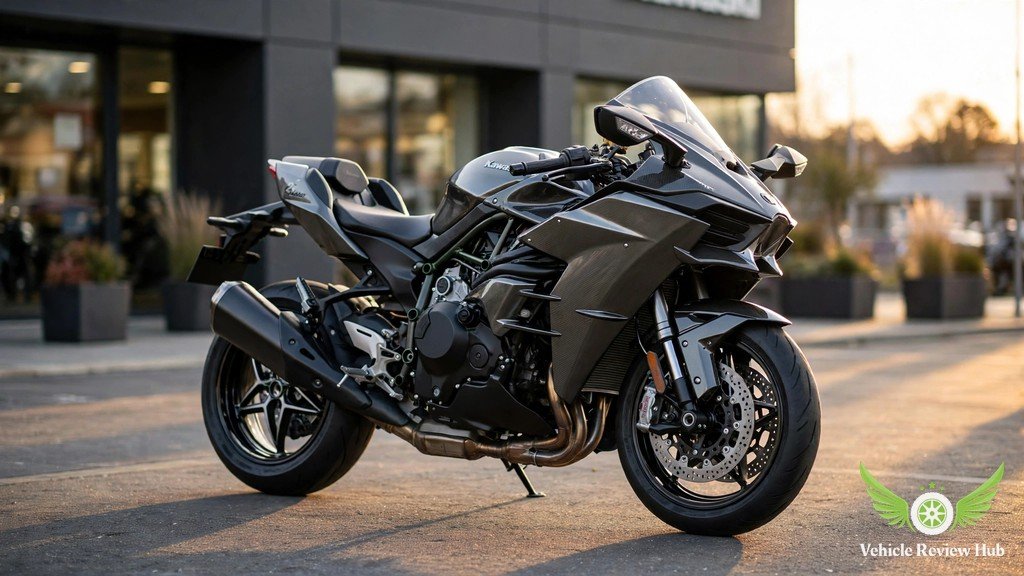
The full fairing carries a tall touring screen, the trellis frame is visible under the bodywork, the single-sided swingarm shows the single right-side muffler. This Kawasaki Ninja H2 SX review covers both generations, because a used buyer needs to know which dash and which rider aids come with which year.
Radar Arrived for 2022
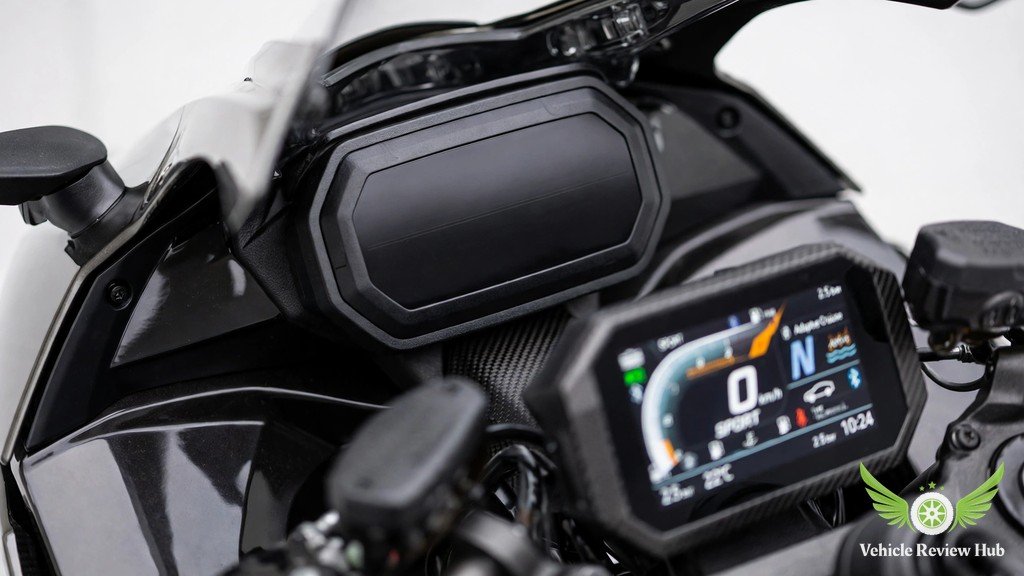
The 2022 SE is the first Japanese mass-production motorcycle — and the world’s first sports tourer — with Bosch ARAS radar. Millimetre-wave radar fore and aft gives adaptive cruise control, blind-spot detection and forward collision warning. The adaptive cruise offers three following distances — Near, Medium and Far — adjustable on the fly by holding the “Fn” button and tapping a “Mode” switch, a detail RevZilla confirmed after its Daily Rider video initially said it could not be adjusted. This Kawasaki Ninja H2 SX review calls the radar the line in the sand between the generations.
The radar arrived with a full electronics refresh. The 2022 bike gained a 6.5-inch TFT colour dash with Kawasaki SPIN smartphone infotainment, a tyre pressure monitoring system, Vehicle Hold Assist for slopes, KIPASS keyless ignition, Showa Skyhook KECS semi-active suspension, a new 6-axis IMU, wider seats, a new headlight and upper cowl, new cam timing and a revised transmission with an easier neutral shift. The front discs shrank from 330 mm to 320 mm, curb weight rose from 577.7 lb to 590.9 lb, and overall length grew from 84.1 in to 85.6 in. The 2018–2021 bikes were not bare — they had KECS suspension, cornering management, traction control, launch control, cornering ABS, a dual-direction quickshifter and a 4.3-inch TFT — but no radar, no tyre pressure monitoring and no KIPASS.
2024 Price Unverifiable
There is no verified 2024 price for the H2 SX. Kawasaki’s 2024 and 2025 spec-sheet PDF URLs return the “THE PAGE YOU HAVE REQUESTED IS OUT FOR A RIDE” error page with an HTTP 200 status — a soft 404 that looks like a working page until the body is read. No Kawasaki press price for 2024 was found. Any source that prints a 2024 H2 SX MSRP without naming where it came from is printing a figure this Kawasaki Ninja H2 SX review could not verify.
Kawasaki Ninja H2 SX Riding Experience and Comfort
A 590.9 lb motorcycle with a supercharger should feel intimidating, and the launch testers were surprised by how little it does. Cycle News’ first test called the H2 SX “a comfortable motorcycle” and “the dream build for the older gentlemen that are still looking for pure sportbike performance, but wanting to be comfortable riding it for more than a few miles at a time”. Ultimate Motorcycling found the handling “subtle, requiring little effort to get it tipped into a corner”. This Kawasaki Ninja H2 SX review weighs the comfort against the weight, because both matter on a long day.
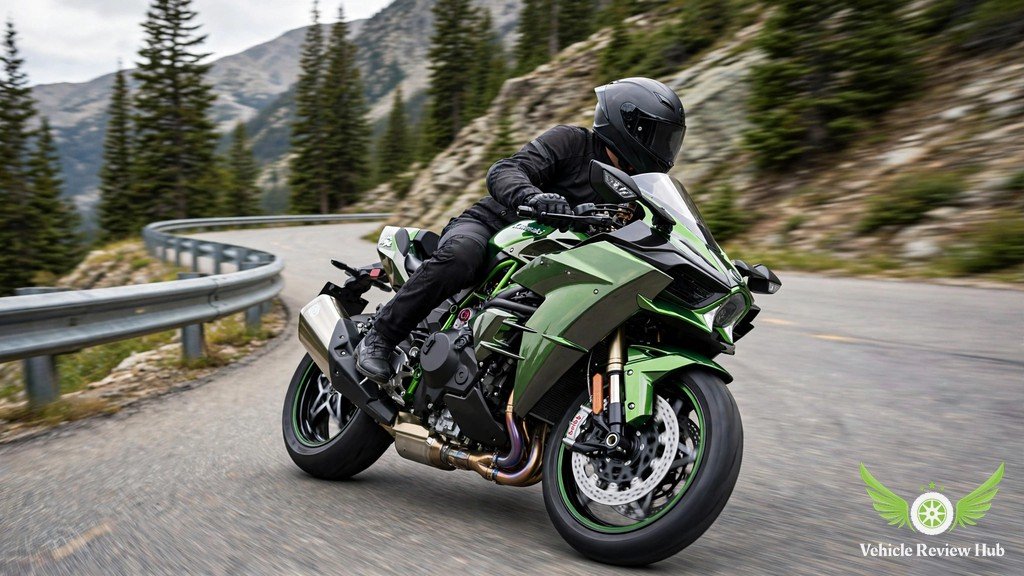
590.9 lb With a Full Tank
The 2022–2027 bikes weigh 590.9 lb at the curb with a full tank, against 577.7 lb for the 2019–2021 SE+ and 546.8 lb dry for the 2027 bike. Carole Nash’s Insidebikes two-week road test of the 2022 bike found it “a surprisingly low machine to straddle and well balanced at a standstill”, “by no means a slug”, and “incredibly stable” in fast flowing corners — but “not the most comfortable machine out there” for big miles. The 32.9-inch seat height is moderate and the riding position leans sporty rather than upright. A buyer coming from a Ninja 650 review will feel the extra weight immediately at parking speeds, and this Kawasaki Ninja H2 SX review says so plainly.
Adaptive cruise control, blind-spot detection and forward collision warning are not gadgets on a 590.9 lb bike — they are the systems that let a rider cover long distances without the constant vigilance a lighter, simpler bike demands. RevZilla’s 2025 comparison found the adaptive cruise “adapts to the speed of the vehicle ahead” with its three distances, though the blind-spot lights “aren’t quite bright enough in the day”, and noted the cruise set-speed ceiling of 85 mph — a limit on the cruise system, not on the bike. This Kawasaki Ninja H2 SX review notes the same tester’s remark that the supercharger impeller makes “sometimes an odd noise”: the whine is always there, and some riders love it while others merely tolerate it.
12 Month Limited Warranty
The H2 SX SE carries Kawasaki’s standard 12 Month Limited Warranty, confirmed across the 2022, 2023 and 2025 model-year specification listings, with Kawasaki Protection Plus available as an optional extended plan in 12, 24, 36 or 48 month terms. Twelve months is short against the bike’s price and the touring miles its buyers cover, and this Kawasaki Ninja H2 SX review flags it as a real ownership cost: get the Protection Plus quote before signing, not after.
The video below is BikeReview’s road test of the Australian-market 2022 H2 SX SE — a full road test plus a walkthrough of the electronics and the TFT dash, with English narration in an Australian accent. Note that the review quotes an Australian rideaway price of $35,947; that is the Australian price, not a US price, and it has no bearing on the $29,999 US figure in this Kawasaki Ninja H2 SX review.
Kawasaki Ninja H2 SX Review: Pros, Cons and Verdict
The verdict on the H2 SX is the same verdict every honest test has reached: it is a unique motorcycle that no value calculation can justify, and that is exactly why people buy it. At $29,999 it costs nearly double the Ninja 1100SX SE at $15,399 — a bike RevZilla’s comparison says does “everything most riders will ever need” for about $14,600 less — and about $10,600 more than a 2025 Suzuki Hayabusa at $19,399. The H2 SX SE’s case is the supercharger, the radar suite and the Skyhook suspension — not arithmetic. This Kawasaki Ninja H2 SX review finds that case convincing only for a buyer who already knows they want this bike.
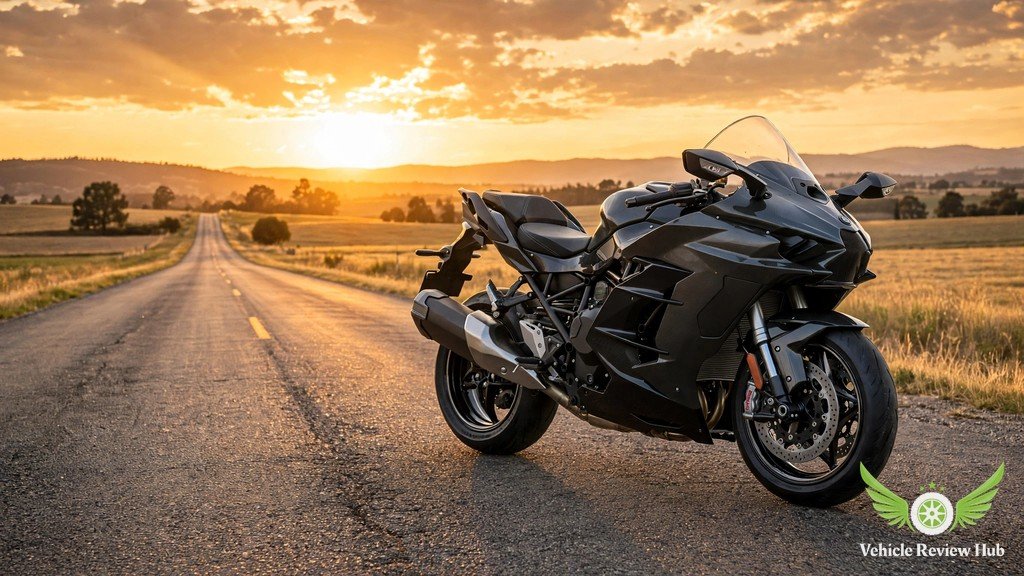
Main Advantages and Limitations of the Kawasaki Ninja H2 SX
The advantages start with the engine and the electronics. The supercharged 998cc four delivers 207.0 hp claimed under ISO 4106 with a linear, vibration-free delivery that every launch tester praised, and the 2018 bike’s measured 166 hp at the rear wheel on Cycle World’s dyno is real, instrumented evidence rather than a brochure number. The Bosch radar suite — adaptive cruise, blind-spot detection, forward collision warning — is genuinely useful on long rides and exists on no rival tourer. The six NHTSA campaigns are all small in number and checkable in one VIN lookup — see our Kawasaki Ninja H2 SX reliability guide. This Kawasaki Ninja H2 SX review counts the radar and the supercharger as the bike’s two real advantages over every rival.
The limitations are just as clear. The price is the first: $29,999 plus $840 destination, with the panniers sold separately as an accessory. The weight is the second: 590.9 lb at the curb is a lot at parking speeds, and the sporty position is not the most comfortable for big miles. And the famous ZX-10R gears recall, campaign 18V-089, does not apply to this bike at all — it is the Ninja ZX-10R reliability story, not the H2 SX’s. The H2 SX’s own gears campaign is 20V-676, a different defect fixed by an ECU reprogram. Finally, this is not a beginner’s bike: 207 hp claimed, 166 hp at the rear wheel, 590.9 lb and a $29,999 price. The honest first bikes are the Ninja 500 review or the Ninja 650 — and for a lighter, cheaper supersport, the Ninja ZX-4R review is the right starting point. This Kawasaki Ninja H2 SX review is blunt about all of it, because the price leaves no room for surprises.
The verdict: buy the 2027 SE if you want the only supercharged tourer on sale and you will use the radar on long rides — and buy it knowing the panniers, the extended warranty and the touring kit are extra. Buy a clean 2022 or 2023 SE if you want the radar bike for $20,000 to $22,000 instead of $30,839, and check the VIN for all six recalls first. This Kawasaki Ninja H2 SX review ends where it started — the H2 SX is unique, not rational, and that is precisely the point.
2020 SE Was Canada-Only
The plain 2020 H2 SX SE was Canada-only, priced at $25,399 Canadian — it never reached US dealers. The US 2020 bike was the SE+, at $25,000, with the electronic suspension, the self-repairing paint and the Brembo Stylema brakes. A flat statement that “the 2020 SE was Canada-only” without that distinction reads as if the US got no 2020 H2 SX at all, which is wrong: the US got the better bike, the SE+, for $25,000. This Kawasaki Ninja H2 SX review spells the distinction out because the listings repeat the confusion.
Kawasaki Ninja H2 SX Review: Frequently Asked Questions
These are the questions buyers actually ask about the H2 SX, answered with the verified figures from this Kawasaki Ninja H2 SX review.
What is the Kawasaki Ninja H2 SX?
Kawasaki’s supercharged sport-tourer: a 998cc balanced supercharged inline-four with a claimed 207 hp (US, ISO 4106) in a full-faired touring chassis with radar assistance since 2022. It is the only supercharged touring motorcycle on sale in the US, and this Kawasaki Ninja H2 SX review covers the 2027 SE at $29,999 plus $840 destination.
How much does a 2027 Kawasaki Ninja H2 SX SE cost?
$29,999 plus $840 destination — $30,839 delivered before dealer fees and tax, as this Kawasaki Ninja H2 SX review states in the price section. The 2026 bike costs the same; the 2025 bike was $29,100. The panniers are an optional accessory kit, not included in that price.
Was the Ninja H2 SX ever dropped in the US?
No. It has been on sale in the US every model year from 2018 through 2027. Only the trims changed: base (2018 only), SE+ (2019–2021), SE (2022 onward). This Kawasaki Ninja H2 SX review confirms the line never left the US market.
Do the saddlebags come standard?
No. The panniers were never standard equipment on any US H2 SX — they are an optional Kawasaki accessory kit, as this Kawasaki Ninja H2 SX review explains in the engine section. The 56 litres of luggage space RevZilla measured came from the Givi bags its tester strapped on for that test.
What is the difference between the SE and the SE+?
The SE+ (2019–2021, US) added electronic suspension (KECS), self-repairing paint and Brembo Stylema brakes over the 2018 SE. The “+” was dropped for 2022, when the SE gained the Bosch radar suite. The plain 2020 SE was Canada-only; the US got the SE+ at $25,000. This Kawasaki Ninja H2 SX review spells the distinction out in the verdict section.
How much does the H2 SX weigh?
590.9 lb curb with a full tank (2022–2027); 577.7 lb for the 2019–2021 SE+. Dry weight is 546.8 lb (2027). This Kawasaki Ninja H2 SX review lists the same figures in the spec table.