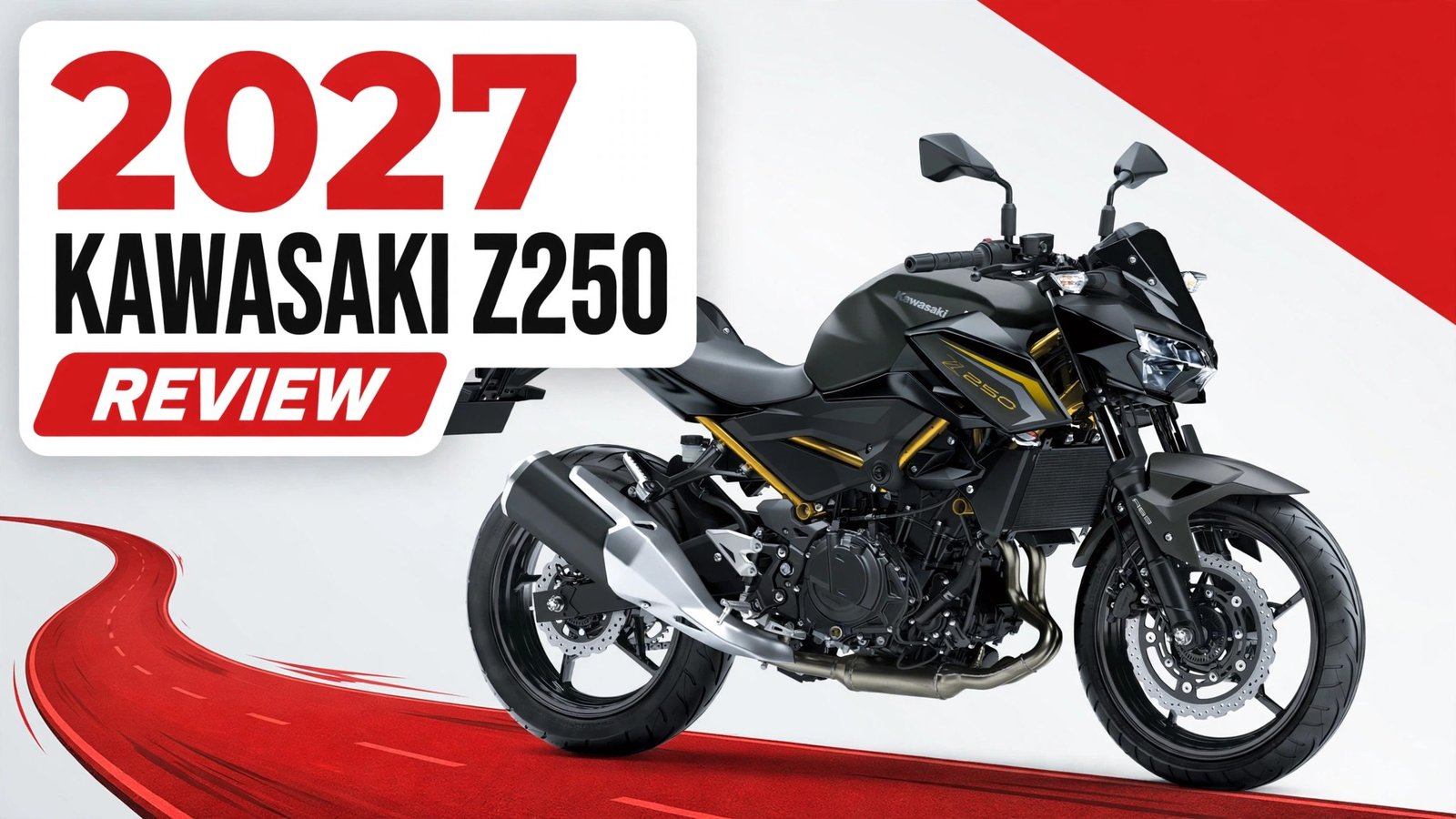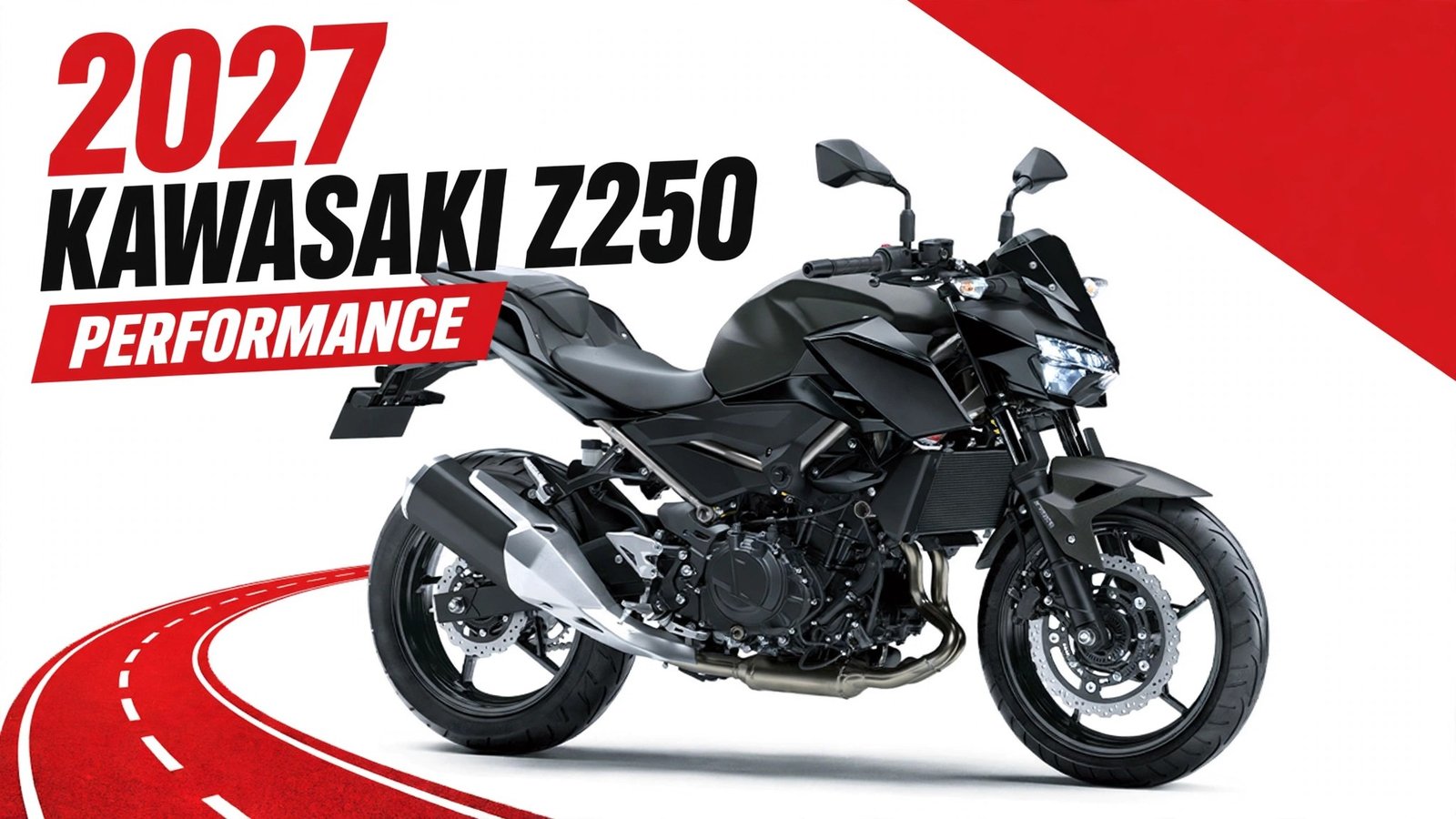
This Kawasaki Z250 performance guide starts with the honest limit on every number in it: the Z250 was never sold in the USA, so there is no American test, no rear-wheel dyno run and no factory top-speed figure to quote. What exists instead is a small set of attributed test figures from India and Japan — an owner’s 153 km/h, a VBOX-derived figure of about 158 km/h, and a Japan road test that measured 28.2 km/L in real riding. This Kawasaki Z250 performance guide prints each of those numbers with the test that produced it, and it prints the gaps just as openly.
Kawasaki Z250 Engine Performance and Power Delivery
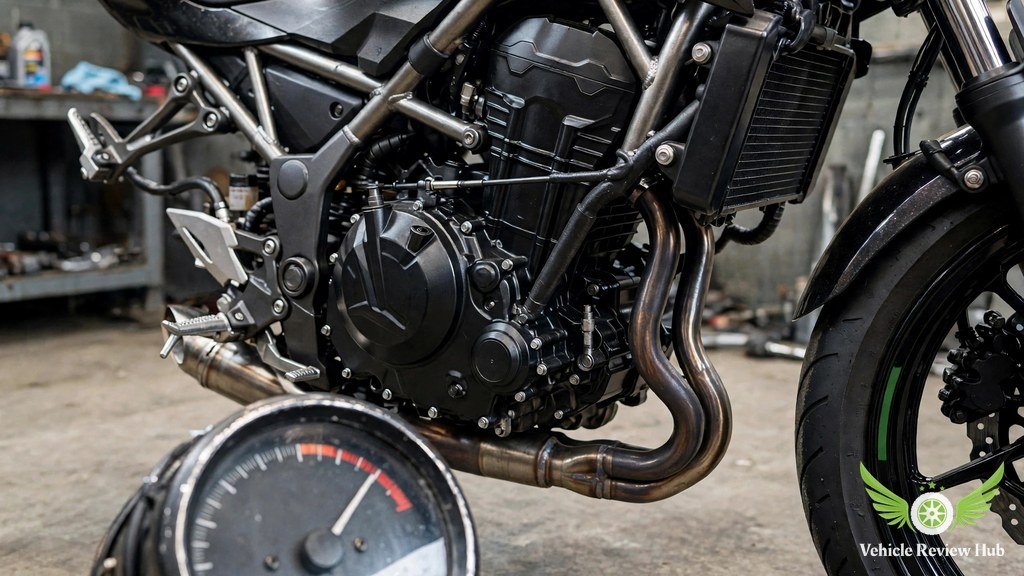
The engine is the first thing to understand about Kawasaki Z250 performance, because the numbers look small on paper and feel different on the road. The Z250 is a 248cc liquid-cooled parallel twin, DOHC 8-valve, fuel-injected, with a 6-speed gearbox and an assist and slipper clutch. It makes its power high in the rev range — the current tune peaks at 12,500 rpm — so the bike rewards a rider who works the gearbox and punishes one who short-shifts. That high-rev character runs through every figure in this Kawasaki Z250 performance guide.
37 PS at Launch, 35 Now
The Gen 2 Z250 launched in Japan on 1 November 2019 making 37 PS at 12,500 rpm, with 23 Nm of torque at 10,500 rpm. From the 2023 model year the tune changed: the current bike makes 35 PS at 12,500 rpm (26 kW), with 22 Nm at 10,500 rpm. The change came with new emissions regulations and the type change from 2BK-EX250P to 8BK-EX250Y, and the retune traded 2 PS at the top for better response at 5,000–8,000 rpm, according to Kawasaki’s Good Times Journal test of the shared Ninja 250 engine. The 2027 model on Kawasaki Motors Japan’s official 2027 Z250 page still lists 26 kW (35 PS) at 12,500 rpm and 22 Nm at 10,500 rpm, so the 35 PS figure is the current one — never print 37 PS for a 2023 or later bike.
Gen 1 is a different tune again, and Kawasaki Z250 performance figures for the first generation need their market named. The Japan bike made 31 PS at 11,000 rpm with 2.1 kgf·m (20.6 Nm) at 8,500 rpm, while Indian-market publications print 32 PS at 11,000 rpm and 21 Nm at 10,000 rpm for what is mechanically the same engine. The two Gen 1 figures are different markets’ reporting, not two engines, and this guide keeps them labelled.
No Dyno Figure Exists
There is no rear-wheel dyno figure for the Z250 — no publication has ever published one that this guide could find, and no dyno number appears anywhere in this Kawasaki Z250 performance guide. The only power numbers in this Kawasaki Z250 performance guide are Kawasaki’s claimed crank figures in the table below, plus one magazine figure that is often misread: Autocar India printed 31.1 bhp at 11,000 rpm in its spec table, and that is the bike’s claimed figure as the magazine printed it, not a dyno measurement. Any site that prints a rear-wheel horsepower number for the Z250 is inventing it.
| Generation / market | Power (claimed) | Torque (claimed) |
|---|---|---|
| Gen 1 Japan (2013–2017) | 31 PS @ 11,000 rpm | 2.1 kgf·m @ 8,500 rpm (20.6 Nm) |
| Gen 1 India (2014–2019) | 32 PS @ 11,000 rpm | 21 Nm @ 10,000 rpm |
| Gen 2 launch (2019–2022) | 37 PS @ 12,500 rpm | 23 Nm @ 10,500 rpm |
| Gen 2 current (2023–2027) | 35 PS @ 12,500 rpm (26 kW) | 22 Nm @ 10,500 rpm (2.2 kgf·m) |
Note: Every figure in this Kawasaki Z250 performance table is a manufacturer claim at the crank, never a measured rear-wheel figure. The Gen 1 Japan and Gen 1 India rows describe the same engine as reported by different markets — never blend them. The 37 PS row covers the 2019–2022 launch tune only; every 2023 or later bike makes 35 PS.
Kawasaki Z250 Top Speed and Acceleration
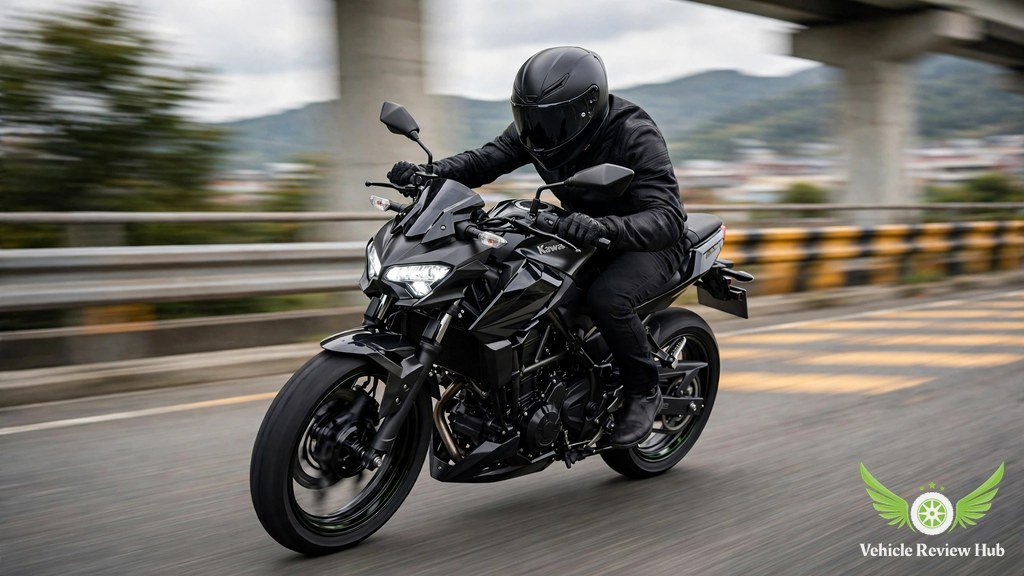
Top speed is the number buyers ask about first and the number with the weakest evidence behind it. There is no factory top-speed figure for the Z250 and no American test, so Kawasaki Z250 performance on top speed rests on two attributed observations: one Indian owner and one instrumented shootout.
Owner Saw 153 km/h
The fastest verified number in this Kawasaki Z250 performance guide belongs to one Indian owner, not to a factory claim. Mahesh Saini, writing a 10,000 km ownership review on BikeWale, reported a 153 km/h maximum on his Gen 1 bike — and this guide prints his 153 km/h as one owner’s figure, never as a specification.
The second number comes from an instrument, and it needs its derivation named. In MotorBeam’s three-bike shootout, the KTM Duke 390 hit 168 km/h on the VBOX while the Z250 and the Benelli TNT 300 were 10 km/h slower, which puts the Z250 at about 158 km/h on the same instrument. That is a derived figure — 168 minus 10 — not a directly recorded Z250 top speed, and this Kawasaki Z250 performance guide prints it as derived. The same shootout recorded the drag-race numbers that still define this bike: the Benelli TNT 300 took 8.19 seconds to 100 km/h on the VBOX while the Z250 managed 8.31 seconds.
200 km/h Claim Rejected
The 200 km/h top-speed claim for the Z250 is rejected in this Kawasaki Z250 performance guide. It comes from a BikeDekho listing with no test behind it, and no owner, magazine or instrumented test has ever come close to it — the owner-measured maximum is 153 km/h and the VBOX-derived figure is about 158 km/h. The aggregator listings of 165–170 km/h are no better: they are editorial estimates, not tests, and they appear in this Kawasaki Z250 performance guide only to be dismissed.
| Figure | Result | Source / test |
|---|---|---|
| 0–100 km/h | 8.42 seconds | Autocar India (Gen 1, India) |
| 0–100 km/h | 8.31 seconds | MotorBeam VBOX (Gen 1, shootout) |
| 0–60 km/h | 3.64 seconds | Autocar India (Gen 1) |
| 80–0 km/h braking | 30.25 metres | Autocar India (Gen 1) |
| Top speed (owner) | 153 km/h | Mahesh Saini, BikeWale (Gen 1, one owner) |
| Top speed (VBOX, derived) | About 158 km/h | MotorBeam shootout (Duke 390 168 km/h, Z250 10 km/h slower) |
Note: The two 0–100 km/h figures in this Kawasaki Z250 performance table are separate tests on different Gen 1 bikes — Autocar India’s instrumented test and MotorBeam’s VBOX shootout — and they are never averaged or blended into one number. The figure of about 158 km/h is derived, not directly measured: MotorBeam’s VBOX recorded 168 km/h for the Duke 390 and 10 km/h less for the Z250 and the TNT 300.
Kawasaki Z250 Mileage and Fuel Economy
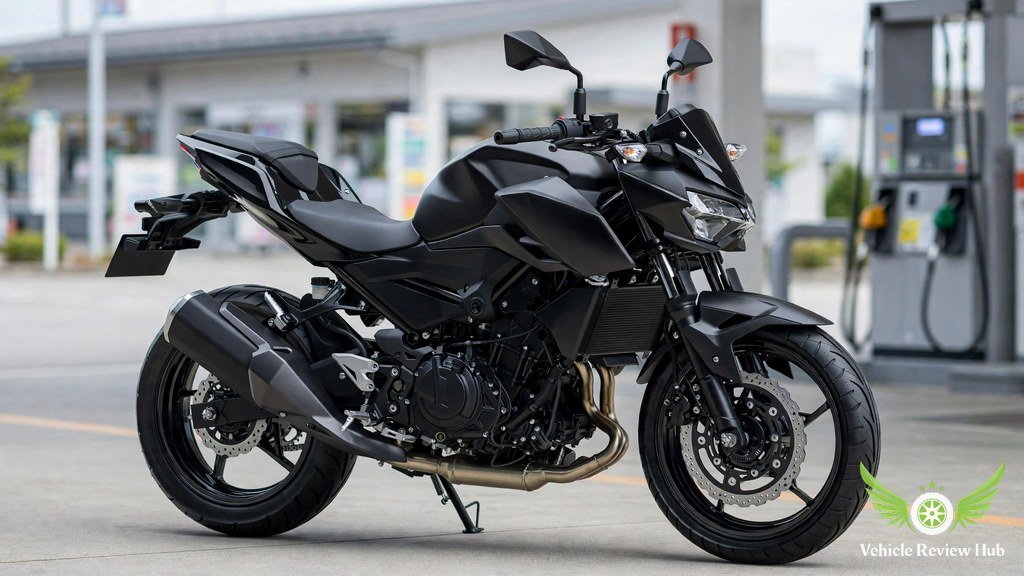
Fuel economy is where the Z250’s story splits into two honest answers, because the official lab figures and the real-world tests disagree by a wide margin. This Kawasaki Z250 performance guide prints every economy figure with its year and its test type, so the reader can see which number came from a laboratory cycle and which came from a road. None of them is an American MPG figure — the bike was never EPA-tested.
Owner Ran 22 to 23 km/L
The everyday-use number comes from the same Indian owner who set the top-speed mark: Mahesh Saini reported 22–23 km/L in everyday riding on his Gen 1 bike, and that is the figure a commuter should plan around. It is lower than the magazine numbers because it is real traffic, real throttle use and a twin that needs revs — the same high-rev character that shapes Kawasaki Z250 performance everywhere else in this guide.
The magazine economy figures in this Kawasaki Z250 performance guide sit above the owner’s number, and they belong to gentler riding. MotorBeam’s shootout recorded 30 km/L, ZigWheels recorded 30 km/L in sedate riding, and Overdrive reported economy above 30 km/L on its first ride. With the Gen 1 bike’s 17-litre tank, 30 km/L works out to roughly 500 km of range — the figure ZigWheels itself quoted for a full tank.
MotorFan Measured 28.2 km/L
The best Japan test number in this Kawasaki Z250 performance guide comes from MotorFan’s 2019 Japan test, which measured 28.2 km/L in real riding over about 120 km including Tokyo traffic. The 28.2 km/L figure is printed here with its test conditions attached, because fuel economy without a test type is meaningless on this bike.
The official figures bracket the test number on both sides, and the year matters with each one in this Kawasaki Z250 performance guide. The 2019 launch sheet claims 37.0 km/L at a steady 60 km/h and 27.2 km/L on the WMTC cycle, while the 2027 sheet claims 32.3 km/L steady and 25.1 km/L WMTC.
| Figure | Economy | Year / test type |
|---|---|---|
| MotorFan real-world test | 28.2 km/L | 2019, about 120 km incl. Tokyo traffic |
| Owner everyday use | 22–23 km/L | Indian owner, BikeWale |
| MotorBeam shootout | 30 km/L | 2015 shootout |
| Official steady 60 km/h | 37.0 km/L | 2019 launch sheet |
| Official WMTC | 27.2 km/L | 2019 launch sheet |
| Official steady 60 km/h | 32.3 km/L | 2027 sheet |
| Official WMTC | 25.1 km/L | 2027 sheet |
Note: Official figures are laboratory cycles (WMTC and steady 60 km/h) and the test figures are road measurements — they are different kinds of numbers, and this Kawasaki Z250 performance table never blends them into a single mileage claim. The 2019 and 2027 official rows are different model years; always quote the year with the figure. No US MPG figure exists for this bike.
Kawasaki Z250 Real-World Riding Experience

The road tests agree on what the Z250 feels like, even though they were written in different countries years apart. It is an upright naked with a 795 mm seat on the Gen 2 bike, a 164 kg weight and wide bars, and a twin that needs revs. This Kawasaki Z250 performance guide leans on those tests because no American test exists to quote — the riding story comes from owners and Japanese and Indian road tests.
The Riding Experience Buyers Actually Talk About
Every road test says the same thing about the low end, in different words. Autocar India called the bike “slow to build revs from low down” and said it forces the rider to work the gearbox; Motoroids said it balks at slow speeds in higher gears; MotorBeam put it bluntly, saying the rider needs to rev the bike hard to get the best from it. That is the trade-off at the heart of Kawasaki Z250 performance: a small twin tuned for the top end, with a 6-speed gearbox and a slipper clutch that forgives hard downshifts when the rider is working through the gears. The power lives above 9,000 rpm, and the bike is at its best when it is kept there.
In traffic the same character is a mixed blessing. The upright bars, the narrow twin and the 164 kg weight make the Gen 2 bike easy to place between cars, and the 795 mm seat puts most riders flat-footed at a stop. But the tall gearing means the rider is always a gear lower than the bike suggests, and the twin feels flat below 5,000 rpm.
No US Test Exists
No American magazine ever tested the Z250, because Kawasaki never sold it in the USA — so there is no American 0–60 time, no American quarter-mile, no American braking test and no American fuel-economy figure anywhere in this Kawasaki Z250 performance guide. The figures in this Kawasaki Z250 performance guide are Indian and Japanese tests, and they are labelled as such in every table. An American reader who wants the same kind of bike with an American test behind it should read the Kawasaki Z500 review, which covers the naked twin Kawasaki actually sells in the USA, or the Kawasaki Z250 review for the full story of the Japan-market bike.
Kawasaki Z250 Handling, Braking and Stability

Handling is the part of Kawasaki Z250 performance that needs no test figure to explain, because the chassis numbers tell most of the story. A 164 kg Gen 2 bike with a trellis frame, a 41 mm fork and a 310 mm front disc is a light, stiff package for a 250, and the road tests back that up. The Gen 1 bike is a different chassis underneath the same name, so the two generations are compared separately below.
Handling, Braking and Stability on Real Roads
The braking numbers are the strongest measured figures this Kawasaki Z250 performance guide has. Autocar India stopped the Gen 1 bike from 80 km/h in 30.25 metres, on the Gen 1 bike’s 290 mm petal front disc and 220 mm rear disc. The Gen 2 bike upgrades the front to a 310 mm disc with the same 220 mm rear, and ABS is standard on the Gen 2 bike in Japan. One market warning belongs here: India never got ABS on the Gen 1 Z250, and every Indian review lists that as the bike’s biggest omission — so no Indian Gen 1 bike in this blog is ever described as having ABS.
The tyres are the weak point every test names, and they shape Kawasaki Z250 performance more than the frame does. The stock IRC Road Winner tyres — 110/70-17 front, 140/70-17 rear — were called weak by Overdrive, ZigWheels and MotorBeam in the same words, and a used buyer should budget for better rubber before judging the chassis. On decent tyres the package is sound: a 1,370 mm wheelbase, 24.5 degrees of rake with 92 mm of trail, and a trellis frame that the road tests describe as stable at speed and willing in corners.
Gen 1 vs Gen 2 Chassis
The chassis change between generations is as big as the engine change, and Kawasaki Z250 performance figures from one generation do not describe the other. Gen 1 rides on a diamond-type steel frame with a 37 mm telescopic fork, a rear monoshock on a box-section swingarm, a 1,400 mm wheelbase and a 785 mm seat. Gen 2 moves to a high-tensile steel trellis frame shared with the Gen 2 Ninja 250, a 41 mm fork with 120 mm of travel, a Uni-Trak rear monoshock with 130 mm of travel, a shorter 1,370 mm wheelbase and a taller 795 mm seat.
The weight went the right way too. Gen 1 weighed 168 kg without ABS and 170 kg with it — the 2015 ABS model gained 2 kg for the ABS and the assist and slipper clutch — while Gen 2 weighs 164 kg with ABS standard in Japan — a small but real gain for Kawasaki Z250 performance. The Gen 2 bike is 4 kg lighter than the lightest Gen 1, with a stiffer frame, a bigger front disc and a shorter wheelbase.
Kawasaki Z250 Performance Compared With Other Sport Bikes
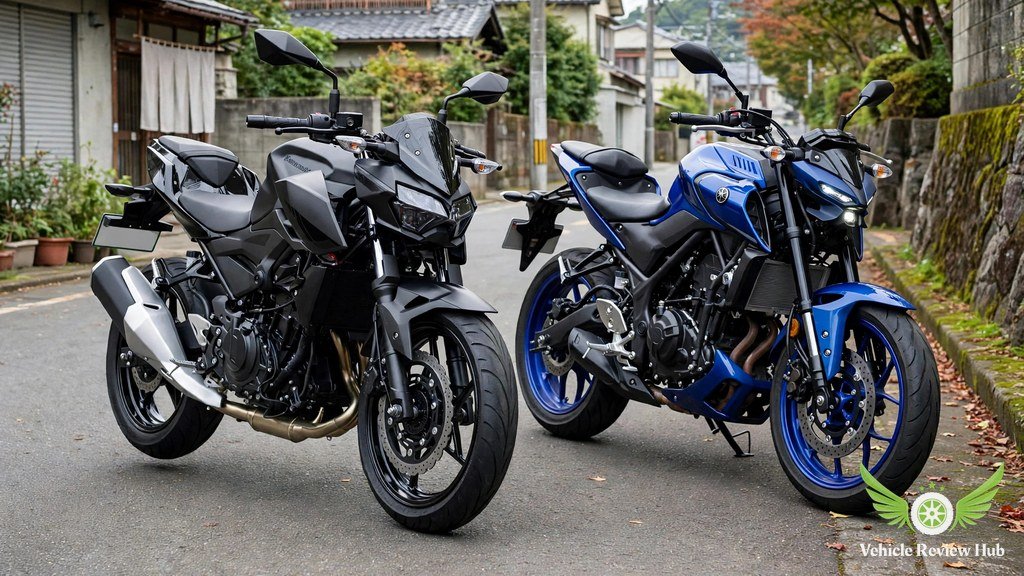
The last question about Kawasaki Z250 performance is the comparative one: how does this twin stack up against the other 250 nakeds a Japanese buyer can actually buy? The closest rival is the Yamaha MT-25 — the same displacement, the same twin layout and the same 35 PS peak, for ¥71,500 less. The comparison below is the performance half of the story; the full four-bike price comparison sits in the comparison blog.
Kawasaki Z250 vs Yamaha MT-25
On paper the two twins are a dead heat, and that is what makes the Kawasaki Z250 performance comparison interesting. The MT-25 makes 35 PS at 12,000 rpm — the same peak as the current Z250, reached 500 rpm lower — with 23 Nm of torque at 10,000 rpm against the Z250’s 22 Nm at 10,500 rpm. The MT-25 weighs 166 kg, 2 kg more than the Z250, and its seat is 780 mm, 15 mm lower than the Z250’s 795 mm. Both bikes carry a 14-litre tank and ABS, and the MT-25 gained an assist and slipper clutch on the April 2025 model. The Yamaha’s official figures are on Yamaha’s MT-25 page.
The difference is the price and the feel, not the spec sheet. The MT-25 lists at ¥632,500 in Japan — ¥71,500 less than the Z250’s ¥704,000 — and its WMTC economy of 26.5 km/L edges the Z250’s 25.1 km/L. A buyer choosing on numbers alone takes the MT-25; a buyer choosing on the twin’s character and the Z badge takes the Z250, and pays ¥71,500 for the privilege.
Is the Kawasaki Z250 Suitable for Beginner Riders?
Yes, with a caveat — and the caveat is the same high-rev character that runs through this whole Kawasaki Z250 performance guide. The 795 mm seat, the 164 kg weight, the upright bars and the predictable twin make the bike approachable, and the assist and slipper clutch forgives clumsy downshifts while ABS is standard on the Gen 2 bike in Japan. But the power lives above 9,000 rpm, so a new rider has to work the gearbox to keep the bike moving briskly, and a beginner who short-shifts will find it flat. The MT-25 makes the same 35 PS for ¥71,500 less with a lower seat, so a beginner shopping on price should compare the two — and an American beginner should look at the Kawasaki Z125 PRO review, the small Z naked Americans can actually buy new.
| Item | Kawasaki Z250 (2027) | Yamaha MT-25 (2025) |
|---|---|---|
| Price | ¥704,000 | ¥632,500 |
| Engine | 248cc parallel twin | 249cc parallel twin |
| Power | 35 PS @ 12,500 rpm | 35 PS @ 12,000 rpm |
| Torque | 22 Nm @ 10,500 rpm | 23 Nm @ 10,000 rpm |
| Weight | 164 kg | 166 kg |
| Seat height | 795 mm | 780 mm |
| Fuel tank | 14 L | 14 L |
| WMTC economy | 25.1 km/L | 26.5 km/L |
Note: Both bikes make 35 PS, but the peaks arrive at different revs — 12,500 rpm for the Z250, 12,000 rpm for the MT-25 — and the MT-25’s torque peak is 500 rpm lower too. Prices are Japan tax-included list prices: Z250 for 2027, MT-25 for 2025. The Z250 costs ¥71,500 more for the same peak power.
Kawasaki Z250 Performance: Frequently Asked Questions
The answers below are short and direct, and every figure names its test or its source. There is no US test, no dyno run and no factory top speed for this bike — the numbers here are the attributed ones.
What is the Kawasaki Z250’s top speed?
There is no factory top-speed figure and no US test. The best observed numbers are an Indian owner’s 153 km/h and MotorBeam’s VBOX-tested figure of about 158 km/h for the Gen 1 bike. Aggregator listings of 165–170 km/h are editorial estimates, not tests.
Is the 200 km/h top-speed claim true?
No — and this Kawasaki Z250 performance guide rejects the claim outright. The 200 km/h figure comes from a BikeDekho listing with no test behind it. The owner-measured maximum is 153 km/h and the VBOX-tested figure is about 158 km/h. The 200 km/h claim is rejected.
How quick is the Z250 to 100 km/h?
For Kawasaki Z250 performance to 100 km/h, Autocar India measured 8.42 seconds and MotorBeam’s VBOX recorded 8.31 seconds — both Gen 1 bikes, different tests, never blended. The 0–60 km/h time is about 3.6 seconds; Autocar India measured 3.64 seconds.
Has anyone dyno-tested the Z250?
No rear-wheel dyno figure has been published for the Z250, and this Kawasaki Z250 performance guide prints no dyno number because none exists. The only power numbers are Kawasaki’s claimed figures: 31 PS for the Gen 1 Japan bike, 32 PS for Gen 1 in India, 37 PS for the Gen 2 launch tune and 35 PS for Gen 2 bikes from 2023 on.
What fuel economy does the Z250 get?
MotorFan’s 2019 Japan test measured 28.2 km/L in real riding including Tokyo traffic. An Indian owner reported 22–23 km/L and MotorBeam’s shootout recorded 30 km/L. The 2027 official WMTC figure is 25.1 km/L. The economy figures in this Kawasaki Z250 performance guide are all in km/L, because the bike was never EPA-tested and there is no US MPG figure to print.
Is the Z250 good for beginners?
Yes, with a caveat. The 795 mm seat, 164 kg weight, upright bars and predictable twin make it approachable, but the power lives above 9,000 rpm, so a new rider has to work the gearbox. The MT-25 makes the same 35 PS for ¥71,500 less, so a beginner shopping on price should compare the two.