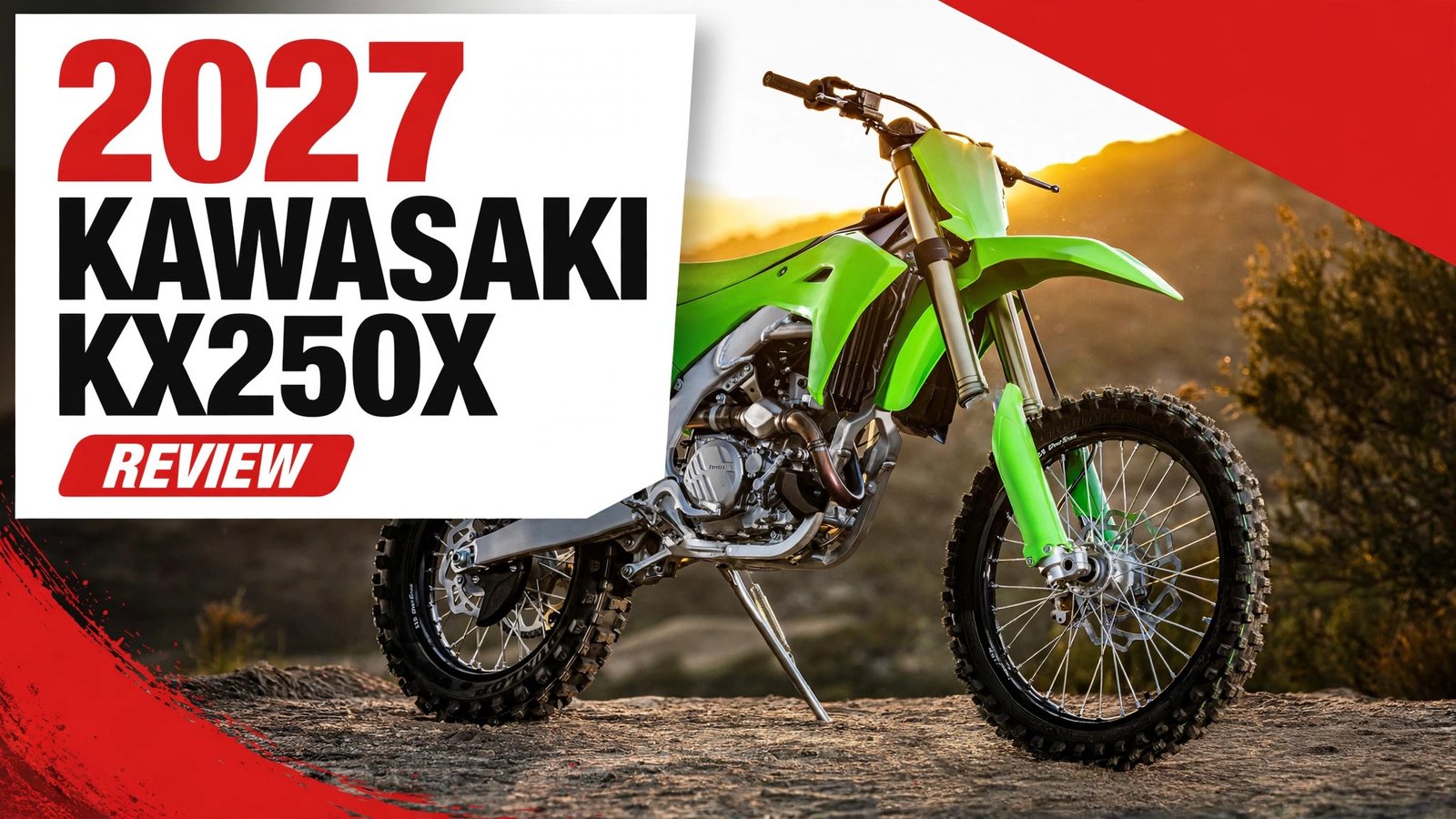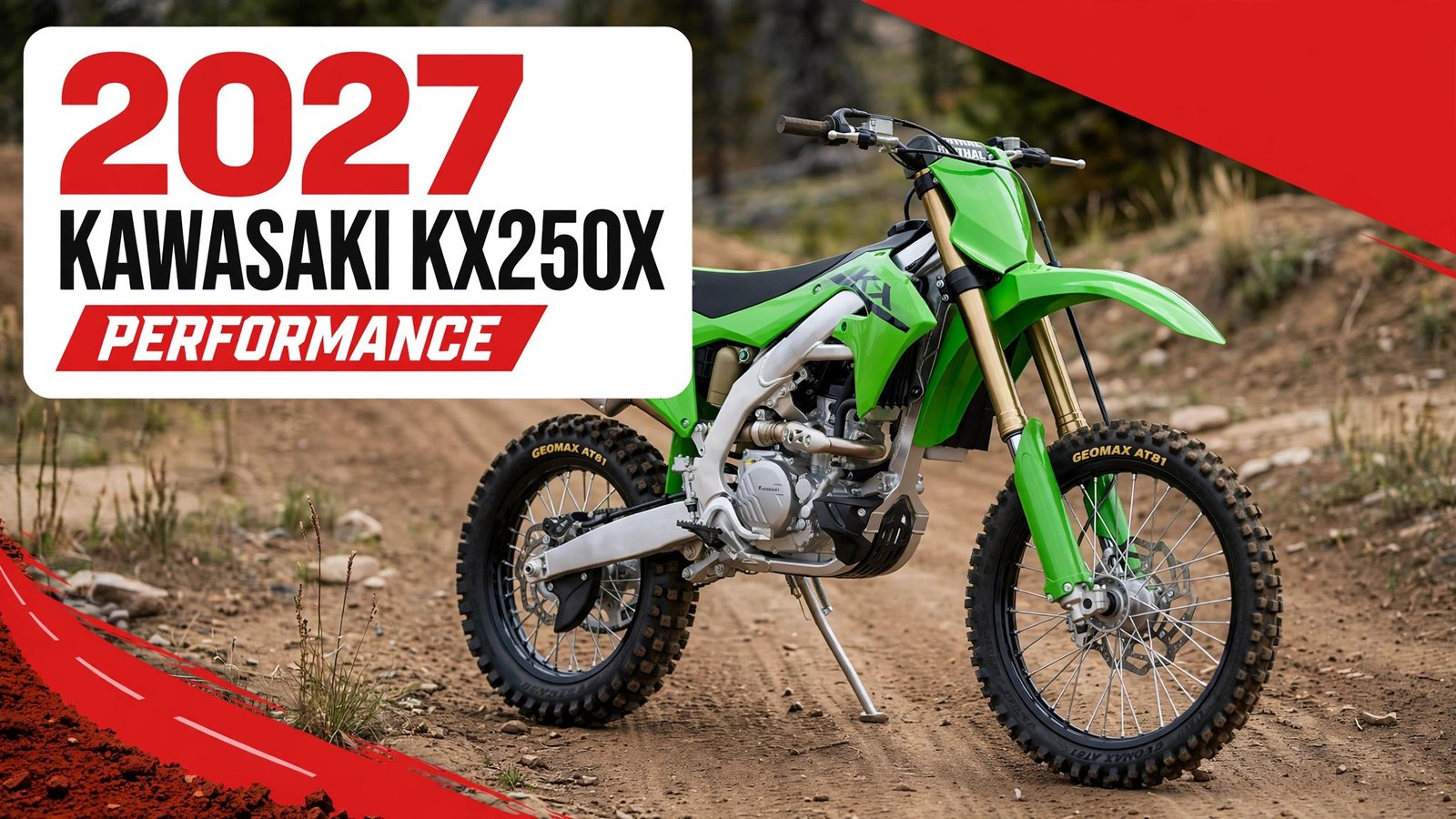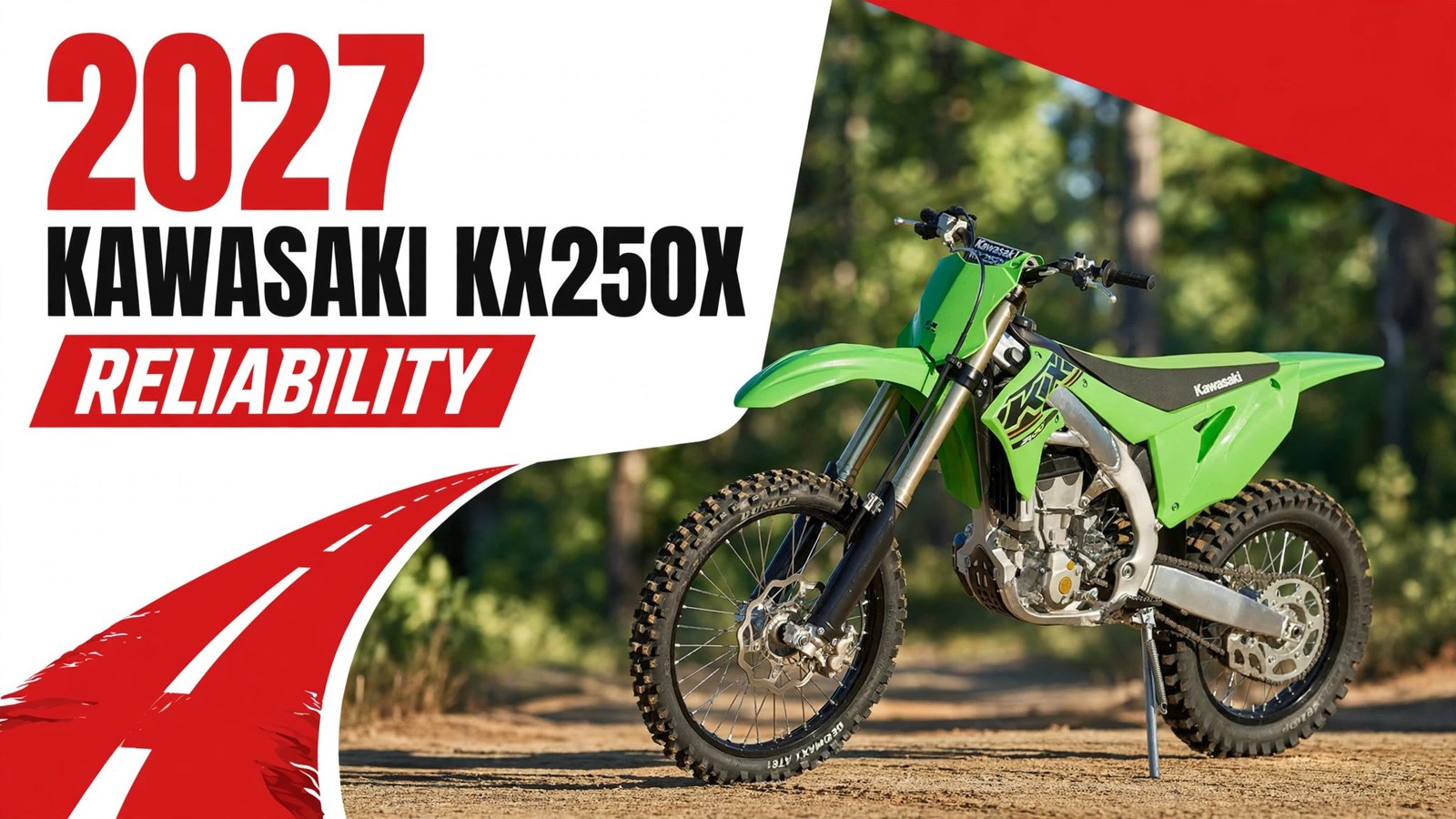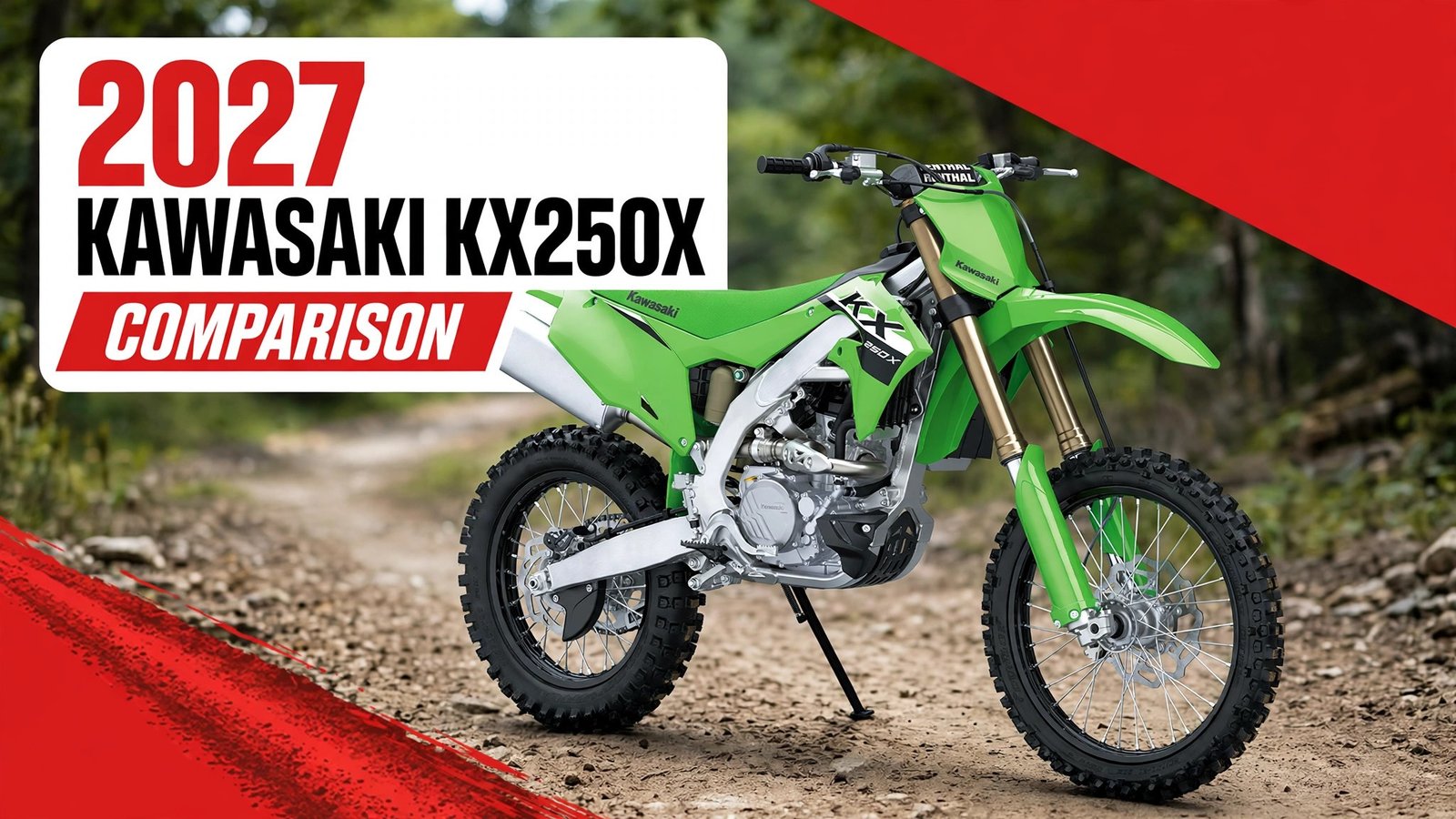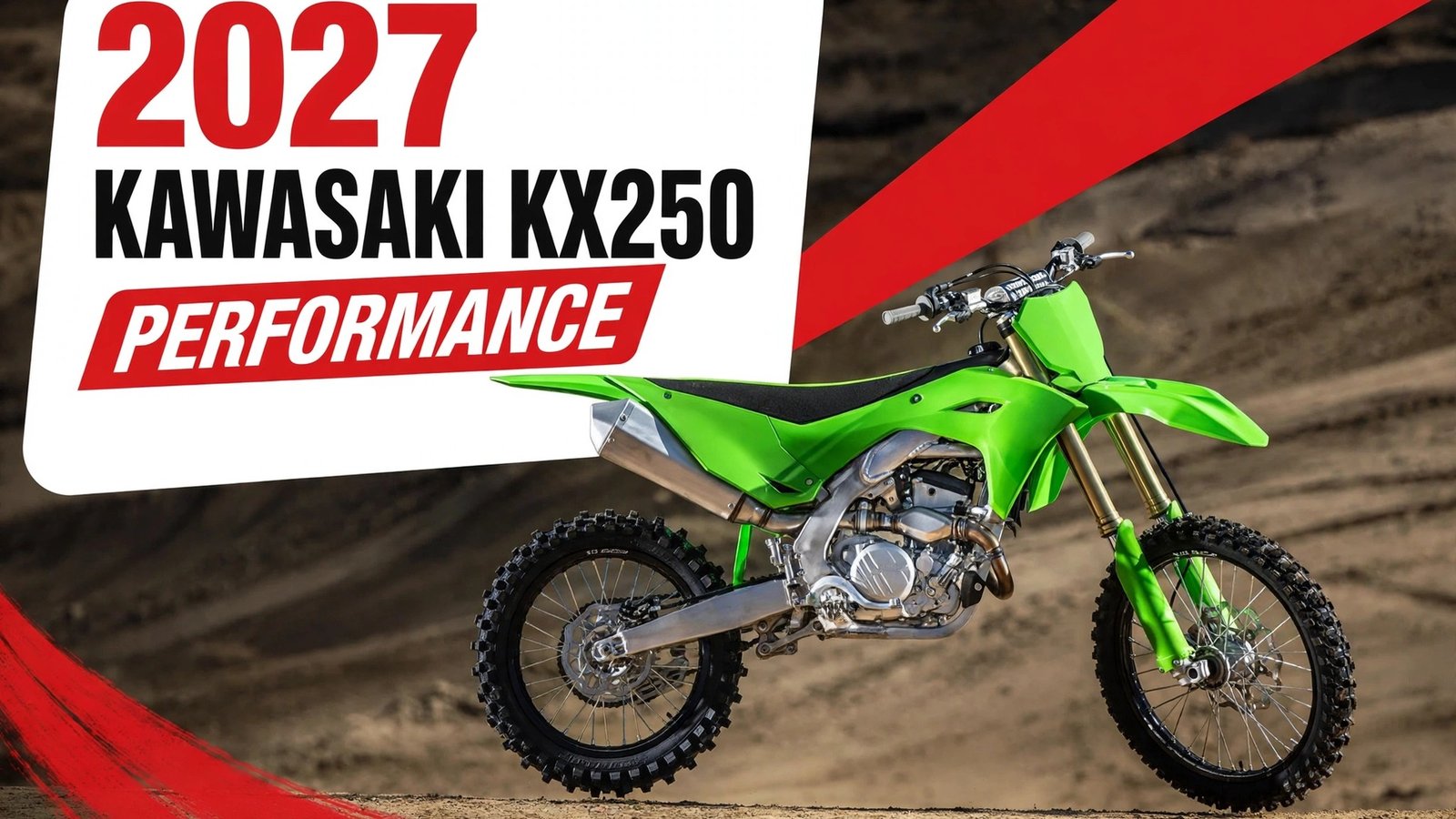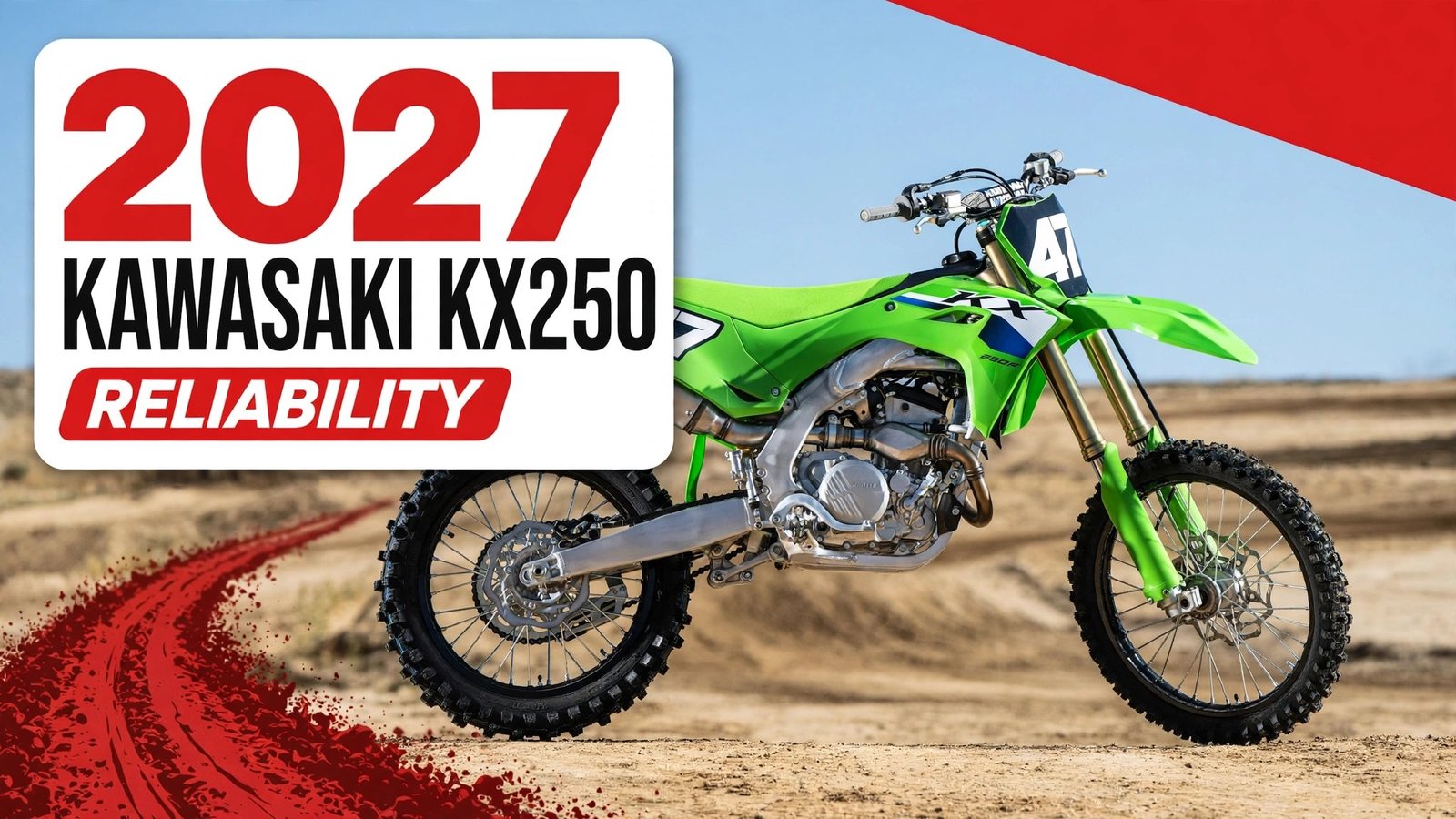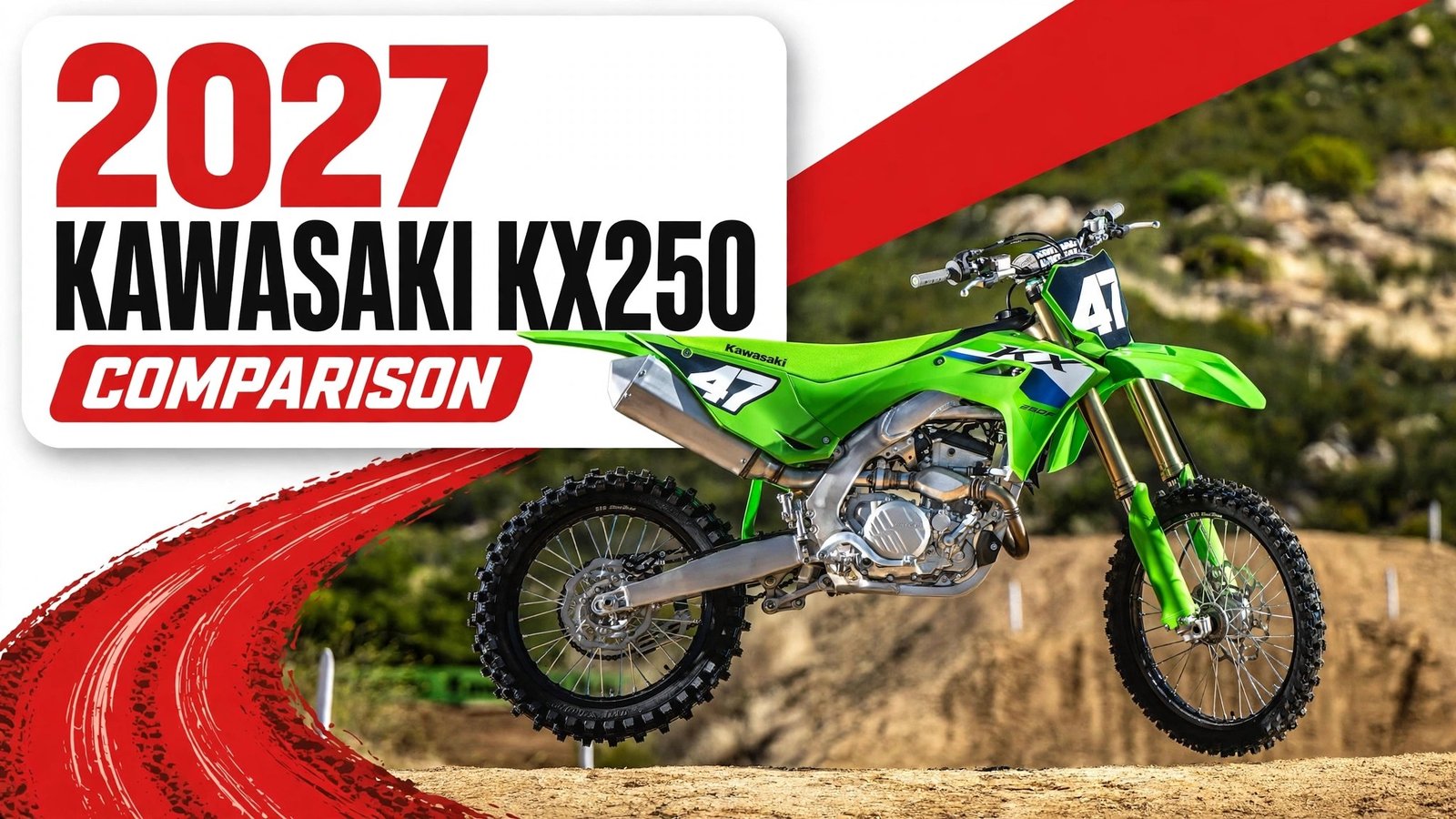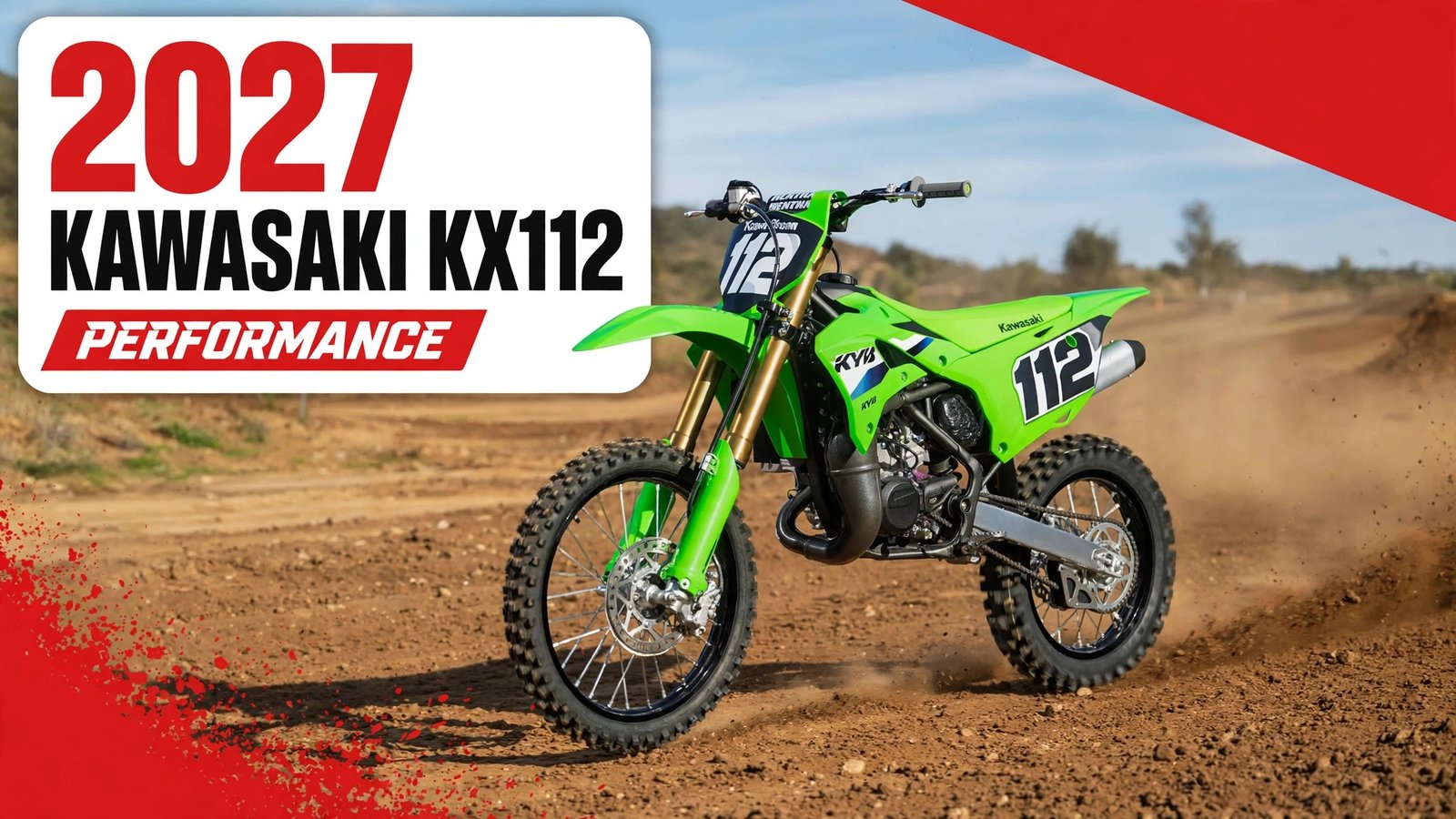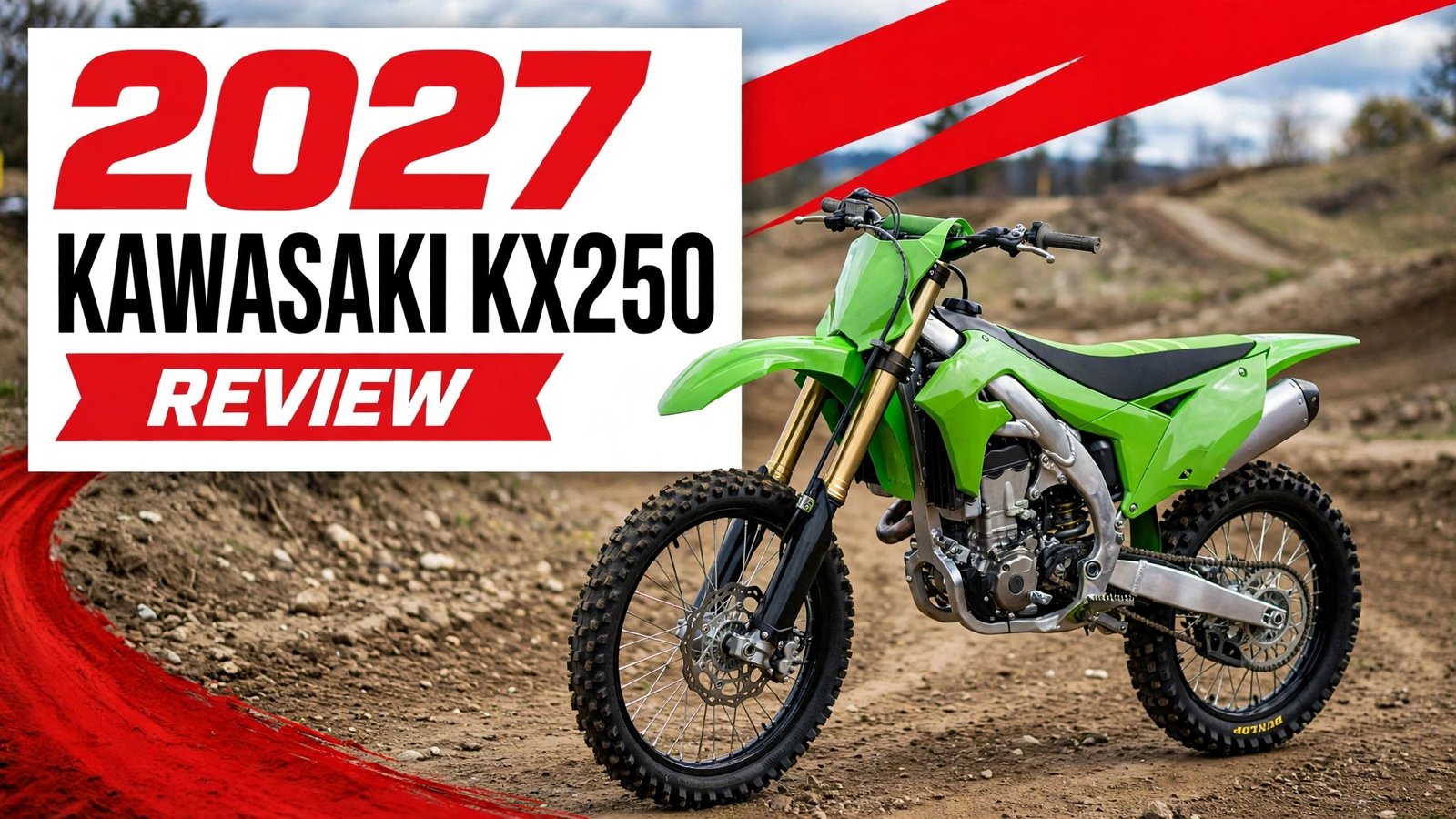
The 2027 Kawasaki KX250F is $500 cheaper than the bike it replaces, and it carries the F back in its name for the first time since 2019. This Kawasaki KX250 review covers the full 2027 spec sheet, the real price with destination, the engine changes that matter, and what testers say about the ride. The headline is simple: Kawasaki cut the price while adding a longer exhaust header, a revised combustion chamber, and a stiffer clutch spring, and this Kawasaki KX250 review explains whether those changes fix the old bike’s weak bottom end.
The 2027 bike is a 249cc four-stroke motocross machine built for closed-course racing, not the street. It is not a redesign, because the full redesign came in 2025, but the 2027 updates target the exact complaint testers had about the 2025 and 2026 bikes. Read this Kawasaki KX250 review for the verified price ladder, the year-by-year spec changes, and an honest verdict on who should buy one.
Kawasaki KX250 Overview and Model-Year Updates
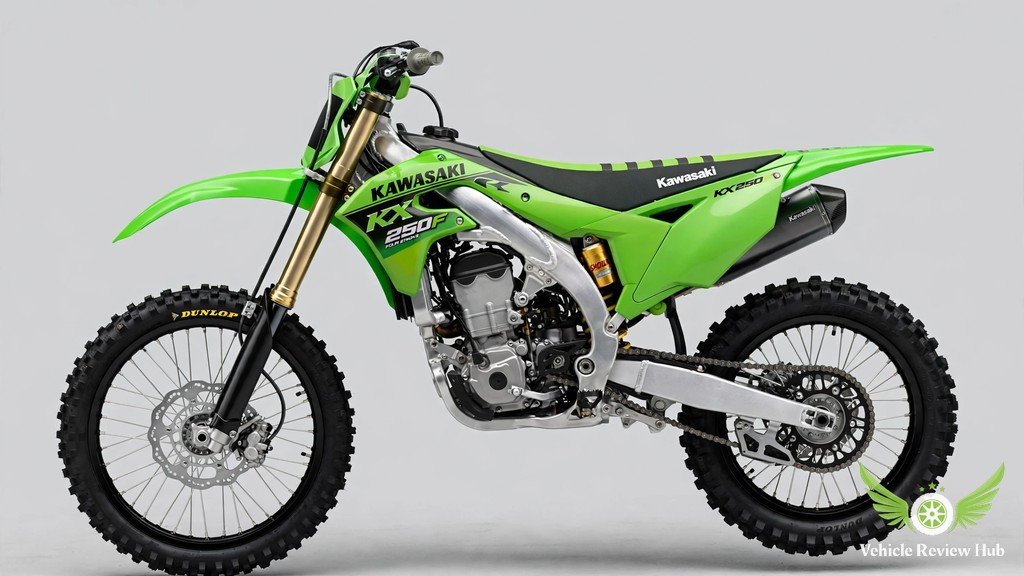
The KX250F name tells the 2027 story in one letter. Kawasaki dropped the F in 2019 and brought it back for 2027, and the reason is sitting next to it in the showroom. This section of the Kawasaki KX250 review explains the rename, the new two-stroke that caused it, and what changed on the four-stroke for 2027. The 2027 KX250F arrived in summer 2026, and it is the only 250 four-stroke Kawasaki sells for motocross in the USA.
The F Returns for 2027
Kawasaki’s own press release says it plainly: for 2027 the F returns to the model name to mark the bike as the flagship four-stroke motocross machine. The reason is the new KX327, a 327cc fuel-injected two-stroke that rejoins the range for 2027, with a KX327X cross-country version alongside it. There is no 2027 KX250 two-stroke, and this Kawasaki KX250 review names the KX327 here so the two bikes are never confused. The Racer X 2027 lineup report dates the announcement to June 2, 2026.
The KX327 is a genuinely new machine: Kawasaki’s first fuel-injected two-stroke, with a 39 mm throttle body, dual injectors, premix lubrication at 32:1, and no carburettor. Its bore and stroke are unreleased, and its tank holds about 2.2 to 2.3 gallons. The four-stroke reviewed in this Kawasaki KX250 review keeps its own 1.64-gallon tank and its 249cc engine, and the F in its name is what separates it from the two-stroke in the same showroom. The Motorcycle.com KX327 first look confirms that Kawasaki has not released full specifications, including bore and stroke, for the two-stroke.
Rename Was 2019, Not 2021
Kawasaki dropped the F for the 2020 model year, and the change was announced in 2019. Some secondary sources attach the rename to 2021, but that year belongs to electric start, not to the name change. Kawasaki’s own site lists the 2019 model as the KX250, and Cycle World agrees, saying Kawasaki got the F out of the name back in 2019.
The precise wording matters. The 2019 bike’s factory code is KX252AKF, and some dealer copy still called the 2019 bike the KX250F, so the honest statement is that Kawasaki dropped the F for the 2020 model year, announced in 2019. This Kawasaki KX250 review keeps that nuance because the doc heading says 2019, and the announcement year is what 2019 means.
Kawasaki KX250 Engine and Specifications
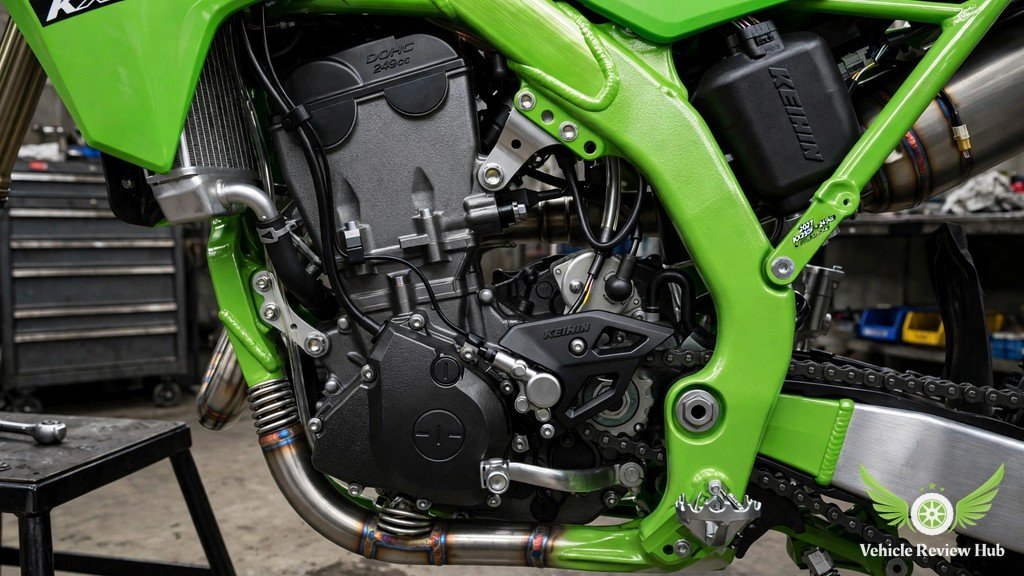
The 2027 engine is the same 249cc architecture as the 2025 redesign, with targeted changes rather than a new motor. This part of the Kawasaki KX250 review prints the spec sheet verbatim, then covers the electric start system that arrived in 2021. Every figure below comes from that one-page sheet, cross-checked against the Kawasaki model page.
| Specification | 2027 KX250F |
|---|---|
| Engine | 4-stroke, single-cylinder, DOHC, liquid-cooled |
| Displacement | 249cc |
| Bore x Stroke | 78.0 x 52.2 mm |
| Compression Ratio | 14.1:1 |
| Fuel System | DFI with 44 mm Keihin throttle body and dual injectors |
| Ignition | Digital DC-CDI |
| Transmission | 5-speed, return shift |
| Clutch | Wet multi-disc manual, hydraulic actuation |
| Front Suspension | 49 mm Showa inverted coil-spring fork, 12.0 in travel |
| Rear Suspension | New Uni-Trak with Showa shock, 12.1 in travel |
| Brakes | 270 mm front / 240 mm rear petal discs |
| Tyres | Dunlop Geomax MX34, 80/100-21 front, 110/90-19 rear |
| Seat Height | 37.6 in |
| Curb Weight | 230.9 lb without fuel / 240.8 lb with fuel |
| Fuel Capacity | 1.64 gal |
Note: The spec sheet lists no power figure for the KX250F, and no dyno figure exists yet for the 2027 bike, so this Kawasaki KX250 review prints no horsepower claim for the 2027 model. Kawasaki claims about 0.7 hp more peak power than the 2026 bike, and that claim is labelled as a manufacturer claim wherever it appears. The full sheet is the 2027 spec sheet from Kawasaki USA.
E-Start Arrived in 2021
Electric start arrived on the KX250 in 2021, making it Kawasaki’s first electric-start 250 motocross bike. The July 2020 press release announced a new lightweight Li-ion battery, automatic centrifugal decompression, and a coned disc-spring hydraulic clutch, all new for the 250. The 2021 bike listed at $8,299 and reached dealers in August 2020.
The change added weight. Cycle News put the 2021 bike about 4.5 lb heavier than the 2020 bike, and the spec sheets agree: curb weight rose from 221.1 lb without fuel in 2020 to 226.4 lb in 2021. That trade is the price of the button, and this Kawasaki KX250 review treats it as a fair one for a race bike that stalls in ruts.
No Kick Backup Since Then
There is no kick starter backup on the 2027 KX250F, and there has been none since 2021. Ultimate Motorcycling said it plainly in its 2021 first look, and Cycle News confirmed that Kawasaki finally chucked the manual kickstarter for a push-button system. The spec sheets carry no starting-system row, so the electric-only fact rests on the press release and the test reports.
A dead battery is therefore a real concern on a race day, and riders carry that risk on every 2021-and-newer KX250. The 2019 and 2020 bikes were kick-only, so the switch is total. Any review that mentions a kick starter on a 2027 bike is wrong, and this Kawasaki KX250 review states the electric-only fact so buyers are not misled.
Kawasaki KX250 Price and Market Availability
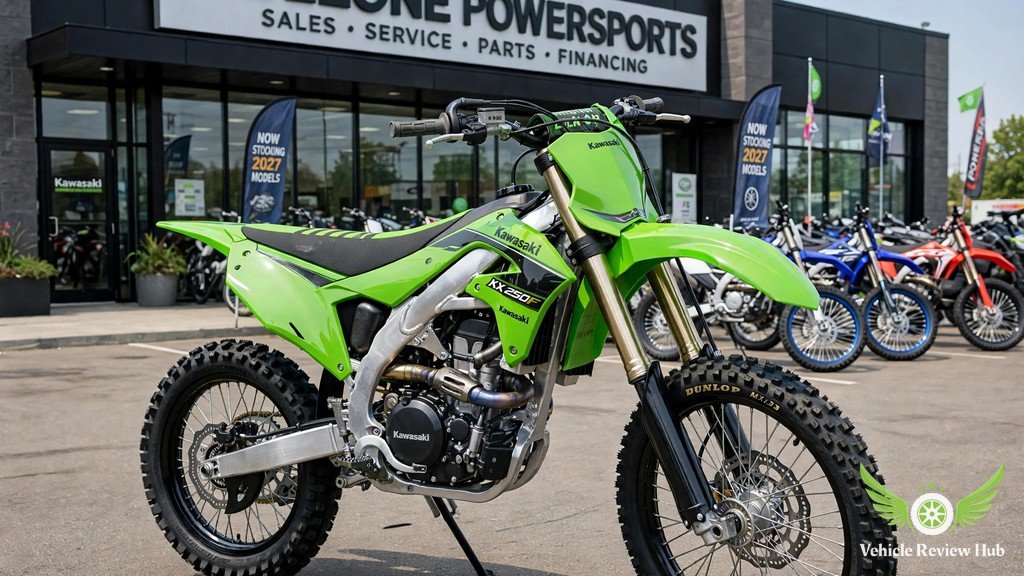
The 2027 price is the best news in this Kawasaki KX250 review: the bike costs $500 less than the 2026 model, at a time when most rivals went up. The table below prints the full price ladder from 2019 to 2027, with destination charges shown per year and never carried across years. Destination appears only where a source prints it.
| Model Year | Model | Base MSRP | Destination |
|---|---|---|---|
| 2019 | KX250 | $7,749 | $370 (dealer sheet only) |
| 2020 | KX250 | $7,799 | Not verified |
| 2021 | KX250 | $8,299 | Not verified |
| 2022 | KX250 | $8,399 | Not verified |
| 2023 | KX250 | $8,499 | Not verified |
| 2024 | KX250 | $8,799 launch / $8,899 current PDF | Not verified |
| 2024 | KX250 50th Anniversary | $9,099 | Not verified |
| 2025 | KX250 | $8,999 | $550 (dealer sheet only) |
| 2026 | KX250 | $9,099 | $650 |
| 2027 | KX250F | $8,599 | $650 |
Note: The 2024 MSRP is disputed, with $8,799 at launch and $8,899 on the current Kawasaki PDF, so this Kawasaki KX250 review prints both figures with the note rather than settling on one. The 2020 to 2024 destination charges were not found in any source, so the table shows MSRP only for those years.
Kawasaki KX250 Price in the USA: $8,599 (2027)
The 2027 KX250F lists at $8,599 in the USA, and this Kawasaki KX250 review takes both the MSRP and the $650 destination charge from the Kawasaki USA model page, for $9,249 delivered. Cycle News confirmed the cut, writing that Kawasaki lowered the price by $500 to $8,599, and Dirt Bike Magazine said the same thing in its first ride: the 2027 bike is $500 less than last year.
The $8,599 price puts the KX250F level with the 2027 Honda CRF250R on MSRP and $500 under the 2027 Yamaha YZ250F, and the full rival comparison is in the companion Kawasaki KX250 comparison. For a buyer, the delivered $9,249 total is the number to compare, and this Kawasaki KX250 review uses it in every price gap that follows.
$500 Cheaper Than 2026 — and $1,750 Off Leftovers
The MSRP saving from 2026 to 2027 is $500 only: $9,099 down to $8,599, and the delivered saving is also $500 because destination is $650 in both years. The $1,750 figure is a promotional discount on leftover 2026 bikes, not a price cut on the 2027 model. Capital Powersports in Wake Forest, North Carolina, showed it on a November 2026 quote sheet as SEASON OF SAVING minus $1,750, and Powersports of Carol Stream in Illinois listed the same $1,750 as a rebate.
Other dealers went deeper, at $6,549 and $6,499, so $1,750 is one offer rather than a universal discount. A $6,999 leftover sits $2,100 under the $9,099 MSRP, and that leftover price caps what a used KX250 can ask. This Kawasaki KX250 review keeps the two figures separate so no buyer mistakes a dealer discount for a factory price cut.
Kawasaki KX250 Design, Features and Technology
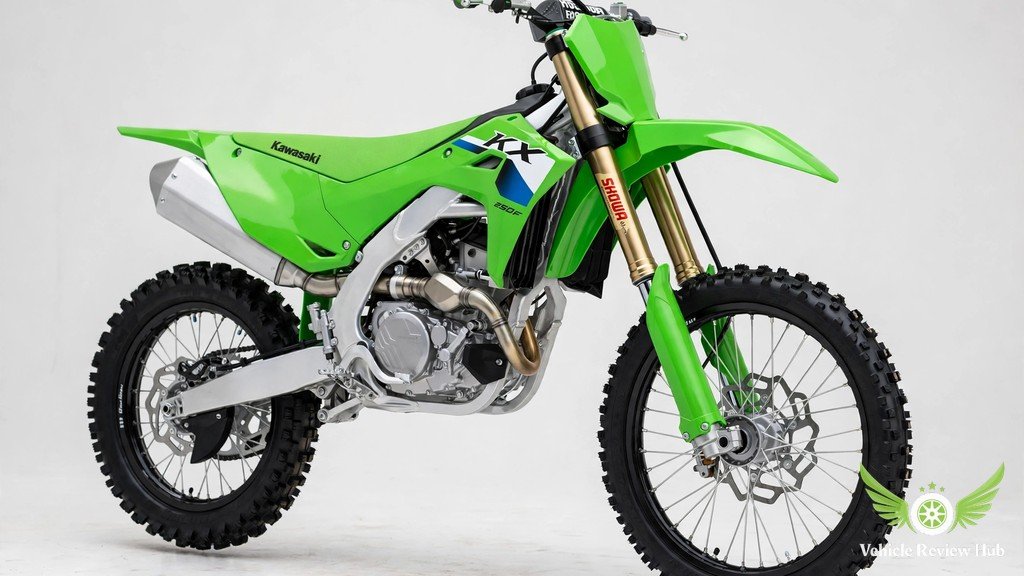
The 2027 KX250F carries the 2025 redesign forward, with Showa suspension, a shorter front end, and the same aluminium perimeter frame. This section of the Kawasaki KX250 review covers the fork switch that ended five years of KYB, and explains why the weight prints two ways on the same spec sheet. The bike also carries power modes, traction control, launch control, and RIDEOLOGY smartphone connectivity.
Showa Replaced KYB in 2025
Kawasaki switched the KX250 to Showa suspension for 2025, ending a five-year stint with KYB that ran from 2020 to 2024. The 2025 spec sheet names a 49 mm Showa inverted telescopic coil-spring fork with Kashima Coat and 25 mm damping pistons, plus a new Showa shock that is 32 mm shorter with its reservoir moved to the left. Dirt Bike Magazine called the switch a noticeable improvement, and the 2027 bike keeps the same 49 mm Showa fork with revised settings.
The switch was also a return: the 2019 KX250 ran a Showa SFF fork, so Showa had been on this bike before the KYB years. Testers found the KYB fork overly stiff for all but the fastest riders, and the Showa setup suits a wider range of riders. This Kawasaki KX250 review notes the history because some dealer copy still says 48 mm Showa for 2025, and that figure is wrong: 48 mm was the 2021 to 2024 KYB size.
Weight Prints Two Ways
Kawasaki’s own 2027 spec sheet prints one line with two figures: curb weight 230.9 lb without fuel and 240.8 lb with a full tank. The footnote explains it: curb weight includes all fluids, a full tank of more than 90 percent capacity, and the tool kit. Cycle News calls 240.8 lb the claimed wet weight, one of the heaviest in the class.
An independent scale reading adds a second pair. Dirt Bike Magazine weighed the 2027 bike at 232 lb without fuel, against the claimed 230.9 lb, and the 2026 bike read the same 232 lb. The two ways to read the weight are therefore the without-fuel figure and the with-fuel figure on the same sheet, plus the claimed figure against the scale reading. A review that quotes only one weight without saying which one it is hides half the story, and this Kawasaki KX250 review prints both figures with their basis every time.
Kawasaki KX250 Riding Experience and Comfort
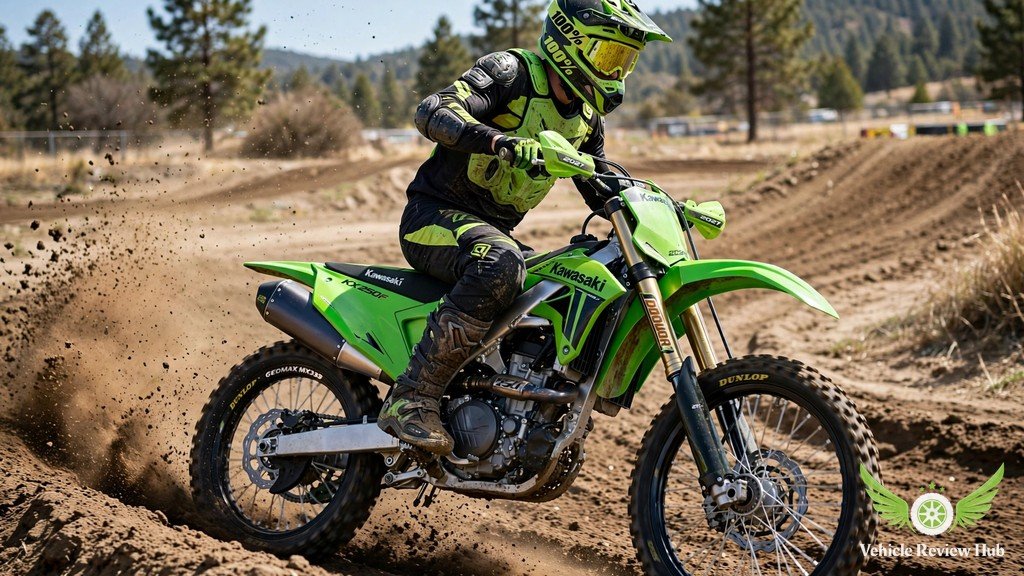
The 2027 KX250F is a race bike first. This part of the Kawasaki KX250 review covers the tall seat, the firm suspension, the new levers, and what the first-ride testers actually felt at Perris Raceway. The bike suits mid-level to expert riders best, and this Kawasaki KX250 review finds heavier riders get the most from the stock suspension. Lighter riders will find the stock setup stiff, and the bottom end still asks for clutch work out of tight corners.
Seat Height Is 37.6 Inches
The seat sits 37.6 inches high on the 2027 KX250F, a figure that has held since 2025. The 2023 and 2024 bikes were taller at 37.8 inches, and the 2021 and 2022 bikes were lower at 37.4 inches, so the current seat is the middle of the recent range. A 37.6-inch seat needs a tall rider: a 32-inch inseam is a fair minimum, and shorter riders will be on tiptoes.
The seat height also shapes who the bike suits. Cycle News found the suspension worked well for a 190 lb tester and warned that a smaller rider moving up to a 250F may find it too firm. Dirt Bike Magazine said the same thing from the other side: the average 250 rider, expected to be under 150 lb, will feel it is stiff, but bigger riders will love it. This Kawasaki KX250 review flags the seat and the suspension together because they decide the fit before the engine does. The Cycle News 2027 first ride is the source for the tester weight and the suspension findings.
Warranty: Not Available
Kawasaki’s own spec sheet prints the warranty as Not Available, and that wording is the whole story. The KX250F is a closed-course competition motorcycle, and Kawasaki offers no warranty on it in the USA. Street models carry warranty terms and this bike does not, so a buyer should budget for maintenance from day one.
A used KX250 has no factory cover to transfer, so the service history is the only protection a buyer has, and the companion Kawasaki KX250 reliability guide covers the 15-hour piston interval and the paperwork to demand. This Kawasaki KX250 review states the warranty position plainly because it is a purchase fact, not a footnote.
Watch the 2027 test: Motocross Action Magazine’s video test of the 2027 Kawasaki KX250F, “TESTED: 2027 Kawasaki KX250F Is $500 Cheaper”, runs 13 minutes 19 seconds and shows the four-stroke KX250F riding at Glen Helen, with close-ups of the bike on a stand and the two presenters delivering their verdict on camera beside the bike. This Kawasaki KX250 review points to the video because it covers the new hemispherical combustion chamber, the updated suspension valve stack, and the $500 price cut on camera.
Kawasaki KX250 Review: Pros, Cons and Verdict
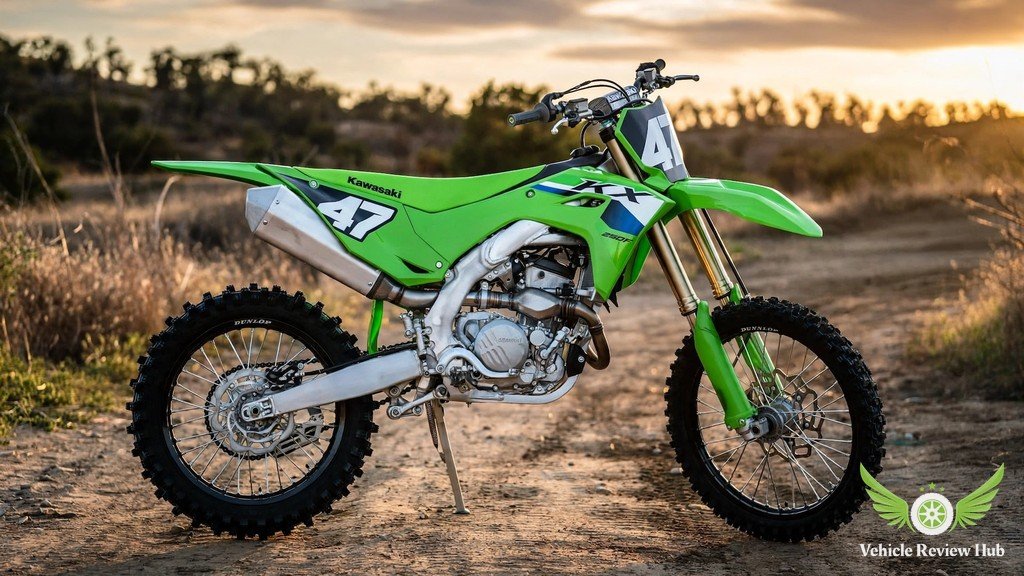
The verdict on the 2027 KX250F comes down to price against track results. This final section of the Kawasaki KX250 review weighs the $500 price cut and the real engine changes against the weak bottom end and the heaviest-in-class weight, and says plainly who should buy one. The bike is cheaper than the Yamaha and level with the Honda, yet it finished last in Dirt Rider’s 2026 shootout.
| Pros | Cons |
|---|---|
| $500 cheaper than the 2026 bike; $8,599 MSRP | Weak bottom end; needs clutch work out of tight corners |
| Real 2027 engine changes: new combustion chamber, longer header, stiffer clutch spring | Heaviest 250 in the class at 240.8 lb claimed wet weight |
| Showa suspension praised by testers; balanced and stable at speed | Suspension too firm for riders under 150 lb |
| Electric start, power modes, traction control and launch control | No warranty; closed-course only, not street legal |
| Proven 15-hour piston interval and strong parts support | No 2027 dyno figure yet; Kawasaki claims only about 0.7 hp more |
Note: The pros and cons above are the testers’ findings, not the manufacturer’s claims, and this Kawasaki KX250 review keeps them separate from the spec sheet figures. The 2027 engine changes target the bottom-end complaint directly, but no magazine has dyno-tested the 2027 bike yet.
Main Advantages and Limitations of the Kawasaki KX250
The main advantage is value. At $8,599 the KX250F undercuts the Yamaha YZ250F by $500 on MSRP and matches the Honda CRF250R, while carrying electric start, power modes, traction control, launch control, and the RIDEOLOGY app as standard. The Showa suspension is the second advantage: testers call the bike well balanced and stable at speed, with a fork that stays up in the stroke on corner entry and in ruts.
The main limitation is the engine’s bottom end. Dirt Bike Magazine said the bike looks great on paper but feels like it has little low-end power on the track, and Cycle News found it weak at the very bottom, needing more clutch work and higher rpm out of tight inside ruts. The weight is the second limitation: 240.8 lb claimed wet is the heaviest in the class, and Dirt Rider measured 242 lb full. This Kawasaki KX250 review weighs the two sides evenly because the price advantage is real and the engine complaint is real, and a review that hides either one misleads the buyer. The Dirt Bike Magazine 2027 first ride is the source for the weight and the bottom-end findings.
2027 Gets Real Engine Changes
The 2027 engine changes are real, and they are aimed at the bottom-end complaint. Kawasaki redesigned the combustion chamber into a smoother, more hemispherical shape, and lengthened the exhaust header by about 3.5 inches with a larger silencer for the AMA’s new 109-decibel sound limit. The fuel-injection settings are revised with advanced ignition timing at initial throttle opening, and the clutch spring is 15 percent stiffer for less slip under heavy load. Kawasaki claims about 0.7 hp more peak power and 0.3 Nm more torque.
The 2027 bike is not a redesign. The full redesign came in 2025, the 2026 bike had no mechanical changes, and the 2027 updates are a targeted revision of that platform. The mapping also reversed: light-off is now the most aggressive map, and holding the mode button for three seconds selects a smoother one. The full performance picture, including the Dirt Rider dyno and the shootout results, is in the companion Kawasaki KX250 performance guide, and this Kawasaki KX250 review recommends reading it before buying.
Kawasaki KX250 Review: Frequently Asked Questions
The questions below cover the facts buyers ask about most, and every answer comes from the verified research in this Kawasaki KX250 review. Prices are as of November 2026, and this Kawasaki KX250 review answers the two-stroke questions first because the KX327 causes the most confusion.
How much does the 2027 Kawasaki KX250F cost in the USA?
$8,599 MSRP, plus a $650 destination charge, for $9,249 delivered. The $650 destination charge comes from the Kawasaki USA model page, which also prints the $9,249 delivered total. This Kawasaki KX250 review uses the delivered figure in every price comparison because it is the number a buyer actually pays before tax and dealer fees.
Is there a 2027 Kawasaki KX250 two-stroke?
No. The new 2027 two-stroke is the KX327, a 327cc fuel-injected machine priced at $9,099, with a KX327X cross-country version at $9,699. The 2027 KX250F is the 249cc four-stroke, and the F returned to its name precisely because the two-stroke rejoins the range. This Kawasaki KX250 review names the KX327 in the first section so the two bikes are never confused, and any review that describes a 2027 two-stroke KX250 is describing a bike that does not exist.
When did Kawasaki drop the F from the KX250F name, and when did it come back?
Kawasaki dropped the F for the 2020 model year, announced in 2019, when there was no two-stroke KX250 in the range to distinguish the four-stroke from. The F returned for 2027 because the KX327 two-stroke joins the range. This Kawasaki KX250 review states the nuance because some sources wrongly attach the rename to 2021, which is the electric-start year, not the rename year.
Does the 2027 KX250F have electric start?
Yes, push-button electric start only, with no kick starter backup. Electric start arrived on the KX250 in 2021, making it Kawasaki’s first electric-start 250 motocross bike, and the 2021 to 2027 bikes have no kick starter at all. This Kawasaki KX250 review flags the fact because a dead battery on race day is a real concern with no kick backup.
What changed on the KX250F for 2027?
Real engine changes, not a redesign: a smoother, more hemispherical combustion chamber, a roughly 3.5-inch longer exhaust header and larger silencer for the AMA’s 109 dB sound limit, revised fuel-injection settings, a 15 percent stiffer hydraulic clutch spring, and revised suspension settings. Kawasaki claims about 0.7 hp more peak power. The full redesign was in 2025, and the 2026 bike had no mechanical changes. This Kawasaki KX250 review lists the changes in the verdict section with the testers’ first-ride findings.
Does the KX250F come with a warranty?
No. Kawasaki’s own spec sheet prints Warranty — Not Available. It is a closed-course competition motorcycle sold as-is, with no warranty in the USA. This Kawasaki KX250 review states the position plainly because it affects the purchase decision and the used market, where no factory cover transfers to the next owner.