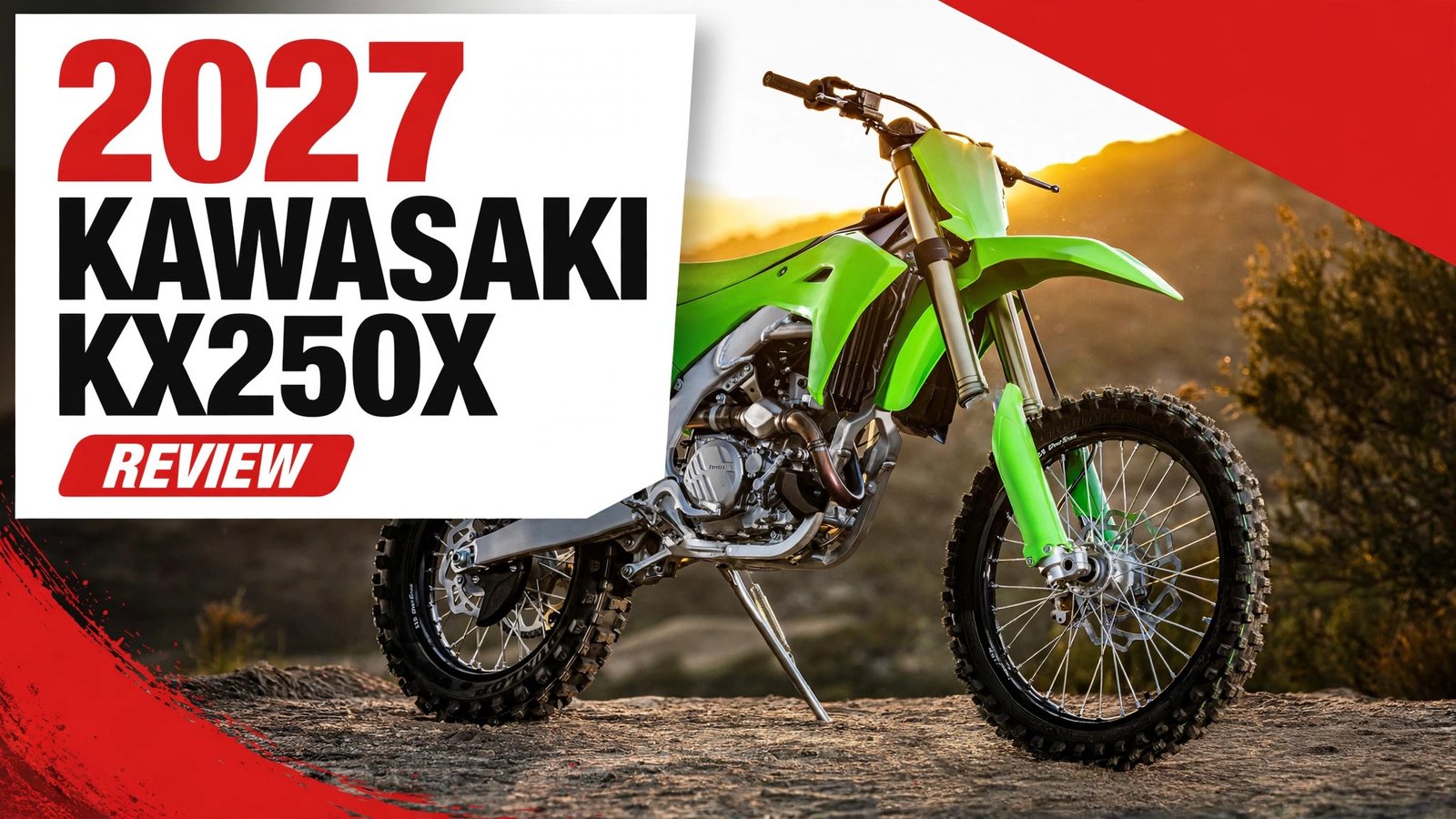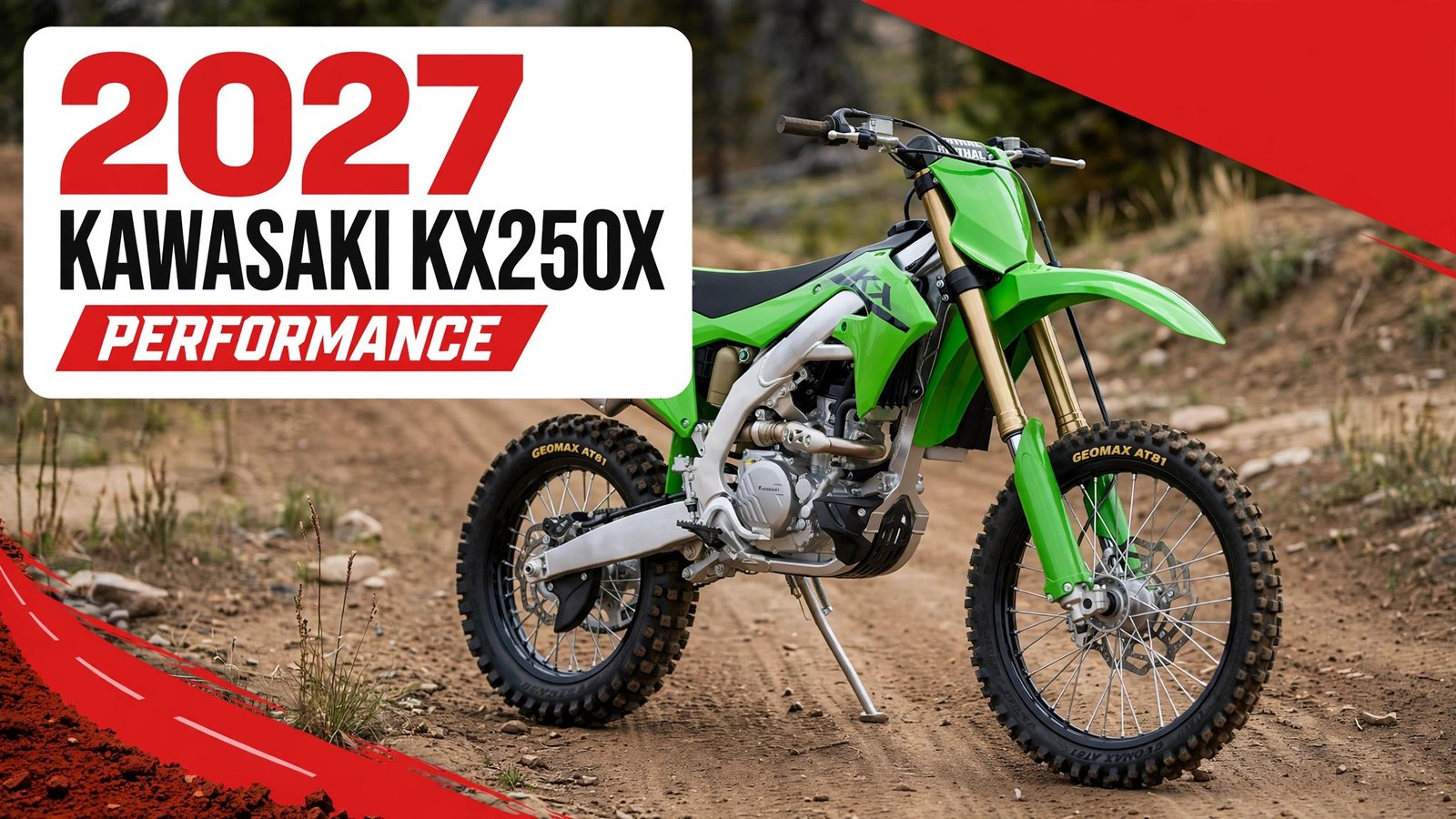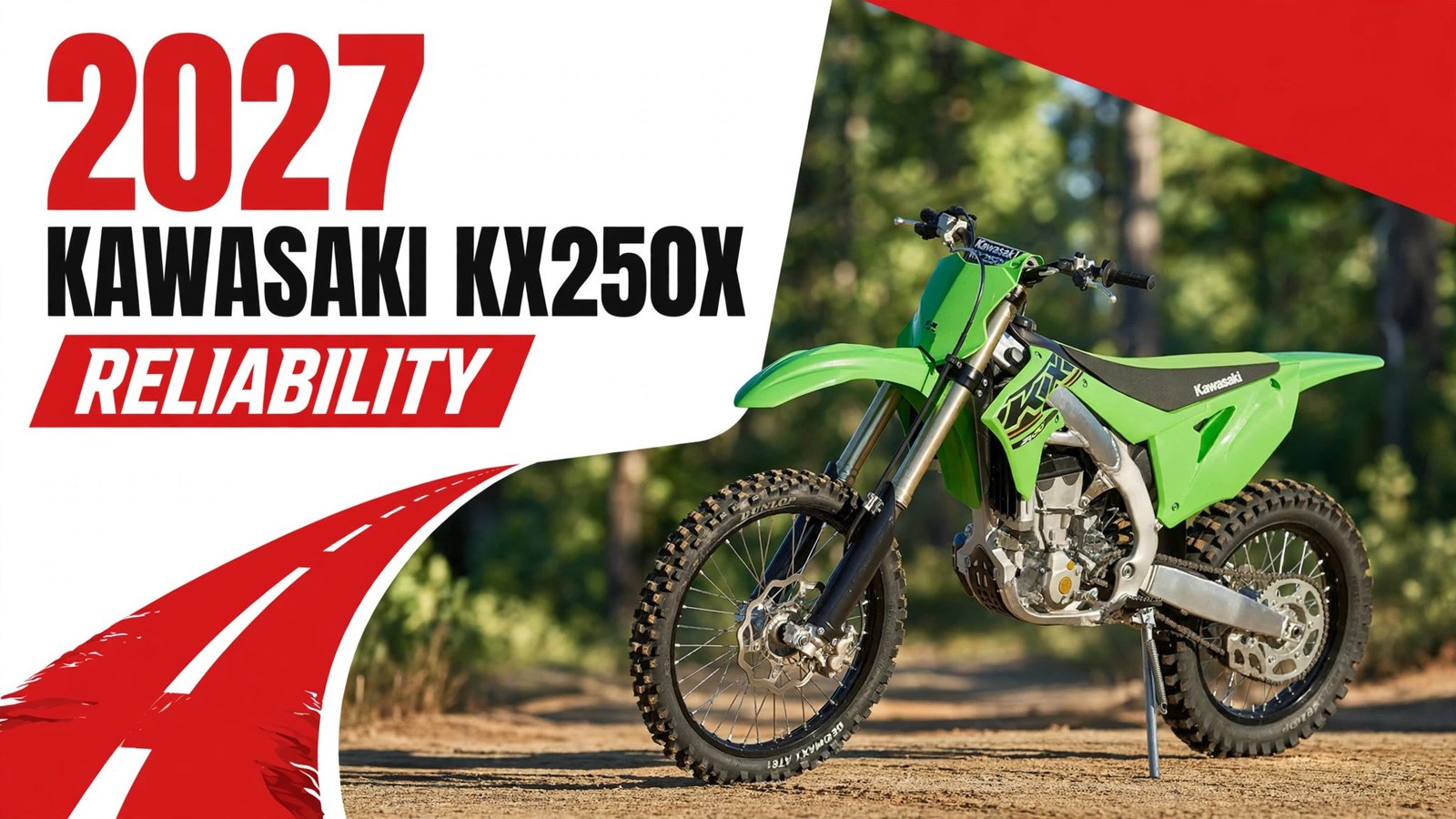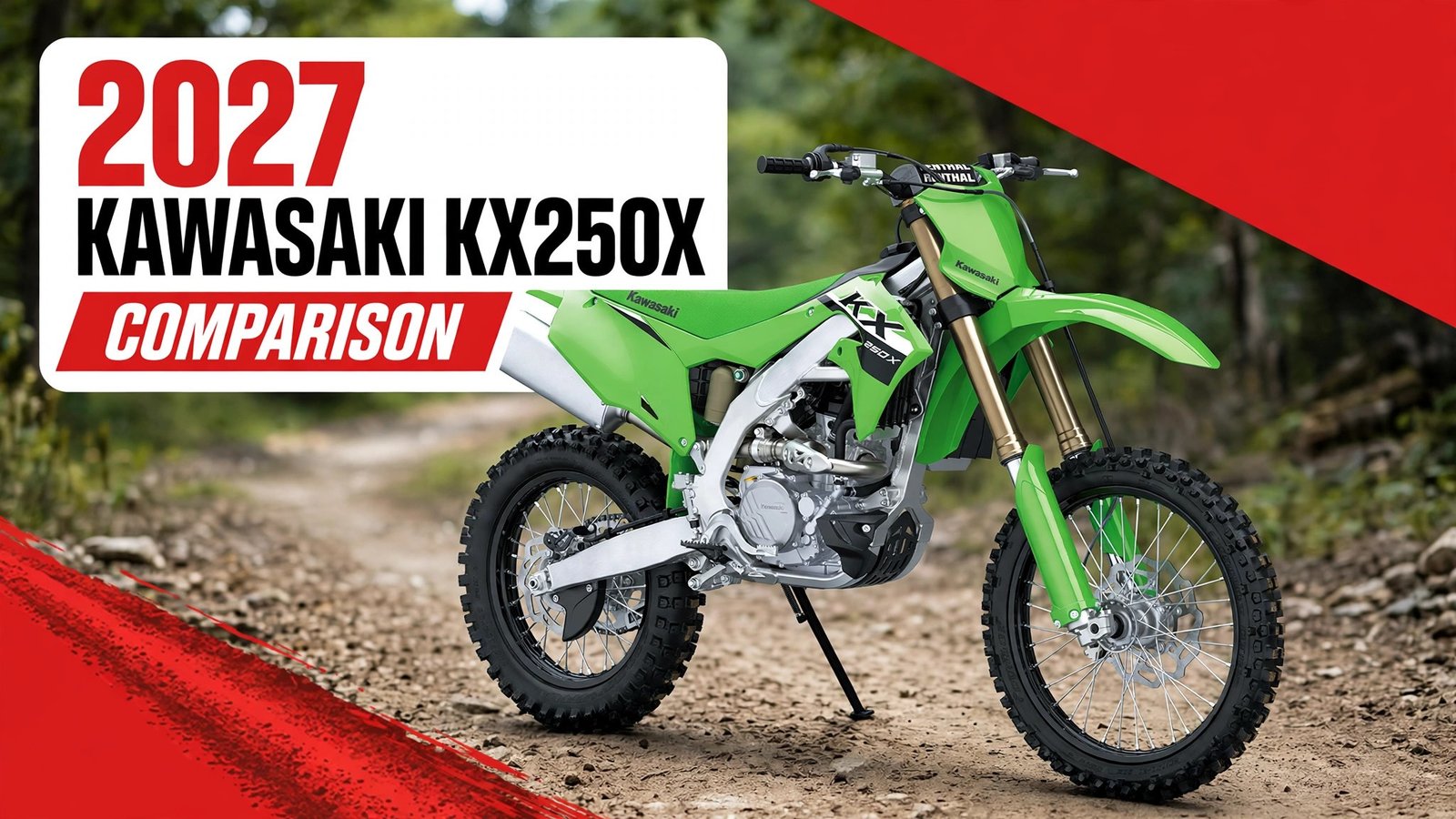
The Kawasaki KX250 reliability question has a sharper answer than most 250 four-strokes, because the factory itself prints the hard number: piston and piston ring, replace every 15 hours. It comes from Kawasaki’s own service-manual chart, and it shapes everything else in this Kawasaki KX250 reliability guide.
This Kawasaki KX250 reliability guide covers the 249cc four-stroke KX250 and KX250F, sold in the USA since 2021 with electric start and no kick starter backup. It separates verified factory figures from rumours, names the one big recall that does not touch this bike, and prices the parts the 15-hour schedule consumes. The companion Kawasaki KX250 review covers the price and spec sheet, and the companion Kawasaki KX250 performance guide covers the dyno numbers and shootout results.
Kawasaki KX250 Reliability Overview
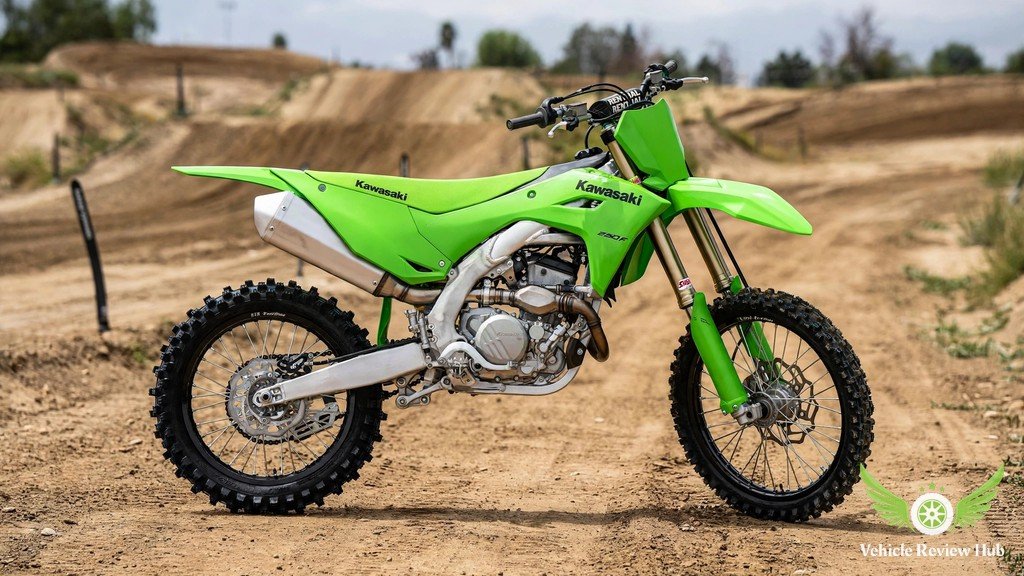
The short version of Kawasaki KX250 reliability is that the bike is honest about what it needs and punishing when it does not get it: a new piston every 15 hours, valve checks on the same schedule, and fork and shock oil every 30 hours. A bike kept to that schedule, like Keefer’s 2023 test bike, ran 56.1 hours nearly trouble-free, while his son’s loosely kept 2022 machine broke down inside 75 hours. That contrast is the whole reliability story, and the rest of this Kawasaki KX250 reliability guide fills in the evidence behind it.
KX450 Recall Skips the 250
The recall most buyers ask about is real, large, and not this bike’s. The CPSC recall 25-238, announced on 2025-04-24, covers about 3,400 model year 2025 KX450, KX450SR, and KX450X motorcycles, because the crankshaft primary gear can fail and cause a crash. The remedy is a free primary-gear replacement at an authorised dealer, with no incidents or injuries reported. No recall has ever named the modern four-stroke KX250 or KX250F, and any Kawasaki KX250 reliability discussion that treats 25-238 as a KX250 problem is simply wrong.
The only CPSC recall that ever named a KX250 is far older and a different bike. The CPSC recall 01-065, announced on 2001-01-11, covered about 18,000 model year 2001 KX series bikes, including the KX250, because the rear brakes could fail. That was the 2001 two-stroke KX250, not the four-stroke KX250F this Kawasaki KX250 reliability guide covers, and it must never be presented as a recall of the current bike.
One warning: the NHTSA recalls API returns HTTP 400 when queried for the KX250, because NHTSA does not cover competition bikes. That error must never be quoted as proof of zero recalls; the CPSC is the authority here, and its record is what the table below prints.
| Recall | Announced | Bikes named | Defect | What it means for the KX250 |
|---|---|---|---|---|
| CPSC 25-238 | 2025-04-24 | MY2025 KX450, KX450SR, KX450X (about 3,400) | Crankshaft primary gear can fail | Does not name the KX250 at all |
| CPSC 01-065 | 2001-01-11 | MY2001 KX series incl. KX250 (about 18,000) | Rear brakes can fail | 2001 two-stroke only, not the four-stroke |
Note: The CPSC 25-238 recall is the “big recall” buyers ask about, and this Kawasaki KX250 reliability guide prints it in full: about 3,400 model year 2025 KX450-family bikes, crankshaft primary gear, free dealer repair, zero incidents reported.
How Mileage, Storage and Previous Care Affect Reliability
Hours matter more than miles on a motocross bike, and the KX250 has no odometer to lie about them. No verified mileage-to-reliability correlation exists for this bike, and this Kawasaki KX250 reliability guide invents none. What is verified is the maintenance contrast: Keefer’s 2023 bike, oiled every 2 to 3 hours, ran 56.1 hours nearly trouble-free, while his son’s loosely maintained 2022 bike suffered five failures inside 75 hours.
Storage is the other half of previous care, and the owner’s manual spells out the procedure: clean the bike, warm the oil and refill it, empty the tank and run the engine at idle until it stalls, spray fogging oil into the cylinder, lubricate the chain and cables, oil the unpainted metal, lift both wheels off the ground, bag the muffler, and cover it. A bike stored wet, with old fuel and no fogging oil, is a bike whose next owner pays for the previous owner’s winter. That is the practical meaning of Kawasaki KX250 reliability: the bike’s history is written in its service log, not in its plastics.
Kawasaki KX250 Common Problems and Wear Items
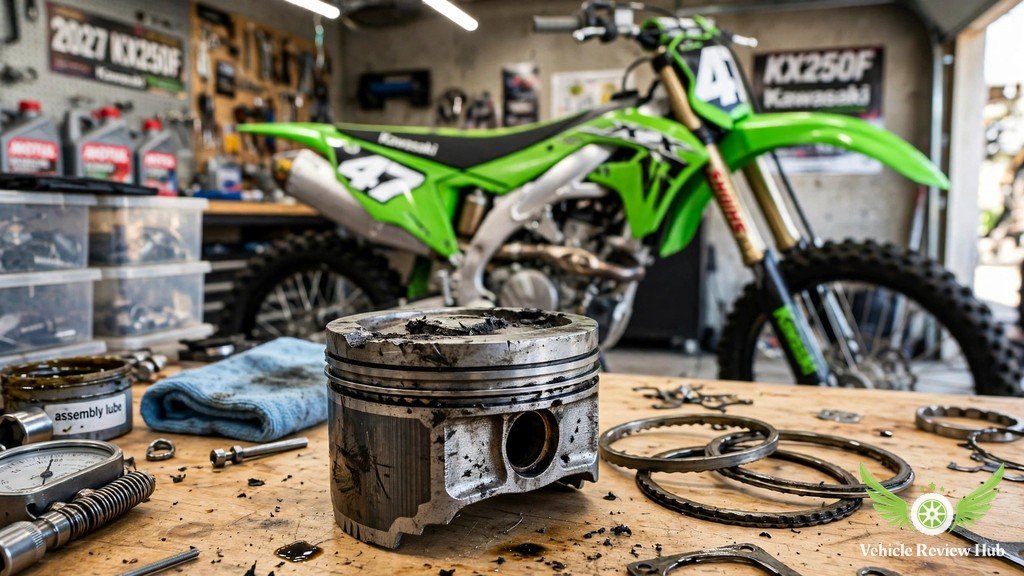
The common problems on a KX250 are not mysterious. Testers who ran the bike for dozens of hours wrote down what broke, and the list is short enough to check against a used bike in one inspection. This section of the Kawasaki KX250 reliability guide sticks to that documented record.
15-Hour Piston Is Factory
The headline wear item is the piston, and the interval is factory, not folklore. The 2004-2005 KX250F Service Manual chart says piston and piston ring, replace every 6 races, which is 15 hours. The 2018 KX250F owner’s manual chart agrees, with the piston and ring replacement in the same 15-hour column. The interval has therefore been stable from 2004 through 2018, and this Kawasaki KX250 reliability guide labels that plainly: the 2021 and later figures were not directly read.
Clutch friction plates are inspected every 3 races, or 7.5 hours, and replaced every 15 hours. The 15-hour service is therefore a full inspection point, not a single part swap.
Keefer’s 2022 Had Failures
The best-documented reliability record comes from Kris Keefer at Keefer Inc. Tested, who ran two KX250s back to back and wrote down what happened to each. His son Aden’s 2022 KX250 suffered broken clutch fibers, a main bearing failure, stripped and soft threads, seized steering head bearings, and broken subframe tabs, all within 75 hours. Keefer is honest about the cause: he gave his 16-year-old son rope on maintenance, but he also writes that he could not put all the blame on Aden, and that some of it was just a 2022 Kawasaki KX250 problem.
The 2023 bike tells the other side of the story. At 56.1 hours it was, in Keefer’s words, much easier, and he had almost literally done nothing to it. Its only failures were a muffler subframe tab that broke at the weld, two clutch packs in 56 hours, soft fork-leg threads, a shroud bolt pulling through, and three sets of chain guides. Keefer notes the plastics look used after about 15 hours. The maintenance regime behind that nearly trouble-free run was oil every 2 to 3 hours and a filter every other oil change, with 10W-40 full synthetic. That contrast, same tester, same family, different maintenance, is the strongest Kawasaki KX250 reliability evidence in this guide.
One smaller wear item deserves a line: the stock front brake line is too long and rubs the clutch-master-cylinder banjo bolt, wearing and cracking the hose; Keefer’s fix, posted in April 2026, is the slightly shorter KX450 front brake line.
Kawasaki KX250 Maintenance Schedule and Servicing
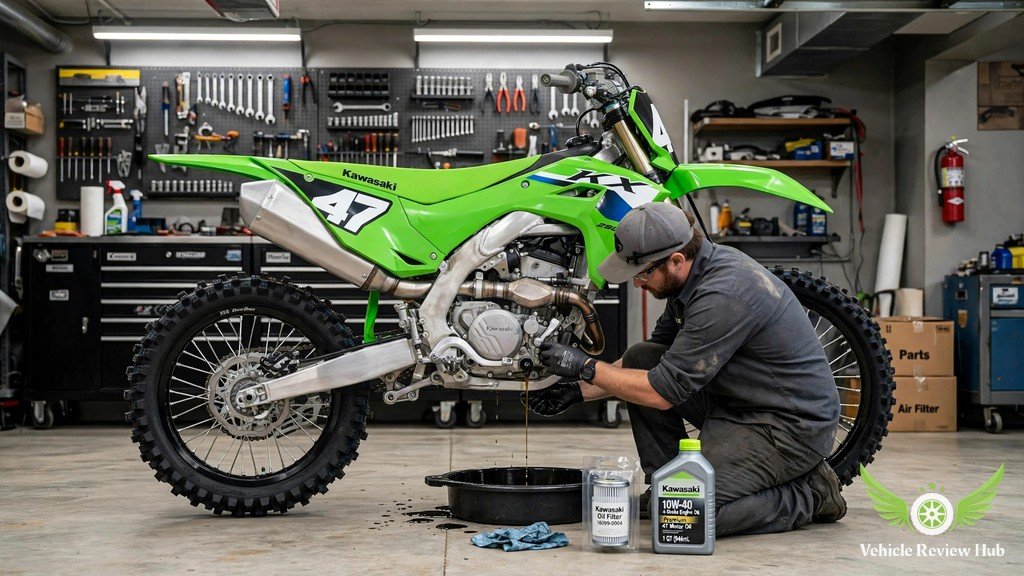
The maintenance schedule is the heart of Kawasaki KX250 reliability, because this bike’s intervals are short and the factory prints them in hours, not miles. This section prints the factory chart, flags where the two manuals disagree, and shows what the piston job looks like.
Replace Pistons Every 15 Hours
Replace the piston and the piston ring every 15 hours. That is the factory instruction, from the 2004-2005 service-manual chart, confirmed in the 2018 owner’s manual, and it is the most important sentence in this Kawasaki KX250 reliability guide. The piston pin is replaced every 12 races, or 30 hours, the spark plug is cleaned and inspected after each race, and the air cleaner is cleaned after each race.
Watch the rebuild: Jim Strat’s video “How To | KX250F Top End Re-Build” is a bench-top KX250F top-end reassembly, uploaded in January 2015, running 32 minutes 35 seconds with English narration. The engine is out of the frame, and the video shows piston rings, piston and cylinder installation, head torquing, valve-clearance and shim checks, cam timing at TDC, and the cam-chain tensioner. It states no model year for the bike, so this Kawasaki KX250 reliability guide does not call it a 2015 bike, and it shows no teardown from a complete bike, no diagnosis, no parts or costs, no start-up, and no riding. The piston job itself is the same class of work the factory chart calls for every 15 hours, which is why this guide points to it here.
Valve Specs in Millimetres
Valve clearance, engine cold, is exhaust 0.17 to 0.22 mm and intake 0.10 to 0.15 mm, unchanged from 2004 through 2018 across the service manual, the 2018 owner’s manual, and the 2013 service manual. Valve clearance is inspected every 6 races, or 15 hours, on the same factory chart as the piston, so the valve check and the piston swap land on the same service visit. As with the piston interval, the 2021 and later manual values were not directly seen, so this Kawasaki KX250 reliability guide states the spec as stable from 2004 to 2018 and does not claim a 2021 manual page was read.
The oil and filter intervals need a careful note, because the two manuals disagree. The service manual says oil and filter every 15 hours; the owner’s manual says oil after each race and filter every 7.5 hours. Both are factory documents, and this Kawasaki KX250 reliability guide prints both.
| Service item | Factory interval |
|---|---|
| Piston and piston ring, replace | Every 6 races (15 hours) |
| Valve clearance, inspect | Every 6 races (15 hours) |
| Engine oil, change | Service manual: every 6 races (15 hours); owner’s manual: after each race (2.5 hours) |
| Oil filter, replace | Service manual: every 6 races (15 hours); owner’s manual: every 3 races (7.5 hours) |
| Clutch friction plates, inspect and replace | Inspect every 3 races (7.5 hours); replace every 6 races (15 hours) |
| Piston pin, replace | Every 12 races (30 hours) |
| Front fork oil and rear shock oil, change | Every 12 races (30 hours) |
| Brake fluid, change | Every 2 years |
| Brake hoses, replace | Every 4 years |
| Steering stem bearing, grease | Every 12 races (30 hours) |
Note: Every interval in this table comes from the verified factory charts, and this Kawasaki KX250 reliability guide labels the attribution: the 15-hour piston and valve figures are stable from the 2004-2005 service manual through the 2018 owner’s manual, while the 2021 and later figures were not directly read.
Kawasaki KX250 Tires, Brakes and Suspension Maintenance
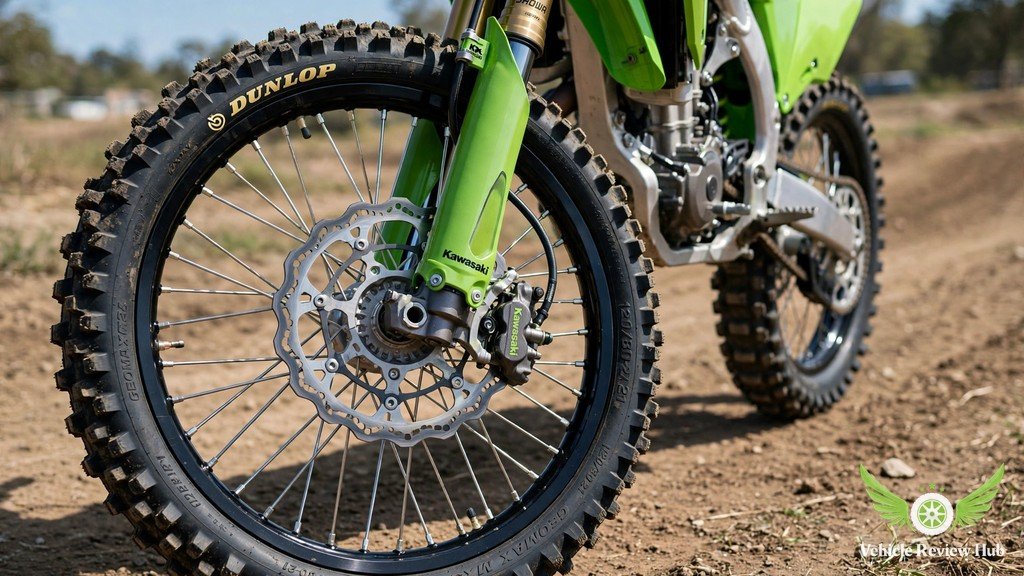
Tyres, brakes, and suspension are the wear items a rider feels first. The front tyre is 80/100-21 and the rear is 110/90-19, the brakes are 270 mm front and 240 mm rear petal discs, and the suspension is a 49 mm Showa fork over a Uni-Trak rear. This section of the Kawasaki KX250 reliability guide turns those figures into checks a rider can actually do.
Brake Fluid Every Two Years
Brake fluid is DOT3 or DOT4, shipped with DOT4, and changed every 2 years. That interval comes from the 2018 owner’s manual and the 2004-2005 service manual, and it applies whether the bike has been ridden or not. On a bike whose stock front brake line already rubs the clutch-master banjo bolt, a two-year fluid and hose discipline is the difference between a lever that works and one that goes soft at the end of a moto.
Testers gave the brakes a mixed verdict: the Nissin front brake is not as good as the Brembo on the KX450, though the front-brake and clutch levers now share the same bend. A buyer should check pad wear, disc condition, and the front brake line routing for the rub Keefer documented. Those checks belong in every Kawasaki KX250 reliability inspection, because the brake is the one system where a worn part is also a safety part.
Tire, Brake and Suspension Checks That Matter
The checks that matter most are the ones tied to the factory chart. Keefer’s 2022 bike had seized steering head bearings inside 75 hours, which is exactly what a skipped 30-hour grease interval produces. The swingarm and Uni-Trak pivots are greased and inspected every 15 hours. A used bike with a notchy steering head or a dry swingarm pivot is telling its buyer the chart was not followed.
Cycle News names the 2027 fitment as the Dunlop Geomax MX34, and this Kawasaki KX250 reliability guide attributes that fitment to Cycle News rather than to the spec sheet, which prints sizes only. A buyer should check knob wear and sidewall cracking, and remember that a motocross tyre is a consumable, not a reliability verdict. The suspension, by contrast, is a verdict: a bike whose fork seals weep or whose shock feels dead at 30 hours is a bike whose owner skipped the oil change the chart calls for.
Kawasaki KX250 Maintenance and Ownership Costs
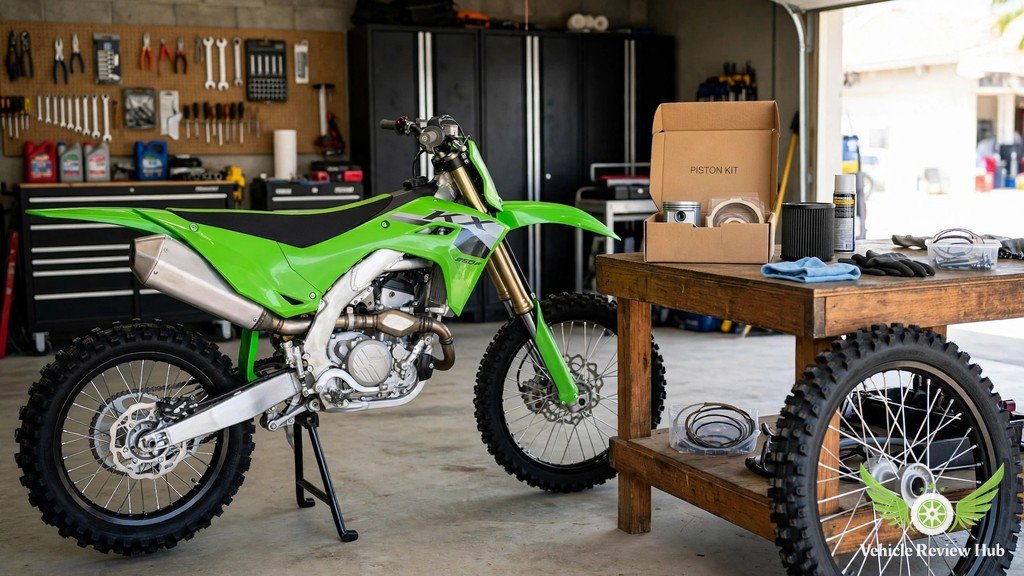
A 15-hour piston interval has a price, and this section of the Kawasaki KX250 reliability guide prints it. Every price below is as seen on 2026-11-25. The piston kits are the big recurring cost; the filters and tyres are small. The companion Kawasaki KX250 comparison puts the purchase price against the Yamaha, Honda, and KTM rivals.
Fuel, Routine Servicing, Tires and Replacement Parts
The owner’s manual requires clean fresh unleaded gasoline with a minimum Antiknock Index of 90, the average of RON and MON on US pumps, and approves up to 10 percent ethanol. The spark plug is the NGK CPR8EB-9 as standard, with the CPR9EB-9 as the optional colder plug, per the 2018 owner’s manual. The 2021 and later plug was not verified, so this Kawasaki KX250 reliability guide prints the manual’s plug only.
Engine oil is SAE 10W-40, API SG, SH, SJ, SL, or SM with JASO MA, MA1, or MA2, with Kawasaki’s own Performance 4-Stroke full synthetic 10W-40 among the recommended oils. The oil filter is where buyers must be careful: the K and N KN-207 fits the KX250 from 2019 to 2026 and the KX250F from 2004 to 2020, and it cost $11.99. The often-quoted spin-on filter part number for street bikes is not the KX250 cartridge filter, and this Kawasaki KX250 reliability guide does not print it as a KX250 part. No OEM oil-filter part number for the 2021 and later bikes could be verified.
The piston kits are the real cost of the 15-hour schedule: a Wiseco PK1951 14.5:1 kit for the 2025 KX250 cost $331.85, and a Wiseco Racer Elite Pro REP834M07800 kit for 2025 to 2026 cost $388.95. No OEM piston price for the 2021 and later bikes could be verified, because Partzilla is bot-walled, so this Kawasaki KX250 reliability guide prints no OEM piston price at all.
| Part | Price as seen 2026-11-25 |
|---|---|
| Wiseco PK1951 piston kit, 14.5:1 (2025 KX250) | $331.85 |
| Wiseco Racer Elite Pro REP834M07800 (2025-2026) | $388.95 |
| K and N KN-207 oil filter (fits 2019-2026 KX250) | $11.99 |
| Dunlop Geomax MX34 tyre set (80/100-21 + 110/90-19) | $263.94 |
| Twin Air pre-oiled air filter (2021-2024) | $39.56 sale ($43.95 list) |
| Pro X connecting rod kit (2021-2026) | $232.95 |
| Pro X cam chain (2021-2024) | $105.95 |
Note: All prices above are as seen on 2026-11-25, and this Kawasaki KX250 reliability guide repeats the date because parts prices move.
Leftover Prices Cap Used Values
The used market is capped by the new leftover market. The 2026 KX250 lists at $9,099 MSRP, and leftover 2026 bikes were advertised at $6,999 at five or more dealers as seen on 2026-11-25, about $2,100 under MSRP. That discount is a promotional discount or rebate on leftover 2026s, worth up to $1,750 at Capital Powersports under its Season of Saving promotion, plus further dealer discount, not a $1,750 cut in the MSRP itself.
Against that $6,999 new leftover, used 2022 bikes were asking $3,999 to $4,999 as seen on the same date, one at $4,395 and another at $4,999. No published book values were found for this bike, so this Kawasaki KX250 reliability guide prints no book value. Compare any used asking price against the $6,999 leftover first, and then against the piston paperwork, because a used bike with no service record is a bike whose next piston is already overdue.
How to Keep a Kawasaki KX250 Reliable
Keeping a KX250 reliable is a schedule, kept in hours, with records to prove it. The two Keefer test bikes prove the point: same model, same tester, two outcomes, separated only by the service schedule. This final section of the Kawasaki KX250 reliability guide turns that evidence into a routine any owner can follow.
Preventive Maintenance, Records and Regular Inspections
Preventive maintenance means working in hours, not miles: oil every 2 to 3 hours, filter every other change, air filter after each race, clutch plates every 7.5 hours, piston and valves every 15 hours. Keep a written log with the hour meter reading at every service, because a log is the only proof that the schedule was kept.
Records matter twice over. They keep the owner honest about hours, and they are the first thing a buyer asks for. That is the practical rule this Kawasaki KX250 reliability guide leaves every owner with: the schedule is short, the parts are priced, and the log is the proof.
Demand Piston Paperwork
Demand piston paperwork before buying a used KX250. That is advice, not a verified fact, but it follows from the factory chart: a piston is due every 15 hours, and a seller who cannot show when the last one went in is asking the buyer to pay for it. Ask for the hour meter reading, the last piston change, the last valve check with clearances, and the receipts. If the paperwork is missing, budget for a piston kit, a valve check, and fork and shock oil on day one. A used KX250 with paperwork is a known quantity; without it, it is a gamble, and the stakes are a top end.
Kawasaki KX250 Reliability: Frequently Asked Questions
The questions below are the ones buyers ask about Kawasaki KX250 reliability: no recall on the modern four-stroke, a factory 15-hour piston interval, and a record that depends more on the previous owner’s maintenance than on the model year.
Has the Kawasaki KX250 been recalled?
No recall has ever named the modern four-stroke KX250 or KX250F. The big CPSC recall buyers ask about, CPSC 25-238 from April 2025, covers about 3,400 bikes and names only the 2025 KX450, KX450SR, and KX450X, for a crankshaft primary gear that can fail. The only CPSC recall that ever named a KX250 is from 2001, for the old two-stroke’s rear brakes.
How often does the KX250 need a new piston?
Every 15 hours, per the factory chart. The 2004-2005 service manual says piston and piston ring, replace every 6 races, or 15 hours, and the 2018 owner’s manual agrees. The 2021 and later manual figure was not directly read, but the interval has been stable since 2004, and that stability is the basis for this Kawasaki KX250 reliability answer.
What are the valve clearances on the KX250?
Engine cold, exhaust 0.17 to 0.22 mm and intake 0.10 to 0.15 mm, a specification unchanged from 2004 to 2018. Valve clearance is inspected every 15 hours, on the same factory chart as the piston, which is why this Kawasaki KX250 reliability guide pairs the two jobs on one service visit.
What are the common problems on a KX250?
The best-documented record is Kris Keefer’s: his son’s 2022 KX250 suffered broken clutch fibers, a main bearing failure, stripped and soft threads, seized steering head bearings, and broken subframe tabs within 75 hours. The 2023 bike at 56.1 hours was nearly trouble-free, with two clutch packs and a muffler-tab weld break. The difference was maintenance, oil every 2 to 3 hours, and that contrast is the core of Kawasaki KX250 reliability.
How much does a KX250 piston cost?
Aftermarket kits are the verified prices. A Wiseco 14.5:1 kit for the 2025 bike is $331.85, and a Wiseco Racer Elite Pro kit for 2025 to 2026 is $388.95. No OEM piston price for 2021 and later bikes could be verified, so this Kawasaki KX250 reliability guide prints no OEM piston price.
How do I store a KX250 over winter?
Per the owner’s manual: clean the bike, warm the oil and refill it, empty the tank and run the engine at idle until it stalls, spray fogging oil into the cylinder through the spark-plug hole, lubricate the chain and cables, oil the unpainted metal, lift both wheels off the ground, bag the muffler, and cover the bike. That routine is the storage half of Kawasaki KX250 reliability.