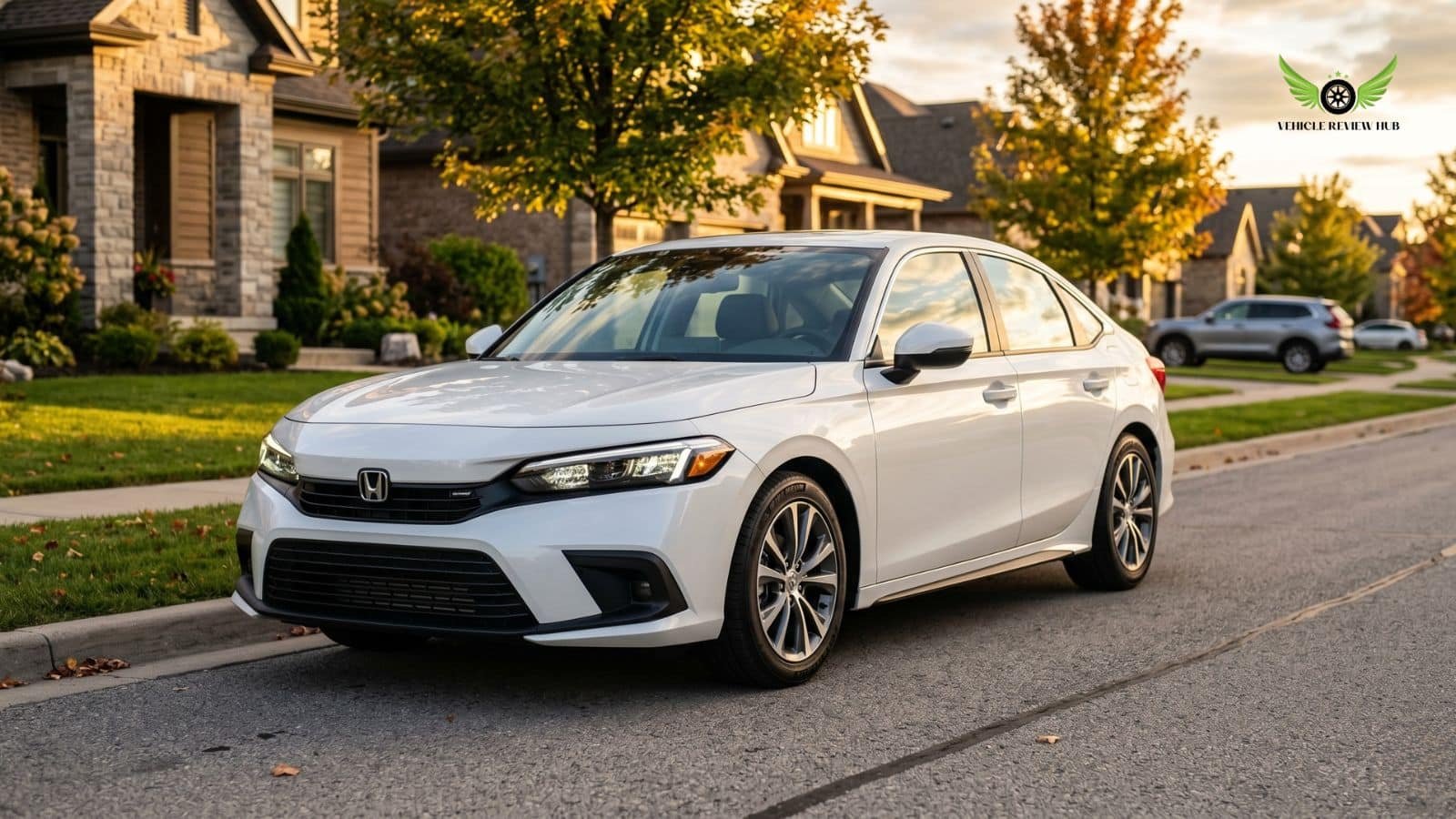
The Honda Civic Sedan remains one of the best compact sedans for drivers who want strong fuel economy, long-term reliability, modern technology, and low ownership costs in the USA. The latest model continues Honda’s focus on comfort, efficiency, and practical daily driving while adding a more advanced hybrid powertrain for better performance and MPG.
For 2025–2026, the biggest update is the new hybrid system. The Honda Civic Sedan Hybrid produces 200 horsepower and 232 lb-ft of torque, making it noticeably quicker and smoother in city traffic than the standard 2.0L gasoline model. Hybrid trims can deliver up to 50 MPG in city driving, which makes the Civic a strong option for commuters and long-distance drivers. Base trims still offer solid value with good fuel economy and lower starting pricing.
The current Honda Civic Sedan lineup includes LX, Sport, Sport Hybrid, and Sport Touring Hybrid trims. Pricing starts around $24,695 for the LX trim and reaches around $32,395 for the Sport Touring Hybrid. Honda also improved technology features with wireless Apple CarPlay, Google built-in on higher trims, and updated driver assistance systems.
One reason the Honda Civic Sedan continues to perform well in the US market is its balanced driving feel. Steering feels stable at highway speeds, visibility is good, and the cabin layout remains simple and practical for everyday use. Based on owner feedback and long-term reliability history, many buyers choose the Civic because maintenance costs are usually lower than many competitors in the compact sedan segment.
This Honda Civic Sedan Review covers pricing, engine options, specs, ownership costs, strengths, weaknesses, and real-world usability to help buyers decide which trim fits their budget and driving needs best.
What Is the Honda Civic Sedan and Why It’s One of the Best Compact Cars in the USA
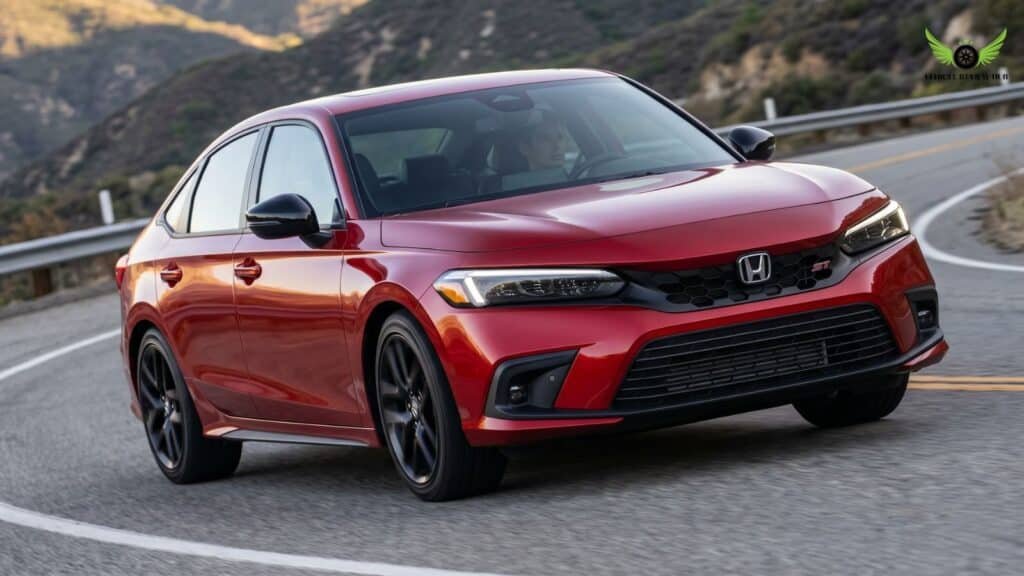
The Honda Civic Sedan remains one of the most trusted compact cars in the USA because it offers a practical mix of fuel efficiency, reliability, comfort, and long-term value. It is designed for drivers who want low ownership costs without giving up modern technology or everyday driving comfort.
For the latest model years, Honda updated the Civic Sedan with refreshed styling, improved technology, and a stronger hybrid lineup. Buyers can now choose between traditional gasoline models and hybrid trims depending on their budget and driving needs. This flexibility is one reason the Civic continues to perform strongly in the compact sedan segment.
Honda Civic Sedan Overview and Segment Positioning
The Honda Civic Sedan competes with cars like the Toyota Corolla, Hyundai Elantra, and Mazda3 in the compact sedan category. Even in a crowded market, the Civic continues to stand out because of its refined ride quality, strong resale value, and dependable long-term ownership experience.
The current lineup includes LX, Sport, Sport Hybrid, and Sport Touring Hybrid trims. Base models use a 2.0L naturally aspirated engine producing 150 horsepower, while hybrid trims use Honda’s two-motor hybrid system with 200 horsepower and 232 lb-ft of torque. Hybrid models can also reach up to 50 MPG in city driving, making them one of the most efficient compact sedans currently available in the USA.
Model | Powertrain | Horsepower | EPA City MPG | Best For |
LX | 2.0L Gasoline | 150 HP | Up to 32 MPG | Budget buyers |
Sport | 2.0L Gasoline | 150 HP | Up to 31 MPG | Daily commuters |
Sport Hybrid | Hybrid | 200 HP | Up to 50 MPG | Fuel economy + performance |
Sport Touring Hybrid | Hybrid | 200 HP | Up to 50 MPG | Premium daily driving |
Inside, the cabin feels modern and easy to use without unnecessary complexity. Visibility is good, seating comfort is solid for long drives, and the suspension feels more refined than many older compact sedans. From a daily driving perspective, the Civic handles city traffic smoothly while remaining stable on highways.
Evolution and Latest 2025–2026 Updates (Hybrid Shift)
The biggest update in the latest Honda Civic Sedan is Honda’s stronger focus on hybrid technology. Previous Civic generations were mainly known for reliability and fuel economy, but the newest hybrid trims now add noticeably stronger acceleration and smoother low-speed driving.
For 2025–2026, Honda refreshed the front-end styling, updated interior technology, and expanded hybrid availability across the lineup. The hybrid system produces 200 horsepower while still delivering excellent fuel economy. In real driving conditions, the electric motor provides instant torque, which helps the car feel quicker during city acceleration and stop-and-go traffic.
Higher trims now include features such as:
- Google built-in
- Wireless Apple CarPlay and Android Auto
- Bose premium audio system
- Larger digital displays
- Updated Honda Sensing safety technology
Based on current market trends, many US buyers are moving toward compact hybrids because fuel efficiency and long-term running costs have become more important. The Honda Civic Sedan fits this demand well by combining strong MPG with everyday practicality.
Who Should Buy the Honda Civic Sedan
The Honda Civic Sedan is a smart option for drivers who want dependable transportation with modern features and reasonable ownership costs.
The gasoline trims are a good fit for:
- First-time car buyers
- Students
- Budget-focused drivers
- Daily commuters
The hybrid trims are better suited for:
- High-mileage drivers
- City commuters
- Buyers focused on fuel savings
- Drivers wanting quicker acceleration with better MPG
Many owners choose the Civic because it delivers a balanced ownership experience. Maintenance costs are generally manageable, resale value remains strong, and the car works well for both short commutes and longer highway driving. For buyers looking for a compact sedan that combines efficiency, comfort, and long-term value, the Civic continues to be one of the strongest choices in the US market.
Honda Civic Sedan Price in the USA (Deep Market Analysis)
The Honda Civic Sedan remains competitively priced in the compact sedan market while offering strong fuel economy, good resale value, and lower long-term ownership costs. For 2025–2026, Honda continues offering both gasoline and hybrid trims, giving buyers more flexibility depending on budget and driving needs.
One reason the Honda Civic Sedan continues to perform well in the US market is value retention. Even though hybrid trims cost more upfront, many buyers consider the extra price worthwhile because of lower fuel expenses and stronger everyday performance.
Base MSRP ($24K–$32K Range by Trim)
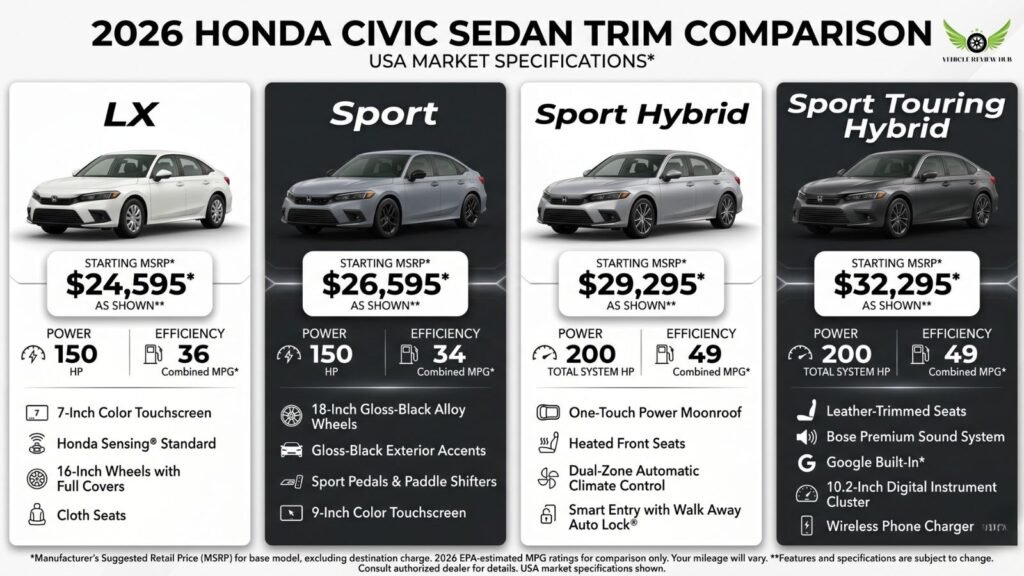
The current Honda Civic Sedan lineup starts around $24,695 for the LX trim and reaches around $32,395 for the Sport Touring Hybrid. Hybrid trims sit higher in the lineup because they include the more advanced two-motor hybrid system and additional premium features.
Trim | Starting MSRP | Powertrain | Estimated MPG (City/Hwy) |
LX | Around $24,695 | 2.0L Gasoline | 32 / 41 |
Sport | Around $26,695 | 2.0L Gasoline | 31 / 39 |
Sport Hybrid | Around $29,395 | 200-HP Hybrid | 50 / 47 |
Sport Touring Hybrid | Around $32,395 | 200-HP Hybrid | 50 / 47 |
Compared to some compact rivals, the Civic Sedan may cost slightly more initially, but its fuel economy and resale value help reduce overall ownership costs over time.
LX vs Sport vs Hybrid vs Touring Price Comparison
The LX trim is the most budget-friendly option and works well for drivers who mainly want dependable daily transportation with solid fuel economy. It still includes important features like Honda Sensing safety technology, Apple CarPlay, LED headlights, and a comfortable interior layout.
The Sport trim adds a more aggressive design, larger wheels, blind-spot monitoring, and additional convenience features. Many buyers consider it the best balance between pricing and equipment.
The Sport Hybrid changes the driving experience the most. The 200-horsepower hybrid system delivers quicker acceleration and much better fuel economy, especially during city driving and heavy traffic.
The Sport Touring Hybrid sits at the top of the lineup and focuses more on premium comfort and technology.
Trim | Best For | Key Advantage |
LX | Budget buyers | Lower starting price |
Sport | Daily commuters | Better styling and features |
Sport Hybrid | High-mileage drivers | Fuel savings + stronger acceleration |
Sport Touring Hybrid | Premium buyers | Technology and comfort upgrades |
The top hybrid trim also includes:
- Google built-in
- Bose premium audio
- Wireless Apple CarPlay and Android Auto
- Larger digital displays
- Leather-trimmed seating surfaces
For buyers wanting compact sedan efficiency with a more premium driving experience, the Sport Touring Hybrid feels noticeably more refined than the lower trims.
Real Dealer Pricing vs MSRP Trends
In the current US market, most Honda Civic Sedan models sell close to MSRP, especially hybrid trims with higher demand. Gasoline trims usually offer slightly more room for negotiation depending on dealership inventory and regional demand.
Trim | MSRP | Average Dealer Pricing Trend | Market Demand |
LX | $24,695 | Close to MSRP | Moderate |
Sport | $26,695 | Slight discounts possible | High |
Sport Hybrid | $29,395 | Often near MSRP | Very High |
Sport Touring Hybrid | $32,395 | Near MSRP or slightly above | High |
Dealer-installed accessories, destination charges, documentation fees, and optional packages can increase final pricing by $1,000–$2,000 beyond the base MSRP.
Based on recent market behavior, hybrid trims continue holding stronger pricing because more buyers are looking for fuel-efficient vehicles with lower long-term fuel costs.
Used Civic Sedan Price and Resale Value
The Honda Civic Sedan has one of the strongest resale value reputations in the compact sedan segment. Well-maintained models with clean ownership history usually retain value better than many competitors.
Used market pricing can vary based on mileage, trim level, accident history, and location, but Civic models generally remain in strong demand across the USA.
Model Year | Average Used Price | Resale Strength |
2024 Civic Sedan | $22K–$29K | Strong |
2023 Civic Sedan | $20K–$27K | Strong |
2022 Civic Sedan | $18K–$25K | Above Average |
Many buyers choose the Honda Civic Sedan because long-term depreciation is usually lower compared to several compact competitors. Hybrid trims may also continue improving in resale value as demand for fuel-efficient vehicles grows in the US market.
Honda Civic Sedan Engine, Specs & Platform Details
The Honda Civic Sedan is designed for drivers who want smooth daily performance, strong fuel economy, and long-term dependability without high ownership costs. For the latest model years, Honda offers both gasoline and hybrid powertrains, allowing buyers to choose between affordability and higher efficiency.
The standard engine focuses on simple and reliable commuting, while the hybrid setup delivers stronger acceleration with better city fuel economy. Both versions use a front-wheel-drive platform tuned for comfortable everyday driving rather than aggressive performance.
2.0L Naturally Aspirated Engine (150 HP) Overview
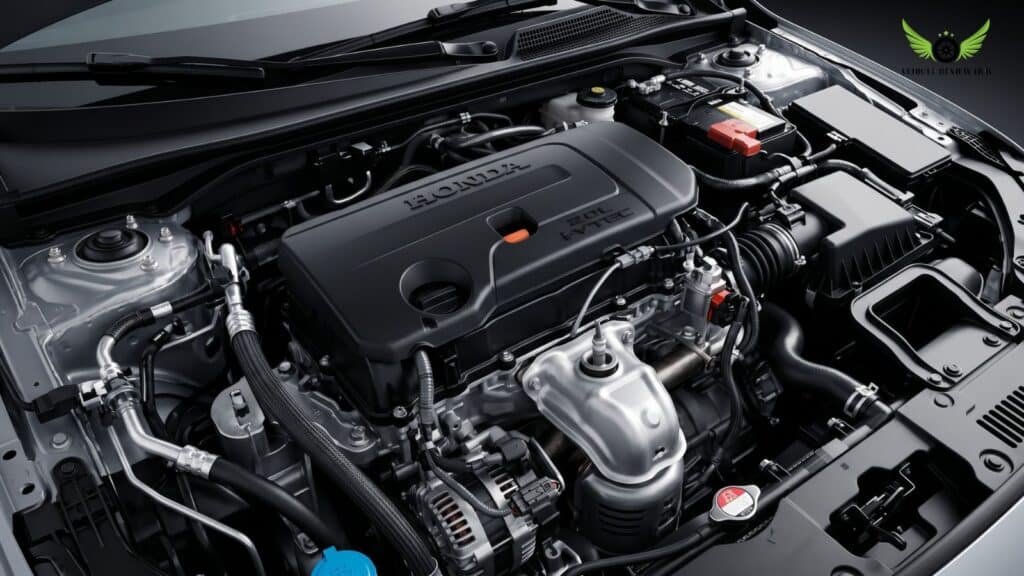
The standard Honda Civic Sedan uses a 2.0-liter naturally aspirated four-cylinder engine producing 150 horsepower and 133 lb-ft of torque. This engine is available in the LX and Sport trims.
Specification | 2.0L Gasoline Engine |
Horsepower | 150 HP |
Torque | 133 lb-ft |
Transmission | CVT |
Drivetrain | Front-Wheel Drive |
EPA Fuel Economy | Up to 32 City / 41 Highway MPG |
In real driving conditions, the engine feels smooth and predictable. Acceleration is adequate for commuting, highway merging, and normal city driving, although it is not designed to feel sporty or overly aggressive.
Many buyers still prefer naturally aspirated engines because they are usually simpler over the long term compared to turbocharged alternatives. From a reliability standpoint, Honda’s non-turbo engines have built a strong reputation in the US market for durability and lower maintenance concerns.
Hybrid Powertrain (200 HP, 232 lb-ft Torque)
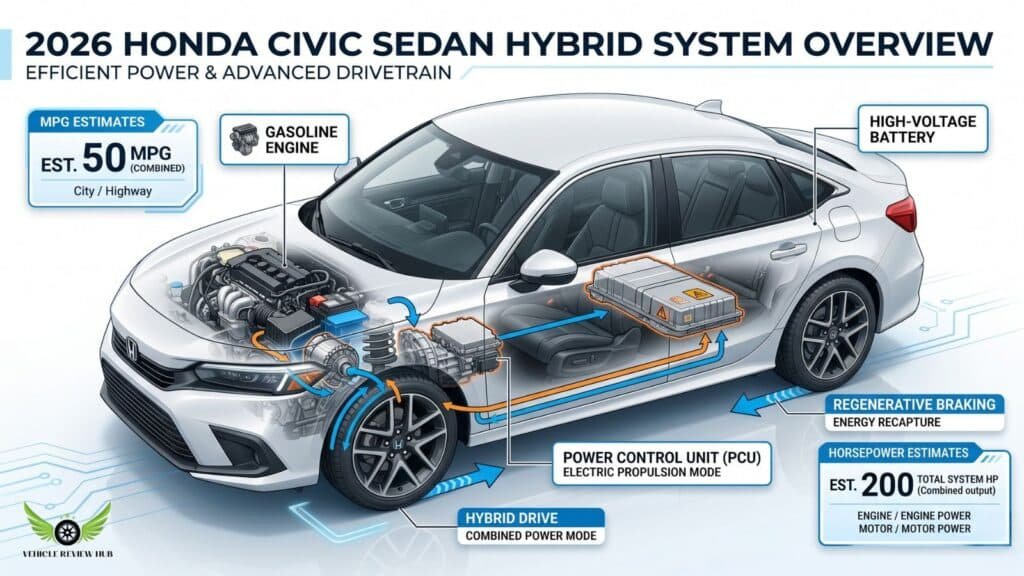
The biggest upgrade in the latest Honda Civic Sedan is the hybrid system available in the Sport Hybrid and Sport Touring Hybrid trims.
Specification | Civic Hybrid System |
Total Output | 200 HP |
Torque | 232 lb-ft |
Hybrid Setup | Two-Motor Hybrid |
Transmission | e-CVT |
EPA Fuel Economy | Up to 50 City / 47 Highway MPG |
The hybrid system combines a 2.0L Atkinson-cycle engine with Honda’s two-motor electric setup. In everyday driving, the electric motor handles much of the low-speed acceleration, which helps the car feel quicker and smoother during city traffic.
Compared to the gasoline trims, the hybrid version delivers noticeably stronger low-end response because electric motors provide torque instantly. This makes stop-and-go driving feel more refined, especially for drivers who spend a lot of time commuting in urban areas.
Fuel economy is another major advantage. Drivers covering high yearly mileage will likely notice meaningful fuel savings over time compared to standard compact gasoline sedans.
Transmission (CVT / e-CVT) and FWD Layout
All Honda Civic Sedan models use front-wheel drive, helping improve cabin space, fuel efficiency, and driving stability.
Gasoline trims use a continuously variable transmission (CVT), while hybrid models use Honda’s electronic CVT system. The hybrid setup operates differently because the electric motors manage much of the power delivery instead of relying on traditional gear changes.
During normal driving, both systems feel smooth and easy to live with. The hybrid version especially feels refined at lower speeds because acceleration remains quiet and consistent without noticeable shifting behavior.
The Civic platform itself focuses more on comfort, predictable handling, and balanced ride quality than aggressive sport-focused tuning. This setup works well for commuters, families, and drivers looking for practical everyday transportation.
Interior Space, Cargo (14.8 cu.ft) and Platform
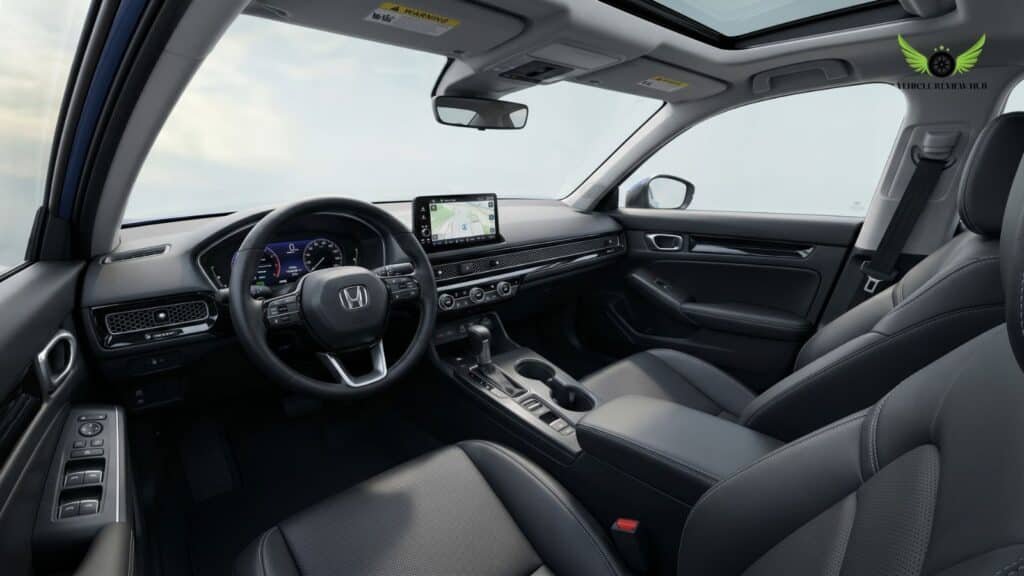
Even though the Honda Civic Sedan belongs to the compact sedan segment, interior space feels practical for both front and rear passengers.
Interior Dimension | Honda Civic Sedan |
Cargo Capacity | 14.8 cu.ft |
Passenger Volume | Up to 99 cu.ft |
Front Legroom | 42.3 inches |
Rear Legroom | 37.4 inches |
The trunk provides enough space for groceries, luggage, backpacks, and regular daily use. Honda also designed the hybrid battery placement carefully, so the hybrid trims still maintain useful cargo space without major compromises.
Rear-seat comfort is another strong point. Adults can sit comfortably in the back during longer drives, and overall cabin visibility remains good for daily driving and parking situations.
From a practical ownership perspective, the Honda Civic Sedan continues to balance efficiency, interior usability, comfort, and long-term reliability better than many entry-level sedans currently available in the USA.
Honda Civic Sedan Pros and Cons (Real USA Owner Insights)
The Honda Civic Sedan remains one of the strongest compact sedan choices in the USA because it delivers reliable daily performance, strong fuel economy, practical interior space, and solid long-term value. The latest hybrid trims also improved acceleration and city driving efficiency, making the Civic more competitive against newer compact hybrids.
Strengths (Reliability, MPG, Handling, Value)
Reliability continues to be one of the biggest reasons buyers choose the Honda Civic Sedan. The naturally aspirated 2.0L engine is known for long-term durability, and Honda’s hybrid system has also received strong early feedback for smooth operation and fuel efficiency.
Fuel economy is another major advantage. The gasoline trims can reach up to 41 MPG highway, while hybrid trims deliver around 50 MPG city and 47 MPG highway. For daily commuters, this can reduce yearly fuel costs significantly compared to larger sedans or SUVs.
The latest hybrid system also changes the driving experience noticeably. With 200 horsepower and 232 lb-ft of torque, the hybrid Civic feels quicker during city acceleration and smoother in stop-and-go traffic.
Key Strength | Real-World Benefit |
Up to 50 MPG city | Lower fuel costs for commuters |
Strong resale value | Better long-term ownership value |
200-HP hybrid system | Faster and smoother city acceleration |
Stable handling | Comfortable highway driving |
Proven Honda reliability | Lower long-term maintenance concerns |
Handling remains one of the Civic’s strongest qualities. Steering feels controlled, and the suspension balances comfort with stable highway driving better than many compact rivals.
Weaknesses (Slow Base Engine, Cabin Noise)
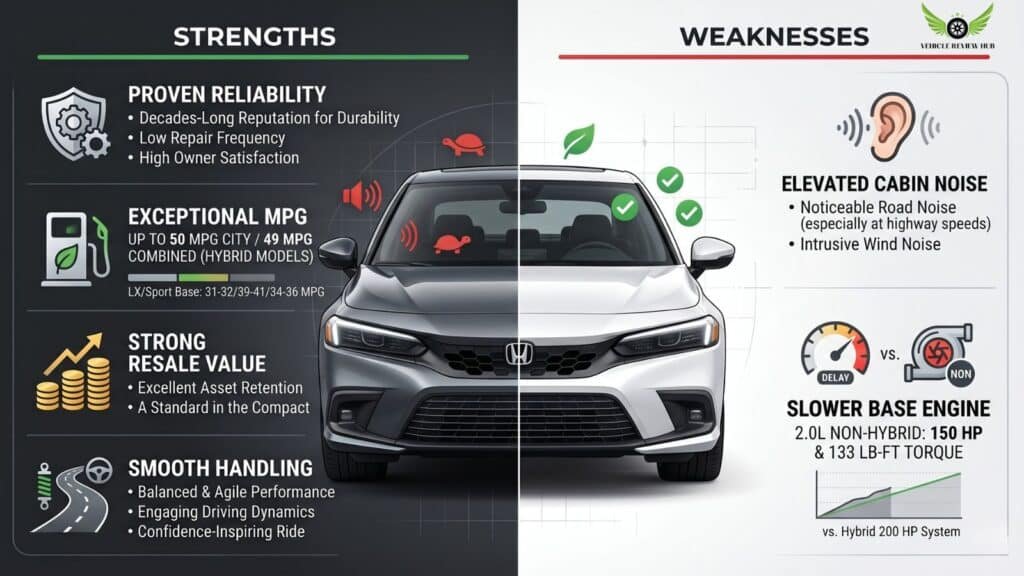
The standard 2.0L gasoline engine focuses more on fuel economy and smooth commuting than strong performance. For normal daily driving it works well, but some drivers may feel the acceleration is slower during highway merging or quick passing situations.
The hybrid trims improve this significantly because they provide much stronger low-speed torque and faster response during acceleration.
Cabin noise is another area where some owners still notice room for improvement. Road and tire noise can become more noticeable at highway speeds, especially on rough pavement. While overall refinement is better than older Civic generations, it still does not feel as isolated as some larger midsize sedans.
Another limitation is the lack of an all-wheel-drive option. For buyers living in snow-heavy regions, some competitors may offer more flexibility.
Best Buyer Profile (Students, Daily Commuters, Budget Buyers)
The Honda Civic Sedan works best for buyers who want dependable transportation with low running costs and good long-term value.
Buyer Type | Best Trim Choice |
Students | LX |
Budget commuters | Sport |
High-mileage drivers | Sport Hybrid |
Buyers wanting premium features | Sport Touring Hybrid |
The gasoline trims fit well for first-time buyers and drivers focused mainly on affordability. The hybrid trims are better for commuters who drive frequently and want stronger fuel economy along with quicker low-speed performance.
For buyers looking for a compact sedan that balances efficiency, reliability, resale value, and everyday practicality, the Honda Civic Sedan remains one of the safest choices in the US market.
Honda Civic Sedan Final Buying Verdict
The Honda Civic Sedan continues to be one of the strongest compact sedan choices in the USA because it delivers a balanced mix of fuel economy, reliability, comfort, and long-term value. For 2025–2026, Honda improved the lineup further by expanding the hybrid trims and adding more advanced technology features.
The biggest reason many buyers still choose the Civic is practicality. It works well as a daily commuter, offers strong resale value, and keeps ownership costs relatively manageable compared to many compact rivals.
Is the Honda Civic Sedan Worth Buying in 2025–2026?
Yes, the Honda Civic Sedan is worth buying in 2025–2026 for drivers who want dependable transportation with strong fuel efficiency and lower long-term ownership costs.
The standard gasoline trims remain a good option for budget-focused buyers who mainly want a reliable commuter car. The 2.0L engine delivers solid fuel economy and a simple driving experience that works well for everyday use.
The hybrid trims are where the biggest improvements appear. The 200-horsepower hybrid system delivers noticeably better acceleration while still achieving up to 50 MPG city and 47 MPG highway. In real-world driving, the hybrid models feel smoother during stop-and-go traffic and more responsive during highway merging.
Key Area | Honda Civic Sedan |
Maximum Horsepower | 200 HP (Hybrid) |
Best Fuel Economy | Up to 50 MPG City |
Cargo Space | 14.8 cu.ft |
Drivetrain | Front-Wheel Drive |
Transmission | CVT / e-CVT |
Another major advantage is resale value. The Civic has consistently remained one of the stronger compact sedans for long-term value retention in the US market. Buyers planning to keep the car for several years often benefit from lower depreciation compared to many competitors.
From a practical ownership perspective, the Honda Civic Sedan continues to make sense for commuters, students, first-time buyers, and drivers looking for dependable daily transportation without high running costs.
Best Trim Recommendation Based on Budget and Use Case
Choosing the right Honda Civic Sedan trim mainly depends on budget, driving habits, and fuel economy priorities.
Buyer Type | Recommended Trim | Main Reason |
Budget-focused buyers | LX | Lowest starting price |
Daily commuters | Sport | Better features and styling |
High-mileage drivers | Sport Hybrid | Best fuel economy and stronger performance |
Premium compact sedan buyers | Sport Touring Hybrid | More comfort and technology |
The LX trim works well for buyers who want affordable transportation with solid MPG and standard Honda safety technology.
The Sport trim feels slightly more refined because it adds larger wheels, better styling details, and additional convenience features without a major price jump.
For most drivers, the Sport Hybrid offers the best overall balance. It combines the stronger 200-horsepower hybrid system with excellent fuel economy, making it ideal for city commuting and long highway driving.
The Sport Touring Hybrid is the best choice for buyers wanting more premium features such as:
- Bose premium audio
- Google built-in
- Wireless Apple CarPlay
- Larger digital displays
- Leather-trimmed interior
Overall, the Honda Civic Sedan remains one of the safest compact sedans for buyers seeking efficiency, practicality, strong resale value, and dependable long-term ownership in the USA.
Frequently Asked Questions About the Honda Civic Sedan
Many buyers research fuel economy, reliability, ownership costs, hybrid performance, and resale value before purchasing a Honda Civic Sedan. Below are direct-answer FAQs based on the latest 2025–2026 model information and current US market data.
What is the starting price of the Honda Civic Sedan in the USA?
The 2026 Honda Civic Sedan starts at around $24,695 for the LX trim. The Sport Touring Hybrid starts at around $32,395 before destination fees and dealer charges.
How much horsepower does the Honda Civic Sedan Hybrid make?
The Honda Civic Sedan Hybrid produces 200 horsepower and 232 lb-ft of torque through Honda’s two-motor hybrid system.
What MPG does the Honda Civic Sedan get?
The gasoline trims can achieve up to 32 MPG city and 41 MPG highway. Hybrid trims can deliver around 50 MPG city and 47 MPG highway.
Does the Honda Civic Sedan use a CVT transmission?
Yes. Gasoline trims use a traditional CVT, while hybrid trims use Honda’s electronic CVT (e-CVT) system.
How much cargo space does the Honda Civic Sedan have?
The Honda Civic Sedan offers 14.8 cubic feet of trunk space, which is competitive for the compact sedan segment.
Is the Honda Civic Sedan reliable for long-term ownership?
Yes. The Civic has one of the strongest reliability reputations in the compact sedan market. Many well-maintained models exceed 200,000 miles with regular servicing.
Which Honda Civic Sedan trim is best for fuel economy?
The Sport Hybrid and Sport Touring Hybrid trims offer the best fuel economy, reaching around 50 MPG city.
Which Honda Civic Sedan trim is best for budget buyers?
The LX trim is usually the best choice for budget-focused buyers because it has the lowest starting price while still including Honda Sensing safety technology and strong fuel economy.
Is the Honda Civic Sedan Hybrid faster than the standard model?
Yes. The hybrid trims feel noticeably quicker because the electric motor delivers instant torque during acceleration.
Does the Honda Civic Sedan have all-wheel drive?
No. All Honda Civic Sedan trims currently use front-wheel drive only.
Is the Honda Civic Sedan good for commuting?
Yes. The Civic is one of the most popular commuter sedans in the USA because it combines good MPG, comfortable seating, practical interior space, and manageable ownership costs.
How long can a Honda Civic Sedan last?
With proper maintenance, many Honda Civic Sedan models can last 200,000 to 250,000 miles or more.