
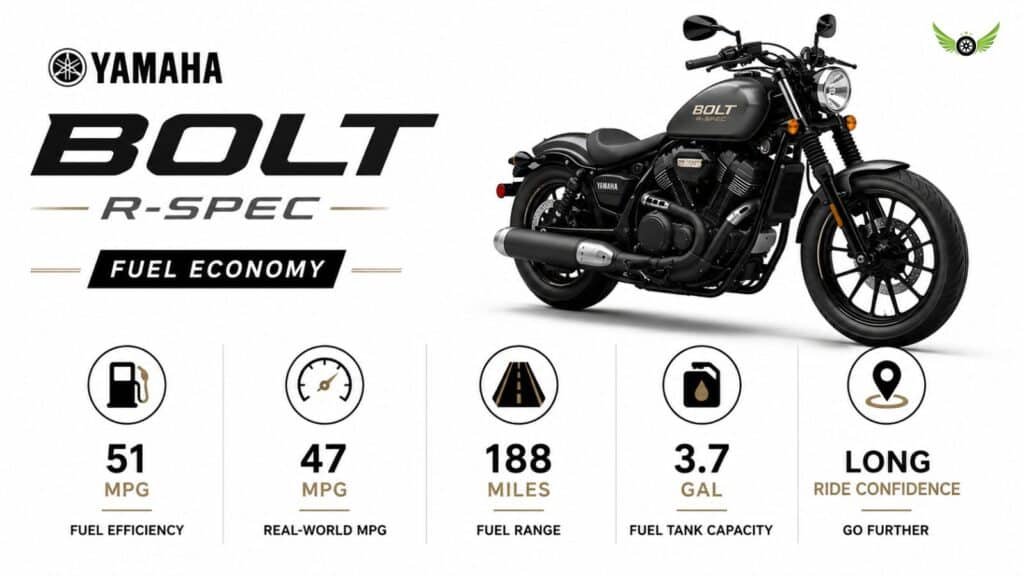
The Yamaha Bolt R-Spec combines traditional V-twin cruiser performance with practical fuel economy. Yamaha estimates fuel efficiency at 51 MPG, which is competitive for a 942cc cruiser motorcycle. Combined with its 3.4-gallon fuel tank, the motorcycle offers enough range for daily commuting, weekend rides, and regular highway travel.
Fuel economy is only part of the ownership experience. The Yamaha Bolt R-Spec is also known for its low-maintenance belt drive, low 27.2-inch seat height, and torque-focused engine character. These features make the motorcycle easy to ride and simple to own, which is why it remains a popular choice among riders looking for a straightforward midsize cruiser.
In this guide, we examine Yamaha Bolt R-Spec Mileage, fuel range, comfort, and Yamaha Bolt R-Spec Real-World Experience to help riders understand how the motorcycle performs in everyday riding conditions.
Yamaha Bolt R-Spec Mileage
Fuel economy is one of the key ownership advantages of the Yamaha Bolt R-Spec. The combination of a fuel-injected 942cc V-twin engine and a relatively lightweight cruiser platform helps deliver competitive mileage while maintaining the traditional cruiser character riders expect.
Fuel Economy Specification | Yamaha Bolt R-Spec |
Official Fuel Economy | 51 MPG |
Fuel Tank Capacity | 3.4 gal |
Estimated Fuel Range | Up to 173 miles |
Official Yamaha Bolt R-Spec MPG
Yamaha rates the Yamaha Bolt R-Spec at 51 MPG. This official figure places it among the more fuel-efficient motorcycles in the midsize cruiser category and helps keep running costs reasonable for everyday riders.
Yamaha Bolt R-Spec Real-World MPG
In real-world riding, fuel economy typically varies based on traffic, riding style, road conditions, and cruising speed. Most owners report mileage between 45 and 55 MPG, with steady riding generally producing the best results.
Based on rider feedback, fuel efficiency is one of the most consistent strengths of the Yamaha Bolt R-Spec, particularly when compared with larger V-twin cruisers that consume more fuel.
Yamaha Bolt R-Spec Fuel Range
The Yamaha Bolt R-Spec uses a 3.4-gallon fuel tank. Using Yamaha’s official 51 MPG estimate, the motorcycle has a theoretical maximum range of approximately 173 miles on a full tank.
In everyday riding conditions, most riders can expect a practical range of roughly 150–170 miles before refueling, depending on speed, traffic, and riding habits.
Yamaha Bolt R-Spec Real-World Experience
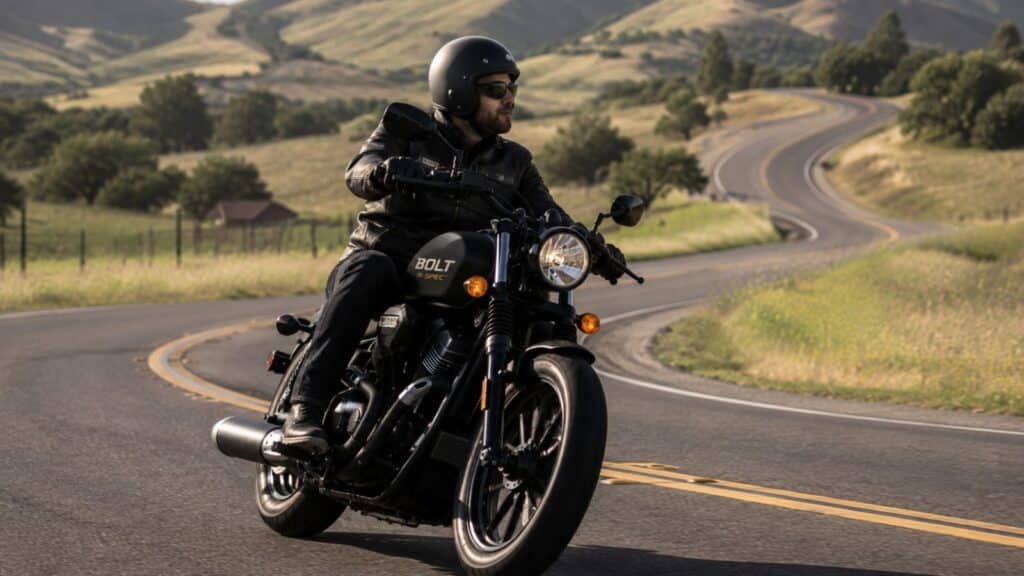
The Yamaha Bolt R-Spec is designed for riders who want a straightforward cruiser that works well in daily use and on weekend rides. Its low seat height, torque-focused engine, and belt-drive system help create an ownership experience that is simple, predictable, and easy to manage.
Yamaha Bolt R-Spec Daily Commuting Experience
The Yamaha Bolt R-Spec is well suited for commuting because of its 27.2-inch seat height, low center of gravity, and responsive low-RPM power delivery. The 942cc V-twin engine produces strong torque early in the rev range, allowing smooth acceleration in traffic without constant shifting.
The belt final drive is another practical advantage for daily riders because it requires less routine maintenance than a chain. Combined with Yamaha’s estimated 51 MPG fuel economy, the motorcycle remains economical for regular commuting. In everyday traffic, the Yamaha Bolt R-Spec feels balanced, easy to control, and comfortable during stop-and-go riding.
Yamaha Bolt R-Spec Weekend and Highway Riding Experience
The Yamaha Bolt R-Spec performs confidently on weekend rides and highway routes. The motorcycle cruises comfortably between 70 and 80 mph, where the engine remains smooth and responsive while still providing enough torque for passing slower vehicles.
The upright riding position and mid-mounted foot controls create a natural riding posture that works well for extended periods in the saddle. Its 61.8-inch wheelbase helps maintain stability at highway speeds, while the low seat height contributes to rider confidence during stops and low-speed maneuvers.
One limitation for longer trips is the 3.4-gallon fuel tank, which requires more frequent fuel stops than larger touring-oriented cruisers. However, for commuting, day trips, and weekend highway riding, the Yamaha Bolt R-Spec delivers a practical and enjoyable real-world riding experience.
Yamaha Bolt R-Spec Comfort
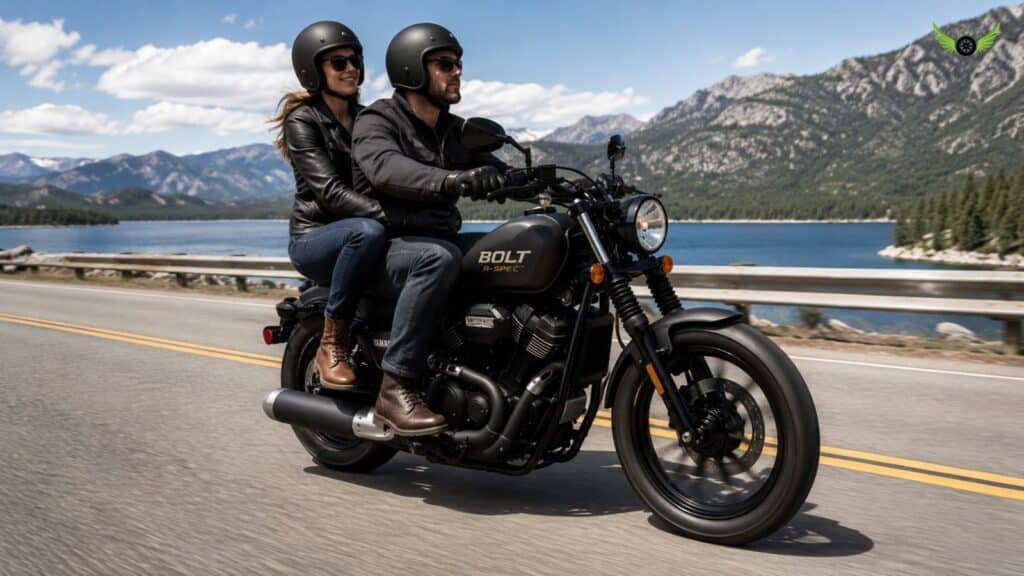
Comfort is an important part of the Yamaha Bolt R-Spec ownership experience. Yamaha designed the motorcycle with a low seat height, relaxed ergonomics, and a natural riding position that suits daily commuting, weekend rides, and regular highway use.
Yamaha Bolt R-Spec Rider Comfort
The Yamaha Bolt R-Spec features a 27.2-inch seat height, making it accessible to a wide range of riders. The combination of mid-mounted foot controls and a relatively upright handlebar position creates a neutral riding posture that feels comfortable during everyday riding.
The seat is well suited for commuting and shorter trips, while the upgraded piggyback rear shocks help improve ride quality compared to the standard Bolt model. Based on owner feedback, the riding position is one of the motorcycle’s strongest comfort features. Riders who frequently cover long highway distances often choose an aftermarket seat for additional support, but the overall ergonomics remain comfortable for most riders.
Yamaha Bolt R-Spec Passenger Comfort
Passenger comfort is adequate for occasional two-up riding. The Yamaha Bolt R-Spec includes a compact passenger seating area that works well for short and moderate rides, but it is not designed as a dedicated touring motorcycle.
The motorcycle’s stable chassis and torque-rich 942cc V-twin engine help maintain a smooth ride with a passenger onboard. However, riders who regularly travel with a passenger often add a larger seat or backrest to improve long-distance comfort. For occasional weekend rides, passenger comfort is generally sufficient, but solo riding remains the motorcycle’s primary focus.
Is the Yamaha Bolt R-Spec Good for Everyday Use

The Yamaha Bolt R-Spec is a practical cruiser for everyday riding. Its low seat height, strong low-end torque, fuel-efficient 942cc V-twin engine, and low-maintenance belt drive make it suitable for commuting, errands, and weekend rides. Riders looking for a simple motorcycle without complex electronics often find it easy to live with on a daily basis.
Yamaha Bolt R-Spec Everyday Riding Benefits
The Yamaha Bolt R-Spec offers several advantages for regular use. The 27.2-inch seat height helps riders manage stop-and-go traffic with confidence, while the 51 MPG EPA estimate keeps fuel costs relatively low for a midsize cruiser. The belt-drive system requires less routine maintenance than a chain, making ownership simpler.
Everyday Use Feature | Benefit |
27.2-inch Seat Height | Easy low-speed control and parking |
51 MPG Fuel Economy | Lower fuel costs |
Belt Final Drive | Reduced maintenance requirements |
942cc V-Twin Engine | Strong low-RPM torque for traffic |
Mid-Mounted Foot Controls | Comfortable daily riding position |
The motorcycle’s low center of gravity and predictable throttle response also make it easy to maneuver in urban environments. For many owners, the combination of comfort, fuel economy, and reliability is what makes the Yamaha Bolt R-Spec a strong everyday motorcycle.
Yamaha Bolt R-Spec Everyday Riding Limitations
The Yamaha Bolt R-Spec is not without limitations. The 3.4-gallon fuel tank provides less range than larger touring cruisers, which means riders may need to stop for fuel more often on longer trips.
The motorcycle also lacks features such as cruise control, selectable ride modes, and advanced rider-assistance technology found on some newer competitors. In addition, the stock seat may become less comfortable during extended highway rides, which is why some long-distance owners choose aftermarket seat upgrades.
For commuting, city riding, and weekend cruising, these limitations are generally minor. However, riders who frequently travel long distances may prefer a motorcycle with a larger fuel tank and more touring-oriented equipment.
Bolt R-Spec Mileage & Real-World Experience FAQs
Riders researching the Bolt R-Spec usually want answers about fuel economy, ownership costs, comfort, reliability, and everyday usability. The following questions address the topics most buyers search for before purchasing a midsize cruiser.
Is the Bolt R-Spec worth buying for daily riding?
Yes. The Bolt R-Spec is a practical daily rider thanks to its 51 MPG fuel economy estimate, low 27.2-inch seat height, belt-drive system, and easy-to-manage power delivery.
What is the real-world fuel economy of the Bolt R-Spec?
Most owners report between 45 and 55 MPG, depending on traffic conditions, riding style, road type, and cruising speed.
How far can a Bolt R-Spec go on a full tank?
With a 3.4-gallon fuel tank and Yamaha’s 51 MPG estimate, the motorcycle has a theoretical range of approximately 173 miles. Most riders experience a practical range of 150–170 miles.
Is the Bolt R-Spec comfortable for beginners?
Yes. The low seat height, predictable throttle response, and balanced handling make the Bolt R-Spec approachable for many new cruiser riders.
Is the Bolt R-Spec comfortable on the highway?
Yes. The motorcycle is most comfortable between 70 and 80 mph, where the engine remains smooth and responsive. The upright riding position also helps reduce rider fatigue during longer highway rides.
How reliable is the Bolt R-Spec?
The Bolt R-Spec has a strong reputation for reliability. Its 942cc air-cooled V-twin engine and simple design have proven dependable over many years of ownership.
Does the Bolt R-Spec require a lot of maintenance?
No. The belt final drive requires less routine maintenance than a chain, and the motorcycle’s uncomplicated mechanical design helps keep ownership simple.
Is the Bolt R-Spec good for weekend trips?
Yes. The motorcycle is well suited for weekend rides and day trips. Its comfortable ergonomics, stable highway manners, and fuel-efficient engine make it a capable cruiser for recreational riding.
Can the Bolt R-Spec carry a passenger comfortably?
It can accommodate a passenger for short and moderate rides. However, riders who frequently travel two-up often add an upgraded passenger seat or backrest for improved comfort.
What are the biggest advantages of the Bolt R-Spec?
The biggest strengths are fuel efficiency, low maintenance requirements, strong low-end torque, rider-friendly ergonomics, and Yamaha’s reputation for long-term reliability.