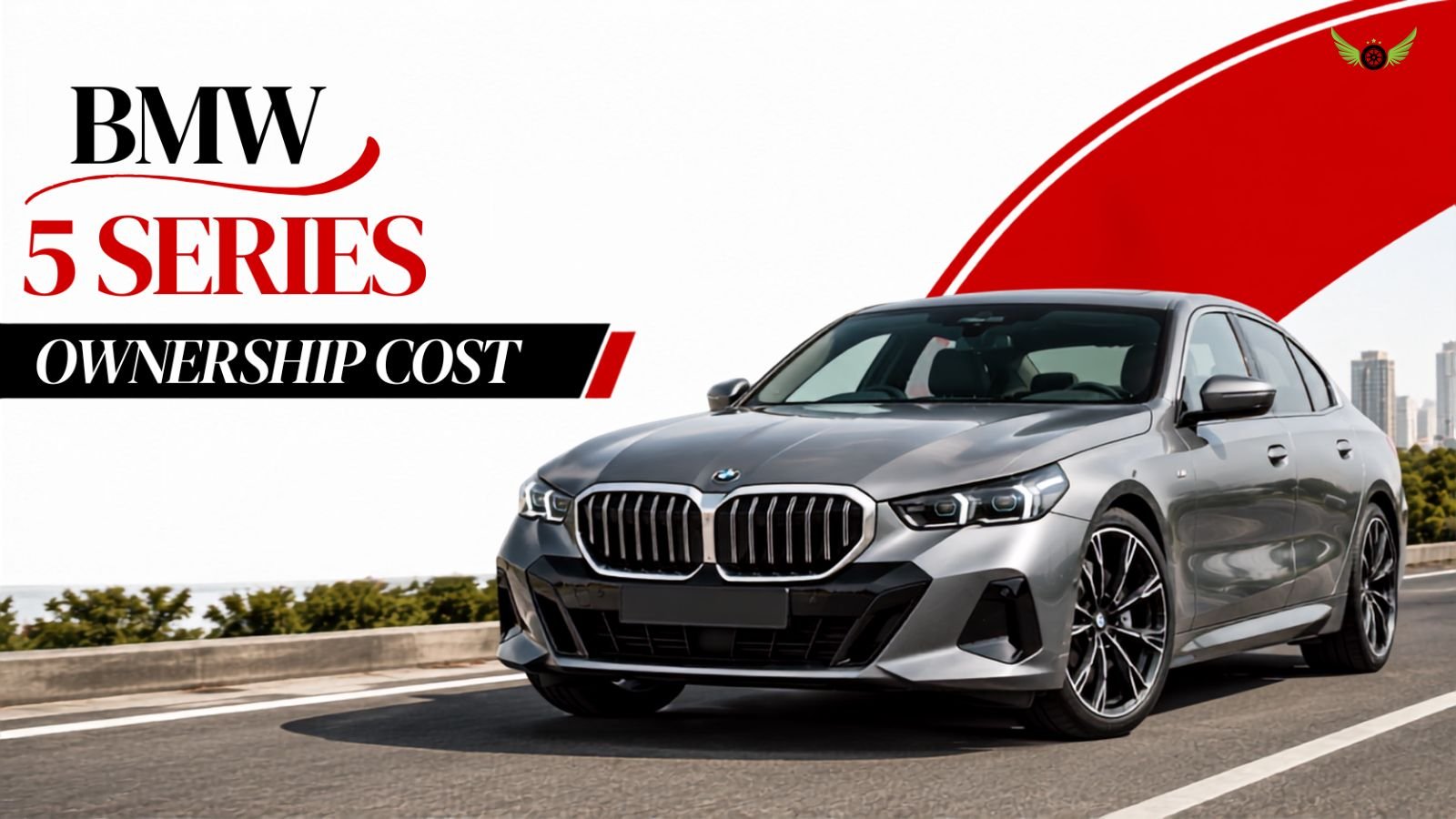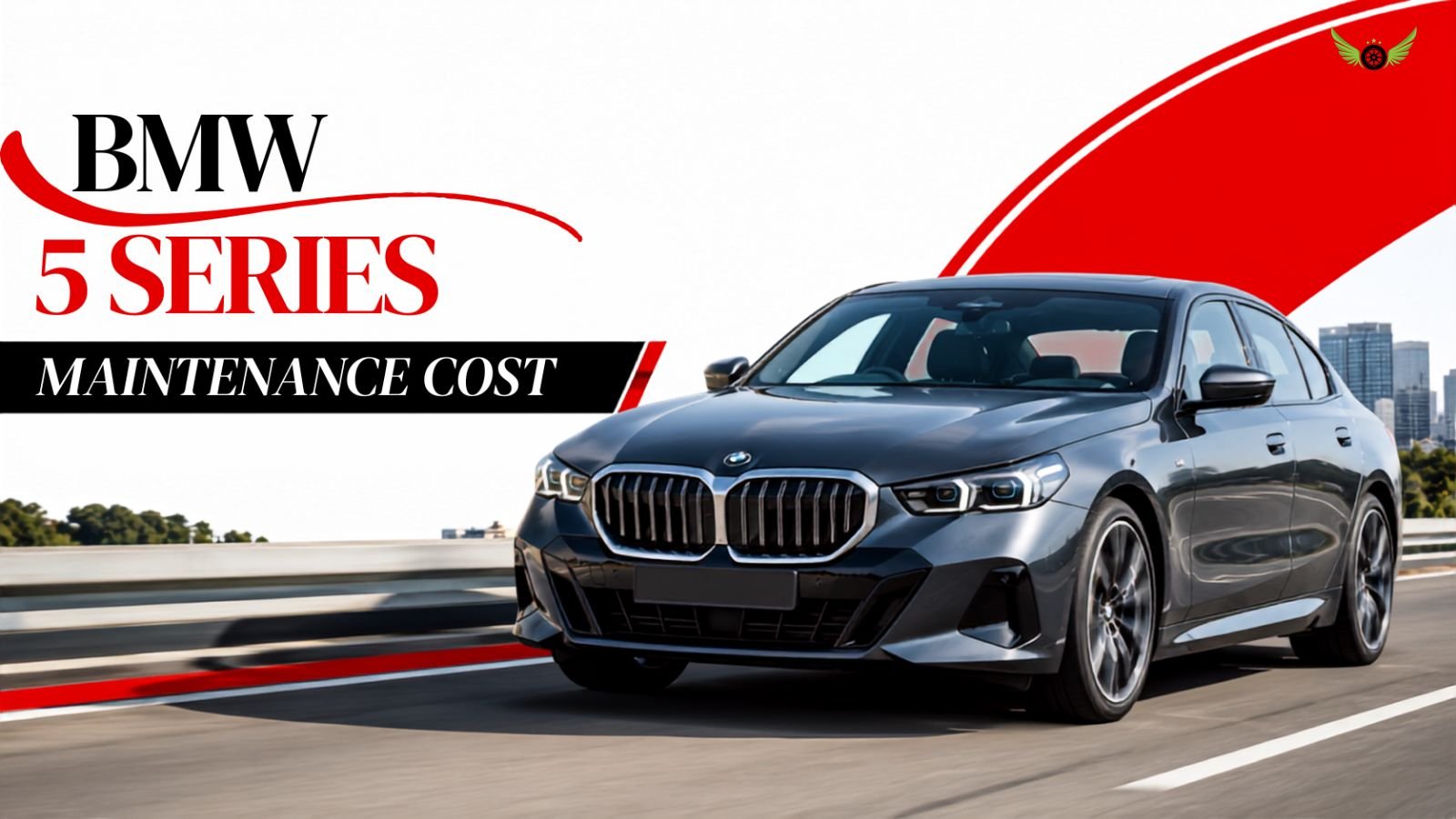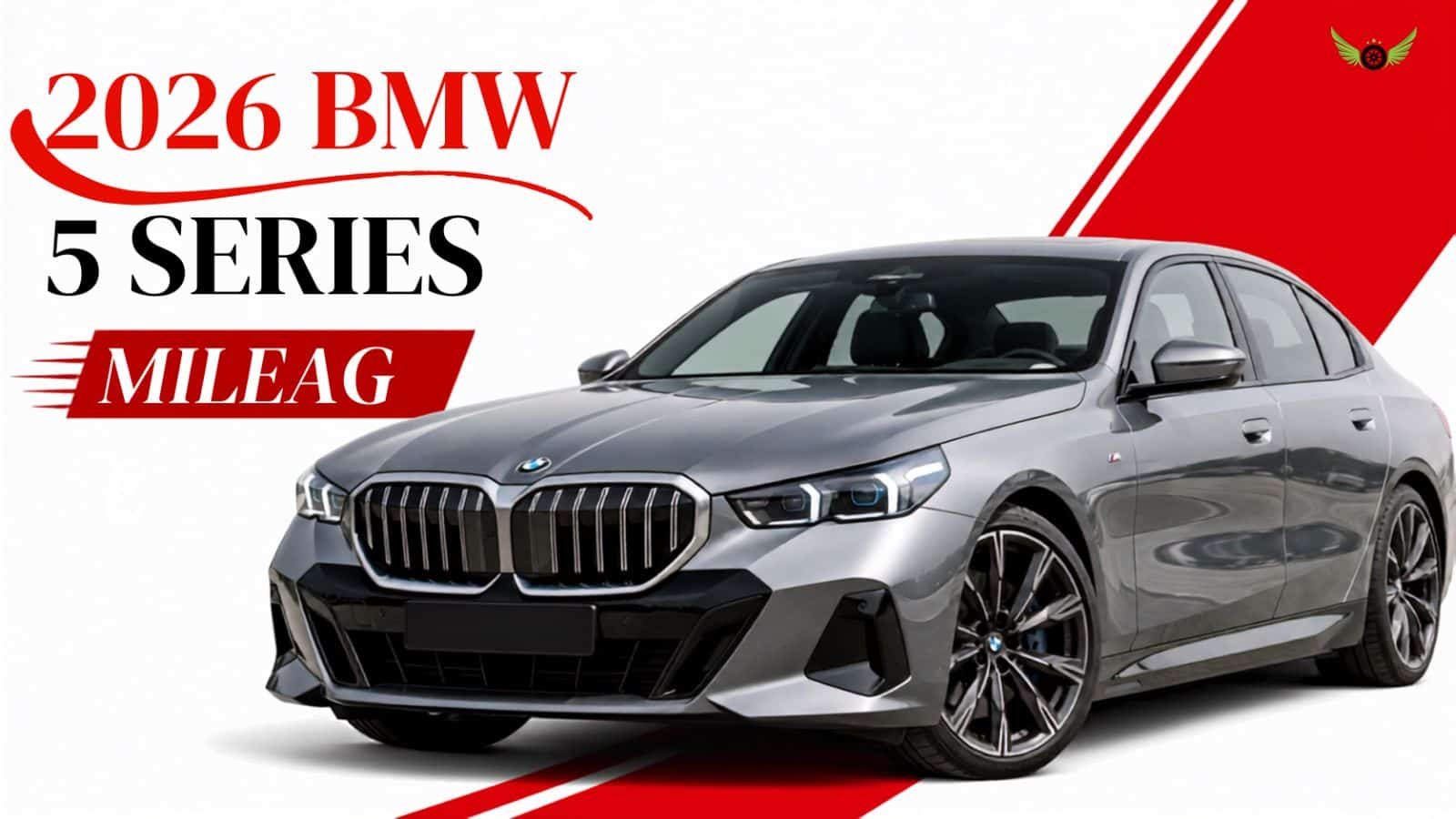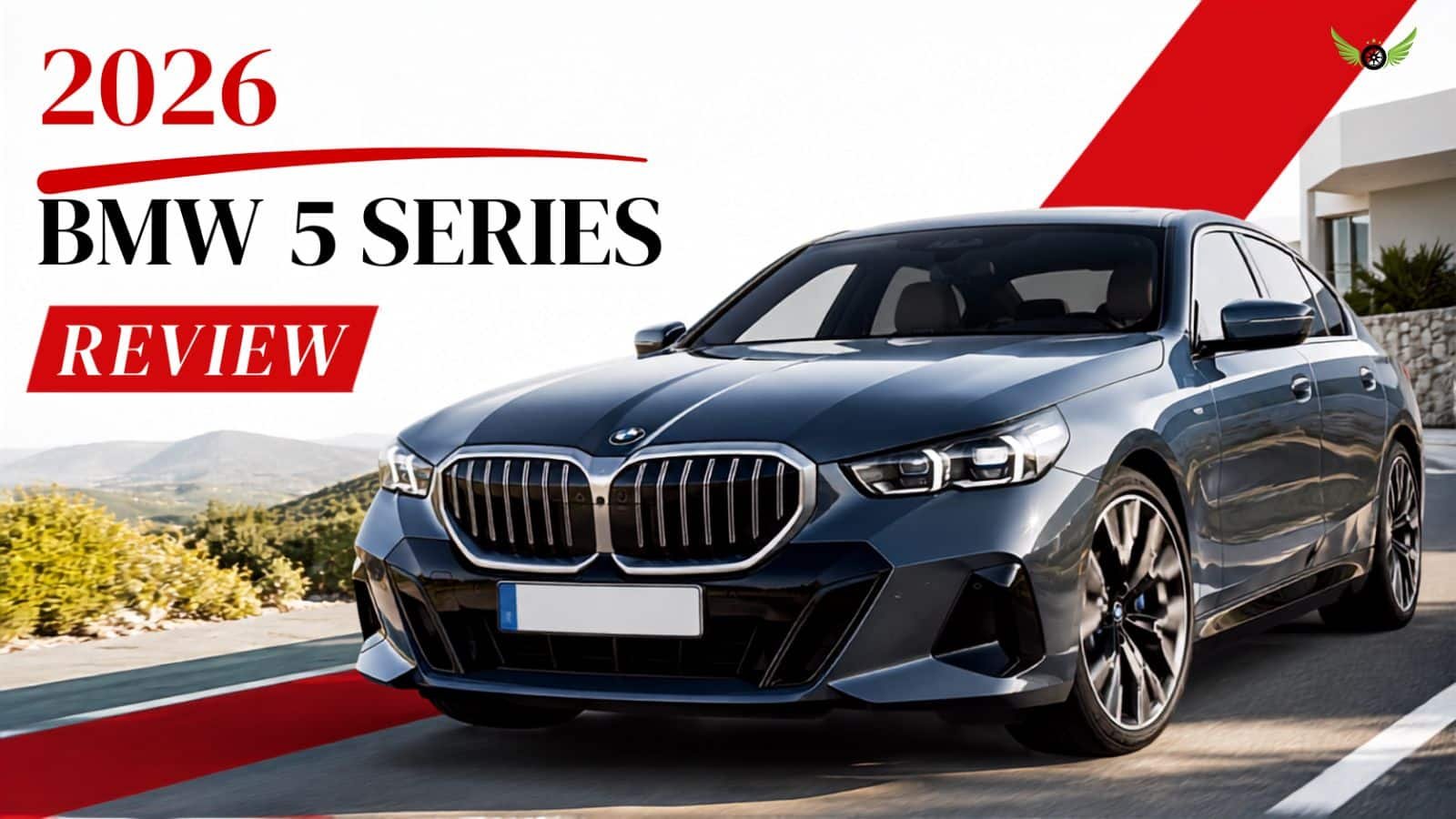
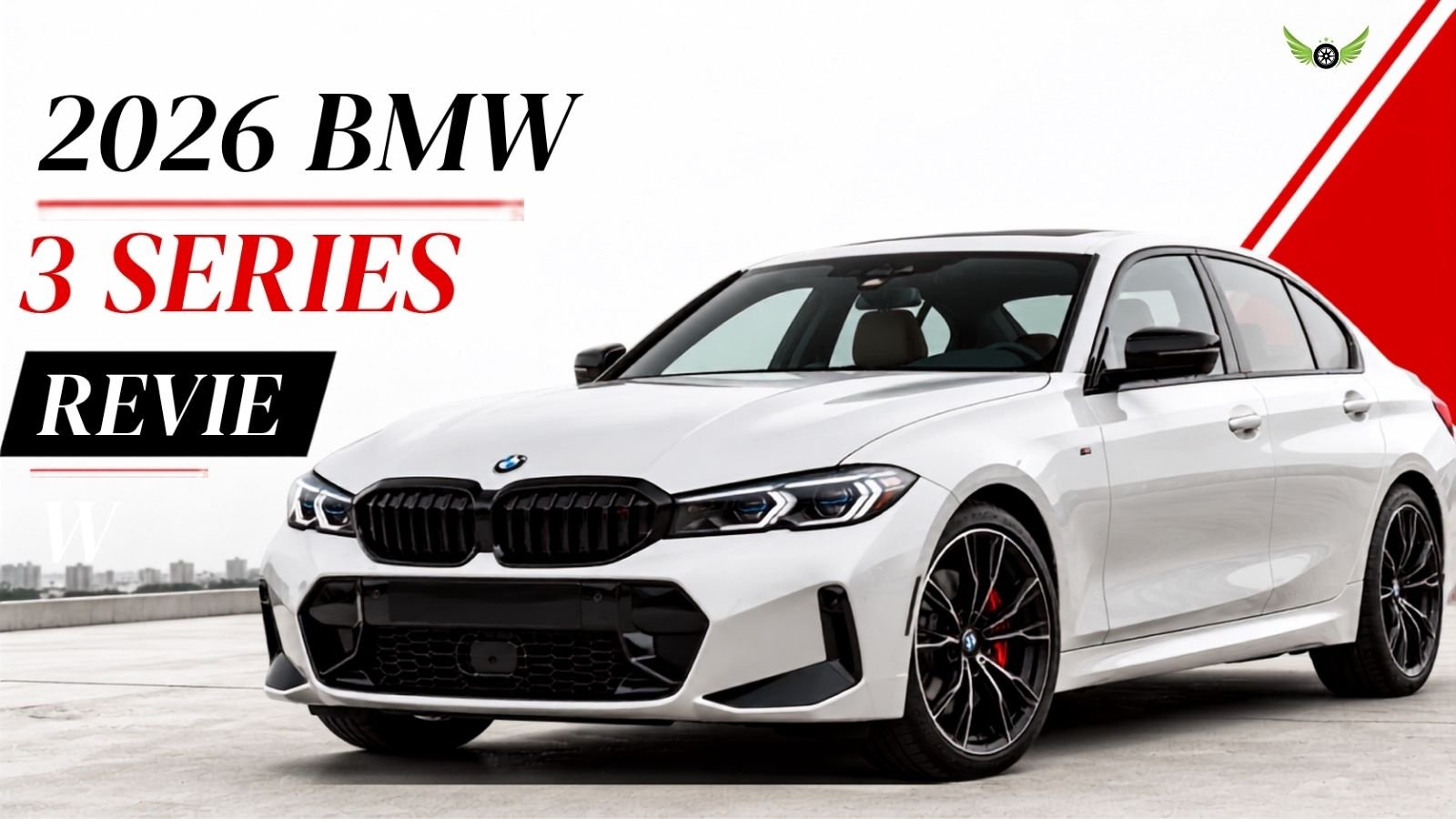
The 2026 BMW 3 Series is a strong choice for buyers who want a luxury sedan that feels sporty without giving up everyday comfort and practicality. The lineup offers two distinct performance levels: the 330i with a turbocharged four-cylinder engine and the M340i with a more powerful turbocharged inline-six and mild-hybrid technology.
For 2026, the BMW 330i starts at $48,000 MSRP in the USA, while the all-wheel-drive 330i xDrive starts at $50,000. Buyers looking for stronger performance can choose the M340i, starting at $62,300, or the M340i xDrive at $64,300. The 330i produces 255 horsepower, while the M340i delivers 386 horsepower, creating a significant difference in performance and price.
According to our experience when evaluating luxury sports sedans, the BMW 3 Series stands out because it offers a good balance between daily usability and driving enjoyment. The 330i is the more sensible choice for many buyers, while the M340i is aimed at drivers who want noticeably quicker acceleration and a more performance-focused experience.
The 2026 model also brings modern technology and driver-assistance features, including standard wireless Apple CarPlay and Android Auto on the 330i. For safety, the 2026 BMW 3 Series has been evaluated by the Insurance Institute for Highway Safety (IIHS), providing buyers with independent crashworthiness and crash-avoidance information.
In this BMW 3 Series Review, the most important question is not simply whether the car is good—it is which version offers the right value for your needs. Your budget, preferred performance level, drivetrain choice, and desired features can make a major difference in deciding whether the 330i or M340i is the better buy.
BMW 3 Series Trims, Pricing & Model Comparison
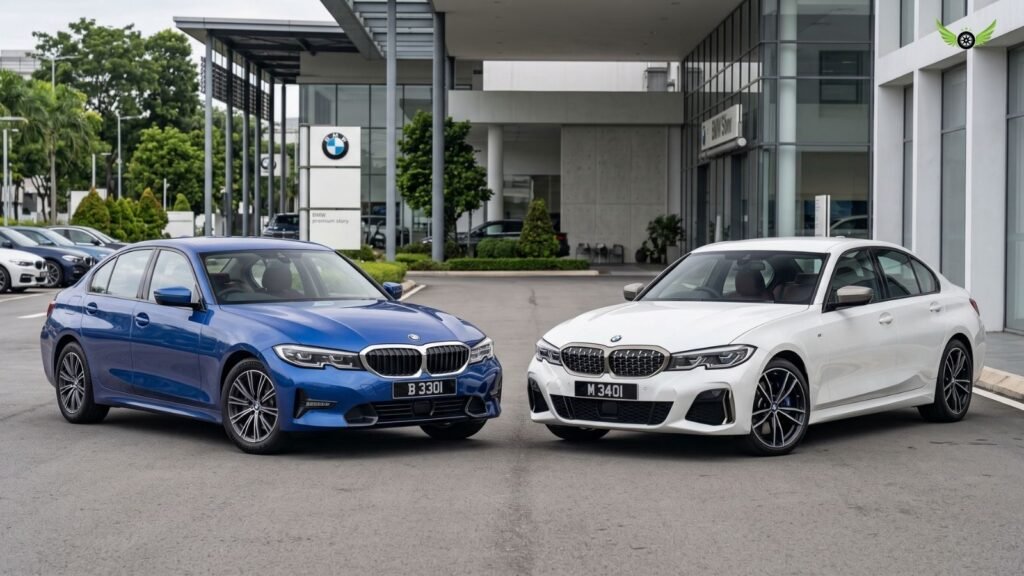
The 2026 BMW 3 Series lineup offers a clear range of choices, from the efficient 330i to the more powerful M340i. Buyers can choose between rear-wheel drive and xDrive all-wheel drive, while the main step up to the M340i brings a six-cylinder engine and additional performance equipment. Starting MSRP ranges from $48,000 for the 330i to $64,300 for the M340i xDrive, before taxes, registration, and optional equipment.
BMW 330i vs 330i xDrive vs M340i
The 330i is the most affordable option and uses a 2.0-liter turbocharged four-cylinder engine producing 255 horsepower and 295 lb-ft of torque. The 330i xDrive has the same engine but adds all-wheel drive. BMW lists preliminary 0–60 mph times of 5.6 seconds for the rear-wheel-drive model and 5.4 seconds for the xDrive version.
The M340i is the performance-focused choice. Its 3.0-liter turbocharged inline-six with 48-volt mild-hybrid technology produces 386 horsepower and includes equipment such as M Sport Brakes and an M Sport Differential.
Model | Starting MSRP | Engine | Drivetrain | Horsepower |
330i | $48,000 | 2.0L turbo inline-four | RWD | 255 hp |
330i xDrive | $50,000 | 2.0L turbo inline-four | AWD | 255 hp |
M340i | $62,300 | 3.0L turbo inline-six | RWD | 386 hp |
According to our experience, the 330i offers enough power for most daily driving and is the better fit for buyers focused on value. The 330i xDrive makes more sense where all-weather traction is important, while the M340i is the right choice for drivers who specifically want stronger acceleration and six-cylinder performance.
BMW 3 Series Packages, Options & Best Value Trim
Optional packages can significantly change both the equipment level and final price. Available features include the M Sport Package for a sportier appearance and design upgrades, along with driver-assistance and performance options depending on the trim and configuration.
For most buyers, the 330i is the best value trim because it provides the core luxury sports sedan experience at the lowest starting price. Adding xDrive is worth considering when all-wheel-drive capability is a genuine need rather than simply a preference.
Based on our analysis, it is better to choose the right engine and drivetrain first, then add options that improve your everyday ownership experience. The M340i offers substantially more performance, but the price difference means the 330i remains the more practical choice for buyers who do not need the extra power.
BMW 3 Series Engine, Performance & Specifications
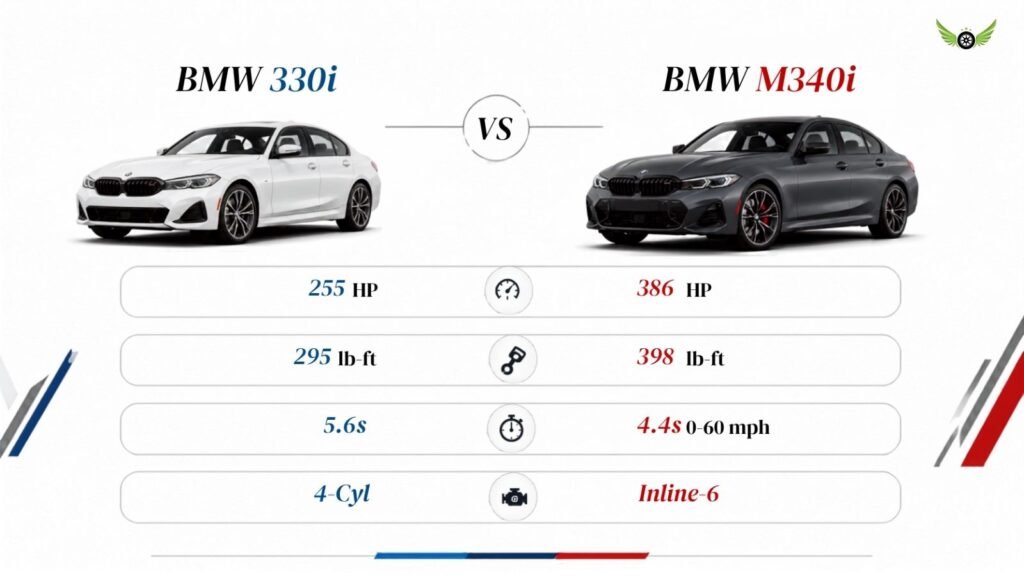
The 2026 BMW 3 Series offers two distinct engine choices. The 330i models use a turbocharged 2.0-liter four-cylinder, while the M340i models move up to a 3.0-liter turbocharged inline-six with 48-volt mild-hybrid technology. Both use an eight-speed automatic transmission, but the six-cylinder delivers significantly stronger acceleration and performance.
Turbocharged Four-Cylinder vs Turbo Inline-Six Mild-Hybrid Power
The 330i’s 2.0-liter BMW TwinPower Turbo inline-four produces 255 horsepower and 295 lb-ft of torque. It delivers strong performance for daily driving while keeping the powertrain simpler and lighter than the six-cylinder alternative.
The M340i uses a 3.0-liter M TwinPower Turbo inline-six with a 48-volt mild-hybrid system. Total system output is 386 horsepower and 398 lb-ft of torque. BMW states that the setup combines a 375-hp combustion engine with an electric drive that can contribute up to 11 horsepower.
Specification | 330i Models | M340i Models |
Engine | 2.0L turbocharged inline-four | 3.0L turbocharged inline-six |
Horsepower | 255 hp | 386 hp |
Torque | 295 lb-ft | 398 lb-ft |
Mild-hybrid system | Not listed by BMW USA for 2026 330i specifications | 48-volt system |
Transmission | 8-speed automatic | 8-speed automatic |
According to our experience, the four-cylinder is the better fit for most buyers who want a responsive luxury sedan for everyday use. The inline-six makes more sense for drivers who place a higher value on stronger acceleration and the added performance character of a six-cylinder engine.
Horsepower, Acceleration, Drivetrain & Key Specifications
The differences between the available models are easiest to understand by comparing their key performance figures. The 330i offers the lowest weight and entry-level performance, while the M340i models deliver substantially quicker acceleration.
Model | Horsepower | Torque | Drivetrain | 0–60 mph |
330i | 255 hp | 295 lb-ft | RWD | 5.6 sec |
330i xDrive | 255 hp | 295 lb-ft | AWD | 5.4 sec |
M340i | 386 hp | 398 lb-ft | RWD | 4.4 sec |
M340i xDrive | 386 hp | 398 lb-ft | AWD | 4.1 sec |
*BMW lists these as preliminary test results, and actual acceleration can vary depending on vehicle specification, road conditions, weather, and testing procedures.
For buyers comparing real-world usability, xDrive provides all-wheel-drive traction, while rear-wheel drive preserves the traditional driving layout associated with a sports sedan. The M340i xDrive is the quickest model in this group, but the 330i already provides performance that should satisfy many daily drivers.
BMW 3 Series Interior, Technology & Safety
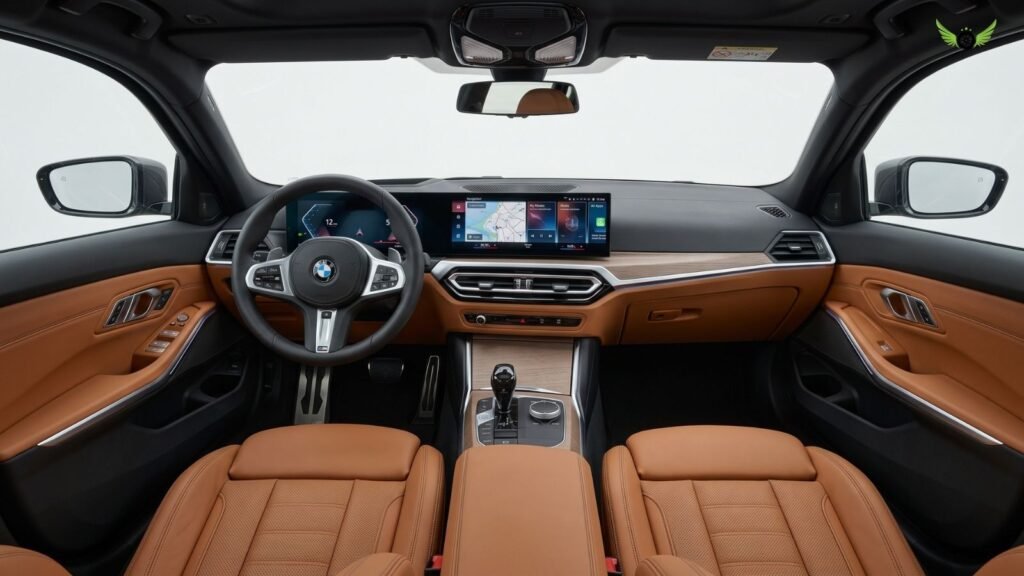
The 2026 BMW 3 Series combines a driver-focused cabin with modern infotainment and available advanced driver-assistance technology. The interior prioritizes the driving experience while still offering practical space for daily use. Buyers should note that some comfort and safety features are optional, so the equipment on a specific vehicle can vary.
Cabin Comfort, Passenger Space & Trunk Capacity
The cabin uses a driver-oriented layout with supportive seating and intuitive controls. BMW includes standard Ambient Lighting, while features such as the available SensaTec dashboard and upgraded interior trim add a more premium appearance. Independent testing also describes the standard sport seats as supportive and comfortable for everyday driving.
The front seats provide generous room, while the rear seat is more suitable for two adults on longer trips. The 3 Series is a compact luxury sedan, so buyers who regularly carry rear passengers should consider its back-seat space alongside their needs.
Interior Space | Measurement |
Front legroom | 42.0 in |
Rear legroom | 35.2 in |
Trunk capacity | 16.9 cu. ft. |
These figures show that the sedan offers practical front-seat room and useful cargo capacity, although rear passenger space is not class-leading. According to our experience, this interior works best for buyers who prioritize the driver and front passengers while still needing enough space for everyday family or travel use.
Infotainment, Connectivity & Driver Assistance Features
BMW Operating System 8.5 uses the QuickSelect interface for faster access to frequently used functions. The infotainment setup also supports standard wireless Apple CarPlay and Android Auto, while the My BMW App allows owners to check vehicle status and access supported connected services. BMW’s Intelligent Personal Assistant provides voice control for supported vehicle functions.
Driver-assistance technology deserves careful attention because advanced systems are not all included as standard equipment. BMW lists the available Active Driving Assistant with features including Active Blind Spot Detection, Frontal Collision Warning with City Collision Mitigation, and Lane Departure Warning. The optional Driving Assistant Professional Package adds more advanced functions such as Active Cruise Control with Stop & Go and Active Lane Keeping Assistant.
According to our experience, the technology is one of the stronger parts of the ownership experience, but buyers should confirm the exact safety package before purchasing. Choosing a vehicle based only on the model name can be misleading when available driver-assistance features vary by configuration.
BMW 3 Series vs Audi A4, Mercedes-Benz C-Class & Lexus IS
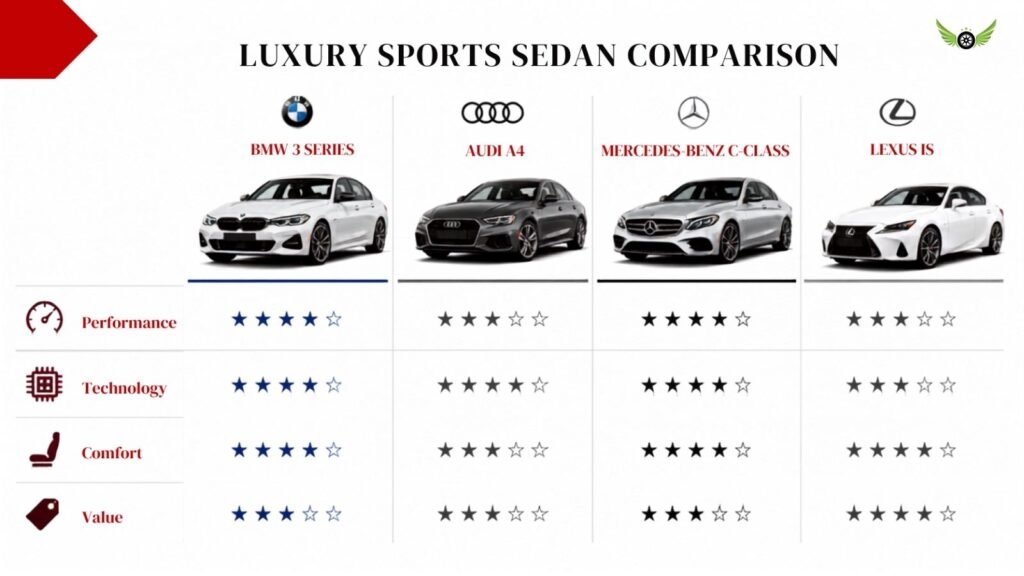
The 2026 BMW 3 Series competes in one of the most competitive luxury sedan segments. Its closest alternatives offer different strengths: the Audi A5 emphasizes technology and standard all-wheel drive, the Mercedes-Benz C-Class focuses on comfort and refinement, and the Lexus IS offers a naturally aspirated V6 and a strong standard safety package. For buyers shopping in the USA, it is worth noting that the new Audi A5 effectively takes the place of the A4 in Audi’s current lineup.
Performance, Features & Value Comparison
The BMW 330i and Mercedes-Benz C 300 both produce 255 horsepower, but the BMW has a quicker manufacturer-quoted 0–60 mph time of 5.6 seconds compared with 6.0 seconds for the rear-wheel-drive C 300. The Audi A5 produces 268 horsepower and reaches 60 mph in 5.6 seconds, while the 2026 Lexus IS 350 produces 311 horsepower and has a manufacturer-quoted 0–60 mph time of 5.9 seconds in rear-wheel-drive form.
Model | Starting MSRP* | Horsepower | Drivetrain | 0–60 mph |
BMW 330i | $48,000 | 255 hp | RWD | 5.6 sec |
Audi A5 | $50,200 | 268 hp | AWD | 5.6 sec |
Mercedes-Benz C 300 | $49,650 | 255 hp | RWD | 6.0 sec |
Lexus IS 350 | $46,895 | 311 hp | RWD/AWD | 5.9 sec |
*Starting MSRPs shown are manufacturer figures and do not represent the final purchase price.
The numbers tell only part of the story. The BMW offers a rear-wheel-drive platform and a broad range of performance options, including the 386-hp M340i. The Audi A5 stands out with standard quattro all-wheel drive and a large digital display setup, while the C-Class uses a 48-volt mild-hybrid system and places more emphasis on luxury features. The updated Lexus IS brings a 12.3-inch touchscreen and Lexus Safety System+ 3.0 as standard for 2026.
According to our experience, the BMW is the strongest all-around choice for buyers who place driving engagement high on their list, while each competitor has a clearer advantage for specific priorities such as standard all-wheel drive, comfort, or long-term ownership preferences.
Which Luxury Sports Sedan Is the Better Buy?
The best choice depends on what you expect from your luxury sedan. The BMW 330i is a strong option for buyers who want a balanced mix of performance, practicality, and everyday usability. The M340i is the better choice for enthusiasts who want significantly stronger performance without moving to a full M car.
Choose the Audi A5 if standard all-wheel drive and a technology-focused interior are your priorities. The Mercedes-Benz C-Class is worth considering for buyers who prefer a more comfort-oriented luxury experience. The Lexus IS stands out for buyers who prefer a V6 engine and a well-equipped standard safety package.
According to our experience, the BMW 3 Series remains one of the better choices for drivers who want a luxury sedan that feels engaging on a daily basis rather than simply providing a premium badge and a comfortable cabin. However, there is no single winner for every buyer—the right choice depends on whether performance, technology, comfort, or drivetrain capability matters most to you.
BMW 3 Series Buying Guide
The 2026 BMW 3 Series is a strong choice for buyers who want a luxury sedan that is enjoyable to drive without sacrificing everyday comfort. The lineup is simple: the 255-hp 330i is the value-focused choice, while the 386-hp M340i is for buyers who want substantially stronger performance. Both are available with rear-wheel drive or xDrive all-wheel drive.
The key buying decision is whether you need the extra performance of the inline-six. For most drivers, the 330i already provides quick acceleration, responsive handling, and better value. The M340i is a meaningful upgrade, but its higher price is easiest to justify for buyers who specifically want a performance-oriented sedan.
Best BMW 3 Series Trim for Different Buyers
Buyer Priority | Recommended Choice | Why It Makes Sense |
Best overall value | 330i | Strong everyday performance at the lowest entry price |
All-weather traction | 330i xDrive | Adds all-wheel-drive capability |
Performance enthusiast | M340i | 386-hp inline-six and stronger performance hardware |
Maximum performance with AWD | M340i xDrive | Combines the six-cylinder with xDrive traction |
According to our experience, the 330i is the best choice for most buyers. Its turbocharged four-cylinder produces 255 horsepower and 295 lb-ft of torque, which is more than enough for everyday driving. Recent independent testing also supports this view: Edmunds describes the engine as providing more than enough power for normal use, while Car and Driver recommends the rear-wheel-drive 330i as the value-focused choice.
The M340i is the better choice for drivers who genuinely prioritize performance. Its 386-hp turbocharged inline-six delivers a major increase in power and acceleration, rather than a small improvement over the 330i. If you regularly drive in snow or poor weather, xDrive may be worth the additional cost; otherwise, rear-wheel drive remains the simpler and more affordable option.
Pros, Cons & Final Buying Verdict
Pros
The sedan remains one of the strongest choices for handling and overall driving enjoyment in its class. Both engines provide strong performance, the eight-speed automatic transmission is smooth, and the cabin combines good materials with modern technology. The 330i is also relatively efficient, with BMW listing up to 28 mpg city and 35 mpg highway for the rear-wheel-drive model.
Cons
The ride can feel firm depending on the suspension and wheel configuration, and several advanced driver-assistance features require optional packages. The final price can also rise quickly once options are added. Recent Edmunds and Consumer Reports evaluations similarly note the car’s firm ride and the fact that some advanced assistance features are optional.
Final verdict
According to our experience, the 2026 BMW 3 Series is one of the best options for buyers who want a genuine luxury sports sedan rather than a luxury car focused mainly on comfort or technology. The 330i offers the best balance of performance, efficiency, and price for most buyers, while the M340i is worth the extra money if the six-cylinder performance is a real priority. Before buying, focus on the final configured price and the features included on the specific vehicle, as options can significantly affect overall value.
BMW 3 Series Review, Price, Specs & Buying FAQs
The following FAQs answer the key questions buyers may still have after reading this 2026 BMW 3 Series review, including pricing, performance, efficiency, practicality, and buying decisions.
Is the 2026 BMW 3 Series worth buying?
Yes. It is a strong choice for buyers who want an engaging luxury sedan with modern technology and everyday practicality.
How much does the 2026 BMW 3 Series cost in the USA?
The 330i starts at $48,000 MSRP, while the 330i xDrive starts at $50,000. Final pricing depends on options and other charges.
Which BMW 3 Series trim is best for most buyers?
The 330i is the best choice for most buyers. It offers 255 horsepower and a strong balance of performance, efficiency, and price.
What is the difference between the BMW 330i and M340i?
The M340i is significantly more powerful. It has a 386-hp inline-six, compared with the 330i’s 255-hp turbocharged four-cylinder.
Is the BMW 3 Series good for daily driving?
Yes. Its four-door layout, modern technology, and practical trunk make it suitable for everyday use. According to our experience, it works especially well for buyers who want driving enjoyment without giving up daily usability.
Should I choose rear-wheel drive or xDrive?
Choose rear-wheel drive for the traditional sports-sedan feel and xDrive if you regularly need additional traction in challenging weather conditions.
Is the 2026 BMW 3 Series fuel-efficient?
Yes, especially the 330i. BMW lists the rear-wheel-drive 330i at up to 28 mpg city and 35 mpg highway.
What should I check before buying a 2026 BMW 3 Series?
Check the exact trim, options, safety features, and final price. A test drive is also important because ride comfort can vary by configuration.