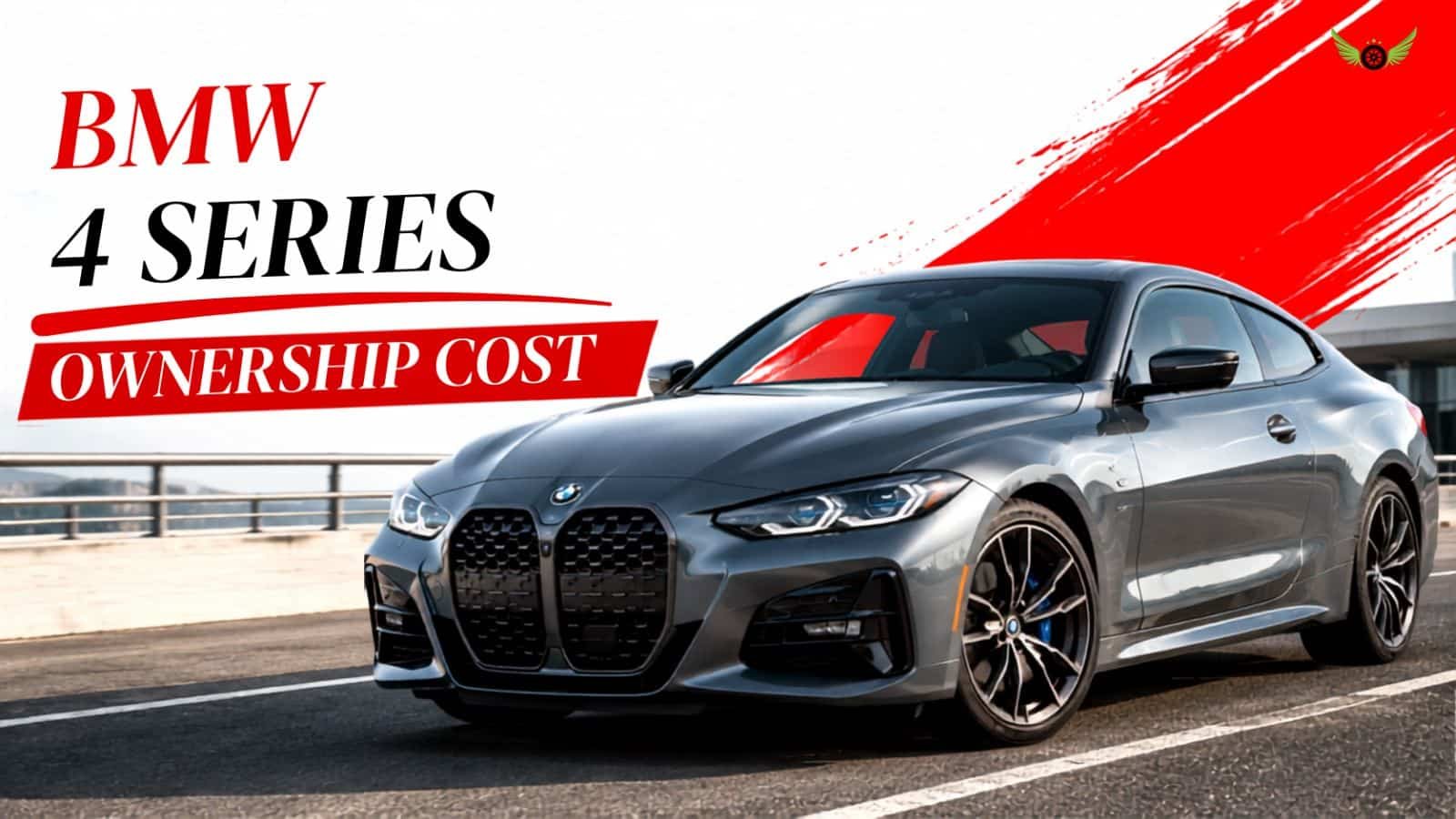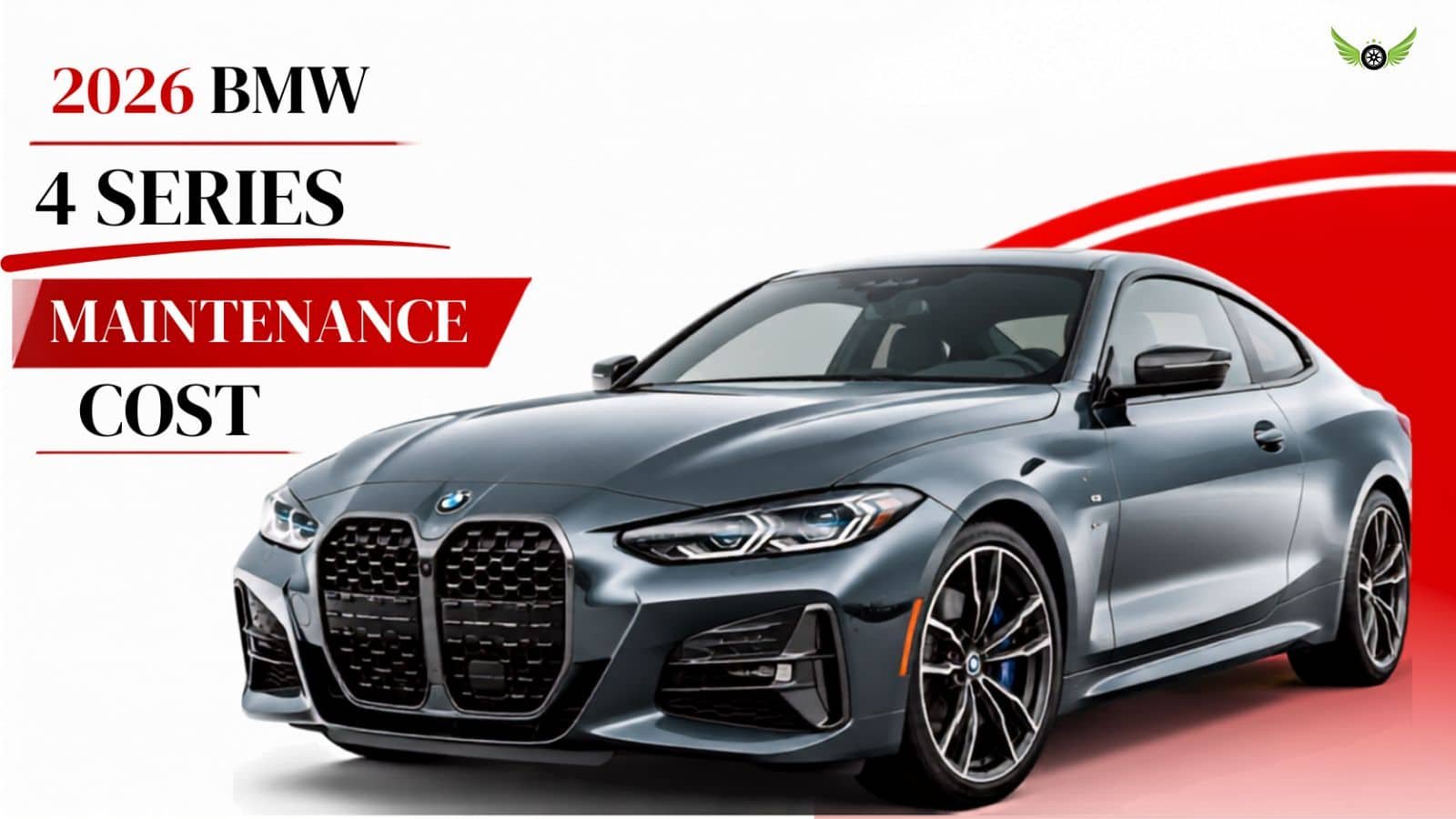
The 2026 BMW 4 Series is designed to balance everyday fuel economy with strong performance. For the U.S.-market Coupe, the 430i produces 255 hp and is EPA-rated at up to 28 mpg city and 36 mpg highway, while the M440i produces 386 hp and is rated at 27 mpg city and 34 mpg highway in rear-wheel-drive form. BMW also offers xDrive versions, which trade a small amount of fuel economy for all-wheel-drive traction.
This guide examines the BMW 4 Series Mileage and BMW 4 Series MPG across the main configurations, including how drivetrain and body style affect fuel consumption. It also looks at BMW 4 Series Performance, including 0–60 mph acceleration, engine response, the 8-speed automatic transmission, and the 48-volt mild-hybrid system. Real-world driving behavior is covered as well, including ride comfort, handling, steering feel, highway cruising, cabin refinement, and everyday usability.
According to our experience analyzing independent road tests and owner-focused driving feedback, the 4 Series is most appealing when fuel efficiency and driving enjoyment both matter. The 430i is the more efficiency-focused choice, while the M440i provides substantially stronger acceleration without giving up reasonable highway economy.
BMW 4 Series Mileage, MPG & Fuel Economy
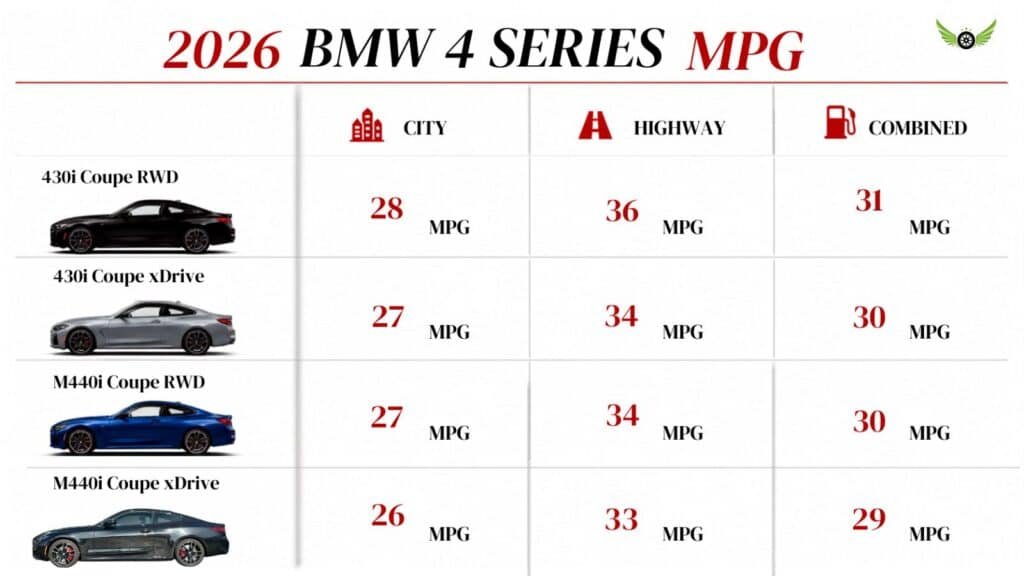
For the 2026 model year, fuel economy varies mainly by engine, body style, and drivetrain. The 430i Coupe RWD is the most efficient configuration at 31 mpg combined, while the M440i Coupe RWD achieves 30 mpg combined despite its 386-hp inline-six. xDrive and Convertible versions generally reduce fuel efficiency slightly.
The important point for buyers is that the difference between the 430i and M440i is relatively small in EPA fuel economy. The larger difference comes when choosing xDrive or the Convertible body style.
EPA City, Highway & Combined MPG by Model
For the main U.S.-market 2026 configurations, the EPA-rated figures are:
Model | City | Highway | Combined |
430i Coupe RWD | 28 mpg | 36 mpg | 31 mpg |
430i Coupe xDrive | 27 mpg | 34 mpg | 30 mpg |
M440i Coupe RWD | 27 mpg | 34 mpg | 30 mpg |
M440i Coupe xDrive | 26 mpg | 33 mpg | 29 mpg |
430i Convertible RWD | 27 mpg | 35 mpg | 30 mpg |
430i Convertible xDrive | 24 mpg | 33 mpg | 28 mpg |
M440i Convertible RWD | 27 mpg | 33 mpg | 29 mpg |
M440i Convertible xDrive | 25 mpg | 32 mpg | 28 mpg |
The 430i Coupe RWD has the best official fuel economy, with 31 mpg combined. At the other end, the M440i Convertible xDrive is rated at 28 mpg combined. Edmunds’ 2026 trim data confirms the Convertible figures, while BMW’s U.S. specifications confirm the Coupe ratings.
Real-World BMW 4 Series Mileage & Premium Fuel Costs
EPA figures are standardized estimates, not a guarantee of what every driver will achieve. Actual consumption changes with traffic, acceleration, highway speed, temperature, tire pressure, and the amount of city driving. Edmunds reports that the 2026 4 Series EPA estimates are generally achievable in real-world driving.
For example, the 430i Coupe RWD is rated at 31 mpg combined, and Edmunds lists an EPA-based range of 434 miles in city driving and 558 miles on the highway from its 15.5-gallon tank. The M440i RWD is rated at 30 mpg combined with an estimated 418.5-mile city and 527-mile highway range.
The car also requires premium unleaded fuel. Edmunds lists premium gasoline as required for the 2026 4 Series.
As of September 1, 2026, AAA lists the U.S. national average premium gasoline price at $4.9867 per gallon. Using that actual current price with each configuration’s EPA combined rating gives a clearer picture of fuel expense:
Configuration | Combined MPG | Fuel Cost / 100 Miles | Fuel Cost / 1,000 Miles | Fuel Cost / 15,000 Miles* |
430i Coupe RWD | 31 mpg | $16.09 | $160.86 | $2,412.92 |
430i Coupe xDrive | 30 mpg | $16.62 | $166.22 | $2,493.35 |
M440i Coupe RWD | 30 mpg | $16.62 | $166.22 | $2,493.35 |
M440i Coupe xDrive | 29 mpg | $17.20 | $171.96 | $2,579.33 |
430i Convertible RWD | 30 mpg | $16.62 | $166.22 | $2,493.35 |
430i Convertible xDrive | 28 mpg | $17.81 | $178.10 | $2,671.45 |
M440i Convertible RWD | 29 mpg | $17.20 | $171.96 | $2,579.33 |
M440i Convertible xDrive | 28 mpg | $17.81 | $178.10 | $2,671.45 |
Calculated from EPA combined MPG and AAA’s September 1, 2026 national-average premium price of $4.9867/gal. These are fuel-only estimates, not total ownership costs. Actual spending will vary with local fuel prices and real-world mileage.
For a driver covering 15,000 miles per year, the difference between the most efficient and least efficient configurations is about $259 per year at today’s national-average premium price. That is relatively modest compared with the purchase-price difference between trims, so fuel economy alone should not be the deciding factor between the 430i and M440i.
According to our experience analyzing real-world test data and ownership-focused information, the 430i Coupe RWD offers the strongest efficiency-focused choice, while the M440i provides a better performance proposition with only a small EPA fuel-economy penalty. The 430i’s 31-mpg combined rating is particularly useful for buyers who drive long highway distances.
BMW 4 Series Performance & Acceleration
The 2026 BMW 4 Series offers two distinct powertrains: the 430i uses a 2.0-liter turbocharged inline-four with 255 hp and 295 lb-ft of torque, while the M440i uses a 3.0-liter turbocharged inline-six producing 386 hp and 398 lb-ft. Both are paired with an 8-speed automatic transmission and 48-volt mild-hybrid assistance.
The difference is not only about peak output. The M440i delivers considerably stronger acceleration and a more immediate response at higher speeds, while the 430i has enough power for normal commuting, highway merging, and everyday overtaking without feeling underpowered. Independent Edmunds testing recorded 5.6 seconds to 60 mph for the 430i and 4.6 seconds for an M440i Convertible, showing the substantial gap between the two engines.
430i vs M440i Power and 0–60 MPH Performance
Model | Engine | Horsepower | Torque | BMW 0–60 mph |
430i Coupe RWD | 2.0L turbo I4 | 255 hp | 295 lb-ft | 5.6 sec |
430i Coupe xDrive | 2.0L turbo I4 | 255 hp | 295 lb-ft | 5.4 sec |
M440i Coupe RWD | 3.0L turbo I6 | 386 hp | 398 lb-ft | 4.6 sec |
M440i Coupe xDrive | 3.0L turbo I6 | 386 hp | 398 lb-ft | 4.2 sec |
BMW identifies these as preliminary manufacturer test results, so actual acceleration can vary with vehicle specification, road conditions, temperature, tires, and testing method.
The M440i has 131 more horsepower and 103 lb-ft more torque than the 430i. Its xDrive version is the quickest Coupe, with BMW quoting 4.2 seconds to 60 mph. Independent testing also confirms the M440i’s advantage: Edmunds recorded 4.6 seconds in a rear-wheel-drive M440i Convertible, while its 430i test car reached 60 mph in 5.6 seconds.
Engine Response, 8-Speed Automatic & Mild-Hybrid System
Both engines use BMW’s 8-speed automatic transmission, with rear-wheel drive standard and xDrive available. The transmission is designed to keep shifts quick and smooth while matching the engine’s available torque to the driving situation. Edmunds describes the gearbox as smooth and well suited to both everyday driving and stronger acceleration.
The 48-volt mild-hybrid system is more than an engine start/stop feature. BMW explains that the electric motor can assist during acceleration from a standstill, provide additional eBoost support, and make engine restarting smoother. It cannot power the car as a full EV because a mild-hybrid system is designed to assist the combustion engine rather than drive independently for normal operation.
On the M440i, the combustion engine produces 375 hp, with the electric drive contributing up to 11 hp to reach the stated 386-hp system output. The electric assistance is particularly useful at low speeds, helping reduce the initial delay before the turbocharged engine builds stronger output.
According to our experience analyzing independent road tests and manufacturer specifications, the 430i feels quick and responsive enough for everyday driving, but the M440i has a clearly different character. Its inline-six provides stronger mid-range acceleration, while xDrive improves traction when putting that power down. The result is a much more effortless performance experience without requiring a harsher transmission or an overly aggressive setup.
BMW 4 Series Real-World Driving Experience
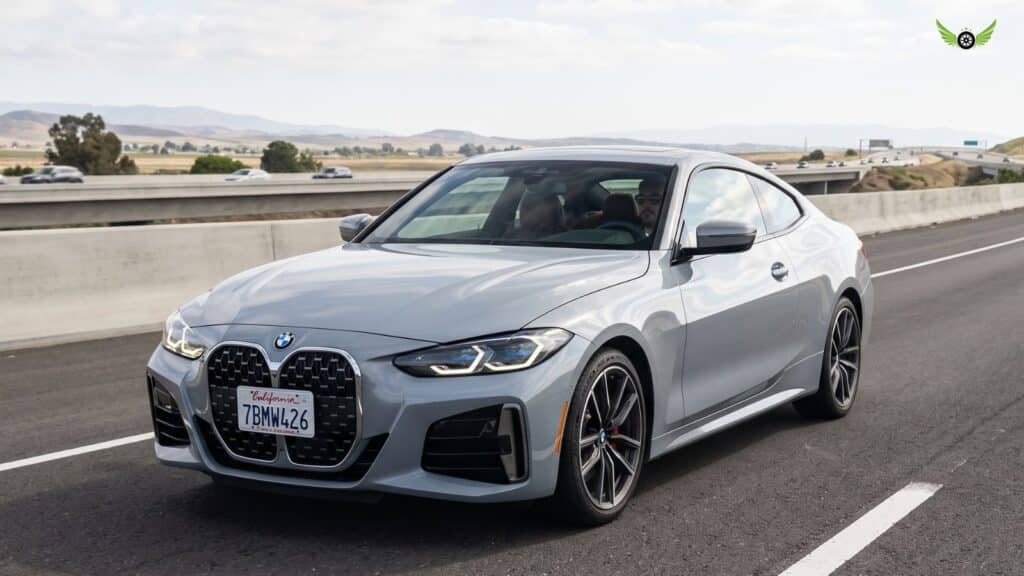
The 2026 BMW 4 Series balances ride comfort, handling, and highway refinement better than its sporty appearance might suggest. Independent testing describes the chassis as stable and composed through corners, while the M440i with adaptive suspension can remain comfortable during long-distance driving.
The car is not as sharp or communicative as a dedicated sports car. Steering feedback is the main weakness identified across independent reviews, but the overall chassis remains predictable and confidence-inspiring.
Ride Comfort, Handling & Steering Feel
Ride quality depends significantly on suspension specification. The M440i’s adaptive suspension allows the car to remain supple in normal driving while providing stronger body control when pushed harder. Consumer Reports found the suspension surprisingly absorbent even with larger wheels and summer tires, while Edmunds described the adaptive setup as surprisingly supple.
Handling is one of the strongest parts of the driving experience. The chassis stays balanced through corners with strong grip and limited body movement. The M440i xDrive’s rear-biased all-wheel-drive system can also allow some rear movement before using the front wheels for additional traction.
The steering feel is less impressive. Edmunds calls it somewhat vague during spirited driving, while Consumer Reports says it could provide more feedback. MotorTrend similarly describes the steering as numb.
According to our experience, the 4 Series is better suited to drivers who want confident handling with everyday comfort than those looking for maximum steering feedback. The chassis remains composed without making normal driving unnecessarily demanding.
City Driving, Highway Comfort & Cabin Noise
In city traffic, the 8-speed automatic helps make the car easy to drive. It shifts smoothly and generally keeps the engine in the right gear, while the front seats provide multiple adjustments for a comfortable driving position.
Highway driving is where the car’s grand-touring character becomes most noticeable. Consumer Reports found that the powertrain can move from relaxed cruising to strong acceleration quickly, while the suspension remains comfortable over longer distances.
Cabin refinement is also strong. Edmunds reports that wind and tire noise are kept to a minimum, while Consumer Reports describes the interior as hushed in Comfort mode. Sportier settings allow more engine sound into the cabin when stronger performance is requested.
Overall, the 2026 4 Series works well as an everyday luxury car because it offers quiet highway cruising and comfortable city driving without sacrificing handling. The steering lacks some of the communication enthusiasts may expect, but the ride, stability, transmission behavior, and cabin refinement are well balanced.
BMW 4 Series Daily Driving & Practicality
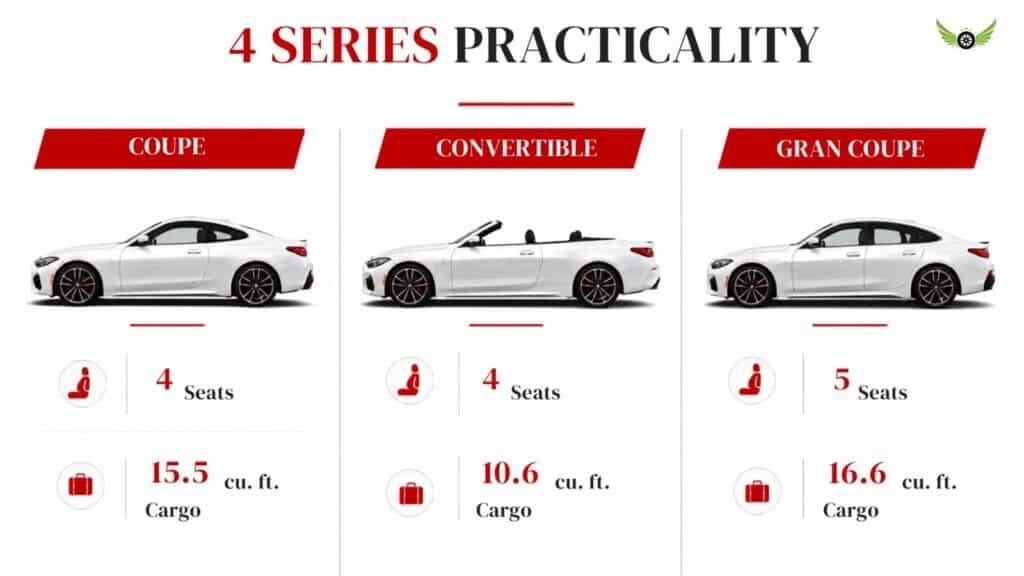
The 2026 BMW 4 Series is practical enough for everyday use, but the three body styles serve different needs. The Gran Coupe is the most useful for regular passenger and cargo duty, while the Coupe is better suited to two-person use. The Convertible prioritizes open-air driving and gives up some storage capacity because of its retractable roof.
Passenger Space, Cargo Capacity & Everyday Usability
The Coupe offers 41.8 inches of front legroom and 15.5 cubic feet of cargo capacity according to Edmunds. Its rear seats are usable for occasional passengers, but the low roofline and two-door layout make access less convenient.
The Convertible has the same 41.8 inches of front legroom, but rear legroom falls to 32.5 inches. Cargo capacity is 13.6 cubic feet with the roof up and 10.6 cubic feet with the roof down.
The Gran Coupe provides 41.5 inches of front legroom and 34.9 inches in the rear. It seats five and offers 16.6 cubic feet of cargo space, expanding to 45.6 cubic feet with the rear seats folded. Its liftback design also makes loading larger items easier than in the two-door models.
Practicality | Coupe | Convertible | Gran Coupe |
Seating | 4 | 4 | 5 |
Front legroom | 41.8 in | 41.8 in | 41.5 in |
Rear legroom | — | 32.5 in | 34.9 in |
Cargo capacity | 15.5 cu. ft. | 13.6 cu. ft. roof up | 16.6 cu. ft. |
Maximum cargo | — | 10.6 cu. ft. roof down | 45.6 cu. ft. |
Coupe vs Convertible vs Gran Coupe Practicality
For everyday use, the Gran Coupe is the clear practicality leader. Its five-seat layout, four doors, folding rear seats, and 45.6-cubic-foot maximum cargo capacity make it considerably more versatile for families, passengers, and larger loads.
The Coupe is the better fit for buyers who mainly drive alone or with one passenger. Its 15.5-cubic-foot cargo area is useful for normal shopping and luggage, but rear-seat access is less convenient.
The Convertible is the least practical configuration. With the roof up, its 13.6-cubic-foot trunk remains useful for daily needs, but dropping the roof reduces capacity to 10.6 cubic feet.
According to our experience, the Gran Coupe makes the most sense for buyers who want one car for daily commuting, passengers, and cargo. The Coupe is a better choice when driving enjoyment and two-door styling matter more, while the Convertible is mainly for buyers who value open-air driving.
BMW 4 Series vs Competitors for Mileage & Performance
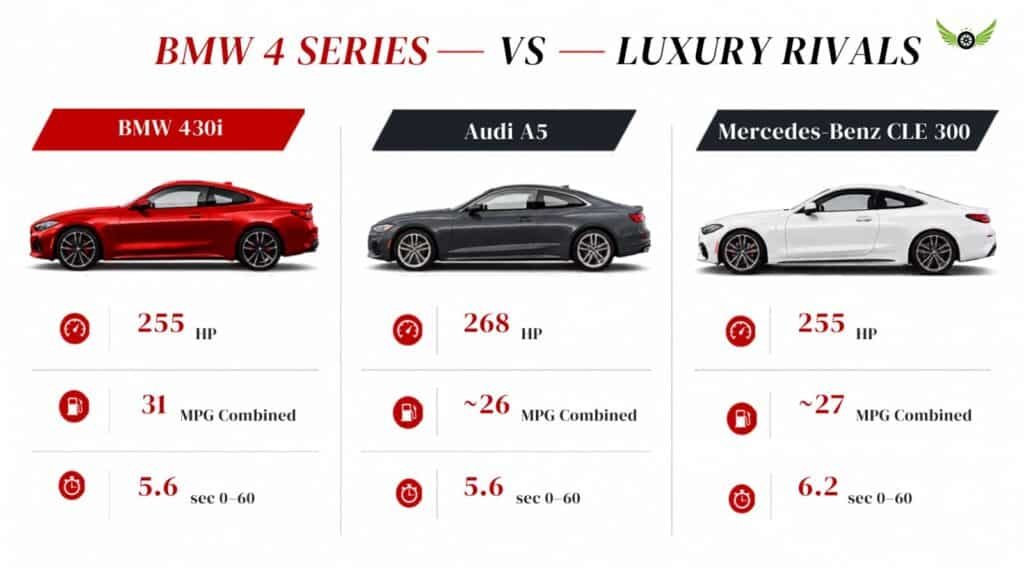
The 2026 BMW 4 Series is particularly competitive when fuel efficiency and performance are considered together. The 430i Coupe reaches up to 31 mpg combined, while the M440i delivers 30 mpg combined with 386 hp. Among its closest luxury rivals, the Audi A5 emphasizes comfort and all-wheel-drive traction, while the Mercedes-Benz CLE offers similar mild-hybrid technology but lower EPA fuel-economy ratings.
Fuel Economy and Driving Compared with Luxury Rivals
For a meaningful comparison, the 430i is best matched against the Audi A5 and Mercedes CLE 300, while the M440i is closer to the higher-performance CLE 450. The BMW has an advantage in combined fuel economy, while the Mercedes CLE 450 is particularly quick.
Model | Power | EPA Combined | 0–60 mph | Drivetrain |
BMW 430i Coupe RWD | 255 hp | 31 mpg | 5.6 sec | RWD |
BMW M440i Coupe RWD | 386 hp | 30 mpg | 4.6 sec* | RWD |
Audi A5 | 268 hp | 26 mpg | 5.6 sec | AWD |
Mercedes CLE 300 | 255 hp | 27 mpg | 6.2 sec | AWD |
Mercedes CLE 450 | 375 hp | 26 mpg | 4.2 sec | AWD |
Edmunds’ tested M440i Convertible achieved 4.6 seconds; BMW’s quickest M440i Coupe xDrive is rated at 4.2 seconds.
Car and Driver reports the A5 at 22/31 mpg city/highway; combined value is approximately 26 mpg based on EPA data.
Mercedes-Benz lists 23/32 mpg city/highway for the CLE 300; the CLE 450 is rated at approximately 23/32–33 mpg depending on configuration.
The comparison shows an important advantage for the BMW: the 430i combines stronger fuel economy with quicker acceleration than the CLE 300, while the M440i offers performance close to the CLE 450 with competitive fuel consumption. The Audi A5 produces slightly more power than the 430i, but its EPA fuel economy is lower.
The Mercedes CLE 450 is the closest rival for outright acceleration, with a tested 4.1-second 0–60 mph time from Car and Driver. The M440i remains highly competitive, while offering a more performance-focused driving character.
Which Model Offers the Best Balance?
For most buyers, the 430i Coupe RWD offers the best balance of fuel economy, performance, and everyday usability. Its 255-hp engine provides a 5.6-second 0–60 mph time, while the 31-mpg combined EPA rating is stronger than the comparable Audi and Mercedes alternatives.
The M440i is the better choice for drivers who place greater importance on acceleration. Its 386-hp inline-six gives it a substantial performance advantage over the 430i while retaining a 30-mpg combined rating in RWD form.
According to our experience, the 430i is the smarter all-round choice, while the M440i is worth the upgrade for enthusiasts who will regularly use the additional power. The Audi A5 makes more sense for buyers prioritizing standard AWD and comfort, while the CLE is attractive for those who prefer Mercedes-Benz’s ride and cabin character.
2026 BMW 4 Series Mileage, Performance & Driving FAQs
The 2026 BMW 4 Series combines fuel efficiency with strong acceleration, while the Coupe, Convertible, and Gran Coupe offer different levels of practicality. These answers cover the key questions buyers are likely to have about fuel economy, performance, everyday driving, and choosing the right configuration.
How many MPG does the 2026 BMW 4 Series get?
The most efficient configuration is the 430i Coupe RWD, rated at 28 mpg city, 36 mpg highway, and 31 mpg combined. The M440i Coupe RWD is rated at 27/34/30 mpg, while xDrive versions and Convertible models generally return lower figures.
What is the real-world mileage of the BMW 4 Series?
Actual fuel economy depends on traffic, speed, weather, driving style, and road conditions. The EPA-rated 430i Coupe RWD has a combined rating of 31 mpg, with an estimated 434-mile city range and 558-mile highway range from its 15.5-gallon fuel tank.
How fast is the 2026 BMW 4 Series?
The 430i Coupe is rated at 5.6 seconds from 0–60 mph, while the M440i Coupe reaches 4.6 seconds with rear-wheel drive and 4.2 seconds with xDrive. BMW identifies these as preliminary test results, so actual acceleration can vary with conditions and vehicle specification.
What is the difference between the 430i and M440i?
The 430i uses a 2.0-liter turbocharged four-cylinder producing 255 hp and 295 lb-ft, while the M440i uses a 3.0-liter turbocharged inline-six producing 386 hp and 398 lb-ft. The M440i is therefore the performance-focused choice, while the 430i emphasizes efficiency and everyday usability.
Is the BMW 4 Series comfortable for daily driving?
Yes. The 4 Series combines controlled handling with a relatively comfortable ride, particularly when equipped with adaptive suspension. Its 8-speed automatic transmission also makes it suitable for normal city traffic and highway cruising. Independent testing describes the car as composed while retaining a sporty character.
Does the 2026 BMW 4 Series use a mild-hybrid system?
Yes. The 430i and M440i use 48-volt mild-hybrid technology. The system assists the gasoline engine during acceleration and supports smoother engine operation, but it is not a full hybrid powertrain capable of normal electric-only driving.
Which 2026 BMW 4 Series body style is most practical?
The Gran Coupe is the most practical version. It seats five and provides 16.6 cubic feet of cargo space, expanding to 45.6 cubic feet with the rear seats folded. The Coupe seats four and has a 15.5-cubic-foot trunk, while the Convertible has less usable cargo space.
Does the BMW 4 Series require premium fuel?
Yes. Edmunds lists premium unleaded as required for the 2026 4 Series. Fuel cost should therefore be considered alongside its EPA fuel-economy rating when estimating running expenses.
Which 2026 BMW 4 Series model offers the best overall balance?
For most buyers, the 430i Coupe RWD offers the strongest balance of fuel economy, performance, and everyday usability. It produces 255 hp, reaches 60 mph in 5.6 seconds, and achieves 31 mpg combined. The M440i is the better choice when acceleration and engine performance are more important than minimizing fuel consumption.