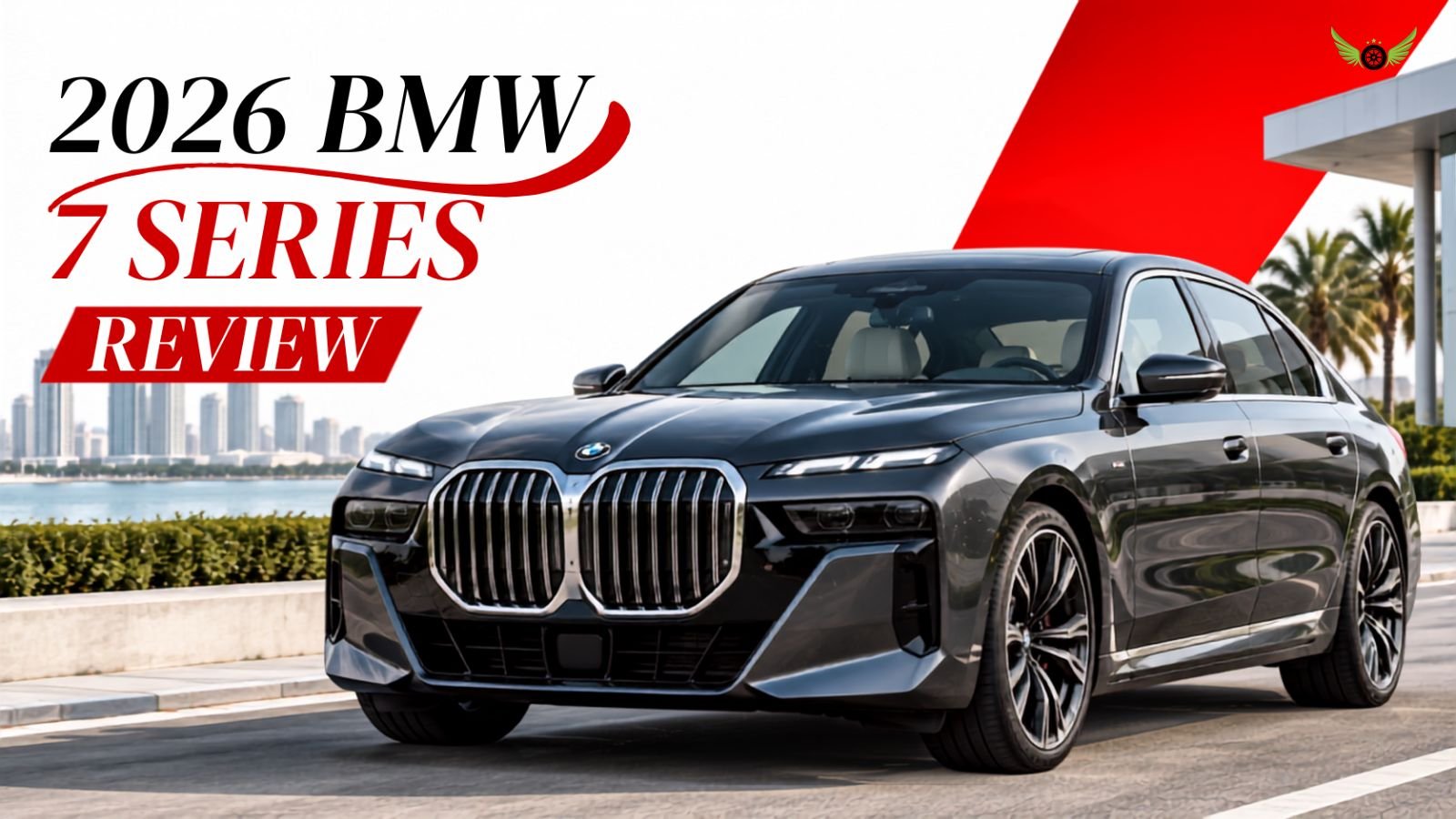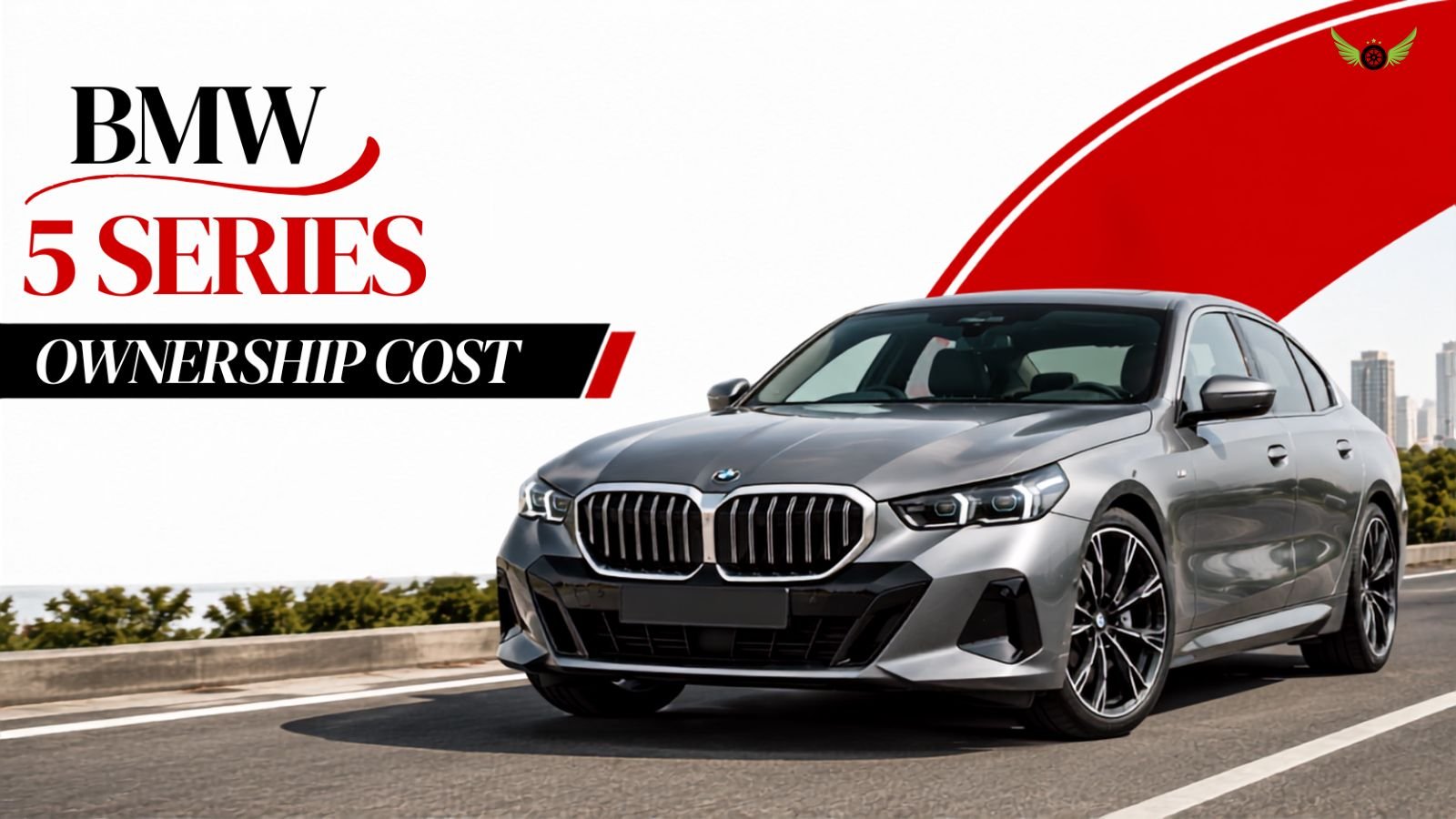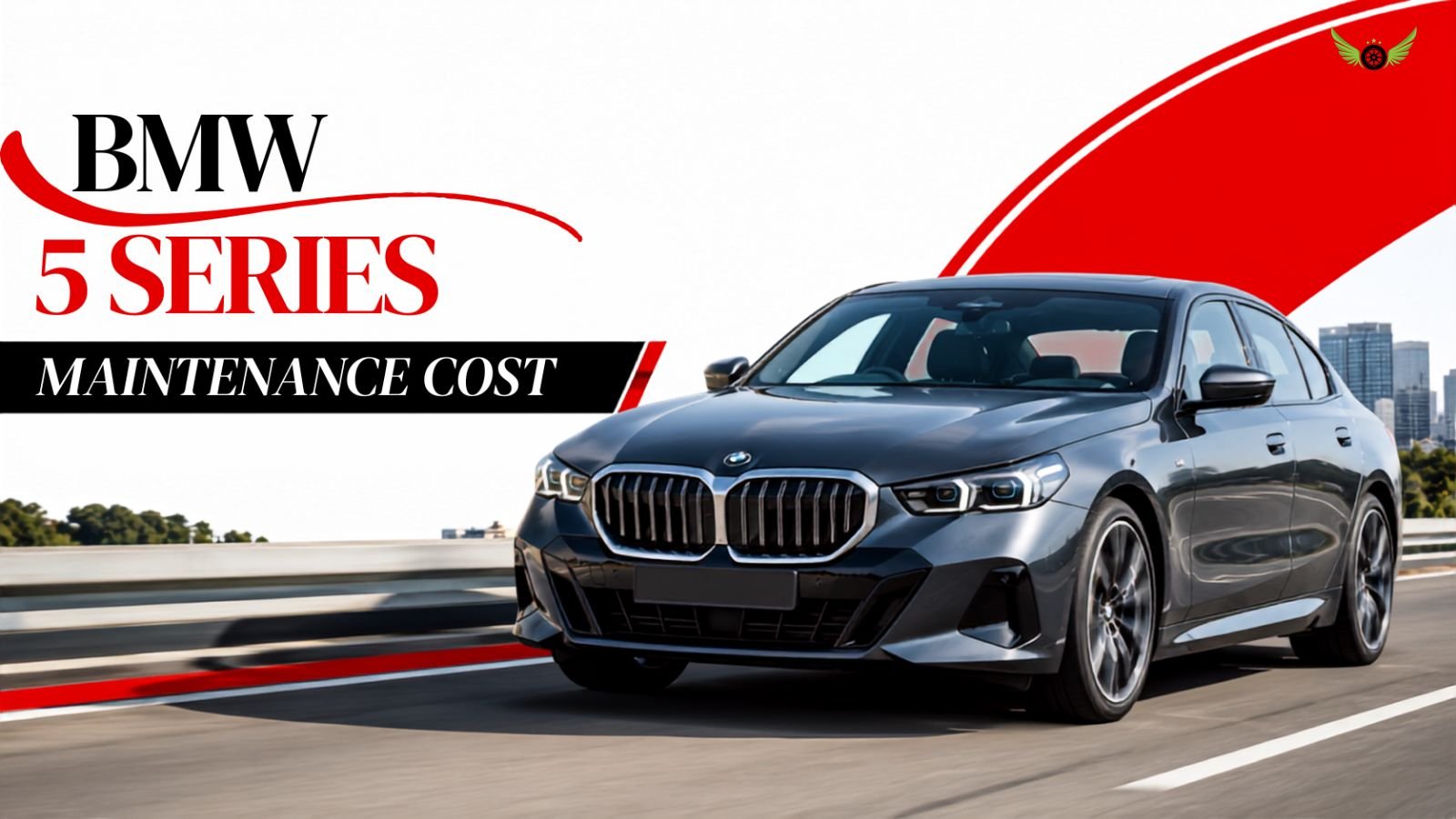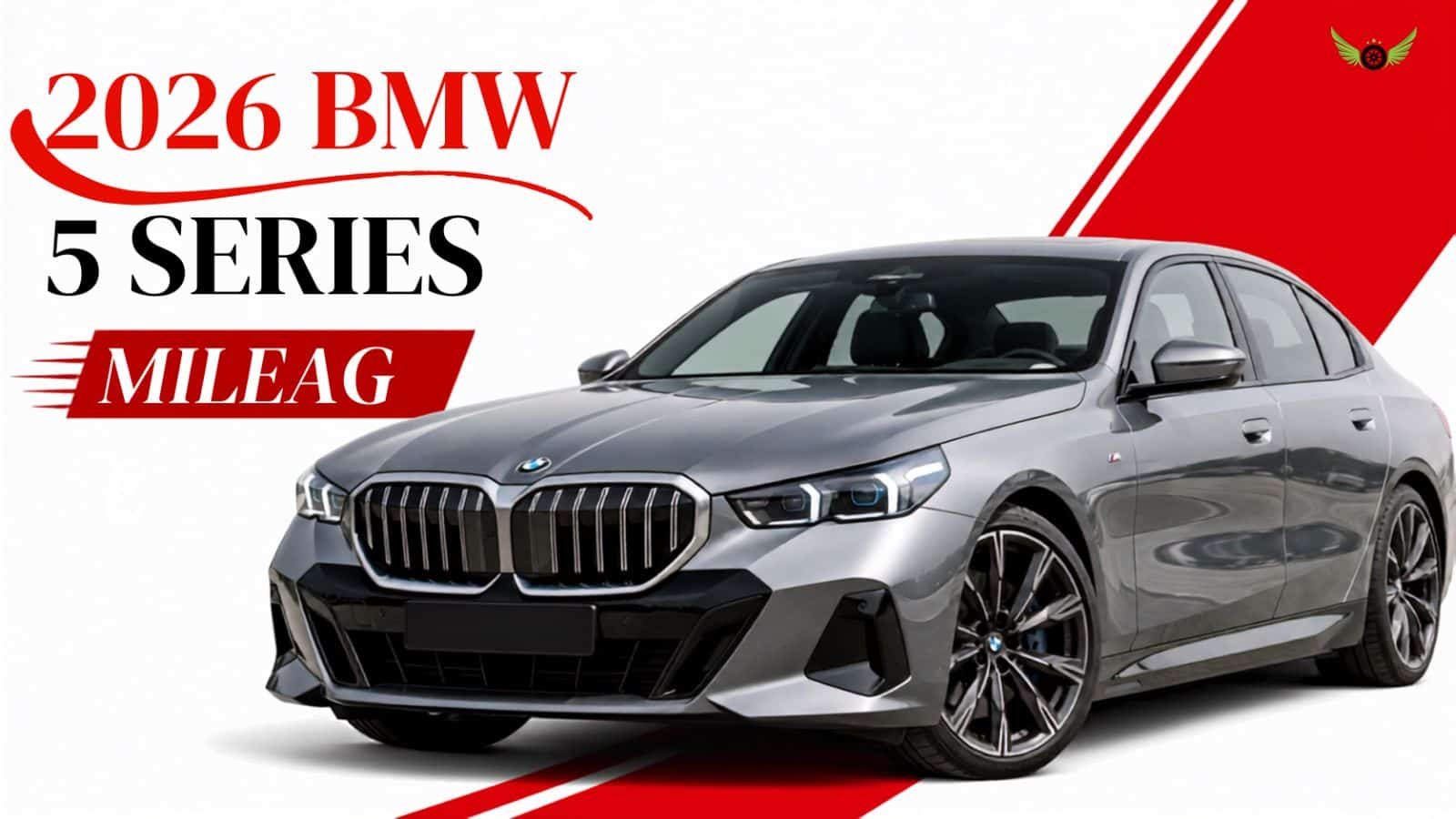
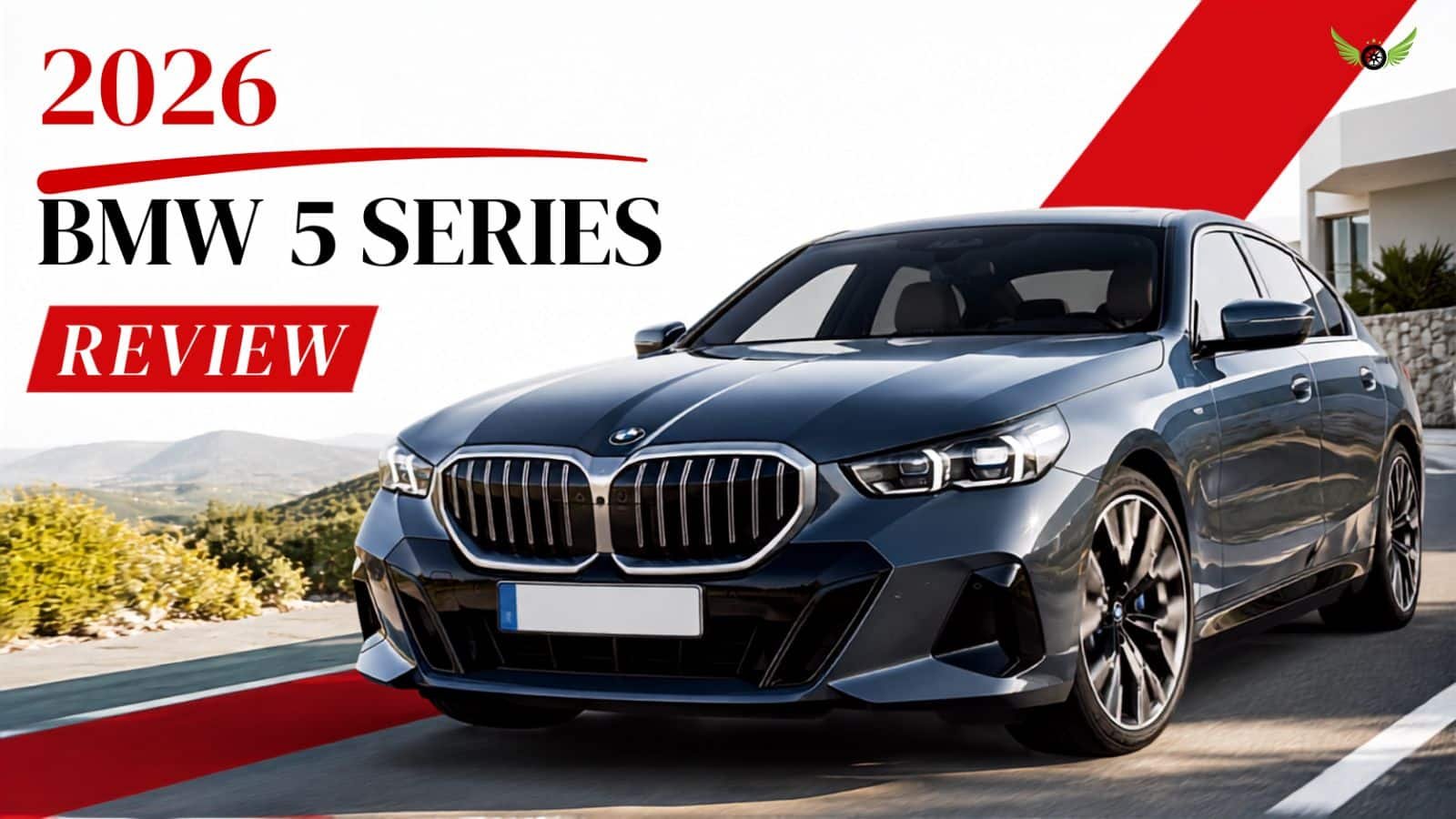
The 2026 BMW 5 Series remains one of BMW’s key midsize luxury sedans, offering a mix of comfort, performance, technology, and premium cabin quality for U.S. buyers. Its current lineup gives shoppers several powertrain choices, from the four-cylinder 530i to the six-cylinder 540i xDrive and plug-in hybrid 550e xDrive.
This BMW 5 Series Review looks at what actually matters when choosing one, including its trim levels, BMW 5 Series Price, engine and performance, interior comfort, technology, safety, and how it compares with rivals such as the Mercedes-Benz E-Class, Audi A6, and Genesis G80. The goal is to give buyers a clear picture of where the 5 Series fits in the luxury sedan market and which version makes the most sense for different needs.
In our experience, the BMW 5 Series is most appealing when you want a luxury sedan that handles daily driving comfortably while still offering strong performance and modern technology. This BMW 5 Series Buying Guide focuses on the practical differences between models so you can decide whether the 2026 5 Series fits your budget and driving needs.
BMW 5 Series Trims, Pricing & Model Comparison
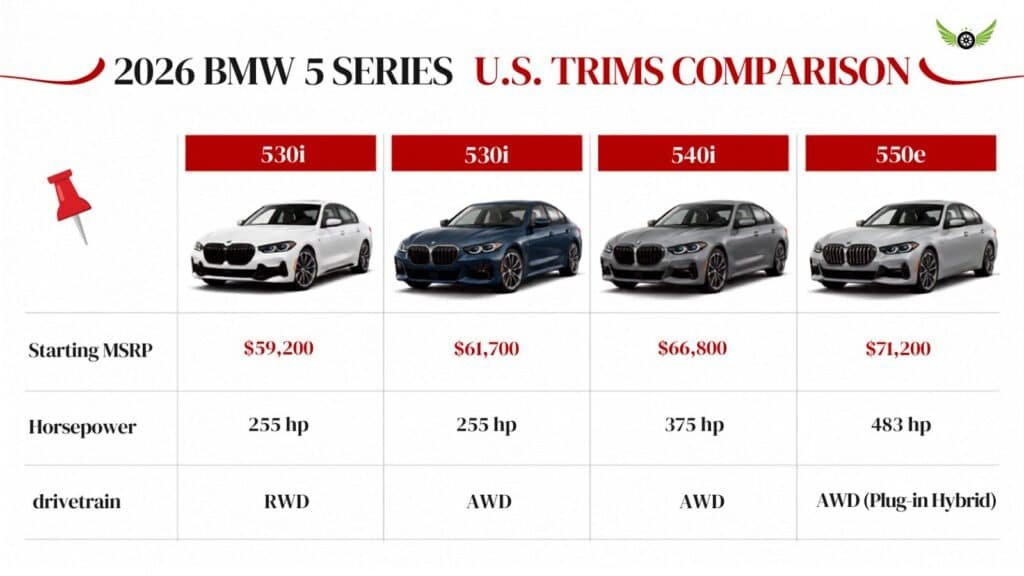
The 2026 BMW 5 Series lineup gives U.S. buyers four distinct choices: the 530i, 530i xDrive, 540i xDrive, and 550e xDrive. The main differences are powertrain, drivetrain, performance, and electrification. Current 2026 pricing sources place the lineup from roughly $61,950 to $76,950 MSRP, although some listings show different figures depending on whether destination charges are included.
The 530i is the most affordable option and uses a four-cylinder mild-hybrid system. The 530i xDrive adds all-wheel drive, while the 540i xDrive moves to a more powerful inline-six. At the top, the 550e xDrive combines the inline-six with a plug-in hybrid system for substantially higher output.
BMW 530i vs 540i vs 550e xDrive
The biggest difference between these trims is what sits under the hood. The 530i is aimed at buyers who want efficient everyday performance, the 540i xDrive adds significantly more power, and the 550e xDrive combines high performance with electric driving capability.
Trim | Powertrain | Drive | Output | 0–60 mph* | Starting MSRP |
530i | 2.0L turbo 4-cylinder mild-hybrid | RWD | 255 hp / 295 lb-ft | 5.9 sec | $61,950 |
530i xDrive | 2.0L turbo 4-cylinder mild-hybrid | AWD | 255 hp / 295 lb-ft | 5.8 sec | $64,250 |
540i xDrive | 3.0L turbo inline-6 mild-hybrid | AWD | 375 hp / 398 lb-ft | 4.4 sec | $69,150 |
550e xDrive | 3.0L turbo inline-6 plug-in hybrid | AWD | 483 hp / 516 lb-ft | 4.1 sec | $76,950 |
BMW preliminary acceleration figures; MSRP figures are model-year pricing and can vary by source, destination, options, and fees.
The 530i is the logical starting point for buyers who mainly need a comfortable luxury sedan for commuting and highway driving. Its 255-hp powertrain is also the most fuel-efficient of the gasoline models, with an EPA-estimated 31 mpg combined for the rear-wheel-drive version.
The 540i xDrive is the stronger choice for drivers who value acceleration and the smoother character of an inline-six. Its 375-hp engine cuts the claimed 0–60 mph time to 4.4 seconds while retaining mild-hybrid assistance.
The 550e xDrive is designed for buyers who can take advantage of plug-in charging. Its combined system output reaches 483 hp and 516 lb-ft, while BMW lists an estimated 4.1-second 0–60 mph time.
BMW 5 Series Packages, Options & Best Value Trim
The available packages allow buyers to add comfort, convenience, driver assistance, and appearance features. Depending on trim, options include the Premium Package, Luxury Seating Package, Executive Package, Driving Assistance Professional Package, M Sport Package, and M Sport Professional Package.
Useful upgrades include a head-up display, surround-view camera, heated and ventilated front seats, heated rear seats, upgraded climate control, enhanced driver assistance, and premium audio. Package availability and pricing vary by trim. For example, Edmunds lists the Premium Package at $2,400 and Luxury Seating Package at $1,350 for the 540i xDrive.
According to our experience, the 540i xDrive is the best-balanced trim for buyers who want more than basic performance without moving all the way to the 550e xDrive. Its six-cylinder engine provides a noticeable performance advantage, while the overall price remains below the plug-in hybrid flagship.
For buyers focused on keeping costs under control, the 530i is the better value. Those who regularly charge at home and want electric driving capability should consider the 550e xDrive instead.
BMW 5 Series Engine, Performance & Specifications
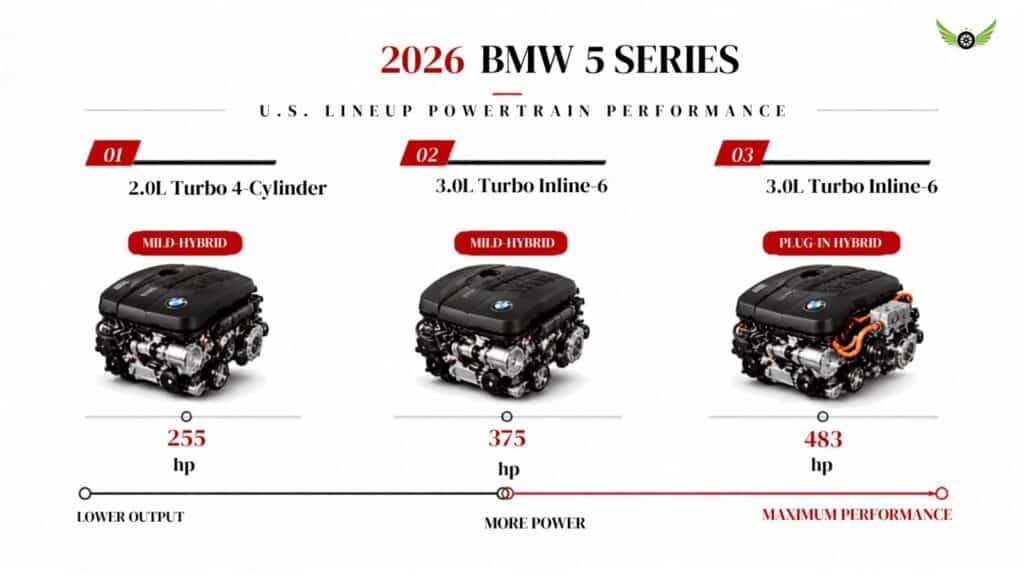
The 2026 BMW 5 Series offers three distinct powertrain setups in the U.S.: a 2.0-liter turbocharged four-cylinder mild-hybrid, a 3.0-liter turbocharged inline-six mild-hybrid, and a plug-in hybrid version of the inline-six. This gives buyers a clear choice between everyday efficiency, stronger performance, and electrified power.
All versions use an eight-speed automatic transmission. Rear-wheel drive is available on the 530i, while xDrive all-wheel drive comes standard on the 530i xDrive, 540i xDrive, and 550e xDrive.
Four-Cylinder, Inline-Six Mild-Hybrid & Plug-In Hybrid Options
The 530i and 530i xDrive use a 2.0-liter turbocharged four-cylinder engine supported by a 48-volt mild-hybrid system. It produces 255 horsepower and 295 lb-ft of torque. The 530i uses rear-wheel drive, while the xDrive model adds all-wheel drive.
The 540i xDrive moves to a 3.0-liter turbocharged inline-six with 48-volt mild-hybrid assistance. Output rises to 375 horsepower and 398 lb-ft of torque, making it considerably quicker than the four-cylinder models while retaining a conventional gasoline powertrain.
The 550e xDrive combines the 3.0-liter inline-six with an electric motor and a plug-in hybrid battery. The system produces 483 horsepower and 516 lb-ft of torque. For 2026, BMW increased its maximum AC charging rate to 11 kW, while the EPA-estimated electric driving range is about 34 miles.
Horsepower, Acceleration, Drivetrain & Key Specifications
The performance gap between the trims is significant. BMW’s published figures show the 530i reaching 60 mph in 5.9 seconds, while the 540i xDrive does it in 4.4 seconds and the 550e xDrive in 4.1 seconds.
Model | Engine | Power | Torque | Drivetrain | 0–60 mph |
530i | 2.0L turbo I-4 mild-hybrid | 255 hp | 295 lb-ft | RWD | 5.9 sec |
530i xDrive | 2.0L turbo I-4 mild-hybrid | 255 hp | 295 lb-ft | AWD | 5.8 sec |
540i xDrive | 3.0L turbo I-6 mild-hybrid | 375 hp | 398 lb-ft | AWD | 4.4 sec |
550e xDrive | 3.0L turbo I-6 plug-in hybrid | 483 hp | 516 lb-ft | AWD | 4.1 sec |
BMW identifies the acceleration figures as preliminary results, so actual performance can vary with equipment, road conditions, testing methods, and driving style.
Fuel economy also changes with the powertrain. The 530i is rated at 31 mpg combined, the 530i xDrive at 30 mpg, and the 540i xDrive at 28 mpg. The 550e xDrive is rated at 25 mpg combined on gasoline operation, with a separate electric-range rating because it is a plug-in hybrid.
According to our experience, the 540i xDrive is the most balanced setup for drivers who want strong acceleration without moving to a plug-in hybrid. The 530i makes more sense for buyers prioritizing fuel economy and a lower entry price, while the 550e xDrive is most useful when regular charging can be part of the driving routine.
BMW 5 Series Interior, Technology & Safety
The 2026 BMW 5 Series combines a spacious five-seat cabin with a large trunk, premium comfort features, and a highly digital cockpit. Its technology centers on the BMW Curved Display and Operating System 8.5, while standard safety equipment covers key collision-prevention and lane-monitoring functions.
Cabin Comfort, Passenger Space & Trunk Capacity
The cabin offers 41.3 inches of front legroom and 37.0 inches of rear legroom. Front headroom is 38.8 inches, while the rear provides 37.5 inches. The rear seatback also folds to make the trunk more useful when carrying longer items.
Interior Dimension | Front | Rear |
Headroom | 38.8 in. | 37.5 in. |
Legroom | 41.3 in. | 37.0 in. |
Shoulder Room | 59.2 in. | 56.9 in. |
BMW lists 18.3 cubic feet of trunk space for the 5 Series sedan. That is enough for normal luggage and everyday cargo, while the folding rear seatback adds flexibility for larger items.
Front-seat comfort is a strong point, with power adjustment, lumbar support, thigh extensions, and heating available as standard equipment. Higher-level seating options can add ventilation and massage functions. The cabin is also designed to remain quiet during highway driving.
According to our experience, the interior is best suited to buyers who want a comfortable daily luxury sedan rather than maximum rear-seat space. Front occupants get the most generous seating area, while the rear seats work well for adults on normal journeys.
BMW Curved Display, iDrive & Driver Assistance Features
The dashboard uses BMW’s Curved Display, combining a 12.3-inch digital instrument cluster with a 14.9-inch touchscreen. BMW Operating System 8.5 supports touch controls, voice commands, and iDrive, while its QuickSelect layout provides direct access to frequently used functions.
Wireless Apple CarPlay and Android Auto are standard, along with a Harman Kardon sound system. Available technology includes a head-up display, surround-view camera, BMW Digital Key Plus, and upgraded audio equipment.
The main safety systems are standard, including blind-spot detection, lane-departure warning, lane-keeping assistance, forward collision warning, automatic emergency braking, and driver-attention monitoring. Some advanced functions are optional.
The optional Highway Assistant enables hands-free driving assistance on compatible controlled-access highways at speeds of up to 85 mph. BMW states that the driver must remain attentive and be prepared to take control whenever necessary.
The 2026 model also earns Good ratings from IIHS for the small-overlap front and updated side crash tests. Its standard pedestrian front-crash-prevention system and headlights also receive Good ratings.
Overall, the technology is a major strength, but the touchscreen-focused interface may take some adjustment. According to our experience, buyers who are comfortable with digital controls will appreciate the customization, while drivers who prefer physical buttons may find some everyday functions less intuitive.
BMW 5 Series vs Mercedes-Benz E-Class, Audi A6 & Genesis G80
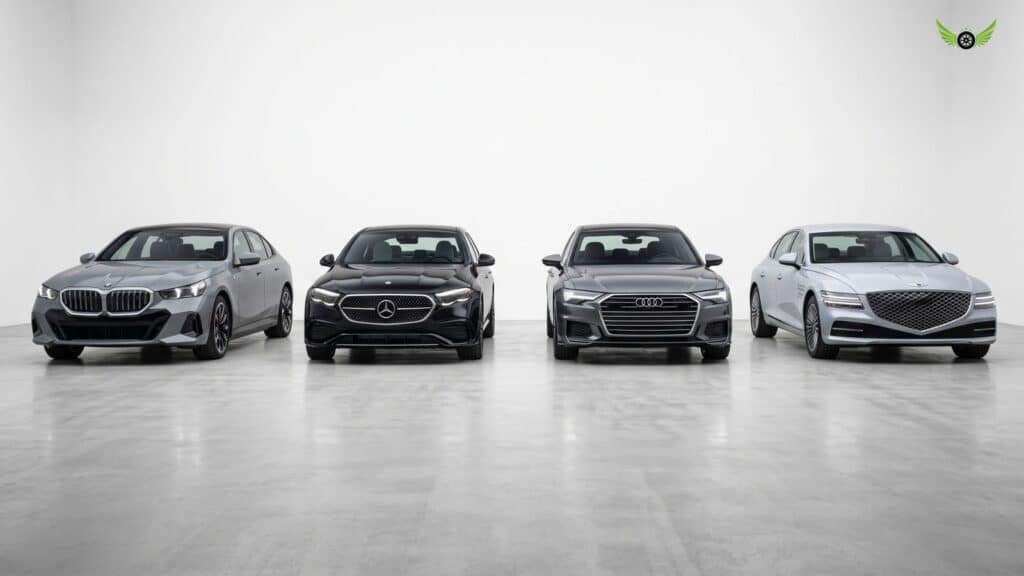
The 2026 BMW 5 Series competes in a crowded midsize luxury sedan segment where each rival has a different strength. The Mercedes-Benz E-Class emphasizes comfort and cabin technology, the redesigned Audi A6 focuses on refinement and technology, while the Genesis G80 offers strong standard equipment at a lower starting price. The BMW stands out for its range of powertrains and strong driving performance.
Performance, Luxury, Technology & Value Comparison
For 2026, the BMW 5 Series starts below the E-Class and Audi A6 but above the Genesis G80, depending on the specific source’s treatment of destination charges. BMW’s 530i produces 255 hp, while the 540i xDrive produces 375 hp. The 550e xDrive raises output to 483 hp with plug-in hybrid assistance.
The Mercedes-Benz E-Class starts with the 255-hp E 350 and offers the 375-hp E 450 4MATIC. The 2026 Audi A6 uses one 3.0-liter turbocharged V6 producing 362 hp, with quattro all-wheel drive standard. Genesis offers a 300-hp 2.5T AWD as its entry engine and a 375-hp twin-turbo V6 in higher trims.
Model | Starting MSRP | Standard/Available Power | Drivetrain |
BMW 5 Series | $58,700* | 255–483 hp | RWD / AWD |
Mercedes-Benz E-Class | $65,200 | 255–375 hp | RWD / AWD |
Audi A6 | $64,100 | 362 hp | AWD |
Genesis G80 | $58,450 | 300–375 hp | AWD |
BMW’s official 2026 page currently lists $58,700 for the 530i; some third-party listings show different starting figures depending on pricing and destination treatment.
In performance, the BMW 540i xDrive remains highly competitive. Car and Driver recently recorded 4.1 seconds from 0–60 mph for the 540i xDrive, compared with 4.3 seconds for the 2026 Audi A6 in its comparison test. The BMW also uses a smooth eight-speed automatic, while the A6 uses a seven-speed dual-clutch transmission.
The E-Class has a stronger emphasis on comfort and technology, while the G80 provides extensive standard equipment and a lower entry price. The A6 offers standard all-wheel drive and a 362-hp V6, making it particularly competitive for buyers who want performance without moving into a higher BMW trim.
Which Luxury Sedan Is the Better Buy?
There is no single winner for every buyer. The BMW 5 Series is the better choice if you want several powertrain options, strong acceleration, and the ability to choose between rear-wheel drive, all-wheel drive, and plug-in hybrid power.
The Mercedes-Benz E-Class makes more sense for buyers who place comfort and a technology-rich luxury experience ahead of outright driving performance. The Audi A6 is particularly attractive in 2026 because its redesigned sedan offers a 362-hp V6, standard quattro all-wheel drive, and a competitive $64,100 starting MSRP.
The Genesis G80 is the value-focused alternative. Its $58,450 starting MSRP undercuts the German competitors while providing 300 hp and standard AWD, although its powertrain range and driving character differ from the BMW’s broader lineup.
According to our experience, the 540i xDrive is the strongest all-round choice within this group when performance, luxury, and everyday usability are considered together. However, buyers prioritizing comfort may prefer the E-Class, technology and standard AWD may point toward the A6, and maximum equipment for the money makes the G80 difficult to overlook.
For a buyer who wants the broadest combination of performance choices and everyday flexibility, the BMW remains one of the most balanced options in this class.
BMW 5 Series Buying Guide
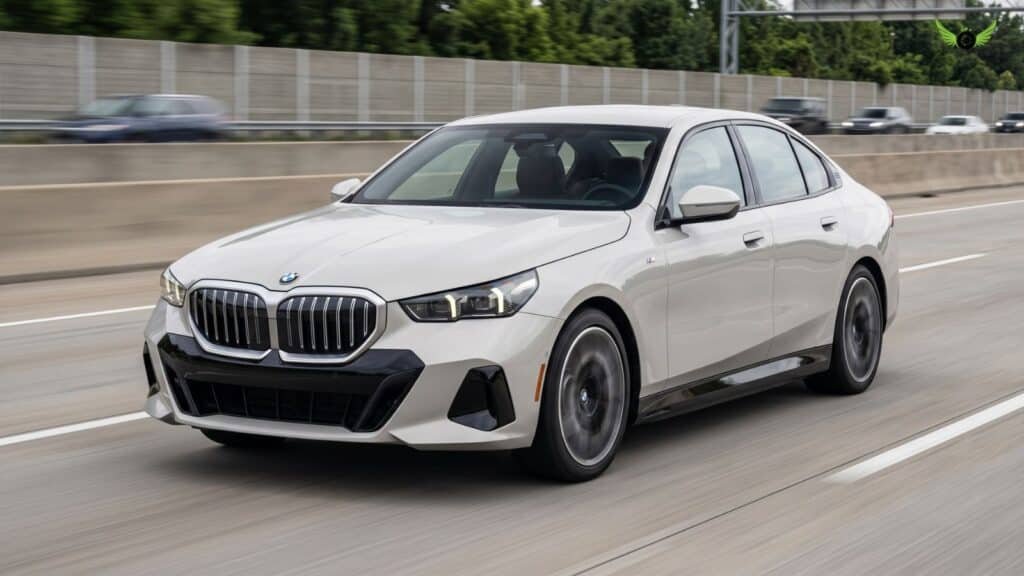
Choosing the right 2026 BMW 5 Series comes down to how much performance you need, whether you want all-wheel drive, and how much you are willing to spend on the powertrain and options. The U.S. range covers the 530i, 530i xDrive, 540i xDrive, and 550e xDrive, so buyers do not need to move to the most expensive version to get a well-equipped luxury sedan.
Best BMW 5 Series Trim for Different Buyers
The 530i is the best starting point for buyers who want a lower purchase price and strong fuel economy. Its 255-hp four-cylinder mild-hybrid powertrain provides enough performance for everyday commuting, while rear-wheel drive keeps the configuration simple.
The 530i xDrive is a better fit for drivers who regularly deal with rain, snow, or other conditions where all-wheel drive is useful. It keeps the same 255-hp engine but adds BMW’s xDrive system.
For most buyers, the 540i xDrive is the strongest overall choice. Its 375-hp inline-six delivers a major performance increase over the 530i without the added complexity of a plug-in hybrid. Edmunds specifically recommends it as the best blend of power and efficiency in the 2026 lineup.
The 550e xDrive is aimed at buyers who want maximum power and can regularly charge at home or elsewhere. Its 483-hp plug-in hybrid system provides an estimated 33 miles of electric-only range, making it particularly useful for short daily trips when charging is convenient.
Buyer Type | Recommended Trim | Main Reason |
Lower-cost daily driver | 530i | Lowest entry point and strong fuel economy |
All-weather commuter | 530i xDrive | Standard xDrive AWD |
Performance-focused buyer | 540i xDrive | 375-hp inline-six and strong acceleration |
Plug-in hybrid buyer | 550e xDrive | 483 hp plus electric driving capability |
Best overall balance | 540i xDrive | Strong performance without PHEV complexity |
Pros, Cons & Final Buying Verdict
The biggest strengths are the quiet cabin, comfortable ride, strong powertrain choices, spacious interior, useful trunk, and extensive technology. The 540i xDrive in particular combines a smooth six-cylinder engine with all-wheel drive and strong acceleration.
There are also some drawbacks. The infotainment system places many controls on the touchscreen, which can make simple adjustments less convenient. Consumer Reports also found the steering feel overly light and considered the rear seat somewhat tight relative to the car’s size.
Pros | Cons |
Smooth and refined powertrains | Many controls use the touchscreen |
Spacious front cabin | Rear seat is not class-leading for taller passengers |
Large 18.4-cu-ft trunk | Options can raise the final price quickly |
Strong technology package | 530i is less engaging for performance-focused drivers |
540i offers excellent performance balance | 550e costs substantially more |
According to our experience, the 540i xDrive is the trim that makes the most sense for the widest range of buyers. It delivers the performance expected from a premium BMW while avoiding the higher cost of the 550e xDrive. Buyers mainly focused on efficiency and price should choose the 530i, while the 550e makes sense when its plug-in capability will actually be used.
The final verdict from this BMW 5 Series Buying Guide is straightforward: choose the 530i for value, 530i xDrive for all-weather traction, 540i xDrive for the best overall balance, and 550e xDrive for maximum power with electric capability.
2026 BMW 5 Series FAQs: Price, Specs, Performance & Buying Guide
The 2026 BMW 5 Series covers several important buying considerations, from U.S. pricing and engine choices to fuel economy, interior space, technology, safety, and trim selection. These FAQs answer the most practical questions shoppers may have before choosing a model.
What is the 2026 BMW 5 Series price in the USA?
The 2026 BMW 5 Series starts at $61,950 for the 530i. The 530i xDrive starts at $64,250, the 540i xDrive at $69,150, and the 550e xDrive at $76,950. These figures are starting MSRP and do not represent the final purchase price after options, taxes, registration, and other charges.
How many 2026 BMW 5 Series trims are available?
BMW offers four main versions in the U.S.: 530i, 530i xDrive, 540i xDrive, and 550e xDrive. The 530i models use a four-cylinder engine, the 540i xDrive uses a six-cylinder mild-hybrid system, and the 550e xDrive adds plug-in hybrid technology.
How much horsepower does the 2026 BMW 5 Series produce?
The 530i and 530i xDrive produce 255 hp, the 540i xDrive produces 375 hp, and the 550e xDrive produces 483 hp.
Which engine is best for everyday driving?
The 255-hp 2.0-liter turbocharged four-cylinder in the 530i is sufficient for normal commuting and highway use. Buyers wanting stronger acceleration and the smoother character of an inline-six should step up to the 540i xDrive.
How fast is the 2026 BMW 5 Series?
BMW lists 0–60 mph times of 5.9 seconds for the 530i, 5.8 seconds for the 530i xDrive, 4.4 seconds for the 540i xDrive, and 4.1 seconds for the 550e xDrive. These are BMW AG preliminary test figures and can differ from independent testing.
Is the 2026 BMW 5 Series available with all-wheel drive?
Yes. xDrive all-wheel drive is standard on the 530i xDrive, 540i xDrive, and 550e xDrive. The regular 530i comes with rear-wheel drive.
How fuel-efficient is the 2026 BMW 5 Series?
The 530i is EPA-rated at 31 mpg combined, while the 530i xDrive reaches 30 mpg and the 540i xDrive 28 mpg. The 550e xDrive is rated at 25 mpg combined and also offers an estimated 34 miles of all-electric range.
How much trunk space does the 2026 BMW 5 Series have?
The sedan provides approximately 18 cubic feet of trunk space. Independent testing by Car and Driver found enough capacity for six carry-on suitcases, demonstrating that the trunk is practical for regular travel.
Is the 2026 BMW 5 Series spacious inside?
Yes. It seats five and provides 41.3 inches of front legroom and 37.0 inches of rear legroom. The front area is particularly accommodating, while the rear seats provide reasonable space for adult passengers.
What technology comes standard?
The cabin features BMW’s 12.3-inch digital instrument display and 14.9-inch central touchscreen, running BMW Operating System 8.5. Wireless Apple CarPlay and Android Auto are supported, while the cabin also offers connected services and a Harman Kardon sound system.
Is the 2026 BMW 5 Series safe?
Yes. IIHS gives the 2026 sedan Good ratings for the small-overlap front and updated side crash tests. Standard safety equipment includes blind-spot detection and lane-departure warning, while some advanced assistance features are optional.
Does the BMW 5 Series have hands-free driving assistance?
Yes. The available Highway Assistant provides hands-free assistance on compatible highways under specific operating conditions. It is a driver-assistance system, not autonomous driving, and the driver must remain attentive.
How does the BMW 5 Series compare with the Mercedes-Benz E-Class and Audi A6?
The 5 Series offers a broad powertrain range and strong performance, particularly with the 540i xDrive. The E-Class puts greater emphasis on comfort and technology, while the Audi A6 offers a refined cabin and standard all-wheel drive on its 2026 models. The better choice depends on whether performance, comfort, technology, or value is the main priority.
Which 2026 BMW 5 Series trim is the best value?
The 540i xDrive is the strongest overall choice for buyers who want a balance of performance, refinement, and efficiency. Edmunds recommends it as the best blend of power and fuel economy in the lineup.
Is the 550e xDrive worth the extra cost?
It can be, particularly for buyers who can charge regularly and want both strong performance and electric driving. Its 483-hp plug-in hybrid system and approximately 34-mile electric range give it capabilities that the gasoline models do not offer.
What are the main pros and cons of the 2026 BMW 5 Series?
The main advantages are its smooth powertrains, quiet cabin, comfortable ride, strong technology, and large trunk. The main drawbacks are its relatively light steering feel, touchscreen-heavy controls, and the additional cost of desirable options. Car and Driver also notes that this generation gives up some of the sporty character associated with earlier 5 Series models.
Is the 2026 BMW 5 Series worth buying?
Yes, for buyers seeking a refined midsize luxury sedan with multiple powertrain choices and strong everyday practicality. According to our experience, the 540i xDrive offers the most convincing balance for the typical buyer, while the 530i is better for efficiency and lower entry cost, and the 550e xDrive is best for drivers who can make practical use of plug-in charging.