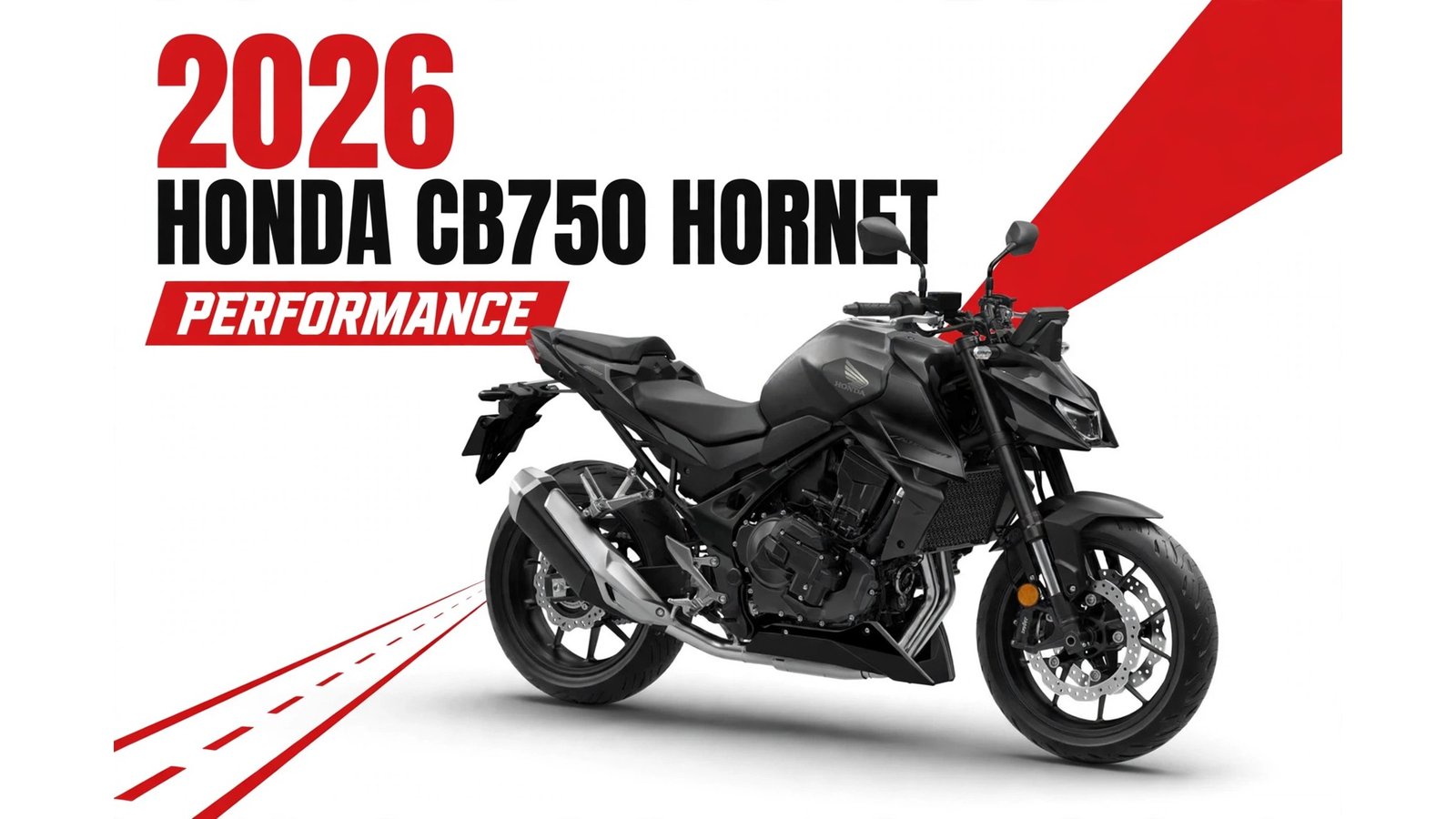
Short answer: Honda CB750 Hornet performance is the story of a middleweight that wins on value and peak power rather than on polish. The 2025 manual bike put 76.6 rear-wheel horsepower on Motorcycle.com’s dyno — the most in its three-bike test — and the 2026 E-Clutch bike costs the same $7,999 plus $600 destination, with the same 755cc twin underneath. This Honda CB750 Hornet performance guide keeps every figure in its correct labelled box, because the Hornet’s power, economy, and top-speed numbers are easy to mix up across American tests, European claims, and the faired and naked siblings that share its engine family.
That discipline matters for Honda CB750 Hornet performance, because this motorcycle wears two very different price and equipment stories in two model years. The 2025 bike arrived in the United States in May 2025 with a manual gearbox and a standard quickshifter; the 2026 bike replaced the manual entirely with Honda’s E-Clutch automatic clutch at zero price premium. This Honda CB750 Hornet performance guide covers both years, labels which year every figure belongs to, and says plainly where no American test exists at all.
Honda CB750 Hornet Engine Performance and Power Delivery
The engine is the foundation of Honda CB750 Hornet performance: a 755cc liquid-cooled Unicam parallel twin with an 87.0 x 63.5mm bore and stroke, 11.0:1 compression, a 270-degree crank, a 46mm throttle body, and a six-speed gearbox. It is a rev-happy twin that makes its best power high in the rev range, and that character defines everything else in this Honda CB750 Hornet performance guide. Motorcycle.com’s first ride of the US bike called it a delightful, usable twin — and the shootout numbers below show exactly where that delight lives.
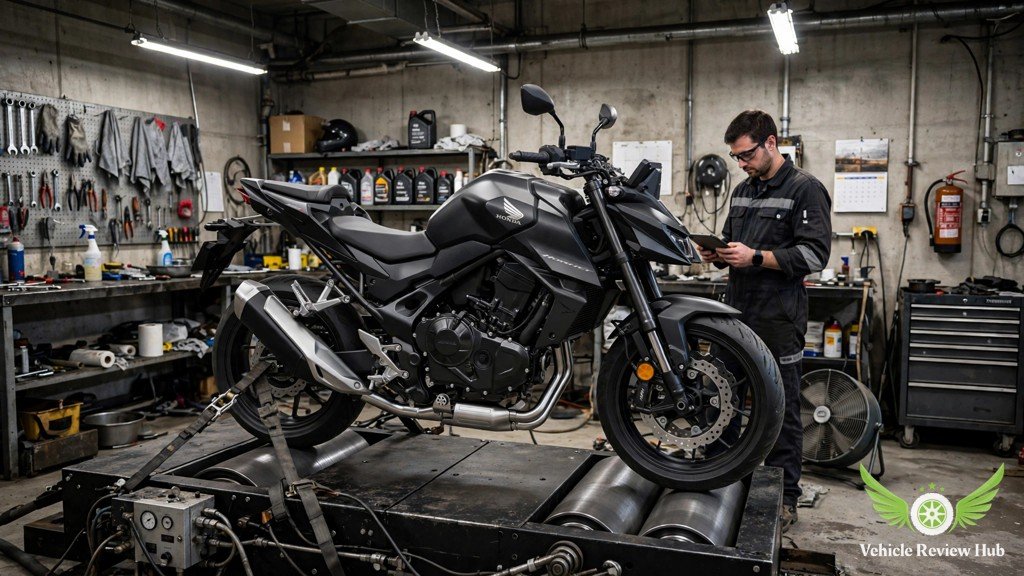
Motorcycle.com Dyno: 76.6 HP at 8,200 RPM, Most in Its Test
The most important rear-wheel figure for Honda CB750 Hornet performance comes from Motorcycle.com’s 2025 three-bike shootout: 76.6 horsepower at 8,200 rpm and 50.9 lb-ft of torque at 7,200 rpm at the rear wheel. In that test the Honda made the most peak horsepower of the three bikes — ahead of the Suzuki GSX-8S at 73.5 horsepower and the Yamaha MT-07 at 65.1 horsepower — but the testers also found it softer than both rivals below about 7,500 rpm, and “sleepy” in town below 4,600 rpm. Peak power and low-end punch are different things, and this Honda CB750 Hornet performance guide keeps them separate: the Hornet wins the dyno chart and still asks its rider to rev it. For the full model story behind those numbers, see our Honda CB750 Hornet review.
US Factory Claim 83 HP Against the EU 90.5 HP Figure
Three power boxes must never be averaged in any Honda CB750 Hornet performance account. The American dyno result is 76.6 horsepower at the rear wheel. The US-market figure quoted from Honda Powersports data is 83 horsepower — but one long-term reviewer states that Honda does not publish a US power figure at all and quotes “reported around 90 hp”, so this Honda CB750 Hornet performance guide presents 83 horsepower only as the US-market figure quoted from Honda Powersports data, with that conflict noted plainly, never as a dyno result. The European claim is 90.5 horsepower at 9,500 rpm and 55.3 lb-ft at 7,250 rpm at the crankshaft — a different measurement, on a different continent, for a bike sold under different rules. The European A2 restrictor version at 47 horsepower is a licence-limited variant and never a US figure. The table below keeps the boxes apart.
| Power figure | Value | Source and label |
|---|---|---|
| US dyno, rear wheel | 76.6 hp @ 8,200 rpm; 50.9 lb-ft @ 7,200 rpm | Motorcycle.com 2025 shootout, US test bike |
| US-market quoted figure | 83 hp | Quoted from Honda Powersports data; conflict noted |
| EU/global crank claim | 90.5 hp @ 9,500 rpm; 55.3 lb-ft @ 7,250 rpm | Honda Europe claim, not a US test |
| EU A2 version | 47 hp restrictor | Europe only, licence-limited |
| Summary | Never average the three boxes | Dyno, quoted figure, and crank claim differ |
Honda CB750 Hornet Top Speed and Acceleration
Acceleration and top speed are where Honda CB750 Hornet performance coverage needs the most honesty, because the headline figures everyone quotes come from outside the United States, and the American test that does exist measured neither. This section keeps those facts labelled, and says plainly what does not exist for the American bike.
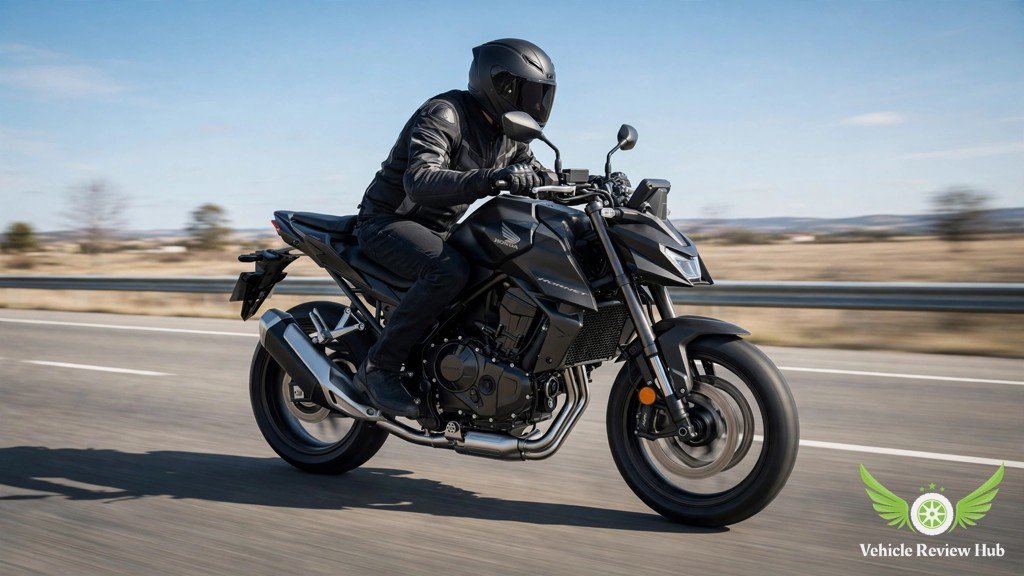
No US Instrumented 0-60 or Quarter-Mile Test Has Been Published
The doc heading for this section stands exactly as written in this Honda CB750 Hornet performance guide: no US instrumented 0-60 or quarter-mile test has been published for the CB750 Hornet. Motorcycle.com’s shootout — the core American test — measured dyno output, fuel economy, and subjective scores, but published no launch or quarter-mile times, and no other US source found for this guide fills that gap. This Honda CB750 Hornet performance guide will not fill it with a guess, an aggregator estimate, or a figure borrowed from the Transalp, which shares the engine family but is a different motorcycle with different gearing and weight. Any 0-60 or quarter-mile number quoted for this bike without a named American test behind it should be treated as unverified.
Top Speed Around 127 to 130 MPH From European Sources Only
Top speed for Honda CB750 Hornet performance sits in a European-sourced bracket of around 127 to 130 mph, roughly 205 to 210 km/h, from European listings and comparison tables. That bracket is reported here with its origin attached: it is not a US GPS test, not a Motorcycle.com measurement, and not a Honda USA claim. That bracket is an approximate ceiling, not a promise, since an upright rider meets far more wind than a tucked faired rider. What the American evidence does support is strong roll-on pace in the upper midrange, where the twin’s peak power lives, rather than any verified maximum-velocity figure.
Honda CB750 Hornet Mileage and Fuel Economy
Fuel economy is the compromise in Honda CB750 Hornet performance: not the most frugal bike in its class — the Yamaha won that honour by a long shot — but honest for a 755cc twin ridden hard, with its small tank the real constraint on range.
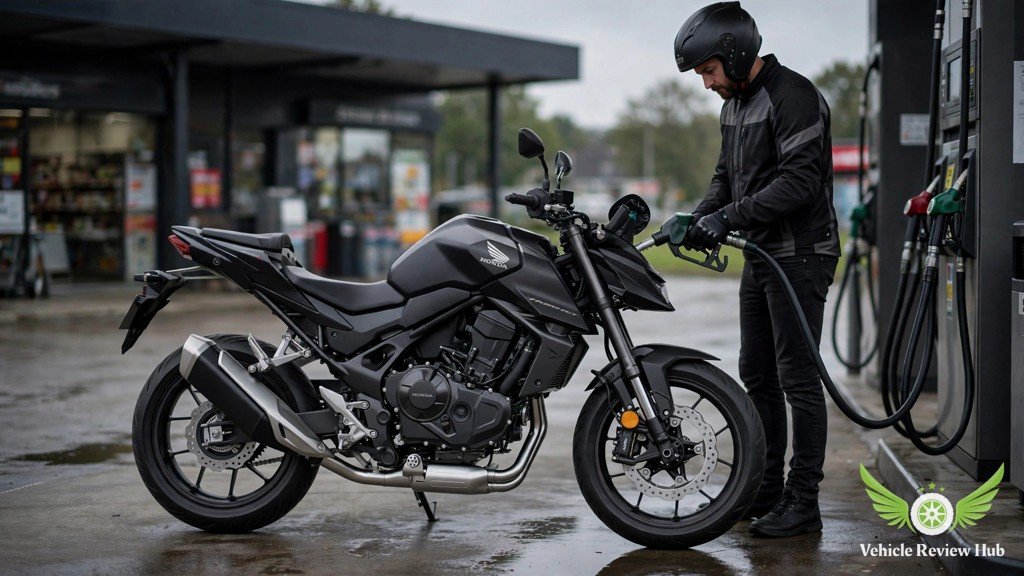
Motorcycle.com Tested 40.3 MPG in the Three-Bike Comparison
The headline mileage figure for Honda CB750 Hornet performance is Motorcycle.com’s tested 40.3 miles per gallon in the three-bike comparison, against 40.8 for the Suzuki GSX-8S and 47.7 for the Yamaha MT-07. The Yamaha won fuel economy “by a long shot” in that test, and this Honda CB750 Hornet performance guide says so plainly rather than softening it: the Honda’s larger, harder-revving twin drinks more than the Yamaha’s smaller CP2 twin. The 40.3 figure is a test average across freeway, city, and canyon riding, not a gentle cruise number. For servicing intervals that keep this economy honest, see our Honda CB750 Hornet reliability guide.
Range Around 161 Miles at Tested Economy From 4.0 Gallons
Range maths for Honda CB750 Hornet performance must show its working. The tank holds 4.0 gallons, and at the tested 40.3 miles per gallon, 40.3 multiplied by 4.0 gives about 161 miles. That is the planning figure this Honda CB750 Hornet performance guide uses, and it is short by modern middleweight standards — the Yamaha’s combination of better economy and a 3.7-gallon tank still stretches further in practice, and the Suzuki’s larger tank helps it too. Plan fuel stops around 130 to 140 miles and never trust the last bar of the gauge. The table below gathers the economy evidence.
| Economy figure | Value | Source and label |
|---|---|---|
| Motorcycle.com tested (Honda) | 40.3 mpg | 2025 shootout average, US test |
| Motorcycle.com tested (Suzuki) | 40.8 mpg | Same test, for contrast |
| Motorcycle.com tested (Yamaha) | 47.7 mpg | Same test, class best by a long shot |
| Planning range (Honda) | Around 161 miles from 4.0 gallons | 40.3 mpg × 4.0 gal, shown working |
| Summary | Fuel stops around 130–140 miles | Conservative planning, not theoretical max |
Honda CB750 Hornet Real-World Riding Performance
On real roads, Honda CB750 Hornet performance feels like a motorcycle built for the rider who wants one bike for commuting, canyon weekends, and the occasional long day — and is willing to work the gearbox to find its best power. The engine is friendly at low revs, the position is upright and honest, and the bike never asks its rider to apologise for its price.
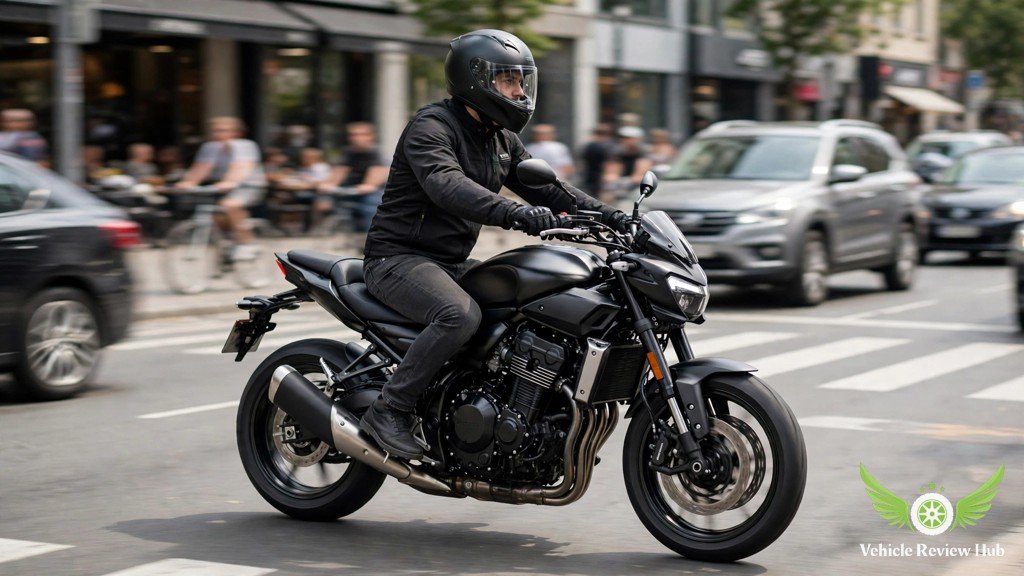
City Riding, Traffic Performance and Everyday Acceleration
City riding is where Honda CB750 Hornet performance shows its split personality. The 31.3-inch seat height lets most riders put both feet down, the claimed 422-pound weight of the 2025 manual bike (432 pounds for the 2026 E-Clutch bike) is light enough to paddle through a parking lot without drama, and the upright position gives a view over traffic that a crouched bike does not. But below 4,600 rpm the engine felt “sleepy” to the testers in town: around town this is a calm, easy motorcycle, and a rider who wants instant low-end shove will find the Yamaha’s smaller twin more eager off the line. The video below is Yammie Noob’s 2025 US ride and review of the Hornet — a genuine American on-road riding impression, honestly labelled as a ride review rather than an instrumented test.
For Honda CB750 Hornet performance in traffic, the E-Clutch bike removes the clutch lever from everyday riding — a genuine convenience at no extra cost — though the system takes a short learning period before it feels natural.
Softer Low-End Than the MT-07 Despite the Highest Peak Power
The paradox at the heart of Honda CB750 Hornet performance is that the bike with the highest peak power in its test feels softer where most riding happens. The Motorcycle.com testers put it plainly: the Honda made the most horsepower but was softer than the Suzuki and Yamaha below about 7,500 rpm, and the Yamaha’s CP2 twin — with 11 fewer peak horsepower — felt stronger and more eager in everyday riding. The Honda’s torque peak arrives at 7,200 rpm, while the Yamaha’s arrives earlier and feels instantly available. A rider who keeps the Hornet spinning above 7,000 rpm gets the fastest bike in the trio; a rider who short-shifts at 4,000 rpm gets the sleepiest. That is the single most useful thing a buyer can know about Honda CB750 Hornet performance before a test ride.
Honda CB750 Hornet Handling, Braking and Stability
Handling is where Honda CB750 Hornet performance earns its reputation, and braking is where it loses points: a light, quick-steering chassis helped by a narrow 160 rear tyre, against weak brake feel and a preload-only rear shock.
Showa SFF-BP Fork and Preload-Only Rear Shock Behaviour
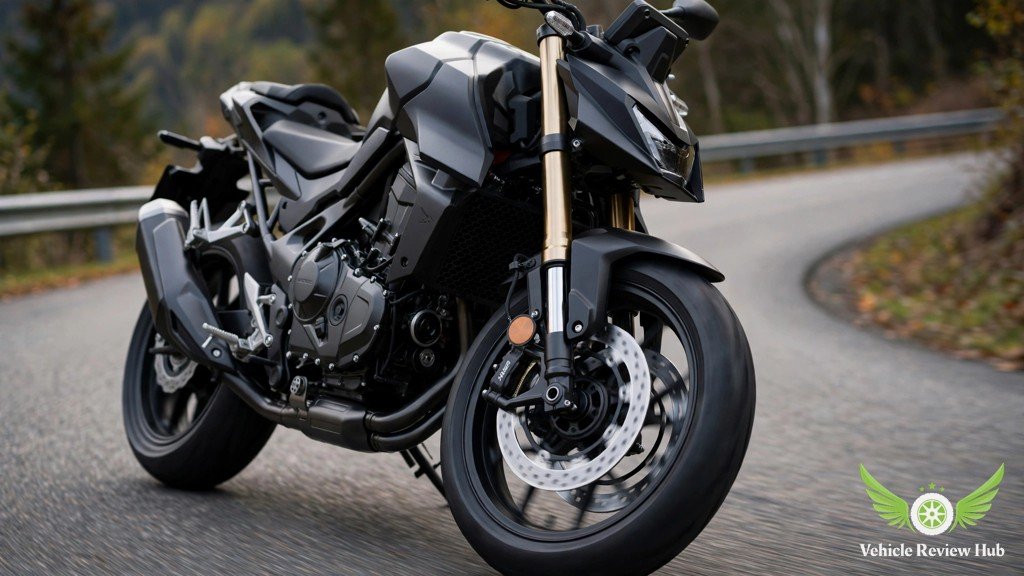
The front suspension in Honda CB750 Hornet performance terms is a genuine class highlight: a 41mm Showa SFF-BP inverted fork, splitting spring and damping duties between the two legs. Testers praised it as controlled and communicative, and the narrow 160 rear tyre makes the Honda the most willing turner of the trio. The rear is the compromise: a Pro-Link single shock with 7-stage preload adjustment only and no rebound adjustment, so a rider cannot fine-tune the rear damping for a heavier load or a rougher road. One conflict must be reported openly: Honda’s own current page lists front fork travel at 4.7 inches, while Motorcycle.com’s shootout spec table lists it at 5.1 inches, and rear travel is 5.1 inches everywhere. This Honda CB750 Hornet performance guide reports both figures with attribution and treats Honda’s page as the authority for the 2026 bike, rather than silently picking one. For the buying picture, see our Honda CB750 Hornet buying guide.
Dual 296mm Discs and Nissin Radial Caliper Braking Feel
Braking on the current Honda CB750 Hornet performance package is dual 296mm petal-style front discs with Nissin radial-mount four-piston calipers and ABS, plus a single 240mm rear disc with ABS. The hardware reads well on paper, but the Motorcycle.com testers scored the Honda’s brakes lowest of the three bikes at 75.0 percent, describing plenty of feedback but not much power — the weakest feel category in the test. Tyres are sensible 120/70-17 front and 160/60-17 rear sizes with affordable replacements. No lean-sensitive electronics claims belong here either: none of the three shootout bikes carries an IMU, so cornering ABS and lean-sensitive traction control are not part of this Honda CB750 Hornet performance story.
Honda CB750 Hornet Performance Compared With Other Naked Bikes
Comparison is where Honda CB750 Hornet performance numbers need the most care, since rivals and prices have moved since the 2025 test. This section compares spec, price, and character from the shootout, with trim-labelled prices.
Shootout Scores: Suzuki 88.8, Honda 86.8, Yamaha 85.9 Percent
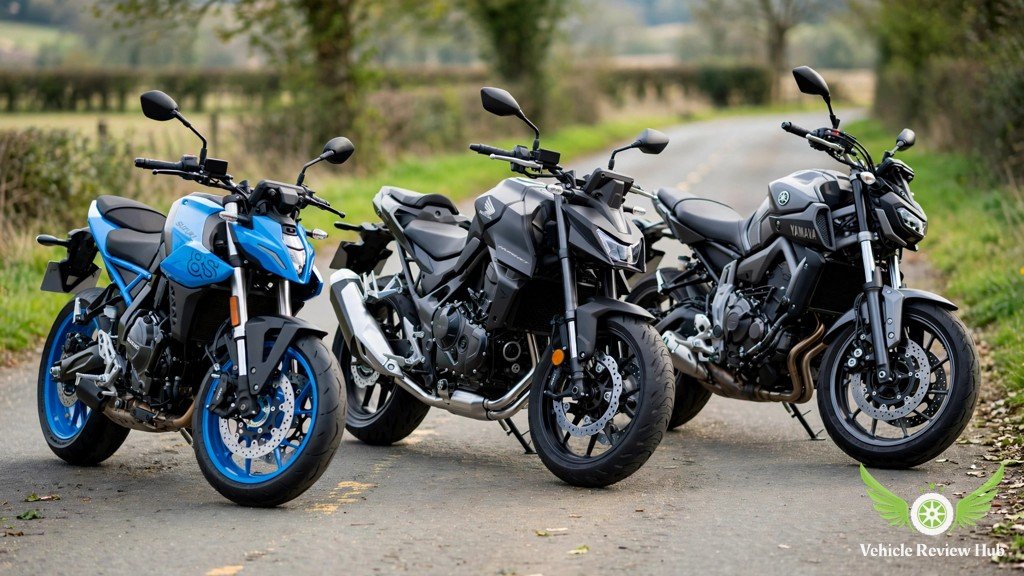
The Motorcycle.com shootout scoreboard is the fairest summary of Honda CB750 Hornet performance against its rivals: Suzuki GSX-8S 88.8 percent overall, Honda CB750 Hornet 86.8 percent, Yamaha MT-07 85.9 percent. The Honda won the objective measurements outright at 99.4 percent — best power-to-weight, best pounds-per-horsepower, joint-best pounds-per-torque — but lost ground subjectively on brakes (75.0 percent), ergonomics (66.7 percent, the most compact rider triangle, cramped for tall riders), and instruments and controls (76.7 percent, a confusing symbol-based menu). The Suzuki won on overall polish; the Yamaha won on fuel economy and low-end eagerness. The Hornet’s case, per Motorcycle.com’s three-bike comparison, is value: it was the cheapest bike in the test at $7,999 against $9,209 for the Suzuki and $8,599 for the Yamaha, and Cycle World named it the Best Middleweight Streetbike for 2025. The table below gathers the shootout.
| 2025 shootout bike | Price in test | Dyno and overall score |
|---|---|---|
| Honda CB750 Hornet | $7,999 | 76.6 hp; 86.8% overall; 99.4% objective |
| Suzuki GSX-8S | $9,209 | 73.5 hp; 88.8% overall |
| Yamaha MT-07 | $8,599 | 65.1 hp; 85.9% overall; 47.7 mpg |
| Summary | Honda cheapest by $600–$1,210 | Most peak power, weakest brake feel score |
Is the Honda CB750 Hornet Suitable for Experienced Riders?
Yes, with the honest caveat that belongs in every Honda CB750 Hornet performance verdict: suitable does not mean slow, and approachable does not mean beginner-only. At 76.6 rear-wheel horsepower, a 31.3-inch seat, and 422 to 432 pounds depending on year, the Hornet is approachable for a newer rider who has completed training, while still being genuinely entertaining for an experienced rider who rides it the way it wants to be ridden — revved hard, on a winding road, where its peak power and quick steering pay off. The CanyonChasers long-term review of the 2026 E-Clutch bike reached the same conclusion after nearly two months including a track day: the engine and the improved E-Clutch are excellent, and the soft chassis is the weak link only at a pace most riders never reach. An experienced rider who wants the strongest low-end punch or the sharpest brakes should test the Yamaha and the Suzuki back to back before deciding.
Honda CB750 Hornet Performance FAQs
Direct answers to the Honda CB750 Hornet performance questions riders ask most often.
How much horsepower does the Honda CB750 Hornet make?
Motorcycle.com’s 2025 shootout measured 76.6 rear-wheel horsepower for the US bike, per this Honda CB750 Hornet performance guide. The US-market quoted figure is 83 horsepower, and the European crank claim is 90.5 horsepower — three different boxes, never averaged.
What is the top speed of the Honda CB750 Hornet?
Around 127 to 130 mph from European sources only, per this Honda CB750 Hornet performance guide. No US instrumented top-speed test has been published.
What is the Honda CB750 Hornet 0-60 time?
No US instrumented 0-60 or quarter-mile test has been published, per this Honda CB750 Hornet performance guide. Any such figure quoted without a named American test should be treated as unverified.
What MPG does the Honda CB750 Hornet get?
Motorcycle.com tested 40.3 miles per gallon in the three-bike comparison, per this Honda CB750 Hornet performance guide. The Yamaha managed 47.7 mpg in the same test.
How far can the Honda CB750 Hornet go on a tank?
Around 161 miles is the planning figure from its 4.0-gallon tank at tested economy, per this Honda CB750 Hornet performance guide. Plan fuel stops around 130 to 140 miles.
Is the Honda CB750 Hornet good for beginners?
Yes, for riders who have completed training, per this Honda CB750 Hornet performance guide. Its predictable throttle, light weight, low seat, and approachable character help newer riders, but it is still a 755cc motorcycle that demands respect.
Is the Honda CB750 Hornet suitable for experienced riders?
Yes, per this Honda CB750 Hornet performance guide — provided the rider revs it hard, where its peak power lives. Below 4,600 rpm it feels sleepy in town, so short-shifting riders will not see its best.
Does the Honda CB750 Hornet have E-Clutch in the USA?
Yes, for 2026: the American bike is E-Clutch-only, per this Honda CB750 Hornet performance guide. The 2025 bike was manual with a standard quickshifter. E-Clutch is an automatic clutch, not a gearbox or a DCT.
How much does the 2026 Honda CB750 Hornet cost?
The 2026 bike costs $7,999 plus $600 destination in the United States, per this Honda CB750 Hornet performance guide — the same sticker as the 2025 manual bike, so E-Clutch adds no premium.
Is the Honda CB750 Hornet faster than the MT-07?
On peak power, yes: 76.6 rear-wheel horsepower against the MT-07’s 65.1 in the same test, per this Honda CB750 Hornet performance guide. On low-end eagerness, the Yamaha feels stronger, so the answer depends on how the bike is ridden.
What is the difference between the CB750 Hornet and the CB500 Hornet?
They are different motorcycles, per this Honda CB750 Hornet performance guide. The CB750 Hornet is a 755cc twin; the CB500 Hornet is a 471cc twin. No figure, price, or service interval crosses between them.