The 2027 Honda NC750X DCT costs $9,499 plus a $600 destination charge, and this Honda NC750X review finds it remains one of the most sensible motorcycles Honda sells in the United States. It pairs a 745cc parallel-twin with a six-speed automatic Dual-Clutch Transmission (DCT), a 23-litre locking front compartment where the fuel tank would normally sit, a 31.6-inch seat, and a 497-pound curb weight. There is no manual version anymore: since 2023 the NC750X has been DCT-only in the US. What follows in this Honda NC750X review is the full story, from the NC700X years through the 2021 redesign and the 2025 update, with verified prices for every model year from 2018 to 2027.
Honda NC750X Overview and Model-Year Updates
The NC750X is Honda’s do-everything middleweight: an adventure-styled commuter and light tourer built around low running costs, easy handling, and unmatched storage. It is not a dirt bike and it is not a sportbike — understanding that is the key to this Honda NC750X review.

What Is the Honda NC750X and Who Is It Designed For?
Honda launched the NC line in 2012 under the “New Concept” banner: build a motorcycle around the way people actually ride, the philosophy at the heart of this Honda NC750X review. The NC750X is the adventure-styled member of that family, with upright ergonomics, a tall windscreen, and 17-inch cast wheels. This Honda NC750X review finds it designed for daily commuters, returning riders wanting confidence rather than intimidation, and new touring riders wanting one bike for work, errands, and weekend trips. The low seat and low centre of gravity suit shorter riders, and the DCT removes the clutch lever entirely, a genuine help in stop-and-go traffic. If your riding is mostly paved roads with the occasional gravel stretch, the brief fits well; if you want serious off-road ability or big horsepower, this Honda NC750X review is clear you are looking at the wrong machine.
US History: NC700X to 2017, NC750X From 2018, 2021 Redesign and 2025 Update
The American story starts with the NC700X, a 670cc machine sold in the US from 2012 through 2017. Europe got the bored-out 745cc NC750X as early as 2014, but as this Honda NC750X review notes, American buyers waited until 2018, when the bike arrived at $7,999 manual and $8,699 DCT, with LED lighting, a backlit LCD panel, and two-level HSTC on the DCT. The 2021 redesign was the big one, documented in Total Motorcycle’s 2021 guide: a new frame, throttle-by-wire, four ride modes, three-level traction control, 13 pounds less weight, a seat lowered by 30mm, a 600-rpm higher redline, shorter first-three-gear ratios, a slipper clutch on manuals, a larger 23-litre front compartment, a USB-C port, and an Emergency Stop Signal. The 2025 update, described in Honda’s 2025 features release, brought the five-inch TFT display with RoadSync and dual front disc brakes. The 2026 bike carried that package over; the 2027 model, announced by Honda on October 8, 2026, continues it in Matte Mud Gray, with dealers receiving bikes in November 2026 — the current bike this Honda NC750X review covers.
Honda NC750X Engine and Specifications
The NC750X engine is deliberately unexciting on paper and genuinely pleasant on the road, tuned for low- and mid-range torque, not peak horsepower — a choice that shapes everything about this Honda NC750X review.

745cc Parallel-Twin Engine and Six-Speed DCT Transmission
The engine is a 745cc liquid-cooled parallel twin with cylinders canted 55 degrees forward, a 77.0mm bore and 80.0mm stroke, 10.7:1 compression, SOHC with four valves per cylinder, PGM-FI through a 38mm throttle body, a 270-degree crank, and a uniaxial balancer. Honda’s European claim is 57.8 horsepower at 6,750 rpm and 69 Nm (about 51 lb-ft) of torque at 4,750 rpm. The rear-wheel reality is lower: Rider’s 2018 road test, a key source for this Honda NC750X review, recorded 51 peak horsepower at 6,200 rpm and 48 lb-ft at 4,700 rpm on the Jett Tuning dyno. That modest output is the point: power arrives early and pulls cleanly from low revs. The six-speed DCT is the headline transmission in this Honda NC750X review: Drive and Sport automatic patterns plus manual paddle override, with three DCT modes. The manual six-speed existed in the US from 2018 through 2022, with a slipper clutch added for 2021, and the DCT has always carried roughly 30 extra pounds. Final drive is a #520 chain, and since 2023 the US bike has been DCT-only.
Weight 497 lb, Seat Height 31.6 Inches and 23-Litre Front Storage
Per Honda’s own 2027 spec page, the 2027 NC750X DCT weighs 497 pounds with all fluids and a full tank, and the seat sits 31.6 inches high (optional 32.6-inch seat). For comparison, the 2018 manual weighed 478 pounds with a 32.7-inch seat, so the 2021 redesign’s 30mm seat drop is a real improvement. The 23-litre front compartment, the “frunk,” is the bike’s signature feature and a highlight of this Honda NC750X review: locking and waterproof, it swallows most full-face helmets, and it exists because the 3.7-gallon tank lives under the seat. One trade-off: the fuel filler sits under the passenger seat, so a tail bag or top case can get in the way at fill-up time. Other key numbers this Honda NC750X review records for the current bike: a 60.3-inch wheelbase, 27 degrees of rake, 4.3 inches of trail, a 41mm Showa fork with 4.7 inches of travel, a Pro-Link single shock with 4.8 inches, and 120/70-17 front and 160/60-17 rear tires.
Honda NC750X Price and Market Availability
The NC750X has always been priced as a value proposition: the DCT model has risen only $800, from $8,699 in 2018 to $9,499 in 2027. This Honda NC750X review puts the full verified price history in one place.

Honda NC750X Price by Year in the USA: 2018 to 2027
The table below lists verified US MSRPs for this Honda NC750X review. Destination charges were $400 through 2022 and $600 from 2023 onward, on top of the prices shown. Note the pattern this Honda NC750X review highlights: manual and DCT versions were both offered from 2018 through 2022, and from 2023 the US bike went DCT-only, which is why the manual column ends at 2022.
| Model year | Manual MSRP | DCT MSRP | Destination charge |
|---|---|---|---|
| 2018 | $7,999 | $8,699 | $400 |
| 2019 | $8,099 | $8,899 | $400 |
| 2020 | $8,099 | $8,899 | $400 |
| 2021 | $8,499 | $9,299 | $400 |
| 2022 | $8,699 | $9,299 | $400 |
| 2023 | DCT-only | $9,399 | $600 |
| 2024 | DCT-only | $9,499 | $600 |
| 2025 | DCT-only | $9,499 | $600 |
| 2026 | DCT-only | $9,499 | $600 |
| 2027 | DCT-only | $9,499 | $600 |
At $9,499 plus destination, the current bike undercuts most adventure-styled rivals while including the DCT, backed by a one-year transferable warranty plus optional HondaCare — a solid ownership package this Honda NC750X review rates highly.
Colours by Year and Official US Dealer Availability
US colours were one choice per year, which this Honda NC750X review notes makes shopping simple: Chromosphere Red (2018), Ultra Blue Metallic (2019), Graphite Black (2020), Grand Prix Red (2021–2022), Matte Nightshade Blue (2023–2024), Matte Pearl White (2025–2026), and Matte Mud Gray (2027). The NC750X is sold through Honda’s official US dealer network as a current model; the returning 2027 bike was announced in October 2026 with dealer availability from November 2026, so a new 2027 should be findable at franchised dealers. If you want a colour other than the current one, the used market is the realistic route, and our companion NC750X buying guide covers used prices and inspection points in detail.
Honda NC750X Design, Features and Technology
The NC750X looks like a small adventure bike and works like a well-thought-out commuter, prioritizing storage, weather protection, and ease of use — the features this Honda NC750X review rates as its real selling points.

Frunk Storage, 5-Inch TFT From 2025, RoadSync and LED Lighting
The frunk deserves its fame in this Honda NC750X review. On 2021-on bikes it holds 23 litres behind a locking, waterproof lid, and it fits most full-face helmets plus gloves or groceries. Pre-redesign bikes had a slightly smaller 22-litre version, confirmed by Rider’s 2018 test, so check the year if storage volume matters to you. Instruments split at 2025: earlier bikes used a backlit LCD panel, while 2025-on bikes get a five-inch TFT with Honda RoadSync, connecting to an Android or iOS phone over Bluetooth for hands-free navigation, music, destination weather, and, on Android, calls and texts. LED lighting has been part of the package since 2018, and the 2025 update added a new LED headlight design. A USB-C port arrived with the 2021 redesign, and Honda sells accessory hard saddlebags, a rear trunk, a taller windscreen, and a 12V outlet, all of which this Honda NC750X review notes as useful rather than essential extras.
Ride Modes and HSTC, and Why There Is No IMU, Cornering ABS or Cruise
From 2021 onward, the NC750X offers four ride modes: Standard, Sport, Rain, and a user-customizable mode for power delivery and traction control. Honda Selectable Torque Control was two-level and DCT-only on 2018-2020 bikes, then three-level and switchable off from 2021 onward. Here is the honest limitation this Honda NC750X review must state plainly: no NC750X of any year has an inertial measurement unit, cornering ABS, or cruise control. The ABS is a conventional two-channel system, and the traction control works from wheel-speed information, not lean angle. That is a deliberate cost and simplicity choice, and buyers cross-shopping modern middleweights should know it before purchase. If cornering electronics and cruise control are must-haves, you need to look at a different class of bike; the NC750X competes on price, storage, and ease instead, which is the trade-off this Honda NC750X review keeps in view. For the full picture on how the bike behaves at speed, see our companion NC750X performance coverage.
Honda NC750X Riding Experience and Comfort
On the road, the NC750X feels smaller and lighter than its spec sheet suggests. This Honda NC750X review weighs the riding experience where the bike actually spends its time: city streets, highways, and everyday errands.
Riding Position, Handling and Low-Speed Maneuverability
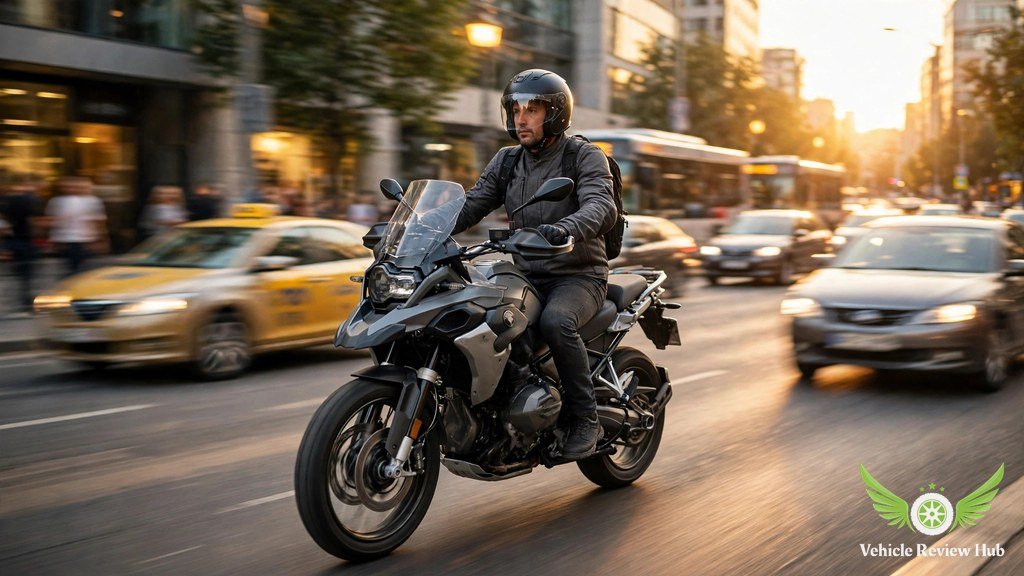
The riding position is upright and relaxed, with footpegs under the rider, a comfortable handlebar reach, and a narrow seat that lets shorter legs reach the ground. Rider’s 2018 test found a 5-foot-9 rider comfortable and a 29-inch inseam able to reach the ground even on the older 32.7-inch seat; the current 31.6-inch seat is lower still. The low centre of gravity, helped by the forward-canted engine and under-seat tank, makes low-speed manoeuvres far less stressful than on a taller adventure bike, and the DCT cannot be stalled, removing the most common low-speed worry for newer riders. Handling is willing rather than sharp in this Honda NC750X review’s assessment: the conventional 41mm fork is non-adjustable, the rear shock adjusts for preload, and the chassis is stable and forgiving on normal roads, including gravel stretches, though it feels out of sorts over hard bumps while leaned over in a turn. This is a bike that flatters an average rider rather than rewarding an expert one, a character trait this Honda NC750X review keeps coming back to.
The video above is Motorcycle Adventures’ 2018 NC750X DCT test ride and review — an early ride on the US bike that this Honda NC750X review includes because the rider’s surprise at the automatic motorcycle still rings true: the bike wins you over slowly, through convenience and economy rather than excitement.
City Commuting, Highway Comfort and Everyday Practicality
In the city, the NC750X is close to ideal: the DCT handles stop-and-go traffic without clutch fatigue, the frunk swallows a helmet at every stop, and the slim profile filters through traffic better than a wide bike. Fuel economy is a genuine strength, though Honda USA publishes no MPG figure, so real-world tests are the guide this Honda NC750X review relies on: Rider averaged nearly 69 mpg over 1,400 miles of mixed freeway and street riding on the 2018 bike, filling its 3.7-gallon tank roughly every 250 miles, while other US tests report 52 to 53 mpg in mixed riding. That spread gives a realistic range of roughly 190 to 200 miles at low-50s economy and up to about 250 miles when ridden gently. On the highway, the windscreen deflects air well, the engine sits at a relaxed 3,000 rpm at 60 mph on the 2018 test bike, and the ride is comfortable for day trips, though the small tank and modest power mean planning fuel stops and overtakes rather than ignoring them. Around town and on the daily grind, few bikes at this price are this easy to live with, and that everyday practicality is the core of this Honda NC750X review’s recommendation.
Honda NC750X Review: Pros, Cons and Verdict
After weighing the specs, prices, and riding experience, the verdict of this Honda NC750X review is clear: the NC750X is a superb commuter and a good light tourer, bought for its brain rather than its heart.

Main Advantages and Limitations of the Honda NC750X
The advantages in this Honda NC750X review start with value: $9,499 for a DCT-equipped, TFT-fitted, ABS-braked adventure-styled bike is strong money. The 23-litre frunk is unmatched in the class, the 31.6-inch seat welcomes shorter riders, fuel economy in the 50s to high 60s keeps running costs low, and the DCT removes clutch work. The limitations are equally plain: 51 rear-wheel horsepower, no cruise control, cornering ABS, or IMU on any year, a non-adjustable fork, a small 3.7-gallon tank, and an awkward fuel filler with luggage fitted. None of those flaws matters much to a commuter, and all of them matter to someone shopping for a sport-touring flagship. Buyers wanting more should read our Africa Twin coverage, and those wanting the electronic-suspension flagship should look at the Africa Twin Adventure Sports ES instead.
Who Should Consider the Honda NC750X Over the Versys 650?
The Kawasaki Versys 650 is the NC750X’s most natural rival, and the comparison in this Honda NC750X review is close. The Versys 650 LT ABS is listed at $10,399, $900 more than the NC750X before destination, and it brings a 649cc twin with roughly 66 horsepower, an inverted 41mm fork, dual 300mm front discs, a TFT display with smartphone connectivity, and, on the LT, colour-matched hard saddlebags and hand guards. What it does not bring is a DCT or a frunk: the Versys is manual-only, and its storage is the LT’s saddlebags rather than an integrated compartment. So the choice this Honda NC750X review lands on is simple: choose the NC750X if you commute daily, want automatic shifting, value the frunk and the low seat, and want the lowest running costs; choose the Versys 650 if you want more power, a plusher fork, and included luggage, and you are happy shifting yourself. Also note the Transalp XL750, which costs more but adds genuine off-road ability with its 21-inch front wheel, while the Tenere 700 remains the lighter, more dirt-focused alternative.
Honda NC750X Review FAQs
These are the questions buyers actually ask about the NC750X, answered directly from the verified facts in this Honda NC750X review.
What is the price of the 2027 Honda NC750X in the USA?
In this Honda NC750X review, the 2027 Honda NC750X DCT costs $9,499 plus a $600 destination charge, in Matte Mud Gray, with dealer availability from November 2026.
Is the Honda NC750X DCT fully automatic?
Yes, and this Honda NC750X review stresses the point: the DCT is a six-speed automatic dual-clutch transmission with Drive and Sport patterns, overrideable at any time with handlebar paddles. There is no clutch lever, and the bike cannot be stalled.
How big is the Honda NC750X frunk?
The front storage compartment holds 23 litres on 2021-on bikes, locking and waterproof, fitting most full-face helmets. Pre-redesign bikes had a slightly smaller 22-litre version, a detail this Honda NC750X review verified against Rider’s 2018 test.
How much does the Honda NC750X weigh?
The 2027 NC750X DCT in this Honda NC750X review weighs 497 pounds with all fluids and a full tank of fuel. The 2018 manual bike weighed 478 pounds ready to ride, and the DCT version adds roughly 30 pounds over a manual.
What MPG does the Honda NC750X get?
Honda USA publishes no MPG figure for the NC750X, a gap this Honda NC750X review fills with test data. Rider averaged nearly 69 mpg over 1,400 mixed miles on the 2018 bike, while other US tests report 52 to 53 mpg in mixed riding, giving a realistic range of roughly 190 to 250 miles from the 3.7-gallon tank depending on how gently you ride.
Does the Honda NC750X have cruise control?
No, and this Honda NC750X review is unambiguous: no NC750X of any year has cruise control, an inertial measurement unit, or lean-sensitive cornering ABS. The ABS is a conventional two-channel system, and traction control works from wheel-speed data.
Can you still buy a manual Honda NC750X?
Only used, as this Honda NC750X review explains: the manual six-speed was offered in the US from 2018 through 2022, and from 2023 onward the American NC750X has been DCT-only. A used 2018-2022 manual is the only route to a clutch lever.
Is the Honda NC750X good for beginners?
It is one of the better big-bike choices for a newer rider: a low seat, a low centre of gravity, forgiving handling, and a DCT that cannot stall. The honest caveat in this Honda NC750X review is weight, at 497 pounds, and modest power that some riders outgrow, but as a first full-size commuter, this Honda NC750X review finds it hard to beat.
Should I buy the Honda NC750X or the Kawasaki Versys 650?
Buy the NC750X for daily commuting, automatic shifting, the locking frunk, the lower seat, and the lowest running costs, at $9,499 before destination — this Honda NC750X review’s recommendation for commuters. Buy the Versys 650 LT ABS, at $10,399, if you want more power, an inverted fork, and included hard luggage, and you are happy with a manual gearbox.