Short answer: this Honda PCX125 review covers a badge with a complicated American story — the genuine US PCX125 existed for one year only, 2011, and the bike Honda sells today under the PCX name is a larger 157cc scooter. The 2026 bike costs $4,349 plus $600 destination, and that price buys the 157cc PCX, not a 125. This Honda PCX125 review follows the badge through all three of its American generations — the 2011 PCX125, the PCX150 era, and today’s renamed PCX — so a buyer shopping the name knows exactly which bike any given listing actually is.
One framing fact belongs at the top of this Honda PCX125 review: there is no current US-market PCX125 to buy new. The 2011 bike arrived at dealers in August 2011 at $3,399, and after it came the PCX150 in 2013 and again from 2015 to 2020, then the renamed PCX with a 157cc engine from 2021. The European PCX125 is a different, current bike, but it is not sold in the United States, and a grey-import PCX125 under 25 years old cannot be federally registered here. Everything in this Honda PCX125 review keeps those generations separate, because mixing their specs is how buyers get misled.
Honda PCX125 Overview and Model-Year Updates
The overview of this Honda PCX125 review starts with the timeline, because the timeline is the story: three generations, two name changes, and two missing model years explain nearly every confusing listing a shopper will meet.

US PCX125 Was 2011 Only: No 2012 Model Exists
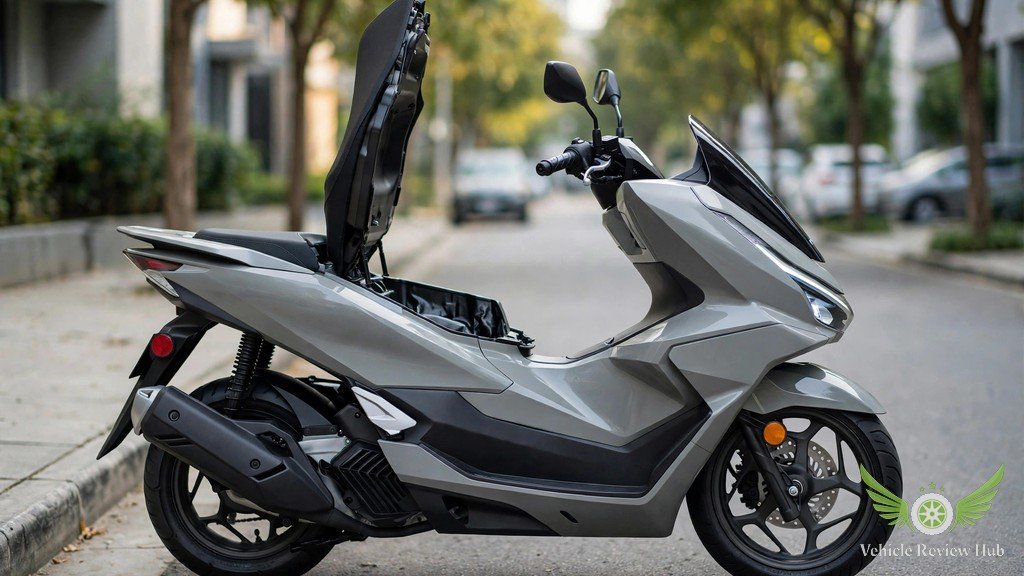
US PCX125 was 2011 only: no 2012 model exists is a verified fact this Honda PCX125 review states plainly, because used listings sometimes imply otherwise. The 2011 PCX125 was the first 2011 model-year rollout for American Honda, a Thailand-built scooter priced at $3,399 in Pearl White or Candy Red. It was a liquid-cooled 125cc single with Honda’s V-Matic belt-drive automatic, a 29.9-inch seat, 14-inch wheels, and a 25-litre underseat compartment that held a full-face helmet and a jacket per Cycle World. There was no 2012 US PCX at all, and there was no 2014 US PCX either — two gaps shoppers should know, since a “2012 PCX125” or “2014 PCX150” in an American listing deserves a hard paperwork check. This Honda PCX125 review treats the 2011 bike as the genuine article it is: the only American PCX ever badged 125.
PCX150 Era, Then Renamed Simply PCX for 2021
PCX150 era, then renamed simply PCX for 2021 is the second half of the timeline this Honda PCX125 review lays out. The PCX150 arrived in 2013 at $3,449 — only $50 more than the 125 it replaced — skipped 2014, and returned from 2015 through 2020 with a bigger 2.1-gallon tank and, in 2015, a Honda-claimed 13.4 hp. For 2021 Honda redesigned the bike around a 156.9cc four-valve eSP+ engine and dropped the number from the American name: the US bike became simply the PCX, Model ID PCX160A, while the rest of the world calls it the PCX160. That renaming still causes confusion — dealer feeds still label 2021–2024 bikes “PCX150,” and those feeds are wrong, as is Honda’s own 2021 US release claim that the PCX150 was “first offered to U.S. customers in 2015.” This Honda PCX125 review uses the verified timeline throughout: 2011, then 2013, then 2015–2020, then 2021 onward.
Honda PCX125 Engine and Specifications
Engine and specifications in this Honda PCX125 review are kept generation by generation, because no single spec sheet describes all three bikes, and a 2011 figure pasted onto a 2026 bike — or the reverse — is the most common error in PCX coverage.

The 2011 Bike: 124.9cc Liquid-Cooled at 11.0:1
The 2011 bike: 124.9cc liquid-cooled at 11.0:1 is the original formula this Honda PCX125 review records: a 124.9cc liquid-cooled SOHC two-valve single, 52.4 by 57.9 mm, 11.0:1 compression, with programmed fuel injection and auto enrichment for cold starts, driving through Honda’s V-Matic belt CVT. It weighed 280 pounds, rode on 14-inch wheels with a 51.4-inch wheelbase, and stopped with a 220mm front disc linked by Honda’s Combined Braking System to a rear drum — no ABS anywhere. Its 1.6-gallon tank and Honda’s 110-mpg estimate gave a claimed range around 176 miles. Honda USA published no power figure for it; aggregator figures around 11 hp are non-Honda numbers, labelled as such here rather than presented as Honda’s own.
Today’s US PCX Is a 157cc Four-Valve eSP Plus
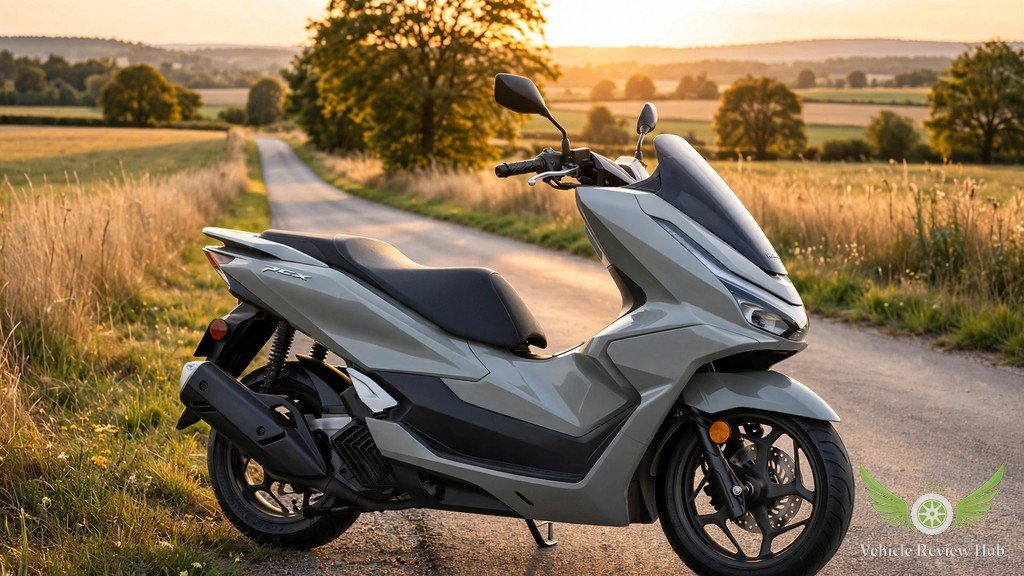
Today’s US PCX is a 157cc four-valve eSP Plus is the current-bike fact this Honda PCX125 review centers. The 2021-and-later bike uses a 156.9cc liquid-cooled SOHC four-valve single, 60.0 by 55.5 mm, 12.0:1 compression, with a 28mm throttle body and Honda’s eSP+ design. The 2026 bike weighs 291 pounds, sits on a 30.1-inch seat with a 51.7-inch wheelbase, and runs 110/70-14 front and 130/70-13 rear tires. Braking is a 220mm front disc with front-wheel-only single-channel ABS and a 130mm rear drum — one secondary listing says 140mm, but Honda’s own 2026 page says 130mm, and this Honda PCX125 review prints Honda’s figure. The tank holds 2.1 gallons and underseat storage grew to 30 litres. Honda USA publishes no power figure for this bike either; the circulating 15.8 hp at 8,500 rpm and 11.1 lb-ft at 6,500 rpm is Honda’s non-US global PCX160 claim, labelled that way every time it appears here. No US dyno figure exists for any PCX generation. For the riding numbers behind these specs, see our Honda PCX125 performance guide.
| Generation | Engine | Weight / tank / brakes |
|---|---|---|
| 2011 PCX125 (US, one year) | 124.9cc, 2-valve, 11.0:1 | 280 lb / 1.6 gal / CBS, no ABS |
| PCX150 era (2013, 2015–2020) | 152.9cc, 2-valve, 10.6:1 (2015) | 2.1 gal from 2015 / CBS, no ABS |
| PCX 2021+ (US, 157cc) | 156.9cc, 4-valve eSP+, 12.0:1 | 291 lb (2026) / 2.1 gal / front ABS, rear drum |
| Summary | Honda PCX125 review: three bikes, one badge | Never mix generation specs |
Honda PCX125 Price and Market Availability
Price and availability in this Honda PCX125 review are year-labelled throughout, because the badge’s price history spans fifteen years and three engines, and a single “PCX125 price” without a year attached is meaningless.
Honda PCX125 Price in the USA: $4,349 Plus $600 for 2026
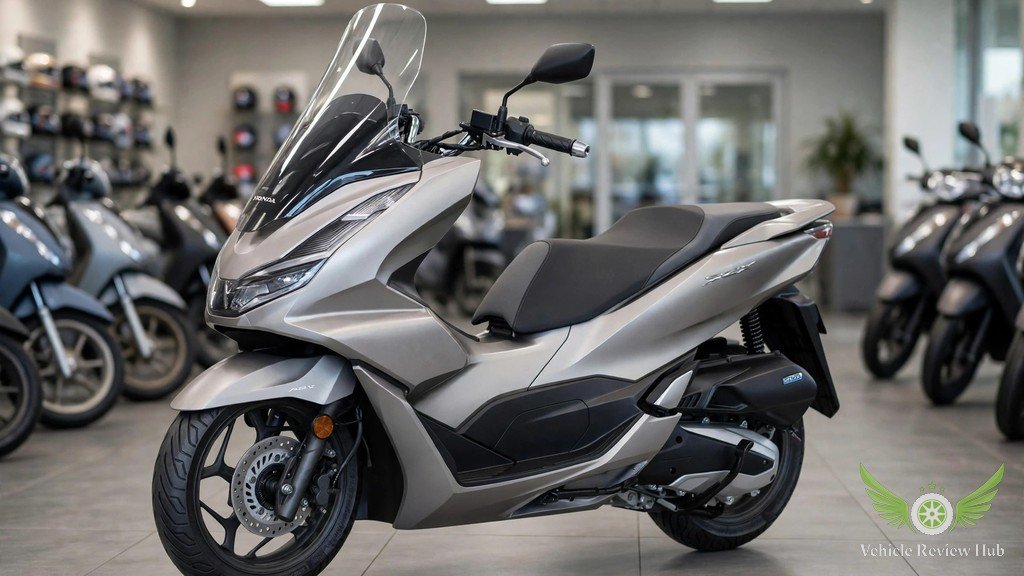
Honda PCX125 price in the USA: $4,349 plus $600 for 2026 is the doc heading this Honda PCX125 review keeps verbatim — and the copy underneath must say what that money actually buys. It buys the 157cc PCX, not a 125: $4,349 plus $600 destination is $4,949 before tax and fees for the 2026 bike, in Pearl Gray only, announced February 10, 2026, at dealers from April 2026, per Honda’s 2026 PCX page. The road to that price runs from $3,399 for the 2011 PCX125 through $3,799 or $3,999 ABS for 2021 to $4,249 for 2024 and 2025 — the full ladder is in the table below. Prices for 2016 through 2020 were not verified from dated Honda announcements, so none are printed here. The European PCX125, for contrast only, costs £3,799 in the UK for 2026 — a different bike in a different market, never a US price.
ABS Was Optional Until 2022, Standard From 2023
ABS was optional until 2022, standard from 2023 is the braking timeline this Honda PCX125 review confirms. The 2011 and 150-era bikes had no ABS at all, only Honda’s Combined Braking System linking the front disc and rear drum. When the 157cc bike arrived in 2021, ABS was a $200 option — $3,799 base against $3,999 ABS — and it stayed optional through 2022 at $3,899 against $4,099. From 2023 every US PCX has carried front-wheel anti-lock braking as standard, still single-channel front-only with a drum at the rear on the 2026 bike. A used-bike shopper should therefore check badge and year, not assume ABS: a 2021 or 2022 base bike has none, and no 2011 or 150-era bike has any.
| Model year (US) | MSRP | Honda PCX125 review note |
|---|---|---|
| 2011 PCX125 | $3,399 | Only US year badged 125 |
| 2013 PCX150 | $3,449 | No 2014 model sold in the USA |
| 2015 PCX150 | $3,449 (+ $310 dest.) | 2.1-gal tank from 2015 |
| 2021 PCX (157cc) | $3,799 / $3,999 ABS | Renamed simply PCX; ABS optional |
| 2022 PCX (157cc) | $3,899 / $4,099 ABS | ABS still optional |
| 2023 PCX (157cc) | $4,149 | Front ABS standard from here |
| 2024 PCX (157cc) | $4,249 (+ $600 dest.) | Matte Brown Metallic |
| 2025 PCX (157cc) | $4,249 + $600 | Pearl Gray |
| 2026 PCX (157cc) | $4,349 + $600 | Pearl Gray only; $4,949 before tax/fees |
| Summary | Honda PCX125 review: $3,399 to $4,349 | 2016–2020 prices unverified, not printed |
Honda PCX125 Design, Features and Technology
Design and technology in this Honda PCX125 review show a scooter that grew more refined without changing its basic idea — a step-through, twist-and-go city machine with big wheels, a roomy seat, and storage under it.
HSTC on US Bikes From 2021 and Switchable
HSTC on US bikes from 2021 and switchable is a verified feature this Honda PCX125 review can state confidently. Honda Selectable Torque Control arrived on the American bike with the 2021 redesign: Honda’s 2021 US release says it was added, and the 2021 US owner’s manual describes the switch and confirms it defaults back on at every ignition-on. It works from the front-wheel speed sensor to limit torque when the rear wheel spins faster than the front — a gentle traction aid for wet paint and gravel, switchable when the rider wants. The 2011 and 150-era bikes had no such system. For a cheaper Honda scooter alternative without this tech, see our Navi review.
Idling Stop Never Fitted to Any US Model
Idling stop never fitted to any US model is the correction this Honda PCX125 review insists on, because overseas reviews describe it constantly. The European and Asian PCX125 has had engine stop-start since 2010, cutting the engine after a few seconds at idle and restarting on throttle. No US Honda page, US release, or US manual lists it for any American PCX generation, and this Honda PCX125 review never describes a US bike as having stop-start. The same caution applies to keyless ignition: the European bike’s Smart Key is well documented overseas, but US fitment could not be confirmed — that question gets its own section below. A buyer reading a listing that advertises Idling Stop or Smart Key on a US bike is reading a listing error, not a feature — the same error this Honda PCX125 review documents in used listings elsewhere.
Honda PCX125 Riding Experience and Comfort
Riding experience in this Honda PCX125 review is where the badge earns its reputation: easy, upright, and calm in town, with a freeway story that needs honest framing.
Riding Position, Handling and Low-Speed Maneuverability
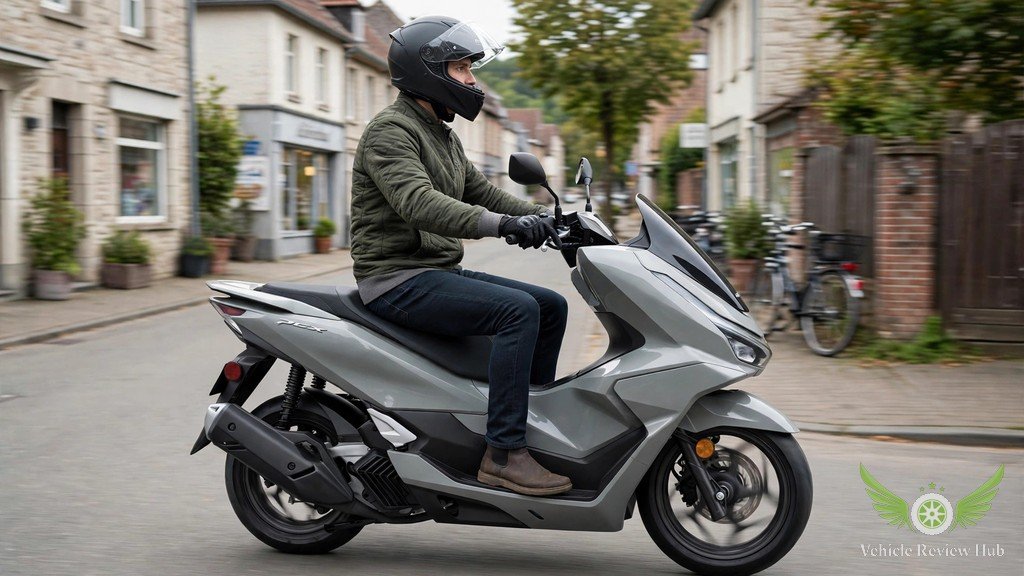
Riding position, handling and low-speed maneuverability are the PCX’s home ground in this Honda PCX125 review. The 2011 bike’s 29.9-inch seat and low center of gravity made it approachable for new riders, and the current bike’s 30.1-inch seat keeps that character — feet flat at stops, an upright torso, and a stepped seat that holds the rider in place. Fourteen-inch front and 13-inch rear wheels on the current bike — 14-inch both ends on the 2011 — give more stability than most scooter wheels, and testers praised the light, willing handling in traffic. The V-Matic CVT means no clutch and no gears, so low-speed work is a matter of throttle and brakes only. Motorcycle.com’s 2011 PCX review found the original bike roomy and novice-friendly, and that verdict has held across every generation since.
Street Legal but Freeway-Marginal: Testers’ Verdict
Street legal but freeway-marginal: testers’ verdict is the honest line this Honda PCX125 review closes the riding section on. Honda’s 2021 US release calls the 157cc bike freeway-capable and freeway-legal in all 50 states, and legally that is true — it is a full road motorcycle-class scooter, not a moped. In practice, testers found the margin thin: Motorcycle.com’s 2021 PCX review saw an indicated 70 mph and suspected a top-speed governor, while its 2019 PCX150 test topped out at 63 mph, and the 2011 bike’s testers saw an indicated 56 mph from Cycle World and about 50 mph from Motorcycle.com. The same 2021 review sighed at the weak front brake and rear drum — the honest limit of the whole package. Around town the PCX is superb; on a freeway it holds its lane but has little in reserve, and this Honda PCX125 review calls it freeway-marginal rather than freeway-comfortable. The video below is a 2019 PCX125 first-impression review — honestly labelled as a European-market bike, showing the same PCX family styling and riding character.
Honda PCX125 Review: Pros, Cons and Verdict
The verdict of this Honda PCX125 review is simple: buy the badge for what it is — a refined, frugal, easy city scooter — and buy the right generation by checking year, engine, and VIN, not the badge on the side.
Main Advantages and Limitations of the Honda PCX125
Main advantages and limitations of the Honda PCX125, weighed equally, close this Honda PCX125 review. Advantages: twist-and-go ease with no clutch or gears; genuine fuel economy — Motorcycle.com calculated 88 mpg on the 2021 bike against Honda’s 110-mpg estimate for the 2011; big underseat storage, 25 litres on the 2011 bike and 30 litres today; a low seat and light handling for new riders; and a long American run with no vehicle recall ever naming a US PCX. Limitations: a freeway-marginal top end around an indicated 70 mph on the current bike and far less on older ones; a rear drum on every generation; no ABS before 2023 or on 2021–2022 base bikes; and the badge confusion itself, which rewards careless listings. Against the step-up, the ADV160 review shows what $150 more buys — adventure styling and a bit more speed — while the Grom 125 review covers the manual-gearbox alternative. The PCX wins on ease, storage, and economy; it loses on speed and braking hardware.
Smart Key US Fitment Unverified: Do Not Assert It
Smart key US fitment unverified: do not assert it is the final caution this Honda PCX125 review leaves with shoppers. The European and Asian PCX125 and PCX160 models have Smart Key keyless ignition, seat release, and an optional 35-litre Smart top box, all well documented overseas. No US Honda page or US manual extract found for this review confirms Smart Key for American bikes, so this review does not claim it, and a listing advertising it on a US bike should be treated as an overseas-features error until the seller proves otherwise. The same rule covers Idling Stop, covered above, and any “125” badging on a 2021-or-later American bike. Buy the bike, not the badge: check VIN, engine size, and year — and a PCX bought that way, in any of its three generations, is one of the easiest, cheapest honest motorcycles Honda has sold in America.
Honda PCX125 Review FAQs
Direct answers to the Honda PCX125 review questions buyers ask most, with every figure labelled by generation and source.
Is there a current US Honda PCX125?
No, says this Honda PCX125 review. The genuine US PCX125 existed for 2011 only; today’s US bike is the 157cc PCX, sold simply as PCX since 2021.
How much does the 2026 Honda PCX cost?
$4,349 plus $600 destination — $4,949 before tax and fees — says this Honda PCX125 review, and that buys the 157cc PCX in Pearl Gray, not a 125.
What years was the Honda PCX125 sold in the USA?
One year only, 2011, says this Honda PCX125 review — at $3,399, with no 2012 model and no 2014 model in the American line.
What engine does the current US PCX have?
A 156.9cc liquid-cooled four-valve eSP+ single, says this Honda PCX125 review — 60.0 by 55.5 mm, 12.0:1 compression, with a V-Matic belt CVT.
How much horsepower does the Honda PCX make?
Honda USA publishes no figure, says this Honda PCX125 review. The circulating 15.8 hp figure is Honda’s non-US global PCX160 claim, and no US dyno exists.
What is the Honda PCX top speed?
An indicated 70 mph on the 2021 bike per Motorcycle.com, says this Honda PCX125 review, with a governor suspected; the 2019 PCX150 tested at 63 mph and the 2011 bike at an indicated 56 mph.
Does the Honda PCX have ABS?
Front-wheel-only single-channel ABS, standard from 2023, says this Honda PCX125 review — optional on 2021–2022 bikes and absent on all earlier ones, with a 130mm rear drum throughout.
Does the US Honda PCX have Idling Stop?
No, says this Honda PCX125 review — Idling Stop was never fitted to any US PCX generation; it is a European and Asian feature.
Does the US Honda PCX have Smart Key?
US fitment could not be confirmed, says this Honda PCX125 review — Smart Key is documented overseas but not verified for American bikes, so it is not asserted here.
Does the US Honda PCX have HSTC traction control?
Yes, from 2021, says this Honda PCX125 review — Honda Selectable Torque Control, switchable, defaulting on at every ignition-on.
Are there any recalls on the Honda PCX?
No vehicle recall names any US PCX, says this Honda PCX125 review — only the 2016 accessory rear trunk base equipment recall, 16E-023, which affects bikes fitted with that accessory.
Is the Honda PCX good for beginners?
Yes, says this Honda PCX125 review — a low seat, no clutch or gears, light handling, and gentle power make it a genuine first scooter, with freeway use marginal.
Can I import a European PCX125 to the USA?
Not under 25 years old, says this Honda PCX125 review — a non-US PCX125 cannot be federally registered or titled in the US until it reaches 25 years of age.
Is the Honda PCX better than the ADV160?
It depends on the rider, says this Honda PCX125 review — the PCX costs $150 less before destination and suits town riding, while the ADV160 adds adventure styling and a bit more speed.