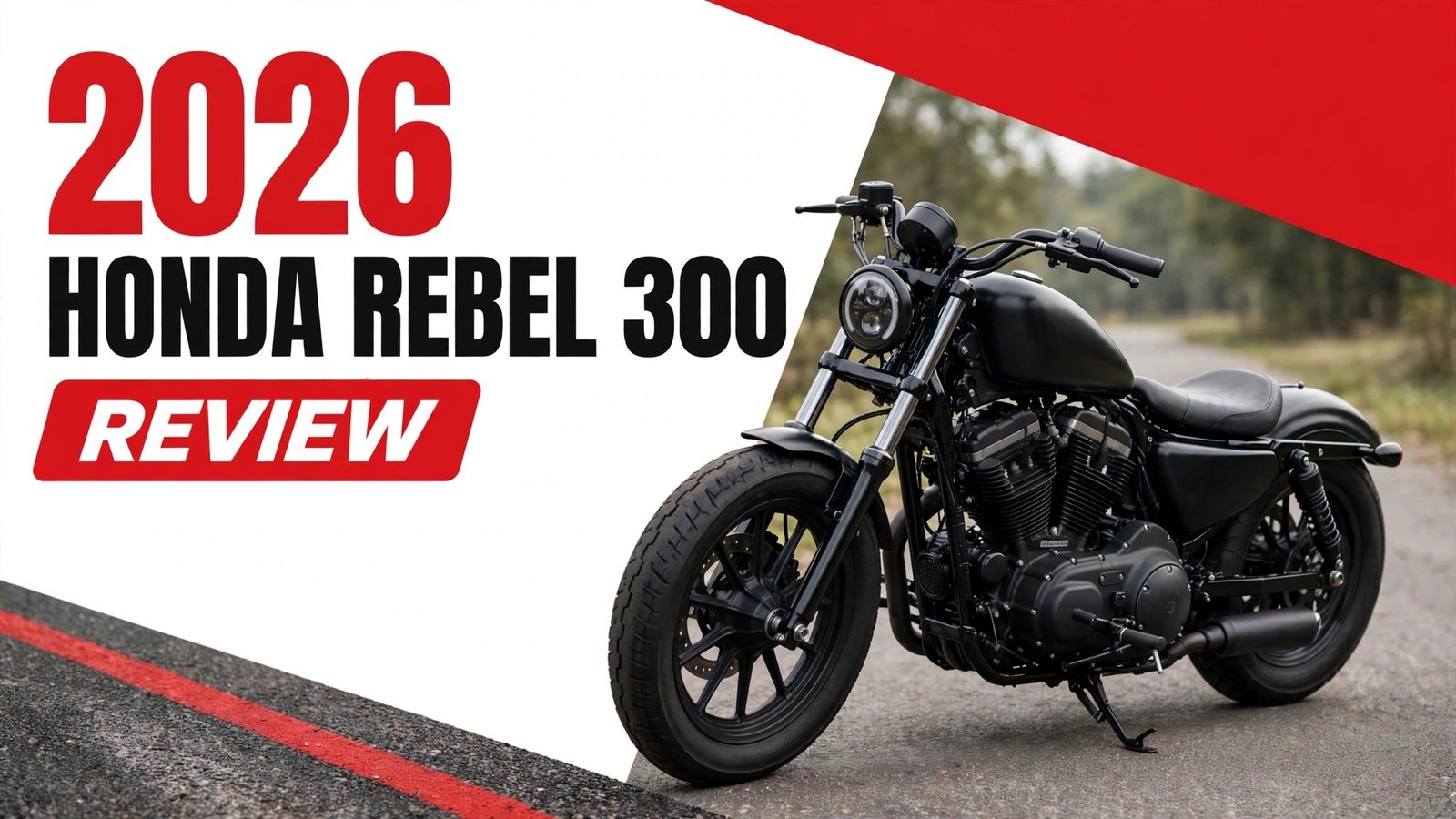
Short answer: this Honda Rebel 300 review finds the easiest full-size motorcycle Honda sells for a new or shorter rider. The 2026 model costs $5,349, and for that money you get a 286cc liquid-cooled single, a 27.2-inch seat, a 379-pound curb weight, and — new for 2026 — Honda’s E-Clutch and ABS as standard equipment. It is a city bike first, a short highway bike second, and a long-distance tourer never, and this Honda Rebel 300 review says so plainly rather than pretending otherwise.
In this Honda Rebel 300 review, the verdict is simple: the default beginner recommendation since it replaced the Rebel 250 for 2017, the 2026 E-Clutch version is the most beginner-friendly one yet.
Honda Rebel 300 Overview and Model-Year Updates
This Honda Rebel 300 review starts with Honda’s smallest cruiser, the entry point to the Rebel family, sitting below the 471cc Rebel 500 and the 1100. In this Honda Rebel 300 review, the shared frame, suspension layout, and wheels matter: the 300 differs mainly in engine and weight. That shared chassis is a large part of this Honda Rebel 300 review’s verdict: the 300 never feels like a cut-down toy, because it is not one.
What Is the Honda Rebel 300 and Who Is It Designed For?
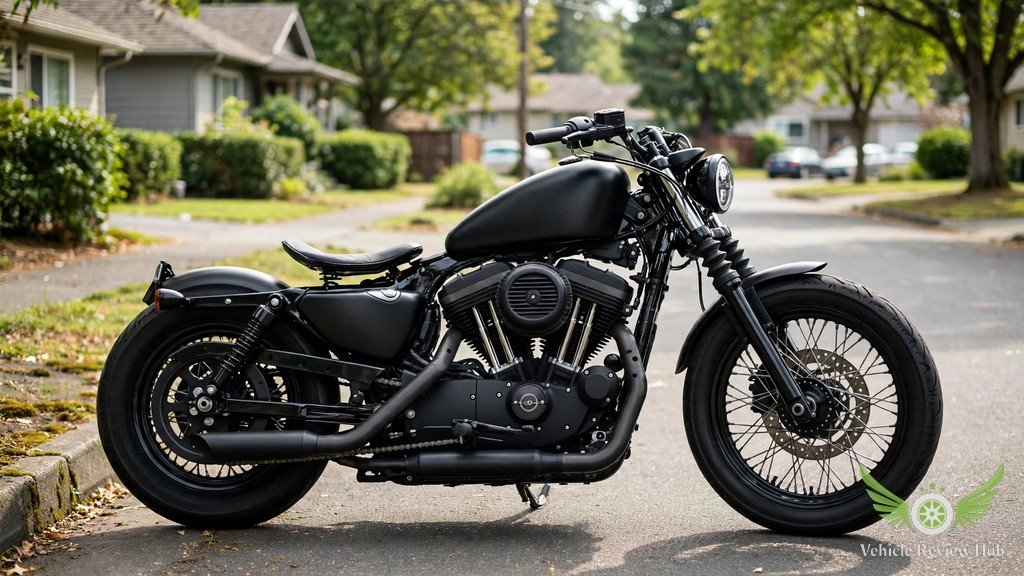
In this Honda Rebel 300 review, the Rebel 300 is designed for new riders, returning riders, and shorter riders who want a real motorcycle — not a scooter, not a mini-bike — without a tall seat or heavy weight to fight. Honda has long supplied the Rebel line to rider-training courses, and the 300 is the bike many new license holders meet first. This Honda Rebel 300 review stresses that the appeal is not just the price: the 27.2-inch seat lets most adults flat-foot at stops, the 379-pound weight (2026 figure) is easy to push around a garage, and the single-cylinder engine delivers its power smoothly rather than in a rush. That is the audience this Honda Rebel 300 review had in mind throughout.
US History 2017 to 2026: 2020 Update, 2025 Refresh and 2026 E-Clutch
The Rebel 300 arrived in the United States for 2017 at $4,399, replacing the Rebel 250 that had served since 1985. It added fuel injection, liquid cooling, and modern bobber styling. For 2020 Honda gave the Rebel 300 its first meaningful update, and this Honda Rebel 300 review treats that year as the first one to shop for on the used market: an all-LED lighting package (headlight, taillight, turn signals, even the license-plate light), a new LCD instrument display with a gear-position indicator and fuel-consumption readout, an assist-and-slipper clutch that Honda says cuts lever effort by about 30 percent, stiffer fork springs, nitrogen-charged rear shocks with stiffer springs, and a thicker, denser seat — all detailed in Motorcycle.com’s 2020 first look. For 2025 Honda refreshed the bike again with a revised handlebar bend, a more comfortable seat, a paint-matched front fender, redesigned rear-shock internals for better bottoming resistance, and a redesigned LCD cluster, as covered in Motorcycle Cruiser’s 2025 first look. For 2026 the only change is the big one: Honda’s E-Clutch becomes standard, and Honda no longer offers a Rebel 300 without it in the United States. Each of those steps is verified in this Honda Rebel 300 review from Honda’s own releases.
Honda Rebel 300 Engine and Specifications
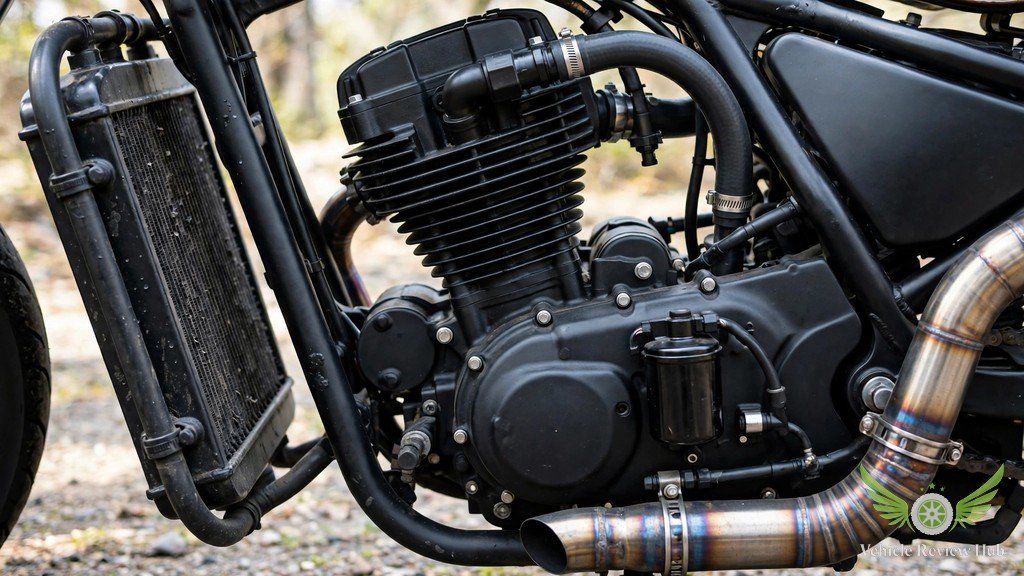
The engine in this Honda Rebel 300 review is borrowed from Honda’s CB300F and CBR300R street bikes and retuned for cruiser duty. It is a modern liquid-cooled single with dual overhead cams and four valves, which is why it starts instantly, idles cleanly, and sips fuel. One important absence: Honda USA publishes no horsepower or torque figure, so any power number quoted here is labelled as a claim or a test result.
286cc Liquid-Cooled Single Engine and Six-Speed Transmission
The single displaces 286cc from a 76.0mm bore and 63.0mm stroke, runs a 10.7:1 compression ratio, and breathes through programmed fuel injection with a 38mm throttle body. Drive goes to the rear wheel through a six-speed gearbox and an O-ring-sealed chain (14-tooth front, 36-tooth rear sprockets). This Honda Rebel 300 review confirms the engine is unchanged from 2025 to 2026 — only the clutch system is new. Secondary roundups cite roughly 27 horsepower — a claimed figure, not a Honda USA number. Riding reports describe smooth, linear power from low revs, strongest in the middle of the rev range — central to this Honda Rebel 300 review’s riding verdict.
Weight 379 lb, Seat Height 27.2 Inches and Beginner-Friendly Dimensions
The headline figures need year-scoping, because the Rebel 300’s weight has crept up as equipment was added. Honda’s 2025 specification sheet lists the non-ABS bike at 364 pounds; ABS versions from 2020 to 2022 were listed at 370 pounds; and the 2026 E-Clutch model, with ABS standard and the E-Clutch hardware, is listed at 379 pounds. The doc’s 379 lb figure is therefore the 2026 figure. Seat height is 27.2 inches every year; the full figures are in the table below, and this Honda Rebel 300 review uses Honda’s own specification sheets for every figure in it.
| Specification | Honda Rebel 300 (2026 E-Clutch unless noted) |
|---|---|
| Engine | 286cc liquid-cooled DOHC single, PGM-FI, 38mm throttle body |
| Bore × stroke / compression | 76.0 × 63.0mm / 10.7:1 |
| Transmission / final drive | Six-speed manual with E-Clutch / O-ring chain, 14T/36T |
| Seat height / wheelbase | 27.2 inches / 58.7 inches |
| Curb weight (year-scoped) | 379 lb (2026 E-Clutch) / 370 lb (earlier ABS) / 364 lb (2025 non-ABS) |
| Fuel capacity | 3.0 gallons (some earlier Honda sheets list 2.9) |
| Tires | 130/90-16 front / 150/80-16 rear |
| Brakes | 296mm front disc / 240mm rear disc, ABS standard (2026) |
Honda Rebel 300 Price and Market Availability
In this Honda Rebel 300 review, the price has climbed steadily from the $4,399 launch sticker, but the bike has stayed the cheapest full-size Honda cruiser throughout. The price walk below is the single most useful shopping tool in this Honda Rebel 300 review.
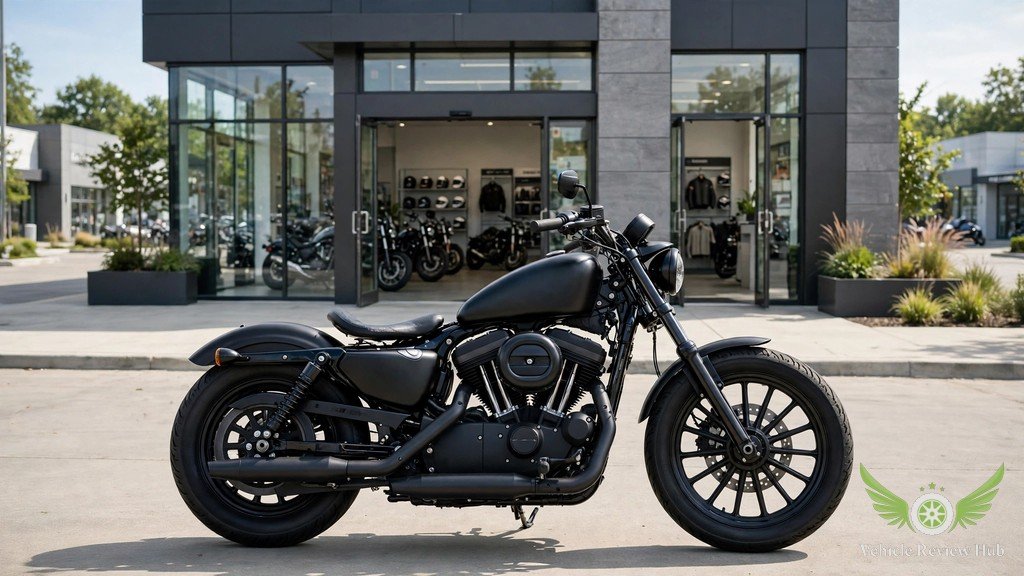
Honda Rebel 300 Price by Year in the USA: 2017 to 2026
The price walk below uses standard-model MSRPs verified from Honda dealer specification sheets and launch coverage, with ABS prices where they differ. The 2017 bike launched at $4,399 plus a $380 destination charge. The 2020 standard bike was $4,499 with the ABS version at $4,799; the 2021 standard was $4,599 with ABS at $4,899; the 2022 standard was $4,699 with ABS at $4,999; the 2023 standard was $4,749; the 2024 standard was $4,849 with ABS at $5,149; the 2025 bike was $4,849 with no ABS version offered; and the 2026 E-Clutch bike is $5,349 with ABS standard. Destination rose from $380 in 2017 to $600 on recent models, so out-the-door comparisons must include it. Honesty note: 2018–2019 standard stickers and the 2023 ABS price are not separately verified in the sources checked. The $500 increase over 2025 buys E-Clutch and standard ABS, which this Honda Rebel 300 review judges fair, a view TopSpeed’s 2026 first look shares.
ABS Was a $300 Option Until 2024 and Is Standard Only for 2026
The ABS story is consistent and easy to verify: in every year it was offered as an option, it cost exactly $300 more than the standard bike — $4,499 versus $4,799 in 2020, $4,599 versus $4,899 in 2021, $4,699 versus $4,999 in 2022, and $4,849 versus $5,149 in 2024. The twist is 2025: Honda sold the 2025 Rebel 300 only as model code CMX300S, a non-ABS bike, and contemporary coverage noted there appeared to be no ABS option that year. Dealer brochure templates still carried generic ABS wording, which is where the confusion comes from. For 2026, ABS is standard, and this Honda Rebel 300 review recommends 2026 or a verified ABS example for any rider who wants the safety net. When shopping used, check the model code: ABS versions carry an “A” (CMX300AL, CMX300AM, CMX300AN, CMX300ALR); the 2025 CMX300S does not. Never pay an ABS premium without that check. That code check is the single most important used-buying tip in this Honda Rebel 300 review.
Honda Rebel 300 Design, Features and Technology
In this Honda Rebel 300 review, the styling is the reason many riders choose it over a conventional naked bike: a low, blacked-out bobber silhouette that looks far pricier than it is. Honda gave it big-custom proportions: fat 16-inch tires, a teardrop tank, a short rear fender, a solo-style seat.
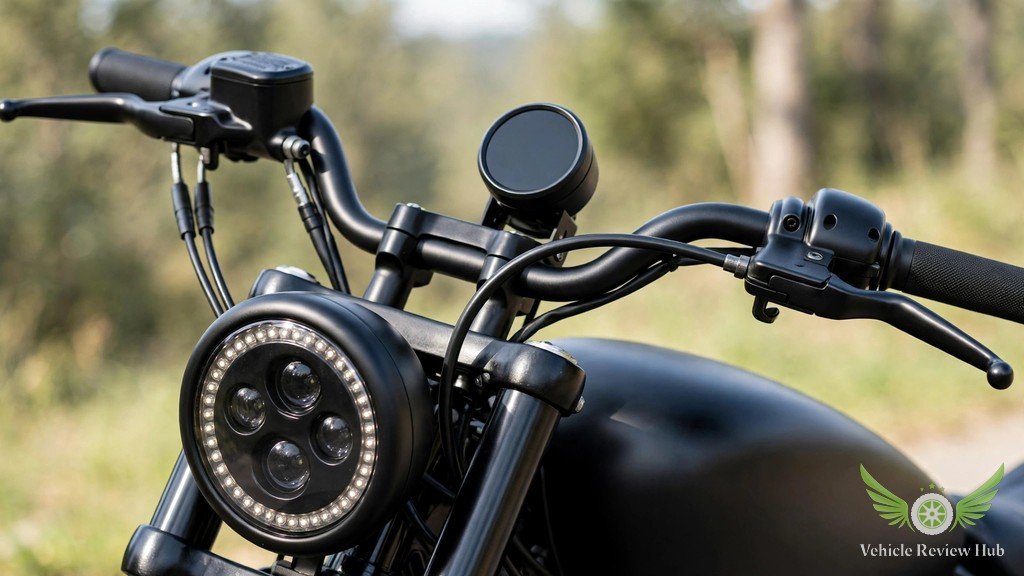
Bobber Styling, LED Lighting From 2020 and the 2025 Seat and Bars
In this Honda Rebel 300 review, the 2020 update’s all-LED lighting — including the license-plate light — also improved nighttime visibility. The 2025 refresh touched the parts the rider actually touches: a revised handlebar bend that pulls the grips slightly closer, a more comfortable seat with revised foam, a front fender painted to match the tank, and rear shocks with revised internals that resist bottoming better on sharp bumps. The redesigned 2025 cluster remains a small, round LCD unit showing speed, a fuel gauge, a gear-position indicator, and fuel consumption. Colours for 2026 are Matte Black Metallic and Pearl Smoky Gray. This Honda Rebel 300 review finds the 2025 seat and bar changes genuinely noticeable, not cosmetic.
E-Clutch Explained for 2026 and Why There Are No Ride Modes or Cruise
E-Clutch is Honda’s automatic clutch system, and the Rebel 300 is the third Honda to receive it after the CB650R and CBR650R. Two small electric actuators operate the clutch: the bike starts, stops, and shifts without the rider touching the lever, which still works normally when preferred. The system can also be switched off entirely, turning the bike back into a conventional manual — a thoughtful touch, since a new rider can learn throttle, braking, and balance first and add clutch work later, a point Cycle News’s 2026 review also notes. The video below shows the system in action on a Los Angeles city ride.
What the Rebel 300 does not have is equally worth stating, because rival marketing can blur it. No ride modes, traction control, cruise control, or cornering ABS exist on any year — E-Clutch is a clutch assistant, not a riding-mode suite. This Honda Rebel 300 review considers that honest simplicity a virtue at this price: there is nothing to configure, nothing to accidentally leave in the wrong mode, and nothing expensive to repair later.
Honda Rebel 300 Riding Experience and Comfort
On the road it feels like a much larger motorcycle in stability and a much smaller one in weight — and that combination is the whole point. The riding position is upright and neutral rather than feet-forward: the footpegs sit mid-mounted, the bars fall naturally to hand, and the rider sits in the bike rather than on top of it. The position, this Honda Rebel 300 review notes, is closer to a standard motorcycle than to a traditional cruiser, which is why taller riders sometimes find the pegs a touch high and the bars a touch close — but for the bike’s target audience, the position is a gift.
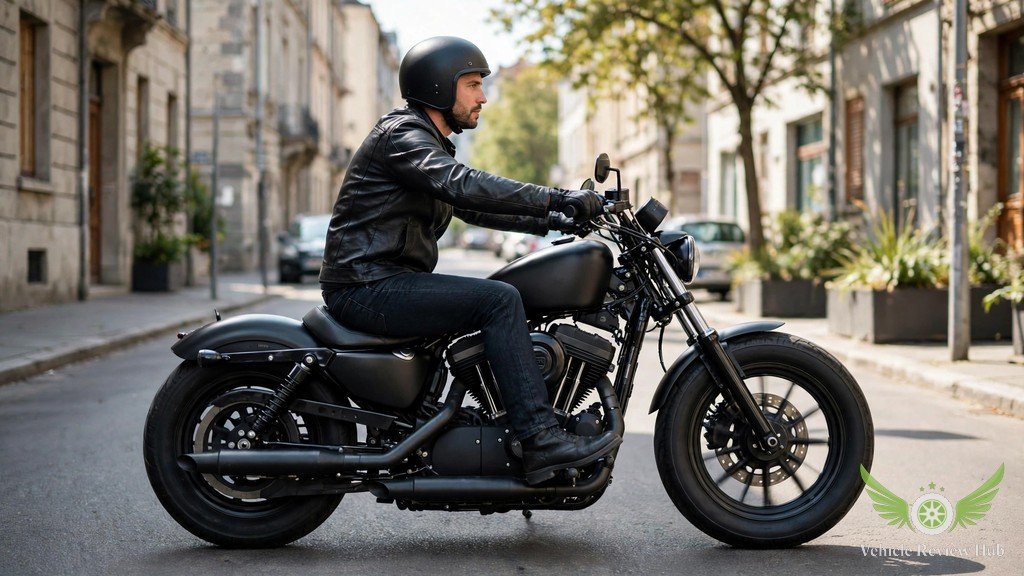
Riding Position, Low Seat, Handling and Low-Speed Maneuverability
The 27.2-inch seat is the Rebel 300’s superpower at low speed. A five-foot-four rider with a 29-inch inseam flat-foots the bike with bent knees, according to RevZilla’s 2026 first ride, and even shorter riders can manage it with boots. The light weight and low center of gravity make the bike easy to catch if it tips, and the fat 16-inch tires forgive clumsy steering inputs. Suspension is basic — a non-adjustable 41mm fork and twin rear shocks with preload only — but this Honda Rebel 300 review finds it well matched to the bike’s weight and mission. This Honda Rebel 300 review rates low-speed confidence as the bike’s greatest strength.
City Riding, Short Highway Trips and Everyday Practicality
In the city, this Honda Rebel 300 review finds it in its element: light, quick off the line, and happy at urban speeds all day. Short highway trips are doable — a press test saw around 64 mph on the speedometer in sixth gear — but this Honda Rebel 300 review is clear about the limits: the wind-free riding position, the buzzy single at sustained high revs, and the 3.0-gallon tank make long highway days tiring, and the seat, comfortable for an hour or two, grows firm on longer rides. For commuting, errands, and weekend back roads it is superb; for a cross-country tour, buy the Rebel 1100 instead. That balance is why this Honda Rebel 300 review recommends the bike so strongly for city use.
Honda Rebel 300 Review: Pros, Cons and Verdict
The verdict of this Honda Rebel 300 review is simple: the Rebel 300 remains the best first big bike Honda sells, and the 2026 E-Clutch version is the best Rebel 300 yet. It is not the fastest or most comfortable in its price range — but it is the easiest to live with, and for a beginner that matters most.
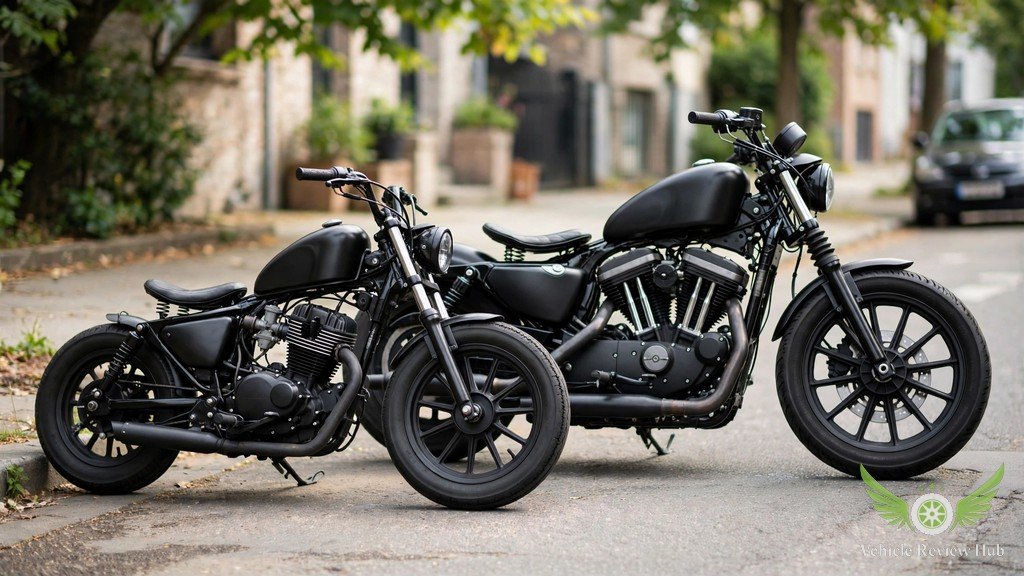
Main Advantages and Limitations of the Honda Rebel 300
The seat and weight — 27.2 inches and 379 pounds (2026) — make the bike approachable for almost any adult. The E-Clutch genuinely lowers the learning curve, the all-LED lighting and LCD dash are modern without being gimmicky, and the $5,349 price undercuts every other full-size Honda cruiser while fuel and insurance costs stay low. The limitations are equally real: highway vibration, a seat that firms up on long rides, no tachometer, no ride modes, no cruise control, and a 3.0-gallon tank that demands planned fuel stops. Tall riders — anyone much over six feet — will find the ergonomics cramped, and this Honda Rebel 300 review advises them to sit on the bike before buying. This Honda Rebel 300 review weighs those trade-offs as fair at $5,349.
Who Should Consider the Honda Rebel 300 Over the Rebel 500?
The 2026 Rebel 500 costs $6,799 with ABS standard — $1,450 more than the 300 — and its 471cc twin offers more highway passing power and a more relaxed cruise. But if your riding is mostly city and back roads, if you are a new or shorter rider, or if the $1,450 gap matters, the 300 gives you the same chassis, the same styling, and the same low seat for less money and less weight. Riders wanting the cheapest full-size Honda should also glance at the XR150L, a smaller, cheaper dual-sport, while the CRF300L offers a lighter, taller small-single alternative. For everyone else, the verdict stands: buy the 300 if you are learning, buy the 500 if you are already travelling.
Honda Rebel 300 Review: Frequently Asked Questions
These direct answers cover the questions buyers ask most often, from pricing and seat height to the E-Clutch and the 2025 ABS confusion.
How much does a 2026 Honda Rebel 300 cost?
In this Honda Rebel 300 review, the 2026 bike costs $5,349 plus a $600 destination charge, with E-Clutch and ABS standard — $500 more than the 2025 bike, for real equipment rather than cosmetics.
What is the seat height of the Honda Rebel 300?
This Honda Rebel 300 review lists the seat height as 27.2 inches on every model year from 2017 to 2026, one of the lowest seats on any full-size motorcycle Honda sells. Most adults flat-foot at stops; a five-foot-four tester with a 29-inch inseam flat-footed it with bent knees.
How much does a Honda Rebel 300 weigh?
This Honda Rebel 300 review year-scopes the weight: 379 pounds for the 2026 E-Clutch model, 370 pounds for earlier ABS versions, and 364 pounds for the 2025 non-ABS bike.
What is Honda E-Clutch on the Rebel 300?
In this Honda Rebel 300 review, E-Clutch uses two small electric actuators to operate the clutch, so the bike starts, stops, and shifts without the rider touching the lever — which still works manually, and the system can be switched off entirely.
Does the 2025 Honda Rebel 300 have ABS?
No. The 2025 Rebel 300 was sold only as model code CMX300S, a non-ABS bike, so any 2025 bike advertised with ABS needs its model code checked before you pay a premium. This Honda Rebel 300 review’s advice is simple: no ‘A’ code, no ABS premium.
Is the Honda Rebel 300 good for beginners?
Yes. This Honda Rebel 300 review rates it as arguably the best beginner motorcycle Honda sells, thanks to its low seat, light weight, smooth single-cylinder power, and — from 2026 — the E-Clutch.
Should I buy the Rebel 300 or the Rebel 500?
This Honda Rebel 300 review says: buy the 300 for city and back-road riding, for learning, or if the $1,450 gap matters. Buy the 500 for regular sustained highway miles or more passing power from its 471cc twin.
Can the Honda Rebel 300 go on the highway?
Yes, for short trips — this Honda Rebel 300 review is clear on that. It holds highway speeds, but wind, vibration, and the 3.0-gallon tank make long highway days tiring — plan fuel stops around 170 to 190 miles.
What is the fuel tank size and range of the Honda Rebel 300?
In this Honda Rebel 300 review, the tank holds 3.0 gallons (some earlier Honda sheets list 2.9), and with high-50s to low-60s mpg in independent tests, realistic range is roughly 170 to 190 miles.
What colours does the 2026 Honda Rebel 300 come in?
This Honda Rebel 300 review notes two colours for 2026: Matte Black Metallic and Pearl Smoky Gray.
Does the Honda Rebel 300 have ride modes or cruise control?
No. There are no ride modes, traction control, or cruise control on any model year — E-Clutch is a clutch assistant, not a riding-mode suite.
Is the Honda Rebel 300 good for tall riders?
Not ideally. Riders much over six feet tend to find the mid-mounted pegs and close bars cramped, so sit on the bike — and preferably ride it — before buying.