The short answer on Suzuki Boulevard C50T reliability is that the bike is one of the most dependable middleweight cruisers you can buy used — a twenty-year production run, an unstressed 805cc V-twin, a shaft drive with no chain to wear out, and exactly two recalls in the published NHTSA notices. That is why so many are still on the road two decades on. This Suzuki Boulevard C50T reliability guide covers the maintenance schedule, the wear items, the two recalls, the touring-equipment checks and the ownership costs.
Suzuki Boulevard C50T Reliability Overview
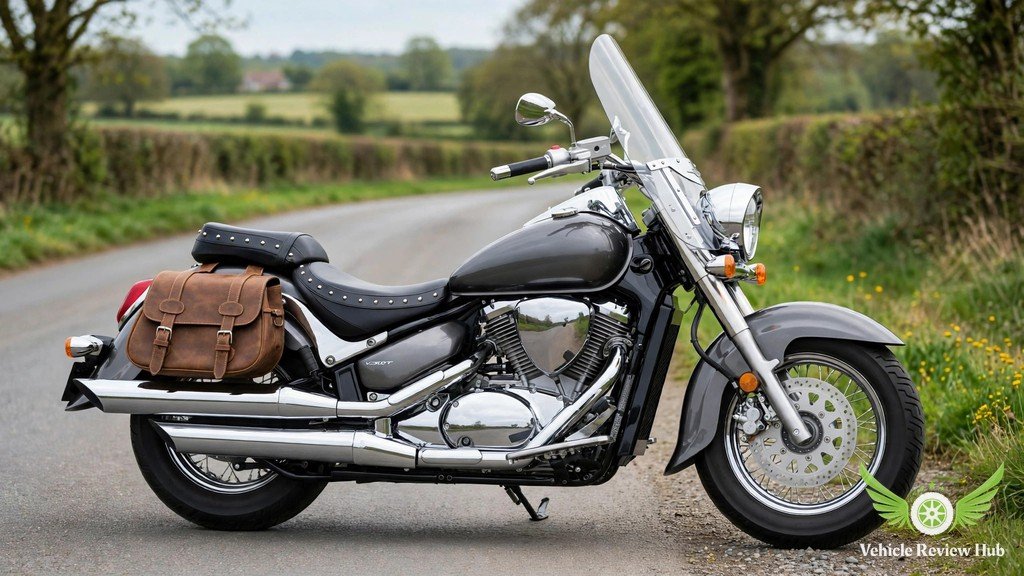
The C50T’s reliability story is longevity plus simplicity. The bike is the Boulevard C50’s touring trim, as the Suzuki Boulevard C50T review sets out — the same 805cc V-twin, five-speed gearbox and shaft final drive — with a windscreen, studded saddlebags, studded seats and whitewall tires added on top. Suzuki USA’s specification table lists the shared hardware, and nothing in the touring equipment changes how the engine or the drivetrain wears. That is the first thing this Suzuki Boulevard C50T reliability guide establishes: the T is as reliable as the base C50, because mechanically it is the base C50.
Exactly Two NHTSA Campaigns Touch the VL800
Exactly two NHTSA campaigns touch the VL800, and both are old. The first, 05V-566 from 2005, covers 23,839 units of the 2005–06 VL800 — including the C50T — for an ignition-switch wiring harness that could rub against the clutch or throttle cable; Suzuki’s own recall letter carried a DO NOT RIDE warning until the bike was inspected. The second, 11V-108 from 2011, covers 2008–10 models for a regulator/rectifier defect that could overheat and kill the charging system. A buyer should check any used C50T by its VIN against both campaigns on the NHTSA recalls page. There are no others in the published notices — and the NHTSA API is broken, so this Suzuki Boulevard C50T reliability guide phrases it that way rather than claiming an API-verified zero.
| Campaign | Model years | Defect | Units |
|---|---|---|---|
| 05V-566 (2005) | 2005–06 VL800, including the C50T | Ignition-switch wiring rubs against clutch/throttle cable; DO NOT RIDE warning | 23,839 |
| 11V-108 (2011) | 2008–10 VL800/VZ800 | Regulator/rectifier overheating; charging-system failure | Not stated in the notice summary |
No MCN Rating or Reliability Survey Exists
There is no MCN reliability rating and no owner survey for the C50T, and this Suzuki Boulevard C50T reliability guide says so plainly rather than inventing one. No outlet has run an instrumented long-term test on the touring trim, and no survey has measured owner satisfaction. What exists instead is a twenty-year production run with only two recalls, an under-stressed engine and a shaft drive that removes the most common cruiser wear item entirely. That is the evidence base — longevity and simplicity, not a score. Any article that prints an MCN score or a survey percentage for the C50T is printing something that does not exist.
Suzuki Boulevard C50T Common Problems and Wear Items
The C50T’s common problems are ordinary wear items, not design failures. Tires, fork seals, brake pads and rear drum shoes, the battery and the charging system — and on the touring trim, the saddlebags, mounts and twist-lock fasteners, and the windscreen hardware. Nothing on that list is expensive, and nothing on it strands a rider without warning if the bike is inspected on schedule. This section of the Suzuki Boulevard C50T reliability guide walks through each wear item in the order a used-bike buyer should check it.

Check Bags, Mounts and Twist-Locks for Completeness
The saddlebags are the first thing to check on a used C50T, because they are the one wear item the base C50 never has. The bags are soft leather-look cases with twist fasteners — they do not lock, as Road Runner’s 2023 review puts it bluntly, and they do not seal out weather. A missing bag or a worn twist-lock is a real used-bike defect on the T, and it costs real money to replace, so a buyer should open both bags, work both fasteners and check both mounts for cracks and loose hardware before agreeing a price. Check the windscreen the same way: mounts for cracks, screen for scratches and stress marks around the bolts. The Boulevard C50 reliability guide sets out the same platform’s service schedule — the same wear-item list, except for the bags.
Final Drive, Tires, Fork Seals, Brakes and Electrical Checks
The final drive is a shaft, so there is no chain to stretch and no sprockets to wear — the single biggest maintenance saving on the bike. What the shaft does need is its final-gear oil, replaced once at 600 miles and inspected after that. Tires are the next check: the whitewalls are harder to source than blackwalls and need whitewall-specific cleaning, so check the sidewalls for cracking and the tread for age as well as depth. Fork seals weep with age, so look for oil on the fork tubes. Brakes are the genuine limitation: a single front disc and a rear drum, with no ABS in any US year — TopSpeed calls the C50T the only middleweight cruiser without a rear disc brake. Check the front pads and the rear drum shoes, and test the brakes properly on a test ride, because Road Runner warns buyers to leave room for braking. Electrically, the charging system is the known weak point — the 11V-108 regulator/rectifier defect is the bike’s second recall — so a used-bike check should include a charging-system test and a look at the battery’s age. Rider’s 2008 comparison tested the same platform at 632 lb wet and $7,999 — a reminder of how long it has been in service, and how many of its wear items are simply age, not design. None of these is a reason to walk away from a C50T — they are the normal wear items this Suzuki Boulevard C50T reliability guide expects a buyer to find and price.
Suzuki Boulevard C50T Maintenance Schedule and Servicing
The schedule is light, which is the point of the bike. The VL800 manual’s chart asks for engine oil at every column, a valve inspection every 7,500 miles and a final-gear oil change exactly once — and almost nothing else. There is no chain to adjust, no belt to tension, and no spline greasing on Suzuki’s schedule at all. This section of the Suzuki Boulevard C50T reliability guide follows the manual’s chart column by column, so an owner can see what is due and when.

The video below is YouMotorcycle’s oil and filter change on the shared M50/C50 platform — the same VL800 engine family as the C50T, not a C50T-specific video. The procedure it shows is the one this Suzuki Boulevard C50T reliability guide describes, including the filter change the manual schedules at 600 and 11,000 miles only.
| Service item | Interval | Notes |
|---|---|---|
| Engine oil | Replace at every column — 4,000 miles | 10W-40; 3.0 L without filter, 3.4 L with filter |
| Oil filter | Replace ONLY at 600 and 11,000 miles | Not with every oil change — VL800 service manual |
| Valve clearance | Inspect at 600, 7,500 and 14,500 miles | Every 7,500 miles; screw-and-locknut adjustment |
| Final-gear oil | Replace once at 600 miles, then inspect only | Shaft drive — no chain or sprockets exist |
| Coolant | 2 years (older manual) or 4 years / 29,000 miles (Super Long Life Blue) | Depends on which manual applies |
| Brake fluid | Replace every 2 years | Front disc and rear drum |
| Brake hose | Replace every 4 years | Age-based, not mileage-based |
Oil at Every Column, Filter at 600 and 11,000
Engine oil is replaced at every scheduled column — a 4,000-mile interval, not 3,750 miles, which is the GSX-8 family’s interval. The oil filter is the detail that catches people out: the VL800 service manual says to replace it initially at 600 miles and then every 11,000 miles. Some sources print “replace with the oil,” and that is wrong; the manual’s chart is explicit. Oil capacity is 3.0 litres without a filter change and 3.4 litres with one. For a buyer reading a used bike’s service history, the filter interval is a useful check: a bike with no filter change at 11,000 miles is overdue one. Rider’s 2013 dyno of the base C50 SE read 46.4 hp at 6,000 rpm and 45.4 lb-ft — an unstressed engine, forgiving of the occasional late service.
Valve Clearance Inspected at 600, 7,500, 14,500
Valve clearances are inspected at 600 miles, then every 7,500 miles — 600, 7,500, 14,500 and on. The adjustment is screw-and-locknut, not shims, which keeps the job simple and cheap: no shim math, just a feeler gauge and a locknut. That keeps the job cheap, where a shim-under-bucket service on a modern bike can cost several hundred dollars. Ask for service records showing the 7,500-mile valve checks — a bike that skipped them skipped the one service the manual schedules by mileage. It is the service record this Suzuki Boulevard C50T reliability guide asks buyers to check first. The 600-mile first service is the other one to verify — first oil change, first filter change and first final-gear oil change, all in one visit.
Suzuki Boulevard C50T Tires, Brakes and Suspension Maintenance
Tires, brakes and suspension wear with use rather than with time, and on the C50T all three are simple: whitewalls on spoked wheels, a single front disc and a rear drum with no ABS, and conventional forks and twin rear shocks tuned for comfort. This section of the Suzuki Boulevard C50T reliability guide covers what wears, what to check and what it costs to keep right.
Final-Gear Oil: Replaced at 600, Then Inspected
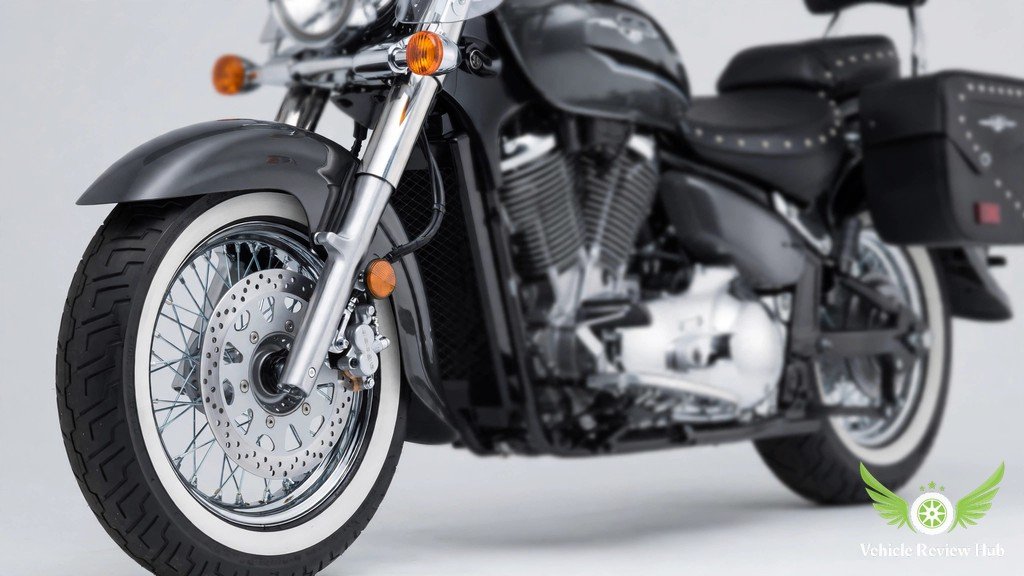
The final-gear oil is replaced once, at the 600-mile first service; after that the manual asks only for inspection. That is the whole of the shaft-drive maintenance — no chain, no belt, no sprockets to wear. The inspection is a level check and a look for leaks at the housing, which takes minutes. It is worth doing properly, because a shaft drive that runs dry is an expensive repair — but the schedule itself could hardly be lighter, and a chain-drive cruiser asks for cleaning and adjustment every few hundred miles where the C50T asks for nothing. Suzuki never schedules spline greasing — do not present it as a scheduled service.
Whitewall Tires Were Standard Every Year Checked
Whitewall tires were standard on the C50T every year checked, from the 2007 bike through the 2025 Special — wide white rings on spoked wheels that mark the touring trim at a glance. They need whitewall-specific cleaning to stay white and are harder to source than blackwalls, so check availability and price before assuming a quick replacement. Check the sidewalls for cracking and the tread for age as well as depth. The bike’s modest power — Rider’s dyno measured 42.8 hp at 6,200 rpm for the 2014 C50T — means the tires are not punished the way a sport bike’s are. A set of tires is the single most common wear-item expense on the bike, and the one this Suzuki Boulevard C50T reliability guide says to budget for first.
Suzuki Boulevard C50T Maintenance and Ownership Costs
Ownership costs are low — the other half of the bike’s value case. Fuel is the biggest running cost, routine servicing is a short list of cheap items, and the only expensive surprises are the ones a buyer can check for before purchase — a missing saddlebag, a tired battery, an untested charging system. This section of the Suzuki Boulevard C50T reliability guide puts the costs in order, from the fuel tank to the recall check.

Fuel, Routine Servicing, Tires and Replacement Parts
Fuel is where the C50T earns its keep: Rider’s January 2015 test averaged 51.2 mpg for a 2014 C50T, the best in its four-bike test, with a 210-mile range from the 4.1-gallon tank. Earlier tests read lower — 43.2 mpg (2008 C50T), 41.7 mpg (2007 C50T) and 41.4 mpg (2013 C50 SE) — so the 51.2 figure is the best the platform has recorded, not the typical one. Routine servicing is an oil change every 4,000 miles, a filter every 11,000, a valve check every 7,500 and a final-gear oil inspection. Tires are the main wear-item cost, followed by brake pads and rear drum shoes, fork seals and a battery. Replacement parts are plentiful after a twenty-year run, which is why this Suzuki Boulevard C50T reliability guide rates the bike’s parts costs as low — and the bike shares almost everything with the base C50. The 2025 C50T Special costs $9,779 MSRP — some pages print $9,799, and that figure is wrong; Suzuki’s own listing is $9,779, and the $530 dealer-brochure figure is a dealer figure, not Suzuki’s destination charge, so this Suzuki Boulevard C50T reliability guide prints MSRP only and asserts no total. The Boulevard C50T performance guide covers the same platform’s dyno and fuel figures in full.
Recall 05V-566 Includes the C50T, 2005-06
Recall 05V-566 includes the C50T — the 2005–06 VL800 is explicitly inside the campaign. The campaign covers 23,839 units for an ignition-switch wiring harness that could rub against the clutch or throttle cable, with a DO NOT RIDE warning until inspected. As of November 2008, 12,056 units were still unremedied — more than half the campaign — so an unrepaired 2005 or 2006 bike is a real possibility on the used market. The fix is a rerouted harness, and the check is free: run the VIN on the NHTSA recalls page before buying. It is the first check this Suzuki Boulevard C50T reliability guide recommends for any 2005 or 2006 bike. The same VIN check covers the second campaign, 11V-108 (2008–10, regulator/rectifier), too. Transport Canada’s 2016022 notice from 2016 was a re-inspection for the same regulator defect — Canada-only, not a third US recall. The Road Runner 2023 review calls the platform surprisingly capable at 644 lb — the bike is old, simple and dependable, and both recalls are old enough to have been fixed on any well-kept example.
How to Keep a Suzuki Boulevard C50T Reliable
Keeping a C50T reliable is mostly doing the small things on time: oil every 4,000 miles, a valve check every 7,500, a look at the final-gear oil and the brakes. This final section of the Suzuki Boulevard C50T reliability guide sets out the habits that keep the bike dependable, and the one factory-correct quirk that used buyers keep misreading.

Preventive Maintenance, Records and Regular Inspections
Preventive maintenance on the C50T, as this Suzuki Boulevard C50T reliability guide sets it out, is a short list: change the oil every 4,000 miles, change the filter at 600 and 11,000 miles only, check the valves every 7,500 miles, inspect the final-gear oil, replace the brake fluid every two years and the brake hose every four. Keep the records — a buyer pays more for a folder of receipts than for a story. Inspect the bike between services: tire sidewalls and tread, oil on the fork tubes, saddlebag fasteners, windscreen mounts, and the charging system — the regulator/rectifier is the one electrical weak point, and a voltmeter reading tells the story in a minute. The 12-month unlimited-mileage warranty is long gone on every used example, so the owner’s habits are the warranty now. The Suzuki Boulevard C50T comparison sets the T against the Vulcan 900 Classic LT, the V Star 950 Tourer and the Shadow Aero for buyers weighing a used C50T against a rival.
A Missing Backrest on a 2021+ Bike Is Factory-Correct
A missing backrest on a 2021-or-later C50T is factory-correct, not a bike with missing parts. The backrest was on the original C50T in 2005 and on the 2008 test bike — then it vanished from Suzuki’s own C50T pages in 2021. The gallery image files on Suzuki’s 2021 and 2023 pages are literally named with “nobackrest” in them, and the 2025 dealer brochure does not mention one. TopSpeed’s 2026 articles still list a pillion backrest, but that secondary description does not override Suzuki’s own pages. The practical point for a used buyer, and the reason this Suzuki Boulevard C50T reliability guide spends a section on it, is simple: do not price a 2021-or-later C50T down for the absence of a backrest, and do not walk away from one for the same reason. The bike left the factory that way. Check instead for the things that do go missing — a saddlebag, a twist-lock fastener, a windscreen bolt.
Suzuki Boulevard C50T Reliability: Frequently Asked Questions
Direct answers to the questions riders ask about Suzuki Boulevard C50T reliability — the maintenance schedule, the recalls, the common problems and what to check before buying.
Is the Suzuki Boulevard C50T reliable?
Yes. The C50T has a twenty-year production run with only two recalls in the published NHTSA notices, and its unstressed 805cc V-twin and shaft drive remove the most common cruiser wear item. Longevity plus simplicity — and no third recall.
How often does the Suzuki Boulevard C50T need an oil change?
Engine oil is replaced at every scheduled column, a 4,000-mile interval — not 3,750 miles, which is the GSX-8 family’s interval and is wrong for this bike. That is the interval this Suzuki Boulevard C50T reliability guide uses throughout. The oil capacity is 3.0 litres without a filter change and 3.4 litres with one.
How often should the oil filter be changed on a Suzuki Boulevard C50T?
Only at 600 miles and 11,000 miles, per the VL800 service manual — not with every oil change. Some sources print “replace with the oil,” and that is wrong; the manual’s chart is explicit, and this Suzuki Boulevard C50T reliability guide uses the manual’s interval.
When do the valves need checking on a Suzuki Boulevard C50T?
Valve clearances are inspected at 600 miles, then every 7,500 miles — 600, 7,500, 14,500 and on. The adjustment is screw-and-locknut, which keeps the job simple and cheap.
What are the common problems with the Suzuki Boulevard C50T?
Ordinary wear items, not design failures, is the short answer this Suzuki Boulevard C50T reliability guide gives: tires, fork seals, brake pads and rear drum shoes, the battery and the charging system, and on the touring trim the saddlebags, mounts and twist-lock fasteners. The regulator/rectifier is the known electrical weak point — it is the subject of the 11V-108 recall.
Does the Suzuki Boulevard C50T have any recalls?
Exactly two in the published NHTSA notices: 05V-566 (2005–06, ignition-switch wiring, 23,839 units, DO NOT RIDE warning) and 11V-108 (2008–10, regulator/rectifier).
Does the Suzuki Boulevard C50T have ABS?
No. No US-market Boulevard C50T has ever had ABS in any model year. The bike stops with a single front disc and a rear drum, and Road Runner warns buyers to leave room for braking.
How long do Suzuki Boulevard C50T tires last?
There is no published tire-life figure for the C50T, so this Suzuki Boulevard C50T reliability guide gives no mileage number. Check the tread for depth and the sidewalls for cracking and age — a low-mileage bike can still carry old tires.
What is the fuel economy of the Suzuki Boulevard C50T?
Rider’s January 2015 test averaged 51.2 mpg for a 2014 C50T — the best fuel economy in its four-bike test — with a 210-mile range from the 4.1-gallon tank. Earlier tests read lower: 43.2 mpg (2008), 41.7 mpg (2007) and 41.4 mpg (2013 SE). Suzuki publishes no MPG figure.
Is the Suzuki Boulevard C50T good for beginners?
Yes, with one reservation: the brakes. The low 27.6-inch seat, low centre of gravity and gentle low-down torque make it an easy first big bike, but no ABS and a rear drum mean a new rider must learn proper braking technique.
What should I check before buying a used Suzuki Boulevard C50T?
Check the VIN against the two recalls (05V-566 and 11V-108), ask for service records showing the 7,500-mile valve checks, check the charging system and battery, and inspect the touring equipment. A missing bag or a worn fastener is a real used-bike defect on the T, and this Suzuki Boulevard C50T reliability guide lists it because the base C50 has no bags to check.
How much does it cost to maintain a Suzuki Boulevard C50T?
Very little by cruiser standards. Routine servicing is an oil change every 4,000 miles, a filter at 600 and 11,000 miles, a valve check every 7,500 miles and a final-gear oil inspection. Tires are the main wear-item cost, followed by brake pads and rear drum shoes, fork seals and a battery every few years. Parts are plentiful after a twenty-year run — another reason this Suzuki Boulevard C50T reliability guide rates the bike’s running costs as low — and the bike shares almost everything with the base C50.