The Suzuki Boulevard C90 is two different motorcycles wearing one name, and that is the first thing a buyer has to understand. From 2005 to 2009 it was an air/oil-cooled 45-degree V-twin with hydraulic lifters and no valve service at all. Then it vanished for three model years, and when it came back in 2013 it was a different machine — a liquid-cooled 54-degree V-twin borrowed from the M90. This Suzuki Boulevard C90 review covers both generations, the verified 2010–2012 gap and the final 2019 prices.
Suzuki Boulevard C90 Overview and Model-Year Updates
A Suzuki Boulevard C90 review has to start with the name, because the name hides a complete redesign. The 1,462cc displacement never changed, the shaft drive never changed and the five-speed gearbox never changed — but almost everything else did. The two generations share only the displacement, the shaft and the badge, so every figure here is labelled by generation.

Two Different Bikes Share One Name
The first-generation C90 ran from 2005 to 2009. It was the VL1500 Intruder LC reborn as a Boulevard, with SDTV fuel injection and hydraulic valve lifters that removed valve adjustment from the service chart. The second generation arrived in 2013 after the three-year gap, and it was a different engine in a different frame: the M90’s liquid-cooled 54-degree V-twin, with shim-adjusted valves, a single 330 mm front disc and a 4.8-gallon tank where the old bike had carried 3.7 gallons. The seat moved up from 27.6 inches to 28.3 inches, the wheelbase shortened from 66.9 inches to 65.9 inches, and the bike gained a blacked-out B.O.S.S. version. The Boulevard M109R review covers the bigger Boulevard in the family, the 1,783cc bike the C90 is sometimes confused with.
The Verified Gap: No C90 for 2010 to 2012
Suzuki discontinued the C90 in the USA after the 2009 model year, and Women Riders Now’s 2013 review of the returning bike says why: the company dropped it “due to emissions control”. No 2010, 2011 or 2012 C90 was sold in the USA. The bike returned for 2013 as the C90 B.O.S.S. and the C90T. A bike advertised as a 2010, 2011 or 2012 C90 does not exist, and a seller listing one has the year wrong. The last US model year was 2019, and no discontinuation announcement has been found, so this Suzuki Boulevard C90 review says only that no 2020 model exists.
Suzuki Boulevard C90 Engine and Specifications
Both C90 engines in this Suzuki Boulevard C90 review displace 1,462cc, and that is where the similarity ends. The first generation is an air/oil-cooled 45-degree twin with three valves per cylinder; the second is a liquid-cooled 54-degree twin with four valves per cylinder.

Gen 1: Air-Oil Cooled 45-Degree Twin, Three Valves
The 2005–2009 C90 in this Suzuki Boulevard C90 review runs a 1,462cc air/oil-cooled 45-degree V-twin with three valves per cylinder — six valves in total — SDTV fuel injection, a 32-bit ECU and SCEM cylinder plating. Its headline claimed figures, as printed in the spec databases, are 66 hp at 4,800 rpm and 115 Nm (85 lb-ft) at 2,800 rpm, though a second database pair prints 67 hp at 4,800 rpm and 114 Nm at 2,300 rpm — the torque peak is genuinely split, and neither figure is called an error here. The engine’s most owner-friendly feature is its hydraulic valve lifters: Total Motorcycle’s 2005 spec sheet puts it plainly, “Hydraulic valve lash adjusters eliminate valve adjustment maintenance”, and the manual chart has no valve-clearance row at all. The gen-1 bike also has a hydraulic clutch with a back-torque limiter, a five-speed gearbox, shaft final drive and dual front discs. It has no tachometer and no fuel gauge — only a low-fuel warning light.
Gen 2: Liquid-Cooled 54-Degree Twin From the M90
The 2013–2019 bike in this Suzuki Boulevard C90 review runs the M90’s engine: a 1,462cc liquid-cooled 54-degree V-twin with four valves per cylinder and dual spark plugs. Suzuki’s own 2019 one-sheet describes it as a “1462cc, fuel injected, liquid-cooled, SOHC, 54-degree, V-twin engine” with “visually striking cylinders with symmetrical cooling fins” — the fins are correct on this bike, and a smooth fin-free engine would be wrong. Suzuki’s own 2013 C90T brochure prints the headline claimed figures as 59.6 kW (79.9 hp) at 4,800 rpm and 131.4 Nm at 2,600 rpm, while the spec databases print 50 kW (67 hp) at 4,800 rpm and 114 Nm at 2,300 rpm for the same engine — a genuine conflict between the brochure and the databases, named here rather than smoothed over. Two magazines reporting Suzuki’s own claims add two more numbers to the split: Women Riders Now prints 77.8 hp at 4,800 rpm and 96.6 lb-ft at 2,600 rpm “according to Suzuki”, and Rider Magazine prints 81.8 hp at 4,800 rpm and 93.3 lb-ft at 2,800 rpm as Suzuki’s claim. Suzuki’s US spec tables print no power figure at all. The closest measured figure comes from the same engine in the M90: Motorcycle.com’s 2009 Muscle Cruiser Shootout dyno recorded 69.6 hp at 5,100 rpm and 82.7 lb-ft at 2,900 rpm. The gen-2 bike also carries the Suzuki Clutch Assist System (SCAS), which cuts the force needed at the clutch lever.
| Specification | Gen 1 (2005–2009) | Gen 2 (2013–2019) |
|---|---|---|
| Engine | 1,462cc air/oil-cooled 45° V-twin | 1,462cc liquid-cooled 54° V-twin |
| Valves | 3 per cylinder (6 total), hydraulic lifters | 4 per cylinder (8 total), dual spark plugs |
| Bore × stroke / compression | 96 × 101 mm / 8.5:1 | 96 × 101 mm / 9.5:1 |
| Claimed power | 66 hp @ 4,800 rpm / 115 Nm @ 2,800 rpm | 79.9 hp @ 4,800 rpm / 131.4 Nm @ 2,600 rpm (Suzuki brochure) |
| Transmission / final drive | 5-speed / shaft | 5-speed / shaft |
| Brakes | Dual front discs / single rear disc, no ABS | Single 330 mm front disc / 275 mm rear disc, no ABS |
| Fuel tank | 3.7 gal (14 L) | 4.8 gal (18.2 L) |
| Seat height / wheelbase | 27.6 in / 66.9 in | 28.3 in / 65.9 in |
| Tyres | 180/70-15 rear (front size disputed) | 130/80-17 front / 200/60-16 rear |
Suzuki Boulevard C90 Price and Market Availability
The C90’s price story is a story of a bike that got cheaper as it aged. It launched at $13,999 in 2013, and by its final year the base bike listed at $12,549. Every price in this Suzuki Boulevard C90 review comes with its source named: the 2019 figures below are motorcycle.com spec-database figures, not Suzuki-page figures, because Suzuki’s own 2019 C90 page could not be reached.
The video below, chosen for this Suzuki Boulevard C90 review, is Srkcycles’ “Watch this before you Buy a suzuki C90T” — a buyer’s guide from an owner and reviewer, not a magazine road test, and it looks at the touring C90T rather than the base bike.
Suzuki Boulevard C90 Price in the USA: $12,549 for 2019
The final-year base bike, the 2019 C90 B.O.S.S., is listed in motorcycle.com’s spec database at $12,549 with a $380 destination charge — a $12,929 total. The sourcing matters and is stated plainly: Suzuki USA’s own 2019 C90 page could not be reached — its Wayback snapshot returns a 404 — so $12,549 is a spec-database figure, not a Suzuki-page figure. The caution comes from the Boulevard M50, where the spec database printed a $380 destination charge while Suzuki’s own page charged $395; for the C90 no Suzuki-page figure was found to check the $380 against, so $12,929 is the headline total with the sourcing named. The 2019 colours for the B.O.S.S. are confirmed from Suzuki’s own one-sheet: Metallic Gleam Gray or Glass Sparkle Black. As a used buy the C90 has become genuinely cheap — a 2024 video essay frames the used C90 B.O.S.S. as “an ABSOLUTE steal at under $7,000”, a used-market framing rather than a verified market figure.
C90T at $13,049, Both Plus $380 Destination
The touring C90T in this Suzuki Boulevard C90 review listed at $13,049 for 2019, also plus the $380 destination charge from the same spec database — a $13,429 total, exactly $500 more than the base B.O.S.S. That $500 is the touring kit: windshield, saddlebags, backrest and studded seats. The price path across the gen-2 years runs $13,999 for the 2013 C90T B.O.S.S. launch, $12,899 for the 2015 C90T, $12,389 for the 2015 C90 B.O.S.S. and $12,899 again for the 2018 C90T. The 2005 launch price is database-circulated only — spec databases list $10,399 for the 2005 C90 — and it is printed here only with that label, never as a Suzuki-confirmed figure. The 2006, 2007, 2008, 2009, 2014, 2016 and 2017 model-year prices were not verified and are not printed at all.
| Year / trim | MSRP | Destination | Total | Source |
|---|---|---|---|---|
| 2013 C90T B.O.S.S. | $13,999 | — | $13,999 | motorcycle.com + Total Motorcycle + Women Riders Now |
| 2015 C90T | $12,899 | — | $12,899 | motorcycle.com spec DB |
| 2015 C90 B.O.S.S. | $12,389 | — | $12,389 | motorcycle.com spec DB |
| 2018 C90T | $12,899 | — | $12,899 | motorcycle.com spec DB |
| 2019 C90 B.O.S.S. | $12,549 | $380 | $12,929 | motorcycle.com spec DB (Suzuki page not accessible) |
| 2019 C90T | $13,049 | $380 | $13,429 | motorcycle.com spec DB (Suzuki page not accessible) |
Suzuki Boulevard C90 Design, Features and Technology
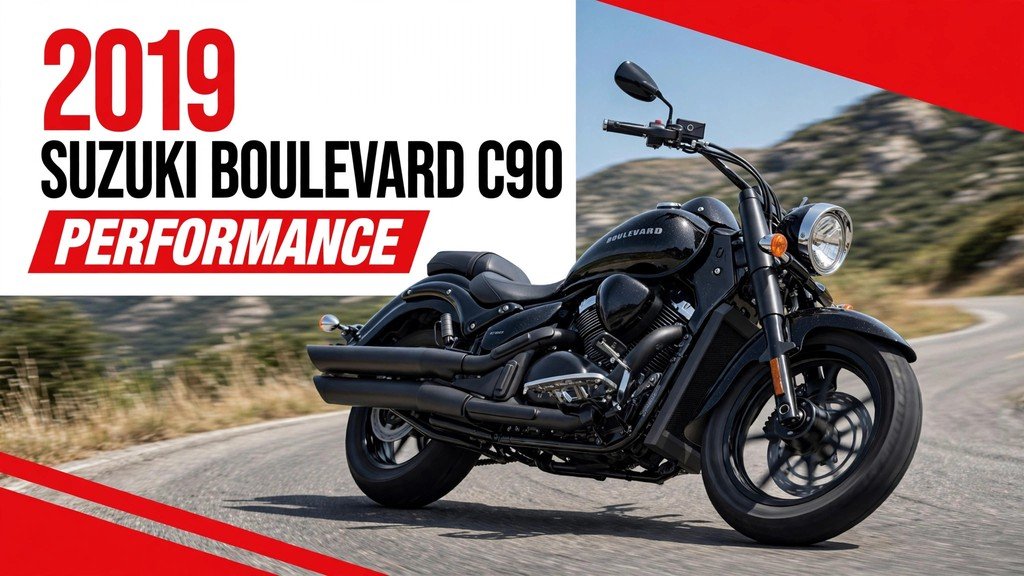
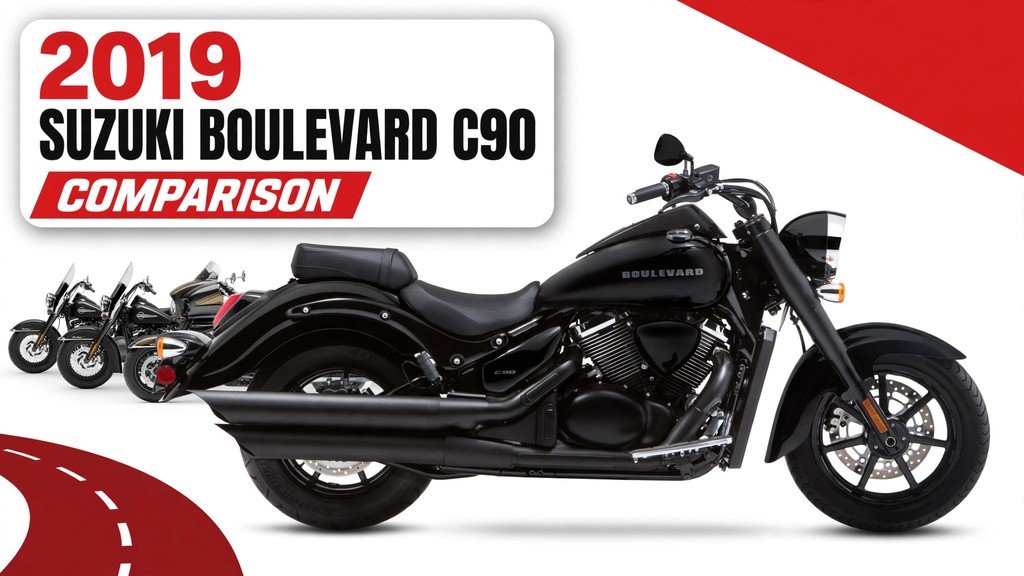
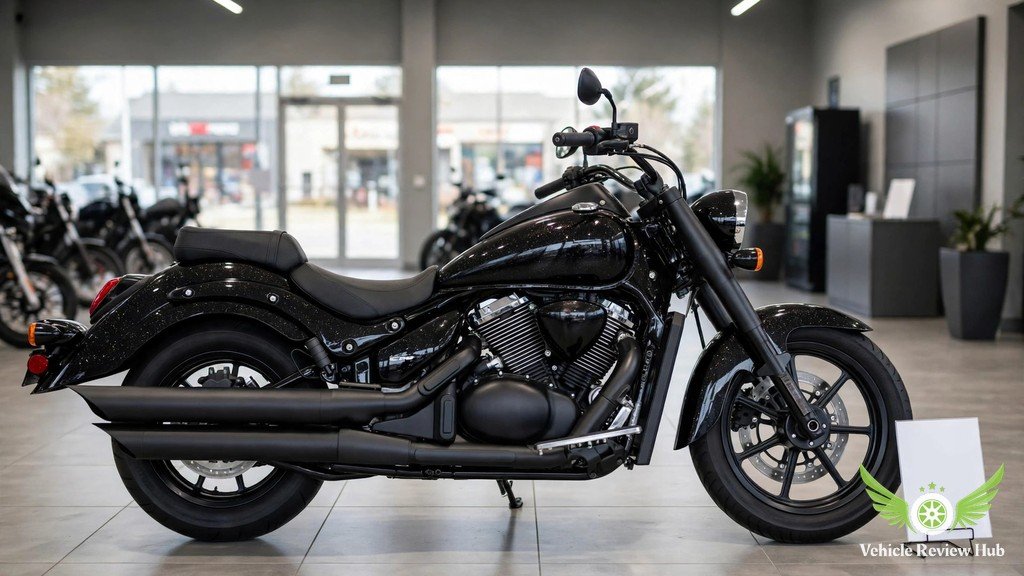
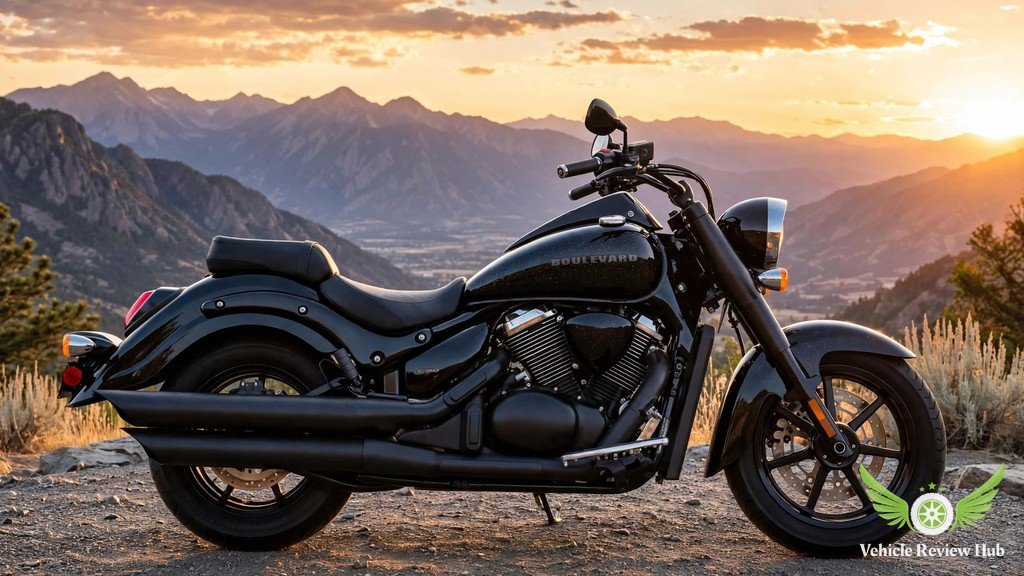
The C90’s design is a big, low, blacked-out cruiser with a 100.8-inch overall length and a stance that reads larger than its 1,462cc displacement suggests. The gen-2 bike is the one buyers picture: chrome-over-black engine and cases, buckhorn-style handlebars, a wide plush seat and B.O.S.S. blacked-out trim. It is a deliberately old-school package — five speeds, no sixth gear, no rider modes, no traction control — and this Suzuki Boulevard C90 review treats that simplicity as part of the appeal.

The 2013 Engine Is Not a Retuned M109R Unit
The confusion is understandable — both bikes are 54-degree V-twins from the same Boulevard family, from the same era — but the 2013 C90’s engine is not a retuned M109R unit. The M109R runs a completely different engine: a 1,783cc DOHC 54-degree V-twin, the VZR1800, with dual overhead cams and 240 mm of rear tyre behind it. The gen-2 C90’s engine is the M90’s (VZ1500) 1,462cc SOHC unit, with a single overhead cam, four valves per cylinder and a 200 mm rear tyre. Same 54-degree angle, different displacement — 321cc apart. Anything written about the M109R’s power, its second-gear stories or its clutch belongs to the 1,783cc bike, not to the C90. The C90 service schedule from the manual describes the same 1,462cc 54-degree configuration.
ABS Was Never Offered in Either Generation
No ABS was ever offered on any US C90 in either generation — not as standard equipment, not as an option, not on any trim year. The gen-1 bike ran dual front discs and a single rear disc without ABS, and the gen-2 bike runs a single 330 mm front disc and a 275 mm rear disc, both two-piston, also without ABS. That puts the C90 behind every one of its modern comparison rivals, all of which carry ABS as standard, and it is the single biggest safety gap in this Suzuki Boulevard C90 review. Buyers should also ignore the AI-generated pages that claim a “2008 ABS introduction” for the C90 — there was no 2008 ABS introduction, production stopped for 2010–2012, and there was no 2015 refresh.
Suzuki Boulevard C90 Riding Experience and Comfort
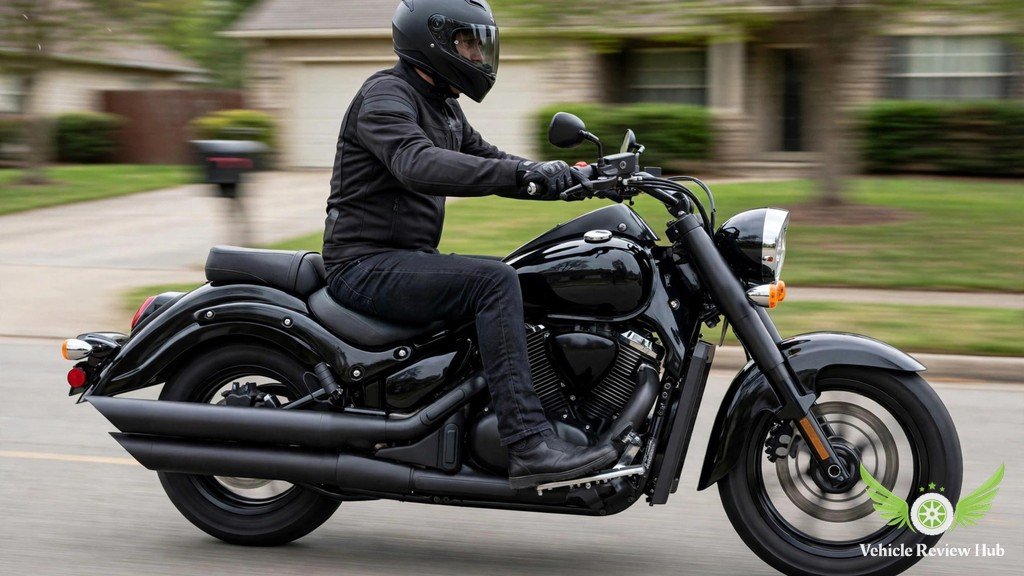
The C90 in this Suzuki Boulevard C90 review rides like its numbers suggest: big, low, relaxed and heavy. The 28.3-inch seat puts almost any rider flat-footed at a stop, the buckhorn bars and feet-forward pegs set a classic cruiser triangle, and the long-stroke V-twin pulls from barely above idle. It is not a quick bike — it is a torque bike that happens to weigh 800 pounds in touring trim.
Riding Position, Handling and Low-Speed Maneuverability
The riding position is the strongest card in this Suzuki Boulevard C90 review. Women Riders Now’s tester found it “well suited” on the 2013 C90T B.O.S.S., with shifting “smooth and power instantly available, even in fifth gear”, and the wide plush seat and low height make the bike approachable for shorter riders despite its weight. Rider Magazine’s month-long road test adds the honest counterweight: the 45 mm fork “does a decent job up front”, but the rear “soaks up small hits” and is “just plain bouncy over larger bumps” — the suspension, not the engine, is the bike’s weak point. Low-speed maneuverability is manageable because the seat is low, but this is an 800-pound motorcycle and it asks for respect at walking pace. The five-speed gearbox has a high fifth gear for highway cruising, and there is no sixth gear.
Gen 2 Gained Weight: C90T Curb Is 800 Pounds
The touring C90T’s curb weight is 800 pounds fully fueled, confirmed in Women Riders Now’s 2013 spec box and in Suzuki’s own figures. The touring kit has always added roughly 40 pounds: the gen-1 C90T ran 19 kg heavier and 292 mm longer than the gen-1 base bike. What the 800-pound number means in practice is simple: the C90T is a full-size touring cruiser, and its weight is the price of that size. The weight also explains the braking story: a single 330 mm front disc and a two-piston caliper, with no ABS, is a modest setup for a bike this heavy.
Suzuki Boulevard C90 Review: Pros, Cons and Verdict
The verdict in this Suzuki Boulevard C90 review depends on which generation the buyer is looking at and what they want the bike for. As a used buy, the gen-2 bike is one of the cheapest ways into a big, shaft-drive, full-size cruiser in America. As a new bike it no longer exists, and every rival in its class is now a $19,999-plus machine.
Main Advantages and Limitations of the Suzuki Boulevard C90
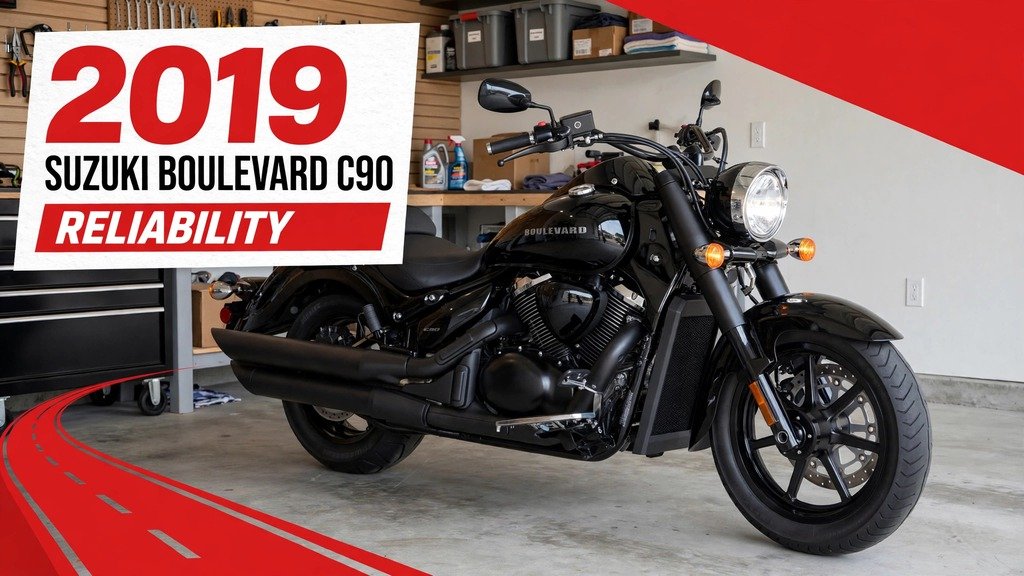
The advantages this Suzuki Boulevard C90 review found start with the drivetrain: a shaft final drive in both generations, a five-speed gearbox with a high fifth gear, and an engine that makes its torque barely above idle — the Suzuki brochure’s 131.4 Nm arrives at 2,600 rpm, and the M90 dyno put 82.7 lb-ft at 2,900 rpm. The limitations are equally plain: no ABS in either generation, a single front disc on an 800-pound touring bike, a rear suspension that Rider Magazine calls “just plain bouncy over larger bumps”, no sixth gear, and a claimed-power picture that genuinely conflicts across sources. There is also exactly one recall in published notices — the 2006 fuel-tank recall, campaign 06V-025 — and any used buyer should run the VIN through the NHTSA recalls lookup before buying. The C50 reliability guide covers the smaller Boulevard’s own recall story, a different campaign entirely.
Twelve-Month Limited Warranty as Last Sold
Suzuki’s own 2019 one-sheet words the warranty exactly: “Limited Warranty: The 2019 Boulevard C90 B.O.S.S. limited warranty covers a period of 12 months.” That is the same wording pattern as the M109R’s 12-month limited warranty — and deliberately not the “12 month unlimited mileage limited warranty” wording the C50, C50T, S40 and M50 carry. Some dealer brochures print the unlimited-mileage variant, but Suzuki’s own one-sheet does not. In practice the warranty is a historical note now: every C90 is out of warranty. A used C90 with receipts for oil changes, final-gear oil and the fuel-tank recall work is worth more than one without.
Suzuki Boulevard C90 Review: Frequently Asked Questions
Direct answers to the questions riders ask in this Suzuki Boulevard C90 review — both generations, the price, the gap years and the riding experience.
Is the Suzuki Boulevard C90 reliable?
The owner evidence in this Suzuki Boulevard C90 review points that way. MCN’s VL1500 Intruder owner reviews — the C90’s direct ancestor, the 1998–2002 Intruder — rate reliability 4.3 out of 5 from 11 owners, and the C90’s service needs are short: oil at every interval and the filter only at 600 and 11,000 miles. There is exactly one recall in published notices, the 2006 fuel-tank recall 06V-025. Stator and regulator failures are owner-documented on high-mileage bikes, labelled as owner reports rather than a Suzuki bulletin.
What is the difference between the gen-1 and gen-2 C90?
In this Suzuki Boulevard C90 review, the answer is almost everything except the displacement, the shaft drive and the name. Gen 1 (2005–2009) is an air/oil-cooled 45-degree V-twin with three valves per cylinder, hydraulic lifters, dual front discs, a 3.7-gallon tank and a 27.6-inch seat. Gen 2 (2013–2019) is a liquid-cooled 54-degree V-twin from the M90 with four valves per cylinder, shim-adjusted valves, a single 330 mm front disc, a 4.8-gallon tank and a 28.3-inch seat.
How much does a 2019 Suzuki Boulevard C90 cost?
The last-new prices in this Suzuki Boulevard C90 review, from motorcycle.com’s spec database: $12,549 for the 2019 C90 B.O.S.S. plus a $380 destination charge, $12,929 in total; $13,049 for the 2019 C90T plus $380, $13,429 in total. Suzuki’s own 2019 C90 page could not be reached, so these are spec-database figures, not Suzuki-page figures.
Was there a 2010, 2011 or 2012 Suzuki Boulevard C90?
No. Suzuki discontinued the C90 in the USA after 2009, citing emissions control, and no C90 was sold new in 2010, 2011 or 2012. It returned for 2013 as the C90 B.O.S.S. and C90T. Any bike advertised as a 2010–2012 C90 has its year listed wrong.
Does the Suzuki Boulevard C90 have ABS?
No. ABS was never offered on any US C90 in either generation — not standard, not optional, not on any trim year. The gen-2 bike’s single 330 mm front disc and 275 mm rear disc, both two-piston, are the whole braking system.
What is the difference between the C90 and the C90T?
The touring kit, and $500. The C90T adds a windshield, saddlebags, a backrest and studded seats and lists $500 above the base bike. The B.O.S.S. is a colouring difference only: as Women Riders Now puts it, “the only difference between the Boulevard C90T and Boulevard C90T B.O.S.S. is the coloring”.
What does B.O.S.S. stand for?
Blacked Out Special Suzuki. The B.O.S.S. is the blacked-out version of the C90 or C90T.
How much power does the Suzuki Boulevard C90 make?
It depends which Suzuki claim you read, and this Suzuki Boulevard C90 review names the conflict rather than picking one. Suzuki’s 2013 brochure prints 79.9 hp at 4,800 rpm and 131.4 Nm at 2,600 rpm; the spec databases print 67 hp at 4,800 rpm and 114 Nm at 2,300 rpm for the same engine; Women Riders Now reports Suzuki’s claim as 77.8 hp and 96.6 lb-ft; Rider Magazine reports it as 81.8 hp and 93.3 lb-ft. The closest measured figure is the same engine in the M90: 69.6 hp at 5,100 rpm and 82.7 lb-ft at 2,900 rpm on Motorcycle.com’s 2009 dyno. The Suzuki Boulevard C90 performance guide covers the claimed-power conflict and the dyno figures in full.
How heavy is the Suzuki Boulevard C90?
The touring C90T’s curb weight is 800 pounds fully fueled. The base gen-2 bike’s curb weight is listed at 758 lb in one spec database only and could not be confirmed from Suzuki’s own spec table, so it is not printed here as a verified figure. The touring kit has always added roughly 40 pounds over the base bike.
What is the seat height of the Suzuki Boulevard C90?
Gen 2: 28.3 inches (720 mm). Gen 1: 27.6 inches (700 mm). Both are low for a full-size cruiser, and the low seat is what makes an 800-pound bike manageable at a stop — though Women Riders Now notes it still takes muscle to lift the fully fueled C90T off its sidestand.
Is the Suzuki Boulevard C90 a good beginner bike?
No — and this Suzuki Boulevard C90 review is blunt about it. At 800 pounds in touring trim, with 1,462cc, no ABS and a single front disc, the C90 is a big, heavy full-size cruiser — the wrong first bike for a new rider. A beginner is better served by a smaller Boulevard: the Boulevard S40 review covers the 652cc single-cylinder bike that weighs 381 pounds.
Should I buy a used C90 or a new rival?
This Suzuki Boulevard C90 review says: buy the used C90 if the budget is under $7,000, you do your own maintenance and you value shaft drive and a low seat. The new rivals in its class are all $19,999-plus machines — the Kawasaki Vulcan 1700 Vaquero, the Harley-Davidson Heritage Classic and the Indian Super Chief Limited — and all three carry ABS the C90 never had.