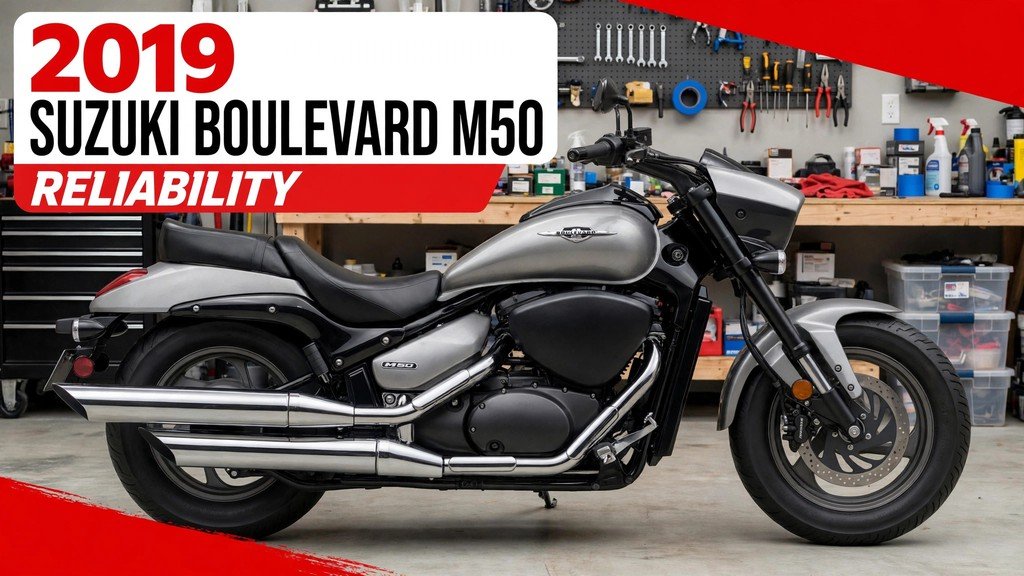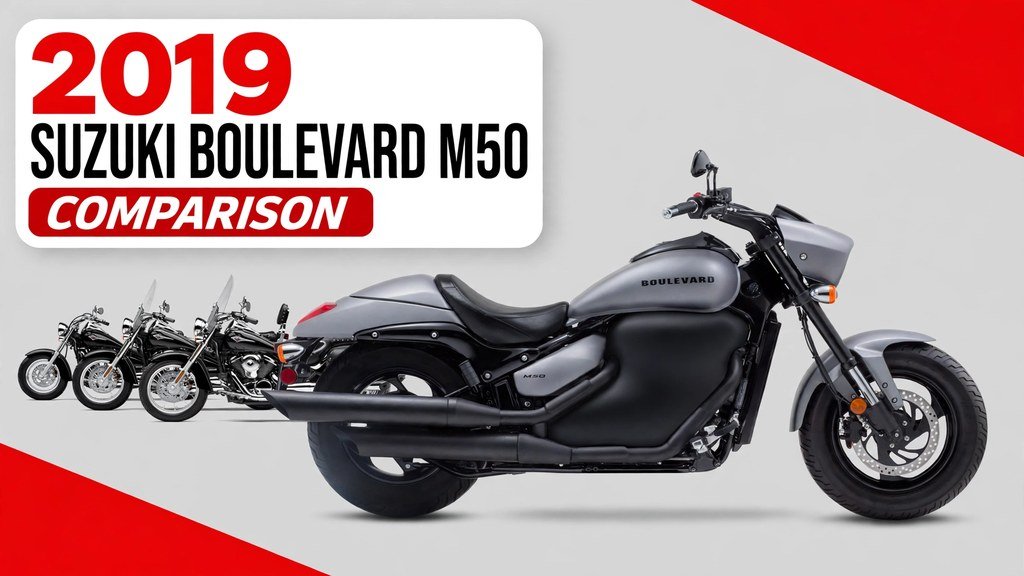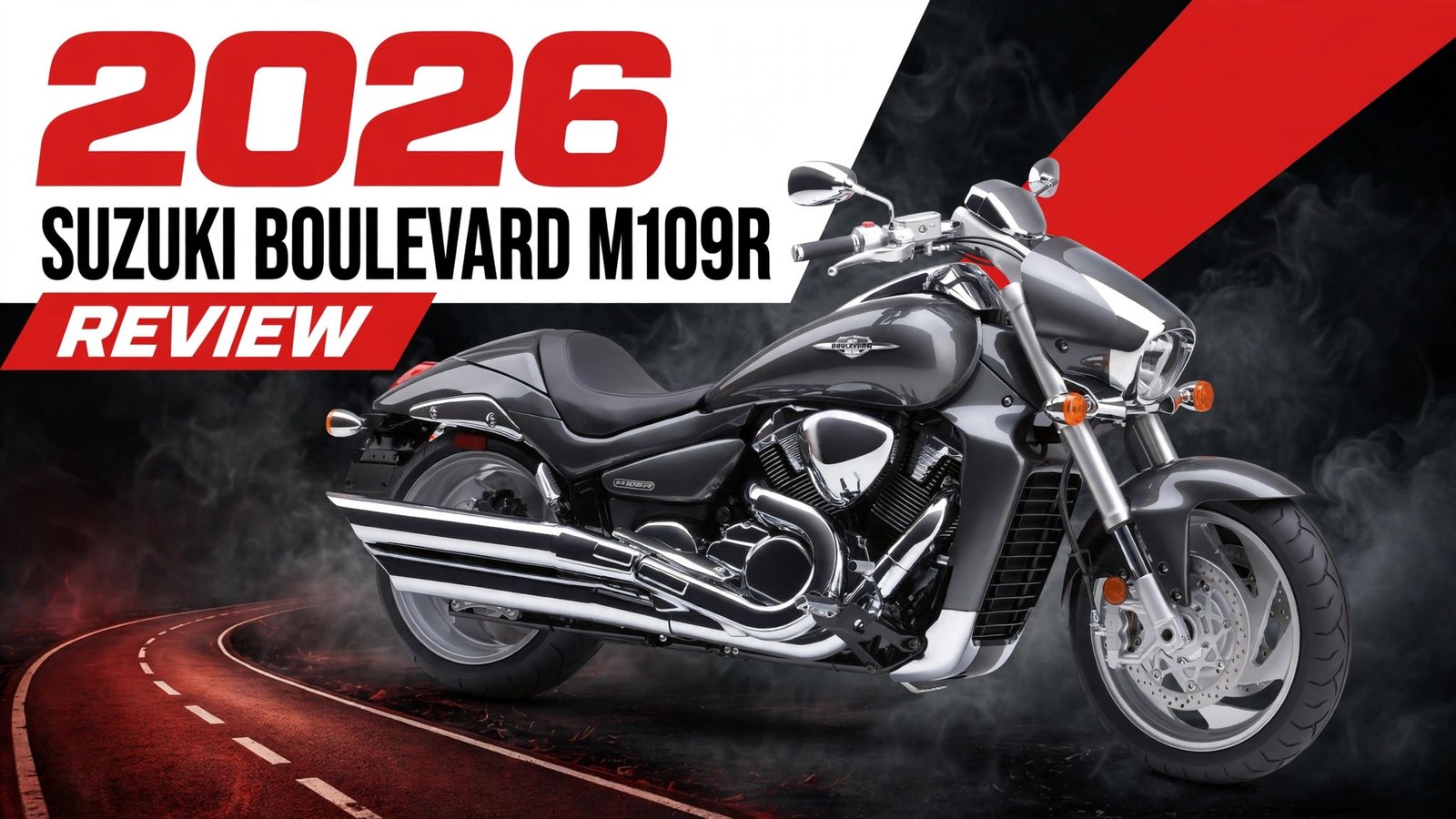
The short answer on this Suzuki Boulevard M109R review is that Suzuki’s flagship power cruiser is still here in 2025 — a 1,783cc V-twin with a 240mm rear tire, shaft drive and no ABS, priced at $15,799 plus $600 destination — and it is mechanically unchanged since 2006. That is both the appeal and the compromise: huge, honest muscle for the money, with a twenty-year-old dashboard and no electronic aids. This Suzuki Boulevard M109R review covers the prices, the engine, the brake-description contradiction, the riding experience and the ownership costs.
Suzuki Boulevard M109R Overview and Model-Year Updates
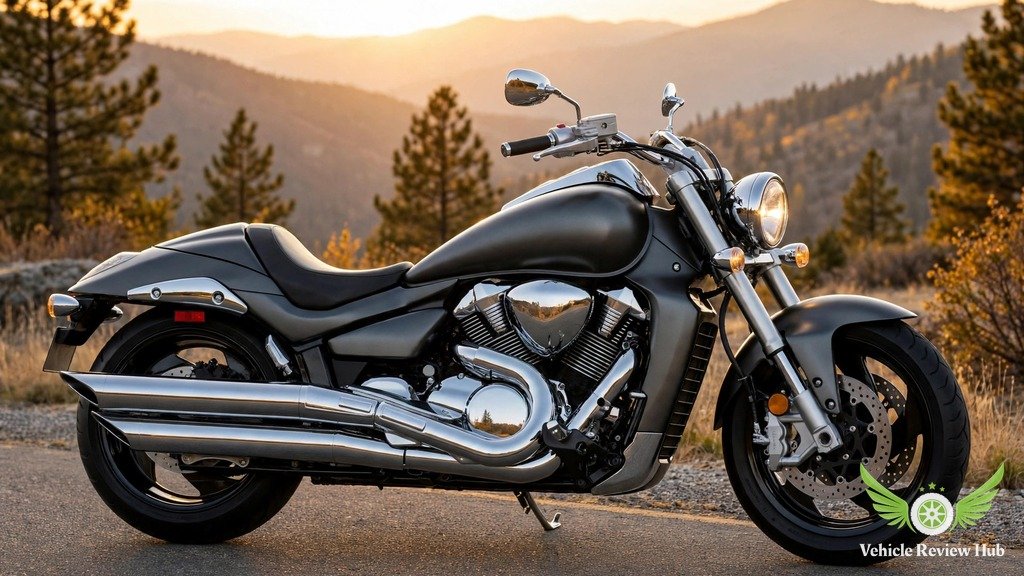
The M109R has been Suzuki’s flagship cruiser since 2006, and the 2025 bike is the same machine that launched two decades ago — a big-bore V-twin power cruiser built around a 240mm rear tire and a shaft drive. Suzuki has changed the trim and the colours over the years, not the engine or the chassis. The M109R sits at the top of Suzuki’s Boulevard line, above the Boulevard C50T review‘s mid-size touring cruiser. This section of the Suzuki Boulevard M109R review sets out what is new, what is not, and where the bike sits in 2025.
The video below is BikeReview’s 2020 Black Edition review ride — the M109R platform, not a 2025-specific review. The bike is mechanically unchanged since 2006, so the review still applies, but do not take it as a 2025 test.
Latest US Year Is 2025: No 2026 Exists
The latest US model year is 2025 — there is no 2026 M109R. Suzuki’s 2025 page is live with the full spec table and the $15,799 price, while the 2026 URL returns a 404. No discontinuation announcement has been found, so this Suzuki Boulevard M109R review says only what is verifiable: 2025 is the latest year on Suzuki’s US site, and no 2026 model exists. That matters for buyers because a 2025 is the newest M109R there is, and dealer stock is finite — once the 2025s are gone, the only new option is whatever remains on showroom floors.
B.O.S.S. Years, Then Chrome Returned for 2024-25
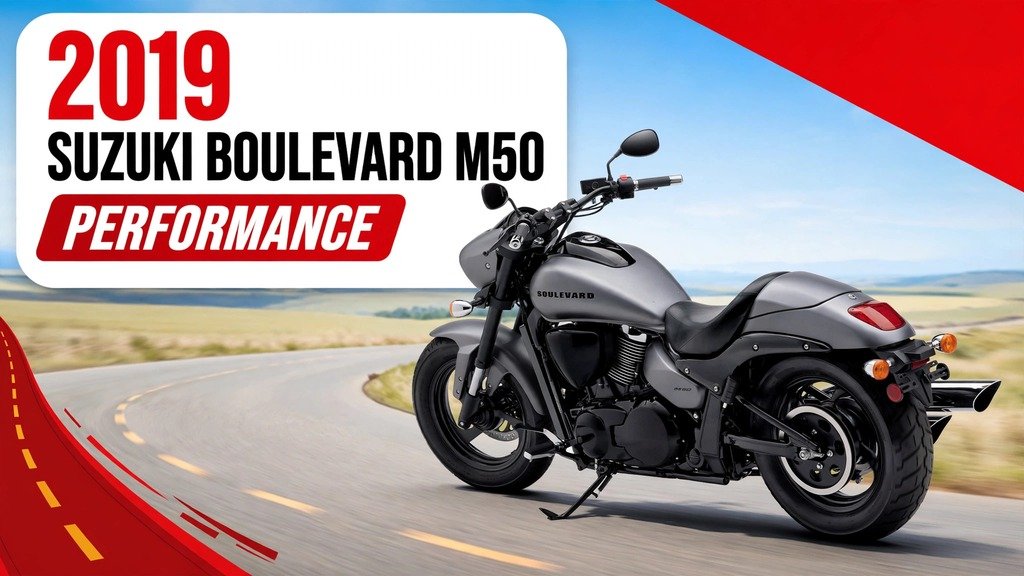
B.O.S.S. stands for Blacked Out Special Suzuki, and it is a cosmetic trim only — blacked-out wheels, handlebars, mufflers, fork tubes, engine covers and brake calipers, with the engine, transmission and suspension identical to the chrome standard bike. The M109R B.O.S.S. joined the lineup as a 2014 model, announced in May 2013, at $14,999 — $700 over the standard bike’s $14,299. The B.O.S.S. family itself started with the 2013 C90T B.O.S.S. Chrome returned alongside the blacked-out bike for 2024–25, so a buyer in 2025 chooses between the chrome standard and the blacked-out look, not between two different motorcycles. Never pay a premium for a B.O.S.S. on the belief that it is faster — it is not, and this Suzuki Boulevard M109R review says so plainly because the trim is cosmetic only. The Boulevard C50 review covers the smaller end of the same Boulevard line.
Suzuki Boulevard M109R Engine and Specifications
The engine is the whole point of this bike. A 1,783cc liquid-cooled 54-degree V-twin with the biggest pistons of any gasoline-burning production motor, driving a shaft through a five-speed gearbox. This section of the Suzuki Boulevard M109R review sets out the numbers — Suzuki’s claims, the only instrumented dyno run, and the tire that defines the bike’s look.
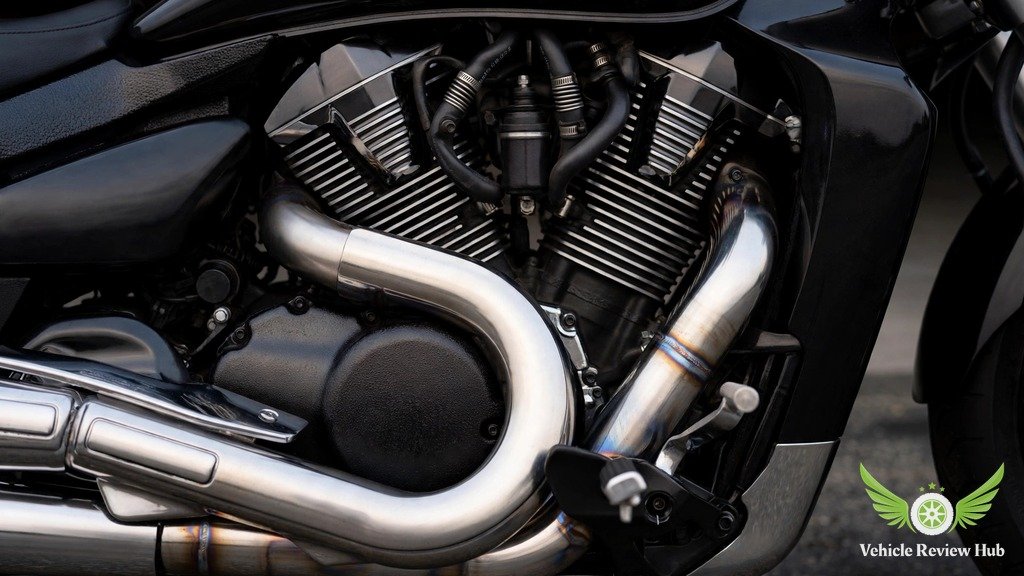
1783cc Liquid-Cooled 54-Degree V-Twin at 112.0 by 90.5mm
The engine displaces 1,783cc — 108.8 cubic inches — from a liquid-cooled, DOHC, 54-degree V-twin with four valves per cylinder, a 112.0 × 90.5 mm bore and stroke, and 10.5:1 compression. Fuel comes through dual 56mm throttle bodies with Suzuki Dual Throttle Valve injection, there are two spark plugs per cylinder, and the forged-aluminium pistons measure 112mm across — Motorcycle.com called them “the biggest pistons of any gasoline-burning motor anywhere.” Suzuki’s global claim is 123 hp at 6,200 rpm and 118 lb-ft at 3,200 rpm. The US launch claim in 2006 was 127 hp, and some Suzuki market specs print 125 hp — the 123 hp figure is the headline claim to use. TopSpeed prints 128 hp, but that is TopSpeed’s figure, not Suzuki’s, and this Suzuki Boulevard M109R review does not attribute it to Suzuki. The only instrumented dyno run is Motorcycle.com’s 2007 Godzilla shootout, which measured 106.4 hp and 101.3 lb-ft at the rear wheel on a Dynojet — the number to trust for what the bike actually puts down.
The 240 Rear Tire: Widest Ever on a Suzuki
The rear tire is a 240/40R18 — the widest rear tire ever fitted to a Suzuki motorcycle — on 18-inch alloy wheels at both ends, with a 130/70R18 up front. Suzuki’s own marketing and the period reviews both make the same point: the fat rear tire is the M109R’s signature, and it is what makes the bike look like nothing else in the Boulevard line. It is also what the bike eats: owners report 5,000–7,000 miles per rear tire, an owner-forum range, because 106 horsepower at the wheel and a 240-section tire wear quickly together. The tire pressures are 36 psi front and 42 psi rear, cold. A buyer budgeting for this Suzuki Boulevard M109R review’s ownership costs should price rear tires first — they are the single most frequent wear item on the bike.
| Item | Specification |
|---|---|
| Engine | 1,783cc liquid-cooled DOHC 54° V-twin |
| Bore × stroke | 112.0 × 90.5 mm |
| Compression | 10.5:1 |
| Transmission | 5-speed, hydraulic clutch |
| Final drive | Shaft |
| Front tire | 130/70R18 (36 psi cold) |
| Rear tire | 240/40R18 (42 psi cold) |
| Seat height | 27.8 in (705 mm) |
| Curb weight | 764 lb (347 kg) |
| Wheelbase | 67.3 in (1,710 mm) |
| Fuel tank | 5.2 gal (19.5 L) |
| Warranty | 12-month limited |
Suzuki Boulevard M109R Price and Market Availability
Price is where the M109R makes its case. At $15,799 plus $600 destination, it is one of the cheapest ways to buy big power in the cruiser segment — thousands less than its American and British rivals. This section of the Suzuki Boulevard M109R review sets out the current price, the history, and the dealer discounts already appearing on 2025 bikes.
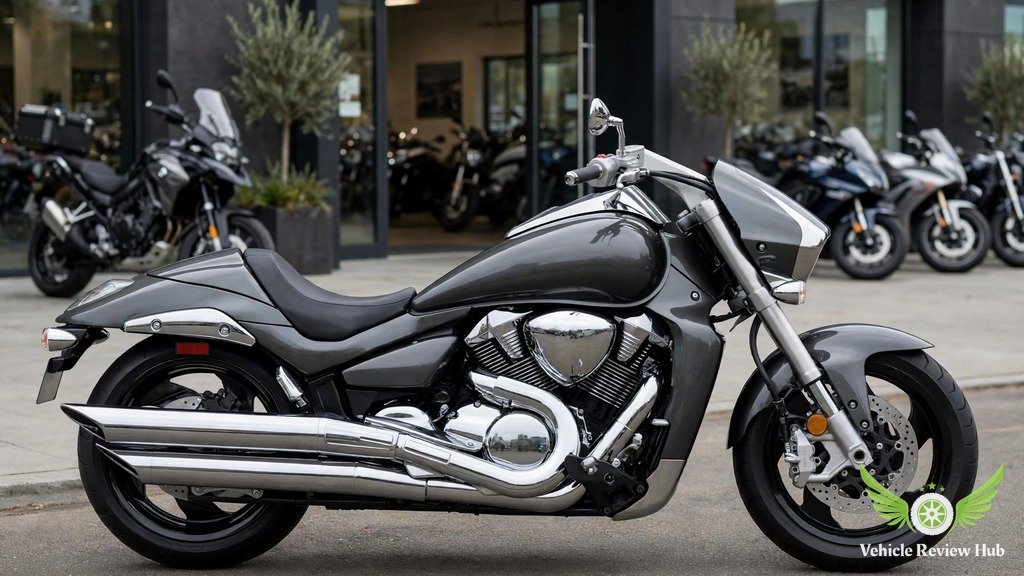
Suzuki Boulevard M109R Price in the USA: $15,799 Plus $600
The 2025 Suzuki Boulevard M109R costs $15,799 MSRP plus a $600 destination charge, for $16,399 before tax and title, per Suzuki USA’s 2025 M109R page. The 2024 bike was $15,699 plus $460 destination and a $100 freight surcharge, for $16,259 — so the 2025 is $100 more on MSRP and $140 more on destination, with no freight surcharge listed for 2025. Do not print a 2025 freight surcharge: none is listed on the 2025 page. The price history shows how slowly this bike has moved: $12,399 in 2006, $12,599 in 2007 ($12,999 for the Special Edition), $14,299 in 2014, and $15,799 in 2025 — roughly $3,400 over nineteen years. This Suzuki Boulevard M109R review uses Suzuki’s own pages for every price, not aggregator listings.
| Year | Destination / surcharge | Total | |
|---|---|---|---|
| 2006 | $12,399 | — | — |
| 2007 | $12,599 ($12,999 SE) | — | — |
| 2014 | $14,299 (B.O.S.S. $14,999) | — | — |
| 2015 B.O.S.S. | $14,999 | — | — |
| 2022 B.O.S.S. | $15,299 | — | — |
| 2024 | $15,699 | + $460 + $100 surcharge | $16,259 |
| 2025 | $15,799 | + $600 | $16,399 |
New 2025s Already Discounted at Some Dealers
New 2025s are already discounted at some dealers. HotCars, in an August 2026 update, reports dealers selling new 2025 M109Rs for around $12,000 — roughly $3,800 under MSRP before destination. Treat that as dealer-reported, not an MSRP: it is what some dealers are asking, not what Suzuki lists. The discount makes sense when the bike is read plainly — a twenty-year-old platform with no ABS, no ride modes and an old-school dash, sold against newer rivals. For a buyer, the discount is the point: a new M109R at dealer-discount prices is the cheapest big-power cruiser on a showroom floor, and this Suzuki Boulevard M109R review rates that as the bike’s strongest buying argument. No 2023 MSRP was verified, so none is printed here. For a smaller, cheaper Boulevard, the Boulevard C50 comparison sets the 805cc bike against its own rivals.
Suzuki Boulevard M109R Design, Features and Technology
The M109R looks like a muscle bike because it is one: a long, low power cruiser with a headlight cowl, inverted forks and a 240 rear tire. The design has barely changed since 2006, and the equipment list is short — which is the point. This section of the Suzuki Boulevard M109R review covers the brakes, the missing ABS, and the instruments.

Suzuki’s Own Page Contradicts Its Brake Description
Suzuki’s own page contradicts its brake description, and this Suzuki Boulevard M109R review names both sides rather than repeating one. The marketing copy says “Like the brakes from a GSX-R1000R, the M109R’s radial-mounted, dual front brakes deliver sure stopping performance.” The features text on the same page says “Twin front fully floating disc-brakes with dual-piston calipers and a single-disc rear brake with a single dual-piston caliper.” The actual hardware, from period tests and Suzuki’s own 2007 features, is radial-mounted four-piston Tokico calipers on dual 310mm front discs, with a 275mm rear disc and a dual-piston caliper. TopSpeed independently confirms the radial monobloc calipers. So the marketing copy is right about the radial mounting and the features text is wrong about the piston count — or, more precisely, the features text describes a different caliper than the one fitted. Either way, the brakes are strong, modern hardware: 46mm inverted forks, dual 310mm discs and radial four-piston calipers.
No ABS Was Ever Offered on the US M109R
No ABS was ever offered on the US M109R, in any model year. Suzuki USA’s spec table lists no ABS, and BikeReview’s 2020 review states it plainly: “no ABS (I know!), no ride modes, and a really old school dash.” Several AI-generated buying guides claim ABS was standard or optional after 2012 — that is wrong, and this Suzuki Boulevard M109R review says so directly. A buyer coming from a modern bike should know what that means in practice: the M109R stops with dual 310mm front discs and a 275mm rear disc, and no electronic safety net. The brakes themselves are strong, but there is no anti-lock backup on a wet road. For some riders that is part of the bike’s old-school character; for others it is the reason to buy a rival. Either way, it is a fact to know before buying, not after.
Suzuki Boulevard M109R Riding Experience and Comfort
Riding the M109R is about the engine first and everything else second. The 1,783cc V-twin pulls hard from low revs, the shaft drive adds its own character, and the 764 lb weight disappears once the bike is moving — until the next slow turn. This section of the Suzuki Boulevard M109R review covers the riding position, the handling, and what 764 pounds feels like at parking-lot speed.
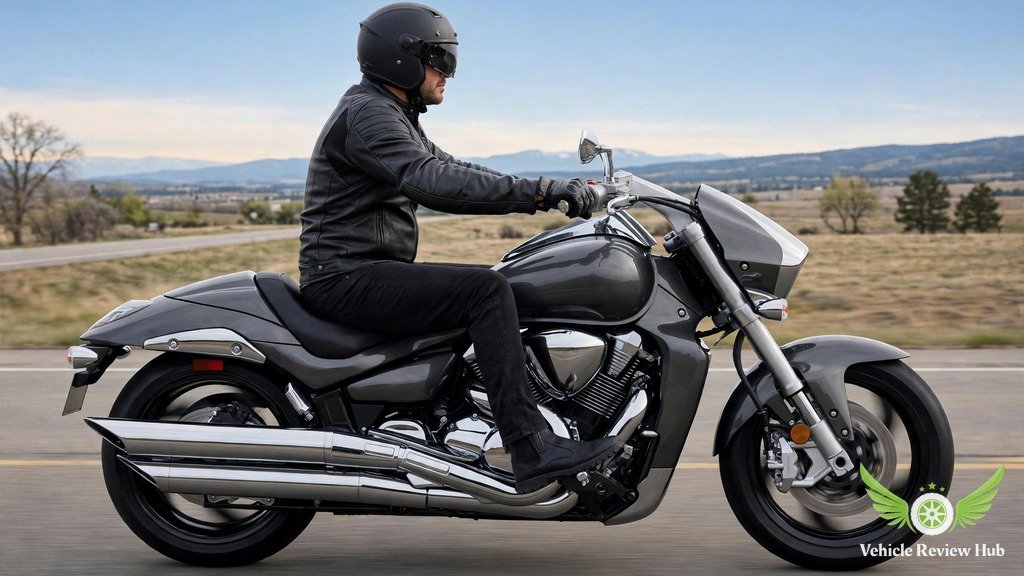
Riding Position, Handling and Low-Speed Maneuverability
The riding position is feet-forward and low, with a 27.8-inch seat and wide handlebars. Motorcycle.com’s Godzilla testers praised the five-speed gearbox and hydraulic clutch for working “with creamy Suzuki precision,” and noted the pronounced shaft-hopping and drivetrain lash from the back end — “to be expected from a bike with this kind of power and a shaft drive.” The M109R was the bike the Godzilla testers said they would buy, and they called it “a real monster” with a “remarkably linear horsepower curve.” At low speed the weight and the fat rear tire demand respect: the bike is 764 lb with a 67.3-inch wheelbase, and tight turns need deliberate steering. On the open road it is a relaxed, stable cruiser with a big engine that rarely needs more than a twist of the wrist. This Suzuki Boulevard M109R review finds the riding experience is the bike’s best argument — the engine makes the compromises easy to live with.
Seat Height 27.8 Inches, Weight 764 Pounds
The seat height is 27.8 inches and the curb weight is 764 pounds, per Suzuki USA’s 2025 spec table — 705 mm and 347 kg. Do not confuse these with the smaller Boulevard figures: the C50’s seat is 27.6 inches, only 0.2 inches lower, but the M109R is 120–153 lb heavier than the C50 and C50T, and that gap is real. The low seat flatters shorter riders, but the weight is what a buyer feels at a standstill and in a parking lot. The 5.2-gallon tank gives roughly 189 miles of range at Rider’s tested 36.4 mpg. The wheelbase is 67.3 inches and ground clearance is 5.1 inches — long and low, which is why the bike tracks straight and leans slowly. For a rider who fits it, the M109R is comfortable for long days; for a rider who does not, the weight is the first thing to check on a test ride, and this Suzuki Boulevard M109R review recommends one before buying.
Suzuki Boulevard M109R Review: Pros, Cons and Verdict
Twenty years after launch, the M109R is still Suzuki’s flagship cruiser — and still the cheapest way to buy this much engine in the cruiser segment. This final section of the Suzuki Boulevard M109R review weighs what the bike does well against what it does not, and sets out the warranty in Suzuki’s exact words.
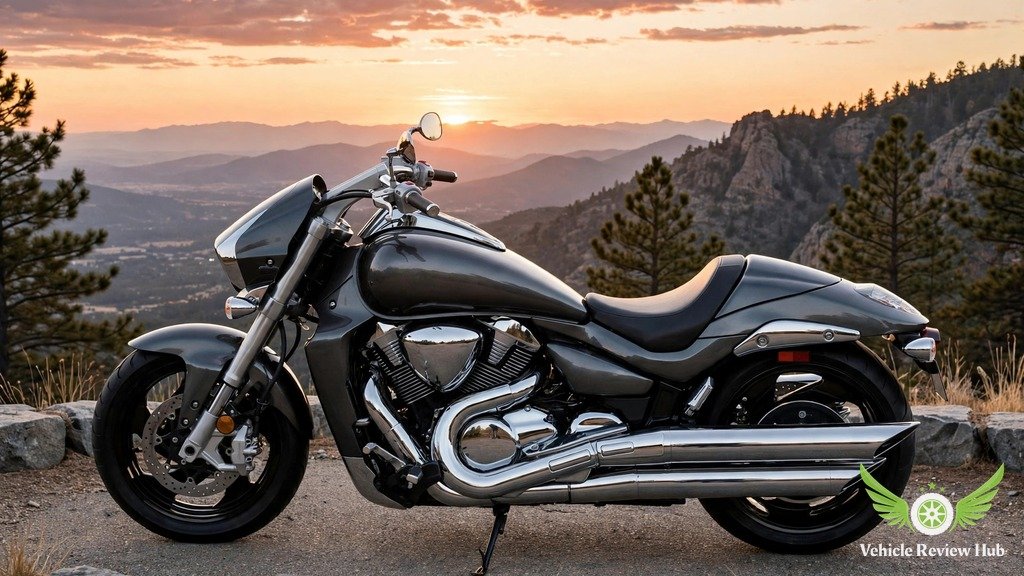
Main Advantages and Limitations of the Suzuki Boulevard M109R
The advantages start with the engine: 123 hp claimed, 106.4 hp at the wheel, and a torque curve the Godzilla testers called remarkably linear. The price is the second advantage — $15,799 plus $600, with dealers already discounting 2025s toward $12,000. The shaft drive needs almost no maintenance, the 240 rear tire gives the bike its look, and the platform’s twenty-year run means parts and knowledge are plentiful. The limitations are the mirror image: no ABS in any year, no ride modes, no traction control, no cruise control and no TFT — just an analogue speedometer, an LCD odometer, a fuel gauge, a clock and a handlebar-mounted digital tachometer. The bike is heavy at 764 lb, the rear tire wears fast at 5,000–7,000 miles, and the owner-reported second-gear pop-out and clutch shudder are real, if not recognised by Suzuki. This Suzuki Boulevard M109R review rates it as a bike for a rider who wants big, simple power and accepts old-school equipment — not for a rider who wants modern electronics.
Twelve-Month Limited Warranty in the USA
The warranty is a twelve-month limited warranty in the USA — Suzuki USA’s exact wording on the 2025 M109R page. That is not the same as the smaller Boulevards’ twelve-month unlimited-mileage warranty, and this Suzuki Boulevard M109R review prints Suzuki’s exact M109R wording rather than copying the cruiser-line phrase across. Twelve months is short by modern standards, and it matters because the bike’s owner-reported issues — second-gear pop-out, clutch shudder — are not recognised by Suzuki as warranty problems in any case. A buyer should read the warranty as what it is: a year of cover on a mechanically simple, twenty-year-old platform, after which the owner’s maintenance habits are the warranty. Keep the service records — oil at 600, 4,000, 7,500, 11,000 and 14,500 miles, the filter only at 600 and 11,000, and the valve inspection only at 14,500, per the full service manual chart. The C50T reliability guide makes the same point for the smaller Boulevard: records are what a buyer pays for.
Suzuki Boulevard M109R Review: Frequently Asked Questions
Direct answers to the questions riders ask in this Suzuki Boulevard M109R review — prices, power, ABS, top speed, fuel economy and what to check before buying.
Is the Suzuki Boulevard M109R still made in 2025?
Yes. The 2025 model year is the latest on Suzuki’s US site, and there is no 2026 M109R — the 2026 URL returns a 404. No discontinuation announcement has been found, so this Suzuki Boulevard M109R review says only that 2025 is the latest year. A buyer wanting a new one should buy a 2025 while dealer stock lasts.
How much does a 2025 Suzuki Boulevard M109R cost?
$15,799 MSRP plus a $600 destination charge, for $16,399 before tax and title. Some dealers are already discounting new 2025s toward $12,000, per HotCars — dealer-reported, not an MSRP. The 2024 bike was $15,699 plus $460 destination and a $100 freight surcharge.
What engine does the Suzuki Boulevard M109R have?
A 1,783cc liquid-cooled, DOHC, 54-degree V-twin with four valves per cylinder, a 112.0 × 90.5 mm bore and stroke, and 10.5:1 compression. It drives a five-speed gearbox and a shaft final drive — never a chain, never a belt. The rear tire is a 240/40R18, the widest ever fitted to a Suzuki — and the signature detail of the bike in this Suzuki Boulevard M109R review.
How much horsepower does the Suzuki Boulevard M109R make?
Suzuki’s global claim is 123 hp at 6,200 rpm and 118 lb-ft at 3,200 rpm; the US launch claim in 2006 was 127 hp at the crank. The only instrumented dyno run, Motorcycle.com’s 2007 Godzilla shootout, measured 106.4 hp and 101.3 lb-ft at the rear wheel. TopSpeed prints 128 hp, but that is TopSpeed’s figure, not Suzuki’s.
Does the Suzuki Boulevard M109R have ABS?
No. No ABS was ever offered on the US M109R, in any model year. The bike stops with dual 310mm front discs and a 275mm rear disc, with no anti-lock backup. Any guide claiming ABS was standard or optional after 2012 is wrong.
What is the top speed of the Suzuki Boulevard M109R?
No instrumented or GPS top-speed test was ever published, so this Suzuki Boulevard M109R review prints no tested top speed. HotCars estimates 128 mph — that is an estimate, not a test, and it must be read as one. The only instrumented speed figures are the 2006 quarter mile: 12.08 seconds at 110.53 mph, with 0–60 mph in 3.89 seconds.
What is the fuel economy of the Suzuki Boulevard M109R?
Rider Magazine’s June 2006 road test averaged 36.4 mpg — the only named, tested MPG figure this Suzuki Boulevard M109R review could find. With the 5.2-gallon tank that implies roughly 189 miles of range. Suzuki USA publishes no MPG figure at all.
What is the difference between the M109R and the M109R B.O.S.S.?
The B.O.S.S. — Blacked Out Special Suzuki — is a cosmetic trim only: blacked-out wheels, handlebars, mufflers, fork tubes, engine covers and brake calipers. The engine, transmission and suspension are identical to the chrome standard bike. The M109R B.O.S.S. joined as a 2014 model at $14,999, $700 over the standard bike.
How heavy is the Suzuki Boulevard M109R?
764 lb curb weight, with a 27.8-inch seat height and a 67.3-inch wheelbase, per Suzuki USA’s 2025 spec table — the source this Suzuki Boulevard M109R review uses for every dimension. It is 120–153 lb heavier than the smaller Boulevard C50 and C50T, though the seat is only 0.2 inches taller than the C50’s 27.6 inches.
What are the common problems with the Suzuki Boulevard M109R?
Owner-reported second-gear pop-out — the bike slips out of second gear under acceleration, with a $3,000–$4,000 repair and no recall, and Suzuki does not recognise it. Clutch shudder is widely reported too; Suzuki’s cure is drilling more oil ways in the clutch basket, around $500, and the part was revised from a flat washer to a wavy washer. Rear tires wear fast at 5,000–7,000 miles, and radiator hose leaks are reported behind the left engine case.
Does the Suzuki Boulevard M109R have any recalls?
Exactly two in the published notices. Campaign 07V-148 covers 2006–07 bikes for a fuel delivery pipe defect that could leak fuel, with a DO NOT OPERATE warning in Suzuki’s letter — the dealer replaces the pipe assembly free in about an hour. Campaign 15E-053 is an equipment recall covering accessory backrest mounting hardware on 2006–15 bikes only; the bike itself was not recalled for it. Check any used bike by VIN on the NHTSA recalls page.
How often does the Suzuki Boulevard M109R need an oil change?
Engine oil is replaced at 600, 4,000, 7,500, 11,000 and 14,500 miles, per the manual chart this Suzuki Boulevard M109R review follows. The oil filter is replaced ONLY at 600 and 11,000 miles — not with every oil change. Valve clearances are inspected only at 14,500 miles, spark plugs are replaced at 7,500 and 14,500 miles, and final-gear oil is replaced once at 600 miles and inspected after that.