The short answer first: the Suzuki Boulevard C90T comparison ends with the C90T winning on price and losing on age. The last new C90T cost $13,049 plus $380 in 2019, and the used market commonly lists the bike under $7,000. But the C90T is also the only bike here you cannot buy new, and its rivals all bring things it never had: ABS, cruise control, a sixth gear and a warranty twice as long. This Suzuki Boulevard C90T comparison puts the C90T against the Kawasaki Vulcan 1700 Nomad, the Kawasaki Vulcan 1700 Vaquero ABS and the Harley-Davidson Heritage Classic, on price, kit, specs and value in the USA.
Suzuki Boulevard C90T Overview and Its Closest Rivals
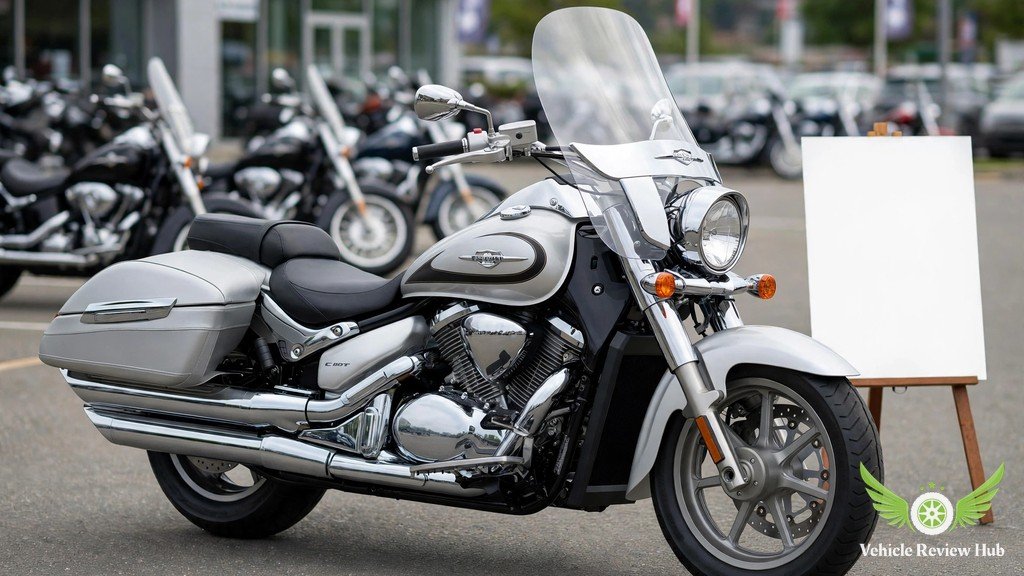
The C90T is the C90 with the factory touring kit fitted as standard — the same motorcycle, plus a windscreen and saddlebags. Its comparison record is the C90’s record with luggage on it. The Suzuki Boulevard C90 comparison covers the base bike against the same rivals, and the Suzuki Boulevard C90T review covers the bike itself in full.

Why These Three Rivals: Factory-Dressed Big Cruisers
These three rivals were picked because they are factory-dressed big cruisers, not because they are the closest in price. Each one left the factory with the touring kit already fitted — windscreen, hard saddlebags and passenger comfort — exactly the formula the C90T follows. The Nomad is the closest match of all: a Japanese big-bore V-twin tourer with a windscreen, lockable hard saddlebags, passenger floorboards, a luxury backrest and cruise control, built to the same brief as the C90T. The Vaquero is the Nomad’s faired successor, still sold new, and the Heritage Classic is the American answer — a big V-twin with a detachable windscreen and leather-look bags. This Suzuki Boulevard C90T comparison is a comparison of factory tourers.
How the Four Bikes Differ at a Glance
The C90T has the smallest engine here at 1,462cc and the lowest price by a wide margin. The Nomad is the biggest Japanese bike in the group at 1,700cc and the heaviest at 842 lb, but it brings ABS and cruise control. The Vaquero is the Nomad’s engine in a faired bagger body, still sold new. The Heritage Classic is the lightest of the three rivals at 719 lb and the most powerful at 98 hp — but it is also a Harley, with a different dealer network and resale market. The table below sets the four bikes in this Suzuki Boulevard C90T comparison side by side.
| Bike | Engine | Price | Weight | Seat height |
|---|---|---|---|---|
| Suzuki Boulevard C90T (2019) | 1,462cc V-twin | $13,049 + $380 | 800 lb curb | 28.3 in |
| Kawasaki Vulcan 1700 Nomad (2014) | 1,700cc V-twin | $17,499 MSRP only | 842 lb curb | 28.7 in |
| Kawasaki Vulcan 1700 Vaquero (2026) | 1,700cc V-twin | $19,999 + $840 | 844.5 lb | 28.7 in |
| Harley-Davidson Heritage Classic (2026) | 1,868cc V-twin | $19,999 + $895 | 719 lb running order | 26.3 in laden |
Suzuki Boulevard C90T vs Kawasaki Vulcan 1700 Nomad
The Nomad is the C90T’s true twin — a Japanese factory tourer built to the same brief and sold in the same years. The Nomad costs more, weighs more and displaces more, but it brings the two things the C90T never had: ABS and cruise control. This Suzuki Boulevard C90T comparison treats the Nomad as the benchmark the C90T was measured against when both were new.

The video below is a Nomad owner’s one-year verdict on his own bike — not a C90T comparison and not a head-to-head test. It shows what living with the Nomad is actually like after a year, which is the part of the comparison a spec sheet cannot show.
Engine, Specs and Performance Side by Side
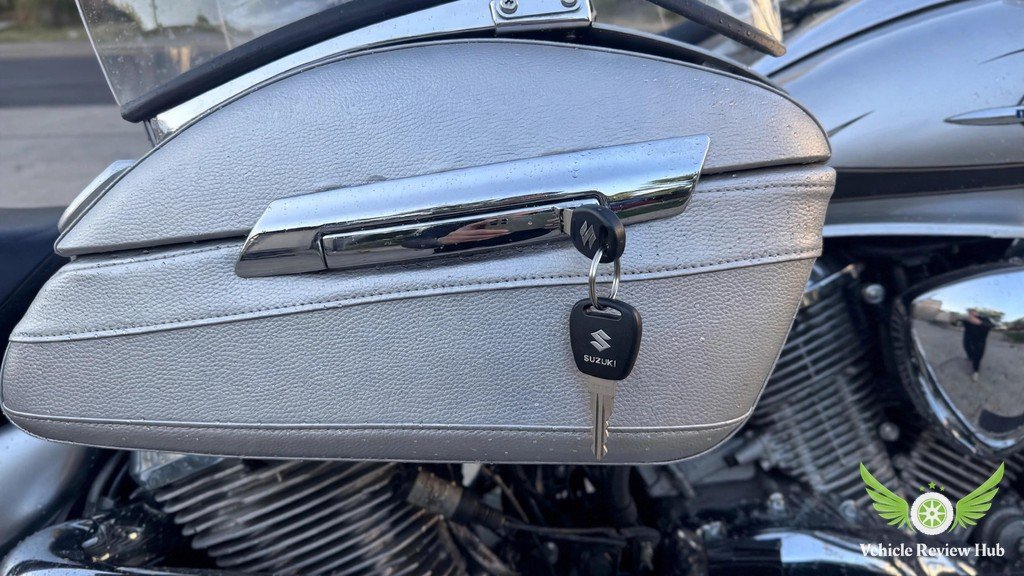
The Nomad’s engine is bigger in every dimension: a 1,700cc liquid-cooled SOHC 52-degree V-twin, 102 by 104 mm, 9.5:1 compression, DFI with dual 42 mm throttle bodies, against the C90T’s 1,462cc V-twin — air/oil-cooled on the first generation, liquid-cooled on the second. The Nomad makes 108 lb-ft of torque at 2,750 rpm according to Kawasaki, but the service manual prints 136 Nm, which is 100.3 lb-ft — the two figures disagree, so this Suzuki Boulevard C90T comparison names both and headlines Kawasaki’s 108 lb-ft. Kawasaki publishes no horsepower figure for the Nomad; the service manual prints 54 kW, or 73.4 PS, at 5,000 rpm. The C90T’s claimed power is a four-way split — the brochure says 79.9 hp, databases say 67 hp, Women Riders Now prints 77.8 hp and Rider Magazine prints 81.8 hp — and the only measured figure is the 2017 C90T dyno card of 68.7 hp and 85.3 lb-ft, with no rpm values and no plotted curve. On the road the Nomad’s advantage is torque and gearing: a six-speed gearbox with overdrive against the C90T’s five-speed, and a belt final drive against the C90T’s shaft. The Nomad also stops better — dual 300 mm front discs with K-ACT II ABS on both ends, against the C90T’s single 330 mm front disc and no ABS ever. The C90T’s fins are worth naming here because they are correct: Suzuki’s own one-sheet says the cylinders have “symmetrical cooling fins”, so the finned V-twin is a factory feature, not a flaw. The Suzuki Boulevard C90T performance guide covers the C90T’s power claims and the dyno result in full.
Price, Equipment and Which Suits Which Rider
The Nomad cost $17,499 as its 2014 MSRP — $4,450 more than the C90T’s $13,049 — and that is where the price comparison stops, because no destination charge was ever published for the Nomad. Motorcycle.com’s spec database has no destination field for the 2014 Nomad, and no dealer page printed one, so this Suzuki Boulevard C90T comparison prints the Nomad’s MSRP only and never invents a total. What the extra $4,450 bought was equipment: cruise control, K-ACT II ABS on both ends, a six-speed gearbox with overdrive, a 5.3-gallon tank and a 24-month limited warranty against the C90T’s 12 months. The Nomad also gave the passenger more — a luxury backrest and passenger floorboards, where the second-generation C90T gives the pillion only a grab sash. The C90T’s answer is weight and simplicity: 800 lb curb against the Nomad’s 842 lb, a shaft drive with almost nothing to service, and a service chart with very little in it. The Nomad suits the rider who wants the touring equipment and will pay for it; the C90T suits the rider who wants the cheapest way into a big factory tourer and does not mind doing without ABS, cruise control and a sixth gear.
Suzuki Boulevard C90T vs Kawasaki Vulcan 1700 Vaquero ABS
The Vaquero is the Nomad’s engine in a different body — a faired bagger with hard saddlebags and the same 1,700cc V-twin, but still sold new in 2026. That makes this the only pairing in this Suzuki Boulevard C90T comparison where one bike is still on a showroom floor. The Vaquero is also the closest thing to a buyable Nomad: same engine family, same 28.7-inch seat, same 5.3-gallon tank and the same K-ACT ABS — but with a fairing and Kawasaki’s dealer network behind it.
Engine, Specs and Performance Side by Side
The Vaquero’s engine is the Nomad’s 1,700cc liquid-cooled V-twin, and unlike the Nomad, Kawasaki does publish a power figure for it: 82 hp at 5,000 rpm (ISO 4106) and 107.6 lb-ft at 2,750 rpm. That puts the Vaquero ahead of the C90T on published power, but the gap is smaller than the displacement suggests, because the Vaquero carries more weight: 844.5 lb against the C90T’s 800 lb curb. The Vaquero’s six-speed gearbox and belt final drive sit against the C90T’s five-speed and shaft. The braking gap is the same as the Nomad’s: the Vaquero has K-ACT ABS and the C90T has no ABS in either generation — as Ultimate Motorcycling’s reviewer put it, “ABS is provided by judicious use of your right hand and foot.” The Suzuki Boulevard C90 reliability guide covers the shared service record behind the C90T’s numbers, and the Suzuki Boulevard C90T reliability guide covers the C90T’s own maintenance chart.
Price, Equipment and Which Suits Which Rider
The Vaquero costs $19,999 plus $840 — $20,839 in total — against the C90T’s $13,049 plus $380, or $13,429. The gap is $6,950 on MSRP and $7,410 with destination, and that gap buys a new bike with a warranty, a fairing, ABS and a sixth gear. Kawasaki’s own 2026 Vaquero page lists the $19,999 price and the $840 destination charge, so both figures are factory-published, unlike the Nomad’s missing destination. The Vaquero suits the rider who wants a new bagger and is willing to pay roughly $7,400 more than a new C90T cost — or roughly three times what a used C90T sells for today. The C90T suits the rider who wants the touring look for used money and accepts a bike seven years out of production, with no warranty and no ABS. In this Suzuki Boulevard C90T comparison, the Vaquero is the buyable alternative and the C90T is the value alternative, and they are not the same thing.
Suzuki Boulevard C90T vs Harley-Davidson Heritage Classic
The Heritage Classic is the American answer to the factory tourer — a big V-twin with a detachable windscreen, leather-look saddlebags and a solo seat. It is also the most powerful bike here and the lightest of the three rivals — and the hardest to compare fairly, because a Harley is a dealer network, a parts catalogue and a resale market that none of the Japanese bikes can match.
Engine, Specs and Performance Side by Side
The Heritage Classic’s Milwaukee-Eight 114 displaces 1,868cc and makes 98 hp at 4,600 rpm with 120 lb-ft at 2,500 rpm — the most power and torque in this group, and the only bike here whose published figures come from the manufacturer without a split or a caveat. Against that, the C90T’s 1,462cc V-twin claims 79.9 hp on the brochure and measured 68.7 hp on the 2017 dyno card. The Heritage is also the lightest of the three rivals at 719 lb running order, against the C90T’s 800 lb curb — the only rival that undercuts the C90T on weight — and it has the lowest seat in the group at 26.3 inches laden against the C90T’s 28.3 inches. What it does not bring is the C90T’s price: the Heritage costs $19,999 plus $895 as a solo base, and the two-up black finish most buyers want adds $2,000. The C90T’s shaft drive asks for almost nothing — final-gear oil at 600 miles, then inspection — and its service chart is the shortest in the group. The Boulevard M109R review covers the bigger Boulevard for riders who want more power than the C90T offers, and it is the closest Suzuki gets to the Heritage’s performance.
Price, Equipment and Which Suits Which Rider
The Heritage Classic costs $19,999 plus $895 — $20,894 in total — against the C90T’s $13,049 plus $380, or $13,429. The gap is $6,950 on MSRP and $7,465 with destination, and the two-up trim most buyers want pushes the gap past $9,000. That gap buys a new Harley with a warranty, ABS, the lowest seat in the group and the strongest resale values in the class. The C90T’s answer is a used bike under $7,000, a shaft drive, a simple service chart and a 1,462cc V-twin that Ultimate Motorcycling called “excellent” — “The motor is excellent, and the chassis is likely good enough to keep most budget-conscious buyers happy.” The Heritage suits the rider who wants a new American tourer and will pay for the badge, the network and the resale; the C90T suits the rider who wants the touring look for used money and does not need the badge. The two bikes are different purchases for different buyers, and the price gap is the whole story.
Suzuki Boulevard C90T Price and Value Compared
Price is where this Suzuki Boulevard C90T comparison is decided, because the C90T is not the best bike in the group — it is the cheapest by a margin no rival can close. The last new C90T cost $13,049 plus $380 destination in 2019, and the used market commonly lists the bike under $7,000. Every rival cost more when new.

Nomad Ended in 2014, Vaquero and Heritage Still Sell
The Nomad was produced from 2009 to 2014 and the 2014 Nomad ABS was the final year — ABS versions replaced the base models that year, and the price rose to $17,499. The C90T lasted five years longer, with 2019 as its last US year. The Vaquero and the Heritage Classic are both still sold new in 2026, at $19,999 each. That split is the whole verdict of this Suzuki Boulevard C90T comparison in miniature: if the buyer wants a new bike, the choice is the Vaquero or the Heritage Classic, because the C90T and the Nomad are not on sale any more. If the buyer wants a used factory tourer, the choice is the C90T or the Nomad, and the C90T is cheaper by $4,450 on MSRP — and usually by more on the used market. The C90T’s price path tells the same story: $11,299 in 2005, $13,999 in 2013, $12,899 in 2015 and 2018, then $13,049 in 2019 — the price fell between 2013 and 2015, then rose slowly to the end.
| Bike | MSRP | Destination | Total | Gap vs C90T |
|---|---|---|---|---|
| Suzuki Boulevard C90T (2019) | $13,049 | $380 | $13,429 | — |
| Kawasaki Vulcan 1700 Nomad (2014) | $17,499 | Not published | — | $4,450 MSRP only |
| Kawasaki Vulcan 1700 Vaquero (2026) | $19,999 | $840 | $20,839 | $7,410 |
| Harley-Davidson Heritage Classic (2026) | $19,999 | $895 | $20,894 | $7,465 |
Running Costs and Resale Value Compared
Running costs favour the C90T and resale values favour the rivals, even though the owner record backs the C90T — MCN’s VL1500 Intruder page rates reliability 4.3 out of 5 from 11 owners. The C90T’s service chart is the shortest in the group: engine oil at 600, 4,000, 7,500, 11,000 and 14,500 miles, the oil filter only at 600 and 11,000 miles, no valve service at all on the first generation, and a shaft drive that asks for final-gear oil at 600 miles and then only inspection. Fuel is the largest running cost, and the only published figure is webBikeWorld’s Australian test at about 6.5 litres per 100 km, roughly 36 mpg — about 173 miles from the 4.8-gallon tank, derived, not tested. The Nomad’s, Vaquero’s and Heritage’s belts need their own checks, and their 5.3-gallon tanks cost more to fill. Resale is where the C90T loses: a used C90T commonly lists under $7,000, and a used Nomad holds more of its $17,499 MSRP. The Heritage holds the most of all, because Harley resale is the strongest in the class. The C90T’s cheap running costs do not make up for its weak resale, but the bike is cheap to own while you have it — and that is the value case in this Suzuki Boulevard C90T comparison.
Suzuki Boulevard C90T Comparison Verdict and US Alternatives
The verdict is simple: buy the C90T used, or buy a Vaquero or a Heritage Classic new — there is no third option. The C90T is the value pick and the Vaquero and Heritage are the new-bike picks, and the Nomad is the used-bike alternative for the rider who wants the equipment the C90T never had. This Suzuki Boulevard C90T comparison ends with the buyer, not the bike: the right choice depends on the budget, not on the spec sheet.

Closest Buyable Today: Vaquero or Heritage Classic
If the buyer wants a new factory tourer today, the choice in this Suzuki Boulevard C90T comparison is the Vaquero or the Heritage Classic. The Vaquero costs $19,999 plus $840, or $20,839 in total, and brings the 1,700cc V-twin, 82 hp, 107.6 lb-ft, K-ACT ABS, a six-speed gearbox and a fairing. The Heritage Classic costs $19,999 plus $895, or $20,894 in total, and brings the 1,868cc Milwaukee-Eight 114, 98 hp, 120 lb-ft, the lowest seat in the group and the strongest resale values in the class. The Vaquero is the Japanese answer and the Heritage is the American answer, and the $55 difference in their totals is not a decision. The C90T is not in this race, because it is not sold new — but a used C90T under $7,000 is roughly a third of the price of either new bike, and for a rider who does not need ABS, cruise control or a warranty, it is the same touring formula. The Suzuki Boulevard C90 review covers the base bike for buyers who want the C90T without the touring kit, and the Suzuki Boulevard C90T performance guide covers what the bike does on the road.
Indian Super Chief Limited and Springfield Alternatives
Indian offers two more alternatives, and both cost more than the Vaquero or the Heritage. The Super Chief Limited costs $21,999 plus $725, or $22,724 in total, with a 1,890cc Thunderstroke 116 V-twin making 120 lb-ft at 2,900 rpm — Indian publishes no horsepower figure for it — a 26.2-inch seat, 739 lb wet and a 24-month limited warranty with unlimited miles. The Springfield is the Super Chief’s bigger sibling: the 2026 Springfield costs $23,999 plus $875, or $24,874 in total, with a 1,890cc Thunderstroke V-twin, 92 hp and 161.6 Nm at 3,000 rpm, per motorcycle.com’s spec database. Both Indians sit above the Vaquero and Heritage on price. Neither one changes the verdict of this Suzuki Boulevard C90T comparison: the C90T is the value pick, the Vaquero and Heritage are the buyable picks, and the Indians are the premium picks. Ultimate Motorcycling’s line on the C90T still stands as the summary: “no competitor in the 1500cc cruiser-tourer class” — and the closest bike it named, the Moto Guzzi California 1400 Touring, was “$5000 more” than the C90T even then.
Suzuki Boulevard C90T Comparison: Frequently Asked Questions
Direct answers to the questions riders ask about this Suzuki Boulevard C90T comparison.
Which bike wins the Suzuki Boulevard C90T comparison?
There is no single winner — the C90T wins on price, the Vaquero and Heritage Classic win on being buyable new, and the Nomad wins on equipment.
How much cheaper is the C90T than its rivals?
The last new C90T cost $13,049 plus $380 in 2019. The Nomad cost $17,499 MSRP in 2014 — $4,450 more, with no destination ever published. The Vaquero costs $20,839 in total in 2026 and the Heritage Classic $20,894.
Is the C90T still sold new?
No. The last US year for the C90T was 2019. The only rivals still sold new are the Vaquero and the Heritage Classic.
Does the C90T have ABS?
No. ABS was never offered on any US C90T in either generation. The Nomad and Vaquero both have K-ACT ABS, and the Heritage Classic has ABS — the C90T is the only bike in this Suzuki Boulevard C90T comparison without it.
How does the C90T engine compare to the Nomad’s?
The Nomad’s 1,700cc V-twin is bigger than the C90T’s 1,462cc V-twin and makes more torque — 108 lb-ft at 2,750 rpm according to Kawasaki, though the service manual prints 136 Nm, or 100.3 lb-ft. The C90T’s only measured figure is the 2017 dyno card of 68.7 hp and 85.3 lb-ft.
Is the Nomad still sold new?
No. The Nomad was produced from 2009 to 2014, and the 2014 Nomad ABS was the final year — the oldest bike in this Suzuki Boulevard C90T comparison.
What is the closest buyable rival to the C90T today?
The Vaquero or the Heritage Classic — both still sold new in 2026 at $19,999 before destination, and their totals differ by only $55.
Does the C90T have cruise control?
No. The Nomad has cruise control as standard, and the Vaquero and Heritage Classic both offer it. The C90T never had cruise control, traction control or ride modes in either generation.
How much does a used C90T cost?
The used market commonly lists the C90T under $7,000 — roughly a third of the price of a new Vaquero or Heritage Classic. That used price is the whole value case in this Suzuki Boulevard C90T comparison.
Is the C90T the same bike as the C90?
Yes. The C90T is the C90’s factory touring trim — the same motorcycle with the touring kit fitted as standard. The engine, frame, shaft drive, brakes and service charts are identical within each generation; only the kit, the weight and the price differ.
What about the Indian Super Chief and Springfield?
Both cost more than the Vaquero or Heritage: the Super Chief Limited is $22,724 in total and the 2026 Springfield is $24,874.
Which rival should a C90T buyer cross-shop first?
The Nomad, because it is the closest match — the same factory-tourer formula and the same Japanese big-bore V-twin brief. If the buyer wants a new bike instead, cross-shop the Vaquero first, then the Heritage Classic.