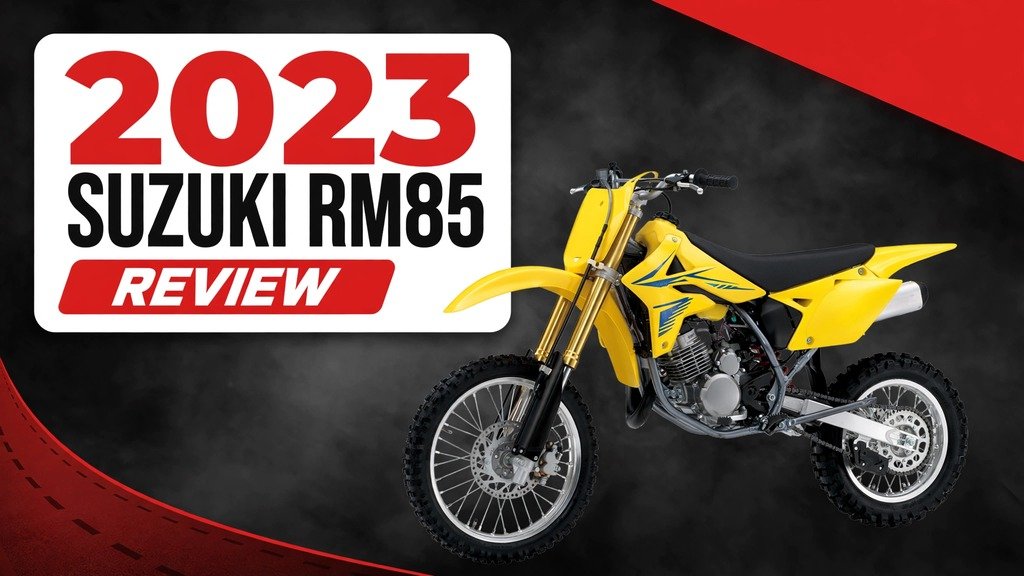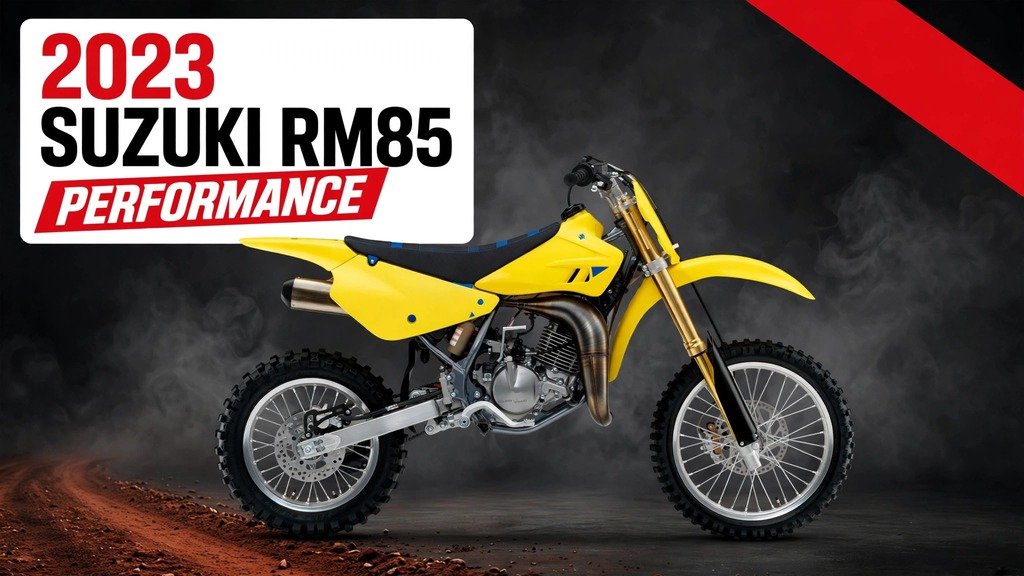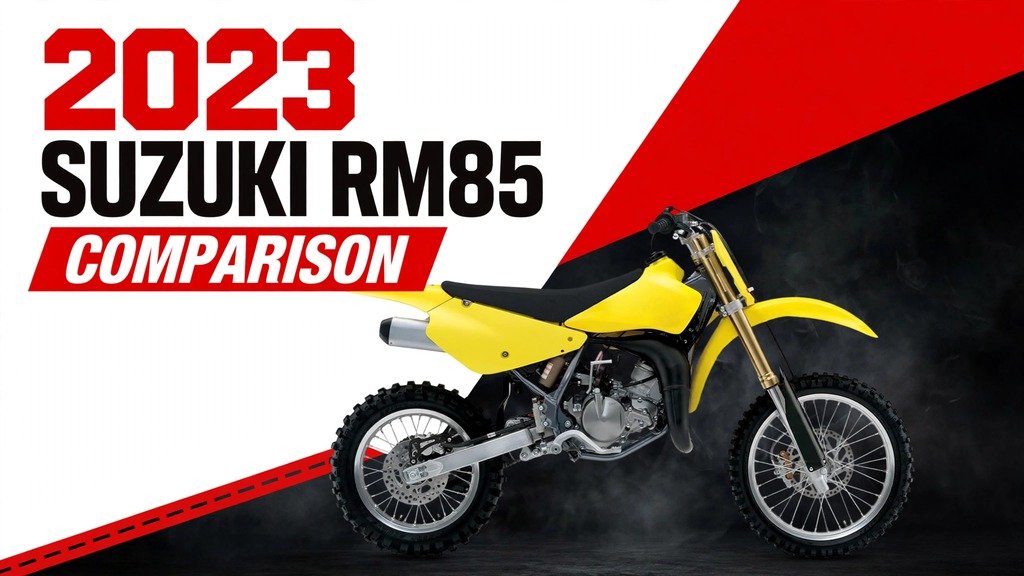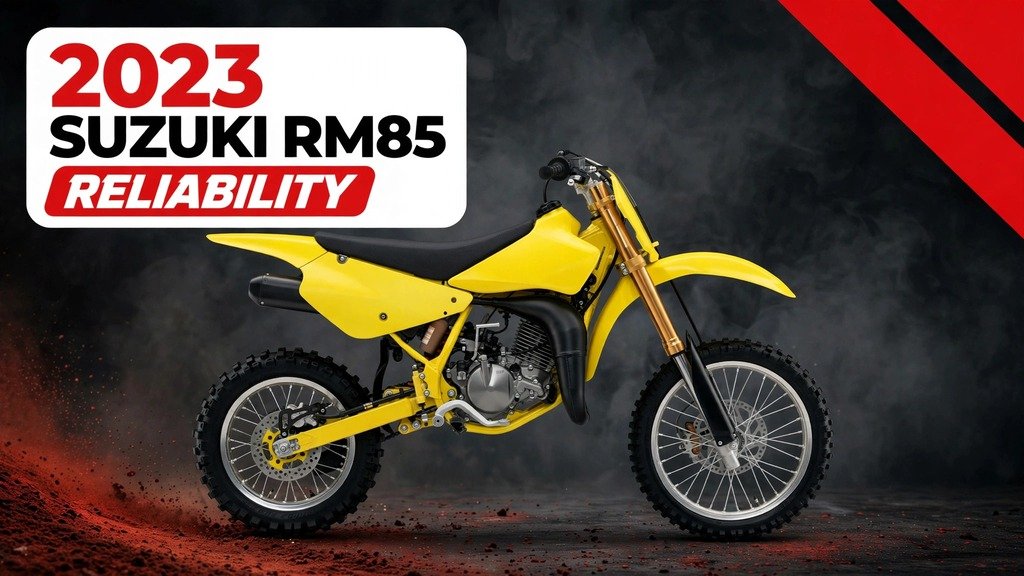
The Suzuki RM85 is a reliable little race bike — but only on its own terms. It is a simple 84.7cc two-stroke with no valves, no oil filter and no engine oil at all, and its whole service life is measured in hours, not miles. Follow the race chart — ring at 6 hours, piston at 18, powervalve cleaned at 6 — and the bike is famously durable; ignore it and the same engine will seize. This Suzuki RM85 reliability guide works through the manual schedule, the documented problems, the verified parts prices and the recall record.
Suzuki RM85 Reliability Overview
The bike has been mechanically unchanged since its last update in 2012, it was discontinued after 2023, and every wear item on it is a known quantity with a published interval. There is no warranty in the USA — the bike was sold as-is for closed-course competition — so Suzuki RM85 reliability is entirely a matter of the previous owner’s habits and the new owner’s discipline. This part of the Suzuki RM85 reliability guide explains why hours, storage and previous care matter more than the year on the title.
A Simple Two-Stroke With a Race Schedule
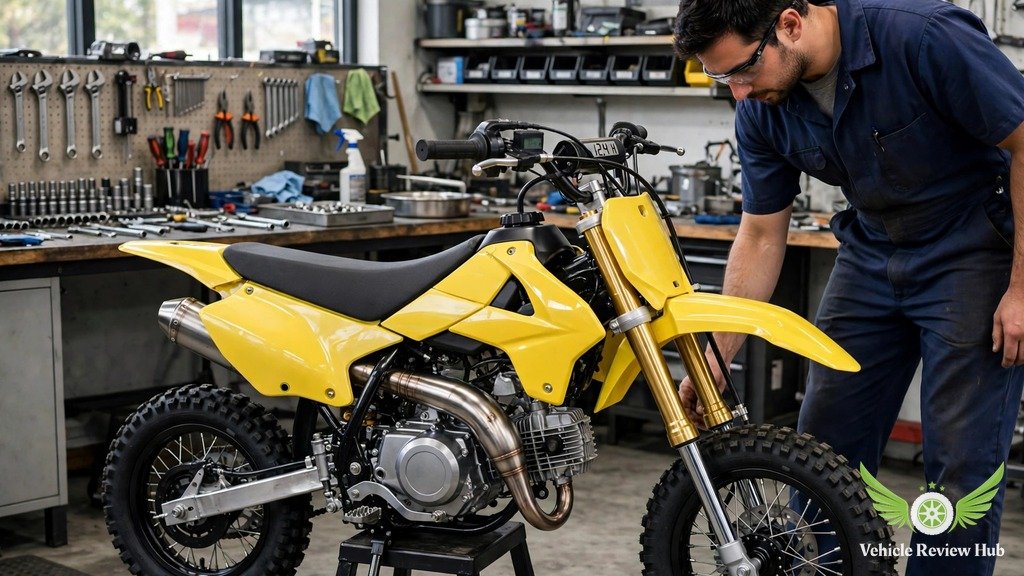
The RM85’s engine is about as simple as a modern motocrosser gets: a liquid-cooled 84.7cc two-stroke single with a reed valve, an exhaust valve, and a Keihin PE28 carburettor. It was never fuel-injected, it has no battery, no electric start and no dashboard of any kind. The rest of the package is equally simple: a steel tubular frame, a Showa 37mm inverted fork, 220 mm front and 200 mm rear discs, 161 lb at the curb and a 33.5-inch seat. What exists instead is a race chart: short, hard intervals measured in hours, because a two-stroke mini lives at full throttle. The 2020 owner’s manual sets the rhythm — every race or 2 hours, every 3 races or 6 hours, every 9 races or 18 hours — and Suzuki RM85 reliability comes down to whether that chart was followed. A bike with a logbook showing rings at 6 hours and pistons at 18 is a known quantity; a bike with no records at all is a guess, and the price should reflect that.
How Hours, Storage and Previous Care Affect Reliability
Hours are the odometer on an RM85, and the bike has no hour meter. A seller with an hour log is worth more than one who says “low hours” with nothing to show. Previous care shows in the small things — a clean air filter, a chain with correct slack, spokes that are tight, a powervalve that moves freely. The Suzuki RM85 review covers the full buying case, including the final $4,719 delivered price and what a leftover-new 2023 bike should cost.
Suzuki RM85 Common Problems and Wear Items
Very few failure patterns are actually documented for the RM85: three real wear items and two pieces of owner lore. There is no documented clutch, gearbox or frame failure pattern, and no recall names the bike. This section of the Suzuki RM85 reliability guide lists only what the sources support.
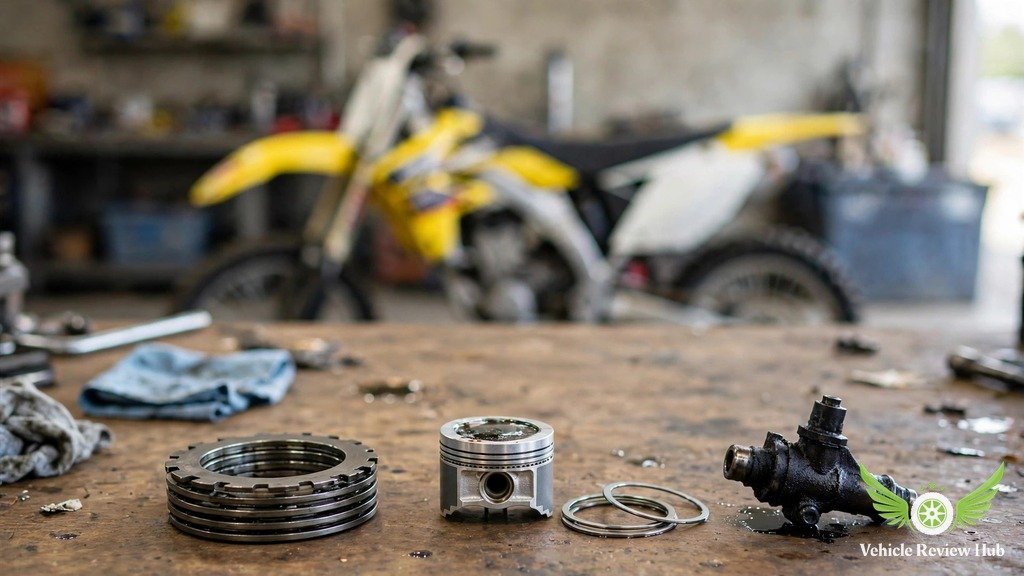
Powervalve Carbon Needs Cleaning at 6 Hours
The one wear item the manual itself insists on is the exhaust valve — the powervalve. Premix oil leaves carbon on the valve and its guide; if it builds up, the valve sticks, the powerband narrows and the bike goes flat on top. The manual requires the exhaust valve to be cleaned every 3 races or 6 hours: remove carbon deposits from the valve and guide, and inspect the breather hose for clogging with tar. A bike that feels gutless on the pipe often needs nothing more than a clean valve, so check it moves freely before buying. That 6-hour cleaning is the heart of Suzuki RM85 reliability, and it is the first thing to ask a seller about.
Crank Seals Are the Ageing Bike’s Tell
Owner forums name one tell on ageing two-strokes: hardened crank seals let air in and premix out, so the bike will not idle, runs lean and hot, and fouls plugs for no obvious reason. That much is real two-stroke behaviour, but no magazine test and no manual passage ties crank-seal failure to the RM85 specifically, so this Suzuki RM85 reliability guide presents it as lore, labelled as such: worth checking on a twenty-year-old bike, not a reason to fear a well-kept 2023. The Suzuki RM85 performance guide explains why the engine’s low-to-mid hit and 29.9 PS manufacturer claim are the only power figures that survive scrutiny.
| Wear item | What to check | Interval or sign |
|---|---|---|
| Exhaust valve (powervalve) | Carbon on valve and guide; valve must move freely | Clean every 6 hours (manual) |
| Piston ring | Compression loss, hard starting, flat top-end | Replace every 6 hours (manual) |
| Piston | Skirt wear, ring-groove wear, seizure risk | Replace every 18 hours (manual) |
| Spokes | Loose nipples; a loose spoke can puncture the tube | Inspect before every ride (manual) |
| Suspension springs | Too stiff for light riders; set sag and spring rate for the rider (Suzuki’s rider weight limit is 120 lb) | Set at purchase; no manual sag figure |
| Crank seals | Won’t idle, runs lean and hot, oily residue at the flywheel | Owner lore only — no documented RM85 pattern |
Notes for this Suzuki RM85 reliability table: only the powervalve, ring, piston and spokes are manual-backed items. The crank-seal row is owner-forum wisdom, and the suspension row is a setup issue, not a failure.
Suzuki RM85 Maintenance Schedule and Servicing
This is the section that decides whether an RM85 lives or dies: the owner’s manual race chart. The intervals are short because the engine is small and worked hard. The table below is the headline version of the 2020 manual’s chart; the full chart has 27 rows. This part of the Suzuki RM85 reliability guide keeps the chart intact and names the traps that catch new owners.
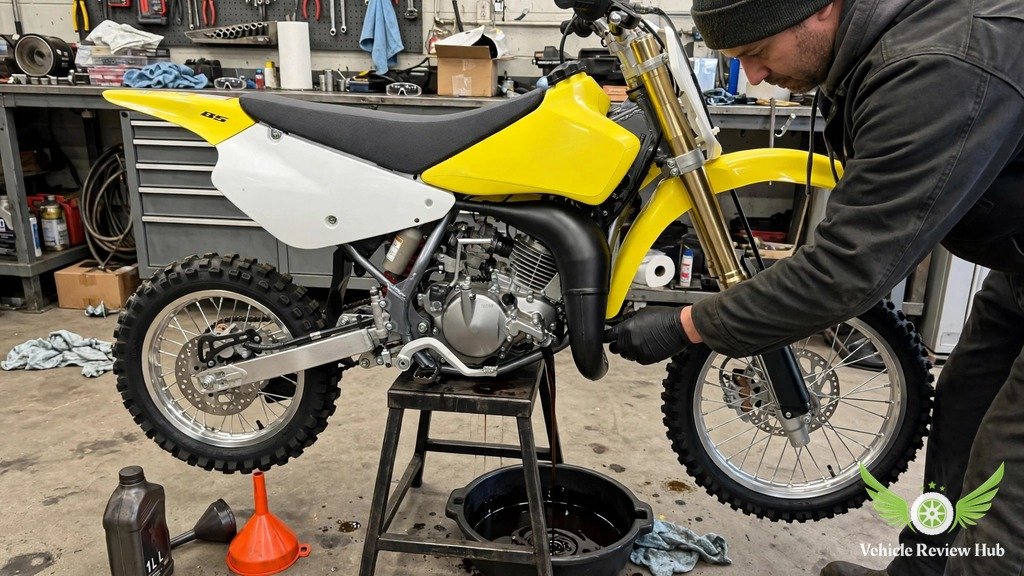
Premix at 30:1, Not the Usual 32:1
The RM85 runs premix at 30:1 — unleaded fuel with a minimum of 90 pump octane, mixed with two-stroke oil at every fill, in a 5.0-litre (1.3 US gallon) tank. The ratio is in the manual and on the bike’s warning label — not the 32:1 most two-stroke owners reach for by habit. Two websites get this wrong — one AI-flavoured FAQ claims “32:1 or 40:1” — and this Suzuki RM85 reliability guide rejects both figures outright. The manual’s own warning is worth quoting: too little oil causes piston seizure, and too much oil causes excessive carbon, preignition, a fouled plug and lost power. The 2020 owner’s manual carries the full chart and the premix specification.
Piston Ring at 6 Hours, Piston at 18
The two numbers every RM85 owner must know are 6 and 18. The piston ring is replaced every 3 races or 6 hours; the piston itself is replaced every 9 races or 18 hours, with the cylinder head and cylinder cleaned at the same 6-hour mark. A ring left past 6 hours loses tension, compression falls, and the bike gets hard to start and flat on top; a piston left past 18 hours risks skirt failure and a seized engine. The video below shows that job — with one honest caveat.
The video below is a generic two-stroke top-end rebuild from AMSOIL — the same piston, ring and powervalve job on a Suzuki two-stroke, but not an RM85-specific rebuild. The RM85’s own intervals, ring at 6 hours and piston at 18, come from the owner’s manual, not from the film.
Top-end parts are cheap and easy to find: a Vertex cast top-end kit covering the RM85 from 2002 to 2023 costs $164.95, and a Namura top-end kit with piston, rings and gaskets costs $87.99. No US dealer labour price for the job was verified, so this Suzuki RM85 reliability guide quotes parts only. The Motosport top-end rebuild guide walks through the same piston, ring and powervalve steps on an RM85, and the Motocross Hideout two-stroke top-end guide covers the general technique.
| Service item | Every race / 2 hrs | Every 3 races / 6 hrs | Every 9 races / 18 hrs |
|---|---|---|---|
| Spark plug (NGK BR10ES) | Inspect | Replace | — |
| Air cleaner | Clean | — | — |
| Transmission oil (550 ml, 10W-40) | — | Replace | — |
| Piston ring | — | Replace | — |
| Piston | — | — | Replace |
| Cylinder head and cylinder | — | Clean | — |
| Exhaust valve (powervalve) | — | Clean | — |
| Drive chain | Inspect and lubricate | Replace | — |
| Chain buffer and guide | — | Replace | — |
| Front fork oil | — | Replace | — |
| Spoke nipples | Inspect | — | — |
| Bolts and nuts | Tighten | — | — |
Notes for this Suzuki RM85 reliability table: the chart is the 2020 owner’s manual’s periodic maintenance chart, headline items only — the full chart has 27 rows. R means replace, C means clean, T means tighten, I means inspect. Bolts and nuts are retightened every race; spoke nipples are inspected every 20 minutes up to the first 2 hours, then before each ride. Fuel hose is replaced every 4 years, coolant and radiator hose every year, and brake hose and fluid every year.
Suzuki RM85 Tires, Brakes and Suspension Maintenance
The chassis jobs are as short-interval as the engine jobs, and the one that catches new owners out is the air filter. A two-stroke mini breathes dust all day, and the filter is the only thing between that dust and a scored cylinder. That filter is the first line of Suzuki RM85 reliability. This part of the Suzuki RM85 reliability guide covers the chassis the same way the manual does — item by item, on the clock.
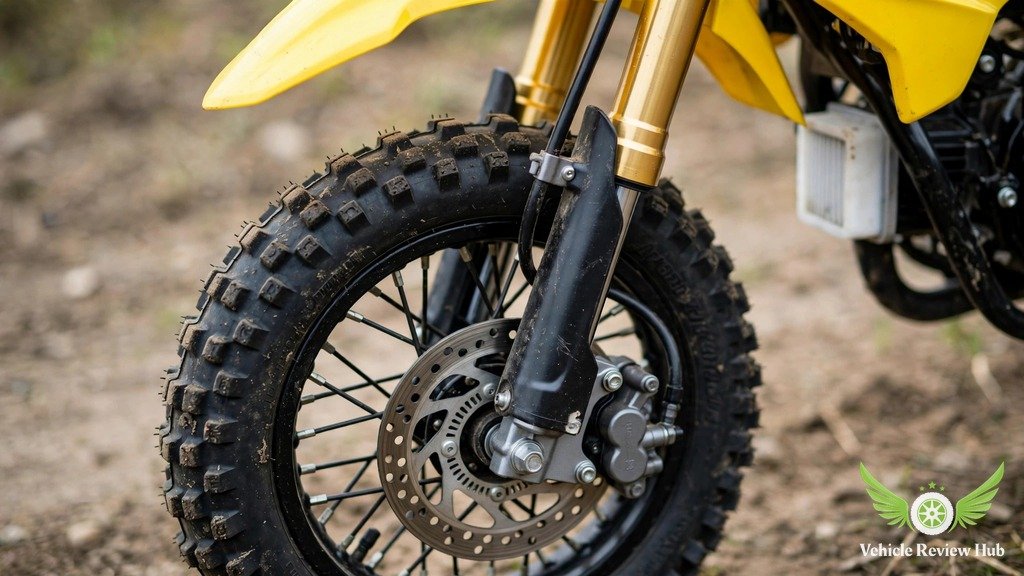
Air Cleaner Cleaned After Every Race
The air cleaner is cleaned after every race — that is the manual’s interval, not a suggestion. A foam filter loads up with dust in a single day, and a dirty filter starves the engine and lets grit past the seal into the cylinder. Wash the foam, dry it, oil it lightly and seat it properly, and keep a spare oiled filter in the toolbox. The full-size Suzuki motocross line runs the same race-chart discipline in hours, and the Suzuki RM-Z450 reliability guide shows how the 450’s hour-based schedule compares.
Transmission Oil Every Three Races
The RM85 has no engine oil — the only oil in the bike is transmission oil, 550 ml of SAE 10W-40, replaced every 3 races or 6 hours. That distinction traps new owners: generic websites claim the bike needs an “oil change every 15 hours” or an “engine oil change every 6 to 10 hours,” and both are wrong. The same 6-hour column also carries the front fork oil and the drive chain, replaced every 6 hours along with its buffer and guide.
Suzuki RM85 Maintenance and Ownership Costs
Running an RM85 is cheap by motocross standards: small parts, short jobs, no dealer-only electronics. This section of the Suzuki RM85 reliability guide prices what can be priced and labels what cannot.
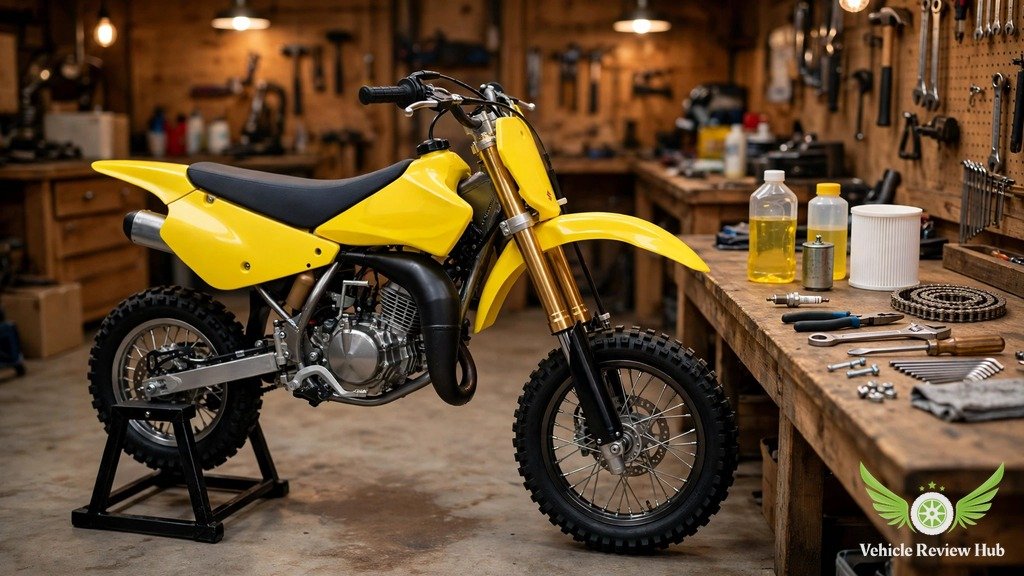
Fuel, Routine Servicing, Tires and Replacement Parts
The repeating bill starts with fuel: a 5.0-litre tank of 30:1 premix per fill, plus a spare can on race day. The repeating parts are the top end, a spark plug, transmission oil, a drive chain and fork oil — all on the 6- or 18-hour clock, all priced in the table below. Tyres are 70/100-17 front and 90/100-14 rear, tube type; Australian Dirt Bike‘s test bike punctured a rear tube on loose spokes. The one cost this Suzuki RM85 reliability guide cannot quote is dealer labour: no verified US dealer service or labour price for the RM85 was found, so no hourly rate is printed here.
| Item | Interval | Verified cost or note |
|---|---|---|
| Top-end kit (Vertex, piston + rings + gaskets) | Piston every 18 hrs | $164.95 (BTO Sports) |
| Top-end kit (Namura, piston + rings + gaskets) | Piston every 18 hrs | $87.99 (eBay MotoXoutlet) |
| Spark plug (NGK BR10ES) | Replace every 6 hrs | A few dollars; gap 0.7–0.8 mm |
| Transmission oil (550 ml, SAE 10W-40) | Replace every 6 hrs | One bottle per change |
| Drive chain (DID 428DS, 118 links) | Replace every 6 hrs | Chain, buffer and guide together |
| Air filter element | Clean after every race | Replace as necessary |
| Front fork oil | Replace every 6 hrs | After first break-in, then every 6 hrs |
| Brake fluid and hose; coolant and radiator hose | Replace every year | Annual items, not hourly |
| Fuel hose | Replace every 4 years | Long-life item |
| Dealer labour | — | No verified US dealer price found — not quoted |
Notes for this Suzuki RM85 reliability table: parts prices are verified retail figures; labour is honestly unquoted because no US dealer menu pricing was located. Generic AMSOIL labour guides (shock rebuild at least $100, fork rebuild up to $200) are generic dirt-bike figures, not RM85 quotes.
No Recalls Found Across Three Indexes
The recall record is clean, with one honest qualification. The US NHTSA database returns zero recalls for the RM85 across nine model years checked (2002, 2012, 2015, 2018, 2019, 2020, 2021, 2022 and 2023), and no recall, bulletin or safety campaign naming the RM85 was found in any source searched. The NHTSA check answers with a Count of 0 in the body of its response, and that zero is the authoritative figure. What this Suzuki RM85 reliability guide cannot claim is a checked result from the other two indexes the heading implies: the UK DVSA and EU Safety Gate checks are registration-based, so no model-wide check was possible, and no RM85 recall surfaced in any search of either. A buyer should still run the bike’s own VIN past a Suzuki dealer before paying, because a recall is tied to a VIN range, not to a model name. That clean record is a quiet part of Suzuki RM85 reliability.
How to Keep a Suzuki RM85 Reliable
Suzuki RM85 reliability is a routine, done on the clock, written down, and repeated. The last section of this Suzuki RM85 reliability guide turns everything above into a routine a family can actually follow, and deals honestly with the one piece of jetting lore every owner will hear.
Preventive Maintenance, Records and Regular Inspections
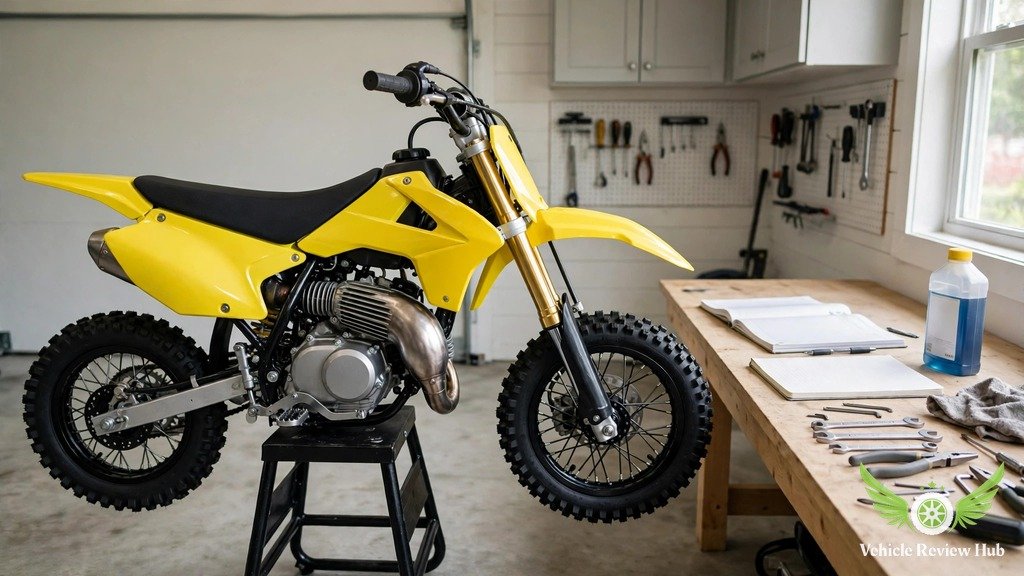
Start with an hour log. The bike has no hour meter, so a notebook recording hours ridden and work done is the only record that exists, and it is worth real money at resale. Then build the race-day routine around the manual: air filter cleaned after every race, spokes checked before every ride, bolts and nuts retightened every race, chain slack checked every 30 minutes of riding. Inspect before every ride, not after something breaks: clutch lever play 10 to 15 mm, throttle play 2 to 4 mm, spark plug gap 0.7 to 0.8 mm, and the powervalve moving freely. That is the whole routine, and it is the whole secret of Suzuki RM85 reliability — short intervals, written down, never skipped.
Stock Jetting Runs Rich at Sea Level
Every RM85 owner will hear that the stock jetting runs rich at sea level. Treat that as owner-reported lore, labelled as such: no magazine test states it, and the one “slightly fat” jetting note in print — from MXA’s 2025 shootout — is about the Austrian bikes, not the RM85. The Keihin PE28 is a simple carburettor and jetting does change with altitude and temperature, so a bike that fouls plugs at sea level may genuinely want a jetting change — but that is a diagnosis, not a factory defect, and it should be made plug by plug, not by forum consensus. If the bike starts cleanly, idles steadily and pulls cleanly on the pipe at 30:1, the stock jetting is doing its job. The Suzuki RM85 comparison shows what the living rivals cost and what their newer engines bring, for families weighing a used RM85 against a new YZ85 or KX85.
Suzuki RM85 Reliability: Frequently Asked Questions
Direct answers to the reliability and maintenance questions US families ask in this Suzuki RM85 reliability guide.
How reliable is the Suzuki RM85?
Very reliable if the race-chart schedule is followed, and unforgiving if it is not. The documented failure patterns are few: powervalve carbon, loose spokes and stiff suspension. This Suzuki RM85 reliability guide rates it durable, not maintenance-free.
How often should I replace the piston on an RM85?
Every 9 races or 18 hours, per the owner’s manual. The piston ring is replaced sooner, every 3 races or 6 hours, and the cylinder head and cylinder are cleaned at the same 6-hour mark. This Suzuki RM85 reliability guide treats 6 and 18 as the two numbers every owner must know.
How often should I replace the piston ring?
Every 3 races or 6 hours. A ring left past 6 hours loses tension, compression falls, and the bike gets hard to start and flat on top. That 6-hour ring is the cheapest insurance in Suzuki RM85 reliability.
What premix ratio does the RM85 use?
30:1 — unleaded fuel with a minimum of 90 pump octane, mixed with two-stroke oil at every fill. The ratio is in the manual and on the bike’s warning label; the 32:1 and 40:1 figures on some websites contradict it and are rejected in this Suzuki RM85 reliability guide.
How often do I clean the powervalve?
Every 3 races or 6 hours, per the manual. Carbon builds up on the exhaust valve and its guide from the premix oil, and a stuck valve narrows the powerband, so this Suzuki RM85 reliability guide treats the 6-hour clean as mandatory.
How often do I change the transmission oil?
Every 3 races or 6 hours — 550 ml of SAE 10W-40. The RM85 has no engine oil, only transmission oil for the gearbox and wet clutch, so do not follow generic engine-oil-change advice for this bike. This Suzuki RM85 reliability guide repeats the distinction because it traps new owners.
Does the RM85 have any recalls?
No recalls were found. The US NHTSA database returns zero recalls for the RM85 across nine model years checked, and no recall, bulletin or safety campaign naming the bike was found in any source searched — a clean record that is part of Suzuki RM85 reliability. The UK and EU checks are registration-based, so a buyer should still run the bike’s VIN past a Suzuki dealer.
Does the RM85 have a warranty?
No. The bike was sold as-is for closed-course competition, with no warranty in the USA. That makes the previous owner’s service records the only warranty a used buyer gets, and this Suzuki RM85 reliability guide recommends buying on records, not on promises.
What are the most common problems on an RM85?
Powervalve carbon at 6 hours, loose spokes that can puncture a tube, and suspension springs set too stiff for light riders. Crank seals are owner-forum lore on ageing bikes, not a documented RM85 pattern, and no clutch, gearbox or frame failure pattern is documented — a short list, which is good news for Suzuki RM85 reliability.
How many hours does an RM85 engine last?
There is no published engine-life figure, and this Suzuki RM85 reliability guide will not invent one. What the manual publishes is the top-end clock: ring at 6 hours, piston at 18 — and that clock is the whole of Suzuki RM85 reliability.
What should I check when buying a used RM85?
Ask for the hour log and service records first, then check the powervalve moves freely, the spokes are tight, the air filter is clean, the chain has correct slack, and the bike starts easily and idles steadily. A 2019 bike is mechanically the same as a 2023 bike, so buy on hours and top-end history, not on the year — that checklist is the practical core of Suzuki RM85 reliability.
How much does an RM85 top-end rebuild cost?
Parts are verified: a Vertex top-end kit costs $164.95 and a Namura kit $87.99. No verified US dealer labour price was found, so this Suzuki RM85 reliability guide quotes parts only.