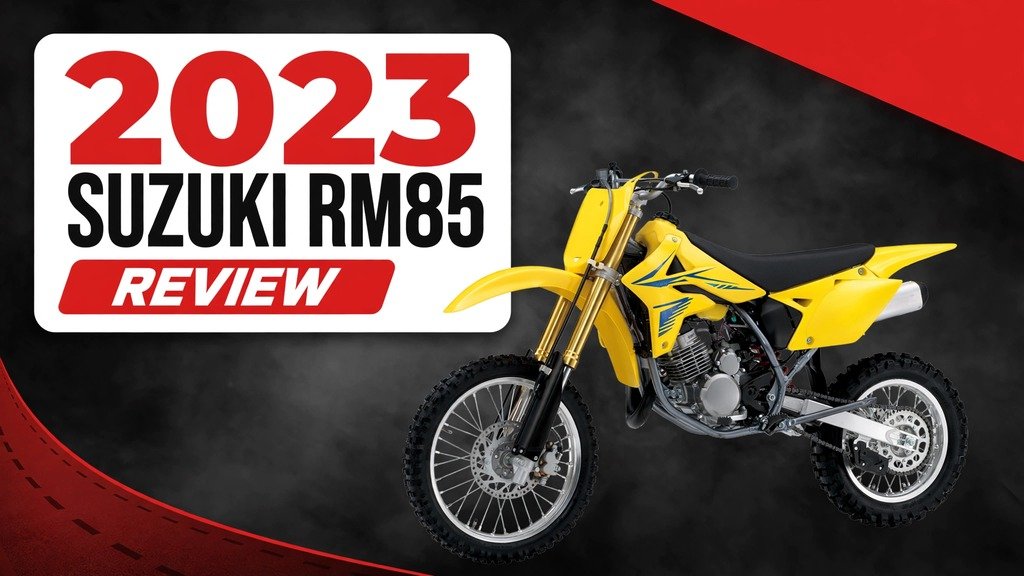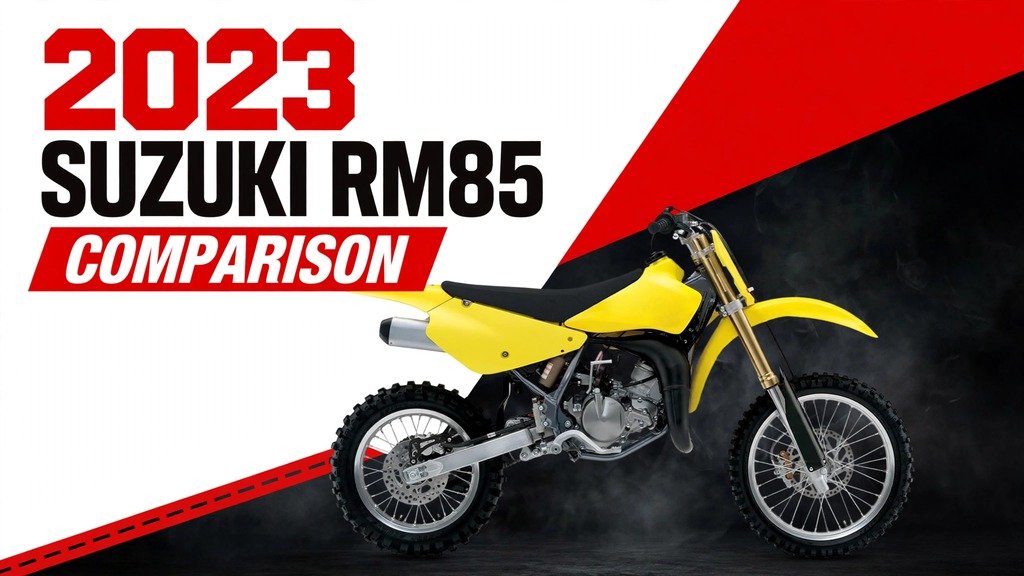
The Suzuki RM85 is gone from showrooms, but it is not gone from the 85cc class. Suzuki discontinued it after the 2023 model year; its final delivered price was $4,719 — $4,499 plus $220 destination, per Motorcycle.com’s 2023 RM85 specifications. Every rival is still on sale as a 2027 model, the cheapest at $5,514 delivered. That $795 gap frames this Suzuki RM85 comparison: a used RM85 is the cheapest ticket into 85cc motocross — the question is whether the saving is worth eleven years of missed development. This Suzuki RM85 comparison puts the 2023 RM85 against the three 85cc two-strokes still sold new in the USA — the Yamaha YZ85, the Kawasaki KX85 and the KTM 85 SX — on price, engine, suspension and running costs.
Suzuki RM85 Overview and Its Closest Rivals
The RM85 raced in the 85cc class for over two decades, launched in 2002 and frozen mechanically after its last update in 2012. When Suzuki dropped it after 2023, Yamaha, Kawasaki and KTM kept developing their minis, and every brand now sells a big-wheel option. Any honest Suzuki RM85 comparison is therefore a used bike against new bikes: a leftover RM85 against showroom-fresh 2027 rivals with warranties. The Suzuki RM85 review covers the bike itself in full; this Suzuki RM85 comparison is about where it stands against the living class.
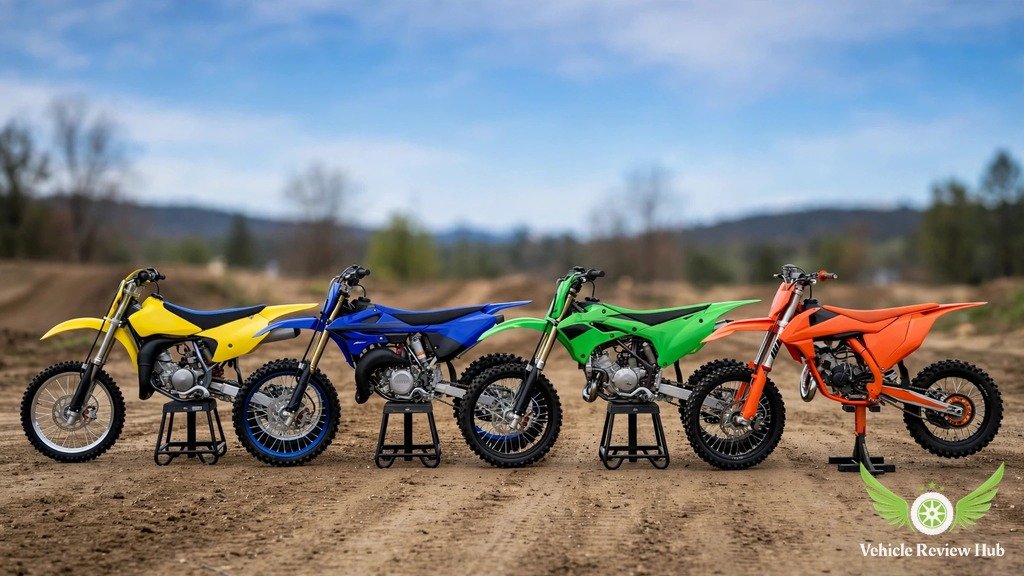
Why These Three Rivals: the Living 85 Class
Three 85cc two-strokes are still on sale new in the USA in 2027: the Yamaha YZ85, the Kawasaki KX85 and the KTM 85 SX. Those three race in the same AMA 85cc class. The Husqvarna TC 85 ($7,049) and GasGas MC 85 (about $6,499) share the KTM’s platform, so this Suzuki RM85 comparison treats them as the Austrian trio behind the KTM. The Honda CRF150R is a 149cc four-stroke Supermini, not AMA 85cc-eligible, so it sits with the alternatives in this Suzuki RM85 comparison.
How the Four Bikes Differ at a Glance
Four bikes, four different answers to the same question. The RM85 is the oldest design and the cheapest; the YZ85 and KX85 sit in the middle on price with modern running gear; the KTM is the lightest, most developed and by far the most expensive. The table below lines them up — with one warning: the four makers measure weight on different bases, so the weights are not like-for-like.
| Spec | Suzuki RM85 (2023) | Yamaha YZ85 (2027) | Kawasaki KX85 (2027) | KTM 85 SX 17/14 (2027) |
|---|---|---|---|---|
| Engine | 84.7cc 2-stroke single, Keihin PE28 | 85cc 2-stroke single, Keihin PWK28, YPVS | 84cc 2-stroke single, 28 mm carb, KIPS | 84.9cc 2-stroke single, Keihin PWK 28 |
| Front fork | Showa 37 mm inverted, 275 mm | KYB coil-spring fork | KYB 43 mm inverted, 10.8 in | WP XACT AER 43 mm air fork, 278 mm |
| Seat height | 33.5 in (850 mm) | 33.1 in | 32.7 in | 33.3 in (845 mm) |
| Weight | 161 lb curb | 161 lb wet | 168.4 lb curb with fuel | 149.9 lb without fuel |
| MSRP | $4,499 (2023, final) | $5,199 | $5,199 | $6,949 |
Notes for this Suzuki RM85 comparison table: figures are the makers’ 2023 and 2027 specifications, weights on each maker’s own basis. The RM85’s compression ratio is split (9.5:1 vs 10.9:1); most dealer sheets list 10.9:1.
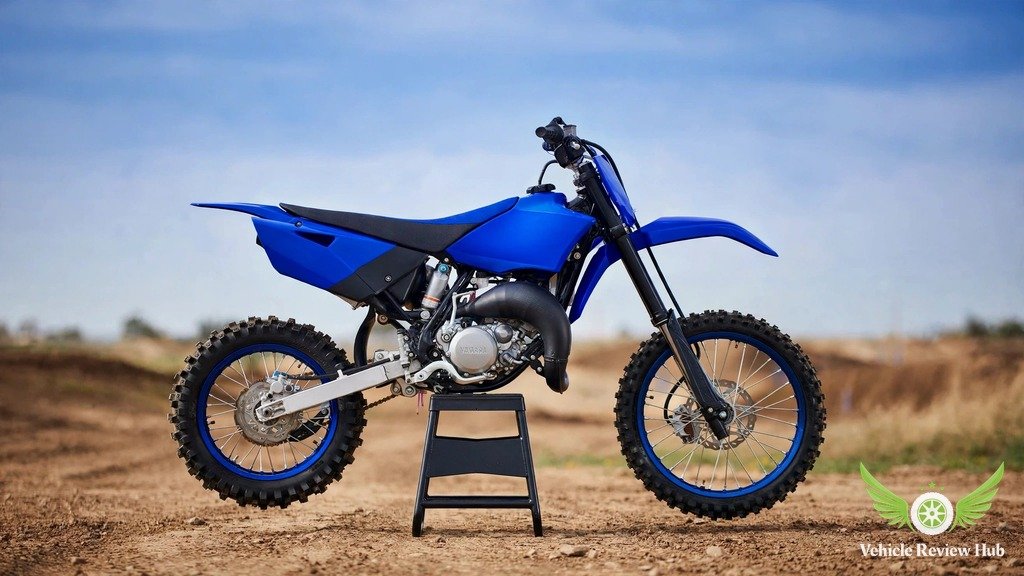
Suzuki RM85 vs Yamaha YZ85
The YZ85 is the RM85’s most direct rival, the bike most families cross-shop first. Yamaha has kept developing it while Suzuki stood still — the 2027 YZ85 gets a VForce4R reed valve and revised YPVS settings for a wider powerband. The RM85’s answer is its price and handling — testers called the little Suzuki nimble in turns — and no rival in this Suzuki RM85 comparison is cheaper to buy.
Engine, Specs and Performance Side by Side
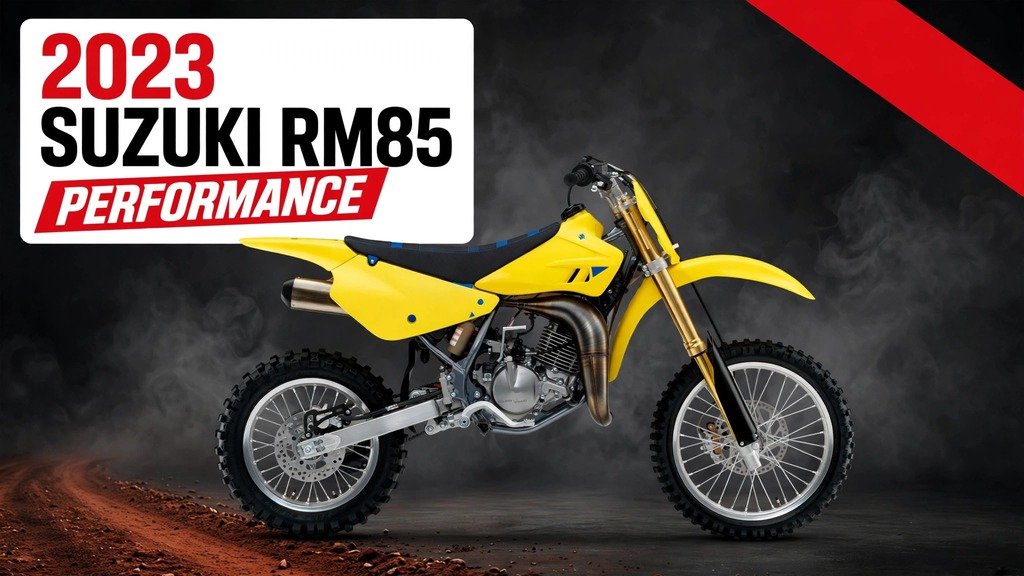
The two engines are near-identical in size — 84.7cc against 85cc — but fifteen years of development separate them. The RM85 runs a Keihin PE28 carburettor on an 84.7cc single with an exhaust valve, and the only power figure that exists is Suzuki’s archive claim of 22.0 kW (29.9 PS) at 12,000 rpm from the 2002 model — a manufacturer claim, not a dyno result. It drinks premix at 30:1 — unleaded fuel with two-stroke oil at every fill, per the owner’s manual. The YZ85 runs a Keihin PWK28 with Yamaha’s Power Valve System; its 2027 update — a VForce4R reed valve and revised YPVS settings — targets the low-to-mid range, per Yamaha’s 2027 YZ85 page. The Suzuki RM85 performance guide covers the missing figures — neither bike in this Suzuki RM85 comparison has an instrumented top-speed figure from a named outlet. The RM85’s Showa 37 mm fork was good hardware in 2012, but its springs are too stiff for light riders. Both weigh 161 lb, the RM85 as a curb figure and the YZ85 wet.
Price, Equipment and Which Suits Which Rider
The price gap is $800 delivered: the RM85’s final $4,719 against the 2027 YZ85 at $5,199 plus $320 destination, or $5,519 delivered. For that $800 the YZ85 buyer gets a new bike with a warranty, a 2027 engine update and a big-wheel YZ85LW variant; the RM85 buyer gets a discontinued bike sold as-is with no warranty. Pick the RM85 if the budget decides it, the rider fits the 33.5-inch seat and the family can do top-end work — ring at 6 hours, piston at 18. Pick the YZ85 for a growing rider, a warranty, or regional racing.
Suzuki RM85 vs Kawasaki KX85
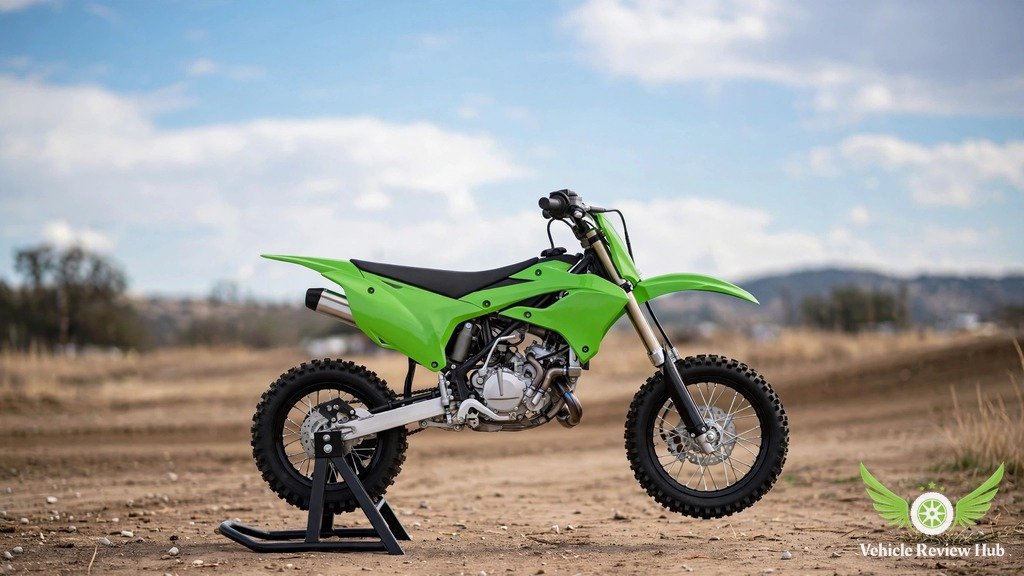
The KX85 is the RM85’s oldest rival and the one that has changed the most. Kawasaki restyled it for 2026 and added a KX85 Large Wheel variant on the KX112 chassis, restoring the big-wheel path the RM85 lost in the USA around 2013. The KX85 is also the lowest bike in this Suzuki RM85 comparison, with a 32.7-inch seat — the pick for the smallest riders.
Engine, Specs and Performance Side by Side
The KX85’s engine is the smallest at 84cc, with a 48.5 x 45.8 mm bore and stroke, Kawasaki’s KIPS power valve and a 28 mm carburettor. Like the RM85 it is a kick-start-only two-stroke with a six-speed gearbox and no dyno figure from a named outlet — this Suzuki RM85 comparison does not invent power numbers for either bike. The chassis differs: a 43 mm KYB inverted fork and fully adjustable Uni-Trak rear shock, both with 10.8 inches of travel, and 240 mm front and 220 mm rear brakes against the RM85’s 220 mm and 200 mm discs. Travel is close — the RM85’s fork gives 275 mm and its shock 277 mm — the difference is adjustability. The KX85 is the heaviest on paper at 168.4 lb curb with a full tank, but 160.3 lb without fuel, so the real gap is a few pounds.
Price, Equipment and Which Suits Which Rider
The KX85 costs $5,199 plus $315 destination, or $5,514 delivered — $795 more than the RM85’s final $4,719 delivered. That buys a current 2027 model with a warranty and a big-wheel option. The RM85 buyer saves $795 and gets a lighter, simpler bike testers call the better-turning of the two. Pick the KX85 for the lowest seat or the big-wheel path; pick the RM85 if the budget is tight.
Dirt Bike Magazine’s 2026 test covers the KX85 and the new KX112, including the KX85 Large Wheel variant and the stock jetting note. It shows what a used-RM85 buyer cross-shops today: the same class and size, but current, with a warranty and a big-wheel option. The RM85 does not appear in the film — the comparison in this Suzuki RM85 comparison is the text around it, not the video.
Suzuki RM85 vs KTM 85 SX
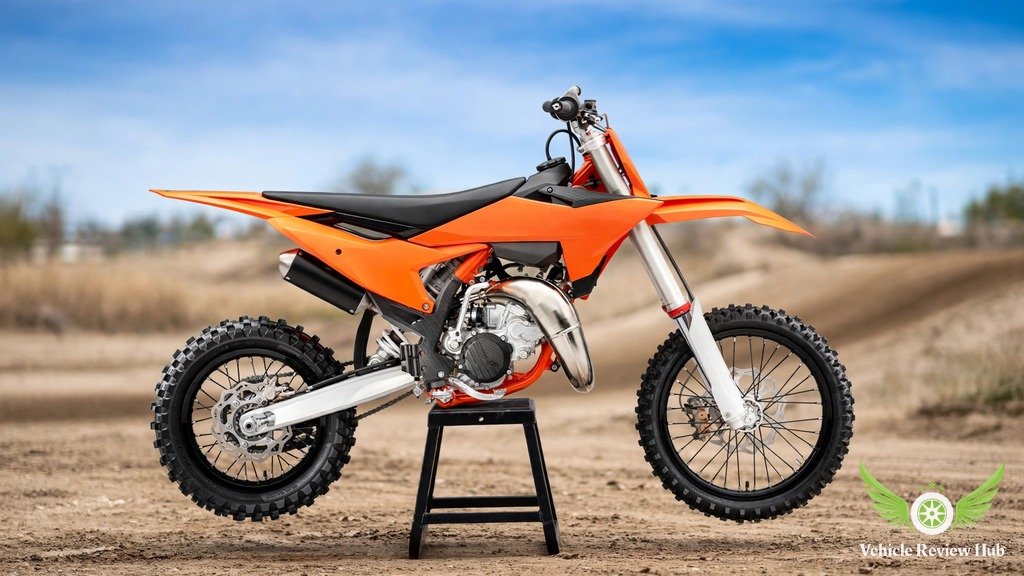
The KTM 85 SX is the class benchmark and the most expensive bike in this Suzuki RM85 comparison by a wide margin. It won the Dirt Rider 2016 85cc shootout outright, and in MXA’s 2025 shootout the Austrian trio took first place while the RM85 was not even invited — discontinued. This is the least close contest in this Suzuki RM85 comparison — and the most instructive, because it shows what the $2,450 gap buys.
Engine, Specs and Performance Side by Side
The KTM’s engine is the largest of the four at 84.9cc, a single-cylinder two-stroke with a Keihin PWK 28 carburettor and a six-speed gearbox — see KTM’s 2027 technical specifications. No dyno figure exists for the KTM either, so this Suzuki RM85 comparison does not rank the four on horsepower. The chassis is verifiable: a WP XACT AER 43 mm air fork (278 mm) and a WP XACT PDS shock (289 mm), both fully adjustable. The KTM is the lightest here at 149.9 lb without fuel, against the RM85’s 161 lb curb — measured on different bases, so the gap is smaller than the numbers suggest. Seat height is near-identical at 33.3 inches against 33.5, and the KTM is the only bike here with a factory big-wheel variant in both sizes.
Price, Equipment and Which Suits Which Rider
The KTM 85 SX 17/14 lists at $6,949 MSRP, with no destination charge captured, so no delivered price is printed in this Suzuki RM85 comparison — the MSRP-only gap against the RM85’s $4,499 is $2,450. The 19/16 version is split by source at $7,249 against $6,749, so this Suzuki RM85 comparison does not print either figure as settled. For the money the KTM buyer gets the shootout winner, the lightest chassis and the most adjustable suspension. Pick the KTM if the rider is racing seriously, or if the rider is tall and needs the 19/16. Pick the RM85 if the budget decides it.
Suzuki RM85 Price and Value Compared
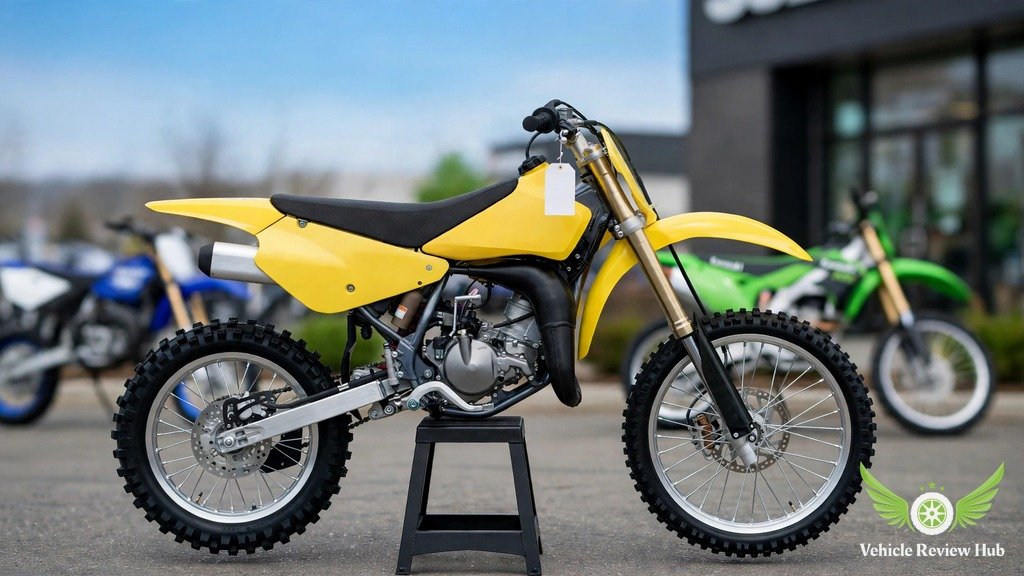
Price is where the RM85 wins this Suzuki RM85 comparison outright — the only place it does. Its final delivered price of $4,719 is $795 less than the cheapest living rival and $2,450 less than the KTM on MSRP alone. But the RM85’s price is a 2023 figure; the rivals’ are 2027 figures for current bikes with warranties. A used RM85 will not cost $4,719 — that was the price of a new one in its last year.
Every Rival Is a Current Model, It Is Not
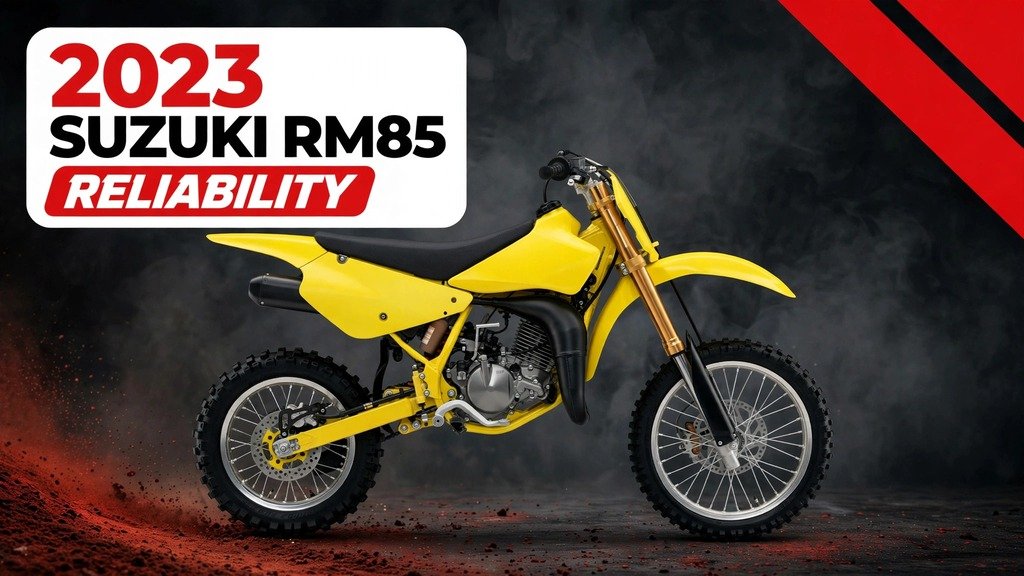
Every rival in this Suzuki RM85 comparison is a current model. The YZ85 and KX85 are 2027 bikes, the KTM a 2025-generation bike carried into 2027, and all three come with a warranty, a dealer network and parts still in production. The RM85 is a 2012-spec bike Suzuki stopped selling after 2023, sold as-is with no warranty. That changes what buying one means: a new rival is bought on its spec sheet, a used RM85 on its history — hour log, service records, a free powervalve, tight spokes, a clean air filter. The Suzuki RM85 reliability guide sets out the race-chart clock: ring at 6, piston at 18, oil every 6, filter after every race. Without those records, the buyer is buying someone else’s deferred maintenance.
Running Costs and Resale Value Compared
Running an RM85 is cheap by motocross standards. The wearing parts are small and cheap: a Vertex top-end kit costs $164.95 and a Namura kit $87.99, and the repeating jobs are a plug, transmission oil, a chain and fork oil on the 6- or 18-hour clock. No verified US dealer labour price was found, so this Suzuki RM85 comparison quotes parts only. The rivals hold value better as current models; the RM85 holds value as the cheapest way in. No US used-price range can be quoted — no dataset was located, only leftover-new anchors of $4,399 for 2022 bikes and $4,499 for 2023s.
| Bike | MSRP | Destination | Delivered | Gap vs RM85 delivered |
|---|---|---|---|---|
| Suzuki RM85 (2023, final) | $4,499 | $220 | $4,719 | — |
| Yamaha YZ85 (2027) | $5,199 | $320 | $5,519 | +$800 |
| Kawasaki KX85 (2027) | $5,199 | $315 | $5,514 | +$795 |
| KTM 85 SX 17/14 | $6,949 | Not captured | Not printed | +$2,450 MSRP-only |
| Kawasaki KX112 (2027) | $5,799 | $315 | $6,114 | +$1,395 |
| Honda CRF150R (2026) | $5,499 | $300 | $5,799 | +$1,080 |
| Honda CRF150R Expert | $5,699 | $300 | $5,999 | +$1,280 |
Notes for this Suzuki RM85 comparison table: RM85 figures are the 2023 final price; YZ85 and KX85 are 2027 MSRP plus destination; KTM 17/14 MSRP is a single-dealer listing with destination not captured, so no delivered KTM price is printed. All prices are US figures before tax, setup and documentation fees. The KTM 85 SX 19/16 price is split by source ($7,249 vs $6,749), not printed as settled.
Suzuki RM85 Comparison Verdict and US Alternatives
The verdict of this Suzuki RM85 comparison is not that the RM85 is the best 85 — it is not. The verdict is that the RM85 is the cheapest way into the class. A used RM85 with records gives a young rider a real 85cc two-stroke with a powervalve, a six-speed gearbox and handling testers praised for two decades. What it does not give is a warranty, current suspension, a big-wheel path, or a place in the modern shootouts — MXA excluded it from its 2014 shootout and 2025 shootouts. The Suzuki RM-Z450 comparison shows the same pattern at full size: Suzuki’s motocross bikes are bought on value, not the latest hardware.
Cheapest Way Into 85 Racing Was This Bike
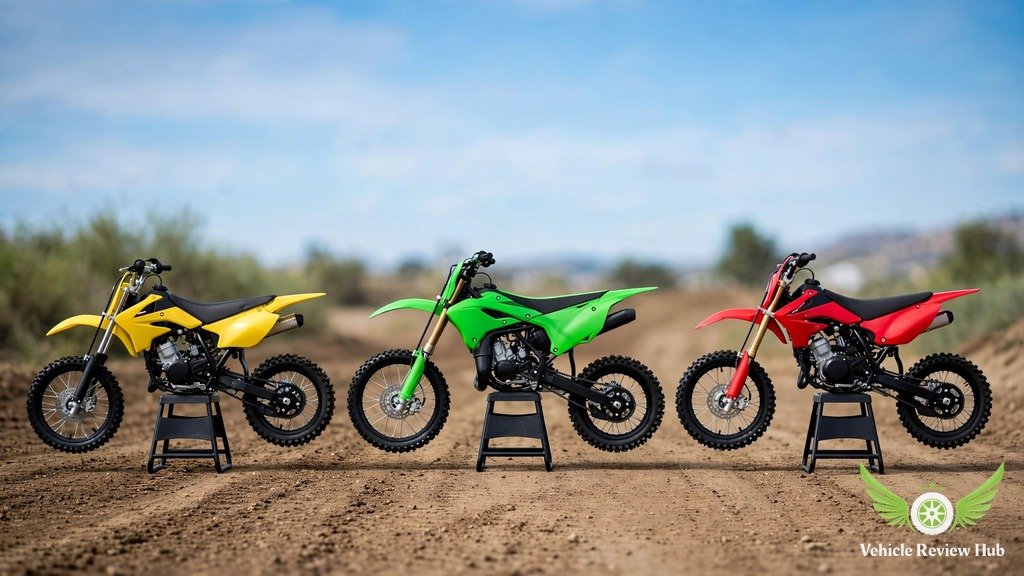
When the RM85 was new, it was the cheapest way into 85 racing — $4,499 against $5,199 for the Japanese rivals and $6,949 for the KTM — and as a used bike it still is. That is the sentence this whole Suzuki RM85 comparison comes down to. Buy the RM85 if the family budget is the hard limit, someone in the family can do a top-end rebuild, and the rider fits the 33.5-inch seat. Do not buy it expecting a modern bike: the suspension is a decade behind, there is no big-wheel version or warranty, and the manual demands a ring every 6 hours and a piston every 18.
| Rider and family | Best pick | Why |
|---|---|---|
| Tight budget, family can do top-end work | Used Suzuki RM85 | Cheapest entry by $795 or more; cheap parts |
| Growing rider who may need big wheels | Yamaha YZ85 or Kawasaki KX85 | YZ85LW and KX85 Large Wheel exist; RM85 has none |
| Smallest rider in class | Kawasaki KX85 | Lowest seat in class at 32.7 in |
| Racing seriously, chasing results | KTM 85 SX | Shootout winner, lightest chassis, most adjustable |
| Wants a warranty and dealer support | Any new 2027 rival | RM85 discontinued, sold as-is, no warranty |
| Rider outgrowing the 85 class | Kawasaki KX112 or Honda CRF150R | Supermini step-up bikes |
Notes for this Suzuki RM85 comparison table: picks assume the rider fits the 85cc class limits and a used RM85 is bought only with service records and an hour log. Prices are the delivered figures from the price table above; the KTM has no delivered price, its destination was not captured.
KX112 and CRF150R Alternatives
Two bikes sit just outside the 85cc class, for riders getting too big or too fast for an 85. The Kawasaki KX112 is a 112cc two-stroke Supermini at $5,799 plus $315, or $6,114 delivered, and the only showroom-stock Supermini; Kawasaki now sells more KX112s than KX85s. The Honda CRF150R is a 149cc four-stroke at $5,499 plus $300, or $5,799 delivered for 2026 — no 2027 listing was found, so 2026 figures are used, labelled by year. The CRF150R is not AMA 85cc-eligible — MXA excluded it from both 85 shootouts — but it suits families who want four-stroke tractability and Honda dealer support. Neither alternative makes the RM85 a worse buy — they make it a buy with an expiry date.
Suzuki RM85 Comparison: Frequently Asked Questions
Direct answers to the comparison questions US families ask in this Suzuki RM85 comparison guide.
Is the Suzuki RM85 still a good bike to buy in 2027?
Yes, as a used bike bought on records — no, as a new-bike alternative. This Suzuki RM85 comparison rates it the cheapest way into 85cc racing, but it is a 2012-spec bike with no warranty, no big-wheel version and a race-chart service clock. Buy it with an hour log and service records, never a neglected one.
How much does a used Suzuki RM85 cost?
There is no US used-price dataset for the RM85, so this Suzuki RM85 comparison does not print a used range. The anchors are the last new prices: leftover 2022 bikes at $4,399, new 2023s at $4,499, $4,719 delivered. A clean used bike with records should cost well under a new YZ85 or KX85 at $5,514–$5,519 delivered.
Which is better, the RM85 or the YZ85?
The YZ85 is the better bike; the RM85 is the cheaper buy. This Suzuki RM85 comparison finds the 2027 YZ85 ahead on engine, suspension and warranty, with a big-wheel LW variant the RM85 never had. The RM85 wins on price — $4,719 delivered when new against $5,519 — and turning feel. Pick the YZ85 for a growing rider, a used RM85 for a tight budget.
Which is better, the RM85 or the KX85?
The KX85 is the better bike for most riders; the RM85 is the better buy for most budgets. In this Suzuki RM85 comparison the KX85 takes the lowest seat in the class at 32.7 inches, a 2026 restyle, a big-wheel variant and a warranty — $5,514 delivered. The RM85 is $795 cheaper delivered, lighter on paper and simpler. Small riders take the KX85; tight budgets take a used RM85.
Which is better, the RM85 or the KTM 85 SX?
The KTM 85 SX is the better bike by a wide margin, and the RM85 is the cheaper bike by a wide margin. This Suzuki RM85 comparison puts the KTM ahead on suspension, weight, development and shootout results — 2016 Dirt Rider winner, top of MXA’s 2025 shootout — at $6,949 MSRP against $4,499. Buy the KTM to win races; buy a used RM85 to start racing.
How much cheaper is the RM85 than its rivals?
Against the final delivered price of $4,719, this Suzuki RM85 comparison measures $800 less than the YZ85 at $5,519 delivered, $795 less than the KX85 at $5,514 delivered, and at least $2,450 less than the KTM 85 SX 17/14 on MSRP alone ($6,949 against $4,499). Those are new-bike gaps; a used RM85 costs less again.
Does the RM85 have a big-wheel version?
Not in the USA after about 2013. The RM85L big-wheel variant was in Suzuki’s 2013 US lineup, and globally the L continued to 2023, but no big-wheel RM85 was sold new in the USA after that. Every rival in this Suzuki RM85 comparison now sells a big-wheel variant — the YZ85LW, the KX85 Large Wheel and the KTM 85 SX 19/16.
What is the RM85’s top speed compared to its rivals?
No tested top speed exists for the RM85 or for any rival from a named outlet, so this Suzuki RM85 comparison does not rank them on speed. The only speed evidence for the RM85 is owner GPS runs around 60–63 mph, labelled as owner claims, and Wikipedia’s 60–68 mph figure is unsourced and rejected. Any website quoting a tested top speed for these bikes is guessing.
How much does it cost to maintain an RM85 vs a new YZ85 or KX85?
The RM85 is cheaper to maintain in parts: a Vertex top-end kit costs $164.95 and a Namura kit $87.99, with a ring every 6 hours and a piston every 18. This Suzuki RM85 comparison quotes parts only — no verified US dealer labour price was found for the RM85. The new rivals cost more in parts and labour but have longer intervals; the RM85’s cheap parts come with a short clock.
Is the RM85 eligible for AMA 85cc racing?
Yes. The RM85 raced in the AMA 85cc class for its whole production run, and a used RM85 is still eligible — the class is defined by engine size and rider age, not model year. This Suzuki RM85 comparison notes the practical limit: the class now allows big wheels, and the RM85 has no big-wheel US variant, so a taller rider is at a disadvantage against the YZ85LW, KX85 Large Wheel and KTM 85 SX 19/16.
Should I buy a used RM85 or a new KX112?
Buy the used RM85 if the rider still fits the 85cc class and the budget is tight; buy the KX112 if the rider is outgrowing it. The KX112 is a 112cc Supermini at $6,114 delivered — $1,395 more than the RM85’s final delivered price — and Kawasaki now sells more KX112s than KX85s. This Suzuki RM85 comparison treats the KX112 as the step after an 85, not a rival.
What should I check before buying a used RM85?
Ask for the hour log and service records first, then check the powervalve moves freely, the spokes are tight, the air filter is clean, the chain has correct slack, and the bike starts and idles steadily. A 2019 bike is mechanically the same as a 2023 bike, so this Suzuki RM85 comparison says buy on hours and top-end history, not the year — and run the VIN past a Suzuki dealer, because the clean NHTSA record (Count of 0) is tied to VIN ranges, not the model name.