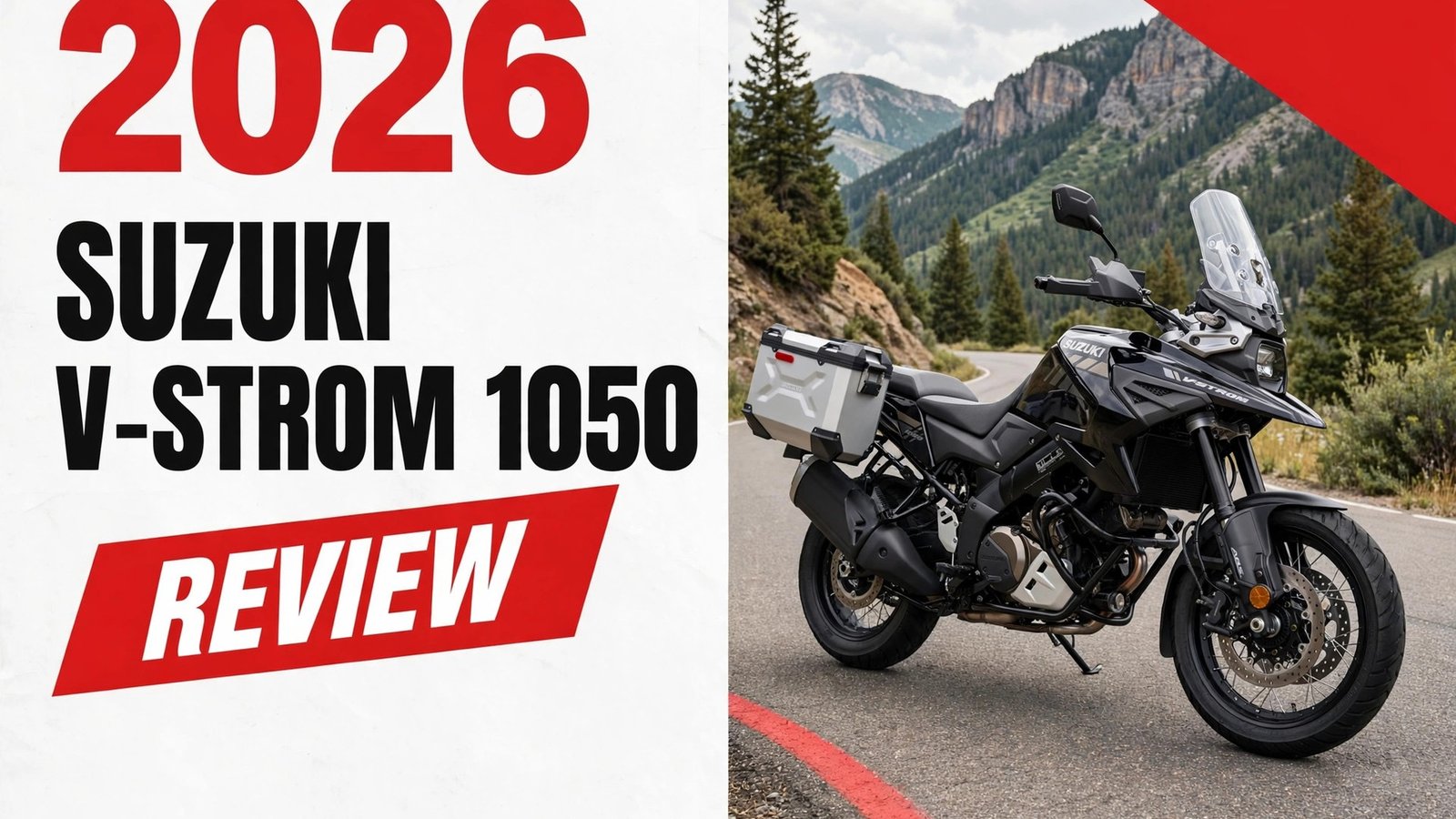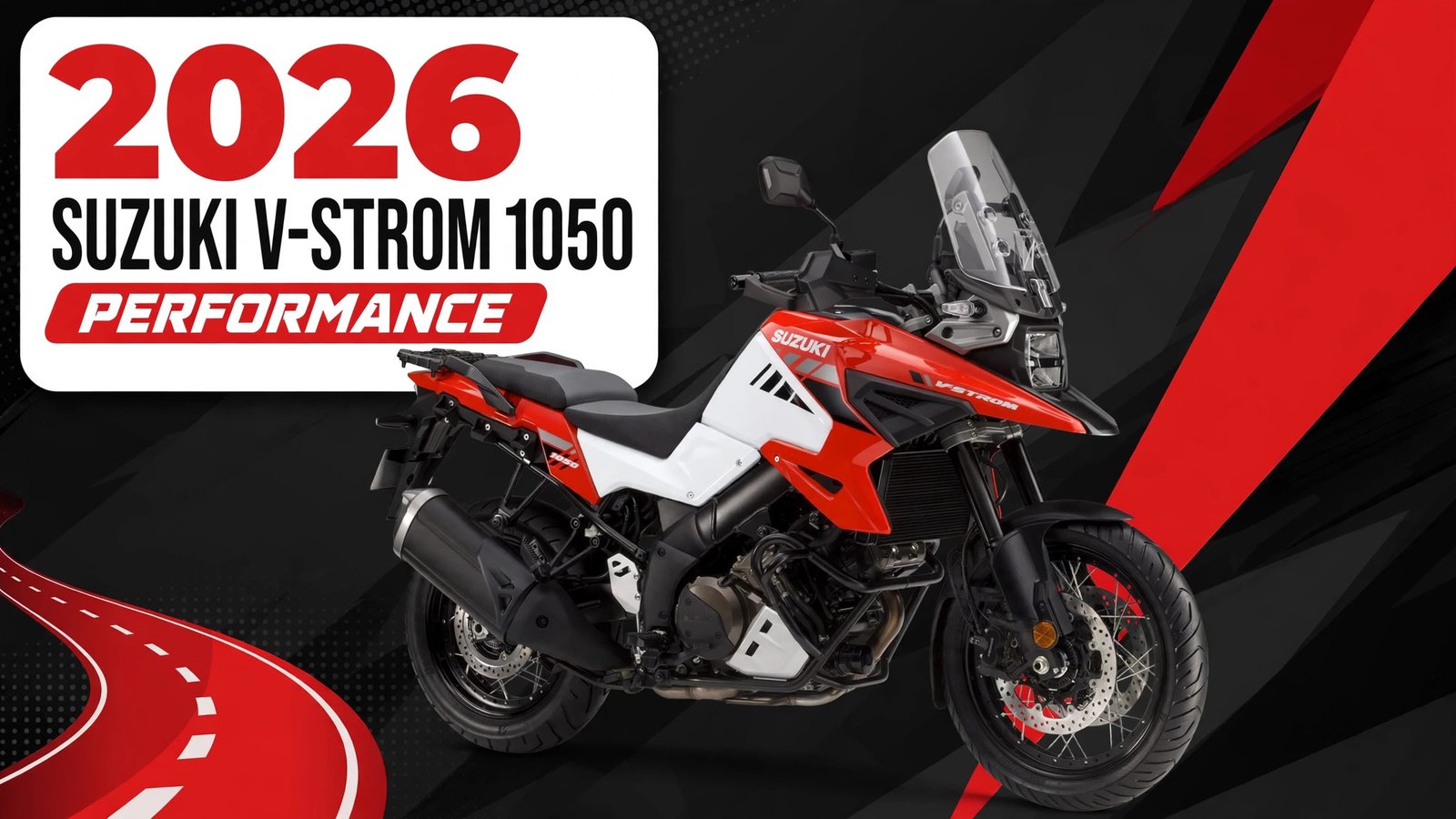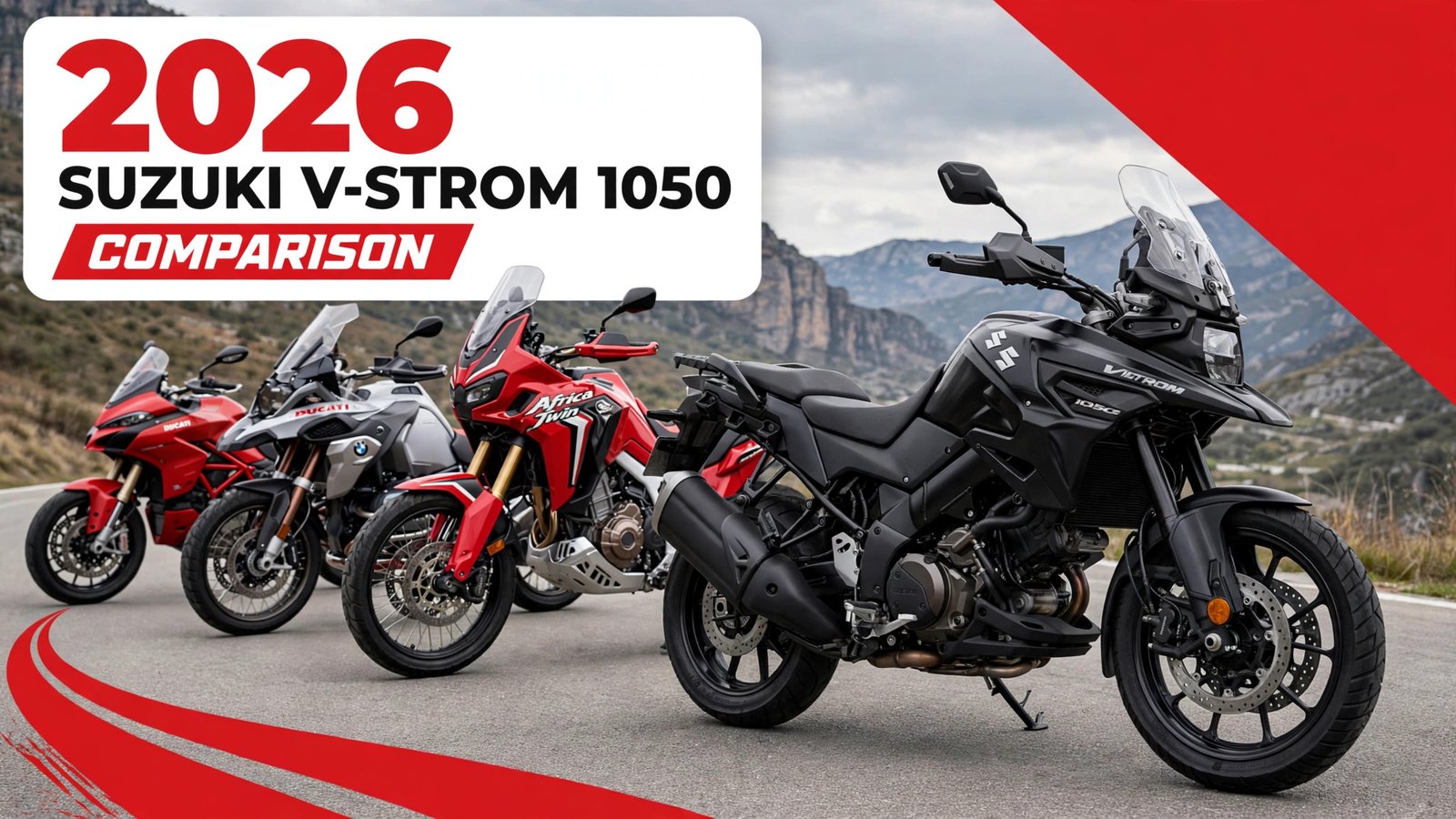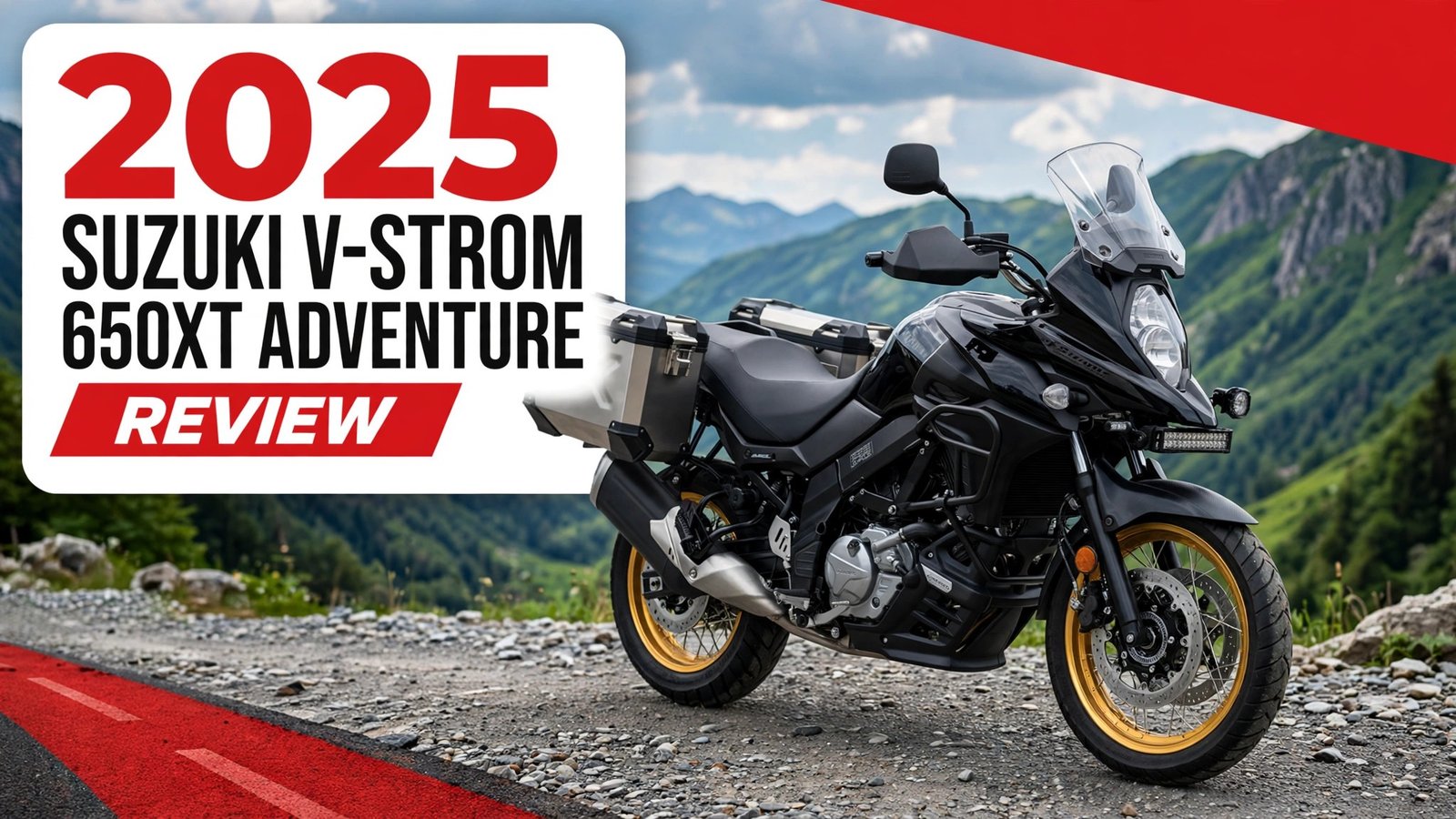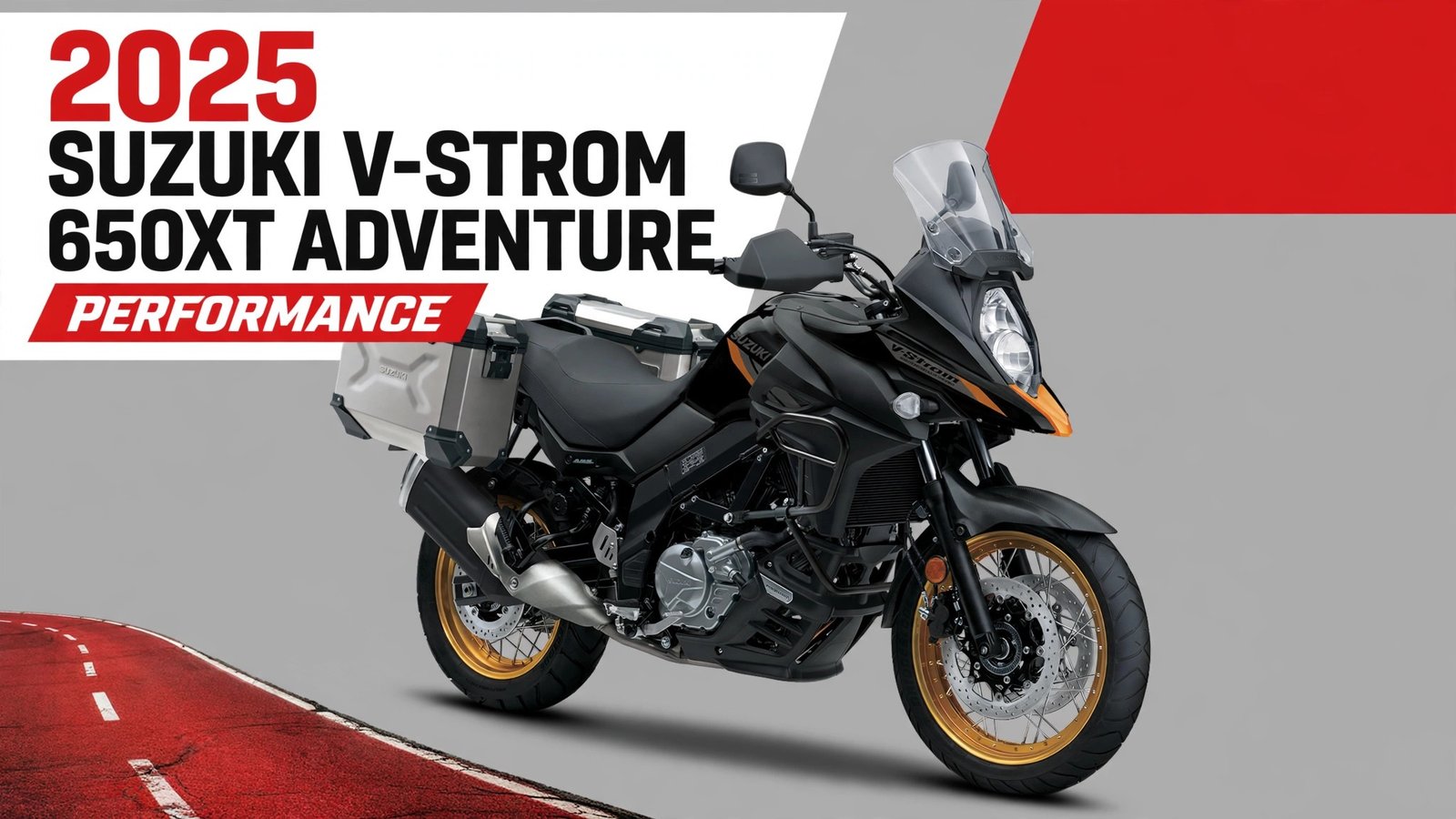
The short answer on Suzuki V-Strom 650XT Adventure performance: the 645cc V-twin makes 66.85 horsepower at the rear wheel, reaches 100 km/h in 4.99 seconds in the only instrumented gen-3 test, and returns roughly 45 to 50 mpg in real riding — but Suzuki itself publishes no horsepower, torque, top speed, or MPG figure at all. Every number below comes from a named test with a year attached, and where no test exists, this Suzuki V-Strom 650XT Adventure performance guide says so plainly. The backbone is the one dyno test of this exact trim, the one measured acceleration run, and three separate magazine fuel tests.
Suzuki V-Strom 650XT Adventure Engine Performance and Power Delivery
The 645cc liquid-cooled 90-degree V-twin has powered the V-Strom 650 since 2012. Suzuki V-Strom 650XT Adventure performance starts from a simple fact: Suzuki USA lists no horsepower, no torque, and no fuel-economy figure, and RevZilla’s 2023 XT spec table lists claimed power and torque as “N/A.”
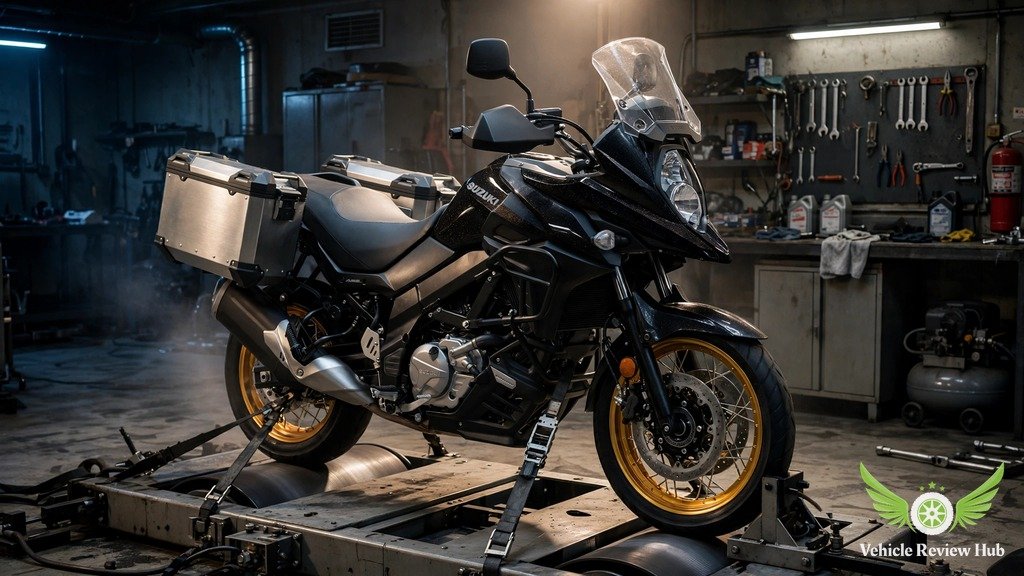
Cycle World Dynoed This Trim Itself: 66.85 HP
Cycle World strapped a 2023 XT Adventure to its Dynojet 250i and measured 66.85 hp at 9,210 rpm and 43.04 lb-ft at 6,560 rpm. That is the only dyno test of an XT trim anywhere, and the single most important number in any Suzuki V-Strom 650XT Adventure performance discussion. The magazine noted a smooth delivery and a flat torque curve. Global claimed figures are 69 PS (68 hp) at 8,800 rpm and 61 Nm (45 lb-ft) at 6,300 rpm. Watch the run itself below — the dyno test behind Suzuki V-Strom 650XT Adventure performance.
One Dyno Test Is the Trim’s Whole Data Set
One test is a thin data set, and Suzuki V-Strom 650XT Adventure performance has to be read with that in mind. Rider’s 2017 comparison measured the base 650 at 68.7 hp and 44.2 lb-ft on a Jett Tuning dyno. The table below lines up the measured figures behind Suzuki V-Strom 650XT Adventure performance.
| Bike | Peak horsepower | Peak torque | Source and dyno |
|---|---|---|---|
| V-Strom 650XT Adventure | 66.85 hp @ 9,210 rpm | 43.04 lb-ft @ 6,560 rpm | Cycle World Dynojet 250i, 2023 |
| V-Strom 650 (base) | 68.7 hp @ 9,100 rpm | 44.2 lb-ft @ 6,500 rpm | Rider Jett Tuning, 2017 |
| Kawasaki Versys 650 | 61.2 hp @ 8,300 rpm | 42 lb-ft @ 7,300 rpm | Rider Jett Tuning, 2017 |
| Honda Transalp | 70.58 hp | 47.01 lb-ft | Cycle World dyno |
| Yamaha Tenere 700 | 61.68 hp | 42.45 lb-ft | Cycle World dyno |
| V-Strom 800DE | 72.21 hp | 50.15 lb-ft | Cycle World dyno |
One trap: an unsourced “50.9 lb-ft” figure circulates online — a spec page’s 50.9 kW misread as pound-feet; the correct global claimed torque is 62 Nm, or 45.7 lb-ft at 6,300 rpm. Second, the Cycle World dyno test is the only measurement of this exact trim — the single number behind Suzuki V-Strom 650XT Adventure performance — and the XT performance guide covers the same platform figures for the plain XT.
Suzuki V-Strom 650XT Adventure Top Speed and Acceleration
Suzuki V-Strom 650XT Adventure performance at the top end: nobody has ever published an instrumented top-speed run for a gen-3 XT or this Adventure trim.

No Instrumented Run Exists for This Trim
The only tested speed number in V-Strom 650 history is 109 mph, and it is not a top speed at all: Cycle World recorded it as the quarter-mile trap speed of a first-generation bike in a 12.65-second run in 2006. Quoted online as the XT Adventure’s top speed, it is wrong twice over. The honest picture for Suzuki V-Strom 650XT Adventure performance is a range of labelled estimates: MotorcycleDB 185 km/h (115 mph, editorial estimate), 1000PS 180 km/h (112 mph), Bennetts UK 120 mph — clustering between 112 and 120 mph. The only real-world speed verdict is Ultimate Motorcycling’s 2020 test — “triple-digits with nary a complaint”, no number given — the only speed verdict Suzuki V-Strom 650XT Adventure performance has. For acceleration, the anchor for Suzuki V-Strom 650XT Adventure performance is ZigWheels: 0-100 km/h in 4.99 seconds in September 2019 — the only instrumented gen-3 acceleration number in existence. The same list timed the Versys 650 at 5.13 seconds: the XT was quicker despite giving away 2 Nm. ZigWheels tested an India-market bike with the same gen-3 engine and chassis; its 70.7 PS and 62 Nm are India-market ratings. No gen-3 0-60 mph test exists, and the gen-1 figures — 0-60 mph in 4.1 seconds, a 12.65-second quarter mile, 62.4 bhp, 53.4 mpg — belong to the 2006 bike only. The ZigWheels acceleration test is the source for the 4.99-second figure.
Traction Control Modes 1, 2 and Off Explained
The gen-3 XT Adventure has three traction-control settings: Mode 1, Mode 2, and Off. Mode 1 is the least intrusive, for dry pavement; Mode 2 cuts in earlier for wet roads and loose surfaces; Off turns the system off for dirt riding. It works with Low RPM Assist and Easy Start, and Suzuki V-Strom 650XT Adventure performance leans on both at parking-lot speeds. The bike has no ride-by-wire, quickshifter, cruise control, or TFT display, and the gen-2 XT had no traction control at all. For Suzuki V-Strom 650XT Adventure performance on the road, Mode 1 is the everyday setting, Mode 2 is the rain setting, and Off is the dirt setting.
Suzuki V-Strom 650XT Adventure Mileage and Fuel Economy
Fuel economy is where Suzuki V-Strom 650XT Adventure performance gets the most confused coverage online: three magazine tests, an owner database, and UK figures all get quoted as if they were one number. What exists is platform data plus owner-reported figures — every set kept separate, with its year and its bike attached.
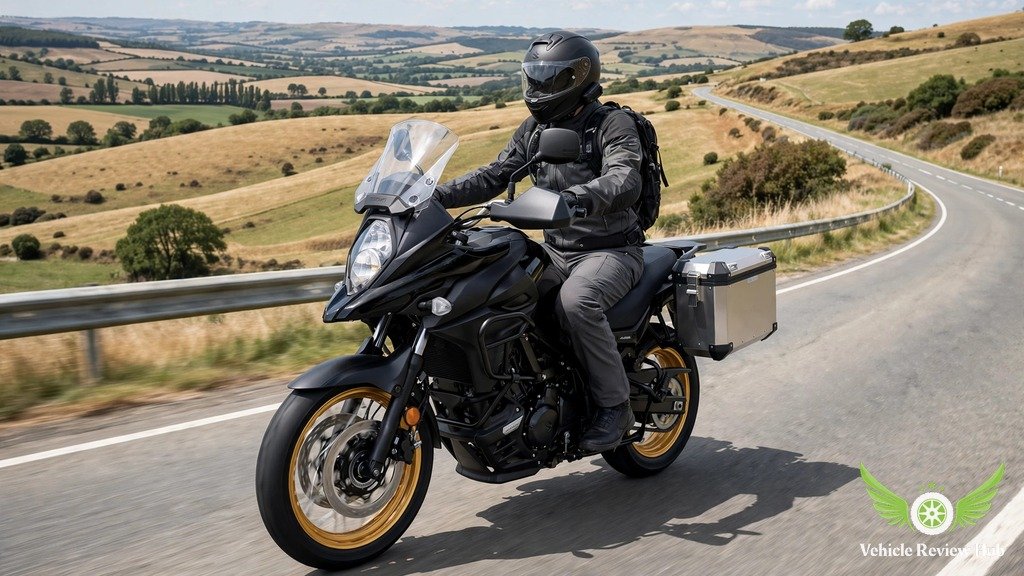
No Measured MPG Exists for the XT Adventure
Say it plainly: there is no measured MPG figure for the XT Adventure trim. Suzuki USA publishes none, and no magazine has fuel-tested the Adventure kit. The tank holds 5.3 gallons, and the bike takes 87 PON minimum fuel. The platform’s tested figures cluster in the mid-40s to low-50s — the table below shows the three Rider tests behind Suzuki V-Strom 650XT Adventure performance as separate rows.
| Test | Low / average / high MPG | Range on average | Bike and year |
|---|---|---|---|
| Rider first ride | 37.1 / 44.7 / 51.5 mpg | 237 miles | 2015 gen-2 XT |
| Rider comparison | 41.0 / 46.9 / 58.5 mpg | 248 miles | 2017 base 650 (Versys 40.5 / 51.3 / 56.0) |
| Rider test | 47.5 / 50.5 / 70.6 mpg | 268 miles | 2018 XT |
| Fuelly owner data | 45.0 to 54.4 mpg year averages | 240 to 288 miles | 464 DL650 owners, 3.8M miles |
Each range is the tank size times that test’s average — 5.3 gallons times 44.7, 46.9, and 50.5 mpg gives 237, 248, and 268 miles for Suzuki V-Strom 650XT Adventure performance. The Rider 2015 XT first ride is the source for the 2015 set.
Owner Figures of 50-60 MPG Are Platform Data
Owners commonly report 50 to 60 mpg from the V-Strom 650 platform — real figures, but platform data. Fuelly’s database covers 464 DL650 owners and 3.8 million miles, with year averages from 45.0 to 54.4 mpg. That is a strong real-world anchor for Suzuki V-Strom 650XT Adventure performance in everyday riding. One warning applies: UK figures are imperial gallons — one UK gallon is 1.2 US gallons — so Bennetts’ 60 mpg in the UK is about 50 mpg in US gallons.
Suzuki V-Strom 650XT Adventure Real-World Riding Experience
Numbers tell half the story of Suzuki V-Strom 650XT Adventure performance; the other half comes from the only full test of this exact trim. Ultimate Motorcycling tested a 2020 XT Adventure and published 14 fast facts about it — the best riding account of the bike with its Adventure kit fitted.

Ultimate Motorcycling’s 2020 Test of This Trim
Ultimate Motorcycling’s verdict on Suzuki V-Strom 650XT Adventure performance: the engine is tuned for torque and pulls nicely at open-highway speeds. Handling was extraordinarily intuitive, and the testers took it to triple digits with nary a complaint. The A40 tires were impeccable on pavement and still usable in the dirt. Easy Start and Low RPM Assist earned praise. The Ultimate Motorcycling 2020 XT Adventure test is the source for these verdicts. RevZilla’s 2023 XT test adds a counterpoint on Suzuki V-Strom 650XT Adventure performance: the lower engine cowl is flimsy plastic that would not handle serious impacts on rocky trails, the stock Bridgestone Battlax Adventurecross Scrambler AX41S tires gave immediate slide-outs on sand and gravel, and a Continental TKC 80 swap made a massive difference. RevZilla also found Low RPM Assist held a near-perfect six mph in first gear with the clutch out and no throttle, even uphill. The full XT Adventure review covers the trim’s equipment and pricing.
Suspension Bottoms on Rugged Dirt: Tester Verdict
The suspension is the honest weak point in Suzuki V-Strom 650XT Adventure performance off the pavement. The front fork has no damping adjustment, and Ultimate Motorcycling wrote that you can blow through the travel quickly on uneven terrain — the testers bottomed out on a rugged urban dirt road. That sets expectations for Suzuki V-Strom 650XT Adventure performance: a touring bike with adventure styling and real dirt-road ability, not a dirt-first machine. On pavement the setup works well — a 43mm fork with 5.9 inches of travel, a link-type rear shock with 6.3 inches. RevZilla agreed, calling the XT one heck of a sport-tourer instead of a true adventure bike. For most miles on pavement, the suspension is fine. For rough trails, the bottoming and the lack of front damping are real limits.
Suzuki V-Strom 650XT Adventure Handling, Braking and Stability
Handling is where the XT Adventure earns its reputation: Suzuki V-Strom 650XT Adventure performance in corners and braking comes down to a light-feeling chassis, a low seat, and strong brakes.
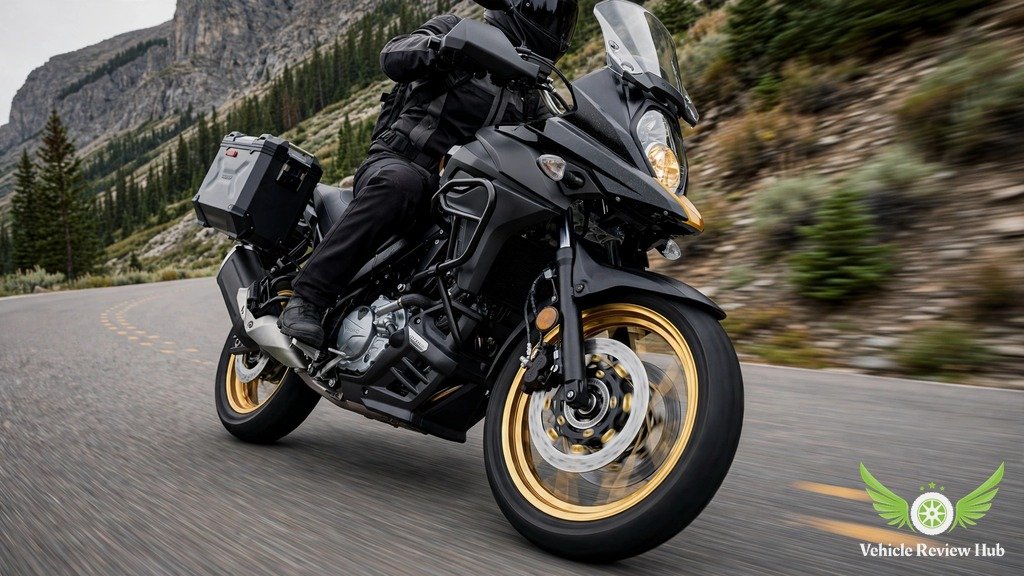
476 Pounds Bare, Around 528 Fully Accessorized
Suzuki lists two curb weights: 476 lb bare, and around 528 lb accessorized. Ultimate Motorcycling’s 2020 test lists 528 pounds — the accessorized figure, not the bare bike. The roughly 52 lb of Adventure kit is the performance cost of the trim, showing up in Suzuki V-Strom 650XT Adventure performance. At 32.9 inches, the seat is low for the class, and that plus the flat torque curve is why riders find the bike easy to manage despite the weight. Never present 528 lb as the bare curb weight, or 476 lb as the as-ridden weight with the panniers on. The Suzuki USA spec page is the source for both figures.
Brake Pads, Suspension Linkage and Bearing Checks
The brakes are Tokico two-piston calipers on twin 310mm front discs and a Nissin single-piston caliper on a single 260mm rear disc, with ABS standard that cannot be switched off — the braking side of Suzuki V-Strom 650XT Adventure performance. Ultimate Motorcycling noted the same thing: a rider who wants the rear wheel free on dirt has to pull fuses. In practice, Suzuki V-Strom 650XT Adventure performance in braking is predictable rather than fierce, and RevZilla’s panic-brake test found plenty of stopping power. For ownership, the checks that matter are the brake pads, the suspension linkage, and the bearings. Pads wear faster on a 528 lb bike ridden two-up with luggage, so check pad thickness at every service and change the fluid every two years. The rear suspension linkage lives low and collects road grit, so clean and grease it on schedule or it seizes. Valve clearance inspection falls at 14,500 miles, and the RevZilla 2023 XT test is a useful read on how the platform behaves when ridden hard.
Suzuki V-Strom 650XT Adventure Performance Compared With Other Adventure Bikes
Comparison is where Suzuki V-Strom 650XT Adventure performance makes its case: not the quickest or the most powerful, but the one that asks the least of its rider while giving up the least. The bigger 800DE Adventure is the direct rival, and the Versys 650 the closest on price and purpose.
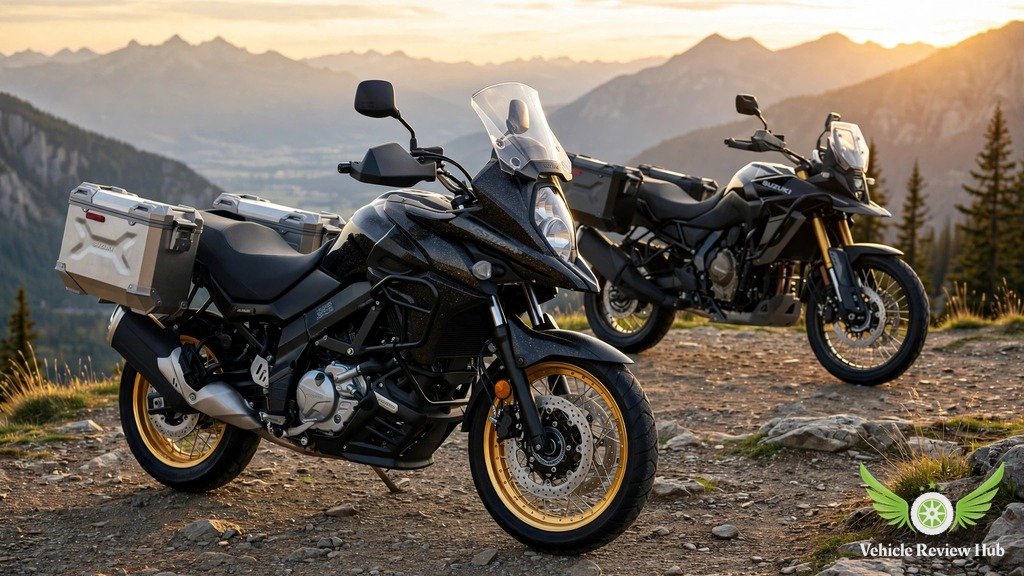
Suzuki V-Strom 650XT Adventure vs Suzuki V-Strom 800DE Adventure
The 2025 800DE Adventure costs $13,159 plus $530 destination, exactly $2,160 more than the XT Adventure’s $10,999. That $2,160 buys a 776cc parallel twin with about 83 hp and 57.5 lb-ft claimed, a Cycle World dyno figure of 72.21 hp and 50.15 lb-ft, a 5-inch TFT, ride-by-wire, a quickshifter, an assist-and-slip clutch, a 12-month unlimited-mileage warranty, fully adjustable Showa suspension with 8.7 inches of travel, and switchable rear ABS — plus the same 37-liter panniers, accessory bar, and skid plate. Against that, Suzuki V-Strom 650XT Adventure performance gives up about 5 hp at the wheel and the modern electronics, but the bike is 31 lb lighter before accessories, runs tubeless spokes where the 800DE runs tube-type, and costs $2,160 less. The 800DE Adventure weighs 507 lb before accessories, with a 33.7-inch seat against 32.9. For a rider who rides mostly on pavement and wants the easiest bike to live with, Suzuki V-Strom 650XT Adventure performance makes the XT Adventure the better buy. For real dirt, the 800DE Adventure earns its premium. One price note: the 2026 800DE Adventure lists at $13,249, so any article quoting that figure as a 2025 price is mixing model years — the 2025 price is $13,159, confirmed by MotorCycle News and dealer listings. The MotorCycle News 2026 Suzuki announcement separates the two years. The 800DE review covers the bigger sibling, the 800DE performance figures come from the same Cycle World dyno program, and the Versys 650 performance numbers from the same 2017 Rider session.
Is the Suzuki V-Strom 650XT Adventure Suitable for Beginner Riders? Mostly
Mostly, yes — with conditions. Cycle World’s 2025 list of top adventure motorcycles for new riders includes the XT Adventure at $10,999, and the case for Suzuki V-Strom 650XT Adventure performance is strong: about 67 hp at the wheel, a smooth flat torque curve, a low 32.9-inch seat, forgiving Low RPM Assist and Easy Start, three traction-control modes. The case against it is weight and dirt ability: 476 lb bare and around 528 lb with the kit fitted, top-heavy with the panniers on, no slipper clutch, a halogen headlight, and suspension that bottoms on rough dirt. The honest verdict on Suzuki V-Strom 650XT Adventure performance: a capable first big adventure bike for a careful new rider who has already learned the basics on something smaller — not a first motorcycle, and not a dirt-first bike. There is no 2026 US model, and the 2027 SV-7GX sport-tourer is a different bike, not a replacement. The XT comparison puts the same question against the Versys, the Transalp, and the Tenere 700.
Suzuki V-Strom 650XT Adventure Performance FAQs
These are the questions buyers actually ask about Suzuki V-Strom 650XT Adventure performance, answered with the same tested figures used above.
What is the top speed of the Suzuki V-Strom 650XT Adventure?
No tested top speed exists for Suzuki V-Strom 650XT Adventure performance. The 109 mph figure quoted online is the gen-1 bike’s 2006 quarter-mile trap speed. Estimates cluster between 112 and 120 mph.
How fast does the V-Strom 650XT Adventure accelerate (0-60 / 0-100 km/h)?
ZigWheels measured the gen-3 XT at 0-100 km/h in 4.99 seconds, the only instrumented gen-3 acceleration figure for Suzuki V-Strom 650XT Adventure performance.
How much horsepower and torque does the XT Adventure really make?
Suzuki V-Strom 650XT Adventure performance at the rear wheel is 66.85 hp at 9,210 rpm and 43.04 lb-ft at 6,560 rpm, measured by Cycle World. Suzuki publishes no claim.
What MPG does the XT Adventure get in the real world?
No MPG test exists for Suzuki V-Strom 650XT Adventure performance. The platform’s three Rider tests measured 44.7, 46.9, and 50.5 mpg on average.
How far can the XT Adventure go on a full tank?
About 240 to 270 miles: 237 miles on the 2015 average, 248 on the 2017 average, and 268 on the 2018 average — the range side of Suzuki V-Strom 650XT Adventure performance.
Is the V-Strom 650XT Adventure fast enough for highway riding?
Yes, comfortably. For Suzuki V-Strom 650XT Adventure performance on the highway, Ultimate Motorcycling’s test said the engine pulls nicely at open-highway speeds and cruises all day well over the speed limit. The highway weakness is wind protection and the dated dash.
How does the XT Adventure compare with the 800DE Adventure on performance?
The 800DE Adventure makes about 5 hp more at the wheel (72.21 hp against 66.85 hp) and 7 lb-ft more torque, with modern electronics, for $2,160 more in 2025 — the gap Suzuki V-Strom 650XT Adventure performance has to close. The XT Adventure is lighter and easier to manage — the better buy for pavement riders.
Is the XT Adventure quicker than the Kawasaki Versys 650?
Yes, slightly. For Suzuki V-Strom 650XT Adventure performance, ZigWheels timed the XT at 4.99 seconds to 100 km/h against the Versys at 5.13, and Rider’s 2017 dyno measured the base 650 at 68.7 hp against 61.2 hp.
What do the traction control modes 1, 2 and Off actually do?
Mode 1 is the least intrusive setting for dry pavement, Mode 2 steps in earlier for wet roads and loose surfaces, and Off turns the system off for dirt riding — the three settings behind Suzuki V-Strom 650XT Adventure performance.
Is the XT Adventure good for beginner riders?
Mostly. For Suzuki V-Strom 650XT Adventure performance, it is a capable first big adventure bike for a rider who has learned the basics on something smaller.
Does the extra weight of the Adventure kit (panniers, bars) slow it down?
Yes, by a small but real amount. The Adventure kit adds about 52 lb, taking it from 476 lb to around 528 lb, costing Suzuki V-Strom 650XT Adventure performance a little acceleration and braking distance.
Why doesn’t Suzuki publish horsepower or top speed figures?
Suzuki USA lists no horsepower, torque, top speed, or MPG figure for the V-Strom 650 family. Buyers must rely on independent tests for Suzuki V-Strom 650XT Adventure performance.