If you want a straightforward, mechanical 100-horsepower tractor with no exhaust aftertreatment to babysit, the 1990s John Deere 6400 is one of the first names that comes up. This John Deere 6400 review looks at exactly that machine: a Mannheim-built 6000 Series utility tractor with a 4.5-litre turbo diesel, a claimed 85 horsepower at the PTO, and a reputation for running tens of thousands of hours. That is the promise this John Deere 6400 review tests against verified figures and real used-market evidence.
The short answer from this John Deere 6400 review: the 6400 is a strong used buy when the transmission, cab, and loader match your work — and a money pit only when you buy on paint instead of records. Because prices swing from under $15,000 to over $40,000, this John Deere 6400 review separates verified specifications from seller talk and flags where sources disagree. Price is where this John Deere 6400 review spends the most care.
John Deere 6400 Review, Features and Used Price
The 6400 was the big four-cylinder of John Deere’s 6000 Series, sitting above the 6100, 6200, and 6300 and aimed at livestock farms, mixed farms, and contractors who needed a genuine 100-horsepower utility tractor without stepping up to the heavier 7000 Series. This John Deere 6400 review starts with what the tractor is, what it does well, and what used examples cost.
Production Years, Utility Applications and Main Features
In this John Deere 6400 review, the production story needs a small note first: the 6400 was built in Mannheim, Germany, from 1992 to 1997, with some sources listing production into 1998. It was part of John Deere’s first truly global tractor range, the 6000 Series, with a completely redesigned cab and a new transmission family.
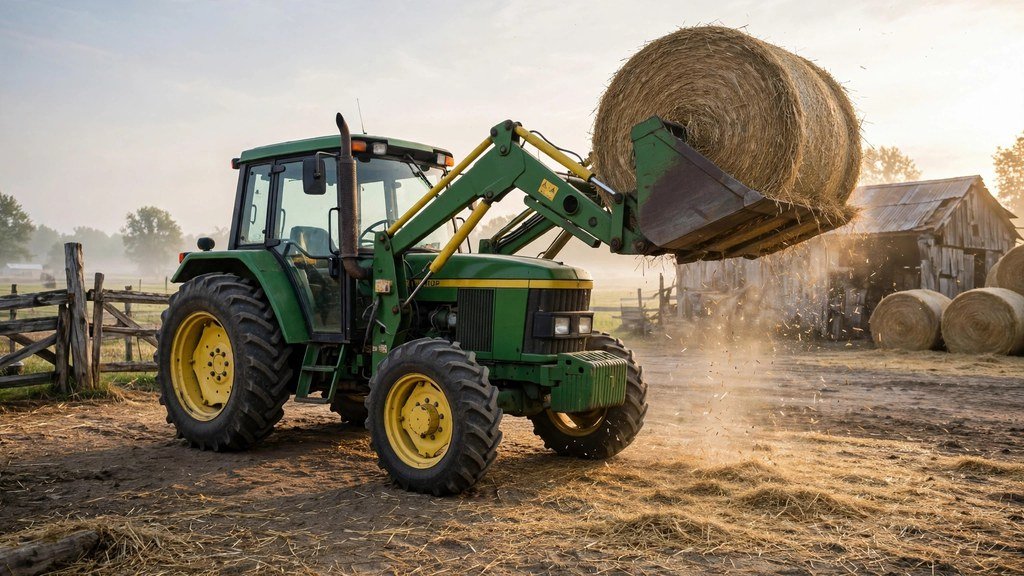
In this John Deere 6400 review, the 6400 targets livestock producers, mixed farms, and small contractors. Daily work in this John Deere 6400 review means a mid-sized round baler, mower-conditioner, tedder, loader work, and medium tillage — the jobs where 85 PTO horsepower is enough and a heavier row-crop tractor is overkill. The standard layout is a two-post foldable ROPS, with the ComfortGard cab as the option most buyers should look for: it is quieter, weatherproof, and worth real money at resale. This John Deere 6400 review treats a cab, MFWD, and a loader as the three options that most change what a used 6400 is worth.
One more feature deserves attention in this John Deere 6400 review: the 6400 is a mechanical tractor from before the emissions era. There is no DPF to regenerate, no DEF to fill, and no SCR system to fault — servicing it is spanners-and-filters work rather than laptop work, and for many buyers that simplicity is the whole point.
The video below is an owner review of the John Deere 6400 — a useful look at the tractor itself before the buying detail.
Used Prices by Hours, Condition, Cab and Loader
In this John Deere 6400 review, used 6400 prices vary enormously, so read them as planning bands anchored to real listings, not as a single price. The strongest US anchor found for this John Deere 6400 review is a 1996 model with 5,996 hours that sold at $41,900, fitted with two remote valves, 540/1000 PTO, and 90-percent rear tires. At the other end, a classified ad listed a 6,536-hour PowrQuad example at $13,750 — but with the left cab door missing, which tells you plenty about its condition. An owners’ forum report of a tidy 4,500-hour machine selling for $30,000 sits between those poles and matches the middle of the market.
Hours and condition move price more than model year. A tidy 5,000-hour cab tractor with MFWD and a loader is a different purchase from a rough 10,000-hour machine, and a loader alone can be worth several thousand dollars. The running costs behind these prices are broken down in the ownership-cost figures. That discipline is the buying advice of this John Deere 6400 review.
| Used 6400 example | Hours | Asking / sold price |
|---|---|---|
| 1996 model, MFWD cab (dealer, sold) | 5,996 | $41,900 |
| Tidy example, owners’ forum report | About 4,500 | $30,000 |
| Rough example, classified ad (door missing) | 6,536 | $13,750 |
| US planning band, rough or high-hour | 8,000+ hours | Roughly $10,000–$20,000 |
| US planning band, average working tractor | 4,000–8,000 hours | Roughly $20,000–$35,000 |
| US planning band, clean cab MFWD + loader | Under 4,000 hours | Roughly $35,000–$45,000+ |
John Deere 6400 Engine, Horsepower and Specifications
The engine is the reason the 6400 exists, and the focus of this John Deere 6400 review: a 4.5-litre four-cylinder turbo diesel doing honest 100-horsepower work in a utility frame, with no aftertreatment hardware in the way. Power is the heart of this John Deere 6400 review.
4.5L Turbocharged Diesel Engine and Rated Power
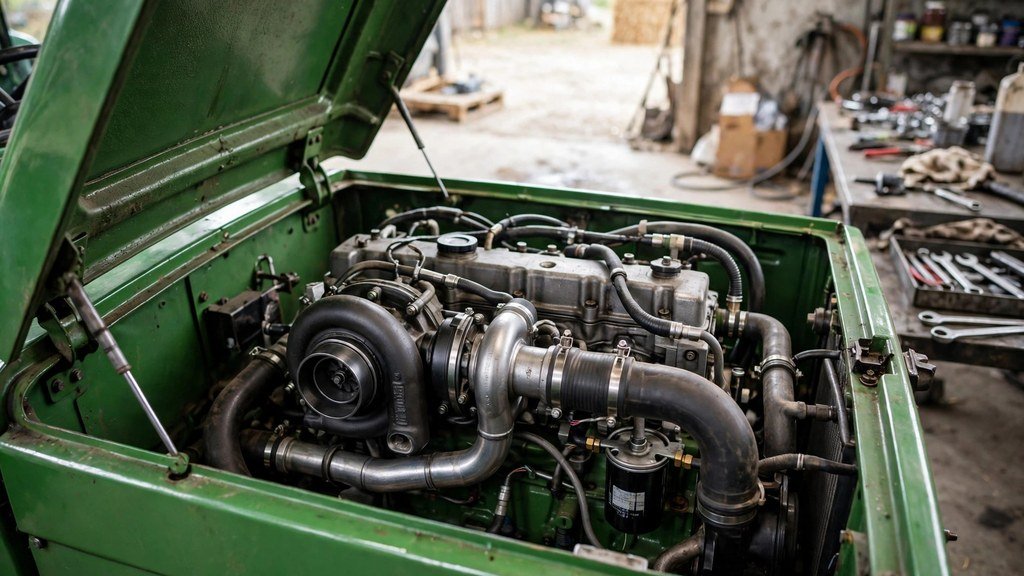
In this John Deere 6400 review, the engine is the John Deere CD4045: a 4.5-litre (276 cu in) four-cylinder turbocharged diesel with a 106 mm bore and 127 mm stroke, liquid-cooled and mechanically injected. Rated engine power is 100 hp (74.6 kW) at 2,300 rpm, with peak torque of 298 lb-ft (404 Nm) at 1,540 rpm. Claimed PTO power is 85 hp (63.4 kW) at 2,300 rpm — the figure most listings quote, and the one to shop on. Some sources quote “85 hp” without saying it is the PTO figure; this John Deere 6400 review keeps engine and PTO power separate.
That 15-horsepower gap between engine and PTO output is normal drivetrain and hydraulic loss, and this John Deere 6400 review rates the 6400 as genuinely capable of mid-sized PTO work: a 4×5 or 4×6 round baler, a mower-conditioner, and a tedder are all comfortable, while a big square baler is beyond it. PTO strength is a highlight of this John Deere 6400 review.
Fuel Capacity, Hydraulic Flow, Hitch Lift and Tractor Weight
In this John Deere 6400 review, fuel capacity splits by station — check it on any listing. The open-station ROPS version carries 29 gallons (109.8 litres), while the cab version carries 43.6 gallons (165 litres). At mixed-work consumption of roughly 4 to 5 gallons per hour, the cab tank gives a full working day plus reserve, while the ROPS tank needs a midday fill on long days. Fuel use under load is covered in the performance figures.
Hydraulics are a strong point: a closed-center, pressure-flow-compensated system at 2,900 psi, with 18.7 gpm (70.8 L/min) standard flow and an optional 25.0 gpm (94.6 L/min) pump, feeding one to five selective control valves. Rear hitch category is II, with lower-link draft sensing and lift quoted at 5,920 lb (2,685 kg) at 24 inches behind the lift points. Ask which basis a lift figure uses. Hydraulic spec is another strength this John Deere 6400 review notes.
Weight and size follow the same configuration split. Shipping weight runs from 7,605 lb (2WD ROPS) and 8,115 lb (2WD cab) to 8,245 lb (4WD ROPS) and 8,755 lb (4WD cab), on a 94.5-inch wheelbase, 165.7 inches long and 105.9 inches high. Standard rear tires are 18.4-34, with 7.50-18 fronts on 2WD and 13.6-24 on MFWD. Size and weight complete the specification picture in this John Deere 6400 review.
| Specification | John Deere 6400 |
|---|---|
| Engine | John Deere CD4045, 4.5 L 4-cylinder turbo diesel |
| Rated engine power | 100 hp (74.6 kW) at 2,300 rpm |
| Claimed PTO power | 85 hp (63.4 kW) at 2,300 rpm |
| Peak torque | 298 lb-ft (404 Nm) at 1,540 rpm |
| Fuel tank | 29 gal (ROPS) / 43.6 gal (cab) |
| Hydraulics | Closed-center PFC, 2,900 psi, 18.7 gpm std (25.0 gpm opt) |
| Hitch / weight | Category II, 5,920 lb lift at 24 in; 7,605–8,755 lb shipping weight |
John Deere 6400 Transmission and Implement Compatibility
A 100-horsepower utility tractor earns its keep by matching implements, and transmission choice matters most for how pleasant that work feels. Implement matching gets full attention in this John Deere 6400 review.
SyncroPlus vs. PowrQuad and Creeper Options
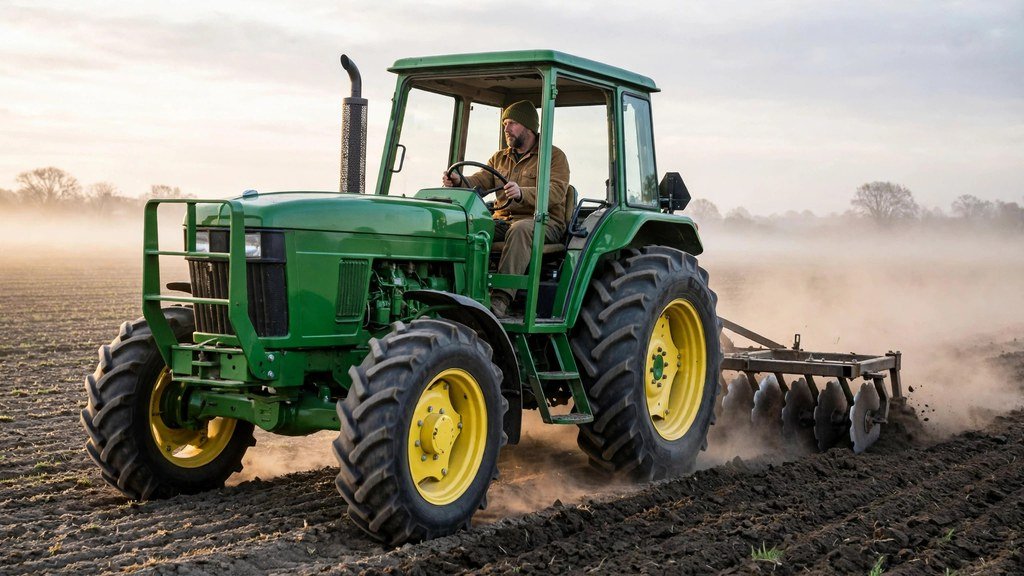
Two transmissions were offered, and this John Deere 6400 review recommends understanding both before you buy. SyncroPlus is a fully synchronized 12-forward, 4-reverse gearbox with a triple wet-disc PermaClutch II — simple, durable, and about 500 lb lighter than the PowrQuad according to owners who have run both. PowrQuad is a partial power shift with 16 forward and 16 reverse gears, four power-shift steps in four synchronized ranges, and a left- or right-hand reverser that makes loader work far less tiring. A creeper option stretches either box: 21 forward and 7 reverse on SyncroPlus, 28 forward and 28 reverse on PowrQuad.
Which one should you buy used, according to this John Deere 6400 review? For loader work and frequent direction changes, the PowrQuad’s reverser is worth real money. For steady PTO work and the lowest price, SyncroPlus is the simpler, cheaper box, and this John Deere 6400 review would not pay a PowrQuad premium for that work. Some listings quote a 24-forward PowrQuad figure; that counts creeper splits differently, so check the actual gearbox rather than the advert headline.
Rear PTO, Category II Hitch, Loader and Hydraulic Remotes
In this John Deere 6400 review, the independent rear PTO offers 540 and 1,000 rpm speeds, with some late examples also listing 540E economy. The Category II rear hitch, with lower-link draft sensing, handles mid-sized ploughs, disc harrows, seed drills, balers, and mower-conditioners. Up to five rear selective control valves were available, though two is the common used-market fitment — count SCVs before you buy if you run a grapple or fourth function, since adding valves later costs more. Hitch and hydraulics decide implement fit in this John Deere 6400 review.
For loader work, this John Deere 6400 review notes the factory-matched loaders are the John Deere 620, 640NSL, and 640SL, with the 640-series loaders the usual fit on cab tractors. A factory loader-ready machine (joystick, third service) is worth a premium over a retrofit. Pre-purchase hitch, PTO, and hydraulic inspection is covered in the maintenance checklist — read it before you inspect any machine.
John Deere 6400 vs. 6300 and 6410
Most buyers cross-shop the 6400 against its own siblings, so this section compares the smaller 6300 and the successor 6410. Sibling comparisons sharpen this John Deere 6400 review.
Engine Power, PTO Output and Configuration Differences
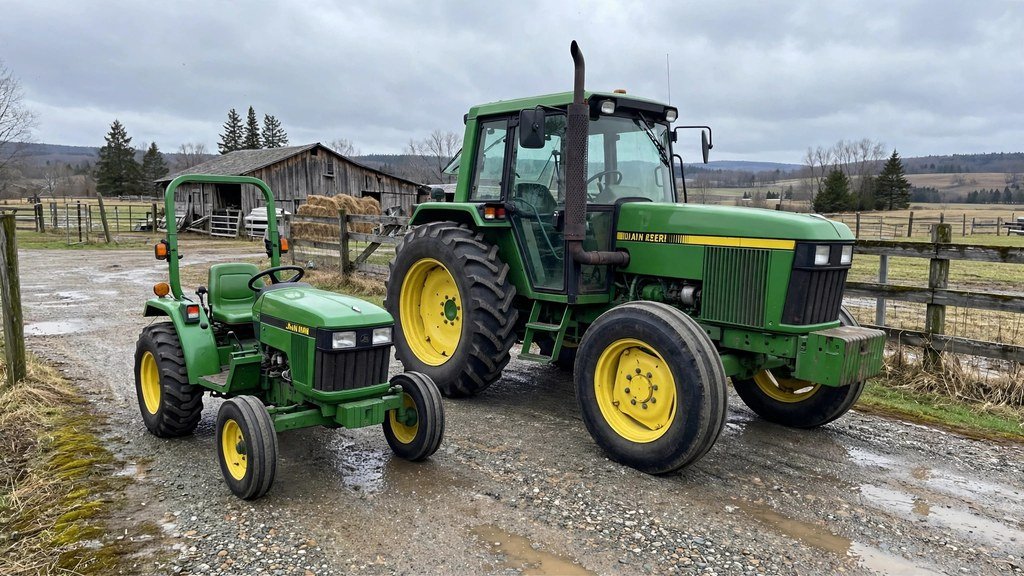
The headline difference in this John Deere 6400 review is power. The 6300 uses the smaller CD4039 3.9-litre four-cylinder with a claimed 75 PTO horsepower; OECD test 1524 measured 79.8 PTO horsepower and 64 drawbar horsepower on a 4WD example at 4.5 gallons per hour. The 6400 steps up to the 4.5-litre CD4045 with 85 claimed PTO horsepower — a useful jump for baling and tillage, on the same wheelbase and the same transmission choices. The 6410, the 10 Series successor tested in OECD test 1806 in mid-1998, uses the 4045TL056 4.5-litre with 104 gross horsepower, a claimed 90 PTO horsepower (92.5 to 98 measured), 74.8 tested drawbar horsepower, and a stronger 25.4 gpm hydraulic pump — but it is a newer, more electronic machine and typically costs more used.
The 6400’s 85 PTO horsepower covers mid-sized balers and mower-conditioners, while the 6300 gives up roughly 10 PTO horsepower, which matters on a big baler but not on loader work. The 6410’s extra power and hydraulics suit heavier implements, but for most mixed farms the 6400’s simpler mechanical character and lower price matter more day to day. That comparison frames this John Deere 6400 review’s buying advice.
A well-specified 6300 with MFWD, cab, and a loader can beat a bare 6400, and a 6410 is right only when the work needs its extra power and hydraulics or you want the newer 10 Series cab.
| Model | Engine | Claimed PTO power | Tested PTO power | Hydraulic pump |
|---|---|---|---|---|
| 6300 (1992–1997) | CD4039 3.9 L 4-cylinder | 75 hp | 79.8 hp (OECD 1524) | 18.7 gpm class |
| 6400 (1992–1997) | CD4045 4.5 L 4-cylinder turbo | 85 hp | Not separately published here | 18.7 gpm (25.0 opt) |
| 6410 (10 Series successor) | 4045TL056 4.5 L 4-cylinder turbo | 90 hp | 92.5–98 hp (OECD 1806) | 25.4 gpm |
Which Utility Tractor Fits Your Farm?
Start from the heaviest job, this John Deere 6400 review advises, not the average one. If your biggest implement is a mid-sized round baler, 10-foot mower-conditioner, or 4-bottom plough, the 6400 is sized right and the 6300 will cope with less reserve. For a large square baler, heavy disc harrow, or big seed drill, step up to the 6410 or a heavier frame rather than asking a 4.5-litre four-cylinder to live at full load. Mostly loader work? A 6300 does the job for less.
Next, weigh simplicity against power. The 6400’s mechanical diesel and widely shared 6000 Series parts are a real advantage for owners who service their own machines, and the main reason to choose it over the 6410 — but it also means a noisier, older cab and fewer electronic aids. That balance is the verdict of this John Deere 6400 review.
A fully specified 6400, this John Deere 6400 review finds, is far more capable than a bare 2WD open-station example, and the same logic applies across the 6000 Series ladder. For long-term costs, the John Deere 6400 ownership cost guide compares purchase price, running costs, and resale.
John Deere 6400 Review FAQs
Questions buyers ask most often about the 6400, answered from verified figures. Every answer below follows the evidence gathered for this John Deere 6400 review.
How much horsepower does the John Deere 6400 have?
This John Deere 6400 review rates the 6400 at 100 engine horsepower at 2,300 rpm from its 4.5-litre four-cylinder CD4045 turbo diesel, with 85 horsepower claimed at the PTO. Shop on the 85 PTO figure, since that is what your implements actually receive.
What engine does the John Deere 6400 use?
The John Deere CD4045: a 4.5-litre (276 cu in) four-cylinder turbocharged diesel with a 106 mm bore and 127 mm stroke, mechanically injected, with no DPF, DEF, or SCR system — it predates modern exhaust aftertreatment entirely.
When was the John Deere 6400 made?
The 6400 was built in Mannheim, Germany, from 1992 to 1997, with some sources listing production into 1998. It belongs to the 6000 Series, John Deere’s first truly global tractor range, and an economy 6400SE version was also offered.
What transmissions were available on the John Deere 6400?
Two: SyncroPlus, a fully synchronized 12-forward, 4-reverse gearbox (21 forward, 7 reverse with creeper), and PowrQuad, a partial power shift with 16 forward and 16 reverse gears (28 forward, 28 reverse with creeper), both with a triple wet-disc PermaClutch II.
Is the John Deere 6400 2WD or MFWD?
Both were offered; most buyers should prefer MFWD for tillage, loader work, and slopes. A 2WD example is cheaper but harder to sell on, and MFWD versions are the ones that hold value.
What loader fits the John Deere 6400?
Factory-matched loaders are the John Deere 620, 640NSL, and 640SL. A factory loader-ready machine with joystick and third service is worth a premium over a retrofit, and aftermarket loaders also appear on used examples.
How much does a used John Deere 6400 cost?
As planning bands only, this John Deere 6400 review puts rough or high-hour machines at roughly $10,000–$20,000, average working tractors at roughly $20,000–$35,000, and clean documented cab MFWD loader examples at roughly $35,000–$45,000 or more. Anchors include a 1996 model with 5,996 hours sold at $41,900 and a tidy 4,500-hour example reported sold at $30,000.
What is the John Deere 6400 fuel tank capacity?
It depends on the station: 29 gallons on the open-station ROPS version and 43.6 gallons on the cab version. Confirm the tank size on any machine you inspect, since it changes how far a working day goes.
What is the John Deere 6400 hitch lift capacity?
Category II hitch with lower-link draft sensing, rated at 5,920 lb (2,685 kg) at 24 inches behind the lift points — the figure this John Deere 6400 review uses for implement matching.
Is the John Deere 6400 a good tractor?
For a mixed farm needing one versatile, simple tractor, yes. This John Deere 6400 review finds strengths in the mechanical 4.5-litre turbo diesel with no aftertreatment, the wide transmission choice, deep parts support, and a long record of very high-hour service — one owners’ example passed 19,900 hours and was still working. Weaknesses are the older cab, age-related wear on any 30-year-old machine, and steep prices for low-hour, well-specified examples. That balance sums up this John Deere 6400 review.
Should I buy a 6300, 6400, or 6410?
Buy the 6300 if loader and yard work dominate and you want the best value. Buy the 6400 if you need the strongest four-cylinder 6000 Series machine in a simple mechanical package for baling, mowing, and mid-sized tillage. Buy the 6410 if you want the newer 10 Series cab, stronger hydraulics, and roughly 5 more PTO horsepower.
Does the John Deere 6400 use DEF or have a DPF?
No. The 6400 predates diesel exhaust fluid and particulate filters entirely. There is nothing to regenerate and no DEF tank to fill — one of the main reasons buyers choose a 1990s machine over a modern emissions-controlled tractor.
The bottom line of this John Deere 6400 review: the 6400 is the most capable four-cylinder of the 6000 Series, with a mechanical turbo diesel, a genuine 85-horsepower PTO, and a range from creeper work to road transport. Buy a cab MFWD PowrQuad example with a loader and records; buy a rough open-station machine only at a price reflecting its condition. For the full ownership picture, read the performance figures, maintenance checklist, and ownership-cost figures before you commit.