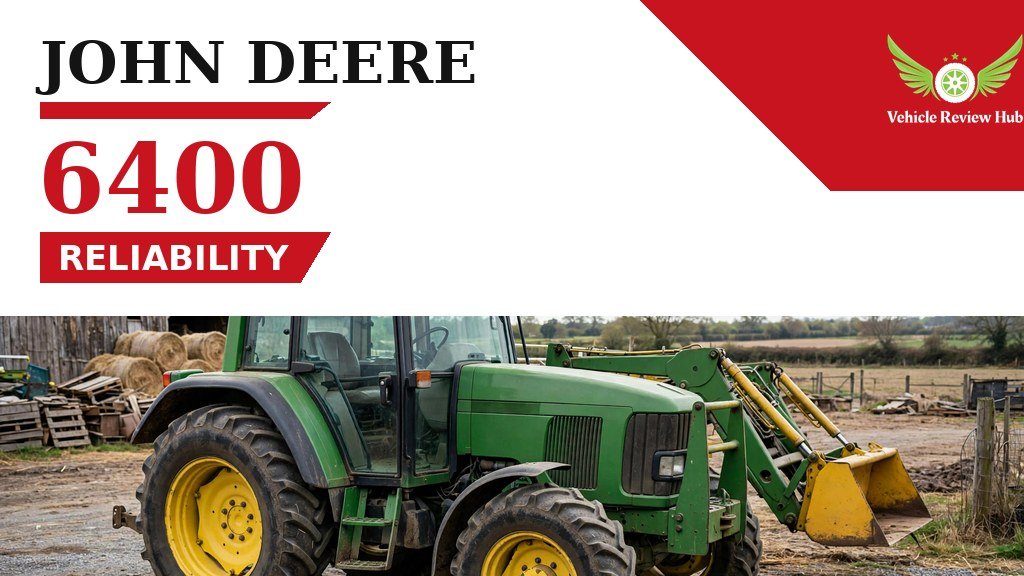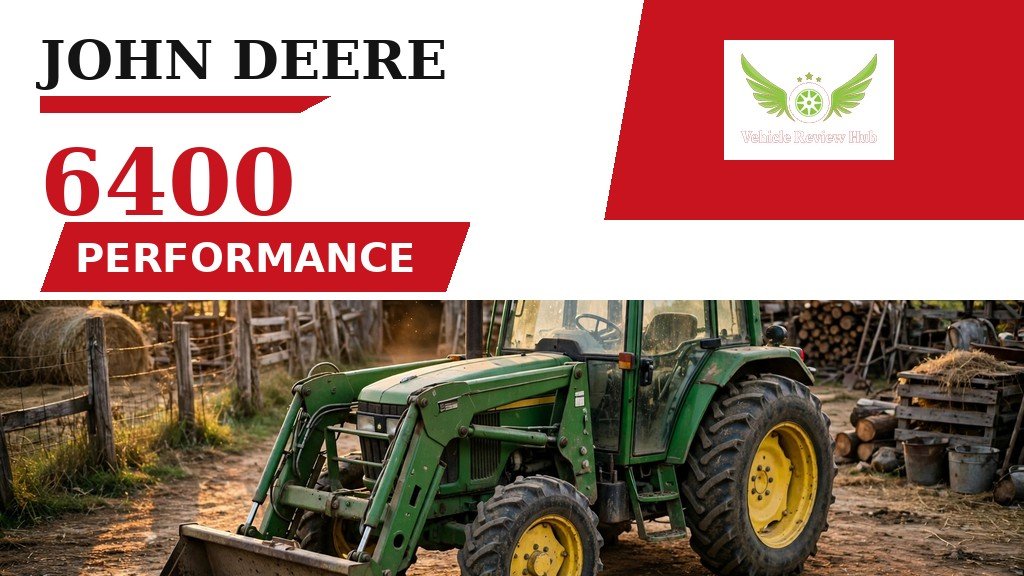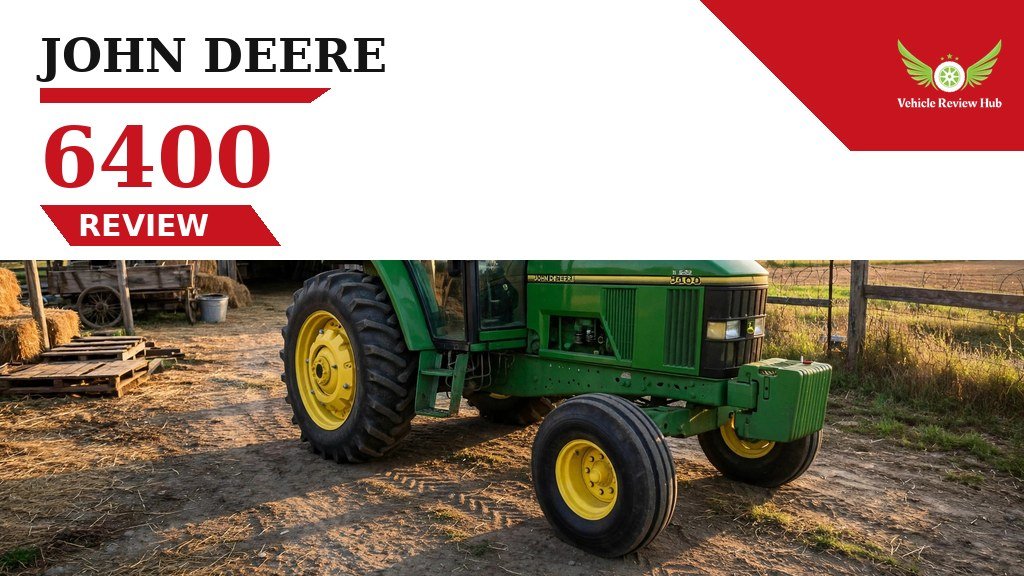
The short answer on John Deere 6400 ownership cost is that this is one of the cheapest 100-horsepower tractors you can own — because it is a simple, pre-emissions machine with no DPF, no DEF, and no complex electronics to fail. For a 300-hour farm season, John Deere 6400 ownership cost typically runs roughly $4,500 to $7,500 a year if you do routine service yourself, or roughly $5,500 to $9,500 a year with dealer support, before any major repair. The purchase price is where John Deere 6400 ownership cost varies most: rough, high-hour examples trade in the low five figures, while clean, low-hour cab tractors with MFWD and a loader push toward $45,000.
One framing note matters before any number in this John Deere 6400 ownership cost guide: the 6400 is a 1990s tractor. John Deere built it in Mannheim, Germany, from 1992 to 1997 as part of the 6000 Series, and every used 6400 is now pushing 30 years old, so condition matters far more than model year. Every price band here is a planning estimate drawn from public listings and auction records; login-walled dealer prices cannot be verified publicly, so they are not used as anchors.
John Deere 6400 Total Cost of Ownership
The 6400 is a 100-horsepower utility tractor built around a 4.5-litre four-cylinder turbocharged diesel, with 85 horsepower claimed at the PTO, a Category II hitch, and your choice of open station or cab, 2WD or MFWD. That straightforward, mechanical specification is the foundation of John Deere 6400 ownership cost: almost any Deere dealer or independent diesel shop can work on it, and there is no emissions system to diagnose. The full specification sheet is in the 6400 review.
Fuel, Routine Maintenance and Repair Expenses
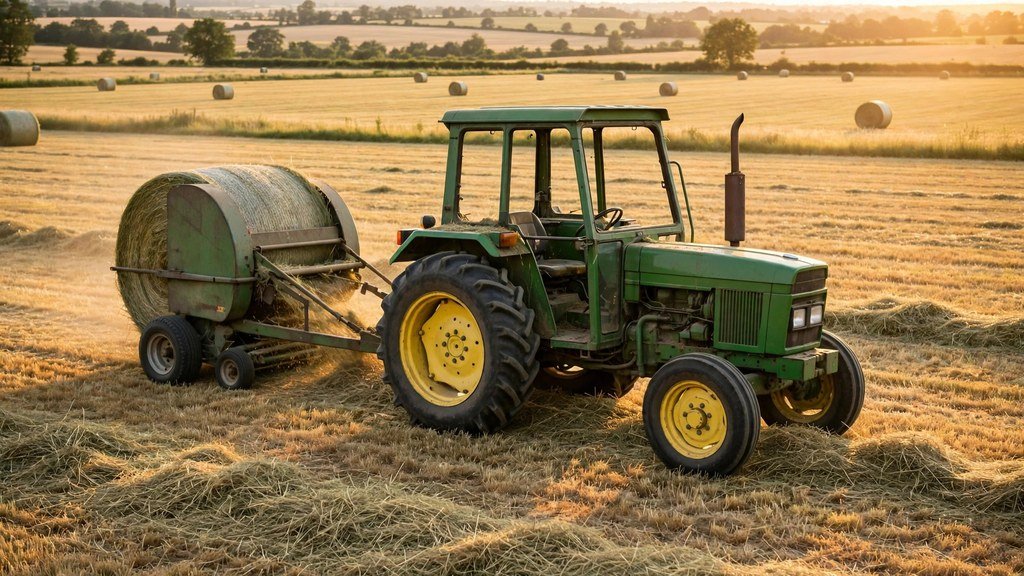
Fuel is the largest single annual running cost in any John Deere 6400 ownership cost budget, and here the numbers are simple to estimate. The CD4045 turbo diesel is a mechanical-injection engine from before the emissions era, so there is no DEF to buy and no regeneration cycle burning extra fuel. Mixed farm work on a 100-horsepower tractor of this era typically burns roughly 2.5 to 4 gallons per hour, depending on load. At a planning diesel price near $3.50 a gallon, a 300-hour mixed season burns roughly 750 to 1,200 gallons, or about $2,600 to $4,200 in fuel. How load and gear choice move those figures is explained in the 6400 performance figures. Fuel capacity runs about 29 gallons on open-station machines and roughly 42 to 44 gallons on cab machines, depending on the source consulted.
Routine maintenance is cheap by tractor standards, and it is the most controllable line in John Deere 6400 ownership cost. A DIY oil and filter change runs roughly $100 to $200; a dealer annual service typically runs $400 to $900. The full schedule is in the 6400 maintenance checklist, and following it keeps John Deere 6400 ownership cost predictable instead of lumpy. Intervals vary by manual and duty — follow your own operator’s manual rather than any single internet figure.
Major Repairs, Downtime and Parts Replacement Budget
The major repairs to price before you buy are the ones that move John Deere 6400 ownership cost by thousands in a single invoice. First, transmission work: a PowrQuad that slips, misses gears, or shifts harshly can mean solenoid, linkage, or clutch-pack work, and a full rebuild is a several-thousand-dollar repair. Second, the MFWD front axle: worn kingpins, planetaries, or seals on a loader-worked tractor are a known expense on this generation. Third, engine work: the CD4045 is durable, but a turbocharger replacement or an overhaul at very high hours is still a major bill. None of these is unusual at 8,000-plus hours, so John Deere 6400 ownership cost planning must include a repair reserve.
Here is a realistic annual John Deere 6400 ownership cost budget for a 300-hour farm season:
| Annual cost item | DIY owner (planning estimate) | Dealer supported (planning estimate) |
|---|---|---|
| Fuel (mixed work, ~750–1,200 gallons) | ~$2,600–$4,200 | ~$2,600–$4,200 |
| Routine service (oil, filters, fluids) | $300–$600 | $800–$1,500 |
| Wear items (belts, hoses, batteries, AC) | $300–$700 | $500–$1,100 |
| Tires (amortized over tire life) | $300–$600 | $300–$600 |
| Repair reserve (transmission/axle/engine fund) | $1,000–$2,500 | $1,000–$2,500 |
| Total per year (planning estimates) | ~$4,500–$7,500 | ~$5,500–$9,500 |
Over five years, total John Deere 6400 ownership cost is roughly $22,500 to $47,500 before the purchase price — and the absence of any emissions-system repair bill is a genuine saving compared with a modern tractor, where a single DPF or DEF fault can cost thousands.
John Deere 6400 Used Prices and Resale Value
Used 6400 values hold up well for a 30-year-old tractor, because the 6000 Series is a known quantity: simple, well-supported, and sized right for mixed farms. Prices below in this John Deere 6400 ownership cost guide are planning bands from public listings and auction records, not a single verified listing, and every anchor is a real public record.
How Model Year, Hours, Cab, MFWD and Loader Affect Price
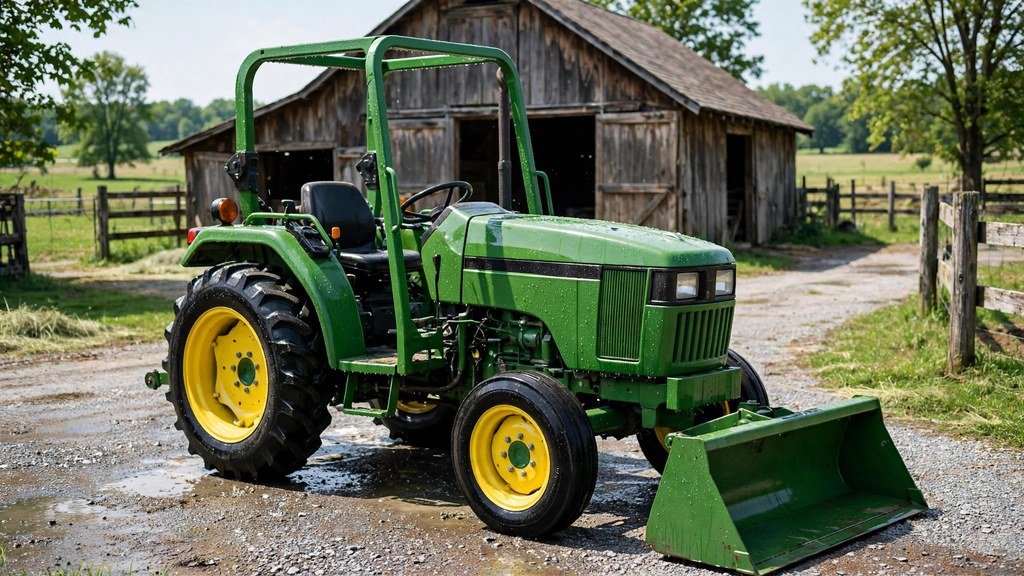
Hours matter more than model year in John Deere 6400 ownership cost at resale, because the hour meter is the honest record of wear — though on a tractor this old, the meter itself deserves a cross-check against pedal, seat, and tire wear. A 6400 with under 4,000 hours and documented service is a different asset from an 8,000-hour tractor with no records, even if both wear the same year badge. A cab adds value over an open station, MFWD adds further value, especially with a loader, because front-wheel assist transforms loader work and soft-ground traction, and a PowrQuad generally brings more than the base SyncroPlus. A fitted loader adds several thousand dollars on its own.
Public records illustrate the spread behind John Deere 6400 ownership cost bands. Anchors: a 1996 cab tractor with 5,996 hours sold at $41,900; a 1993 example with 4,250 hours listed at $28,900 in Ohio; a rough 6400 with 6,536 hours and a missing left door advertised at $13,750; and a rough auction example at $10,500. Clean, documented, mid-hour tractors cluster in the $30,000s and low $40,000s; rough machines fall into the teens or below.
| Used 6400 condition (planning bands) | Typical hours | Planning price band |
|---|---|---|
| Rough or very high-hour, 2WD, open station | 8,000+ | $10,000–$18,000 |
| Average working tractor, mixed condition | 4,000–8,000 | $20,000–$35,000 |
| Clean, documented, cab MFWD with loader | Under 4,000 | $35,000–$45,000+ |
| Rule for buyers | Pay for records, not paint | A cheap tractor with transmission or axle faults is the most expensive one |
Comparing Dealer Listings, Private Sales and Auction Results
Where you buy changes John Deere 6400 ownership cost at the margin. Dealer listings usually cost more, but a reputable dealer has typically serviced and inspected the tractor — worth real money on a 30-year-old machine, where a pre-sale inspection can catch a PowrQuad or front-axle fault before it becomes yours. Private sales are cheaper and often come with the tractor’s real history straight from the owner, including the honest answer to “what does it need?” Auctions are where the bargains and the traps both live: rough 6400s draw little bidding, but auction fever can also push a clean one past private-sale prices, and auction machines are sold as-is, with buyer premiums and transport on top. Set your walk-away price first, and include transport and a first service in your total.
One caution: some dealer inventory sits behind login walls, so not every advertised 6400 has a verifiable public price. If a price cannot be confirmed from a public listing or auction result, treat it as unconfirmed and do not let it anchor your John Deere 6400 ownership cost budget.
John Deere 6400 Parts Availability and Ownership Risks
Parts availability is a genuine strength of the 6400 and a major reason John Deere 6400 ownership cost stays manageable three decades after production ended. The 4.5-litre CD4045 family was built in huge numbers, the transmissions and hitch are shared across the 6000 Series, and dealers still stock most common wear parts. That shared-parts story is the backbone of long-term John Deere 6400 ownership cost.
Sourcing Engine, Transmission, Hydraulic and Cab Parts
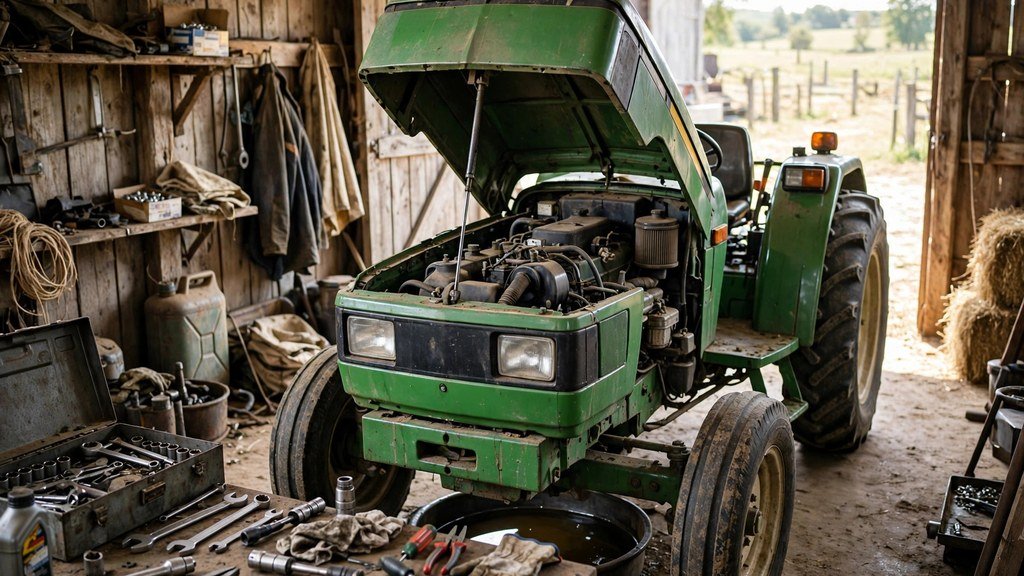
Start with your Deere dealer for filters, seals, gaskets, water pumps, injectors, and hydraulic components: genuine parts cost more, but serial-number lookup removes guesswork from John Deere 6400 ownership cost planning. For bigger items — a clutch pack, a hydraulic pump, or MFWD axle parts — get dealer and independent-shop quotes side by side; the gap is often large, and a reputable shop can rebuild a PowrQuad or front axle for far less than a dealer exchange unit. Salvage yards are the third leg: used cab doors, valves, loader brackets, or a complete transmission often cost a fraction of new — a legitimate way to hold John Deere 6400 ownership cost down. Some trim and cab parts are getting harder to find than mechanical parts, so check cab completeness before you buy.
Transmission parts deserve a special note in John Deere 6400 ownership cost. The SyncroPlus is a fully synchronized mechanical box with comparatively simple internals, while the PowrQuad adds electrohydraulic shifting and solenoids — more convenient, but more to diagnose when shifting goes wrong. Price any shifting fault as a rebuild until a shop proves otherwise, and remember that a 6400 has no emissions hardware at all: there is no DPF to clean, no DEF system to fault, and no sensor-driven derate to chase. That simplicity is one of the largest single savings in John Deere 6400 ownership cost versus a modern tractor.
Evaluating Repair History, Tire Wear and Future Service Needs
Repair history is worth more than a fresh paint job in John Deere 6400 ownership cost terms. Ask for receipts for transmission, axle, injector, hydraulic pump, or clutch work, and check dates and hours against the meter: a water pump replaced 200 hours ago is nearly new; a front axle never serviced at 8,000 hours is a bill waiting for a date. Watch for the known 6400 watch items: hydraulic leaks at couplers and hoses, a PowrQuad that shifts harshly or misses gears, MFWD axle noise or play, steering that feels loose or tight (steering cylinder or pump), and a cooling system that runs hot (water pump, radiator screen, or thermostat). All of them move John Deere 6400 ownership cost by thousands if missed at inspection.
Tires are the single biggest consumable in long-term John Deere 6400 ownership cost after fuel. Common rear sizes like 18.4-38 are widely available, but a pair of quality rear tires, mounted, is a $2,000 to $4,000-plus planning estimate, and MFWD front tires add more. On MFWD machines, mismatched front and rear tire sizes strain the driveline — check that the rolling circumferences match the factory pairing.
Buying a Used John Deere 6400
Buying used is the only way into a 6400 in 2026: its value is largely depreciated, its weaknesses documented, and a careful buyer gets 100 horsepower for a fraction of a new tractor’s price. The goal here is simple: pay a fair price for a machine with no expensive surprises.
Pre-Purchase Inspection, Test Drive and Service Records
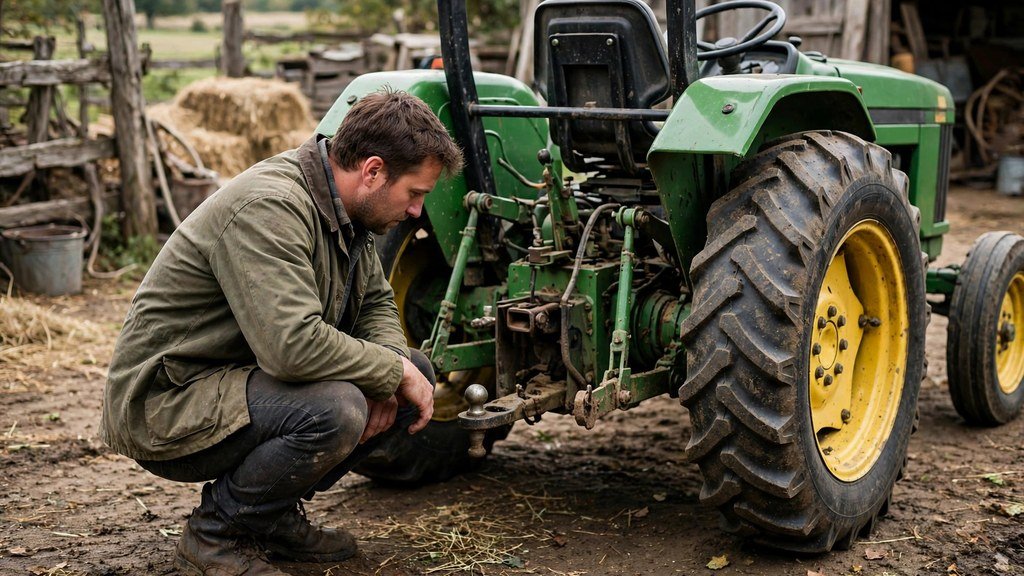
Start every used inspection cold: a cold start reveals hard starting, smoke, and rattles a warm engine hides. Check the oil — milky oil means coolant intrusion, a walk-away or steep discount — look for leaks around the engine, transmission, and hydraulic valves, and read the hour meter, then cross-check it against wear: pedals, seat, and tires older than the meter suggests are a warning sign. Drive through every gear: shifts should be clean on a SyncroPlus and crisp on a PowrQuad with no slipping or missed ranges. Test brakes, hitch lift and drift, remote couplers, and PTO engagement and release. Those thirty minutes are the cheapest insurance in John Deere 6400 ownership cost.
Ask for service history directly: oil-change receipts, filter purchases, transmission work, axle work, injector work, and dealer visits. A seller with a folder of receipts is selling a maintained machine; one with no records is selling a story. Use every genuine defect as a negotiating point: a weeping hydraulic coupler is a few hundred dollars, tired rear tires a few thousand, a harsh-shifting PowrQuad a rebuild quote, missing records a risk discount. That arithmetic is the practical side of John Deere 6400 ownership cost. Any remaining factory warranty is long gone on a 1990s machine — ask instead whether the seller will allow an independent inspection, in writing.
The video below is a dealer walkaround of a 1996 John Deere 6400 PowerQuad tractor with air conditioning, creeper gear, and three spools — a concrete example of what a clean, well-equipped used 6400 looks like, and every item it covers moves John Deere 6400 ownership cost at purchase:
Choosing Between 2WD, MFWD, SyncroPlus and PowrQuad
The configuration choice is the last big decision in John Deere 6400 ownership cost, and it should follow your ground, not your budget alone. MFWD costs more to buy and maintain — front-axle seals, U-joints, front tires — but it transforms traction on soft ground, with loaders, and on hills, and holds value better. 2WD is cheaper, simpler, and perfectly adequate for flat, dry tillage, mowing, and PTO work, and its lower John Deere 6400 ownership cost makes it the value pick for the right farm. A cab costs more up front but pays back in comfort and resale, and that trade-off belongs in any John Deere 6400 ownership cost comparison; an open station is cheaper and simpler to service. SyncroPlus suits buyers who want the simplest, most repairable box; PowrQuad suits loader work and frequent direction changes with its partial powershift, and on a 6400 the PowrQuad generally commands the higher resale price.
John Deere 6400 Ownership Cost: Frequently Asked Questions
These are the questions buyers and owners actually ask about John Deere 6400 ownership cost, answered directly from the budgets, price bands, and buying checks in this guide.
What is the total John Deere 6400 ownership cost per year?
For a typical 300-hour farm season, John Deere 6400 ownership cost runs roughly $4,500 to $7,500 a year doing routine service yourself, or roughly $5,500 to $9,500 a year with dealer support, covering fuel, filters, fluids, wear items, tires, and a repair reserve.
How much does a used John Deere 6400 cost?
As a planning guide, most working 6400 tractors trade roughly between $20,000 and $35,000, with clean, documented cab MFWD loader examples at $35,000 to $45,000-plus, rough or very high-hour 2WD tractors at $10,000 to $18,000, and exceptional low-hour examples higher. Those bands are planning estimates, so John Deere 6400 ownership cost planning should always start with an inspection, not an asking price.
How much fuel does a 6400 use?
Mixed farm work on a 6400 typically burns roughly 2.5 to 4 gallons per hour for John Deere 6400 ownership cost planning, depending on load and implement. A 300-hour mixed season burns roughly 750 to 1,200 gallons.
Is a 6400 expensive to maintain?
No, by utility-tractor standards. Routine service is a few hundred dollars a year in parts, and parts sharing across the 6000 Series keeps John Deere 6400 ownership cost down. The expensive exceptions are transmission rebuilds and MFWD axle work, which is why service history matters so much. There is no DPF or DEF system to maintain at all.
What is the most expensive 6400 repair?
A complete PowrQuad transmission rebuild or an MFWD front-axle rebuild are typically the costliest single repairs on a 6400, each running into several thousand dollars as a planning estimate, with engine overhaul close behind. All three are why John Deere 6400 ownership cost includes a repair reserve.
Are parts still available for the John Deere 6400?
Yes. Deere dealers still stock or can order most common wear parts, the 4.5-litre CD4045 engine family was built in huge numbers, and salvage yards commonly carry 6000 Series components. Parts availability is a genuine strength in John Deere 6400 ownership cost, though some cab trim is harder to find than mechanical parts.
Should I buy a 2WD or MFWD 6400?
Buy MFWD if you work soft ground, run a loader, or farm hills — the traction and resale advantage outweigh the higher John Deere 6400 ownership cost. Buy 2WD if your ground is flat and dry and your work is mostly mowing, tillage, and PTO work, where the simpler, cheaper tractor is the value pick.
Should I buy SyncroPlus or PowrQuad?
SyncroPlus suits buyers who want the simplest, most repairable gearbox and the lowest long-term John Deere 6400 ownership cost. PowrQuad suits loader work and frequent direction changes, with partial powershift convenience, and generally holds resale better. Either choice affects John Deere 6400 ownership cost at purchase and at resale, so match the transmission to your work.
Does the 6400 use DEF?
No. The 6400 is a 1990s pre-emissions tractor with a mechanical-injection diesel and no DPF, DEF, or SCR system at all. That absence is one of the largest savings in John Deere 6400 ownership cost compared with a modern tractor — there is simply no emissions hardware to fail.
What should I check first when buying a used 6400?
John Deere 6400 ownership cost history comes first: ask for oil and filter records and any transmission or axle work, then check cold start, fluid condition, gear engagement, brakes, hitch drift, PTO release, and MFWD function before agreeing a price.
Is a 6400 cheaper to own than a new tractor?
Usually by a wide margin. A new tractor of similar capability depreciates thousands of dollars a year, while John Deere 6400 ownership cost is dominated by fuel and routine service. The trade-off is age-related wear, a less comfortable cab than a modern machine, and the chance of a major repair on a 30-year-old tractor.