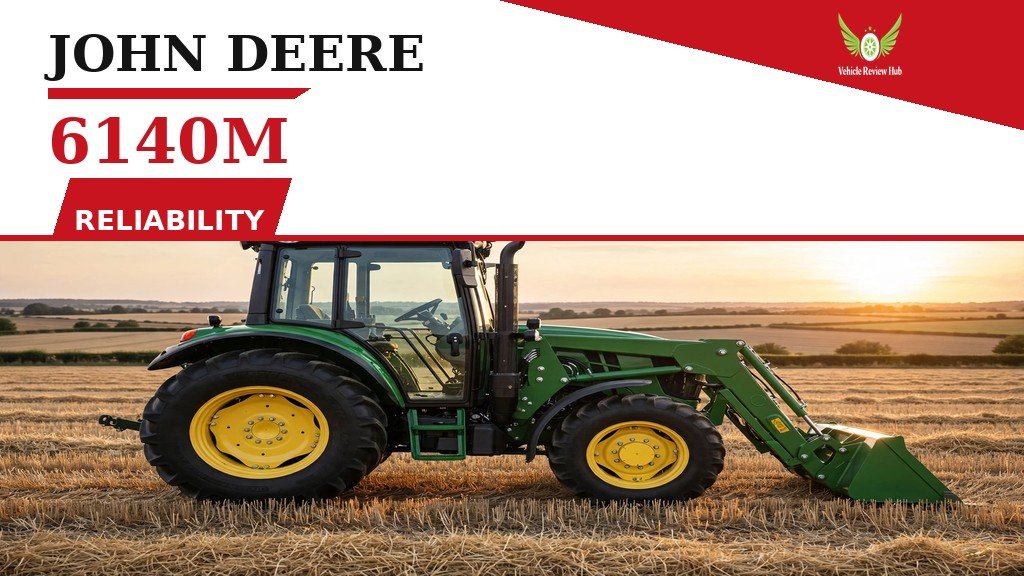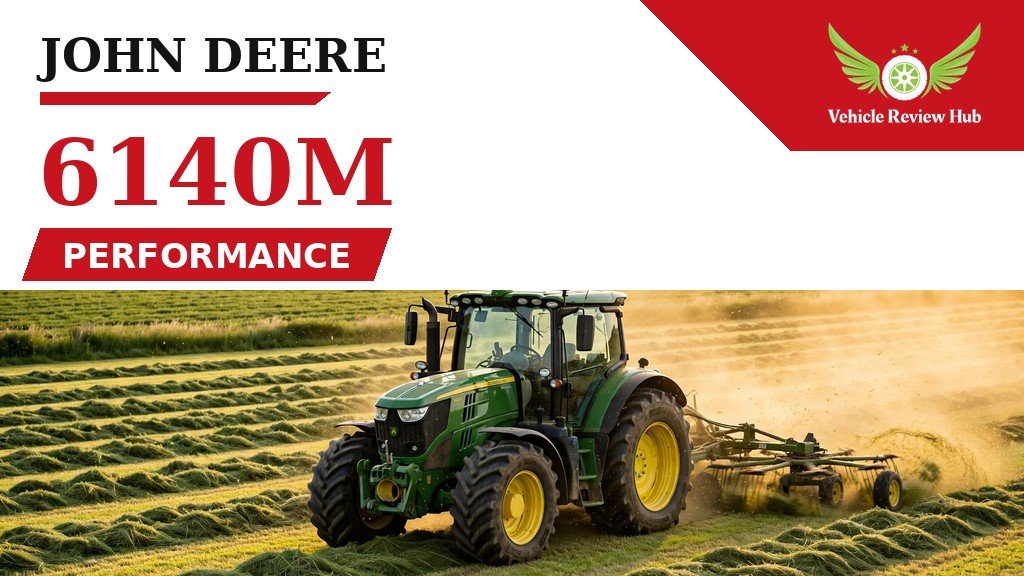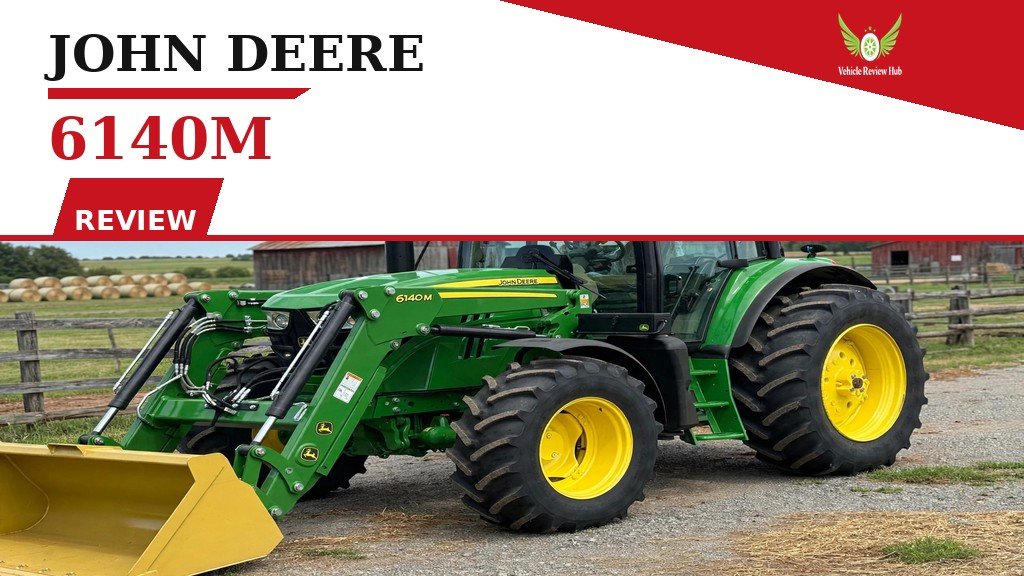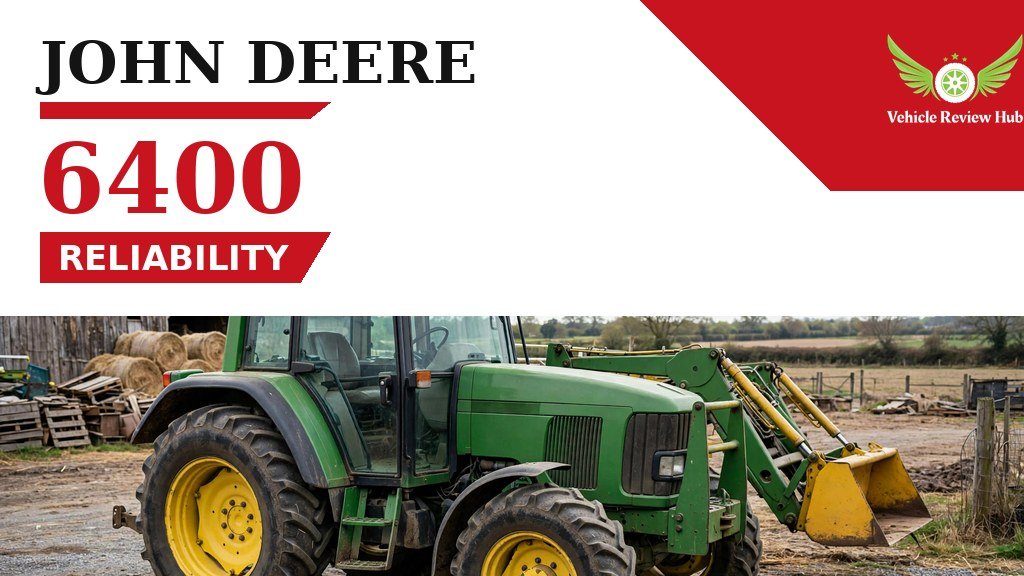
The short answer on John Deere 6400 maintenance: this is one of the easier classic tractors to keep running — a mechanical, pre-emissions diesel with a simple service schedule, widely available parts, and no exhaust aftertreatment to diagnose. Follow the factory hour bands — engine oil and filter every 500 hours, transmission and hydraulic filters every 750 hours, and transmission and hydraulic oil every 1,500 hours or two years — and most 6400s will work well past 8,000 hours. This guide covers the full John Deere 6400 maintenance schedule, service costs, reliability, common problems, and inspection checklist.
Before any number in this John Deere 6400 maintenance guide, one framing note: the 6400 is a 1990s machine from John Deere’s Mannheim-built 6000 Series, produced from 1992 to 1997 (some listings run into 1998), and every used example today is 25-plus years old. That age is the real story of John Deere 6400 maintenance: the design is simple and durable, but hoses, seals, wiring, and wear parts are now the things that fail, and service history matters more than the hour meter. Every cost figure here is a planning estimate, not a dealer quote.
John Deere 6400 Maintenance Schedule and Service Costs
Deere’s 6000 Series operator manual lays out the schedule in clear hour bands, and John Deere 6400 maintenance is mostly a matter of following them. Daily checks catch most problems while they are still cheap, and the 500-hour engine service is the interval you should never stretch.
Engine Oil, Filters, Air Cleaner and Cooling System
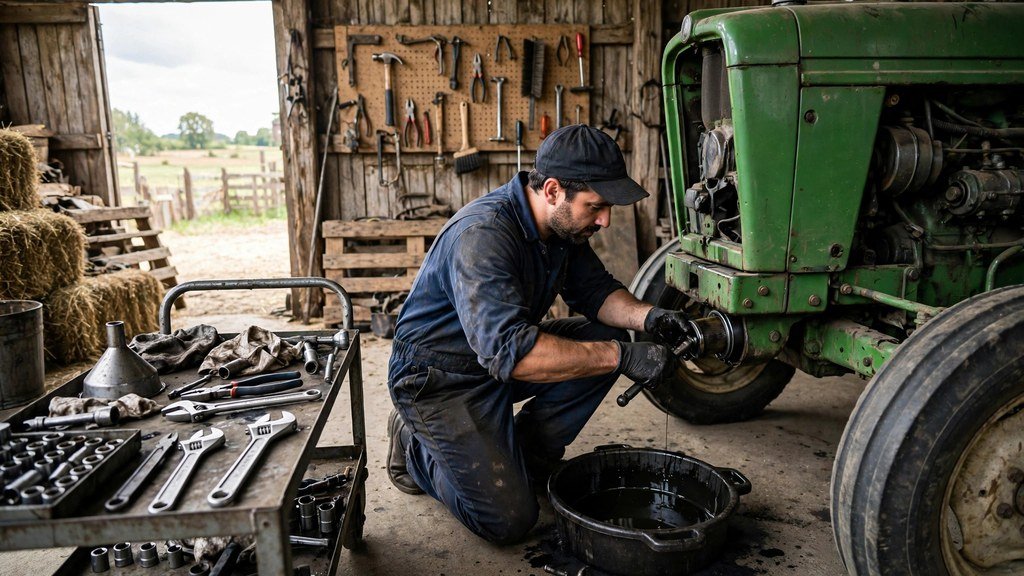
The 500-hour engine service is the heart of John Deere 6400 maintenance. At every 500 hours, change the engine oil and oil filter and replace the fuel filters, and check the intake hoses, drive belt, and ground connections. The CD4045 holds roughly 15 quarts of oil (confirm against your serial-specific manual), and a genuine filter and correct viscosity matter more on a turbocharged engine, because the turbo bearings live on clean oil pressure. In John Deere 6400 maintenance, drain the sediment bowl regularly and never run the tank dry — the mechanical injection system tolerates no water or dirt.
Daily and 10-hour checks are the cheapest part of John Deere 6400 maintenance and the easiest to skip, which is exactly why they matter. Check engine oil, coolant, and transmission and hydraulic oil levels, plus tire pressure, before work, and clean the radiator screen whenever you work in dusty conditions. The air cleaner is serviced as required: clean the primary element when the restriction indicator trips, and replace the secondary safety element on condition. Cooling needs the same attention in John Deere 6400 maintenance — the manual schedules a coolant change every 6,000 hours or six years, and a blocked radiator screen is still the most common cause of a hot-running 6400 in summer work.
Transmission, Hydraulic Fluid, Axles and PTO Service
Transmission and hydraulic service runs on a longer clock in John Deere 6400 maintenance, but it is the service owners most often postpone, and the costliest when it goes wrong. Replace the filter elements every 750 hours, and change the oil every 1,500 hours or two years, using Hy-Gard or Lo-Vis Hy-Gard as the manual specifies. The 6400’s closed-center, pressure-flow-compensated hydraulic system runs at about 2,900 psi, and dirty oil is the enemy of its load-sensing pump and valves, so a missed filter change can turn into a pump or valve bill that dwarfs the service cost. That discipline is the backbone of John Deere 6400 maintenance.
Front-axle service is easy to forget in John Deere 6400 maintenance because it is out of sight. Check the MFWD axle housing and final-drive oil levels at the regular checks, and change the front-wheel-drive axle and final-drive oils at the 1,500-hour or two-year service. The independent rear PTO needs no separate oil service, but it does need testing: engage and disengage it under no load at each service and confirm the 540 rpm selection (and 540E or 1,000 rpm where fitted) engages cleanly, because a slipping PTO clutch is a split-the-tractor job. Grease every fitting on the schedule and check the park brake and neutral-start circuit at the same visit.
| Service item | Interval | Notes |
|---|---|---|
| Engine oil and oil filter | 500 hours | Plus drive-belt, intake-hose and ground checks |
| Fuel filters | 500 hours | Drain sediment bowl regularly; bleed system if run dry |
| Transmission/hydraulic filter elements | 750 hours | Use Hy-Gard or Lo-Vis Hy-Gard oil |
| Transmission/hydraulic oil | 1,500 hours or 2 years | Same service: MFWD axle and final-drive oils |
| Engine air cleaner | As required | Clean primary on restriction; secondary on condition |
| Coolant | 6,000 hours or 6 years | Check level and hoses annually |
| Break-in services | 50 / 100 / 1,100 hours | 100-hour: trans-hyd filter + engine oil/filter |
| Planning note | Confirm against your serial-specific manual | Intervals vary slightly by build and market |
John Deere 6400 Reliability and Long-Term Durability
The 6400 has a strong reliability reputation for a 1990s utility tractor, and the reasons are mostly about what it does not have: no electronics-heavy engine management, no exhaust aftertreatment, and no complex emissions sensors. What it does have is a well-proven mechanical diesel, a full-frame design, and a transmission family shared across the high-volume 6000 Series, which keeps parts available decades after production ended. That simplicity is the foundation of John Deere 6400 maintenance planning.
CD4045 Diesel Engine and Transmission Care
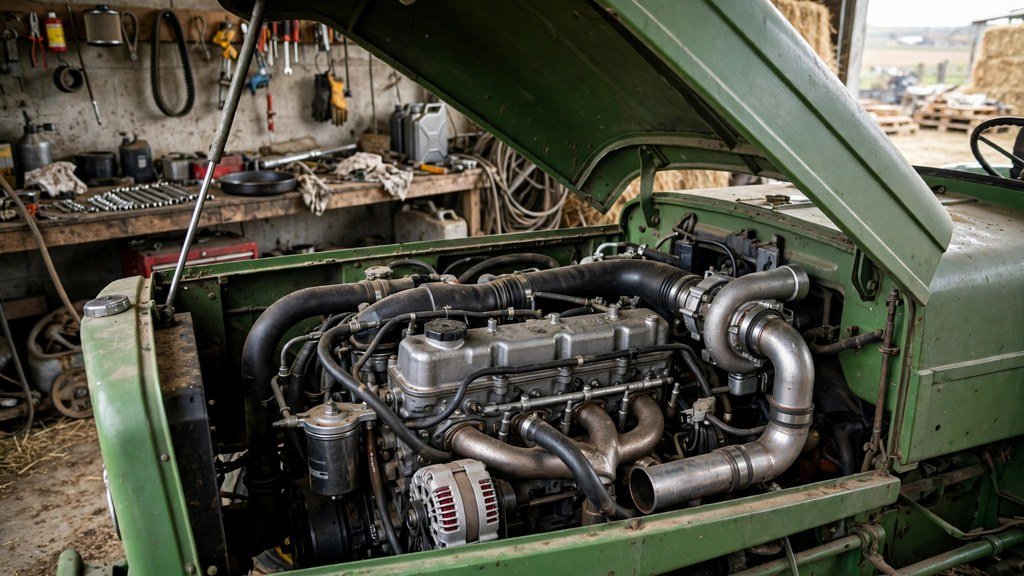
The CD4045 is the durability centerpiece of John Deere 6400 maintenance: a 4.5-litre, four-cylinder turbocharged diesel, rated at 100 hp at 2,300 rpm with 85 hp at the PTO and about 298 lb-ft of torque at 1,540 rpm (a few compilations list higher engine figures, but 100 hp is the commonly listed rating). It is mechanically injected, which means no ECU, no common-rail system, and no diesel particulate filter or DEF system to service — a genuine advantage in John Deere 6400 maintenance, and one reason these tractors remain popular with owners who do their own work. The turbocharger is the one part that rewards care: let the engine idle briefly before shutdown after hard work, and never ignore a whistling turbo or blue exhaust smoke.
Transmission choice affects long-term care in John Deere 6400 maintenance more than most buyers expect. The SyncroPlus box (12 forward and 4 reverse, or 21 and 7 with creeper) is a fully synchronized mechanical transmission: simple, cheap to service, and tolerant of delayed maintenance. The PowrQuad (16 and 16, or 28 and 28 with creeper) is a partial powershift that shifts under load and is more productive, but it depends on clean oil, healthy clutch packs, and correct modulation, so a missed 750-hour filter change hurts it sooner. On either box, investigate slow, harsh, or missed shifts immediately.
How Operating Hours, Workload and Service History Affect Longevity
Hours alone tell you less than hours combined with workload and records in John Deere 6400 maintenance. A 6400 with 7,000 hours of loader work and a full service history is usually a better buy than a 4,000-hour tractor from dusty tillage with no records, because dust ingestion, deferred oil changes, and overheating do more damage than the hour meter suggests. Those milestones turn into an annual budget, while the John Deere 6400 review carries the full specification sheet.
Age-related wear is the other half of longevity in John Deere 6400 maintenance: at 25-plus years, hoses, seals, wiring, and cab seals are on borrowed time regardless of hours, so budget for a refresh even on a low-hour machine. Tractors stored indoors with records routinely pass 8,000 hours, and many reach 10,000 with an engine or clutch refresh along the way.
John Deere 6400 Common Problems and Warning Signs
No tractor of this age is problem-free, and the 6400 is no exception. The core machine — engine block, frame, and transmissions — holds up well, while most complaints cluster around the hydraulic system, the electrical system, and age-related wear items owners defer. Careful John Deere 6400 maintenance is mostly acting on the first symptom instead of the tenth.
Engine Starting, Cooling and Fuel-System Symptoms
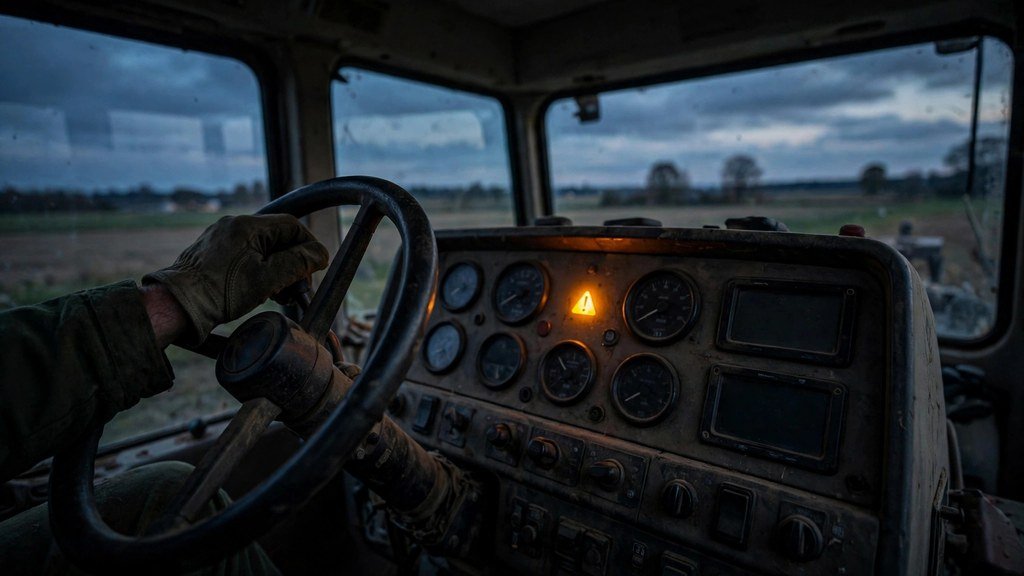
Hard starting is among the most reported issues in John Deere 6400 maintenance, and it has a short list of usual suspects. Weak batteries and corroded cables and grounds come first — owners have chased slow cranking with voltage dropping to 6–9 volts despite a new starter, battery, and relay, only to find a bad ground or damaged ignition-switch wiring. Next come fuel problems: a clogged filter, air in the lines, or a faulty fuel shutoff solenoid, including the well-known thermistor fault that cuts fuel delivery. Check the sediment bowl for water, replace fuel filters on schedule, and use fresh, clean diesel.
Overheating follows a similar pattern of simple causes first in John Deere 6400 maintenance: a blocked radiator screen or cooler stack is the most common culprit in field conditions, followed by low coolant, a worn belt, or a stuck thermostat. The water pump is a known wear item on this generation, and a weeping pump or noisy bearing should be replaced before it fails outright — the video below shows that job, which a home mechanic can tackle with the manual open.
The video below is a hands-on John Deere 6400 water pump replacement — a common cooling-system job, and a good illustration of why cooling symptoms should never be ignored in John Deere 6400 maintenance:
Exhaust smoke is the engine’s early-warning system in John Deere 6400 maintenance. Persistent blue smoke means oil burning, often turbo seals or worn rings; black smoke under load means over-fueling or restricted air, so check the air cleaner and intake hoses first; white smoke that does not clear can mean coolant trouble. A sudden increase in blow-by or oil consumption on a high-hour engine is the sign to price an overhaul rather than keep topping up.
Transmission Shifting, Hydraulic Performance and PTO Checks
Hydraulic complaints are the most frequently reported problem area in John Deere 6400 maintenance. The 6400 uses a variable-pressure, variable-flow, load-sensing main pump: standby pressure should sit near 500 psi with everything in neutral, load-sense pressure near 50–85 psi, and deadheaded pressure at an SCV should reach the 2,900 psi system rating. If SCV pressure sticks near 500 psi while steering works normally, the load-sense circuit or pump valve is the suspect; if the hitch hisses at the rear, an internally cracked hitch valve is a known cause. Dirt in the oil, low oil level, and clogged filters cause most of the rest, which is why the 750-hour filter service is non-negotiable in John Deere 6400 maintenance.
Transmission complaints in John Deere 6400 maintenance usually arrive as slow, harsh, or missed shifts, a lazy reverser, or — on PowrQuad machines — a weak or missing gear, with third-gear weakness specifically reported by owners. First check oil level and condition, then filters, then clutch modulation and calibration, since dirty or low oil causes more shift complaints than worn clutch packs. A tractor that keeps moving for a few seconds after the lever returns to neutral needs prompt diagnosis, not adaptation. PTO checks belong in the same visit: engage and disengage the rear PTO under no load and confirm clean engagement, since a slipping PTO is a clutch or brake job.
Electrical gremlins round out the list in John Deere 6400 maintenance: blown fuses, corroded fuse-panel connections, chafed wiring, failing alternators, and relay faults. Check battery terminals, grounds, fuses, and relays first. The fuse panel is a known corrosion point on 1990s cabs, so several dead circuits often need a panel clean and new terminals rather than new components.
John Deere 6400 Used-Tractor Inspection
A used 6400 inspection — the first step of John Deere 6400 maintenance for any buyer — is really two inspections: the tractor in front of you and the paper trail behind it. Ask for the hour meter reading, service invoices, and serial number, and check that the serial-specific manual matches the build. No records? Budget for a full fluid and filter reset on day one, and price that into your offer.
Checking Engine Condition, Fluid Leaks and Service Records
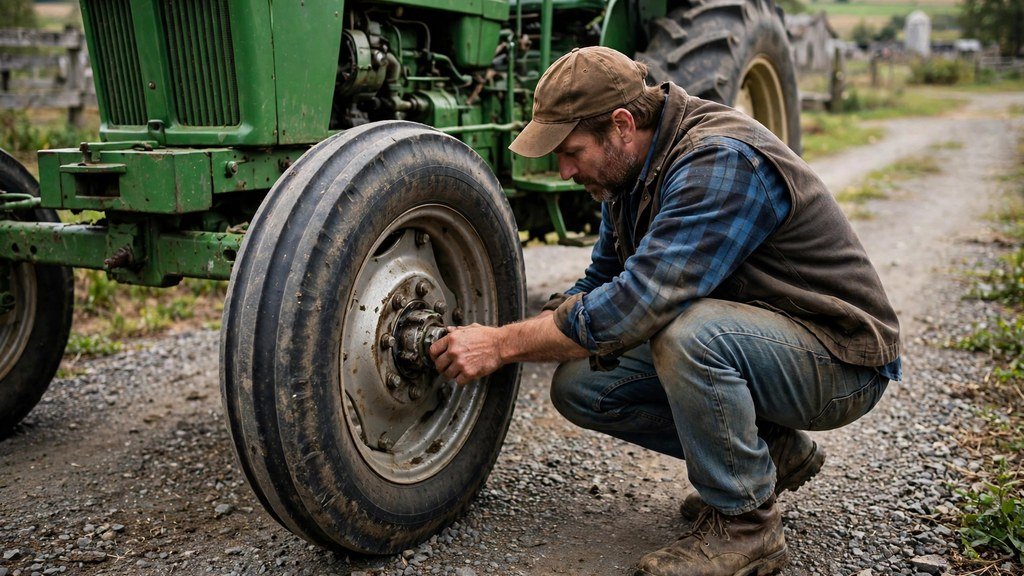
Start the engine cold if you possibly can: a cold start reveals battery health, glow-plug function, and smoke behavior that a warm engine hides. A brief puff at startup is normal; persistent blue, black, or white smoke is not. Check oil condition, look for coolant in the oil or oil in the coolant, and inspect the air housing for dust tracks suggesting a poor seal — all basic John Deere 6400 maintenance checks. Walk the whole machine for leaks: engine, transmission, hydraulic valves and couplers, MFWD axle seals, and the steering cylinder. Fresh paint over a leak is a warning sign, not a selling point.
Then check the records against the schedule, the most revealing John Deere 6400 maintenance step on any used tractor. Ask when the last 500-hour engine service, 750-hour filter service, and 1,500-hour oil service were done, and whether the coolant has been changed on its six-year clock. Original-generation specifications are listed on the tractor-specs 6400 page, and the ManyTractors listing cross-checks weights, hydraulics, and hitch figures. If the seller cannot answer the service questions, assume the work is due and budget accordingly.
Testing MFWD, Brakes, Hitch, PTO and Hydraulic Remotes
Drive the tractor properly, because a John Deere 6400 maintenance inspection is only as good as the test drive. Engage MFWD on a loose surface and confirm it engages and disengages cleanly, with no front-axle grinding. Test brakes individually and together, including the park brake on a slope. Cycle the hitch through its full range, watching for smooth movement and no drift under load. Test every remote with a real implement where available, checking both directions and float, and watch the SCV couplers for leaks under pressure.
Finish with the working end of John Deere 6400 maintenance inspection. Engage the PTO at each available speed, then check drawbar, hitch pins, and loader pins and bushings for play — loader pin wear reliably tells how hard a tractor has worked. Inspect tires for matching sizes and remaining tread, since mismatched tires on an MFWD machine strain the front driveline, and check cab air conditioning, heater, lights, and electronics. Finally, compare the asking price with the used-price bands in the John Deere 6400 review before negotiating, and read the John Deere 6400 performance guide for how the machine behaves under load.
John Deere 6400 Maintenance FAQs
These are the questions buyers and owners ask most about John Deere 6400 maintenance, answered directly from the factory schedule and the known problem areas. Purchase prices and running costs live in the ownership guide.
How often does John Deere 6400 maintenance require an engine oil change?
Every 500 hours in John Deere 6400 maintenance, with the oil filter changed at the same service and the fuel filters replaced too.
What is the John Deere 6400 maintenance schedule for transmission and hydraulic oil?
In John Deere 6400 maintenance, replace the filter elements every 750 hours, and change the oil every 1,500 hours or two years, using Hy-Gard or Lo-Vis Hy-Gard. MFWD axle and final-drive oils change at the same service.
Does the John Deere 6400 have a DPF or use DEF?
No. The 6400 is a pre-emissions, mechanically injected tractor, so John Deere 6400 maintenance has no DPF cleaning, DEF filling, or emissions-sensor service at all — one reason these tractors stay popular with owners who service their own machines.
What are the most common John Deere 6400 problems?
Most reported issues in John Deere 6400 maintenance are hydraulic: load-sense and pump problems, leaking couplers, and internally cracked hitch valves. Next come hard starting from batteries, grounds, and fuel shutoff faults, steering and pump wear, PowrQuad shift complaints, water pump failures, and fuse-panel and ground faults.
How much does John Deere 6400 maintenance cost per year?
For 500 to 800 hours a year of John Deere 6400 maintenance, plan roughly $400 to $800 a year doing routine services yourself, and roughly $800 to $1,600 a year if a dealer does them, before tires and repairs. The 1,500-hour service years run higher. These are planning estimates, not quotes.
Is the 6400 reliable for long-term ownership?
Yes, with disciplined John Deere 6400 maintenance. The mechanical CD4045 diesel and the shared 6000 Series transmission family are proven, parts remain widely available, and tractors with complete histories routinely work well past 8,000 hours. Budget for age-related hoses, seals, and wiring alongside the hour-based schedule.
What oil and fluids does John Deere 6400 maintenance specify?
Engine oil to Deere’s specification for the CD4045, Hy-Gard or Lo-Vis Hy-Gard for transmission and hydraulics, and coolant changed every 6,000 hours or six years. Confirm capacities and viscosities against your serial-specific operator manual.
How do I inspect a used 6400 before buying?
Cold-start it as the first John Deere 6400 maintenance check, watch the smoke, walk the machine for leaks, read the records against the 500, 750, and 1,500-hour milestones, and drive it through MFWD, brakes, hitch, PTO, and every remote before agreeing a price.
SyncroPlus or PowrQuad — which is easier to maintain?
SyncroPlus is simpler and cheaper to maintain in John Deere 6400 maintenance terms: a fully synchronized mechanical box with fewer parts to fail. PowrQuad shifts under load and is more productive, but it needs cleaner oil and more careful clutch care, so a neglected PowrQuad costs more to put right.
Can I do John Deere 6400 maintenance myself?
Yes — routine John Deere 6400 maintenance is owner-serviceable with basic tools and the operator manual: oil and filter changes, fuel filters, air cleaner service, greasing, fluid checks, and even a water pump replacement. Leave transmission internal work, injection pump overhaul, and hydraulic pump rebuilding to a dealer or specialist shop.