The short answer on John Deere 6M Series maintenance: change engine oil and the oil filter every 500 hours, replace the transmission and hydraulic oil filters every 750 hours, and change transmission-hydraulic oil every 1,500 hours or two years. Fuel filters and cab activated-carbon filters also fall due every 500 hours; the engine air cleaner is replaced at 1,500 hours, its secondary element at 4,500. Deere backs the 6M with a 24-month/2,000-hour basic warranty (whichever comes first), with paid PowerGard extended plans available.
This John Deere 6M Series maintenance guide walks through the full service schedule for the 6090M through the 6145M, what the emissions hardware means for upkeep (DOC plus SCR and no DPF on smaller models; a lifetime DPF on the bigger PSS-powered ones), the reliability record owners report, the warning signs that matter, and how to inspect a used 6M before you buy. Every figure comes from Deere’s published specs, the 6-series operator manual, current dealer data, or documented owner experience.
John Deere 6M Series Maintenance Schedule and Service Costs
The 6M is a Mannheim-built utility tractor line, and its John Deere 6M Series maintenance schedule follows the pattern Deere uses across the 6 family: 500-hour engine service, 750-hour hydraulic filter service, and 1,500-hour oil changes, with annual coolant and hose checks regardless of hours. The table below condenses the routine intervals from Deere’s 6-series operator manual into one checklist.
| Interval | John Deere 6M Series Maintenance Task |
|---|---|
| Every 250 hours | Check neutral start circuit, air intake hoses, fuel tank; check front-axle oil level; tighten wheel bolts and loader brackets; lubricate three-point hitch |
| Every 500 hours | Change engine oil and oil filter; change fuel filters; replace cab activated-carbon filters; check drive belt and grounds; bleed brakes |
| Every 750 hours | Replace transmission/hydraulic oil filters; change front-PTO oil filter; change oil in front-wheel-drive final drives |
| Annually | Check seat belt; test coolant with test strips; inspect hydraulic hoses for chafing and leaks |
| Every 1,500 hours or 2 years | Change cab air filters; change engine air cleaner; change crankcase-vent oil separator filter; change front-axle and final-drive oil; change transmission/hydraulic oil and filters; change front-PTO oil and filter; change air-brake drier cartridge |
| Every 4,500 hours | Change engine air cleaner secondary element |
| Key takeaway | The 500-hour engine oil service is the heartbeat of John Deere 6M Series maintenance — everything else keys off it |
Engine Oil, Filters, Cooling System and Routine Service
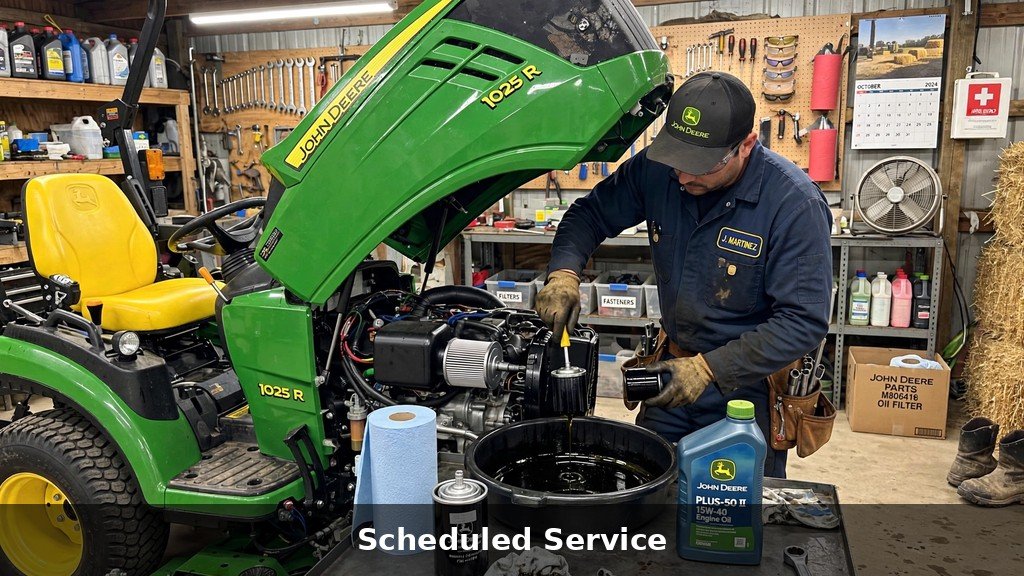
The 500-hour engine oil and filter change is the single most important item in John Deere 6M Series maintenance. The 6090M through 6120M run the PowerTech EWL 4.5-liter single-turbo engine, while the 6130M and 6145M step up to the PowerTech PSS with sequential dual turbos — both take the same 500-hour cadence — change oil at least once a year even on low-hour machines. Fuel filters also fall due every 500 hours, which matters because clogged fuel filters are one of the most common causes of the power loss owners report. The cooling system needs annual attention: test the coolant with test strips and clean the radiator and charge-air cooler of chaff and dust, since overheating from a packed cooling stack is a classic neglected-maintenance failure. Deere’s own walkthrough of routine checkpoints covers the daily and weekly items every owner should be doing between services:
Emissions hardware splits by model in John Deere 6M Series maintenance: the 6090M–6120M meet Final Tier 4 with DOC and SCR using DEF (no DPF, no parked regeneration, no ash service), while the Stage V PSS-powered 6130M and 6145M add a lifetime DPF and regenerate automatically during worked cycles. Either way, keep DEF fresh in sealed containers and never run the tank dry; contaminated DEF is the most common cause of SCR derate warnings. A DIY oil-and-filter service is a few hundred dollars in parts; a full dealer 1,500-hour service with transmission-hydraulic oil and filters typically lands in four figures — budget it in our 6M Series ownership cost guide.
Transmission, Hydraulic Oil, Axles and Lubrication
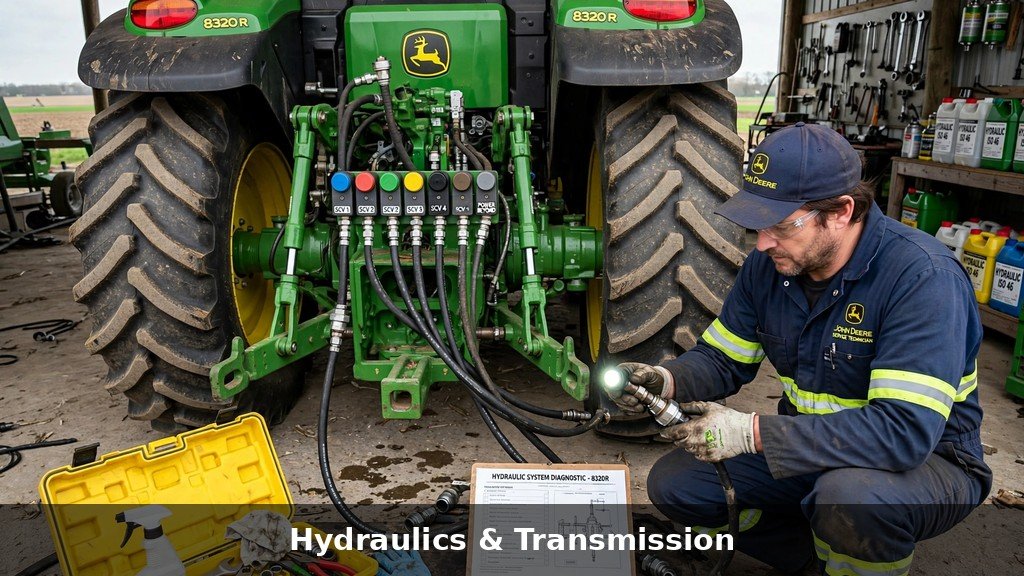
Transmission and hydraulic service is where John Deere 6M Series maintenance gets more involved than on smaller Deeres: four transmissions (PowrQuad PLUS, AutoQuad PLUS, CommandQuad PLUS, AutoPowr IVT) all share the 750-hour filter change and the 1,500-hour oil change. The 6110M moves 80 liters per minute (114 optional) and the 6145M runs 114 standard, so a complete fill is a serious quantity of Hy-Gard. Front-axle and final-drive oil also changes at 1,500 hours, with level checks every 250. Grease the hitch, loader pivots and driveline on schedule — dry pins are the cheapest failures to prevent and the most commonly skipped. On IVT machines keep software current; several owner threads trace odd transmission behavior to calibration, and a dealer reflash beats parts every time. See our 6M Series performance and fuel usage guide for how they feel in the field.
John Deere 6M Series Reliability and Long-Term Durability
The 6M has a strong reliability reputation among owner reports, and disciplined John Deere 6M Series maintenance is what keeps it that way: the Mannheim-built driveline is generally regarded as stout, the PowerTech engines are wet-sleeved and rebuildable, and the series has been in production since 2015 with steady refinement. That said, John Deere 6M Series maintenance is not optional on these tractors — the emissions hardware, electronics and hydraulic complexity punish neglect faster than the mechanical simplicity of older utility tractors did.
Engine, Transmission and Hydraulic System Reliability
The PowerTech 4.5-liter is the known quantity at the heart of 6M reliability, and proper John Deere 6M Series maintenance keeps it that way. The EWL single-turbo in the 6090M–6120M makes 90–120 hp with a 40 percent torque reserve; the PSS dual-turbo in the 6130M/6145M stretches to 130–145 hp with the same reserve — owners consistently praise the lugging ability. Because the smaller models skip the DPF, their aftertreatment is about as simple as modern emissions get: keep DEF fresh and the SCR system takes care of itself. The PSS models’ lifetime DPF regenerates automatically during worked cycles; short, light puttering causes regen headaches, not the hardware. PowrQuad and AutoQuad are proven wet-clutch designs that last when the oil stays clean — the 750-hour filter interval exists for a reason. CommandQuad and AutoPowr reward clean oil and current software. Keep hydraulic oil and filters on schedule, fix weeping hoses before they burst, and the 21–30 gpm system stays responsive for years. See our 6M Series review for field performance.
Factors Affecting Reliability, Downtime and Service Life
Three things separate the 10,000-hour 6Ms from the problem children: service history, duty cycle, and storage. Documented 500-hour oil changes and 1,500-hour transmission services make a fundamentally different machine from one whose oil was “changed when it looked dirty.” These tractors are happiest worked: a 6145M pulling a disc mower all summer stays healthier than a 6090M idling twenty minutes a day — short cycles build soot in DPF models and never fully warm the oil. Outdoor winter storage breeds the electrical gremlins owners report: corroded connectors, weak batteries, moisture in the DEF tank. And the 6M’s electronics genuinely need the dealer’s Service Advisor software for some jobs, so factor dealer proximity into your long-term John Deere 6M Series maintenance planning. Dusty tillage and feedlot work demand cooling-stack cleanouts far beyond the manual’s minimums.
John Deere 6M Series Common Problems and Warning Signs
No tractor is trouble-free, and the owner record on the 6M is honest about the weak spots. The good news for John Deere 6M Series maintenance planning is that most reported problems trace to skipped service, contaminated fluids, or aging electronics — not to fundamental design flaws. The patterns below come from owner reports and technician threads, attributed as such, so you can aim your John Deere 6M Series maintenance at the real weak spots rather than internet folklore.
Engine, Electrical, Hydraulic and Transmission Symptoms
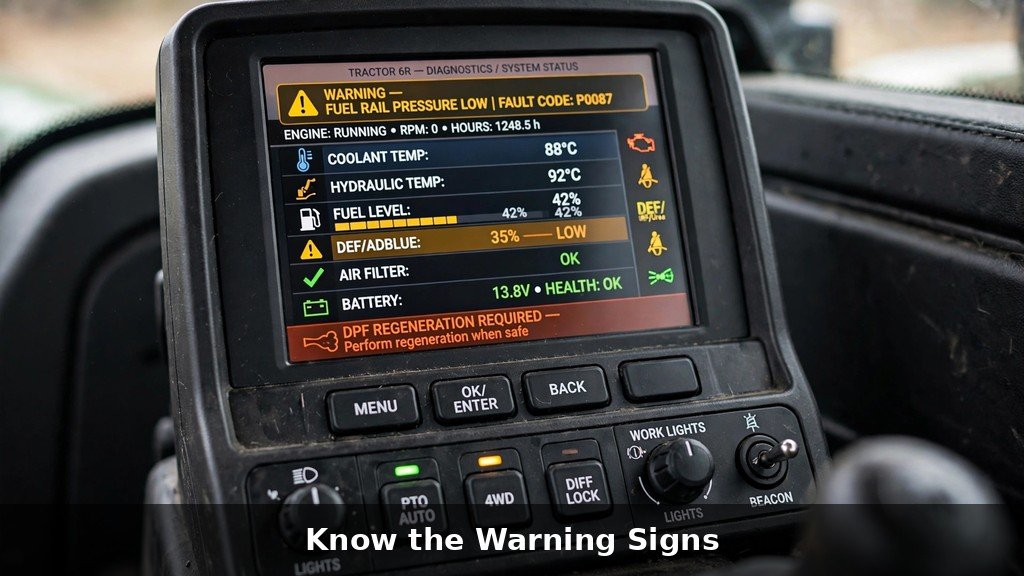
Engine complaints usually start with power loss, and the first suspects are the ones the John Deere 6M Series maintenance schedule already covers: clogged fuel filters and a dirty air intake. One well-documented owner case involved a 6110 that would barely move with a weak loader — the community traced it to plugged hydraulic flow from a filter never changed after break-in, and the fix was a complete service: oil, filters, coolant, and hydraulic fluid. Electrical issues are the second-most reported category: faulty sensors, battery and charging problems, and error codes on the display. A 6120M thread on a dead instrument cluster worked through corroded wiring, fuses and relays before landing on software calibration — on a modern 6M, “electrical problem” often means “needs the dealer’s diagnostic software.” On PowrQuad/AutoQuad machines, owners report shuttle-shift solenoids that fail when hot (forward drops out after long work, reverse keeps going) and occasional forward surging from a failing solenoid or its wiring. Hydraulic complaints mean slow functions — check fluid level and filters first. On SCR models, stale DEF throws derate warnings that feel like engine trouble but resolve with fresh fluid. Read fault codes before throwing parts at symptoms; similar patterns appear in our 5M Series maintenance guide.
Diagnosing Issues and Evaluating Repair Needs
Diagnose in order of cost: fluids and filters first, then connections, then codes, then components — the golden rule of John Deere 6M Series maintenance troubleshooting. A 6M that lost power yesterday probably needs fuel filters, not an injection pump. The CommandCenter stores fault codes, and Deere’s procedure (fuse in the CAL/DIA slot, key on, read CCU/HCU codes) lets you pull codes yourself; write them down, because codes that return after clearing tell the technician where to look. For hydraulic weakness, check oil level hot and inspect the suction screen — the mint-looking repo-lot 6110 that ran weak is the textbook case of neglected hydraulics. For shuttle-shift surging, solenoid coils are a known wear item far cheaper than a teardown; swapping forward and reverse coils shows whether the symptom moves. Budget for dealer-only work: IVT calibration, software updates, and SCR/DPF diagnostics need Service Advisor. Multiple unrelated codes plus deferred maintenance means project tractor — price it that way with our 6M Series ownership cost and buying guide.
John Deere 6M Series Safety Checks and Used-Tractor Inspection
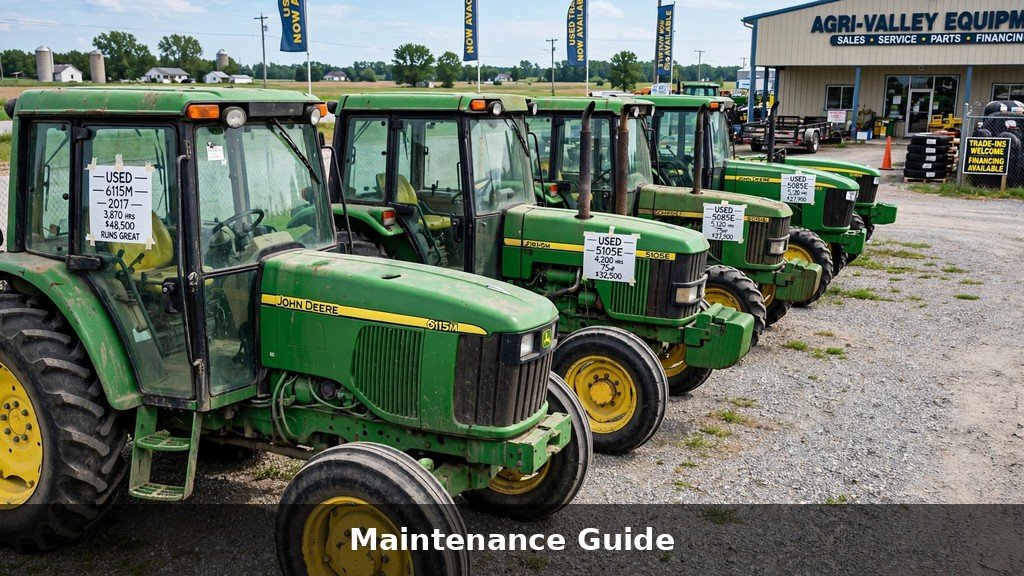
A used 6M is one of the better values in the 100-plus-horsepower class — a 2022 6110M listed around $113,598 new now trades in the $62,500–$135,500 range depending on hours and condition — but only if the inspection is thorough and its John Deere 6M Series maintenance history checks out. John Deere 6M Series maintenance history is the first thing to verify and the hardest thing to fake, so start there.
Checking Service History, Software Updates and Applicable Recalls
Ask for receipts, not stories. A credible John Deere 6M Series maintenance history shows 500-hour oil changes, 750-hour hydraulic filter changes, and 1,500-hour oil changes — with dates, not just hour readings. Call a Deere dealer with the serial number: they can pull service and campaign history and confirm software updates (transmission calibration, engine and aftertreatment) were applied. This guide could not verify any CPSC recall specific to the 6M series — the September 2024 brake recall covered the 1023E/1025R/2025R compacts only — but run the serial through Deere’s recall lookup or call 800-537-8233 anyway, and treat any 6M-specific recall claim online as reported rather than confirmed until a dealer verifies it. Ask about non-public product improvement campaigns while you’re at it.
Inspecting Brakes, Tires, Hydraulics and Transmission Operation
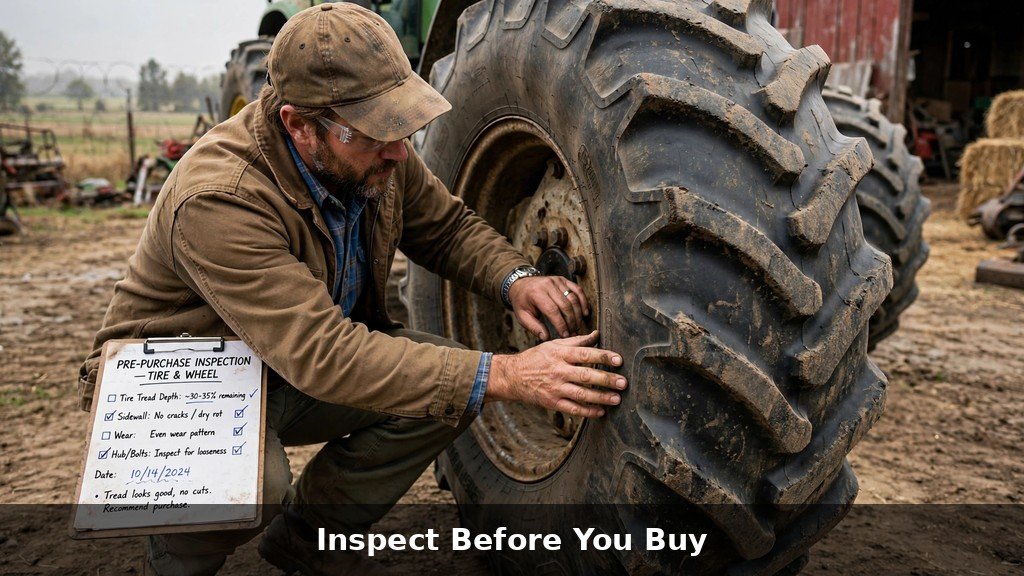
Work through the tractor the way the manual’s pre-operation checklist does, then go further — this is the hands-on half of John Deere 6M Series maintenance inspection. Brakes: test service and parking brakes on a slope and check lines for weeping; wet-disc brakes are durable but not immortal. Tires: measure tread depth and check sidewalls — a set of rears is a four-figure surprise if you don’t price it into your offer. Hydraulics: run every remote through full stroke under load and look for chafed hoses at pivot points; high-hour tractors with original-looking filters are telling you about their past. Transmission: shift every range, test the reverser hot (solenoid problems hide on a cold start), and run IVT machines through the full speed range. PTO: engage 540 and 1000 under light load and listen for bearing noise. Cold-start it yourself — excessive smoke or a long crank points at fuel, battery, or compression issues. The negotiation side is covered in our 6M Series buying guide, and the 5090M maintenance guide helps if you’re cross-shopping the 5M line.
Frequently Asked Questions About John Deere 6M Series Maintenance
These are the questions buyers ask most often after reading a John Deere 6M Series maintenance guide — answered from Deere’s published specs, the operator manual, and documented owner experience.
How often does a John Deere 6M need an oil change?
Every 500 hours or once a year, whichever comes first, including the oil filter. The 500-hour interval is the foundation of John Deere 6M Series maintenance across the 6090M through 6145M per Deere’s 6-series operator manual. Fuel filters and cab activated-carbon filters fall due at the same mark, so most owners do them together. Low-hour tractors that sit still need the annual change regardless of the hour meter.
Does the John Deere 6M have a DPF?
It depends on the model. The 6090M–6120M use DOC plus SCR with DEF and have no DPF — no parked regeneration, no ash-service interval. The 6130M and 6145M, with the Stage V PSS engine, add a lifetime DPF ahead of the DOC and SCR, so those tractors regenerate automatically during worked cycles. If you’re buying used, confirm which engine is in the tractor rather than assuming — getting this right is basic John Deere 6M Series maintenance literacy, and it’s one of the most misunderstood points in the series.
What transmission fluid service does the 6M need?
For John Deere 6M Series maintenance, replace the transmission and hydraulic oil filters every 750 hours, and change the transmission-hydraulic oil plus filters every 1,500 hours or two years — for PowrQuad PLUS, AutoQuad PLUS, CommandQuad PLUS and AutoPowr alike. Front-axle and final-drive oil also changes at 1,500 hours, with level checks every 250. Use Hy-Gard or Lo-Vis Hy-Gard as specified; the wrong oil in an IVT is an expensive mistake.
What are the most common John Deere 6M problems?
Owner reports cluster around slow hydraulics (low fluid, air, or long-overdue filters), electrical niggles (sensors, batteries, display codes, and occasionally software calibration), shuttle-shift solenoid wear on PowrQuad machines, and power loss from clogged fuel filters. On SCR models, contaminated or stale DEF causes derate warnings. Most trace to deferred John Deere 6M Series maintenance rather than design flaws, which is why service history matters so much on a used purchase.
Are there any recalls on the John Deere 6M?
For John Deere 6M Series maintenance planning, note this guide could not verify any CPSC safety recall specific to the 6M series. The September 2024 brake-linkage recall covered the 1023E, 1025R and 2025R compacts only. Always run the serial number through Deere’s recall lookup or call 800-537-8233 before buying used, and ask the dealer about non-public product improvement campaigns too.
What should I check first on a used 6M with high hours?
John Deere 6M Series maintenance records first — 500-hour oil changes and 750-hour hydraulic filter changes with receipts. Then cold-start behavior, transmission operation when hot (solenoid issues hide on a cold start), every hydraulic remote under load, tire condition, and DEF/DPF status on the display for SCR and PSS models. A dealer pre-purchase inspection with a Service Advisor code scan and software check is money well spent on any 6M over 3,000 hours.