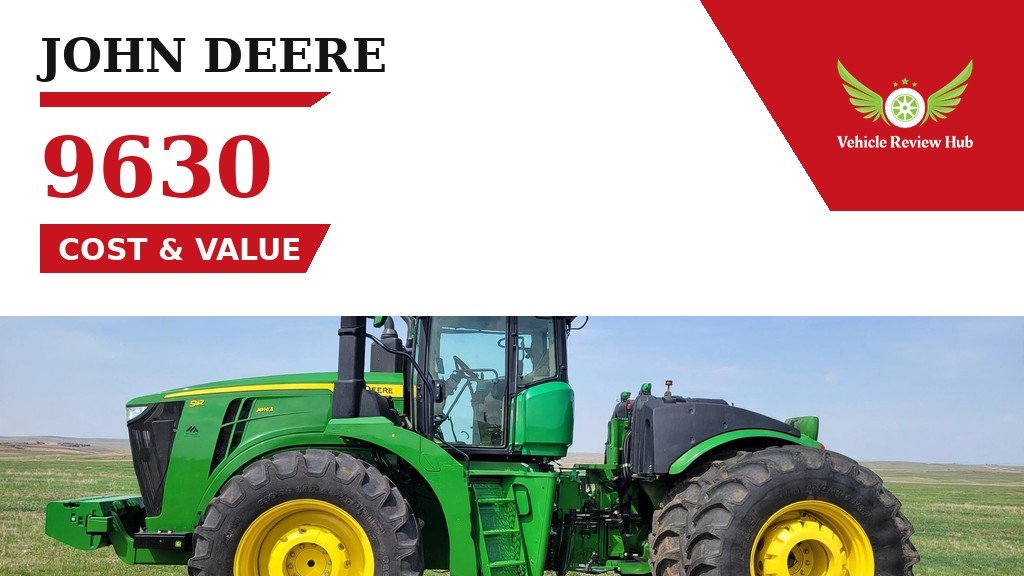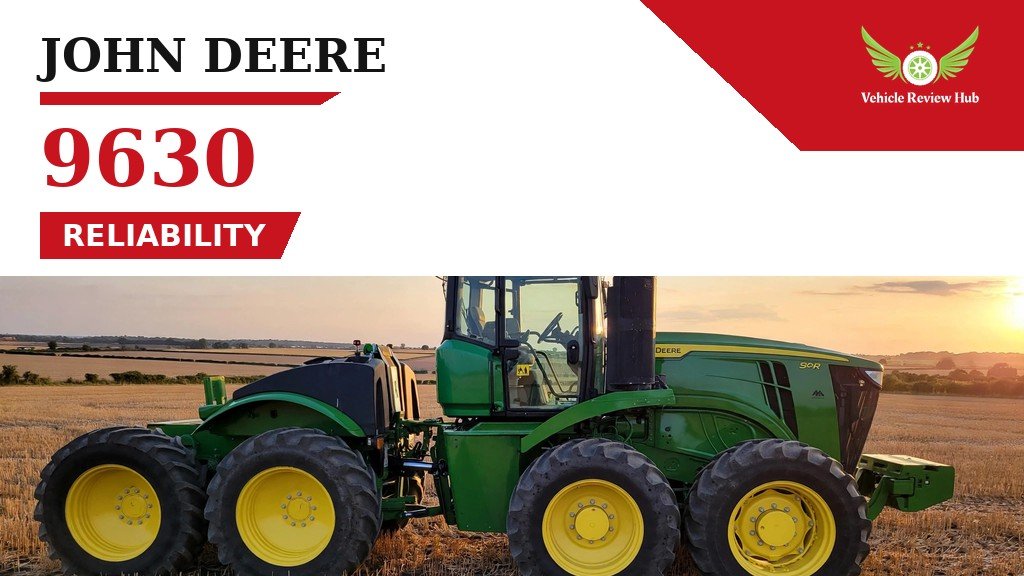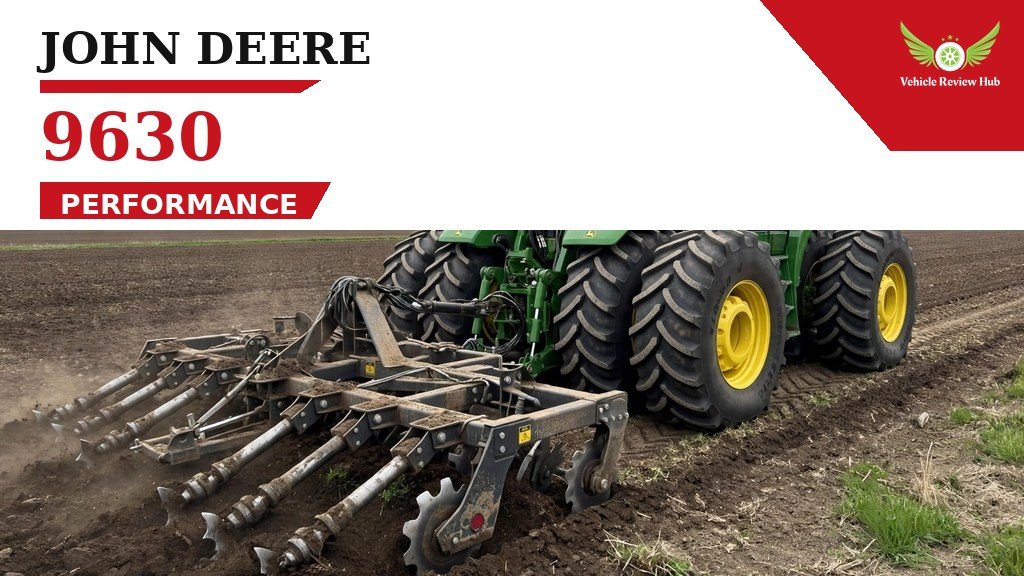
If you are sizing a tractor for broad-acre tillage, John Deere 9630 performance is the first thing to get straight: this machine was built for pulling big implements through real soil, all day, without running out of power. The short answer on John Deere 9630 performance: a 530-horsepower engine, a Nebraska-tested 427 horsepower at the drawbar, a pull of more than 53,000 pounds, and a 350-gallon tank for long days between fills. The price of that muscle is fuel burn, and John Deere 9630 performance must be judged with both numbers in view, not just the horsepower badge.
This guide to John Deere 9630 performance keeps the wheeled 9630 and the tracked 9630T separate wherever their numbers differ. Both share the 13.5L PowerTech Plus engine and 18-speed PowerShift, but differ in fuel capacity, traction, and tested drawbar output. Tested figures are labeled as such; the rest are planning estimates.
John Deere 9630 Fuel Consumption and Operating Efficiency
Fuel is where John Deere 9630 performance hits the farm budget hardest: a 530-horsepower engine doing heavy tillage is one of the thirstiest machines on any farm. The wheeled 9630 carries 350 gallons of diesel and the tracked 9630T 330 gallons, so a full tank is a four-figure fill. How fast that tank empties depends on draft load far more than on engine size.
Nebraska Tractor Test Results for Drawbar Power and Fuel Use
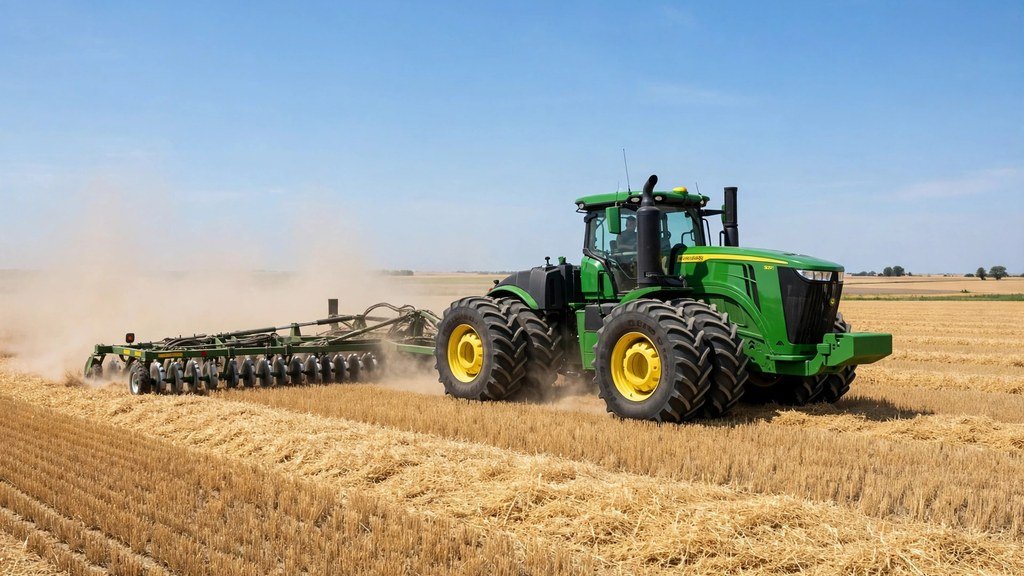
Unlike some high-horsepower tractors whose test data is hard to pin down, the wheeled 9630 has a Nebraska Tractor Test record: the University of Nebraska-Lincoln lab lists the 9630 series machine as Test 1926, tested with triples. The compiled test figures for John Deere 9630 performance are strong: 427.14 drawbar horsepower, 27.8 gallons per hour at maximum drawbar power, and a 53,666-pound maximum pull, in line with the drawbar rating cited in independent references.
Read those numbers the way Nebraska intends: 27.8 gallons per hour is fuel burn at maximum drawbar power, not a daily average, and John Deere 9630 performance in ordinary field work runs well below it. It is the right worst-case number, though: at maximum pull, the 350-gallon tank lasts roughly twelve and a half hours. The tracked 9630T tested at 401.96 drawbar horsepower and 26.7 gallons per hour, with a 53,991-pound maximum pull, a reminder that tracks and tires convert power to the ground differently. For context, preliminary Nebraska testing found the Case IH Steiger 600 about 10 percent more fuel efficient than the Deere 9630 at maximum drawbar pull: the 9630 buys output with fuel, not frugality.
As planning estimates, the fuel bands for John Deere 9630 performance: light work such as transport and planting, roughly 10 to 14 gallons per hour; medium tillage, 16 to 22; heavy ripping, 22 to 28, approaching the tested maximum. At a mixed average near 18 gallons per hour, a 350-gallon tank covers about nineteen hours, which is why John Deere 9630 performance suits farms wanting long days without a fuel truck chasing the tractor.
| Work type | Planning fuel band (gal/hr) | What drives it |
|---|---|---|
| Light work and transport | 10–14 | Low draft, higher gears, part throttle |
| Medium tillage and cultivation | 16–22 | Moderate draft, steady load |
| Heavy ripping and primary tillage | 22–28 | Maximum draft, full engine load |
| Tested maximum (Nebraska Test 1926) | 27.8 at max drawbar power | Tested figure, not a daily average |
How Soil, Implement Load and Operating Speed Affect Fuel Demand
Soil comes first among the variables deciding fuel burn in John Deere 9630 performance. Wet clay and compaction raise draft sharply, so a ripper that pulls easily in dry loam can demand full power in heavy soil. Sticky, wet ground also increases rolling resistance and wheel slip, and slip is pure waste in John Deere 9630 performance: fuel burned while tires spin moves no soil.
Implement load is second: a wider or deeper implement raises draft roughly in proportion to the soil it engages, so a deep ripper at full depth is the biggest single jump in John Deere 9630 performance fuel demand. Speed is third and operator-controlled: pushing from 5 mph to 6 mph raises acres per hour by a fifth, but draft rises with speed too, so fuel per acre can worsen even as acres per hour improve. The power bulge helps here, letting the engine lug through a tough patch without a downshift, and the Vari-Cool fan trims parasitic load when full cooling is not needed.
John Deere 9630 Field Performance and Drawbar Pull
When farmers ask about John Deere 9630 performance in the field, they mean two things: how much implement it can pull, and how much of its 530 horsepower reaches the ground. Nebraska answers the second at 427 drawbar horsepower, about four-fifths of rated power. The first depends on implement, soil, and ballast, and John Deere 9630 performance rewards getting all three right.
Heavy Tillage, Deep Ripping and Large-Implement Work
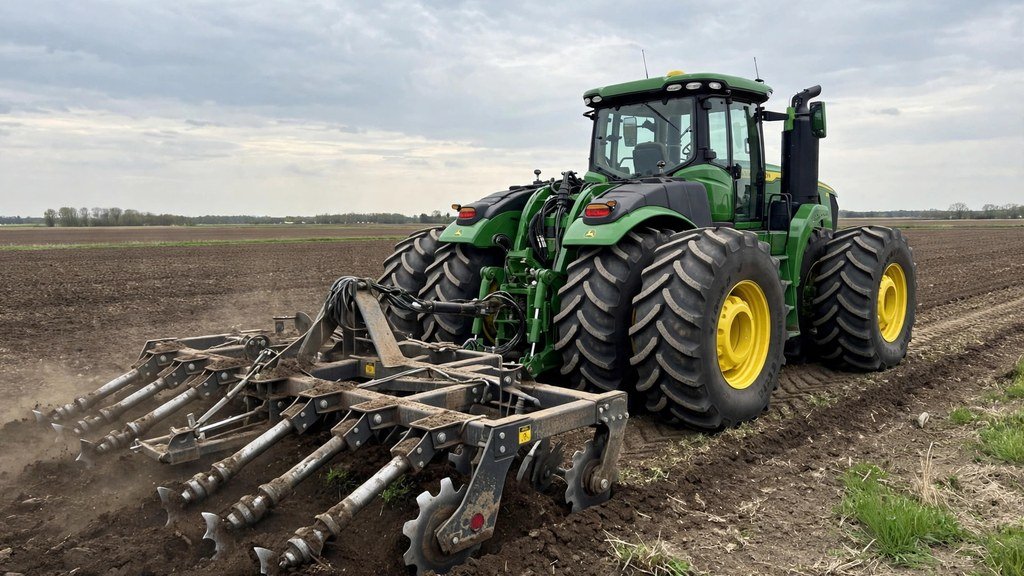
Deere positioned the 9630 as the broad-acre tillage tractor of the 9030 Series launch, and the launch implement list shows why: the 5-section 637 Disk, the 512 Disk Ripper and 2700 Mulch Ripper for shattering compaction and burying residue in one pass, the 2310 Mulch Finisher and 2210 Field Cultivator for seedbed work, and large planters for corn acres. John Deere 9630 performance in deep ripping is where torque rise matters most: up to 38 percent, peaking well below rated speed, so the tractor lugs through a hard patch instead of stalling or downshifting, keeping the ripper at depth instead of riding up.
The video below is not a tillage pass: it shows a tracked 9630T in a head-to-head pull against a Case IH Quadtrac, a traction demonstration rather than field work. It still belongs in a discussion of John Deere 9630 performance, because it shows the tracked sibling putting power to the ground under maximum draft, the same quality that matters when a ripper hits hard ground.
Tested Drawbar Power, Maximum Pull and Traction
John Deere 9630 performance differs between wheeled and tracked machines in a way buyers often miss. The wheeled 9630 tested at 427.14 drawbar horsepower with a 53,666-pound maximum pull; the tracked 9630T at 401.96 drawbar horsepower with a 53,991-pound maximum pull. Tracks pull slightly harder despite lower measured horsepower because they convert power into grip at low speed, where wheels lose more to slip. On loose or wet ground that grip advantage is real, and it is why tracks hold value on soft-soil farms.
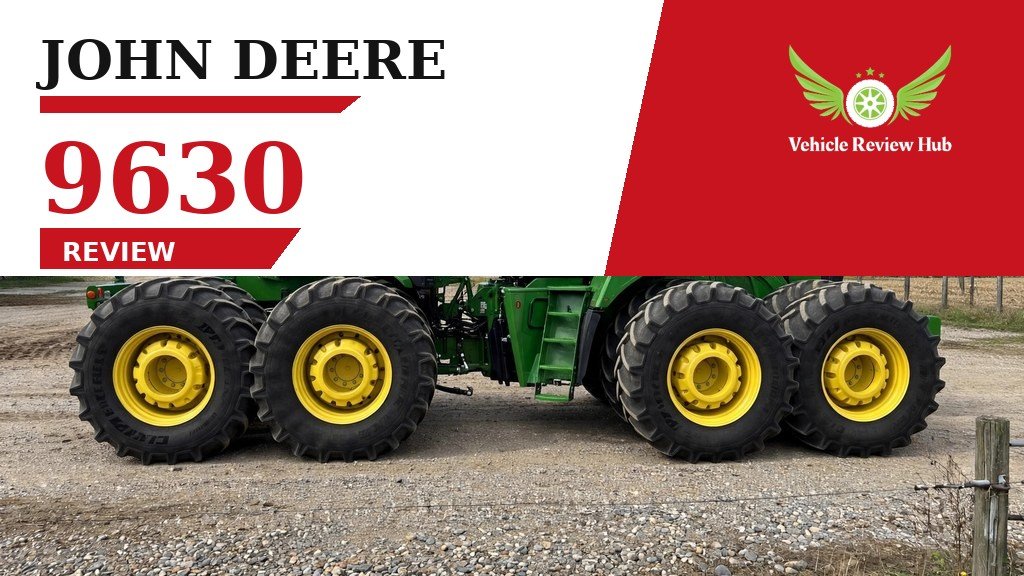
Traction on the wheeled 9630 comes from weight and tires. It ships at about 37,290 pounds and ballasts up to about 54,165 pounds with wheel weights and filled tires, and that range is a working tool in John Deere 9630 performance, not a fixed number. Too little ballast means slip, wasted fuel, and worn rubber; too much means compaction and power wasted carrying itself. Duals or triples spread the load, and the double-reduction axle on the 9530 and 9630 wheeled models runs driveline inputs faster at lower torque loads, which Deere credits with longer driveline life. The Category 5 drawbar, rated for 12,000 pounds of vertical load with a 2.75-inch pin, is not the weak link in John Deere 9630 performance when the implement is matched.
| Specification | 9630 wheeled | 9630T tracked |
|---|---|---|
| Engine | 13.5L PowerTech Plus, 530 hp @ 2,100 rpm | 13.5L PowerTech Plus, 530 hp @ 2,100 rpm |
| Peak power with bulge | 583 hp | 583 hp |
| Torque rise | Up to 38% | Up to 38% |
| Drawbar power (tested) | 427.14 hp | 401.96 hp |
| Maximum drawbar pull | 53,666 lb | 53,991 lb |
| Fuel at max drawbar power | 27.8 gal/hr | 26.7 gal/hr |
| Fuel capacity | 350 gal | 330 gal |
| Drawbar | Category 5, 12,000 lb vertical load | Category 5, 12,000 lb vertical load |
John Deere 9630 Transmission, Handling and Operator Comfort
A 530-horsepower tractor is only as good as its transmission: heavy tillage lives in a narrow speed band where the wrong gear either lugs the engine or spins the tires. John Deere 9630 performance here rests on the 18-speed Automatic PowerShift, refined for the 9030 Series with more power in lower gears and electronically modulated shifts.
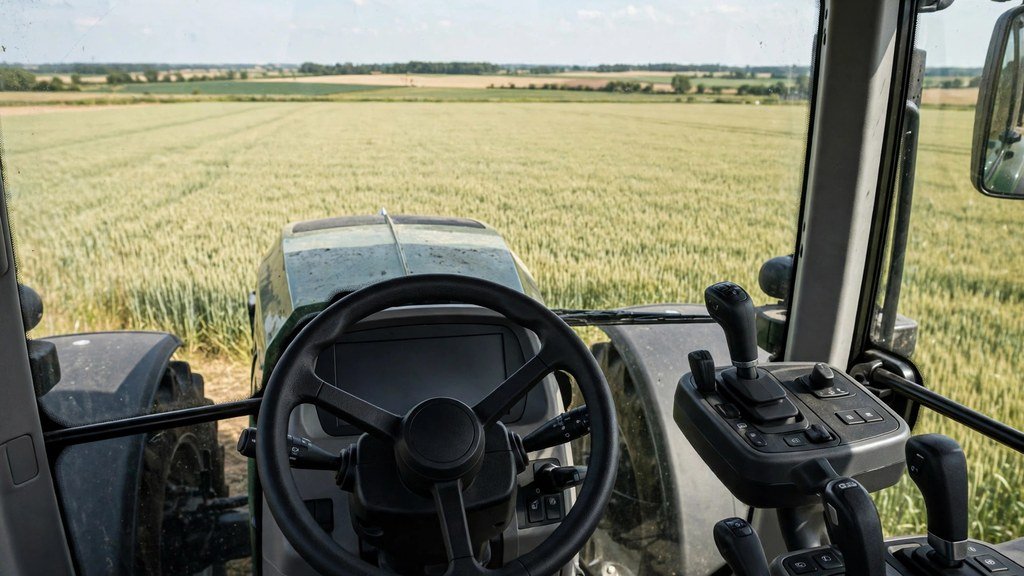
18-Speed PowerShift During Heavy Field Operations
The 18-speed PowerShift gives 18 forward and 6 reverse gears, with 10 working speeds between 3 and 8 mph in precise half-mile-per-hour increments, and that spacing is the key detail in John Deere 9630 performance. In tillage, right versus wrong speed often differs by less than a mile per hour: too slow wastes the day, too fast overloads the implement and spikes fuel burn. Half-mile steps sit exactly on the implement’s best speed. Shifts are clutch-free from a thumb lever on the CommandARM console, speed matching between gears 13 and 18 prevents jars on transport downshifts, and automatic shifting reads load, throttle, and gear to hold the right speed, which matters for John Deere 9630 performance over a twelve-hour day, because a tired operator stops shifting well long before the tractor stops pulling. Transport reaches 24 mph on wheeled 4WD models.
Hydraulics back up the transmission in John Deere 9630 performance: a closed-center, pressure-and-flow-compensated system delivering 48 gallons per minute at 2,900 psi, with 30 gallons per minute at a single selective control valve, and four remotes standard rising to six as a field-installed option. That capacity matters for large air seeders needing simultaneous lift, fan, and metering flows, and TouchSet controls adjust flow on the go from the cab, keeping John Deere 9630 performance consistent across wide implements.
Articulated Steering, Cab Comfort and Turning Space
The wheeled 9630 steers by articulating at the center joint, with hydrostatic power steering and a standard hydraulic differential lock, and that articulation is central to John Deere 9630 performance. An articulated tractor follows its implement more naturally, keeps all four tires pulling through a turn, and puts less side load on the drawbar. The trade-off is headland room: a long articulated tractor with a wide implement needs a generous headland, and John Deere 9630 performance planning should include headland width when sizing implements.
Comfort is a performance feature on a machine worked this hard. The 9030 Series CommandView cab was redesigned quieter and more spacious, with excellent forward visibility despite the larger engine and cooling package, helped by a new hood and relocated exhaust. The optional ActiveSeat communicates with the tractor 200 times per second and removes as much as 90 percent of vertical inputs, protecting John Deere 9630 performance late in the day, because a beaten-up operator makes worse speed and depth decisions. Color-coded controls, the CommandCenter display, and GreenStar and AutoTrac readiness reduce the load of running wide implements straight, saving fuel, seed, and overlap.
John Deere 9630 Real-World Farm Experience
Owner experience with John Deere 9630 performance tells a consistent story: it earns its keep on large farms with heavy tillage and looks oversized everywhere else. Praise centers on lugging ability and traction, complaints on fuel burn, advice on buying for the implement pulled most often. John Deere 9630 performance makes sense when the farm has acres to keep it loaded; on a small farm it sits idle or underloaded, the most expensive way to do light work.
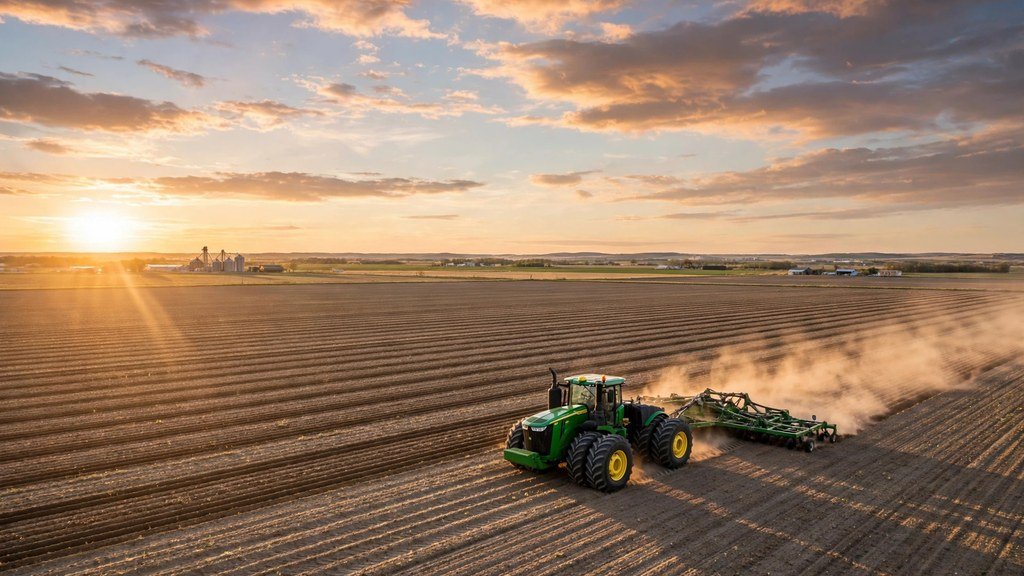
Strengths and Limitations on Large Farms
The strengths of John Deere 9630 performance on a large farm start with capacity: 530 engine horsepower, 427 tested drawbar horsepower, a 350-gallon tank, and 48 gallons per minute of hydraulics let one tractor and operator cover ground that would otherwise need two smaller outfits. Half-mile PowerShift steps keep wide implements at best speed, and the Category 5 drawbar handles implements that would overwhelm a row-crop hitch. The optional 3-point hitch, with 15,300 pounds of lift, adds versatility, though linkage tasks are a small part of a typical 9630 workload.
The limitations of John Deere 9630 performance are just as real. Fuel burn at full load approaches 28 gallons per hour, so a heavy tillage season carries a fuel bill dwarfing other running costs. Size is a limitation too: at 270 inches long and nearly 119 inches wide, it needs wide gates, roads, and headlands. Tire costs on duals or triples are a major line item, and a tracked 9630T trades them for track and undercarriage costs. Finally, the 9630 is a Tier 3 machine from 2007 to 2011, predating modern aftertreatment, which simplifies some maintenance but means it cannot match newer tractors on fuel efficiency at a given output, as the Steiger 600 comparison showed. Running costs and resale are covered in the ownership cost breakdown for the 9630, and the 9630 review lays out specifications and used prices side by side.
Matching Tractor Power, Ballast and Implement Requirements
Matching tractor to farm comes down to three questions, and John Deere 9630 performance answers each plainly. First, what is the heaviest implement, at its deepest setting, in your hardest soil? Size to that job, not the average one: a tractor handling the average pass but stalling on the ripper is the wrong tractor. Second, what ballast and tire package does that job need? Start near the middle of the 37,290- to 54,165-pound ballasted range and adjust by slip: sustained slip above roughly 10 to 15 percent means more weight or tire, while slip under 5 percent with power to spare means dead weight. Third, wheeled or tracked? Wheeled John Deere 9630 performance wins on versatility, road travel, and lower undercarriage cost, while the 9630T wins on grip and flotation in soft ground, with AirCushion suspension smoothing the ride. Answer honestly and John Deere 9630 performance will either fit the farm or tell you it does not. The maintenance checklist for the 9630 belongs in the same decision, because a high-horsepower tractor on a poor service schedule loses its edge faster than any other machine on the farm.
Frequently Asked Questions About the John Deere 9630 Performance
These are the questions buyers and owners ask most often about John Deere 9630 performance, answered directly for the wheeled 9630, the tracked 9630T, or both.
How much horsepower does a John Deere 9630 have?
Rated at 530 engine horsepower at 2,100 rpm from its 13.5L PowerTech Plus six-cylinder diesel, with a power bulge to 583 horsepower. That rating covers both wheeled and tracked machines, but John Deere 9630 performance at the drawbar differs: 427.14 tested for the wheeled machine, 401.96 for the tracked machine.
Was the John Deere 9630 Nebraska tested?
Yes. The University of Nebraska-Lincoln lab lists the 9630 series machine as Test 1926, tested with triples. Compiled figures for John Deere 9630 performance: 427.14 drawbar horsepower, 27.8 gallons per hour at maximum drawbar power, and a 53,666-pound maximum pull for the wheeled tractor.
How much fuel does a John Deere 9630 use per hour?
At maximum drawbar power, the tested figure for John Deere 9630 performance is 27.8 gallons per hour, but that is a maximum, not a daily average. As planning estimates: 10 to 14 in light work, 16 to 22 in medium tillage, 22 to 28 in heavy ripping.
What is the fuel tank capacity of a John Deere 9630?
The wheeled 9630 carries 350 gallons, the tracked 9630T 330 gallons. That gap matters for John Deere 9630 performance planning: the tracked machine burns nearly as much fuel from a smaller tank.
What is the maximum drawbar pull of a John Deere 9630?
The wheeled 9630 tested at 53,666 pounds maximum pull, the tracked 9630T slightly higher at 53,991, despite lower measured horsepower. For John Deere 9630 performance, that gap shows the traction advantage of tracks at low speed and high draft.
What transmission does the John Deere 9630 have?
An 18-speed Automatic PowerShift, 18 forward and 6 reverse, giving 10 working speeds between 3 and 8 mph in half-mile-per-hour increments. That close spacing is central to John Deere 9630 performance, since tillage implements have a narrow best-speed band. Transport reaches 24 mph on wheeled 4WD models.
How much can a John Deere 9630 lift on the 3-point hitch?
The optional 3-point hitch lifts 15,300 pounds, Category 4/4N or 3/4N with a quick coupler. The standard Category 5 drawbar, rated for 12,000 pounds of vertical load with a 2.75-inch pin, is the more important figure for John Deere 9630 performance in drawbar tillage.
What is the difference between the 9630 and the 9630T?
The 9630 is articulated and wheeled; the 9630T is a two-track machine that is not articulated, with a different undercarriage and AirCushion suspension. They share engine and transmission, but the 9630T carries 330 gallons against 350, tests at 401.96 drawbar horsepower against 427.14, and pulls 53,991 pounds against 53,666. For John Deere 9630 performance, tracks win on grip and flotation, wheels on versatility and road travel.
How many acres can a John Deere 9630 cover in a day?
No tested acres-per-day figure exists, so this guide gives planning math: a 40-foot implement at 5 mph covers roughly 24 acres per hour before field efficiency, or 17 to 19 at realistic efficiency, roughly 170 to 190 acres in a ten-hour day. That scale is why John Deere 9630 performance suits large farms.
Is the John Deere 9630 good for deep ripping?
Yes, deep ripping is one of the jobs John Deere 9630 performance was built for. The 38 percent torque rise lets the engine lug through hard patches without stalling, the Category 5 drawbar handles heavy rippers such as the 512 Disk Ripper and 2700 Mulch Ripper, and the 350-gallon tank supports long days. Watch ballast and slip: ripping at full depth is where fuel burn nears its tested maximum.
Does the John Deere 9630 have good operator comfort for long days?
For a tractor of its era, yes. The CommandView cab is quieter and more spacious than the previous generation, the optional ActiveSeat removes as much as 90 percent of vertical inputs, and AutoTrac readiness reduces steering load on long passes. Comfort protects John Deere 9630 performance directly: a fresh operator holds speed and depth better than a tired one.