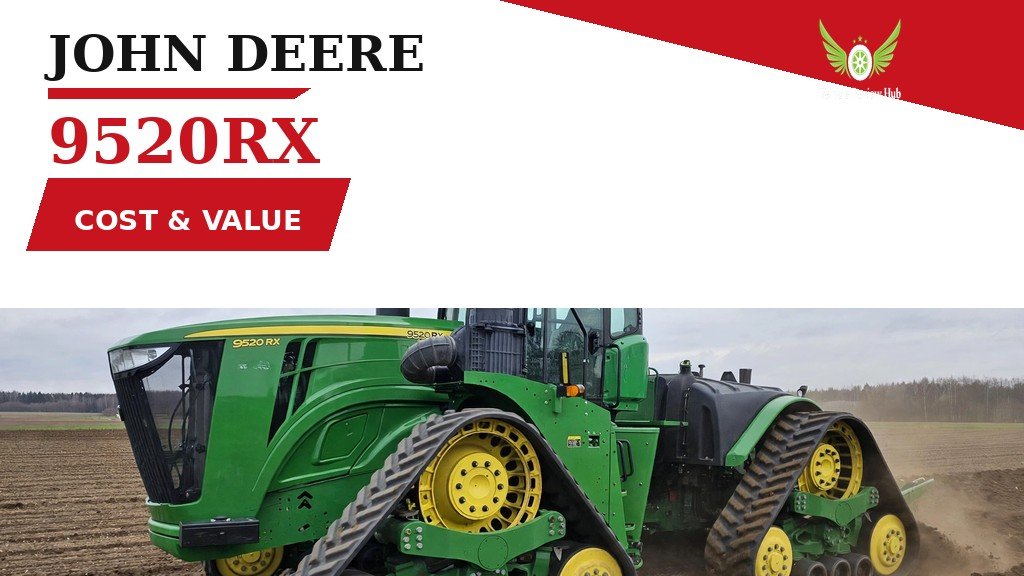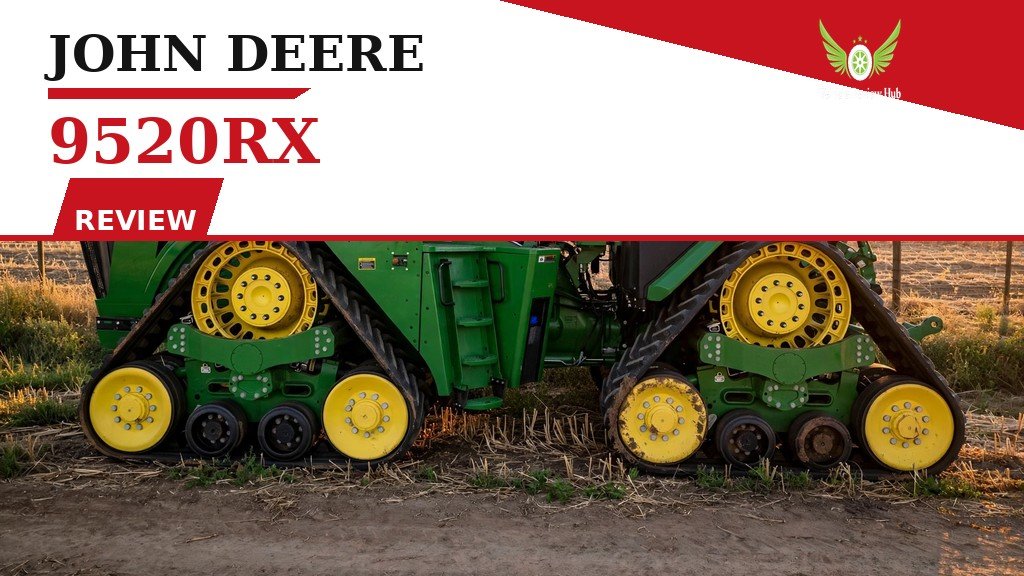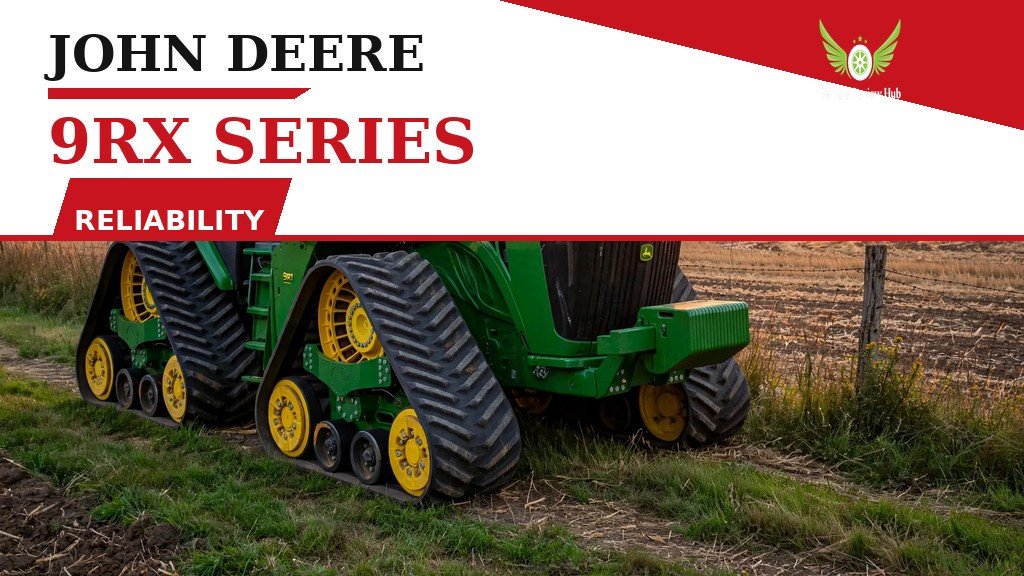
The John Deere 9RX Series is a four-track machine that rewards disciplined maintenance and punishes neglect — the new JD18 18-liter engine runs diesel-only with no DEF, no DPF and no parked regenerations. This John Deere 9RX Series maintenance guide covers the factory service schedule, realistic service costs, reliability expectations, and the warning signs owners report before expensive failures.
Every figure below comes from Deere spec sheets, dealer listings, operator-manual service tables, or labeled owner reports — nothing is guessed. Note that this John Deere 9RX Series maintenance guide covers the current JD18-powered generation (9RX 710, 770 and 830); the previous generation (9RX 470, 520, 570 and 620) ran a Cummins QSX15 and has different service details, which we flag where relevant. Our 9RX Series review and specs guide covers models, pricing and features if you are still shopping.
John Deere 9RX Series Maintenance Schedule and Service Costs
The John Deere 9RX Series maintenance calendar is built around two pillars: 500-hour engine service and 1,500-hour transmission-hydraulic service, with daily track and undercarriage checks in between. The JD18’s EGR-only aftertreatment simplifies one thing — there are no DEF filters to change and no DPF ash service to schedule, which this John Deere 9RX Series maintenance guide treats as a genuine ownership advantage over DEF-equipped competitors.
Engine Oil, Filters, Cooling System and Routine Service
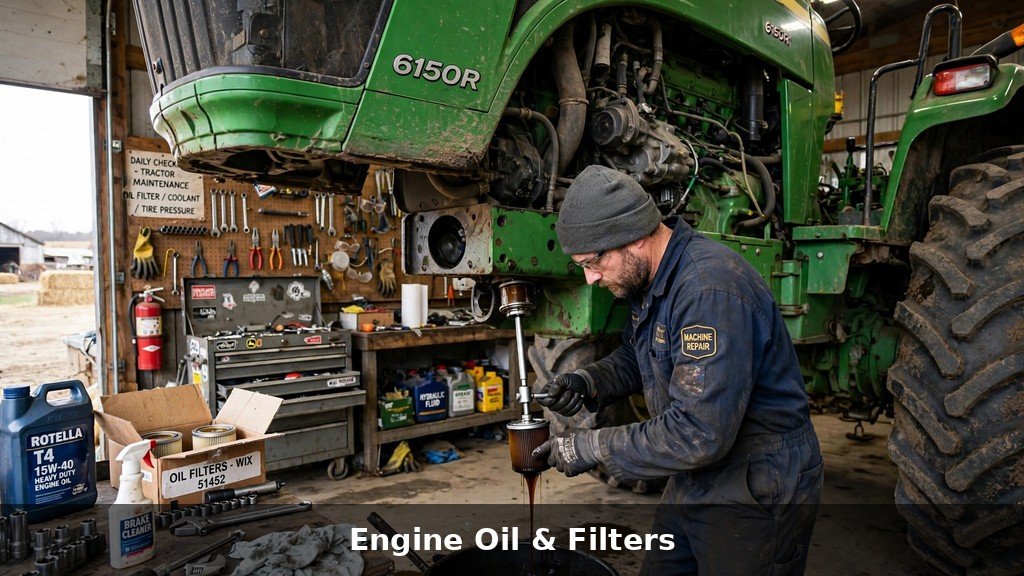
A disciplined John Deere 9RX Series maintenance routine starts here: the JD18 runs a full-pressure, full-flow filtration system with bypass and twin replaceable spin-on oil filters on a 500-hour oil-change interval (at least annually). In the John Deere 9RX Series maintenance schedule, fuel filters go every 500 hours, and the dual-stage radial-pleated air filters are serviced annually or at 1,000 hours, whichever comes first. Engine oil choice is straightforward: Deere’s Plus-50 II at the 500-hour interval is the factory position; deviating from the recommended oil or stretching the interval on an 18-liter engine is, as one dealer technician put it, “the most expensive saving in farming.”
The cooling system uses COOL-GARD II with an initial change interval of 6 years or 6,000 hours if topped off only with the premix — the scheduled interval is 2 years or 2,000 hours otherwise. The reversible cooling fan (standard or optional depending on package) is a real maintenance aid in dusty conditions; run the reversal cycle regularly rather than letting chaff pack the radiator, because overheating cascades quickly into derate and downtime. Valve clearance checks and the crankshaft damper are dealer-inspection items at the longer intervals.
Transmission, Hydraulic Oil, Tracks and Lubrication
The e21 21-speed PowerShift shares oil with the hydraulic system, and its service is the second pillar of this John Deere 9RX Series maintenance schedule. Transmission-hydraulic filters are replaced at 500 hours, with the full oil-and-filter change initially after the first 1,500 hours and every 1,500 hours thereafter. Greasing is no small job on a 9RX: the operator manual calls for daily or every-10-hour lubrication of track and steering points in severe duty, with normal lubrication every 250 hours (every 50 hours if the machine runs daily). Idler wheel hubs, mid-rollers and drawbar support hardware all take grease on schedule.
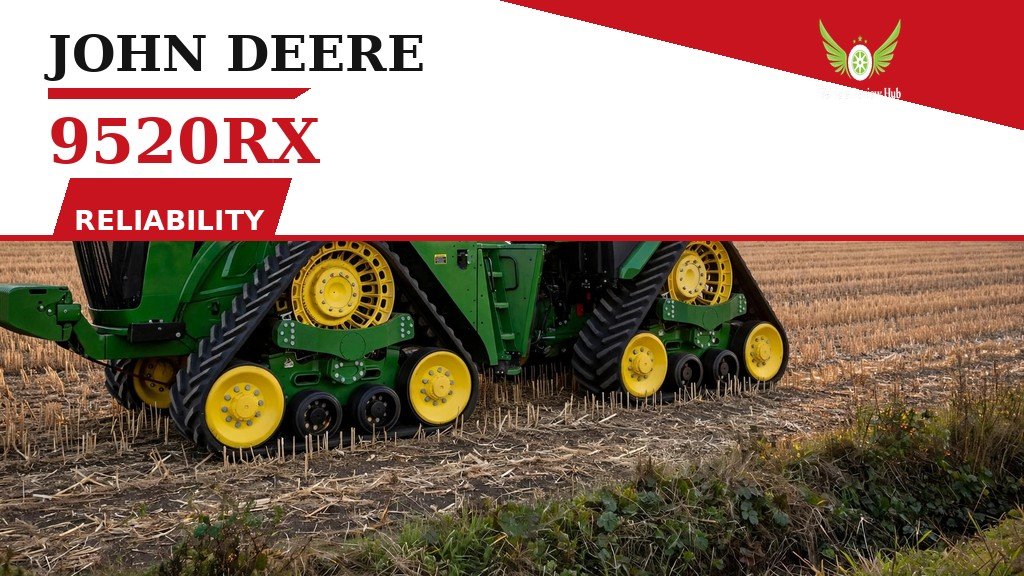
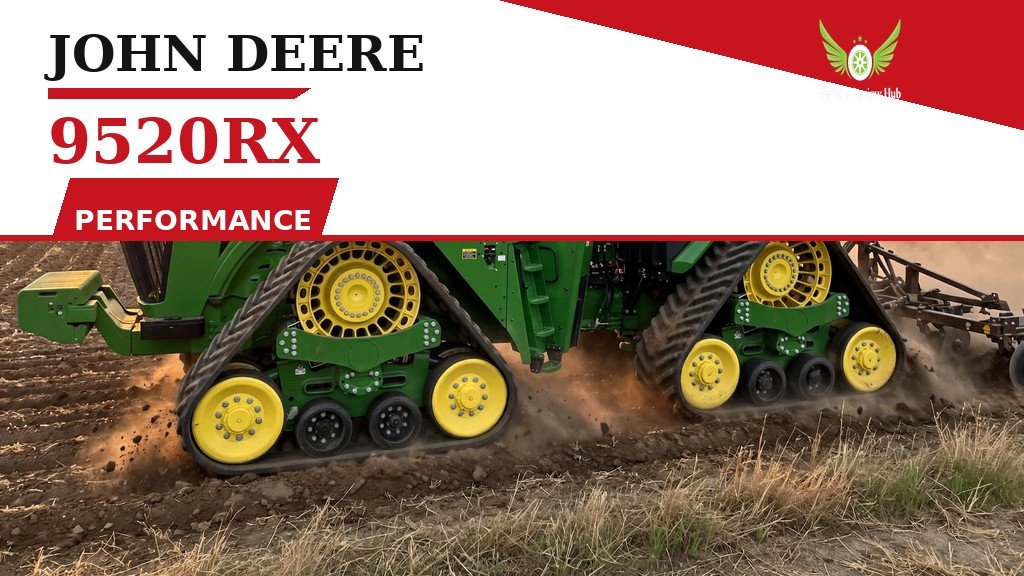
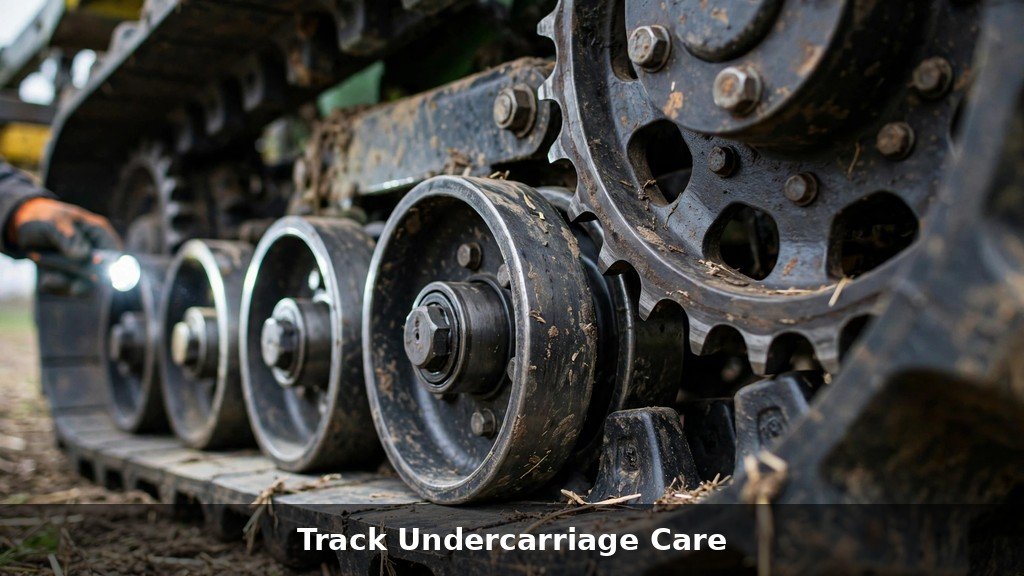
Track service is where John Deere 9RX Series maintenance diverges from wheeled tractors. The four Camso Ag 3500 or 6500 positive-drive belts need daily/10-hour visual inspection: check drive-wheel nuts, idler wheels and mid-rollers for looseness, look for belt cuts and chunking, and verify tension. Break in new belts with light field work before hard pulls, avoid roading the machine (belt wear on pavement is dramatically faster than in the field). Our 8RX Series maintenance guide covers similar four-track care on the smaller platform.
| Service item | Interval | Typical cost (est.) |
|---|---|---|
| Engine oil + 2 spin-on filters | 500 hrs / annually | Dealer $2,500–$4,500; DIY parts ~$1,000–$1,800 |
| Fuel filters | 500 hrs | Included above (dealer); ~$150–$300 parts |
| Air filter elements | Annually / 1,000 hrs | ~$200–$450 parts |
| Trans-hydraulic filters | 500 hrs | ~$300–$600 parts |
| Trans-hydraulic oil + filters | 1,500 hrs (initial 1,500 hrs) | Dealer $3,500–$6,000 (est.) |
| Coolant (COOL-GARD II) | 6 yrs / 6,000 hrs initial | Dealer $800–$1,500 (est.) |
| Track belt replacement | As needed (owner reports 3,000–5,000+ hrs) | Low five figures per belt installed (est.) |
All costs in this John Deere 9RX Series maintenance schedule are estimates — dealer labor rates and parts pricing vary by region. The one number to plan around in any John Deere 9RX Series maintenance budget is the track belt: a full four-corner belt replacement at dealer rates is the single largest maintenance bill a 9RX will ever face, so buy belts with plenty of life left if you are shopping used.
John Deere 9RX Series Reliability and Long-Term Durability
The honest starting point: the JD18-powered 9RX generation is young (2025 model year onward), so long-term John Deere 9RX Series maintenance data is still being written by its first owners. What we can say with confidence, as RDO Equipment’s 9RX review notes, is that Deere designed this generation around uptime — ground-level daily service points, no DEF logistics, and a drivetrain rated for 74,000–84,000 lb of ballasted machine. This John Deere 9RX Series maintenance guide separates what is proven from what is still being proven.
JD18 Engine, e21 Transmission and Hydraulic System Reliability
The JD18 (18.0L, 1,098 cu in) is Deere’s own large-displacement six: inline, wet-sleeve cylinder liners, four valves per cylinder, dual series turbochargers with air-to-air aftercooling, cooled EGR and a high-pressure common-rail fuel system. The EGR-only approach to Final Tier 4/Stage V — no DEF, no DPF, no SCR — removes the most common modern-diesel failure modes (NOx sensors, DEF injectors, crystallized dosing units, interrupted-regen derates) entirely.
The e21 21-speed PowerShift with Efficiency Manager is an evolution of Deere’s powershift lineage rather than a clean-sheet design, which is reassuring for reliability — the fundamentals are proven across the 9-series. The hydraulic system scales from 56 gpm (single pump) to 112 gpm (dual) to 168 gpm (triple pump), with up to eight rear SCVs. The triple-pump, six-plus-remote builds that dominate new 9RX orders put real load on the hydraulic oil and cooling; keep the 500-hour filter changes religious on high-flow machines, because contaminated hydraulic oil is what kills pumps and valve bodies. Idler and mid-roller bearings, drive-wheel lugs and belt alignment are wear items that need watching from day one.
Factors Affecting Service Life, Downtime and Repair Costs
Four things decide John Deere 9RX Series maintenance outcomes: track care, hydraulic cleanliness, software currency, and operator discipline. Operator discipline — warm-up before full load, cool-down after hard pulls, no spot-turns on hard surfaces — are free and worth more than any extended warranty.
Connected Support and JDLink telematics are standard precisely for this reason: remote diagnostics can flag a developing fault before it becomes a field stop. If you buy used, a full dealer service history with software-update records is worth real money — it is the single best predictor of future reliability on these machines. Our 9R Series maintenance guide covers the wheeled articulated sibling, which shares the JD14 engine philosophy if not the hardware.
John Deere 9RX Series Common Problems and Warning Signs
Because the JD18 generation is new, this John Deere 9RX Series maintenance section blends early-owner reports on the 710/770/830 with known failure modes from the previous Cummins-powered generation (labeled as such). Treat every item below as owner-attributed rather than engineering data — and treat a pre-purchase inspection by a Deere technician as mandatory, not optional, on a machine this expensive.
Engine, Electrical, Hydraulic and Transmission Symptoms
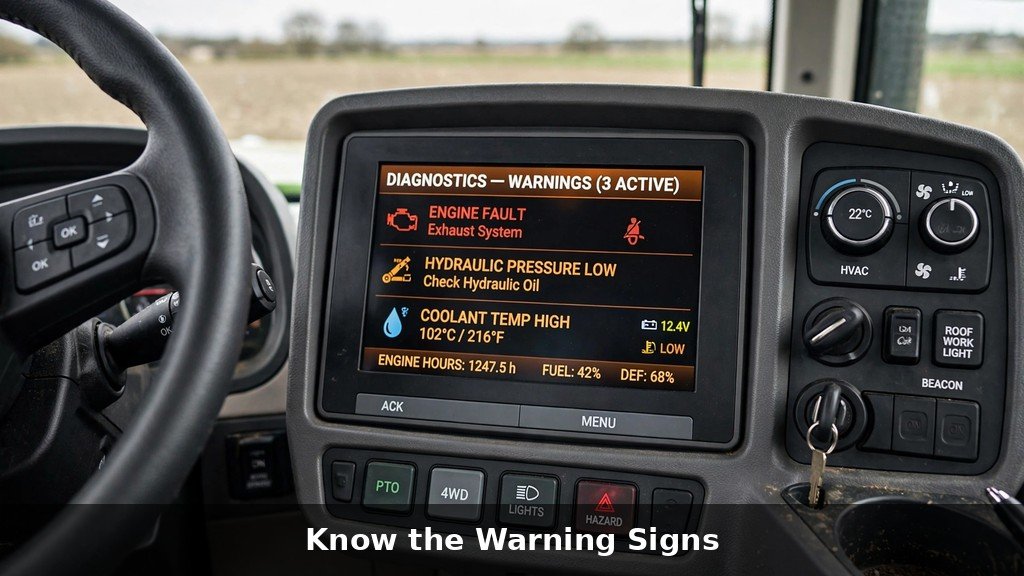
For John Deere 9RX Series maintenance, the EGR system is the item to watch on the JD18: cooled-EGR designs add an EGR cooler and valve to the maintenance picture, and owners of EGR-equipped Deere engines report cooler fouling and valve sticking as the top long-term concern — use the specified oil, change it on time, and do not idle the engine for hours, which accelerates soot loading. Because there is no DEF system, you will never see DEF-quality or NOx-sensor derates.
Electrical and software issues are the most common nuisance complaints on modern 9-series machines: sensor failures (particularly speed and temperature sensors), and calibration drift in the e21 that shows up as harsh or mistimed shifts. The fix is usually a software update and recalibration at the dealer — inexpensive if caught early, expensive if a slipping clutch pack is allowed to wear. Hydraulic symptoms to watch: slow implement response or SCV chatter (filter due or aeration), external leaks at couplers and hose ends (replace before dirt ingress). The video below — a full rebuild of a previous-generation 9RX after a catastrophic failure — is a sobering look at what happens when John Deere 9RX Series maintenance warning signs are ignored:
Track Wear, Alignment and Undercarriage Inspection
The undercarriage is where most John Deere 9RX Series maintenance money is lost or saved. The John Deere 9RX Series maintenance warning signs are: uneven belt wear (alignment or tension off), chunking or cuts in the belt carcass (debris damage — remove the cause), mid-roller or idler wobble and noise (bearing wear — replace before the roller seizes and eats the belt), drive-lug wear on the belt’s inner surface, and any sign of a belt tracking off-center (alignment or bent hardware). Belt life is hugely variable: owners report 3,000–5,000+ hours. At low-five-figures per belt installed (estimate), a worn set of four is a six-figure surprise on a used purchase — measure belt tread depth and inspect every mid-roller before you sign.
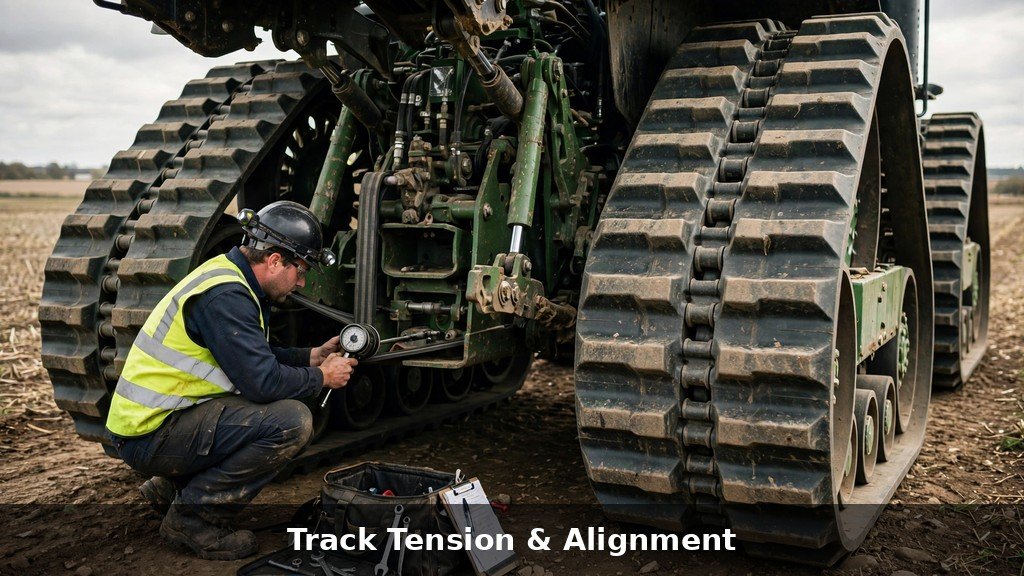
Alignment checks belong in the John Deere 9RX Series maintenance routine, not just at purchase. And check track hardware torque on schedule; the operator manual specifically calls out drive-wheel nuts, idler wheels and mid-rollers at the daily/10-hour check for a reason — loose track hardware is how small problems become derailments. Similar undercarriage discipline applies to the smaller platform covered in our 8RX Series maintenance guide.
John Deere 9RX Series Safety Checks and Used-Tractor Inspection
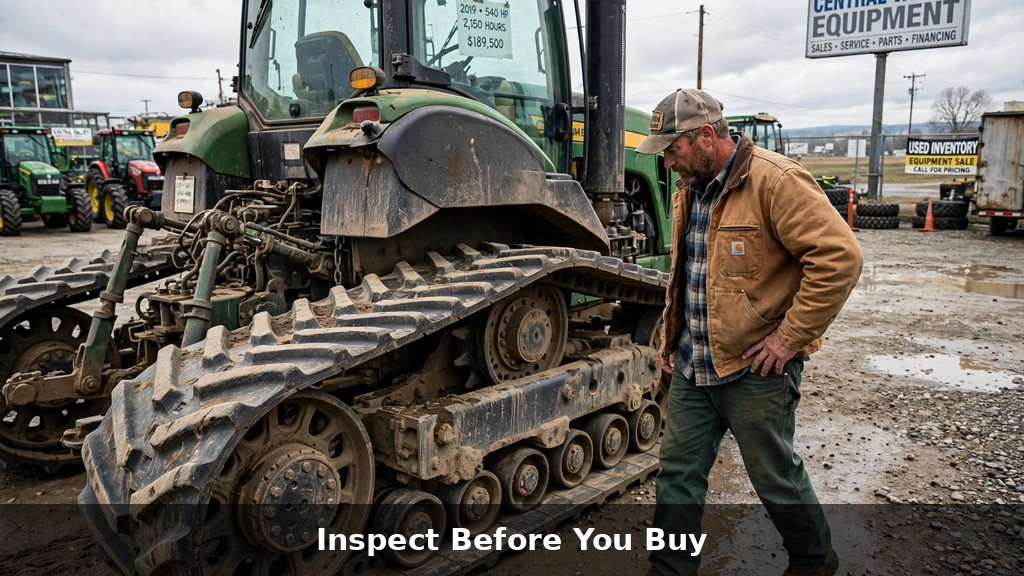
A used 9RX is a $500,000-plus purchase where a two-hour professional inspection can save you six figures. Recent used listings show the stakes: a 2025 9RX 830 with 707 hours listed at $925,000 (Van Wall, Mason City IA), with 2025 9RX 770s in the mid-$800s. The inspection below is the minimum — for machines over 2,000 hours or with any track work in their history, add a full undercarriage measurement report from the dealer.
Checking Service History, Software Updates and Applicable Recalls
John Deere 9RX Series maintenance records are the first thing to demand: every 500-hour engine service, every 1,500-hour trans-hydraulic service, track service records, and — critically — software update and calibration records for the engine controller and e21 transmission.
On recalls: we could not verify any 9RX-specific CPSC recall in original records — some sources report various 9-series campaigns, but without an original CPSC release we treat those as reported rather than confirmed. Run the serial number through Deere’s recall lookup and call Deere customer service at 800-537-8233 before purchase. Also confirm warranty status: the base warranty is 24 months or 2,000 hours, whichever comes first, and the 60-month/2,000-hour powertrain extension in Deere’s written warranty statement is listed specifically for 5E Series tractors — do not assume it applies to a 9RX. Paid PowerGard extended plans are available and are worth pricing on any used 9RX, because one major repair can exceed the plan’s cost.
Inspecting Tracks, Steering, Hydraulics and Transmission Operation
The track inspection is the heart of any used John Deere 9RX Series maintenance evaluation. Measure belt tread depth on all four corners and compare. Inspect every mid-roller and idler for play, noise and seal leaks; check drive-wheel lugs for wear; look for belt cuts, chunking and carcass exposure; verify tension against the manual’s specification. Ask when belts were last replaced and get it in writing — “recently done” without a receipt is not a service record.
Then the functional test: cold-start the JD18 and listen. Cycle every SCV under load and watch for chatter or slow response. Drive the e21 through all ranges, feeling for harsh shifts or flare that suggests calibration or clutch issues. Test steering at full lock both directions and run the PTO under load. Our 9RX Series ownership cost guide walks through what these machines cost to own once they are in your shed.
Frequently Asked Questions About John Deere 9RX Series Maintenance
Quick answers to the John Deere 9RX Series maintenance questions owners and shoppers ask most. For model specs and pricing, see our 9RX Series performance guide and the model overview linked above.
How often does John Deere 9RX Series maintenance call for an oil change?
Every 500 operating hours or annually, whichever comes first. The JD18 uses twin spin-on oil filters, and the factory position is Deere Plus-50 II at that interval. Do not stretch it — 18 liters of oil protecting a 700–830 hp engine is not the place to economize.
Does the 9RX use DEF or need DPF regeneration?
No — and this is one of the JD18 generation’s defining features for John Deere 9RX Series maintenance. The engine meets Final Tier 4 and Stage V with cooled EGR alone, so it runs on diesel only: no DEF tank, no DEF filters, no DPF, no parked regenerations and no ash service. Keep the EGR path healthy with clean air filters and the correct oil changed on schedule.
What does a 9RX track belt replacement cost?
Track belts are the biggest line item in John Deere 9RX Series maintenance budgets: plan on low five figures per belt installed at dealer rates (estimate — varies by region and belt size), which means a full four-corner replacement can approach six figures. Owner-reported belt life runs roughly 3,000–5,000+ hours. Measure tread depth and inspect every mid-roller before buying used.
What are the most common John Deere 9RX Series maintenance issues?
On the new JD18 generation, early owner-attributed reports center on software and sensor nuisance codes, e21 shift-calibration issues, and the usual four-track concerns: belt wear and cuts, alignment drift, and mid-roller/idler bearing wear. The EGR system adds cooler and valve maintenance to watch long-term. Service history and software-update records matter most while long-term patterns are still emerging.
What is the 9RX warranty?
Deere’s agricultural warranty statement covers tractors for 24 months or 2,000 hours, whichever comes first. The 60-month/2,000-hour powertrain extension in the written statement is listed specifically for 5E Series tractors — do not assume it covers a 9RX. Paid PowerGard extended plans are available through dealers and are worth pricing given the cost of major John Deere 9RX Series maintenance and repairs.
Are there any 9RX recalls I should know about?
We could not verify any 9RX-specific recall in original CPSC records. Some sources report various 9-series campaigns, but without an original release we treat those as reported rather than confirmed. Run the serial number through Deere’s recall lookup and call 800-537-8233 before buying — open campaigns are completed free regardless of owner.