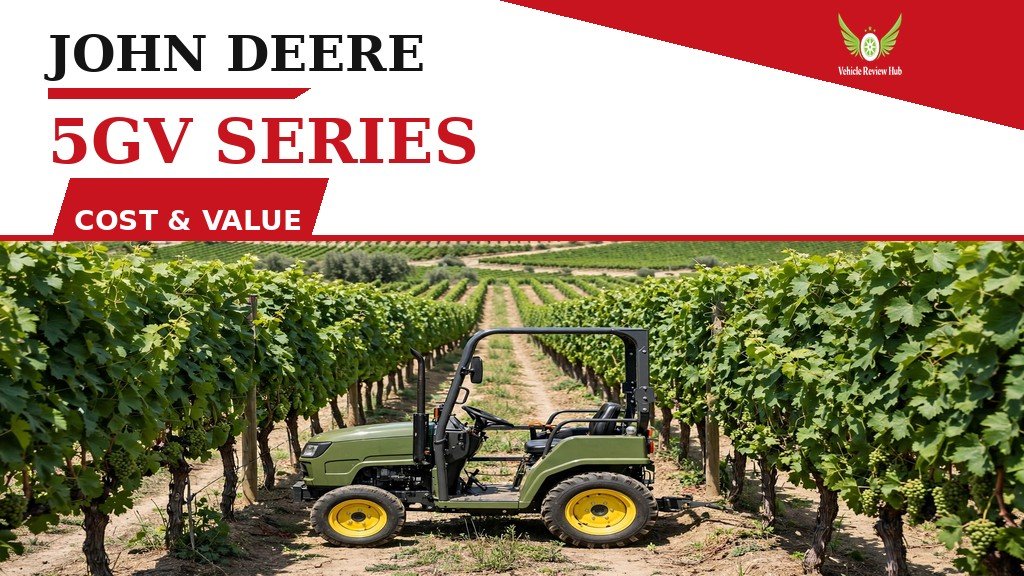
A John Deere 5GV Series ownership cost plan starts with a simple truth: this small, narrow, specialty tractor’s bills look nothing like a big row-crop machine’s. A 5075GV or 5090GV burns less fuel and wears cheaper tires than a 200-horsepower tractor, but still carries real service, insurance, and repair costs. For a vineyard running about 300 hours a year, annual running costs — fuel, service, insurance, and a repair reserve — usually land in the $5,000 to $7,000 range before depreciation, plus roughly $3,000 to $4,500 more in depreciation on a mid-life used machine. This guide shows how each number in your John Deere 5GV Series ownership cost picture is built.
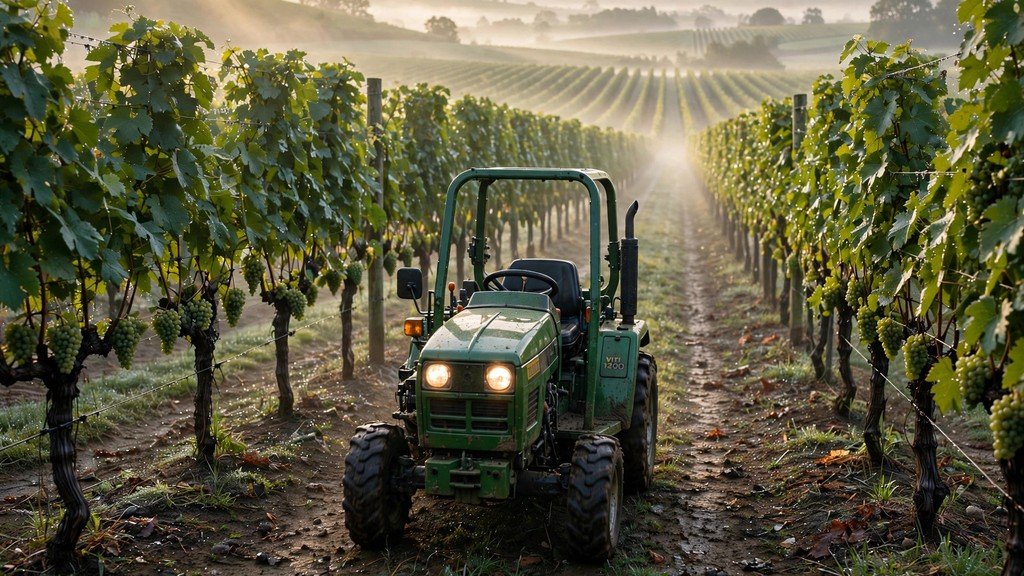
The 5GV is built for one job: fitting between narrow vineyard rows. The 5075GV makes 75 horsepower with 61 at the PTO, and the 5090GV makes 90 with 78 at the PTO, both from the same FPT 3.4-liter four-cylinder Final Tier 4 diesel. Both share a 42.8-inch minimum working width and a 42.6-inch cab, so a wider, cheaper utility tractor cannot substitute. The John Deere 5GV Series review covers both models and current used prices in full.
John Deere 5GV Series Total Cost of Ownership
Total cost of ownership means everything you spend to keep the tractor working. For a 5GV, the buckets are fuel, maintenance, implements, repairs, insurance, and depreciation. Any realistic John Deere 5GV Series ownership cost estimate has to count all six, or it will understate the real number.
Fuel, Routine Maintenance and Implement Operating Expenses
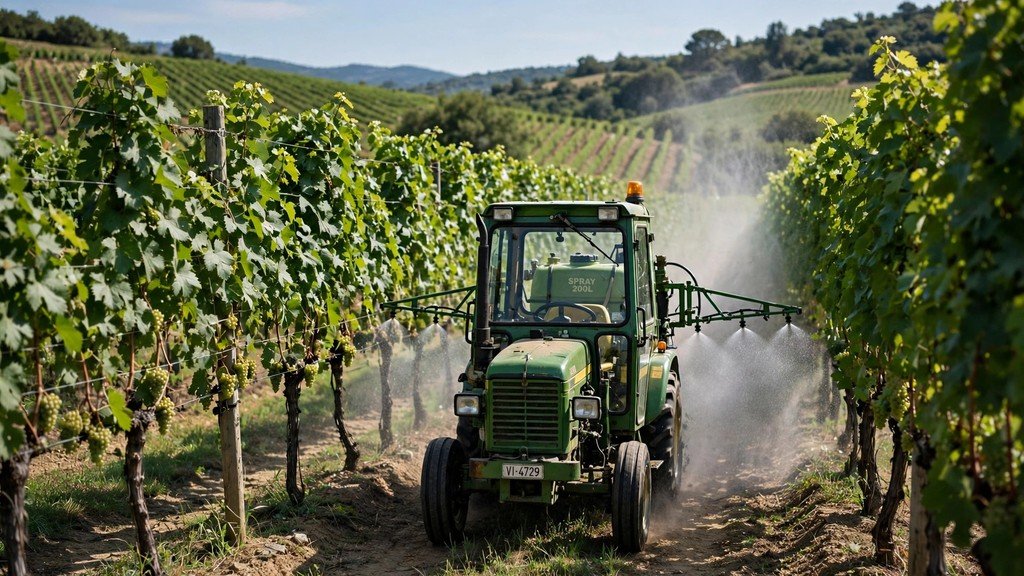
Fuel is the largest annual running cost for most vineyard operators. The 5GV carries a roughly 19-gallon diesel tank (Deere’s sheet lists 19.9 gallons), a 2.7-gallon DEF tank, and an optional 7.5-gallon auxiliary tank. A 75- to 90-horsepower tractor doing vineyard spraying, mowing, and light transport typically burns around 2 gallons per hour across a season — a budgeting assumption, not a factory figure. At 300 hours a year, that means about 600 gallons of diesel. The U.S. Energy Information Administration put the national average retail on-highway diesel price at $6.179 per gallon for the week of October 12, 2026; farm off-road diesel is usually cheaper, so the retail figure is a conservative planning price. On those assumptions, fuel alone costs about $3,700 a year, versus roughly $4,850 in California at $8.091. The John Deere 5GV Series performance and fuel usage guide explains how implement load changes consumption. That fuel line is the single biggest item in most John Deere 5GV Series ownership cost budgets.
Deere’s manual sets engine oil and filter every 500 hours, transmission and hydraulic filters every 750 hours, transmission and hydraulic oil plus front-axle oil every 1,500 hours or two years, and coolant at 6,000 hours. At 300 hours a year, the 500-hour engine service falls roughly every 20 months, so budget one engine service most years plus filters, grease, and DEF — $400 to $700 a year for parts and fluids, more with dealer labor. The John Deere 5GV Series maintenance guide lists the full schedule and common problems. Implement wear is the forgotten bucket: sprayer nozzles, pump seals, mower blades, and belts wear every season, and narrow vineyard tires are a multi-thousand-dollar event to reserve for.
Repairs, Unexpected Costs and Annual Ownership Budget
Repairs are where small tractors can still produce big bills. The FPT engine and SyncReverser or PowrReverser transmissions are proven designs, but a hydraulic pump, clutch pack, or electronic fault can each cost well over $1,000 in parts and labor. The smart approach to John Deere 5GV Series ownership cost planning is a repair reserve: $800 to $1,500 a year for a mid-life 5GV, lower in warranty and higher past 3,000 hours. Deere’s standard tractor base warranty is 24 months or 2,000 hours, so a 2018 or 2019 machine is well outside factory cover.
For a 300-hour year: fuel about $3,700, service $400 to $700, insurance $400 to $800, repairs $800 to $1,500, and implement wear $300 to $600 — roughly $5,600 to $7,300 a year before depreciation. Add depreciation of roughly $3,000 to $4,500 a year on a $40,000-class used machine, and the all-in John Deere 5GV Series ownership cost lands around $8,600 to $11,800 a year, or $29 to $39 per operating hour. Lower hours raise the per-hour figure, since depreciation and insurance do not shrink with hours; higher hours lower it, as fuel dominates.
John Deere 5GV Series Insurance and Financial Considerations
Insurance is a small budget line but a large risk if missing. A 5GV is a $30,000 to $60,000 asset working around workers, trellises, spray chemicals, and public roads, and one rollover, shed fire, or transport collision can cost more than years of premiums. Getting insurance right is a core part of any John Deere 5GV Series ownership cost plan, because an uninsured loss wipes out years of careful budgeting.
Equipment Insurance and Liability Coverage
Most vineyard operators cover a 5GV under a farm package or inland marine policy, covering physical damage — collision, fire, theft, weather — plus liability. If the tractor ever travels on a public road, confirm road-use cover and slow-moving-vehicle and lighting compliance. Liability deserves special attention: spray drift claims, PTO injuries, and trellis damage are all realistic exposures. Tell the agent exactly how the tractor is used, including custom work, because undeclared commercial use is a common reason claims get disputed. For John Deere 5GV Series ownership cost planning, treat $400 to $800 a year as a planning range and get actual quotes: premiums commonly land in the low hundreds bundled with a farm policy, higher standalone, and rates vary by state, claims history, storage, and financing. A financed tractor will usually require comprehensive physical-damage cover with the lender named as loss payee. For comparison, the John Deere 5075E ownership cost guide covers a same-horsepower utility tractor: once machine value is similar, premiums are similar.
Storage, Theft and Damage Protection
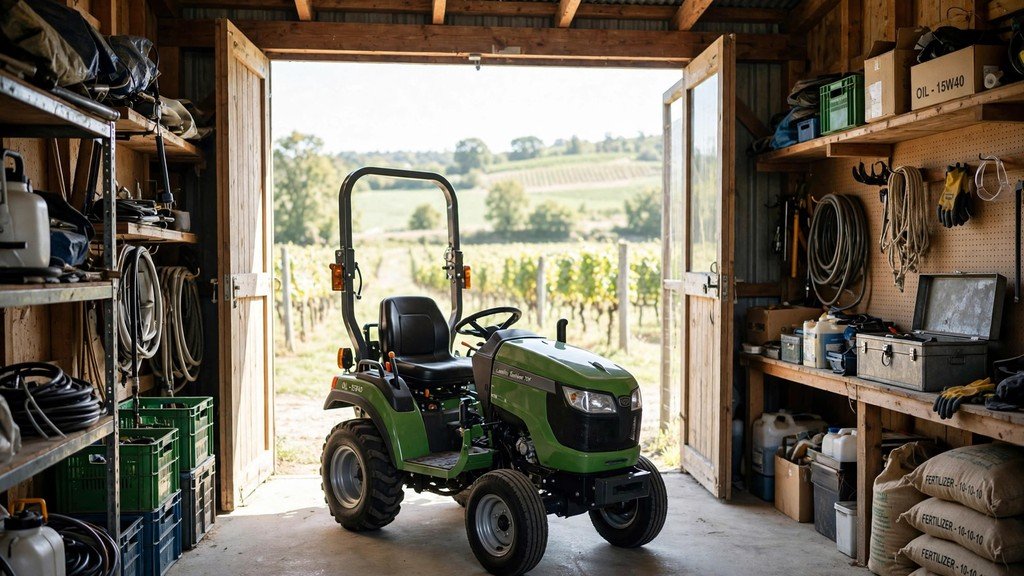
Secure storage is one of the cheapest ways to cut John Deere 5GV Series ownership cost: a 5GV kept in a locked shed will usually earn a better premium than one parked in an open yard, and it will last longer, since UV, rain, and rodent damage all show up as repair bills. Theft protection matters: specialty tractors are valuable, easy to trailer away, and hard to identify once decals are removed. Record the serial number off the machine and consider a GPS tracker or hidden kill switch. Each of these habits lowers the long-term John Deere 5GV Series ownership cost: prevented damage is always cheaper than repaired damage.
John Deere 5GV Series Depreciation and Resale Value
Depreciation is the quietest cost and often the largest. A 5GV loses value fastest in its first few years, then settles into a slower decline; the specialty market has fewer buyers but also fewer machines, so a clean narrow tractor in a wine region holds value better. A careful John Deere 5GV Series ownership cost analysis separates cash running costs from depreciation, realized only when you sell or trade.
How Model Year, Hours, Condition and Equipment Affect Price
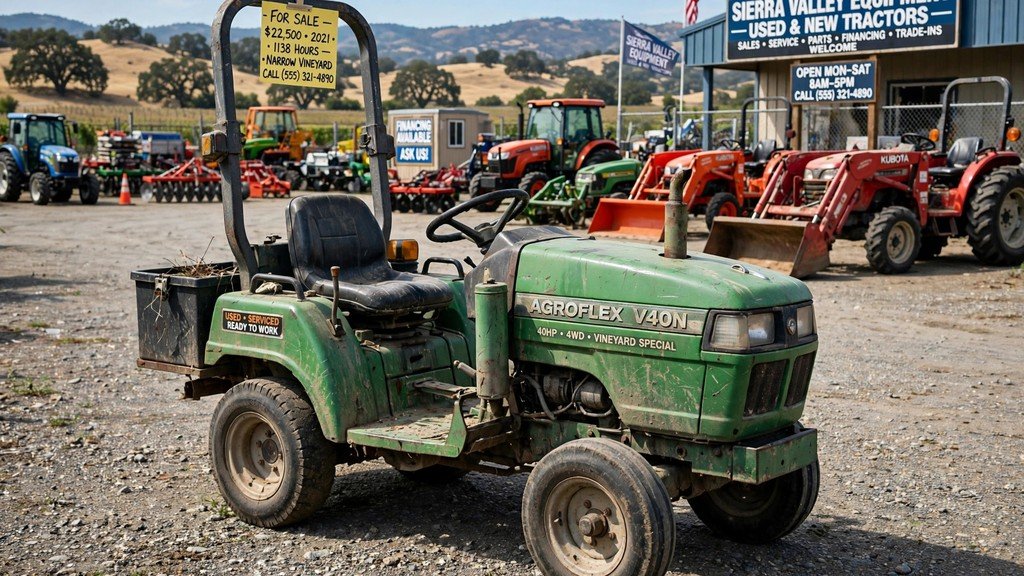
Hours matter more than model year on a 5GV. A March 2026 California auction catalog listed 2018 and 2019 5075GV and 5090GV machines at roughly 2,100 to 2,800 hours — normal for this seasonal market. Under 1,500 hours commands a clear premium; past 4,000 hours needs a discount unless major service is documented. Condition is the second driver: a cab machine with working air conditioning and no hydraulic leaks outsells a rough open-station machine, and tire condition alone can swing the price by thousands. Equipment is the third driver of John Deere 5GV Series ownership cost: a cab with air conditioning, the 24F/12R PowrReverser, and extra remotes and weights add resale value because they are expensive to retrofit. The 5090GV generally holds a premium over the 5075GV for its extra 15 horsepower and 17 PTO horsepower, but the gap narrows on high-hour machines where condition dominates. Compare like with like on cab, transmission, and remotes.
For context, Deere’s August 2023 price page listed the 5075GV base machine at $55,636 before options, with cabs adding $11,478 to $12,532 — roughly $67,000 to $70,000 for a cab machine before destination and dealer charges. The used bands below are estimates from limited October 2026 listings (one aggregator showed a 5075GV at $39,500), so verify against live dealer and auction prices before you buy or sell.
| Used 5GV band (estimate, Oct 2026) | 5075GV | 5090GV |
|---|---|---|
| 2018–2019, 2,000–3,000 hours, open station | $28,000 – $38,000 | $34,000 – $44,000 |
| 2018–2019, 2,000–3,000 hours, cab with A/C | $34,000 – $44,000 | $40,000 – $52,000 |
| 2020–2022, under 1,500 hours, cab, well equipped | $42,000 – $52,000 | $48,000 – $60,000 |
Private Sale, Dealer Trade-In and Resale Preparation
Private sale usually returns the highest price, typically 10 to 20 percent more than a dealer trade-in, but it costs time. A dealer trade-in is faster and simpler, and in many states its value reduces the taxable price of the replacement machine. Auction is the most unpredictable route: a well-presented low-hour cab machine in a wine region can do well, but a rough machine can sell far below private-party value. Resale preparation pays for itself in John Deere 5GV Series ownership cost terms. Service the machine before listing, including the 500-hour engine service if due, and keep the receipts. Fix small hydraulic weeps, clean the cab, fix weak air conditioning, and photograph the tractor in a vineyard row, not a muddy yard. Write the listing around what matters: model year, verified hours, cab or open station, transmission, SCV count, tire tread, and service history. That preparation keeps the long-term John Deere 5GV Series ownership cost down, because resale value is where careful owners recover thousands.
Buying a Used John Deere 5GV Series Tractor
Buying a used 5GV is where John Deere 5GV Series ownership cost math becomes a decision. The market is thin, good machines sell quickly, and the wrong machine — too wide, wrong transmission, or tired hydraulics — is expensive to fix.
Choosing Between the 5075GV and 5090GV
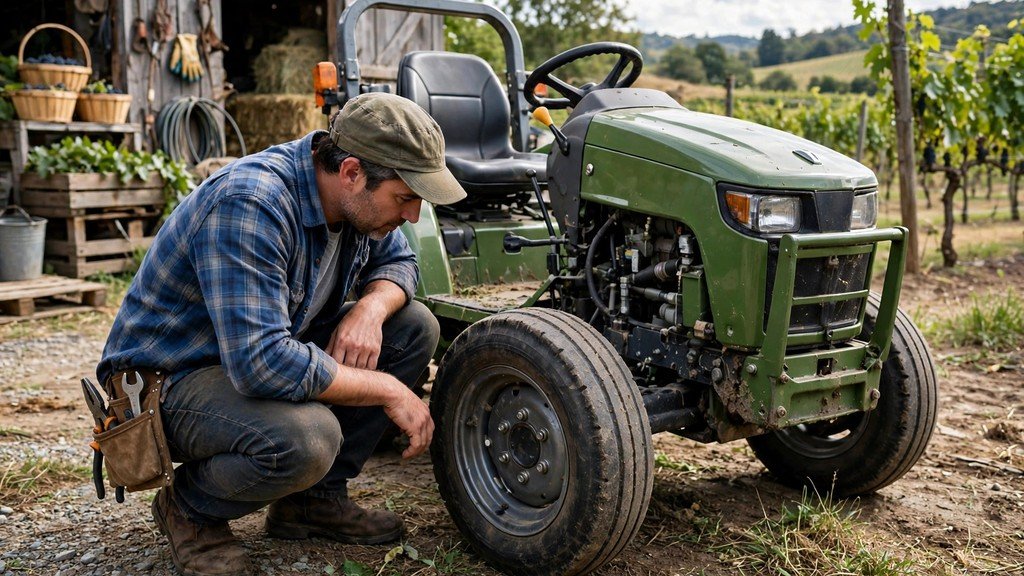
Choose the 5075GV for a small vineyard with light implements and narrow rows. Its 75 horsepower and 61 PTO horsepower handle sprayers, mowers, and undervine equipment comfortably, and it costs less to buy, insure, and fuel. Choose the 5090GV for a larger sprayer, heavier mower, hilly ground, or the optional Intelligent Power Management boost. The 5090GV’s 90 horsepower and 78 PTO horsepower give real headroom, worth paying for if your sprayer is at the limit of 61 PTO horsepower. Some dealer pages list the 5090GV’s PTO at 76 horsepower rather than 78; Deere’s own specification sheet gives 78, the figure used here. Do not let horsepower alone decide. This is a John Deere 5GV Series ownership cost decision as much as a power decision: a 5075GV with a cab, PowrReverser, and three rear remotes beats a bare open-station 5090GV, because cab comfort, shuttle ease, and hydraulic capacity affect every working day, while the extra 15 horsepower only matters on the hardest jobs. Both share the same 42.8-inch minimum working width, so the choice is about power and equipment, not fit. Wider rows than 60 inches call for the 5GN instead. For a buyer weighing 90 horsepower across Deere’s range, the John Deere 5090M ownership cost guide shows what the same horsepower costs in a standard utility chassis.
Inspection Checklist, Price Negotiation and Alternatives
Inspect a used 5GV in daylight, cold, with time to run it properly. Start from cold: brief light smoke is normal, but persistent blue or black smoke is not. Check the hour meter against service records and pedal, seat, and pin wear — mismatched hours and wear are a warning sign. Run every SCV through its full stroke under load, shift through the ranges, engage the PTO, listen for bearing noise, and check hitch lift with weight on it. Look for hydraulic weeps at the SCV couplers, rockshaft, and steering cylinders, and inspect narrow tires for cracking and tread depth — a set is a major cost. Check cab air conditioning, lights, park brake, and neutral-start safety, and confirm no stored DEF fault codes — aftertreatment repairs are among the most expensive on a Final Tier 4 machine. Negotiate from evidence, not the asking price — every deduction comes straight off your John Deere 5GV Series ownership cost. A machine due for its 1,500-hour transmission and hydraulic service, one with tired tires, or one with weak air conditioning each justifies a specific deduction — name the cost of each item rather than making a general low offer. Get a written quote for any repair you use in negotiation, and be ready to walk away. As alternatives, a 5GN suits wider rows, a 5075E or 5090M suits properties where row width is not a constraint, and a well-kept older 5EN-series machine can be a bargain if the dealer confirms parts.
The video below shows a dealer’s used-tractor walk-around:
John Deere 5GV Series Ownership Cost FAQs
These direct answers cover the questions vineyard buyers ask most often about John Deere 5GV Series ownership cost.
What is the John Deere 5GV Series ownership cost per year?
For a vineyard running about 300 hours a year, the all-in John Deere 5GV Series ownership cost is roughly $8,600 to $11,800 a year on planning estimates, including fuel, service, insurance, a repair reserve, implement wear, and depreciation. Cash running costs alone in any John Deere 5GV Series ownership cost budget are roughly $5,600 to $7,300 a year. Your figure depends mainly on hours, local diesel price, and DIY versus dealer servicing.
How much does a used John Deere 5GV cost in 2026?
Used 5GV prices are thinly traded, so bands are estimates: roughly $28,000 to $44,000 for 2018–2019 machines with 2,000 to 3,000 hours by cab and condition, and roughly $42,000 to $60,000 for 2020–2022 low-hour cab machines. A cab with working air conditioning, PowrReverser, and extra remotes pushes a machine toward the top of its band. Verify against live dealer and auction listings before buying — purchase price is only the starting point of John Deere 5GV Series ownership cost.
Is the 5075GV or 5090GV cheaper to own?
The 5075GV is cheaper to buy, insure, and fuel, and the better value if your implements are within its 61 PTO horsepower. The 5090GV costs more up front but earns its premium with a large sprayer, heavy mower, or hilly ground where its 78 PTO horsepower matters. The difference in John Deere 5GV Series ownership cost between the two models is small per hour; the bigger risk is buying too little tractor and overworking it.
How often does a John Deere 5GV need servicing?
Deere’s manual sets engine oil and filter every 500 hours, transmission and hydraulic filters every 750 hours, transmission and hydraulic oil plus front-axle oil every 1,500 hours or two years, and coolant at 6,000 hours or six years. At 300 hours a year, an engine service falls roughly every 20 months and a transmission service about every five years. Change oil at least once a year even if the hours are low. Skipping services is a false economy that raises John Deere 5GV Series ownership cost through repairs.
What does it cost to insure a John Deere 5GV?
Insurance is a small line in any John Deere 5GV Series ownership cost budget: as a planning range, $400 to $800 a year bundled with a farm policy, more standalone, depending on state, claims history, storage, and financing. A financed tractor will usually require comprehensive physical-damage cover with the lender named as loss payee. Get quotes from two farm insurers and confirm road-use cover for travel between blocks.
How fast does a John Deere 5GV depreciate?
A 5GV loses value fastest in its first few years, then settles into a slower decline of roughly $3,000 to $4,500 a year on a $40,000-class used machine. That slower decline is the depreciation line in your John Deere 5GV Series ownership cost budget. Specialty scarcity helps: clean narrow tractors in wine regions hold value better, since fewer machines are for sale and buyers cannot substitute a wider tractor.
What should I check before buying a used 5GV?
Check cold-start smoke, hour-meter consistency against service records, every SCV under load, PTO bearing noise, hitch lift with weight, hydraulic weeps, narrow tire tread and sidewalls, cab air conditioning, park brake, neutral-start safety, and DEF fault codes. Confirm row width fits your vineyard — both 5GV models share the 42.8-inch minimum working width — and verify parts availability for older machines. A careful inspection is the cheapest John Deere 5GV Series ownership cost control there is.
Is a John Deere 5GV good for a small vineyard?
Yes, it is built exactly for that job. The 42.8-inch minimum working width and 42.6-inch cab let it work narrow rows standard tractors cannot enter, and its 75 or 90 horsepower covers spraying, mowing, and undervine work. The trade-off: it is a single-purpose machine, not the right choice for heavy tillage or loader work. For the right rows, John Deere 5GV Series ownership cost is hard to beat, since no wider tractor can do this work at all.
How can I lower my John Deere 5GV Series ownership cost?
Service it yourself where competent, buy fuel in bulk where storage allows, keep it in a locked shed, and protect resale value with documented services and good tires. The biggest saving in John Deere 5GV Series ownership cost is buying right first time: a cab model with PowrReverser and the remotes you need holds value better and avoids expensive retrofits.
Sources: Deere’s 5075GV price and specification sheet, the TriGreen Equipment 5090GV listing, the AllMachines 5075GV specification summary, Deere’s operator’s manual service intervals, and the EIA diesel price report for the week of October 12, 2026.