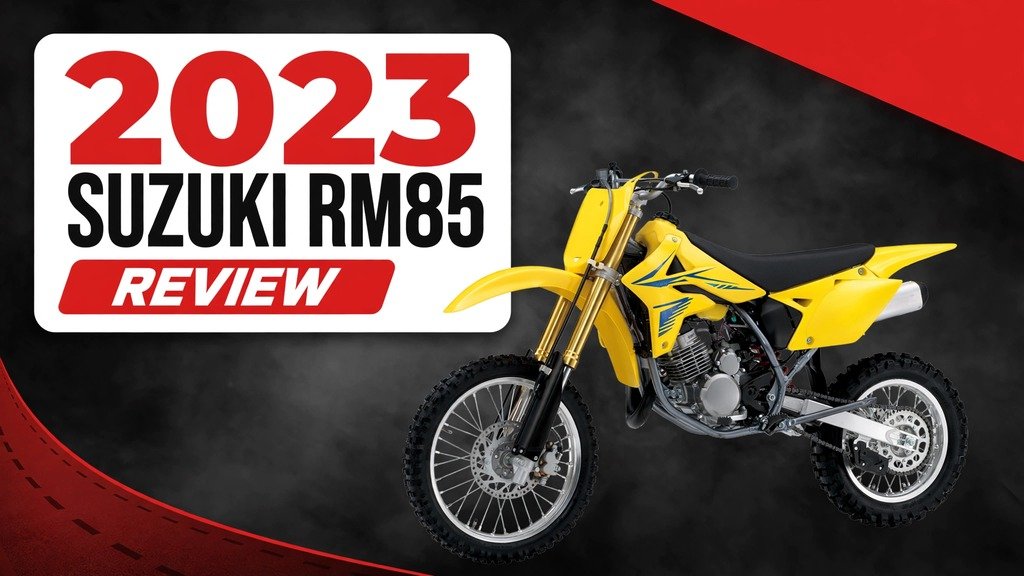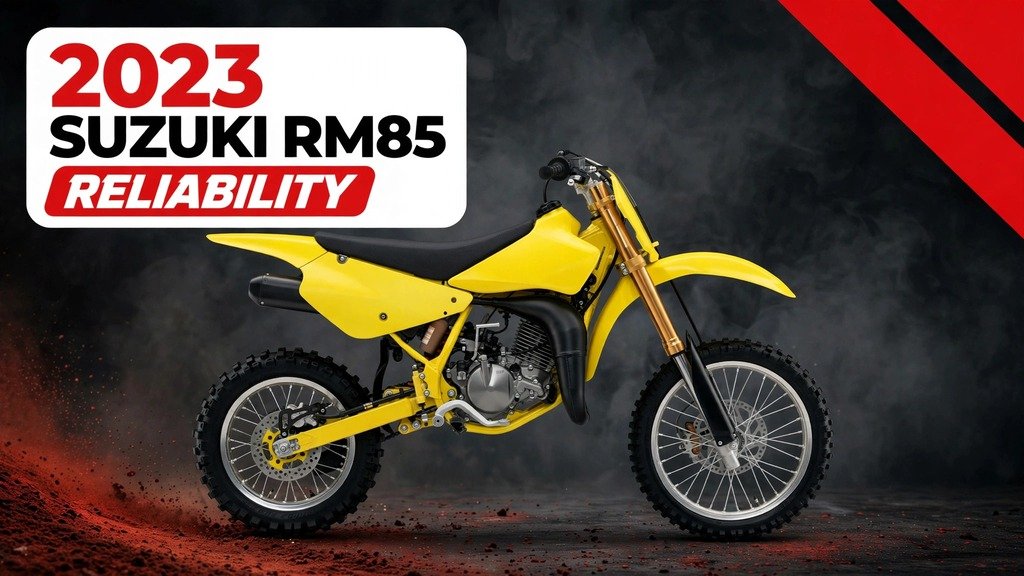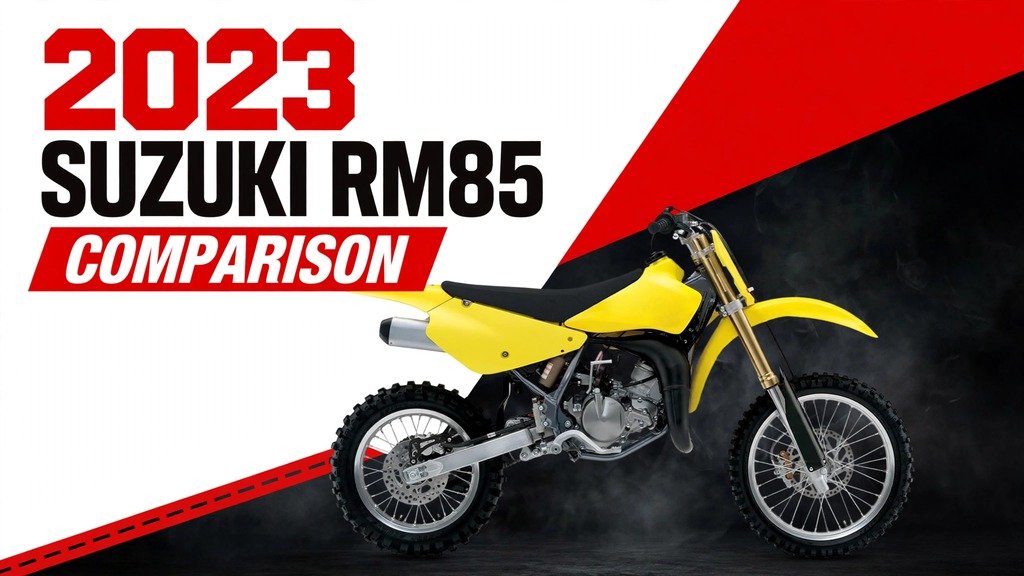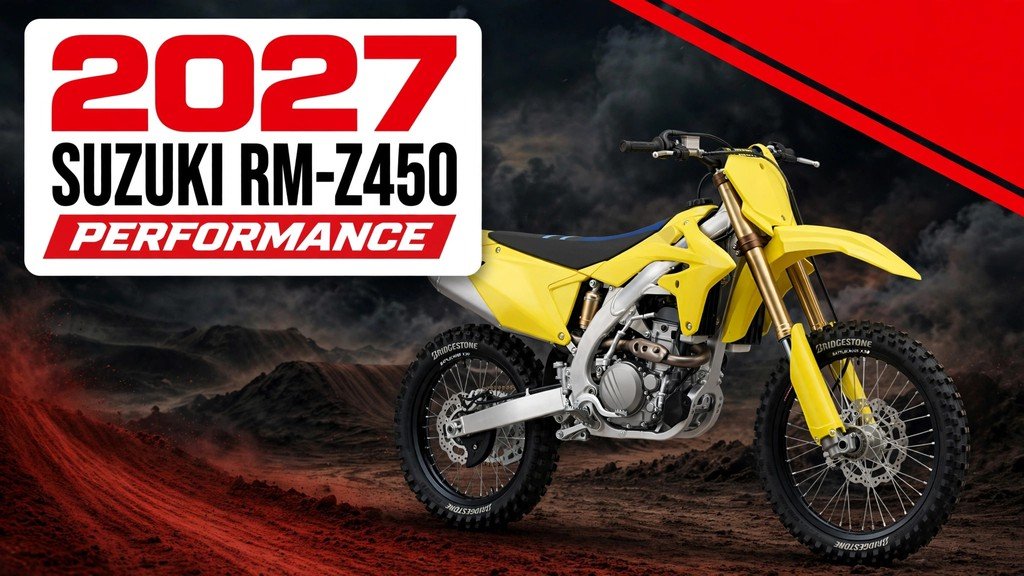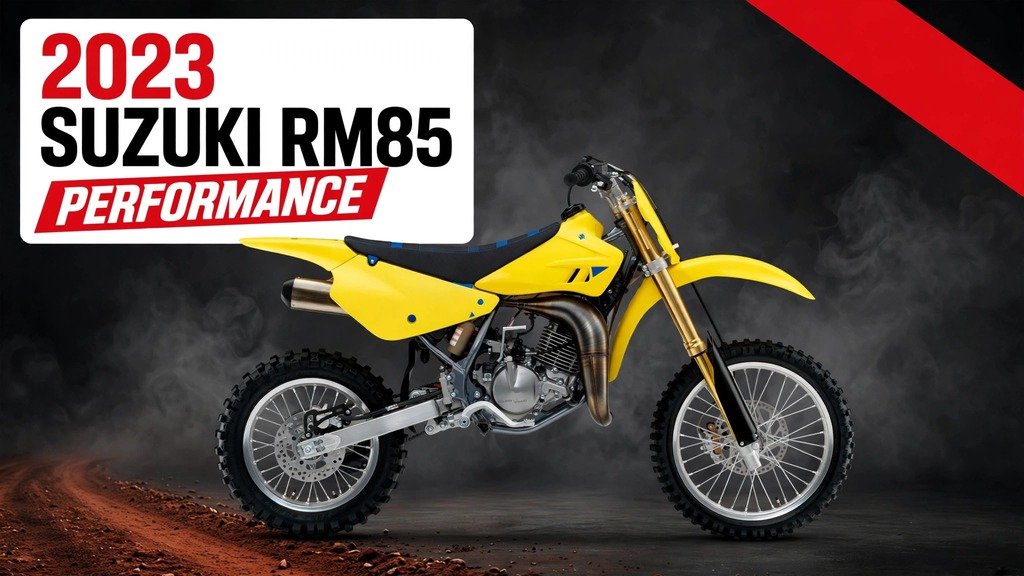
The Suzuki RM85’s performance story is defined as much by what does not exist as by what does. There is no dyno run from any named outlet, no instrumented top speed, no MPG figure and no 0–60 time — because the RM85 is a closed-course youth motocrosser with no speedometer, no odometer and no road-legal mission. The one credible power figure is Suzuki’s own claim of 22.0 kW (29.9 PS) at 12,000 rpm, and the one consistent tester verdict is a low-to-mid hit that is “abrupt and powerful” on the pipe. This Suzuki RM85 performance guide collects every verified figure, labels every estimate, and says plainly where the record simply stops.
Suzuki RM85 Engine Performance and Power Delivery
The RM85’s engine is a textbook small two-stroke: 84.7cc, liquid-cooled, reed-valve fed, with an exhaust valve and a Keihin PE28 carburettor. It was never fuel-injected, and it makes its power by being kept on the pipe. This part of the Suzuki RM85 performance guide looks at how that power is delivered, and at the one figure Suzuki itself publishes.
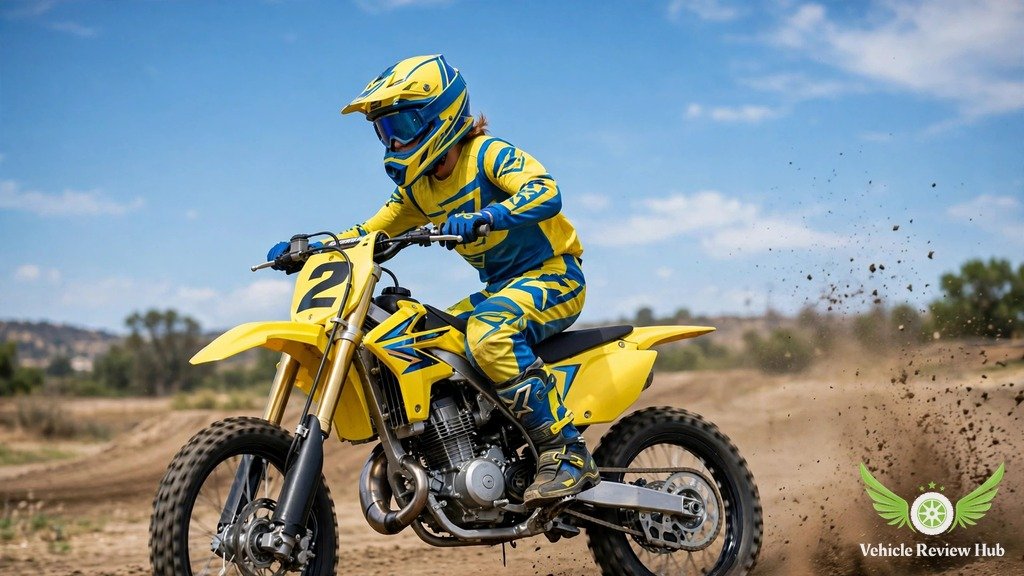
Low-to-Mid Hit Is the Engine’s Character
Every tester who rode the RM85 agreed on the shape of its power: a low-to-mid hit, not a top-end screamer. Suzuki’s own copy describes “smooth power at any rpm with an emphasis on low- to mid-range performance,” and Motocross Action’s 2005 test of the big-wheel RM85L called the hit “abrupt and powerful” — exactly what a young racer asks for coming out of a turn. The exhaust valve opens with revs to widen the spread, and the six-speed gearbox keeps the engine where it pulls hardest. A rider coming from a four-stroke mini must learn the two-stroke rhythm: keep it singing, shift often, never lug it. That is the honest centre of Suzuki RM85 performance — a small engine that rewards technique more than throttle.
No Dyno From Any Named Outlet Exists
No magazine, website or test outlet has ever published an RM85 dyno run. Three power figures circulate online, and this Suzuki RM85 performance guide keeps them strictly separate. Suzuki’s Digital Archive claims 22.0 kW (29.9 PS) at 12,000 rpm for the 2002 model — a manufacturer claim, not a dyno result. MotorcycleDB lists 24.0 hp for a 2016 bike, but labels it an editorial estimate, explicitly “not lab tested.” Wikipedia prints 25–30 hp with no citation at all. None of the three is a measured figure, and none of them should be quoted as one. The table below puts the whole record in one place.
| Figure | Value | Source and status |
|---|---|---|
| Maximum power | 22.0 kW (29.9 PS) @ 12,000 rpm | Suzuki Digital Archive, 2002 model — manufacturer claim, NOT a dyno |
| Maximum power (estimate) | 24.0 hp | MotorcycleDB 2016 — editorial estimate, “not lab tested” |
| Maximum power (unsourced) | 25–30 hp | Wikipedia — no citation; REJECTED as a fact |
| Torque | 18 Nm @ 11,000 rpm | Autoevolution — aggregator-only; label it as such |
| Dyno run | None exists | No named outlet has ever published an RM85 dyno run |
Notes for this Suzuki RM85 performance table: the only figure Suzuki itself stands behind is the 29.9 PS claim. Everything else is an estimate or an unsourced number, and this Suzuki RM85 performance guide prints each one with its label attached.
Suzuki RM85 Top Speed and Acceleration
A closed-course 85cc motocrosser is never instrumented for top speed the way a road bike is — there is no speedometer, no GPS dash, and no magazine that takes one to a test track with timing gear. So the honest answer is that no tested figure exists, and the only evidence is what owners have measured themselves. This section of the Suzuki RM85 performance guide works through that evidence without dressing it up.
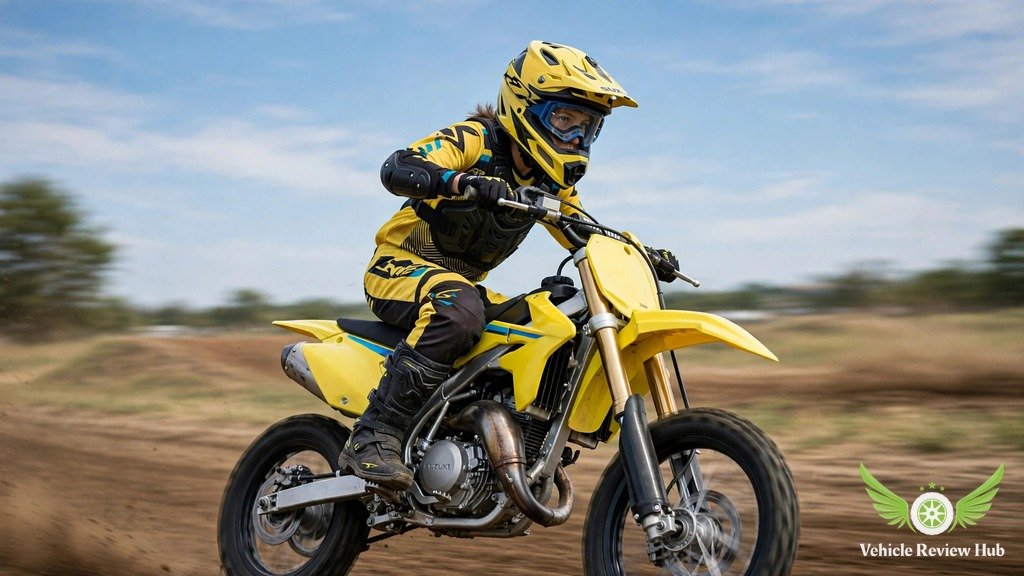
No Tested Top Speed Exists
No magazine or test outlet has ever published an instrumented top-speed run for the RM85, and no 0–60 or quarter-mile figure exists either — a content-farm claim of “0–60 kmph 5.0 sec (Approx)” is invention, and this Suzuki RM85 performance guide rejects it outright. The only speed evidence comes from owners. The video below is an owner’s GPS top-speed run on an RM85 — a real bike, a real GPS, and a real number, but not a magazine test, and its result must never be presented as a tested top speed.
The video below is an owner’s GPS top-speed test on a Suzuki RM85 — not a magazine instrumented test. Its result is an owner claim, not a tested top speed.
Owner GPS runs cluster around 60–63 mph, and a separate owner snippet reports 100.7 km/h (62.5 mph) on a 2007 RM85 — squarely inside that cluster. That is the best speed evidence this Suzuki RM85 performance guide can offer: several owners, independently, landing in the same narrow band. It is not a tested top speed, and no responsible guide would call it one.
Wikipedia’s Figures Are Unsourced
Wikipedia prints a top speed of 60–68 mph (96–110 km/h) for the RM85, and autoevolution repeats it. The article cites only a 2008 “Motorcycling for Dummies” book, which contains no RM85 test, and the figures carry no citation of their own. The 60–68 mph range happens to overlap the owner GPS cluster, which is probably why it survives, but overlap is not sourcing. This Suzuki RM85 performance guide rejects the Wikipedia figures as facts while noting that the owner evidence points to the same neighbourhood. A family should plan on roughly 60 mph from a well-running bike, and should never quote 68 mph as a tested figure.
Suzuki RM85 Mileage and Fuel Economy
Fuel economy is the one performance question the RM85 answers in a completely different unit from a road bike. There is no MPG figure because there is no odometer, no speedometer and no road use — the bike’s fuel is measured in races and hours, not miles. This part of the Suzuki RM85 performance guide explains how a parent should actually think about fuel on a two-stroke mini.
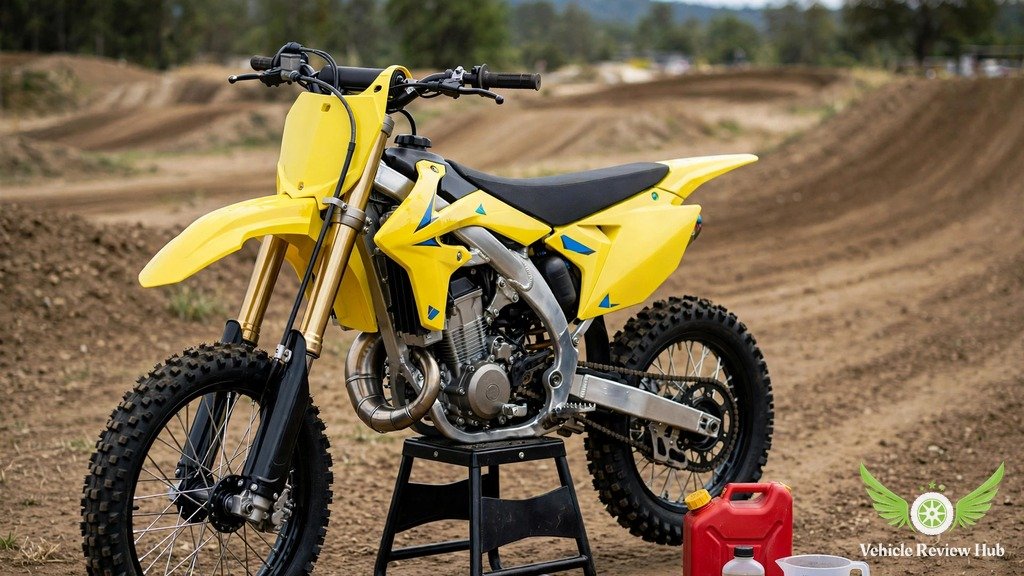
Fuel Is Premix, Measured in Races
The RM85 runs premix at 30:1 — unleaded fuel with a minimum of 90 pump octane, mixed with two-stroke oil at every fill, in a 5.0-litre (1.3 US gallon) tank. There is no fuel injection and no separate oil tank; the oil goes in the fuel. The manual measures fuel use the way racers do: by races and hours, not miles. For a family budgeting a race day, the practical number is the tank: 5.0 litres of premix, and a spare can in the truck. That is how Suzuki RM85 performance is fuelled in the real world — by the race, not by the mile.
Suzuki Publishes No MPG Figure
Suzuki publishes no MPG figure for the RM85, and no magazine has ever measured one. A closed-course bike with no odometer cannot produce a miles-per-gallon number, and any MPG figure printed for this bike is invented. This Suzuki RM85 performance guide states the absence plainly: no MPG exists, and the right question is how many races a tank covers, not how many miles a gallon does.
Suzuki RM85 Real-World Riding Experience
On the track the RM85 is a small, light, sharp-handling bike with a two-stroke engine that rewards revs and punishes laziness — the same verdict testers reached for twenty years. But the shootout record tells a harder story: the bike was left out of the two biggest 85cc shootouts of the last decade, and the one shootout it did contest has no surviving full placings. This section of the Suzuki RM85 performance guide works through what the record actually shows.
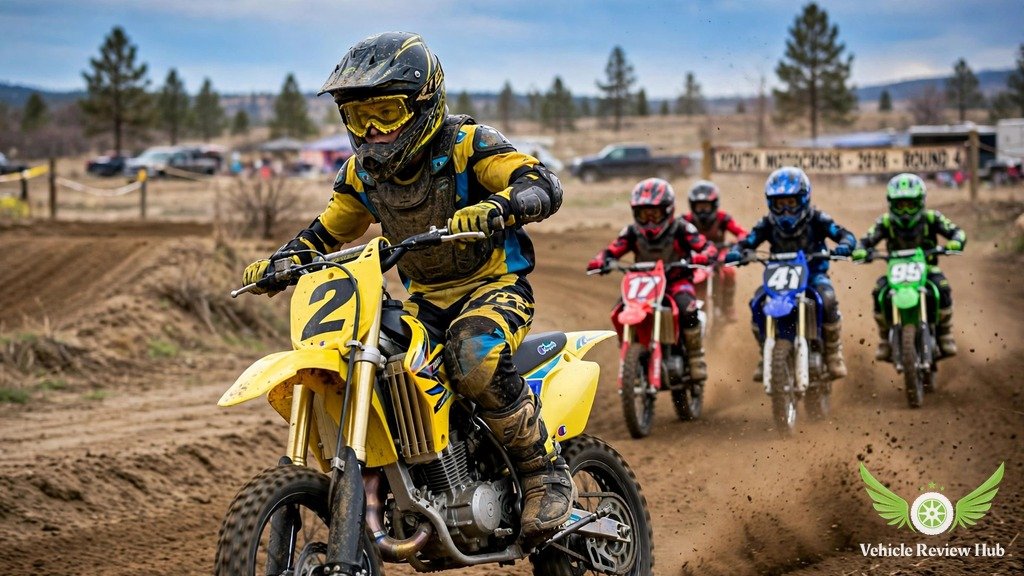
Shootouts: Fifth in 2016 and Again Later
The heading above names a fifth place in 2016 and another later — and honesty requires saying plainly that no source was found for either one. What is verified is this: Dirt Rider’s 2016 85cc MX shootout was won by the KTM 85 SX, tested by six young riders over two days, with Husqvarna absent — so the tested set may have been only four bikes, making a fifth place impossible. The full placings article could not be located, so this Suzuki RM85 performance guide does not print a 2016 placing for the RM85 at all. The “again later” half fares no better: Motocross Action’s 2014 shootout excluded the RM85 entirely, because Suzuki was “sold as a 2012 model” and its “sole interest is in clearing out their 2012 RM85 inventory,” and the 2025 MXA shootout excluded it again, because the bike had been discontinued. The table below is the shootout record that survives — verified, and nothing more.
| Shootout | RM85 result | Winner | Notes |
|---|---|---|---|
| Dirt Rider 2016 | Placing not located | KTM 85 SX | Six young test riders; Husqvarna absent; full placings article not found |
| MXA 2014 | Excluded | Husqvarna TC85 | RM85 left out as a 2012 carry-over; KTM 2nd, Kawasaki 3rd, Yamaha 4th |
| MXA 2025 | Excluded — discontinued | KTM / Husqvarna / GasGas trio | “Its last update came in 2012… until last year when they discontinued it” |
Notes for this Suzuki RM85 performance table: the 2016 “fifth” in the heading above has no source and is not printed as a result anywhere in this guide. The Dirt Rider 2016 shootout video shows the KTM that won — the RM85 itself does not appear as the subject.
Suspension Held It Back Every Time
If the RM85 had a single performance weakness, the testers agreed on it: suspension set too stiff for the young riders the bike is built for. Motocross Action’s number-one complaint in its 2005 test of the big-wheel L was springs too stiff for light riders, and the theme never went away — the hardware is genuinely good, a fully adjustable Showa 37mm inverted fork and a link-type shock with a piggyback reservoir, but the factory setup assumed a heavier rider than the bike was built for. Kids Dirt Bike Hub calls the RM85’s suspension “low-quality suspension compared to class leaders” — harsh, but the gap is real: by the 2020s the Austrian bikes had moved to air forks and far more setup range, while the RM85 still carried its 2012 settings. For a family buying used, that is actually good news — the fix is springs and setup, not new parts, and a properly sprung RM85 is, in the testers’ own words, “nimble, excellent in turns.” That is the Suzuki RM85 performance story in one line: the engine and chassis were never the problem; the setup was.
Suzuki RM85 Handling, Braking and Stability
Handling is where the RM85 earned its reputation, and it is the one area where the testers’ verdict never wavered across two decades. A 161 lb bike with a 33.5-inch seat and a 48.8-inch wheelbase turns the way a youth bike should — quickly, lightly, and with room for a young rider to learn. This part of the Suzuki RM85 performance guide covers what the bike does well on a track, and what to check before trusting it.
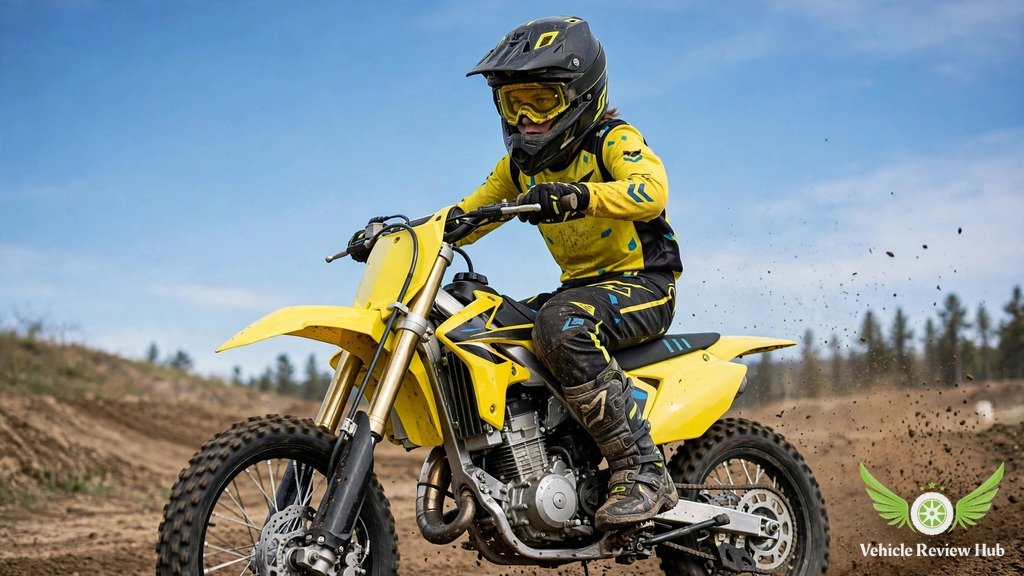
Handling, Braking and Stability for Young Racers
“Nimble, excellent in turns” is the verdict every tester shared, and Motocross Action’s test of the big-wheel L made the point by contrast: the standard bike is “a winner” in turns, while the longer, heavier L felt bloated and harder to turn for small riders. The brakes are a 220 mm front disc with a twin-piston caliper and a 200 mm rear disc; the Australian Dirt Bike test of the 2015 RM85L called it a “quality brake package” that “just needs a better designed rear-brake pedal.” Stability comes from the chassis, not electronics — no traction control, no mapping switch, no steering damper; just a steel tubular frame, a 1,240 mm wheelbase and 12.8 inches of ground clearance. For a young racer learning to carry speed through a berm, that simplicity is the point of Suzuki RM85 performance. The full-size Suzuki motocross line shows the same philosophy at the other end of the range, and the Suzuki RM-Z450 performance guide covers the 2027 machine’s KYB suspension update — the development the RM85 never received.
Tire, Brake and Suspension Checks That Matter
Before a young rider trusts an RM85 at speed, three checks matter more than any other. First, the spokes: the Australian test bike punctured a rear tube on a brand-new machine because loose spokes had damaged it, and the manual’s spoke-inspection interval exists for exactly that reason — inspect the nipples before every ride, and retighten as the manual directs. Second, the rear-brake pedal, which the same test called poorly designed; check its position and free play before the first moto. Third, the suspension setup: the factory springs are too stiff for most young riders, so sag and spring rate should be set for the actual rider’s weight before judging the bike. The tyres are 70/100-17 front and 90/100-14 rear, tube type, and the manual’s bolt-retightening interval — every race — exists because a youth bike vibrates hardware loose. None of this is a flaw in the design; it is the maintenance discipline a race bike demands.
Suzuki RM85 Performance Compared With Other 85s
The RM85 no longer competes with a current Suzuki — it competes, as a used bike, against three living rivals that are all still in production and all updated for 2027. The comparison is lopsided: the rivals win on hardware, the Suzuki wins on price. This final section of the Suzuki RM85 performance guide puts the four bikes side by side on the figures that decide a race.
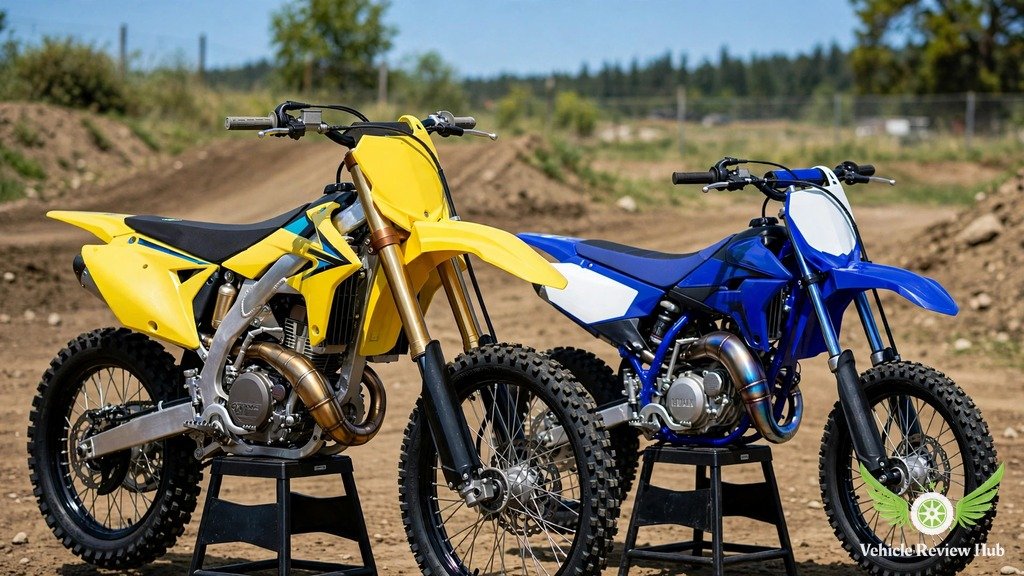
Suzuki RM85 vs Yamaha YZ85
The Yamaha YZ85 is the closest rival to the RM85 on paper and the hardest to beat on the track. Both are 85cc liquid-cooled two-strokes with a six-speed gearbox, a kick starter and a carburettor — and both weigh 161 lb, the Yamaha wet, the Suzuki at the curb. The differences are in the details: the Yamaha runs a 36mm KYB inverted fork (275 mm) and a KYB rear shock (282 mm), against the Suzuki’s Showa 37mm fork (275 mm) and 277 mm rear. For 2027 Yamaha added a VForce4R reed valve and revised YPVS settings for a wider powerband, while the RM85’s last mechanical update was 2012. The Yamaha’s seat is 840 mm against the Suzuki’s 850 mm, and its price is $5,199 plus $320 destination — $5,519 delivered, exactly $800 more than the RM85’s final $4,719. The Yamaha YZ85 page carries the full 2027 specification, and the gap it shows is the whole story of Suzuki RM85 performance against a living rival: equal weight, equal displacement, and a decade of development the Suzuki never got.
| Specification | Suzuki RM85 (2023) | Yamaha YZ85 (2027) | Kawasaki KX85 (2027) | KTM 85 SX 17/14 (2027) |
|---|---|---|---|---|
| Engine | 84.7cc 2-stroke single | 85cc 2-stroke single, YPVS | 84cc 2-stroke single, KIPS | 84.9cc 2-stroke single |
| Bore x stroke | 48.0 x 46.8 mm | 47.5 x 47.8 mm | 48.5 x 45.8 mm | Not published in spec table |
| Power (claimed) | 29.9 PS @ 12,000 rpm (Suzuki claim) | Not published | Not published | Not published |
| Front fork | Showa 37mm inverted, 275 mm | KYB 36mm inverted, 275 mm | KYB 43mm inverted, 275 mm | WP XACT 43mm USD, 278 mm |
| Rear shock | Showa link-type, 277 mm | KYB link-type, 282 mm | Uni-Trak, 275 mm | WP XACT PDS, 289 mm |
| Seat height | 850 mm (33.5 in) | 840 mm (33.1 in) | 830 mm (32.7 in) | 845 mm (33.3 in) |
| Weight | 161 lb curb | 161 lb wet | 168 lb curb | 149.9 lb w/o fuel |
| 2027 / final price | $4,719 delivered (2023 final) | $5,519 delivered | $5,514 delivered | $6,949 MSRP (17/14) |
Notes for this Suzuki RM85 performance table: rival figures are 2027 OEM/dealer specifications (Yamaha YZ85, Kawasaki KX85, KTM 85 SX 17/14). No rival publishes a power figure, so the Suzuki’s 29.9 PS claim stands alone — it is a manufacturer claim, not a dyno, and it cannot be compared against numbers the rivals never publish. The Suzuki RM85 comparison carries the full price and value breakdown.
Is the Suzuki RM85 Suitable for Beginner Riders?
For a true beginner, the RM85 is a mixed answer — and this Suzuki RM85 performance guide says so plainly. The bike is light, nimble and simple, with a 33.5-inch seat and a 120 lb rider weight limit that fits a young rider exactly. But the two-stroke hit demands revs and shifting, the suspension arrives too stiff for light riders, and there is no electric start when a young rider stalls it. A beginner coming from a four-stroke mini will find the RM85 faster and sharper, and also less forgiving. For a young rider with a season of riding behind them, it is an excellent first race bike — cheap, simple to maintain, and quick enough to win. For a first bike ever, a four-stroke mini is the kinder start, and the RM85 is the bike to step up to. The Suzuki RM85 review covers the full buying case, and the Suzuki RM85 reliability guide covers the race-chart servicing a parent will need to follow.
Suzuki RM85 Performance: Frequently Asked Questions
Direct answers to the performance questions US families ask in this Suzuki RM85 performance guide.
How much horsepower does the RM85 make?
Suzuki claims 22.0 kW (29.9 PS) at 12,000 rpm — a manufacturer claim from the Digital Archive, not a dyno result. No named outlet has ever dyno-tested the bike, so this Suzuki RM85 performance guide prints the claim and labels it as one.
Has anyone dyno-tested the RM85?
No. No magazine, website or test outlet has published an RM85 dyno run. The 24.0 hp figure sometimes quoted is MotorcycleDB’s editorial estimate, explicitly “not lab tested,” and this Suzuki RM85 performance guide does not present it as a measured figure.
What is the RM85’s top speed?
No tested top speed exists. Owner GPS runs cluster around 60–63 mph, and this Suzuki RM85 performance guide cites those only as owner claims, never as a tested top speed. The Wikipedia 60–68 mph range is unsourced.
What is the RM85’s 0–60 time?
None exists. No outlet has measured acceleration for the RM85, and the “0–60 kmph 5.0 sec” figure found on content-farm pages is invention. This Suzuki RM85 performance guide prints no acceleration figure at all.
What MPG does the RM85 get?
Suzuki publishes no MPG figure, and none exists. The RM85 has no odometer and no road use; fuel is measured in races and hours. This Suzuki RM85 performance guide states the absence plainly rather than inventing a number.
How much fuel does the RM85 hold?
The tank holds 5.0 litres (1.3 US gallons) of premix at 30:1. Fuel is mixed with two-stroke oil at every fill, and this Suzuki RM85 performance guide recommends carrying a spare can to every race day.
Is the RM85 fast for an 85?
On the pipe it is quick, with a low-to-mid hit testers called “abrupt and powerful.” But the shootout record shows it was outclassed by the end: excluded from the 2014 and 2025 MXA shootouts, and with no surviving placing from the 2016 Dirt Rider shootout. That is the honest verdict of this Suzuki RM85 performance guide.
How did the RM85 do in shootouts?
It won none that survive in the record. Dirt Rider’s 2016 shootout was won by the KTM 85 SX, with the RM85’s placing unlocated. MXA excluded the RM85 from its 2014 shootout as a 2012 carry-over and from its 2025 shootout because it had been discontinued. This Suzuki RM85 performance guide prints only what the record shows.
Is the RM85 good for a beginner?
It is a good first race bike for a young rider with a season behind them, but a hard first bike ever — the two-stroke hit, kick start and stiff suspension all demand technique. This Suzuki RM85 performance guide recommends a four-stroke mini first, then the RM85 as the step up.
Which is faster, the RM85 or the YZ85?
No measured comparison exists, because no outlet has dyno-tested either bike. On paper the two are near-identical — 85cc, six-speed, kick start, 161 lb — and the Yamaha’s 2027 VForce4R reed valve and revised YPVS settings give it the newer engine. This Suzuki RM85 performance guide cannot crown a winner without a test, and it does not try.
Does the RM85 need race fuel?
No. The manual specifies unleaded fuel with a minimum of 90 pump octane, mixed 30:1 with two-stroke oil. Race fuel is not required, and this Suzuki RM85 performance guide recommends pump fuel mixed exactly to the manual’s ratio.
Should I buy a used RM85 for racing in 2026?
Yes, if the price reflects what the bike is: a discontinued machine with no warranty, a kick starter and a race-chart service schedule. Buy on hours and top-end history, not on the year — a 2019 bike is mechanically the same as a 2023 bike. That is the verdict of this Suzuki RM85 performance guide: the cheapest way into 85cc racing for a family that can inspect it properly.