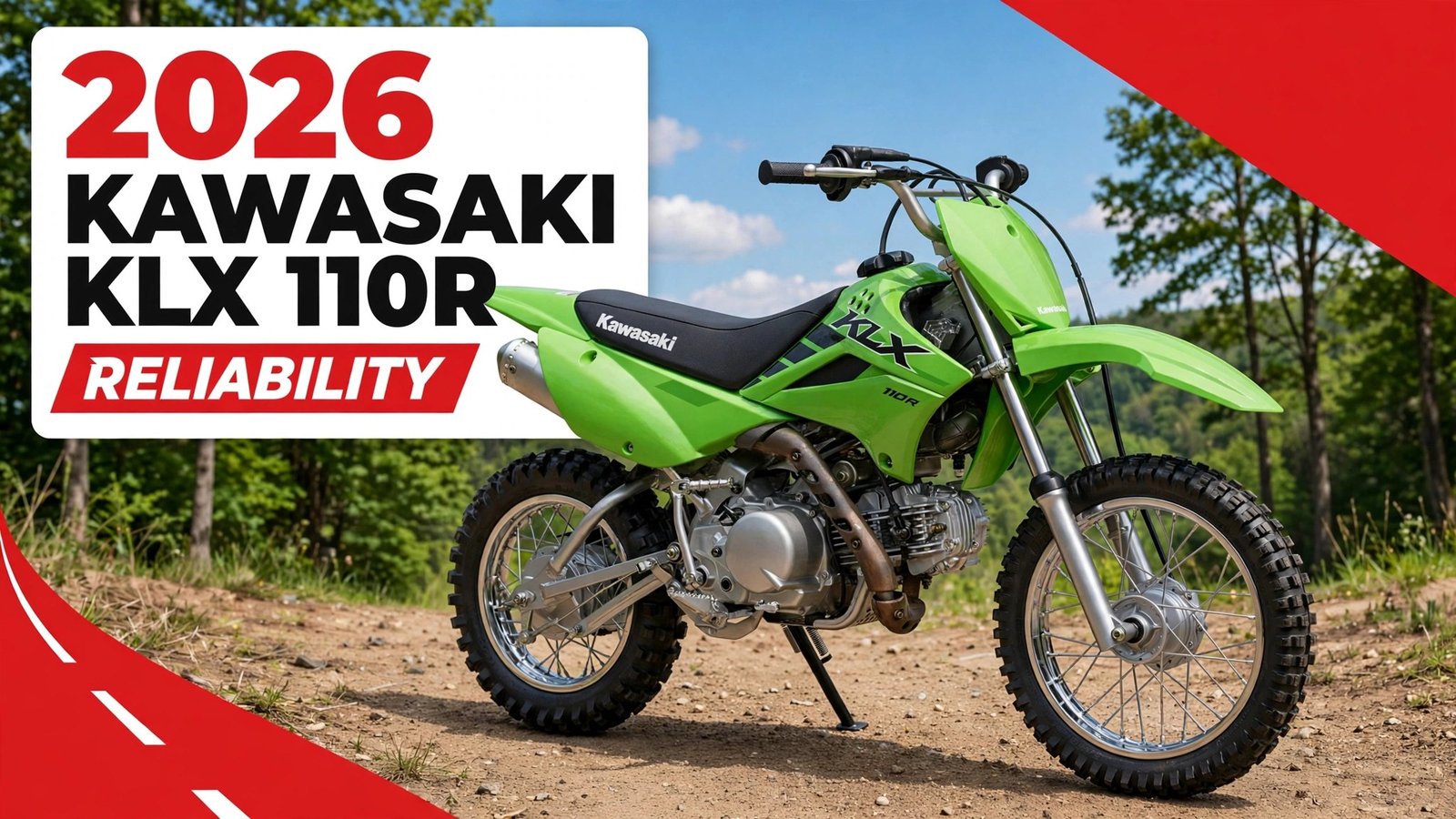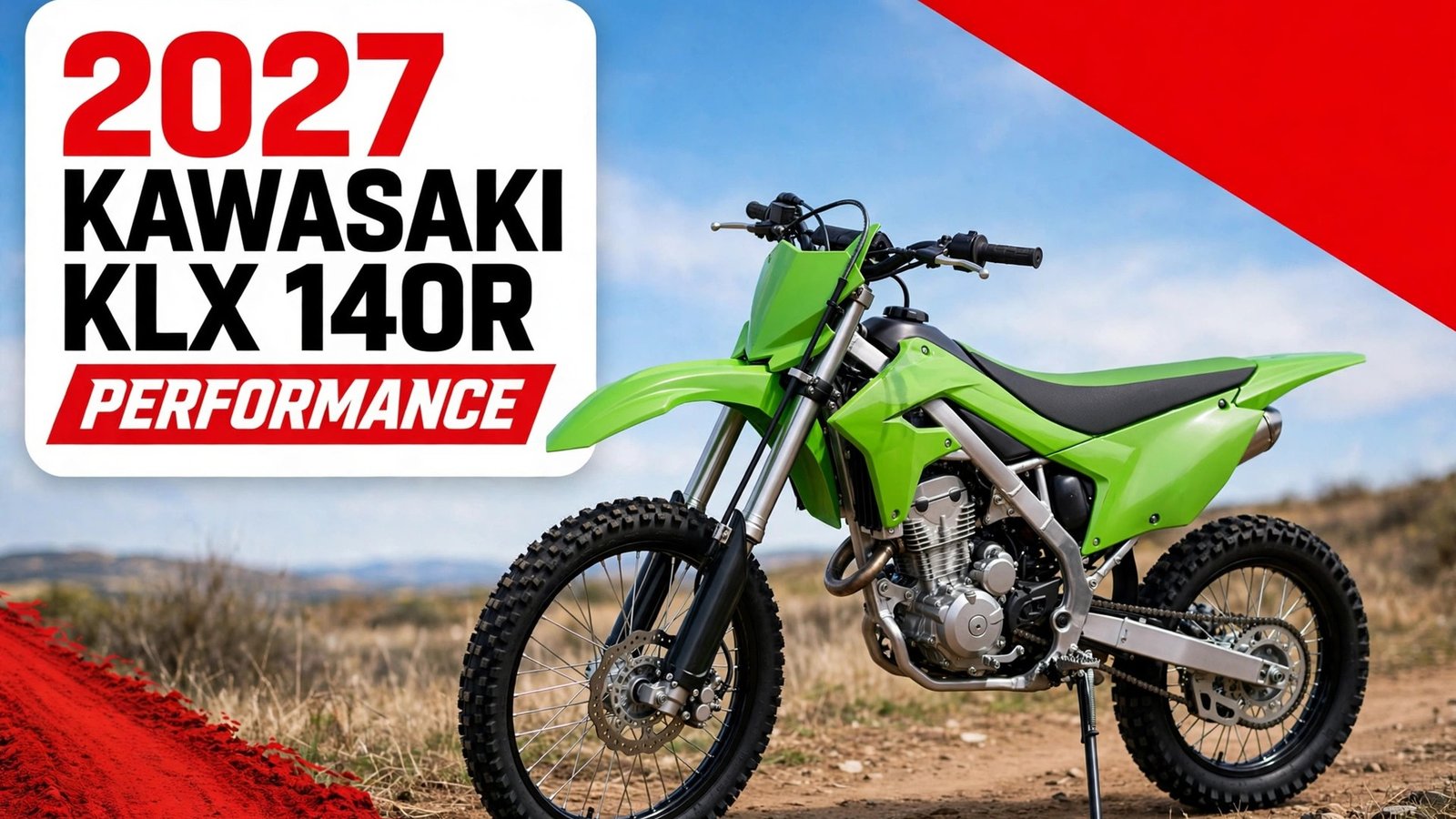
The honest answer to the first question about the Kawasaki KLX 140R is that nobody has measured it. No major outlet has put one on a dyno, no one has run an instrumented top-speed test, and no one has published a fuel-economy figure. This Kawasaki KLX 140R performance guide says that plainly up front. What does exist: one published power figure, estimates around 50 to 55 mph, a documented carburettor fix, and a 2008 magazine verdict on the chassis that still holds.
What the numbers do show is a mild, friendly trail bike. The 144cc air-cooled single makes its power low down, the five-speed gearbox gives it a taller top gear than the Honda, and the discs at both ends stop it better than any rival. This Kawasaki KLX 140R performance guide covers power, top speed, mileage, real-world riding, handling, and how it stacks up against the 125s — with every figure labelled test, estimate, or owner’s report.
Kawasaki KLX 140R Engine Performance and Power Delivery
Power is the shortest section in this Kawasaki KLX 140R performance guide, because there is the least to measure. Kawasaki USA publishes no power figure, and no major outlet has dyno-tested the bike. What exists is one figure from a Canadian spec sheet, one owner’s estimate of rear-wheel power, and owner reports about how the power feels — smooth, soft, and happiest at low to mid revs.
No Dyno From Any Major Outlet
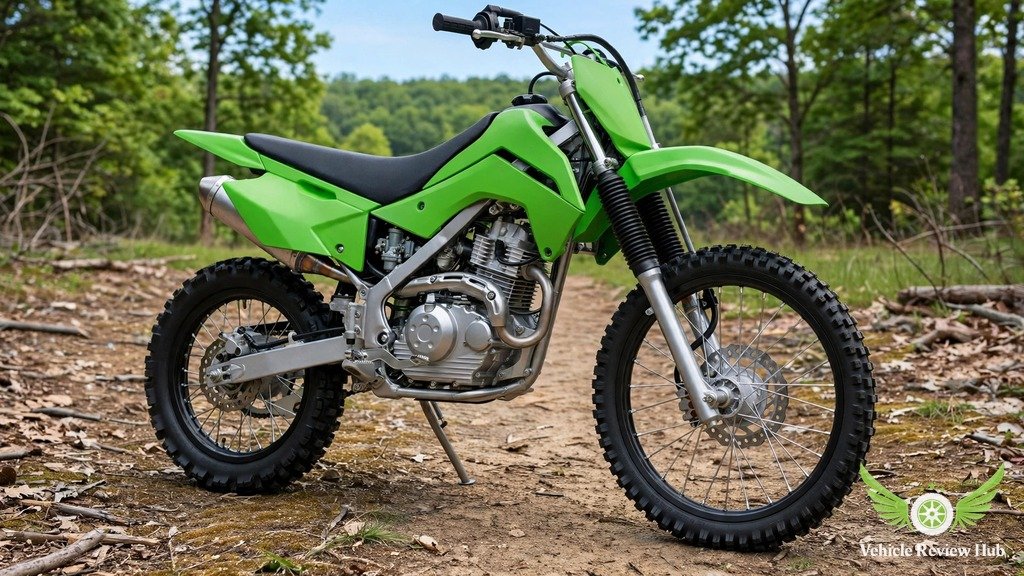
No dyno chart exists for the KLX 140R from Cycle World, Rider, Ultimate Motorcycling, Motorcycle.com, or Dirt Bike Magazine. That is not a gap in this Kawasaki KLX 140R performance guide — it is the state of the record. The bike has no instrument cluster and no odometer, and no outlet has treated a 144cc play bike as a test candidate. The closest thing to a number is an owner’s estimate quoted by the Motocross Hideout KLX140 guide: about 9 horsepower at the rear wheel, with the engine needing to be held near 8,000 rpm to make it. That is an estimate from a rider, not a dyno run. The honest comparison is displacement and gearing: 144cc and five speeds against 124 or 125cc and four or five speeds.
11 PS Is a Canadian Sheet Figure
The only power figure ever published for this bike comes from a Canadian spec sheet: 8.3 kW (11 PS) at 8,000 rpm, with 12.0 Nm of torque at 6,000 rpm — about 8.9 lb-ft. Kawasaki USA publishes nothing, so this Kawasaki KLX 140R performance guide treats the Canadian figure as the only figure, and labels it every time it appears. Eleven PS is about 10.8 hp — PS and hp are not the same unit, so this guide never writes it as “11 hp”. The figure is also easy to confuse with a different bike: the FRP FX140 publishes 11.0 hp, and that number has been copied into KLX 140R listings by aggregators. It does not belong to the Kawasaki. In practice the engine is a mild, torquey single built for trail work, smooth from idle to about 8,000 rpm, and Cycle World’s 2008 test called it perfectly suited to beginners.
| Power figure | What the record says | Source |
|---|---|---|
| US published power | None — Kawasaki USA publishes no figure | Kawasaki USA / FRP Moto |
| Canadian-sheet power | 8.3 kW (11 PS) @ 8,000 rpm; 12.0 Nm @ 6,000 rpm | Canadian spec sheet |
| Rear-wheel power | About 9 hp — owner’s estimate, not a dyno | Motocross Hideout |
| Torque (US) | No US figure published | — |
Notes: every figure in this Kawasaki KLX 140R performance table is labelled by its kind — a published figure, an estimate, or an absence. The 11 PS figure is Canadian-sheet only and converts to about 10.8 hp; the FRP FX140’s 11.0 hp belongs to a different bike.
Kawasaki KLX 140R Top Speed and Acceleration
Top speed is the second short answer in this Kawasaki KLX 140R performance guide: there is no tested figure, only estimates. Kawasaki publishes no top speed, and no outlet has run an instrumented test. The estimates that do exist cluster tightly around 50 to 55 mph, and this section explains where each comes from and why none counts as a test.
50 to 55 MPH Are Estimates Only
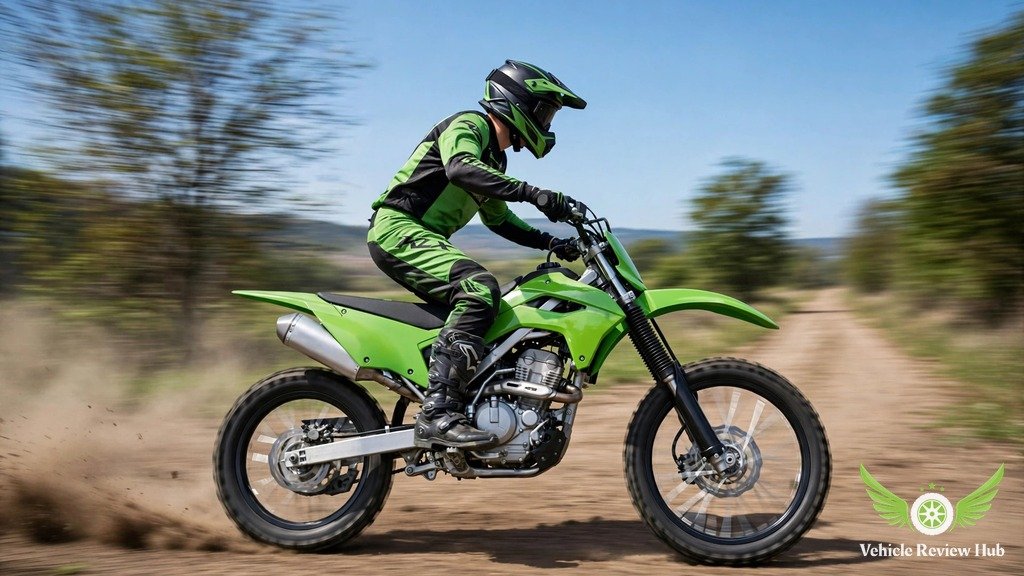
Motocross Hideout puts the stock bike at roughly 50 mph. Racext gives about the same number, around 50 mph. HyperGogo’s range for a typical 140cc pit bike is 45 to 55 mph, and Motorcycle Horizon puts it around 45 mph. The centre of that range is 50 to 55 mph, and this Kawasaki KLX 140R performance guide prints it as an estimate range, never as a test result. None of them is an instrumented run with a timing light or a calibrated speed trap. The one number this guide will not print is 65 mph — it belongs to the FRP FX140, a different bike, and it has been copied into KLX 140R listings by aggregators.
No Instrumented Test Exists
No 0–60 time exists for the KLX 140R, and no quarter-mile time either. There is no instrumented acceleration test from any outlet, and the bike’s own equipment explains part of why: there is no speedometer, no odometer, and no instrument cluster of any kind. The five-speed gearbox has close ratios, and the stock sprockets are 14 at the front and 51 at the rear. First gear is tall — the Motocross Hideout TTR125 vs KLX140 comparison notes that first gear on the KLX 140R feels almost as tall as second gear on the Yamaha, so the Kawasaki needs more clutch slip at low speeds. That tall first gear is the trade for a taller top gear: the five-speed gives the KLX 140R a longer-legged cruise than the Honda’s four-speed. This Kawasaki KLX 140R performance guide counts that as a real gearing advantage, even though no timed test proves it.
| Source | Figure | What it is |
|---|---|---|
| Motocross Hideout | Roughly 50 mph | Owner estimate |
| Racext | About 50 mph | Estimate |
| HyperGogo (140cc pit bikes) | 45–55 mph | Estimate range |
| Motorcycle Horizon | Around 45 mph on flat ground | Estimate |
| FRP FX140 (not this bike) | About 65 mph | Different bike — do not use |
Notes: the figures in this Kawasaki KLX 140R performance table are estimates from owners and secondary sources, not instrumented tests. Kawasaki publishes no top speed and no outlet has run one. The 65 mph figure belongs to the FRP FX140 and is listed here only so readers can spot the mix-up.
Kawasaki KLX 140R Mileage and Fuel Economy
Fuel economy is the third “no test exists” answer in this Kawasaki KLX 140R performance guide. No outlet has run an MPG test, no range figure exists, and the bike has no odometer to measure one with. What does exist is a well-documented carburettor story: the stock pilot jet runs lean, owners have found a fix, and the fix is the most useful fact in this guide.

No MPG Testing Exists
There is no MPG figure for the KLX 140R from any outlet, and no range figure either. The only fuel number in the record is the tank: 1.5 gallons. Without an odometer there is no simple way for an owner to measure consumption. This Kawasaki KLX 140R performance guide prints no MPG and no range — any number you see in a listing is invented. The useful comparison is the tank: 1.5 gallons against the Honda’s 1.0, the Suzuki’s 1.3, and the Yamaha’s 1.6.
Lean Jetting Documented Since 2008
The stock carburettor runs lean from the factory, and owners have documented the fix in detail. The clearest case comes from the Road and Trail long-term review of a 2020 KLX140L: at 1,200 metres of elevation the bike stumbled at low engine speed with very little power, like the pilot jet was obstructed. The dealer worked through pilot jets — #38, then #42, then #40, then back to #42 — and the owner settled on a #42 pilot jet with the air/fuel mixture screw 2.0 turns out, at 1,200 to 1,500 metres, with the stock main jet and needle. The stock pilot jet is #38. The review’s verdict is blunt: the carburettor is very sensitive to elevation and temperature changes, and “finicky to dial-in” is listed as a con. This Kawasaki KLX 140R performance guide treats that case as the documented evidence for the lean-jetting issue. The heading dates the issue to 2008, and this guide does not assert that date as verified — no 2008-era source was found in the research to pin it — but the phenomenon itself is documented by owners, and the #42 fix is the one to know. The practical advice: use fresh, non-oxygenated fuel where possible, and expect to re-jet if you ride well above sea level. The carburettor service itself is covered in the reliability guide.
Kawasaki KLX 140R Real-World Riding Experience
On the trail, the KLX 140R is a light, low, forgiving bike, and the riding reports agree on that more than on any number. Cycle World’s 2008 test praised the chassis and owners praise the suspension; the complaints are consistent too — soft springs for heavier riders and a tall first gear. This Kawasaki KLX 140R performance guide puts the ride reports together here, because the ride is where the bike’s performance actually lives.
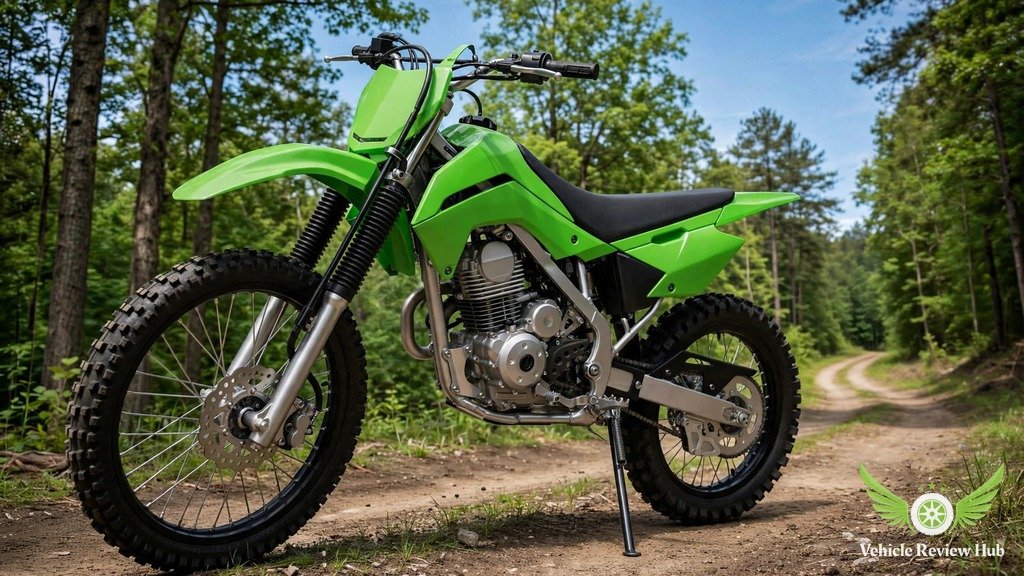
Best Suspension of the Bunch (2008)
Cycle World’s May 2008 test of the KLX140L — the taller sister of the R, with the same front end — called the chassis exceptional for the class: “For this class, the 140L has an exceptional chassis, with a light and agile feel that’s ideal for newbies.” The 33 mm fork, larger than average for the class, did an excellent job soaking up small bumps, though it was a little harsh on bigger square-edge hits. The L used the fully adjustable shock from the KX85, and the stock settings worked for different riders. Motocross Hideout, which owns both a KLX140 and a Yamaha TT-R125, calls the KLX140’s suspension the best in its class, with forks a little more plush than the Yamaha’s pogo-stick feel. This Kawasaki KLX 140R performance guide attributes the 2008 verdict to the KLX140L test by name: the R shares the fork, and the L’s shock is the KX85 unit.
Suspension Lacking for Heavier Riders
The praise stops at about 180 lb. Motocross Hideout is direct: if you are over 180 pounds, you are going to bottom the forks out easily. The forks are soft and not externally adjustable, and the rear shock has only preload. A Road and Trail owner at 160 lb with gear found the suspension quite decent overall but bottomed the rear shock a few times on stock settings. The stock suspension suits lighter riders and beginners; heavier riders should budget for stiffer springs or look at the taller L and F.
The video below is a raw single-track ride on a stock KLX140 at The Ridge — it shows what the bike takes on the trail, not a measured test. There is no top speed run, no dyno, and no timing in it.
Kawasaki KLX 140R Handling, Braking and Stability
Handling is where the KLX 140R earns its keep. The bike is light, the wheelbase is short, and the steering is quick for tight trails without feeling nervous. This Kawasaki KLX 140R performance guide covers the chassis, the brakes, and the one hardware edge no rival matches: discs at both ends.
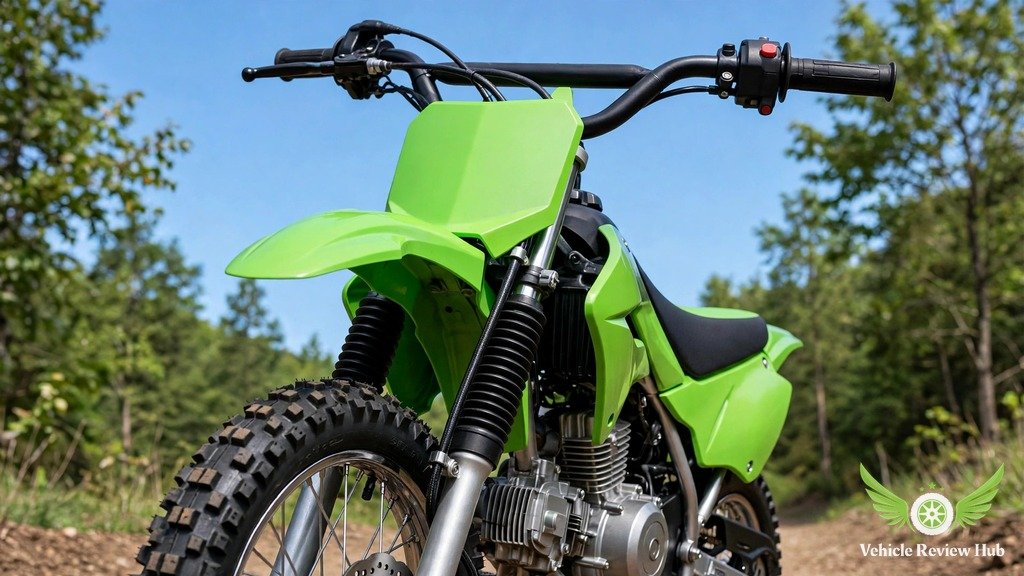
Handling, Braking and Stability on the Trail
At 205 lb with a 49.6-inch wheelbase, the KLX 140R is easy to throw around on a tight trail, and the low 30.7-inch seat keeps the centre of gravity down. Motocross Hideout prefers the KLX140’s handling to the Yamaha’s, calling it more natural when cornering and manoeuvring through trails. The 33 mm fork gives the front end more stability than the 31 mm forks on the Honda and Yamaha, and 7.1 inches of travel at each end is the most in the class at the front. It is not a race bike, but on a trail it is stable, predictable, and hard to get into trouble on. The rider weight limit of 154 lb in the service manual is the fit caveat: the chassis works best up to about 150 lb.
Discs at Both Ends, Class Exclusive
The brakes are the KLX 140R’s clearest hardware advantage. The front is a single 220 mm petal disc with a dual-piston caliper, and the rear is a single 186 mm petal disc with a single-piston caliper — discs at both ends, on every trim, since launch. Kawasaki’s own copy makes the point: unlike most play bikes with disc and drum combination brakes, the KLX140R models feature disc brakes at the front and rear. Every rival runs a rear drum — the Honda’s is 125 mm — so the Kawasaki is the only bike in its class with a rear disc. Road and Trail’s owner notes the brakes provide good stopping power but can be a bit grabby, and the rear brake pedal sits a bit high. This Kawasaki KLX 140R performance guide counts the rear disc as the bike’s single biggest braking edge, and the 186 mm figure is the US number — the 190 mm figure that circulates online is a non-US figure.
| Item | Specification | Note |
|---|---|---|
| Front brake | Single 220 mm petal disc, dual-piston caliper | Discs both ends on all trims |
| Rear brake | Single 186 mm petal disc, single-piston caliper | Only rear disc in the class |
| Front suspension | 33 mm telescopic fork, 7.1 in travel | Largest fork in the class |
| Rear suspension | Uni-Trak single shock, 5-way preload, 7.1 in travel | Preload only |
| Wheelbase | 49.6 in | Short — quick steering |
| Ground clearance | 9.3 in | — |
| Seat height | 30.7 in | Low — suits smaller riders |
| Curb weight | 205.0 lb | Light, but not the lightest |
Notes: the figures in this Kawasaki KLX 140R performance table come from the official 2027 spec-sheet PDF. The rear disc is 186 mm, not 190 mm, and the KLX 140R is the only bike in its class with a rear disc — every rival runs a rear drum.
Kawasaki KLX 140R Performance Compared With Other Trail Bikes
Against the three 125s, the KLX 140R’s performance story is displacement plus gearing plus brakes. It has the biggest engine, a fifth gear the Honda lacks, and the only rear disc in the class. This Kawasaki KLX 140R performance guide compares it against the Honda CRF125F, the Yamaha TT-R125LE, and the Suzuki DR-Z125L on the figures that decide how a bike rides.
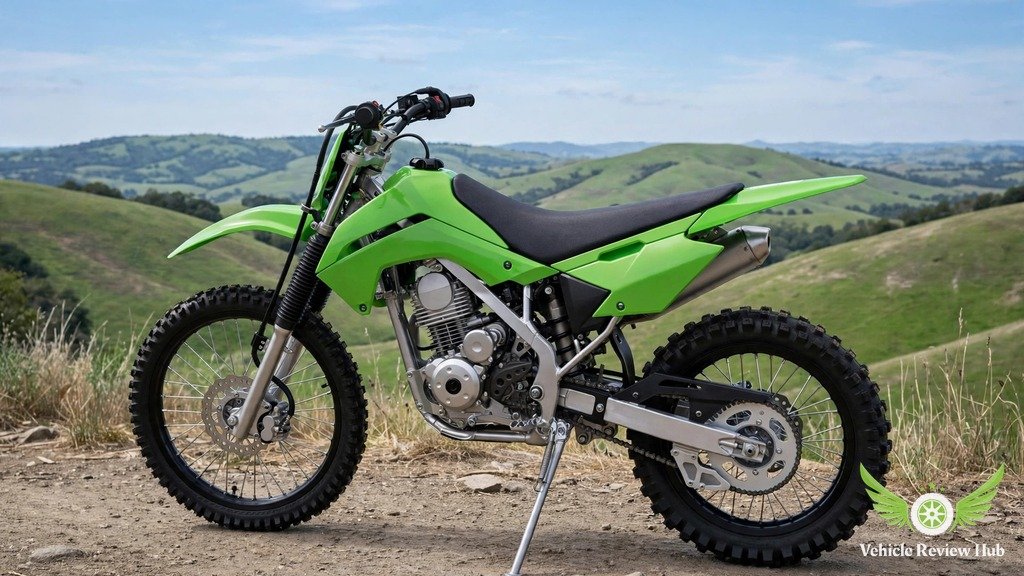
Kawasaki KLX 140R vs Kawasaki KLX140G
The KLX140G is the pre-2021 name for the bike now sold as the KLX140R F — same bike, renamed in 2021, and the body of this guide uses the current name. The F is the full-size member of the family: 21/18 wheels against the R’s 17/14, a 33.9-inch seat against 30.7, 218.2 lb against 205.0, and 7.5 inches of front travel and 7.9 at the rear against 7.1 at both ends, with an adjustable piggyback shock the R does not get. The engine, five-speed gearbox, and brakes are the same on both bikes — the difference is size and suspension, not power. That makes the choice a fit question: the R suits riders around 4 feet 8 inches to 5 feet tall, the F suits riders around 5 feet 4 inches to 5 feet 8 inches, the L sits between them. This Kawasaki KLX 140R performance guide covers the standard R only, and the F is the subject of its own cluster.
Is the Kawasaki KLX 140R Suitable for Beginner Riders?
Yes, with the fit caveat. The low seat, light weight, predictable power, electric start, and progressive manual clutch make the KLX 140R a strong first bike. Motocross Hideout calls it the smallest dirt bike with a clutch from Kawasaki, and Cycle World’s 2008 test called the power perfectly suited to rank beginners. The clutch is the point: this is the bike a new rider learns clutch control on, and the progressive engagement makes getaways easy. The caveats are the ones this guide has already covered: the tall first gear needs more clutch slip at very low speeds than the Yamaha’s, the stock suspension bottoms for riders over about 180 lb, and the 154 lb rider limit means a growing teenager will outgrow the stock bike. For a smaller rider it is the best beginner bike in the class, and this Kawasaki KLX 140R performance guide rates the R as the best beginner fit up to about 150 lb; a bigger beginner fits the L or the F better. The full review covers price, specs, and the verdict in detail.
| KLX 140R | CRF125F | TT-R125LE | DR-Z125L | |
|---|---|---|---|---|
| Engine | 144cc carb | 124.9cc EFI | 124cc carb | 124cc carb |
| Gears | 5-speed | 4-speed | 5-speed | 5-speed |
| Start | Electric only | Electric + kick | Electric + kick | Kick only |
| Brakes | Disc / disc | Disc / drum | Disc / drum | Disc / drum |
| Seat | 30.7 in | 29.1 in | 31.7 in | 32.0 in |
| Curb weight | 205 lb | ~194 lb | 198 lb | 196 lb |
| Tank | 1.5 gal | 1.0 gal | 1.6 gal | 1.3 gal |
| Delivered | $4,114 | $3,899 | $3,939 | $3,949 |
Notes: the figures in this Kawasaki KLX 140R performance table are 2027 for the Kawasaki and 2026 for the rivals, delivered prices are MSRP plus destination, and the Honda compared here is the small-wheel 17/14 bike — the Big Wheel CRF125F costs $4,299 delivered, more than the KLX 140R. The Yamaha and Suzuki are 19/16 bikes, a size up from the R.
Kawasaki KLX 140R Performance: Frequently Asked Questions
These are the questions riders ask most about how the KLX 140R actually performs. This Kawasaki KLX 140R performance guide answers each one with the verified figures above — and says plainly where no test exists.
How much horsepower does the Kawasaki KLX 140R make?
Kawasaki USA publishes no figure. The Canadian sheet lists 11 PS, about 10.8 hp, and this Kawasaki KLX 140R performance guide never writes it as 11 hp.
What is the top speed of the Kawasaki KLX 140R?
There is no tested top speed; estimates put it at 50 to 55 mph, and this Kawasaki KLX 140R performance guide treats every figure as an estimate.
Does the Kawasaki KLX 140R have a dyno figure?
No. No major outlet has dyno-tested one, and this Kawasaki KLX 140R performance guide prints no dyno number — the only rear-wheel figure is an owner’s estimate of about 9 hp.
Is the Kawasaki KLX 140R fuel injected?
No. It uses a Keihin PB20 carburettor, and this Kawasaki KLX 140R performance guide notes the Honda is the only rival with fuel injection.
What is the stock pilot jet on the Kawasaki KLX 140R?
The stock pilot jet is #38. Owners who ride at elevation often fit a #42, and this Kawasaki KLX 140R performance guide covers the documented case in the mileage section.
What gas mileage does the Kawasaki KLX 140R get?
No MPG testing exists, so this Kawasaki KLX 140R performance guide prints no figure. The tank holds 1.5 gallons.
Is the Kawasaki KLX 140R good for beginners?
Yes. The low seat, light weight, and progressive clutch make it a strong first bike, and this Kawasaki KLX 140R performance guide rates it best up to about 150 lb.
What is the difference between the KLX 140R and the KLX140G?
The KLX140G is the pre-2021 name for the current KLX140R F — same engine and gearbox, taller wheels and suspension. This Kawasaki KLX 140R performance guide covers the standard R only.
Does the Kawasaki KLX 140R have disc brakes?
Yes: a 220 mm front disc and a 186 mm rear disc. This Kawasaki KLX 140R performance guide notes it is the only bike in its class with a rear disc.
How heavy is the Kawasaki KLX 140R?
The curb weight is 205.0 lb, with a dry weight of 191.7 lb, and this Kawasaki KLX 140R performance guide counts the low weight as part of the beginner-friendly ride.
Does the Kawasaki KLX 140R have a kick starter?
No. It has push-button electric start only, and this Kawasaki KLX 140R performance guide confirms there is no kick starter on any trim.
Is the Kawasaki KLX 140R faster than the Honda CRF125F?
There is no head-to-head test, so this Kawasaki KLX 140R performance guide makes no measured claim. The Kawasaki has more displacement and a fifth gear; the Honda has fuel injection.