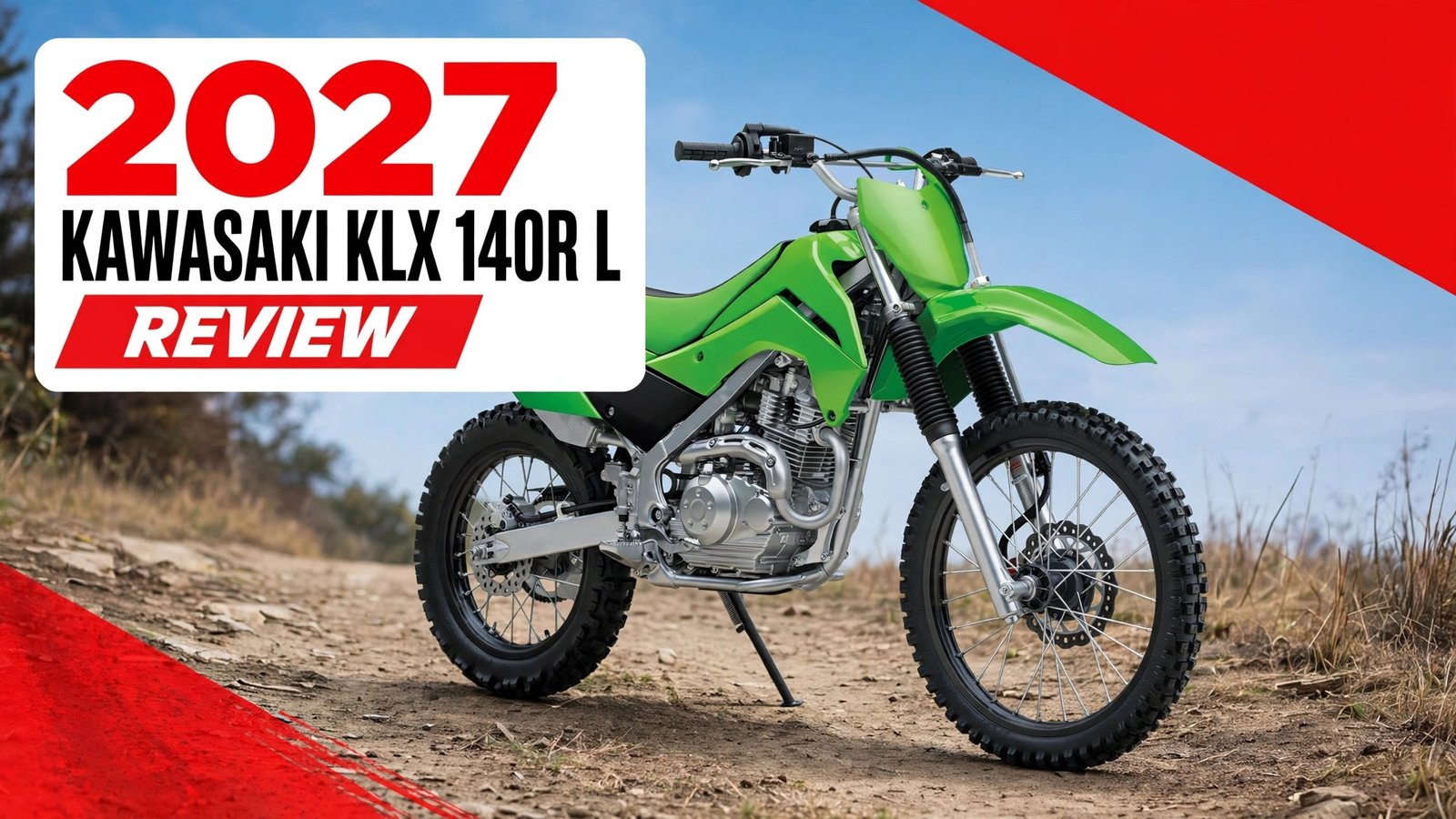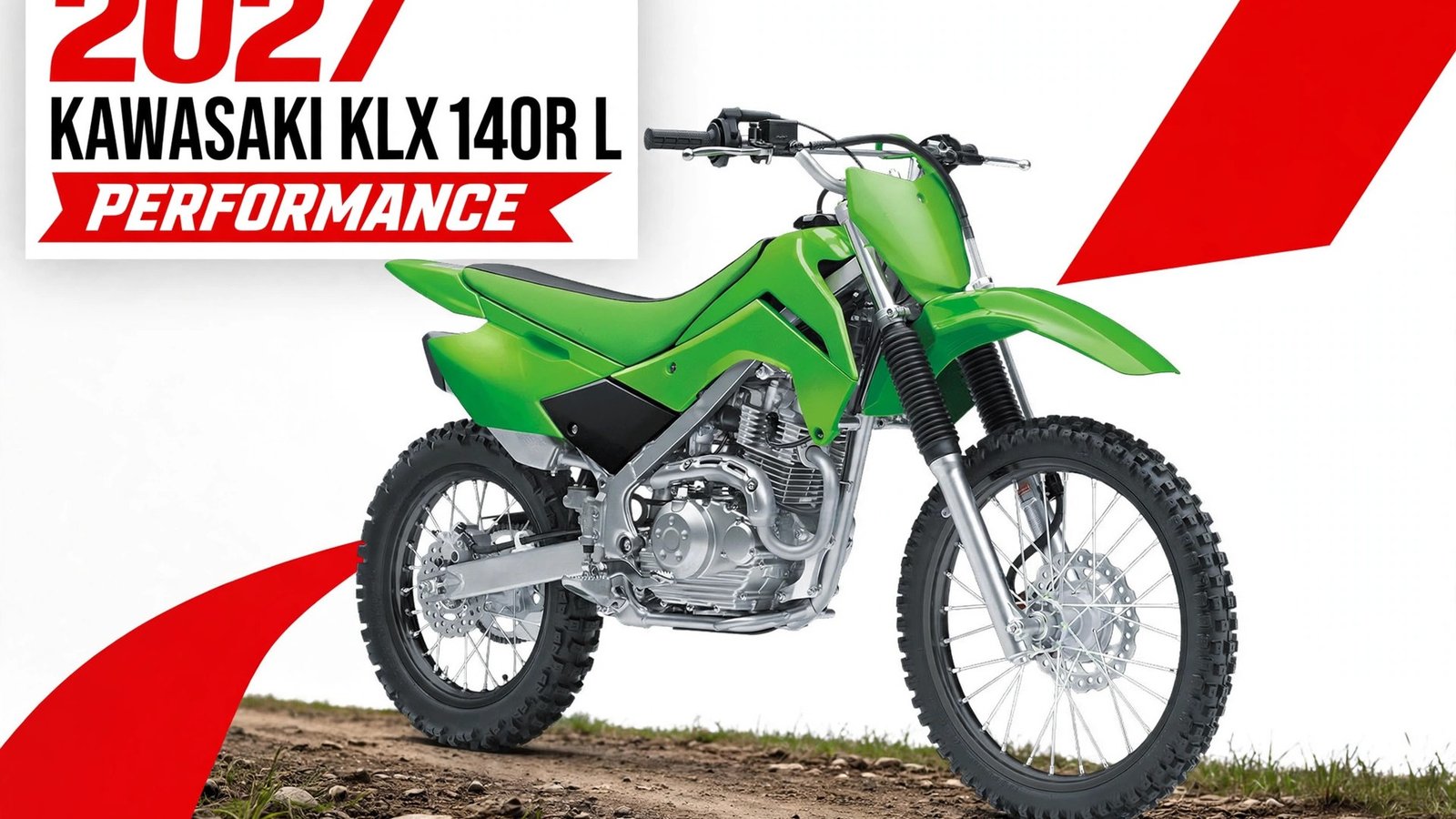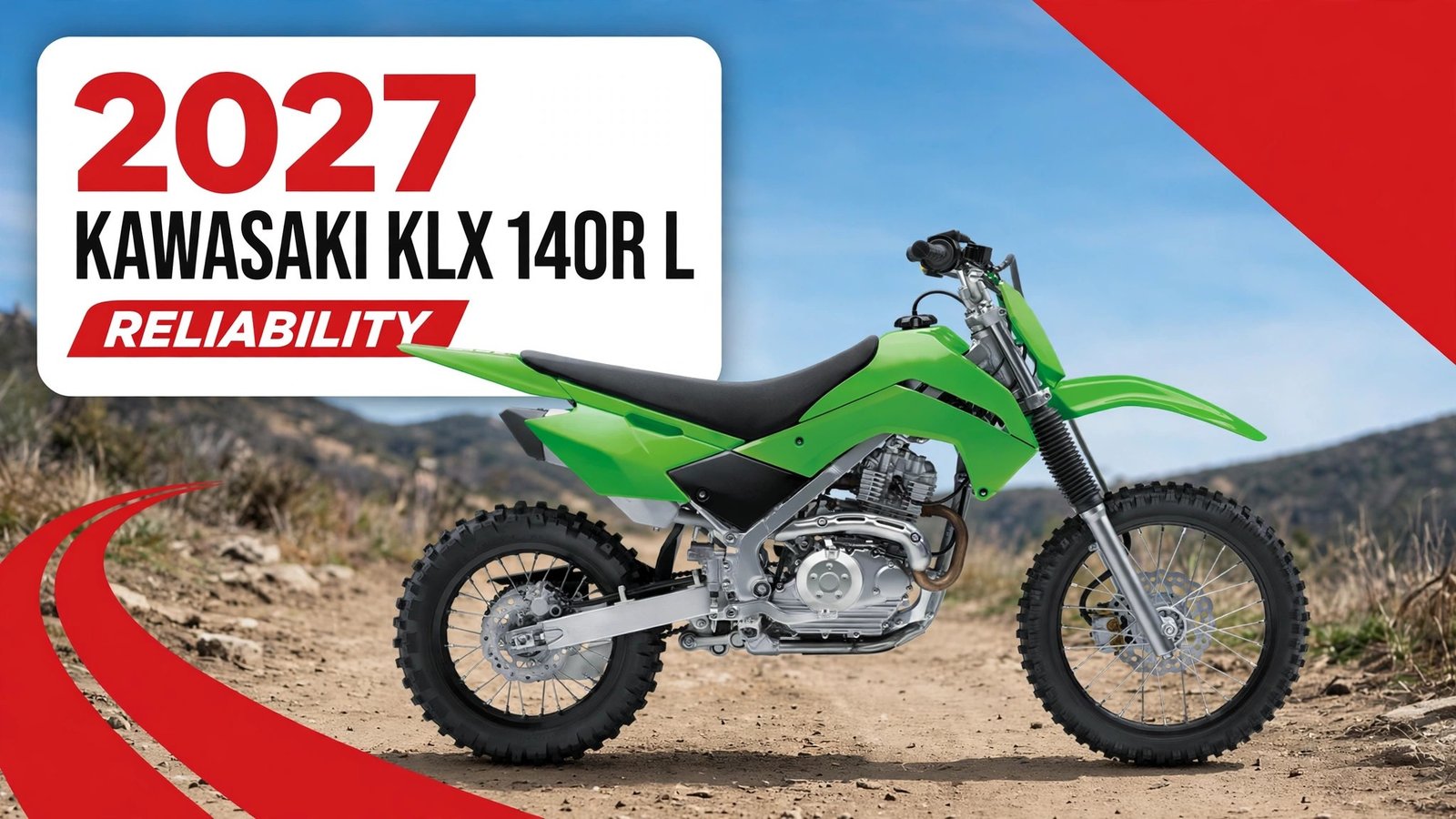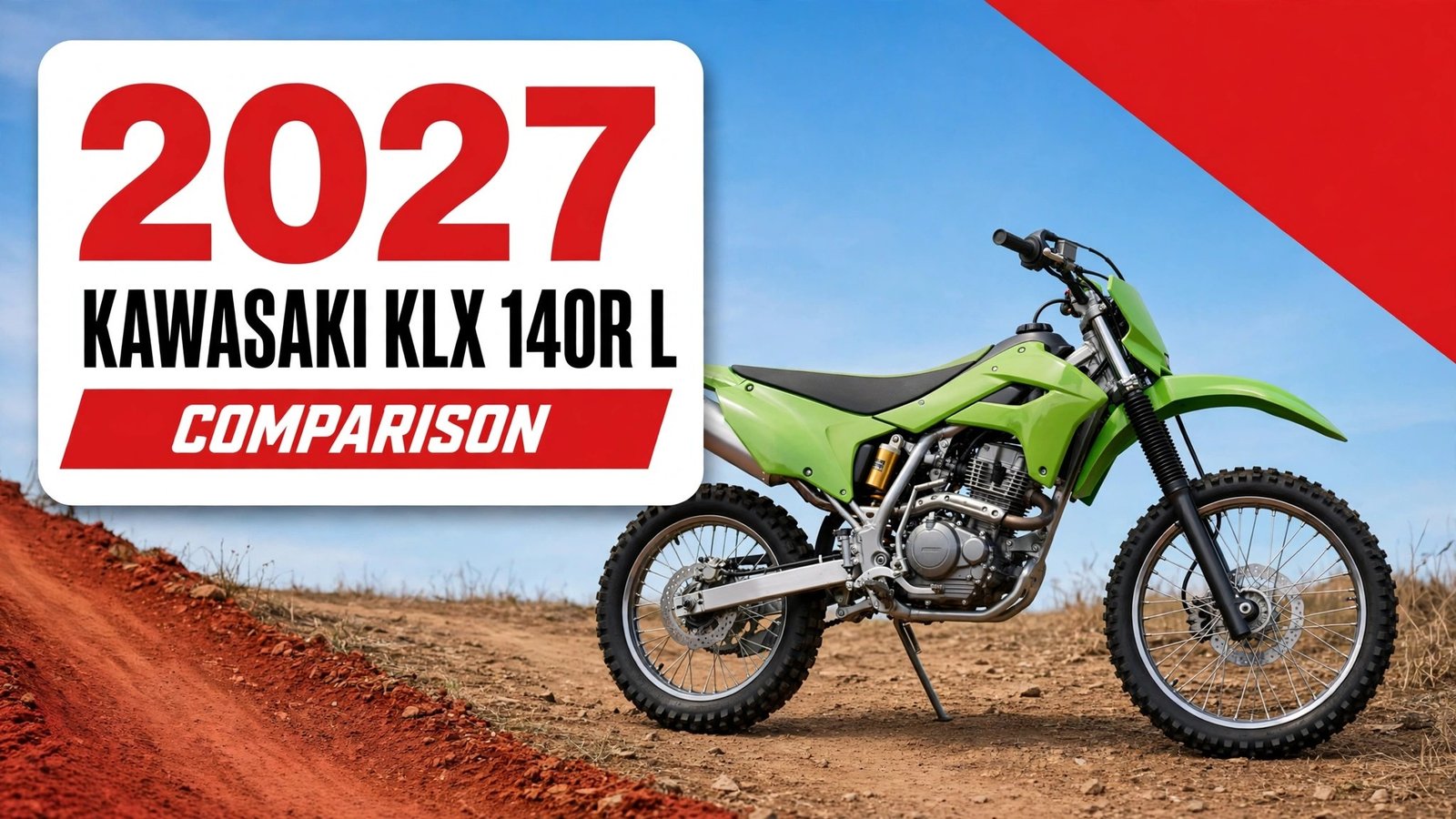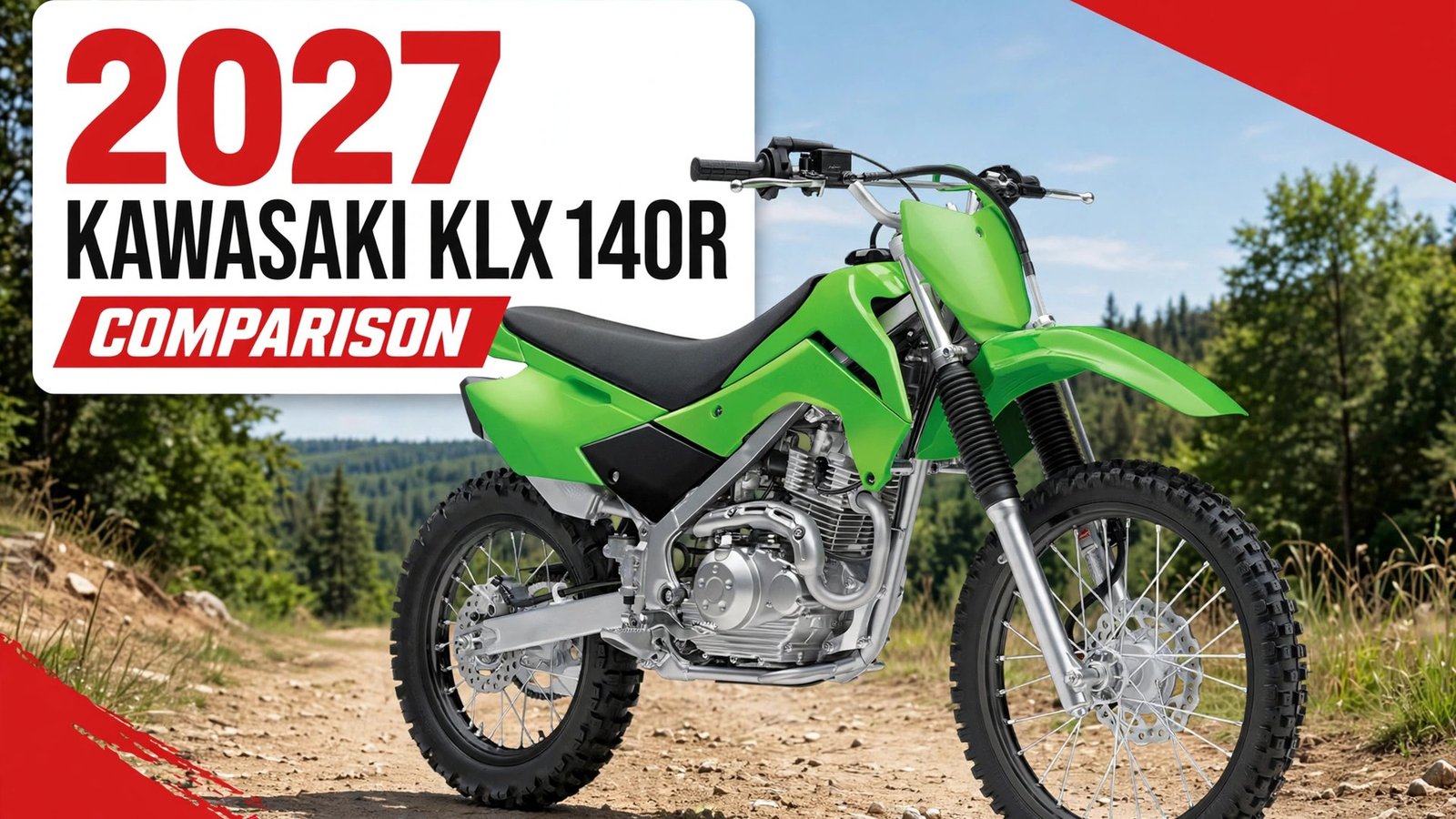
The short answer is that the Kawasaki KLX 140R is the most expensive of the four — on one condition. Delivered, the 2027 KLX 140R costs $4,114, against $3,899 for the Honda CRF125F, $3,939 for the Yamaha TT-R125LE and $3,949 for the Suzuki DR-Z125L. This Kawasaki KLX 140R comparison states the condition up front: the Honda compared here is the small-wheel 17/14 CRF125F. The Big Wheel CRF125F costs $4,299 delivered — more than the Kawasaki.
The premium is $165 to $215 over the three 125s, and it buys the biggest engine in the group, a fifth gear the Honda lacks, discs at both ends where every rival runs a rear drum, and more suspension travel. This Kawasaki KLX 140R comparison works through each rival in turn, then prices the premium and names the step-up bike.
Kawasaki KLX 140R Overview and Its Closest Rivals
The four bikes in this Kawasaki KLX 140R comparison are the only Japanese 125 and 144cc trail bikes sold new in the United States: the Kawasaki KLX 140R, the Honda CRF125F, the Yamaha TT-R125LE and the Suzuki DR-Z125L. They are all air-cooled four-stroke singles with manual clutches. The Kawasaki is the only 144 and the only one with a rear disc.
Three 125s Against One 144
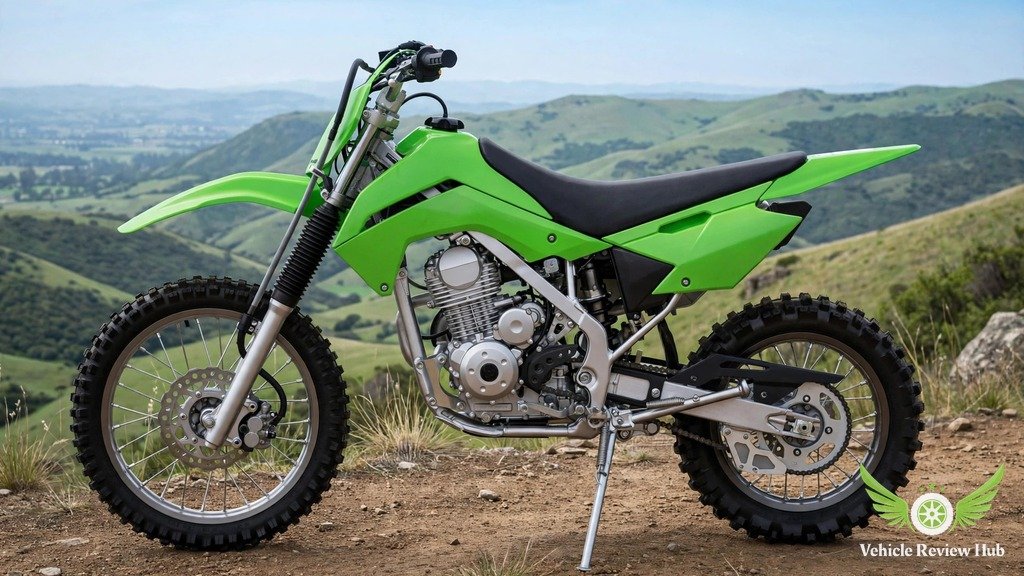
Three of the four bikes are 124 or 125cc: the Honda is 124.9cc, the Yamaha and the Suzuki are both 124cc. The Kawasaki is 144cc, the only bike here with a published power figure from a Canadian spec sheet — 11 PS, about 10.8 hp. This Kawasaki KLX 140R comparison does not turn that into a head-to-head power verdict, because the figures are not the same kind: the Honda’s roughly 9 hp comes from a comparison database, the Yamaha and Suzuki publish no figure at all.
The other split is fuelling: the Honda is the only bike here with fuel injection, fitted since 2019. The Kawasaki, the Yamaha and the Suzuki all run carburettors, and the Yamaha’s is the simplest to tune.
How the Four Bikes Differ at a Glance
The glance table below is the whole comparison in one place. The Honda’s wheels and the Yamaha’s and Suzuki’s wheels are not the same size as the Kawasaki’s, so this Kawasaki KLX 140R comparison keeps the wheel sizes in the table and the size gap stays visible.
| KLX 140R | CRF125F | TT-R125LE | DR-Z125L | |
|---|---|---|---|---|
| Engine | 144cc carb | 124.9cc EFI | 124cc carb | 124cc carb |
| Gears | 5-speed | 4-speed | 5-speed | 5-speed |
| Start | Electric only | Electric + kick | Electric + kick | Kick only |
| Brakes | Disc / disc | Disc / drum | Disc / drum | Disc / drum |
| Wheels | 17 / 14 in | 17 / 14 in | 19 / 16 in | 19 / 16 in |
| Seat | 30.7 in | 29.1 in | 31.7 in | 32.0 in |
| Curb weight | 205 lb | ~194 lb | 198 lb | 196 lb |
| Tank | 1.5 gal | 1.0 gal | 1.6 gal | 1.3 gal |
| Delivered | $4,114 | $3,899 | $3,939 | $3,949 |
Notes: the figures in this Kawasaki KLX 140R comparison table are 2027 for the Kawasaki and 2026 for the rivals, delivered prices are MSRP plus destination, and the Honda compared here is the small-wheel 17/14 bike — the Big Wheel costs $4,299 delivered, more than the KLX 140R.
The video below compares the KLX140 trims against each other for sizing — the standard R, the taller L and the F — not the KLX 140R against the Honda, Yamaha and Suzuki rivals. The rival comparison is in the text of this Kawasaki KLX 140R comparison. The video is useful for one thing this guide cannot show in a table: how the three KLX140 sizes fit different riders.
Kawasaki KLX 140R vs Honda CRF125F
The Honda is the closest rival on paper and the furthest on philosophy. It is the only bike here with fuel injection, the only four-speed, and the cheapest delivered — $3,899 against the Kawasaki’s $4,114. It is also the wheel-size match for the standard R: both ride on 17/14 wheels.
Engine, Specs and Performance Side by Side
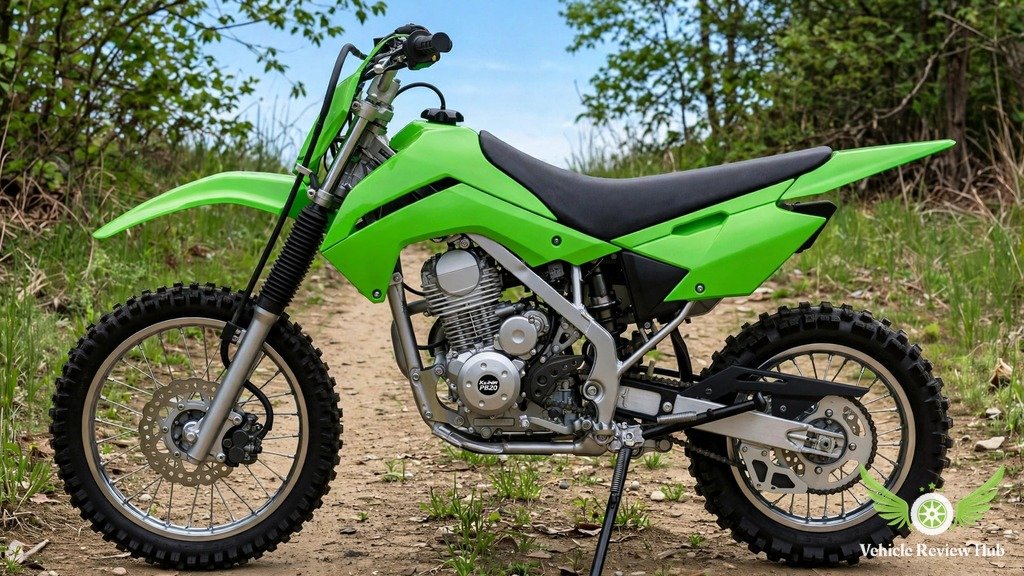
The Kawasaki’s 144cc single is 19cc bigger than the Honda’s 124.9cc, and it has a fifth gear the Honda does not. The Honda answers with fuel injection, fitted since 2019: it starts cleanly in the cold and needs no jetting changes. The Honda CRF125F page lists the fuel-injected 125 and the Big Wheel variant side by side.
| KLX 140R | CRF125F | |
|---|---|---|
| Engine | 144cc, 58.0 x 54.4 mm, 9.5:1, carb | 124.9cc, 52.4 x 57.9 mm, 9.0:1, EFI |
| Gears | 5-speed manual | 4-speed manual |
| Start | Electric only | Electric + kick |
| Brakes | 220 mm disc / 186 mm disc | Front disc / 125 mm rear drum |
| Suspension | 33 mm fork, 7.1 in / 7.1 in | 31 mm fork, 5.9-6.7 in / 6.6 in |
| Seat / weight | 30.7 in / 205 lb | 29.1 in / ~194 lb |
| Tank | 1.5 gal | 1.0 gal |
Notes: the figures in this Kawasaki KLX 140R comparison table come from the official Kawasaki spec sheet and the Honda Powersports CRF125F page. The Honda’s suspension travel figures differ by source and measurement basis, so the range is printed as published.
The riding difference is the gearbox and the brakes. The Kawasaki’s fifth gear gives it a taller top gear for open trails. The Kawasaki’s rear disc is the hardware edge: the Honda’s 125 mm rear drum is the smallest brake in the group. The Honda’s seat is 1.6 inches lower and the bike is about 11 lb lighter.
Price, Equipment and Which Suits Which Rider
Delivered, the Honda costs $3,899 and the Kawasaki $4,114 — the Kawasaki is $215 more. The $215 buys the bigger engine, the fifth gear and the rear disc, and it costs the rider fuel injection and the lower seat. The Big Wheel Honda, at $4,299 delivered, costs $185 more than the Kawasaki.
Buy the Honda if fuel injection matters most: cold starts, no jetting and a lower seat for a smaller rider. Buy the Kawasaki for open trails: the fifth gear, the rear disc and the extra travel are worth $215 there — the KLX 140R performance guide covers the taller first gear.
Kawasaki KLX 140R vs Yamaha TT-R125LE
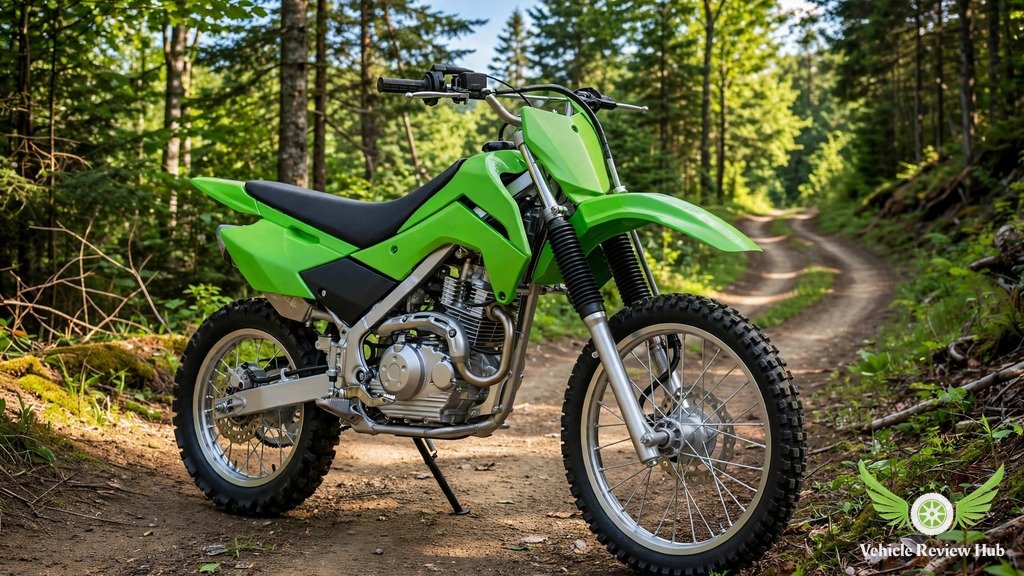
The Yamaha is the budget rival and the size-up rival at the same time. Delivered, the TT-R125LE costs $3,939 — $175 less than the Kawasaki. But it rides on 19/16 wheels against the Kawasaki’s 17/14, with a seat 1.0 inch taller, so the Yamaha is a size up from the R, and the wheel-size match for it is the KLX140R L. This Kawasaki KLX 140R comparison keeps that size gap in view.
Engine, Specs and Performance Side by Side
Both bikes are carburetted 5-speed singles, and the Yamaha’s carburettor is the easier of the two to tune. The Kawasaki’s advantage is displacement: 144cc against 124cc, with a Canadian-sheet 11 PS. The Yamaha’s advantage is gearing: its much lower first gear lets it crawl at slow speeds without slipping the clutch. The Motocross Hideout TTR125 vs KLX140 guide is written by an owner who runs both bikes.
| KLX 140R | TT-R125LE | |
|---|---|---|
| Engine | 144cc, 58.0 x 54.4 mm, 9.5:1, carb | 124cc, 54.0 x 54.0 mm, 10.0:1, carb |
| Gears | 5-speed manual | 5-speed manual |
| Start | Electric only | Electric + kick |
| Brakes | 220 mm disc / 186 mm disc | Front disc / rear drum |
| Suspension | 33 mm fork, 7.1 in / 7.1 in | 31 mm fork, 7.1 in / 6.6 in |
| Seat / weight | 30.7 in / 205 lb | 31.7 in / 198 lb |
| Tank | 1.5 gal | 1.6 gal |
Notes: the figures in this Kawasaki KLX 140R comparison table come from the official Kawasaki spec sheet and the Motocross Hideout TTR125 vs KLX140 guide. The Yamaha’s current LE is large-wheel only, so the old small-wheel TTR125 is the used-only wheel-size match for the standard R.
The suspension verdict goes to the Kawasaki. The same owner prefers the KLX140’s stock suspension and handling, and calls the Yamaha’s forks more of a pogo-stick feeling, with damping that is not as controlled. The Kawasaki is the only bike in this Kawasaki KLX 140R comparison with a rear disc.
Price, Equipment and Which Suits Which Rider
Delivered, the Yamaha costs $3,939 and the Kawasaki $4,114 — the Yamaha is $175 less. The $175 buys the Kawasaki’s bigger engine, its rear disc and its better-controlled suspension, and it costs the rider the Yamaha’s lower first gear and its kick backup. The owner who runs both picks the KLX140 for most beginners and calls the TTR125 the better budget option.
Buy the Yamaha if the budget is the deciding factor, or if the rider needs the lowest possible first gear for slow-speed learning. Buy the Kawasaki if the rider is still growing into the bike: the 17/14 wheels and 30.7-inch seat fit a smaller rider now. A taller rider should also look at the KLX140R L.
Kawasaki KLX 140R vs Suzuki DR-Z125L
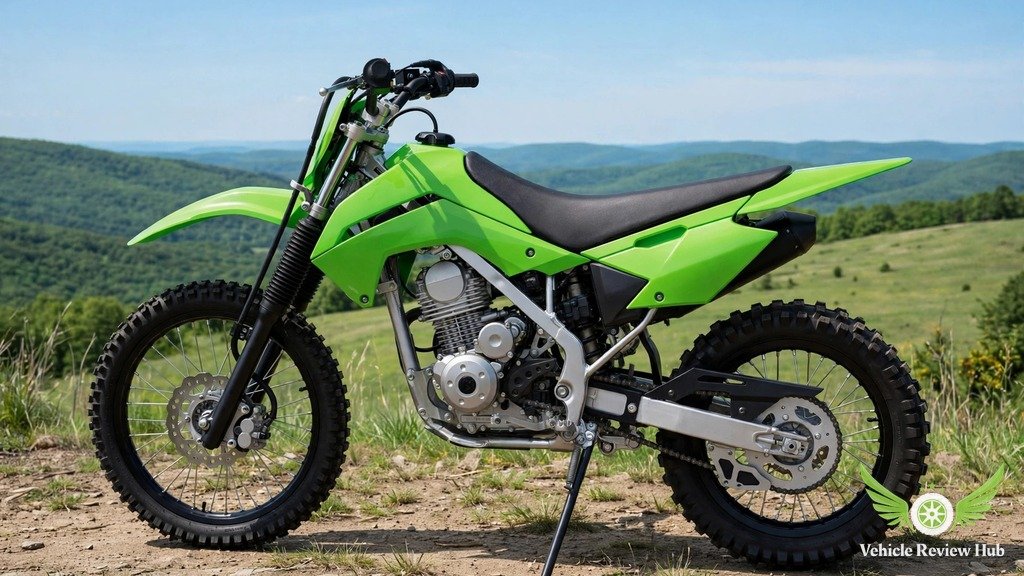
The Suzuki is the starkest contrast in this Kawasaki KLX 140R comparison, and it comes down to one thing: starting. The DR-Z125L is kick only — no electric start at all — while the Kawasaki is electric only, with no kick starter as a backup. Delivered, the Suzuki costs $3,949 against the Kawasaki’s $4,114, a $165 gap.
Engine, Specs and Performance Side by Side
Both bikes are carburetted 5-speed singles, and the Kawasaki’s 144cc is 20cc bigger than the Suzuki’s 124cc. The Suzuki publishes no horsepower figure — this Kawasaki KLX 140R comparison prints none for it, because the database figures conflict and none of them is verified. The Suzuki’s seat is the tallest in the group at 32.0 inches, its clearance is the highest at 11.4 inches.
| KLX 140R | DR-Z125L | |
|---|---|---|
| Engine | 144cc, 58.0 x 54.4 mm, 9.5:1, carb | 124cc, 57.0 x 48.8 mm, carb |
| Gears | 5-speed manual | 5-speed manual |
| Start | Electric only | Kick only |
| Brakes | 220 mm disc / 186 mm disc | Front disc / rear drum |
| Suspension | 33 mm fork, 7.1 in / 7.1 in | 31 mm fork, 7.1 in / 6.7 in |
| Seat / weight | 30.7 in / 205 lb | 32.0 in / 196 lb |
| Tank | 1.5 gal | 1.3 gal |
Notes: the figures in this Kawasaki KLX 140R comparison table come from the official Kawasaki spec sheet and the Road and Trail KLX140L comparison table. The Suzuki’s seat is quoted as both 31.7 in and 32.0 in — 32.0 in is used here, matching the Vehicle Review Hub DR-Z125L comparison. No horsepower figure is printed for the Suzuki.
The Suzuki is the lightest of the rivals at 196 lb against the Kawasaki’s 205, and its 11.4-inch clearance is the highest in the group. But the Kawasaki’s rear disc, its electric start and its bigger engine are the three things the Suzuki cannot answer. The Suzuki DR-Z125L comparison already compares the Suzuki against the Yamaha on price.
Price, Equipment and Which Suits Which Rider
Delivered, the Suzuki costs $3,949 and the Kawasaki $4,114 — the Suzuki is $165 less. The $165 buys the Kawasaki’s electric start, its rear disc and its bigger engine, and it costs the rider the Suzuki’s lighter weight, its taller clearance and its kick starter — the only kick starter in the group. The full KLX 140R review covers the Kawasaki’s price and verdict in detail.
Buy the Suzuki if the rider is tall enough for the 32.0-inch seat and wants the simplest possible bike: kick start, no battery to worry about, the lightest weight and the most clearance. Buy the Kawasaki if the rider is smaller, or if push-button starting matters.
Kawasaki KLX 140R Price and Value Compared
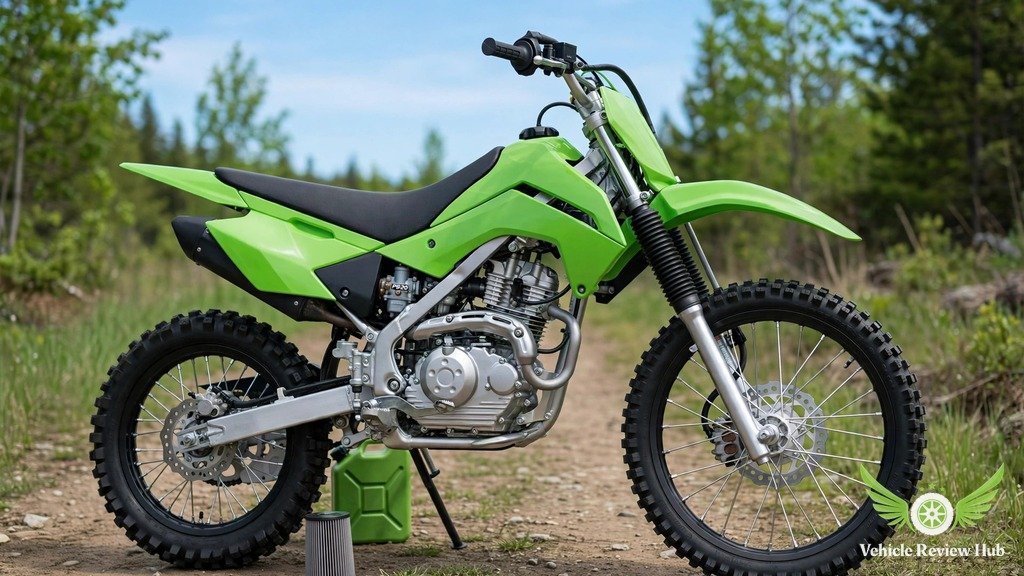
The price table is where this Kawasaki KLX 140R comparison earns its keep: the Honda in the table is the small-wheel bike. The Kawasaki is the most expensive of the four on that basis, by $165 to $215.
Most Expensive of the Four
The TotalMotorcycle 2027 KLX140R page lists the Kawasaki’s $3,799 MSRP and the $315 destination charge behind the delivered total.
| Bike | MSRP | Destination | Delivered | Gap to KLX 140R |
|---|---|---|---|---|
| Kawasaki KLX 140R (2027) | $3,799 | $315 | $4,114 | — |
| Honda CRF125F small-wheel (2026) | $3,599 | $300 | $3,899 | $215 less |
| Yamaha TT-R125LE (2026) | $3,599 | $340 | $3,939 | $175 less |
| Suzuki DR-Z125L (2026) | $3,649 | $300 | $3,949 | $165 less |
| Honda CRF125F Big Wheel (2026) | $3,999 | $300 | $4,299 | $185 more |
Notes: the figures in this Kawasaki KLX 140R comparison table are 2027 for the Kawasaki and 2026 for the rivals, and delivered totals are MSRP plus destination. The Big Wheel Honda is listed so the ranking is honest — it costs $4,299 delivered, more than the KLX 140R.
The premium is small in absolute terms — $165 to $215 is one service visit and a set of tyres. The Kawasaki is the only bike here with a 144cc engine, a fifth gear over the Honda and discs at both ends. The counter is just as plain: no fuel injection and no kick backup, and a 154 lb rider weight limit.
Running Costs and Resale Value Compared
Running costs are the same shape for all four bikes, and this Kawasaki KLX 140R comparison prints no dollar totals for them, because no verified running-cost figure exists for any of the four. The routine is oil and filter every 50 hours on the Kawasaki, a foam air filter, a chain that needs frequent attention, and tyres and brake pads as they wear. The Yamaha is the slightly cheaper bike to keep: some genuine Kawasaki parts are surprisingly expensive.
| Cost item | KLX 140R | CRF125F | TT-R125LE | DR-Z125L |
|---|---|---|---|---|
| Oil + filter | Every 50 h | Per manual | Per manual | Per manual |
| Air filter | Foam, clean + re-oil | Foam, clean + re-oil | Foam, clean + re-oil | Foam, clean + re-oil |
| Chain | Non-O-ring 428 | O-ring | O-ring | O-ring |
| Brakes | Disc pads both ends | Disc pads + drum shoes | Disc pads + drum shoes | Disc pads + drum shoes |
| Valves | Every 100 h, screws | Per manual | Per manual | Per manual |
| Fuel | Fresh, non-oxygenated | Regular unleaded | Regular unleaded | Regular unleaded |
Notes: the items in this Kawasaki KLX 140R comparison table are service intervals and specifications only. No dollar figures and no resale percentages are printed — no verified running-cost or resale figure exists for any of the four bikes.
Resale is the one place the ranking is honestly unknowable. No resale percentage is verified for any of the four, so this Kawasaki KLX 140R comparison prints none. What is known is the used-market shape: used KLX140s trade across a wide range by condition, year and market.
Kawasaki KLX 140R Comparison Verdict and US Alternatives
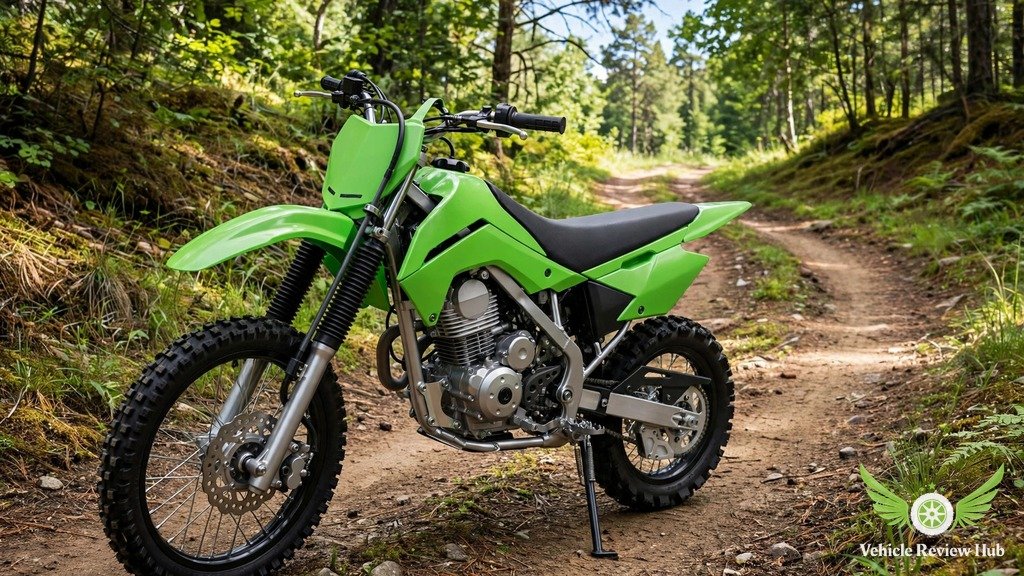
The verdict is short: the premium is justified, and the bike to buy depends on the rider, not the ranking. The Kawasaki costs $165 to $215 more than the three 125s on the small-wheel basis, and the hardware behind it is the biggest engine and discs at both ends. This Kawasaki KLX 140R comparison closes with the rider-by-rider answer and the step-up bike.
Verdict: Hardware Justifies the Premium
The premium buys hardware that shows up on every ride: the 144cc engine pulls harder than any 125 here, the fifth gear stretches the top end on open trails, the rear disc stops better than any rear drum. The Road and Trail long-term KLX140L review ran 141 hours over five seasons on routine maintenance only. The counter is real too: the Kawasaki is carburetted while the Honda is fuel-injected, it has no kick backup while the Honda and Yamaha do, and its suspension bottoms for riders over 180 lb.
Rider by rider: a smaller rider learning on trails buys the Kawasaki — the 30.7-inch seat, the electric start and the fifth gear are the beginner package. A buyer who wants fuel injection and the lowest seat buys the Honda. A buyer on the tightest budget, or one who needs the lowest first gear, buys the Yamaha. A tall rider who wants the simplest bike and the most clearance buys the Suzuki. A rider too tall for all four buys the KLX140R L. This Kawasaki KLX 140R comparison names the L honestly, because the standard R is not the right Kawasaki for every rider.
KLX230R: The Step-Up Alternative
The step up from the KLX 140R is the KLX230R, and the gap is bigger than the premium in this comparison. The KLX230R is a 233cc air-cooled single with a 6-speed gearbox and full-size 21/18 wheels, and its 2027 MSRP is $4,999 — $1,200 more than the KLX 140R’s $3,799 on sticker price. No delivered total is printed here, because the KLX230R’s destination charge is not verified. The KLX 140R reliability guide covers the 140R’s hour-based servicing.
Kawasaki KLX 140R Comparison: Frequently Asked Questions
These are the questions riders ask most when choosing between the KLX 140R and its rivals. This Kawasaki KLX 140R comparison answers each one with the verified figures above — and says plainly where no test exists.
Which is the most expensive bike in this Kawasaki KLX 140R comparison?
The KLX 140R, at $4,114 delivered — on the small-wheel Honda basis. This Kawasaki KLX 140R comparison compares the small-wheel 17/14 CRF125F at $3,899; the Big Wheel costs $4,299 delivered, more than the Kawasaki.
Is the Kawasaki KLX 140R faster than the Honda CRF125F?
There is no head-to-head test, so this Kawasaki KLX 140R comparison makes no measured claim. The Kawasaki has 19cc more displacement and a fifth gear the Honda lacks, while the Honda has fuel injection and a lower seat.
Does the Kawasaki KLX 140R have a rear disc brake?
Yes: a 186 mm rear disc, with a 220 mm front disc. This Kawasaki KLX 140R comparison notes the Kawasaki is the only bike of the four with a rear disc.
Which bike is best for beginners?
The Kawasaki, for most beginners — the owner who runs both the Kawasaki and the Yamaha picks the KLX140 for its power, suspension and handling. This Kawasaki KLX 140R comparison adds the fit caveat: the Yamaha’s lower first gear suits slow-speed learning better.
Is the Kawasaki KLX 140R fuel injected?
No. It uses a Keihin PB20 carburettor, and this Kawasaki KLX 140R comparison notes the Honda is the only bike of the four with fuel injection.
Does the Kawasaki KLX 140R have a kick starter?
No. It has push-button electric start only, and this Kawasaki KLX 140R comparison notes the Honda and Yamaha have a kick backup while the Suzuki is kick only.
How much more does the Kawasaki KLX 140R cost than the Yamaha TT-R125LE?
$175 delivered: the Kawasaki costs $4,114 and the Yamaha $3,939. This Kawasaki KLX 140R comparison notes the Yamaha is the cheaper bike, and usually the easiest to find used for less money.
What is the cheapest bike in this Kawasaki KLX 140R comparison?
The small-wheel Honda CRF125F, at $3,899 delivered. This Kawasaki KLX 140R comparison notes the Honda wins on delivered price because its destination charge is $300 against the Yamaha’s $340.
Are the Yamaha and Suzuki the same size as the Kawasaki?
No. The Yamaha TT-R125LE and the Suzuki DR-Z125L ride on 19/16 wheels, and this Kawasaki KLX 140R comparison notes the wheel-size match for them is the taller KLX140R L.
What is the KLX230R, and how much does it cost?
The KLX230R is the step-up alternative: a 233cc single with a 6-speed gearbox and full-size 21/18 wheels, at $4,999 MSRP for 2027. This Kawasaki KLX 140R comparison prints the MSRP only, because the KLX230R’s destination charge is not verified.
Which bike holds its value best?
No verified resale percentage exists for any of the four, so this Kawasaki KLX 140R comparison prints none. Used KLX140s trade across a wide range by condition, year and market.
Should I buy the KLX 140R or the KLX140R L?
Buy the standard R if the 30.7-inch seat and 17/14 wheels fit — it is the bike this Kawasaki KLX 140R comparison covers. Buy the taller L if the Yamaha’s or Suzuki’s 19/16 size fits better.