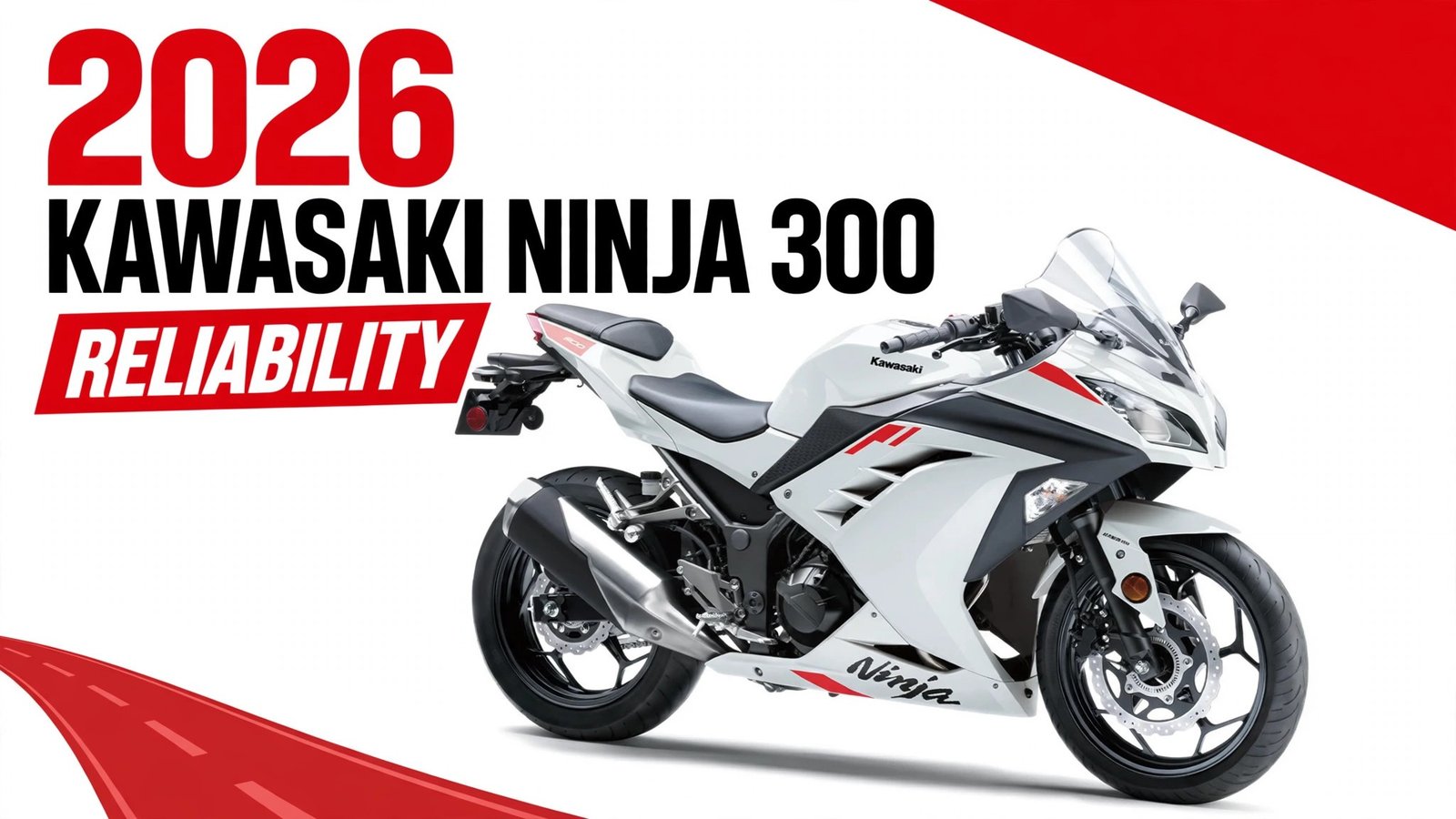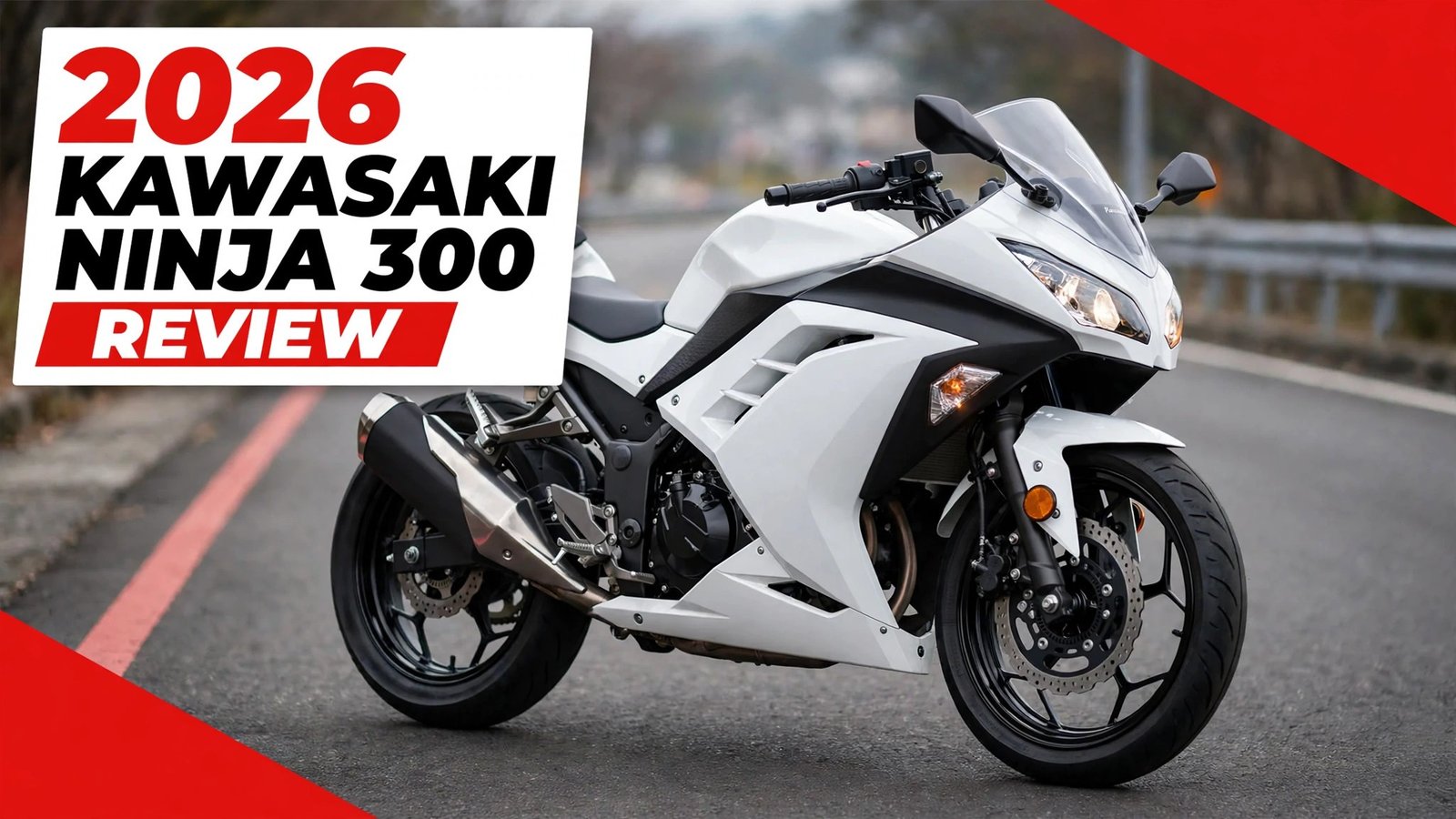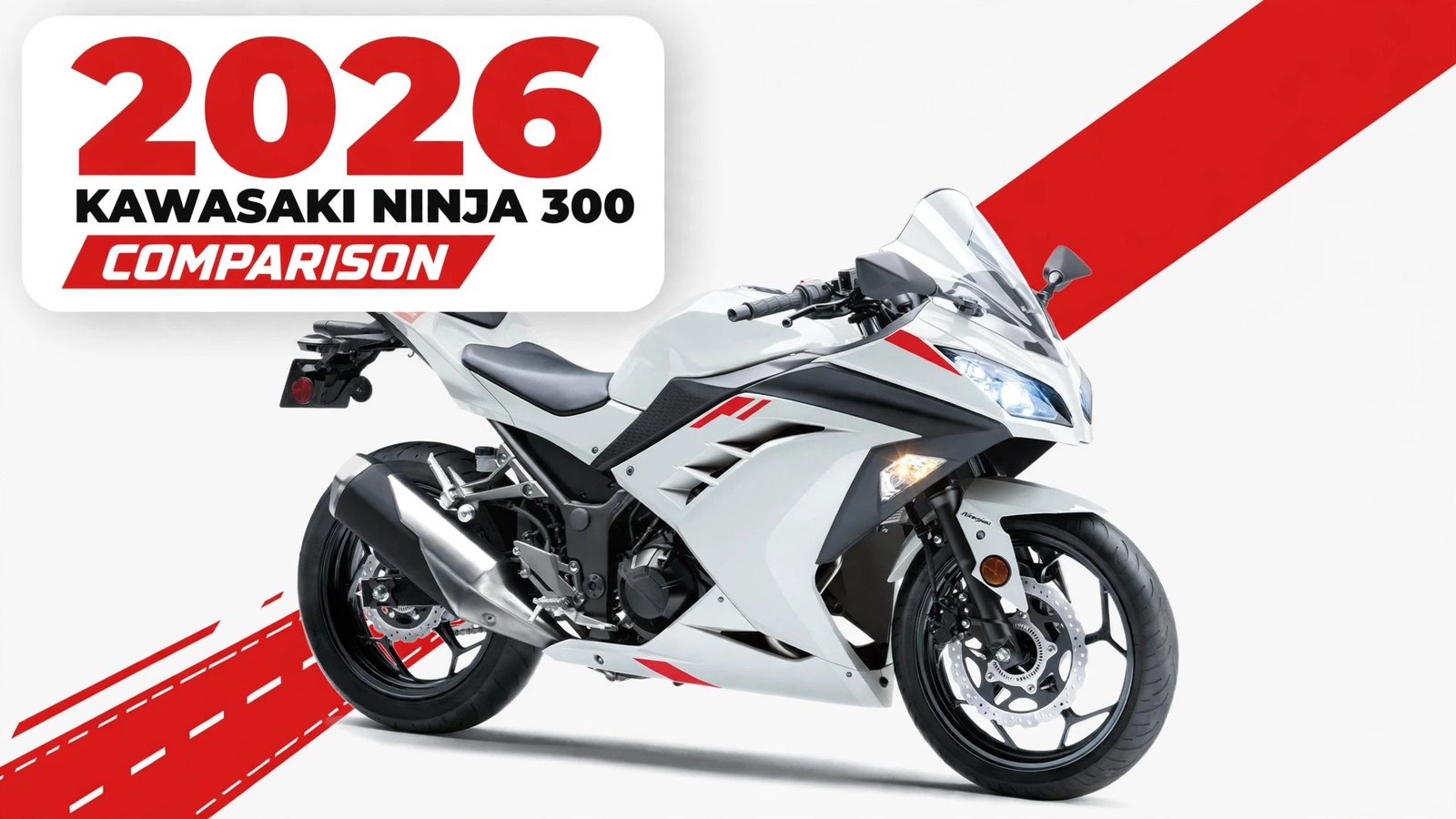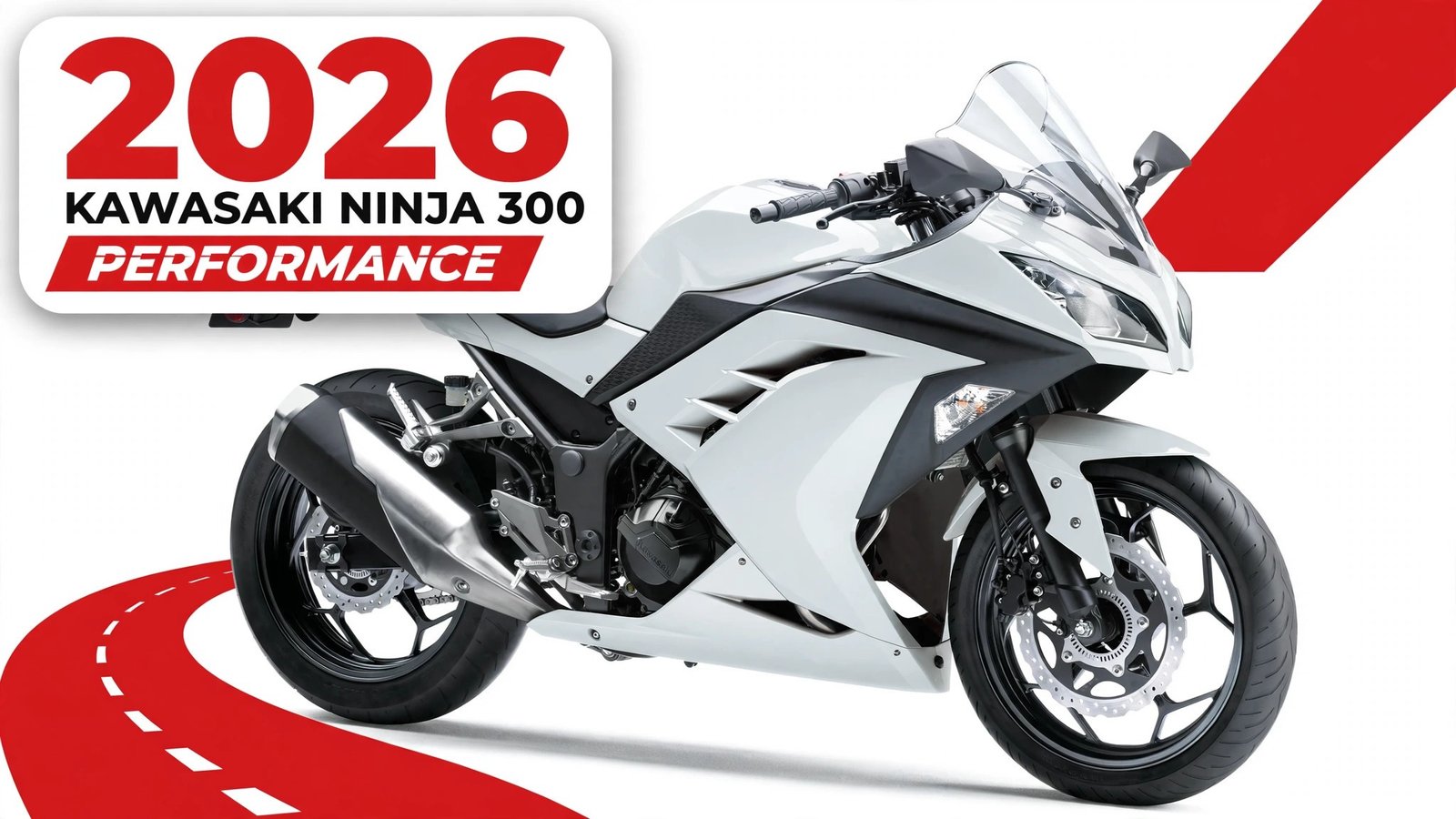
The engine is the whole story of this bike, and this Kawasaki Ninja 300 performance guide starts with the numbers that matter: the 296cc parallel twin claims 38.9 hp at 11,000 rpm on Kawasaki’ 2026 spec sheet, but what reaches the rear wheel is what a rider feels.
Three published dyno tests agree closely on that rear-wheel figure, and this Kawasaki Ninja 300 performance guide works through them, the top speed and the mileage, to show what the revived 300 actually does on the road.
Kawasaki Ninja 300 Engine Performance and Power Delivery
The engine is where any honest Kawasaki Ninja 300 performance guide has to start, because the 296cc parallel twin is the whole story of this bike. Kawasaki’s 2026 spec sheet claims 38.9 hp at 11,000 rpm and 19.3 lb-ft at 10,000 rpm, measured to ISO 4106, but those are crank figures from a manufacturer sheet. What matters to a rider is what reaches the rear wheel, and three published dyno tests agree closely on that number. This Kawasaki Ninja 300 performance review leads with the instrumented figures, not the brochure ones, and the gap between the two tells you something useful about how the twin actually rides.
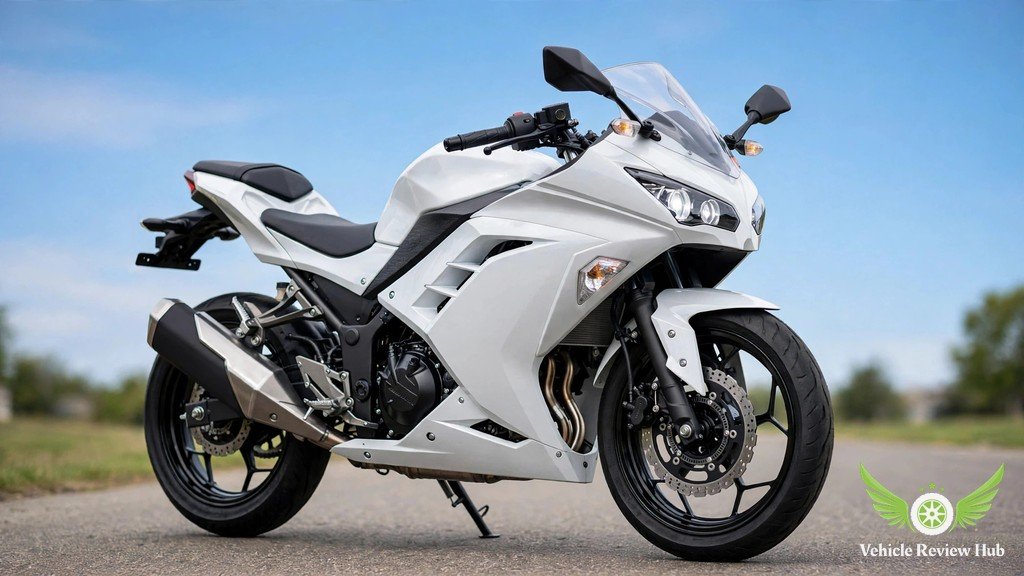
35 Rear-Wheel HP (Cycle World)
Cycle World’s December 2012 test of the 2013 Ninja 300 ABS put the bike on the dyno and measured 35 peak rear-wheel horsepower and 18 lb-ft of torque. On the same dyno in the same issue, the outgoing Ninja 250R made 25.5 hp and the Honda CBR250R made 23.7 hp. A second Cycle World test, the February 2013 shootout, measured 35.3 hp, and Motorcycle.com’s 2015 shootout measured 34.6 hp at 10,800 rpm with 17.6 lb-ft. Three dynos, three publications, one answer: the Ninja 300 puts about 35 hp to the rear wheel. That is the figure this Kawasaki Ninja 300 performance guide prints, and it is the figure every other claim in this blog is measured against.
The way the twin delivers those 35 hp matters more than the number itself. Testers in every period review describe the same character: soft and unhurried below 6,000 rpm, then waking up and pulling cleanly to the 13,000 rpm redline. The 296cc twin makes its power high, which is why the bike feels gentle around town and genuinely quick when ridden hard. For a beginner, that split personality is the point — the bike forgives lazy riding and rewards revs, and the Kawasaki Ninja 300 review covers the same engine from the ownership side.
Won the 2015 Shootout (Motorcycle.com)
The Ninja 300’s engine did more than post a good dyno number — it won the comparison that defined the class. In Motorcycle.com’s 2015 “Beginner-ish Sportbike Shootout”, the Ninja 300 beat the Honda CBR300R, the KTM RC390 and the Yamaha YZF-R3 with an 85.0 percent overall score, ahead of the R3 at 84.0 percent, the RC390 at 81.8 percent and the CBR300R at 77.8 percent. The win is the headline result of this Kawasaki Ninja 300 performance story, because it was earned against newer bikes with bigger engines and better spec sheets.
| Test | Rear-wheel power | Rear-wheel torque | Bike tested |
|---|---|---|---|
| Cycle World, Dec 2012 | 35 hp (peak) | 18 lb-ft | 2013 Ninja 300 ABS |
| Cycle World, Feb 2013 shootout | 35.3 hp | Not stated | 2013 Ninja 300 |
| Motorcycle.com, 2015 shootout | 34.6 hp @ 10,800 rpm | 17.6 lb-ft | Ninja 300 ABS |
| Kawasaki 2026 spec (claimed, crank) | 38.9 hp @ 11,000 rpm (ISO 4106) | 19.3 lb-ft @ 10,000 rpm | 2026 Ninja 300 ABS |
Notes: the three dyno figures are rear-wheel measurements from published tests, and they agree within 0.7 hp. The 38.9 hp figure is Kawasaki’s claimed crank output for the 2026 bike to ISO 4106, not a dyno figure, and it should not be compared directly with the rear-wheel numbers. Wikipedia’s “39.95 hp” is not a published dyno figure and is not printed here. The Cycle World December 2012 test is the source for the 35 hp figure, and the Motorcycle.com 2015 shootout is the source for the 34.6 hp figure and the 85.0 percent win.
Kawasaki Ninja 300 Top Speed and Acceleration
Top speed is the number every prospective buyer asks about first, and it is also the number most often exaggerated. Kawasaki has never published an official top speed for the Ninja 300, so the only honest figures are the ones testers measured, and this Kawasaki Ninja 300 performance guide prints only those. Two Cycle World tests measured the top speed on the same bike in the same era, and they disagreed by two miles per hour — a small gap that says something useful about test conditions, and nothing at all about the bike changing.
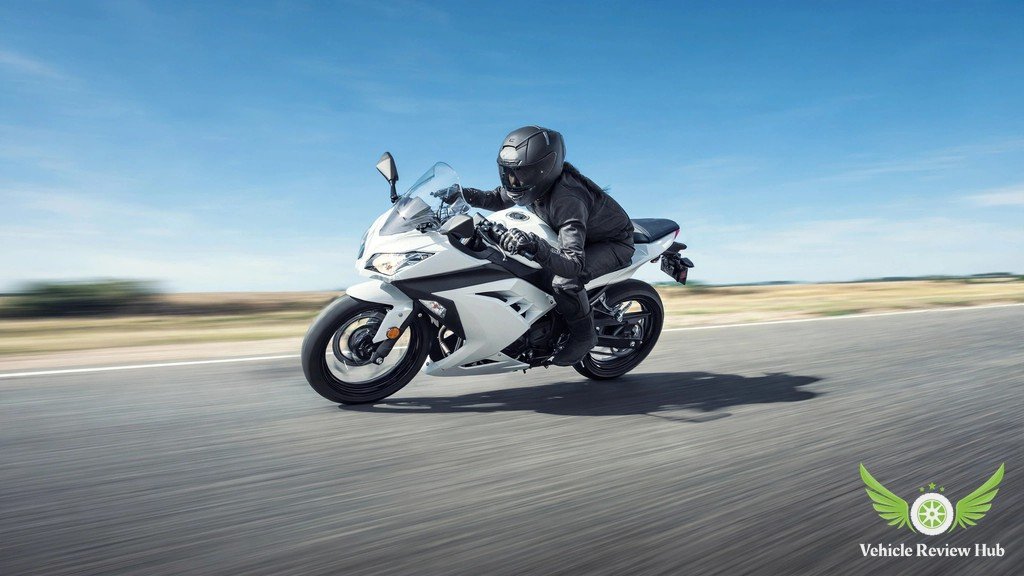
Tested 106 MPH, Never Official
Cycle World’s December 2012 test measured a top speed of 106 mph on the 2013 Ninja 300 ABS, and the tester noted the bike still had “1000 revs to spare” — the 13,000 rpm redline was not quite reached at top speed. That 106 mph figure is the headline top speed for this Kawasaki Ninja 300 performance blog, because it comes from the most complete single-bike test the bike ever received, with the dyno, acceleration and braking figures all measured in the same issue.
Second Test Said 104 MPH
The second published top-speed figure comes from Cycle World’s February 2013 shootout, where road test editor Don Canet measured 104 mph — two miles per hour less than the December test. The shootout also timed a slightly quicker quarter-mile, 14.38 seconds at 90.51 mph, on a different day with different conditions. A third data point agrees with the lower figure: Autocar India’s data-logged test recorded 168 km/h, which is 104 mph. Two of the three instrumented top-speed figures say 104 mph, and one says 106 mph, so the honest range for this Kawasaki Ninja 300 performance guide is 104 to 106 mph, with 106 mph as the best single result and 104 mph as the more often repeated one.
| Figure | Cycle World Dec 2012 | Cycle World Feb 2013 shootout | Autocar India |
|---|---|---|---|
| Top speed | 106 mph | 104 mph | 168 km/h (104 mph) |
| 0–60 mph | 5.6 sec | Not stated | Not stated |
| Quarter-mile | 14.43 sec @ 90.58 mph | 14.38 sec @ 90.51 mph | Not stated |
| Dyno power | 35 hp | 35.3 hp | Not stated |
Notes: no official top speed exists — Kawasaki has never published one. The 106 mph and 104 mph figures are instrumented test results, and the honest range is 104 to 106 mph. MotoStatz’s figures (110 mph, 5.23 sec 0–60, 14.10 sec quarter-mile) conflict with Cycle World’s tested numbers and are not printed. The Cycle World February 2013 shootout is the source for the 104 mph figure, and the Autocar India test is the source for the data-logged 168 km/h figure.
Kawasaki Ninja 300 Mileage and Fuel Economy
Fuel economy is where this Kawasaki Ninja 300 performance guide finds its most interesting split: two figures from the same magazine, in the same issue, nearly 16 mpg apart. Both are real, both were measured, and the gap between them is the difference between riding the bike gently on the road and wringing it out on a dyno. Understanding that split matters more than either number alone, because a buyer who expects 70 mpg on every ride will be disappointed, and a buyer who expects 54 mpg will be pleasantly surprised.
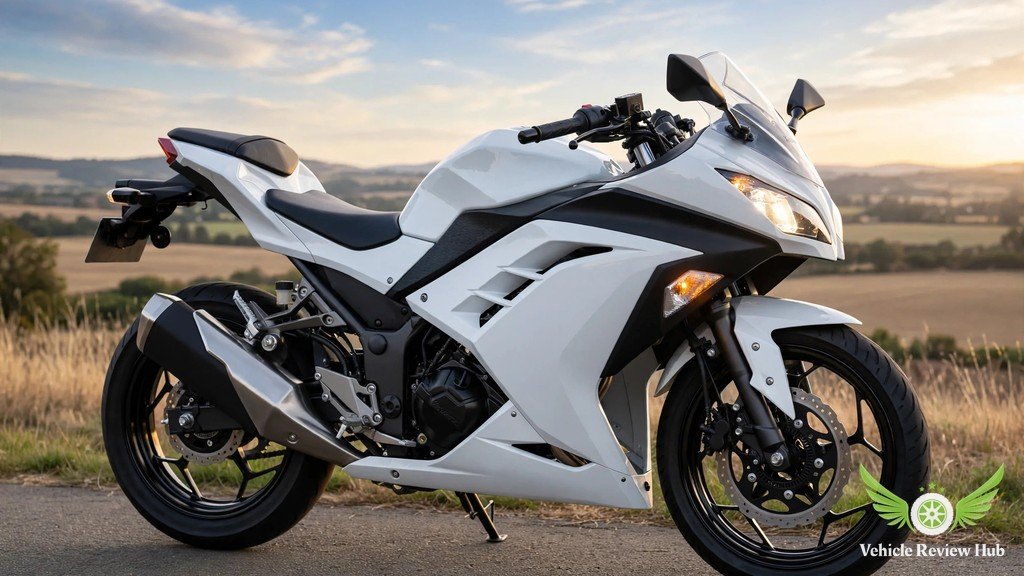
70 MPG Observed vs 54.1 Tested
The two figures come from Cycle World’s December 2012 issue. Road tester Ari Henning Rousseau’s road test observed “nearly 70 mpg” in real road riding, while Don Canet’s dyno-test companion piece in the same issue recorded 54.1 mpg under test conditions. The doc heading pairs them exactly as the magazine did, and this Kawasaki Ninja 300 performance guide keeps them paired: 70 mpg is what the bike does when ridden normally on the road, and 54.1 mpg is what it does when tested hard. Neither figure is the “true” economy on its own.
A third data point sits almost exactly on Canet’s figure. Motorcycle.com’s 2015 shootout tested the Ninja 300 at 54.3 mpg as its worst figure, with “60 more common” in average riding — nearly identical to Canet’s 54.1, and measured three years later on a different bike. The two 54-point figures are track and dyno-condition numbers, while road riding gives around 60 to 70 mpg. That is normal for a small high-revving twin, and it is why this Kawasaki Ninja 300 performance guide prints all three figures with their sources attached instead of picking one.
4.5 Gallon Tank, Long Legs
The 4.5-gallon tank is the other half of the fuel-economy story, and it is a big tank for a 300. At the observed 70 mpg, a full tank is worth about 315 miles in theory; at the tested 54.1 mpg, it is worth about 243 miles. Realistic road range sits between the two — roughly 250 to 270 miles between fill-ups for a rider mixing town and highway work, which this Kawasaki Ninja 300 performance guide labels an estimate computed from the tested figures, not a measured range.
| Figure | Value | Source | Conditions |
|---|---|---|---|
| Observed economy | Nearly 70 mpg | Cycle World, Dec 2012 (Rousseau road test) | Road riding |
| Tested economy | 54.1 mpg | Cycle World, Dec 2012 (Canet dyno piece) | Dyno / test conditions |
| Tested economy | 54.3 mpg (worst; 60 more common) | Motorcycle.com, 2015 shootout | Shootout test conditions |
| Tank capacity | 4.5 gal | Kawasaki spec | — |
| Realistic range (estimate) | ~250–270 miles | Computed from the tested figures | Mixed road riding |
Notes: 54.1 mpg is Cycle World’s December 2012 figure (Canet) and 54.3 mpg is Motorcycle.com’s 2015 figure — keep the two sources straight, and never print either figure under the other magazine’s name. The 4.5-gallon tank is the Kawasaki spec; a 4.4-gallon figure that appears in one blog is an error. The range estimate is computed from the tested economy figures (4.5 gal × 54–70 mpg = 243–315 miles theoretical) and is labelled an estimate, not a measured range. This Kawasaki Ninja 300 performance guide prints the fuel-economy split exactly as the magazines measured it.
Kawasaki Ninja 300 Real-World Riding Experience
Magazine numbers tell only half the story of this Kawasaki Ninja 300 performance review, because the bike spent a decade on real roads with real owners after the magazines moved on. The period tests all praised the same things — the smooth twin, the light clutch, the flickable handling and the upright riding position — and the long-term evidence says those praises held up. The real-world record is what turns a good test result into a good used buy, and it is where the Ninja 300’s reputation was actually earned.
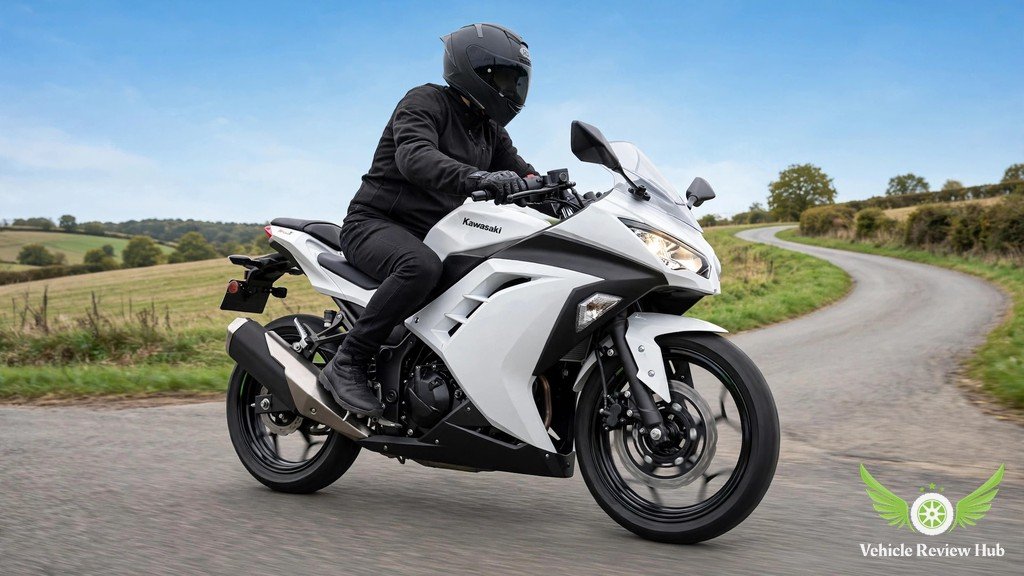
Motorcycle.com Picked Rivals in 2015
The 2015 comparison that defined the Ninja 300’s rivals was not a Cycle World test at all. The four-bike shootout of 2015 — CBR300R against Ninja 300 against RC390 against YZF-R3 — was Motorcycle.com’s “Beginner-ish Sportbike Shootout”, published in May 2015, and it is Motorcycle.com that picked the rivals and the Ninja 300 that won it with an 85.0 percent overall score. Cycle World’s own comparison work on the bike came earlier: the February 2013 shootout that pitted the Ninja 300 against the Honda CBR250R and the Hyosung GT250R, where the Kawasaki’s 35.3 hp dyno figure and 104 mph top speed were measured. That is the honest attribution for this Kawasaki Ninja 300 performance guide — Cycle World tested the bike in 2012 and 2013, and Motorcycle.com picked its 2015 rivals.
The distinction matters because the two magazines tested differently and found different things. Cycle World’s 2013 shootout was a three-bike value comparison under $5,000, and it measured the Ninja 300 as the quickest and most powerful bike there. Motorcycle.com’s 2015 shootout was a four-bike class test on road and track, and it scored the Ninja 300 first on the strength of its engine, its transmission and clutch, its handling and its grin factor. A reader who credits the 2015 rival-picking to Cycle World would be looking for a test that does not exist, so this Kawasaki Ninja 300 performance guide names the right magazine for each test and keeps the two shootouts separate.
Autocar India’s Long-Term Wrap-Up
A long-term wrap-up does exist, and it is worth naming because it corrects the record. Autocar India ran a Kawasaki Ninja 300 as a long-term test bike for more than three years and published a final report in April 2022, after just under 8,000 km of ownership, calling the bike “usable, reliable and fun” and “a keeper”. The same publication ran a first report after a year of riding, and MotorBeam published a 30,000 km ownership report after a Mumbai-to-Ladakh trip and years of use. The long-term evidence agrees with the period tests: the parallel-twin engine, the cornering ability and the build quality are the lasting strengths, while low ground clearance and expensive spare parts are the lasting complaints.
What the long-term reports add to this Kawasaki Ninja 300 performance guide is the ownership view the magazine tests could not give. Autocar India’s bike needed a basic service every six months at roughly Rs 2,500 and an annual major service at roughly Rs 5,000, with brake pads and filters swapped; the rear ABS stopped working at one point from a loose connection or sensor, a minor fix. Those are Indian-market running costs, not American ones, and this Kawasaki Ninja 300 performance guide prints them as Indian figures only — but the pattern they show, a bike that stays reliable and fun over years of use, matches what American owners report too.
Kawasaki Ninja 300 Handling, Braking and Stability
Straight-line speed is only part of the Kawasaki Ninja 300 performance picture, and the testers who spent the most time with the bike rated its handling and braking as highly as its engine. The chassis is a diamond high-tensile steel frame with a 27.0-degree rake, a 37 mm telescopic fork with 4.7 inches of travel, and a preload-adjustable Uni-Trak rear shock with 5.2 inches of travel. Those are modest parts on paper — no adjustments up front, no upside-down fork — but every period test found them well matched to the bike’s 388.1 lb curb weight and 55.3-inch wheelbase.
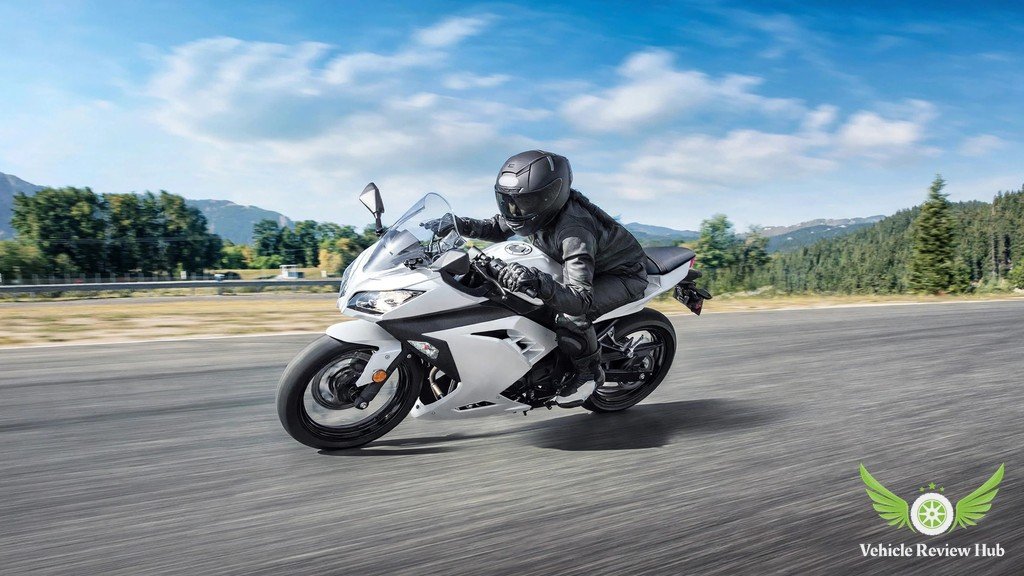
Handling, Braking and Stability on Real Roads
On real roads, the Kawasaki Ninja 300 performance character is light, accurate and forgiving. Motorcycle.com’s 2015 testers rated the Ninja 300’s handling at 91.3 percent on the scorecard — the best of the four bikes — and called its steering the most accurate in the test, with suspension “so nicely damped you can feel the weight transfer back and forth from front tire to rear” in corners. The bike’s narrow 110/70-17 front and 140/70-17 rear tyres, its short wheelbase and its low weight make it flick from side to side with little effort, and the upright riding position gives the rider leverage over the bars that a committed race crouch would not.
Stability at speed is the other half of the handling story, and the Kawasaki Ninja 300 performance record there is equally strong. Cycle World’s testers rode the bike to its 106 mph top speed and reported it stable, and Motorcycle.com’s testers took all four 2015 shootout bikes to Chuckwalla Valley Raceway, where the Ninja 300 stuck with the Yamaha R3 on track while keeping the KTM RC390 honest. For a beginner, that combination of light steering and high-speed stability is exactly what builds confidence.
60 to 0 in 124.6 to 135 Feet
Braking is where the numbers need the most careful reading in this Kawasaki Ninja 300 performance guide, because the doc heading quotes a range, not a single figure. Cycle World’s December 2012 test measured 60-to-0 mph in 135 feet on the ABS bike, with 30-to-0 in 33 feet, and 135 feet is the verified figure this guide names first. The 124.6-foot end of the range comes from Wikipedia’s range citing Cycle World sources, and the individual test behind that low end was not pinned down in the research for this blog — so the range is printed as 124.6 to 135 feet with the 124.6-foot end labelled as the range’s low end per Wikipedia’s Cycle World-cited range, not as a second verified test result.
What the braking figures mean in practice is that the Ninja 300 stops well for its class, and the ABS — standard on the 2026 revival, a $300 option from 2014 to 2017 (and a $700 option in 2013) — is the more important story than the foot count. The single 290 mm front disc with a dual-piston caliper and the 220 mm rear disc are modest hardware, but the bike’s light weight means they have little mass to stop, and the ABS keeps a panicked beginner from locking a wheel. For a new rider, the takeaway is simple: the brakes are strong enough, the ABS is worth having, and the 135-foot figure is the one to quote.
Kawasaki Ninja 300 Performance Compared With Other Sport Bikes
The Kawasaki Ninja 300 performance story only makes sense against its rivals, because the bike was never the quickest or the most powerful machine in its class — it was the best balanced. The comparison that matters most is the one the magazines actually ran: the 2015 four-bike shootout, where the Ninja 300 beat three newer rivals. The Yamaha YZF-R3 finished closest, one percentage point behind, and it remains the natural rival for a buyer choosing between the two today.
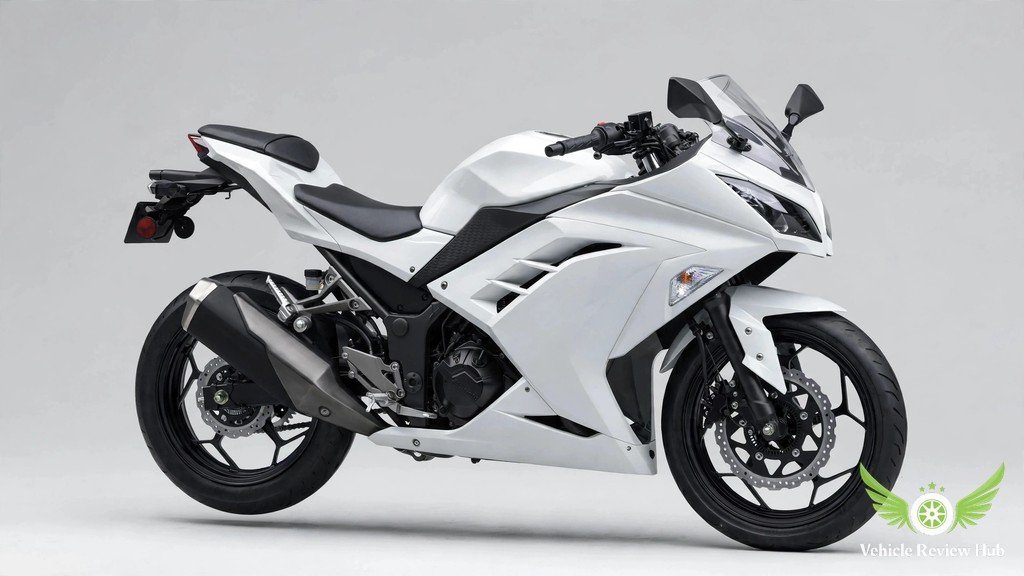
Kawasaki Ninja 300 vs Yamaha YZF-R3
On the dyno, the two bikes are almost identical. Motorcycle.com’s 2015 shootout measured the Ninja 300 at 34.6 hp at 10,800 rpm and the R3 at 35.3 hp at 10,800 rpm, with torque at 17.6 lb-ft for the Kawasaki against 18.9 lb-ft for the Yamaha. The R3 carries more than 10 lbs less weight — 370 lbs against the Ninja’s 381 lbs on the same scales — and its broader spread of torque makes around-town riding easier. On track, though, the difference nearly vanished: the Yamaha faded as the revs climbed while the Ninja kept pulling, and one tester noted the R3 would inch closer down the straight but never quite get past. That is the Kawasaki Ninja 300 performance character in one image — a bike that gives up a little on paper and takes it back on the road.
The 2026 prices sharpen the comparison. The revived Ninja 300 costs $4,999 plus $650 destination, or $5,649 delivered, with ABS standard, while the 2026 YZF-R3 costs $5,499 plus $650, or $6,149 delivered. The Yamaha’s 2026 claimed figures are stronger — 42 hp at 10,750 rpm and 21.8 lb-ft from its 321cc twin, with a 373 lb wet weight and a 30.7-inch seat — but it costs $500 more, and the 2015 test showed the older, cheaper Kawasaki beating it on the scorecard. For a buyer, the Kawasaki Ninja 300 performance case is value: nearly the same measured performance for $500 less, with standard ABS and the bigger 4.5-gallon tank.
| Figure | Kawasaki Ninja 300 | Yamaha YZF-R3 | Source |
|---|---|---|---|
| Dyno power (2015 shootout) | 34.6 hp @ 10,800 rpm | 35.3 hp @ 10,800 rpm | Motorcycle.com 2015 |
| Torque (2015 shootout) | 17.6 lb-ft | 18.9 lb-ft | Motorcycle.com 2015 |
| Scale weight (2015 shootout) | 381.4 lbs | 370.3 lbs | Motorcycle.com 2015 |
| Tested fuel economy (2015) | 54.3 mpg | 55.1 mpg | Motorcycle.com 2015 |
| 2026 delivered price | $5,649 (ABS standard) | $6,149 (ABS standard) | Manufacturer pages |
Notes: the 2015 figures are Motorcycle.com’s shootout measurements on the bikes of that year, and the 2026 figures are the manufacturers’ current claimed specs and prices — keep the two years separate. The R3’s 2015 dyno advantage (35.3 vs 34.6 hp) did not stop the Ninja 300 winning the shootout 85.0 percent to 84.0 percent. This Kawasaki Ninja 300 performance comparison uses the same test for both bikes wherever possible, so the numbers are directly comparable.
Is the Kawasaki Ninja 300 Suitable for Beginner Riders?
Yes — and the testers agree, with the same caveats in every period review. The Ninja 300 is suitable for beginners because its power is usable rather than intimidating: 35 rear-wheel horsepower, a soft low end, a light clutch, a slipper clutch that forgives clumsy downshifts, a 30.9-inch seat that lets most riders flat-foot at a stop, and standard ABS on the 2026 bike that guards against a locked wheel. Motorcycle.com’s testers called it “one of the best-polished, most dialed-in production bikes” they had ridden, and the bike won the 2015 shootout against three rivals designed specifically to beat it. For a first bike, the Kawasaki Ninja 300 performance package is the right size: quick enough to be fun on any road, forgiving enough to learn on, and cheap enough to buy new.
The caveats are the ones this Kawasaki Ninja 300 performance guide has printed throughout: the twin needs revs to make its power, so a rider who never twists the throttle will find it slow; the dash and lighting are a generation behind, with no gear indicator and no traction control; and the 2013 to 2017 bikes on the used market are nine-plus years old, so a used buyer should check both 2013 recall fixes and the valve service history. None of those caveats changes the verdict. A beginner who buys the 2026 Ninja 300 gets a proven motorcycle with a decade of test wins and long-term reports behind it, at the lowest Japanese price in its class — and that is why the bike earned its reputation, and why the reputation survived nine years away from American showrooms.
Kawasaki Ninja 300 Performance Frequently Asked Questions
These answers give the Ninja 300’s measured performance figures in this Kawasaki Ninja 300 performance guide: power, top speed, acceleration, fuel economy and braking, with every figure labelled by its source, because most of the numbers quoted for this bike were never tested.
How much power does the Ninja 300 make?
Kawasaki claims 38.9 hp at 11,000 rpm and 19.3 lb-ft at 10,000 rpm for the 2026 bike, measured to ISO 4106, but those are crank figures from a spec sheet. What reaches the rear wheel is lower: Cycle World measured 35 peak rear-wheel hp and 18 lb-ft in December 2012, 35.3 hp in its February 2013 shootout, and Motorcycle.com measured 34.6 hp at 10,800 rpm with 17.6 lb-ft in 2015. That is the figure this Kawasaki Ninja 300 performance guide prints: about 35 rear-wheel hp, with the three dyno tests agreeing within 0.7 hp.
What is the Ninja 300’s top speed?
There is no official figure. Kawasaki has never published one. The tested figures are 106 mph from Cycle World’s December 2012 test, with the tester noting 1,000 revs still to spare, and 104 mph from the February 2013 shootout, backed by Autocar India’s data-logged 168 km/h, which is 104 mph. The honest range for this Kawasaki Ninja 300 performance guide is 104 to 106 mph. Never print 112 or 119 mph as a tested top speed: those come from a range quoted on reference pages, not from a test.
How fast does the Ninja 300 accelerate?
Cycle World’s December 2012 test timed 0 to 60 mph in 5.6 seconds and a quarter-mile of 14.43 seconds at 90.58 mph. The February 2013 shootout timed a slightly quicker quarter-mile, 14.38 seconds at 90.51 mph. Those are the only published timed runs. Aggregator figures of 5.23 seconds to 60 mph and a 14.10-second quarter-mile conflict with Cycle World’s tested numbers and are not printed.
What fuel economy does the Ninja 300 get, and how far does it go?
Two figures from the same December 2012 Cycle World issue, nearly 16 mpg apart: road tester Ari Henning Rousseau observed “nearly 70 mpg” in real road riding, while Don Canet’s dyno-test piece recorded 54.1 mpg under test conditions. Motorcycle.com’s 2015 shootout tested 54.3 mpg as its worst figure, with “60 more common” in average riding. The 54-point figures are track and dyno-condition numbers. Road riding gives around 60 to 70 mpg. With the 4.5-gallon tank, realistic range is roughly 250 to 270 miles, a labelled estimate, not a measured range, and this Kawasaki Ninja 300 performance guide keeps the two sources straight: 54.1 is Cycle World’s figure, 54.3 is Motorcycle.com’s.
How well does the Ninja 300 brake?
Cycle World’s December 2012 test measured 60 to 0 mph in 135 feet on the ABS bike, with 30 to 0 mph in 33 feet, and 135 feet is the verified figure to quote. The heading’s range of 124.6 to 135 feet comes from a reference-page range citing Cycle World sources, and the individual test behind the 124.6-foot end was not pinned down, so the range is printed with the low end labelled as such, not as a second verified test. ABS was standard on the 2026 revival and a $300 option from 2014 to 2017, and it is the more important story than the foot count for a beginner.
Is the Ninja 300 suitable for beginner riders?
Yes, with the same caveats in every period review. The power is usable rather than intimidating: 35 rear-wheel hp, a soft low end, a light clutch and a slipper clutch that forgives clumsy downshifts, plus a 30.9-inch seat and standard ABS on the 2026 bike. Motorcycle.com’s testers called it “one of the best-polished, most dialed-in production bikes” they had ridden, and the bike won the 2015 shootout against three rivals built to beat it. The caveats are that the twin needs revs, the dash and lighting are a generation behind, and this Kawasaki Ninja 300 performance guide repeats them plainly: no gear indicator, no traction control, and used 2013 to 2017 bikes that are nine-plus years old.