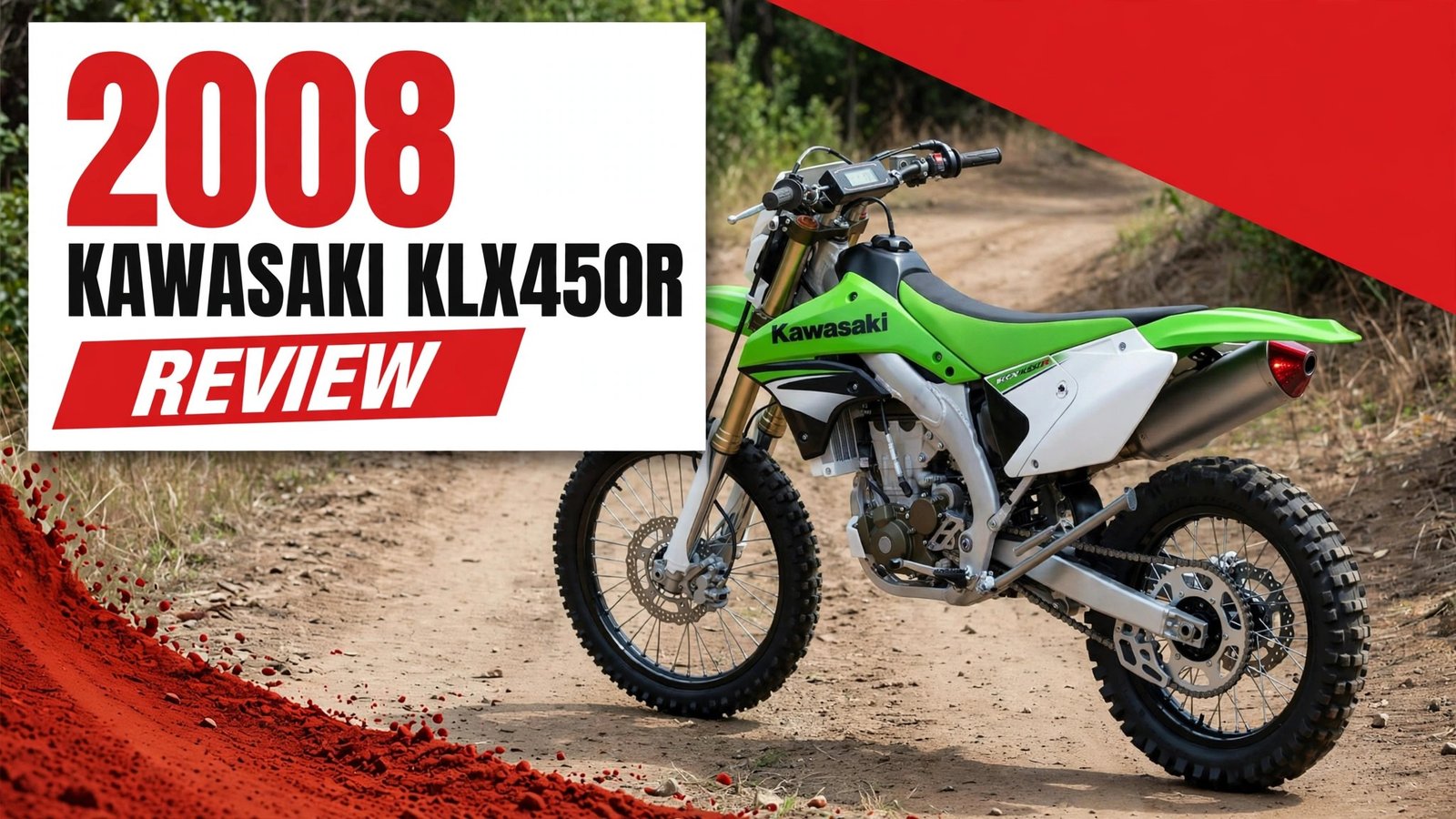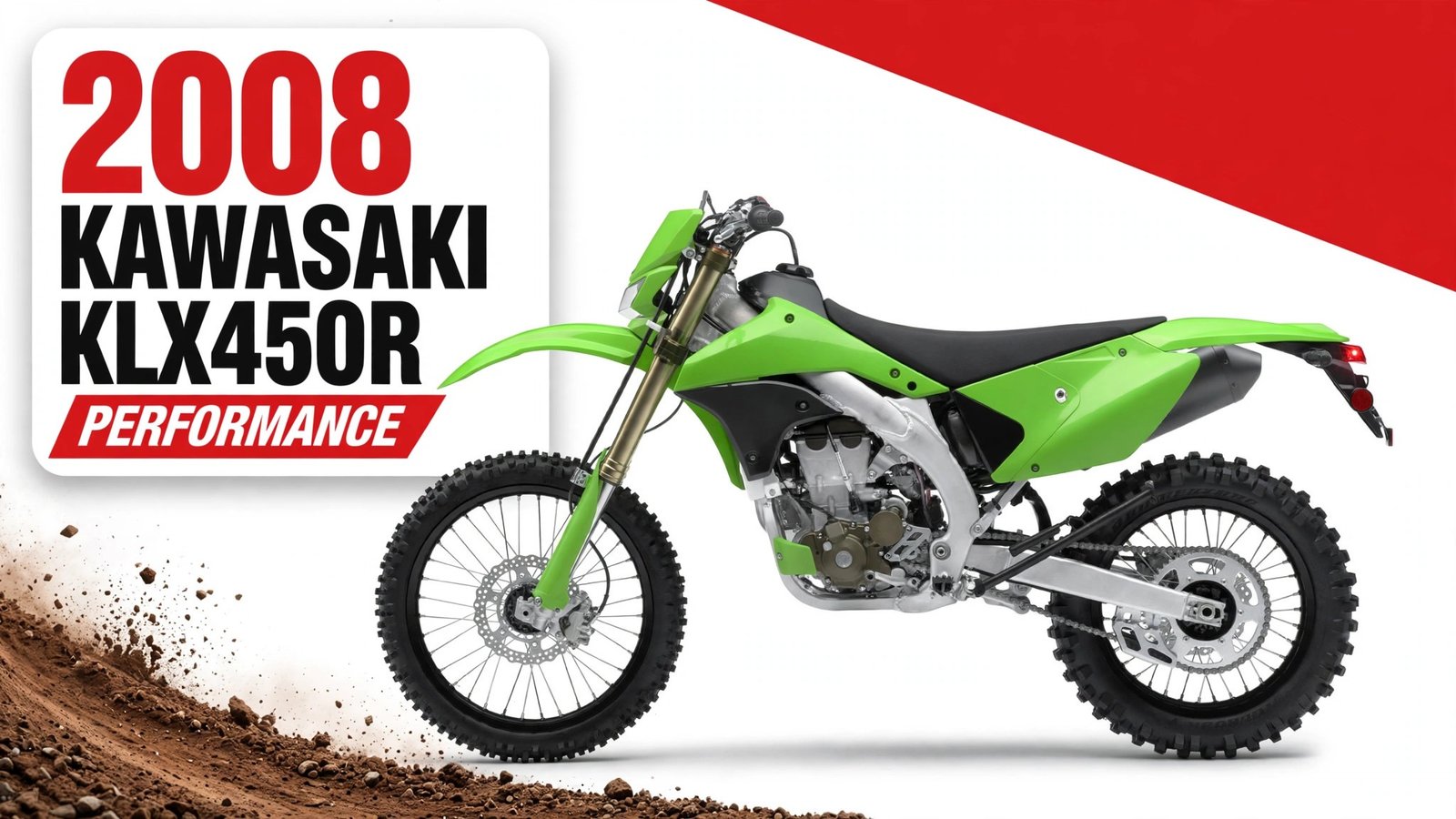
A used Kawasaki KLX450R is the cheapest way into this comparison, and this Kawasaki KLX450R comparison tests that cheap entry against the bikes a buyer would buy new instead — the 2027 Kawasaki KX450FX, the 2026 Honda CRF450X and the 2026 Yamaha WR450F — with the current KLX300R as the Kawasaki alternative. The KLX450R left US showrooms after 2009, so every one on the market now is a used bike, and the question is whether the old bike’s low price still beats new-bike money.
The short answer is that it depends on the price on the tag: used KLX450R prices run from $2,250 to $5,995, against $11,249 delivered for the KX450FX successor, and this Kawasaki KLX450R comparion works through price, specs and value to show where the old bike still wins and where the new bikes have moved on.
Kawasaki KLX450R Overview and Its Closest Rivals
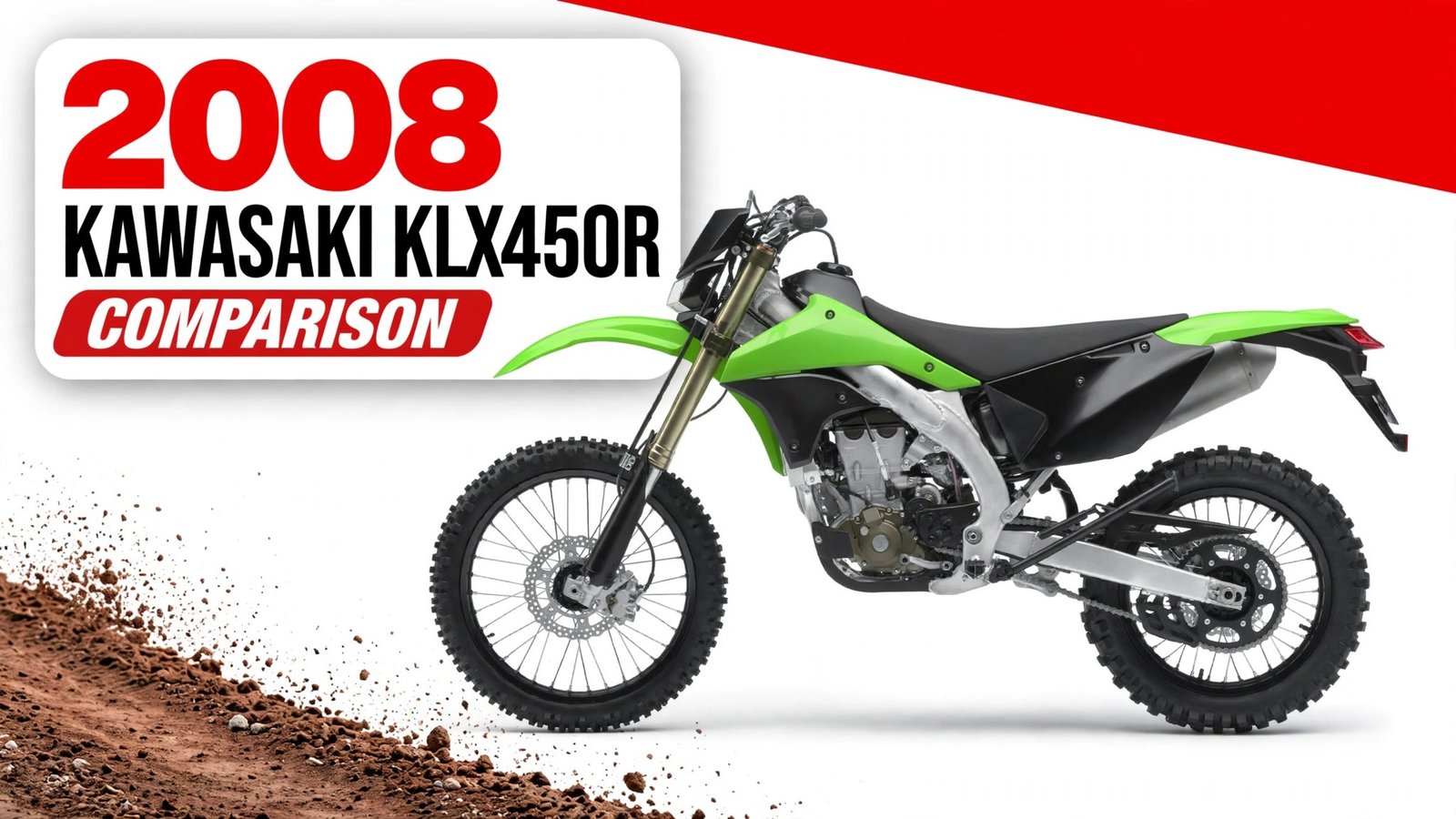
This Kawasaki KLX450R comparison starts with an awkward fact: the bike is not for sale new. Kawasaki sold the KLX450R in the United States for the 2008 and 2009 model years only, at $7,299 and then $7,499 MSRP, per Motorcycle.com’s 2008 specification page, and there has been no current US model since. So this Kawasaki KLX450R comparison is a used-bike question answered against three new bikes, the 2027 KX450FX, the 2026 CRF450X and the 2026 WR450F, with the current KLX300R as the alternative. The KLX450R was a KX450F-based enduro with a carburettor, a five-speed gearbox, a real headlight and a kick starter behind the electric button; the full KLX450R review covers the bike itself.
Successor Costs $11,249 Delivered
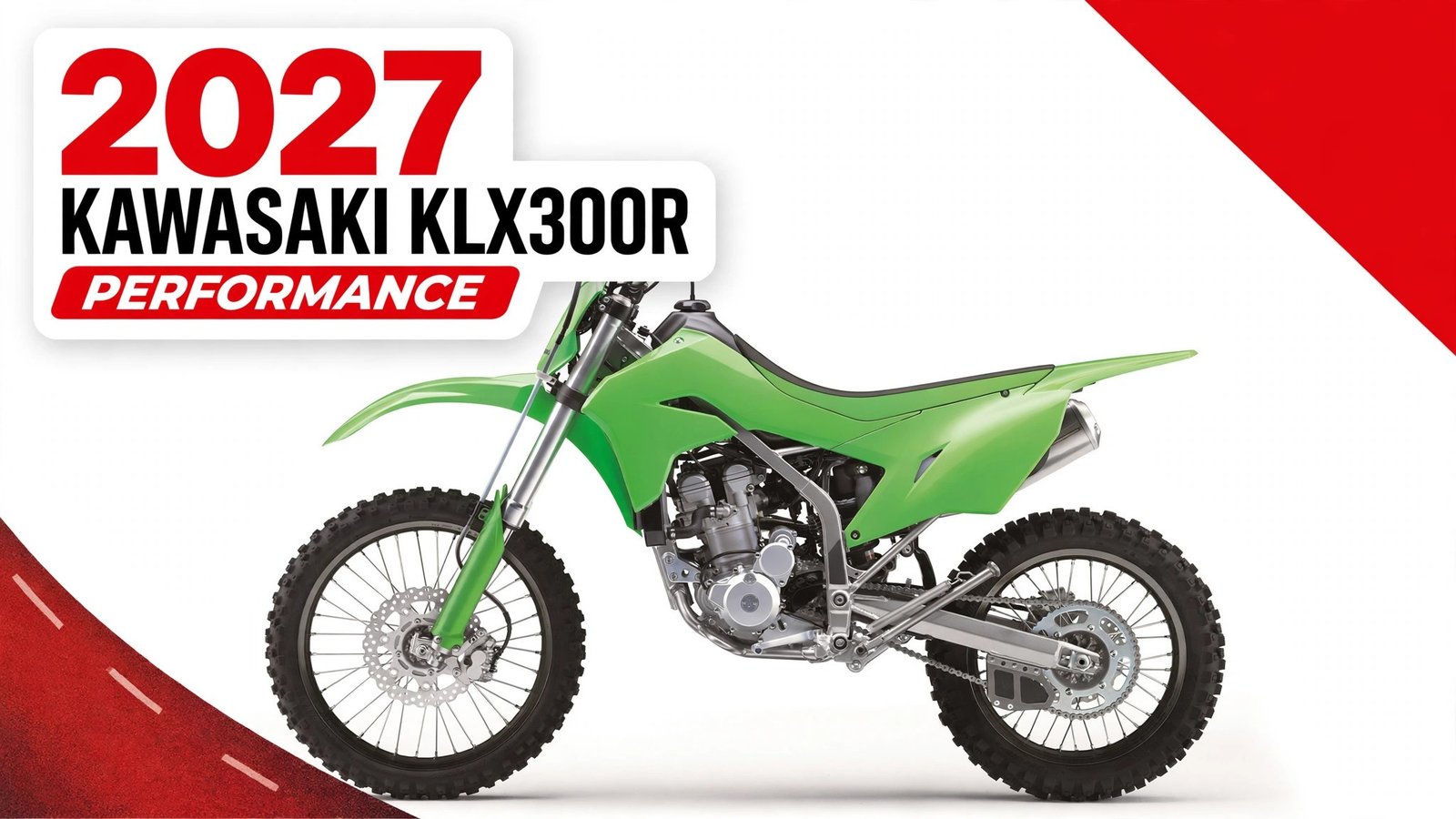
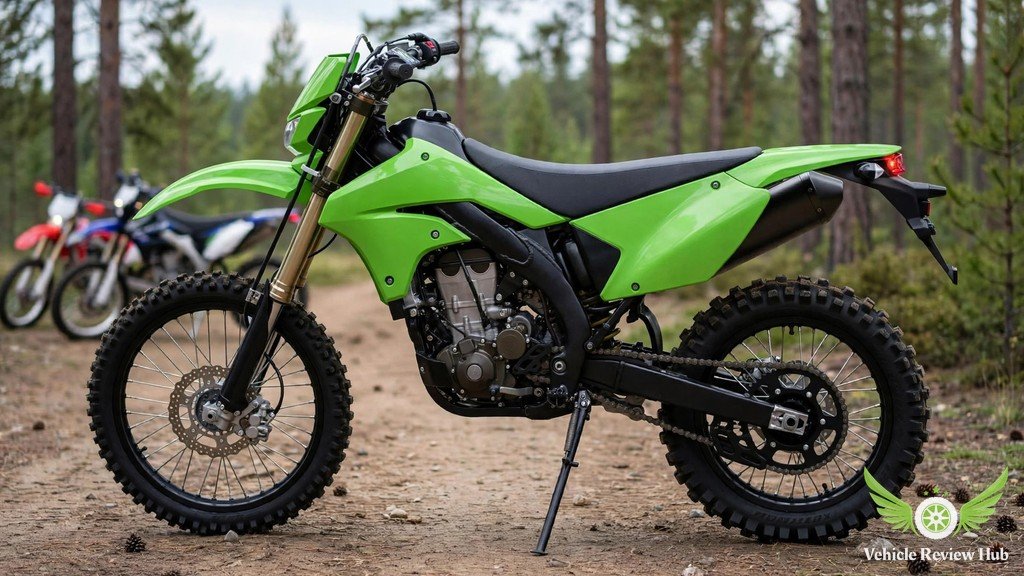
In this Kawasaki KLX450R comparison, the closest thing to a successor wears a different name. The 2027 Kawasaki KX450FX is the current 450 in Kawasaki’s off-road line at $10,599 MSRP plus a $650 destination charge, $11,249 delivered. The destination figure is confirmed on Motorcycle.com’s 2027 KX450FX specification page, and Kawasaki’s own USA product page confirms the $10,599 MSRP. The FX name is new for 2027: the 2026 bike was the KX450X at $10,700, so the FX is $101 cheaper on MSRP.
That does not make the FX a like-for-like KLX450R replacement. The FX is a fuel-injected cross-country racer with launch control, traction control and app-based tuning, and no headlight is listed among its equipment, while the KLX450R was a trail-biased enduro with a carburettor, a headlight, a digital meter and a side stand. The KLX badge now tops out at the 292cc KLX300R, covered in the KLX300R comparison.
How the Four Bikes Differ at a Glance
The table below sets the four bikes side by side on the figures that decide this Kawasaki KLX450R comparison. Read the weight column with care: the four makers publish weight on different bases.
| Bike | Engine | Fuelling | Gearbox | Seat height | Weight | Fuel | Delivered price |
|---|---|---|---|---|---|---|---|
| Kawasaki KLX450R (2008-2009) | 449cc liquid-cooled DOHC single | Keihin FCR-MX40 carburettor | 5-speed | 37.0 in (spec) | 253.5 lb dry; 278 lb ready-to-ride | 2.1 gal | $7,299-$7,499 MSRP only |
| Kawasaki KX450FX (2027) | 449cc liquid-cooled single | Fuel injection | 5-speed | Not published | Not published | 1.98 gal (Kawasaki USA) | $11,249 ($10,599 + $650 destination) |
| Honda CRF450X (2026) | 449cc liquid-cooled Unicam SOHC single | PGM-FI, 46 mm throttle body | 6-speed | 37.9 in | 275 lb curb | 2.0 gal | $10,599 ($9,999 + $600 destination) |
| Yamaha WR450F (2026) | 449cc liquid-cooled DOHC single, 4 titanium valves | Mikuni fuel injection, 44 mm | 5-speed | 37.6 in | 258 lb wet | 2.0 gal | $10,949 ($10,299 + $650 destination) |
Notes: weight figures use different bases (dry, curb, wet, ready-to-ride) and cannot be ranked directly. The KX450FX weight and seat height were not published on the pages checked. In this Kawasaki KLX450R comparison, the KLX450R is the only carburetted bike here and the only one with a kick starter. Its prices are MSRP only: no destination charge was verified for 2008 or 2009.
Kawasaki KLX450R vs Kawasaki KX450FX
The first head-to-head in this Kawasaki KLX450R comparison stays inside the family. The KX450FX is what Kawasaki sells today where the KLX450R used to sit. But the two bikes were built for different jobs: a trail enduro against a cross-country racer.
Engine, Specs and Performance Side by Side
Both bikes run a 449cc liquid-cooled single and a five-speed gearbox, and the similarity ends there. The KLX450R feeds its engine through a Keihin FCR-MX40 carburettor, while the FX is fuel-injected and adds launch control, traction control and app tuning. Kawasaki publishes no horsepower figure for the KLX450R in the USA, and the international 41.4 to 41.5 kW (56 PS) figure must never be written as 56 hp. No dyno figure was ever published for the KLX450R, so this Kawasaki KLX450R comparison cannot rank the two on measured power.
| Specification | Kawasaki KLX450R (2008-2009) | Kawasaki KX450FX (2027) |
|---|---|---|
| Engine | 449cc liquid-cooled DOHC 4-valve single, 96.0 x 62.1 mm, 12.0:1 | 449cc liquid-cooled 4-stroke single, fuel-injected |
| Fuelling | Keihin FCR-MX40 carburettor | Fuel injection |
| Gearbox | 5-speed manual | 5-speed manual |
| Starting | Electric + kick | Electric |
| Seat height | 37.0 in spec (Dirt Rider measured 34.5 in) | Not published |
| Weight | 253.5 lb dry; 278 lb ready-to-ride | Not published |
| Fuel capacity | 2.1 gal | 1.98 gal (Kawasaki USA; Motorcycle.com lists 1.92 gal) |
| Front suspension | 48 mm KYB inverted fork, 11.2 in travel | 49 mm Showa inverted fork (travel not published) |
| Rear suspension | Uni-Trak, 11.0 in travel | Uni-Trak (travel not published) |
| Brakes | 250 mm front / 240 mm rear discs; no ABS | Brembo discs; no ABS |
| Equipment | Halogen headlight, taillight, digital meter, side stand; no radiator fan | Skid plate, hand guards, side stand, launch control, KTRC, app tuning; no headlight listed |
| Delivered price | $7,299 (2008) / $7,499 (2009) MSRP only | $11,249 ($10,599 MSRP + $650 destination) |
Notes: the KX450FX weight, seat height and suspension travel were not published on the pages checked, so those cells are left blank rather than guessed. The FX tank figure differs between Kawasaki USA (1.98 gal) and Motorcycle.com (1.92 gal); both are shown. The KLX450R is the only bike of the two with a kick starter and a carburettor.
Price, Equipment and Which Suits Which Rider
On price, the FX costs $11,249 delivered, $3,750 more than the 2009 KLX450R’s $7,499 MSRP, and that gap is before the used discount that makes the old bike cheap: a clean used KLX450R near the verified $5,688 asking price costs roughly half of a new FX. The FX buyer gets fuel injection, launch control, traction control and app tuning, plus current parts support and a warranty. The KLX450R buyer gets a headlight, a digital meter and a kick starter the FX does not offer, and gives up every electronic aid.
The riding character points the same way. Period testers called the KLX450R the plushest-suspended bike in the 2008 450 comparison, with the cushiest seat in the group, and Cycle World called it “maybe the best enduro bike period”. A rider who races cross-country should buy the FX. A rider who wants a cheap, plush, trail-biased 450 with a headlight and a kick backup, and who accepts a 17-year-old bike’s maintenance schedule, should look at the used KLX450R, with the KLX450R reliability guide read first.
Kawasaki KLX450R vs Honda CRF450X
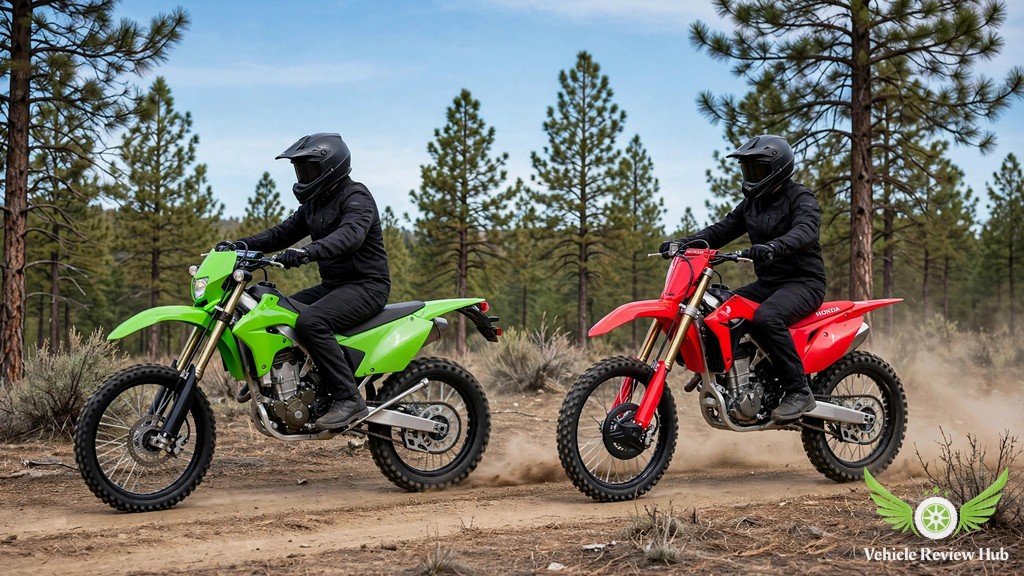
The second pairing in this Kawasaki KLX450R comparison is the closest philosophical match of the three. The Honda CRF450X is a trail-biased 450 enduro, like the KLX450R, rather than a racer with lights bolted on, and at $10,599 delivered it is the cheapest of the three new rivals. It is also the only bike here with a six-speed gearbox.
Engine, Specs and Performance Side by Side
Both bikes displace 449cc and share the same 96.0 x 62.1 mm bore and stroke. The difference is everything around the engine: the Honda runs programmed fuel injection through a 46 mm throttle body and a six-speed gearbox, while the Kawasaki runs a Keihin carburettor and a five-speed. Honda lists the CRF450X at $9,999 MSRP plus a $600 destination charge, $10,599 delivered, confirmed on Honda’s own 2026 CRF450X specification page and on dealer listings. The KLX450R performance guide explains why no dyno or top-speed figure exists for the old bike, so this Kawasaki KLX450R comparison cannot settle the power question.
| Specification | Kawasaki KLX450R (2008-2009) | Honda CRF450X (2026) |
|---|---|---|
| Engine | 449cc liquid-cooled DOHC 4-valve single, 96.0 x 62.1 mm, 12.0:1 | 449cc liquid-cooled Unicam SOHC 4-valve single, 96.0 x 62.1 mm, 12.1:1 |
| Fuelling | Keihin FCR-MX40 carburettor | PGM-FI fuel injection, 46 mm throttle body |
| Gearbox | 5-speed manual | 6-speed manual |
| Starting | Electric + kick | Electric only |
| Seat height | 37.0 in spec (Dirt Rider measured 34.5 in) | 37.9 in |
| Weight | 253.5 lb dry; 278 lb ready-to-ride | 275 lb curb (full tank, all fluids) |
| Fuel capacity | 2.1 gal | 2.0 gal |
| Front suspension | 48 mm KYB inverted fork, 11.2 in travel | Showa fork, 12.0 in travel |
| Rear suspension | Uni-Trak, 11.0 in travel | Showa shock, 11.8 in travel |
| Brakes | 250 mm front / 240 mm rear discs; no ABS | Disc brakes front and rear; sizes not listed on Honda’s spec page |
| Equipment | Halogen headlight, taillight, digital meter, side stand; no radiator fan | Titanium fuel tank, spark arrester, handguards, sidestand, skid plate |
| Delivered price | $7,299 (2008) / $7,499 (2009) MSRP only | $10,599 ($9,999 MSRP + $600 destination) |
Notes: the two engines share bore and stroke, but the Honda’s Unicam SOHC head, fuel injection and six-speed gearbox are a generation newer than the Kawasaki’s DOHC head, carburettor and five-speed. Weight figures use different bases and cannot be ranked directly. The KLX450R is the only bike of the two with a kick starter; the CRF450X is the only six-speed bike in this Kawasaki KLX450R comparison.
Price, Equipment and Which Suits Which Rider
At $10,599 delivered, the CRF450X undercuts the KX450FX by $650 and the WR450F by $350, the value pick among the three new bikes in this Kawasaki KLX450R comparison. Against a used KLX450R the maths flips: a new X costs roughly double the $5,688 asking price of the verified 2009 KLX450R listing, and about $4,600 more than the top of the used band. The extra money buys a new bike with fuel injection, a six-speed gearbox, longer suspension travel at both ends and a dealer behind it.
The Honda carries a titanium fuel tank, a spark arrester, handguards, a sidestand and a skid plate as standard. The Kawasaki answers with a halogen headlight, a taillight and a digital meter, plus the kick starter the Honda lacks. The Honda’s seat is the tallest here at 37.9 inches, nearly an inch above the KLX450R’s 37.0-inch specification, so shorter riders should sit on both first. A rider who wants the newest trail 450 for the least money should buy the Honda. A rider who wants the same idea for half the money, with a trailside-fixable carburettor and a kick starter for a dead battery, should look at the used KLX450R.
Kawasaki KLX450R vs Yamaha WR450F
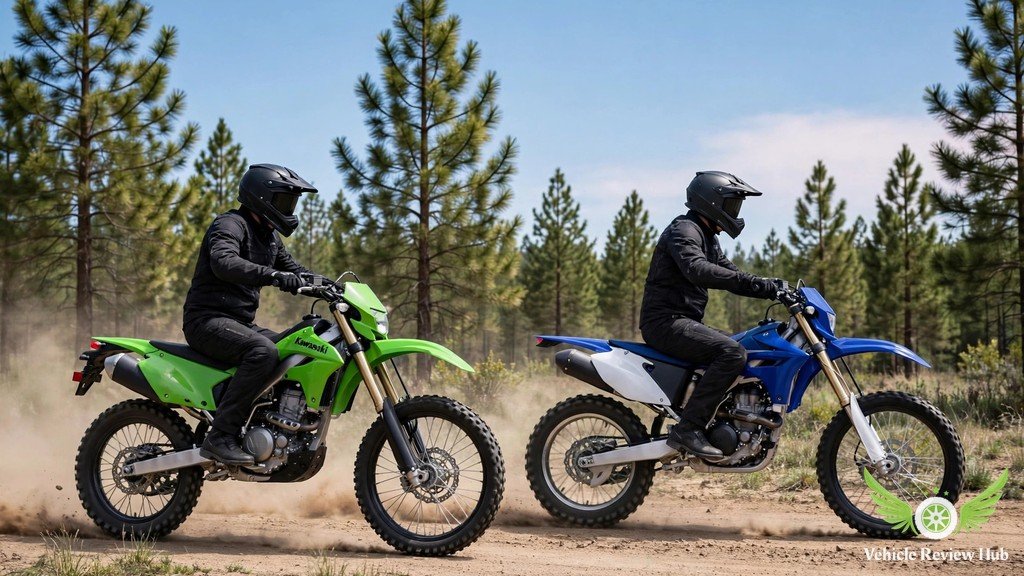
The third pairing in this Kawasaki KLX450R comparison is the one the period testers actually ran. The WR450F was the benchmark enduro the KLX450R was measured against in 2008, and it is still the benchmark: a YZ450F-derived 450 softened for all-day trail riding, with a headlight, a radiator fan and a spark arrestor as standard. The 2026 bike lists at $10,299 plus a $650 destination charge, $10,949 delivered, confirmed on Yamaha dealer specification sheets.
Engine, Specs and Performance Side by Side
The WR450F runs a 449cc liquid-cooled DOHC single with four titanium valves, a 97.0 x 60.8 mm bore and stroke, 13.0:1 compression and Mikuni fuel injection through a 44 mm throttle body. Neither maker publishes a horsepower figure here, so this Kawasaki KLX450R comparison has no factory power claim on either side. On weight, the Yamaha lists 258 lb wet against the Kawasaki’s 253.5 lb dry and 278 lb ready-to-ride, and those bases differ enough that the numbers should be read as near-parity rather than a Yamaha win.
| Specification | Kawasaki KLX450R (2008-2009) | Yamaha WR450F (2026) |
|---|---|---|
| Engine | 449cc liquid-cooled DOHC 4-valve single, 96.0 x 62.1 mm, 12.0:1 | 449cc liquid-cooled DOHC single, 4 titanium valves, 97.0 x 60.8 mm, 13.0:1 |
| Fuelling | Keihin FCR-MX40 carburettor | Mikuni fuel injection, 44 mm throttle body |
| Gearbox | 5-speed manual | 5-speed manual |
| Starting | Electric + kick | Electric |
| Seat height | 37.0 in spec (Dirt Rider measured 34.5 in) | 37.6 in |
| Weight | 253.5 lb dry; 278 lb ready-to-ride | 258 lb wet (full tank, all fluids) |
| Fuel capacity | 2.1 gal | 2.0 gal |
| Front suspension | 48 mm KYB inverted fork, 11.2 in travel | KYB Speed Sensitive System inverted fork, 11.8 in travel |
| Rear suspension | Uni-Trak, 11.0 in travel | KYB Speed Sensitive System shock, 12.0 in travel |
| Brakes | 250 mm front / 240 mm rear discs; no ABS | 270 mm front / 240 mm rear discs; no ABS |
| Equipment | Halogen headlight, taillight, digital meter, side stand; no radiator fan | Headlight, radiator fan, spark arrestor, engine guard, sealed drive chain, ECU lock (2026) |
| Delivered price | $7,299 (2008) / $7,499 (2009) MSRP only | $10,949 ($10,299 MSRP + $650 destination) |
Notes: weight figures use different bases and cannot be ranked directly. The Yamaha’s 2026 additions are the industry-first ECU lock, worked through the free Power Tuner app, and a 30-day limited factory warranty. The KLX450R carries the bigger tank at 2.1 gallons against the Yamaha’s 2.0, and it is the only bike of the two with a kick starter. The 2027 WR450F is a reworked bike at $10,499 MSRP, so the 2026 figures above must not be carried forward.
Price, Equipment and Which Suits Which Rider
At $10,949 delivered, the WR450F is the dearest of the three new rivals in this Kawasaki KLX450R comparison, $350 more than the Honda and $300 less than the Kawasaki FX. That money buys the most developed trail 450 of the three: a radiator fan the KLX450R never had, an ECU lock new for 2026, fully adjustable KYB Speed Sensitive System suspension at both ends, and a headlight. Period testers found the KLX450R slow in drag races against the 2008 field yet praised its plush suspension and cushy seat, and the KLX won the riding in Dirt Rider’s 2008 comparison while the street-legal KTM won the shootout because it was street-legal. The modern WR450F keeps the same trail-first brief with eighteen years of development on top.
A rider who wants the best trail 450 money can buy new should buy the Yamaha. A rider who wants the same idea for about half the money, and who is happy to jet a carburettor, kick a dead battery to life and live without a radiator fan, should look at the used KLX450R. The video below is ACN’s KLX450R-versus-WR450F comparison test, the period head-to-head for this pairing.
Kawasaki KLX450R Price and Value Compared
Money is where this Kawasaki KLX450R comparison is decided. Every new rival costs $10,599 or more delivered, while the old bike trades used for a fraction of that. The question is not whether the KLX450R is cheaper, because it plainly is, but what a buyer gets for the saving, and what the saving costs in maintenance and parts.
Used Band Runs $2,250 to $5,995
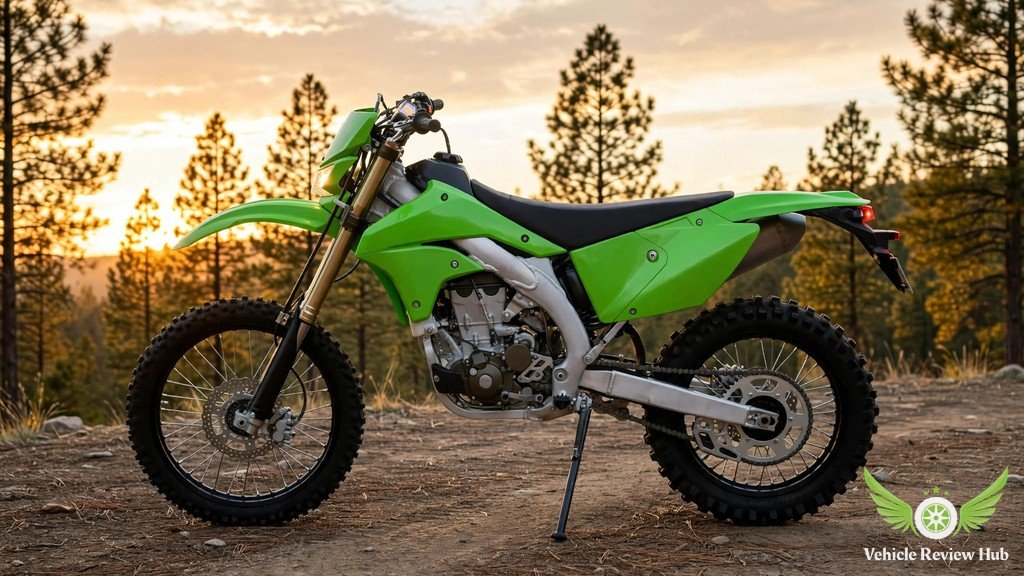
The used band in this Kawasaki KLX450R comparison runs $2,250 to $5,995, and the live listings behind that band are thinner than the range suggests. The strongest verified point at writing is a 2009 KLX450R listed at $5,688 on Motorcycle.com classifieds. A 2008 KLX450R is also live for sale at National Powersports in Pembroke, New Hampshire, with a dual-sport kit, an FMF muffler and about $3,000 of installed accessories, but the listing shows no asking price, so it supports availability rather than any price point. No live listing at or near the $2,250 low end was found at writing, so the low end should be read as the documented figure rather than a verified market floor.
Two cautions belong with the band. First, a $9,499 asking price seen for a 2010 KLX450R is an outlier for a model year never sold in the United States. Second, condition swings the price more than the year does: hours, maintenance history, crash damage and modifications matter more than whether the bike is a 2008 or a 2009, so a buyer should price the bike in front of them rather than the band. The single verified $5,688 asking price sits at roughly 76 percent of the 2009 bike’s $7,499 MSRP, arithmetic on two verified figures, not a market average and not a resale trend.
| Bike | Price | Basis |
|---|---|---|
| Kawasaki KLX450R (2008) | $7,299 | MSRP only; destination unverified |
| Kawasaki KLX450R (2009) | $7,499 | MSRP only; destination unverified |
| Used KLX450R | $2,250-$5,995 | Documented band; only the $5,688 point (2009) verified live at writing |
| Kawasaki KX450FX (2027) | $11,249 | Delivered ($10,599 MSRP + $650 destination) |
| Honda CRF450X (2026) | $10,599 | Delivered ($9,999 MSRP + $600 destination) |
| Yamaha WR450F (2026) | $10,949 | Delivered ($10,299 MSRP + $650 destination) |
| Kawasaki KLX300R (2027) | $6,449 | Delivered ($5,799 MSRP + $650 destination) |
| Kawasaki KLX230R (2027) | $5,434 | Delivered ($4,999 MSRP + $435 destination) |
Notes: new-bike prices are MSRP plus the destination charge verified for that model year, never carried across years. The KLX450R’s 2008 and 2009 prices are MSRP only. The used band’s low end was not verified against a live listing at writing, and the $9,499 asking price for a 2010 bike is excluded as an outlier for a non-US model year.
Running Costs and Resale Value Compared
Running costs are where the cheap used bike starts charging rent. The owner’s manual orders oil and filter every 1,000 km (600 miles) or 15 hours, and a piston, ring and pin every 1,500 km (900 miles) or 30 hours, a race-bike schedule, not a trail-bike schedule. Dirt Rider’s 160-hour long-haul test of a 2008 KLX450R spent $2,551.07 on modifications and $1,484.53 on maintenance and repairs, tyres excluded, and the bike overheated at least three times because no radiator fan is fitted. A used buyer should budget for that schedule and for the missing fan, and check the bike’s hour history, because the KLX450R carries no hour meter.
Parts availability is better than the bike’s age suggests. Kawasaki still lists the crankcase set, part 14001-0093, and a dealer listing showed it in stock at $699.14 when last crawled in December 2025, although a fresh stock check at writing was blocked by the dealer’s bot wall, so today’s stock is unverified. On safety records, a search of the US recall database returned no recalls naming the 2008 or 2009 KLX450R, with a working control search returning one recall for a 2024 Ninja 500, so the zero is a search result rather than proof. No resale percentage is claimed anywhere in this Kawasaki KLX450R comparison, because one verified asking price cannot support a trend.
Kawasaki KLX450R Comparison Verdict and US Alternatives
The verdict of this Kawasaki KLX450R comparison is that the old bike still earns its place, but only for a narrow kind of buyer. What it offers is a combination no new bike in this group matches: a plush trail 450 with a headlight, a digital meter and a kick starter, for about half the price of the cheapest new rival.
Verdict: The Two-Year Orphan
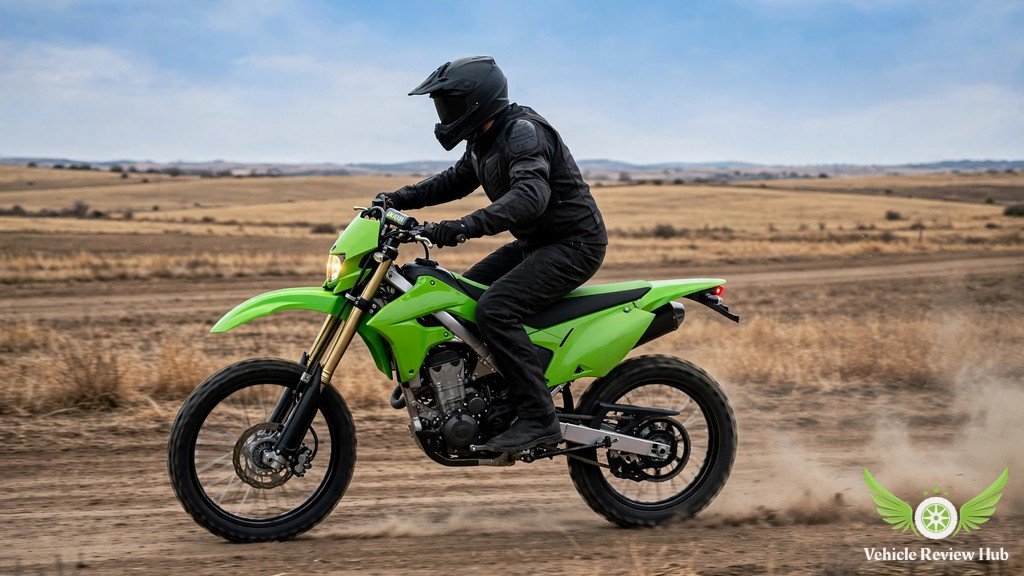
The KLX450R is a two-year orphan: sold in the United States for 2008 and 2009 only, with no successor carrying the KLX450R name and no current US model. Its rivals have all moved on to fuel injection, six-speed gearboxes, traction control and app tuning, while the KLX450R keeps a carburettor, a five-speed and a kick starter. That is the whole of this Kawasaki KLX450R comparison in one sentence: the new bikes are better machines, and the old bike is the better buy for a rider who values plush suspension, a headlight and a low price over electronics and a warranty.
Buy the used KLX450R if you are an intermediate or experienced trail rider who rides woods and fire roads, can live with a 37.0-inch seat and 278 lb of ready-to-ride weight, and will follow the 15-hour oil and 30-hour piston schedule without complaint. Do not buy it as a first dirt bike: testers agreed it suits riders stepping up, not beginners, and the beginner step-down is the KLX230R or the KLX140R, covered in the KLX230R review and the KLX140R review. Do not buy it expecting a racer, either: the 2008 comparison found it slow in drag races, and the shootout crown went to the street-legal KTM, not the Kawasaki.
KLX300R Is the New KLX Answer
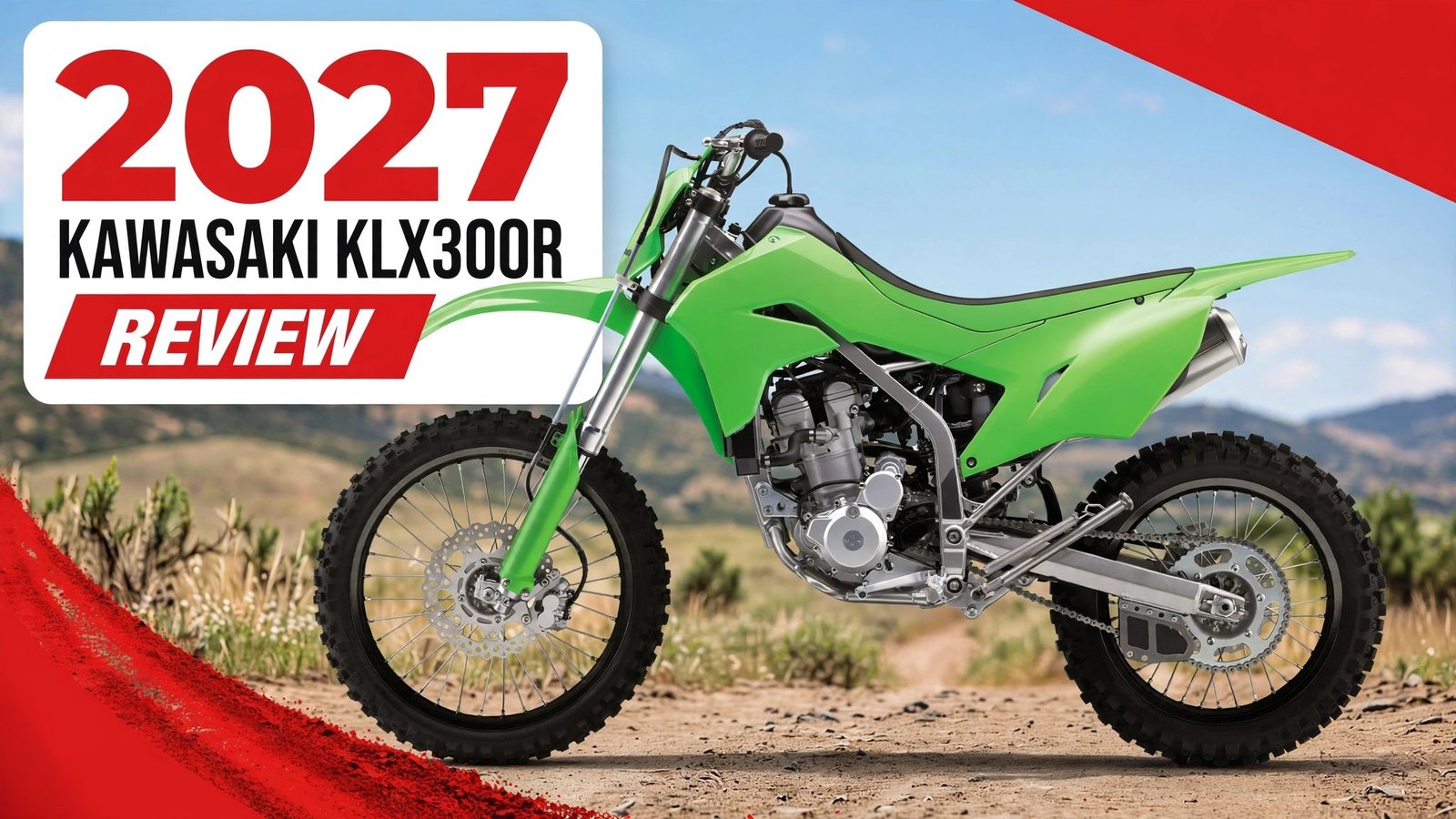
For a rider who wants a new bike with a KLX badge, the answer is the KLX300R. The 2027 KLX300R costs $5,799 MSRP plus a $650 destination charge, $6,449 delivered, and it is the current KLX trail bike: a 292cc fuel-injected single with a six-speed gearbox, a 35.4-inch seat and a 282.2 lb curb weight. That delivered price sits inside the used KLX450R band: a new 300 with a warranty and fuel injection, or a used 450 with more power, a headlight and a kick starter.
It has no headlight and no digital meter, where the old 450R has both, and its 292cc engine gives up 157cc to the 450R. What it offers instead is a new bike with current parts support, a six-speed gearbox and a lower seat, at a price a clean used 450R can match but barely beat. The KLX300R suits the rider who wants to buy new and ride without chasing parts, while the KLX450R suits the rider who wants the bigger engine, the plush suspension and the headlight, and who is willing to buy used and maintain a 17-year-old bike on a race-bike schedule. That is the honest end of this Kawasaki KLX450R comparison: the orphan is still worth buying, for the right rider, at the right price, with the maintenance schedule understood before the money changes hands.
Kawasaki KLX450R Comparison Frequently Asked Questions
These answers settle the KLX450R’s closest contests — its successor, the Honda and the Yamaha, and the new KLX300R — and the used-price question American readers ask first in this Kawasaki KLX450R comparison.
What is the closest thing to a new KLX450R?
The 2027 Kawasaki KX450FX, the current 450 in Kawasaki’s off-road line, at $10,599 MSRP plus a $650 destination charge, $11,249 delivered. The FX name is new for 2027: the 2026 bike was the KX450X at $10,700, so the FX is $101 cheaper on MSRP. But the FX is not a like-for-like replacement. It is a fuel-injected cross-country racer with launch control, traction control and app-based tuning, and no headlight is listed among its equipment, while the KLX450R was a trail-biased enduro with a carburettor, a headlight, a digital meter and a side stand. The KLX badge now tops out at the 292cc KLX300R.
KLX450R or Honda CRF450X — which is better value?
The Honda is the value pick among the three new rivals in this Kawasaki KLX450R comparison. The 2026 CRF450X lists at $9,999 MSRP plus a $600 destination charge, $10,599 delivered — $650 less than the KX450FX and $350 less than the WR450F. It is also the closest philosophical match to the old bike: a trail-biased 450 enduro rather than a racer with lights bolted on, and the only bike here with a six-speed gearbox. Against a used KLX450R the maths flips: a new X costs roughly double the $5,688 asking price of the verified 2009 KLX450R listing. The extra money buys a new bike with fuel injection, a six-speed gearbox, longer suspension travel at both ends and a dealer behind it.
KLX450R or Yamaha WR450F — which is the better trail bike?
The Yamaha is the most developed trail 450 of the three new rivals, and the dearest: the 2026 WR450F lists at $10,299 plus a $650 destination charge, $10,949 delivered. That money buys a radiator fan the KLX450R never had, an ECU lock new for 2026, fully adjustable KYB Speed Sensitive System suspension at both ends, and a headlight. The WR450F was also the benchmark enduro the KLX450R was measured against in 2008, and period testers found the KLX slow in drag races against the 2008 field yet praised its plush suspension and cushy seat — the KLX won the riding in Dirt Rider’s 2008 comparison while the street-legal KTM won the shootout because it was street-legal. A rider who wants the same trail-first idea for about half the money, and who is happy to jet a carburettor, kick a dead battery to life and live without a radiator fan, should look at the used KLX450R.
What does a used KLX450R cost?
The documented used band runs $2,250 to $5,995, but the live listings behind that band are thinner than the range suggests. The strongest verified point at writing is a 2009 KLX450R listed at $5,688 on Motorcycle.com classifieds. No live listing at or near the $2,250 low end was found at writing, so the low end should be read as the documented figure rather than a verified market floor. Two cautions belong with the band: a $9,499 asking price seen for a 2010 KLX450R is an outlier for a model year never sold in the United States, and condition swings the price more than the year does. The single verified $5,688 asking price sits at roughly 76 percent of the 2009 bike’s $7,499 MSRP — arithmetic on two verified figures, not a market average and not a resale trend. No resale percentage is claimed anywhere in this Kawasaki KLX450R comparison, because one verified asking price cannot support a trend.
Is a used KLX450R cheaper to run than a new rival?
Not once the maintenance schedule is counted. The owner’s manual orders oil and filter every 1,000 km (600 miles) or 15 hours, and a piston, ring and pin every 1,500 km (900 miles) or 30 hours — a race-bike schedule, not a trail-bike schedule. Dirt Rider’s 160-hour long-haul test of a 2008 KLX450R spent $2,551.07 on modifications and $1,484.53 on maintenance and repairs, tyres excluded, and the bike overheated at least three times because no radiator fan is fitted. A used buyer should budget for that schedule and for the missing fan, and check the bike’s hour history, because the KLX450R carries no hour meter. In this Kawasaki KLX450R comparison the cheap used bike starts charging rent the moment it is ridden.
Should I buy a used KLX450R or a new KLX300R?
It depends on what the buyer values. The 2027 KLX300R costs $5,799 MSRP plus a $650 destination charge, $6,449 delivered, and it is the current KLX trail bike: a 292cc fuel-injected single with a six-speed gearbox, a 35.4-inch seat and a 282.2 lb curb weight. That delivered price sits inside the used KLX450R band. The 300R has no headlight and no digital meter, where the old 450R has both, and its 292cc engine gives up 157cc to the 450R. What it offers instead is a new bike with current parts support, a six-speed gearbox and a lower seat, at a price a clean used 450R can match but barely beat. The verdict of this Kawasaki KLX450R comparison is that the 300R suits the rider who wants to buy new and ride without chasing parts, while the 450R suits the rider who wants the bigger engine, the plush suspension and the headlight, and who is willing to buy used and maintain a 17-year-old bike on a race-bike schedule.