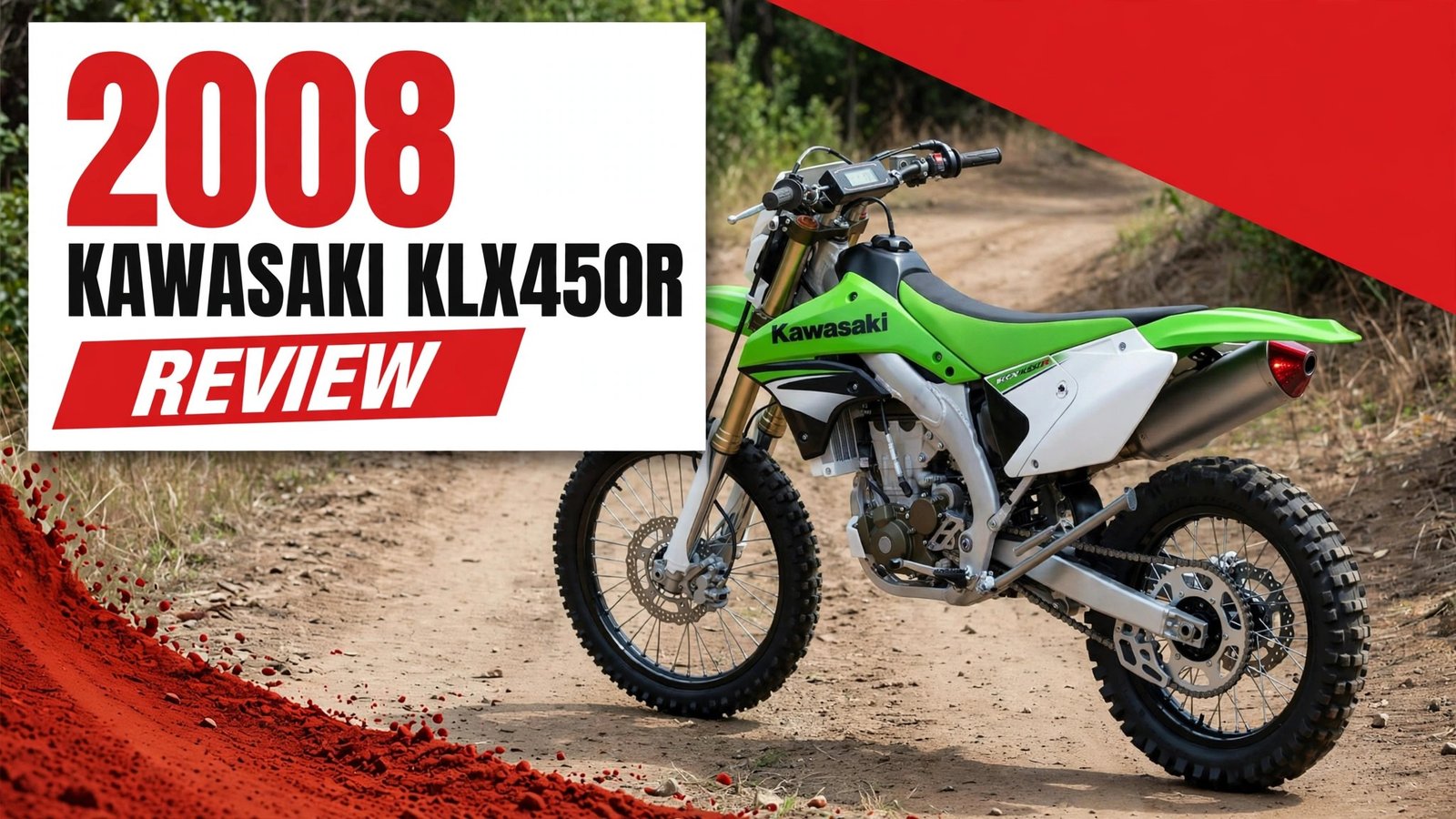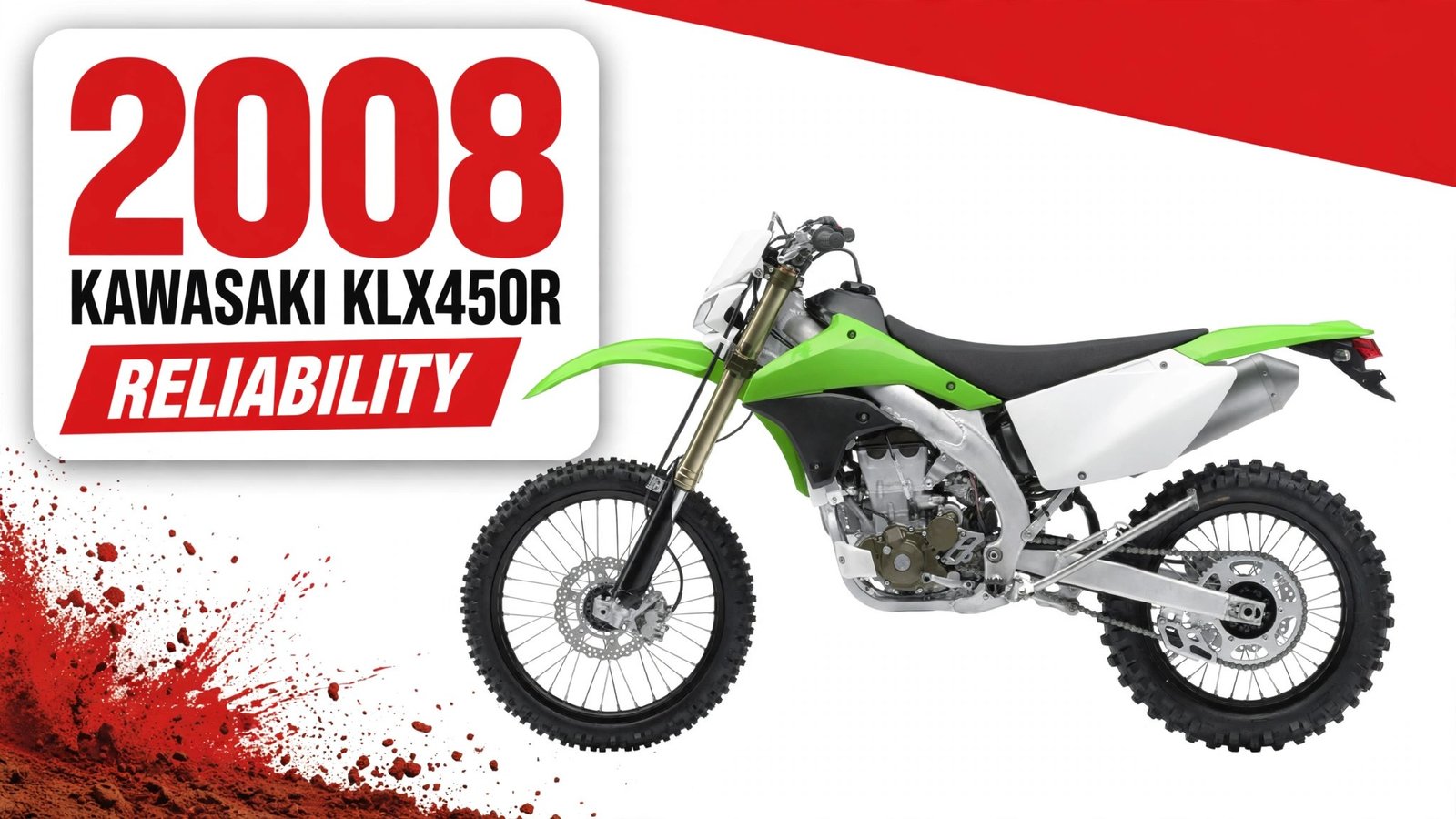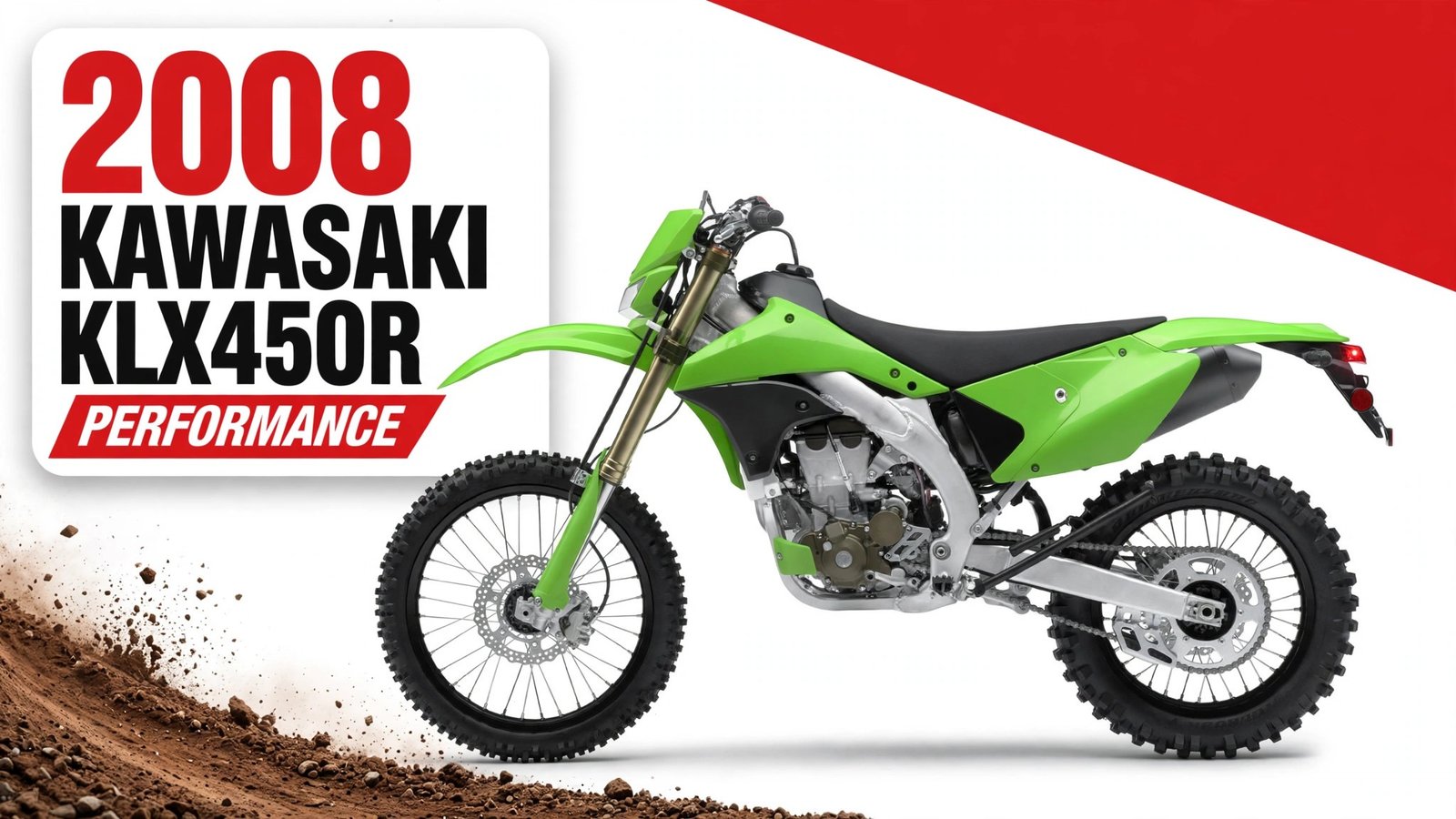
The Kawasaki KLX450R is a bike whose performance story is mostly about what nobody ever measured. Kawasaki sold it in the United States for two model years only, 2008 and 2009, and in that short window no magazine ever put it on a dyno, no tester ever ran a timed top-speed pass, and nobody published a measured fuel-economy figure. This Kawasaki KLX450R performance guide works from what the testers of 2008 and 2009 actually wrote, and it says plainly where the record stops. A search of the NHTSA recalls database returns zero recalls for the 2008 and 2009 bikes, with the same search returning one campaign, 25V146000, for the 2024 Ninja 500 control bike, so the zero is a search result with a working control rather than proof; the CPSC record is inconclusive, and the only “450R” recall on file is the 2008 KFX450R ATV, recall 07-561. This Kawasaki KLX450R performance guide keeps every figure labelled by its source.
Kawasaki KLX450R Engine Performance and Power Delivery
The engine is the heart of this Kawasaki KLX450R performance story, and it is a retuned motocross motor rather than a purpose-built trail engine. Kawasaki took the KX450F’s 449cc single and softened it for the trail: a flywheel with twice the mass, changed cam and lift timing, a wider-ratio five-speed, a quiet muffler with an extended header, and steel exhaust valves 1 mm smaller than the motocrosser’s with titanium intakes. The result trades the motocrosser’s peak hit for tractability.
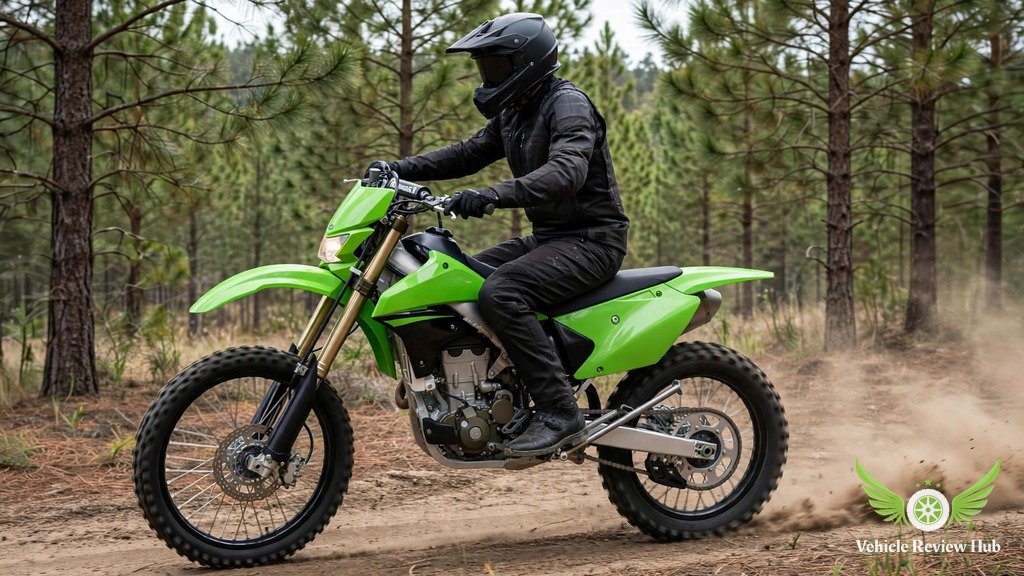
No Dyno Was Ever Published
No dyno figure exists for the KLX450R, and that is the first fact this Kawasaki KLX450R performance guide has to state plainly. No magazine ever strapped the bike to a dynamometer and published a rear-wheel horsepower or torque curve, and Kawasaki USA never published a horsepower figure for it either. The only power numbers in existence are the international claimed figures from the Australian and Indian spec sheets: 41.4 to 41.5 kW, or 56 PS, at 8,500 rpm, with 50 Nm, or 37 lb-ft, at 7,500 rpm. Those figures must never be written as 56 hp, because 56 PS converts to about 55.5 hp. Two other numbers circulate and both should be flagged, not settled: Visordown’s 2008 first ride lists 40bhp, and MotorcycleDB lists 35.4 HP. Neither is an official Kawasaki figure. The bike’s power was never measured on a dyno; the claimed figures are the international ones, labelled as claimed.
“Maybe the Best Enduro Bike Period”
Cycle World’s first ride of the 2008 KLX450R ended with a verdict that still gets quoted: “maybe the best enduro bike period”. The praise was not for outright speed, and this Kawasaki KLX450R performance guide is clear about that. It was for the way the retuned engine delivered its power — smoothly, quietly, and without the hits and dips that make a motocross bike tiring on a trail. Ultimate Motorcycling’s 2009 test said the same thing in its own words, calling the Keihin FCR40 carburettor’s manners impeccable over a wide range of elevations, with hitch-free power delivery and a five-speed transmission with flawless behaviour. The Ultimate Motorcycling 2009 test is the clearest account of how the engine feels: the engine is not the strongest 450 of its era, but it is one of the easiest to ride well. Dirt Rider’s first test agreed, noting smooth power and plenty of boost. The bike was built to be ridden all day, not to win a drag race, and its performance is best judged on a trail.
| Engine item | 2008–2009 KLX450R |
|---|---|
| Engine | 449cc liquid-cooled DOHC 4-valve single |
| Bore × stroke | 96.0 × 62.1 mm |
| Compression ratio | 12.0:1 |
| Fuelling | Keihin FCR-MX40 carburettor |
| Power (claimed, international) | 41.4–41.5 kW (56 PS) at 8,500 rpm; 50 Nm (37 lb-ft) at 7,500 rpm |
| Transmission | 5-speed manual, chain, 50/13 final drive |
| Starting | Electric start plus kick starter |
| Retune vs KX450F | Doubled flywheel, wider-ratio gears, quiet muffler, softer springs |
| Dyno figure | None ever published |
Notes: Kawasaki USA publishes no horsepower figure for the KLX450R, so the power row carries the international claimed figures, 41.4–41.5 kW (56 PS), which must never be written as 56 hp. The 40bhp and 35.4 HP figures from secondary sources are conflicts, not the claimed output. This Kawasaki KLX450R performance guide prints no dyno figure because none exists in any source consulted.
Kawasaki KLX450R Top Speed and Acceleration
Top speed is the section where this Kawasaki KLX450R performance guide has the least to report and the most to warn about. There is no official figure, no instrumented test, and no timed run in the record. The only tester statement about how fast the bike goes is a single estimate, and every other number comes from listings that were never tested. This Kawasaki KLX450R performance guide keeps those two kinds of numbers apart.
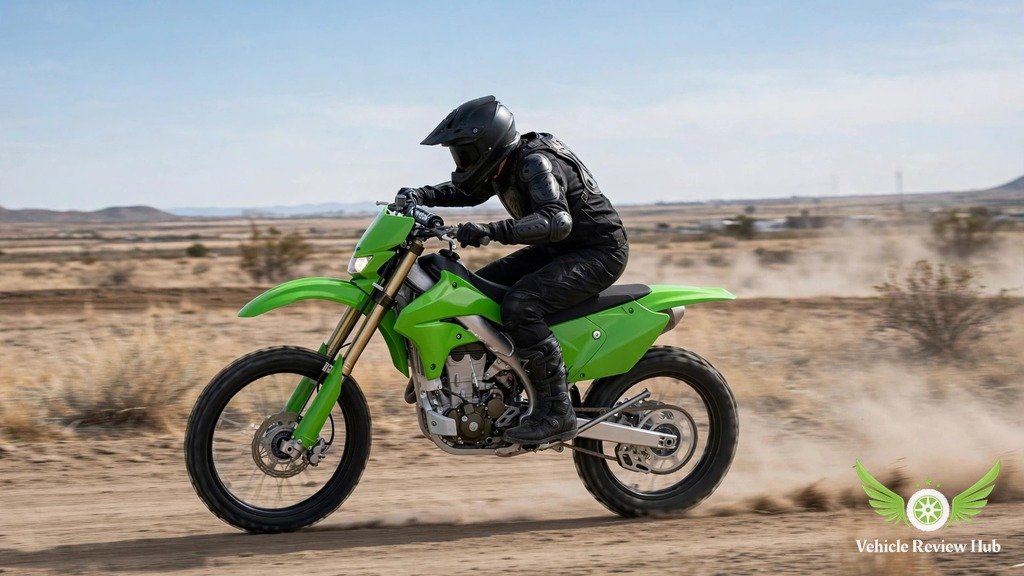
The video below, chosen for this Kawasaki KLX450R performance guide, is an acceleration run on a modified KLX450R fitted with an FMF exhaust — not a stock-bike instrumented test. It shows a 0–100 km/h run on a bike already changed from standard, so its result says nothing about what a showroom 2008 or 2009 bike would do.
No Official Figure Exists
Kawasaki never published a top speed for the KLX450R, and no magazine ever ran an instrumented top-speed test on it. There is no 0–60 time and no quarter-mile time either, because nobody timed the bike in a straight line and published the result — a gap this Kawasaki KLX450R performance guide states plainly rather than filling. That absence means a buyer today has no measured acceleration figure to compare against any rival. The 2008 KLX450R spec page lists the engine, the gearing and the weight, and nothing about speed. Any website that prints a top speed for this bike without naming a tester is repeating a listing claim, not a test result. The video above is the only timed run available, and it is on a modified bike, so even that cannot stand in for a stock figure.
Over 80 MPH Is One Tester Estimate
The only tester statement about the KLX450R’s top speed comes from Ultimate Motorcycling’s 2008 review, which said “the KLX will top 80 mph in fifth”. That is an estimate, not a measured figure, and this Kawasaki KLX450R performance guide attributes it to Ultimate Motorcycling and never rounds it up. The Ultimate Motorcycling 2008 review is the single source for the figure. Indian listings claim 150 km/h, or about 93 mph, as a “claimed top speed”, but that is a listing claim, not a test. BikeBD’s 180 km/h claim is junk and is not cited anywhere in this guide. The honest answer is that one tester estimated it would top 80 mph in fifth gear, and nobody measured it.
| Speed or acceleration item | What exists |
|---|---|
| Official top speed | None published by Kawasaki |
| Instrumented top-speed test | None found |
| Tester estimate | Over 80 mph in fifth (Ultimate Motorcycling, 2008) |
| 0–60 mph / quarter-mile | No figures exist |
| Timed run on video | 0–100 km/h on a modified bike with FMF exhaust |
| Listing claims | 150 km/h (93 mph) claimed; 180 km/h (BikeBD) not cited |
Notes: the only tester top-speed statement is Ultimate Motorcycling’s 2008 estimate that the bike “will top 80 mph in fifth”. Listing claims of 150 km/h are not tests, and the 180 km/h figure is not cited. This Kawasaki KLX450R performance guide prints no 0–60 or quarter-mile figure because none exists.
Kawasaki KLX450R Mileage and Fuel Economy
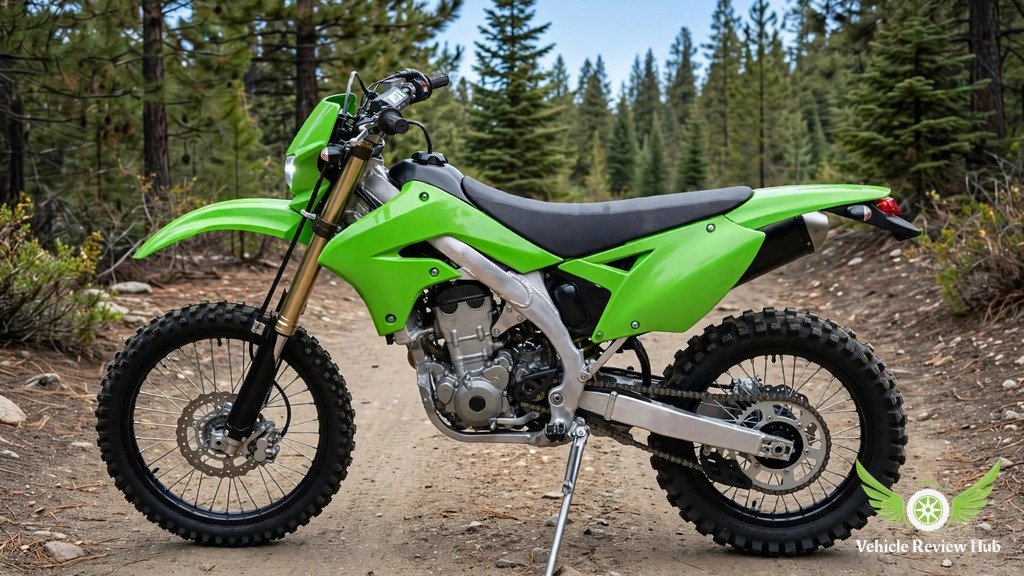
Fuel economy is the second section of this Kawasaki KLX450R performance guide where the honest answer is that nobody measured it. No magazine ever ran a fuel-economy test on the bike, no tester ever recorded a tank range, and Kawasaki never published a mileage figure — the gap this Kawasaki KLX450R performance guide states plainly. What exists is a tank size, a carburettor, and a set of listing claims that were calculated rather than measured.
No MPG or Range Test Exists
No MPG figure and no tank-range figure was ever published for the KLX450R by a tester, and this Kawasaki KLX450R performance guide does not invent one. That is the whole story, and this Kawasaki KLX450R performance guide does not pad it with a guessed number. Indian listings claim 23 km/L, or about 54 mpg, and a 184 km range, but those numbers are listing arithmetic — eight litres multiplied by 23 km/L — not a measured ride. They are labelled as listing claims in this Kawasaki KLX450R performance guide and never printed as a tested result. A carburetted 449cc single ridden hard on a trail will drink far more than a listing’s gentle arithmetic suggests, and a rider who plans a route on 184 km of claimed range will walk out of the woods. The Dirt Rider first test listed the 2.1-gallon tank in its spec box without any fuel-economy comment: the tank size was published, the consumption was not. A used buyer should carry extra fuel and watch the tap, not trust a number no tester ever produced.
2.1 Gallon Tank, Unmeasured Thirst
The tank holds 2.1 gallons, or 7.9 litres, on every spec sheet for the bike, and that figure is the only fuel number in this Kawasaki KLX450R performance guide that can be stated as fact. It is a small tank for a 449cc trail bike, and it shapes how the bike is used: short loops, a fuel stop planned in advance, or a spare bottle carried in a pack. The Keihin FCR-MX40 carburettor is famously well-mannered, and Ultimate Motorcycling’s 2009 test praised its manners over a wide range of elevations, but good manners are not the same as low consumption: a 449cc single worked hard on a trail is a thirsty machine. The tank size tells a buyer the bike’s intended use: trail loops and enduro sections, not long-distance adventure riding. No MPG and no range are printed here, because no tester ever measured either.
| Fuel item | 2008–2009 KLX450R |
|---|---|
| Tank capacity | 2.1 gal (7.9 L) |
| Fuelling | Keihin FCR-MX40 carburettor |
| Tested MPG | None published |
| Tested range | None published |
| Listing claims | 23 km/L (54 mpg), 184 km range — listing arithmetic, not a test |
| Fuel tap / reserve | Fuel tap fitted; reserve noted in owner’s manual |
| Low-fuel lamp | None documented |
Notes: the tank holds 2.1 gallons on every spec sheet. No tester ever measured the bike’s MPG or range, so this Kawasaki KLX450R performance guide prints neither. The 23 km/L and 184 km figures are Indian listing arithmetic, labelled as such and never presented as a test.
Kawasaki KLX450R Real-World Riding Experience
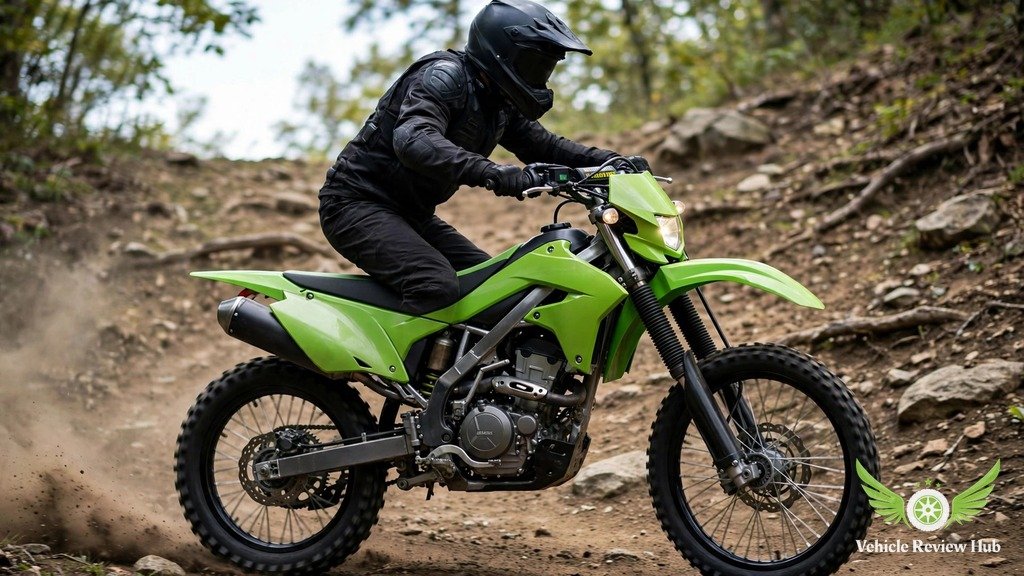
The real-world riding experience is where this Kawasaki KLX450R performance guide finally has plenty to report, because the testers of 2008 and 2009 wrote at length about how the bike feels on a trail. The picture is consistent across every source: quiet, plush, and easy to ride, with a smooth engine that never surprises the rider. The same testers also agreed on the bike’s one clear weakness.
Quiet, Plush, Easiest to Ride
Dirt Rider’s first test opened with the noise, or rather the lack of it: “The first thing you’ll notice is the noise, or lack thereof”. The bike is ultra-quiet, thanks to an ultralow and long header pipe and a quiet spark-arrestor muffler, and the testers treated that as a genuine performance advantage rather than a detail. The same test praised “smooth power and plenty of boost” and “plush suspension action”, and Ultimate Motorcycling’s 2009 test called the plush Kayaba inverted 48 mm forks superb for anything under race speeds, with hitch-free power delivery. The Ultimate Motorcycling 2009 test also noted that the 278-pound ready-to-ride bike can easily be taken down to walking speed for picking through rocky or root-infested trails. This Kawasaki KLX450R performance guide takes the testers at their word: the KLX450R is the easiest 450 of its era to ride well, and that ease is a performance figure in its own right.
Slow in Drag Races, Say Testers
The same testers who praised the bike’s ride were blunt about its straight-line speed. Dirt Rider’s 2008 450 Off-Road Comparison said it plainly: “This KLX is slow. We confirmed it in drag races and on the GP track… gets pulled”. The comparison added that the bike “felt peppy and fast but it’s actually slow”. The Dirt Rider 2008 450 Off-Road Comparison is the source for that judgement, and this Kawasaki KLX450R performance guide repeats it because it matters to a buyer: the KLX450R will lose a drag race to its rivals, and a rider who buys it for straight-line speed will be disappointed. The same comparison explained why the slowness matters less than it sounds: the bike’s throttle response is crisp and it gets great traction, so on a trail it feels fast even when the stopwatch says otherwise. The retune that made the bike slow in a drag race also made it the easiest bike to ride, and this Kawasaki KLX450R performance guide treats the two facts as one trade.
Kawasaki KLX450R Handling, Braking and Stability
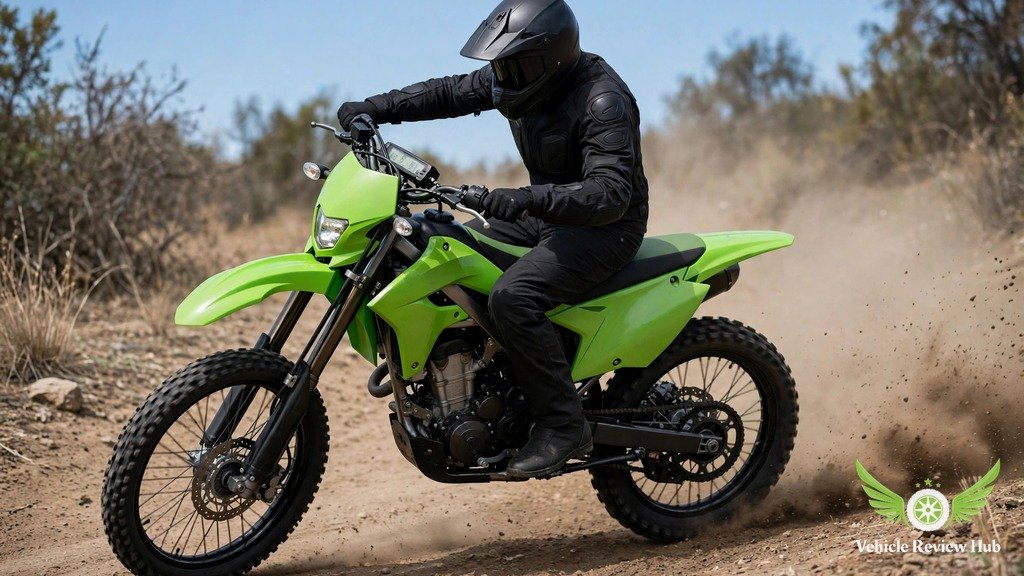
Handling is the strongest part of this Kawasaki KLX450R performance guide, because it is the part the testers agreed on most completely. The chassis is the KX450F’s aluminium perimeter frame with the same KYB suspension, softened with lighter springs and more rebound damping. The result is a bike that testers called balanced, plush, and forgiving, with one clear limit at the bottom of big jumps.
Handling, Braking and Stability on the Trail
Ultimate Motorcycling’s 2009 test described the chassis as perfectly balanced, with “no stink bugging or squatting”, and credited the chassis and the Bridgestone M401 front tyre. The same test noted that clutching is minimal on a big thumper and that the left-hand lever does not require a gorilla’s grip, which matters on a long trail day when the rider’s hands are the first thing to tire. Dirt Rider’s 2008 comparison called the suspension “the plushest of the bunch” and said it takes even the smallest ripples out of the ground, with top-notch comfort and the cushiest seat in the group. The fork is a 48 mm KYB inverted unit with 11.2 inches of travel, and the rear is a Uni-Trak single shock with 11.0 inches, with spring rates dropped against the motocrosser. The brakes are a 250 mm front disc and a 240 mm rear disc, with no ABS on any year, and no tester ever recorded a brake complaint, so this Kawasaki KLX450R performance guide invents none. The one handling limit the testers did record is that the bike is the first to bottom out in big jumps, especially at the rear — the price of the plush setup this Kawasaki KLX450R performance guide keeps coming back to. A rider who jumps the bike hard will find that limit; a rider who rides trails will rarely notice it.
Shootouts Crowned the KTM
Dirt Rider’s 2008 450 Off-Road Comparison rated the street-legal KTM as its winner, and this Kawasaki KLX450R performance guide presents both halves of that sentence, because the second half changes the meaning of the first. The comparison said the KLX “came out on top, depending on how you read the information”, and then explained: “We rated the streetlegal KTM as our winner because it was a good bike and mostly because it was streetlegal.” The KLX won the riding, and the KTM won the shootout because it could be plated — the split this Kawasaki KLX450R performance guide presents in full. The same comparison recorded that the riders unanimously praised the KTM and most felt it was the best all-around bike in the test, so the KLX’s second place is not a failure — it is a second place behind a bike that could do something the KLX legally could not. The handling, the suspension, and the ride were never the problem; the plate was.
| Chassis item | 2008–2009 KLX450R |
|---|---|
| Frame | Aluminium perimeter, KX450F-based |
| Front suspension | 48 mm KYB inverted fork, 11.2 in travel; 4.3N springs |
| Rear suspension | Uni-Trak single shock, 11.0 in travel; 50.0N spring |
| Brakes | 250 mm front disc, 240 mm rear disc; no ABS |
| Wheels / tyres (US) | 21 in / 18 in; 80/100-21 front, 110/100-18 rear |
| Seat height | 37.0 in (spec); Dirt Rider measured 34.5 in |
| Ground clearance | 12.6 in |
| Wheelbase | 58.3 in |
| Weight | 253.5 lb dry; 278 lb ready to ride; 126 kg kerb |
Notes: the suspension is the plushest of the 2008 comparison group, with the cushiest seat, and the bike is the first to bottom out in big jumps, especially at the rear. No tester recorded a brake complaint. This Kawasaki KLX450R performance guide treats the KTM shootout win as a street-legal advantage, not a riding defeat.
Kawasaki KLX450R Performance Compared With Other Off-Road Bikes
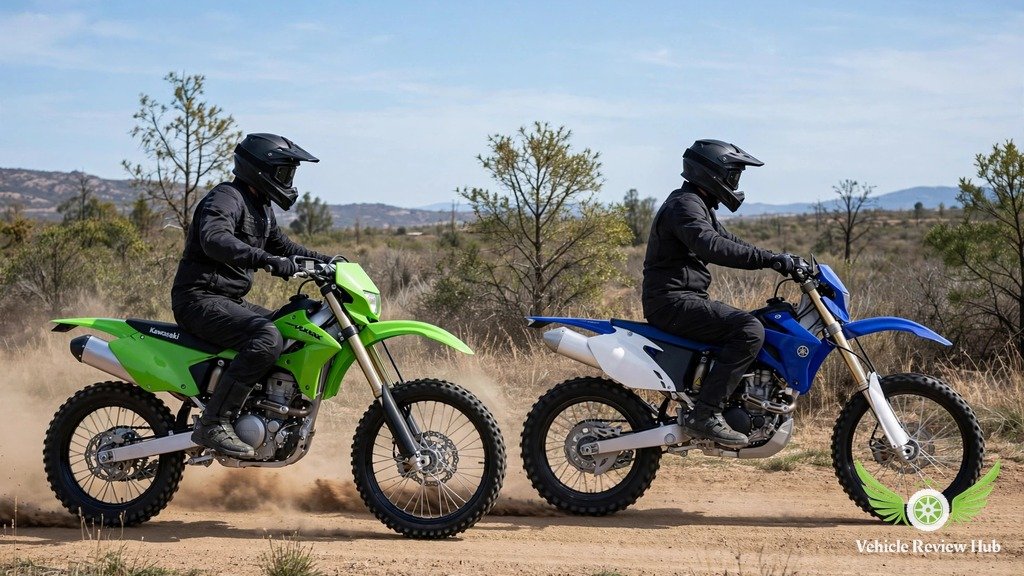
Comparison is where this Kawasaki KLX450R performance guide has to be most careful about eras, because the KLX450R is a 2008–2009 bike and its rivals are still on sale today. Comparing a 2008 bike’s figures against a 2026 bike’s figures without year labels would be dishonest, so every rival figure below carries its year. The head-to-head here is against the Yamaha WR450F, the KLX’s contemporary rival in the 2008 shootout era; the full four-rival comparison belongs to the comparison blog.
Kawasaki KLX450R vs Yamaha WR450F
The WR450F was the KLX450R’s contemporary rival in the 2008 Dirt Rider shootout era, and it is still on sale today, which makes it the fairest comparison in this Kawasaki KLX450R performance guide. The 2008-era WR450F was a carburetted 450 enduro like the KLX. The current WR450F is a different machine: a fuel-injected 450 with a reverse-cylinder engine, smartphone tuning, and a 2024 redesign, listed for 2026 at $10,299 plus $650 destination. That price is verified from dealer listings and Motorcycle.com’s comparison data, and it corrects the rounded $10,300 figure that circulated in secondary sources. The KLX450R, by contrast, launched at $7,299 in 2008 and $7,499 in 2009, MSRP only. The performance gap is real but narrow on a trail: the WR450F is faster in a straight line and has modern electronics, while the KLX450R is quieter, plush, and easier to ride slowly, with a carburettor any mechanic can service. The WR450F’s wet weight of about 258 lb is lighter than the KLX450R’s 278 lb ready-to-ride figure, but the two weights are measured differently, and this Kawasaki KLX450R performance guide does not pretend they are directly comparable. A rider choosing between a used KLX450R and a new WR450F is choosing between a $7,299 launch price from 2008 and a $10,299 price from 2026. The KLX450R review covers the bike’s full story.
| Item | KLX450R (2008–2009) | WR450F (2026) |
|---|---|---|
| Engine | 449cc liquid-cooled DOHC 4-valve single | 450cc liquid-cooled DOHC 4-valve single |
| Fuelling | Keihin FCR-MX40 carburettor | Fuel-injected |
| Power (claimed) | 41.4–41.5 kW (56 PS) at 8,500 rpm | No Yamaha US hp figure quoted here |
| Transmission | 5-speed manual, 50/13 final drive | 5-speed manual |
| Front suspension | 48 mm KYB inverted fork, 11.2 in | KYB inverted fork, 12.2 in |
| Seat height | 37.0 in (spec); 34.5 in measured | 37.6 in |
| Weight | 253.5 lb dry; 278 lb ready to ride | About 258 lb wet |
| Tank | 2.1 gal | 2.15 gal |
| Price | $7,299 (2008) / $7,499 (2009), MSRP only | $10,299 (2026) + $650 destination |
Notes: every figure in this table carries its year, because the KLX450R is a 2008–2009 bike and the WR450F figure is the 2026 model. The WR450F’s 2026 MSRP is $10,299, verified from dealer listings and Motorcycle.com comparison data, not the rounded $10,300 that circulated in secondary sources. The two weights are measured differently and are not directly comparable. This Kawasaki KLX450R performance guide prints no Yamaha horsepower figure because none was verified for this table.
Is the Kawasaki KLX450R Suitable for Beginner Riders?
No, the KLX450R is not a beginner’s first dirt bike, and this Kawasaki KLX450R performance guide says so plainly. The testers agreed it suits intermediate trail riders stepping up, and the reasons are all in the tables this Kawasaki KLX450R performance guide has already printed: a 37.0-inch seat height that is tall for shorter riders, a 278-pound ready-to-ride weight that is heavy to pick up, and a 449cc engine that demands respect even when it is tuned softly. A beginner who buys a KLX450R will spend the first season fighting the seat height and the weight, and the bike’s 30-hour piston interval means the maintenance alone will punish a rider still learning to look after a machine. The right first bikes in the Kawasaki line are the step-downs: the KLX230R review bike, a 233cc trail machine with a lower seat and friendlier weight, and the KLX140R review bike, a smaller carburetted trail bike that is easier to handle and cheaper to maintain. A rider who has outgrown either of those, who can flat-foot a 37-inch seat, and who can budget for the 30-hour piston will find the KLX450R a rewarding step up. This Kawasaki KLX450R performance guide ends where it started: the bike’s performance is real, it was praised by every tester who rode it, and it was never measured on a dyno, a drag strip, or a fuel loop.
Kawasaki KLX450R Performance Frequently Asked Questions
These answers give the KLX450R’s measured performance figures — and say plainly where no measurement exists — from the tests of 2008 and 2009 in this Kawasaki KLX450R performance guide.
How much power does the KLX450R make?
No dyno figure was ever published for the KLX450R, and that is the first fact this Kawasaki KLX450R performance guide has to state plainly. No magazine ever strapped the bike to a dynamometer and published a rear-wheel horsepower or torque curve, and Kawasaki USA never published a horsepower figure for it either. The only power numbers in existence are the international claimed figures: 41.4 to 41.5 kW (56 PS) at 8,500 rpm, with 50 Nm (37 lb-ft) at 7,500 rpm. Those figures must never be written as 56 hp, because 56 PS converts to about 55.5 hp. Two other numbers circulate and both should be flagged, not settled: Visordown’s 40bhp and MotorcycleDB’s 35.4 HP. Neither is an official Kawasaki figure.
What is the KLX450R’s top speed?
There is no official figure and no instrumented top-speed test. The only tester statement comes from Ultimate Motorcycling’s 2008 review, which said the KLX will top 80 mph in fifth — an estimate, never rounded up, and the single source for the figure. Indian listings claim 150 km/h, about 93 mph, as a claimed top speed, but that is a listing claim, not a test. BikeBD’s 180 km/h claim is not cited anywhere in this Kawasaki KLX450R performance guide. There is also no 0–60 time and no quarter-mile time, because nobody timed the bike in a straight line and published the result.
What fuel economy does the KLX450R get?
No MPG figure and no tank-range figure was ever published by a tester, and this Kawasaki KLX450R performance guide does not invent one. The tank holds 2.1 gallons (7.9 litres) on every spec sheet, and that is the only fuel number that can be stated as fact. Indian listings claim 23 km/L, about 54 mpg, and a 184 km range, but those numbers are listing arithmetic — eight litres multiplied by 23 km/L — not a measured ride. A carburetted 449cc single ridden hard on a trail will drink far more than a listing’s gentle arithmetic suggests, so a used buyer should carry extra fuel and watch the tap.
Is the KLX450R fast?
Not in a straight line. Dirt Rider’s 2008 450 Off-Road Comparison said it plainly: this KLX is slow, confirmed in drag races and on the GP track, and it gets pulled. But the same testers praised the ride: the suspension is the plushest of the bunch, the seat is the cushiest in the group, and the engine is smooth and quiet. Cycle World called it maybe the best enduro bike period, and this Kawasaki KLX450R performance guide is clear about what that praise was for: how the retuned engine delivers its power, not outright speed. The bike was built to be ridden all day, not to win a drag race.
How does the KLX450R handle and brake?
Handling is the strongest part of this Kawasaki KLX450R performance guide, because it is the part the testers agreed on most completely. The chassis is the KX450F’s aluminium perimeter frame with the same KYB suspension, softened with lighter springs and more rebound damping. The fork is a 48 mm KYB inverted unit with 11.2 inches of travel, the rear is a Uni-Trak single shock with 11.0 inches, and Ultimate Motorcycling’s 2009 test described the chassis as perfectly balanced. The brakes are a 250 mm front disc and a 240 mm rear disc, with no ABS on any year, and no tester ever recorded a brake complaint. The one handling limit the testers did record is that the bike is the first to bottom out in big jumps, especially at the rear — the price of the plush setup.
Is the KLX450R good for beginner riders?
No, it is not a beginner’s first dirt bike, and this Kawasaki KLX450R performance guide says so plainly. Testers agreed it suits intermediate trail riders stepping up, and the reasons are in the figures already printed: a 37.0-inch seat height that is tall for shorter riders, a 278-pound ready-to-ride weight that is heavy to pick up, and a 449cc engine that demands respect even when it is tuned softly. The right first bikes in the Kawasaki line are the step-downs: the KLX230R, a 233cc trail machine with a lower seat and friendlier weight, and the KLX140R, a smaller carburetted trail bike that is easier to handle and cheaper to maintain. A rider who has outgrown either of those, who can flat-foot a 37-inch seat, and who can budget for the 30-hour piston will find the KLX450R a rewarding step up.