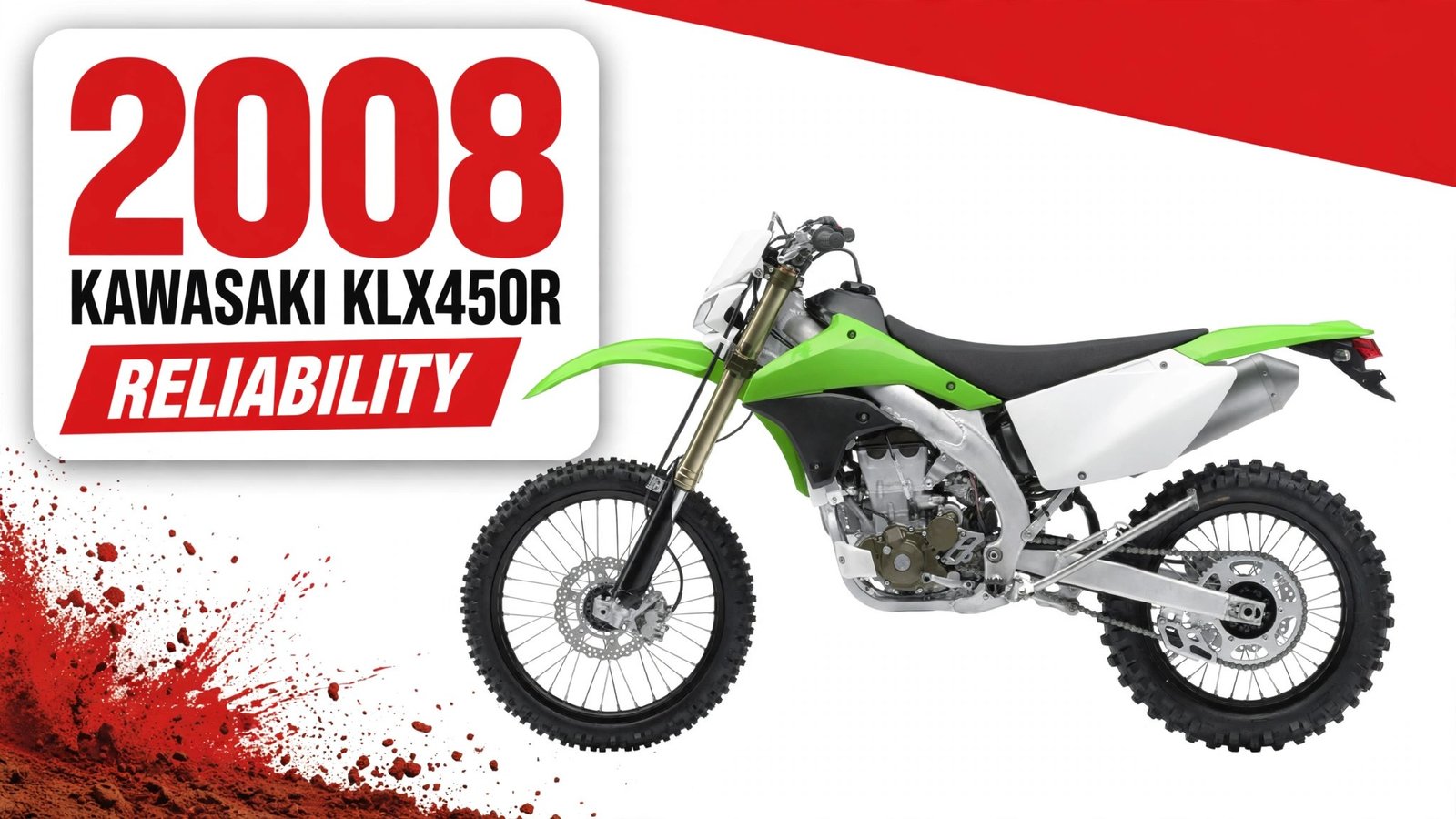
The Kawasaki KLX450R is a 17-year-old dirt bike that most American buyers will meet secondhand, so the question that matters is whether a used one can still be kept running in 2026. This Kawasaki KLX450R reliability guide answers that question from a 160-hour long-haul test by Dirt Rider, the owner’s manual maintenance chart, and the recall records of the US safety authorities. Every figure in this Kawasaki KLX450R reliability guide is labelled by its source.
Kawasaki KLX450R Reliability Overview
The bike was a first-year model in 2008, and first-year models usually show teething problems. The KLX450R mostly did not. Dirt Rider ran one for 160 hours and reported that it held up better than most first-year models. That is the strongest single piece of evidence in this Kawasaki KLX450R reliability guide.
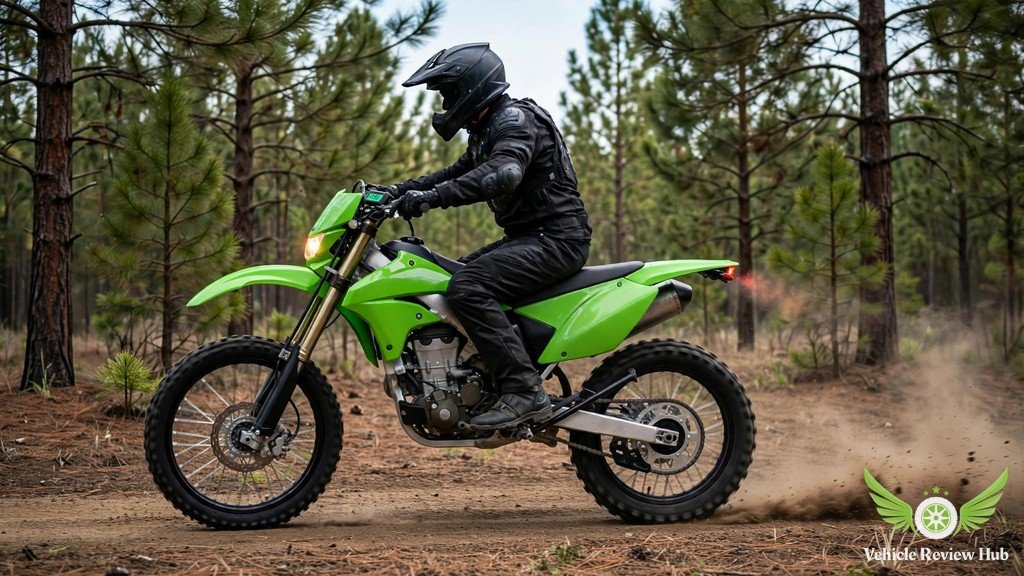
Long-Term Bike Still Running Strong
Dirt Rider’s long-haul test is the backbone of this Kawasaki KLX450R reliability guide. The magazine ran a 2008 KLX450R to 160.0 hours, and the wrap-up said the bike held up way better than most first-year models. Kawasaki, the testers wrote, did a really good job at shooting oil at all the right places. The final tally was Modifications $2,551.07 and Maintenance and Repairs $1,484.53, not including tires. Those are the only dollar figures this Kawasaki KLX450R reliability guide prints for running costs.
How Hours, Storage and Previous Care Affect Reliability
Hours are the currency of this Kawasaki KLX450R reliability guide, and they are also its biggest trap. The KLX450R has no hour meter: its digital meter shows a clock, a speedometer and a trip odometer, but nothing that logs engine hours. Whether a seller claims 40 hours or 400, both ask to be believed on trust, and this Kawasaki KLX450R reliability guide says a buyer should not pay for either claim. Service records matter more than claimed hours: receipts for oil, filters and pistons tell the real story. Storage matters too: a bike kept dry, with fuel drained and the battery tended, ages far better than one left under a tarp. Previous care shows in the small things: a clean air filter, a lubed and adjusted chain, tight spokes, and brake fluid that is not black.
| Reliability item | What the evidence says |
|---|---|
| Long-haul test | 160.0 hours, still running strong at the end |
| First-year teething problems | Few reported; held up better than most first-year models |
| Overheating | Overheated at least 3 times in 160 hours; no radiator fan fitted |
| Recalls (NHTSA) | Zero recalls for 2008 and 2009; control bike returned one campaign |
| Recalls (CPSC) | No KLX450R recall returned; only “450R” hit is the KFX450R ATV |
| Hour meter | None fitted; hours are the owner’s record only |
| Long-haul spend | $2,551.07 modifications; $1,484.53 maintenance and repairs over 160 hours |
Notes: the 160-hour long-haul test is the strongest reliability evidence here, and the dollar figures are Dirt Rider’s recorded tally, not including tires. The NHTSA zero is a search result with a working control, not proof, and the CPSC record is inconclusive.
Kawasaki KLX450R Common Problems and Wear Items
The common problems of this Kawasaki KLX450R reliability guide are short in number and specific in kind. The Dirt Rider long-haul wrap-up is the source for most of this section. This Kawasaki KLX450R reliability guide names each problem with its source, so a buyer can tell a tester’s finding from a forum rumour.
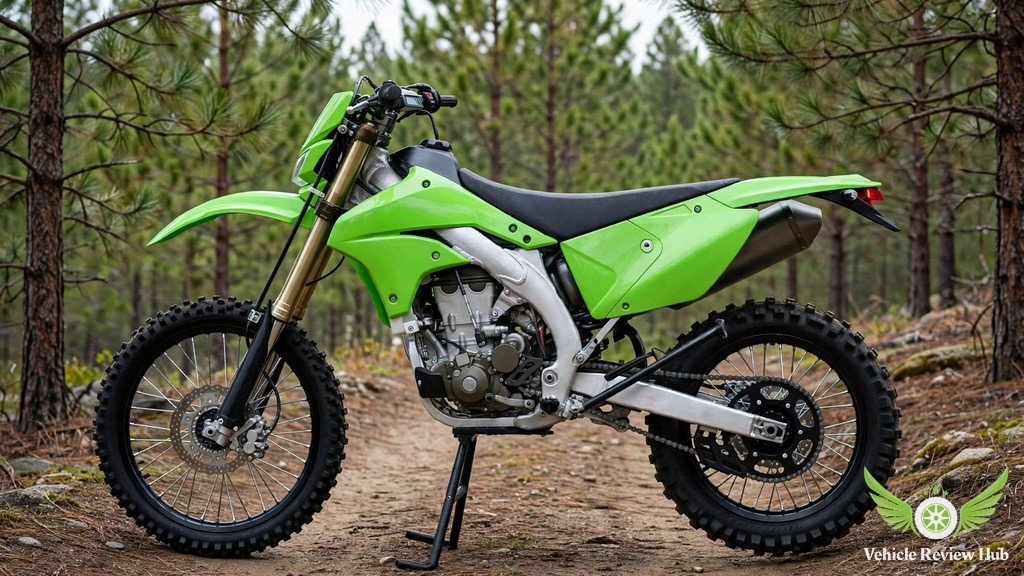
No Recall Names the KLX450R
No recall names the KLX450R in any source consulted — the honest headline of this Kawasaki KLX450R reliability guide. The NHTSA database returns zero recalls for the 2008 and 2009 bikes, and the same search returns one campaign, 25V146000, for the 2024 Ninja 500 control bike, which shows the search itself works. The zero is therefore meaningful, but it is still a search result, not proof: NHTSA coverage of off-road-only machines is thinner than for street bikes. The Dirt Rider first test found no safety defect to report either.
The CPSC Hit Is the KFX450R ATV
The only “450R” recall on the CPSC record belongs to a different machine, and this Kawasaki KLX450R reliability guide says so plainly. A CPSC search for the KLX450R returns nothing, while a search for the KFX450R returns recall 07-561, dated 2007-06-28, covering about 6,000 units of the 2008 KFX450R ATV for a fuel-leak flange, with 60 reports and no injuries. The KFX450R is a four-wheeled ATV, not a motorcycle, and its recall has nothing to do with the KLX450R bike. The CPSC record is marked inconclusive rather than clean, because the CPSC database has a known problem with product filtering, so an empty return is not proof that no recall exists. This Kawasaki KLX450R reliability guide therefore makes no such claim: the only “450R” CPSC hit is the KFX450R ATV, and no KLX450R recall was returned.
| Problem or wear item | Evidence and source |
|---|---|
| Overheating | Overheated at least 3 times in 160 hours; no radiator fan fitted (Dirt Rider long haul) |
| Chain guide pad | Wears out fast (Dirt Rider first test) |
| Headlight | Weak at best; dim halogen, an ownership note not a failure (Dirt Rider first test) |
| Battery charging | Barely adequate; battery died during a press test, kick start saved the day (Ultimate Motorcycling 2009) |
| Oil filter access | Header pipe blocks access; exhaust must come off to change the filter (owner’s manual; Australian review) |
| Sag adjustment | Frustratingly difficult; little space between shock canister and frame (Australian review) |
| Air filter access | Good; Dzus clip on the right side panel, no tools needed (Australian review) |
| Suspension bottoming | First to bottom out in big jumps, especially the rear (Dirt Rider 2008 comparison) |
Notes: overheating is the only genuine weakness on this list, tied to the missing radiator fan. This Kawasaki KLX450R reliability guide found no pattern of engine failures or frame problems.
Kawasaki KLX450R Maintenance Schedule and Servicing
The maintenance schedule is the heart of this Kawasaki KLX450R reliability guide, because it is also the bike’s biggest ownership cost. The owner’s manual orders short intervals, and the 30-hour piston separates a cheap trail bike from an expensive one. Every interval below comes from the 2015 owner’s manual periodic maintenance chart. This Kawasaki KLX450R reliability guide prints the manual’s figures and nothing else, and it never borrows an interval from the KLX140R, the KLX230R or the KLX300R.
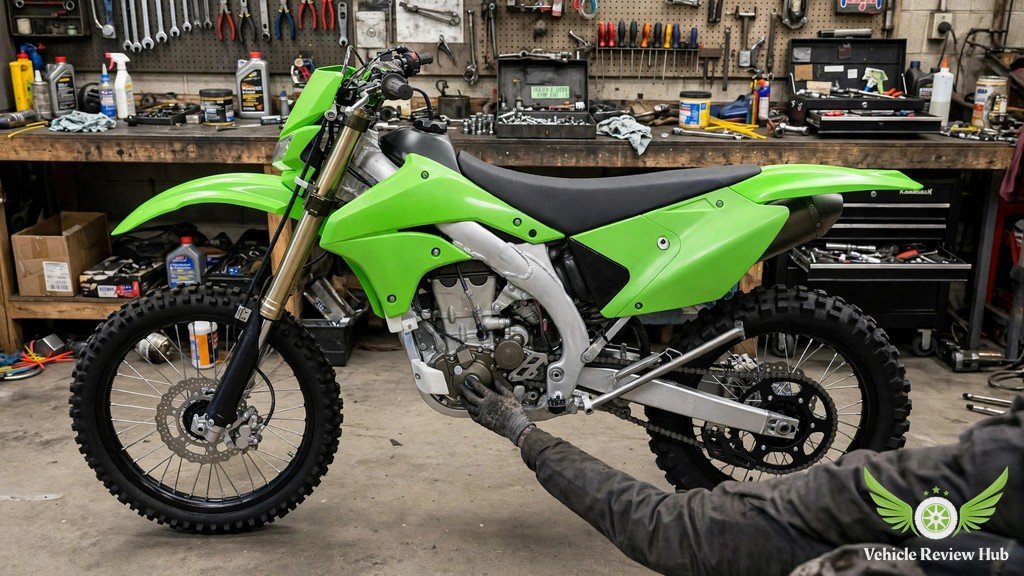
The video below, chosen for this Kawasaki KLX450R reliability guide, is an owner oil-change walkthrough on a 2012 KLX450R with a quick test ride afterwards — not a factory service film.
Piston and Rings Every 30 Hours
The piston, piston ring and piston pin are all on the same 30-hour line in the owner’s manual — the most important line in this Kawasaki KLX450R reliability guide. The manual orders the piston and piston ring replaced every 1,500 km (900 miles) or 30 hours, and the piston pin replaced on the same interval. The manual also gives the piston-to-cylinder clearance standard of 0.020 to 0.042 mm. This Kawasaki KLX450R reliability guide treats the 30-hour piston as a running cost, not a suggestion. A buyer who cannot budget for it should buy a different bike; the KLX230R reliability guide covers the friendlier step-down.
Oil and Filter Every 15 Hours
Oil and filter come every 15 hours, or 1,000 km (600 miles), whichever comes first — the job this Kawasaki KLX450R reliability guide expects every owner to know by heart. The manual’s recommended oil is Castrol Power1 Racing 4T 5W-40; if that is unavailable, any oil meeting API SG, SH, SJ, SL or SM with JASO MA, MA1 or MA2, in SAE 10W-40, is accepted. Capacity is 1.06 litres with the filter left in, 1.08 litres with the filter removed, and 1.30 litres when the engine is completely dry. The oil level is checked through the inspection window on the lower right side, with the bike upright and the level between the high and low lines. One servicing quirk deserves a warning: the header pipe blocks access to the oil filter, so the exhaust pipe has to come off to change it. The filter cover bolts torque to 9.8 Nm, and the drain plugs torque to 7.0 Nm for the M6 plug and 20 Nm for the M10 plug. Valve clearance is checked cold, and the manual’s standard figures are 0.10 to 0.15 mm for the intake valves and 0.20 to 0.25 mm for the exhaust valves, with adjustment left to an authorized dealer. Break-in is one hour or 20 km for the cylinder, piston, pin, ring and valve service items. The Ultimate Motorcycling 2009 test found the same bike easy to live with day to day.
| Service item | Interval (owner’s manual) |
|---|---|
| Engine oil change | Every 1,000 km (600 mi) or 15 hr |
| Oil filter replace | Every 1,000 km (600 mi) or 15 hr |
| Piston and piston ring replace | Every 1,500 km (900 mi) or 30 hr |
| Piston pin replace | Every 1,500 km (900 mi) or 30 hr |
| Spark plug clean and gap | Every 500 km (300 mi) |
| Valve clearance inspect | Per the periodic maintenance chart; intake 0.10–0.15 mm, exhaust 0.20–0.25 mm, cold engine |
| Brake fluid change | Every 2 years |
| Brake hoses and pipe replace | Every 4 years |
| Fuel hose replace | Every 5 years |
| Front fork oil change / rear shock oil replace | Periodic replacement items on the manual’s chart |
| Break-in | 1 hr or 20 km for cylinder, piston, pin, ring and valve items |
Notes: every interval in this table comes from the 2015 owner’s manual chart, and the oil and piston figures are the two that matter most. This Kawasaki KLX450R reliability guide prints no interval borrowed from any other KLX model.
Kawasaki KLX450R Tires, Brakes and Suspension Maintenance
In this Kawasaki KLX450R reliability guide, tires, brakes and suspension are where the checks are simple and the numbers are all in the manual. This Kawasaki KLX450R reliability guide lists the figures a buyer can verify on the bike itself before any money changes hands.
No Radiator Fan Fitted
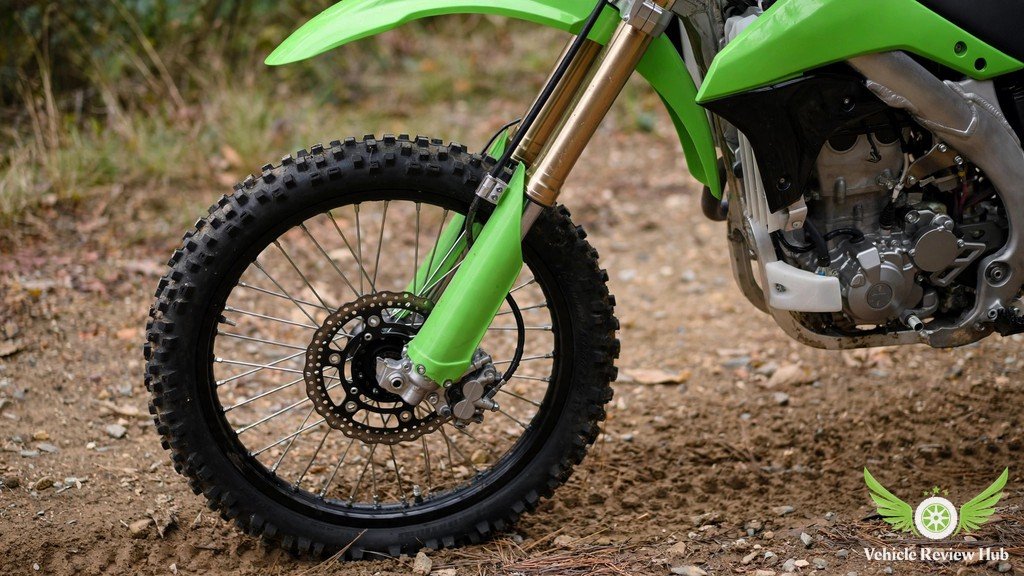
The KLX450R has no radiator fan — the reason behind the only genuine weakness in this Kawasaki KLX450R reliability guide. No fan is listed in any spec sheet or in the service manual’s cooling section. On a fast trail that is enough. On a slow technical climb in summer heat it is not: Dirt Rider’s long-haul bike overheated completely at least three times in 160 hours. The risk scenario is specific: slow riding, high load, hot weather, little airflow. This Kawasaki KLX450R reliability guide presents the three overheat episodes as Dirt Rider’s finding, labelled as such, and the missing fan as the bike’s specification.
Tire, Brake and Suspension Checks That Matter
The checks that matter on this Kawasaki KLX450R reliability guide start with the tires. The US specification is 80/100-21 at the front and 110/100-18 at the rear, and a buyer should check that the bike actually wears those sizes, since Australian and Indian listings quote a 120/90-18 rear that is not the US fitment. The brakes are a 250 mm front disc and a 240 mm rear disc, with no ABS on any year, and no tester ever recorded a brake complaint — so this Kawasaki KLX450R reliability guide invents none. Check the pads and the fluid level; the manual orders the brake fluid changed every two years and the hoses replaced every four. The chain is the wear item to measure: standard slack is 52 to 58 mm at the tightest point, and in wet and muddy conditions the manual allows 62 to 68 mm. A 20-link section should measure 317.5 to 318.2 mm, and 323 mm is the wear limit. The chain is a D.I.D 520MVX with 114 links, and the rear axle nut torques to 110 Nm. The suspension is a 48 mm KYB inverted fork with 11.2 inches of travel and a Uni-Trak single shock with 11.0 inches; the fork has rebound adjustment but no preload, the rear has preload and rebound. The Australian review praised the suspension as plush and forgiving for riders from 60 to 100 kilos, and warned that setting the static sag is frustratingly difficult. The fork oil is Kawasaki Fork Oil KHL15-10, 189 mL in the inner damper and 335 mL in the inner and outer tubes per leg.
| Check | Figure (manual or tester) |
|---|---|
| Front tyre (US) | 80/100-21, on a 21 in wheel |
| Rear tyre (US) | 110/100-18, on an 18 in wheel; 120/90-18 is the AU/India listing figure |
| Front brake | 250 mm disc, dual piston; no ABS |
| Rear brake | 240 mm disc, single piston; no ABS |
| Brake fluid change | Every 2 years |
| Brake hoses replace | Every 4 years |
| Chain slack, standard | 52–58 mm, measured at the tightest point |
| Chain slack, wet and muddy | 62–68 mm |
| Chain, 20-link section | 317.5–318.2 mm standard; 323 mm wear limit |
| Chain type | D.I.D 520MVX, 114 links |
| Front suspension | 48 mm KYB inverted fork, 11.2 in travel, rebound adjustment, no preload |
| Rear suspension | Uni-Trak single shock, 11.0 in travel, preload and rebound |
| Fork oil | Kawasaki Fork Oil KHL15-10; 189 mL inner damper, 335 mL inner/outer tubes per leg |
Notes: the tyre sizes are the US specification, and the 120/90-18 rear is an Australian and Indian listing figure, not the US fitment. This Kawasaki KLX450R reliability guide found no tester brake complaint for this bike.
Kawasaki KLX450R Maintenance and Ownership Costs
The ownership costs in this Kawasaki KLX450R reliability guide are built from the only dollar figures a tester ever recorded, plus prices a buyer can check today. No running-cost dollar figure is invented here, and no resale percentage is printed, because neither exists in any source consulted. The 30-hour piston is the recurring cost that matters, and the crankcase set is the big-ticket part that deserves its own honest paragraph. In this Kawasaki KLX450R reliability guide, routine servicing is cheap and the expensive items are rare.
Fuel, Routine Servicing, Tires and Replacement Parts
Routine servicing on this Kawasaki KLX450R reliability guide is cheap in parts and regular in timing. An oil change takes about 1.1 litres of 10W-40 and one filter, every 15 hours, and the long-haul test logged Bel-Ray 10W-40 at $9.79 a quart and one oil filter at $6.70. The spark plug is an NGK CPR8EB-9, cleaned and gapped every 500 km. Tires, brake pads and chains are standard off-road consumables. Fuel is the one cost with no tester figure at all. No magazine ever measured the bike’s mileage, and the Indian listing claims of 23 km/L and a 184 km range are listing arithmetic, never a test, so this Kawasaki KLX450R reliability guide prints no fuel cost per mile. The 30-hour piston is the expensive recurring item: a piston kit plus labour, which varies by shop and is not printed here as a fixed dollar figure. What this Kawasaki KLX450R reliability guide can print is the long-haul tally: $1,484.53 in maintenance and repairs over 160 hours, not including tires, alongside $2,551.07 in modifications. Those two numbers are Dirt Rider’s recorded figures, not an estimate.
Crankcase Set Still Listed, Not Gone
The crankcase set is the part this Kawasaki KLX450R reliability guide has to correct the record on. Kawasaki’s own parts diagram for the 2019 KLX450R still lists SET-CRANKCASE, part number 14001-0093, and the Partzilla listing for the part showed it in stock at $699.14 — that listing was last crawled in December 2025, and a fresh stock check on the day of writing was blocked by the dealer’s bot wall, so today’s stock is unverified. That means the set is listed and orderable, not unavailable. The honest version is that the part is expensive rather than gone: $699.14 for a crankcase set is a big bill. Availability can change, so a buyer who needs one should check the part number before assuming it is there. The Partzilla listing for part 14001-0093 is the source for the price and the stock status, and the Kawasaki parts diagram for the 2019 KLX450R is the source for the listing itself. The lesson is: a cracked crankcase is an expensive repair, but it is not an impossible one.
| Cost item | What is known |
|---|---|
| Oil change (15 hr) | About 1.1 L of 10W-40 plus one filter; long haul logged $9.79 a quart and $6.70 a filter |
| Piston, ring and pin (30 hr) | Recurring top-end job; cost varies by shop, no fixed dollar figure printed |
| Spark plug | NGK CPR8EB-9, cleaned and gapped every 500 km |
| Chain | D.I.D 520MVX, 114 links; standard off-road consumable |
| Long-haul maintenance and repairs | $1,484.53 over 160 hours, not including tires (Dirt Rider) |
| Long-haul modifications | $2,551.07 over 160 hours (Dirt Rider) |
| Crankcase set (part 14001-0093) | Still listed by Kawasaki; Partzilla listing showed it in stock at $699.14 (last crawled December 2025) |
| Fuel cost per mile | No tester figure exists; no dollar figure printed |
| Resale value | No resale percentage printed; no settled used-price band in this guide |
Notes: the only dollar figures in this table are Dirt Rider’s recorded long-haul tally and the Partzilla price for the crankcase set. No running-cost dollar figure and no resale percentage is invented in this Kawasaki KLX450R reliability guide.
How to Keep a Kawasaki KLX450R Reliable
Keeping this Kawasaki KLX450R reliable is mostly a matter of following the manual on time and checking the bike before every ride. The KLX450R review covers the bike’s full story, and the KLX450R performance guide covers what it does on the trail. This Kawasaki KLX450R reliability guide ends with the habits that keep it doing both.
Preventive Maintenance, Records and Regular Inspections
Preventive maintenance in this Kawasaki KLX450R reliability guide starts with the manual’s daily pre-ride checks: oil level, coolant, fuel, brakes, throttle return, steering, fork and shock leaks, spokes, fasteners, and the stop button. Records are the other half of reliability: because the bike has no hour meter, a written log is the only proof of service. Keep every receipt, write the hours on each one, and note the date of every oil change, filter, piston and valve check. The manual’s chart is the schedule to follow, and the 15-hour oil and 30-hour piston are the two lines that must never slip. A bike with a logbook and receipts is a known quantity; a bike without either is a gamble, and this Kawasaki KLX450R reliability guide prices it accordingly. The KLX300R reliability guide shows the same habits on the newer fuel-injected KLX.
Battery Charging Barely Adequate
The battery is the last item in this Kawasaki KLX450R reliability guide, and it is a small one. The battery is a 12 V 6 Ah unit, and Ultimate Motorcycling’s 2009 test found the charging barely adequate: the battery died during the test. The bike was not stranded: the kick starter fired the cold engine with a single kick, and after a few kilometres the battery was charged again. The lesson is practical: keep the battery on a tender between rides, and know that the kick pedal is the backup that makes a dead battery a non-issue on the trail. This Kawasaki KLX450R reliability guide treats the charging as a tester experience, not a measured fault. A used buyer should test both the button and the kicker before paying, and a dead battery on a viewing day is a bargaining point, not a reason to walk away.
| Keep-reliable habit | What to do |
|---|---|
| Oil and filter | Change every 15 hr or 1,000 km; check the level through the window before every ride |
| Piston, ring and pin | Replace every 30 hr or 1,500 km; never let the interval slip |
| Valve clearance | Inspect per the chart, cold engine; intake 0.10–0.15 mm, exhaust 0.20–0.25 mm |
| Air filter | Clean regularly; access is good, Dzus clip on the right side panel |
| Chain | Check slack 52–58 mm before every ride; lube after rain or wet riding |
| Cooling | Keep radiators clean; no fan is fitted, so avoid slow riding in heat |
| Battery | Keep on a tender between rides; test the kick starter as well as the button |
| Records | Log every service with hours and dates; no hour meter exists, so the log is the proof |
Notes: the habits in this table are the manual’s schedule plus the testers’ lessons. The battery note is a tester experience, not a measured charging fault. This Kawasaki KLX450R reliability guide ends where it started: a well-kept KLX450R is a reliable bike, and the keeping is the work.
Kawasaki KLX450R Reliability Frequently Asked Questions
These answers cover the KLX450R’s recall record, its long-haul test, its wear items and its service intervals — with every figure labelled by its source in this Kawasaki KLX450R reliability guide.
Has the KLX450R had any recalls?
No recall names the KLX450R in any source consulted. The NHTSA database returns zero recalls for the 2008 and 2009 bikes, and the same search returns one campaign, 25V146000, for the 2024 Ninja 500 control bike, which shows the search itself works — so the zero is a meaningful search result, not proof. NHTSA coverage of off-road-only machines is thinner than for street bikes. The only 450R recall on the CPSC record belongs to a different machine: recall 07-561, dated 2007-06-28, covering about 6,000 units of the 2008 KFX450R ATV for a fuel-leak flange, with 60 reports and no injuries. The KFX450R is a four-wheeled ATV, not a motorcycle. The CPSC record is marked inconclusive rather than clean, because the CPSC database has a known problem with product filtering, so this Kawasaki KLX450R reliability guide makes no claim that no CPSC recall exists.
How reliable is the KLX450R in the long term?
Strong, on the best evidence available. Dirt Rider ran a 2008 KLX450R to 160.0 hours and reported that it held up way better than most first-year models, writing that Kawasaki did a really good job at shooting oil at all the right places. The final tally was $2,551.07 in modifications and $1,484.53 in maintenance and repairs, not including tires. Those are the only dollar figures this Kawasaki KLX450R reliability guide prints for running costs, and no resale percentage is printed anywhere, because neither exists in any source consulted.
What are the KLX450R’s common problems?
Overheating is the only genuine weakness. Dirt Rider’s long-haul bike overheated completely at least three times in 160 hours, and no radiator fan is fitted — no fan is listed in any spec sheet or in the service manual’s cooling section. The risk scenario is specific: slow riding, high load, hot weather, little airflow. The other items are wear and ownership notes, not failures: the chain guide pad wears out fast, the battery charging is barely adequate (the battery died during a press test and the kick starter saved the day), the header pipe blocks access to the oil filter so the exhaust has to come off to change it, and setting the static sag is frustratingly difficult. This guide found no pattern of engine failures or frame problems.
How often does the KLX450R need servicing?
Often, on a race-bike schedule from the 2015 owner’s manual chart. Oil and filter come every 1,000 km (600 miles) or 15 hours, whichever comes first. The piston, piston ring and piston pin are all on the same 30-hour line: replace every 1,500 km (900 miles) or 30 hours. The spark plug is an NGK CPR8EB-9, cleaned and gapped every 500 km. Brake fluid is changed every 2 years, brake hoses and pipes every 4 years, and the fuel hose every 5 years. Valve clearance is inspected per the chart on a cold engine: intake 0.10 to 0.15 mm, exhaust 0.20 to 0.25 mm. The recommended oil is SAE 10W-40, with a capacity of 1.06 litres with the filter left in, 1.08 litres with the filter removed, and 1.30 litres when the engine is completely dry. This Kawasaki KLX450R reliability guide prints no interval borrowed from any other KLX model.
How do I check the hours on a used KLX450R?
You cannot check them on the bike itself, because the KLX450R has no hour meter: its digital meter shows a clock, a speedometer and a trip odometer, but nothing that logs engine hours. Whether a seller claims 40 hours or 400, both ask to be believed on trust. Service records matter more than claimed hours: receipts for oil, filters and pistons tell the real story, and a written log with hours and dates on every receipt is the only proof of service. A bike with a logbook and receipts is a known quantity; a bike without either is a gamble.
Are KLX450R parts still available?
Better than the bike’s age suggests. Kawasaki’s own parts diagram for the 2019 KLX450R still lists SET-CRANKCASE, part number 14001-0093, and a Partzilla listing for the part showed it in stock at $699.14 — that listing was last crawled in December 2025, and a fresh stock check on the day of writing was blocked by the dealer’s bot wall, so today’s stock is unverified. The honest version is that the part is expensive rather than gone: $699.14 for a crankcase set is a big bill, but a cracked crankcase is an expensive repair, not an impossible one. Availability can change, so a buyer who needs one should check the part number before assuming it is there.