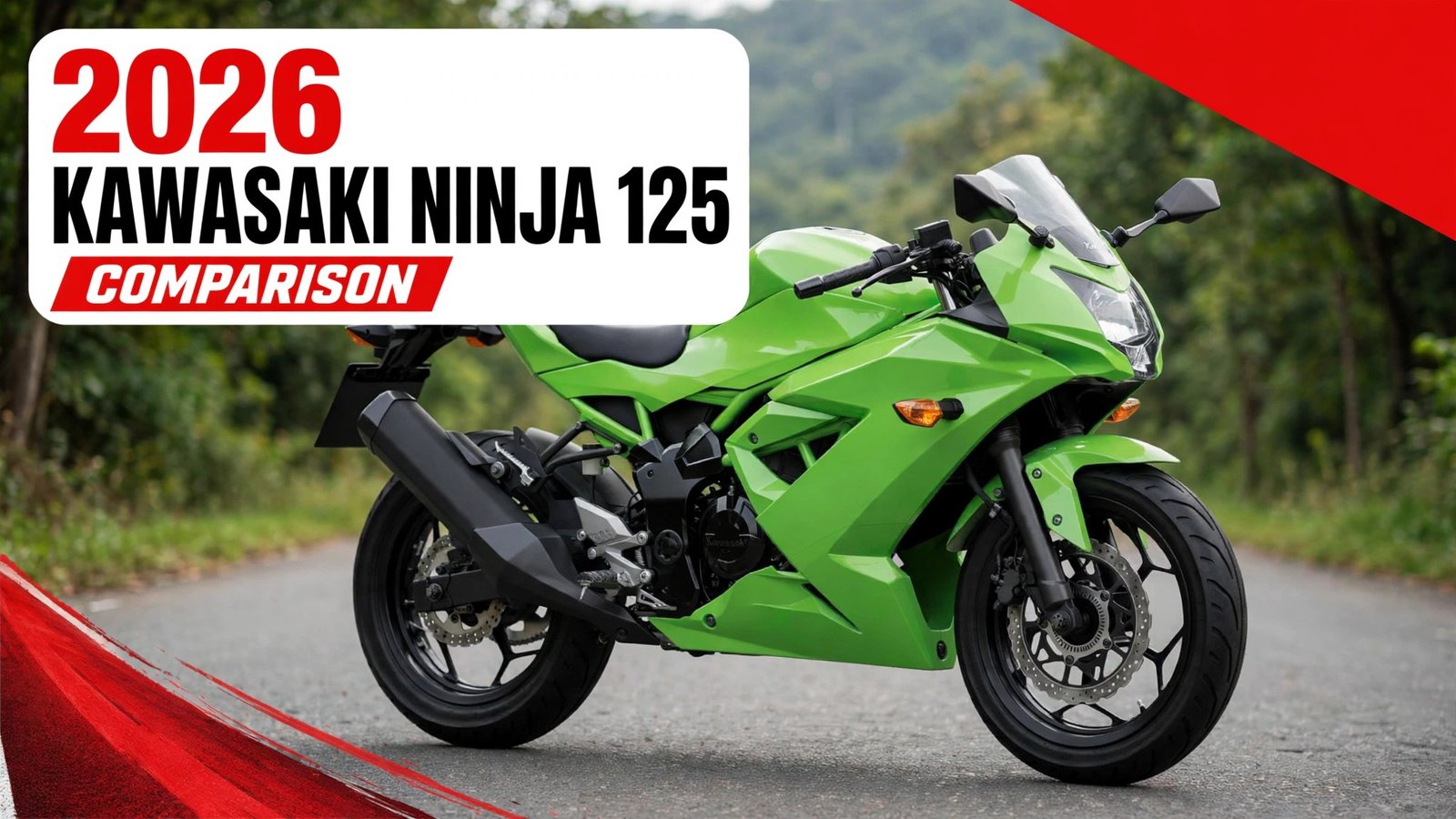
A first bike is bought with the licence in mind, and this Kawasaki Ninja 125 comparison lines the Ninja 125 up against the three other faired 125s an A1 rider can buy — the Yamaha YZF-R125, the Suzuki GSX-R125 and the KTM RC 125 — on price, specs and value.
All four make the same legal maximum of 11 kW (15 PS), so this Kawasaki Ninja 125 comparison turns on the things the law does not cap: weight, equipment, seat height and price.
Kawasaki Ninja 125 Overview and Its Closest Rivals
Four faired 125s chase the same A1 rider in Britain, and this Kawasaki Ninja 125 comparison starts with the fact that makes the whole class simple to judge: all four are capped at the same 11 kW (15 PS) by law. The Ninja 125, the Yamaha YZF-R125, the Suzuki GSX-R125 and the KTM RC 125 all make the maximum the licence allows, so this Kawasaki Ninja 125 comparison turns on weight, equipment, seat height and price — not on power. The Ninja 125 is the simplest bike of the four, and the question is whether simple is enough at £4,699.
All Rivals Capped at the Same 15 PS
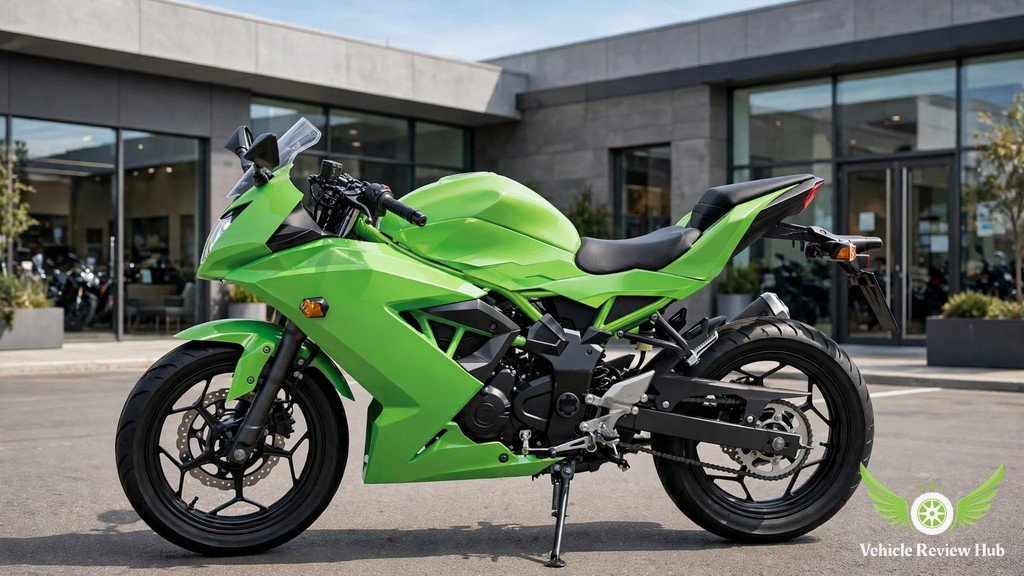
The A1 licence caps a 125 at 11 kW (15 PS) and 0.1 kW/kg, and all four bikes in this Kawasaki Ninja 125 comparison use the full legal allowance. Kawasaki claims 11 kW (15 PS) at 10,000 rpm and 11.7 Nm at 7,700 rpm for the Ninja 125, Yamaha claims the same 11 kW at 10,000 rpm for the YZF-R125, Suzuki claims 15 PS for the GSX-R125, and KTM claims 15 PS at 10,000 rpm for the RC 125. Nobody in this class out-powers anybody else, and no dyno figure exists for the Ninja 125 — the only power numbers are the manufacturers’ claimed figures, labelled by source. What differs is how the power arrives: the Ninja 125 needs revs and feels flat below 6,500 rpm, the R125 has variable valve actuation to spread its power wider, and the RC 125 has ride-by-wire throttle. The performance guide covers how the Ninja 125 delivers its 15 PS.
How the Four Bikes Differ at a Glance
At a glance the four bikes split into two pairs in this Kawasaki Ninja 125 comparison: the Ninja 125 and the GSX-R125 are the light, simple ones, and the YZF-R125 and the RC 125 are the heavier, better-equipped ones. The Suzuki is the lightest at 137 kg and the cheapest at £3,999, the Yamaha is 8 kg lighter than the Ninja, and the KTM is the heaviest at 156 kg but brings the most electronics in the class.
| Bike (2026 UK) | Power | Torque | Kerb weight | Seat height | Fuel tank | Rider aids | List price |
|---|---|---|---|---|---|---|---|
| Kawasaki Ninja 125 | 11 kW (15 PS) @ 10,000 rpm | 11.7 Nm @ 7,700 rpm | 149 kg | 785 mm | 11 L | ABS only | £4,699 |
| Yamaha YZF-R125 | 11 kW (15 PS) @ 10,000 rpm | 11.5 Nm @ 8,000 rpm | 141 kg | 820 mm | 11 L | ABS + traction control | £5,501 |
| Suzuki GSX-R125 | 15 PS | 11 Nm | 137 kg | 785 mm | 11 L | ABS | £3,999 OTR |
| KTM RC 125 | 15 PS @ 10,000 rpm | 12 Nm @ 7,500 rpm | 156 kg | 824 mm | 13.7 L | Cornering ABS + ride-by-wire + traction control | £5,099 (2024 RRP; no 2026 list price found) |
Notes: all four bikes are capped at the same 15 PS by A1 law, so this Kawasaki Ninja 125 comparison turns on weight, torque curve and equipment, not power. The Ninja 125 figures are from the 2026 Kawasaki dealer spec sheet; the YZF-R125 figures are from Yamaha’s 2026 specification (11 kW, 11.5 Nm, 141 kg, 820 mm seat); the GSX-R125 figures are from Suzuki UK (15 PS, 11 Nm, 137 kg, 785 mm); the RC 125 figures are labelled secondary data from 1000PS.
Kawasaki Ninja 125 vs Yamaha YZF-R125
The Yamaha YZF-R125 is the Ninja 125’s oldest and most direct rival, and this Kawasaki Ninja 125 comparison puts the two head to head first because the gap is the clearest in the class: same power, same tank, near-identical torque — and £802 of extra equipment on the Yamaha. The R125 costs £5,501 for 2026 against the Ninja’s £4,699, and the buyer paying the premium gets a bike 8 kg lighter and 35 mm taller in the seat, fitted with the kit the Ninja does not have. The full review sets out what the Kawasaki does well; this section of the Kawasaki Ninja 125 comparison asks what the extra £802 buys.
Engine, Specs and Performance Side by Side
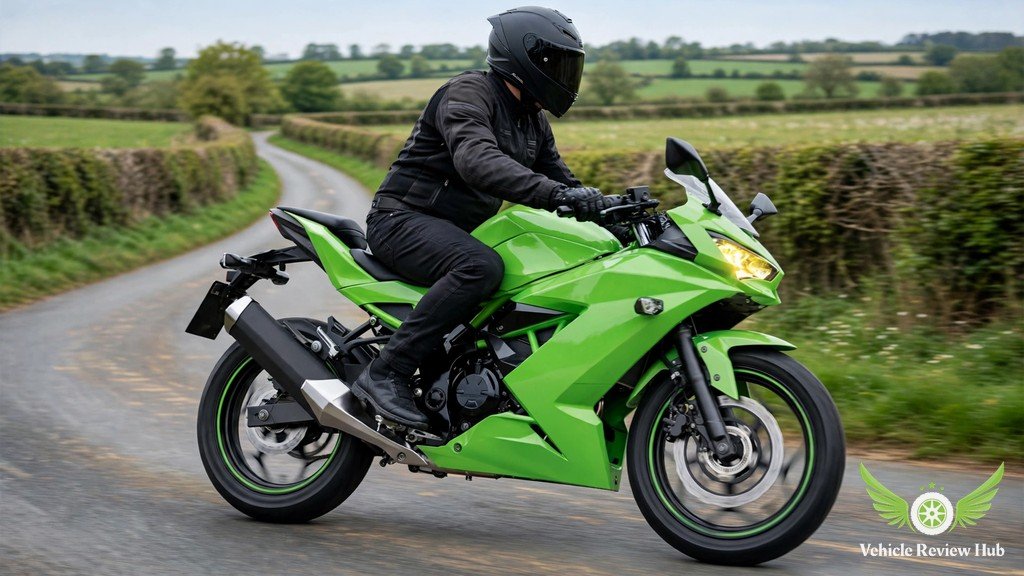
On paper the two engines are twins separated by 0.2 Nm of torque: the Ninja 125 makes 11 kW at 10,000 rpm with 11.7 Nm at 7,700 rpm, the R125 11 kW at 10,000 rpm with 11.5 Nm at 8,000 rpm. The difference is how the power is spread. The Yamaha’s variable valve actuation gives it drive from low in the rev range to an 11,000 rpm redline, while the Ninja 125 needs revs and feels flat below 6,500 rpm — the Bennetts review of the Ninja 125 and the Bennetts R125 review agree on that split. Bennetts’ 2019 class table puts the gap in one line: the R125 at 0.104 bhp per kilogram against the Ninja 125 at 0.100. The chassis gap is just as plain: the R125 carries a 41 mm upside-down fork with 130 mm of travel and a Deltabox frame, where the Ninja 125 has a 37 mm conventional fork with 110 mm of travel, and the Yamaha’s 5-inch TFT dash shows a gear indicator the Ninja’s LCD lacks. Top speed settles nothing in this Kawasaki Ninja 125 comparison — neither bike has an official figure, and the Ninja 125’s record is MCN’s indicated 74 mph with Bennetts’ estimate of 73 mph.
Price, Equipment and Which Suits Which Rider
The price gap is £802 on the 2026 list: the Ninja 125 at £4,699 and the YZF-R125 at £5,501, both OTR, with the R125’s Anniversary Edition at £5,651. In this Kawasaki Ninja 125 comparison, that £802 buys the upside-down fork, the traction control, the TFT dash with its gear indicator, the variable valve actuation and 8 kg less weight — and it costs 35 mm of seat height, since the R125 sits at 820 mm against the Ninja’s 785 mm. For a shorter rider, the Ninja 125’s joint-lowest seat in the class and its simpler kit are the honest case for the Kawasaki. For a rider who plans to keep the bike for years and wants the kit that makes a 125 feel like a bigger bike, the R125 is the better spend. Neither bike is the wrong answer; the £802 is the price of the kit, and this Kawasaki Ninja 125 comparison finds the Ninja 125 the better buy only for the rider who will not use what the Yamaha adds.
Kawasaki Ninja 125 vs Suzuki GSX-R125
The Suzuki GSX-R125 is the value rival in this Kawasaki Ninja 125 comparison, and since April 2026 it has been the cheapest faired 125 in Britain. Suzuki GB’s pricing realignment cut the GSX-R125 from £5,199 to £3,999 OTR — a £1,200 reduction — and at that price it undercuts the Ninja 125 by exactly £700. It is also the lightest bike in the class at 137 kg, 12 kg under the Ninja 125, with the best power-to-weight in Bennetts’ class table. The question this Kawasaki Ninja 125 comparison has to answer is whether the Ninja 125 has £700 of reasons to exist beside it.
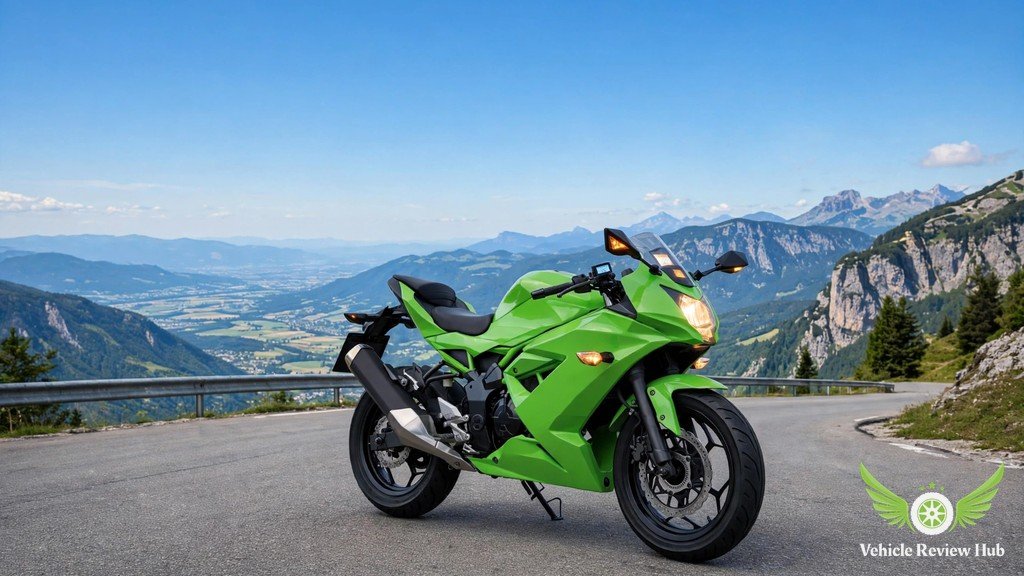
Engine, Specs and Performance Side by Side
The GSX-R125’s engine is the smallest single here at 124cc, making 15 PS with 11 Nm, against the Ninja 125’s 11 kW (15 PS) and 11.7 Nm. The Suzuki’s advantage is not power but weight: at 137 kg it is 12 kg lighter than the Ninja 125, and Bennetts’ class table gives it 0.110 bhp per kilogram against the Ninja’s 0.100. Where they split in this Kawasaki Ninja 125 comparison is in the details: the Suzuki has keyless ignition and Suzuki’s Easy Start system, while the Ninja 125 has the bigger-bike feel of its 1,935 mm length and its Ninja family styling. The GSX-R125 review covers the lightest bike in the class.
Price, Equipment and Which Suits Which Rider
The price story is the whole story here, and it has a date on it: before April 2026 the GSX-R125 cost £5,199, which made the Ninja 125 £500 cheaper; after Suzuki GB’s realignment the Suzuki costs £3,999 OTR, which makes it £700 cheaper than the Ninja 125. The £3,999 figure is confirmed by Suzuki dealers, the offer running to 31 December 2026, and it is an OTR price, so the comparison with the Ninja 125’s £4,699 list price is like for like. Dealer discounts narrow the gap a little — Daytona lists the Ninja 125 at £4,299 and Seastar from £4,599 — but even the deepest Ninja 125 discount leaves the Suzuki £300 cheaper. For a rider buying on price alone, the GSX-R125 wins this Kawasaki Ninja 125 comparison outright: lighter, cheaper, and it gives up nothing on seat height or tank range. The Ninja 125’s case against it is narrower and honest: a bigger-bike feel, a longer model history in Britain, and a six-year Kawasaki warranty from 1 November 2026, which Suzuki answers with its own up-to-ten-year warranty.
Kawasaki Ninja 125 vs KTM RC 125
The KTM RC 125 is the odd one out in this Kawasaki Ninja 125 comparison, and the oddness starts with its price tag: there is no 2026 UK list price for it at all. The RC 125’s last published RRP is £5,099 from 2024, and dealers are clearing brand-new 2024 stock at £4,099 — so the same bike is £400 dearer than the Ninja 125 at its list price and £600 cheaper at its clearance price. Under the price confusion sits the most electronic bike in the class and the heaviest one, and this Kawasaki Ninja 125 comparison has to weigh both halves of that deal.
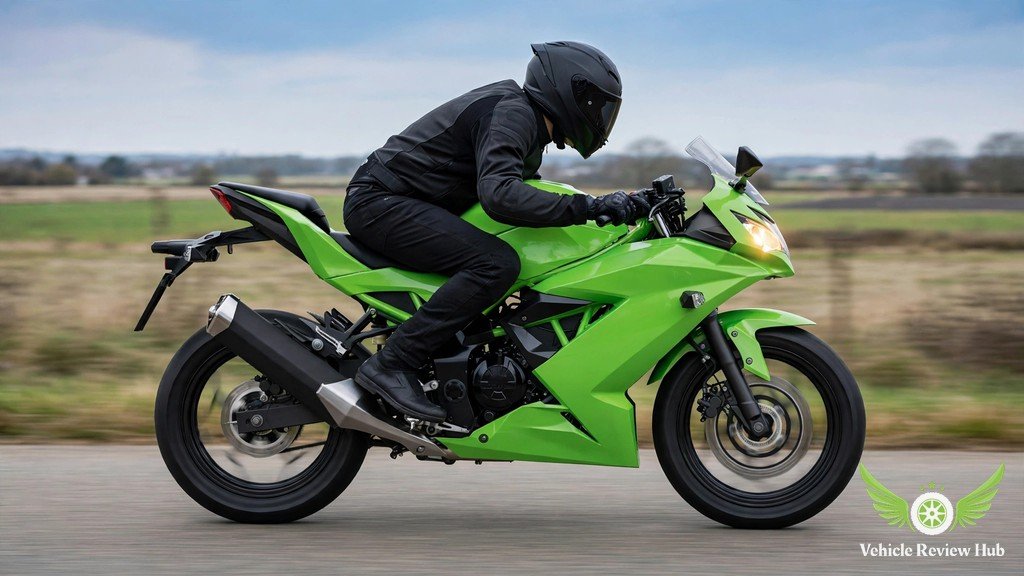
Engine, Specs and Performance Side by Side
The RC 125’s engine makes 15 PS at 10,000 rpm with 12 Nm at 7,500 rpm — the most torque in this Kawasaki Ninja 125 comparison, 0.3 Nm over the Ninja 125’s 11.7 Nm — but it carries that torque in the heaviest package in the class at 156 kg, 7 kg over the Ninja 125 and 19 kg over the GSX-R125. That weight costs it the power-to-weight race: at 15 PS over 156 kg it has the lowest ratio of the four. What the weight buys is equipment no other bike here offers: cornering ABS, ride-by-wire throttle and traction control, a steel trellis frame, and the biggest tank in the class at 13.7 litres. The Ninja 125 answers with the simplest kit — ABS only, a conventional fork, an LCD dash with no gear indicator — and the lowest seat but one, at 785 mm against the KTM’s 824 mm. A taller rider fits the KTM better; a shorter rider fits the Kawasaki better, and the 39 mm seat gap is the largest in this Kawasaki Ninja 125 comparison.
Price, Equipment and Which Suits Which Rider
The RC 125’s price needs two numbers and a date, because neither number on its own tells the truth. Its 2024 RRP is £5,099, £400 over the Ninja 125’s £4,699; the clearance price for brand-new 2024 stock at Fowlers is £4,099, £600 under the Ninja 125 — a £1,000 saving on the RRP, with the offer running to 31 December 2026. A buyer who finds a 2024 bike at £4,099 gets the most electronic 125 in the class for less than the Ninja 125, and at that price this Kawasaki Ninja 125 comparison has to call the KTM the better value. A buyer paying the £5,099 RRP in this Kawasaki Ninja 125 comparison gets the same bike for £400 more than the Ninja 125, and the extra money buys cornering ABS, ride-by-wire and traction control that the Kawasaki cannot match. For a rider who wants the electronics and can find a clearance bike, the KTM wins; for a rider who wants a current-model bike at a published price with a six-year warranty, the Ninja 125 is the safer buy.
Kawasaki Ninja 125 Price and Value Compared
Price is where this Kawasaki Ninja 125 comparison is decided, because the four bikes are so close on power that money is the real difference between them. The spread in this Kawasaki Ninja 125 comparison runs from cheapest to dearest at £1,502 — the GSX-R125 at £3,999 against the YZF-R125 at £5,501 — with the Ninja 125 at £4,699 sitting £700 above the Suzuki and £802 below the Yamaha. The RC 125 refuses to sit still in that ranking, since its price depends on whether the buyer reads the 2024 RRP or the clearance tag. Every price in this Kawasaki Ninja 125 comparison is dated, because the GSX-R125’s price moved £1,200 in a single month and the Ninja 125’s own price has risen £300 in three model years.
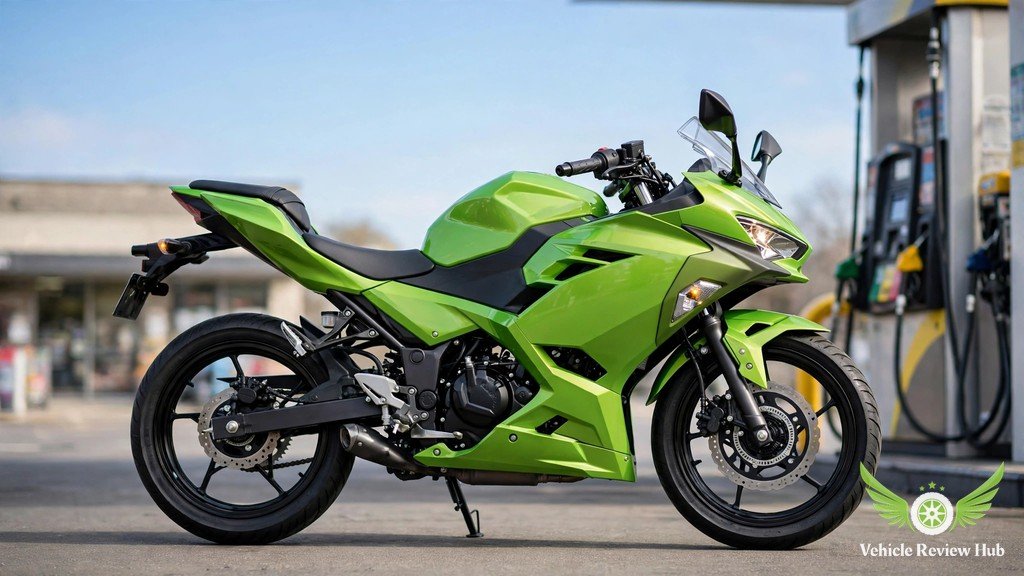
Value Rival Undercuts It by £700
The £700 figure in this Kawasaki Ninja 125 comparison is exact and dated: the Suzuki GSX-R125 at £3,999 OTR against the Ninja 125 at £4,699, both current prices checked in November 2026. The Suzuki’s price is the product of Suzuki GB’s April 2026 realignment, which cut it from £5,199 — a £1,200 reduction covered by Superbike News and confirmed by the Wheels Motorcycles listing at £3,999 OTR, the offer running to 31 December 2026. Before that cut the Ninja 125 was the cheaper bike by £500, so the heading only holds at the current prices — and this Kawasaki Ninja 125 comparison dates them for that reason. Dealer discounts soften the Ninja 125’s price — Daytona lists it at £4,299 and Seastar from £4,599 — and Kawasaki’s New Rider Awards take another £200 off for CBT completers to December 2026. Even so, the deepest discounted Ninja 125 is still £300 dearer than the Suzuki at list, and the Yamaha at £5,501 stays £802 above the Ninja 125.
| Bike | Price (checked November 2026) | Against the Ninja 125 (£4,699) | Price history |
|---|---|---|---|
| Kawasaki Ninja 125 | £4,699 list (both 2026 colours) | — | 2019 £4,399 → 2023 £4,599 → 2026 £4,699; dealer discounts to £4,299 (Daytona) / from £4,599 (Seastar) |
| Yamaha YZF-R125 | £5,501 OTR (Anniversary Edition £5,651) | £802 dearer | 2019 £4,499 → 2026 £5,501 |
| Suzuki GSX-R125 | £3,999 OTR (offer ends 31 December 2026) | £700 cheaper | £5,199 until April 2026 → £3,999 (Suzuki GB realignment, £1,200 cut) |
| KTM RC 125 | £5,099 (2024 RRP); new 2024 stock £4,099 at Fowlers | £400 dearer at RRP; £600 cheaper at clearance | No 2026 UK list price found; clearance saves £1,000 on the 2024 RRP |
Notes: all prices are UK list or OTR prices checked in November 2026, and every figure in this Kawasaki Ninja 125 comparison is dated because the GSX-R125’s price moved £1,200 in April 2026 alone. The GSX-R125 £3,999 figure is from the Wheels Motorcycles listing and the Superbike News realignment report; the YZF-R125 £5,501 figure is from Yamaha dealer pages; the RC 125 figures are from the Fowlers listing (£4,099, was £5,099). The Ninja 125’s £4,699 list price is the 2026 RRP for both colours, and the £200 New Rider Awards discount is for CBT completers to December 2026.
Running Costs and Resale Value Compared
Running costs split the four bikes in this Kawasaki Ninja 125 comparison far less than their prices do, and it is honest about where the numbers run out. The Ninja 125’s lab consumption is 2.7 litres per 100 km combined on the 2026 Euro 5+ sheet, with a real-world range of around 150 miles on its 11-litre tank according to Bennetts — the 407 km WMTC figure is a laboratory number, never a road range. The service interval is 12 months or 7,500 miles, the valve check falls due at the same 7,500 miles, and the warranty runs to six years from 1 November 2026, as set out in the reliability guide. The rivals’ lab figures, all labelled secondary data from the 1000PS comparison pages, are leaner on paper: the R125 at 2.1 litres per 100 km with a 523 km range, the RC 125 at 2.42 litres per 100 km with a 566 km range, and the GSX-R125 at 117.7 mpg on Suzuki’s claim. None of those is a tester-measured figure, and no tester MPG exists for the Ninja 125 either — so this Kawasaki Ninja 125 comparison prints them as lab numbers and nothing more. On resale, this Kawasaki Ninja 125 comparison prints nothing at all: no used-price band and no resale percentage was verified from live listings for any of the four bikes.
| Bike | Lab consumption | Range | Service and warranty |
|---|---|---|---|
| Kawasaki Ninja 125 | 2.7 L/100km combined (2026 Euro 5+ sheet) | Around 150 miles real-world (Bennetts); 407 km WMTC is a lab figure | Service every 12 months or 7,500 miles; valve check every 7,500 miles; 6-year warranty from 1 November 2026 |
| Yamaha YZF-R125 | 2.1 L/100km (1000PS, secondary) | 523 km (1000PS, secondary) | Not verified at writing — not printed |
| Suzuki GSX-R125 | 117.7 mpg (Suzuki claim) | Not verified at writing — not printed | Suzuki offers up to a 10-year warranty (MCN, Suzuki GB) |
| KTM RC 125 | 2.42 L/100km (1000PS, secondary) | 566 km (1000PS, secondary) | 24 months warranty on the Fowlers clearance bikes |
Notes: the Ninja 125 figures are from the 2026 Kawasaki dealer spec sheet, Bennetts and the reliability guide, and every rival figure in this Kawasaki Ninja 125 comparison is labelled by source. The R125 and RC 125 consumption and range figures are secondary data from 1000PS, not manufacturer or tester figures. No used-price band and no resale percentage is printed for any of the four bikes — none was verified from live listings at writing.
Kawasaki Ninja 125 Comparison Verdict and US Alternatives
The verdict of this Kawasaki Ninja 125 comparison is that there is no single best bike in the class — there is a best bike for each buyer, and the Ninja 125 wins one of those four contests outright. It wins on seat height, joint-lowest at 785 mm with the Suzuki, and on simplicity: the only bike here with nothing to go wrong beyond ABS, a conventional fork and an LCD dash. In this Kawasaki Ninja 125 comparison it loses on price to the Suzuki by £700, on equipment to the Yamaha by £802 of kit, and on electronics to the KTM at either of the KTM’s two prices. The cheapest faired 125 buyer buys the GSX-R125; the best-equipped 125 buyer buys the YZF-R125; the buyer who finds a £4,099 RC 125 buys the KTM; and the buyer who wants the lowest seat, the simplest bike and a six-year warranty buys the Ninja 125. That is the whole of this Kawasaki Ninja 125 comparison in one paragraph.
US Alternatives and Import Reality
The Ninja 125 was never sold in the USA, and no US price exists for it — any dollar figure quoted for a new one is a currency conversion, not a price. The Kawasaki USA alternative in this Kawasaki Ninja 125 comparison is the Z125 Pro, a different bike entirely: an air-cooled 125cc mini with a four-speed gearbox, no ABS and 12-inch wheels, at a 2026 MSRP of $3,799 plus $315 destination, per Motorcycle.com’s specification listing. The naked sibling is the Z125, a full-size bike with the same 125cc liquid-cooled engine — a future cluster on this site. For a US rider who wants a faired Ninja, the step up is the Ninja 500, a bigger twin sold in the USA — and the Ninja 300 sits between the two in the range. None of those is a Ninja 125, and this Kawasaki Ninja 125 comparison does not pretend otherwise: the 125 is a bike an American rider cannot buy new at any price from any dealer.
First Eligible Imports: 2044
A Ninja 125 can first legally be imported to the USA in 2044: the US 25-year rule exempts a vehicle from federal safety standards once it is 25 years old, and the first Ninja 125s are 2019 models, so 2019 plus 25 is 2044. That is the earliest a 2019 bike becomes eligible in this Kawasaki Ninja 125 comparison; a 2026 bike becomes eligible in 2051. Importing one is not a matter of waiting alone — the bike still has to clear customs, meet state registration rules, and be worth the shipping and compliance cost for a 125cc learner bike a quarter of a century old. For a US rider who wants a small faired Kawasaki now, the Z125 Pro at $3,799 and the Ninja 500 are the real choices, and this Kawasaki Ninja 125 comparison leaves the 125 where it belongs: a current British bike America must wait until 2044 to meet.
Kawasaki Ninja 125 Comparison Frequently Asked Questions
These answers settle the Ninja 125’s closest contests in this Kawasaki Ninja 125 comparison — the Yamaha, the Suzuki and the KTM on price and kit — and the import question American readers ask first.
Which rival undercuts the Ninja 125 on price?
The Suzuki GSX-R125, by exactly £700. Suzuki GB’s pricing realignment in April 2026 cut the GSX-R125 from £5,199 to £3,999 on the road, and at that price it undercuts the Ninja 125’s £4,699 by £700. Before the cut, the Ninja 125 was the cheaper bike by £500, so the gap only holds at the current prices, and the Suzuki offer runs to 31 December 2026. Dealer discounts narrow the gap a little, with Daytona listing the Ninja 125 at £4,299, but even the deepest Ninja 125 discount leaves the Suzuki £300 cheaper.
Ninja 125 or Yamaha YZF-R125 — which is better?
They make the same 15 PS, so the choice is kit against price. The YZF-R125 costs £5,501 for 2026, which is £802 over the Ninja 125’s £4,699, and that buys variable valve actuation, a 41 mm upside-down fork, traction control, a TFT dash with a gear indicator, and 8 kg less weight at 141 kg. It also costs 35 mm of seat height, since the R125 sits at 820 mm against the Ninja’s 785 mm. For a shorter rider, the Ninja 125’s joint-lowest seat and simpler kit are the honest case for the Kawasaki in this Kawasaki Ninja 125 comparison, and for a rider who wants the most equipment, the Yamaha is the better spend.
Ninja 125 or KTM RC 125 — which is better?
The KTM is the most electronic bike in the class and the heaviest one. Its engine makes 15 PS at 10,000 rpm with 12 Nm at 7,500 rpm, the most torque of the four, and it brings cornering ABS, ride-by-wire throttle and traction control, plus the biggest tank at 13.7 litres, but it carries all of that in the heaviest package at 156 kg. Its price needs two numbers in this Kawasaki Ninja 125 comparison: the 2024 RRP is £5,099, which is £400 over the Ninja 125, while dealers are clearing brand-new 2024 stock at £4,099, which is £600 under it. There is no 2026 UK list price for the RC 125 at all.
Can I buy a Ninja 125 in the United States?
No. The Ninja 125 was never sold in the United States, and no US price exists for it, so any dollar figure quoted for a new one is a currency conversion, not a price. The Kawasaki USA alternative is the Z125 Pro, a different bike entirely: an air-cooled 125cc mini with a four-speed gearbox, no ABS and 12-inch wheels, at a 2026 MSRP of $3,799 plus $315 destination. For a US rider who wants a faired Ninja, the step up is the Ninja 500. A Ninja 125 can first legally be imported in 2044, since the first bikes are 2019 models and the US 25-year rule exempts a vehicle once it is 25 years old.
What does the Ninja 125 cost to run?
The lab consumption is 2.7 litres per 100 km combined on the 2026 Euro 5+ sheet, with a real-world range of around 150 miles on its 11-litre tank according to Bennetts, and the service interval is 12 months or 7,500 miles, with the valve check due at the same 7,500 miles. The warranty runs to six years from 1 November 2026. The rivals’ lab figures are leaner on paper — the R125 at 2.1 litres per 100 km and the RC 125 at 2.42 — but they are labelled secondary data, and no tester MPG exists for the Ninja 125 either. On resale, this Kawasaki Ninja 125 comparison prints nothing at all: no used-price band and no resale percentage was verified from live listings for any of the four bikes.
Which of the four 125s should I buy?
There is no single best bike in the class — there is a best bike for each buyer. The cheapest faired 125 buyer buys the GSX-R125, the best-equipped 125 buyer buys the YZF-R125, and the buyer who finds a £4,099 RC 125 buys the KTM. The buyer who wants the lowest seat, the simplest bike and a six-year warranty buys the Ninja 125, and this Kawasaki Ninja 125 comparison finds that the Ninja 125 wins that one contest outright.