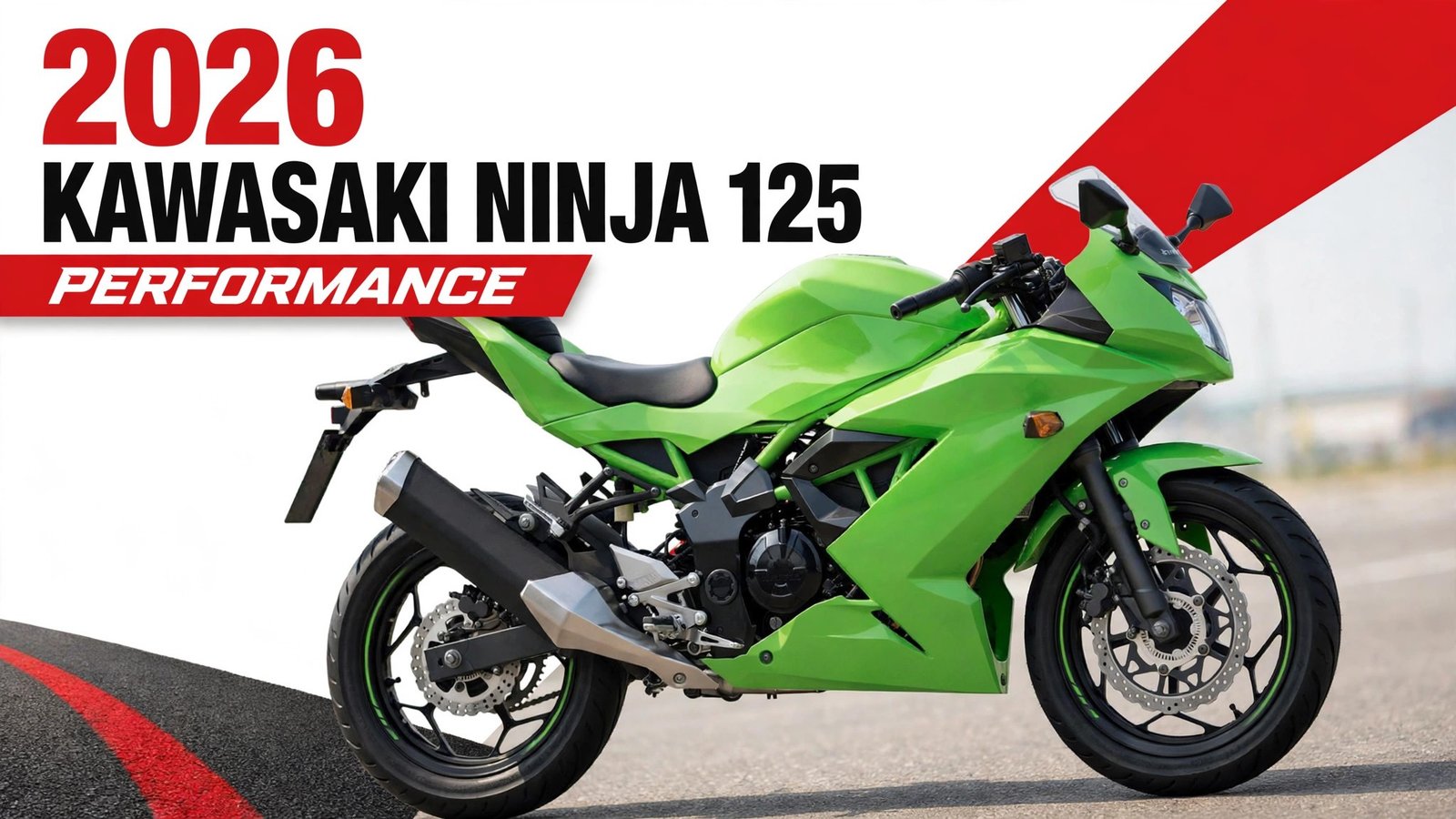
The Kawasaki Ninja 125 is a 125cc learner sports bike whose performance is defined as much by what was never measured as by what was. No dyno run was ever published, no official top speed exists, and no timed acceleration test was ever run, so this Kawasaki Ninja 125 performance guide works only from what testers actually recorded: an 11 kW (15 PS) single, an indicated 74 mph flat out, and around 150 miles from an 11-litre tank. The rest of this Kawasaki Ninja 125 performance guide explains what those numbers feel like on the road.
Kawasaki Ninja 125 Engine Performance and Power Delivery
The engine is the starting point of any Kawasaki Ninja 125 performance discussion, because everything about how the bike rides follows from a single fact: it is a sleeved-down 250 single making the full legal A1 allowance of 11 kW, and not a watt more. Kawasaki took the Ninja 250SL’s 249cc single and sleeved it down to 125cc, keeping the liquid cooling, double overhead camshafts and four valves, and the result is an under-stressed motor that testers found willing but narrow in its powerband. The full Kawasaki Ninja 125 review covers the bike’s identity and prices.
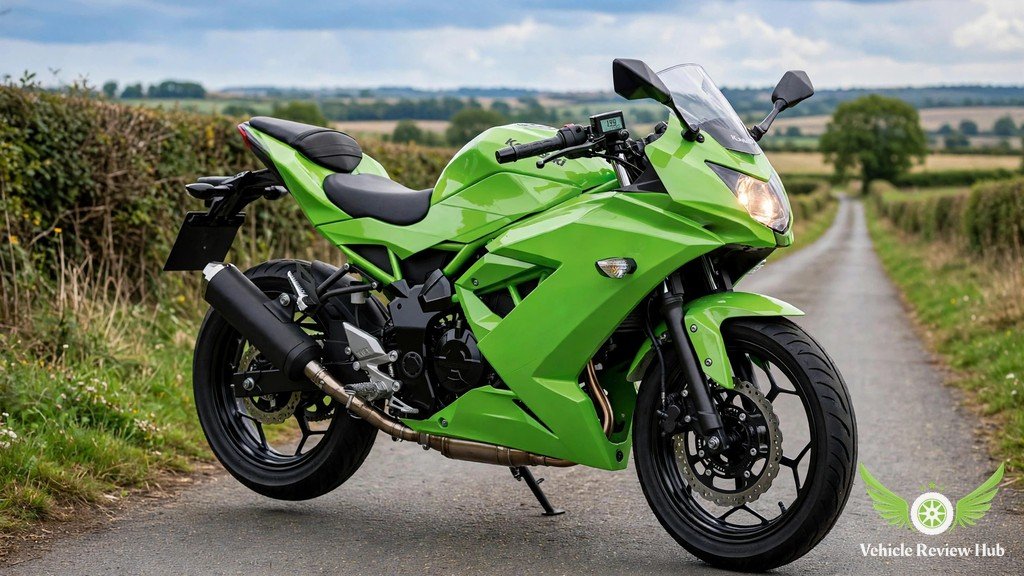
No Dyno Figure Exists
No dyno figure exists for the Ninja 125, and that is the first honest limit on this Kawasaki Ninja 125 performance guide. No magazine or tester published a rear-wheel dyno run, and Kawasaki publishes only its claimed crank figure of 11 kW (15 PS) at 10,000 rpm, with torque of 11.7 Nm at 7,700 rpm. The 15 PS figure works out to 14.8 hp, which is the equivalent this Kawasaki Ninja 125 performance guide prints, and it is worth saying plainly why other numbers circulate: MCN prints 14.7 bhp in its text and 15 bhp in its glance box, Bennetts prints 14.8 bhp, Visordown prints 15 PS, and Indian listings add 14.14 PS. They are all the same 11 kW rounded differently. Peak power arrives at 10,000 rpm, 500 rpm short of the 10,500 rpm redline, and the six-speed gearbox runs from 2.833 in first to 0.962 in sixth, which keeps the little single busy at motorway speed.
Resonance Around 7,000 RPM
Around 7,000 rpm a strange harmonic resonance appears, and it is one of the few quirks every tester noticed in this Kawasaki Ninja 125 performance guide. Bennetts described it as a harmonic that appears at around 7,000 rpm, like two sine waves interacting, and it sits right where a rider spends much of their time on A-roads. Visordown’s counter-note is reassuring: the buzz shows as a light vibration visible through the mirrors, not the kind of shaking that makes your hands tingle even after a day of solid riding. The engine pulls hardest between 7,000 and 9,000 rpm, with drive from 6,500 rpm and above.
| Specification | Kawasaki Ninja 125 (2026) |
|---|---|
| Engine | 125cc liquid-cooled DOHC 4-valve single |
| Fuel system | Fuel injection, single Ø28 mm throttle body |
| Bore x stroke | 58.0 x 47.2 mm |
| Compression ratio | 11.7:1 |
| Power (claimed) | 11 kW (15 PS) at 10,000 rpm (14.8 hp equivalent) |
| Torque (claimed) | 11.7 Nm at 7,700 rpm |
| Redline / rev limiter | 10,500 rpm |
| Gearbox | 6-speed return, wet multi-disc clutch, chain |
| Final drive | 56/16 (3.500) |
| Frame | Tubular diamond, steel |
| Front suspension | 37 mm conventional telescopic fork, 110 mm travel |
| Rear suspension | Uni-Trak gas-charged shock, preload adjustable only, 112 mm travel |
| Brakes | Single 290 mm front / 220 mm rear petal discs, ABS standard |
| Seat height | 785 mm (30.9 in) |
| Curb mass | 149 kg (2026 sheet; 148 kg was the 2019 figure) |
Notes: figures are from a Kawasaki dealer spec sheet, which is the authority for this Kawasaki Ninja 125 performance guide. Power and torque are Kawasaki’s claimed crank figures, not measured rear-wheel figures, because no dyno run was ever published. That is the full claimed-output picture for this Kawasaki Ninja 125 performance guide. The 148 kg curb figure belongs to the 2019 tables, not the 2026 bike, and some tables list 120 mm of rear travel while the Kawasaki sheet says 112 mm.
Kawasaki Ninja 125 Top Speed and Acceleration
Top speed is the number every prospective Ninja 125 buyer asks about first, and it is also the number with the thinnest evidence behind it in this Kawasaki Ninja 125 performance guide. There is no official figure, no GPS-verified test, and no timed acceleration run in any publication, so the whole top-speed record is two tester observations: MCN’s indicated 74 mph and Bennetts’ estimate of 73 mph. Both are speedometer or estimate figures, not instrumented results, and this Kawasaki Ninja 125 performance guide prints them exactly that way, with the source named on each one.
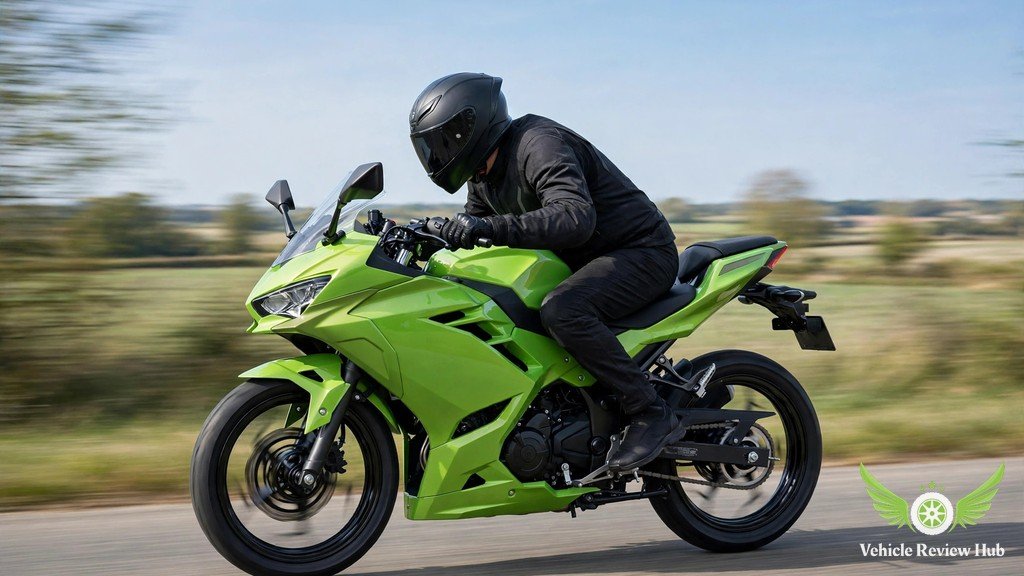
The video below shows a top-speed run of the Ninja 125, filmed with the speedometer in frame. Treat it as dash footage, not an instrumented test — the figures in this Kawasaki Ninja 125 performance guide stay with the testers.
No Official Figure Is Published
No official top-speed figure is published for the Ninja 125, and no tester has ever run a timed acceleration test on one, which is the central gap in this Kawasaki Ninja 125 performance guide. The aggregator figures that circulate online are not tests: one site lists 0 to 100 km/h in 13.0 seconds and another lists 14 seconds, but neither is a measured run, and this Kawasaki Ninja 125 performance guide prints neither. The same applies to aggregator top-speed claims of 130, 128 or 120 km/h, which have no tester behind them. What is known is the mechanism of the limit: Bennetts found the top speed is set by the 10,500 rpm rev limiter in top gear, so the bike runs out of revs rather than power.
Indicated 74 MPH in MCN’s Test
MCN saw an indicated 74 mph flat out, and that is the fastest figure in the top-speed record for this Kawasaki Ninja 125 performance guide. MCN’s tester found the bike happy to buzz along at an indicated 60 mph, with enough in reserve to slowly overtake trucks on the motorway, but warned that overtaking normal road traffic has to be planned with military precision because there is not much left after 55 mph. Bennetts put it a little lower, saying the top speed is just over 70 mph, limited by the rev limiter in top gear, with a spec-box estimate of 73 mph. The two figures agree within a couple of mph, as two speedometer readings on the same bike should, and the honest summary is that the Ninja 125 tops out in the low seventies, indicated, and gets there slowly. From a standstill it needs a big dose of clutch slip before the engine hooks up into its narrow powerband.
| Source | Figure | How it was measured |
|---|---|---|
| MCN (2019 first ride) | Indicated 74 mph flat out | Speedometer reading, not GPS-verified |
| Bennetts | Just over 70 mph; spec-box estimate 73 mph | Tester estimate, limited by the 10,500 rpm rev limiter in top gear |
| Kawasaki (official) | No figure published | No official top speed on any spec sheet |
| GPS-verified figure | None exists | No instrumented top-speed test was ever published |
| 0–60 / 0–100 / quarter-mile | No published timed run | Aggregator claims of 13.0 and 14 seconds are not tests |
Notes: the top-speed figures in this Kawasaki Ninja 125 performance guide are MCN’s indicated 74 mph and Bennetts’ 73 mph estimate, both labelled by source. The MCN review is the source for the 74 mph figure, and the Bennetts review is the source for the just-over-70 mph figure and the rev-limiter explanation. No GPS-verified top speed and no timed acceleration figure exists for this bike.
Kawasaki Ninja 125 Mileage and Fuel Economy
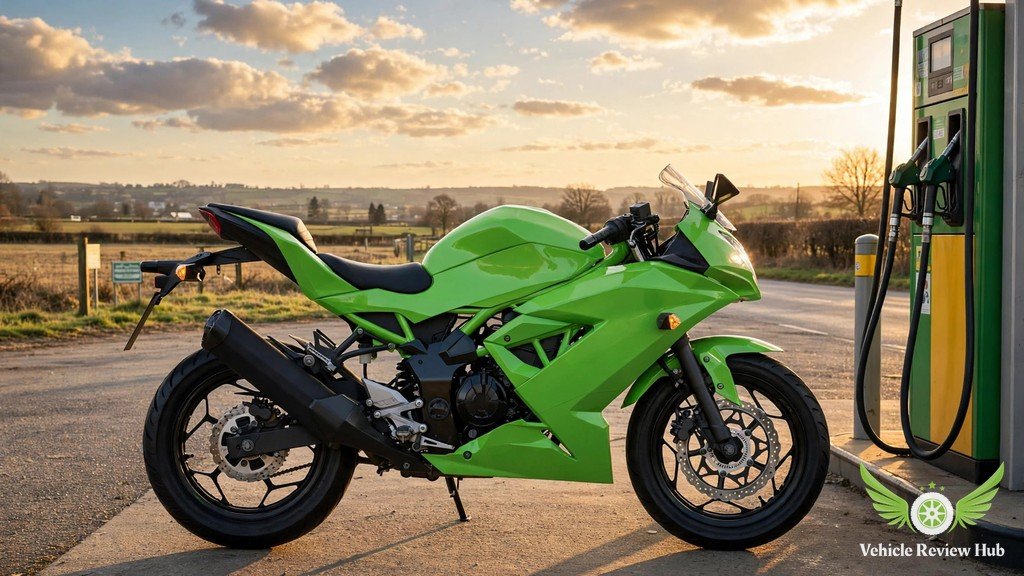
Fuel economy is the one area where the Ninja 125’s figures actually moved over the years, and this Kawasaki Ninja 125 performance guide keeps the years separate because the numbers changed with the emissions rules. The current lab figure is 2.7 litres per 100 km combined for the 2026 Euro 5+ bike, against 2.6 litres per 100 km on the earlier tables, and the real-world range is Bennetts’ estimate of around 150 miles from the 11-litre tank. No tester has ever published a measured MPG figure, so there is no tested miles-per-gallon number in this Kawasaki Ninja 125 performance guide, only the lab consumption and the road range.
Consumption Figure Moved by Year
The consumption figure moved by year, and the change is small but real, which is why this Kawasaki Ninja 125 performance guide dates every figure it prints. The 2019 Euro 4 tables list CO2 of 66 g/km, the 2023 tables list combined consumption of 2.6 litres per 100 km, and the 2026 Euro 5+ sheet lists 2.7 litres per 100 km combined with CO2 of 61 g/km. The 2.6 and 2.7 figures must never be blended into one number. The 2026 figure is the current one and the one this Kawasaki Ninja 125 performance guide uses as its reference. The 407 km WMTC range figure on some spec pages is a laboratory figure from the test cycle, not a road range.
Around 150 Miles of Range (Bennetts)
Around 150 miles of range is the real-world figure, and it comes from Bennetts, who rode the bike hard and watched the gauge. After 80 or so miles of ham-fisted riding the fuel gauge showed half a tank remaining, and Bennetts reckoned around 150 miles should be within easy reach from the 11-litre tank, with a spec-box maximum range to empty of 160 miles as an estimate. That is the road range for this Kawasaki Ninja 125 performance guide, and it is the figure a buyer should plan around, not the 407 km WMTC lab figure. Elsewhere, a 200-mile range figure on one aggregator page is wrong against Bennetts’ riding, and the 45 kmpl and 42 km/l figures from video descriptions and aggregator pages are claims, not measurements.
| Model year / source | Combined consumption | CO2 | Range |
|---|---|---|---|
| 2019 (Euro 4) | Not listed on the 2019 table | 66 g/km | Not listed |
| 2023 | 2.6 L/100km (38.5 km/l) | Not listed | Not listed |
| 2026 (Euro 5+) | 2.7 L/100km combined | 61 g/km | 407 km WMTC (lab figure) |
| Bennetts (real world) | No tested MPG published | Not applicable | Around 150 miles from the 11-litre tank; 160 miles max to empty (est) |
Notes: consumption figures are year-labelled in this Kawasaki Ninja 125 performance guide and never carried across years. The 2.7 L/100km combined figure and 61 g/km CO2 are the current 2026 Euro 5+ lab figures, the 2.6 L/100km figure is the earlier one, and the 407 km WMTC range is a laboratory figure, not a road range. The road range is Bennetts’ estimate of around 150 miles, and no tester MPG figure exists. That is the whole fuel-economy record for this Kawasaki Ninja 125 performance guide.
Kawasaki Ninja 125 Real-World Riding Experience
On the road, the Ninja 125 is a bike of two halves, and this Kawasaki Ninja 125 performance guide is blunt about both of them. The chassis, the clutch and the brakes flatter a new rider, while the engine asks for revs and planning, and the combination is exactly what an A1 learner bike is supposed to feel like.
Smooth, Progressive, Light Clutch
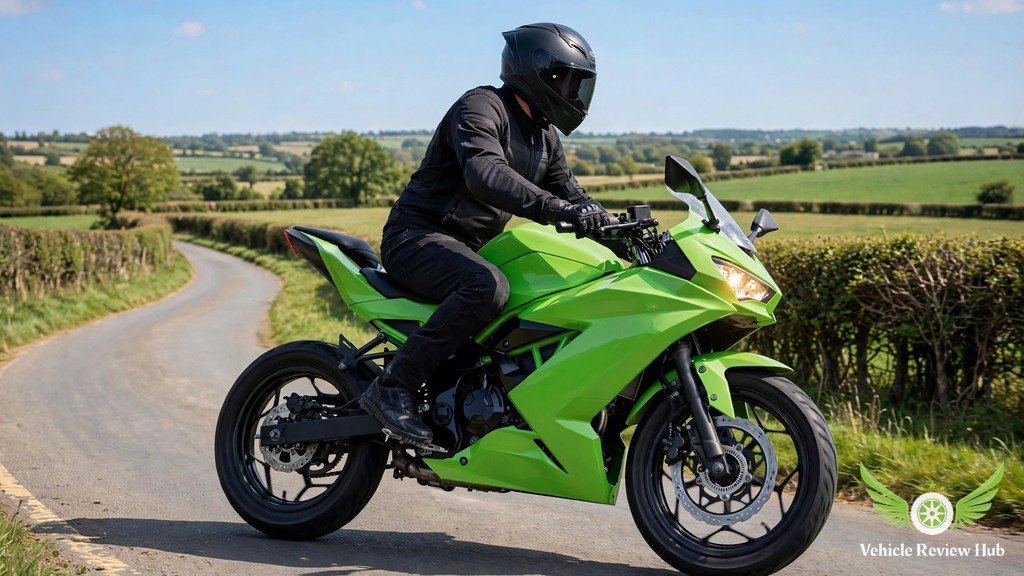
The clutch is smooth, progressive and light, and it is one of the best parts of the riding experience in this Kawasaki Ninja 125 performance guide. Visordown praised how smooth and progressive the power was from a standstill, made more manageable by the super-light clutch lever, and found the gears slipped in every time with a light, effortless flick of the lever. The long-term owner agreed, calling the clutch light and forgiving, which is perfect for new riders. There is a counter-note worth printing honestly: the Bangladesh road test found the clutch can grab with a clatter at slow starts if it is released gently, which matches what Bennetts found from a standstill, where the engine needs a big dose of clutch slip before it hooks up into its narrow powerband.
ABS Steps In Early, Say Testers
The ABS steps in early, say testers, and for a learner bike that is a feature rather than a fault in this Kawasaki Ninja 125 performance guide. Visordown found the ABS does seem to step in quite early, but added that for a novice it gives the confidence to brake hard without the fear of a slightly embarrassing lowside. The front brake needs a firm two-finger pull rather than a one-finger touch, according to Visordown, which also found the front brake does not have a great progressive feel, while the rear brake was a pleasant surprise with a nice progressive but firm bite. The only electronic aid is the standard Bosch ABS: there is no traction control and no rider mode, which the Yamaha YZF-R125 and the KTM RC 125 both offer.
Kawasaki Ninja 125 Handling, Braking and Stability
Handling is where the Ninja 125 earns its keep, and this Kawasaki Ninja 125 performance guide puts the chassis first for a reason: every tester who rode the bike praised it, and the praise is consistent across publications. The tubular diamond steel frame, the 37 mm conventional fork and the Uni-Trak rear shock give a package that is nimble, stable and predictable, and the Dunlop tyres drew praise for grip and feel.
Handling, Braking and Stability on Real Roads
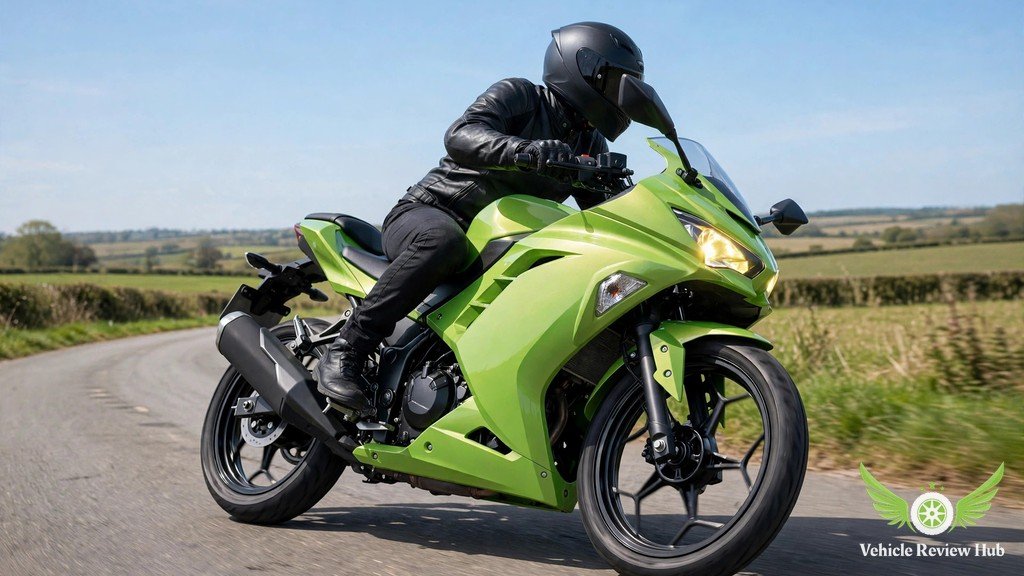
On real roads the handling, braking and stability hold together as a package, and the testers’ words line up in this Kawasaki Ninja 125 performance guide. MCN called the sporty handling a breath of fresh air, and found the bike easy to manage, predictable and controlled, with stability that holds up even when pushed beyond its design parameters. Visordown called it a nimble, easy to ride yet stable package, with firm yet plush suspension that holds its line on rough roads, and found it carved through the mountain roads around Malaga with ease and predictability, with great mid-corner stability even on the rough stuff. The brakes back the chassis up: MCN judged the ABS-assisted brakes more than adequate, and the Dunlop tyres gave enough grip and feel for testers to trust the front end.
MCN Rated It 4 Out of 5
MCN rated it 4 out of 5 overall, and the split of the scores tells the story of this Kawasaki Ninja 125 performance guide in miniature. Ride and brakes scored 4 out of 5, the engine scored 4 out of 5, reliability and build quality scored 5 out of 5, value against rivals scored 3 out of 5, and equipment scored 3 out of 5. The chassis and the build carry the bike, and the equipment list and the price drag it down, which is the same verdict every tester reached by a different route. The 1000PS expert review agreed, saying Kawasaki entered the European 125cc world for the first time and made almost no mistakes, and that both the Ninja 125 and its naked Z125 sibling are unreservedly suitable for beginners.
| MCN category | Score (out of 5) |
|---|---|
| Overall | 4 |
| Ride and brakes | 4 |
| Engine | 4 |
| Reliability and build quality | 5 |
| Value against rivals | 3 |
| Equipment | 3 |
Notes: scores are from the MCN review of the Ninja 125, and the handling quotes in this Kawasaki Ninja 125 performance guide are from MCN and Visordown. The long-term owner evidence is the MotorbikeToday owner review of a 2024 bike run for 15 months and about 9,000 miles, labelled as one owner’s experience. That is the handling record for this Kawasaki Ninja 125 performance guide.
Kawasaki Ninja 125 Performance Compared With Other A1 Sport Bikes
Against its rivals the Ninja 125 is the simplest bike in the class, and this Kawasaki Ninja 125 performance guide makes that comparison on the numbers that actually differ, because the power figure does not. All four A1 sport bikes are capped at the same 11 kW (15 PS) by law, so the differences are weight, gearing, torque curve and equipment, not output. The Ninja 125 is the heaviest-feeling of the lightweights at 149 kg with the weakest power-to-weight in the class, the Yamaha YZF-R125 brings variable valve actuation and traction control, the Suzuki GSX-R125 is the lightest at 137 kg and now the cheapest at £3,999, and the KTM RC 125 brings the most electronics. The full price and value comparison is in the comparison blog.
Kawasaki Ninja 125 vs Yamaha YZF-R125
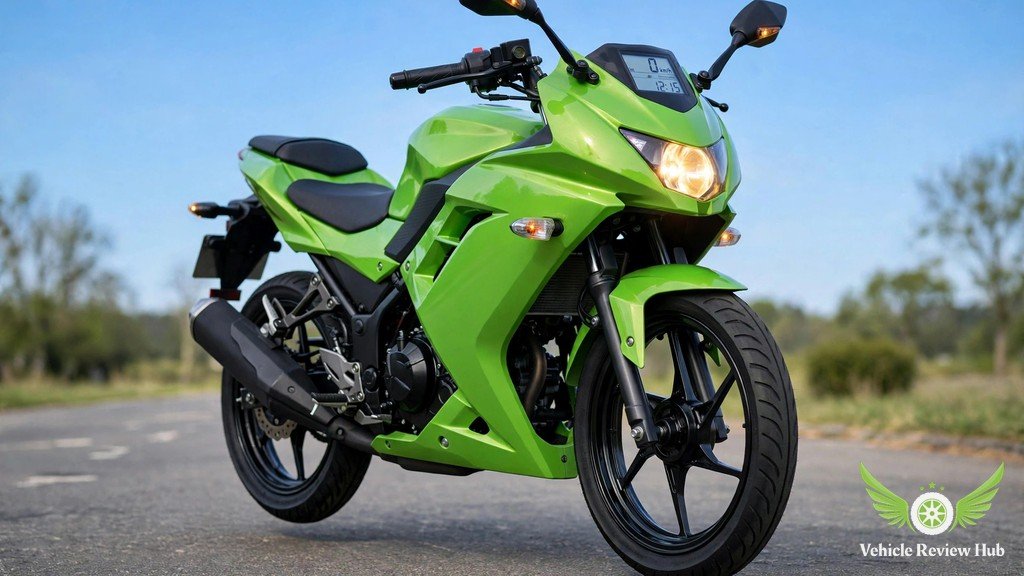
Against the Yamaha YZF-R125 the Ninja 125 gives away equipment and a little torque, and the gap shows in how the two bikes deliver their identical 15 PS in this Kawasaki Ninja 125 performance guide. The R125 makes its 11 kW at 10,000 rpm with 11.5 Nm at 8,000 rpm, against the Ninja’s 11.7 Nm at 7,700 rpm, so the torque figures are near-identical, but the Yamaha’s variable valve actuation gives it a wider spread of power, with drive from low in the rev range all the way to an 11,000 rpm redline, while the Ninja needs revs and feels flat below 6,500 rpm. The R125 is also lighter at 141 kg, and it carries a 41 mm upside-down fork, traction control and a TFT dash, where the Ninja has a conventional fork, ABS only and a dated LCD. Bennetts’ 2019 class table puts the gap in one line: the R125 at 0.104 bhp per kilogram against the Ninja at 0.100. The Yamaha costs more at £5,501 for 2026, which is £802 over the Ninja’s £4,699, so the buyer is paying for the equipment and the broader engine, and that is the trade-off this Kawasaki Ninja 125 performance guide keeps coming back to. The Bennetts R125 review is the source for the Yamaha’s class-table figures, and the Bennetts Ninja 125 review is the source for the Ninja’s side of the comparison.
| Bike (2026 UK) | Power | Torque | Kerb weight | Seat height | Rider aids | List price |
|---|---|---|---|---|---|---|
| Kawasaki Ninja 125 | 11 kW (15 PS) @ 10,000 rpm | 11.7 Nm @ 7,700 rpm | 149 kg | 785 mm | ABS only | £4,699 |
| Yamaha YZF-R125 | 11 kW (15 PS) @ 10,000 rpm | 11.5 Nm @ 8,000 rpm | 141 kg | 820 mm | ABS + traction control | £5,501 |
| Suzuki GSX-R125 | 15 PS | 11 Nm | 137 kg | 785 mm | ABS | £3,999 OTR (was £5,199 before April 2026) |
| KTM RC 125 | 15 PS @ 10,000 rpm | 12 Nm @ 7,500 rpm | 156 kg | 824 mm | Cornering ABS + ride-by-wire + traction control | £5,099 (2024 RRP; no 2026 list price found) |
Notes: all four bikes are capped at the same 15 PS by the A1 licence law, so this Kawasaki Ninja 125 performance guide turns on weight, torque curve and equipment, not power. The GSX-R125 price is the current £3,999 OTR after Suzuki’s April 2026 pricing realignment, which cut it from £5,199, and the Wheels Motorcycles listing confirms the £3,999 figure. The realignment is covered by Superbike News. The RC 125 has no 2026 UK list price: the £5,099 figure is its 2024 RRP, and dealers are clearing new 2024 stock at £4,099. Rival figures are labelled secondary data from the 1000PS comparison pages, and the GSX-R125 review covers the lightest bike in the class in full.
Is the Kawasaki Ninja 125 Suitable for Beginner Riders?
The Ninja 125 is suitable for beginner riders, and the testers agree on why, with the caveats named plainly in this Kawasaki Ninja 125 performance guide. The 785 mm seat is joint-lowest in the class with the GSX-R125, the 149 kg kerb weight is easy to manage, the clutch is light and forgiving, and the chassis is predictable and well built, which is what a new A1 rider needs most. The caveats are the rev-hungry delivery, the breathless top end above 60 mph, and the firm suspension, and a beginner who buys one should know that overtaking needs planning and the dash will not tell them which gear they are in. For a new rider who wants a faired Ninja, a bike that is easy to ride and well built, this Kawasaki Ninja 125 performance guide finds the bike still earns its place in 2026, and the verdict of the testers backs that up: a 4 out of 5 overall from MCN, a clean owner record, and a chassis that flatters a beginner while it teaches them.
Kawasaki Ninja 125 Performance Frequently Asked Questions
These answers cover the Ninja 125’s performance figures in this Kawasaki Ninja 125 performance guide — top speed, acceleration, fuel economy and range — and they say plainly where no figure was ever measured.
What is the Kawasaki Ninja 125’s top speed?
No official figure is published, and no GPS-verified test exists. The fastest figure in the record is MCN’s indicated 74 mph flat out, and Bennetts put it a little lower, at just over 70 mph with a spec-box estimate of 73 mph. The limit is set by the 10,500 rpm rev limiter in top gear, so the bike runs out of revs rather than power. Aggregator claims of 130, 128 or 120 km/h have no tester behind them, and this Kawasaki Ninja 125 performance guide prints none of them.
How fast does the Ninja 125 accelerate?
No timed acceleration run was ever published for the Ninja 125, so there is no 0 to 60 mph, 0 to 100 km/h or quarter-mile figure to print. The aggregator claims that circulate, 0 to 100 km/h in 13.0 seconds on one site and 14 seconds on another, are not measured runs. What testers did record is the feel: from a standstill the engine needs a big dose of clutch slip before it hooks up into its narrow powerband, and it pulls hardest between 7,000 and 9,000 rpm.
How much power does the Ninja 125 make?
Kawasaki claims 11 kW (15 PS) at 10,000 rpm, with torque of 11.7 Nm at 7,700 rpm, and 15 PS works out to 14.8 hp. That is the whole power record for this Kawasaki Ninja 125 performance guide: no dyno figure exists, because no magazine or tester ever published a rear-wheel dyno run. The other numbers you will see are the same 11 kW rounded differently: MCN prints 14.7 bhp in its text, Bennetts prints 14.8 bhp, and Visordown prints 15 PS.
What fuel economy does the Ninja 125 get, and how far does it go?
The current lab figure is 2.7 litres per 100 km combined for the 2026 Euro 5+ bike, with CO2 of 61 g/km, against 2.6 litres per 100 km on the earlier tables. On the road, Bennetts reckoned around 150 miles from the 11-litre tank, with a spec-box maximum of 160 miles to empty as an estimate. The 407 km WMTC range figure on some spec pages is a laboratory figure, not a road range, and no tester has ever published a measured MPG figure.
What is the resonance around 7,000 rpm?
Bennetts described a strange harmonic resonance that appears at around 7,000 rpm, like two sine waves interacting, right where a rider spends much of their time on A-roads. Visordown’s counter-note is reassuring: the buzz shows as a light vibration visible through the mirrors, not the kind of shaking that makes your hands tingle even after a day of solid riding.
Is the Ninja 125 suitable for beginner riders?
Yes, and the testers agree on why. The 785 mm seat is joint-lowest in the class with the GSX-R125, the 149 kg kerb weight is easy to manage, the clutch is light and forgiving, and the chassis is predictable and well built. The caveats are the rev-hungry delivery, the breathless top end above 60 mph, and the firm suspension, and the dash will not tell a new rider which gear they are in. For a new rider who wants a faired Ninja, this Kawasaki Ninja 125 performance guide finds the bike still earns its place in 2026.