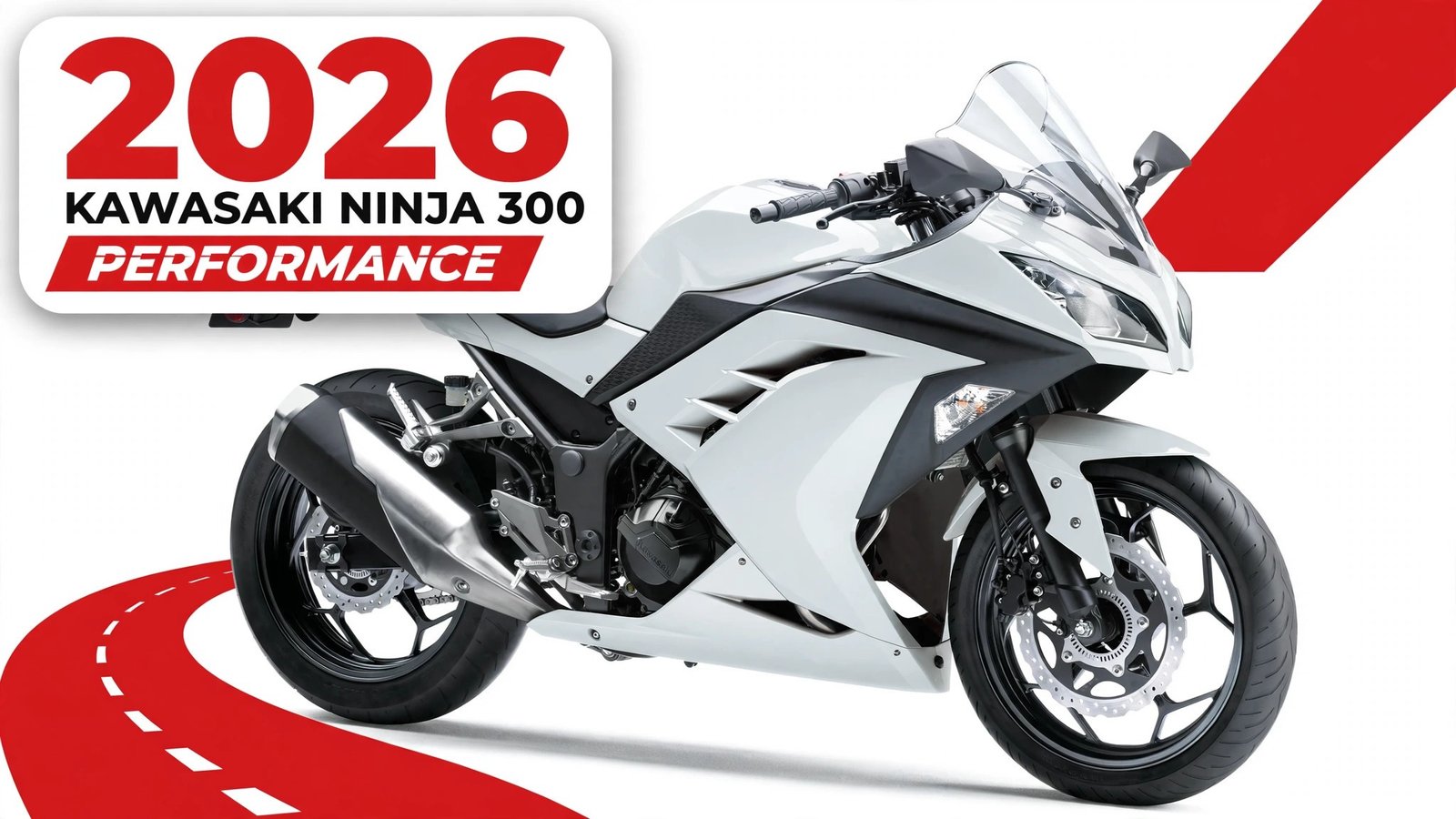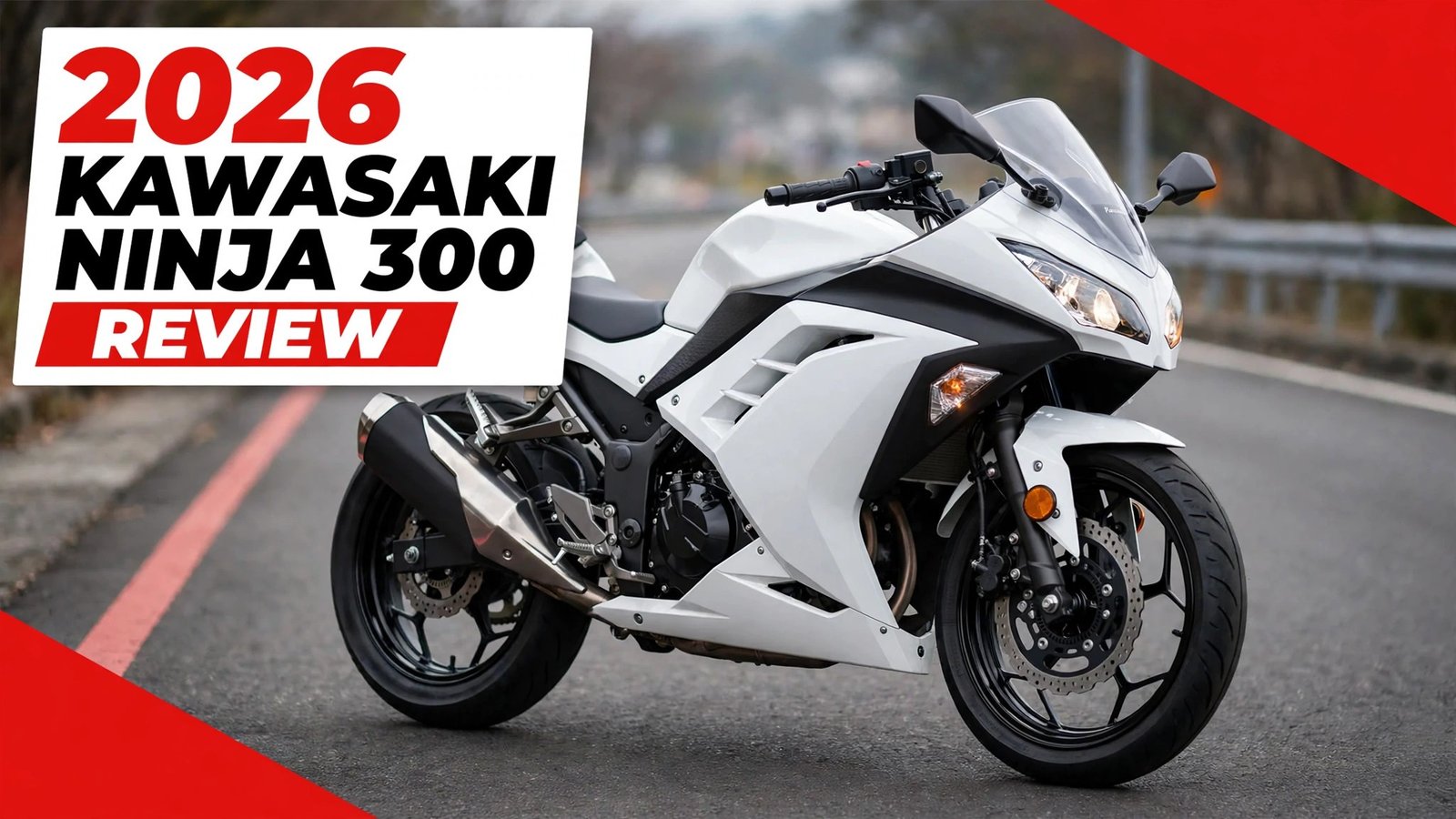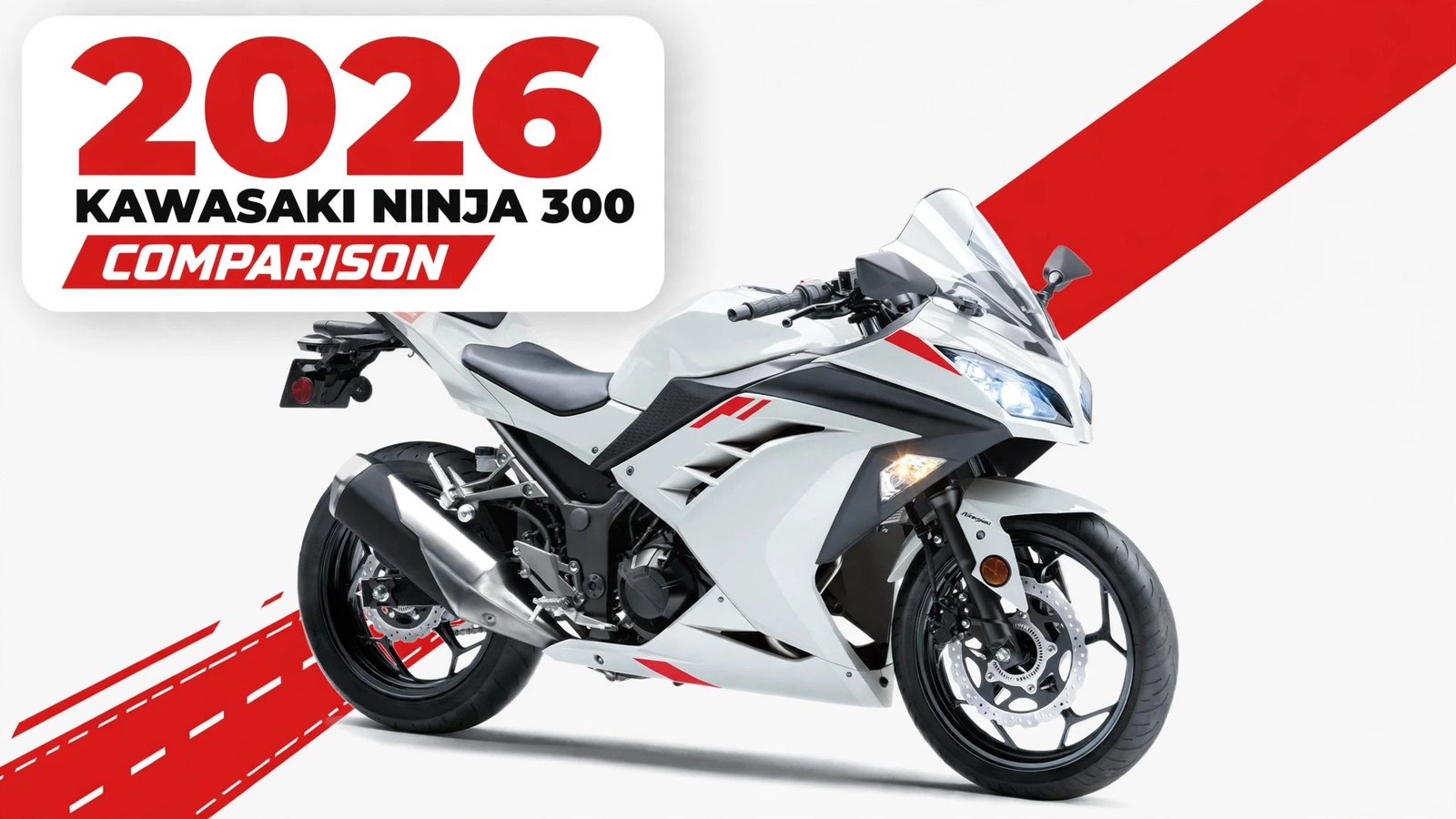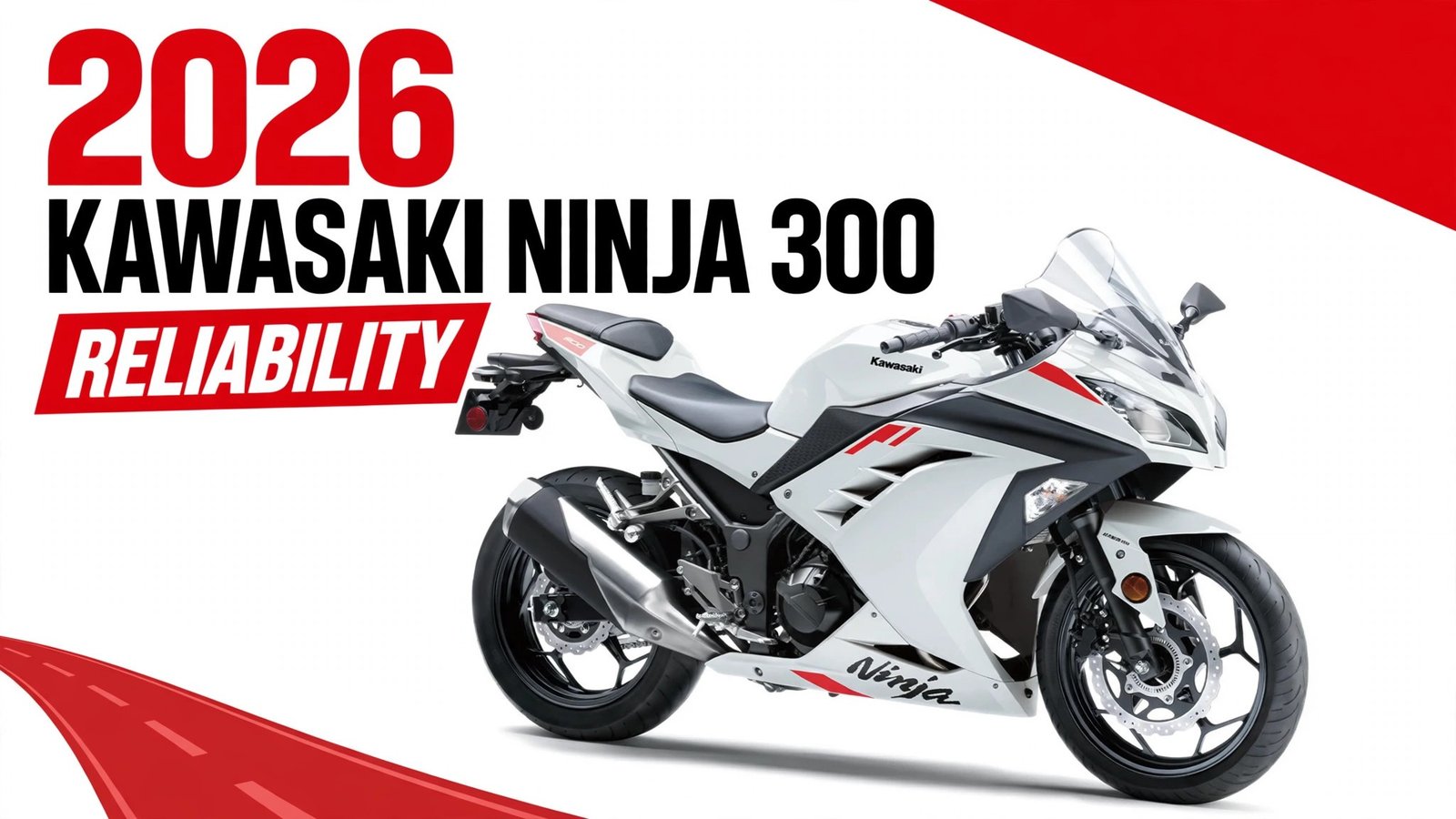
The short answer on Kawasaki Ninja 300 reliability is a good one: a simple, lightly stressed parallel twin with few known faults, and the two that mattered were both fixed by Kawasaki recalls in 2013. This Kawasaki Ninja 300 reliability guide works through the schedule and the wear items behind that record.
The 296cc engine makes 38.9 hp at 11,000 rpm, the bike weighs 388.1 lb wet with a 30.9-inch seat, and a kept example with records is a safe used buy — this Kawasaki Ninja 300 reliability guide shows how to tell one from a neglected bike.
Kawasaki Ninja 300 Reliability Overview
The short answer on Kawasaki Ninja 300 reliability is that this is a simple, lightly stressed parallel twin with few known faults, and the two that mattered were both fixed by Kawasaki recalls in 2013. The 296cc engine makes 38.9 hp at 11,000 rpm and 19.3 lb-ft at 10,000 rpm. The bike weighs 388.1 lb wet, with a 30.9-inch seat height. A kept example with records is a safe used buy, while a neglected one hides skipped valve checks and old tyres, and that gap is the whole story of Kawasaki Ninja 300 reliability.
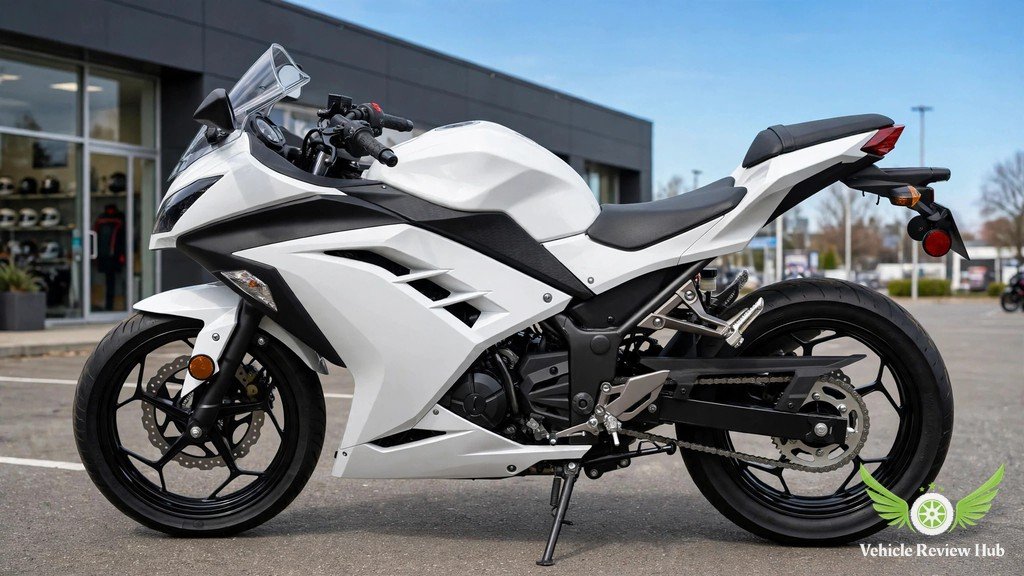
The Ninja 300 has lived two lives. The first run sold in the United States from 2013 to 2017, then the model went away for nine years before returning for 2026 at $4,999 plus a $650 destination charge, with standard ABS and Pearl Blizzard White as the only colour. A buyer today chooses between a new 2026 bike with a 12-month warranty and a used 2013 to 2017 bike, and Kawasaki Ninja 300 reliability looks different in those two cases. The new bike starts clean, while the used bike starts with whatever the last owner did, and that is the first thing to understand about Kawasaki Ninja 300 reliability.
Valve Checks at 7,600 Miles
The valve check is the service job that owners skip most often, and it is the one that matters most for long-term Kawasaki Ninja 300 reliability. The manual calls for a valve clearance inspection at 7,600 miles, and then again at every 7,600-mile service after that. The clearances are intake 0.15 to 0.24 mm and exhaust 0.22 to 0.29 mm, and the engine uses shim-under-bucket adjustment, so the cams have to come out and the shims have to be swapped. The interval is sometimes quoted online as every 24,000 km or 15,000 miles, and that figure is wrong: it comes from aggregators, not from the manual. Kawasaki Ninja 300 reliability rests on those intervals being followed, because the engine is simple enough that neglect, not design, is what kills these bikes.
How Mileage, Storage and Previous Care Affect Reliability
Mileage matters less than care on a Ninja 300, because the engine is understressed and the chassis is simple. A 2015 bike with 20,000 miles and a full service history is a better buy than a 2017 bike with 4,000 miles that sat in a garage for five years. Long storage is the quiet enemy of Kawasaki Ninja 300 reliability: fuel goes stale in the tank and the injectors, brake fluid absorbs water, tyres harden even when the tread looks new, and the battery dies. There are no 2018 to 2025 United States models, so every used bike is from 2013 to 2017.
Kawasaki Ninja 300 Common Problems and Wear Items
The honest list of common problems on the Ninja 300 is short. Two recalls covered the only faults Kawasaki ever admitted to, and both were fixed in 2013. Everything else on the list is wear: tyres, brake pads, chains, batteries and coolant. That is a good record for a beginner bike that has been in owners hands for more than a decade, and it is why Kawasaki Ninja 300 reliability is usually described as strong.
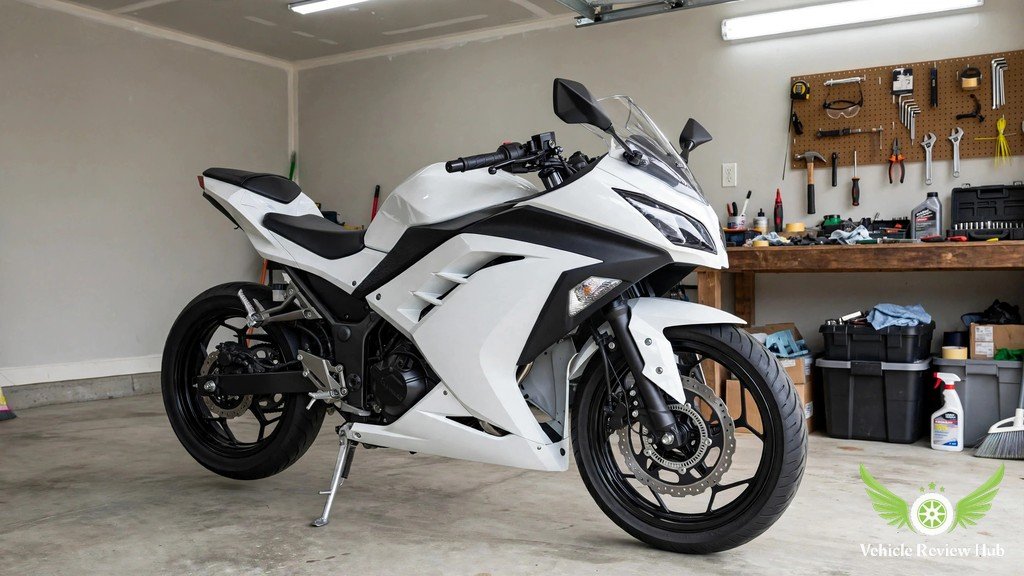
Two Recalls, Numbers Usually Swapped
The correct mapping is 13V-310 for the ABS pump and 13V-328 for the ECU stall fix, and getting it right matters for Kawasaki Ninja 300 reliability, because the two faults are nothing alike. Campaign 13V-310 covered 1,083 units built from August 16, 2012 to April 2, 2013, with dust contamination inside the ABS pump. Campaign 13V-328 covered 11,097 bikes built from July 16, 2012 to April 27, 2013, with an engine control unit fault that could stall the engine while riding, after 18 stalling allegations and a defect investigation, PE13-023. Both campaigns began on August 5, 2013. One warning: the NHTSA recall records for a 2013 Ninja 300 return only 13V-328 and do not return 13V-310 at all, so a database search alone is not a safe recall check. A dealer VIN check settles both campaigns in minutes. Searches for the 2014, 2017 and 2026 model years return no recalls, and those zeroes are meaningful, because the same database correctly returns a campaign for the 2024 Ninja 500 control check. Kawasaki Ninja 300 reliability is not harmed by either recall once the work is done, and the fix is free at a dealer.
No Pattern Failure Documented
No pattern failure is documented for the Ninja 300, and that clean record is the foundation of Kawasaki Ninja 300 reliability. Regulator and rectifier failures appear in owner reports, and water-pump leaks appear too, but neither one shows up as a documented pattern with a campaign, a service bulletin or a consistent failure rate. The long-term evidence points the same way: Autocar India ran a Ninja 300 for three years and just under 8,000 km, and the final report called it usable, reliable and fun, and a keeper. That simplicity is a large part of Kawasaki Ninja 300 reliability.
Kawasaki Ninja 300 Maintenance Schedule and Servicing
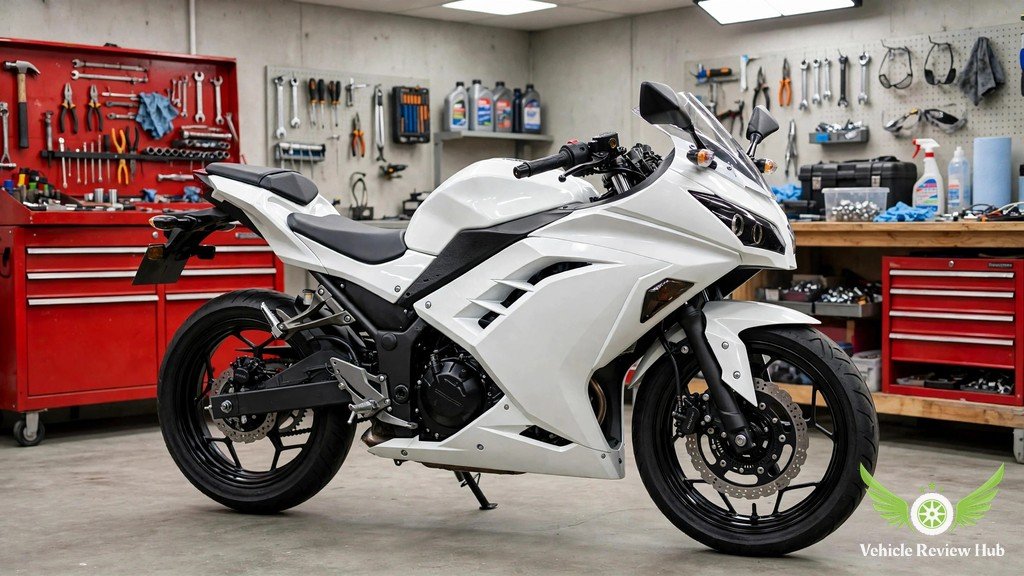
The maintenance schedule for the Ninja 300 is short and cheap to follow, which is part of why Kawasaki Ninja 300 reliability holds up so well. The first service falls at 600 miles or 1,000 km, and after that the major services fall every 7,600 miles or 12,000 km. Each major service covers the oil and filter, the spark plugs and the valve clearance inspection, and the coolant is changed every three years or 22,500 miles. The schedule below is taken from the manual maintenance chart.
| Service item | Interval | What happens |
|---|---|---|
| First service | 600 miles or 1,000 km | Oil and filter change, general inspection, dealer service |
| Engine oil and filter | Every 7,600 miles or 12,000 km, or yearly | 2.2 litres of SAE 10W-40 with a new filter; 2.0 litres without a filter change |
| Spark plugs | Every 7,600 miles or 12,000 km | NGK CR8E, gap 0.7 to 0.8 mm, torque 13 N·m |
| Valve clearance | Inspect every 7,600 miles or 12,000 km | Intake 0.15 to 0.24 mm, exhaust 0.22 to 0.29 mm, shim-under-bucket |
| Air cleaner element | Clean and inspect at each service, replace per the chart | Clean more often in dusty riding; replace after riding through rain or mud |
| Coolant | Every 3 years or 22,500 miles, 36,000 km | 1.5 litres total, permanent-type antifreeze mixed 50 percent, freezing point minus 35 degrees C |
| Drive chain lubrication | Every 400 miles or 600 km | Lubricate the O-ring chain; clean only with kerosene or diesel oil |
| Drive chain slack | Check at each service, and before every ride | 20 to 30 mm measured midway between the sprockets, bike on its side stand |
| Brake fluid | Inspect level at each service, change when contaminated | Front DOT3 or DOT4, rear DOT4; never mix brands or types |
Notes: this table follows the manual maintenance chart. Two figures need a warning. First, the oil interval is 12,000 km or 7,600 miles, not 6,000 km. An AI-generated summary of the owner’s manual claims oil and filter every 6,000 km, but that does not match the chart, and the chart is what the manual itself prints. Second, the drain bolt torque is 19.6 N·m or 14.5 ft-lb from the service manual, and the 2013 owner’s manual agrees. The 2015 owner’s manual prints 30 N·m instead, and this guide follows the service manual, because over-torquing the drain bolt strips the soft aluminium oil pan. The oil filter torque is 17.5 N·m or 12.9 ft-lb in both manuals. Kawasaki Ninja 300 reliability depends on getting these small numbers right. Get the oil interval and the drain bolt torque right, and the rest of Kawasaki Ninja 300 reliability follows from the schedule.
13V-310 Is the ABS Pump
Campaign 13V-310 is the ABS pump recall, and it is the smaller of the two campaigns. It covered 1,083 units built from August 16, 2012 to April 2, 2013. The fault was dust contamination inside the ABS pump, which could stop the anti-lock system working, and the fix was a replacement of the affected hardware at a Kawasaki dealer, free of charge. ABS was an option on the 2013 to 2017 bikes, not standard equipment, so a non-ABS bike was never in this campaign. If you are buying a used ABS bike from 2013, ask specifically whether the ABS pump work under 13V-310 was done, because that question belongs in any honest check of Kawasaki Ninja 300 reliability.
13V-328 Is the ECU Stall Fix
Campaign 13V-328 is the ECU stall fix, and it is the larger of the two campaigns. It covered 11,097 bikes built from July 16, 2012 to April 27, 2013. The fault was in the engine control unit, which could stall the engine while riding, and the campaign followed a defect investigation, PE13-023, after 18 stalling allegations. The fix was an ECU reflash at a Kawasaki dealer, free of charge. If you are buying a used 2013 bike, the ECU reflash is the single most important piece of paperwork to ask for, and a dealer can confirm from the VIN whether it was done. That reflash is the one item no buyer should skip when judging Kawasaki Ninja 300 reliability.
Kawasaki Ninja 300 Tires, Brakes and Suspension Maintenance
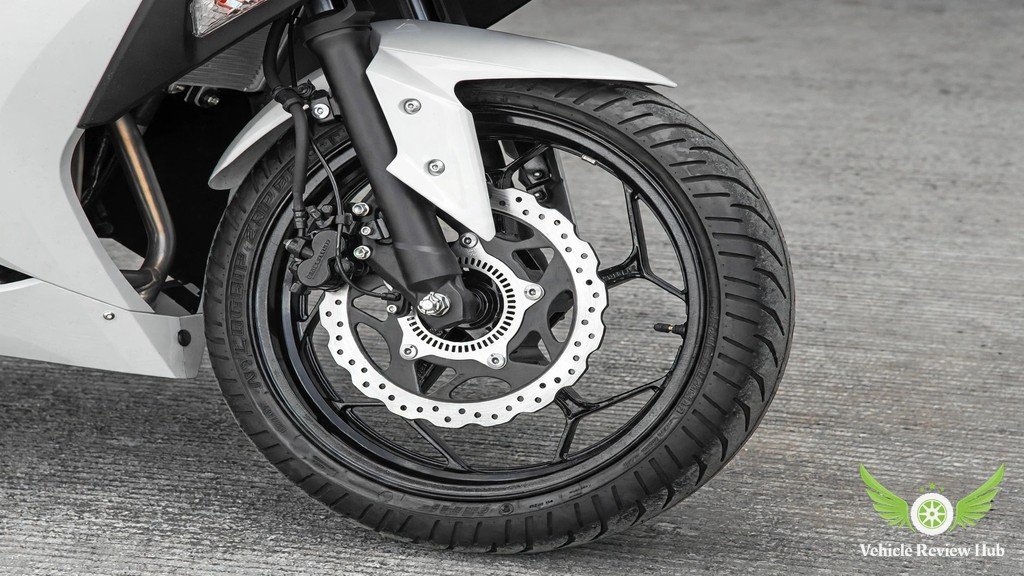
Tyres, brakes and suspension are the wear items that decide how a Ninja 300 actually feels on the road, and they are also the items a used buyer can check in ten minutes without tools. The bike runs a 110/70-17 front tyre and a 140/70-17 rear tyre, a 290 mm front disc with a dual-piston caliper and a 220 mm rear disc, a 37 mm telescopic fork with 4.7 inches of travel and a Uni-Trak rear shock with preload adjustment and 5.2 inches of travel. None of it is exotic, and none of it is expensive to keep right. Kawasaki Ninja 300 reliability in daily riding comes down to keeping these parts fresh, because a tired tyre or a worn pad is what turns a forgiving beginner bike into a nervous one. Ordinary parts, kept fresh: that is the whole point of Kawasaki Ninja 300 reliability.
| Item | Specification | When to check |
|---|---|---|
| Front tyre pressure | 200 kPa cold, up to 180 kg load; the manual prints 28 psi beside it | Before every ride, cold |
| Rear tyre pressure | 225 kPa cold, up to 180 kg load; the manual prints 32 psi beside it | Before every ride, cold |
| Front tyre tread depth | 4.2 mm new; service limit 1 mm, or 2 mm up to 130 km/h and 3 mm above it | At each service and before a long ride |
| Rear tyre tread depth | 6.4 mm new; service limit 1 mm, or 2 mm up to 130 km/h and 3 mm above it | At each service and before a long ride |
| Brake pads | 4.5 mm lining new, front and rear; service limit 1 mm, rear ABS models 1.5 mm | At each service; replace as a set per caliper |
| Brake fluid | Front DOT3 or DOT4, rear DOT4; keep the reservoir above the lower line | Level at each service; change when dark or contaminated |
| Front fork | 37 mm telescopic fork, 4.7 inches of travel, no adjustment | Check seals for leaks at each service |
| Rear shock | Uni-Trak with preload adjustment, 5.2 inches of travel | Set preload for your weight; check the linkage at each service |
Notes: the tyre pressures in this table are the service manual figures in kPa, because the kPa figures are the ones that agree across every source. The manual prints 28 psi for the front and 32 psi for the rear beside those kPa figures, while an exact conversion of 200 kPa gives 29 psi and 225 kPa gives 33 psi. That rounding difference is why some sources print 29 and 33 and others print 28 and 32. Checking pressures cold before every ride helps Kawasaki Ninja 300 reliability, because the bike is light enough that a few psi makes a real difference to how it steers.
Coolant Every 3 Years
Coolant is the service item owners forget because it sits out of sight in the reserve tank beside the right fork. The manual calls for a coolant change every three years or 22,500 miles, whichever comes first, and the system holds 1.5 litres in total. The coolant is a permanent type of antifreeze, a 50 percent mix of soft water and ethylene glycol with corrosion and rust inhibitor chemicals for aluminium engines and radiators, and it freezes at minus 35 degrees C. The three-year rule matters more than the mileage rule, because most Ninja 300s are ridden a few thousand miles a year, and old coolant loses its corrosion protection long before it loses its ability to keep the engine cool. Keeping the coolant fresh is cheap insurance for Kawasaki Ninja 300 reliability.
Tire, Brake and Suspension Checks That Matter
The checks that matter are the ones you can do with your eyes and a pressure gauge. Check the tyre pressures cold before every ride, and check the tread depth and the tyre date codes at the same time. The front tyre starts at 4.2 mm of tread and the rear at 6.4 mm, and the service limit is 1 mm. On the brakes, keep both reservoirs above the lower line, change fluid that looks dark, and never mix brands or types. Remember that ABS does not work below about 10 km/h or 6 mph, and that the ABS indicator light should go out shortly after the bike starts moving. If the light stays on, have the ABS checked by a dealer. Those ten minutes before a ride are the simplest habit behind Kawasaki Ninja 300 reliability.
Kawasaki Ninja 300 Maintenance and Ownership Costs
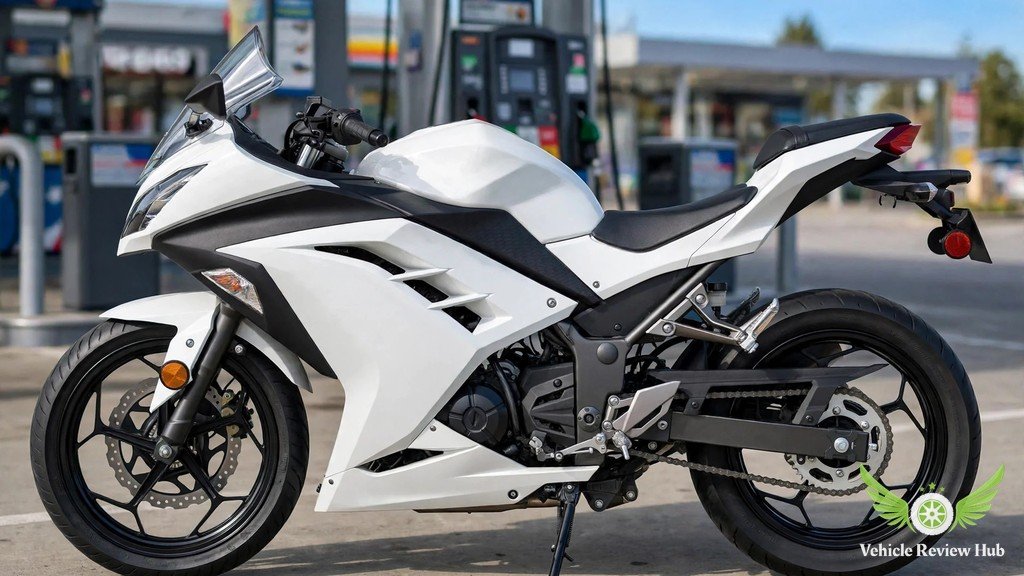
Owning a Ninja 300 is cheap, and the reason is that almost nothing on the bike is expensive to service. The engine takes just over two litres of oil, the spark plugs are a common NGK part, the chain is a standard 520 O-ring chain, and the valve check is the only service that costs real money, because the cams have to come out. A new 2026 bike costs $5,649 delivered, and the running costs after that are fuel, oil, tyres and the occasional valve check. Kawasaki Ninja 300 reliability is affordable reliability, and that is a large part of why the bike keeps selling to new riders.
| Item | Interval | Part or note |
|---|---|---|
| Engine oil and filter | Every 7,600 miles or yearly | 2.2 litres SAE 10W-40; filter Kawasaki 16097-0008 or HiFloFiltro HF303RC |
| Spark plugs | Every 7,600 miles | NGK CR8E, gap 0.7 to 0.8 mm; two plugs, cheap and common |
| Valve clearance check | Every 7,600 miles | Shim-under-bucket; the most expensive routine service because the cams come out |
| Air cleaner element | Clean at each service, replace per the chart | Foam element; clean more often in dusty riding |
| Coolant | Every 3 years or 22,500 miles | 1.5 litres total, permanent-type antifreeze, 50 percent mix |
| Drive chain and sprockets | Lube every 400 miles; replace when worn | 520 O-ring chain, 106 links, EK520SRO; replace sprockets with the chain |
| Tyres | When tread or age says so | 110/70-17 front, 140/70-17 rear; check the date code, not just the tread |
| Brake pads and fluid | Pads at 1 mm; fluid when dark | Front DOT3 or DOT4, rear DOT4; pads start at 4.5 mm of lining |
Notes: this table gives intervals and part numbers, not prices, because no verified survey of current parts and labour prices exists for this guide, and inventing dollar figures for parts would be worse than giving none. Budget for the valve check as the one expensive service, and for tyres as the one recurring cost that depends on how you ride. Kawasaki Ninja 300 reliability stays cheap only if the valve checks are actually done, because a skipped valve check is the one saving that turns into an engine bill.
Fuel, Routine Servicing, Tires and Replacement Parts
Fuel is the smallest running cost on this bike, because the tested economy is strong. Cycle World measured 54.1 mpg in its December 2012 test and observed nearly 70 mpg in gentle riding, and Motorcycle.com measured 54.3 mpg in its 2015 shootout. With a 4.5-gallon tank, the tested figure gives a range of about 243 miles, which is generous for a bike in this class and one more reason Kawasaki Ninja 300 reliability costs so little to live with. The Ninja 300 performance guide carries the full test figures, including the 106 mph top speed and the 5.6-second run to 60 mph. Cheap fuel and cheap servicing are part of why Kawasaki Ninja 300 reliability holds up in real ownership: a bike that costs little to run is a bike that gets ridden and serviced rather than parked.
Check the Tyre Date Codes
The tyre date code is the most important four digits on a used Ninja 300, and it is the check most buyers skip. The code is stamped on the sidewall as a week and year, so 2319 means the twenty-third week of 2019, and a tyre made in 2016 is nine years old no matter how deep its tread looks. Rubber hardens with age, so an old tyre grips less in the wet, and tread depth is not the same as rubber condition. Check all four digits on both tyres before you buy, and budget for a new set if either tyre is more than five years old. New tyres are the cheapest safety upgrade on this bike, which is why the date code belongs in any check of Kawasaki Ninja 300 reliability.
How to Keep a Kawasaki Ninja 300 Reliable
Kawasaki Ninja 300 reliability is mostly a matter of doing the small jobs on time and keeping the paperwork. The bike asks very little: oil and filter every 7,600 miles, plugs at the same interval, a valve check at every major service, coolant every three years, a chain lubed every 400 miles, and tyres checked before every ride. The 2026 revival, covered in Ultimate Motorcycling’s first look, gives new buyers a clean start, and the same schedule applies from the first service. That schedule is the whole secret of Kawasaki Ninja 300 reliability.
Preventive Maintenance, Records and Regular Inspections
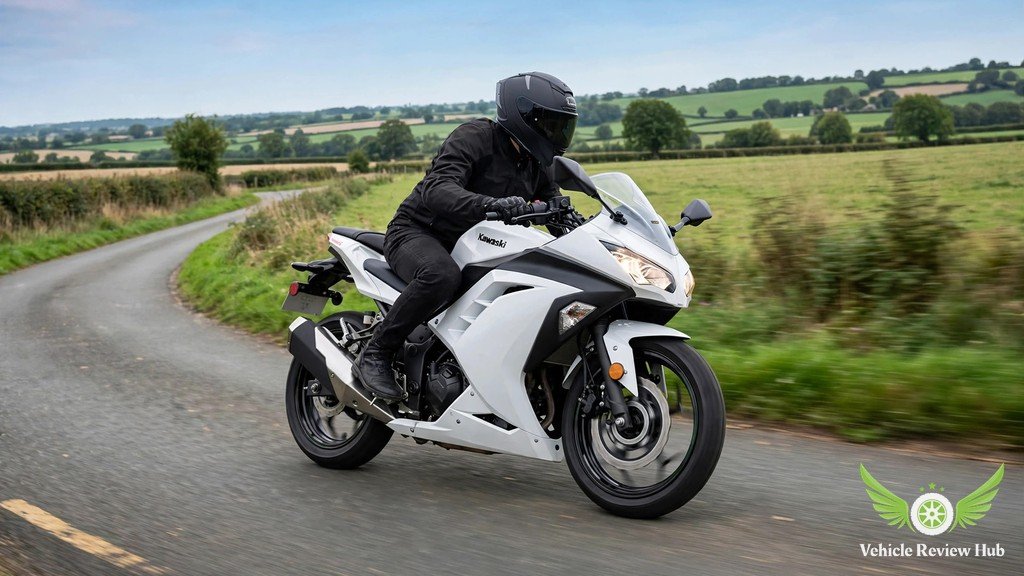
Preventive maintenance on this bike is a short routine, and it starts before every ride. Check the tyre pressures cold, look at the chain and lubricate it if it looks dry, check the brake fluid level and the coolant level, and look for anything leaking under the bike. That takes five minutes and it catches most problems while they are still cheap. Five minutes before a ride and a receipt file after every service: that is the routine Kawasaki Ninja 300 reliability is built on. Then follow the maintenance chart at the stated intervals, and keep every receipt. Cyclepedia’s valve-clearance guide shows what the job involves. When you sell the bike, that file is what turns a used Ninja 300 from a gamble into a known quantity, and that paperwork is the visible proof of Kawasaki Ninja 300 reliability.
India’s Recall Is Not America’s
One last warning for buyers who read owner forums from around the world: the recalls on the Ninja 300 were not the same in every market, and a forum post from India does not describe the American bike. Campaign 13V-310, the ABS pump recall, did not apply in India, because the Indian bikes were not sold with ABS. The same rule applies to prices: the 2013 United States bike opened at $4,799, or $5,499 with ABS, as MotorcycleDaily reported at the launch, and the Indian prices and equipment are not the American ones. That discipline is part of Kawasaki Ninja 300 reliability, because the numbers only mean something when they belong to your bike.
The verdict on Kawasaki Ninja 300 reliability is a simple one. This is a lightly stressed twin with a short service schedule, two recalls that were both fixed in 2013, and no documented pattern failure in more than a decade of owner use. Check those four things, buy the bike with the paperwork, and keep the services up, and Kawasaki Ninja 300 reliability will take care of itself. That is the whole case for Kawasaki Ninja 300 reliability. Our review of the 2026 Ninja 300 covers the price and riding experience, and the bike sits between the smaller Ninja 125 and the larger Ninja 500 in Kawasaki’s beginner range.
Kawasaki Ninja 300 Reliability Frequently Asked Questions
These answers cover the Ninja 300’s recall record, its service intervals and the checks that matter on a used bike in this Kawasaki Ninja 300 reliability guide, with every figure labelled by its source, and with the gaps named where a figure could not be verified.
Has the Kawasaki Ninja 300 had any recalls?
Yes, two, both in 2013, and their numbers are usually swapped. Campaign 13V-310 is the ABS pump recall: 1,083 units of the 2013 Ninja 300 ABS, built August 16, 2012 to April 2, 2013, with dust contamination inside the ABS pump. Campaign 13V-328 is the ECU stall fix: 11,097 bikes built July 16, 2012 to April 27, 2013, with an engine control unit fault that could stall the engine while riding, after 18 stalling allegations and a defect investigation, PE13-023. Both campaigns began August 5, 2013, and both fixes are free at a dealer. One warning: the NHTSA database returns only 13V-328 for a 2013 Ninja 300 and does not return 13V-310 at all, so a database search alone is not a safe recall check. A dealer VIN check settles both, and this Kawasaki Ninja 300 reliability guide says so plainly.
What are the Ninja 300’s common problems?
The honest list is short. The two recalls above are the only faults Kawasaki ever admitted to, and both were fixed in 2013. No pattern failure is documented for the Ninja 300: regulator and rectifier failures and water-pump coolant leaks appear in owner reports, but neither shows up as a documented pattern with a campaign, a service bulletin or a consistent failure rate. Autocar India ran a Ninja 300 for more than three years and just under 8,000 km and called it “usable, reliable and fun” and “a keeper”. Everything else on the list is wear: tyres, brake pads, chains, batteries and coolant, and that is why Kawasaki Ninja 300 reliability is usually described as strong.
How often should the Ninja 300 be serviced?
The first service falls at 600 miles or 1,000 km, and after that the major services fall every 7,600 miles or 12,000 km, or yearly. Each major service covers the oil and filter, the spark plugs and the valve clearance inspection. The oil is 2.2 litres of SAE 10W-40 with a new filter, or 2.0 litres without a filter change, and the filter is Kawasaki part 16097-0008 or a HiFloFiltro HF303RC. One figure to get right: the oil interval is 12,000 km or 7,600 miles, not 6,000 km. An AI-generated summary of the owner’s manual claims every 6,000 km, but the manual’s own chart says 12,000 km, and this Kawasaki Ninja 300 reliability guide follows the chart.
When is the valve clearance check due?
Every 7,600 miles, at each major service: inspect at 12,000 km, then again at every 12,000 km after that. The clearances are intake 0.15 to 0.24 mm and exhaust 0.22 to 0.29 mm, and the engine uses shim-under-bucket adjustment, so the cams have to come out and the shims have to be swapped. That is why the valve check is the most expensive routine service on the bike, and this Kawasaki Ninja 300 reliability guide prints the manual’s interval, not the aggregators’. The interval is sometimes quoted online as every 24,000 km or 15,000 miles, and that figure is wrong: it comes from aggregators, not from the manual. It is also the service owners skip most often, and a skipped valve check is the one saving that turns into an engine bill.
What should I check on a used Ninja 300?
Four things, in this order: both 2013 recall fixes documented, the ABS pump work under 13V-310 on ABS bikes and the ECU reflash under 13V-328 on every 2013 bike, then the valve service history, then the tyres, then the storage story. Check the tyre date codes on both tyres: a tyre made in 2016 is nine years old no matter how deep its tread looks, and budget for a new set if either tyre is more than five years old. A 2015 bike with 20,000 miles and a full service history is a better buy than a 2017 bike with 4,000 miles that sat in a garage for five years, because fuel goes stale, brake fluid absorbs water, tyres harden and the battery dies, and this Kawasaki Ninja 300 reliability guide treats that paperwork as the difference between a known quantity and a gamble.
How do I keep a Ninja 300 reliable?
Do the small jobs on time and keep the paperwork, and this Kawasaki Ninja 300 reliability guide asks for nothing more. Oil and filter every 7,600 miles, spark plugs at the same interval, a valve check at every major service, coolant every three years or 22,500 miles, and a chain lubed every 400 miles. Before every ride, check the tyre pressures cold, 28 psi front and 32 psi rear as the manual prints them, look at the chain, check the brake fluid and coolant levels, and look for anything leaking under the bike. Five minutes before a ride and a receipt file after every service: that is the routine Kawasaki Ninja 300 reliability is built on.