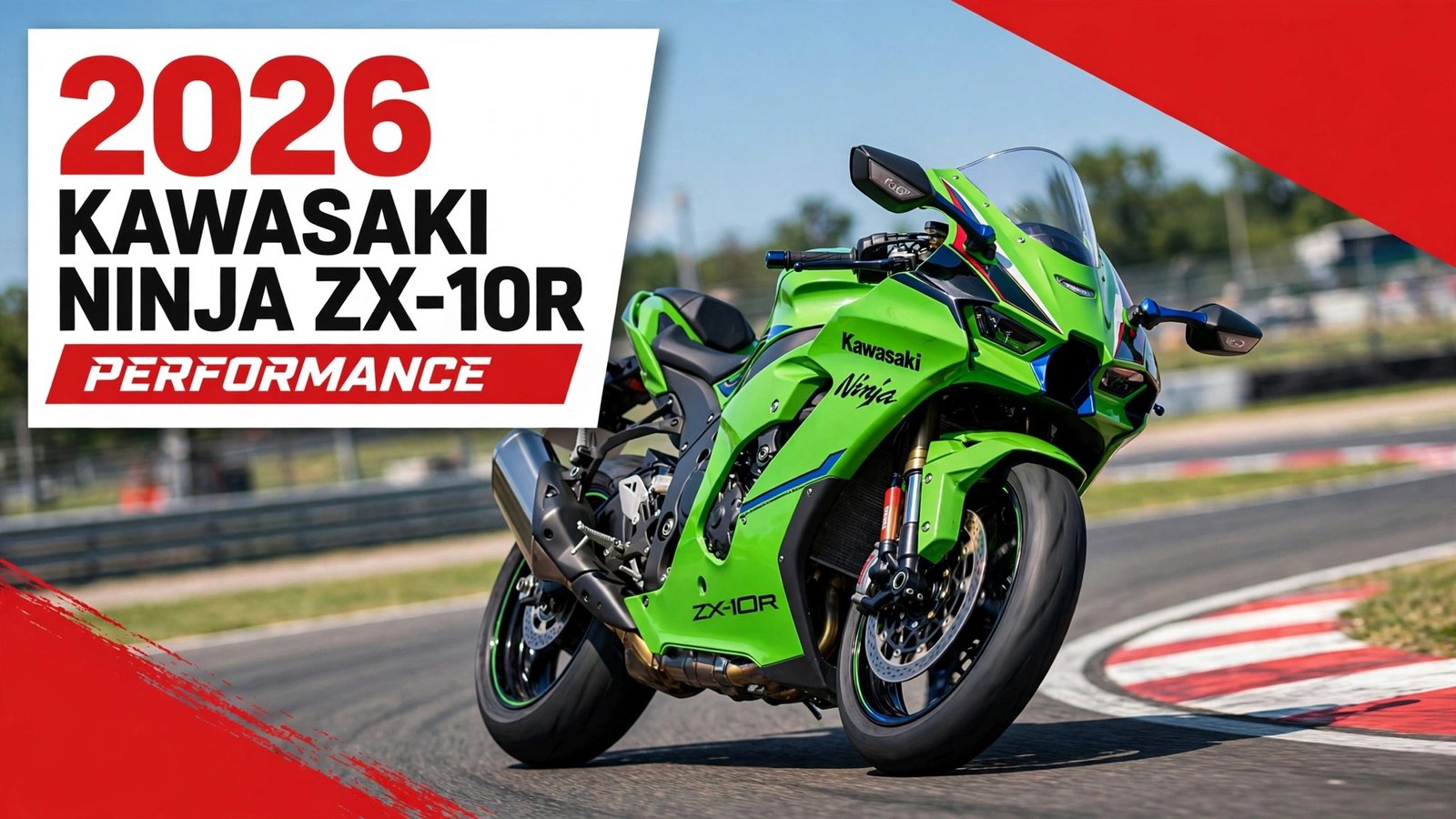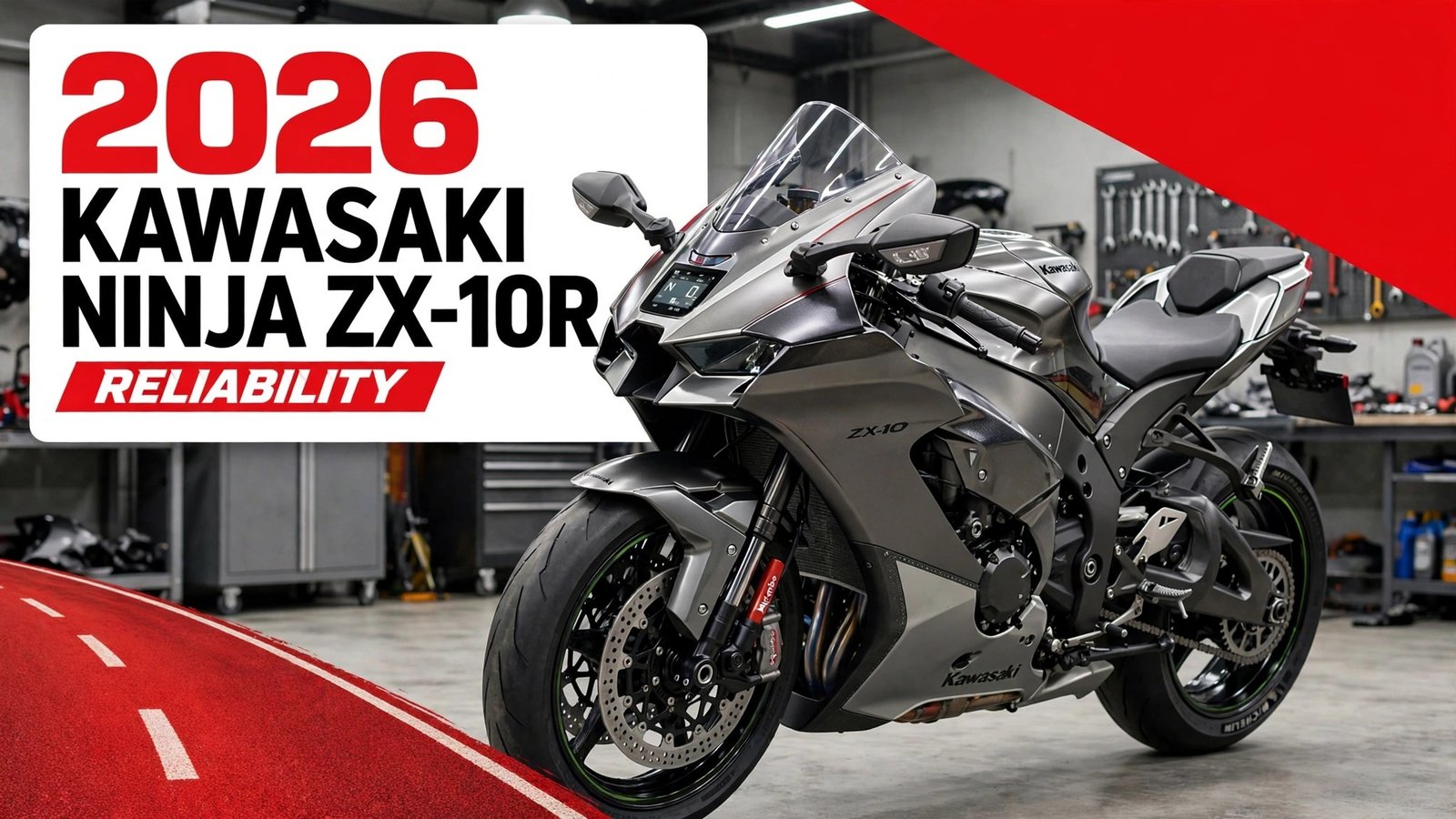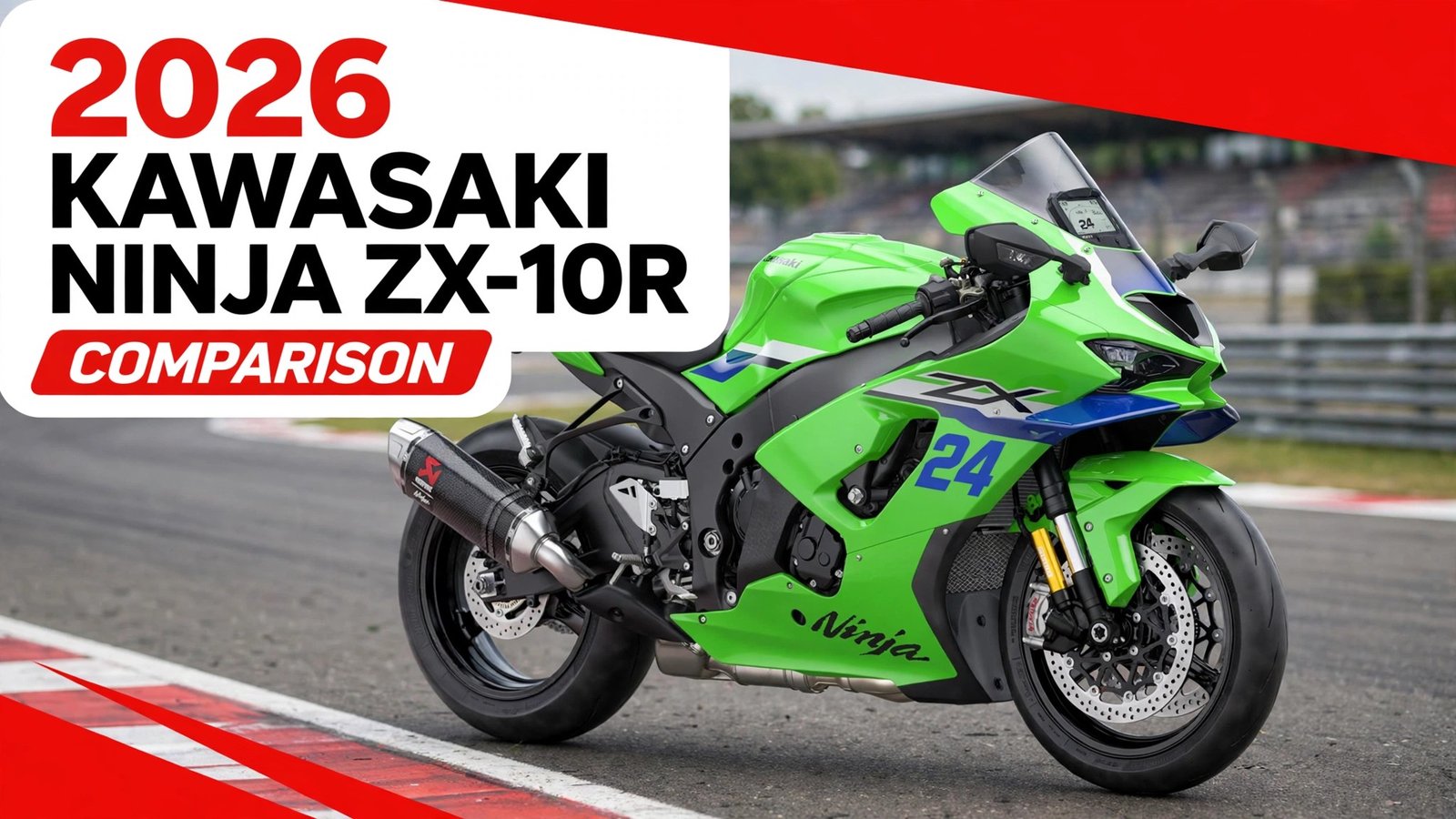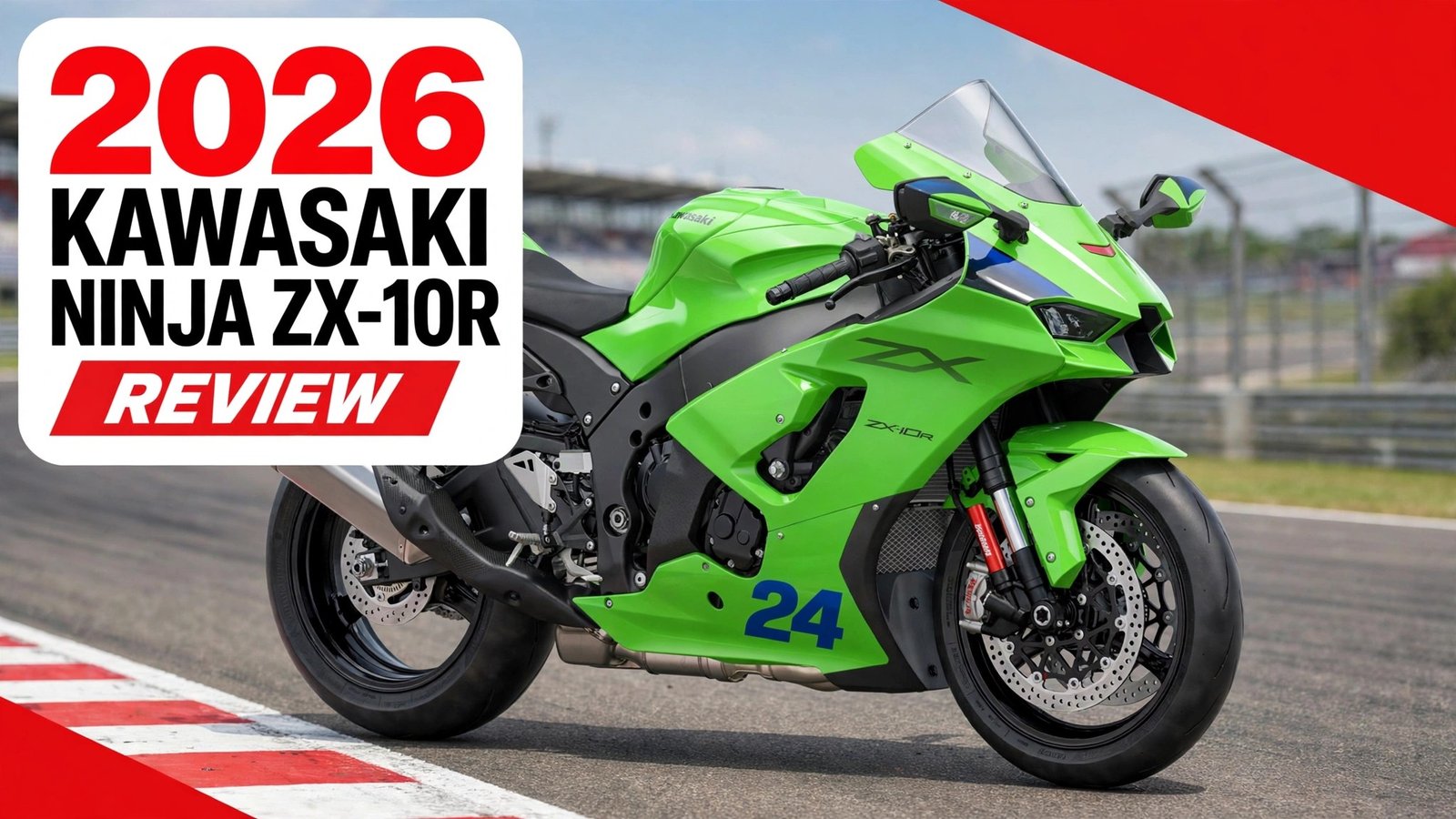
The 2026 Kawasaki Ninja ZX-10R is Kawasaki’s flagship litre superbike, and this Kawasaki Ninja ZX-10R review starts with the headline numbers: a claimed 190.0 horsepower, a $16,999 base price, and a new generation for 2026. It is the same platform Jonathan Rea rode to six consecutive WorldSBK riders’ titles, and it now costs $800 less than the 2024 bike did.
This Kawasaki Ninja ZX-10R review covers the 2026 bike in full: engine, price, KRT, design, electronics, and riding. Every figure below comes from Kawasaki’s own spec sheets, NHTSA records, or named road tests, and unverified figures are labelled, not printed.
Kawasaki Ninja ZX-10R Overview and Model-Year Updates
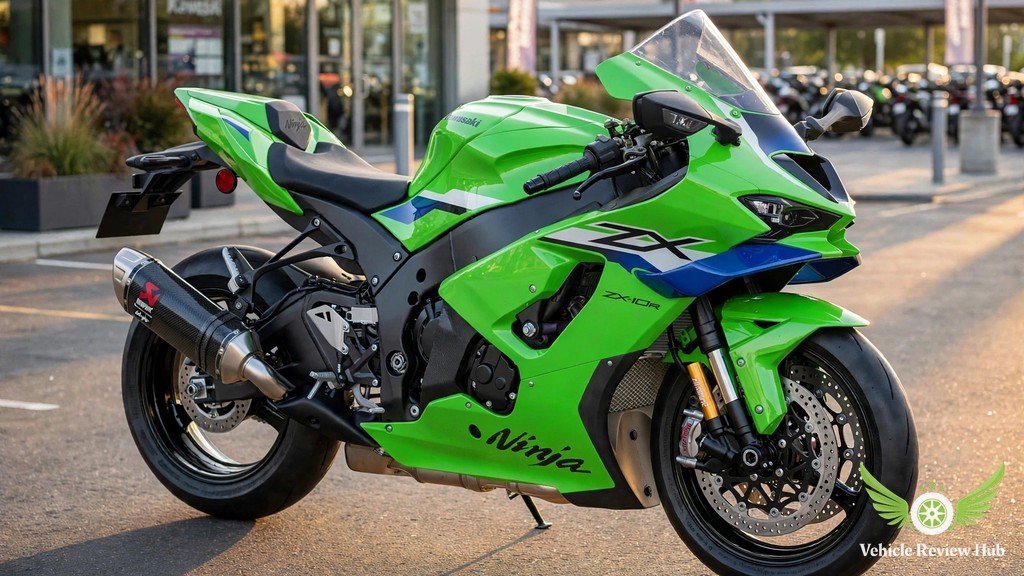
The ZX-10R has been Kawasaki’s open-class superbike in the United States since 2004, and this Kawasaki Ninja ZX-10R review treats the 2026 bike as the sixth generation of that line: Gen 1 (2004–2005), Gen 2 (2006–2007), Gen 3 (2008–2010), Gen 4 (2011–2015), Gen 5 (2016–2020), Gen 5 revised (2021–2025), and Gen 6 from 2026. That is 24 model years from 2004 through 2027. The 2016–2018 bikes were later covered by the 18V-089 do-not-ride transmission-gear recall.
New Generation Came for 2026
The 2026 bike is a new generation, not a colour change. Kawasaki fitted broad new winglets, revised the chassis geometry, and gave the bike a 5-inch TFT dash with a shift light — the three changes this Kawasaki Ninja ZX-10R review leads with. The engine mostly carries over, retuned: claimed power falls from 196.0 hp to 190.0 hp, torque from 83.9 lb-ft to 82.5 lb-ft, the seat drops to 32.5 inches, curb weight rises 6.7 lb on the ABS bike, rear travel shortens to 4.2 inches, and ground clearance drops to 5.1 inches. The 2027 bike carries the 2026 update over unchanged, and this Kawasaki Ninja ZX-10R review treats it as the same bike.
SlashGear’s 2026 first ride, titled “Less Power, More Appeal”, makes the case for the retune plainly: the engine mostly carries over, the chassis geometry changed for downforce, and the bike now offers three rider modes — Rain, Road, and Sport. The lower seat helps shorter riders, and the winglets are the most visible change. Losing 6 hp on paper looks bad in a headline, but the 190.0 hp figure comes from Kawasaki’s own 2026 spec sheet, measured to the ISO 4106 standard.
Price Cut a Year Earlier
The price cut came a year before the new generation. Kawasaki’s own sheets list $17,799 for 2024 and $16,999 for 2025 — an $800 cut. The 2026 bike holds that $16,999 base price, and so does the 2027 bike. TopSpeed’s value-for-money article gets this wrong, saying the 2026 bike is “$800 less than the 2025 model”, but the 2025 bike was already $16,999. The saving is real, it just happened in 2025.
At $16,999 before destination, the 2026 ZX-10R is the cheapest way into a current litre superbike with a published power claim, since Suzuki publishes no claimed figure for the GSX-R1000 at all.
Kawasaki Ninja ZX-10R Engine and Specifications
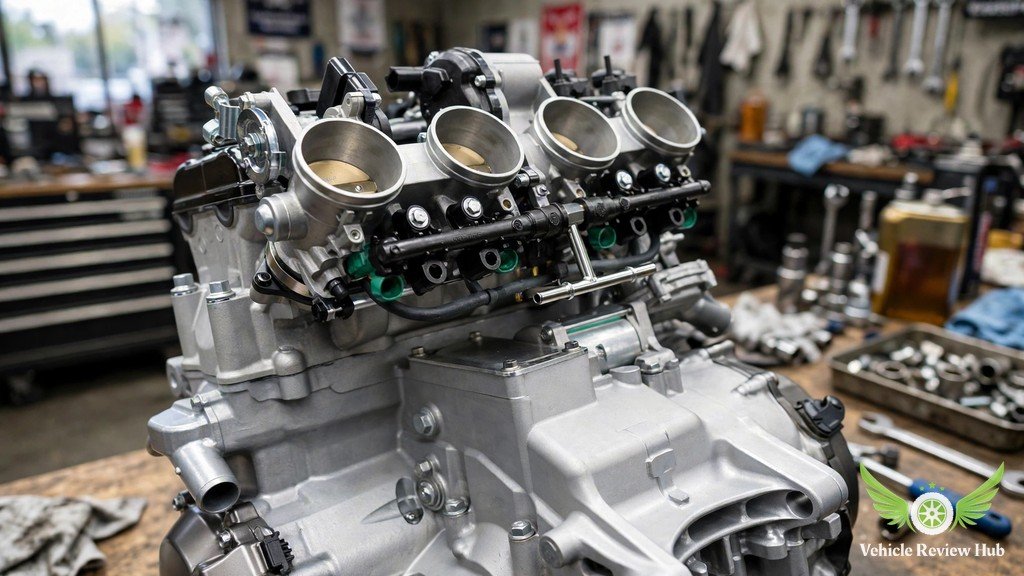
The engine is a 998cc liquid-cooled inline-four with dual overhead cams and 16 valves. Bore and stroke are 76.0 mm by 55.0 mm, compression is 13.0:1, and fuelling is digital injection through 47 mm throttle bodies. The gearbox is a six-speed return shift, and the bike carries a 4.5-gallon fuel tank.
Claim Revised Down to 190 HP
Kawasaki’s 2026 spec sheet claims 190.0 hp at 11,500 rpm and 82.5 lb-ft of torque at 11,300 rpm, both measured to the ISO 4106 standard. The 2026 sheet prints no separate ram-air figure, so this Kawasaki Ninja ZX-10R review prints none either. Older claims need more care, and this Kawasaki Ninja ZX-10R review checks them against the 2016 sources: the global claim was 200 PS (197 hp) without ram air and 210 PS (207 hp) with ram air at 13,000 rpm, while Cycle World’s April 2016 first ride repeats the 210 PS figure as “210 HORSEPOWER”. The 2016 US claim was 200 hp at 13,000 rpm, and for 2021 Kawasaki USA quoted no horsepower or torque at all.
Claimed power is not rear-wheel power, and this Kawasaki Ninja ZX-10R review says so plainly. In Motorcycle.com’s 2016 faceoff, the 2016 bike made 170.0 hp at 11,900 rpm and 76.3 lb-ft at 11,500 rpm at the rear wheel on a Hypercycle Dynojet, while Cycle World’s own dyno of the 2016 bike read 166.98 hp at 11,700 rpm. No named US publication has dyno-tested the 2026 bike yet, so there is no rear-wheel figure for the Gen 6 bike to print. The 2026 spec sheet on Kawasaki’s own site is the source for every 2026 figure in this section.
| Specification | 2026 ZX-10R | 2025 ZX-10R |
|---|---|---|
| Engine | 998cc inline-four, DOHC, 16 valves | 998cc inline-four, DOHC, 16 valves |
| Claimed power | 190.0 hp @ 11,500 rpm (ISO 4106) | 196.0 hp @ 11,500 rpm (ISO 4106) |
| Claimed torque | 82.5 lb-ft @ 11,300 rpm | 83.9 lb-ft @ 11,300 rpm |
| Bore x stroke / compression | 76.0 x 55.0 mm / 13.0:1 | 76.0 x 55.0 mm / 13.0:1 |
| Seat height | 32.5 in | 32.9 in |
| Curb weight (ABS / non-ABS) | 463.1 lb / 458.6 lb | 456.4 lb / 452.0 lb |
| Fuel capacity | 4.5 gal | 4.5 gal |
| Front tyre / rear tyre | 120/70 ZR17 / 190/55 ZR17 | 120/70 ZR17 / 190/55 ZR17 |
| Front brakes | Dual 330 mm discs, Brembo M50 calipers | Dual 330 mm discs, Brembo M50 calipers |
| Instrumentation | 5-in TFT colour display | 4.3-in TFT colour display |
Note: All figures above come from Kawasaki’s own 2026 and 2025 spec sheets. Power and torque are ISO 4106 claims, not rear-wheel dyno figures. This Kawasaki Ninja ZX-10R review prints the 2026 claim exactly as Kawasaki states it.
Seat Dropped to 32.5 Inches
The seat height falls from 32.9 inches to 32.5 inches for 2026, a 0.4-inch drop this Kawasaki Ninja ZX-10R review counts as one of the new bike’s real improvements. The 2026 bike is 82.1 inches long, 29.5 inches wide, and 46.5 inches high, with a 57.1-inch wheelbase. Dry weight is 425.6 lb with ABS and 421.2 lb without it, while curb weight is 463.1 lb with ABS and 458.6 lb without it, for the 49-state model — the weights this Kawasaki Ninja ZX-10R review uses throughout. The front fork is a 43 mm inverted Showa Balance Free Fork with 4.7 inches of travel, and the rear is a Showa BFRC lite shock with 4.2 inches of travel.
The 2026 bike carries an IMU-enhanced chassis orientation awareness system, Sport Kawasaki Traction Control (S-KTRC), cornering management (KCMF), launch control (KLCM), engine brake control, power modes, electronic cruise control, and the Kawasaki Quick Shifter (KQS). Cornering ABS (KIBS) is fitted on ABS models only. Ride-by-wire throttle has been standard since 2016, and the 2026 sheet lists the quick shifter without stating a direction, so this Kawasaki Ninja ZX-10R review claims no direction for the 2026 quick shifter. The steering damper is an Ohlins unit, listed without the word “Electronic” that the 2025 sheet carried — the electronics this Kawasaki Ninja ZX-10R review lists in full.
Kawasaki Ninja ZX-10R Price and Market Availability
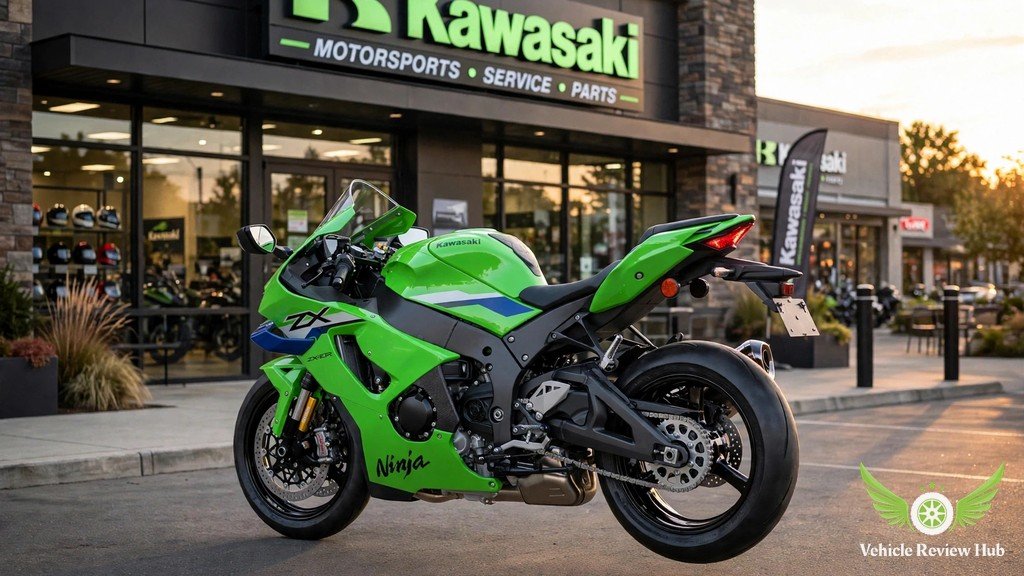
The 2026 ZX-10R costs $16,999 without ABS and $17,999 with ABS, plus an $840 destination charge, which works out to $17,839 and $18,839 delivered before dealer fees and tax. The 2027 bike costs the same. This Kawasaki Ninja ZX-10R review uses them consistently rather than quoting bare MSRP figures.
Kawasaki Ninja ZX-10R Price in the USA: $16,999 (2027)
The $16,999 base price holds across 2025, 2026, and 2027 — flat pricing this Kawasaki Ninja ZX-10R review stresses. The 2024 bike was $17,799, so the 2025 cut of $800 is the last price move Kawasaki made. The ABS premium is $1,000 and the destination charge $840 across 2025 to 2027, confirmed by dealer brochures. The 2016 bike was $14,999 standard, $15,299 for the KRT, $15,999 with ABS, and $16,299 for the ABS KRT, with a $345 destination charge. One source disagrees on the 2016 ABS price: Motorcycle.com’s compare tool lists $15,599, against $15,999 in the faceoff spec table and Cycle News’ test ride.
Two prices are deliberately left out of the table below. The 2024 ABS price is expected to be $18,799 on the $1,000 premium pattern, but it was not verified, so it is not printed as fact. Prices for 2017 through 2023 were not verified either, so those years are omitted. The 2018 figures printed come from the verified line-up: ABS KRT $16,399, ZX-10RR $18,899, SE $21,899.
| Year | Base (non-ABS) | ABS | KRT | Destination | Delivered base / ABS |
|---|---|---|---|---|---|
| 2016 | $14,999 | $15,999 | $15,299 / $16,299 ABS | $345 | $15,344 / $16,344 |
| 2018 | — | $16,399 (ABS KRT) | $16,399 ABS KRT | Not verified | — |
| 2018 SE | — | $21,899 (SE, ABS) | — | Not verified | — |
| 2018 ZX-10RR | — | $18,899 | — | Not verified | — |
| 2024 | $17,799 | Not verified | $17,799 (premium $0) | $475* | $18,274 / — |
| 2025 | $16,999 | $17,999 | $16,999 (last KRT year) | $840 | $17,839 / $18,839 |
| 2026 | $16,999 | $17,999 | — (dropped) | $840 | $17,839 / $18,839 |
| 2027 | $16,999 | $17,999 | — (dropped) | $840 | $17,839 / $18,839 |
Note: *The 2024 destination of $475 rests on Motorcycle.com’s spec database alone and needs a dealer-brochure check; the jump to $840 in 2025 is steep. The 2024 ABS price is not printed because it was not verified. Delivered prices appear only where the destination charge is verified.
KRT Name Dropped for 2026
The KRT name is gone from the ZX-10R for 2026. The last KRT Edition was the 2025 model, model code ZX1002MSFAL, priced at $16,999, the same as the base bike. The 2025 KRT ABS carried code ZX1002LSFAL. For 2026 there is no KRT trim, and Lime Green is now a standard colour. The 2026 codes are ZX1003BTFAL (base) and ZX1003ATFAN (ABS); the 2027 codes are ZX1003BVFAL and ZX1003AVFAN — codes this Kawasaki Ninja ZX-10R review lists. There is no 2027 KRT either.
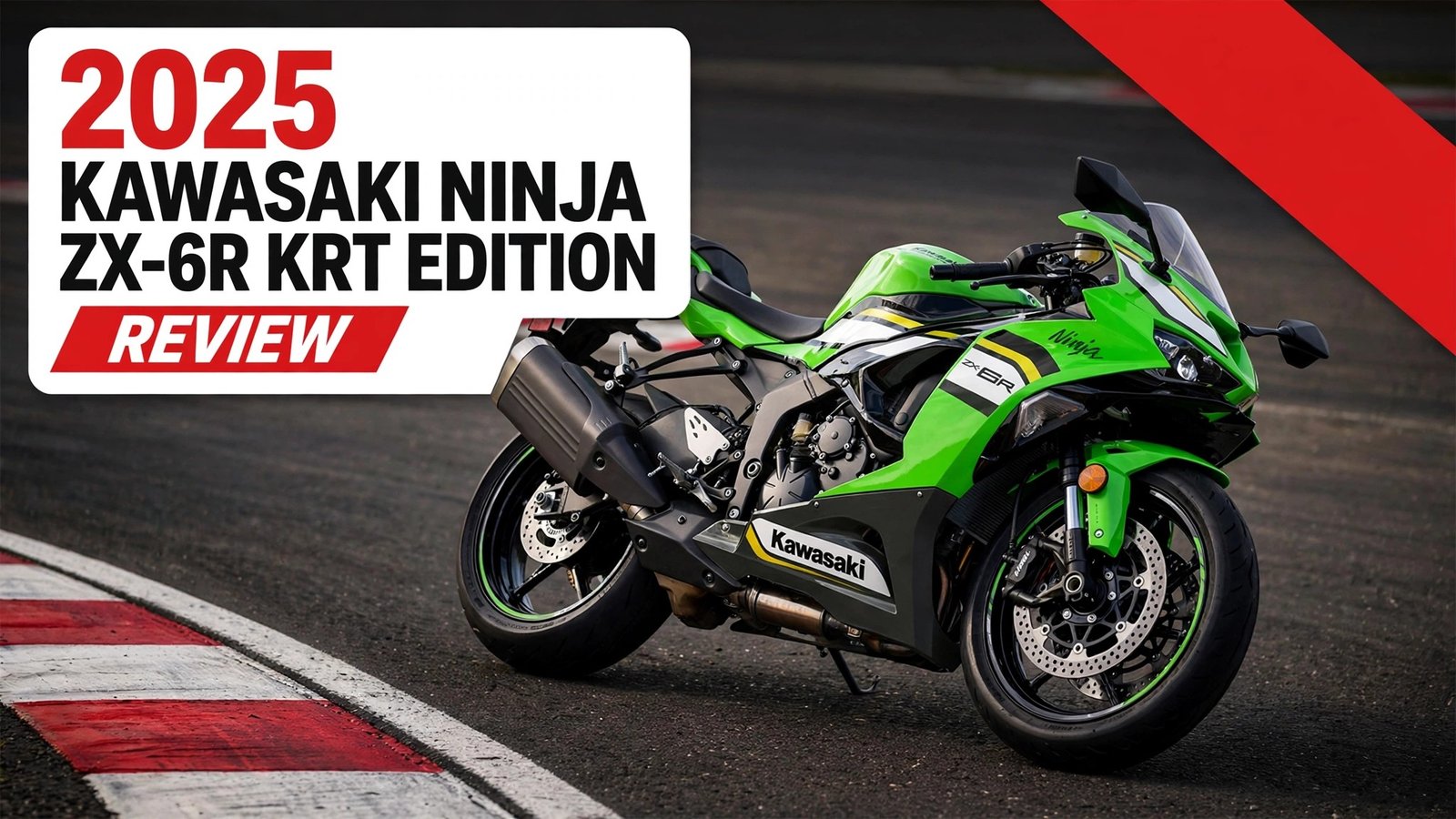
Buyers should not confuse the ZX-10R’s KRT ending with the smaller bike’s. The ZX-6R KRT Edition ran a year longer, with its last KRT in 2026 and the name dropped for 2027, while the ZX-10R’s KRT ended in 2025. For a buyer who wants the KRT livery on a ZX-10R, the 2025 model is the last one, at the $16,999 base price, not a premium.
Kawasaki Ninja ZX-10R Design, Features and Technology
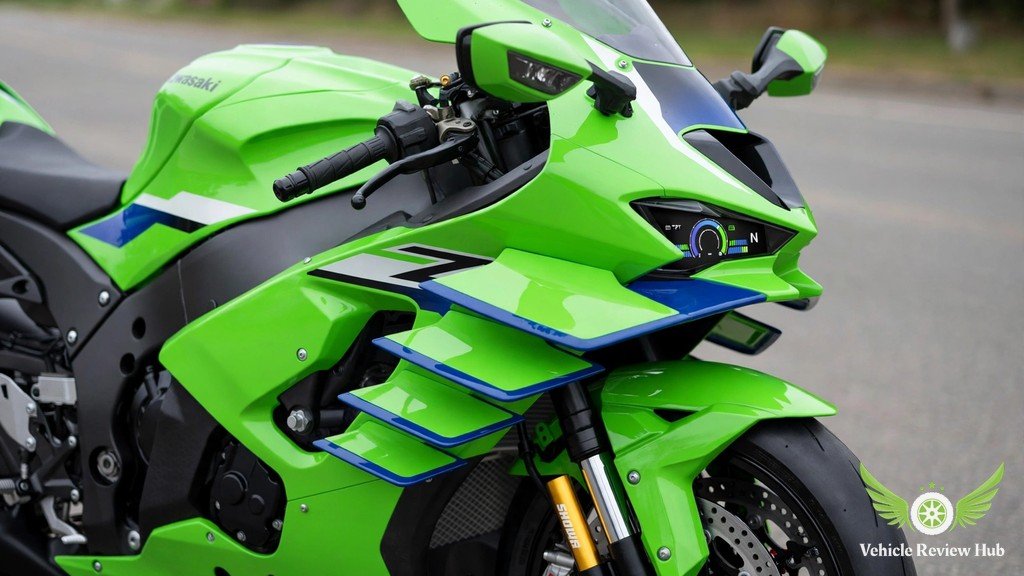
The 2026 bike looks different because it works differently. The broad new winglets are the first thing a buyer notices, and this Kawasaki Ninja ZX-10R review treats them as the signature of the Gen 6 bike rather than decoration. Behind the fairing sits a full IMU-based electronics suite and a 5-inch TFT dash. The Brembo M50 brakes and Showa Balance Free Fork did not change because they did not need to.
Winglets and a 5-Inch TFT
The winglets are the headline design change for 2026. Kawasaki replaced the previous generation’s fairing-integrated winglets with broad, prominent ones that increase downforce by 25 percent while adding only 0.3 percent more drag than the 2025 bike, according to Ultimate Motorcycling’s 2026 first look. The second colour is Metallic Matte Graphenesteel Gray with Metallic Spark Black and Pearl Storm Gray.
The 5-inch TFT colour instrument panel replaces the 4.3-inch display from 2021 to 2025, and it carries a shift light. All lighting is LED, and the bike offers RIDEOLOGY connectivity. The frame is a twin-spar cast aluminium unit — the spec sheet’s wording changed from the 2025 sheet’s “aluminium perimeter”, but this Kawasaki Ninja ZX-10R review does not present the frame itself as new hardware for 2026. The 2026 change is the revised chassis geometry. The Ohlins steering damper and Brembo M50 calipers carry over.
Non-ABS Never Dropped
A non-ABS ZX-10R has been offered every year from 2004 through 2027, and the 2026 bike keeps that choice. The base bike at $16,999 is the non-ABS bike, and the ABS bike at $17,999 adds Kawasaki’s Intelligent anti-lock Brake System (KIBS) with cornering ABS — a difference this Kawasaki Ninja ZX-10R review flags because KIBS is fitted on ABS models only, so the $1,000 premium buys a real electronics difference, not just a badge.
The rest of the technology list is unchanged in kind from the 2021 bike: Sport Kawasaki Traction Control, cornering management, launch control, engine brake control, power modes, electronic cruise control, and the quick shifter. What the 2026 bike adds is the integration: the IMU-enhanced system ties the traction control, cornering management, and ABS together. The ZX-10R’s electronics are standard equipment, not an options list.
Kawasaki Ninja ZX-10R Riding Experience and Comfort
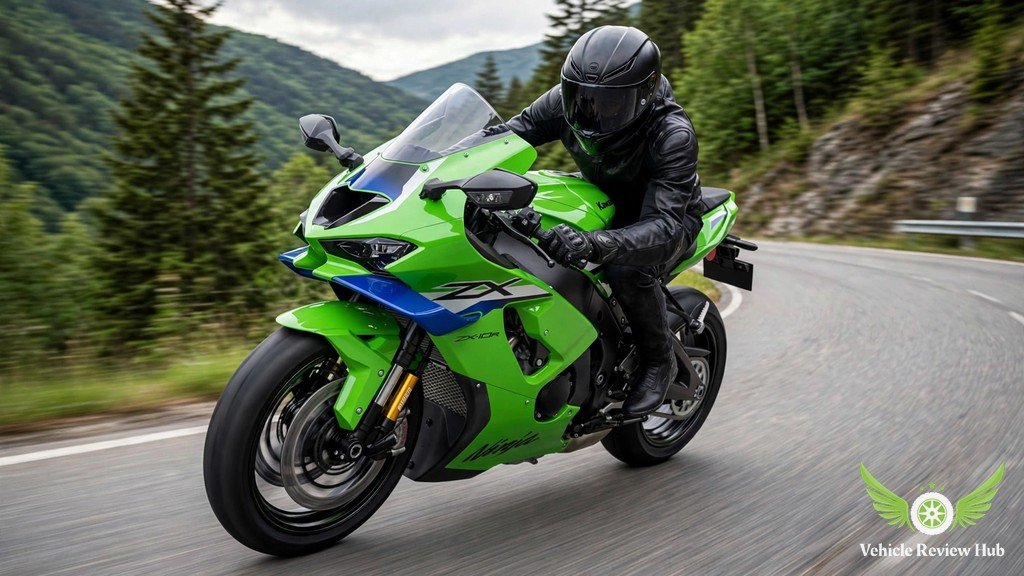
On the road, the 2026 ZX-10R is a litre superbike that Kawasaki retuned for balance rather than for a bigger headline number. The 6 hp drop is real, but so is the lower seat, the revised geometry, and the three rider modes — Rain, Road, and Sport. This Kawasaki Ninja ZX-10R review has not ridden the bike; the impressions below come from named first rides and tests.
SlashGear’s 2026 first ride is the most useful single account of the new bike. Cycle World’s April 2016 first ride at Sepang is still the best description of the platform at full lean. Motorcycle.com’s 2016 faceoff adds the comparison that matters: the ZX-10R was the lighter bike in the test at 454 lb against the Aprilia RSV4 RR’s 462 lb, and it was quicker down the Auto Club Speedway front straight on GPS, 158 mph against 152.3 mph, even though the Aprilia won the scorecard on peak power.
The video below shows a 2026 bike on the road in Wales. It is a UK-market bike lent by Kawasaki UK, filmed on a road ride through the Welsh countryside around Ruthin and Betws-y-Coed, and the rider is recovering from a leg injury, so there is no track riding in it. Watch it for the road manners and the sound of the bike at real-road speeds, not as a track test.
Six Titles on This Platform
Jonathan Rea won six consecutive WorldSBK riders’ titles from 2015 to 2020 on the ZX-10R and ZX-10RR, and Tom Sykes won the 2013 title on the ZX-10R. That makes seven riders’ titles on this platform; the heading above says six because those six belong to Rea alone. Kawasaki’s manufacturer titles total eight, counting Scott Russell’s 1993 title on the ZXR-750. This Kawasaki Ninja ZX-10R review counts the $16,999 price as the cheapest way to buy into that record.
That pedigree is not just a badge. The Showa Balance Free Fork, the Brembo M50 calipers, the IMU-based electronics, and the quick shifter all came to the road bike from the race paddock. The 2026 bike’s winglets are the latest step in the same direction: aerodynamic downforce developed for racing, on a road bike that costs less than its 2024 predecessor.
12 Month Limited Warranty
The ZX-10R carries Kawasaki’s standard US 12-month limited warranty, and this Kawasaki Ninja ZX-10R review notes it is the same term Kawasaki lists across its US street range. Kawasaki Protection Plus is available as an optional extension in 12, 24, 36, or 48-month terms. Twelve months is short next to some rivals’ longer terms, but it is the standard Kawasaki term, not a cut-down warranty for this bike.
Comfort on a litre superbike is always relative, and this Kawasaki Ninja ZX-10R review judges the 2026 changes as pointing in the right direction. The seat is 0.4 inches lower, and electronic cruise control is standard. For a first superbike it is still a big step up from a middleweight; the honest first-bike recommendations remain the Ninja 500 or the Ninja 650.
Kawasaki Ninja ZX-10R Review: Pros, Cons and Verdict
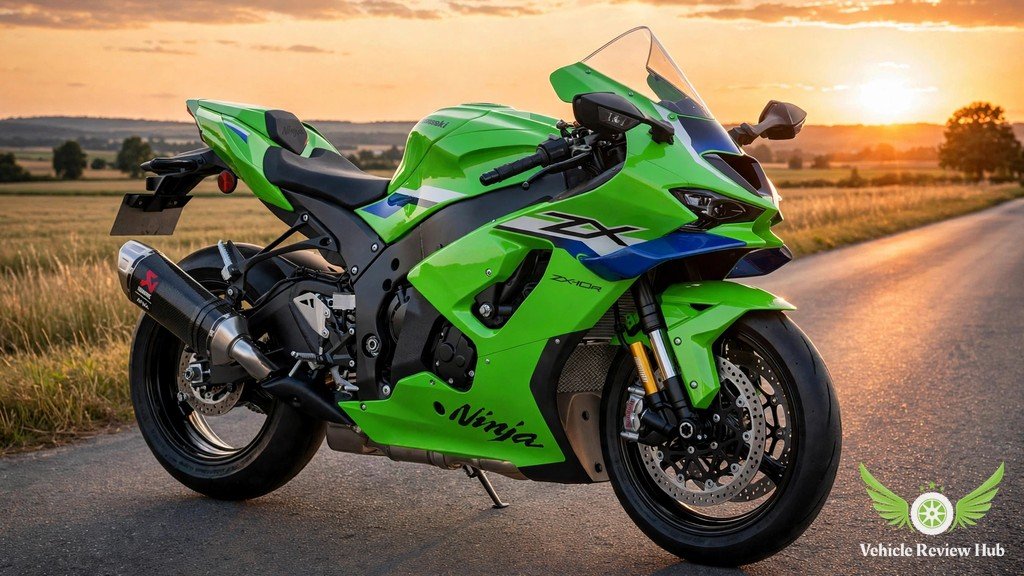
The verdict of this Kawasaki Ninja ZX-10R review is that Kawasaki cut the price and the power at the same time, and the price cut matters more. A claimed 190 hp is still more than any road rider can use. The Suzuki GSX-R1000 undercuts it by $690 delivered ($17,149 against $17,839), while the BMW S 1000 RR costs $3,131 more delivered at $20,970. The bike’s case is value plus pedigree: seven WorldSBK riders’ titles on the platform and a full IMU electronics suite as standard.
Main Advantages and Limitations of the Kawasaki Ninja ZX-10R
The advantages start with the price. At $16,999 base and $17,839 delivered, the ZX-10R is the cheapest litre superbike with a published power claim, because Suzuki publishes no claimed figure for the GSX-R1000. The 190.0 hp claim is honest and sourced from Kawasaki’s own sheet, and the Brembo M50 brakes and Showa Balance Free Fork are proven hardware. The non-ABS choice survives, the seat is lower, and the 5-inch TFT is a real upgrade.
The limitations are real too. Claimed power fell 6 hp and curb weight rose 6.7 lb on the ABS model, so the 2026 bike is slower on paper and heavier than the bike it replaces. No Gen 6 dyno exists yet from a named US publication. The quick shifter’s direction and the steering damper’s electronic status are unverified for 2026. And the KRT name is gone, so buyers who want the race-team livery must buy a 2025 or older bike — a trade-off this Kawasaki Ninja ZX-10R review states plainly.
Who should buy it? A rider moving up from a middleweight who wants litre power without litre money, a track-day rider who wants the non-ABS bike, or a buyer who values the WSBK pedigree. Who should not, in this Kawasaki Ninja ZX-10R review’s judgement? A buyer who wants the most powerful litre bike — the BMW S 1000 RR claims 205 hp — or a new rider, for whom the ZX-4RR or Ninja 650 is the choice. The GSX-R1000 is the closest rival on price, $690 cheaper delivered. The ZX-6R is the cheaper Ninja alternative for buyers who do not need litre power.
SE Was 2018, Not 2019
The special edition in this bike’s history is the 2018 ZX-10R SE, announced on December 1, 2017 at $21,899. It was the first Kawasaki with semi-active electronic suspension (KECS), with Road, Track, and Manual modes. It also carried forged Marchesini wheels. The 2018 line-up was the ABS KRT at $16,399, the ZX-10RR at $18,899, and the SE at $21,899. Listings that date the SE to 2019 are wrong; the US model year is 2018, and this Kawasaki Ninja ZX-10R review prints it that way.
That SE shows what the ZX-10R line can do when Kawasaki spends more: electronic suspension and forged wheels. The 2026 bike does not offer an SE, and the ZX-10RR sits above it in the range. For most buyers, the standard 2026 bike at $16,999 is the right buy, and this Kawasaki Ninja ZX-10R review says so plainly; the SE is a used-bike footnote.
Kawasaki Ninja ZX-10R Review: Frequently Asked Questions
The answers below give the direct version of each question about the Kawasaki Ninja ZX-10R review, with the figures and the sources behind them.
What is the Kawasaki Ninja ZX-10R?
The Kawasaki Ninja ZX-10R is Kawasaki’s flagship litre-class superbike: a 998cc inline-four with a claimed 190 hp for 2026. It is the platform Jonathan Rea rode to six consecutive WorldSBK titles, with Tom Sykes adding a seventh in 2013, and this Kawasaki Ninja ZX-10R review treats that race record as the bike’s defining feature.
How much does a 2026 Kawasaki Ninja ZX-10R cost?
A 2026 Kawasaki Ninja ZX-10R costs $16,999 without ABS and $17,999 with ABS, plus an $840 destination charge, for $17,839 and $18,839 delivered. The 2027 bike costs the same, and this Kawasaki Ninja ZX-10R review uses those delivered prices throughout.
What is new on the 2026 Ninja ZX-10R?
The 2026 Ninja ZX-10R is a new generation: broad winglets, revised chassis geometry, a 5-inch TFT dash, and a seat lowered to 32.5 inches. Power fell from 196 hp to 190 hp, torque from 83.9 lb-ft to 82.5 lb-ft, and curb weight rose 6.7 lb on the ABS bike. This Kawasaki Ninja ZX-10R review notes that the frame wording changed on the spec sheet, but does not present the twin-spar cast aluminium frame as new hardware for 2026.
Is there a 2026 KRT Edition?
No, there is no 2026 KRT Edition. The KRT name was dropped for 2026, and the last KRT Edition was the 2025 model, priced at $16,999, the same as the base bike. Lime Green is now a standard 2026 colour, and this Kawasaki Ninja ZX-10R review prints that plainly because the sheet description that says the name is gone in 2027 is wrong.
How much does the ZX-10R weigh?
The 2026 ZX-10R weighs 463.1 lb curb with ABS and 458.6 lb without ABS, for the 49-state model. Do not use the 474 lb figure from a Canadian dealer walk-around video; this Kawasaki Ninja ZX-10R review uses Kawasaki’s own spec sheet figures.
What is the ZX-10R’s warranty?
The ZX-10R carries Kawasaki’s standard US 12-month limited warranty, with Kawasaki Protection Plus available as an optional extension. This Kawasaki Ninja ZX-10R review states the term as Kawasaki’s standard US term, verified against Kawasaki’s own specification listings.