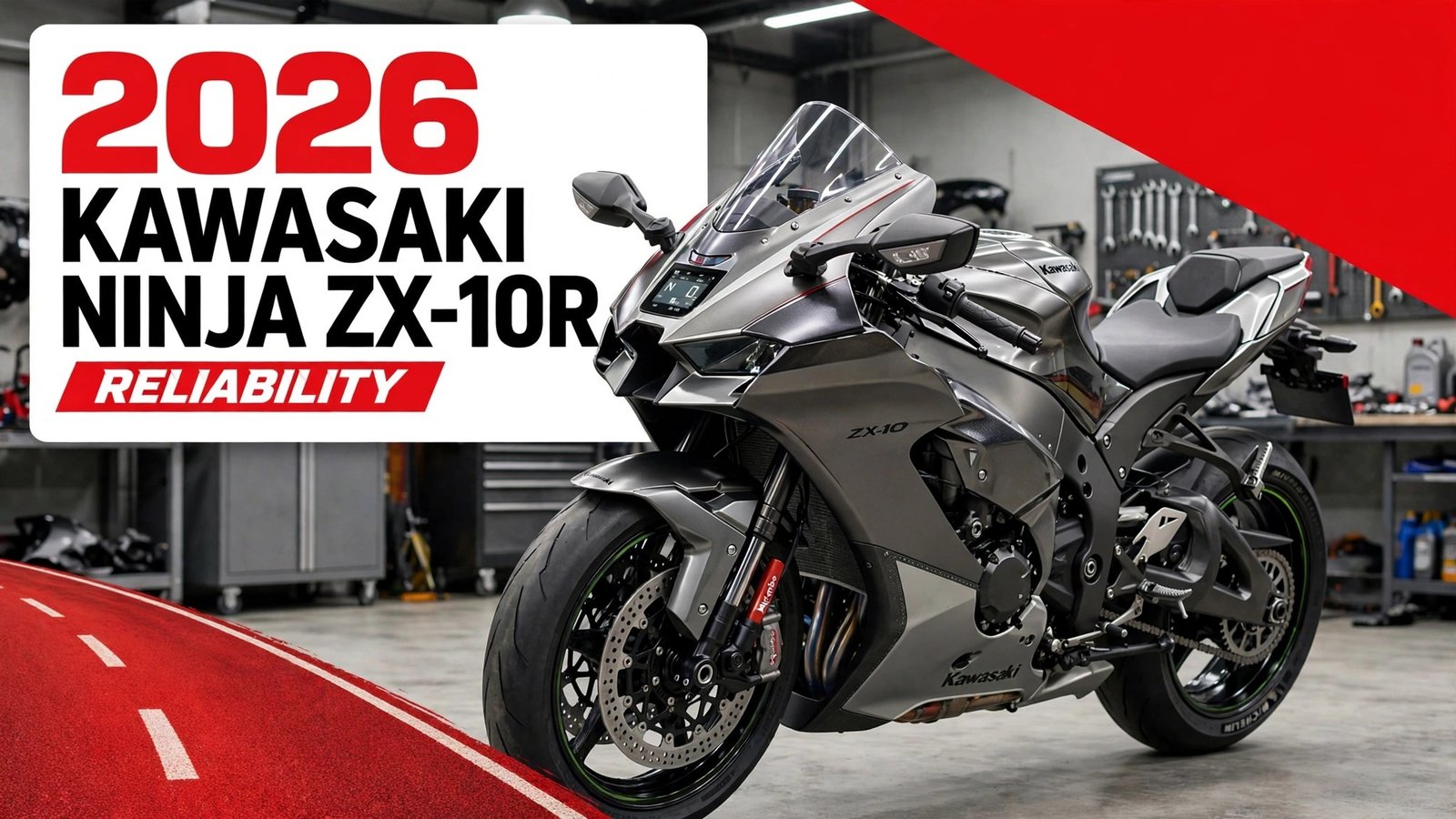
Is the Kawasaki Ninja ZX-10R reliable? Mostly yes — with one big exception for used buyers. The 2016–2018 bikes are covered by a do-not-ride transmission-gear recall, and an unfixed bike is not a bike to ride home. The rest is the normal litre-superbike story: eight recalls in 22 years, 15,000-mile valve checks, and predictable wear items — the subject of this Kawasaki Ninja ZX-10R reliability guide.
This Kawasaki Ninja ZX-10R reliability guide covers the verified record only: the eight NHTSA campaigns with the count and remedy for each, the famous recall that is not this bike, the 2010 buy-back that was a hold and not a recall, and the maintenance figures from the ZX-10R’s own manuals — including the two places where they disagree.
Kawasaki Ninja ZX-10R Reliability Overview
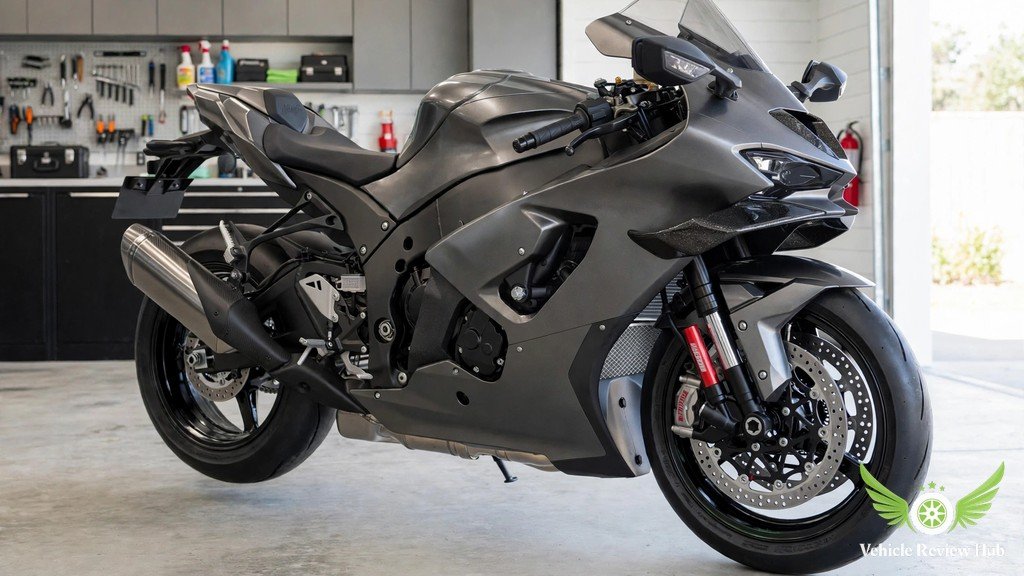
The ZX-10R has been on sale in the US since 2004, and Kawasaki Ninja ZX-10R reliability over that run is best judged by the recall record — complete, dated, and public. Eight campaigns in 22 years is modest for six generations, and none covers the 2026 bike. The 2026 bike is a new generation with winglets, revised chassis geometry and a 5-inch TFT, and its claimed 190.0 hp at 11,500 rpm.
Eight Campaigns in 22 Years
The eight NHTSA campaigns span 2004 to 2021, and Kawasaki Ninja ZX-10R reliability is shaped more by two of them than by the other six combined: the 2016–2018 transmission-gear recall, the only do-not-ride campaign in the eight, and the 2012 regulator/rectifier recall, the largest by units. The table below lists all eight.
| Campaign | Years / models | Units | Defect (as NHTSA states it) | Remedy |
|---|---|---|---|---|
| 04V373 (2004) | 2004 ZX-10R | 1,192* | Front wheel casting flaw — wheel failure risk | Replace front wheel |
| 09V063 (2009) | 2009 ZX-10R | 950 | Timing caps may loosen and fall out — oil leak onto rear tyre | Tighten caps free |
| 12V-064 (2012) | 2008–2011 ZX-10R + 2009–2012 ZX-6R | 20,512 | Voltage regulator/rectifier may not charge the battery — stall or no-start | Replace regulator |
| 12V-369 (2012) | 2011–2012 ZX-10R | 2,480* | Oil leak at the starter mounting point — oil can spill onto the rear tyre | — |
| 16V-102 (2016) | 2016 ZX-10R | 805 | Steering damper bracket bolts over-tightened — could break and detach the bracket | Replace bolts |
| 18V-089 (2018) | 2016–2018 ZX-10R + ZX-10RR | 3,964 | Transmission gears (2nd/3rd/4th output + 2nd input) may break — DO NOT RIDE | Replace gears free |
| 20V-307 (2020) | 2019–2020 ZX-10R/RR/ABS/KRT | 1,529 | ECU backfire with the quick shifter — air suction valve damage, fire risk | Reprogram ECU + replace air suction valves |
| 21V-593 (2021) | 2020–2021 H2 + ZX-10 | 1,523 | Relief valve parts may come off — loss of oil pressure, engine may seize | — |
Note: Unit counts marked * are single-source: 1,192 for 04V373 is secondary-source only, and 2,480 for 12V-369 comes from Asphalt & Rubber alone. 12V-064’s 20,512 is the Q4 2012 quarterly count; the acknowledgement letter says 20,544. This Kawasaki Ninja ZX-10R reliability table prints the defect as NHTSA states it — for 12V-369, an oil leak at the starter mounting point, not a “faulty wiring harness”.
How Mileage, Storage and Previous Care Affect Reliability
No model-specific failure-rate data exists for the ZX-10R, so this section is written from the principles that hold across the line rather than from invented numbers. Service history matters more than the odometer: a 20,000-mile bike with a stamped book beats a 5,000-mile bike with no records. A stored bike needs the same checks — brakes, tyres, chain and fuel system all age sitting still. That is the practical core of Kawasaki Ninja ZX-10R reliability: buy the history, not the mileage.
The one check specific to this bike is the white paint mark on the upper left of the frame, which proves the 18V-089 gear remedy was done. A 2016–2018 bike with that mark is the same reliable superbike as any other Gen 5; one without it needs the fix before it is ridden. On a used bike, Kawasaki Ninja ZX-10R reliability comes down to two documents: the service book and the recall proof.
Kawasaki Ninja ZX-10R Common Problems and Wear Items
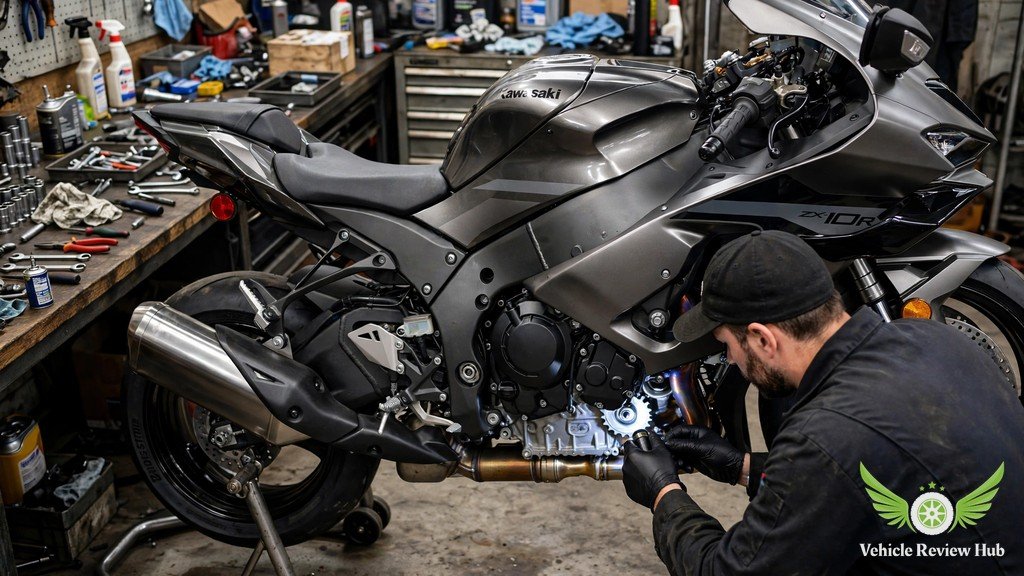
The common problems on the ZX-10R are mostly the recalls themselves, and Kawasaki Ninja ZX-10R reliability is best understood by separating the two that can leave a rider stranded from the rest. The gear and regulator recalls matter most; the damper-bolt, timing-cap and oil-leak campaigns are smaller and confined to one or two model years. The wear items are the usual litre-bike list — tyres, brake pads, chain, plugs and filters.
Gears Recalled on Gen 5
The headline item in any Kawasaki Ninja ZX-10R reliability discussion is the 18V-089 gear recall, the only do-not-ride campaign in the eight. The 2016–2018 ZX-10R and ZX-10RR — 3,964 units — have second, third and fourth output gears, plus the second input gear, that may break under high-impact shifting. The remedy is a free gear replacement under service bulletin MC 18-01. Owners were notified on February 26, 2018, and by the third quarter of 2018, 2,598 of the 3,964 bikes had been fixed.
The proof that the fix was done is a white paint mark on the upper left of the frame, and any buyer of a 2016–2018 bike should look for it before handing over money. Only two US warranty claims were recorded — the recall reads as a precaution taken early. That is why Kawasaki Ninja ZX-10R reliability checks start with the frame mark.
22V-912 Is Not This Bike
The most famous recall attached to the ZX-10R is one that does not include it at all. Campaign 22V-912 is the H2-family camshaft chain tensioner recall: 3,172 units of 2015–2023 H2-family bikes, where the plunger can lock up and stall the engine. The remedy is a free tensioner and gasket replacement, and owners were notified on December 21, 2022. The ZX-10R — codes ZX1000R/S/Z, ZX1002E/F and ZX1003 — is not in it, and it has no place in a Kawasaki Ninja ZX-10R reliability record.
The confusion comes from the shared ZX1000 model-code prefix. The codes in 22V-912 include ZX1000N and ZX1000X, which are Ninja 1000SX models, not ZX-10Rs, and at least one recall summary lists “2015–2018 ZX1000” as affected without saying those are the 1000SX. That is how the campaign ends up on ZX-10R recall lists it does not belong on.
Kawasaki Ninja ZX-10R Maintenance Schedule and Servicing
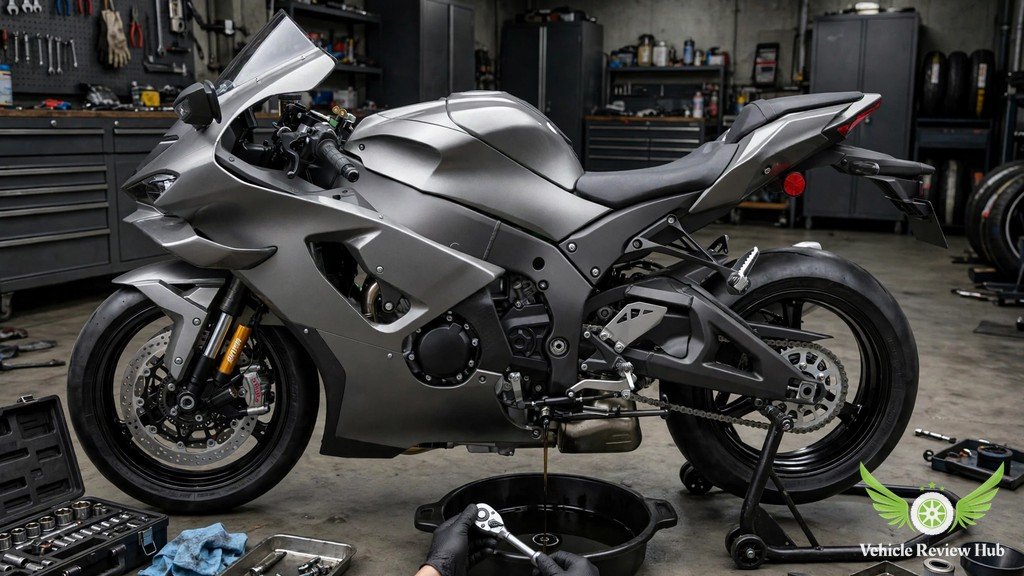
The service schedule is straightforward for a litre superbike, and Kawasaki Ninja ZX-10R reliability depends on following it rather than stretching it. The headline interval is the valve check at 15,000 miles, and the oil and filter change at 7,600 miles or 12 months is the service owners do most often. The 2026 bike’s claimed 190.0 hp, listed on Kawasaki’s 2026 specification sheet, sits on the same service pattern as the 2021 bike.
| Service item | Interval / specification | Notes |
|---|---|---|
| First service | 1,000 km (600 mi) | Cooling-system inspection in the 2021/2024/2025/2026 charts |
| Engine oil + filter | Every 12,000 km (7,600 mi) or 12 months | SAE 10W-40, API SG/SH/SJ/SL/SM, JASO MA/MA1/MA2; filter P/N 16097-0008 / HF303 |
| Spark plugs | Every 12,000 km | NGK SILMAR9B9 ×4, gap 0.8–0.9 mm |
| Air filter | Every 18,000 km | — |
| Valve clearance check | Every 24,000 km (15,000 mi) | Clearance figures (mm) not in the owner’s manual |
| Chain slack | Check regularly | 525 chain, 116 links, 17T/41T; slack 20–30 mm |
| Tyre pressures | Before riding (cold) | 36 psi front / 42 psi rear (250 kPa / 290 kPa) |
| Coolant capacity | Differs by model year | 2.6 L (2016 manual) vs 2.2 L (2021+) |
| Battery | As needed | YTZ10S, 12V 8.6Ah |
Note: Oil capacity is the one figure the manuals disagree on: the 2016 manual says 3.7 L, while a 2021-manual reading gives 3.8 L with filter, 3.4 L drain-only and 4.5 L dry. One database lists 3.4 L as the with-filter figure, but that misreads the drain-only figure — this Kawasaki Ninja ZX-10R reliability guide does not print it as a with-filter capacity. Check your year’s manual before filling.
21V-593: Relief Valve Fix
The most recent of the eight campaigns is 21V-593, an oil pressure relief valve recall covering the 2020–2021 H2 and ZX-10 models — 1,523 units, ZX-10 codes ZX1002L/M/N for 2021. The relief valve parts may come off from improper assembly, losing oil pressure and seizing the engine. Owners were notified on August 23, 2021 under notice MC21-05, and by the second quarter of 2023, 1,190 of the 1,523 bikes had been remedied — a small campaign, but one that belongs in any Kawasaki Ninja ZX-10R reliability record.
The relief-valve fix matters because it is easy to miss: the campaign covers only two model years, and a 2020 or 2021 bike without proof of the fix is a bike to check before buying. The sources used here do not state the remedy, so this section prints the defect, the count and the completion figure — 1,190 of 1,523 by Q2 2023 — and no more. The ZX-10R review covers the same bike’s price and model-year history for buyers who want the full picture, and the fix is one more item on the Kawasaki Ninja ZX-10R reliability checklist.
2010 Buy-Back Wasn’t a Recall
In December 2010, Kawasaki placed a worldwide technical hold on every 2011 ZX-10R. Unsold bikes went back to warehouses; sold bikes were bought back in full. The cause was intake valve spring surging under unique riding conditions, with an intake valve seating issue also reported. The fix was new valve springs, spring retainers and a camshaft, and the hold was lifted in late January 2011. That is not a recall, and it must not be counted as a ninth campaign — there is no NHTSA number for it, and it is a footnote in Kawasaki Ninja ZX-10R reliability, not a campaign. It is also different from the 2011 US detune, when the US bike lost about 20 hp for EPA noise standards. A buyer who sees “2011 ZX-10R recalled” in a listing is looking at someone who mixed up the hold, the detune and the recall record.
Kawasaki Ninja ZX-10R Tires, Brakes and Suspension Maintenance
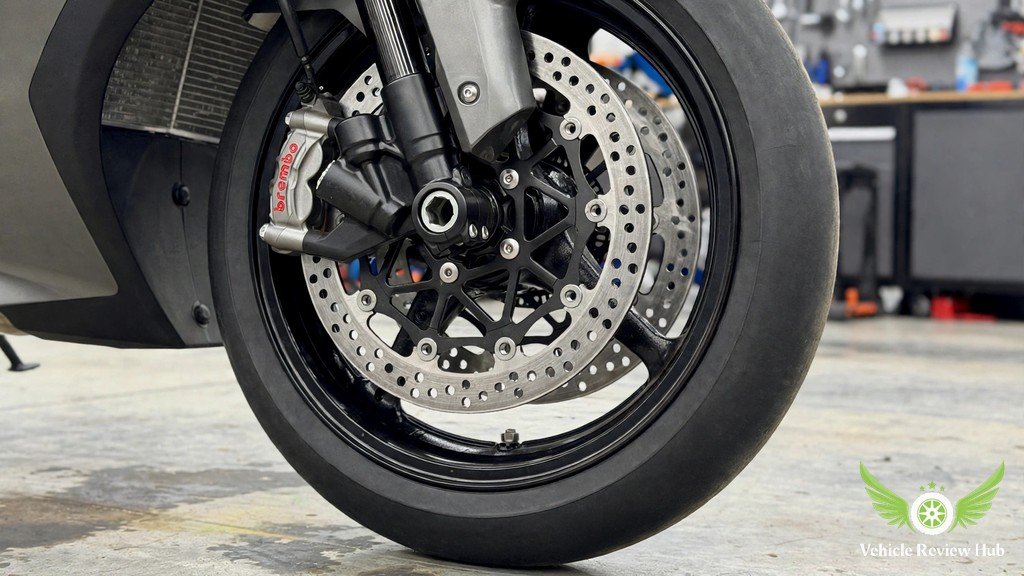
Tyres, brakes and suspension are where the ZX-10R’s running costs concentrate, and Kawasaki Ninja ZX-10R reliability in daily use is mostly a matter of keeping these three systems in spec. The hardware is top-shelf, so the parts are not cheap, but the service pattern is simple and the intervals are long.
Valve Checks at 15,000 Miles
The valve clearance check falls due every 24,000 km, which is 15,000 miles, and that figure is confirmed twice: Motorcycle.com’s 2016 faceoff text states 15,000 miles for the Kawasaki against 12,000 miles for the Aprilia in the same test, and a 2021-manual reading agrees. That interval is the single most useful number for Kawasaki Ninja ZX-10R reliability — generous for a litre superbike. The clearances themselves are not in the owner’s manual — they live in the service manual, and no figure should be quoted without a service-manual citation.
Tire, Brake and Suspension Checks That Matter
The tyres are 120/70 ZR17 front and 190/55 ZR17 rear, at 36 psi front and 42 psi rear cold (250 kPa and 290 kPa). Check them cold before every ride, not after a run, when the reading is meaningless. The brakes are dual 330 mm semi-floating Brembo discs with radial-mount four-piston Brembo M50 monobloc calipers up front and a single 220 mm disc at the rear, and the pads are the wear item to watch — a litre bike eats front pads faster than a middleweight, so budget for them in any Kawasaki Ninja ZX-10R reliability plan.
The suspension is a 43 mm inverted Showa Balance Free Fork with rebound and compression damping plus spring preload, and 4.7 inches of travel, with a horizontal back-link Showa BFRC lite rear shock. Rear travel is 4.2 inches on the 2026 bike, down from 4.5 inches on the 2021–2025 bikes. The chain is a 525 with 116 links and 17T/41T sprockets, and the slack is 20–30 mm — the ZX-10R’s own figure from its own manual, not the smaller Ninja’s chain spec, so check the manual for the bike in front of you rather than borrowing a number from the ZX-6R reliability guide. A chain at the right slack and a fork that is not weeping oil will do more for Kawasaki Ninja ZX-10R reliability than any aftermarket part.
Kawasaki Ninja ZX-10R Maintenance and Ownership Costs
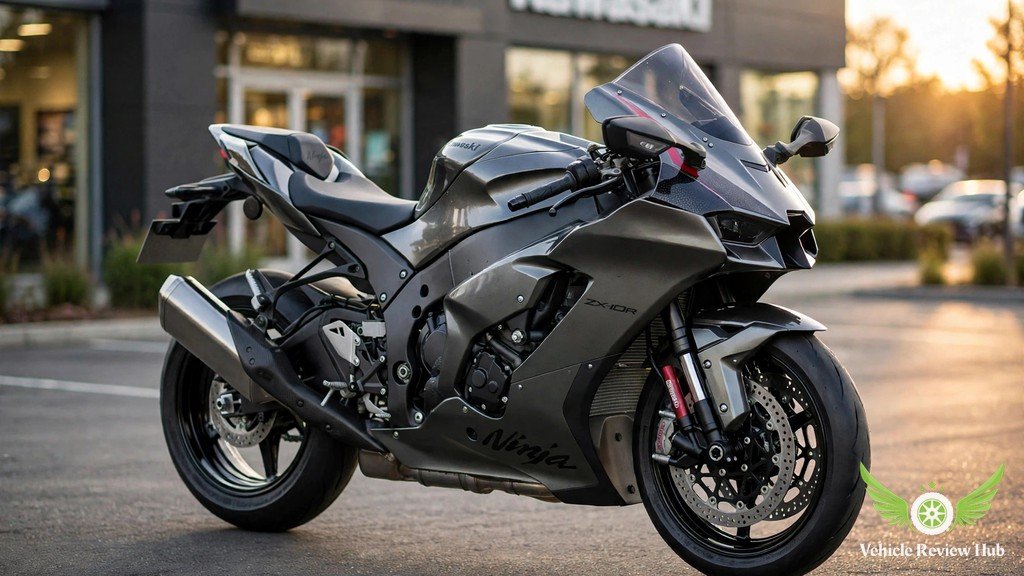
Ownership costs on the ZX-10R are the costs of the schedule above plus the price of the bike itself, and Kawasaki Ninja ZX-10R reliability is cheap to keep only if the schedule is followed. No ZX-10R-specific running-cost or resale data was found, so this section is built from the verified maintenance figures and price table — not from invented resale or insurance figures. The 2026 bike costs $16,999 without ABS and $17,999 with ABS, plus $840 destination: $17,839 and $18,839 delivered before dealer fees and tax. The 2027 bike costs the same.
Fuel, Routine Servicing, Tires and Replacement Parts
Fuel is the smallest surprise in the running costs. The tank holds 4.5 gallons, and on the 2016 maker’s 6.98 litres per 100 km (about 33.7 mpg-US), that is about 152 miles by simple arithmetic. The 32.4 mpg figure belongs to the 2008–2010 Gen 3 bike, not the 2016 bike, and no tested 2016 fuel economy was found. No EPA figure was found, so this Kawasaki Ninja ZX-10R reliability guide prints no EPA number.
Routine servicing is the oil and filter every 7,600 miles or 12 months, the plugs every 12,000 km, the air filter every 18,000 km and the valve check every 15,000 miles. Tyres are the recurring big ticket: superbike rubber worn faster than on a middleweight by the bike’s weight and power. Budget also for M50 pads, chain and sprockets, SILMAR9B9 plugs and the YTZ10S battery. For the purchase price, the GSX-R1000 review covers the Suzuki rival that undercuts the ZX-10R by $690 delivered — the cheapest litre superbike in the class, and the benchmark any Kawasaki Ninja ZX-10R reliability cost comparison starts from.
Gen 5/6 Chart Gap, Flagged
The maintenance charts themselves do not agree across the model years, and the gap is worth naming precisely rather than smoothing over. The reported difference is this: the 2021, 2024, 2025 and 2026 charts put a cooling-system inspection in the first service, while the 2022 and 2023 charts do not. That is the chart gap as reported — a difference in what the first-service list includes, not a difference in the hardware — and that is the Kawasaki Ninja ZX-10R reliability chart gap to watch.
This section prints the gap as a flagged difference in the manuals, not as a settled fact — the comparison comes from a maintenance database, not from the two manuals side by side. The practical advice is the same either way: service the bike to its own year’s manual, check the cooling system at the first service whatever the chart says, and do not assume a 2022 and a 2026 bike take the same fill. A buyer who inherits a bike with no manual should get the one for the bike’s year before the first service — the first rule of Kawasaki Ninja ZX-10R reliability.
How to Keep a Kawasaki Ninja ZX-10R Reliable
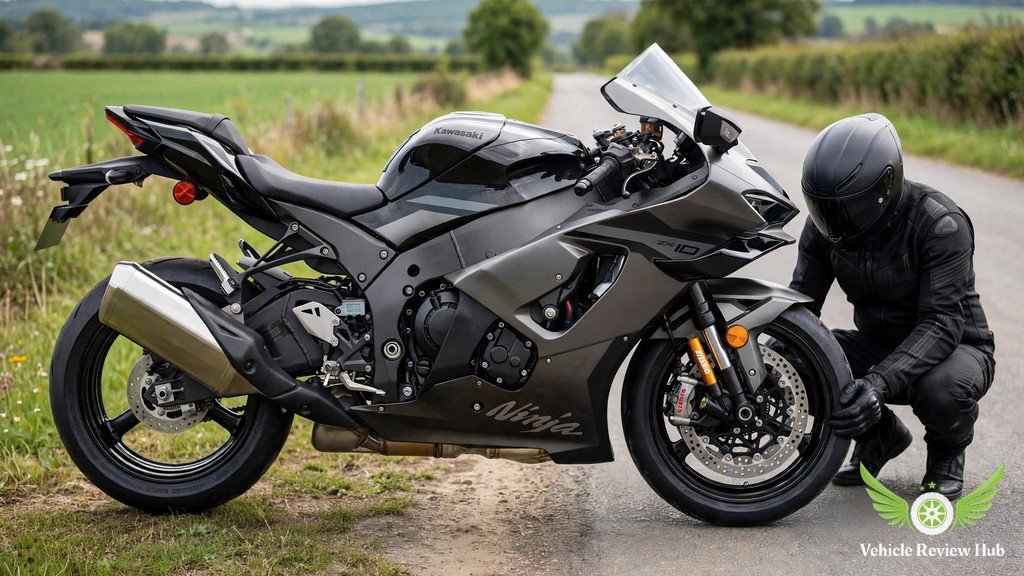
Keeping a ZX-10R reliable is not complicated, and Kawasaki Ninja ZX-10R reliability rewards the owner who does the ordinary things on time. The weak points are all known — the gears, the damper bolts, the relief valve, the regulator — and every one has a fix with a part number and a paint mark to prove it. What the bike does not forgive is neglect: missed valve checks, a dry chain and old brake fluid cost more here than on a middleweight, because the parts are bigger.
Preventive Maintenance, Records and Regular Inspections
The single most valuable habit is keeping the records. A stamped service book is worth more at resale than any aftermarket part, and it is the first thing a buyer should ask for. Keep the recall paperwork with the book: the white frame mark proves the gear fix, and the dealer invoice proves the rest. Photograph the frame mark when the bike is bought — cheap Kawasaki Ninja ZX-10R reliability insurance.
Regular inspections are the rest of the routine. Check the chain slack against the 20–30 mm figure — the first check in any Kawasaki Ninja ZX-10R reliability routine — and keep it clean and lubricated; check the tyre pressures cold at 36 psi front and 42 psi rear; check pads and fork seals at every wash; and check coolant and battery terminals before the season. A stored bike wants fresh oil, a full tank with stabiliser, and the battery on a tender. A rider who wants the Ninja look with lower running costs should look at the Ninja 650 reliability guide instead, because the 650’s service bill is a fraction of the litre bike’s.
Damper Bolts Recalled in 2016
The last campaign in this Kawasaki Ninja ZX-10R reliability guide is 16V-102, the 2016 steering damper bracket bolt recall. It covers 2016 bikes built between October 28, 2015 and January 18, 2016 — 805 units per NHTSA’s Part 573 report, not the “about 803” used elsewhere. The bracket mounting bolts were over-tightened, which could break them and detach the bracket, causing steering interference. The remedy is a bolt replacement under notice MC16-03, and owners were notified on February 29, 2016. By Q3 2016, 410 of 544 bikes had been remedied.
The damper-bolt recall is a small campaign with a sharp failure mode, and it is why the steering damper deserves a look on any 2016 bike: the bracket should be secure, the bolts the replacement set, and the damper smooth without play. It is also a good example of Kawasaki Ninja ZX-10R reliability in practice — the problem was found, the fix came within weeks, and the remedy is a bolt set. A 2016 bike with the fix and the paperwork is not a bike to worry about.
Kawasaki Ninja ZX-10R Reliability: Frequently Asked Questions
Direct answers to the questions about Kawasaki Ninja ZX-10R reliability, with the recall numbers and service intervals behind them.
Is the Kawasaki Ninja ZX-10R reliable?
Mostly yes, with one big exception: the 2016–2018 bikes are covered by the 18V-089 do-not-ride transmission-gear recall (3,964 units). A bike with the fix proven by the white frame mark is the same reliable superbike as any Gen 5. The other seven are smaller, and none covers the 2026 bike. That is the short answer on Kawasaki Ninja ZX-10R reliability; the full record is in NHTSA’s Part 573 report for 18V-089.
How many recalls does the ZX-10R have?
Eight NHTSA campaigns across its 22-year US run: 04V373 (front wheel), 09V063 (timing caps), 12V-064 (regulator), 12V-369 (oil leak), 16V-102 (damper bolts), 18V-089 (gears), 20V-307 (ECU backfire) and 21V-593 (relief valve). The campaigns span 2004 to 2021 — the whole Kawasaki Ninja ZX-10R reliability record, nothing more.
What is the 22V-912 recall, and does it affect the ZX-10R?
22V-912 is the H2-family camshaft chain tensioner recall, covering 3,172 H2-family bikes. It does NOT affect the ZX-10R. The confusion comes from the shared ZX1000 model-code prefix — the ZX1000N and ZX1000X codes are Ninja 1000SX models, not ZX-10Rs — and that is the trap to avoid in any Kawasaki Ninja ZX-10R reliability search. See NHTSA’s Part 573 report for 22V-912 for the full affected list.
Was the 2011 ZX-10R recalled?
No. In December 2010 Kawasaki placed a worldwide technical hold on all 2011 ZX-10Rs and bought sold units back with a full refund over an intake valve spring issue. It was a hold, not a recall — a distinction every Kawasaki Ninja ZX-10R reliability search should keep straight. Do not confuse it with the 2011 US detune.
How often does the ZX-10R need a valve check?
Every 15,000 miles (24,000 km). Oil and filter every 7,600 miles or 12 months; spark plugs every 12,000 km; air filter every 18,000 km. Confirmed by the 2016 faceoff text and a 2021-manual reading — the headline number in Kawasaki Ninja ZX-10R reliability servicing.
What oil does the ZX-10R take?
SAE 10W-40, API SG/SH/SJ/SL/SM with JASO MA/MA1/MA2. Capacity is 3.7 litres per the 2016 manual and 3.8 litres with filter per the 2021-manual reading — check your year’s manual, and do not use the 3.4-litre drain-only figure as a with-filter capacity. Getting the fill right is basic Kawasaki Ninja ZX-10R reliability.