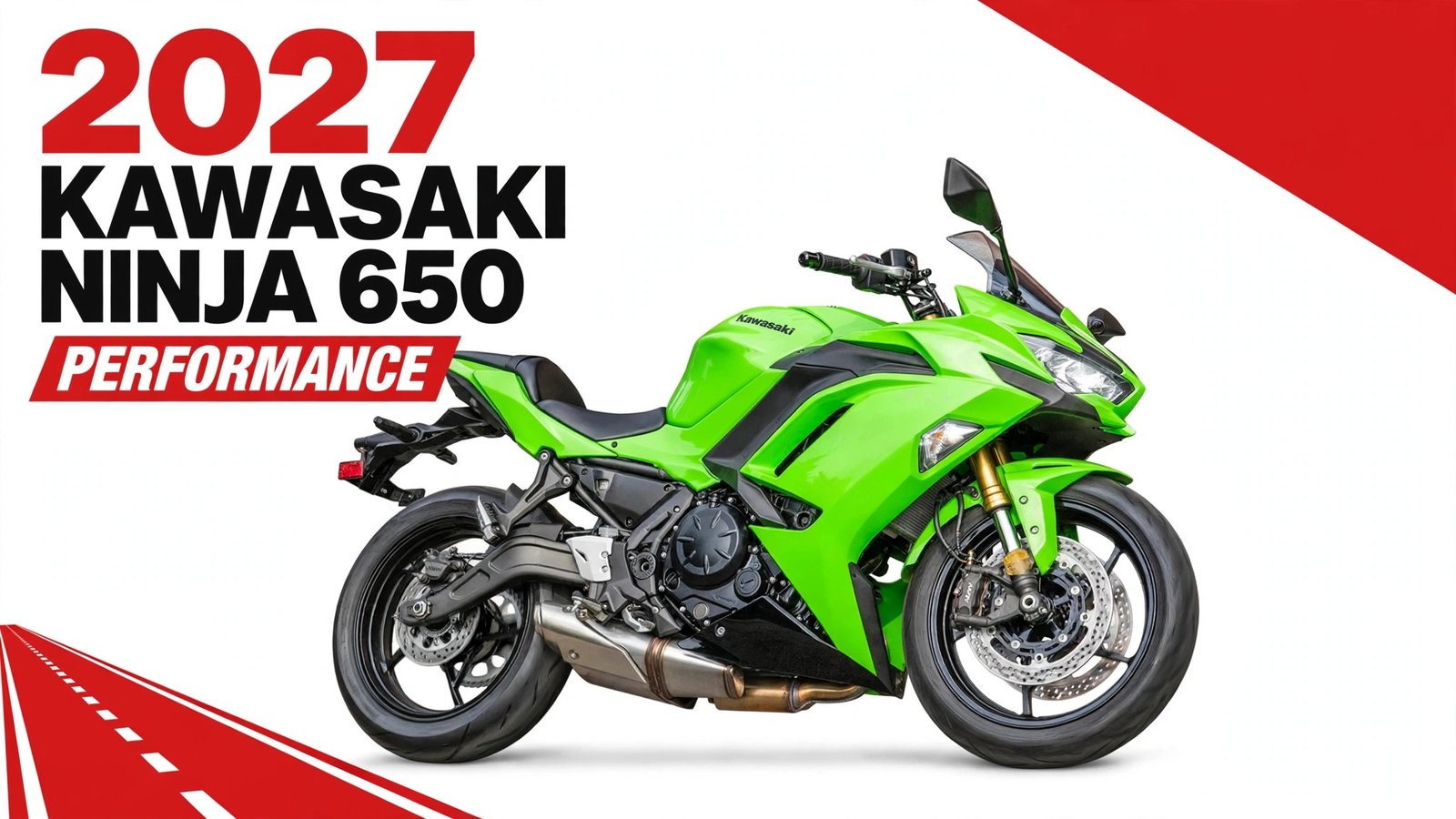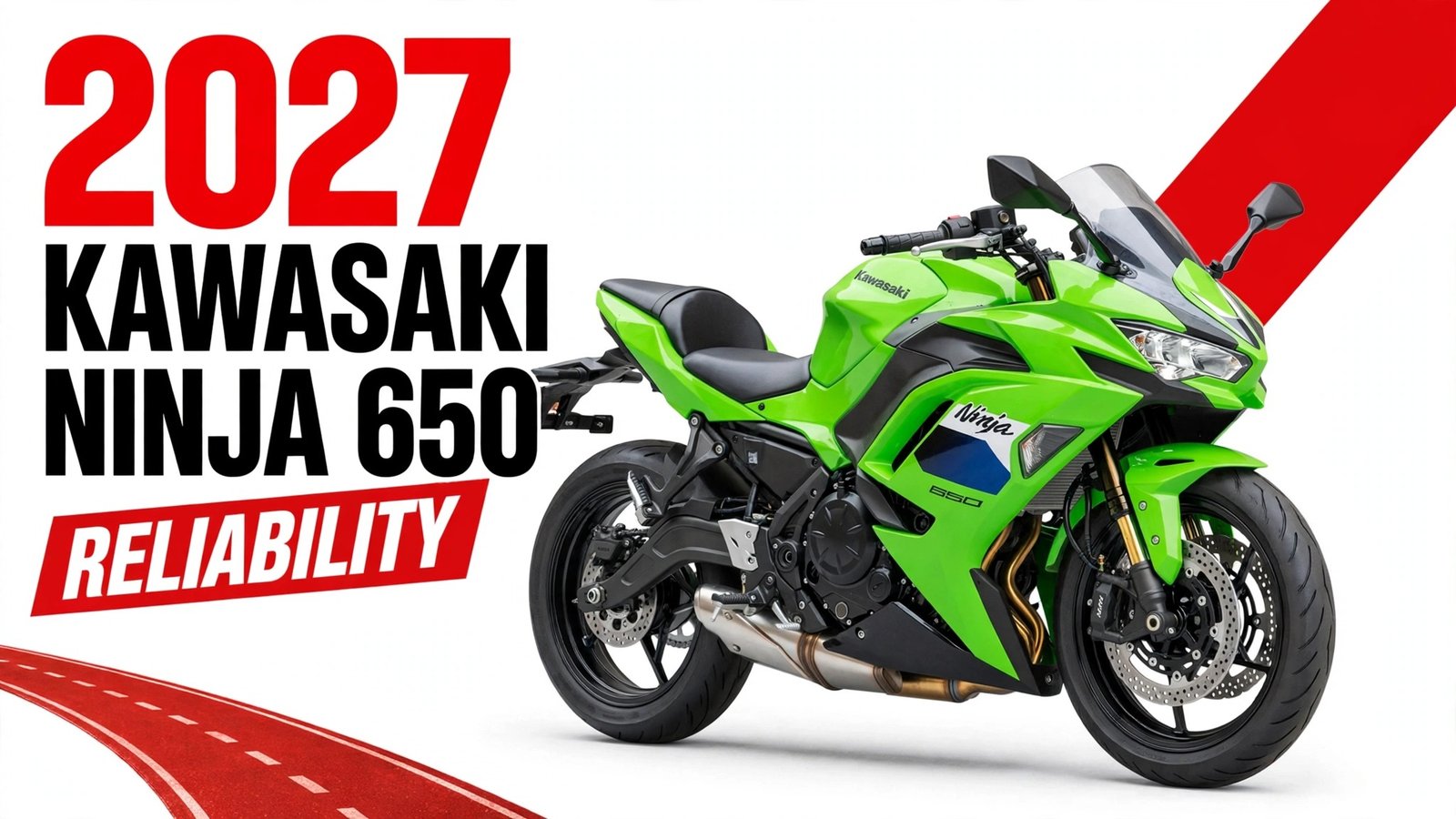
The Kawasaki Ninja 650 has been on sale in the United States since 2006, and in twenty years it has collected just two safety recalls — both on early bikes, both fixed free of charge, and nothing since 2012. That is the short version of this Kawasaki Ninja 650 reliability guide. The longer version of this Kawasaki Ninja 650 reliability guide is the maintenance chart: oil and filter at every 7,500-mile service, spark plugs at the same interval, and a valve check at 15,000 miles in the United States. This Kawasaki Ninja 650 reliability guide covers the recalls, the service schedule, the wear items and the running costs.
Kawasaki Ninja 650 Reliability Overview
The Ninja 650’s reputation, as this Kawasaki Ninja 650 reliability guide records it, rests on a simple record: a 649cc parallel twin that has been in production since 2006, a trellis frame that has been in production since 2017, and a recall history that stops in 2012. This Kawasaki Ninja 650 reliability guide starts with that record and then gets specific about the service intervals that keep it that way.
Valve Check at 15,000 Miles (US)
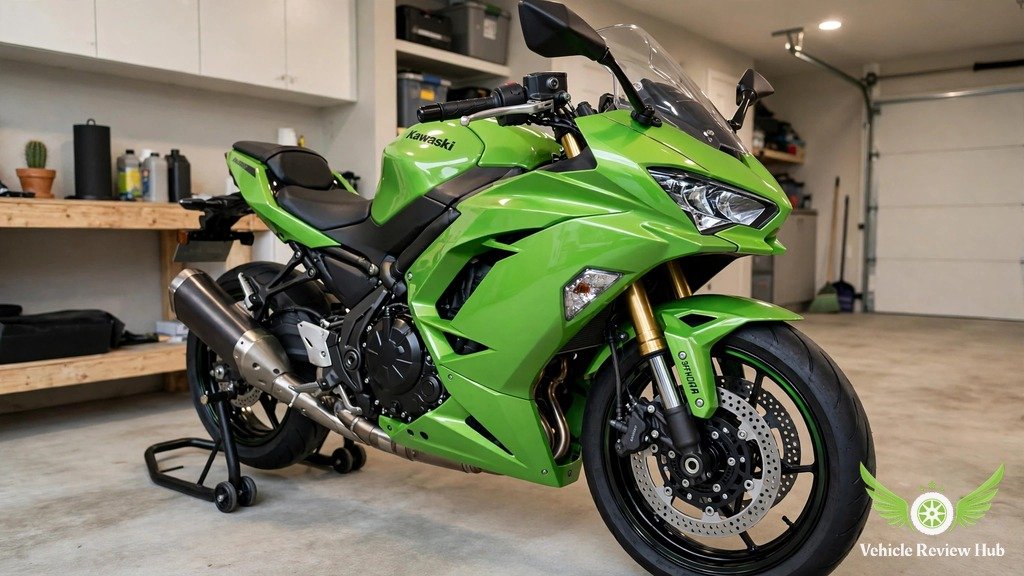
The valve clearance check in this Kawasaki Ninja 650 reliability guide is the big service item on the Ninja 650, and the United States interval is 24,000 km — which the manual’s own chart converts to 15,200 miles in its mile column. The rounded figure most American owners use is 15,000 miles, and that is the figure this Kawasaki Ninja 650 reliability guide prints as the headline, with the 24,000 km and 15,200 mi chart figures named beside it so nobody mistakes the rounding for the manual. The check falls due at the third 7,500-mile service, so a buyer shopping for a used 650 should ask whether the 15,000-mile service has been done. Outside the United States and Canada the same check is due at 42,000 km, or 26,250 miles — a different interval for a different market.
How Mileage, Storage and Previous Care Affect Reliability
Mileage matters less than care on a Ninja 650 — that is the buying rule this Kawasaki Ninja 650 reliability guide applies. A bike with 30,000 miles and a documented service history — oil every 7,500 miles, a valve check at 15,000 miles, brake fluid every two years — is a safer buy than a bike with 8,000 miles that sat in a garage for three winters on old fuel and an untouched battery. Storage is the quiet reliability killer: fuel goes stale, brake fluid absorbs moisture, tyres flat-spot, and a dry chain rusts on its rollers. Previous care shows up in the records, not in the paint — ask for receipts and check the service book before trusting the odometer. A 650 ridden regularly and serviced on schedule is the reliable bike this Kawasaki Ninja 650 reliability guide describes; a neglected one is a project, whatever the mileage says.
Kawasaki Ninja 650 Common Problems and Wear Items
The honest way for this Kawasaki Ninja 650 reliability guide to talk about the 650’s problems is to split them in two: the two recalls, which are documented campaigns with free fixes, and everything else, which is owner-reported wear and early-bike faults that no recall or technical service bulletin covers. The owner-reported patterns are pre-2017 rectifier/regulator and stator weakness, cam chain tensioner rattle on cold start, throttle-body sync needs and fork seal leaks on high-mileage bikes — all reported by owners, none covered by a recall or a technical service bulletin, and none a verified defect. This Kawasaki Ninja 650 reliability guide keeps the two groups separate so the reader can see which problems Kawasaki fixed and which ones an owner simply maintains.
Two Recalls in Twenty Years
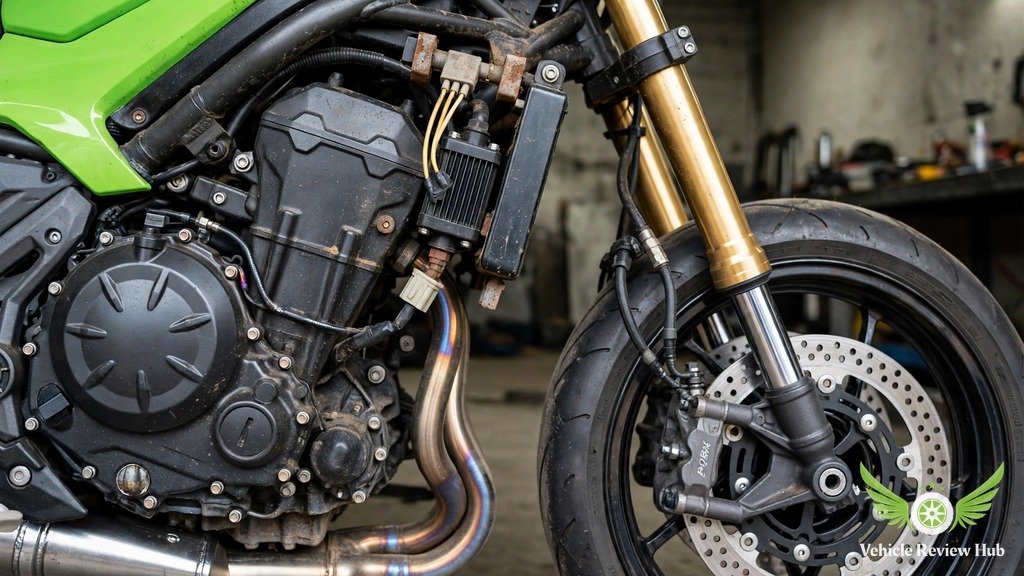
In twenty years on sale in the United States, the Ninja 650 has been the subject of exactly two safety recalls, both on early bikes. The first, 10V-323 in 2010, covered the right lower cowling interfering with the rider’s foot on the rear brake pedal on 2009 and 2010 Ninja 650R models. The second, 12V-081 in 2012, covered passenger footpeg circlips that could break or fall off on 2012 bikes built between September 13 and October 25, 2011. Both were fixed free of charge, both are documented in the National Highway Traffic Safety Administration’s Part 573 reports that this Kawasaki Ninja 650 reliability guide cites, and neither affects a 2013 or later bike. One caution belongs here: the NHTSA’s own search API returns zero recalls for every model year of this bike, which is a matching failure, not a clean record — the campaigns are filed under the model codes EX650C9F and EX650ECF, and the API’s model matching misses them. The two Part 573 reports are the verified record, and this Kawasaki Ninja 650 reliability guide cites them, not the API.
| Campaign | Year | Defect | Bikes affected | Units |
|---|---|---|---|---|
| 10V-323 | 2010 | Right lower cowling interferes with the rider’s foot on the rear brake pedal | 2009–2010 Ninja 650R (EX650C9F / EX650CAF) | About 6,700–6,800 (acknowledgement letter 6,764; quarterly report 6,700) |
| 12V-081 | 2012 | Passenger footpeg mounting-pin circlips can break or fall off | 2012 Ninja 650 (EX650ECF), plus the 2012 Ninja 250 and Versys — built Sep 13–Oct 25, 2011 | 793 total across all three models, not the 650 alone |
Note: both campaigns in this Kawasaki Ninja 650 reliability recall table are verified from the NHTSA Part 573 reports on static.nhtsa.gov. The 793-unit figure for 12V-081 is the total across the Ninja 650, the Ninja 250 and the Versys — never the 650’s count alone. The 10V-323 unit count is given as a range because the acknowledgement letter says 6,764 and the quarterly report says 6,700.
No Campaign Since 2012
Nothing has been recalled on the Ninja 650 since 2012 — no campaign for the 2017 trellis bike, none for the 2020 TFT refresh, none for the 2023 traction-control update, and none for the 2027 front-end upgrade. That fourteen-year gap is the strongest single fact in this Kawasaki Ninja 650 reliability guide, and it is worth stating plainly: the bike’s two campaigns are both more than a decade old, and every model year since 2013 has a clean campaign record. The gap does not mean the bike is problem-free — the owner-reported wear items exist, and a used buyer still checks the service history — but it does mean no defect has ever been serious or widespread enough for a safety campaign in fourteen years. For a buyer comparing the 650 against its rivals, that is the reliability headline this Kawasaki Ninja 650 reliability guide leads with. It is the reason this Kawasaki Ninja 650 reliability guide leads with the recalls rather than burying them.
Kawasaki Ninja 650 Maintenance Schedule and Servicing
The 650’s service schedule, as this Kawasaki Ninja 650 reliability guide records it, is short and regular: every 7,500 miles or 12,000 km, or once a year, whichever comes first, with the first service at 600 miles. Oil and filter change at every service, air filter and spark plugs at every 7,500-mile service, and the valve check at 24,000 km. The chart below comes from the 650’s own 2017 service manual (P/N 99924-1517-01), which the 2020 and later bikes carry forward.
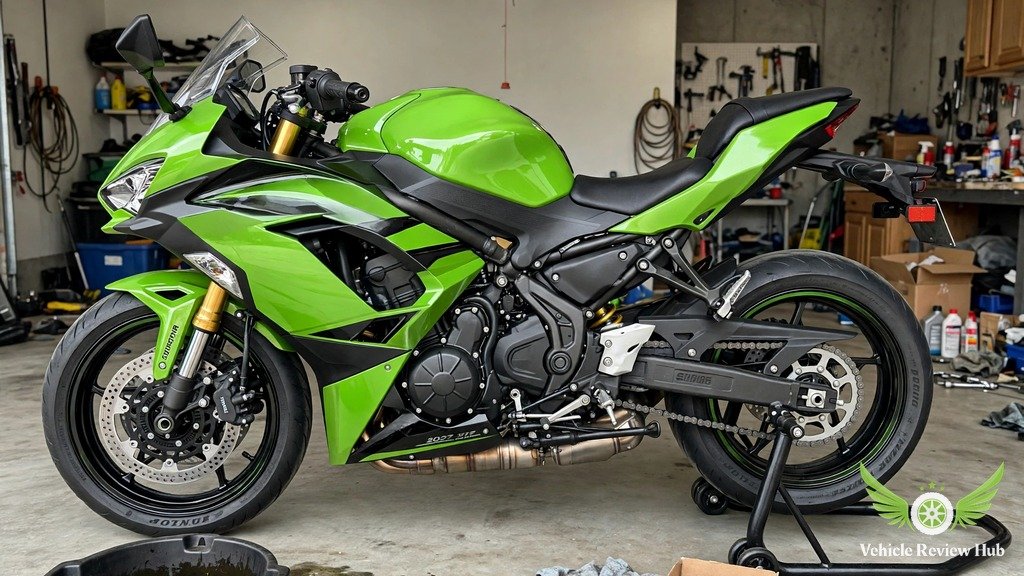
The video below is an oil change on a first-generation Ninja 650R — a 2006 to 2008 bike from a $1,000 rebuild series, episode four — not a 2027 bike. The oil-change procedure is the same in outline on the newer bikes, but the bike on screen is the old one, with the old fairing and the old dash, so treat it as a look at the job rather than a guide to a 2027 machine.
| Service item | Interval (US / CA) | Specification |
|---|---|---|
| Engine oil + oil filter | Every service (7,500 mi / 12,000 km or yearly) | 1.8 L (1.7 US qt) SAE 10W-40; filter Kawasaki 16097-0008 = HF303RC, 17.5 Nm; drain bolt 30 Nm |
| Air filter | Every 7,500 mi / 12,000 km | 2017+ Kawasaki 11013-0745 |
| Spark plugs | Every 7,500 mi / 12,000 km | NGK CR9EIA-9, gap 0.8–0.9 mm, torqued 13 Nm |
| Valve clearance | Every 24,000 km (chart reads 15,200 mi) | US/CA interval; non-US/CA every 42,000 km (26,250 mi) |
| Brake fluid | Every 2 years | DOT-4; hoses and rubber parts every 4 years |
| Coolant + hoses / O-rings | Every 3 years / 36,000 km | Coolant change is a 3-year item, not a mileage item |
| Fuel hoses | Every 5 years | Fuel filter kit 99999-0525 (2017+) |
| Idle speed | Checked at every service | 1,250–1,350 rpm; throttle grip play 2–3 mm |
Note: every figure in this Kawasaki Ninja 650 reliability maintenance table comes from the 650’s own service manual chart (2017 Service Manual P/N 99924-1517-01). The oil capacity is 1.8 L — not the Ninja 500’s 2.3 L — and the plugs are NGK CR9EIA-9 — not the 500’s LMAR9G. The chain slack figure is omitted because it was not verified from the 650’s own manual; check the slack against the owner’s manual and give no number until it is verified.
10V-323 Caught the Brake Pedal
The first recall is the more interesting one, because the defect was a bodywork problem, not an engine problem: on 2009 and 2010 Ninja 650R models, the right rear portion of the lower cowling interfered with the rider’s foot on the rear brake pedal. Kawasaki’s remedy, fitted free of charge, was an updated footrest guard and fairing bracket, the fix this Kawasaki Ninja 650 reliability guide records. The campaign was reported on July 6, 2010, and owner letters went out on July 19, 2010. The Part 573 report for 10V-323 is the source for the defect, the remedy and the unit count, and it is the document this Kawasaki Ninja 650 reliability guide cites rather than any search result. A used buyer checking a 2009 or 2010 bike should look for the updated footrest guard — the fix was free.
Europe’s 42,000 km Is Not Ours
The valve-check interval is the one place an American owner can be misled by a European figure. Outside the United States and Canada, the same check is due every 42,000 km — 26,250 miles — which is nearly twice the American interval. The engine is the same worldwide — the interval difference is a market decision, not a mechanical one. An American owner who follows the 42,000 km figure will run the bike almost twice as long between valve checks as the United States schedule in this Kawasaki Ninja 650 reliability guide intends, and a used buyer who sees a 26,000-mile valve-check stamp on an American bike should ask which schedule the owner was following. The United States figure is 24,000 km, the chart reads 15,200 miles, and the rounded figure is 15,000 miles.
Kawasaki Ninja 650 Tires, Brakes and Suspension Maintenance
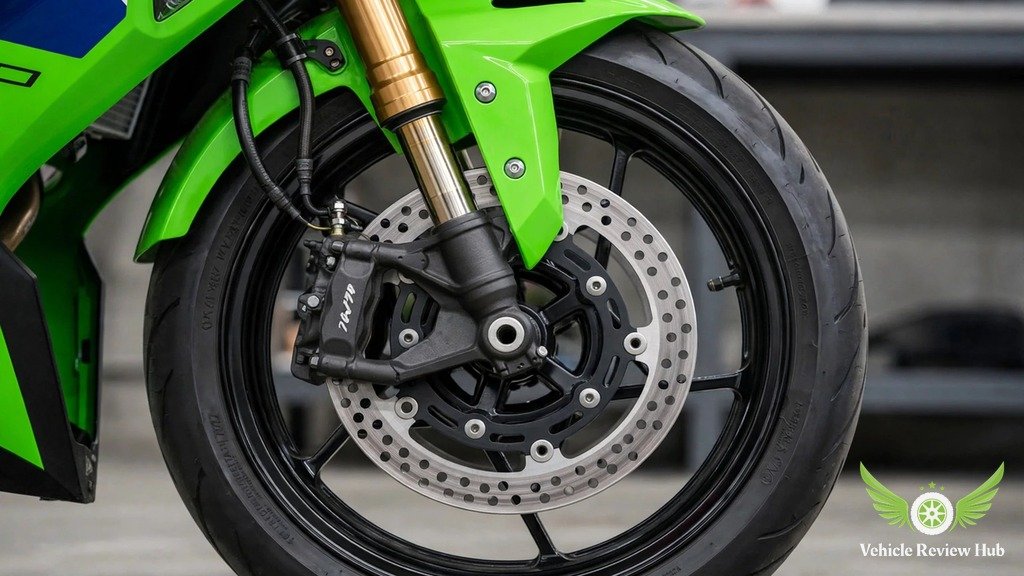
Tyres, brakes and suspension are where the 650’s maintenance is most visible — the wear shows on the outside of the bike. The 2027 bike’s front end is new, but the maintenance is the same: check the pads, the discs, the fork seals and the tyres before every long ride. The tyre sizes are 120/70-17 front and 160/60-17 rear on every year of the bike, and the 2027 tyre brand is unverified. Kawasaki’s own 2027 sheet lists sizes only, and this Kawasaki Ninja 650 reliability guide does not name a brand it cannot verify.
12V-081 Was Footpeg Circlips
The second recall is a small part with a big consequence. On 2012 Ninja 650 models built between September 13 and October 25, 2011, the circlips on the passenger footpeg mounting pins could break or fall off — the root cause was improper acid-wash preparation before plating — and a footpeg could detach while riding. Kawasaki’s remedy was to replace the passenger footpeg pivot pin circlips free of charge, kit 99999-0379 under bulletin MC 12-02. The campaign was reported on March 1, 2012, and owner letters went out on March 12, 2012. The Part 573 report for 12V-081 is the source, and it is the document that gives the 793-unit total — a total that covers the 2012 Ninja 650, the 2012 Ninja 250 and the 2012 Versys together, and must never be printed as the 650’s count alone. A used buyer checking a 2012 bike should look at the passenger footpeg circlips and ask whether the kit was fitted — the fix was free, and this Kawasaki Ninja 650 reliability guide says to check before buying.
Tire, Brake and Suspension Checks That Matter
Three checks cover most of the 650’s tyre, brake and suspension maintenance. First, the tyres: check the tread depth, the age stamp and the pressures — the pressure figures are omitted here because they were not verified from the 650’s own manual, so check the owner’s manual or the swingarm sticker rather than trusting a website. Second, the brakes: check the pad thickness, the disc condition and the fluid colour, and change the fluid every two years, because brake fluid absorbs moisture. Third, the suspension: check the fork seals for weeping and the rear shock’s preload setting against the owner’s manual. The 2027 bike’s inverted fork and radial calipers are new hardware, but the checks are the same checks the 650 has needed since 2006.
| Check | What to look for | When |
|---|---|---|
| Tyres | Tread depth, age stamp, cuts and flat spots; pressures from the owner’s manual or the swingarm sticker | Before every ride; pressures weekly |
| Brake pads and discs | Pad thickness, disc scoring and warping, fluid colour | Every service; fluid every 2 years |
| Fork seals | Oil weeping on the fork legs, especially on high-mileage bikes | Every service; after any hard riding |
| Chain and sprockets | Slack against the owner’s manual, dry links, hooked sprocket teeth | Every 400–600 miles; lube after wet rides |
| Rear shock | Preload setting, damping feel, oil leaks | Every service |
Note: the tyre pressures in this Kawasaki Ninja 650 reliability checks table are deliberately not printed as figures — they were not verified from the 650’s own manual, and the secondary source’s 33 psi front / 36 psi rear is not a manual figure. The chain slack figure is likewise omitted for the same reason; the 500’s 20–30 mm is not the 650’s figure. Check both against the owner’s manual.
Kawasaki Ninja 650 Maintenance and Ownership Costs
Ownership costs on the 650 are modest, and the honest reason, as this Kawasaki Ninja 650 reliability guide shows, is the service schedule: oil and filter at every 7,500-mile service, plugs and air filter at the same interval, and the valve check at 24,000 km. There is no expensive surprise in the chart — no desmodromic valve system, no shaft drive, no exotic fluid — and the fuel bill is small, because the measured fuel record is MCN’s 49.44 mpg average over 9,500 miles, which our Kawasaki Ninja 650 performance guide covers in full. The table below compares the 650’s maintenance figures against the smaller Ninja 500, because the two bikes are often confused.
Fuel, Routine Servicing, Tires and Replacement Parts
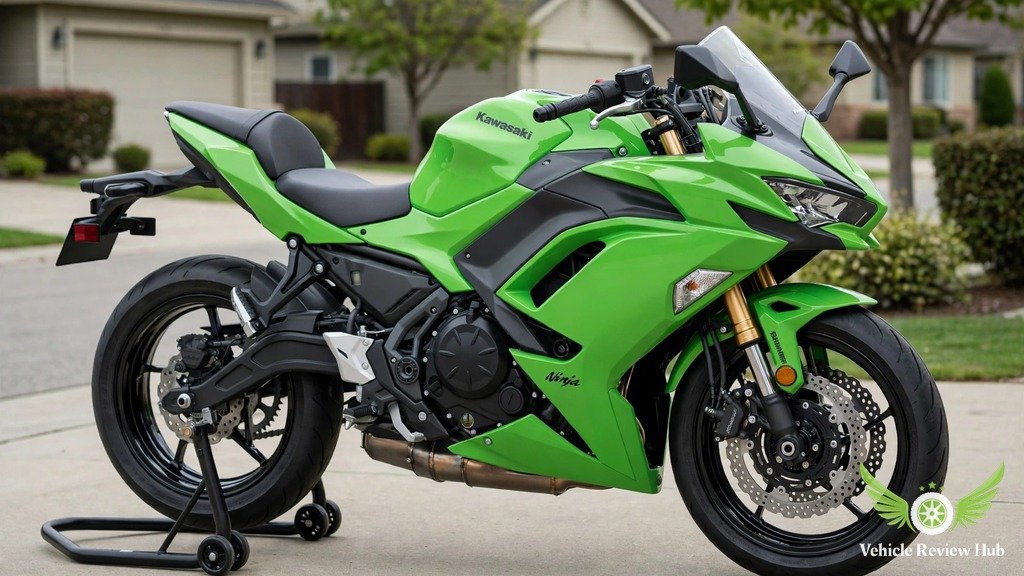
Fuel is the cheapest part of owning a 650, and this Kawasaki Ninja 650 reliability guide starts with it. MCN’s long-term test averaged 49.44 mpg over 9,500 miles, with gentle cruising returning 60 mpg or more, so a 4.0-gallon tank gives about 198 miles on the average — a calculation, not a tested range. Routine servicing is an oil and filter change every 7,500 miles, which any home mechanic can do with a drain pan and a torque wrench, and the parts are cheap, as this Kawasaki Ninja 650 reliability guide notes: the oil filter is Kawasaki 16097-0008, the same Hiflofiltro HF303RC the 500 uses, and the plugs are NGK CR9EIA-9. Tyres are the recurring cost — a 120/70-17 front and a 160/60-17 rear — and the wearing parts are the chain, the sprockets, the brake pads and the fork seals, all cheap and easy to find after twenty years in production. The full price story, including what a new 2027 bike costs against its rivals, is in our Kawasaki Ninja 650 comparison.
| Maintenance figure | Ninja 650 | Ninja 500 | Why it matters |
|---|---|---|---|
| Engine oil capacity | 1.8 L (1.7 US qt) 10W-40 | 2.3 L | Do not overfill a 650 with the 500’s quantity |
| Spark plugs | NGK CR9EIA-9, gap 0.8–0.9 mm | NGK LMAR9G | Different plug, different gap — do not swap them |
| Oil filter | Kawasaki 16097-0008 = HF303RC, 17.5 Nm | Same part and torque | The one part the two bikes share |
| Service interval | Every 7,500 mi / 12,000 km or yearly | Every 7,600 mi / 12,000 km or yearly | Nearly identical rhythms |
| Valve check (US) | Every 24,000 km (chart 15,200 mi) | Every 15,200 mi | Same mileage, different km basis — check the manual |
Note: every figure in this Kawasaki Ninja 650 reliability comparison table is verified from each bike’s own manual chart — the 650’s from its 2017 service manual and the 500’s from its own manual as covered in our Ninja 500 reliability guide. The two bikes share the filter part number and the drain-bolt torque, but the oil capacity and the plugs differ, and the 500’s chain slack figure is not the 650’s.
18V-580 Belongs to the H2 SX
One recall is often misattributed to the Ninja 650, and this Kawasaki Ninja 650 reliability guide names it so the reader does not repeat the mistake. Campaign 18V-580 is a 2018 Ninja H2 SX SE recall — 390 units of the ZX1002BJF, whose center-stand spring mounting pin was improperly welded. The NHTSA acknowledgement lists the model as “KAWASAKI/NINJA/2018”, which is why a naive search for “Ninja” pulls it in. The Part 573 report for 18V-580 names the H2 SX, not the 650, and the 650 has no connection to it. The 650’s own campaign record, as this Kawasaki Ninja 650 reliability guide prints it, stays at two: 10V-323 and 12V-081. The same discipline applies to the smaller bikes — our Ninja 500 SE KRT Edition reliability guide covers that bike’s own recall, a different campaign on a different bike.
How to Keep a Kawasaki Ninja 650 Reliable
Keeping a 650 reliable, as this Kawasaki Ninja 650 reliability guide shows, is mostly a matter of doing the small things on time. The service chart is short, the parts are cheap, and nothing major goes wrong when the schedule is followed. This Kawasaki Ninja 650 reliability guide ends with the discipline that keeps the bike that way — and the one electronic aid that arrived late.
Preventive Maintenance, Records and Regular Inspections
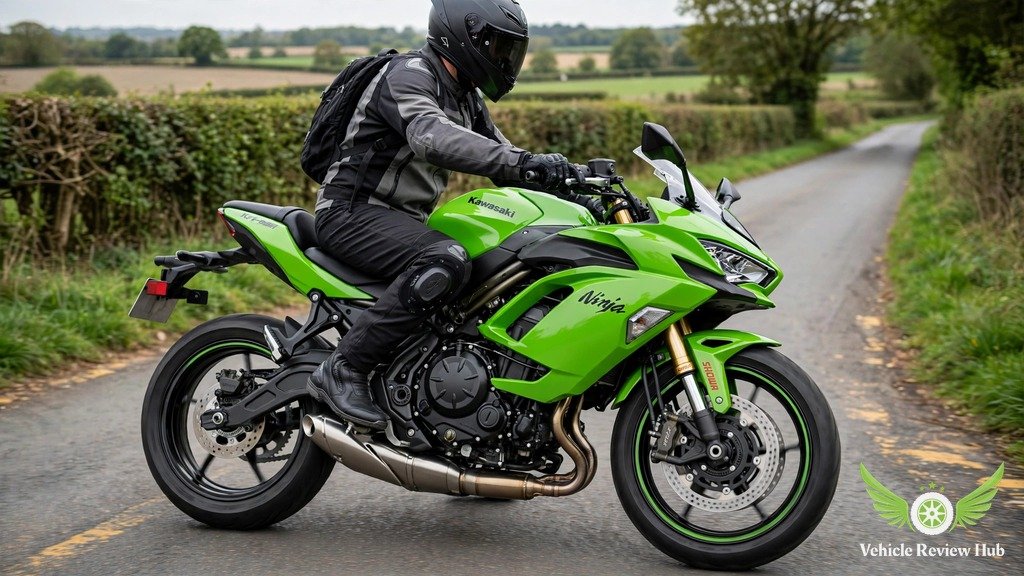
The preventive routine in this Kawasaki Ninja 650 reliability guide is four habits. First, follow the chart: oil and filter every 7,500 miles, plugs and air filter at the same interval, valve check at 24,000 km, brake fluid every two years, coolant every three. Second, keep the records — receipts and a service book prove the valve check was done at 15,000 miles. Third, inspect the bike regularly — this Kawasaki Ninja 650 reliability guide lists the checks: chain slack against the owner’s manual, tyre condition and pressures, brake pad thickness, fork seals for weeping, and the coolant and brake fluid levels. Fourth, store it properly: fuel stabiliser if it sits, a battery tender in winter, a dry garage. The same discipline applies across the family — our Ninja 400 reliability guide, Ninja 300 reliability guide and Ninja 125 reliability guide all say the same thing in their own words, and the Suzuki SV650 reliability guide and the Suzuki GSX-8R reliability guide cover the rivals’ own schedules. For the rider it suits, that is enough — and the 650, kept on its schedule, is the reliable bike its twenty-year record says it is.
KTRC Arrived Only in 2023
Kawasaki Traction Control arrived on the Ninja 650 for the 2023 model year — two modes plus off, wheel-speed-based, with no inertial measurement unit — the last electronic change this Kawasaki Ninja 650 reliability guide records. It watches wheel speed, not lean angle — it is not cornering traction control and not IMU-based. Pre-2023 bikes have no traction control at all, and a buyer should know that a 2021 bike and a 2024 bike differ on this point even though the engine is the same. The Ultimate Motorcycling 2023 review lists the KTRC arrival among its fourteen fast facts, and the 2027 bike carries the same system unchanged — the 2027 update was the fork and the brakes. The contrast is the YZF-R7 review, whose 2026 refresh brought a six-axis IMU suite, ride-by-wire, a quickshifter and cruise — a newer system on a more expensive bike. Our YZF-R3 review covers the opposite end of Yamaha’s range — a smaller twin with no traction control at all, which is what a pre-2023 650 feels like. The 650’s KTRC is simpler, and simpler is part of the reliability story: fewer sensors, fewer modes, nothing to fail that the bike did not have before 2023. Our Kawasaki Ninja 650 review covers the 2027 bike’s full specification, including the new inverted fork and radial calipers that the traction control works alongside.
Kawasaki Ninja 650 Reliability Frequently Asked Questions
These are the questions buyers ask most about the Ninja 650’s reliability, answered from the owner’s manual and the recall records in this Kawasaki Ninja 650 reliability guide. The short version is two recalls in twenty years, both on early bikes, and a service schedule that asks for very little.
Is the Kawasaki Ninja 650 reliable?
Yes, with the usual caveats for a twenty-year-old model line. In twenty years on sale in the United States the 650 has collected exactly two safety recalls, both on early bikes and both fixed free of charge, with nothing since 2012. The owner-reported patterns are small: pre-2017 rectifier and stator weakness, cam chain tensioner rattle on cold start, throttle-body sync needs and fork seal leaks on high-mileage bikes — none covered by a recall or a technical service bulletin, and none a verified defect. This Kawasaki Ninja 650 reliability guide calls that a clean campaign record, not a problem-free bike.
What are the Ninja 650’s two recalls?
The first is 10V-323 from 2010: the right lower cowling interfered with the rider’s foot on the rear brake pedal on 2009 and 2010 Ninja 650R models, about 6,700 to 6,800 bikes, fixed free with an updated footrest guard and fairing bracket. The second is 12V-081 from 2012: passenger footpeg circlips that could break or fall off on 2012 bikes built between September 13 and October 25, 2011, with 793 units total across the Ninja 650, the Ninja 250 and the Versys together — never the 650’s count alone — fixed free under bulletin MC 12-02. Both campaigns are verified from the NHTSA Part 573 reports. One caution: the NHTSA’s own search API returns zero recalls for every model year of this bike, which is a matching failure, not a clean record, and this Kawasaki Ninja 650 reliability guide cites the Part 573 reports, not the API.
What is the Ninja 650’s maintenance schedule?
Major services come every 7,500 miles or 12,000 km, or once a year, with the first service at 600 miles. Oil and filter are changed at every service, air filter and spark plugs at every 7,500-mile service, and the valve clearance check is due every 24,000 km — the manual’s chart reads 15,200 miles, and the rounded figure most American owners use is 15,000 miles. Brake fluid is replaced every two years, coolant and hoses every three years or 36,000 km, fuel hoses every five years, and brake hoses and rubber parts every four years. This Kawasaki Ninja 650 reliability guide prints the chart from the 650’s own 2017 service manual, not from any other bike’s manual. Outside the United States and Canada the valve check is due at 42,000 km, but that European interval is not ours.
What oil and spark plugs does the Ninja 650 use?
An oil and filter change needs 1.8 litres of SAE 10W-40, not the Ninja 500’s 2.3 litres, with a Kawasaki 16097-0008 filter, the same Hiflofiltro HF303RC the 500 uses, torqued to 17.5 Nm and a drain bolt at 30 Nm. The spark plugs are NGK CR9EIA-9, gapped at 0.8 to 0.9 mm and torqued to 13 Nm, replaced every 7,500 miles — not the 500’s LMAR9G plugs. The idle speed is 1,250 to 1,350 rpm. This Kawasaki Ninja 650 reliability guide warns against copying the 500’s maintenance figures: the filter part number and the torques happen to match, but the oil capacity and the plugs differ.
What should I check on a used Ninja 650?
Three things: the service history, the recalls, and the wear items. Ask for receipts showing oil every 7,500 miles, the valve check at 15,000 miles and brake fluid every two years, and check whether the bike is a 2009, 2010 or 2012 model that falls inside the two recall campaigns. One recall is often misattributed to the 650: campaign 18V-580 is a 2018 Ninja H2 SX SE recall for a center-stand spring mounting pin, 390 units, and it has no connection to the 650. Two figures are deliberately not printed in this Kawasaki Ninja 650 reliability guide: the chain slack and the tyre pressures, because neither was verified from the 650’s own manual — check both against the owner’s manual or the swingarm sticker. The 500’s 20 to 30 mm chain slack is not the 650’s figure.
Does the Ninja 650 have traction control?
Only from 2023 onwards. Kawasaki Traction Control arrived on the 650 for the 2023 model year, with two modes plus off, and it is wheel-speed-based, with no inertial measurement unit — it is not cornering traction control and not IMU-based. Pre-2023 bikes have no traction control at all, so a 2021 bike and a 2024 bike differ on this point even though the engine is the same. This Kawasaki Ninja 650 reliability guide notes the contrast with the 2026 Yamaha YZF-R7, whose refresh brought a six-axis IMU suite, ride-by-wire, a quickshifter and cruise — a newer system on a more expensive bike. The 650’s simpler KTRC is part of its reliability story: fewer sensors, fewer modes, nothing to fail that the bike did not have before 2023.