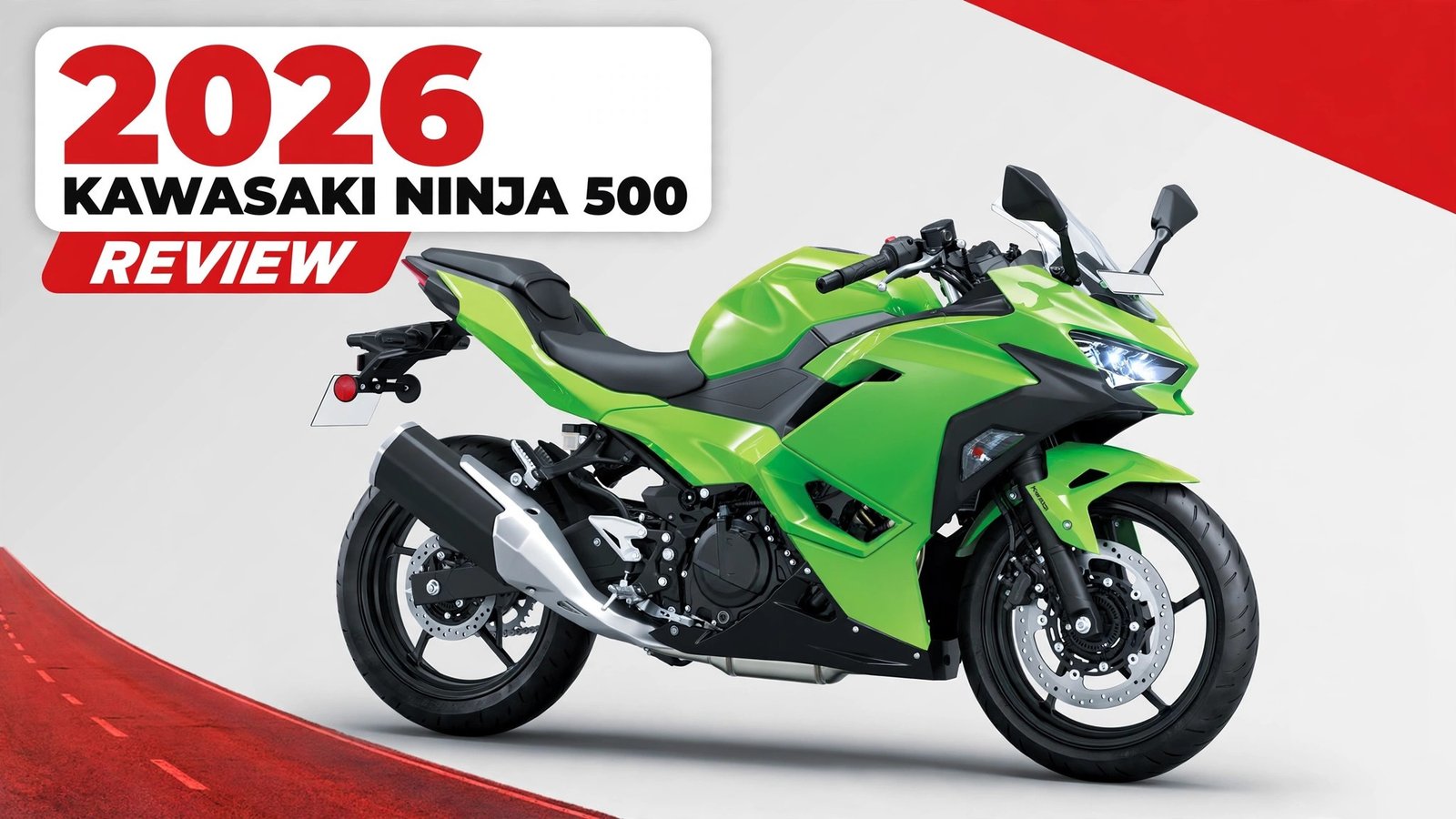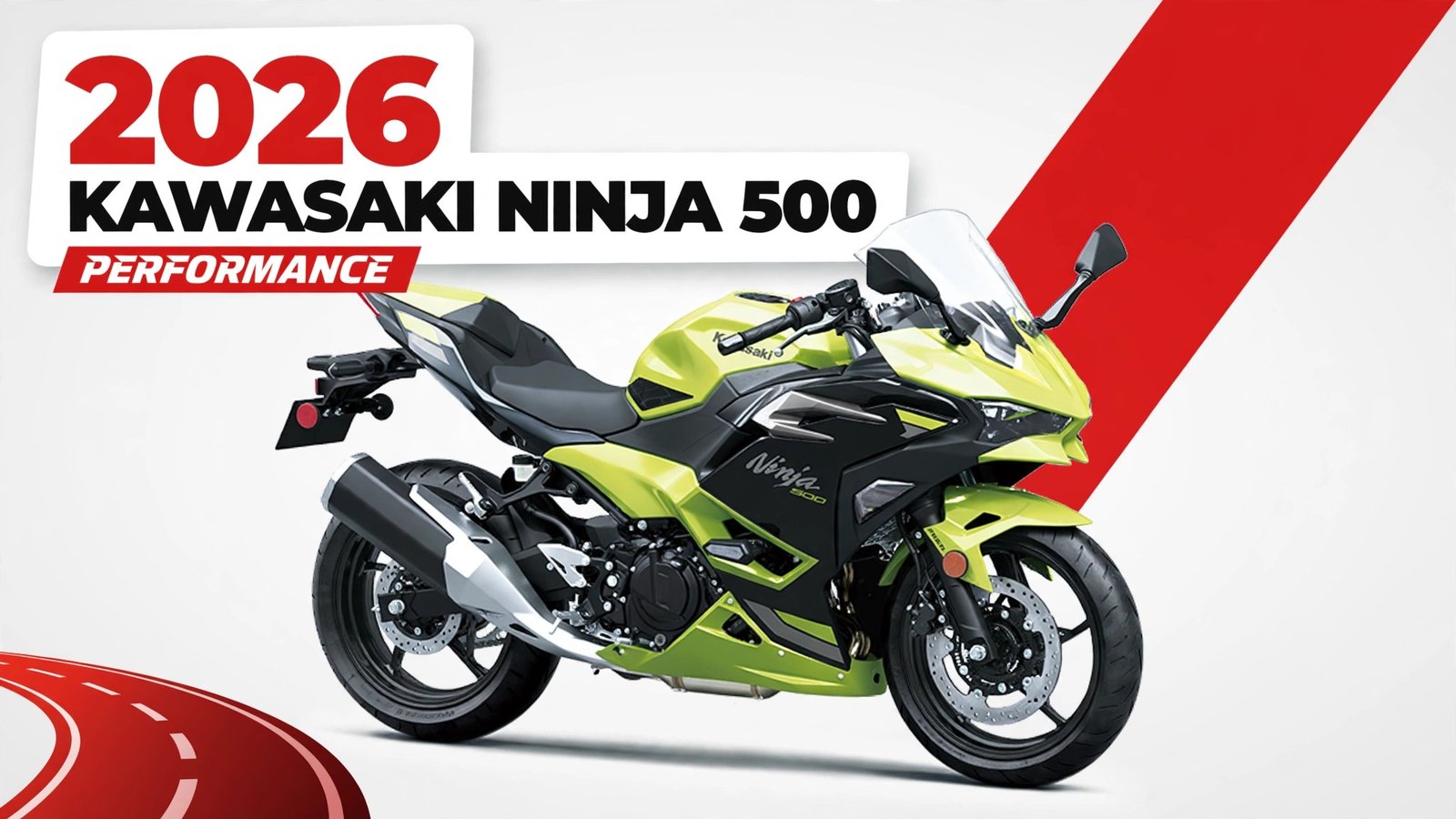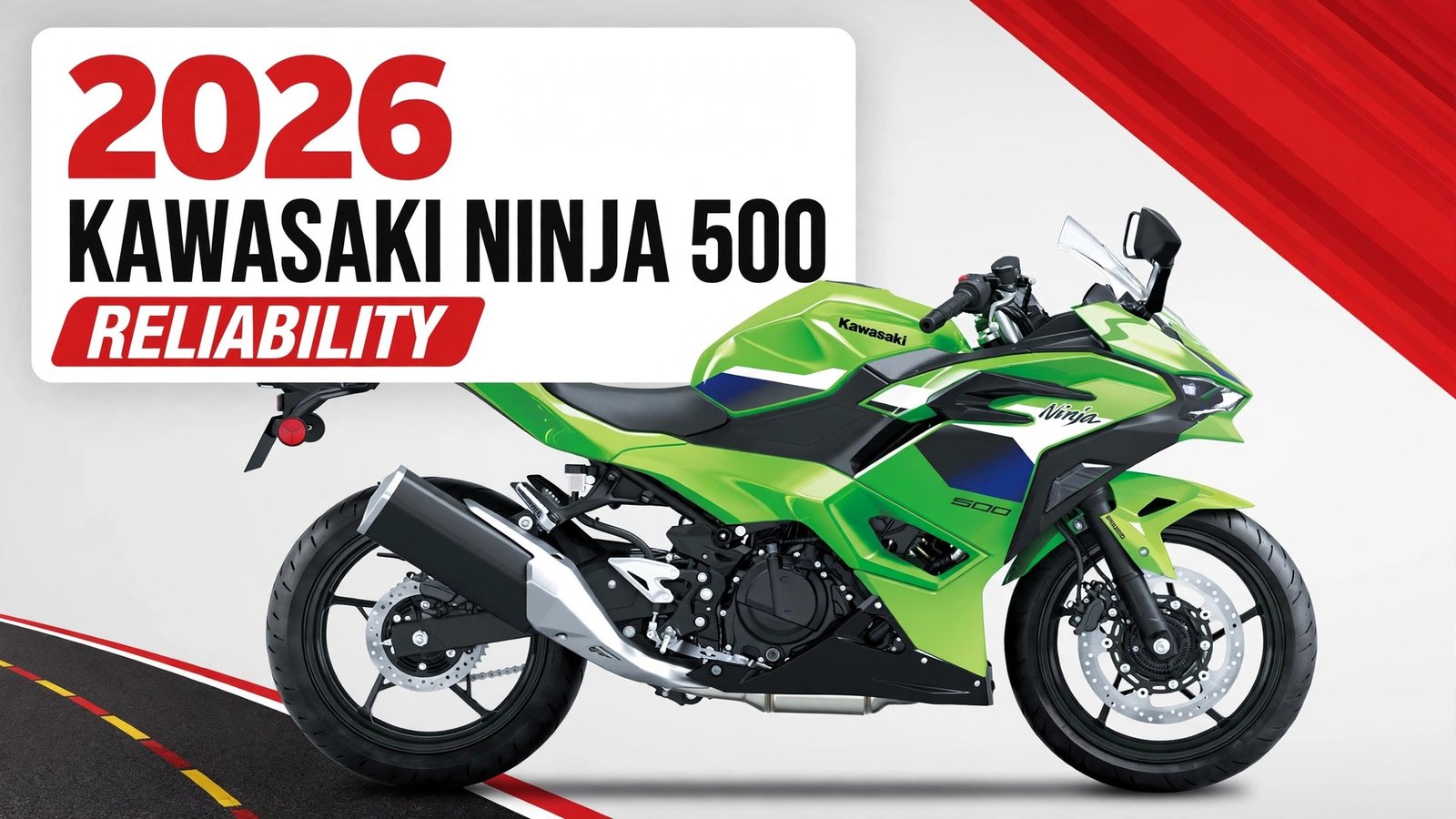
The Kawasaki Ninja 500 comparison starts with a simple question: what else can you buy for the same money? The 500 is the middle of Kawasaki’s small-sportbike range in 2026 — a 451cc twin with 51 hp, a $5,399 base price, and a 30.9-inch seat — and its rivals attack it from three directions at once. This Kawasaki Ninja 500 comparison puts it against the Yamaha YZF-R3, the Aprilia RS 457 and the Honda CBR500R, then checks it against the revived Ninja 300 and the sideways CFMOTO 450SS, judged on price, power, weight and equipment.
Kawasaki Ninja 500 Overview and Its Closest Rivals
The 500 replaced the Ninja 400 for 2024 at the same launch price: $5,299, exactly what the outgoing 400 cost in its final year. By 2026 the base is $5,399, the ABS $5,799 and the SE ABS $6,499, plus $650 destination — $6,049 to $7,149 delivered. For 2027 the non-ABS trim is gone, and this Kawasaki Ninja 500 comparison notes Kawasaki’s own 2027 page lists only the ABS at $5,899 and the SE ABS at $6,599. The bike is a stroked 400 twin — 451cc, 51 hp and 31.7 lb-ft (ISO 4106) — with a 41 mm fork and twin LED headlights. Our Kawasaki Ninja 500 review covers the specs, and our Kawasaki Ninja 500 performance guide covers the untested figures.
Squeezed Three Ways at Once
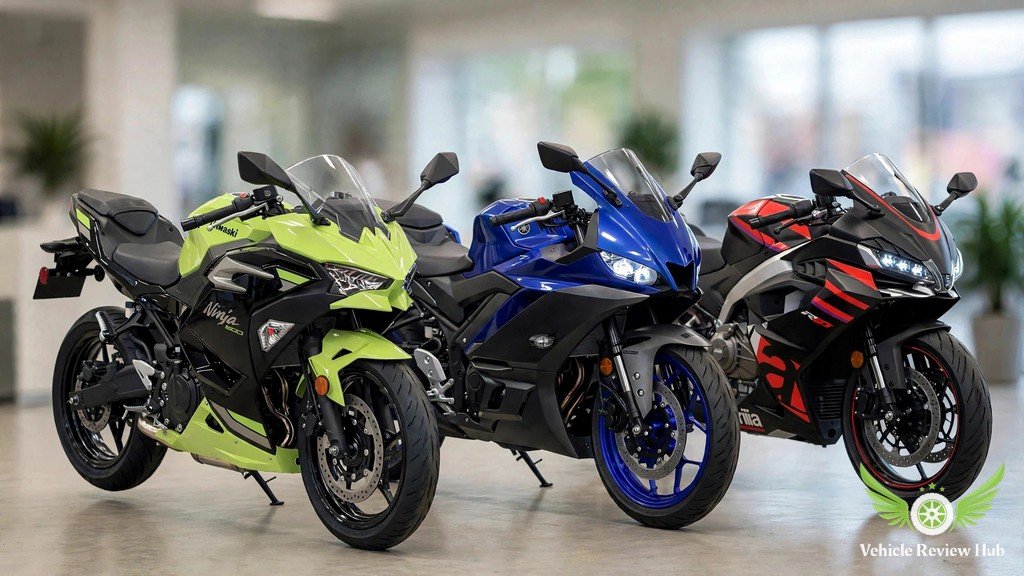
The squeeze is real, and each rival presses a different point. The Yamaha YZF-R3 undercuts the 500 on price: at $6,149 delivered, $300 less than the 500 ABS at $6,449. The Aprilia RS 457 beats the 500 on equipment for $6,849 plus roughly $800 dealer-set destination, about $7,649 delivered. The Honda CBR500R is bigger and pricier at $6,999 delivered. In this Kawasaki Ninja 500 comparison, the 500’s answer is the same to all three: more torque, the lowest weight in the group, and mechanical simplicity at the lowest delivered price among the 451–471cc bikes. That is the shape of this Kawasaki Ninja 500 comparison.
The Fireman Rides put the same three bikes head to head in one video — a 2026 RS 457, a 2026 Ninja 500 SE and a 2026 Yamaha YZF-R3 — and his description also names the CFMOTO 450SS. Watch his shootout below — a creator video, not a press test.
How the Four Bikes Differ at a Glance
The numbers that decide most of this Kawasaki Ninja 500 comparison fit in one table. Prices are 2026 MSRP unless noted; delivered prices add destination. Power figures are claimed, except the CBR500R, where the US evidence is Cycle World’s rear-wheel dyno run.
| Bike (2026) | Engine / power | Curb weight | MSRP | Delivered |
|---|---|---|---|---|
| Kawasaki Ninja 500 ABS | 451cc twin, 51 hp @ 10,000 rpm (ISO 4106) | 374.9 lb | $5,799 | $6,449 |
| Yamaha YZF-R3 | 321cc twin, 42 hp | 373 lb | $5,499 | $6,149 |
| Aprilia RS 457 | 457cc twin, 47 hp @ 9,400 rpm | 385 lb (wet) | $6,849 | ≈ $7,649 |
| Honda CBR500R | 471cc twin, 43.20 hp (Cycle World dyno, rear wheel) | 421 lb | $6,399 | $6,999 |
Notes: in this Kawasaki Ninja 500 comparison, delivered prices are MSRP plus destination: $650 for the Ninja 500 and the R3, $600 for the CBR500R, roughly $800 dealer-set for the RS 457 — so its delivered figure is approximate.
Kawasaki Ninja 500 vs Yamaha YZF-R3
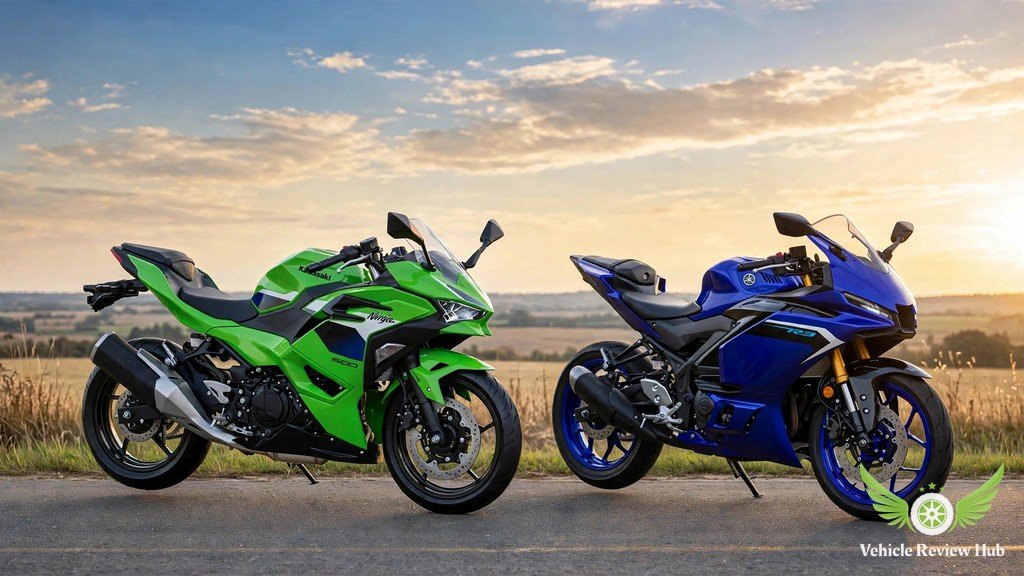
The R3 is the rival most buyers cross-shop against the 500 — the only one that is cheaper. At $5,499 plus $650 destination, the 2026 R3 lands at $6,149 delivered — $300 less than the 500 ABS, $100 more than the 500’s non-ABS base delivered. That $300 is the R3’s whole price case, and this Kawasaki Ninja 500 comparison weighs it against what the R3 gives up: 130cc, 9 hp, and nearly 10 lb-ft of torque.
Engine, Specs and Performance Side by Side
The engine gap is the story of this Kawasaki Ninja 500 comparison. The 500’s 451cc twin makes a claimed 51 hp at 10,000 rpm and 31.7 lb-ft at 7,500 rpm (ISO 4106). The R3’s 321cc twin makes 42 hp and 21.8 lb-ft — a 9 hp and 9.9 lb-ft advantage for the 500, with torque where a road rider uses it, so the 500 needs less gearbox work while the R3 needs revs to give its best. No US outlet has published a dyno, quarter-mile or top-speed figure for the 500, so this Kawasaki Ninja 500 comparison invents none.
On weight the two bikes are almost identical, which is why the power gap matters so much: the R3 manages 0.113 hp per pound, the 500 ABS 0.136 and the non-ABS 500 0.138. Both are beginner-friendly — forgiving throttle, slipper clutch on the 500, ABS on its ABS trims.
| Spec (2026) | Kawasaki Ninja 500 ABS | Yamaha YZF-R3 |
|---|---|---|
| Engine | 451cc parallel twin, DOHC, liquid-cooled | 321cc parallel twin, DOHC, liquid-cooled |
| Power (claimed) | 51 hp @ 10,000 rpm (ISO 4106) | 42 hp |
| Torque (claimed) | 31.7 lb-ft @ 7,500 rpm | 21.8 lb-ft |
| Redline | 11,700 rpm | Not published as a headline figure |
| Curb / wet weight | 374.9 lb (370.4 lb non-ABS) | 373 lb |
| Power-to-weight | 0.136 hp/lb (0.138 non-ABS) | 0.113 hp/lb |
| Seat height | 30.9 in | 30.7 in |
| Tank | 3.7 gal | 3.7 gal |
| Dash | Full LCD (TFT on SE only) | LCD (not TFT) |
| MSRP / delivered | $5,799 / $6,449 | $5,499 / $6,149 |
Notes: in this Kawasaki Ninja 500 comparison, power-to-weight uses claimed power divided by claimed curb or wet weight.
Price, Equipment and Which Suits Which Rider
On equipment, this Kawasaki Ninja 500 comparison finds the two bikes close enough that price decides the pairing: neither has traction control, ride modes or a quickshifter. The 500’s LCD shows a gear indicator, fuel consumption and a service indicator through Rideology smartphone connectivity, while the R3 keeps its instrumentation simpler. The SE’s TFT, KIPASS and USB-C are the 500’s equipment answer, but at $6,499 plus destination they cost $1,000 more than the R3 before destination. Our YZF-R3 review covers the Yamaha’s full ownership picture.
The R3 suits the buyer who wants the lightest, sharpest bike for the least money and does not mind working the gearbox. The 500 suits the buyer who wants torque for town and highway riding, and a bike to grow into. RevZilla weighed the 500 at 381 lb on its own scales — nine pounds more than the last Ninja 400 — so the difference is in the engine, not the chassis. For most buyers in this Kawasaki Ninja 500 comparison, the 500’s $300 premium over the R3 buys the mid-range that makes everyday riding easier, and that is the better spend.
Kawasaki Ninja 500 vs Aprilia RS 457
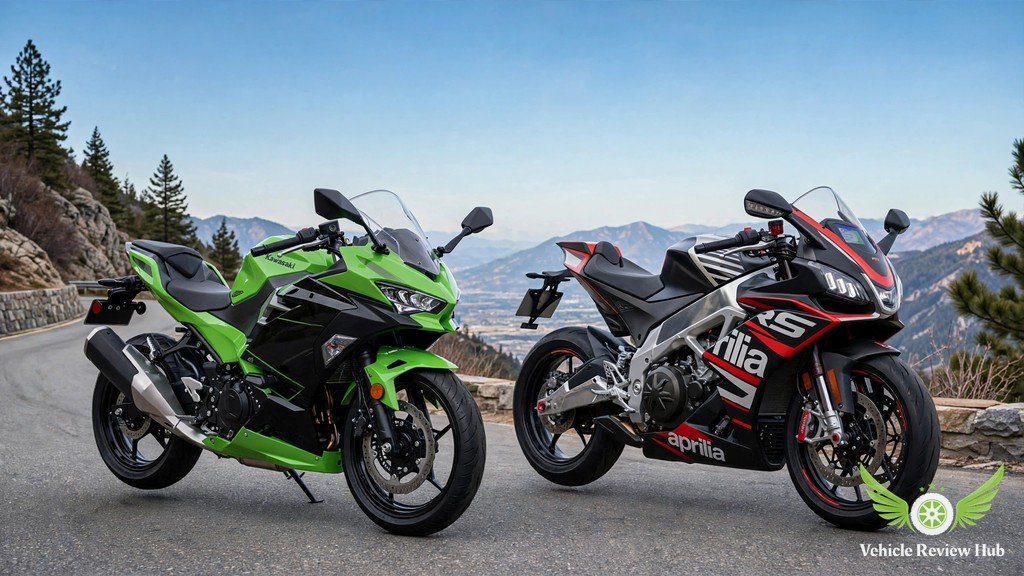
The RS 457 is the rival that makes the 500 look basic. Aprilia’s 457cc twin brings ride-by-wire, three riding modes, traction control, a TFT dash and an upside-down fork — everything the 500 does not have — for $6,849, which is $1,050 more than the 500 ABS on MSRP. With dealer-set destination of roughly $800, the Aprilia lands at about $7,649 delivered, roughly $1,200 more than the 500 ABS at $6,449. This Kawasaki Ninja 500 comparison asks whether that $1,200 buys a better bike or just a better spec sheet: the Aprilia gives up 4 hp and weighs 10.1 lb more wet. The RS 457’s case is equipment and chassis.
Engine, Specs and Performance Side by Side
On paper, in this Kawasaki Ninja 500 comparison, the engines are close and the chassis are not. The RS 457’s 457cc liquid-cooled twin makes 47 hp at 9,400 rpm and 32 lb-ft at 6,700 rpm, against the 500’s 51 hp at 10,000 rpm and 31.7 lb-ft at 7,500 rpm. The Aprilia makes 0.3 lb-ft more torque and peaks 800 rpm lower, but the 500 makes 4 hp more. The Aprilia’s advantage is everything around the engine — ride-by-wire, three modes, traction control, TFT dash, upside-down fork, slipper clutch — and a 24-month warranty against the 500’s 12.
The GP Replica trim costs $7,499. Aprilia builds the RS 457 in India, and its US dealer network is far thinner than Kawasaki’s — a buying consideration, not a reliability claim.
| Spec (2026) | Kawasaki Ninja 500 ABS | Aprilia RS 457 |
|---|---|---|
| Engine | 451cc parallel twin, DOHC, liquid-cooled | 457cc parallel twin, DOHC, liquid-cooled, ride-by-wire |
| Power (claimed) | 51 hp @ 10,000 rpm (ISO 4106) | 47 hp @ 9,400 rpm |
| Torque (claimed) | 31.7 lb-ft @ 7,500 rpm | 32 lb-ft @ 6,700 rpm |
| Wet weight | 374.9 lb | 385 lb |
| Power-to-weight | 0.136 hp/lb | 0.122 hp/lb |
| Fork | 41 mm telescopic, conventional | Upside-down fork |
| Electronics | No ride modes, no traction control | 3 riding modes, traction control |
| Dash | Full LCD (TFT on SE only) | TFT |
| Tank / wheelbase | 3.7 gal / 54.1 in | 3.4 gal / 53.1 in |
| Warranty | 12-month limited | 24-month |
| MSRP / delivered | $5,799 / $6,449 | $6,849 / ≈ $7,649 |
Notes: in this Kawasaki Ninja 500 comparison, the RS 457’s delivered price is approximate — Aprilia publishes no fixed US destination charge; dealer listings show about $800 (Peake Offroad, Williamson, New York).
Price, Equipment and Which Suits Which Rider
In this Kawasaki Ninja 500 comparison, the $1,200 delivered gap buys a genuinely better-equipped motorcycle, and this guide does not pretend otherwise. The RS 457’s upside-down fork, TFT dash, riding modes and traction control are real advantages, and its 24-month warranty is twice the 500’s. A buyer who wants the most modern small sportbike and lives near an Aprilia dealer should take the RS 457 seriously. A buyer who wants the simplest bike and a dealer in every town should take the 500 and keep the $1,200. The 500’s simplicity is also its reliability story: one recall in two model years, on a two-week slice of 2024 builds, with a free repair and a white paint mark that proves it — see our reliability guide.
Kawasaki Ninja 500 vs Honda CBR500R
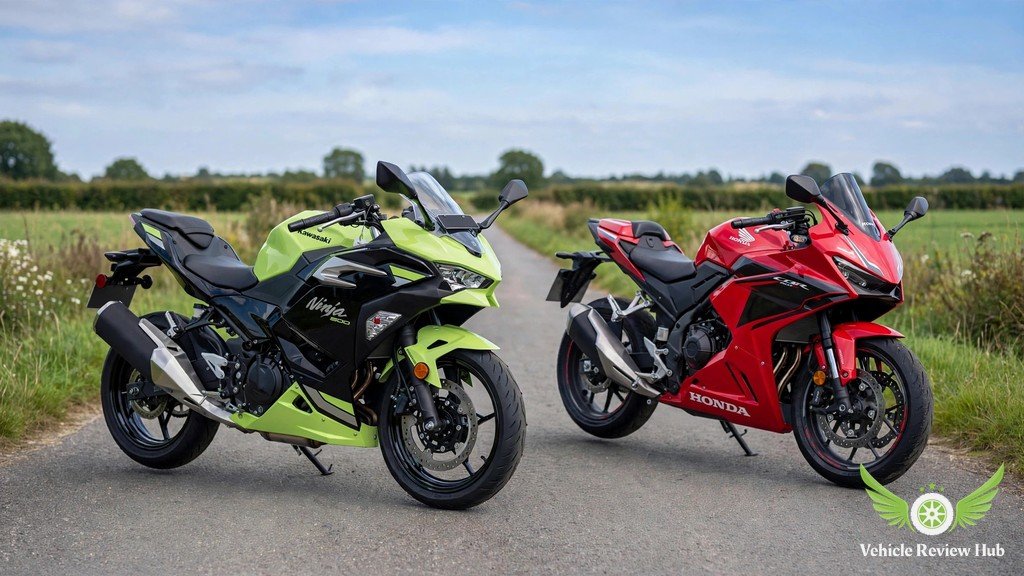
The CBR500R looks like the grown-up choice: a bigger 471cc twin, a 5-inch TFT dash, Honda’s traction control, and the largest dealer network in the class. At $6,399 plus $600 destination it lands at $6,999 delivered — $600 more than the 500 ABS on MSRP and $550 more delivered. The Honda’s case is equipment, size and network; the 500’s case is that it is lighter, torquier and cheaper, and that the Honda’s headline power figure does not survive scrutiny.
Engine, Specs and Performance Side by Side
The power figures in this Kawasaki Ninja 500 comparison need care: the number most often quoted for the CBR500R is not a US figure. The 47 hp figure is the European A2 licence cap; the US evidence is Cycle World’s rear-wheel dyno run, which measured 43.20 hp at 8,280 rpm and 29.77 lb-ft at 6,450 rpm. Against the 500’s claimed 51 hp and 31.7 lb-ft, the Honda gives up roughly 8 hp and 2 lb-ft despite its 20cc advantage. No US outlet has published a dyno figure for the 500, so this Kawasaki Ninja 500 comparison prints both honestly.
The weight gap is the largest in this Kawasaki Ninja 500 comparison. The CBR500R weighs 421 lb at the curb, against the 500 ABS at 374.9 lb — a 46.1 lb difference, more than the weight of a full tank of fuel.
| Spec (2026) | Kawasaki Ninja 500 ABS | Honda CBR500R |
|---|---|---|
| Engine | 451cc parallel twin, DOHC, liquid-cooled | 471cc parallel twin, DOHC, liquid-cooled |
| Power | 51 hp @ 10,000 rpm claimed (ISO 4106) | 43.20 hp @ 8,280 rpm, Cycle World dyno (rear wheel) |
| Torque | 31.7 lb-ft @ 7,500 rpm claimed | 29.77 lb-ft @ 6,450 rpm, Cycle World dyno (rear wheel) |
| Curb weight | 374.9 lb | 421 lb |
| Power-to-weight | 0.136 hp/lb (claimed power) | 0.103 hp/lb (dyno power) |
| Seat / wheelbase | 30.9 in / 54.1 in | 31.1 in / 55.5 in |
| Tank | 3.7 gal | 4.5 gal |
| Dash / electronics | Full LCD (TFT on SE); no traction control | 5-in TFT; HSTC traction control; ABS standard |
| Front brakes | Single 310 mm disc, 2-piston caliper | Dual 296 mm discs |
| MSRP / delivered | $5,799 / $6,449 | $6,399 / $6,999 |
Notes: in this Kawasaki Ninja 500 comparison, the CBR500R’s 47 hp figure is the European A2 cap and is not printed as a US figure; the table uses Cycle World’s measured rear-wheel dyno figures instead. The 421 lb curb weight is Honda’s own published figure for the 2026 bike, verified against Honda’s powersports specifications and dealer listings at writing time.
Price, Equipment and Which Suits Which Rider
In this Kawasaki Ninja 500 comparison, the Honda’s equipment list is the best of the Japanese three: a 5-inch TFT, traction control, a Showa SFF-BP fork, dual front discs and ABS standard since 2021, on a bike with a 4.5-gallon tank and a roomier 31.1-inch seat. The 2026 price cut makes it $550 more than the 500 ABS delivered, not the $1,550 it would have been at the 2025 price. But the equipment comes with 46 lb of extra weight and less measured power.
Kawasaki Ninja 500 Price and Value Compared
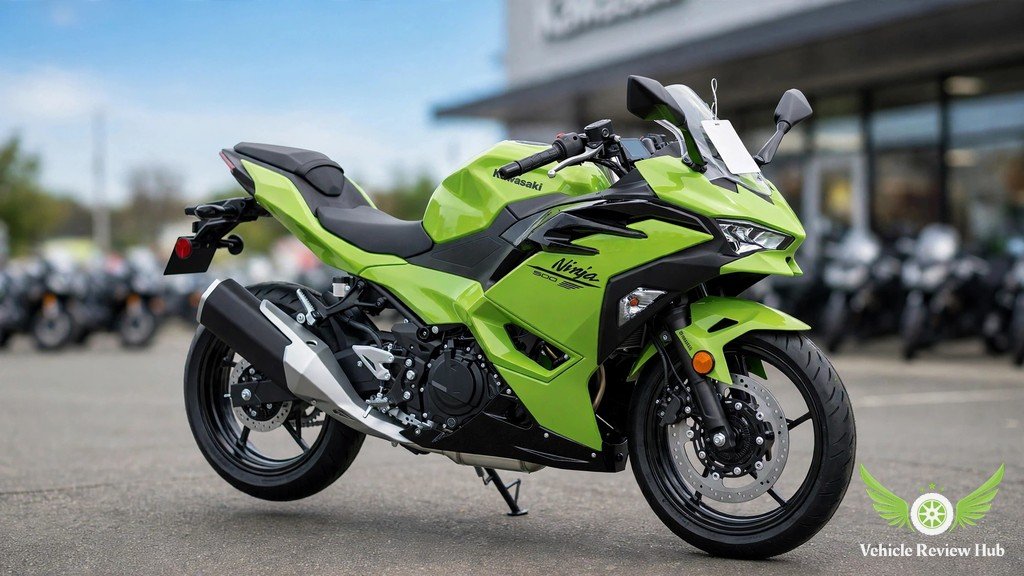
Price is where this Kawasaki Ninja 500 comparison is decided for most buyers. The non-ABS base lands at $6,049 delivered, the ABS at $6,449 and the SE ABS at $7,149, all with the $650 destination charge. Against the R3 the 500 costs $300 more delivered; against the RS 457 about $1,200 less; against the CBR500R $550 less.
Revived 300 Is Heavier Than the 500
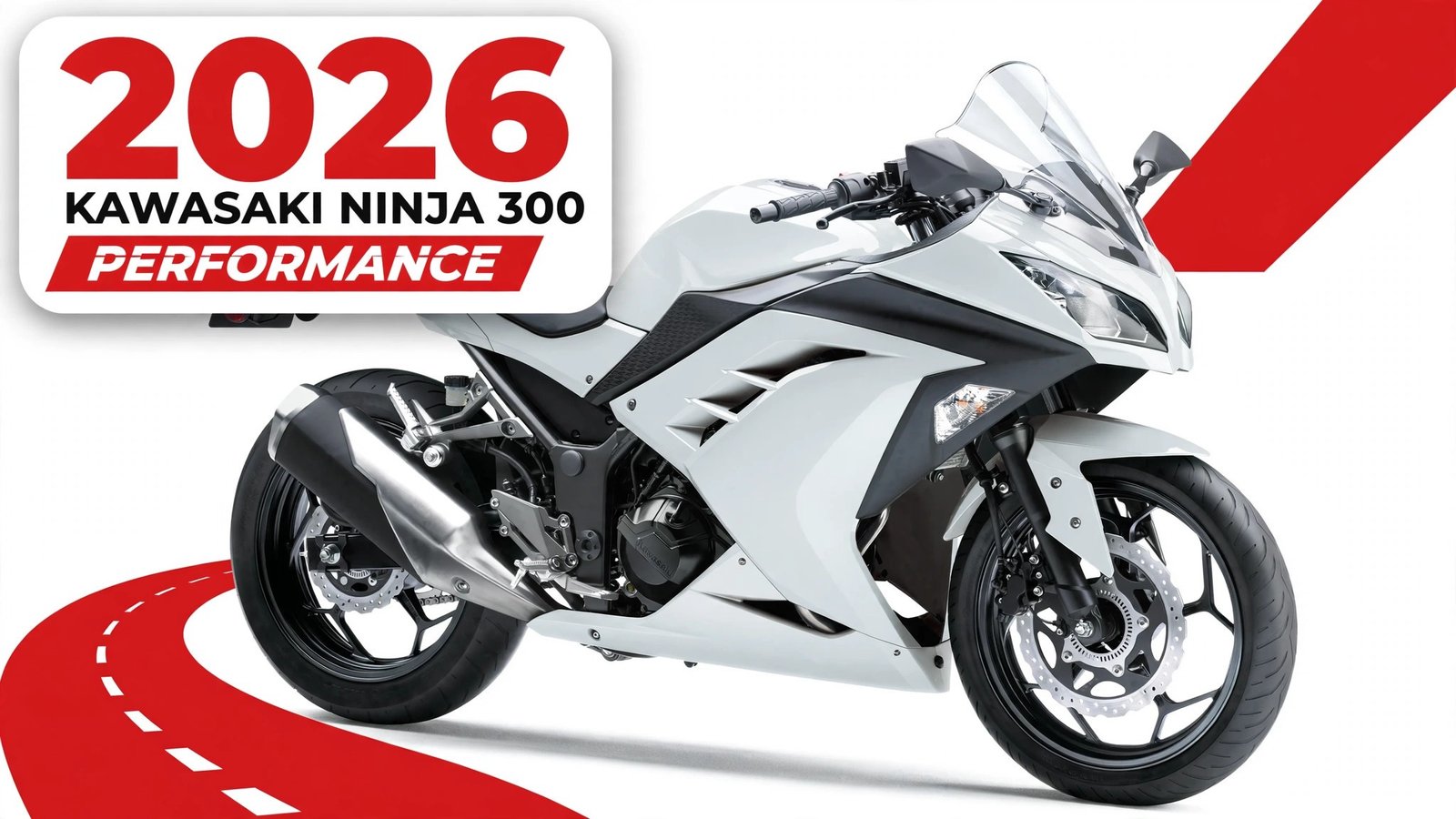
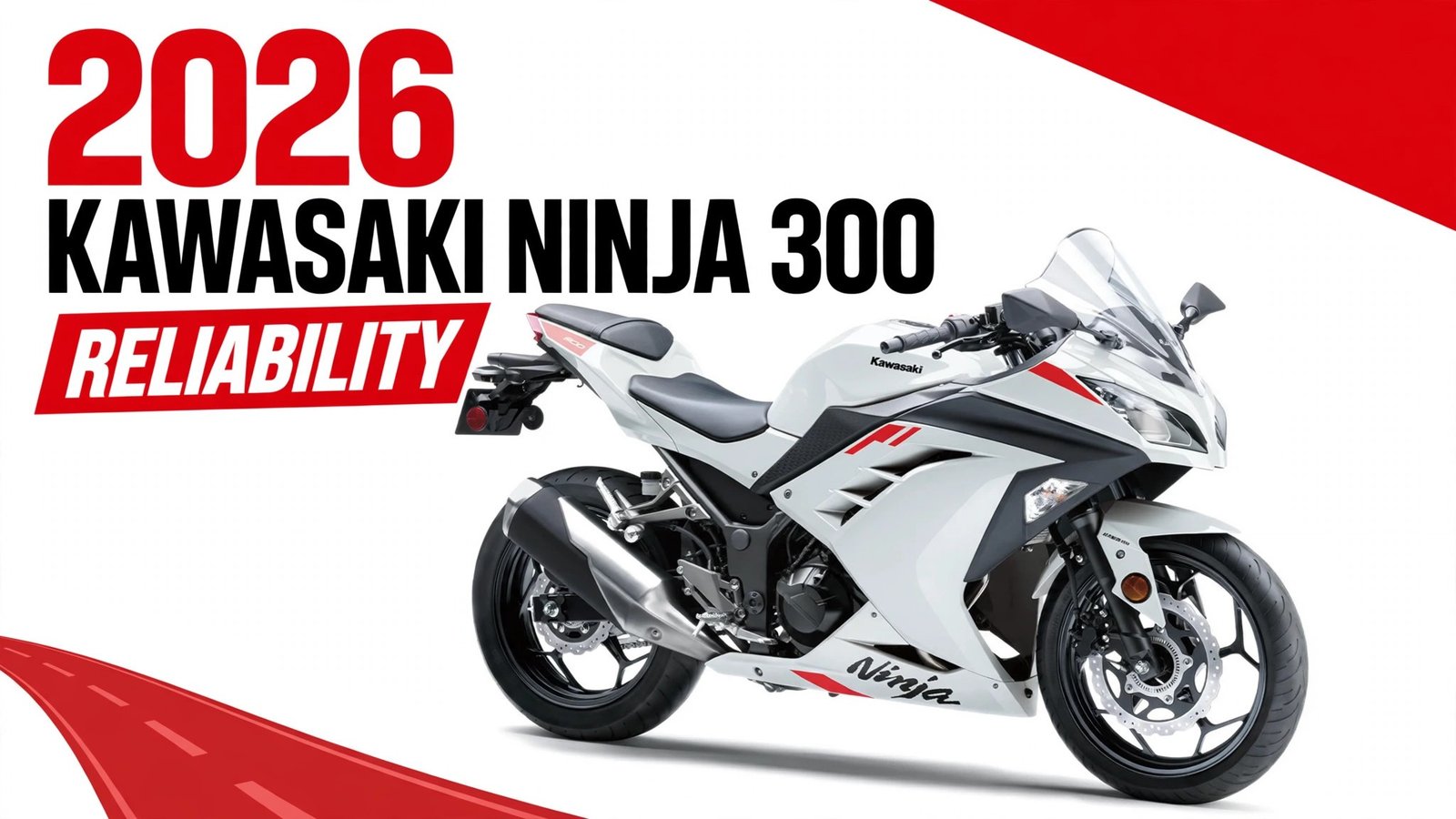
The revived Ninja 300 is the strangest rival in this Kawasaki Ninja 500 comparison, because it loses on the numbers that usually decide a value argument. The 2026 300 costs $4,999 plus $650 destination, or $5,649 delivered — $800 less than the 500 ABS and $400 less than the 500’s non-ABS base. But the 300’s 296cc twin makes 38.9 hp and 19.3 lb-ft, against the 500’s 51 hp and 31.7 lb-ft, and the 300 weighs 388.1 lb — heavier than every 500 trim, including the SE at 379.3 lb.
In this Kawasaki Ninja 500 comparison, the 300’s case is price alone: $5,649 buys a brand-new Ninja with ABS and a warranty. But the 500 is the better motorcycle for the money — 155cc more, 12.1 hp more, 12.4 lb-ft more, and lighter — for $800 more against the ABS, or $400 more against the non-ABS base. The full story of the bike the 500 replaced is in our Kawasaki Ninja 400 comparison, and the 300’s own numbers are in our Kawasaki Ninja 300 comparison. For the full small-Ninja ladder, our Kawasaki Ninja 125 comparison covers the 125.
| Value point (2026) | Kawasaki Ninja 500 | Kawasaki Ninja 300 (revived) |
|---|---|---|
| Engine / power | 451cc twin, 51 hp @ 10,000 rpm | 296cc twin, 38.9 hp @ 11,000 rpm |
| Torque | 31.7 lb-ft @ 7,500 rpm | 19.3 lb-ft @ 10,000 rpm |
| Curb weight | 370.4 lb non-ABS / 374.9 lb ABS / 379.3 lb SE | 388.1 lb |
| Power-to-weight | 0.136 hp/lb (ABS) | 0.100 hp/lb |
| Seat / tank | 30.9 in / 3.7 gal | 30.9 in / 4.5 gal |
| Gear indicator / TFT | Yes / TFT on SE only | No / No |
| MSRP / delivered | $5,399 base / $6,049 delivered | $4,999 / $5,649 |
Notes: in this Kawasaki Ninja 500 comparison, the 300’s figures are the 2026 revival’s — the last US 300 was the 2017 model. The 500’s delivered figure above is the non-ABS base; the ABS at $6,449 delivered is $800 more than the 300.
Running Costs and Resale Value Compared
Running costs in this Kawasaki Ninja 500 comparison favour the 500 over every rival here except the R3, and the gap is small. The 500’s service schedule is light: oil, filter and plugs at every 7,600-mile or yearly service, valves inspected at 15,200 miles, brake fluid every two years, coolant every three. Oil takes 2.3 litres of SAE 10W-40 with the filter, and the chain needs lube every 400 miles. Fuel economy has no published tester figure; the lab figure is 62.0 mpg on the WMTC cycle, about 229 miles of lab range, and the only verified US owner figure is one rider’s 54 mpg on a single 222-mile mountain day.
No resale percentage has been published for the 500, and this guide prints none. The one verified used data point is a 2024 KRT Edition SE ABS at Crossbay Motorsports in Bay Shore, New York — 15,413 miles, total price $5,199, listed 18 November 2026 — $1,200 under its $6,399 MSRP after about 15,000 miles. Leftover-new discounts tell the same story: a new 2025 SE ABS at $5,599 at Langston Motorsports in Perris, California, against a $6,399 MSRP, and new 2025 ABS bikes at $4,899 to $5,399 against a $5,899 MSRP. This Kawasaki Ninja 500 comparison prints no used band, because one used listing and a handful of leftover-new discounts do not make a market. A used buyer should still check a 2024 bike’s build date against the 22 January–6 February 2024 recall window and look for the white paint mark by the frame number.
Kawasaki Ninja 500 Comparison Verdict and US Alternatives
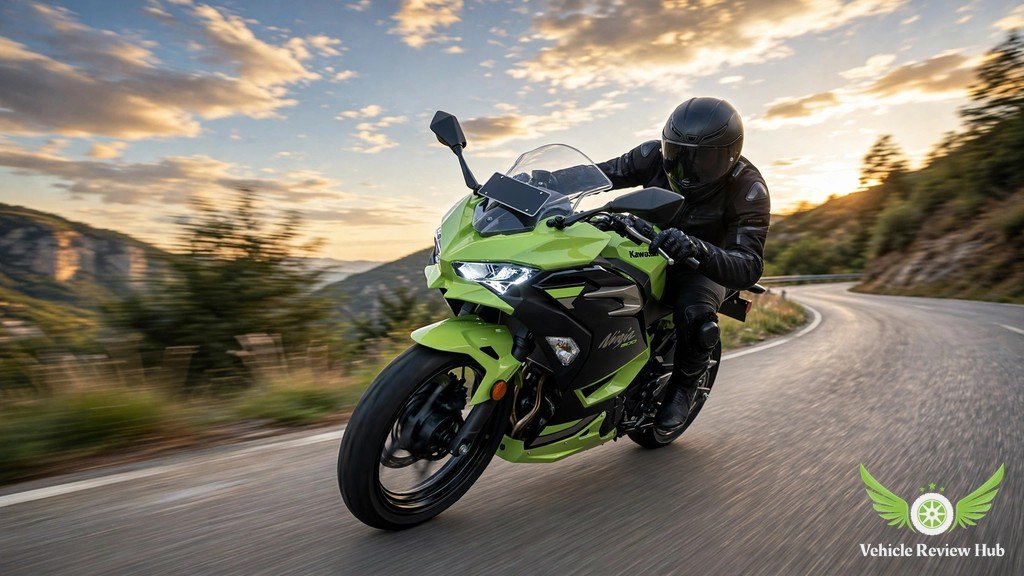
After four head-to-head sections, the Kawasaki Ninja 500 comparison comes down to one judgement: the 500 is not the best bike in this group at any single thing, but it is the best value overall. It is not the cheapest, best equipped or biggest — but it is the lightest bike with the most torque at the lowest delivered price among the 451–471cc bikes. That is why it wins this Kawasaki Ninja 500 comparison for most buyers.
Verdict: Torque and Simplicity
The verdict of this Kawasaki Ninja 500 comparison rests on three facts that survive every rival section. First, torque: 31.7 lb-ft beats the R3’s 21.8 and the CBR500R’s measured 29.77, and trails the RS 457’s 32 by a fraction — in a bike lighter than all three named rivals except the R3, which it outweighs by 1.9 lb against the ABS. Second, weight: the lowest in the group. Third, simplicity: no ride modes, no traction control, no quickshifter — the bike rewards learning, and its service schedule is oil and plugs away from cheap ownership. It is also honest about what it has not proven: no US outlet has published a dyno, quarter-mile or top speed for it — the viral 47.22 hp, 118 mph and 4.8-second figures belong to other bikes.
The buyer split is the verdict of this Kawasaki Ninja 500 comparison in practice. Take the R3 if the budget stops at $6,149 delivered and lightness matters most. Take the RS 457 if the equipment list matters most. Take the CBR500R if size and Honda’s network matter most. Take the 500 for everyday riding over two or three seasons. And take the non-ABS base while it still exists: the 2027 range is ABS-only, and the cheapest way into a new 500 rises by $500 to $6,549 delivered.
CFMOTO 450SS Comes Sideways
The CFMOTO 450SS does not fit the head-to-head pattern, and that is the point. At $5,699 it undercuts the 500 ABS by $100 on MSRP and beats it on paper for hardware — an upside-down fork and a Brembo M40 320 mm radial four-piston front brake. But the 450SS comes sideways, not head-on: a Chinese-brand bike with a thinner dealer network, unproven resale, no Kawasaki heritage, and dealer-dependent freight rather than a fixed $650. This Kawasaki Ninja 500 comparison frames it exactly that way — a lateral alternative for the buyer who shops on spec-sheet value alone.
| Spec (2026) | Kawasaki Ninja 500 ABS | CFMOTO 450SS |
|---|---|---|
| Engine | 451cc parallel twin, DOHC, liquid-cooled | 449cc parallel twin, 270° crank, Bosch EFI |
| Power (claimed) | 51 hp @ 10,000 rpm (ISO 4106) | 51 hp @ 9,500 rpm |
| Torque (claimed) | 31.7 lb-ft @ 7,500 rpm | 29.5 lb-ft @ 7,750 rpm |
| Curb weight | 374.9 lb | 375 lb |
| Power-to-weight | 0.136 hp/lb | 0.136 hp/lb |
| Fork / front brake | 41 mm telescopic / single 310 mm disc, 2-piston | Upside-down fork / Brembo M40 320 mm radial 4-piston |
| Seat / tank | 30.9 in / 3.7 gal | 31.3 in / 3.7 gal |
| Warranty | 12-month limited | 24-month |
| MSRP | $5,799 (+ $650 destination) | $5,699 (freight varies by dealer) |
Notes: in this Kawasaki Ninja 500 comparison, the 450SS is the only rival priced below the 500 ABS on MSRP, and the only one that matches it on both power and weight. Its $5,699 figure is MSRP only — freight is dealer-dependent, so no delivered price is printed. It also has a 24-month warranty against the 500’s 12-month limited warranty.
The Kawasaki Ninja 500 comparison in one line: the R3 is cheaper, the RS 457 is better equipped, the CBR500R is bigger, the 450SS is better on paper — and the 500 is the lightest, torquiest, simplest bike of the group. Buy the service history, check the paint mark, and ride it.
Kawasaki Ninja 500 Comparison Frequently Asked Questions
These answers settle the Ninja 500’s closest contests in this Kawasaki Ninja 500 comparison: the Yamaha YZF-R3, the Aprilia RS 457 and the Honda CBR500R, plus the revived Ninja 300, the sideways CFMOTO 450SS, and the new-or-used question buyers ask first.
Ninja 500 or Yamaha YZF-R3 — which should I buy?
Buy the R3 if the budget stops at $6,149 delivered, and buy the 500 ABS if $300 more buys the mid-range that makes everyday riding easier. The R3 costs $5,499 plus $650 destination, or $6,149 delivered — $300 less than the 500 ABS at $6,449 — for a 321cc twin making 42 hp and 21.8 lb-ft, with a 373 lb wet weight and an LCD dash, not a TFT. The 500 answers with 130cc more, 9 hp more and 9.9 lb-ft more torque, and this Kawasaki Ninja 500 comparison weighs that $300 against what the R3 gives up.
Ninja 500 or Aprilia RS 457 — which is better?
The RS 457 is the better-equipped bike, and the 500 is the better value. Aprilia’s 457cc twin makes 47 hp at 9,400 rpm and 32 lb-ft at 6,700 rpm, and brings ride-by-wire, three riding modes, traction control, a TFT dash and an upside-down fork, with a 24-month warranty against the 500’s 12. It costs $6,849 plus roughly $800 dealer-set destination, about $7,649 delivered — roughly $1,200 more than the 500 ABS — and this Kawasaki Ninja 500 comparison asks whether that $1,200 buys a better bike or just a better spec sheet. The Aprilia gives up 4 hp and weighs 10.1 lb more wet, and its US dealer network is far thinner than Kawasaki’s.
Ninja 500 or Honda CBR500R — which is better?
The Honda is bigger and better equipped, and the 500 is lighter, torquier and cheaper. The CBR500R costs $6,399 plus $600 destination, or $6,999 delivered — $550 more than the 500 ABS — and brings a 5-inch TFT, Honda Selectable Torque Control, a Showa SFF-BP fork and dual 296 mm front discs. But the power figures in this Kawasaki Ninja 500 comparison need care: the 47 hp figure most often quoted for the Honda is the European A2 licence cap, and the US evidence is Cycle World’s rear-wheel dyno run, which measured 43.20 hp at 8,280 rpm and 29.77 lb-ft at 6,450 rpm. The Honda also weighs 421 lb at the curb, 46.1 lb more than the 500 ABS.
Ninja 500 or the revived Ninja 300 — which is better value?
The 500 is the better motorcycle for the money, and the 300’s case is price alone. The revived 300 costs $4,999 plus $650 destination, or $5,649 delivered — $800 less than the 500 ABS and $400 less than the 500’s non-ABS base — for a 296cc twin making 38.9 hp and 19.3 lb-ft. But the 300 weighs 388.1 lb, heavier than every 500 trim including the SE at 379.3 lb, and the 500 answers with 155cc more, 12.1 hp more and 12.4 lb-ft more, and this Kawasaki Ninja 500 comparison calls that $800 the price of a better bike, not just a bigger one.
Should I buy a new Ninja 500 or a used one?
Buy new if the budget reaches $6,049 delivered for the 2026 non-ABS base, $6,449 for the ABS or $7,149 for the SE ABS, and this Kawasaki Ninja 500 comparison says so plainly, because a new bike brings a warranty and a clean service history. Buy used only on a verified data point: the one verified used listing is a 2024 KRT Edition SE ABS at Crossbay Motorsports in Bay Shore, New York — 15,413 miles, total price $5,199, listed 18 November 2026 — $1,200 under its $6,399 MSRP. Leftover-new discounts tell the same story, a new 2025 SE ABS at $5,599 against a $6,399 MSRP, but this Kawasaki Ninja 500 comparison prints no used band and no resale percentage, because one used listing does not make a market.
What about the CFMOTO 450SS?
The 450SS comes sideways, not head-on. At $5,699 MSRP it undercuts the 500 ABS by $100 and matches it on power and weight — a 449cc twin making 51 hp and 29.5 lb-ft, at 375 lb curb — with an upside-down fork, a Brembo M40 320 mm radial four-piston front brake and a 24-month warranty. But freight is dealer-dependent rather than a fixed $650, the dealer network is thinner, resale is unproven, and this Kawasaki Ninja 500 comparison frames it exactly that way: a lateral alternative for the buyer who shops on spec-sheet value alone.